

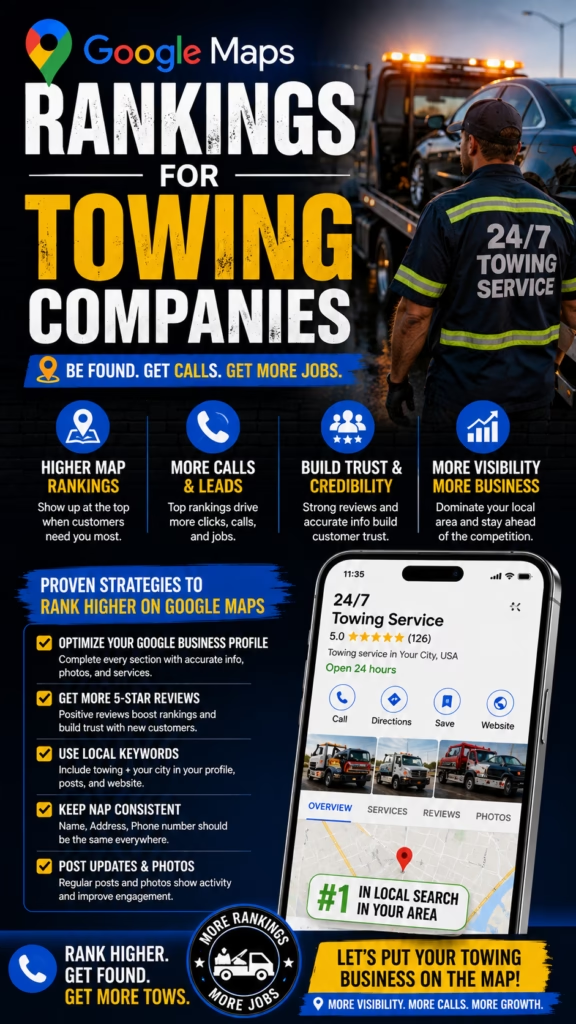
Google Maps Rankings for Towing Companies
Google Maps rankings for towing companies can have a major impact on local call volume because many towing customers search when they need help immediately. A stranded driver may be looking for a nearby tow truck, roadside assistance, vehicle recovery, jump start, tire change, lockout service, or transportation after an accident. Strong local visibility depends on an accurate Google Business Profile, legitimate service-area targeting, customer reviews, local website relevance, original photos, trusted citations, fast response, and measurable call conversion.
Towing is one of the most location-sensitive and time-sensitive local service industries.
When a driver is stranded on the side of the road, involved in an accident, dealing with a dead battery, locked out of a vehicle, or unable to move a disabled car, the search for help often happens immediately from a mobile device.
That creates a direct connection between local search visibility and real towing revenue.
A towing company that appears prominently in Google Maps can be in a stronger position to receive calls from nearby drivers at the exact moment those drivers need assistance.
But ranking locally requires more than adding a company name and phone number to Google.
Strong local visibility comes from a complete ecosystem that includes Google Business Profile optimization, accurate categories, legitimate service areas, reviews, website content, citations, backlinks, mobile usability, call conversion, and operational consistency.
The Towing Google Maps Growth Formula
Accurate Google Business Profile + Relevant Towing Categories + Legitimate Service Areas + Reviews + Original Photos + Local Website SEO + Citations + Fast Call Response + Lead Tracking = Stronger Local Towing Visibility
Why Google Maps Rankings Matter So Much for Towing Companies
Urgent Search Intent
Many towing customers need help now rather than several days from now.
Local Proximity
Customers usually want a towing company capable of reaching the vehicle quickly.
Mobile Search Behavior
Stranded drivers commonly search and call directly from a smartphone.
Call-Driven Conversion
A Maps impression can turn directly into a phone conversation and booked tow.
Review Visibility
Customers can compare ratings, reviews, photos, and business information quickly.
Commercial Opportunity
Local visibility can also support relationships with repair shops, property managers, fleets, dealers, and businesses.
Understand the Core Local Ranking Factors
Local search visibility is influenced by several broad concepts, including how relevant a business is to the search, how close it is or appears in relation to the search area, and how prominent and trustworthy the business appears online.
Relevance
Google needs clear signals that the business provides towing, roadside assistance, vehicle recovery, and related services.
Distance
Local search naturally considers geographic relationships between the searcher, business, and service area.
Prominence
Reviews, website authority, citations, brand mentions, links, customer engagement, and broader online reputation can support local prominence.
Important Local SEO Principle
There is no single switch that guarantees a top Maps position. Strong results usually come from improving many legitimate local signals together.
Fully Optimize the Towing Company Google Business Profile
Use the Real Business Name
The business name should reflect the company's actual real-world branding rather than being artificially stuffed with cities or keywords.
Use Accurate Hours
If the towing company genuinely operates 24 hours, the profile should reflect that. If hours vary, keep them current.
Use the Correct Phone Number
Calls should reach dispatch or an employee who can handle towing inquiries efficiently.
Use the Correct Website
The linked landing page should clearly explain towing services, location, contact options, and customer next steps.
Complete Every Relevant Field
Fill out applicable categories, services, attributes, description, photos, and other available profile information accurately.
Choose Google Business Profile Categories Carefully
Use the Most Accurate Primary Category
The primary category should describe the company's main real-world business.
Add Relevant Secondary Categories
Additional categories may be useful when they accurately represent services the company genuinely provides.
Avoid Unrelated Categories
Adding categories simply to appear for more searches can create confusion and weaken profile accuracy.
Keep the Category Strategy Consistent
The website, profile, service pages, reviews, and local citations should reinforce the same actual business model.
Add Accurate Towing and Roadside Services
Only list services that the towing company genuinely performs.
- Local towing
- Vehicle transport
- Roadside assistance
- Jump starts
- Tire changes
- Vehicle lockout assistance
- Fuel delivery
- Winch-out service
- Vehicle recovery
- Accident towing
- Motorcycle towing
- Light-duty towing
- Medium-duty towing when applicable
- Heavy-duty towing when applicable
- Private-property towing when applicable
Accurate service information helps customers understand whether the company can handle their situation before they call.
Configure Towing Service Areas Correctly
Use Legitimate Coverage Areas
List areas the company regularly serves rather than every city in a large region.
Match Service Areas With Dispatch Reality
If drivers cannot reliably reach a location within acceptable operating limits, it may not belong in the primary marketing area.
Do Not Create Fake Locations
Search visibility should be built through legitimate service-area signals rather than invented offices.
Support Areas With Website Content
Local service pages can explain how the company serves surrounding markets without misrepresenting physical presence.
Keep Towing Company Business Information Accurate Everywhere
Business Name
Use consistent real-world branding.
Address
Use only a legitimate eligible location where applicable.
Phone Number
Keep the primary contact information consistent across major local profiles and directories.
Website
Make sure citations and profiles point to the correct company website.
Write a Strong Towing Company Business Description
The profile description should explain who the company serves, the main towing services provided, and the general market covered.
[Business Name] provides professional towing and roadside assistance for drivers, businesses, property owners, dealerships, and fleet customers throughout [Primary Service Area]. Services may include local towing, vehicle recovery, jump starts, tire changes, lockout assistance, fuel delivery, and other approved roadside services.
Keep It Natural
Avoid repeating towing keywords unnaturally.
Focus on Real Capabilities
Do not advertise heavy-duty, specialty, commercial, or recovery capabilities the company cannot actually provide.
Use Original Towing Photos to Strengthen Local Trust
Fleet Photos
- Flatbeds
- Wheel-lift trucks
- Recovery trucks
- Roadside vehicles
- Heavy-duty equipment when applicable
Service Photos
- Vehicle loading
- Vehicle recovery
- Winch-outs
- Roadside assistance
- Commercial towing
- Transport work
Team and Facility Photos
Dispatch offices, employees, facilities, branded trucks, uniforms, equipment, and clean operating areas can increase customer confidence.
Protect Customer Privacy
Avoid publishing identifiable accident victims, private documents, personal details, or sensitive vehicle information without permission.
Build a Strong Google Review Strategy for Towing
Ask Real Customers
Request reviews after completed towing, roadside, recovery, fleet, or commercial service.
Make the Process Easy
Provide customers with a simple, legitimate way to reach the review form.
Do Not Buy Reviews
Fake or manipulated reviews can create policy and reputation risk.
Focus on Ongoing Review Growth
A consistent review process is generally more sustainable than occasional large bursts.
Respond to Towing Reviews Professionally
Thank Positive Reviewers
Keep responses natural and specific when possible.
Handle Negative Reviews Carefully
Avoid arguments. Acknowledge the concern, invite direct contact, and avoid exposing private customer or accident details.
Use Review Feedback Operationally
Repeated complaints about dispatch, wait time, pricing clarity, truck condition, or communication may reveal areas that need improvement.
Use the Towing Website to Support Google Maps Rankings
Make Towing the Main Topic
The website should clearly communicate the company's core towing services.
Create Strong Service Pages
Separate important services when each page can provide genuinely useful information.
Create Strong Local Pages
Use location pages to explain actual service coverage and local relevance.
Keep Business Information Consistent
Website contact information should align with legitimate profile and citation data.
Make Calling Easy
Towing websites should make the phone number easy to find, especially on mobile devices.
Target High-Intent Local Towing Keywords
Core Towing Keywords
- Towing company
- Tow truck
- Local towing
- Emergency towing
- Roadside assistance
Service-Specific Keywords
- Vehicle recovery
- Jump start service
- Car lockout help
- Flat tire roadside assistance
- Fuel delivery
- Winch-out service
Local Intent Keywords
Combine relevant services with actual cities, neighborhoods, highways, counties, or areas the company legitimately serves.
Avoid Keyword Stuffing
Keywords should appear naturally in useful website copy.
Build Useful Towing City Pages Without Creating Thin Content
Explain Real Coverage
Describe how the towing company serves that area.
Include Relevant Services
Mention services commonly available in that market.
Add Local Context
Useful references may include major roads, business districts, highways, neighborhoods, or common roadside situations.
Avoid Copy-and-Paste Pages
Changing only the city name across dozens of nearly identical pages creates little value.
Create Dedicated Pages for Important Towing Services
- Local towing
- Roadside assistance
- Accident towing
- Vehicle recovery
- Winch-outs
- Jump starts
- Lockout assistance
- Fuel delivery
- Motorcycle towing
- Commercial or fleet towing
Explain the Service
Tell customers what the service is, who it is for, how to request help, and what information dispatch needs.
Add Local Relevance
Explain where the service is available without making unsupported location claims.
Build Accurate Local Citations for the Towing Company
Prioritize Trusted Directories
Major local directories, business platforms, maps providers, and industry-relevant listings can support business verification.
Keep Information Consistent
Name, phone, website, address where applicable, and service information should remain accurate.
Remove Duplicates Where Possible
Duplicate or outdated listings can create customer confusion.
Avoid Low-Quality Citation Spam
Quality and accuracy are more important than creating hundreds of weak directory listings.
Earn Local Backlinks That Support Towing Authority
Local Business Partnerships
Repair shops, body shops, dealers, property managers, transport companies, and business partners may create legitimate referral or linking opportunities.
Community Organizations
Chambers, sponsorships, local organizations, charities, and events can create legitimate brand mentions.
Industry Sources
Associations, suppliers, fleet partners, and towing-related organizations can provide useful authority signals.
Avoid Artificial Link Schemes
Links should come from legitimate relationships and useful online references rather than manipulative networks.
Optimize the Towing Website for Mobile Search
Use Clear Click-to-Call Buttons
A stranded customer should not need to search through several pages for the phone number.
Keep Pages Fast
Slow-loading pages can frustrate customers during urgent roadside situations.
Keep Forms Short
If a form is used, ask only for the information needed to begin the conversation.
Make Service Information Easy to Scan
Customers should quickly understand whether the company handles their type of tow or roadside problem.
Turn Google Maps Visibility Into More Towing Calls
Answer Calls Professionally
The person answering should quickly identify the customer's need.
Confirm Vehicle Location
Ask for the exact pickup location, road, parking lot, property, or nearby landmark.
Confirm Vehicle Type
Car, SUV, motorcycle, truck, van, commercial vehicle, or specialty vehicle details may affect dispatch.
Confirm Destination
Determine whether the vehicle is going to a home, repair shop, dealership, storage location, or another approved destination.
Response Speed Can Determine Whether a Maps Lead Converts
Towing customers may call multiple companies within minutes.
Fast Towing Lead Response
Answer quickly, collect the vehicle location, vehicle type, service requested, destination, callback number, and any safety information needed to dispatch the appropriate truck.
Use Backup Call Routing
If the primary dispatcher cannot answer, calls should route to a backup process where practical.
Recover Missed Calls
Missed-call text response or callback automation can help recover customers before they choose another towing company.
Qualify Towing Calls Quickly Without Delaying Dispatch
Vehicle Location
Identify the pickup location as accurately as possible.
Vehicle Type
Confirm size, drivability, condition, and whether special equipment may be required.
Requested Service
Determine whether the customer needs a tow, jump start, lockout, tire change, recovery, fuel delivery, or another service.
Destination
Collect the destination or expected tow distance.
Safety and Access
Ask about highways, traffic hazards, garages, steep terrain, blocked wheels, collisions, parking structures, or other access limitations when relevant.
Use AI Voice and Automation for Towing Lead Handling
AI Voice Applications
- Answer overflow calls
- Collect vehicle location
- Collect vehicle type
- Collect requested service
- Collect destination
- Capture callback information
- Route urgent opportunities
- Create CRM or dispatch records
Missed-Call Recovery
Automation can send a prompt asking the customer to provide basic towing details and a callback number.
Dispatch Notifications
Qualified leads can be routed to dispatchers or drivers based on the company's operational workflow.
Maintain Human Oversight
Accident scenes, dangerous roadside conditions, complex recoveries, disputes, police impounds, commercial towing, and specialty situations should receive appropriate human review.
Use Local SEO to Build Commercial Towing Relationships
Property Managers
Property managers may need authorized towing, vehicle removal, parking support, or recurring vendor relationships where legally permitted.
Repair Shops
Auto repair and body shops may need reliable vehicle transport.
Dealerships
Dealers may need transport, breakdown assistance, trade movement, or auction-related towing.
Fleet Operators
Commercial fleets may need roadside and towing relationships.
Businesses and Industrial Sites
Businesses may need towing support for disabled company vehicles or authorized property situations.
Publish Useful Local Towing Content
Roadside Education
- What to do after a breakdown
- What to do after an accident
- How towing pricing works
- How roadside assistance works
- When a flatbed may be needed
Service Education
- Vehicle recovery explained
- Winch-out situations
- Motorcycle towing
- Commercial towing
- Longer-distance transport
Local Content
Useful pages can discuss legitimate service areas, major roads, highways, neighborhoods, common breakdown scenarios, and local customer questions.
Track Google Maps Performance for the Towing Company
Visibility Metrics
- Local keyword rankings
- Profile visibility trends
- Website visits from local search
- Calls attributed to local search
- Direction requests when relevant
Lead Metrics
- Total towing calls
- Qualified towing calls
- Roadside assistance inquiries
- Commercial inquiries
- Missed calls
- Average response time
Conversion Metrics
- Booked towing jobs
- Booked roadside jobs
- Call-to-book rate
- Average ticket value
- Repeat commercial customers
- Revenue by lead source
Measure Revenue and ROI From Google Maps
Qualified Call Rate
Qualified Call Rate = Qualified Google Maps Towing Calls ÷ Total Valid Maps Calls × 100
Call-to-Booking Rate
Call-to-Booking Rate = Booked Towing Jobs ÷ Qualified Google Maps Calls × 100
Average Towing Customer Value
Average Customer Value = Google Maps Towing Revenue ÷ Number of Google Maps Customers
Customer Acquisition Cost
Customer Acquisition Cost = Total Local SEO and Marketing Cost ÷ New Google Maps Customers
Google Maps ROI
ROI = (Gross Profit From Google Maps Customers − Local SEO Cost) ÷ Local SEO Cost × 100
| Metric | What It Measures |
|---|---|
| Maps visibility | Whether the towing business is gaining local search exposure |
| Qualified calls | Whether local search visibility is generating real towing opportunities |
| Call-to-book rate | Whether dispatch converts inquiries into booked jobs |
| Average ticket value | The average revenue produced by a booked towing customer |
| Commercial repeat business | Whether local search contributes to higher-value ongoing relationships |
| Gross profit and ROI | Whether Maps SEO produces profitable business growth |
Common Google Maps SEO Mistakes Towing Companies Should Avoid
Using Fake Locations
Artificial offices or ineligible addresses can create suspension risk.
Keyword-Stuffing the Business Name
The profile should use the actual real-world business name.
Ignoring Reviews
Reputation strongly influences towing customer trust and conversion.
Using Stock Photos Only
Customers want to see the actual fleet, team, and equipment.
Using Thin City Pages
Dozens of duplicate pages with only the city name changed provide little value.
Ignoring Mobile Speed
Stranded drivers need fast pages and easy calling.
Missing Calls
Strong Maps rankings have limited value if no one answers.
Tracking Rankings Without Revenue
The true business outcome is booked jobs, revenue, gross profit, and ROI.
A 30-Day Google Maps Ranking Plan for Towing Companies
Week 1: Fix the Foundation
- Audit Google Business Profile information
- Confirm the real business name
- Review primary and secondary categories
- Review service areas
- Verify business hours
- Verify phone routing
- Review website link
- Document current Maps rankings
Week 2: Improve Local Relevance
- Add accurate towing services
- Improve the business description
- Add original truck and service photos
- Optimize core towing service pages
- Improve city and service-area pages
- Check business citations
- Correct inconsistent information
- Improve mobile click-to-call visibility
Week 3: Build Trust and Authority
- Create a review request process
- Respond to existing reviews
- Build local partner relationships
- Improve industry citations
- Seek legitimate local backlinks
- Publish useful towing content
- Improve missed-call recovery
- Connect lead tracking
Week 4: Measure and Optimize
- Track local keyword movement
- Track calls from Maps
- Measure qualified call rate
- Measure booking rate
- Review lost calls
- Track average towing ticket value
- Track revenue from Google Maps
- Calculate local SEO ROI
End-of-Month Outcome
After 30 days, the towing company should have a cleaner Google Business Profile, stronger local relevance, more accurate service areas, better towing photos, a stronger review process, improved website support, more organized call handling, and clearer visibility into which local searches generate booked towing revenue.
Final Takeaway: Google Maps Visibility Must Turn Into Booked Towing Jobs
Effective Google Maps rankings for towing companies require more than chasing a position on a map.
The real objective is to build enough local relevance, trust, and prominence that qualified customers can find the towing company when they need help.
That process begins with an accurate Google Business Profile, correct categories, legitimate service areas, accurate business information, useful towing services, original photos, and ongoing customer reviews.
The towing company website should reinforce those signals with useful towing service pages, locally relevant content, mobile usability, clear calling options, and accurate business information.
Citations, local partnerships, legitimate backlinks, review responses, and community visibility can strengthen broader local authority.
Once a customer calls, dispatch speed becomes critical.
The business should quickly collect the vehicle location, vehicle type, requested service, destination, callback number, and any information needed to dispatch safely and efficiently.
AI voice, missed-call recovery, automated lead routing, and CRM tracking can help prevent valuable local search leads from being lost.
Most importantly, towing companies should connect Maps visibility with qualified calls, booked jobs, average ticket value, repeat commercial relationships, revenue, gross profit, customer acquisition cost, and ROI.
When local SEO, reputation, website strength, dispatch operations, and lead tracking work together, Google Maps can become a powerful customer-acquisition channel for towing companies.
Frequently Asked Questions
1. Why are Google Maps rankings important for towing companies?
Maps visibility can place the towing company in front of nearby drivers searching for towing and roadside assistance when they need help.
2. How can a towing company rank higher on Google Maps?
Improve profile accuracy, categories, services, reviews, photos, website relevance, citations, local authority, and customer experience.
3. What Google Business Profile category should a towing company use?
Use the category that most accurately describes the company's core real-world business and add relevant secondary categories only when appropriate.
4. Should towing companies list every city they serve?
List legitimate service areas the company can actually support rather than overstating coverage.
5. Do Google reviews help towing rankings?
Genuine reviews support trust and local prominence and can influence customer conversion.
6. How many reviews does a towing company need?
There is no universal number because local competition varies by market.
7. Should towing companies respond to Google reviews?
Yes. Professional responses can demonstrate active customer service and reputation management.
8. Do towing photos help Google Maps visibility?
Original fleet, equipment, team, facility, and service photos can improve profile quality and customer confidence.
9. Should towing companies use stock photos?
Original photos are generally more useful because they show the company's actual trucks, equipment, staff, and capabilities.
10. Do local keywords help towing companies rank?
Relevant local towing keywords can support website relevance when used naturally in useful content.
11. Should towing companies create city landing pages?
Yes, when each page provides unique and genuinely useful local information.
12. What towing services should be listed on Google?
List only services the company actually provides, such as towing, roadside assistance, recovery, jump starts, lockouts, tire changes, and fuel delivery.
13. Does NAP consistency matter for towing SEO?
Consistent business information across trusted directories can reduce confusion and support local credibility.
14. Should towing companies build citations?
Accurate listings on reputable local and industry sources can support business verification and local visibility.
15. Can backlinks help towing companies rank locally?
Legitimate local and industry links can strengthen website authority and local prominence.
16. Does the towing company website affect Google Maps rankings?
A strong local website can support relevance, trust, and broader local search performance.
17. Is mobile optimization important for towing companies?
Yes. Many towing searches happen from mobile devices during urgent roadside situations.
18. Should towing companies use click-to-call buttons?
Yes. Clear mobile calling options make it easier for customers to contact dispatch quickly.
19. Does response speed matter for towing leads?
Yes. Towing customers may contact multiple companies within a short period.
20. Can AI help towing companies handle calls?
AI voice can collect approved dispatch information, recover missed calls, schedule callbacks, and route qualified opportunities.
21. Should towing companies track Google Maps calls?
Yes. Call tracking helps connect Maps visibility with qualified leads, booked jobs, and revenue.
22. What metrics should towing companies track?
Track local visibility, calls, qualified leads, bookings, average ticket value, revenue, customer acquisition cost, and ROI.
23. Can towing companies rank in nearby cities without an office there?
Legitimate service-area relevance can be built without creating fake physical locations.
24. Should towing companies create multiple Google Business Profiles?
Only create multiple profiles for legitimate eligible locations that comply with current Google guidelines.
25. Can fake addresses hurt towing rankings?
Yes. Ineligible or misleading locations can create suspension and long-term visibility risk.
26. How long does towing company local SEO take?
Timelines vary based on competition, reviews, profile quality, website strength, authority, and market size.
27. Can Google Maps rankings be guaranteed?
No. Specific positions cannot be legitimately guaranteed because rankings depend on changing algorithms and competition.
28. Should towing companies combine Maps SEO with paid ads?
Yes. Local SEO can work alongside paid advertising, referral relationships, roadside networks, and other marketing channels.
29. Should towing companies publish local content?
Useful towing, roadside, recovery, and service-area content can support website relevance and customer trust.
30. What is the main goal of Google Maps rankings for towing companies?
The goal is to turn stronger local visibility into qualified towing calls, booked jobs, recurring relationships, revenue, and measurable profit.
30 Additional SEO Keywords
Use these supporting phrases naturally across towing service pages, local SEO content, city landing pages, Google Maps guides, FAQs, case studies, and internal links.
Turn Google Maps Visibility Into More Towing Calls and Booked Jobs
MarketWiz.ai helps towing companies improve local visibility, organize Google Business Profile optimization, strengthen local towing keyword coverage, build service-area content, improve reviews and citations, organize local landing pages, recover missed calls, connect AI voice and CRM systems, track qualified towing leads, and measure booked jobs, revenue, gross profit, customer acquisition cost, and return on investment.
This article provides general local SEO, Google Maps marketing, towing-industry marketing, automation, and business information and does not provide legal, regulatory, insurance, transportation, licensing, safety, dispatch, accident-response, impound, privacy, telecommunications, consumer-protection, platform-compliance, or financial advice. Google Business Profile features, categories, eligibility requirements, interfaces, ranking systems, and policies may change. Towing companies should review current Google Business Profile rules and applicable towing, roadside-assistance, transportation, licensing, insurance, storage, impound, police, accident-scene, call-recording, SMS, privacy, consent, consumer-protection, and local regulatory requirements before implementing marketing or operational systems. Rankings, calls, towing jobs, revenue, and other results cannot be guaranteed and depend on competition, geographic proximity, profile quality, reviews, website strength, local authority, service coverage, operational capacity, response speed, pricing, reputation, and customer behavior.













