
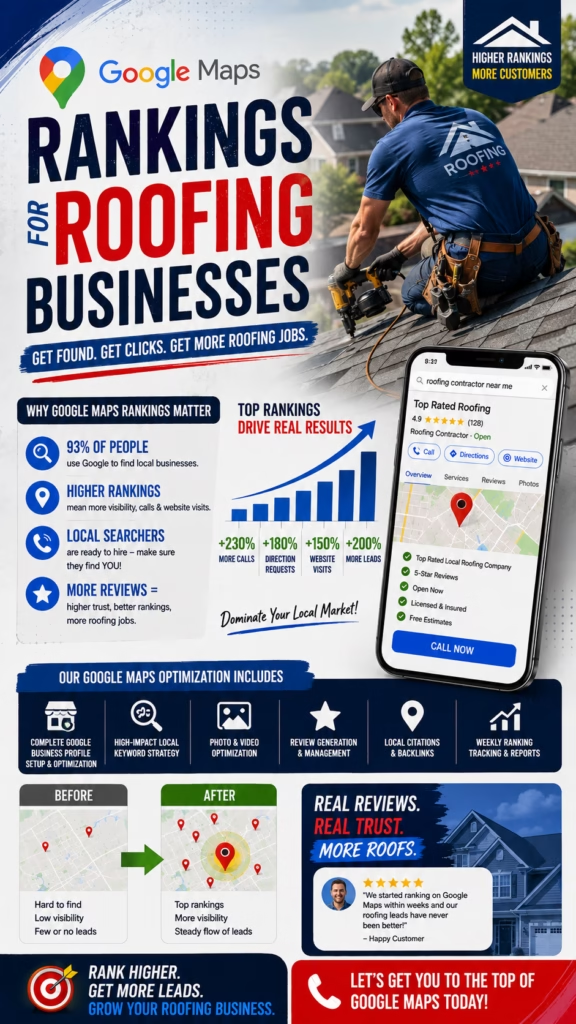
Google Maps Rankings for Roofing Businesses
Roofing companies compete in one of the most valuable local search categories online. Strong Google Maps rankings can place your business in front of homeowners, property managers, commercial buyers, and storm-damage prospects precisely when they are searching for roof repair, roof replacement, inspections, commercial roofing, and other high-value services.
Roofing customers rarely wake up thinking they should casually browse roofing companies. Most begin searching because something has happened: shingles are missing, water is leaking, a roof is aging, a storm caused damage, an inspection found problems, a property is being sold, or a commercial building needs maintenance. That makes roofing one of the highest-intent categories in local search.
When someone searches roofer near me, roof repair near me, roof replacement, storm damage roofer, or commercial roofing company, Google Maps can become one of the first places that customer evaluates.
For roofing businesses, the difference between appearing prominently in the local results and remaining nearly invisible can translate into a major difference in call volume, estimate requests, inspections, and booked jobs.
Why Google Maps Matters for Roofing Businesses
Roofing is a local service with high customer intent and high average job value. A single roof replacement can be worth thousands or tens of thousands of dollars, while a commercial roofing project can be considerably larger.
This changes the economics of local visibility.
A roofing company does not necessarily need thousands of extra leads every month to make Google Maps valuable. A handful of additional qualified roof replacement or commercial roofing opportunities can create meaningful revenue.
High Buyer Intent
Roofing searches often come from customers with an active property problem rather than casual interest.
High Job Value
Roof replacement, commercial roofing, and storm work can produce substantial revenue from a relatively small number of customers.
Local Decision Making
Customers usually want a contractor capable of inspecting and servicing the property locally.
Trust-Driven Sales
Reviews, photos, business information, and website quality can strongly influence who receives the call.
Google Maps can become a roofing lead source
Customers may discover a roofing company through searches such as:
- roofer near me;
- roofing company near me;
- roof repair near me;
- roof replacement near me;
- storm damage roofing;
- hail damage roofer;
- metal roofing company;
- commercial roofing contractor;
- flat roof repair;
- emergency roof repair;
- roof inspection;
- residential roofing contractor.
These searches often represent people already moving toward a contractor decision.
Understanding Roofing Local Search Intent
Strong roofing SEO begins by understanding what the customer is trying to accomplish.
Emergency repair intent
These customers may be dealing with:
- active leaks;
- storm damage;
- missing shingles;
- fallen branches;
- wind damage;
- roof punctures;
- water intrusion.
Speed matters heavily for these leads.
Roof replacement intent
Replacement customers may be searching because:
- the roof is aging;
- repairs are becoming frequent;
- insurance identified damage;
- the home is being sold;
- the customer wants a material upgrade;
- storm damage created a replacement need.
Research intent
Some customers are still comparing:
- roofing materials;
- average replacement cost;
- metal roofing versus shingles;
- repair versus replacement;
- warranty differences;
- contractor reputations.
Useful website content can reach these customers earlier in the decision process.
Commercial intent
Property managers and commercial owners may search for:
- commercial roofing contractors;
- TPO roofing;
- flat roof repair;
- roof coating;
- industrial roofing;
- commercial roof inspections;
- roof maintenance programs.
Commercial search volume can be lower than residential, but the potential contract value can be significantly higher.
Google Maps Ranking Factors for Roofers
Google describes local ranking in terms that include relevance, distance, and prominence. In practice, roofing companies should think about local SEO as an ecosystem rather than a single ranking factor.
Relevance
Google needs to understand that the company genuinely provides the service being searched.
Roofing relevance can be reinforced through:
- appropriate Google Business Profile categories;
- accurate services;
- roofing-specific website pages;
- project content;
- customer reviews;
- business descriptions;
- local citations.
Distance
The physical relationship between the searcher and relevant businesses can influence results.
A roofing company may therefore rank strongly around one part of a city and much weaker 20 miles away.
Prominence
Prominence can involve the broader strength and recognition of the business.
Relevant signals may include:
- reviews;
- website authority;
- links;
- citations;
- brand mentions;
- local recognition;
- content quality.
Conversion quality still matters
Rankings are not the end goal.
The roofing company still needs to convert visibility into:
- calls;
- inspection requests;
- estimate appointments;
- roof replacement opportunities;
- commercial bids;
- booked projects.
Google Business Profile Optimization for Roofing Companies
The Google Business Profile is one of the most important assets in a roofing company's local search strategy.
Use the real business name
The profile name should match the roofing company's real-world business name.
Adding extra phrases such as:
“ABC Roofing – Roof Repair Roof Replacement Best Roofer Near Me”
when those words are not genuinely part of the business name can create guideline problems.
Use accurate business information
Confirm:
- business name;
- address when applicable;
- phone number;
- website;
- hours;
- service areas;
- categories;
- services.
Complete important profile fields
A complete profile can improve both user experience and Google's understanding of the business.
Keep information current
If the roofing company changes:
- phone numbers;
- hours;
- website;
- business address;
- service areas;
- business status;
update the profile promptly.
Roofing Categories and Services
Categories help Google understand the business.
Primary category
Choose the category that most accurately represents the company's core real-world business.
For a roofing contractor, that is typically a roofing-focused category when available and applicable.
Secondary categories
Secondary categories should be added only if they genuinely describe additional areas of the business.
Do not select categories simply because they contain attractive keywords.
Roofing services
Depending on the company, legitimate services may include:
- roof replacement;
- roof repair;
- roof inspections;
- storm damage roofing;
- hail damage roofing;
- wind damage repair;
- metal roofing;
- asphalt shingle roofing;
- flat roofing;
- TPO roofing;
- commercial roofing;
- residential roofing;
- roof coatings;
- emergency roof repairs.
Do not list services you do not provide
Broader is not always better.
Accurate service relevance produces a better customer experience and a more defensible local SEO strategy.
Roofing Reviews and Reputation
Roofing is a trust-heavy purchase.
Customers may be hiring a company to perform thousands of dollars of work on one of their most valuable assets.
Reviews can therefore influence both rankings and conversion.
Build reviews consistently
A sustainable roofing review process can request feedback after:
- roof replacement;
- repair completion;
- storm damage work;
- inspection;
- commercial projects;
- maintenance work.
Ask real customers
Reviews should come from genuine customer experiences.
Avoid:
- purchasing reviews;
- fabricating reviews;
- creating fake customer accounts;
- using employees as fake customers;
- offering deceptive incentives.
Recent reviews matter to customers
A roofing company with excellent reviews from six years ago but almost no recent feedback may appear less active than a competitor receiving consistent current reviews.
Respond professionally
Good responses can demonstrate:
- customer care;
- professionalism;
- accountability;
- business activity.
Do not stuff keywords into replies
Responses should sound human rather than artificially repeating city and roofing terms.
Roofing Photos and Visual Trust
Roofing companies have an advantage in local marketing because roofing work produces highly visual proof.
Before-and-after roof replacements
These help demonstrate the transformation clearly.
Roof repair photos
Show:
- damaged shingles;
- flashing repairs;
- leak areas;
- storm damage;
- completed repairs.
Material photos
Show real examples of:
- architectural shingles;
- metal roofing;
- TPO;
- flat roof systems;
- specialty materials.
Crew photos
Professional images of real crews can make the business more relatable.
Commercial project photos
If the business wants commercial roofing leads, show commercial roofing capabilities.
Useful visuals may include:
- warehouses;
- retail properties;
- office buildings;
- apartment complexes;
- industrial roofs;
- flat roofing systems.
Use authentic imagery
Real roofing project photography provides stronger trust than generic stock imagery.
Roofing Website SEO
A roofing company's website supports Google Maps by helping search engines understand the company's services, locations, authority, and relevance.
The homepage should explain the business clearly
The homepage should make it obvious:
- that the company is a roofing business;
- which services it provides;
- which markets it serves;
- how customers can contact it;
- why the company is credible.
Build a logical website structure
A roofing site may include:
- homepage;
- roof replacement;
- roof repair;
- residential roofing;
- commercial roofing;
- storm damage;
- metal roofing;
- roof inspections;
- service areas;
- projects;
- reviews;
- contact page.
Technical performance matters
Roofing websites should work well on mobile because customers may be searching immediately after noticing damage.
Focus on:
- mobile usability;
- reasonable load times;
- secure HTTPS;
- clear navigation;
- working contact forms;
- clickable phone numbers;
- indexable content.
Roofing Service Pages
One generic roofing page may not provide enough depth for every service the business wants to rank for.
Roof replacement page
Cover topics such as:
- signs a roof needs replacement;
- materials;
- replacement process;
- inspection;
- project expectations;
- areas served.
Roof repair page
Discuss:
- leaks;
- missing shingles;
- flashing;
- wind damage;
- minor storm damage;
- repair versus replacement.
Storm damage roofing page
Explain:
- hail damage;
- wind damage;
- roof inspections;
- temporary protection;
- repair options;
- replacement evaluation.
Commercial roofing page
If commercial roofing is a real service, create content for:
- flat roofing;
- TPO;
- roof coatings;
- maintenance;
- commercial repairs;
- property management clients;
- industrial properties.
Metal roofing page
Discuss legitimate metal roofing options and use cases rather than treating the page as a keyword list.
City and Service-Area Pages for Roofing Companies
Roofing companies often serve multiple nearby cities.
Well-built location pages can help communicate that geographic coverage.
Make each city page genuinely useful
A strong city page may include:
- roofing services available in that city;
- local project examples;
- common roofing materials in the area;
- storm or climate considerations;
- neighborhood coverage;
- customer FAQs;
- local testimonials when genuine.
Avoid doorway pages
Do not create hundreds of pages that differ only by city name.
A page should exist because it genuinely helps the customer.
Use local project data
Completed roofing projects can provide useful local proof.
Examples:
- roof replacement completed in a specific city;
- storm repair after a documented local weather event;
- commercial roof project in a business district;
- metal roof installed on a local property.
Citations and Local Authority
Citations help establish a consistent local business identity across the web.
Core business information
Keep name, address where applicable, phone number, website, and other business details accurate.
Useful citation sources may include:
- major business directories;
- local chambers of commerce;
- industry directories;
- local business associations;
- supplier partner pages;
- home improvement platforms;
- local media;
- community websites.
Quality matters more than random quantity
Thousands of irrelevant directory listings do not automatically create a stronger roofing brand.
Prioritize sources that make sense for:
- the local market;
- the roofing industry;
- real business relationships;
- trusted directories.
Links can strengthen roofing authority
Legitimate link opportunities may come from:
- manufacturers;
- suppliers;
- local organizations;
- community sponsorships;
- business associations;
- local press;
- commercial partners;
- construction relationships.
Roofing Content Strategy
Useful roofing content can increase website visibility while reinforcing the company's expertise.
Educational roofing topics
Examples include:
- How do you know when a roof needs replacement?
- How long does a shingle roof last?
- Roof repair versus roof replacement.
- What does hail damage look like?
- What happens during a roof inspection?
- Metal roofing versus asphalt shingles.
- What causes roof leaks?
- How should homeowners respond after storm damage?
Local roofing content
Content can also reflect real local issues such as:
- regional storm patterns;
- common roofing materials;
- high-wind concerns;
- heat;
- snow;
- hail;
- coastal exposure;
- local building conditions.
Project case studies
Roofing case studies are especially useful because they can combine:
- location;
- roof type;
- problem;
- solution;
- photos;
- material choice;
- project outcome.
One completed job can become a strong local SEO asset.
Storm Damage Roofing SEO
Storm events can create enormous spikes in roofing demand.
Severe weather may cause:
- hail damage;
- wind damage;
- missing shingles;
- fallen tree damage;
- flashing failure;
- roof punctures;
- active leaks.
Storm-related searches can increase quickly
Customers may search:
- storm damage roofer near me;
- hail damage roofing company;
- emergency roof repair;
- roof leak after storm;
- wind damage roof repair;
- roof inspection after hail.
Keep storm content accurate
Roofing companies should avoid claiming storm damage where none exists or overstating insurance outcomes.
Use real post-storm project content
Authentic project examples from storm-affected areas can provide valuable local proof.
Speed-to-lead becomes critical
After a major storm, customers may contact several roofing companies within minutes.
The company that responds clearly and quickly may win the inspection before competitors return the call.
Commercial Roofing Google Maps SEO
Commercial roofing can generate high-value opportunities from Google Maps, especially in markets with substantial industrial, retail, office, warehouse, multifamily, and commercial property inventory.
Potential commercial buyers include:
- property managers;
- facility managers;
- commercial landlords;
- developers;
- business owners;
- apartment operators;
- industrial operators;
- real estate investors.
Commercial service pages matter
Businesses seeking commercial roofing may care about:
- TPO;
- EPDM;
- flat roof repair;
- metal roofing;
- roof coatings;
- preventive maintenance;
- commercial inspections;
- large-scale replacement.
Show commercial proof
A company that wants warehouse roofing work should not rely exclusively on photos of residential homes.
Commercial buyers want evidence of commercial capability.
Roofing Google Business Profile Posts
Google Business Profile posts can help a roofing company maintain a current and informative profile.
Project updates
Share:
- completed replacements;
- roof repairs;
- metal roofing projects;
- commercial work;
- storm repairs.
Educational posts
Topics might include:
- signs of roof damage;
- what to check after a storm;
- when to schedule an inspection;
- roof maintenance tips;
- how leaks develop.
Seasonal posts
Roofing needs often change by season and region.
Companies can publish genuinely useful seasonal information rather than artificial promotional urgency.
Roofing Reviews as Conversion Content
Reviews do more than strengthen the Google profile.
They can answer customer concerns before a phone call occurs.
Customers look for evidence of:
- clean workmanship;
- good communication;
- on-time completion;
- professional crews;
- property cleanup;
- fair estimates;
- storm response;
- warranty follow-through.
A strong review profile can therefore increase conversion even when two roofing companies have similar rankings.
Using Roofing Projects to Build Local Authority
Every roofing project can create local content.
Capture the project location
Record the legitimate city or service area.
Capture the roof type
Examples:
- architectural shingles;
- metal roof;
- flat roof;
- TPO;
- commercial membrane system.
Capture the problem
Was it:
- age;
- hail;
- wind;
- leaks;
- missing shingles;
- commercial maintenance?
Capture before-and-after photos
These assets can support:
- Google Business Profile;
- website case studies;
- city pages;
- social media;
- YouTube;
- sales presentations.
Roofing Google Maps SEO vs. Paid Advertising
Paid advertising and Google Maps SEO both have value, but they function differently.
| Factor | Google Maps SEO | Paid Roofing Ads |
|---|---|---|
| Visibility | Organic local visibility | Purchased visibility |
| Cost Per Click | No direct charge for organic click | Advertiser generally pays for traffic |
| Speed | Usually builds over time | Can create traffic quickly |
| Long-Term Value | Can compound with sustained optimization | Visibility generally depends on continued spend |
| Trust | Supported by reviews and organic presence | Supported by advertising plus brand credibility |
| Best Strategy | Long-term local demand capture | Immediate demand and scalable campaigns |
Many roofing businesses benefit from combining both.
Paid advertising can create immediate traffic while local SEO builds stronger organic visibility.
Tracking Google Maps Rankings for Roofing Businesses
Looking up one keyword from the roofing office does not provide an accurate picture of local visibility.
Rankings change across geography
A roofing company may rank:
- position 2 near its office;
- position 6 five miles away;
- position 14 ten miles away;
- outside the visible local pack farther across town.
That geographic variation matters.
Use local grid tracking
Grid-based rank tracking can show how the roofing company performs across a city rather than from one point.
Track multiple keywords
Roofing businesses may want to track:
- roofer near me;
- roofing company;
- roof repair;
- roof replacement;
- residential roofing;
- commercial roofing;
- metal roofing;
- storm damage roofer;
- hail damage roofing;
- roof inspection.
Track ranking movement over time
Compare changes against:
- review growth;
- website improvements;
- new service pages;
- new local pages;
- citation work;
- new content;
- competitive activity.
Turning Google Maps Visibility Into Roofing Leads
Ranking higher does not automatically create revenue.
The roofing business must convert that visibility.
Answer calls quickly
Roofing customers often contact several contractors.
Make estimate requests easy
Prospects should not struggle to find:
- phone number;
- contact form;
- service information;
- service area;
- inspection process.
Qualify efficiently
Useful roofing questions might include:
- What city is the property in?
- Is this repair or replacement?
- Is the roof actively leaking?
- Was there recent storm damage?
- What type of property is it?
- Is it residential or commercial?
- What is the project timeline?
Track the lead source
Record whether the opportunity came from:
- Google Maps;
- Google organic search;
- Google Ads;
- Facebook;
- referral;
- Craigslist;
- other channels.
Follow up on estimates
Many roofing leads are lost after the estimate because the company never reconnects.
Follow-up can recover prospects who were:
- waiting for another contractor;
- comparing materials;
- waiting on insurance;
- discussing the project with family;
- waiting for financing;
- delaying scheduling.
Why Speed-to-Lead Matters for Roofing Companies
A customer with an active roof leak is not likely to wait two days for a callback.
Even non-emergency replacement customers may contact three to five roofing companies during the same session.
Fast response improves competitive position
The first roofing company to:
- answer;
- understand the problem;
- confirm the location;
- explain the next step;
- schedule an inspection;
can gain a meaningful advantage.
Automated lead routing can reduce missed opportunities
Structured lead systems can route new inquiries to:
- sales representatives;
- estimators;
- office staff;
- commercial teams;
- different branches.
Roofing SEO by Service Type
Roof Repair SEO
Roof repair customers frequently search with urgent intent.
Strong repair content should address:
- leaks;
- shingle damage;
- flashing;
- storm damage;
- repair eligibility;
- inspection.
Roof Replacement SEO
Replacement pages should help customers understand:
- replacement signs;
- materials;
- process;
- timelines;
- inspection;
- project preparation.
Metal Roofing SEO
Metal roofing searches often involve customers researching a specific material and comparing cost, longevity, appearance, and performance.
Commercial Roofing SEO
Commercial content should speak to commercial property needs rather than reusing residential copy.
Storm Damage Roofing SEO
Storm content should explain real inspection, repair, and replacement processes without misleading customers about insurance outcomes.
Google Maps Rankings for New Roofing Businesses
New roofers often compete against companies with years of reviews, backlinks, citations, and local recognition.
That does not mean a new roofing company cannot build visibility.
Start with an accurate profile
Do not attempt to compensate for being new with fake locations or fake reviews.
Create a strong website foundation
Build clear service pages and genuine service-area content.
Capture every project
Early projects should create:
- photos;
- case studies;
- reviews;
- social content;
- local proof.
Build reviews naturally
Every satisfied customer can strengthen future conversion.
Google Maps Rankings for Established Roofing Businesses
Established roofing companies sometimes rank poorly despite having years of real-world experience.
Common causes include:
- outdated websites;
- weak service pages;
- old profile information;
- inconsistent citations;
- few recent reviews;
- little local content;
- poor project photography;
- weak internal linking;
- stronger competitors.
Established businesses may already possess years of valuable marketing assets that simply need to be organized better.
Turn historical work into digital authority
Existing roofing companies often have:
- thousands of project photos;
- years of customers;
- commercial accounts;
- supplier relationships;
- local partnerships;
- experienced crews.
These can support a much stronger local SEO strategy.
Why Roofing Google Maps Rankings Can Compound Over Time
A strong roofing local SEO program can become more valuable as assets accumulate.
Over time, the company may build:
- more genuine reviews;
- more project photos;
- more service pages;
- more city relevance;
- more case studies;
- more citations;
- more legitimate links;
- more brand searches.
Unlike a paid campaign that generally stops producing visibility when the budget stops, strong organic assets may continue supporting discovery.
Roofing Google Maps SEO Mistakes to Avoid
1. Keyword stuffing the business name
Use the genuine real-world business name.
2. Creating fake locations
Do not build profiles at locations where the business is not legitimately eligible.
3. Purchasing fake reviews
Fake reviews create significant long-term risk.
4. Ignoring negative reviews
Professional responses can demonstrate accountability.
5. Using irrelevant categories
Categories should reflect actual services.
6. Publishing thin city pages
A page with only a city name changed is not a strong local content strategy.
7. Neglecting commercial roofing
If commercial roofing is a genuine service, it deserves dedicated positioning.
8. Failing to track ranking geography
One manual search is not enough to evaluate local visibility.
9. Ignoring lead conversion
Better rankings cannot overcome missed calls and slow estimates.
10. Using generic stock imagery exclusively
Authentic project proof is usually far more persuasive.
11. Ignoring website SEO
Google Business Profile and website optimization should support each other.
12. Building random low-quality links
Relevant local and industry authority is more valuable than manipulative volume.
Competing in Difficult Roofing Markets
Roofing SEO can be extremely competitive in major metropolitan areas and storm-heavy markets.
Competitors may already have:
- hundreds or thousands of reviews;
- strong websites;
- large backlink profiles;
- multiple service pages;
- years of local presence;
- strong brand recognition.
Challenging markets require a broader strategy.
Build service depth
Do not rely on one generic roofing page.
Build geographic depth
Develop genuinely useful content for high-value markets.
Build review velocity naturally
Create a process that asks satisfied customers consistently.
Build local proof
Publish authentic project content continuously.
Improve authority
Earn legitimate mentions, links, partnerships, and citations.
Improve conversion
If competitors answer calls in five minutes and your company takes five hours, SEO alone will not solve the problem.
Roofing Google Maps Optimization Checklist
- Use the real business name.
- Confirm Google Business Profile eligibility.
- Use accurate address or service-area settings.
- Confirm the primary roofing category.
- Add only relevant secondary categories.
- List genuine roofing services.
- Verify the phone number.
- Verify the website URL.
- Keep business hours current.
- Upload authentic roofing project photos.
- Publish before-and-after photos.
- Show residential roofing projects.
- Show commercial roofing projects when applicable.
- Request genuine customer reviews.
- Respond professionally to reviews.
- Build a strong roofing homepage.
- Create a roof replacement page.
- Create a roof repair page.
- Create a commercial roofing page when applicable.
- Create storm damage content.
- Create metal roofing content when applicable.
- Create useful service-area pages.
- Avoid doorway pages.
- Maintain consistent citations.
- Build legitimate local authority.
- Publish project case studies.
- Track rankings across a local grid.
- Track calls and estimate requests.
- Improve speed-to-lead.
- Measure booked revenue from organic local leads.
Building a Roofing Local Lead Generation System
The strongest roofing businesses do not treat Google Maps as an isolated marketing activity.
They connect local visibility to a broader system.
Layer 1: Google Business Profile
- accurate business information;
- appropriate categories;
- services;
- project photos;
- reviews;
- updates.
Layer 2: Roofing Website
- strong homepage;
- service pages;
- city pages;
- commercial pages;
- storm pages;
- project case studies.
Layer 3: Reputation
- review requests;
- review responses;
- customer service;
- project proof.
Layer 4: Local Authority
- citations;
- local links;
- industry relationships;
- supplier references;
- community involvement.
Layer 5: Rank Tracking
- keyword grids;
- city tracking;
- competitor tracking;
- monthly movement;
- visibility trends.
Layer 6: Lead Response
- fast calls;
- lead qualification;
- inspection scheduling;
- estimate delivery;
- follow-up.
Layer 7: Revenue Attribution
- lead source;
- project type;
- estimate amount;
- closed job;
- revenue;
- market.
Google Maps and Other Roofing Marketing Channels
Google Maps can become a major roofing lead source, but the strongest companies typically diversify.
| Channel | Primary Role | Roofing Opportunity |
|---|---|---|
| Google Maps | Local search visibility | High-intent roofing leads |
| Google Organic SEO | Search discovery | Service, city, and educational searches |
| Google Ads | Paid search | Immediate demand capture |
| Awareness and retargeting | Project transformations and local campaigns | |
| Visual branding | Before-and-after roofs and crew content | |
| YouTube Shorts | Video discovery | Roofing transformations and education |
| CRM | Lead conversion | Estimate tracking and follow-up |
Each channel can serve a different stage of the customer journey.
Google Maps may capture customers ready for a roofer now. Educational SEO may reach homeowners researching replacement. Social media may build trust before the customer needs roofing. CRM follow-up may recover a lead weeks after the original estimate.
Final Thoughts: Google Maps Rankings for Roofing Businesses
Roofing is one of the clearest examples of why local search visibility can have direct financial value.
Homeowners and commercial property decision-makers frequently turn to Google when they need:
- roof repair;
- roof replacement;
- storm damage inspection;
- hail damage help;
- metal roofing;
- commercial roofing;
- flat roof repair;
- emergency roofing.
A roofing business that appears prominently, looks credible, has strong reviews, shows real project work, maintains a useful website, and responds quickly can turn that visibility into meaningful revenue.
The strongest strategy is built around:
- accurate Google Business Profile optimization;
- appropriate roofing categories;
- genuine customer reviews;
- authentic roofing photography;
- strong service pages;
- useful local pages;
- consistent business information;
- local authority;
- rank tracking;
- speed-to-lead;
- estimate follow-up;
- revenue attribution.
When those systems work together, Google Maps rankings for roofing businesses become much more than an SEO metric. They become part of a repeatable local customer acquisition engine.
Frequently Asked Questions About Google Maps Rankings for Roofing Businesses
1. Why are Google Maps rankings important for roofing businesses?
Google Maps can place roofing companies in front of local homeowners and commercial buyers who are actively searching for roof repair, replacement, storm damage, inspections, and other roofing services.
2. How can a roofing company improve Google Maps rankings?
Improve the Google Business Profile, earn genuine reviews, strengthen roofing service pages, publish useful local content, maintain accurate citations, upload authentic project photos, build legitimate authority, and track local rankings.
3. What factors influence Google Maps rankings for roofers?
Important factors can include relevance, distance, prominence, profile quality, categories, reviews, website SEO, citations, authority, local content, and competitive conditions.
4. What Google Business Profile category should a roofing company use?
Use the most accurate roofing-related category available that reflects the company's real core business, with only legitimate secondary categories added where appropriate.
5. Do roofing reviews help Google Maps rankings?
Genuine reviews strengthen reputation and can support local prominence while also helping customers decide whether to contact the roofing company.
6. How many reviews does a roofing company need?
There is no magic review count. Focus on consistent, genuine review growth and compare reputation strength against realistic local competitors.
7. Should roofing companies respond to Google reviews?
Yes. Professional responses can demonstrate customer care and strengthen the overall quality of the business's online reputation.
8. Do roofing photos help Google Maps SEO?
Authentic roofing photos can improve trust and profile quality. Before-and-after replacements, repairs, crews, materials, and commercial projects are especially useful.
9. Should roofing companies publish Google Business Profile posts?
GBP posts can communicate project updates, seasonal information, educational roofing content, and company news to prospective local customers.
10. Can roofing service pages improve Google Maps rankings?
Strong service pages help explain the business's actual roofing services and can reinforce relevance for important searches.
11. What service pages should a roofing business build?
Depending on actual services, useful pages can include roof replacement, roof repair, residential roofing, commercial roofing, storm damage, metal roofing, inspections, and emergency repair.
12. Do city pages help roofing local SEO?
Useful city pages can reinforce geographic relevance when they are created for markets the company actually serves and contain genuinely helpful local information.
13. Should roofers create pages for every nearby city?
Only where the roofing business genuinely serves the area and can create useful, differentiated local content. Mass doorway pages should be avoided.
14. What are citations for roofing companies?
Citations are references to business information on online directories, local websites, industry sources, chambers, associations, and related platforms.
15. Does consistent NAP information matter?
Yes. Consistent business name, address when applicable, and phone information reduces confusion and supports a clear business identity online.
16. Can backlinks help roofing Google Maps rankings?
Legitimate relevant links can strengthen website authority and local prominence. Prioritize quality local, industry, supplier, media, and partnership opportunities.
17. How does proximity affect roofing Google Maps rankings?
Searcher location can affect local results, so the same roofer may rank differently across neighborhoods and ZIP codes.
18. Why do roofing Maps rankings change by location?
Local results can vary because of distance, relevance, prominence, competition, query wording, and other contextual signals.
19. How should roofers track Google Maps rankings?
Use local grid tracking across multiple geographic points and monitor important roofing keywords over time rather than relying on one manual search.
20. What roofing keywords should be tracked?
Track terms such as roofer near me, roofing company, roof repair, roof replacement, commercial roofing, metal roofing, storm damage roofer, hail damage roofing, and relevant city keywords.
21. Can Google Maps generate storm damage roofing leads?
Yes. Severe weather can trigger high-intent searches for storm damage inspections, hail damage roofing, wind damage repairs, and emergency roofing.
22. Can Google Maps generate commercial roofing leads?
Yes. Commercial property owners, property managers, facility managers, developers, landlords, and business operators can use Google Maps to find roofing contractors.
23. Does a roofing website affect Google Maps visibility?
A strong roofing website can reinforce service relevance, local relevance, authority, customer trust, and conversion.
24. How long does roofing Google Maps SEO take?
Results vary based on market competition, current visibility, reviews, website authority, profile strength, proximity, and competitor activity. Competitive markets usually require sustained work.
25. Can a new roofing company rank on Google Maps?
Yes. New roofers can build visibility with an accurate profile, strong website, genuine reviews, authentic projects, consistent business information, and legitimate local authority.
26. Can an established roofing company improve weak Maps rankings?
Yes. Established roofers can audit categories, reviews, citations, website structure, service content, project media, authority, and local visibility to identify opportunities.
27. Should roofers create fake Google Business Profile locations?
No. Roofing businesses should only use legitimate eligible business locations and accurate service areas consistent with current Google guidelines.
28. Should roofing companies add SEO keywords to their business name?
The profile should use the genuine real-world business name rather than adding marketing keywords that are not actually part of the company name.
29. What roofing Google Maps mistakes should be avoided?
Avoid fake locations, fake reviews, keyword-stuffed names, irrelevant categories, weak websites, duplicate profiles, thin city pages, inconsistent data, and slow lead response.
30. What is the best Google Maps strategy for roofing businesses?
Combine accurate profile optimization, genuine reviews, strong roofing service pages, useful city content, authentic project photos, citations, local authority, geographic rank tracking, fast lead response, and disciplined estimate follow-up.
30 Additional SEO Keywords
Turn Google Maps Rankings Into More Roofing Leads
Strengthen your roofing company's Google Maps visibility, build more local authority, improve reviews, expand roofing service-page coverage, track rankings across your market, and connect new calls with faster AI-powered lead response and follow-up.
Schedule a MarketWiz.ai Demo