
Google Maps Ranking Factors Every Business Should Know
Google Maps Ranking Factors Every Business Should Know explains the local SEO signals that help businesses improve visibility, earn customer trust, appear in more nearby searches, and turn Google Maps traffic into calls, visits, bookings, and leads.
Introduction
Google Maps Ranking Factors Every Business Should Know are essential for any local company that depends on nearby customers. Whether a business is a contractor, restaurant, dentist, mattress store, HVAC company, painter, plumber, real estate office, landscaper, repair service, or local agency, Google Maps can directly influence how many customers discover and contact that business.
When customers search for services near them, Google Maps often becomes one of the first places they compare options. They look at rankings, reviews, photos, business hours, distance, services, directions, and contact buttons. The businesses that appear higher and look more trustworthy usually have a better chance of winning the call, visit, or appointment.
Google Maps ranking factors help determine which businesses appear when local customers search for nearby products, services, and trusted providers.
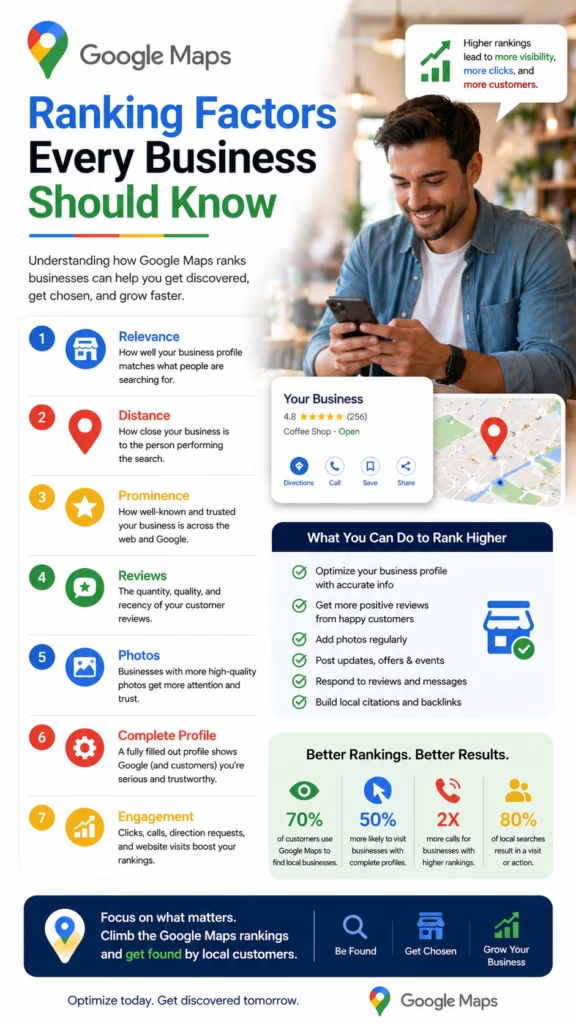
Improving Google Maps rankings is not about one magic trick. It is about strengthening multiple signals at the same time. Google considers relevance, distance, and prominence, but businesses can also improve performance through Google Business Profile optimization, accurate categories, service details, reviews, photos, citations, local website content, posts, and customer engagement.
Businesses that understand these ranking factors can build a stronger local presence. They can make their profile easier to understand, easier to trust, and easier for customers to act on. Over time, that can lead to more calls, website clicks, direction requests, messages, store visits, and booked jobs.
Main idea: Google Maps Ranking Factors Every Business Should Know include relevance, distance, prominence, profile completeness, categories, reviews, photos, citations, website signals, posts, and customer engagement.
Table of Contents
- 1) Why Google Maps ranking factors matter
- 2) Relevance as a ranking factor
- 3) Distance as a ranking factor
- 4) Prominence as a ranking factor
- 5) Google Business Profile completeness
- 6) Business categories
- 7) Services and products
- 8) Reviews and reputation
- 9) Photos and videos
- 10) Website strength
- 11) Citations and NAP consistency
- 12) Posts and profile activity
- 13) Customer engagement signals
- 14) Common ranking mistakes
- 15) Final thoughts
- 16) FAQs
- 17) Extra keywords
1) Why Google Maps Ranking Factors Matter
Google Maps ranking factors matter because they influence whether a business appears when customers are ready to take action. A customer searching “roof repair near me,” “best pizza nearby,” “mattress store in Rochester,” “painting company near me,” or “local SEO agency” is usually showing strong local intent.
When a business appears in Google Maps for these searches, it has a chance to earn a high-value customer action. These actions may include a phone call, direction request, website visit, appointment booking, message, quote request, or store visit.
Strong Google Maps rankings can help businesses increase:
- Phone calls
- Direction requests
- Website clicks
- Local brand awareness
- Quote requests
- Appointment bookings
- Walk-in visits
- Customer trust
- Review visibility
- Lead generation
Businesses should understand Google Maps ranking factors because local visibility can directly impact customer growth.
2) Relevance as a Ranking Factor
Relevance is one of the most important Google Maps ranking factors every business should know. Relevance means how closely a business matches what the customer is searching for. If someone searches for “emergency plumber,” Google wants to show businesses that clearly offer plumbing services, emergency help, and local availability.
Businesses improve relevance by using accurate categories, clear services, useful descriptions, local website content, and specific service pages. The more clearly a business explains what it does, the easier it is for Google and customers to understand when it should appear.
Relevance signals may include:
Primary business category
Secondary categories
Services listed
Business description
Website service pages
Review language
Local landing pages
Customer search intent match
Relevance improves when a business profile and website clearly match the services customers are searching for.
3) Distance as a Ranking Factor
Distance is another major Google Maps ranking factor. Google considers how close a business is to the person searching or to the location included in the search. For example, a search for “coffee shop near me” will usually prioritize businesses close to the searcher.
Businesses cannot fully control distance, but they can make location information clear. Storefront businesses should keep their address accurate. Service-area businesses should define service areas properly. Websites should also make location and service areas easy to understand.
Distance matters because Google Maps is designed to help customers find useful nearby options.
4) Prominence as a Ranking Factor
Prominence refers to how well-known, trusted, and established a business appears online. A business with strong reviews, consistent citations, a credible website, local mentions, strong engagement, and active profiles may appear more prominent than a business with little online presence.
Prominence is built over time. It comes from reputation, visibility, content, authority, customer activity, and trust signals. Businesses can improve prominence by consistently building reviews, maintaining accurate listings, publishing useful content, earning local mentions, and keeping their Google Business Profile active.
Prominence can be supported by:
- Review quality
- Review quantity
- Business reputation
- Website authority
- Local citations
- Customer engagement
- Brand recognition
- Local content
- Consistent profile activity
Prominence helps Google understand which businesses are trusted, active, and worth showing to local searchers.
5) Google Business Profile Completeness
Google Business Profile completeness is one of the most controllable ranking factors. A complete profile gives Google more information about the business and gives customers more reasons to trust it.
A profile should include accurate business information, phone number, website, address or service area, hours, categories, services, products, business description, photos, videos, attributes, and review responses. Incomplete profiles can look inactive or less trustworthy.
A complete Google Business Profile should include:
- Business name
- Address or service area
- Phone number
- Website link
- Business hours
- Primary category
- Secondary categories
- Services and products
- Business description
- Photos and videos
- Attributes
- Review responses
Google Maps Ranking Factors Every Business Should Know include profile completeness because incomplete profiles can weaken visibility and conversion.
6) Business Categories
Business categories are extremely important for Google Maps rankings. The primary category tells Google what the business mainly does. Secondary categories help support additional services, but they should only be used when they are truly relevant.
A business should choose the most accurate primary category possible. A broad or incorrect category can reduce relevance. For example, a company that mainly performs interior and exterior painting should choose a painting-related category instead of a vague home improvement category if a more specific option is available.
Correct categories help Google match the business with the right local searches.
7) Services and Products
Services and products help Google and customers understand what the business offers. A business should list its main services clearly and use customer-friendly language. This helps the profile match more relevant searches.
For service businesses, this may include repairs, installations, maintenance, inspections, estimates, emergency service, cleaning, remodeling, painting, delivery, or consultations. For retailers, this may include brands, product categories, financing, delivery, warranties, or special inventory.
Service optimization example:
Primary category: HVAC contractor
Services: AC repair, furnace repair, maintenance, installation
Location: Serving nearby neighborhoods and cities
CTA: Call for service availability
Detailed services and products help improve relevance and make the profile more useful to customers.
8) Reviews and Reputation
Reviews are one of the most visible Google Maps ranking factors every business should know. Customers often look at star rating, review count, review recency, review content, and owner responses before deciding who to contact.
A strong review profile can increase trust and improve customer engagement. Businesses should ask satisfied customers for reviews, respond professionally, and build reviews consistently over time. Review quality matters more than simply chasing volume.
Review factors that matter:
- Average star rating
- Total review count
- Review recency
- Review keywords
- Review detail
- Owner responses
- Customer trust
- Consistency over time
Reviews support Google Maps rankings by building prominence, trust, and customer confidence.
9) Photos and Videos
Photos and videos can help improve profile engagement and trust. A business with fresh visuals often looks more active, real, and credible than a profile with no photos or outdated images.
Businesses should upload photos that show real work, real products, real teams, storefronts, vehicles, completed projects, customer environments, and service results. Visual proof can help customers choose one business over another.
Useful Google Maps photos include:
- Storefront exterior photos
- Interior photos
- Team photos
- Before-and-after photos
- Product displays
- Service vehicles
- Job site photos
- Short videos
- Branded images
Photos and videos help Google Maps profiles attract more attention and earn more customer actions.
10) Website Strength
The business website can support Google Maps rankings by reinforcing local relevance and authority. A strong website explains services, locations, reviews, offers, FAQs, and contact options in more detail than a Google Business Profile alone.
Local service pages, city pages, clear contact information, schema markup, fast mobile performance, and useful content can all support the business’s local presence. A weak or outdated website can make the business look less credible.
Website signals that support Google Maps SEO:
- Service pages
- City pages
- Local keywords
- Consistent phone number and address
- Customer reviews
- FAQ content
- Schema markup
- Fast mobile load speed
- Clear calls to action
Google Maps Ranking Factors Every Business Should Know include website quality because the website helps support trust, relevance, and conversion.
11) Citations and NAP Consistency
Citations are online mentions of a business’s name, address, phone number, and website. NAP consistency means that the business name, address, and phone number are consistent across online platforms.
Consistency matters because conflicting business information can confuse customers and search engines. A business should make sure major directories, social profiles, websites, and local listings use accurate information.
NAP consistency checklist:
Business name matches everywhere
Address is accurate
Phone number is current
Website URL is correct
Hours are updated
Old listings are cleaned up
Duplicate listings are removed or corrected
Clean citations and consistent business information help support local trust and Google Maps visibility.
12) Posts and Profile Activity
Google Business Profile posts and updates can keep a profile active and useful. Businesses can use posts to share offers, announcements, seasonal services, new products, events, appointment openings, and helpful reminders.
Profile activity can make the business look more current. It can also help customers understand what is happening now. A business that posts regularly may appear more engaged than one that has not updated its profile in months.
Good post topics include:
- Limited-time offers
- Seasonal service reminders
- New products
- Before-and-after projects
- Company updates
- Local events
- Appointment availability
- Helpful customer tips
Active profiles can build customer confidence and keep Google Maps listings more useful.
13) Customer Engagement Signals
Customer engagement signals show how people interact with a business listing. These signals may include calls, website clicks, direction requests, photo views, messages, bookings, reviews, and other actions.
A business can improve engagement by making the listing more useful. Clear services, strong photos, accurate hours, review responses, easy contact buttons, and compelling offers can all encourage customers to interact.
Customer engagement actions:
Call the business
Click the website
Request directions
View photos
Read reviews
Send a message
Book an appointment
Save the business
Share the listing
Google Maps Ranking Factors Every Business Should Know include engagement because customer actions show that a listing is useful and relevant.
14) Common Ranking Mistakes
Many businesses struggle with Google Maps rankings because they skip the basics. They may have incomplete profiles, wrong categories, few reviews, outdated photos, inconsistent citations, weak websites, or no ongoing activity.
- Leaving the Google Business Profile incomplete
- Choosing the wrong category
- Not listing services or products
- Ignoring customer reviews
- Not responding to reviews
- Using outdated photos
- Posting inconsistently
- Having incorrect business hours
- Using inconsistent phone numbers online
- Not improving the website
- Ignoring local keyword content
- Not tracking calls and leads
Big mistake: treating Google Maps rankings like a one-time setup instead of an ongoing local SEO system.
15) Final Thoughts
Google Maps Ranking Factors Every Business Should Know all connect back to one goal: helping Google and customers understand that a business is relevant, nearby, trustworthy, active, and worth contacting.
The strongest local businesses do not rely on one ranking factor. They build a complete Google Business Profile, choose accurate categories, add services, collect reviews, upload photos, maintain consistent citations, improve their website, publish posts, and track customer engagement.
Over time, these actions can create stronger Google Maps visibility and better local customer results. More visibility can lead to more calls, more direction requests, more website visits, more booked appointments, more walk-ins, and more local leads.
Final takeaway: Google Maps ranking success comes from combining relevance, distance, prominence, profile optimization, reviews, visuals, citations, website SEO, and consistent customer engagement.
16) FAQs
1) What are Google Maps ranking factors?
Google Maps ranking factors are signals that influence how businesses appear in local search results, including relevance, distance, prominence, reviews, categories, photos, citations, website strength, and engagement.
2) Why do Google Maps ranking factors matter?
They matter because they influence whether nearby customers find, trust, and contact a business through Google Maps.
3) What are the three major Google Maps ranking factors?
The three major factors are relevance, distance, and prominence.
4) What does relevance mean in Google Maps SEO?
Relevance means how closely a business matches what the customer is searching for.
5) What does distance mean in Google Maps rankings?
Distance refers to how close a business is to the searcher or to the location included in the search.
6) What does prominence mean?
Prominence refers to how trusted, well-known, established, and credible a business appears online.
7) Do reviews affect Google Maps rankings?
Reviews can support rankings by improving trust, engagement, prominence, and customer confidence.
8) Do photos help Google Maps performance?
Yes. Photos can improve engagement, trust, and profile quality.
9) Are business categories important?
Yes. Categories help Google understand what the business does and which searches it should appear for.
10) Should businesses add services to their profile?
Yes. Services help explain what the business offers and improve local search relevance.
11) Does the website affect Google Maps rankings?
Yes. A strong local website can support relevance, authority, trust, and customer conversion.
12) What is NAP consistency?
NAP consistency means the business name, address, and phone number are accurate and consistent across online listings.
13) Do Google Business Profile posts matter?
Posts can help keep a profile active and communicate offers, updates, events, and services to customers.
14) How often should businesses update photos?
Businesses should upload fresh photos regularly, especially when they complete projects, update products, or change their location.
15) How can businesses get more reviews?
Businesses can ask satisfied customers for reviews, provide a simple review link, and make review requests part of their follow-up process.
16) Should businesses respond to reviews?
Yes. Review responses show professionalism, customer care, and profile activity.
17) What is the biggest Google Maps SEO mistake?
The biggest mistake is creating a profile and then failing to optimize, update, and maintain it.
18) Can service-area businesses rank on Google Maps?
Yes. Service-area businesses can improve visibility by optimizing service areas, categories, services, reviews, website content, and local signals.
19) Can storefront businesses improve Google Maps rankings?
Yes. Storefront businesses can improve rankings with accurate location details, photos, reviews, categories, products, posts, and website support.
20) Are citations still important?
Citations can support trust and consistency, especially when major business listings are accurate and aligned.
21) What customer actions matter on Google Maps?
Important actions include calls, website clicks, direction requests, messages, bookings, review activity, and photo views.
22) How long does it take to improve Google Maps rankings?
Timing varies by competition, location, profile strength, reviews, website quality, and consistency. It usually takes ongoing work.
23) Can local content help Google Maps SEO?
Yes. Local service pages, city pages, FAQs, and helpful website content can support relevance.
24) Should businesses track Google Maps leads?
Yes. Businesses should track calls, direction requests, website clicks, bookings, and customers who mention Google.
25) What is the main lesson from Google Maps Ranking Factors Every Business Should Know?
The main lesson is that Google Maps visibility improves when a business becomes more relevant, trusted, complete, active, and useful to local customers.
17) Extra Keywords
- Google Maps Ranking Factors Every Business Should Know
- Google Maps ranking factors
- Google Maps SEO
- Google Business Profile optimization
- local SEO ranking factors
- Google Maps visibility
- map pack SEO
- local map rankings
- Google local ranking factors
- Google Business Profile categories
- Google reviews strategy
- local citation building
- NAP consistency
- local search optimization
- near me search rankings
- Google Maps lead generation
- local business SEO
- service area SEO
- storefront SEO
- Google Maps customer engagement
- Google profile photos
- Google Business Profile posts
- local prominence SEO
- local relevance SEO
- Google Maps marketing