
Google Maps Optimization for General Contractors
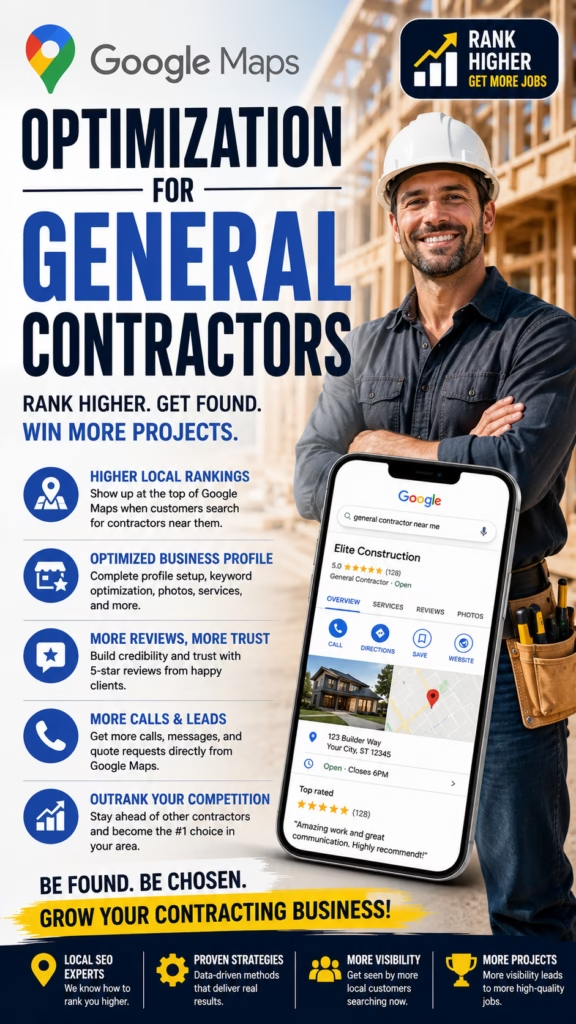
Google Maps Optimization for General Contractors explains how contractors can improve local visibility, Google Business Profile strength, reviews, photos, services, posts, and lead tracking to generate more project inquiries.
Introduction
Google Maps Optimization for General Contractors is one of the most important local marketing strategies for contractors who want more remodeling leads, construction calls, renovation inquiries, home improvement estimates, and project consultations from nearby customers.
When homeowners search for a general contractor, they often look at Google Maps before they visit a website. They compare reviews, photos, service areas, business categories, project examples, hours, phone numbers, and how professional the company appears. If a contractor does not show up strongly in local map results, high-intent leads may go to competitors.
Google Maps optimization works for general contractors when the profile clearly proves location relevance, service expertise, customer trust, and project quality.
The strongest contractors use Google Business Profile as a lead-generation asset, not just a basic listing. They optimize categories, services, descriptions, project photos, review strategy, posts, Q&A, citations, website links, local landing pages, and tracking so Google and customers understand what they do and where they do it.
Main idea: Google Maps Optimization for General Contractors is about turning local search visibility into phone calls, estimate requests, booked consultations, remodeling projects, and revenue growth.
Table of Contents
- 1) Why Google Maps matters for general contractors
- 2) How homeowners choose contractors on Google Maps
- 3) Setting up the Google Business Profile correctly
- 4) Choosing the right contractor categories
- 5) Optimizing services for contractor searches
- 6) Writing a strong contractor business description
- 7) Using project photos to build trust
- 8) Getting more reviews from real customers
- 9) Responding to reviews professionally
- 10) Using Google Posts for project visibility
- 11) Local keywords for general contractors
- 12) Service-area optimization for contractors
- 13) Website and landing page support
- 14) Citations and NAP consistency
- 15) Q&A optimization for contractor leads
- 16) Tracking Google Maps calls and leads
- 17) Common Google Maps mistakes
- 18) Advanced optimization tips
- 19) A simple contractor optimization checklist
- 20) Final thoughts
- 21) FAQs
- 22) Extra keywords
1) Why Google Maps Matters for General Contractors
Google Maps matters for general contractors because local customers use it when they are ready to compare nearby professionals. A homeowner searching for remodeling help, kitchen renovation, bathroom remodeling, home additions, garage construction, flooring, painting, or repairs may use the map pack to decide who looks trustworthy enough to call.
Contractor projects can be high-value decisions. That means customers usually want proof before reaching out. A strong Google Maps presence can show reviews, real photos, business information, services, and local relevance before the first conversation.
Google Maps can help general contractors generate:
- Remodeling leads
- Kitchen renovation inquiries
- Bathroom remodeling calls
- Home addition consultations
- Garage building inquiries
- Repair and renovation requests
- Flooring and painting project leads
- Deck and fence project calls
- Rental property improvement leads
- High-intent local estimate requests
Google Maps is valuable because contractor leads often begin with a local search.
2) How Homeowners Choose Contractors on Google Maps
Homeowners often compare contractors quickly. They look at review count, rating, photo quality, business name, service category, distance, hours, website, phone number, and whether the company appears experienced.
A weak profile can make a contractor look inactive or unproven. A strong profile can create confidence before the homeowner even visits the website.
Homeowners often compare:
Review rating
Number of reviews
Project photos
Business category
Service descriptions
Location or service area
Hours
Phone number
Website link
Review responses
Recent activity
Professional appearance
Google Maps optimization should help homeowners trust the contractor faster.
3) Setting Up the Google Business Profile Correctly
A complete Google Business Profile is the foundation of local visibility. Contractors should fill out every relevant section accurately, including business name, category, services, hours, phone number, website, service areas, description, photos, and attributes when available.
Incomplete profiles can limit trust and performance. The goal is to make the profile clear to both Google and potential customers.
Google Business Profile setup checklist:
- Accurate business name
- Correct primary category
- Relevant secondary categories
- Phone number
- Website URL
- Business hours
- Service areas
- Contractor services
- Business description
- Real project photos
A complete profile gives Google more confidence and gives customers more reasons to contact you.
4) Choosing the Right Contractor Categories
Categories help Google understand what the business does. The primary category is especially important. General contractors should choose the most accurate category for the main service they want to rank for.
Secondary categories can support additional services, but they should stay relevant. Do not choose unrelated categories just to chase more searches.
Possible relevant category ideas:
General Contractor
Bathroom Remodeler
Kitchen Remodeler
Remodeler
Construction Company
Deck Builder
Garage Builder
Flooring Contractor
Painter
Fence Contractor
Category choices should match real services offered by the business.
5) Optimizing Services for Contractor Searches
The services section helps contractors explain exactly what they offer. Instead of only listing “construction,” add specific services that homeowners search for. Each service should be real, relevant, and written clearly.
Services general contractors can include:
- Kitchen remodeling
- Bathroom remodeling
- Home additions
- Basement finishing
- Garage building
- Deck construction
- Interior remodeling
- Exterior remodeling
- Rental property renovations
- Home repair projects
Service optimization helps Google and homeowners understand what projects the contractor handles.
6) Writing a Strong Contractor Business Description
The business description should explain who the contractor helps, what projects they handle, where they serve, and why customers should trust them. It should include natural local keywords without sounding stuffed.
Strong contractor description structure:
Business identity
Main services
Local service area
Project types handled
Customer benefits
Trust signals
Estimate process
Friendly call to action
A strong description should make the contractor sound clear, local, professional, and trustworthy.
7) Using Project Photos to Build Trust
Photos are critical for general contractors because customers want to see real proof. Before-and-after photos, finished projects, kitchens, bathrooms, decks, flooring, painting, garages, additions, and clean job-site photos can help improve trust.
Best Google Maps photos for contractors:
- Finished kitchen remodels
- Bathroom renovation photos
- Before-and-after transformations
- Deck and porch projects
- Garage construction photos
- Flooring installation photos
- Interior painting results
- Exterior renovation photos
- Team or crew photos
- Branded vehicle photos
Real project photos help turn map visibility into actual contractor leads.
8) Getting More Reviews From Real Customers
Reviews are one of the strongest trust signals on Google Maps. General contractors should build a consistent review process after completed projects. The request should be simple, polite, and easy for the customer to complete.
Review request example:
Thank you for trusting us with your project. If you are happy with the work, would you mind leaving a quick Google review? It helps local homeowners find us and helps our team keep growing.
Only ask real customers for honest reviews. Do not create fake reviews or offer misleading incentives.
9) Responding to Reviews Professionally
Review responses show future customers that the contractor is active, professional, and appreciative. Respond to positive reviews with gratitude and service details. Respond to negative reviews calmly and professionally.
Review response tips:
- Thank the customer
- Mention the project type naturally
- Keep the response professional
- Avoid arguments
- Show willingness to help
- Use local wording when natural
- Respond consistently
- Do not reveal private details
Good review responses can strengthen trust and support local keyword relevance naturally.
10) Using Google Posts for Project Visibility
Google Posts can help keep a contractor profile active. Contractors can post project photos, seasonal reminders, service updates, estimate availability, completed work highlights, and homeowner tips.
Google Post ideas for contractors:
Recent bathroom remodel completed
Kitchen renovation estimate openings
Deck repair season reminder
Basement finishing project highlight
Garage building consultation availability
Interior painting project photo
Flooring installation before-and-after
Rental property renovation reminder
Home addition planning tips
Storm repair availability update
Google Posts help show customers that the contractor is active and available.
11) Local Keywords for General Contractors
Local keywords help connect contractor services to nearby searches. Use city, neighborhood, county, service-area, and project-specific language naturally in the website, profile, posts, services, and review responses where appropriate.
Useful local contractor keyword phrases:
- general contractor near me
- local general contractor
- home remodeling contractor
- kitchen remodeler nearby
- bathroom remodeling contractor
- home addition contractor
- garage builder near me
- deck builder nearby
- local renovation contractor
- contractor estimates available
Local keywords should be natural and connected to real contractor services.
12) Service-Area Optimization for Contractors
Many general contractors serve multiple cities or neighborhoods. Service-area optimization helps Google and customers understand where the business works. Add accurate service areas and support them with website content, project examples, reviews, and local pages.
Service-area optimization ideas:
Add accurate service areas
Create city-specific website pages
Add local project examples
Use service-area wording in posts
Collect reviews from different towns
Mention nearby communities naturally
Build citations with consistent address data
Track leads by city
Update services by market demand
Avoid claiming areas you cannot serve
Service-area optimization works best when it reflects real locations the contractor can serve.
13) Website and Landing Page Support
Google Maps visibility is stronger when the linked website supports the same services and locations. A contractor website should have clear service pages, local landing pages, project galleries, reviews, CTAs, and contact forms.
Website pages that support Google Maps rankings:
- General contractor service page
- Kitchen remodeling page
- Bathroom remodeling page
- Home additions page
- Garage building page
- Deck construction page
- Basement finishing page
- City service pages
- Project gallery page
- Reviews or testimonials page
The website should prove the same services and locations the Google profile is trying to rank for.
14) Citations and NAP Consistency
Citations are business listings across directories and local websites. NAP means name, address, and phone number. Consistency helps search engines trust the business information.
Important citation details:
Business name
Address if shown publicly
Phone number
Website URL
Business category
Hours
Service areas
Description
Photos
Consistent spelling
Inconsistent business information can weaken local trust and confuse customers.
15) Q&A Optimization for Contractor Leads
The Q&A section can answer common homeowner questions before they call. Contractors should monitor questions and provide helpful, accurate answers.
Good contractor Q&A topics:
- Do you offer free estimates?
- What areas do you serve?
- Do you handle kitchen remodeling?
- Do you handle bathroom remodeling?
- Do you build garages?
- Do you work on rental properties?
- How soon can consultations be scheduled?
- Are you licensed and insured if accurate?
- Do you handle small repair projects?
- Do you provide project planning guidance?
Helpful Q&A content can reduce friction and improve lead quality.
16) Tracking Google Maps Calls and Leads
Tracking helps contractors understand whether Google Maps optimization is producing real business. Track calls, website clicks, direction requests, form fills, booked estimates, closed projects, and revenue.
Track these Google Maps metrics:
Profile views
Search terms
Phone calls
Website clicks
Direction requests
Messages if enabled
Form submissions
Estimate requests
Appointments booked
Projects closed
Revenue generated
Lead source by city
Top services requested
Review growth
Tracking turns Google Maps optimization into a measurable lead generation system.
17) Common Google Maps Mistakes
Many contractors underperform on Google Maps because their profiles are incomplete or inactive. Others choose weak categories, ignore reviews, use poor photos, or fail to connect the profile to a strong website.
Common contractor Google Maps mistakes:
- Wrong primary category
- Incomplete services
- No real project photos
- Few or no reviews
- No review responses
- Thin business description
- Inaccurate service areas
- No Google Posts
- Weak website support
- No lead tracking
Most Google Maps problems come from weak profile relevance, weak trust, or weak activity.
18) Advanced Optimization Tips
Advanced Google Maps optimization focuses on improving relevance, trust, and activity over time. Contractors should keep the profile fresh with photos, posts, services, review growth, Q&A, and website improvements.
Advanced contractor optimization tips:
Upload new project photos monthly
Post completed project updates
Add detailed service descriptions
Build city-specific pages
Collect reviews consistently
Respond to every review
Add project galleries to the website
Track calls by campaign
Improve website speed
Build quality local citations
Use schema on the website
Monitor competitor profiles
Advanced optimization is about consistent improvement, not one-time setup.
19) A Simple Contractor Optimization Checklist
General contractors can use a simple checklist to keep their Google Maps profile strong. The profile should look active, trustworthy, and service-specific every month.
Monthly contractor checklist:
- Check business information accuracy
- Add new project photos
- Publish a Google Post
- Request reviews from completed projects
- Respond to all reviews
- Update services if needed
- Review search terms
- Track calls and leads
- Improve service pages
- Check competitor activity
Google Maps rankings improve through consistent local signals, not random changes.
20) Final Thoughts
Google Maps Optimization for General Contractors is about making the business easier to find, easier to trust, and easier to contact when local homeowners search for remodeling and construction help.
The strongest strategy includes accurate categories, complete services, strong descriptions, real project photos, consistent reviews, professional review responses, Google Posts, service-area relevance, citations, website support, Q&A, and lead tracking.
Final takeaway: General contractors can use Google Maps optimization to turn local search visibility into calls, estimates, appointments, booked projects, referrals, and revenue growth.
21) FAQs
1) What is Google Maps Optimization for General Contractors?
Google Maps Optimization for General Contractors is the process of improving a contractor’s Google Business Profile and local signals to generate more visibility, calls, and project leads.
2) Why does Google Maps matter for contractors?
Google Maps matters because many homeowners search locally and compare contractors through reviews, photos, categories, and contact options.
3) What is the most important part of a contractor Google Business Profile?
The primary category, reviews, project photos, services, business description, website link, and contact information are all important.
4) What category should a general contractor choose?
The contractor should choose the most accurate primary category, often General Contractor, and add relevant secondary categories if they match real services.
5) Should contractors add services to Google Business Profile?
Yes. Services help explain what the contractor offers, such as kitchen remodeling, bathroom remodeling, home additions, garage building, and repairs.
6) Do reviews help Google Maps rankings?
Reviews can help improve trust and visibility, especially when they are real, consistent, and relevant to the contractor’s services.
7) Should contractors respond to reviews?
Yes. Review responses show professionalism and activity, and they help future customers trust the business.
8) Do photos help contractor profiles?
Yes. Real project photos can strongly influence whether homeowners call or request an estimate.
9) What photos should general contractors upload?
Upload kitchen remodels, bathroom remodels, decks, garages, flooring, painting, before-and-after photos, team photos, and branded vehicle photos.
10) Should contractors use Google Posts?
Yes. Google Posts help keep the profile active and can highlight projects, seasonal services, and estimate availability.
11) What local keywords should contractors use?
Use keywords like general contractor near me, local general contractor, kitchen remodeler, bathroom remodeling contractor, and home addition contractor.
12) How do service areas help?
Service areas help customers and Google understand where the contractor works, especially when supported by website pages and reviews.
13) Does the website affect Google Maps performance?
Yes. A strong website with service pages, local pages, reviews, project galleries, and clear CTAs supports Google Maps visibility.
14) What are citations?
Citations are business listings across directories and local sites that include the contractor’s name, address, phone number, website, and category.
15) Why is NAP consistency important?
Consistent name, address, and phone number information helps avoid confusion and builds trust across local listings.
16) Should contractors use the Q&A section?
Yes. Q&A can answer common questions about estimates, services, service areas, licensing, and scheduling.
17) How often should contractors update their profile?
Contractors should update their profile regularly with new photos, posts, reviews, service updates, and accurate business information.
18) What mistakes hurt Google Maps visibility?
Wrong categories, few reviews, weak photos, incomplete services, inaccurate service areas, no posts, and poor website support can hurt visibility.
19) Can Google Maps generate remodeling leads?
Yes. Google Maps can generate kitchen, bathroom, basement, addition, garage, deck, and renovation leads when optimized properly.
20) Should contractors track Google Maps leads?
Yes. Track calls, website clicks, form submissions, estimate requests, appointments, closed projects, and revenue.
21) How long does Google Maps optimization take?
Results vary by market, competition, profile strength, reviews, website support, and consistency of optimization.
22) Can service-area contractors rank on Google Maps?
Yes, service-area contractors can improve visibility by accurately setting service areas and supporting those areas with strong local content and reviews.
23) Should contractors add project descriptions to photos?
Yes, when possible. Helpful photo captions and project context can make the profile more useful to customers.
24) How does Google Maps fit into contractor marketing?
Google Maps should support a larger system that includes local SEO, reviews, website pages, project galleries, social media, and lead follow-up.
25) What is the main goal of Google Maps optimization for general contractors?
The main goal is to turn local map visibility into calls, estimate requests, appointments, booked projects, referrals, and revenue.
25) Extra Keywords
- Google Maps Optimization for General Contractors
- Google Maps contractor SEO
- general contractor Google Business Profile
- contractor local SEO
- Google Maps ranking for contractors
- contractor lead generation
- local contractor marketing
- general contractor SEO
- Google Business Profile for contractors
- contractor Google Maps leads
- general contractor near me SEO
- kitchen remodeling Google Maps
- bathroom remodeling Google Maps
- home addition contractor SEO
- garage builder Google Maps
- deck builder local SEO
- contractor review strategy
- contractor project photos
- contractor service-area SEO
- contractor citations
- contractor local keywords
- contractor Google Posts
- contractor lead tracking
- contractor appointment generation
- contractor business growth strategy