

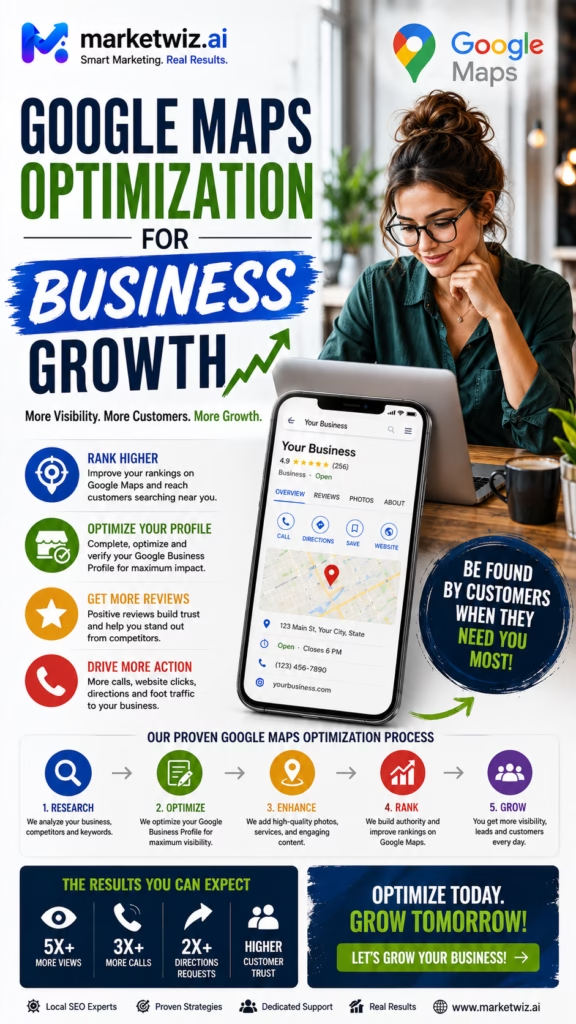
Google Maps Optimization for Business Growth
Google Maps optimization for business growth is about more than trying to appear higher in local search results. The real goal is to build a local visibility system that helps qualified customers discover the business, understand what it offers, trust its reputation, contact the right team, schedule the next step, and eventually become paying customers. Strong Google Maps optimization combines Google Business Profile accuracy, reviews, local website SEO, photos, categories, citations, backlinks, customer response, automation, CRM tracking, and revenue measurement.
Businesses often talk about Google Maps rankings as though ranking itself were the final business objective.
It is not.
A higher position can create more visibility, but visibility only becomes valuable when it produces qualified customer actions.
Those actions may include phone calls, website visits, appointment requests, direction requests, store visits, consultations, quote requests, purchases, service calls, project estimates, or commercial inquiries.
The strongest Google Maps optimization strategy therefore connects local SEO directly with customer acquisition.
The business profile attracts attention. Reviews build trust. Photos provide proof. Website content explains products and services. Local authority strengthens credibility. Fast response turns inquiries into conversations. Qualification identifies good opportunities. CRM tracking preserves follow-up. Revenue attribution reveals what actually works.
The Google Maps Business Growth Formula
Local Visibility + Profile Relevance + Strong Reviews + Original Photos + Local Website SEO + Trusted Citations + Fast Response + Lead Qualification + Follow-Up + Revenue Tracking = Sustainable Business Growth
Why Google Maps Optimization Can Drive Business Growth
High-Intent Visibility
Local customers may already be searching for the exact product, service, store, professional, or solution the business provides.
Customer Discovery
Businesses can reach customers who have never previously heard of their brand.
Trust Before Contact
Reviews, photos, categories, business information, and website links help customers evaluate the company.
Direct Lead Generation
Local visibility can turn directly into calls, appointments, visits, quote requests, and customer inquiries.
Long-Term Marketing Value
Reviews, citations, website authority, and local content can continue building value over time.
Measurable Revenue
Businesses can connect Maps leads with customers, sales, revenue, customer value, and profitability.
Think Beyond Rankings: Build a Complete Google Maps Growth System
Visibility
The business needs to appear for relevant local searches.
Trust
Customers need enough proof to believe the business is credible.
Conversion
The profile and website need to make contacting the company easy.
Sales Process
Calls and inquiries need to be answered, qualified, followed up, and converted.
Retention
New customers can create repeat purchases, maintenance, additional projects, reviews, and referrals.
Measurement
The business should understand which local search activity creates the highest-value customers.
Understand the Foundations of Local Search Rankings
Relevance
Search engines need to understand what the business does and which customer searches it should match.
Distance
Local results can be influenced by geographic relationships between the searcher, business location, and legitimate service area.
Prominence
Reviews, website authority, backlinks, citations, brand mentions, business reputation, and other credibility signals can contribute to local prominence.
Optimization Works Best as a System
Businesses should avoid relying on one tactic. Strong local visibility usually comes from improving profile accuracy, reputation, website quality, customer experience, local authority, and conversion together.
Fully Optimize the Google Business Profile
Use the Real Business Name
The profile should reflect the company's actual real-world business name rather than a keyword-stuffed version created only for search.
Use the Correct Phone Number
Customers should reach the correct sales, service, scheduling, or support process.
Use Accurate Hours
Keep standard and special hours current.
Use the Best Website URL
Direct customers to a useful page that explains the business and provides a clear conversion path.
Complete Relevant Fields
Add accurate categories, services, products, photos, descriptions, attributes, service areas, and other available business information.
Choose Categories That Reinforce the Main Business Model
Primary Category
Choose the category that most accurately represents the company's main customer-facing activity.
Secondary Categories
Add legitimate additional categories when they accurately describe other important business functions.
Avoid Category Stuffing
Adding unrelated categories simply to chase more searches can reduce profile clarity.
Support Categories With Website Content
Important products and services represented in the profile should also be explained clearly on the company's website.
Add Products and Services Customers Actually Search For
Use Clear Customer Language
Avoid internal terminology that potential customers may not understand.
Explain the Offer
Service descriptions should make the customer outcome clear.
Prioritize High-Value Services
Make major revenue-producing products and services easy to understand.
Stay Accurate
Only list products and services the company genuinely provides.
Keep Business Information Consistent Across the Web
Business Name
Use consistent branding on Google, the website, social media, major directories, and customer communications.
Phone Number
Keep primary contact information accurate.
Address
Use a legitimate eligible location where applicable.
Website
Make sure profiles and directories link to the correct website.
Business Hours
Keep public hours consistent so customers are not given conflicting information.
Manage Physical Locations and Service Areas Correctly
Storefront Businesses
Businesses that serve customers at an eligible physical location should accurately represent that location.
Service-Area Businesses
Companies that travel to customers should configure legitimate service areas based on real operational coverage.
Multi-Location Businesses
Each eligible location should have accurate business information, customer service, and local support.
Avoid Fake Locations
Artificial addresses can create serious long-term profile and reputation problems.
Write a Google Business Description That Supports Conversion
[Business Name] helps customers throughout [Primary Market] with [Primary Product or Service]. Our team focuses on professional communication, reliable service, and a straightforward customer experience. Contact us to learn more about availability, pricing, appointments, estimates, or the best next step for your needs.
Explain the Core Offer
Customers should understand the business quickly.
Explain Who You Help
Mention important customer groups where relevant.
Use Local Language Naturally
Reference the primary market without inserting long lists of unrelated cities.
Use Original Photos to Build Local Customer Trust
Products
Show actual products, inventory, packaging, models, options, and features.
Services
Show completed projects, installations, repairs, equipment, crews, and before-and-after results.
Team
Introduce the people customers may interact with.
Location
Show storefronts, showrooms, offices, warehouses, studios, or customer-facing spaces where applicable.
Branding
Vehicles, uniforms, signs, equipment, and branded environments can reinforce legitimacy.
Build a Consistent Google Review System
Ask Real Customers
Request honest reviews after successful purchases, appointments, installations, deliveries, projects, or service experiences.
Make the Process Easy
Customers should have a simple way to reach the review form.
Build Review Velocity Naturally
Ongoing review generation is generally more sustainable than occasional bursts.
Avoid Fake Reviews
Purchased, fabricated, or manipulated reviews create platform and reputation risks.
Respond to Reviews to Strengthen Customer Confidence
Positive Reviews
Thank customers naturally and reinforce the experience they appreciated.
Negative Reviews
Respond calmly, avoid public arguments, and invite appropriate private follow-up.
Use Feedback Operationally
Repeated complaints about communication, pricing, scheduling, products, delivery, or quality may reveal areas that need improvement.
Optimize the Website to Support Google Maps Growth
Explain the Business Immediately
Visitors should quickly understand what the company provides.
Create Product and Service Pages
Major offerings should have useful pages explaining customer needs, benefits, process, pricing context, and next steps.
Add Local Relevance
Include legitimate cities, service areas, customer types, and local use cases.
Make Contact Easy
Phone numbers, forms, appointment scheduling, store information, or purchasing actions should be clear.
Build Trust
Use real photos, FAQs, company information, reviews or testimonials where appropriate, and clear expectations.
Target Local Keywords With Real Customer Intent
Service + City Keywords
Combine real services with legitimate local markets.
Product + City Keywords
Retailers can target products customers may be actively searching for locally.
Problem-Based Searches
Customers may search for the problem before knowing the exact name of the service.
Commercial Keywords
Businesses serving B2B customers can target commercial buyers, property managers, contractors, investors, retailers, offices, and other relevant audiences.
Near-Me Intent
Strong local relevance is more useful than repeatedly forcing “near me” phrases into page copy.
Create Strong Product and Service Pages
Focus Each Page
Give important products and services enough space to address one clear customer intent.
Explain the Problem
Help customers recognize when they need the offer.
Explain the Process
Tell customers what happens after contact.
Explain Pricing Context
Include prices, starting ranges, minimums, or factors affecting cost when useful.
Add a Strong CTA
Encourage one primary next action.
Build Useful Location Pages for Real Markets
Use Unique Local Information
Explain how the company serves that city, neighborhood, county, or market.
Show Relevant Customer Needs
Different areas may have different housing, commercial, seasonal, demographic, or logistical conditions.
Add Local Proof
Projects, reviews, photos, case studies, or real customer examples can strengthen local credibility.
Avoid Duplicate Pages
Pages should provide real differences rather than changing only the city name.
Build Accurate Business Citations
Prioritize Reputable Sources
Major directories, maps platforms, local organizations, and industry-specific sources can support business consistency.
Keep Business Data Accurate
Name, phone number, address where applicable, website, categories, and hours should stay aligned.
Correct Outdated Listings
Old addresses, phone numbers, or business names can confuse both customers and search engines.
Prioritize Quality Over Quantity
Trusted citations matter more than mass submission to low-quality directories.
Build Local Authority Through Backlinks and Mentions
Local Partnerships
Suppliers, vendors, complementary businesses, contractors, retailers, and professional partners may create legitimate linking opportunities.
Business Organizations
Chambers, associations, charities, business groups, and community organizations can support local visibility.
Local Media
New services, expansions, community work, hiring, awards, events, and milestones may create media coverage.
Industry Sources
Suppliers, publications, associations, podcasts, and niche websites can strengthen authority where relationships are legitimate.
Publish Useful Local Content That Supports Both Rankings and Sales
Answer Customer Questions
Turn common sales and service questions into useful website content.
Create Buying Guides
Help customers understand options, pricing, features, materials, timing, and differences.
Publish Case Studies
Show real problems, solutions, projects, customer types, and outcomes.
Create Local Guides
Explain how local conditions influence purchasing or service decisions.
Build FAQ Content
Strong FAQ content can improve customer understanding and support broader search relevance.
Improve the Mobile Experience for Local Customers
Keep Pages Fast
Local customers should not have to wait for oversized websites to load.
Use Clear Contact Options
Calling, scheduling, requesting a quote, visiting a store, or purchasing should be easy.
Use Readable Formatting
Headings, short sections, clear spacing, and useful lists improve mobile usability.
Keep Forms Simple
Ask only for the information needed to begin the customer conversation.
Turn Google Maps Traffic Into Qualified Leads
Make Phone Numbers Obvious
Customers should not have to search for contact information.
Respond to Forms Quickly
Local customers may contact multiple businesses during the same search session.
Use Relevant Landing Pages
Customers should land on pages that match the service or product they searched for.
Use Clear Calls to Action
Move customers toward an estimate, appointment, quote, consultation, purchase, store visit, or phone conversation.
Improve Speed to Lead After Google Maps Generates the Inquiry
Ranking well is not enough when no one answers the phone.
Potential customers often contact multiple local businesses.
Simple Local Lead Response Workflow
Answer the customer's main question, confirm what they need, verify location and timing, determine whether the opportunity is a good fit, collect appropriate contact information, and move the customer toward a clear next step.
Recover Missed Calls
Use a callback process, missed-call text, or AI voice workflow where appropriate.
Assign Lead Ownership
Every qualified inquiry should have someone responsible for the next action.
Qualify Google Maps Leads Before Spending Sales Time
Confirm the Need
Identify the exact product, service, project, appointment, or solution the customer wants.
Confirm the Location
Make sure the opportunity falls within the company's real coverage.
Confirm Timing
Determine how soon the customer needs the product or service.
Confirm Scope
Ask for quantity, dimensions, project details, customer type, or other important information.
Confirm Next-Step Readiness
Move qualified customers toward an appointment, call, visit, quote, or purchase.
Use AI and Automation to Improve Google Maps Lead Handling
AI Chat
- Answer approved common questions
- Collect customer information
- Confirm location
- Ask qualification questions
- Request project details or photos
- Offer appointment options
- Route qualified opportunities
- Create CRM records
AI Voice
AI voice systems can support after-hours calls, overflow, missed calls, appointment scheduling, and initial qualification.
Automated Follow-Up
Automation can support appointment reminders, open quote follow-up, customer reactivation, and lead-status reminders.
Maintain Human Oversight
Complex pricing, complaints, disputes, custom work, financing, contracts, and sensitive customer situations should be handled by qualified staff.
Connect Google Maps Leads With a CRM
Capture the Source
Record whether a customer came from Google Maps, organic search, a specific location page, or another source.
Capture Customer Information
- Customer name
- Phone number
- Email when appropriate
- Product or service requested
- Customer location
- Timing
- Lead quality
- Appointment status
- Assigned employee
- Expected opportunity value
Use Clear Pipeline Stages
- New inquiry
- Contacted
- Qualified
- Appointment scheduled
- Quote or proposal sent
- Decision pending
- Won
- Completed
- Repeat opportunity
- Lost
Track Google Maps Optimization Like a Business Growth Channel
Visibility Metrics
- Local keyword movement
- Google Business Profile visibility
- Website traffic from local search
- Calls from local search
- Direction requests when relevant
Lead Metrics
- Total valid inquiries
- Qualified leads
- Average response time
- Phone leads
- Appointments scheduled
- Missed calls
Sales Metrics
- Quotes and estimates
- Appointment show rate
- Close rate
- Average customer value
- Repeat customer revenue
- Referral revenue
Measure Google Maps Revenue and ROI
Qualified Lead Rate
Qualified Lead Rate = Qualified Google Maps Leads ÷ Total Valid Google Maps Inquiries × 100
Appointment Rate
Appointment Rate = Google Maps Appointments ÷ Qualified Google Maps Leads × 100
Close Rate
Close Rate = New Google Maps Customers ÷ Qualified Google Maps Opportunities × 100
Customer Acquisition Cost
Customer Acquisition Cost = Total Local SEO and Sales Cost ÷ New Google Maps Customers
Google Maps ROI
ROI = (Gross Profit From Google Maps Customers − Local SEO Cost) ÷ Local SEO Cost × 100
| Metric | What It Measures |
|---|---|
| Local visibility | Whether the business is becoming easier to discover in local search |
| Qualified leads | Whether visibility is producing customers who actually fit the business |
| Appointment rate | Whether qualified inquiries move into meaningful next steps |
| Close rate | Whether qualified opportunities become paying customers |
| Average customer value | The average revenue generated by customers acquired through local search |
| Gross profit and ROI | Whether Google Maps optimization contributes to profitable business growth |
Scale Google Maps Optimization Into New Markets
Strengthen the Core Market First
Build repeatable rankings, review generation, customer service, qualification, and revenue tracking before expanding aggressively.
Add New Services Strategically
New offerings should receive dedicated content, photos, conversion paths, and tracking.
Expand Locations Legitimately
New Google Business Profiles should correspond to real eligible business locations.
Build Market-Specific Pages
New markets should receive useful, differentiated local content.
Compare Performance by Market
Track leads, customer value, close rate, reviews, revenue, and ROI separately for each geographic area.
Common Google Maps Optimization Mistakes
Keyword-Stuffing the Business Name
Use the actual real-world company name.
Creating Fake Locations
Artificial offices can create long-term profile risks.
Ignoring Reviews
Local rankings have limited value if customers do not trust the business.
Using Only Generic Photos
Real business photos are stronger trust signals.
Creating Thin City Pages
Location pages should be useful rather than duplicated.
Ignoring Mobile Experience
Local customers may leave before contacting a business if the site is slow or confusing.
Missing Calls
Maps visibility is wasted when qualified customers cannot reach the company.
Ignoring Follow-Up
Many local prospects need more than one conversation.
Tracking Rankings Without Revenue
Business growth should be measured in customers, revenue, gross profit, and ROI.
A 30-Day Google Maps Optimization Plan for Business Growth
Week 1: Fix the Local Foundation
- Audit the Google Business Profile
- Verify the business name
- Verify primary and secondary categories
- Verify phone number
- Verify website URL
- Verify business hours
- Review locations or service areas
- Document current rankings and lead volume
Week 2: Improve Relevance and Trust
- Add accurate products and services
- Improve the business description
- Add original photos
- Improve priority service pages
- Create or improve location pages
- Improve mobile usability
- Build accurate citations
- Correct inconsistent business information
Week 3: Build Authority and Conversion
- Create a review request system
- Respond to existing reviews
- Develop local business relationships
- Seek legitimate backlinks
- Publish useful local content
- Improve phone and form response
- Create missed-call recovery
- Connect CRM tracking
Week 4: Measure Business Outcomes
- Track local keyword movement
- Track qualified calls
- Measure qualified lead rate
- Measure appointment rate
- Measure close rate
- Track average customer value
- Track revenue from local search
- Calculate customer acquisition cost and ROI
End-of-Month Outcome
After 30 days, the business should have a stronger Google Business Profile, clearer local relevance, better customer trust, improved review systems, stronger website support, more accurate citations, faster lead handling, better CRM tracking, and greater visibility into how Google Maps activity contributes to actual customers and business growth.
Final Takeaway: Google Maps Optimization Should Produce Business Growth
Effective Google Maps optimization for business growth should never be measured only by ranking positions.
Rankings matter because they can create more local visibility, but the real value begins when that visibility turns into qualified customer actions.
Strong local growth begins with an accurate Google Business Profile, relevant categories, real products and services, original photos, genuine customer reviews, and legitimate location information.
The website should reinforce those signals through strong service pages, useful location content, clear local keywords, easy contact options, mobile optimization, and customer-focused information.
Accurate citations, local relationships, legitimate backlinks, review responses, and useful content can strengthen broader local authority.
Once customers contact the business, speed becomes critical.
Calls should be answered. Forms should be responded to. Qualified leads should be routed correctly. Appointments should be scheduled. Estimates and proposals should be followed up. Missed calls should have recovery workflows.
AI chat, AI voice, appointment automation, missed-call response, CRM tracking, and automated follow-up can help businesses process more local demand while maintaining consistency.
Finally, local search should be connected with measurable business outcomes: qualified leads, appointments, close rate, average customer value, repeat business, referral revenue, customer acquisition cost, gross profit, and ROI.
When Google Maps visibility, local SEO, customer reputation, lead response, sales conversion, and revenue tracking all work together, Google Maps can become a durable business growth channel rather than simply another online listing.
Frequently Asked Questions
1. What is Google Maps optimization for business growth?
It is the process of improving local visibility, Google Business Profile quality, website relevance, reputation, lead conversion, and tracking so local search contributes to real business growth.
2. Why is Google Maps optimization important for local businesses?
It can help businesses appear in front of nearby customers who are already searching for products, services, stores, contractors, professionals, and local solutions.
3. How can a business improve its Google Maps rankings?
Improve profile accuracy, categories, reviews, photos, local website content, citations, authority, and customer experience.
4. What is the most important part of a Google Business Profile?
There is no single field. Strong performance usually depends on accurate and complete business information working together.
5. Do Google reviews help business growth?
Yes. Genuine reviews can improve trust, reputation, customer confidence, and conversion.
6. How can businesses get more Google reviews?
Ask real customers for honest feedback after successful purchases, appointments, projects, or service experiences.
7. Should businesses respond to Google reviews?
Yes. Professional responses can show active customer service and reinforce business credibility.
8. Do photos improve Google Maps performance?
Original product, project, team, location, equipment, and customer-experience photos can improve trust and profile quality.
9. Should businesses use stock photos on Google Maps?
Original business photos are generally more useful because they accurately show what customers can expect.
10. Does website SEO affect Google Maps optimization?
Yes. A strong website can reinforce business relevance, local authority, customer trust, and conversion.
11. Should businesses create city landing pages?
Yes, when each page contains unique, useful information about a legitimate market the business serves.
12. Do citations help Google Maps optimization?
Accurate citations can support consistency, credibility, and local business verification.
13. Do backlinks help local businesses rank?
Legitimate local and industry backlinks can strengthen website authority and prominence.
14. Can service-area businesses rank on Google Maps?
Yes. Service-area businesses can build local relevance through accurate profile settings, website content, reviews, citations, and authority.
15. Can a business rank in nearby cities without an office there?
Legitimate nearby relevance can be built without creating fake offices.
16. Should businesses create multiple Google Business Profiles?
Only for legitimate eligible locations that meet current Google Business Profile requirements.
17. Can fake addresses hurt Google Maps performance?
Yes. Misleading or ineligible locations can create suspension and long-term visibility risks.
18. How important is mobile optimization?
Very important because many local searches happen on mobile devices.
19. Should businesses use call tracking?
Call tracking can help measure qualified phone leads, appointments, sales, and revenue by source.
20. Should Google Maps leads be tracked in a CRM?
Yes. CRM tracking helps connect local visibility with qualification, follow-up, sales, and revenue.
21. Can AI help businesses handle Google Maps leads?
AI can help collect information, qualify customers, schedule appointments, recover missed calls, and create CRM records.
22. What Google Maps metrics should businesses track?
Track visibility, calls, website visits, qualified leads, appointments, customers, revenue, customer value, and ROI.
23. How should businesses measure lead quality?
Measure whether inquiries match the company's service area, offer, customer criteria, timing, budget expectations, and operational capabilities.
24. How long does Google Maps optimization take?
Timelines vary based on competition, market size, reviews, profile quality, website strength, location, and authority.
25. Can Google Maps rankings be guaranteed?
No. Specific rankings cannot be legitimately guaranteed because local search depends on multiple changing factors.
26. Should businesses combine Maps optimization with paid advertising?
Yes. Local SEO can complement paid search, social media, marketplace advertising, email, referrals, and other channels.
27. Should businesses publish local content?
Yes. Useful local content can strengthen relevance, authority, customer education, and conversion.
28. Can Google Maps optimization help B2B companies?
Yes. Local search can help B2B companies reach businesses, contractors, property managers, investors, offices, and other commercial customers.
29. What is the biggest Google Maps optimization mistake?
Focusing only on rankings while ignoring reputation, customer response, conversion, follow-up, revenue, and profitability.
30. What is the goal of Google Maps optimization for business growth?
The goal is to turn stronger local visibility into qualified leads, customers, repeat business, revenue, and measurable long-term growth.
30 Additional SEO Keywords
Use these supporting phrases naturally across local SEO pages, Google Maps guides, business growth content, service pages, location pages, FAQs, case studies, and internal links.
Turn Google Maps Visibility Into More Leads, Customers, and Business Growth
MarketWiz.ai helps businesses organize Google Maps optimization, strengthen Google Business Profile performance, improve local keyword coverage, build service and location pages, organize review growth, improve citations and local authority, recover missed calls, connect AI voice and CRM systems, track qualified local leads, and measure customers, revenue, gross profit, customer acquisition cost, and return on investment.
This article provides general Google Maps marketing, local SEO, automation, lead-generation, and business information and does not provide legal, financial, licensing, insurance, privacy, telecommunications, consumer-protection, platform-compliance, tax, or regulatory advice. Google Business Profile features, categories, eligibility requirements, interfaces, ranking systems, and policies may change. Businesses should review current platform requirements and applicable licensing, advertising, privacy, call-recording, SMS, email, consumer-protection, industry-specific, and local regulatory requirements before implementing marketing or customer communication systems. Rankings, calls, appointments, customers, revenue, and other results cannot be guaranteed and depend on competition, location, geographic proximity, profile quality, reviews, website strength, local authority, service coverage, reputation, customer experience, response speed, pricing, market demand, and sales execution.













