
Google Maps Marketing for Consistent Leads
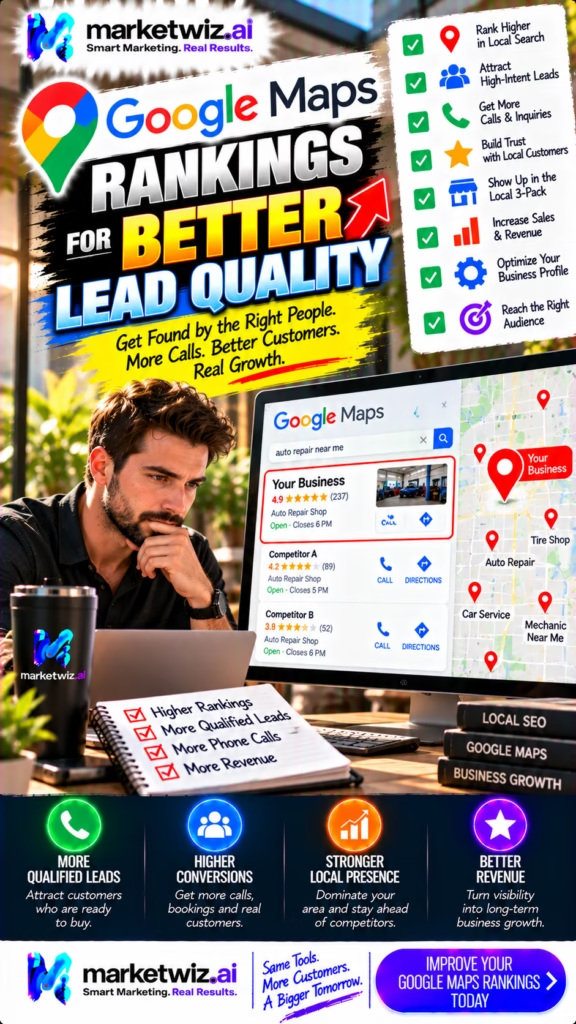
Build a stronger local customer acquisition strategy with Google Maps marketing, Google Business Profile optimization, reputation management, and conversion-focused local SEO designed to turn relevant searches into ongoing business opportunities.
For local businesses, attracting a steady flow of qualified customers is one of the most important challenges in digital marketing. Traditional advertising can create awareness, social media can strengthen brand recognition, and referrals can generate valuable opportunities. However, few channels connect a business with actively searching local customers as directly as Google Maps.
When homeowners search for an HVAC company, plumbing contractor, professional painter, roofing specialist, electrician, or landscaping company, they frequently encounter Google Maps results during their decision-making process. These searches may represent immediate problems, planned home improvements, or comparisons between local providers.
This creates an opportunity for businesses that understand how to combine Google Maps marketing with an effective lead generation strategy. Rather than depending exclusively on paid advertising or occasional referrals, companies can establish an organic local search presence that helps potential customers discover them when their services are relevant.
However, consistent leads do not happen simply because a company creates a Google Business Profile. Successful marketing requires accurate information, relevant services, authentic customer reviews, strong website content, and a reliable process for converting inquiries into customers.
This comprehensive guide explains how businesses can build a sustainable Google Maps marketing system, improve local visibility, attract higher-intent prospects, and measure performance using meaningful business outcomes.
A successful local marketing system connects three important stages: helping the right customers discover the business, giving them compelling reasons to trust it, and making it easy to request assistance. Consistency comes from maintaining and improving that entire process over time.
01 What Is Google Maps Marketing?
Google Maps marketing is the practice of improving a business's visibility, presentation, and customer engagement across Google Maps and related Google Search experiences.
At the center of this strategy is Google Business Profile, the platform that allows eligible companies to manage business information appearing in Google Search and Maps. A well-maintained profile can communicate what a business offers, where it operates, when customers can contact it, and what previous customers have experienced.
Google Maps marketing includes several connected activities: selecting accurate business categories, maintaining contact details, adding relevant services, publishing authentic photographs, requesting legitimate customer reviews, improving website content, and analyzing customer interactions.
Unlike advertising campaigns that depend on continuous spending for placement, organic Google Maps visibility can contribute to long-term customer discovery. However, organic rankings are not guaranteed, and performance can fluctuate with competition, location, and search intent.
The strongest approach treats Google Maps as one part of a broader customer acquisition system rather than an isolated ranking opportunity.
02 Why Consistent Leads Matter More Than Occasional Traffic Spikes
Many businesses experience unpredictable inquiry patterns. One week may bring numerous phone calls, while the following week produces very few. This uncertainty makes staffing, scheduling, budgeting, and business expansion more difficult.
A consistent lead generation strategy attempts to create a more dependable flow of relevant customer opportunities. It does not eliminate seasonality or guarantee identical inquiry volumes every month, but it can reduce unnecessary dependence on a single promotional campaign.
For example, a residential painting company may experience strong demand during exterior painting season while receiving fewer inquiries during colder months. A balanced local marketing strategy can promote appropriate interior projects, cabinet painting, and other legitimate offerings when seasonal demand changes.
Consistency should also be evaluated by lead quality. Twenty inquiries from homeowners actively planning projects may be more valuable than one hundred unrelated website visits.
The objective is to build predictable marketing processes, understand demand patterns, and continually improve the proportion of inquiries that become qualified opportunities.
03 Understand How Customers Discover Businesses on Google Maps
Local customer journeys frequently begin with a specific problem or need. A homeowner might search for "AC repair near me," "interior painters in my area," or "emergency plumber open now."
Google evaluates the search and presents local businesses it considers relevant based on factors including relevance, distance, and prominence. The results may vary depending on the searcher's location, the wording of the query, and other contextual factors.
After viewing the results, customers often compare several listings. They may examine star ratings, read reviews, browse photographs, review business hours, or visit websites before choosing whom to contact.
Discovery
The customer searches for a service and encounters relevant local businesses.
Evaluation
The customer compares reviews, photographs, service descriptions, and business information.
Contact
The customer calls, visits a website, requests directions, or begins another available interaction.
Conversion
The business responds, qualifies the inquiry, provides an estimate, and may acquire a customer.
Understanding this sequence helps businesses optimize for the entire customer experience rather than focusing exclusively on appearing in search results.
04 Optimize Your Google Business Profile for Relevant Searches
A complete Google Business Profile forms the foundation of an effective Google Maps marketing strategy. Missing or inaccurate information can create confusion and discourage potential customers from making contact.
Businesses should verify that their official name, primary category, additional categories, telephone number, website address, business hours, and geographic information are accurate.
The profile should also describe the company's legitimate offerings through available service fields and other appropriate features.
A common mistake is treating profile optimization as a one-time administrative task. In reality, business information changes as companies expand, adjust operating hours, introduce new offerings, or update contact details.
Regular maintenance helps ensure that potential customers receive reliable information when deciding whether to contact the company.
05 Choose Business Categories That Match Customer Intent
Business categories help Google understand the nature of a company's operations. Selecting the most accurate primary category is an important step in establishing relevance for appropriate searches.
A roofing contractor should select a category representing roofing work rather than an unrelated construction category. Similarly, an HVAC business should use categories that accurately reflect its heating and cooling operations.
Additional categories can describe legitimate secondary business activities when appropriate.
Businesses should avoid selecting categories solely because they appear popular or potentially profitable. Misrepresenting services may attract irrelevant inquiries and create compliance problems.
Category selection should be reviewed when a company's actual operations change, but unnecessary repeated changes should be avoided.
06 Create a Business Description That Encourages Qualified Inquiries
A Google Business Profile description should help prospective customers understand what the company does and whether it is suitable for their needs.
An effective description can identify the primary services, typical customers, geographic coverage, and meaningful business strengths.
For example, a residential remodeling company might emphasize kitchen renovations, bathroom upgrades, careful project planning, and communication throughout the renovation process.
The description should be written naturally rather than filled with repetitive city names and keywords. Search visibility is important, but the text should remain useful to actual customers.
We help local homeowners plan and complete residential improvement projects, including interior renovations, exterior updates, and specialized home upgrades. Our team focuses on clear communication, careful workmanship, and practical solutions tailored to each property.
Accurate descriptions can help filter unsuitable inquiries by clearly communicating the company's capabilities and specialties.
07 Target High-Intent Local Search Keywords
High-intent keywords are search phrases suggesting that a person is actively looking for a product, service, or provider.
For local businesses, these searches often include a specific service, geographic modifier, urgency indicator, or provider comparison.
| Search Type | Example Keyword | Likely Customer Goal |
|---|---|---|
| Immediate need | Emergency plumber near me | Find urgent assistance |
| Service-specific | Kitchen cabinet painting company | Find a specialist |
| Location-focused | Roofing contractor in Fort Worth | Find a local provider |
| Comparison | Top-rated HVAC companies nearby | Compare businesses |
| Project planning | Exterior house painting estimate | Evaluate project options |
Keyword research should guide service descriptions, website pages, and helpful content. It should not be used to add misleading information to a business profile or artificially repeat phrases.
08 Strengthen Your Presence in the Google Local Pack
The Google local pack is a group of local business results that may appear prominently within Google Search for geographically relevant queries.
These results often provide immediate access to business names, ratings, contact information, and other details that help customers evaluate nearby options.
Appearing in the local pack can create valuable exposure, but inclusion and position depend on Google's ranking systems.
Businesses can strengthen their local presence by maintaining accurate profiles, selecting relevant categories, developing legitimate customer reviews, and improving their overall reputation and online information.
It is important to recognize that local rankings can differ across neighborhoods. A company may appear prominently near its operating location but have less visibility farther away.
Effective optimization therefore focuses on meaningful geographic coverage and relevant customer searches rather than attempting to dominate every location.
09 Build a Sustainable Customer Review System
Customer reviews are an important part of local business reputation. They help prospective customers understand previous experiences and evaluate whether a provider appears trustworthy.
A sustainable review process begins with consistently delivering a positive customer experience and making it convenient for genuine customers to share honest feedback.
Businesses may request reviews after completed projects, provide direct review links, and train employees to explain how customers can leave feedback.
However, review requests must comply with Google's policies. Businesses should not offer rewards for reviews, purchase ratings, pressure customers to provide positive feedback, or selectively solicit only favorable opinions.
The objective is to build an authentic review history that reflects real customer experiences.
10 Respond to Customer Reviews to Demonstrate Professionalism
Review responses allow businesses to communicate publicly with customers and demonstrate their approach to customer care.
A thoughtful response to a positive review might thank the customer and acknowledge a specific aspect of the completed project.
For negative reviews, the company should respond professionally, recognize legitimate concerns, and offer an appropriate path for further discussion when necessary.
Avoid disclosing private customer details or arguing publicly about disputed circumstances.
A consistent response process can strengthen the impression that a business remains attentive and accountable after a transaction.
11 Use Authentic Business Photos to Build Confidence
High-quality photographs can help prospective customers evaluate a business before making contact.
For contractors, images of completed work provide visual evidence of the types of projects the company handles. For retail businesses, photographs of products and facilities can help customers understand what to expect.
Businesses should prioritize authentic, current images that accurately represent their operations.
- Photograph completed projects in good lighting.
- Show different service categories where appropriate.
- Include clear images of legitimate business facilities.
- Use before-and-after comparisons when they accurately represent the work.
- Update photographs as new projects are completed.
- Avoid misleading edits or unrelated stock imagery.
Visual consistency can support brand recognition, while authentic project evidence can reduce uncertainty for customers comparing several providers.
12 Improve Your Website for Google Maps Visitors
Google Maps frequently acts as a starting point rather than the final destination in the customer journey. Prospects may visit a business's website to learn more about services, review examples, or request an estimate.
A website should immediately communicate what the business offers and why the visitor should consider contacting it.
Important elements include clear service descriptions, accurate geographic information, credible testimonials, genuine project examples, and accessible contact details.
Website messaging should remain consistent with the information displayed on the Google Business Profile.
When customers encounter conflicting phone numbers, outdated service descriptions, or unclear operating areas, they may lose confidence and choose another provider.
13 Create Dedicated Pages for Your Most Valuable Services
Businesses offering multiple services can benefit from dedicated website pages that explain each major offering in greater detail.
For example, a painting company may maintain separate pages for interior painting, exterior painting, kitchen cabinet refinishing, and fence staining.
Each page should answer questions relevant to that particular service, explain the company's approach, and provide clear information about requesting assistance.
Dedicated service pages can also support organic search visibility when they contain original, useful content.
Avoid creating numerous nearly identical pages solely to target slight keyword variations. The purpose of each page should be to provide meaningful information for a distinct customer need.
14 Develop Useful Location-Specific Website Content
Local businesses often serve several communities, making geographic relevance an important consideration.
A legitimate location page can explain the services available in a particular city, highlight actual projects completed nearby, and address local considerations relevant to customers.
For example, a roofing company serving multiple Texas communities might discuss roofing materials, weather-related maintenance considerations, and relevant project examples for those areas.
Location pages should not falsely imply the existence of physical offices or duplicate the same generic content across dozens of cities.
Useful local content helps customers understand the company's actual service coverage while supporting a more informative website.
15 Make Mobile Lead Generation a Priority
Many customers search for local businesses using smartphones. This makes mobile usability an essential part of Google Maps marketing.
A mobile visitor should be able to understand the business's offerings, locate contact information, and submit an inquiry without unnecessary effort.
Forms should be concise, text should remain readable, and navigation should work comfortably on smaller screens.
Website owners should also review loading performance and ensure that large images, intrusive overlays, or complex page elements do not interfere with important content.
Mobile optimization is not simply a technical requirement. It directly affects the experience of customers who may be ready to contact a business.
16 Reduce Friction in the Customer Contact Process
A prospective customer may discover a business, review its information, and decide to make contact within a short period.
If the contact process is confusing or requires too many steps, the customer may leave and consider another company.
Businesses should make telephone numbers, inquiry forms, and appointment information easy to locate.
Forms should request enough information to understand the customer's needs without creating unnecessary obstacles.
For example, a home improvement inquiry form might ask for the project type, property location, preferred timeline, and contact information.
The goal is to balance convenience with the information necessary for effective lead qualification.
17 Qualify Leads to Improve Marketing Efficiency
A consistent lead generation system should focus on relevant business opportunities rather than maximizing every possible inquiry.
Lead qualification helps determine whether a prospective customer is a suitable match based on service needs, geographic location, project scope, timing, and other legitimate business considerations.
A company specializing in large residential renovations may not be the best fit for someone requesting a minor repair.
Clear website messaging and accurate service descriptions can help prospective customers understand whether the business handles their type of project.
A customer relationship management system can also help teams categorize inquiries, track follow-up activity, and identify which marketing channels generate suitable opportunities.
18 Build Local Authority Through Genuine Community Connections
A business's reputation extends beyond its Google Business Profile. Genuine community relationships, professional associations, partnerships, and local recognition can contribute to broader brand awareness.
For example, a contractor may participate in community improvement projects, maintain memberships in relevant professional organizations, or collaborate with complementary local businesses.
These activities can create referral opportunities and legitimate online mentions.
Local authority should be developed through real business activity rather than purchased endorsements, artificial links, or fabricated relationships.
Over time, a recognizable local brand may benefit from stronger customer familiarity and increased direct searches.
19 Maintain Accurate Business Information Across the Web
Customers may encounter a business through Google Maps, its website, industry directories, social media profiles, or local community websites.
Keeping information consistent across these platforms reduces confusion and supports a professional online presence.
Important information includes the official business name, contact number, website URL, operating hours, and publicly displayed address where applicable.
Service-area businesses should follow the address-display requirements of each platform and avoid publishing misleading locations.
Directory listings should be maintained for accuracy and usefulness rather than created in large quantities solely to influence search rankings.
20 Publish Helpful Google Business Profile Updates
Google Business Profile updates can provide customers with timely information when posting features are available.
Businesses might highlight completed projects, communicate seasonal considerations, announce changes in operating hours, or share relevant company news.
For example, an HVAC company could explain why homeowners should consider system maintenance before a seasonal temperature change.
A painting contractor might share an authentic example of a recently completed interior transformation.
Updates should remain informative and accurate. Posting frequently does not guarantee improved Google Maps rankings, but useful information can support customer engagement.
21 Connect Google Maps Marketing With Other Lead Sources
A reliable marketing strategy rarely depends on a single channel. Google Maps can work alongside organic website search, paid advertising, social media, referrals, and direct customer outreach.
These channels often influence one another. Someone may first discover a contractor through social media, later search for the business on Google Maps, and then read customer reviews before requesting an estimate.
Consistent branding and service information help create a coherent experience across these interactions.
Businesses should also recognize that attribution tools may not capture every step of a customer's journey.
Evaluating marketing channels together can provide a more realistic understanding of how customers discover and choose a company.
22 Track Google Maps Performance Beyond Rankings
Keyword rankings can provide useful information about visibility, but they do not fully explain whether a marketing strategy generates valuable customers.
Businesses should examine available Google Business Profile performance metrics alongside website analytics, inquiry records, and customer acquisition data.
Relevant measures may include profile interactions, website visits, qualified phone inquiries, completed forms, booked estimates, and acquired customers.
| Metric | What It Measures | Why It Matters |
|---|---|---|
| Profile interactions | Customer activity on the listing | Indicates engagement |
| Website visits | Traffic reaching the website | Shows additional interest |
| Qualified inquiries | Relevant customer opportunities | Measures lead quality |
| Booked appointments | Scheduled customer conversations | Shows sales progression |
| Acquired customers | Completed customer conversions | Connects marketing to outcomes |
Performance should be reviewed over meaningful periods because short-term fluctuations may reflect seasonality, customer behavior, or measurement limitations.
23 Calculate Lead Conversion Rates Accurately
Conversion rate measures how frequently a defined interaction produces a desired outcome.
For example, if a website receives 500 tracked visits and generates 25 inquiry submissions, the inquiry conversion rate is 5%.
However, the business should also evaluate how many inquiries become qualified opportunities and how many qualified opportunities become paying customers.
500 website visits generate 25 inquiries. Of those inquiries, 15 meet the company's qualification criteria. If five become customers, the website inquiry conversion rate is 5%, while the inquiry-to-customer conversion rate is 20%.
These figures are hypothetical and should not be interpreted as industry benchmarks or guaranteed results.
Tracking each stage can help identify whether the greatest improvement opportunity lies in website messaging, lead quality, response time, or the sales process.
24 Improve Lead Follow-Up and Response Processes
Generating an inquiry is only the beginning of the customer acquisition process. Businesses also need a dependable system for responding to potential customers.
A missed phone call, unanswered form submission, or delayed estimate can reduce the value of an otherwise successful marketing effort.
Companies should establish clear responsibility for incoming inquiries and develop practical follow-up procedures.
A customer relationship management platform may help organize contact records, track appointments, and identify unresolved opportunities.
The appropriate response process depends on the business. Emergency repair inquiries may require faster attention than long-term renovation planning requests.
Consistent communication can help convert marketing activity into meaningful customer relationships.
25 Account for Seasonal Changes in Local Demand
Many local industries experience predictable seasonal fluctuations. HVAC demand may change with weather conditions, exterior painting may depend on suitable temperatures, and landscaping inquiries may increase during particular parts of the year.
A Google Maps marketing strategy should reflect these legitimate changes in customer needs.
Businesses can update website content, communicate seasonal offerings, and prepare relevant informational resources before expected demand periods.
However, seasonal messaging must remain accurate. Companies should not advertise services they cannot currently provide or imply availability that does not exist.
Reviewing historical inquiries can help businesses identify recurring demand patterns and make more informed staffing and marketing decisions.
26 Avoid Google Maps Marketing Practices That Create Risk
Shortcuts intended to manipulate Google Maps rankings can undermine customer trust and create long-term problems.
Businesses should avoid misleading business names, fictitious locations, ineligible duplicate listings, purchased reviews, and inaccurate service descriptions.
Website strategies should also avoid thin location pages, excessive keyword repetition, and content created solely to attract search engines without helping users.
- Use the legitimate business name.
- Follow Google's profile eligibility requirements.
- Request honest reviews without incentives.
- Represent service areas accurately.
- Maintain correct contact information.
- Publish original, useful website content.
- Evaluate performance using real customer outcomes.
A sustainable marketing program prioritizes compliance, accuracy, and customer experience rather than temporary ranking tactics.
27 Develop a 90-Day Google Maps Marketing Plan
A structured implementation plan helps businesses organize improvements and measure progress.
Days 1–30: Establish the Foundation
- Audit the Google Business Profile.
- Correct inaccurate business information.
- Review primary and additional categories.
- Identify high-intent local search themes.
- Assess website usability and contact options.
- Establish baseline inquiry and conversion metrics.
Days 31–60: Strengthen Trust and Relevance
- Improve major service descriptions.
- Publish authentic business and project photographs.
- Implement a compliant review request process.
- Improve priority website service pages.
- Address mobile usability problems.
- Review the customer inquiry process.
Days 61–90: Analyze and Refine
- Evaluate changes in profile interactions.
- Compare inquiry quality across services.
- Review website conversion performance.
- Improve underperforming content.
- Identify useful local content opportunities.
- Develop a recurring maintenance schedule.
This roadmap is an organizational framework rather than a promise of rankings or a specific number of leads within 90 days.
28 Build a Monthly Google Maps Marketing Routine
Ongoing maintenance helps prevent outdated information and keeps marketing decisions connected to actual customer behavior.
A monthly review should examine profile accuracy, customer feedback, website performance, and available business outcomes.
Businesses may also review recent project photographs, service changes, contact information, and relevant local content.
The process should remain practical. A small business does not need to publish unnecessary updates every day to maintain a useful profile.
Instead, prioritize meaningful improvements that make the business easier to discover, evaluate, and contact.
Quarterly reviews can focus on broader trends such as qualified lead volume, customer acquisition cost, and demand across different service categories.
29 Evaluate the Long-Term Value of Google Maps Leads
The value of a customer extends beyond the first transaction in many industries.
A plumbing customer may return for future repairs, an HVAC customer may schedule recurring maintenance, and a painting customer may request additional projects over time.
Businesses should consider customer acquisition cost, gross profit, repeat purchases, and referrals when evaluating their marketing strategy.
For example, two marketing channels may generate the same number of customers but produce very different long-term business outcomes.
Understanding customer lifetime value can help companies prioritize services and customer segments that align with their operating capabilities and financial objectives.
The goal is not simply to generate the largest number of inquiries. It is to attract suitable customers who contribute to sustainable business growth.
30 Turn Google Maps Into a Sustainable Lead Generation Channel
Consistent Google Maps lead generation requires alignment between local visibility, customer trust, conversion experience, and business operations.
A well-maintained Google Business Profile helps relevant customers discover the company. Authentic reviews and photographs support credibility. Useful website content provides additional information, while clear contact options help visitors take the next step.
Reliable follow-up processes and performance measurement complete the system by helping businesses understand which inquiries become qualified opportunities and paying customers.
The strongest strategies are not based on ranking shortcuts or unrealistic promises. They are built through accurate information, customer-focused content, genuine reputation development, and ongoing improvement.
For businesses willing to invest in these fundamentals, Google Maps can become an important component of a broader, more dependable customer acquisition strategy.
Consistent leads come from building a complete marketing process, not simply appearing in search results. Effective Google Maps marketing helps the right customers discover your business, understand its value, and contact it with confidence.
Frequently Asked Questions About Google Maps Marketing
1. What is Google Maps marketing?
Google Maps marketing involves improving a business's local visibility, Google Business Profile information, reputation, and customer engagement to support relevant inquiries and customer acquisition.
2. Can Google Maps generate consistent leads?
Google Maps can contribute to ongoing local lead generation, but inquiry volume depends on demand, competition, visibility, reputation, and business performance. Consistent results are not guaranteed.
3. Is Google Maps marketing free?
Creating and managing an eligible Google Business Profile is free. Businesses may incur costs for professional optimization, website development, content creation, or optional advertising.
4. How does Google rank businesses on Maps?
Google identifies relevance, distance, and prominence as major factors influencing local rankings.
5. What is Google Business Profile optimization?
It is the process of maintaining accurate business information, appropriate categories, relevant services, photographs, and customer-facing details.
6. How long does Google Maps marketing take to work?
Results vary based on the business's starting position, market competition, search demand, and the quality of ongoing optimization.
7. Do Google reviews help generate leads?
Authentic reviews can increase customer confidence and help prospective customers evaluate local providers.
8. Can businesses offer discounts for Google reviews?
No. Incentivized reviews violate Google's policies, even when customers are not explicitly required to leave positive ratings.
9. Are business photos important for Google Maps?
Yes. Authentic photographs can help customers understand a company's work, facilities, products, and professionalism.
10. What is the Google local pack?
The local pack is a group of local business results that may appear in Google Search for geographically relevant queries.
11. What are high-intent local keywords?
They are search phrases suggesting that a person may be ready to find, compare, or contact a provider for a specific service.
12. Does a business need a website for Google Maps?
A website is not universally required for an eligible listing, but it can provide useful information and help convert interested visitors into inquiries.
13. How can businesses improve Google Maps conversions?
They can maintain accurate profiles, build authentic credibility, improve landing pages, and make contact options easy to access.
14. Should businesses create multiple Google Maps listings?
Only when each listing independently meets Google's eligibility requirements. Creating fictitious or ineligible duplicate listings can cause problems.
15. Do Google Business Profile posts improve rankings?
Posting frequently does not guarantee higher rankings. Posts can help communicate timely, relevant information to customers.
16. What is local SEO lead generation?
Local SEO lead generation uses geographically relevant search visibility and customer-focused website experiences to attract business inquiries.
17. How do service-area businesses use Google Maps?
Eligible service-area businesses can maintain profiles and specify geographic coverage while following Google's address and eligibility guidelines.
18. What is a qualified local lead?
A qualified local lead is an inquiry from a potential customer whose needs, location, timing, and project requirements align with the company's offerings.
19. How should businesses measure Google Maps leads?
They should review available profile interactions alongside website inquiries, qualified calls, appointments, and customer acquisition data.
20. Can Google Maps marketing replace paid advertising?
Google Maps may become a valuable organic acquisition channel, but whether it can replace paid advertising depends on the company's goals, competition, and demand.
21. How important is mobile website optimization?
Mobile optimization is important because customers frequently use smartphones to research and contact local businesses.
22. What should a local service landing page include?
It should clearly explain the service, provide credible evidence, answer common questions, and offer accessible contact options.
23. Can Google Maps rankings change by location?
Yes. Local results can vary based on the searcher's location, query, and other contextual factors.
24. What is the biggest Google Maps marketing mistake?
A major mistake is focusing exclusively on ranking positions without measuring whether the business receives relevant, qualified customer inquiries.
25. How often should Google Business Profile information be checked?
Businesses should correct important changes promptly and review their profiles regularly for accuracy.
26. Do local business directories still matter?
Relevant directories can help customers find accurate business information, but low-quality mass listings are not a substitute for genuine reputation and visibility.
27. How can businesses improve lead quality?
They can accurately describe services, clarify geographic coverage, publish relevant website content, and use simple inquiry qualification processes.
28. What is customer acquisition cost?
Customer acquisition cost measures the marketing and sales expenditure associated with acquiring a customer over a defined period.
29. What makes Google Maps marketing sustainable?
Sustainable marketing relies on accurate information, useful content, authentic customer reviews, dependable follow-up, and ongoing performance analysis.
30. How can local businesses generate more consistent leads?
They can combine Google Maps optimization with relevant service content, strong customer reputation, conversion-focused websites, and reliable inquiry management.
30 Additional SEO Keywords for Google Maps Marketing
The following keyword themes can support content planning, service page development, and local SEO research. Use keywords naturally in relevant content rather than repeating them excessively.
Conclusion: Build a Google Maps Marketing System That Supports Consistent Growth
Google Maps marketing offers local businesses an opportunity to connect with customers who are actively searching for relevant services.
However, the most effective strategies extend beyond profile creation and keyword rankings. They combine accurate business information, relevant services, authentic customer feedback, strong website content, and clear communication.
A complete Google Business Profile helps customers discover the company. Reviews and photographs provide evidence that supports trust. Helpful landing pages explain the company's offerings, while accessible contact options encourage inquiries.
Businesses that measure qualified leads, appointments, customer acquisition, and long-term customer value can make better decisions about their marketing investments.
The goal is not to promise identical results every month. It is to create a dependable process that supports ongoing discovery, customer engagement, and continuous improvement.
At MarketWiz.ai, the focus is on practical digital marketing strategies that connect local visibility with meaningful customer acquisition opportunities.
Ready to Build a More Consistent Local Lead Pipeline?
Discover how conversion-focused Google Maps marketing and local SEO can help your business reach relevant customers, strengthen its online reputation, and turn more local searches into valuable opportunities.
Grow Your Google Maps Leads →