

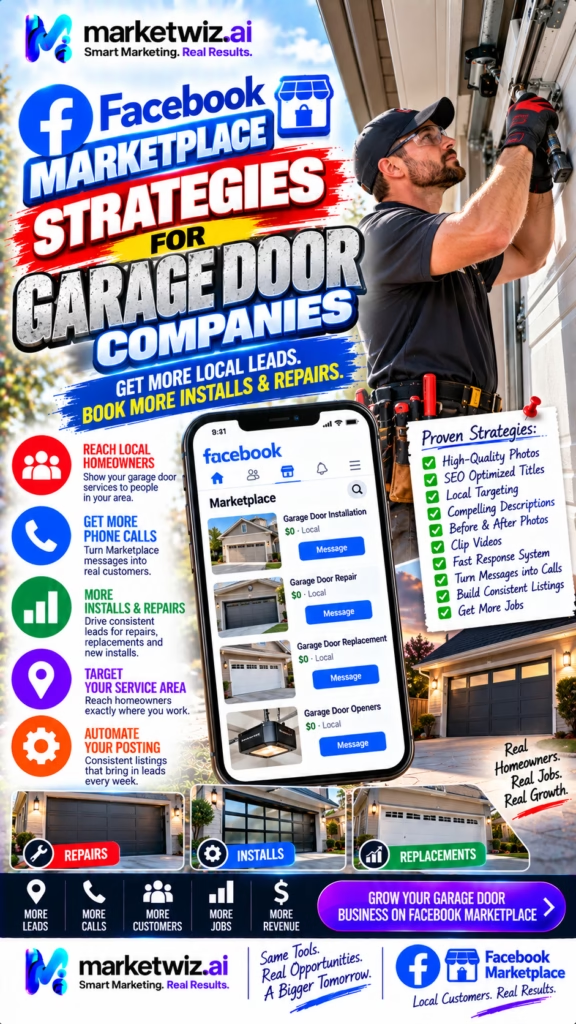
Facebook Marketplace Strategies for Garage Door Companies
Facebook Marketplace can give garage door companies another way to reach local homeowners and buyers when the right products, listings, images, geographic targeting, lead qualification, follow-up, and tracking systems work together. This guide explains how to build a more organized Marketplace strategy designed around local visibility and measurable customer acquisition.
Updated September 20261. Understand the Facebook Marketplace Opportunity for Garage Door Companies
Garage door companies operate in a highly local market. Most residential customers need a company that can reach their property, evaluate the situation, provide the appropriate product or solution, and complete the project within a practical geographic area.
Facebook Marketplace can potentially add another discovery point to that customer journey when the products or listings being promoted are eligible under current platform rules.
The opportunity is broader than simply publishing an occasional listing. Companies can build a structured system around product presentation, local targeting, customer response, qualification, appointments, estimates, follow-up, and sales tracking.
That distinction matters because activity alone is not the goal. A garage door company needs qualified local opportunities that can realistically become customers.
Think of Marketplace as one entry point into the sales system. The value is created when local visibility connects to a reliable process for handling and converting interested customers.
2. Build Marketing Around Garage Door Customer Intent
Not every garage door customer is looking for the same thing. Some homeowners may be replacing an aging door. Others may be comparing styles during an exterior renovation, adding doors to new construction, researching an opener, or trying to understand options for an existing garage.
Marketing becomes stronger when these customer needs are separated instead of forcing every possible buyer into one generic message.
Replacement Doors
Customers may be comparing appearance, materials, insulation, sizes, configurations, availability, and project requirements.
New Construction
Homeowners and builders may need specific sizes, quantities, styles, specifications, and scheduling coordination.
Garage Door Openers
Buyers may compare compatible products, features, controls, connectivity, condition, and other product-specific details.
Style Upgrades
Customers renovating a home's exterior may care heavily about design, windows, panel style, finish, color, and curb appeal.
When listings align with specific customer intent, the business can create clearer content and a more useful qualification process.
3. Define the Garage Door Company's Real Service Area
Local targeting should begin with the actual operating territory of the company. Posting broadly may increase inquiries while simultaneously lowering lead quality if customers are too far away to serve efficiently.
Create a geographic framework before expanding Marketplace activity.
The framework can include:
- Primary city
- Secondary cities
- Counties
- ZIP codes
- Neighborhoods
- Maximum practical travel distance
- High-priority growth areas
- Commercial territories
- Areas with strong installation demand
- Locations the company does not cover
This geographic map can then guide Marketplace activity, local SEO, Google Maps optimization, paid campaigns, sales routing, and reporting.
Local Relevance Beats Random Reach
A smaller number of inquiries inside profitable operating territory can be more valuable than a large volume of conversations from customers the company cannot realistically serve.
4. Separate Marketplace Content by Garage Door Category
Garage doors are visually and functionally diverse. A customer looking for a traditional raised-panel door may respond to different imagery than a homeowner considering a modern full-view or contemporary design.
The same principle applies to door sizes, materials, windows, insulation, openers, and other legitimate product categories.
Potential content categories can include:
- Single garage doors
- Double garage doors
- Traditional panel designs
- Carriage-house styles
- Contemporary garage doors
- Modern garage doors
- Insulated garage doors
- Garage doors with windows
- Garage door openers
- New-construction garage doors
- Replacement garage doors
- Commercial garage doors where relevant
Only advertise products and options the company actually offers, and keep listing information aligned with current availability.
5. Create a Structured Facebook Marketplace Listing Strategy
Random posting makes performance difficult to understand. A structured strategy defines what will be listed, which customer each listing targets, what information will be shown, where the listing belongs geographically, and how incoming inquiries will be handled.
Businesses should verify current Marketplace requirements before publishing, because permitted listings and platform rules can change over time.
6. Use Garage Door Images That Immediately Communicate the Product
Garage doors are highly visual exterior products. Customers may care about appearance almost as much as function because a garage door can occupy a significant portion of the front elevation of a home.
Strong imagery can communicate panel design, windows, color, finish, scale, architectural fit, and overall curb appeal before a customer reads the description.
Useful image categories can include:
- Completed residential installations
- Close views of door styles
- Modern homes with contemporary doors
- Traditional homes with carriage-style doors
- Doors with window configurations
- Single-door installations
- Double-door installations
- Before-and-after transformations
- Product-specific images
- Commercial projects where applicable
Businesses should use photography they own, have permission to use, or are otherwise authorized to publish. Images should not misrepresent another company's work as the advertiser's own completed project.
7. Make the Primary Marketplace Image Easy to Understand
Marketplace users often browse quickly, especially on mobile devices. The primary image therefore needs to communicate the listing concept without requiring extensive interpretation.
If the listing presents a modern black garage door, the main image should make that product obvious. If it focuses on a carriage-style design, the image should clearly show that style.
Strong primary images generally prioritize:
- Clear visibility of the door
- Good lighting
- A realistic residential or product context
- Minimal clutter
- Accurate representation
- Mobile readability
- A direct connection to the listing title
The image and title should tell the same story. A customer should not click a listing expecting one garage door style and discover something unrelated in the description.
8. Write Garage Door Marketplace Titles for Customer Clarity
Titles should help buyers understand what the listing contains. Generic phrases that do not identify the product can make the customer work harder than necessary.
When relevant and accurate, titles can focus on the door type, design, dimensions, product category, or another useful identifying characteristic.
Title concepts may focus on:
- Modern garage doors
- Insulated garage doors
- Garage doors with windows
- Carriage-style garage doors
- Single garage doors
- Double garage doors
- Garage door openers
- Specific eligible products
Avoid exaggerated or misleading wording. The title should accurately match the product and information contained in the listing.
9. Write Marketplace Descriptions That Answer Buying Questions
A useful description should give the customer enough information to decide whether the listing deserves further attention.
Depending on the product, customers may care about size, style, material, insulation, windows, finish, condition, availability, price, compatibility, geographic availability, and other specifications.
A strong description can include:
- What is being offered
- Relevant size or configuration
- Important product features
- Style or design information
- Accurate pricing when applicable
- Availability information
- Relevant geographic information
- A clear next step
Keep It Mobile Friendly
Short paragraphs, direct wording, and organized information can make the listing easier to understand from a phone.
10. Build a Strategy Around Garage Door Replacement Demand
Replacement projects can originate from homeowners dealing with an older door, changing the appearance of the property, renovating the exterior, preparing a home for sale, or upgrading to a different product.
These customers may not know exactly which garage door they want when the conversation begins.
Marketing can therefore combine attractive product presentation with a qualification process that identifies the basic project.
Useful initial information can include:
- Customer location
- Number of garage doors
- Approximate opening size
- Current door type
- Desired style
- Window preferences
- Insulation preferences
- Desired timeline
- Photos of the existing garage when useful
This information can help move the customer toward the appropriate sales or estimating process.
11. Market Garage Door Styles Instead of Only Generic Doors
Exterior design is a major part of many garage door purchases. A homeowner may not search for a technical product name. They may simply want a garage door that makes the front of the house look newer, cleaner, more modern, or more upscale.
Style-focused content can help customers visualize those possibilities.
Modern
Clean lines, darker finishes, glass elements, and contemporary architecture can support modern design-focused content.
Traditional
Classic panel configurations can appeal to homeowners looking for a familiar residential appearance.
Carriage Style
Decorative hardware, windows, and traditional detailing can create a distinctive visual concept.
Contemporary
Architectural styling can be presented around the overall exterior design rather than treating the door as an isolated product.
12. Use Curb Appeal as a Garage Door Marketing Theme
Garage doors can dramatically change the appearance of a home because of their size and visibility from the street.
This creates an opportunity to market the outcome of the project rather than focusing exclusively on product specifications.
Before-and-after imagery can be especially useful when it accurately represents a completed project. The visual transformation may immediately communicate why a homeowner would consider replacing an older door.
Show the Home, Not Just the Product
Product close-ups are useful, but wider images can help customers see how a garage door contributes to the complete exterior appearance of a property.
13. Build Content for New-Construction Garage Door Buyers
New construction creates a different buying situation from replacing an existing door. The buyer may be a homeowner, custom builder, general contractor, developer, or another professional involved in the project.
These opportunities may require dimensions, plans, product selections, scheduling, quantities, specifications, and coordination with other phases of construction.
Marketing aimed at this audience should avoid assuming that the same message used for a simple residential replacement will answer their questions.
Initial qualification may include:
- Project location
- Number of doors
- Opening dimensions
- Desired product or style
- Construction stage
- Expected installation timeline
- Plans or specifications when available
14. Create a Separate Strategy for Garage Door Openers
Garage door openers represent a different customer intent from garage doors themselves. Product specifications, compatibility, features, controls, and condition can become much more important.
If a company lists eligible opener products on Marketplace, each listing should accurately identify the specific product and relevant information.
Potential product details include:
- Brand
- Model
- Drive type
- Relevant features
- Included accessories
- Condition
- Compatibility information when known
- Price
- Availability
Product-specific information can reduce unnecessary conversations from customers looking for something different.
15. Separate Residential and Commercial Garage Door Opportunities
Commercial buyers may have different needs from homeowners. Warehouses, industrial buildings, automotive facilities, storage properties, retail operations, and other commercial facilities can require different products and specifications.
These opportunities may also involve facility managers, property managers, business owners, builders, contractors, or procurement personnel.
A commercial lead process may need more detailed qualification.
Commercial information can include:
- Business or organization
- Property location
- Door type
- Number of openings
- Approximate dimensions
- Project specifications
- Project timeline
- Decision-maker role
- Plans or photographs
Marketplace may be only one small component of a broader commercial garage door acquisition strategy.
16. Respond Quickly to New Marketplace Inquiries
A homeowner researching a garage door may contact several companies while comparing products, pricing, availability, and timelines.
This makes response management an important part of the marketing system.
The company does not need to provide a complete recommendation in the first response. It needs to recognize the inquiry and begin gathering the information required to determine the appropriate next step.
Fast response and good qualification should work together. Responding quickly is useful, but accurate information is more important than rushing into an estimate without understanding the project.
17. Qualify Garage Door Marketplace Leads Efficiently
Qualification prevents sales teams from treating every message as an identical opportunity.
A short sequence of useful questions can help identify whether the inquiry is inside the service area, matches the company's offerings, and deserves to move forward.
Initial questions may include:
- What city is the property in?
- Are you looking for a new door or replacing an existing door?
- How many garage doors are involved?
- What is the approximate size?
- Do you have a particular style in mind?
- What is your desired timeline?
- Can you provide a photo when appropriate?
The exact qualification process should match the company's actual sales workflow and product requirements.
18. Optimize for Qualified Garage Door Leads, Not Just Messages
A busy inbox can create the impression that a marketing channel is performing well. But message volume alone does not show whether the business is generating customers.
Some inquiries may be outside the company's territory. Others may involve a product the company does not carry, an unsupported project type, or a buyer who never progresses beyond an initial question.
The business should therefore track deeper stages of the funnel.
| Metric | What It Measures |
|---|---|
| Inquiries | Total customer conversations generated |
| Qualified Leads | Customers who fit basic geographic and project criteria |
| Appointments | Qualified leads moving into the sales process |
| Estimates | Opportunities that receive a real proposal |
| Sales | Estimates that become customers |
| Revenue | Financial value attributed to the marketing source |
19. Track Every Facebook Marketplace Garage Door Lead
Without lead tracking, it is difficult to know which listings, products, styles, and geographic markets are actually producing business.
Every useful inquiry should move into a structured tracking system instead of remaining buried indefinitely inside a message thread.
A lead record can include:
- Lead date
- Customer name
- Phone number when provided
- Email when provided
- Marketplace conversation reference
- City
- Project type
- Door quantity
- Approximate size
- Desired style or product
- Lead status
- Appointment date
- Estimate amount
- Sale amount
- Listing source
This data becomes the foundation for optimization and reporting.
20. Connect Marketplace Leads to a Garage Door CRM
A CRM helps transform individual conversations into an organized sales pipeline.
Instead of relying on memory, employees can see which opportunities are new, qualified, scheduled, estimated, waiting for follow-up, won, or lost.
Useful pipeline stages may include:
- New inquiry
- Qualification in progress
- Qualified
- Appointment requested
- Appointment scheduled
- Estimate prepared
- Estimate delivered
- Follow-up
- Won
- Lost
- Future opportunity
Connect Marketing to Revenue
Once lead sources and sales outcomes live in the same system, a garage door company can evaluate Marketplace based on actual appointments, estimates, sales, and revenue rather than assumptions.
21. Build a Follow-Up System for Garage Door Estimates
Customers do not always make an immediate decision after receiving an estimate. They may compare several companies, review door styles with family members, wait for another home improvement project, or adjust their budget.
A structured follow-up process can help prevent legitimate opportunities from disappearing simply because the customer needed more time.
Follow-up records can identify:
- When the estimate was delivered
- Whether the customer has questions
- Whether another product option was requested
- Whether the project was delayed
- The next appropriate follow-up date
- Whether the opportunity was won or lost
Follow-up should respect customer preferences and applicable communication requirements.
22. Use AI to Support Garage Door Marketplace Marketing
AI can help garage door companies scale repetitive marketing and lead management tasks while keeping product information and customer-facing decisions appropriately supervised.
AI can support:
- Listing draft creation
- Title variations
- Product description organization
- Creative concepts
- Lead summaries
- Qualification workflows
- Lead routing
- CRM preparation
- Follow-up reminders
- Performance reporting
- Market comparisons
- Content planning
Automation should begin with verified information. AI should not invent garage door models, sizes, pricing, warranties, availability, specifications, or completed projects.
23. Rotate Garage Door Creative Without Losing Consistency
A company with multiple door styles and completed projects has an opportunity to create a diverse library of visual content rather than relying on one generic advertisement.
Creative rotation can also help the company learn which visual themes produce useful customer interest.
Potential creative themes include:
- Modern black garage doors
- White traditional doors
- Carriage-style doors
- Garage doors with windows
- Double-door transformations
- Single-door installations
- Before-and-after projects
- New construction
- Exterior curb-appeal transformations
- Garage door opener products
Each creative should remain connected to a real product, project, or legitimate customer need.
24. Measure Garage Door Marketplace Performance by Local Market
Different cities can produce different levels of demand, competition, average project value, and customer behavior.
Multi-market garage door companies should avoid assuming that one listing strategy will perform identically across every location.
Compare each market using:
- Inquiry volume
- Qualified lead volume
- Appointment rate
- Estimate rate
- Close rate
- Average project value
- Popular door styles
- Common project types
- Travel requirements
- Revenue
Market-level reporting can reveal where additional marketing resources are justified.
25. Build Trust Beyond the Facebook Marketplace Listing
A customer who discovers a garage door company through Marketplace may research the company elsewhere before making a buying decision.
The customer may search the business name, look at reviews, inspect completed projects, visit the website, or view the company's Google Business Profile.
That means Marketplace does not operate in isolation.
A stronger digital presence can include:
- An accurate Google Business Profile
- A professional website
- Local garage door pages
- Project galleries
- Customer reviews
- Consistent business information
- Active social profiles
- Useful educational content
Customers May Verify the Business Before Responding
Strong local search visibility and consistent branding can reinforce trust after a potential customer first discovers the company through Facebook.
26. Combine Marketplace With Google Maps, SEO, and Other Lead Channels
A garage door company should not assume that every future customer will come from the same platform.
Some customers browse Facebook. Others search Google when they are actively researching garage door companies. Some rely on referrals, social media, advertising, builders, or property relationships.
Facebook Marketplace
Can provide local product discovery and customer conversations where the listing is appropriate for the platform.
Google Maps
Can connect the business with customers searching locally for garage door companies and related solutions.
Local SEO
Can build organic visibility around garage door topics, products, customer questions, and geographic searches.
Social Marketing
Can showcase installations, door styles, transformations, educational content, and the company's ongoing work.
The channels become more valuable when leads from each source enter the same organized sales and reporting process.
27. Measure Marketplace Performance by Sales Outcomes
Marketplace marketing should ultimately be evaluated using business results, not superficial activity.
Views and conversations can provide useful diagnostic information, but qualified leads, appointments, estimates, sales, and revenue reveal whether the strategy is creating meaningful opportunities.
| Stage | Business Question |
|---|---|
| Listing | Which products and creative concepts attract useful attention? |
| Inquiry | Which listings generate customer conversations? |
| Qualification | Which listings produce customers the company can actually serve? |
| Appointment | Which leads move into a meaningful sales interaction? |
| Estimate | Which opportunities become proposals? |
| Sale | Which estimates become customers? |
| Revenue | Which listings and markets contribute to business growth? |
28. Avoid Common Facebook Marketplace Mistakes for Garage Door Companies
Many weak Marketplace strategies fail because the company focuses on publishing listings while ignoring customer experience and sales operations.
Common mistakes include:
- Using unclear primary images
- Using unrelated stock photography
- Publishing vague titles
- Using inaccurate product details
- Advertising unavailable products
- Using incorrect locations
- Writing descriptions with little useful information
- Failing to separate different door styles
- Responding too slowly
- Failing to qualify inquiries
- Leaving leads inside message threads
- Failing to follow up on estimates
- Tracking only message volume
- Using the same creative repeatedly
- Ignoring the company's wider online reputation
- Depending entirely on one marketing platform
- Failing to review current Marketplace rules
The strongest strategy connects marketing and operations. Visibility matters, but so do qualification, response, appointments, estimates, follow-up, tracking, and sales measurement.
29. Build an AI-Assisted Garage Door Lead Workflow
AI and automation become more valuable after the company has clearly defined its products, markets, qualification process, and sales stages.
Technology can then support the repetitive portions of the workflow instead of creating additional complexity.
30. Follow a 90-Day Facebook Marketplace Strategy for Garage Door Companies
A structured 90-day plan gives the company enough time to build the foundation, collect useful information, improve lead handling, and identify which parts of the strategy deserve additional attention.
Days 1–30: Build the Foundation
- Define the true service area
- Review current Marketplace requirements
- Identify eligible products and listing concepts
- Organize garage door styles and categories
- Build an approved photo library
- Create initial listing variations
- Define a qualified lead
- Create qualification questions
- Set up lead tracking
- Establish baseline performance metrics
Days 31–60: Improve the Lead Funnel
- Compare listing concepts
- Compare garage door styles
- Compare primary images
- Improve listing titles
- Improve descriptions
- Analyze geographic performance
- Improve response workflows
- Refine qualification
- Connect leads to the CRM
- Build estimate follow-up
Days 61–90: Scale What Produces Customers
- Identify high-performing door categories
- Identify stronger geographic markets
- Expand successful creative concepts
- Create additional product-focused listings
- Automate repetitive lead administration
- Improve lead routing
- Measure appointment rates
- Measure estimate rates
- Measure close rates
- Measure revenue by source
- Reduce weak campaigns
- Integrate Marketplace data with wider marketing reporting
The garage door Marketplace growth framework: accurate local targeting + real products + strong visual presentation + clear listings + fast response + simple qualification + CRM tracking + estimate follow-up + AI-assisted workflows + multi-channel marketing + revenue measurement.
Turn Facebook Marketplace Into a More Organized Garage Door Lead Channel
Facebook Marketplace strategies for garage door companies work best when listings are treated as one part of a larger local customer acquisition system.
The process begins with understanding what the customer actually wants.
Someone replacing an older garage door may have different priorities from a homeowner choosing doors for new construction. A customer interested in a modern architectural door may respond differently from someone shopping for a traditional design. An opener buyer has a different set of questions from a homeowner comparing complete garage door systems.
Separating these customer needs makes the marketing more specific.
Visual presentation is especially important because garage doors are prominent exterior features. Customers often want to imagine how a new door will change the appearance of the entire property.
Real completed-project photography, authorized product images, style-focused visuals, and before-and-after transformations can help communicate that value more effectively than generic advertising graphics.
The primary image should make the listing easy to understand. The title should accurately describe the product or concept. The description should provide relevant information without burying the customer in unnecessary text.
Location also matters.
Garage door companies typically operate within defined territories. Marketing should therefore concentrate on cities, neighborhoods, counties, and surrounding areas the company can actually serve efficiently.
Generating more messages from outside that territory does not necessarily improve marketing performance.
Once an inquiry arrives, the company needs a reliable lead process.
Basic qualification can identify where the customer is located, whether the project involves a new or existing garage, how many doors are needed, the approximate dimensions, the customer's preferred style, and the desired timeline.
This allows the company to move qualified opportunities toward an appointment, estimate, product consultation, or another appropriate sales step.
Lead tracking then connects Marketplace activity to actual business results.
Instead of measuring success only by views or messages, the company can track qualified leads, appointments, estimates, sales, average project value, and revenue.
That information can reveal which listings are generating useful customers, which garage door styles attract stronger opportunities, and which geographic markets deserve more attention.
A CRM can make the process easier to manage.
New inquiries can move through defined stages instead of disappearing inside individual message threads. Sales teams can see which customers require qualification, which appointments are scheduled, which estimates have been delivered, and which opportunities require follow-up.
Follow-up is particularly important when customers are comparing multiple door styles or proposals.
A homeowner may need time to compare colors, windows, insulation, pricing, or other project considerations. A structured process helps the company remain organized without relying on individual employees to remember every open opportunity.
AI can support this system by reducing repetitive administrative work.
It can help create listing drafts from verified product information, organize creative variations, summarize incoming conversations, prepare lead records, assist with qualification workflows, route opportunities, create follow-up reminders, and summarize campaign performance.
Accuracy must remain central to the process.
AI should not invent garage door products, dimensions, prices, availability, warranties, features, completed projects, or company claims. Marketing automation becomes valuable when it scales verified information rather than producing unreliable content.
Marketplace should also be integrated with the rest of the garage door company's marketing.
A customer who discovers a product on Facebook may search the company on Google before responding. Another customer may discover the company directly through Google Maps. Others may arrive through organic search, referrals, social media, paid advertising, builders, or local relationships.
Those channels can reinforce one another.
Marketplace can generate local discovery. Google Maps can capture active local searches. SEO can build long-term visibility around garage door topics and geographic markets. Social content can continually showcase projects and styles. A CRM can bring the resulting opportunities together.
The final objective is not simply to post more garage door listings.
It is to build a measurable customer acquisition system where local visibility leads to qualified conversations, qualified conversations move into appointments and estimates, estimates receive organized follow-up, and completed sales can be traced back to the marketing that helped generate them.
When those components work together, Facebook Marketplace can become one useful part of a broader garage door growth strategy built around local relevance, strong presentation, disciplined lead management, automation, and measurable business outcomes.
Frequently Asked Questions About Facebook Marketplace Strategies for Garage Door Companies
1. Can garage door companies use Facebook Marketplace for lead generation?
Facebook Marketplace can be evaluated as a local discovery channel for eligible garage door products and listings when companies follow current platform rules and accurately represent what is being offered.
2. What garage door opportunities can be marketed on Facebook?
Garage door companies can build Facebook marketing around legitimate customer needs such as replacement doors, new doors, door styles, garage door openers, project education, completed installations, and other offerings appropriate for the specific Facebook surface being used.
3. Why is Facebook Marketplace useful for local garage door marketing?
Marketplace is locally oriented, which can make it relevant to garage door companies that serve defined cities, neighborhoods, counties, and surrounding communities.
4. What makes a strong garage door Marketplace listing?
Strong listings use accurate information, relevant photos, clear titles, useful descriptions, appropriate locations and categories, and a simple next step for interested customers.
5. Should garage door companies use real installation photos?
Real completed-project photography can help customers understand available styles and workmanship when the company has permission to use the images and represents them accurately.
6. How important is the first Marketplace image?
The first image is important because it can quickly communicate the door style, product, or project being presented while customers browse listings on mobile devices.
7. What should a garage door Marketplace title include?
The title should accurately describe the relevant garage door, product, project type, or eligible offering using clear customer-friendly language.
8. How should garage door companies write Marketplace descriptions?
Descriptions should explain the relevant product or project, important specifications when applicable, geographic availability, useful customer information, and an appropriate next step.
9. Can garage door companies target multiple cities?
Companies can organize marketing around multiple legitimate operating areas while keeping locations and availability accurate and following current platform requirements.
10. Should every garage door use the same Marketplace listing?
Different door styles, sizes, materials, products, and customer needs may benefit from different content rather than one generic listing.
11. Can Facebook help generate garage door replacement leads?
Facebook marketing can support customer discovery around garage door replacement by showing relevant products, completed projects, styles, and educational content in formats permitted by the platform.
12. Can garage door opener opportunities be marketed on Marketplace?
Eligible garage door opener products may be marketed where permitted by current Marketplace policies, with accurate product specifications, condition, pricing, and availability.
13. How quickly should garage door companies respond to Marketplace inquiries?
New inquiries should enter a defined response workflow promptly so interested customers receive useful information and can move toward the appropriate next step.
14. What questions should garage door companies ask new leads?
Useful questions can include location, whether the project involves a new or existing garage, approximate door size, number of doors, desired style, current problem, and desired timeline.
15. How can garage door companies improve lead quality?
Lead quality can improve through accurate local targeting, specific listings, strong visual content, clear product information, qualification questions, and consistent tracking.
16. Should garage door companies track Facebook Marketplace leads?
Yes. Tracking inquiries, qualified leads, appointments, estimates, sales, revenue, and listing sources provides a better understanding of business performance.
17. Can Marketplace garage door leads be connected to a CRM?
Businesses can organize appropriate lead information in a CRM or lead tracking system to manage qualification, appointments, estimates, follow-up, and sales outcomes.
18. Can AI help manage garage door leads?
AI can assist with repetitive tasks such as drafting content, organizing inquiries, qualification workflows, CRM updates, follow-up reminders, routing, and reporting.
19. Can AI create garage door Marketplace listing drafts?
AI can help prepare listing drafts from verified product and project information, but businesses should review all details for accuracy and platform compliance before publishing.
20. Should garage door companies follow up with leads?
Appropriate follow-up can help businesses stay organized when customers are comparing options, planning future projects, or waiting to make a decision.
21. What metrics should garage door companies track?
Useful metrics include inquiries, qualified leads, appointments, estimates, sales, conversion rates, average project value, revenue, and performance by market or listing.
22. Should residential and commercial garage door leads be handled differently?
Residential and commercial opportunities may involve different products, specifications, timelines, buyers, and sales processes, making separate qualification workflows useful.
23. Can garage door companies combine Marketplace with Google Maps?
Yes. Marketplace can be evaluated alongside Google Maps, local SEO, website marketing, social media, referrals, paid advertising, and other customer acquisition channels.
24. Can garage door companies combine Marketplace with Craigslist?
Companies can test multiple local marketing channels while following each platform's current rules and measuring lead quality and sales outcomes separately.
25. What are common Marketplace mistakes for garage door companies?
Common mistakes include generic photos, vague titles, inaccurate information, weak descriptions, poor local targeting, slow response, inadequate qualification, weak tracking, and ignoring platform requirements.
26. How often should Marketplace performance be reviewed?
Performance should be reviewed regularly enough to identify changes in lead quality, response, listing effectiveness, geographic demand, appointments, estimates, and sales.
27. Can Facebook Marketplace work for small garage door companies?
Local marketing channels can be useful for companies of different sizes when listings are appropriate, geographic targeting is accurate, and the company has a reliable process for handling leads.
28. Should a garage door company rely only on Facebook Marketplace?
A diversified marketing strategy can reduce dependence on one platform and may include search, Google Maps, SEO, referrals, social media, advertising, and other relevant channels.
29. How can garage door companies stand out on Marketplace?
Companies can improve presentation with relevant project photography, specific product information, clear titles, accurate local information, organized responses, and consistent follow-up.
30. How should a garage door company start a Marketplace strategy?
Start by defining target markets, customer needs, products, approved listing formats, imagery, qualification questions, response workflows, lead tracking, and the business metrics used to evaluate results.
30 Additional SEO Keywords
These supporting keyword themes expand the article around Facebook Marketplace, garage door lead generation, local marketing, garage door advertising, AI automation, and customer acquisition.
Build a Stronger Garage Door Lead Generation System
Market Wiz AI helps local businesses build organized customer acquisition systems using Facebook Marketplace strategies, Google Maps optimization, local SEO, AI automation, multi-channel marketing, lead qualification, CRM workflows, and follow-up.
Call MarketWiz.ai: (910) 601-2938












