

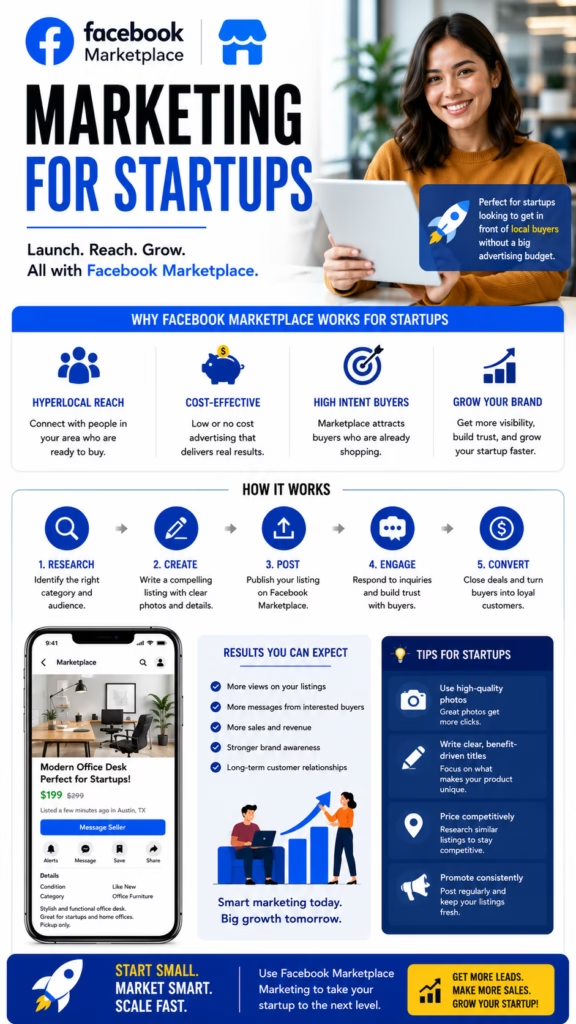
Facebook Marketplace Marketing for Startups
Facebook Marketplace Marketing for Startups explains how new businesses can use Marketplace listings, local buyers, offer testing, product validation, pricing experiments, trust signals, and fast follow-up to generate early traction.
Introduction
Facebook Marketplace Marketing for Startups starts with one simple advantage: startups need fast feedback. Before spending heavily on ads, websites, funnels, or large campaigns, a startup can use Facebook Marketplace to test demand, validate offers, talk to real buyers, and generate early sales conversations.
Marketplace is especially useful for startups selling physical products, local services, home goods, equipment, furniture, vehicles, rentals, repairs, delivery services, home improvement offers, and community-based products. It gives startups access to real local buyers without requiring a complicated launch strategy.
Startups can use Facebook Marketplace to test offers quickly, learn what buyers click, validate pricing, and turn local attention into early revenue.
The key is to treat Marketplace like a testing channel, not just a posting board. Every listing should test something: the title, photo, price, category, local keyword, offer, delivery option, or follow-up script. The more a startup learns from buyer behavior, the faster it can improve.
Many startups struggle because they try to appear big before they understand what buyers actually want. Marketplace gives startups a practical way to learn from real messages, objections, questions, and buying intent.
Main idea: Facebook Marketplace Marketing for Startups is about using local listings to test demand, generate leads, learn buyer behavior, and build early traction.
Table of Contents
- 1) Why Facebook Marketplace can work for startups
- 2) What startup marketing looks like on Marketplace
- 3) How buyers decide what to click
- 4) Building a Marketplace strategy for startups
- 5) Writing startup listing titles that get clicks
- 6) Creating descriptions that validate demand
- 7) Using photos that build trust quickly
- 8) Local keywords for startup Marketplace listings
- 9) Pricing strategy for early-stage offers
- 10) Testing product-market fit on Marketplace
- 11) Marketplace for product startups
- 12) Marketplace for service startups
- 13) Marketplace for local delivery startups
- 14) Marketplace for home service startups
- 15) Listing rotation and testing strategy
- 16) Reducing low-quality startup inquiries
- 17) Follow-up that turns clicks into customers
- 18) Tracking Marketplace startup performance
- 19) Common Marketplace mistakes startups make
- 20) Final thoughts
- 21) FAQs
- 22) Extra keywords
1) Why Facebook Marketplace Can Work for Startups
Facebook Marketplace can work for startups because it provides access to local buyers who are already browsing for products, services, deals, and solutions. A startup can test listings without waiting for long SEO timelines or large ad budgets.
For many early-stage businesses, Marketplace can create quick conversations. Those conversations can reveal what buyers want, what they misunderstand, what price they expect, and what offer gets attention.
Facebook Marketplace can help startups generate:
- Early product inquiries
- Local service leads
- Offer validation
- Price feedback
- Customer conversations
- Local sales
- Delivery requests
- Beta customer interest
- Referral opportunities
- Early traction signals
Marketplace can help startups learn faster by putting real offers in front of real local buyers.
2) What Startup Marketing Looks Like on Marketplace
Startup marketing on Marketplace is about clear offers and fast learning. A startup can post different versions of a product, package, local service, or introductory offer to see what buyers respond to.
Unlike traditional brand marketing, Marketplace marketing is direct. Buyers usually respond to photos, price, convenience, location, availability, and whether the offer solves a real need.
Startup Marketplace marketing can test:
Product demand
Service demand
Price points
Photo styles
Title wording
Offer positioning
Delivery options
Local buyer interest
Buyer objections
Message response quality
Marketplace gives startups a practical place to test offers before scaling larger campaigns.
3) How Buyers Decide What to Click
Buyers decide quickly on Facebook Marketplace. They scan the main photo, title, price, location, category, and visible details. If the listing looks clear and relevant, they are more likely to click.
Startups must communicate value fast. Buyers do not usually care that a company is new. They care whether the offer solves a problem, looks trustworthy, and feels worth messaging about.
Buyers usually evaluate:
- Main photo
- Title clarity
- Price
- Location
- Availability
- Condition or service details
- Trust signals
- Delivery or pickup options
- Seller communication
- Perceived value
The faster a startup listing communicates value, the better chance it has to get clicked.
4) Building a Marketplace Strategy for Startups
A strong Marketplace strategy for startups starts with testing multiple listing angles. Instead of one broad listing, startups should create separate posts for different products, services, offers, buyer groups, locations, and price points.
The goal is to learn what gets clicks and messages. Every listing should help answer a business question.
Startup Marketplace listing angles:
Entry-level offer
Premium offer
Local delivery offer
Bundle offer
Introductory discount
Problem-specific service
Product demo listing
Limited quantity listing
Local pickup listing
Beta customer offer
Startups should use Marketplace as a testing system, not a one-time posting channel.
5) Writing Startup Listing Titles That Get Clicks
Titles should be specific and buyer-focused. A startup title should explain what is being offered and why it matters. Vague titles like “new product available” or “startup offer” are weak because they do not show buyer value.
Good titles mention the product, service, benefit, location, delivery, price point, or customer problem.
Weak title:
New Startup Product

Better title:
Modern Home Office Desk - Local Delivery Available

Weak title:
Service Available

Better title:
Local Junk Removal Help - Same-Week Openings

Weak title:
Try Our App

Better title:
Local Business Automation Tool - Free Demo Available

Weak title:
New Deal

Better title:
Starter Bedroom Bundle - Mattress, Frame & Delivery Option
Startup listing titles should focus on what buyers want, not just what the startup created.
6) Creating Descriptions That Validate Demand
A strong Marketplace description should explain the offer, who it is for, what is included, where it is available, why it is useful, and what the buyer should do next. For startups, descriptions should also be written to learn from buyer questions.
The description should be clear enough to reduce confusion but simple enough to invite messages.
A strong startup Marketplace description should include:
- What is being offered
- Who it helps
- Main benefits
- Price or offer details
- Availability
- Location or service area
- Delivery or pickup option
- Trust signals
- What to message
- Clear next step
Descriptions should help startups sell and learn at the same time.
7) Using Photos That Build Trust Quickly
Photos are critical because startups often do not have large brand recognition. A strong photo can make a new business look more credible and help buyers understand the offer immediately.
Photos should be clear, real, bright, and relevant. Product startups should show the product from multiple angles. Service startups should show results, process, team, tools, before-and-after proof, or branded visuals.
Startup photo ideas:
Product hero photo
Product close-up
Product in use
Packaging photo
Before-and-after result
Service process photo
Team or founder photo
Delivery photo
Local setup photo
Clean branded graphic
Good photos help startups overcome the trust gap that comes with being new.
8) Local Keywords for Startup Marketplace Listings
Local keywords help startup listings reach nearby buyers. Startups should naturally mention the city, neighborhood, service area, pickup location, delivery area, and product or service category.
Local keywords should be helpful, not spammy. The goal is to make the listing easier to understand and more relevant to nearby buyers.
Useful local startup keywords include:
- available in [City]
- local pickup in [City]
- delivery available near [City]
- serving [City] and nearby areas
- local startup
- small business in [City]
- new local service
- local product launch
- introductory offer in [City]
- same-week availability in [City]
Local keywords help startups connect with buyers close enough to purchase, book, or test the offer.
9) Pricing Strategy for Early-Stage Offers
Pricing is one of the most useful things startups can test on Marketplace. Buyers may respond differently to exact pricing, bundle pricing, starting prices, limited-time offers, or delivery-included pricing.
Startups should avoid misleading pricing. The goal is to learn what buyers value, not to create low-quality clicks.
Startup pricing tests:
Exact price
Starting price
Bundle price
Delivery-included price
Introductory offer
Limited quantity offer
Deposit-based booking
Free demo
Trial offer
Premium package
Clear pricing creates better buyer trust and more useful feedback.
10) Testing Product-Market Fit on Marketplace
Product-market fit means the market actually wants what the startup offers. Facebook Marketplace can help test early demand by showing how buyers respond to different listings.
Startups should pay attention to clicks, messages, questions, objections, and which listing angles generate the strongest buyer interest.
Marketplace can reveal:
- Which product gets attention
- Which price feels acceptable
- Which photos create clicks
- Which descriptions create messages
- Which objections repeat
- Which buyer type responds
- Which locations perform best
- Which offer feels clearest
- Which delivery option matters
- Which leads are most qualified
Marketplace gives startups real buyer behavior, not just opinions.
11) Marketplace for Product Startups
Product startups can use Marketplace to test physical products, bundles, local delivery, pickup, packaging, pricing, and customer interest. This is especially helpful for early inventory, handmade products, furniture, home goods, equipment, local retail items, and specialty products.
Product listings should show clear photos, size, condition, use case, price, availability, and pickup or delivery options.
Product startup listing ideas:
New product launch
Starter bundle
Limited inventory item
Local pickup product
Delivery available product
Home goods product
Furniture product
Equipment product
Gift item
Demo product listing
Product startups can use Marketplace to learn what buyers actually click and buy locally.
12) Marketplace for Service Startups
Service startups can use Marketplace to test demand for local services. Examples include cleaning, hauling, moving help, mobile detailing, landscaping, handyman work, tutoring, delivery, repair services, home setup, and business services.
Service listings should focus on one specific problem and one clear next step.
Service startup listing ideas:
- Local cleanup help
- Moving labor service
- Mobile detailing
- Yard cleanup
- Furniture delivery
- Handyman help
- Small business automation demo
- Local repair service
- Home setup help
- Introductory service offer
Service startups get better results when listings solve one clear local problem.
13) Marketplace for Local Delivery Startups
Local delivery startups can use Facebook Marketplace to test pickup and delivery services, furniture delivery, appliance delivery, same-day errands, local courier services, and moving help.
Delivery listings should focus on convenience, service area, availability, item types, and how to request a quote.
Local delivery listing angles:
Furniture delivery
Appliance delivery
Same-day local delivery
Small move help
Marketplace pickup and delivery
Store pickup delivery
Local courier service
Large item transport
Moving labor and delivery
Local errand delivery
Delivery startups can use Marketplace to reach buyers who already need transportation help for items they found online.
14) Marketplace for Home Service Startups
Home service startups can use Marketplace to test local demand for services like junk removal, painting, landscaping, cleaning, pressure washing, repairs, assembly, handyman work, and seasonal home projects.
Home service listings should include real photos, service areas, project examples, pricing context when appropriate, and fast follow-up.
Home service startup listing ideas:
- Garage cleanout help
- Junk removal service
- Furniture assembly
- Pressure washing
- Yard cleanup
- Interior painting
- Handyman repairs
- Appliance removal
- Move-out cleaning
- Seasonal home project help
Home service startups can use Marketplace to create early local leads before building larger marketing systems.
15) Listing Rotation and Testing Strategy
Listing rotation is one of the most important parts of Facebook Marketplace Marketing for Startups. Startups should test different listings instead of relying on one version of the offer.
Each rotation should test a meaningful change. This could include photo, title, price, offer, category, delivery option, or buyer segment.
Test these Marketplace elements:
Main photo
Title wording
First sentence
Price point
Category
Offer angle
Delivery option
Pickup location
Bundle option
Call to action
Posting time
Buyer qualification question
Testing turns Marketplace from random posting into a startup learning engine.
16) Reducing Low-Quality Startup Inquiries
Low-quality inquiries often happen when listings are unclear. If the buyer does not understand the offer, price, location, availability, or next step, they may send vague messages that waste time.
Startups can improve lead quality by adding clear details and asking buyers to provide the information needed to move forward.
Ask startup leads to send:
- What product or service they want
- Preferred pickup or delivery option
- City or neighborhood
- Desired timeline
- Quantity needed if relevant
- Budget range if appropriate
- Best contact method
- Questions before buying
- Appointment preference if relevant
- Delivery address area if needed
Clear listings may reduce random messages, but they usually improve lead quality.
17) Follow-Up That Turns Clicks Into Customers
Fast follow-up is critical on Marketplace. Buyers often message multiple sellers or businesses. The startup that replies quickly and clearly has a better chance of winning the conversation.
The first reply should confirm availability, answer the main question, and guide the buyer toward the next step.
Simple startup follow-up script:
“Thanks for reaching out. Yes, this is available. Are you looking for pickup, delivery, or more details first? Send your preferred option and location area, and I can help with the next step.”
Marketplace clicks become customers when follow-up is fast, clear, and easy to respond to.
18) Tracking Marketplace Startup Performance
Tracking helps startups understand what is working. Without tracking, it is difficult to know which listings generate clicks, messages, qualified leads, appointments, sales, or useful feedback.
Startups should track both performance and learning. A listing that does not sell may still reveal useful buyer objections or pricing concerns.
Track these Marketplace startup metrics:
Listing title
Offer angle
Category
Main photo
Price
Date posted
Views
Clicks
Messages
Qualified leads
Buyer objections
Appointments booked
Sales completed
Revenue
Best-performing test
The best startup Marketplace strategy tracks what buyers do and what they say.
19) Common Marketplace Mistakes Startups Make
Many startups struggle on Marketplace because their listings are too vague, too brand-focused, or too confusing. Buyers care about the offer, value, price, location, and next step more than a long startup story.
Most mistakes are fixable with clearer titles, better photos, more specific descriptions, better pricing, and faster follow-up.
Common mistakes include:
- Posting vague startup announcements
- Using unclear photos
- Not explaining the offer
- No price or pricing context
- No local details
- No delivery or pickup information
- No trust signals
- Not testing multiple angles
- Not tracking buyer feedback
- Responding too slowly
Marketplace fails for startups when listings talk about the business instead of solving a buyer problem.
20) Final Thoughts
Facebook Marketplace Marketing for Startups is a practical way to test demand, reach local buyers, validate offers, and generate early traction. Startups can use Marketplace to learn what buyers click, what they ask, what they object to, and what they are willing to buy.
The strongest strategy uses clear titles, strong photos, local keywords, accurate pricing, trust signals, offer testing, listing rotation, fast replies, and performance tracking. Marketplace should support the larger startup growth system, including website marketing, SEO, social media, paid ads, referrals, email, and customer follow-up.
Final takeaway: Startups can use Facebook Marketplace to learn faster, sell earlier, and build traction with real local customers.
21) FAQs
1) What is Facebook Marketplace Marketing for Startups?
Facebook Marketplace Marketing for Startups is the use of Marketplace listings to test offers, reach local buyers, validate demand, generate leads, and create early sales.
2) Can startups use Facebook Marketplace?
Yes. Startups can use Marketplace to promote products, services, local offers, delivery options, and early-stage promotions.
3) Why is Marketplace useful for startups?
Marketplace is useful because it gives startups fast access to real buyers, messages, objections, pricing feedback, and early demand signals.
4) What should startups post on Marketplace?
Startups should post clear product listings, service offers, local delivery options, bundles, introductory offers, and specific buyer-focused listings.
5) What makes a good startup Marketplace title?
A good title explains the product or service clearly and focuses on buyer value, not just the startup itself.
6) Should startups include pricing?
Yes. Clear pricing helps build trust and creates better buyer feedback.
7) Should startups test different prices?
Yes. Marketplace can help startups test price points, bundles, delivery pricing, and introductory offers.
8) Can Marketplace help test product-market fit?
Yes. Marketplace can show whether real buyers click, message, ask questions, and purchase the offer.
9) What photos should startups use?
Startups should use clear product photos, service result photos, in-use photos, founder or team photos, packaging photos, and branded visuals when helpful.
10) Should startups use local keywords?
Yes. Local keywords help nearby buyers understand where the offer is available.
11) Can service startups use Marketplace?
Yes. Service startups can use Marketplace to promote local services such as delivery, cleaning, hauling, repairs, moving help, and home services.
12) Can product startups use Marketplace?
Yes. Product startups can use Marketplace to test physical products, bundles, pickup options, delivery, and local buyer demand.
13) Can Marketplace work for delivery startups?
Yes. Delivery startups can promote furniture delivery, appliance delivery, courier services, local pickup, and moving help.
14) Should startups rotate listings?
Yes. Listing rotation helps test different photos, titles, prices, categories, and offers.
15) What should startups track?
Startups should track views, clicks, messages, qualified leads, buyer objections, appointments, sales, revenue, and best-performing listing angles.
16) How can startups reduce low-quality messages?
They can include clear offer details, price, location, availability, delivery options, and qualification questions.
17) How fast should startups reply to Marketplace leads?
As fast as possible. Buyers often message multiple sellers or businesses.
18) What should the first reply say?
The first reply should confirm availability, answer the main question, and guide the buyer toward pickup, delivery, booking, or purchase.
19) Should startups use Marketplace as their only marketing channel?
No. Marketplace should support a larger growth system that may include a website, SEO, social media, referrals, ads, and email follow-up.
20) What is the biggest Marketplace mistake startups make?
The biggest mistake is posting vague startup-focused listings instead of clear buyer-focused offers.
21) Can Marketplace generate early customers?
Yes. Strong listings can generate early leads, local buyers, appointments, and sales.
22) Should startups mention they are new?
They can mention it if it supports the story, but the listing should focus mainly on buyer value, trust, and the offer.
23) Can Marketplace help startups learn buyer objections?
Yes. Buyer questions and hesitations can reveal pricing concerns, unclear messaging, missing details, and product-market fit issues.
24) How do startups get better Marketplace results?
Use clear titles, strong photos, accurate pricing, local keywords, trust signals, offer testing, and fast replies.
25) What is the main goal of Facebook Marketplace marketing for startups?
The main goal is to turn local Marketplace visibility into buyer conversations, early sales, offer validation, and startup traction.
22) Extra Keywords
- Facebook Marketplace Marketing for Startups
- Marketplace marketing for startups
- Facebook Marketplace startup strategy
- startup lead generation
- local startup marketing
- Marketplace listings for startups
- Facebook Marketplace sales
- startup product testing
- Marketplace product validation
- startup offer validation
- local buyer testing
- Marketplace lead generation
- Facebook Marketplace business listings
- startup sales strategy
- Facebook Marketplace product launch
- startup local advertising
- Marketplace listing strategy
- Facebook Marketplace testing
- startup traction strategy
- early customer acquisition
- Facebook Marketplace growth
- startup marketing ideas
- Marketplace SEO for startups
- local product launch marketing
- Facebook Marketplace lead generation for startups













