

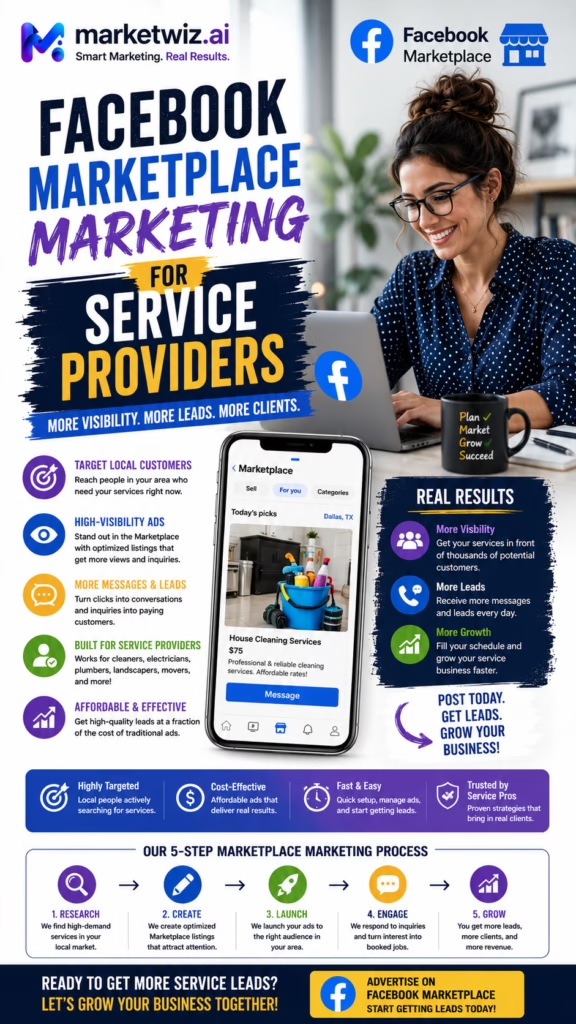
Facebook Marketplace Marketing for Service Providers
Facebook Marketplace marketing for service providers can create another source of local customer discovery when businesses use the platform around genuine eligible physical products, materials, equipment, parts, inventory, and other items connected to the problems their customers are already trying to solve. The strongest strategy keeps the physical product as the real Marketplace offer, then uses accurate pricing, clear product photography, useful descriptions, local relevance, fast response, natural lead qualification, follow-up, CRM attribution, and conversion tracking to identify legitimate customer opportunities beyond the original item inquiry.
Service providers often think Facebook Marketplace has nothing to do with their business because they sell expertise, labor, installation, repair, or project outcomes rather than simple retail products.
That assumption can miss an important part of the customer journey.
Many service customers begin with a product.
A homeowner looking for flooring may also need installation.
Someone looking for kitchen cabinets may also be planning a remodel.
A buyer looking for a garage door may also need professional installation.
Someone researching fence panels may need a complete fence project.
A homeowner looking at pavers may be planning a patio.
A customer looking for an appliance may also need delivery, setup, or related support through legitimate available channels.
Someone buying equipment may need maintenance, replacement parts, or a commercial relationship.
The physical item reveals intent.
That intent can sometimes lead to a larger customer opportunity.
The important distinction is how the Marketplace listing is structured.
If the available listing format is for physical products, the actual product should be real.
The product should be clearly identified.
The price should be genuine.
The photos should accurately represent what is available.
The location should be truthful.
The description should explain the physical item.
Then the business can handle the inquiry professionally.
Answer the customer's product question.
Confirm availability.
Confirm price.
Ask about quantity.
Ask what they are trying to accomplish.
That is where the broader need becomes visible.
The customer may simply buy the product.
Or they may explain a project.
A repair.
A replacement.
An installation.
A renovation.
A larger property improvement.
A commercial need.
When that broader need genuinely matches the provider's capabilities, the conversation can move naturally toward an appropriate next step.
That is very different from pretending to sell a product only to force someone into a service sales conversation.
Strong Marketplace marketing is transparent.
Product first.
Customer need second.
Qualification third.
Conversion after that.
The Service Provider Marketplace Growth Formula
Real Physical Product + Accurate Price + Strong Photos + Local Relevance + Fast Response + Product Question Answered + Natural Need Discovery + Lead Qualification + Clear Next Step + Follow-Up + CRM Tracking = Better Customer Acquisition
Why Facebook Marketplace Can Work for Service Providers
Customers Often Start With Products
Product research can occur before a customer chooses the professional who will complete the larger job.
Marketplace Is Highly Local
Many service businesses operate inside defined local territories, making nearby customer discovery valuable.
Products Reveal Real Intent
Quantity, material, size, model, and product type can indicate the scope of a customer's larger need.
Physical Products Are Visual
Clear product imagery can make Marketplace an effective discovery channel.
One Lead Can Have Larger Value
A small product inquiry can sometimes reveal a much larger project or customer relationship.
Results Can Be Tracked
Marketplace inquiries can be connected to appointments, estimates, projects, customers, and revenue.
Use a Product-First Facebook Marketplace Strategy
Service businesses should resist the temptation to make the physical product irrelevant.
The Product Must Be Genuine
If the listing is for a fence panel, the fence panel should actually be the item offered.
The Price Must Be Genuine
The listed price should represent the product or a truthful supported starting offer.
The Photos Must Represent the Product
Customers should not be shown unrelated images and led to believe they are current inventory.
The Description Must Explain the Product
Material, size, condition, quantity, and other relevant details should be clear.
The Service Opportunity Should Be Secondary
If the customer has a larger need, it can be discovered through normal conversation.
Do Not Use Bait-and-Switch Marketing
A customer who contacts the business for a real product should be able to receive truthful information about that product.
Marketplace Should Start With Something the Customer Can Actually Buy
A legitimate product-focused listing creates trust. Once the product question is handled correctly, the customer's broader problem or project may naturally reveal an additional service opportunity.
Understand the Customer Intent Behind the Product
Product-Only Intent
Some customers simply want the item and nothing else.
Installation Intent
Some customers want the product but also need professional installation.
Repair Intent
A customer shopping for parts may be trying to solve a broken system.
Replacement Intent
Someone researching a new product may be replacing an older one.
Project Intent
Materials may be part of a larger remodeling, construction, landscaping, or home improvement project.
Commercial Intent
Larger quantities may indicate a property manager, contractor, investor, or business buyer.
Future Intent
Some buyers are researching now and planning later.
Use Products as a Bridge to Broader Customer Needs
The best lead-generation opportunities often come from a simple follow-up question.
A flooring buyer asks about 1,200 square feet of LVP.
Ask what space they are working on.
A fence buyer asks for 30 panels.
Ask what type of property they are fencing.
A garage door buyer asks about a 16-foot door.
Ask whether they are replacing an existing door.
A paver buyer asks for several pallets.
Ask what type of project they are building.
A cabinet buyer asks for multiple base and wall cabinets.
Ask whether they are remodeling the full kitchen.
These are normal customer-service questions.
They help determine quantity.
Fit.
Logistics.
Timing.
And whether the customer needs additional help.
Facebook Marketplace Marketing for Contractors
Building Materials
Genuine lumber, panels, hardware, doors, trim, tile, flooring, or other construction-related materials may create relevant local customer interest.
Surplus Materials
Legitimate remaining materials can create product sales and potential contractor relationships.
Project Quantities
Large quantities can indicate homeowners, investors, or commercial buyers.
Ask What They Are Building
A simple project question may reveal a larger opportunity.
Stay Within Actual Capabilities
Do not claim trade work the company does not genuinely perform.
Facebook Marketplace Marketing for Remodelers
Flooring Products
Product inquiries can reveal room or whole-home renovation projects.
Cabinets
Cabinet inquiries can indicate kitchen remodeling intent.
Vanities
Bathroom products can reveal complete bathroom projects.
Tile
Shower, floor, and backsplash tile can reveal larger renovation needs.
Doors and Trim
Multiple-door and millwork purchases may indicate broad interior remodeling.
Use Project Discovery
Ask what else the homeowner is changing.
Facebook Marketplace Marketing for Flooring Businesses
Luxury Vinyl Plank
LVP can attract homeowners working on rooms, rental properties, and complete home renovations.
Laminate
Budget-conscious buyers may begin with material research.
Engineered Hardwood
Premium material inquiries can indicate higher-value projects.
Commercial Flooring Materials
Larger quantities may indicate business or contractor demand.
Ask for Square Footage
Quantity helps qualify the opportunity.
Ask About the Project
A material inquiry may reveal a professional installation need.
Facebook Marketplace Marketing for Garage Door Companies
Garage Doors
Genuine doors may attract homeowners who need replacement.
Openers
Product inquiries may reveal installation or replacement needs.
Compatible Accessories
Remote controls, keypads, and other eligible items can attract existing customers.
Replacement Intent
Ask what happened to the existing door or opener.
Size Matters
Confirm product dimensions and compatibility accurately.
Safety Matters
Avoid encouraging untrained customers to perform hazardous work involving tensioned springs or heavy doors.
Facebook Marketplace Marketing for Fencing Businesses
Fence Panels
Vinyl, wood, metal, or other genuine products can attract local buyers.
Fence Posts
Quantities can reveal project size.
Gates
Gate inquiries may indicate a larger fencing project.
Hardware
Hinges, latches, brackets, and other genuine products can create customer entry points.
Ask for Linear Footage
A buyer needing hundreds of feet may have a complete installation project.
Confirm Property Type
Residential, commercial, farm, and other fencing needs can differ substantially.
Facebook Marketplace Marketing for Landscaping Businesses
Pavers
Paver inquiries can reveal patio, walkway, and hardscape projects.
Stone
Decorative or construction stone can attract homeowners planning outdoor upgrades.
Mulch
Bulk material interest may reveal broader landscape maintenance or redesign.
Plants
Eligible plant inventory can attract local gardening and landscape customers.
Planters and Outdoor Products
Smaller products can create brand discovery.
Ask About Project Size
Quantity can help determine whether a larger landscaping opportunity exists.
Facebook Marketplace Marketing for Appliance Businesses
New Appliances
Genuine eligible inventory can attract local homeowners.
Used Appliances
Condition should be described accurately.
Open-Box Appliances
Product condition and warranty information should be clear.
Parts
Compatible parts may attract customers dealing with repairs.
Replacement Intent
A customer buying a new appliance may have an older unit that failed.
Do Not Misrepresent Repair Capability
Only discuss repair or installation services the business legitimately provides.
Facebook Marketplace Marketing for Automotive Service Providers
Tires and Wheels
Genuine inventory can create local purchase intent.
Automotive Parts
Model compatibility should be represented accurately.
Accessories
Eligible physical products can support local discovery.
Replacement Needs
Product questions may reveal maintenance or installation needs.
Vehicle Compatibility
Do not claim universal compatibility without verification.
Track Repeat Customers
One product buyer may become a longer-term automotive customer.
Facebook Marketplace Marketing for Equipment Businesses
Tools
Genuine tools can attract homeowners, contractors, and commercial buyers.
Machinery
High-value equipment may require more detailed customer conversations.
Parts
Product compatibility matters.
Accessories
Related equipment items can create repeat customer opportunities.
Commercial Buyers
Quantity or equipment type may reveal larger business relationships.
Track Customer Value
One equipment buyer may become a recurring parts or service customer.
Write Better Facebook Marketplace Titles
Put the Product First
The customer should immediately understand what the item is.
Add a Relevant Attribute
Size, material, model, brand, condition, style, or quantity can improve clarity.
Use Natural Buyer Language
Think about what a local customer would type when searching for the product.
Avoid Generic Business Advertising
“Best Contractor in Town” does not clearly identify a physical Marketplace item.
Avoid Keyword Stuffing
Repetition does not automatically make the listing stronger.
Avoid Unsupported Superlatives
Claims such as “cheapest” or “number one” should not be used without a real basis.
Avoid False Urgency
Scarcity should be genuine.
Write Better Marketplace Product Descriptions
Explain the Physical Item
Start with what is actually being sold.
Explain Size or Quantity
Customers often need dimensions or units before moving forward.
Explain Material
Product construction can affect suitability.
Explain Condition
New, used, open-box, floor-model, surplus, and clearance items should be described accurately.
Explain Price
Make the pricing unit clear.
Explain Location
Local buyers need to know where the product is available.
Explain the Next Step
Give serious customers a simple way to move forward.
Use Better Marketplace Product Photos
Show the Actual Product
Genuine inventory builds confidence.
Use Multiple Angles
Buyers may need to understand size, shape, condition, and details.
Show Important Features
Close-up images can clarify materials, controls, finish, packaging, or model information.
Use Clean Lighting
Products should be easy to evaluate on mobile.
Keep the Product Prominent
Avoid overwhelming the image with unrelated graphics.
Avoid Misleading Inventory Photos
Do not imply that a stock image is the exact item available locally when it is not.
Use Completed Project Photos Carefully
Service providers often have strong before-and-after imagery.
Show the Product in Use
A flooring listing may show a genuine room where that product was installed.
Show Fence Materials Installed
Customers can better imagine the finished appearance.
Show Pavers in a Patio
Installed context can help buyers visualize the product.
Show Garage Doors on Completed Homes
Genuine project imagery can create stronger visual proof.
Keep Inventory and Project Photos Distinct
Do not imply that an installed project photo represents the exact product lot being sold if it does not.
Product Photos Show What Exists. Project Photos Show What Is Possible.
Use both carefully. Genuine product photos build transactional trust, while real completed-project photos can help customers understand how the product may look when professionally used.
Use Accurate Marketplace Pricing
Pricing has a direct effect on lead quality.
Use Genuine Product Prices
A listed physical item should have a realistic price.
Use Genuine Starting Prices
Starting prices should correspond to an actual available product.
Use Correct Units
Square foot, linear foot, each, box, pallet, pair, set, or other units should be clearly stated.
Avoid Fake $1 Pricing
Misleading placeholders can increase messages while lowering lead quality.
Avoid Fake $0 Pricing
Customers should not believe the product is free unless it actually is.
Update Old Prices
Outdated listings create poor customer experiences.
Accurate Pricing Filters the Market
Service providers usually need qualified customers more than they need raw message volume. Honest product pricing can reduce low-intent inquiries and improve the quality of customer conversations.
Strengthen Local Relevance
Use the Correct City
The listing should reflect the genuine market where the product is available.
Use the Correct Business Location
Avoid false local identities.
Understand the Service Territory
If a buyer also needs professional help, determine whether their location fits the business's real service area.
Consider Pickup Logistics
Large products may require realistic local transportation.
Describe Delivery Accurately
Only mention delivery when actually available.
Track Results by Market
One city may produce significantly better customer value than another.
Keep Marketplace Product Availability Accurate
Remove Sold Inventory
Old listings waste customer time.
Update Quantities
Project buyers may require enough material to complete the entire job.
Confirm Product Variants
Color, size, model, and style availability can change.
Confirm Before Sending a Customer
Buyers should not travel only to discover that the product is unavailable.
Use Cautious Availability Language
Rapidly changing inventory should not be described as permanently guaranteed.
Use Genuine Clearance and Surplus Inventory
Floor Models
Clearly explain the condition.
Discontinued Products
Genuine closeout pricing may attract local buyers.
Surplus Materials
Remaining project or store inventory can create legitimate sales opportunities.
Open-Box Products
Explain whether packaging, accessories, or condition differ from new inventory.
Overstock
Excess physical inventory can be marketed honestly.
Avoid Fake Clearance
Artificial discounts can reduce trust.
Respond to Marketplace Leads Quickly
Customers may contact multiple sellers at once.
Assign Responsibility
Someone should know who handles incoming Marketplace inquiries.
Keep Product Information Accessible
The responder should be able to answer common questions quickly.
Confirm Availability
Do not send a customer toward an unavailable product.
Confirm Price
Keep the conversation consistent with the listing.
Move Qualified Customers Forward
Once the product question is answered, help the buyer complete the next appropriate step.
Answer the Customer's Product Question First
This is one of the most important principles for service providers.
If someone asks:
“Is this flooring still available?”
Answer that question.
Do not immediately ignore it and say:
“We offer full installation. What is your address?”
That creates friction.
A better flow is:
Confirm the product.
Confirm price.
Confirm availability.
Then ask how much they need.
Then ask what they are working on.
If the customer says:
“I need 1,500 square feet for my whole house and I need somebody to install it.”
The broader opportunity revealed itself naturally.
That is a stronger customer experience.
Qualify Marketplace Customer Intent Naturally
What Product Do They Need?
Confirm the original interest.
How Much Do They Need?
Quantity can reveal project scale.
Where Are They Located?
Geography affects pickup, delivery, and service fit.
What Are They Trying to Accomplish?
This is often the most useful question.
When Do They Need It?
Timing can distinguish immediate buyers from future researchers.
Do They Need Professional Help?
Ask only when relevant to the customer's actual project.
Do Not Over-Qualify
Simple product purchases should remain simple.
Qualification Should Feel Like Customer Service
The strongest questions help the buyer choose the right product, quantity, and next step. When a broader service need exists, it should emerge naturally from that helpful conversation.
Identify Legitimate Service Opportunities
Installation
The customer may buy the product but need professional installation.
Repair
Product interest may be connected to an existing problem.
Replacement
A new product may be replacing an older system or item.
Remodeling
Materials may be part of a larger renovation.
Property Improvement
Fencing, landscaping, doors, flooring, and other products may reveal broader projects.
Commercial Work
Large quantities or repeat requests may indicate a business customer.
Move Qualified Leads Toward the Right Next Step
Product Pickup
Some customers need only the physical product.
Store Visit
Retail-style businesses may invite qualified buyers to view inventory.
Phone Call
Higher-value products or larger projects may benefit from direct discussion.
Consultation
Customers with larger needs may require a more structured conversation.
Estimate
Genuine service or project opportunities may move into the provider's normal estimating workflow.
Keep the Next Step Relevant
Do not force a service appointment when the customer only wants the product.
Track Estimates and Larger Customer Opportunities
Preserve the Original Marketplace Source
The final project may be much larger than the initial product inquiry.
Record Project Type
Installation, repair, replacement, renovation, landscaping, fencing, or another service.
Record Estimate Value
This helps measure the economic quality of Marketplace leads.
Record Close Status
Track whether the estimate becomes a paying customer.
Record Revenue
The strongest marketing metric is completed customer value.
Build a Marketplace Follow-Up System
Follow Up on High-Intent Product Buyers
Some customers need time to compare options.
Follow Up on Project Opportunities
Larger service decisions can have longer sales cycles.
Follow Up After Estimates
Customers may be comparing several providers.
Follow Up on Future Work
Some Marketplace leads may be planning weeks or months ahead.
Respect Customer Preferences
Follow-up should remain appropriate and stop when the customer indicates they no longer want contact.
Track Facebook Marketplace Leads in CRM
- Lead name
- Phone number where provided
- Email where provided
- Marketplace source
- Original listing reference
- Original product
- Advertised price
- Quantity requested
- Customer city or ZIP
- Product-only or broader need
- Related service category
- Project type
- Project timing
- Qualification status
- Appointment or consultation status
- Estimate value
- Won or lost status
- Closed customer revenue
Suggested Marketplace Service Provider Pipeline
- New Marketplace inquiry
- Product question answered
- Availability confirmed
- Customer need identified
- Qualified service opportunity
- Next step scheduled
- Estimate or proposal
- Follow-up
- Won
- Lost
- Completed customer
Measure Marketplace Performance Beyond Message Volume
Product Inquiries
How many customers contact the business?
Qualified Customer Opportunities
How many inquiries reveal meaningful buyer or project intent?
Appointments or Consultations
How many conversations progress?
Estimates
How many service opportunities become proposals?
Closed Customers
How many leads generate revenue?
Average Customer Value
How valuable are Marketplace-originated customers?
Revenue by Listing
Which products create the strongest downstream value?
| Metric | What It Tells You |
|---|---|
| Product inquiries | Measures initial Marketplace interest |
| Qualified leads | Measures customer and project fit |
| Appointments | Measures lead progression |
| Estimates | Measures legitimate larger opportunities |
| Closed customers | Measures actual conversion |
| Average customer value | Measures lead economic quality |
| Revenue and ROI | Measures business impact |
Track Marketplace Results by Product
High-Response Products
Some products generate more messages.
High-Qualification Products
Some product categories reveal stronger service intent.
High-Revenue Products
Certain product inquiries may lead to larger downstream projects.
Low-Quality Products
Some listings may create activity without meaningful conversions.
Seasonal Products
Demand may change throughout the year.
Clearance Products
Clearance inventory may generate quick transactions but different service value.
Track Marketplace Results by Service Category
Installation Leads
Track how often product buyers need installation.
Repair Leads
Measure product inquiries connected to existing failures.
Replacement Leads
Track customers replacing older products or systems.
Remodeling Leads
Measure larger renovation opportunities.
Landscaping and Exterior Projects
Track paver, fence, stone, door, and related product inquiries.
Commercial Leads
Measure larger quantity buyers and business relationships.
Track Marketplace Performance by City
Inquiry Volume
Which markets generate the most product interest?
Lead Quality
Which cities create the strongest customer fit?
Service Qualification Rate
Which markets produce more broader project opportunities?
Close Rate
Which areas convert into paying customers?
Average Customer Value
Some markets may produce larger projects.
Operational Cost
Travel distance and service-area logistics can affect profitability.
Improve Marketplace Lead Quality
Use Specific Products
Specific listings attract clearer buyer intent.
Use Real Prices
Accurate pricing filters unrealistic buyers.
Use Real Photos
Genuine imagery creates better-informed customers.
Use Accurate Local Information
Geography helps prevent irrelevant inquiries.
Answer Questions Clearly
Helpful product information builds trust.
Qualify Naturally
Ask questions that help the buyer while revealing broader needs.
Track Sales Outcomes
Optimize for customers and revenue, not raw message count.
Handle High-Ticket Marketplace Opportunities Differently
Higher-value products and projects often have longer buying cycles.
Provide More Product Detail
Buyers may need specifications, measurements, and multiple photos.
Expect More Questions
Expensive decisions require more confidence.
Use a Direct Conversation When Appropriate
A phone call or consultation may make sense for larger opportunities.
Follow Up Professionally
Customers may need time to compare providers or products.
Track Full Customer Value
One large project may justify considerable marketing effort.
Use Automation Carefully in Marketplace Marketing
Automation is most useful behind the scenes.
Lead Routing
Send Marketplace inquiries to the right team member.
CRM Attribution
Automatically preserve source information where operationally possible.
Follow-Up Reminders
Help prevent qualified opportunities from being forgotten.
Project-Type Tagging
Organize leads by installation, repair, replacement, remodeling, or other needs.
Performance Reporting
Compare products, locations, lead quality, estimates, and revenue.
Content Organization
Maintain approved images, pricing data, descriptions, and listing information.
Automation Should Improve Operations, Not Create Deception
Do not use automation to invent products, fake prices, fabricate local inventory, create false locations, flood categories with low-value duplicates, misrepresent service-only offers as physical products, or attempt to bypass applicable platform restrictions.
Connect Marketplace With Other Service Provider Marketing Channels
Google Maps
Customers may discover a product on Marketplace and then research the business locally.
Organic SEO
Service pages can capture customers directly searching for professional help.
Facebook Pages
Project photos, educational content, and brand information can strengthen trust.
Visual businesses can showcase products and completed work.
Websites
Product and service information can support customer research.
Referrals
Product buyers can become repeat and referral customers.
CRM
Central tracking makes Marketplace part of a complete acquisition system.
Common Facebook Marketplace Mistakes Service Providers Should Avoid
Disguising Service Ads as Product Listings
The physical item should remain real and relevant.
Using Fake $1 Prices
Misleading pricing creates poor customer expectations.
Using Fake $0 Prices
Do not imply something is free when it is not.
Inventing Inventory
Products should genuinely exist.
Using Misleading Stock Photos
Do not imply generic imagery is the exact local inventory.
Using Fake Locations
Geographic information should reflect real business operations.
Ignoring Product Questions
Answer what the customer actually asked.
Immediately Pushing Services
Let broader customer needs emerge naturally.
Using Fake Discounts
Promotional claims should be genuine.
Using Fake Availability
Inventory should be current.
Using Weak Titles
Product clarity matters.
Using Weak Photos
Customers need to understand the item visually.
Responding Too Slowly
Local buyers may move to another seller.
Failing to Qualify
Not every product buyer has a broader service need.
Failing to Follow Up
Larger opportunities may require more time.
Failing to Track CRM Source
Without attribution, final revenue may be disconnected from the original Marketplace inquiry.
Measuring Messages Instead of Customers
Activity is not the same as revenue.
Ignoring Current Platform Requirements
Marketplace categories, listing formats, eligibility, and policies can change.
A 30-Day Facebook Marketplace Marketing Plan for Service Providers
Week 1: Build the Foundation
- Identify genuine physical products connected to the business
- Identify the highest-value product categories
- Verify current Marketplace eligibility for planned listings
- Verify real product pricing
- Verify inventory and quantities
- Collect genuine product photos
- Collect useful project-context photos
- Define the real business service area
- Define likely related customer needs
- Set up Marketplace source tracking in CRM
Week 2: Build the Listing Library
- Create product-specific listing titles
- Create clear product descriptions
- Add accurate prices and units
- Add genuine product photos
- Add dimensions or specifications where useful
- Add correct local information
- Create genuine clearance listings where relevant
- Create high-demand product listings
- Create premium-product listings
- Add one clear customer next step
Week 3: Improve Lead Handling
- Assign responsibility for Marketplace responses
- Answer product questions promptly
- Confirm availability
- Confirm price
- Ask quantity
- Ask what the customer is working on
- Identify legitimate broader service needs
- Qualify geography and timing
- Create follow-up reminders
- Preserve Marketplace attribution
Week 4: Measure and Improve
- Compare inquiries by product
- Compare qualified lead rate
- Compare related service opportunities
- Compare appointments or consultations
- Compare estimates
- Compare close rate
- Compare average customer value
- Compare revenue by product listing
- Compare results by city
- Identify slow-response gaps
- Identify listings producing low-quality traffic
- Improve future Marketplace marketing based on actual customer revenue
End-of-Month Outcome
After 30 days, the service provider should have a stronger product-focused Marketplace strategy, more accurate pricing and inventory, clearer listing titles, better photography, faster customer response, more natural qualification, stronger CRM tracking, and a clearer understanding of which products create valuable customer and project opportunities.
Final Takeaway: Service Providers Should Use Marketplace to Discover Real Customer Intent
The strongest Facebook Marketplace marketing strategy for service providers is not complicated.
Start with something real.
A physical product.
A material.
A part.
A piece of equipment.
An accessory.
Genuine inventory.
Something the customer can actually evaluate and buy.
Make the listing useful.
Clear title.
Clear price.
Clear photos.
Clear quantity.
Clear location.
Clear condition.
Clear product details.
Then respond like a real business.
Answer the question.
Confirm the item.
Confirm the price.
Confirm availability.
Then understand what the buyer is trying to accomplish.
This is where service providers have an advantage.
They understand the problem behind the product.
A flooring company understands that 1,500 square feet of LVP is probably not an impulse purchase.
A fencing company understands that thirty fence panels represent a real property project.
A garage door company understands that someone shopping for a new door may be replacing a damaged or outdated one.
A remodeler understands that cabinets, vanities, and tile may be pieces of a complete renovation.
A landscaper understands that several pallets of pavers may become a full patio.
An equipment company understands that a commercial buyer may need more than one item over time.
The product tells a story.
Quantity tells a story.
Timing tells a story.
Customer questions tell a story.
The business needs to listen.
That means good qualification is conversational.
“How much do you need?”
“What are you working on?”
“Is this replacing something you already have?”
“What area are you located in?”
“When are you hoping to complete the project?”
Those questions help the customer.
They also help the business understand whether there is a broader opportunity.
Sometimes there will not be.
The buyer only wants the product.
That is fine.
Complete the transaction professionally.
Not every Marketplace lead needs to become a service lead.
Forcing every buyer into a service conversation can damage trust.
But when the broader need genuinely exists, it can become valuable.
The flooring buyer needs installation.
The fence-panel buyer wants a complete fence.
The cabinet buyer needs a kitchen remodel.
The paver buyer needs a patio.
The garage-door buyer needs replacement and installation.
The appliance buyer needs a replacement solution.
The equipment buyer needs ongoing commercial support.
Those are legitimate customer journeys.
The key is transparency.
Do not bait the customer.
Do not hide the real price.
Do not invent inventory.
Do not create fake locations.
Do not use a generic service graphic and pretend it is a physical item.
Do not advertise something as available when it is not.
Do not ignore the customer's original question.
Product photography matters because it sets expectations.
Show the item.
Show the material.
Show the finish.
Show the size.
Show the condition.
Show important details.
If project photos are relevant, use them as supporting proof.
A flooring customer can see the planks.
Then see the planks installed.
A fence buyer can see the panel.
Then see a completed fence.
A paver buyer can see the product.
Then see a finished patio.
A cabinet buyer can see the cabinets.
Then see a completed kitchen.
That sequence creates product confidence and project imagination.
Pricing should support the same trust.
If flooring is sold per square foot, state the price per square foot.
If fence panels are priced individually, make that clear.
If pavers are sold per pallet, explain the pallet pricing.
If a garage door has a genuine product price, use the real price where appropriate.
If pricing starts at a certain amount, make sure a real item exists at that amount.
Avoid fake placeholders.
More messages are not automatically better.
One hundred people asking why the real price is different from the listing is not strong marketing.
Ten qualified buyers who understand the offer may be much more valuable.
Service businesses should optimize for useful customer intent.
Not noise.
Local relevance improves that further.
Service providers usually operate inside real territories.
Crews travel.
Technicians travel.
Estimators travel.
Products need pickup or delivery.
That makes location important.
Track the city.
Track the ZIP code.
Track the service area.
Track product demand by market.
Track conversion by market.
A Marketplace listing that works in one city may not work equally well in another.
Different areas have different housing.
Different incomes.
Different project types.
Different competition.
Different customer values.
Tracking reveals those differences.
CRM attribution is what turns Marketplace into measurable marketing.
Record the original listing.
Record the product.
Record the price.
Record the city.
Record the customer need.
Record whether a broader service opportunity existed.
Record the appointment.
Record the estimate.
Record the close.
Record revenue.
Then compare the entire path.
Product inquiry.
Qualified opportunity.
Appointment.
Estimate.
Closed customer.
Revenue.
That tells a much better story than message count.
One product may create lots of attention but few service opportunities.
Another may create fewer inquiries but several high-value projects.
One city may create many low-value product buyers.
Another may create larger property-improvement customers.
One product category may produce mostly DIY buyers.
Another may consistently reveal customers who want professional help.
Those differences are valuable.
Service businesses should track them.
Follow-up is especially important for larger opportunities.
A customer may contact the business today about a product.
They may not start the project for several weeks.
They may be comparing materials.
Comparing providers.
Measuring.
Waiting on financing.
Waiting on another decision-maker.
That does not make the lead bad.
It means the sales cycle is longer.
Use respectful follow-up.
Track the timeline.
Keep notes.
Answer questions.
Provide useful information.
Do not spam the customer.
Automation can help maintain this discipline.
Route leads.
Tag Marketplace.
Record products.
Create follow-up reminders.
Track estimates.
Measure revenue.
Build performance dashboards.
Those are productive uses.
Automation should not create false activity.
Do not automate fake listings.
Do not automate fake prices.
Do not automate false locations.
Do not invent inventory.
Do not create hundreds of meaningless duplicates.
Do not use automation to hide the fact that the actual offer is something different from the listing.
Sustainable marketing is based on accuracy.
Marketplace should also connect with the broader local marketing system.
A customer sees a product.
Then searches the business on Google.
Reads reviews.
Looks at photos.
Visits the website.
Checks Facebook.
Checks Instagram.
Then decides whether to buy or hire.
Marketplace may create the first touch.
Google Maps may create trust.
SEO may explain the service.
Social content may show completed work.
CRM may manage the relationship.
The business ultimately completes the sale or project.
That is why Facebook Marketplace should not be evaluated in isolation.
It can be one part of a larger customer engine.
Avoid shortcuts.
Do not use fake $1 prices.
Do not use fake $0 prices.
Do not create fake locations.
Do not invent product inventory.
Do not present stock imagery as exact local inventory.
Do not use a product listing merely as bait for an unrelated service pitch.
Do not ignore the customer question.
Do not measure success only by messages.
Build something stronger.
Better products.
Better titles.
Better photos.
Better descriptions.
Better pricing.
Better local targeting.
Better response.
Better customer qualification.
Better follow-up.
Better CRM tracking.
Better revenue attribution.
That is how Facebook Marketplace marketing can become a useful customer acquisition channel for service providers.
Frequently Asked Questions
1. Can service providers use Facebook Marketplace for marketing?
Service providers may use Marketplace where appropriate around eligible physical products, materials, parts, equipment, and inventory that fit current platform requirements.
2. How can Marketplace generate leads for service businesses?
Genuine product inquiries can reveal customers who also have related repair, replacement, installation, renovation, or project needs.
3. Should service providers use product-focused Marketplace listings?
Yes, where the listing format is product-oriented. The actual physical item should remain the primary offer.
4. What service providers can benefit from Marketplace?
Businesses connected to genuine products or materials may have useful opportunities, including contractors, remodelers, flooring companies, fencing businesses, garage door companies, landscapers, appliance businesses, automotive companies, and equipment providers.
5. Can contractors generate Marketplace leads?
Genuine material and product listings can attract homeowners, investors, and businesses who may also have related project needs.
6. Can flooring companies use Marketplace?
Yes. Genuine flooring products can create local buyer interest and may reveal larger flooring projects.
7. Can remodeling companies use Marketplace?
Yes. Products such as flooring, cabinets, vanities, tile, doors, and other eligible materials can attract homeowners planning renovations.
8. Can garage door companies use Marketplace?
Genuine garage doors, openers, accessories, or other eligible products may create local customer discovery where appropriate.
9. Can landscaping companies use Marketplace?
Genuine plants, pavers, stone, mulch, planters, and other eligible physical landscape products may create local buyer opportunities.
10. Can fencing businesses use Marketplace?
Fence panels, posts, gates, hardware, and other genuine eligible materials may attract customers with larger fencing projects.
11. Should Marketplace listings use real prices?
Yes. Accurate pricing or genuine starting prices can improve trust and lead quality.
12. Should service providers use fake $0 or $1 prices?
Misleading placeholder pricing should be avoided because it can create poor customer expectations.
13. Should Marketplace listings use real product photos?
Genuine inventory photography can improve clarity and customer confidence.
14. Can completed project photos help?
Yes. Real project photos can show products in use when appropriate, as long as they are not misrepresented as the exact item being sold.
15. What makes a strong Marketplace title?
A strong title clearly identifies the product and useful attributes such as size, material, brand, condition, model, style, or quantity.
16. Should service providers include city information?
Accurate local information can help buyers understand where the product is available and whether the business serves their market.
17. How quickly should Marketplace leads be answered?
Businesses should respond as promptly as operationally practical because local shoppers may contact multiple sellers.
18. Should Marketplace customers be qualified?
Yes. Ask useful questions about product needs, quantity, location, timing, project type, and the problem the customer is trying to solve.
19. Should businesses answer the product question before discussing services?
Yes. The original product inquiry should be handled honestly first, then broader needs can be explored naturally if relevant.
20. Should Marketplace leads be tracked in CRM?
Yes. CRM tracking can connect Marketplace inquiries with appointments, estimates, purchases, projects, closed customers, and revenue.
21. Should results be tracked by product?
Yes. Some products can create much stronger customer opportunities than others.
22. Should results be tracked by service category?
Yes. Installation, repair, replacement, remodeling, landscaping, fencing, and other related customer needs can have different values.
23. Should Marketplace results be tracked by city?
Yes. Customer value, demand, service-area fit, travel requirements, and close rates can vary by market.
24. Can clearance products generate customer opportunities?
Genuine clearance, surplus, discontinued, or floor-model products can attract local buyers and may reveal related customer needs.
25. Can automation help manage Marketplace leads?
Automation can support internal lead routing, CRM attribution, reminders, reporting, and follow-up when used responsibly.
26. Can Marketplace complement Google Maps marketing?
Yes. Marketplace can create product discovery while Google Maps helps customers research and contact the local business.
27. Can Marketplace complement local SEO?
Yes. Marketplace can create local product interest while SEO can capture customers searching directly for professional services.
28. What Marketplace mistakes should service providers avoid?
Avoid fake pricing, invented inventory, false locations, misleading images, disguised service-only offers, slow response, weak qualification, and poor attribution.
29. How long does Marketplace marketing take to work?
Results vary based on product category, local demand, price, competition, inventory, listing quality, seasonality, response speed, and business execution.
30. What is the goal of Facebook Marketplace marketing for service providers?
The goal is to turn genuine local product visibility into qualified customer conversations, product sales, legitimate service opportunities, projects, closed customers, revenue, and measurable business growth.
30 Additional SEO Keywords
Use these supporting phrases naturally across Facebook Marketplace articles, local service marketing resources, contractor marketing pages, FAQs, case studies, and relevant internal links.
Build a Stronger Marketplace Lead Generation System for Your Service Business
MarketWiz.ai helps local businesses strengthen customer acquisition through automated advertising, local marketing, lead capture, follow-up, CRM integration, and measurable reporting designed to turn more local opportunities into real customers.
This article provides general information about Facebook Marketplace marketing, local service-provider marketing, product listings, contractor marketing, lead generation, CRM tracking, customer follow-up, local advertising, and customer acquisition. It does not provide legal, tax, financial, advertising-law, contractor-licensing, trade-specific, engineering, architectural, structural, electrical, plumbing, mechanical, environmental, occupational-safety, warranty, privacy, consumer-protection, financing, regulatory, compliance, or platform advice. Facebook Marketplace listing formats, available categories, eligibility rules, account features, geographic availability, product restrictions, prohibited-content rules, business-use requirements, and other platform policies can change. Businesses should review current Meta and Facebook Marketplace requirements before publishing listings. Products, prices, quantities, units, inventory, locations, service areas, brands, models, materials, sizes, product conditions, warranties, discounts, promotions, photographs, availability, and customer-facing information should remain accurate. Businesses should not fabricate products, inventory, reviews, project photographs, prices, locations, discounts, warranties, quantities, specifications, or availability. Stock or generated imagery should not be presented as exact local inventory or genuine completed work when it is not. Businesses should avoid misleading $0 or $1 placeholder pricing when it does not represent the genuine product offer. Product listings should not be used deceptively to disguise ineligible service-only advertising. Automation should not be used to fabricate identities, products, pricing, inventory, or geographic locations, flood categories with deceptive low-value duplicate listings, or attempt to bypass applicable platform restrictions. Service-provider work can involve trade-specific safety, licensing, permitting, manufacturer, equipment, building-code, and regulatory requirements. Businesses should follow all applicable laws, standards, professional obligations, and safety requirements. Marketplace inquiries, product sales, appointments, estimates, projects, closed customers, revenue, conversion rates, and ROI cannot be guaranteed and may vary based on product category, local demand, competition, pricing, inventory, listing quality, geographic market, seasonality, business reputation, response speed, qualification, follow-up, operational capacity, sales execution, and other factors.













