
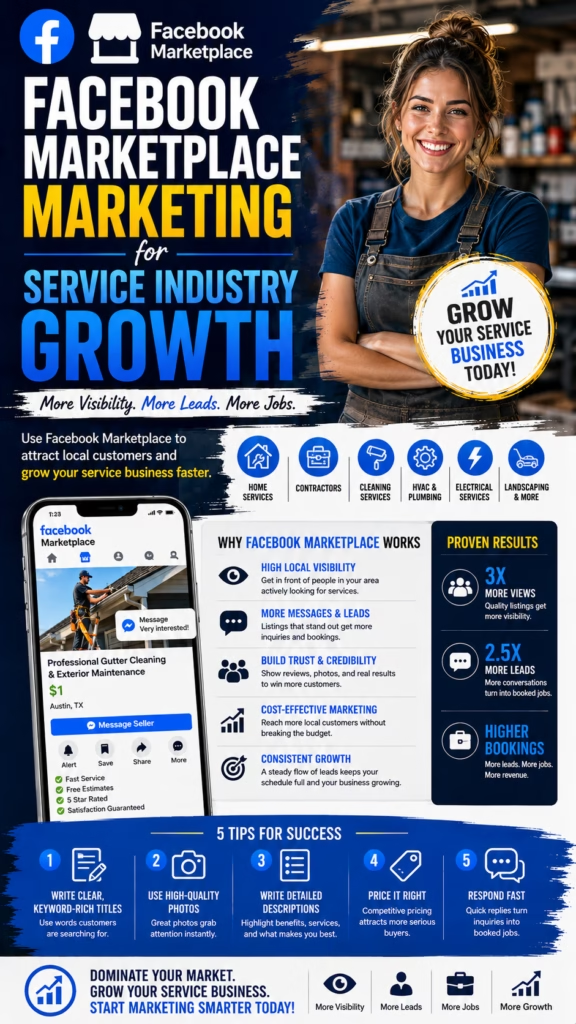
Facebook Marketplace Marketing for Service Industry Growth
Facebook Marketplace marketing for service industry growth can help local businesses reach homeowners, landlords, property managers, real estate investors, consumers, contractors, and commercial customers actively searching for products, repairs, installations, estimates, appointments, deliveries, and other local solutions. Strong Marketplace growth depends on relevant offers, professional listings, original photos, transparent pricing, fast response, lead qualification, organized follow-up, and reliable performance tracking.
Service industry growth depends on consistently connecting local demand with a clear offer, fast response, professional customer experience, and reliable follow-up.
A homeowner may be looking for flooring, painting, roofing, landscaping, tree work, appliance repair, furniture delivery, or remodeling.
A landlord may need turnover work. A property manager may need recurring maintenance. A consumer may need a product delivered. A business owner may need commercial repairs, installation, or recurring service.
Facebook Marketplace creates an environment where local customers can discover products and offers, compare options, ask questions, and contact businesses directly.
The challenge is that visibility alone does not create sustainable growth.
Businesses need systems that move the customer from the first message to qualification, appointment, estimate, purchase, service, follow-up, review, referral, and repeat business.
The Service Industry Marketplace Growth Formula
Relevant Offer + Local Visibility + Strong Listing + Original Photos + Fast Response + Lead Qualification + Clear Next Step + Follow-Up + Tracking = Sustainable Service Industry Growth
Why Facebook Marketplace Can Support Service Industry Growth
Local Discovery
Marketplace gives businesses another way to reach nearby consumers and property owners.
Direct Conversations
Customers can ask questions, request information, send photos, and discuss next steps directly.
Visual Marketing
Products, projects, before-and-after transformations, equipment, and completed work can be shown visually.
Multiple Offers
Businesses can organize campaigns around different products, services, project types, or customer needs.
Repeat Customer Potential
A first purchase or project can create maintenance, upgrades, referrals, and additional work.
Measurable Results
Businesses can connect inquiries with appointments, sales, revenue, gross profit, customer acquisition cost, and ROI.
Service Industries That Can Benefit From Marketplace Marketing
Facebook Marketplace can support a wide range of local businesses when the offers are eligible and appropriate for the platform.
- General contractors
- Painting companies
- Roofing contractors
- Flooring businesses
- Fence installation companies
- Landscaping businesses
- Tree removal companies
- Concrete contractors
- Appliance businesses
- Furniture and mattress stores
- Moving companies
- Cleaning businesses
- Home improvement companies
- Automotive businesses
- Property maintenance companies
- Remodeling contractors
- Window and door companies
- Deck builders
- Commercial maintenance providers
- Local retail businesses
The strongest strategy depends on the business model, product, service, current Marketplace eligibility, service area, customer profile, and sales process.
Understand the Customer Intent Behind Marketplace Messages
Information-Seeking Customers
Some customers want basic information about price, availability, size, service coverage, timing, or product options.
Comparison Shoppers
These customers may contact several businesses before choosing a provider.
High-Intent Customers
High-intent prospects may already have photos, measurements, property details, budgets, delivery addresses, or preferred appointment dates.
Urgent Customers
Some industries receive urgent requests for repairs, storm cleanup, breakdowns, damaged property, or time-sensitive deliveries.
Commercial Customers
Property managers, landlords, contractors, offices, retailers, and investors may need repeat or higher-value service.
Choose the Right Local Markets
Start With Real Service Coverage
Focus on cities where the business can reliably provide service, pickup, delivery, estimates, installation, or customer support.
Review Customer Density
Population, housing, property turnover, local businesses, construction activity, and commercial density can affect demand.
Review Competition
Highly competitive areas may require stronger photos, better pricing communication, faster response, and stronger social proof.
Review Operational Economics
Travel, delivery, fuel, crew time, equipment transport, and small project minimums should be considered before expanding coverage.
Choose Offers That Can Produce Profitable Growth
Prioritize Strong Demand
Promote services and products customers already search for locally.
Prioritize Healthy Margins
A high volume of messages does not automatically create a strong marketing channel if fulfillment costs are too high.
Prioritize Easy-to-Understand Offers
Customers respond more effectively when the listing clearly communicates what is being sold or provided.
Prioritize Repeat Potential
Offers that can create recurring maintenance, upgrades, additional products, property-management work, or referrals may produce stronger lifetime value.
Build Service-Specific Marketplace Campaigns
Product Campaigns
Retailers can separate products by model, size, style, category, price level, use case, or location.
Service Campaigns
Contractors can separate interior work, exterior work, repairs, installations, replacements, maintenance, or project categories.
Customer-Type Campaigns
- Homeowners
- Landlords
- Property managers
- Real estate investors
- Commercial customers
- Other contractors
Seasonal Campaigns
Businesses can adapt offers around weather, home improvement seasons, holidays, rental turnovers, storm events, and local demand.
Write Marketplace Titles That Attract the Right Customers
Identify the Offer Immediately
Customers should understand the product, service, or project type without opening the listing.
Add One Strong Differentiator
Useful differentiators may include product size, condition, professional estimates, delivery availability, project type, material, or customer benefit.
Avoid Excessive Capitalization
Clear professional titles generally create more trust than exaggerated headlines.
Avoid Keyword Stuffing
Repeating many cities, services, brands, or unrelated keywords can reduce clarity.
Marketplace Title Examples
Local Home Improvement Estimates for Property Owners
Professional Interior and Exterior Project Services
Furniture Delivery and Local Pickup Available
Property Maintenance for Landlords and Managers
Write Marketplace Descriptions That Improve Lead Quality
Start With the Customer Need
Explain what problem the service or product helps solve.
Describe the Offer Clearly
Include important product details, project types, service coverage, availability, pricing context, and the next step.
Explain the Customer Journey
- Customer sends a message
- Business confirms availability or service coverage
- Customer provides relevant details
- Lead is qualified
- Appointment, estimate, visit, pickup, or delivery is scheduled
- Customer receives the offer or proposal
- Sale or project is completed
Answer Common Questions Early
Include the information customers frequently ask about so the conversation can move more quickly toward a real decision.
Improve the Opening Lines of Marketplace Listings
Looking for a reliable local company for your next project, repair, purchase, installation, or property improvement? Send us the details and our team will help confirm availability and the best next step.
Explain Value Quickly
The opening lines should establish the offer, local relevance, and customer benefit.
Avoid Generic Claims
Statements such as “best company in town” are less useful than specific information about the offer and next step.
Use Original Photos That Build Trust
Product Businesses
- Actual inventory
- Different product angles
- Features and details
- Condition
- Packaging
- Showroom or warehouse
Service Businesses
- Completed projects
- Before-and-after transformations
- Work in progress
- Professional crews
- Equipment
- Clean finished results
Avoid Misleading Images
Do not use products, equipment, facilities, or project results that do not accurately represent the business.
Protect Customer Privacy
Avoid publishing addresses, personal documents, faces, license plates, access codes, or other identifying information without permission.
Use Before-and-After Content to Demonstrate Value
Show the Starting Problem
Document outdated, damaged, unfinished, dirty, overgrown, worn, or inefficient conditions.
Show the Finished Result
Highlight improved appearance, function, cleanliness, organization, access, or customer experience.
Use Similar Angles
Comparable before-and-after images make the transformation easier to understand.
Use Accurate Captions
Do not imply that every customer receives identical pricing, results, project timelines, or scope.
Use Transparent Pricing Without Attracting the Wrong Leads
Use Real Prices
Product businesses should list accurate prices when possible.
Use Starting Prices Carefully
Service businesses should explain what the starting price includes and what variables affect the final amount.
Explain Minimum Charges
Service minimums can help reduce low-value inquiries that do not fit the business model.
Explain Additional Costs
Delivery, installation, materials, disposal, travel, upgrades, preparation, repairs, financing, or optional services should be communicated clearly.
Transparent Pricing Supports Better Growth
The goal is not simply to maximize messages. The goal is to generate conversations with customers who understand the offer and have realistic expectations.
Define Service Areas Clearly
List Primary Cities
Include the cities, neighborhoods, counties, or local markets the business serves consistently.
Explain Delivery Areas
Retail and product businesses should clarify delivery zones and pickup options.
Explain Travel Limitations
Distant projects may require larger minimums, delivery fees, travel charges, or different scheduling.
Avoid Misleading Location Claims
Customers should understand where the business is located and where service can realistically be provided.
Build Trust Before the Customer Ever Calls
- Real business identity
- Accurate local coverage
- Original project or product photos
- Clear pricing communication
- Professional response
- Licensing when applicable
- Insurance when applicable
- Clear appointment or purchase process
Use Accurate Credentials
Do not claim certifications, licenses, warranties, partnerships, insurance, or experience that cannot be verified.
Explain the Process
Customers are more comfortable when they understand what happens after they send the first message.
Use One Clear Call to Action
Send us the service or product you need, your location, preferred timing, and any relevant photos or details. Our team will review the request and help confirm the appropriate next step.
Keep the Next Step Simple
The customer should not need to navigate several websites, departments, phone numbers, or forms.
Match the CTA to the Offer
The next step might be an estimate, store visit, delivery quote, appointment, consultation, pickup, or purchase.
Respond to Marketplace Inquiries Quickly
Thanks for reaching out. Please send your location, the service or product you are interested in, your preferred timing, and any photos or details that may help us understand what you need.
Answer the Customer’s Main Question
Confirm basic availability, service coverage, or relevant product information before asking several additional questions.
Ask One Useful Follow-Up Question
Move the conversation toward location, project scope, delivery, timing, measurements, model, budget, or appointment scheduling.
Create a Clear Next Step
Every qualified conversation should move toward an appointment, estimate, call, store visit, pickup, delivery, proposal, or sale.
Qualify Marketplace Leads Without Creating Friction
Confirm the Need
Identify the exact product, repair, project, installation, or service the customer wants.
Confirm the Location
Make sure the lead falls inside the service, delivery, or pickup area.
Confirm the Scope
Ask for dimensions, quantities, property type, number of rooms, product model, condition, or other relevant details.
Confirm Timing
Determine when the customer wants to purchase, schedule, repair, install, visit, or receive delivery.
Confirm Fit
Determine whether the opportunity matches minimum project values, inventory, company capabilities, budget expectations, and availability.
Schedule Marketplace Appointments Efficiently
Offer Specific Times
Give customers realistic options rather than leaving the appointment completely open-ended.
Confirm Contact Information
Collect the name, phone number, email when appropriate, property or delivery location, and requested service.
Confirm the Purpose
Make sure the staff member knows which product, service, estimate, demonstration, or project the customer expects to discuss.
Send Reminders
Appointment reminders can reduce no-shows and improve preparation.
Recover Missed Marketplace Calls
Use Professional Voicemail
Ask callers to leave their name, service or product request, location, and callback number.
Send a Missed-Call Text
Thanks for calling [Business Name]. We are sorry we missed you. Please reply with what you need, your location, and the best time to reach you.
Create a Callback Task
Every valid missed call should have an owner and next action.
Build a Consistent Marketplace Follow-Up System
Follow Up After the First Conversation
Customers may forget which businesses they contacted.
Follow Up on Estimates and Quotes
Confirm receipt, answer questions, and clarify the next step.
Follow Up Before Appointments
Remind customers about estimate visits, consultations, showroom appointments, pickups, and deliveries.
Track Lost Reasons
- Price
- Timing
- Outside service area
- Product unavailable
- Project too small
- Customer chose another company
- Unable to contact
- Purchase or project delayed
Improve the Sales Process After the Marketplace Lead Arrives
Respond With Context
Staff should know which Marketplace listing generated the inquiry.
Use Consistent Qualification
Create a standard set of questions for each major service or product category.
Prepare Before the Appointment
Review photos, measurements, product preferences, property details, and prior conversations.
Make the Decision Easy
Clear pricing, scope, product options, scheduling, delivery, payment, and next steps improve conversion.
Use Marketplace Leads to Generate Repeat Business
Identify Additional Needs
A customer who buys one product or completes one project may need related products, services, maintenance, repairs, or upgrades.
Build Customer Records
Track what the customer purchased, project history, preferences, warranty information, and future opportunities.
Serve Multi-Property Customers
Landlords, investors, managers, and commercial customers may have multiple locations.
Use Seasonal Follow-Up
Maintenance, weather, property turnover, holidays, and remodeling seasons can create future opportunities.
Turn Marketplace Customers Into Reviews and Referrals
Deliver a Strong Customer Experience
Reviews begin with reliable communication, accurate expectations, quality service, and professional completion.
Request Reviews at the Right Time
Ask after a successful project, delivery, installation, purchase, or resolved service experience.
Ask for Referrals Naturally
Satisfied customers may know neighbors, friends, family members, landlords, contractors, or business owners who need similar help.
Track Referral Sources
Marketplace can create customers who later generate additional non-Marketplace business.
Use AI and Automation to Scale Marketplace Lead Handling
AI Chat Applications
- Confirm approved availability information
- Collect customer details
- Ask qualification questions
- Request project photos
- Confirm service areas
- Offer appointment options
- Request phone numbers
- Create CRM records
AI Voice Applications
Voice systems can handle after-hours calls, collect information, schedule appointments, answer approved questions, and route leads.
Automated Follow-Up
Automation can help with reminders, missed-call recovery, appointment confirmations, and open-quote follow-up.
Maintain Human Oversight
Complaints, unusual pricing, safety issues, financing, custom work, commercial contracts, disputes, and complex projects should be escalated.
Connect Marketplace Marketing With the CRM
Create Complete Lead Records
- Customer name
- Phone number
- Email when available
- Marketplace source
- Listing or campaign
- Service or product requested
- Customer location
- Appointment status
- Assigned employee
- Expected value
Use Clear Pipeline Stages
- New inquiry
- Contacted
- Qualified
- Appointment scheduled
- Estimate or quote completed
- Decision pending
- Sale or project booked
- Completed
- Repeat opportunity
- Closed lost
Track Marketplace Performance Across the Service Business
Lead Metrics
- Total inquiries
- Qualified inquiries
- Response time
- Service-area matches
- Phone numbers collected
- Spam or irrelevant inquiries
Conversion Metrics
- Appointments scheduled
- Estimate completion
- Quote completion
- Show rate
- Close rate
- Follow-up conversion
Financial Metrics
- Average customer value
- Revenue
- Gross profit
- Customer acquisition cost
- Repeat customer revenue
- Referral revenue
- Return on investment
Measure Facebook Marketplace Revenue and ROI
Qualified Lead Rate
Qualified Lead Rate = Qualified Marketplace Leads ÷ Total Valid Marketplace Inquiries × 100
Appointment Rate
Appointment Rate = Marketplace Appointments ÷ Qualified Marketplace Leads × 100
Close Rate
Close Rate = Marketplace Customers ÷ Qualified Marketplace Opportunities × 100
Customer Acquisition Cost
Customer Acquisition Cost = Total Marketplace Marketing and Sales Cost ÷ New Marketplace Customers
Marketplace ROI
ROI = (Gross Profit From Marketplace Customers − Total Marketplace Marketing Cost) ÷ Total Marketplace Marketing Cost × 100
| Metric | What It Measures |
|---|---|
| Inquiry volume | Whether the listing, offer, market, title, photos, and price attract attention |
| Qualified lead rate | Whether inquiries match the service, product, location, timing, and business capabilities |
| Appointment rate | Whether the team converts inquiries into meaningful next steps |
| Close rate | Whether qualified Marketplace opportunities become customers |
| Average customer value | The average revenue produced by Marketplace customers |
| Gross profit and ROI | Whether the complete Marketplace marketing system produces profitable growth |
Common Marketplace Marketing Mistakes That Limit Service Industry Growth
Using Generic Listings
Different services, products, and customers need different messages.
Using Weak Photos
Customers need visual proof of products, projects, quality, and professionalism.
Using Misleading Prices
Unrealistic starting prices may create message volume without qualified opportunities.
Responding Too Slowly
Local customers may contact multiple businesses before choosing one.
Failing to Qualify Leads
Not every message matches the business’s service area, minimums, availability, or capabilities.
Failing to Follow Up
Many opportunities are lost after the first message, quote, or estimate.
Ignoring Repeat Business
Growth improves when one-time customers become recurring, multi-service, or referral customers.
Tracking Messages Instead of Revenue
Message volume should ultimately connect with customers, revenue, gross profit, and ROI.
A 30-Day Facebook Marketplace Service Industry Growth Plan
Week 1: Build the Foundation
- Identify priority services or products
- Define local service areas
- Review current Marketplace eligibility
- Set project or purchase minimums
- Organize original photos
- Define lead qualification rules
- Prepare phone and message routing
- Document current lead volume
Week 2: Build Better Marketplace Listings
- Create service-specific campaigns
- Create product-specific campaigns
- Write clear listing titles
- Write professional descriptions
- Add transparent pricing language
- Add original photos
- Add one clear call to action
- Launch in priority markets
Week 3: Improve Lead Conversion
- Create response templates
- Create qualification questions
- Create photo-request workflows
- Create appointment scheduling rules
- Create missed-call recovery
- Connect AI response when appropriate
- Connect CRM tracking
- Assign lead ownership
Week 4: Measure and Optimize
- Measure inquiries by listing
- Measure qualified lead rate
- Measure appointment rate
- Measure close rate
- Review lost reasons
- Track repeat business
- Track revenue and gross profit
- Calculate ROI
End-of-Month Outcome
After 30 days, the business should have stronger Marketplace offers, clearer local targeting, better photos, faster response, improved lead qualification, more organized appointment and sales workflows, cleaner CRM records, and measurable insight into which Marketplace campaigns contribute to profitable growth.
Final Takeaway: Use Marketplace as a Complete Growth Channel
Effective Facebook Marketplace marketing for service industry growth requires more than posting listings and counting messages.
Sustainable growth begins with choosing the right local markets, offers, services, products, photos, titles, descriptions, prices, and customer segments.
Each listing should make the offer easy to understand, explain the service area or pickup options, set realistic pricing expectations, and provide one clear next step.
Businesses should respond quickly, qualify inquiries, collect the right customer details, request photos when useful, schedule appointments, and document every meaningful opportunity.
Estimates, quotes, showroom visits, deliveries, pickups, and consultations should be supported by organized follow-up rather than left to chance.
AI chat, AI voice, missed-call response, reminders, and CRM automation can improve speed and consistency while employees remain responsible for complex questions, pricing, safety, customer relationships, and final decisions.
The business should track qualified inquiries, appointments, estimates, show rates, close rates, average customer value, repeat business, referrals, customer acquisition cost, revenue, gross profit, and ROI.
When local visibility, strong listings, fast response, careful qualification, organized follow-up, customer experience, and performance tracking work together, Facebook Marketplace can become a valuable component of service industry growth.
Frequently Asked Questions
1. Can Facebook Marketplace help service businesses grow?
Yes. Marketplace can generate local inquiries, appointments, estimates, visits, purchases, and other opportunities when listings and follow-up are managed professionally.
2. Which service industries can use Marketplace marketing?
Contractors, painters, roofers, flooring companies, landscapers, tree companies, retailers, appliance businesses, home improvement companies, and other eligible local businesses may benefit.
3. How does Marketplace generate service leads?
Local visibility encourages customers to message businesses, request information, share project details, schedule appointments, or ask about products and services.
4. Should every service use the same listing?
No. Service-specific listings can improve relevance and lead quality.
5. What makes a strong service listing title?
Identify the service, product, project type, or customer benefit clearly without excessive capitalization or keyword repetition.
6. Should service businesses include pricing?
Accurate prices, starting prices, or minimums can improve lead quality when they are explained clearly.
7. Do original photos improve Marketplace performance?
Yes. Original product, project, before-and-after, team, showroom, and equipment photos can improve trust.
8. How quickly should Marketplace inquiries receive a response?
Respond promptly because local customers may contact several businesses before making a decision.
9. What should businesses ask Marketplace leads?
Ask about the requested service or product, location, size, timing, condition, pickup or delivery, photos, and next step.
10. Should customers send photos?
Yes, when photos can help clarify the project, product need, property condition, access, damage, or scope.
11. Can Marketplace generate appointments?
Yes. Qualified conversations can lead to estimates, consultations, store visits, pickups, deliveries, and service appointments.
12. How can service businesses reduce low-quality leads?
Explain service areas, pricing context, minimums, project requirements, availability, delivery conditions, and exclusions.
13. Should businesses move Marketplace leads into a CRM?
Yes. CRM tracking improves ownership, follow-up, appointments, quotes, sales tracking, and revenue attribution.
14. Can AI help handle Marketplace inquiries?
AI can collect approved customer information, ask qualification questions, request photos, schedule appointments, and update CRM records.
15. How should missed calls be handled?
Use voicemail, missed-call texts, callback tasks, AI voice, scheduling links, and employee notifications.
16. Can Marketplace help home service companies grow?
Yes. Home service businesses can reach property owners needing repairs, installations, maintenance, or improvements.
17. Can Marketplace help retail service businesses grow?
Yes. Listings can generate product inquiries, pickups, deliveries, store visits, and related service opportunities.
18. Can Marketplace help B2B service providers?
Some businesses may receive inquiries from landlords, property managers, offices, retailers, contractors, and local companies.
19. Should service businesses advertise unavailable appointments?
No. Do not promise immediate, same-day, or next-day availability unless the business can realistically provide it.
20. Should listings mention licensing and insurance?
Mention licenses, insurance, certifications, and credentials only when accurate, current, relevant, and verifiable.
21. How should Marketplace leads be followed up?
Follow up on open questions, estimates, quotes, appointments, visits, deliveries, proposals, and other pending opportunities.
22. Can Marketplace create repeat customers?
Yes. First-time customers can return for maintenance, upgrades, additional products, recurring work, and other services.
23. What metrics should service businesses track?
Track inquiries, qualified leads, response time, appointments, quotes, close rate, customer value, revenue, profit, and ROI.
24. How should businesses measure lead quality?
Measure how many inquiries match the service area, product or service, timing, project size, budget, and business capabilities.
25. Can Marketplace results be guaranteed?
No. Results depend on demand, competition, pricing, offer quality, reputation, photos, response speed, and business capacity.
26. How long does Marketplace marketing take to work?
Some listings may generate inquiries quickly, while others require testing services, products, markets, titles, photos, pricing, and response workflows.
27. Should Marketplace connect with Google Maps?
Yes. Marketplace can support Google Maps, reviews, local SEO, phone calls, websites, paid advertising, and other local channels.
28. Should Marketplace connect with social media marketing?
Yes. Projects, products, before-and-after content, videos, and customer results can support broader social media marketing.
29. What is the most important part of Marketplace lead conversion?
Fast professional response combined with useful qualification and a clear next step is critical.
30. What is the main goal of Facebook Marketplace marketing for service industry growth?
The goal is to turn local visibility into qualified conversations, appointments, estimates, purchases, booked jobs, repeat customers, reviews, referrals, revenue, and measurable profit.
30 Additional SEO Keywords
Use these supporting phrases naturally across service-industry marketing pages, Marketplace guides, local service pages, case studies, FAQs, and internal links.
Turn Facebook Marketplace Visibility Into More Customers and Service Industry Growth
MarketWiz.ai helps service businesses organize Facebook Marketplace marketing, build service-specific listings, improve titles and descriptions, organize project and product photos, respond to inquiries faster, recover missed calls, qualify customers, schedule appointments, connect AI voice and CRM systems, follow up with open opportunities, and measure customers, repeat business, revenue, gross profit, customer acquisition cost, and return on investment.
This article provides general advertising, Marketplace marketing, automation, service-industry, and business information and does not provide legal, financial, licensing, insurance, safety, privacy, telecommunications, consumer-protection, platform-compliance, or regulatory advice. Facebook Marketplace features, listing eligibility, categories, interfaces, commerce tools, advertising requirements, and platform policies may change. Businesses should review current Meta and Facebook Marketplace rules and applicable licensing, insurance, advertising, contract, warranty, financing, product-safety, delivery, call-recording, SMS, email, privacy, consent, consumer-protection, and industry-specific requirements before publishing listings or collecting customer information. Leads, appointments, estimates, customers, revenue, and other results cannot be guaranteed and depend on local demand, competition, pricing, offer quality, service coverage, inventory, capacity, reputation, listing quality, photos, response speed, follow-up, customer behavior, and sales execution.