

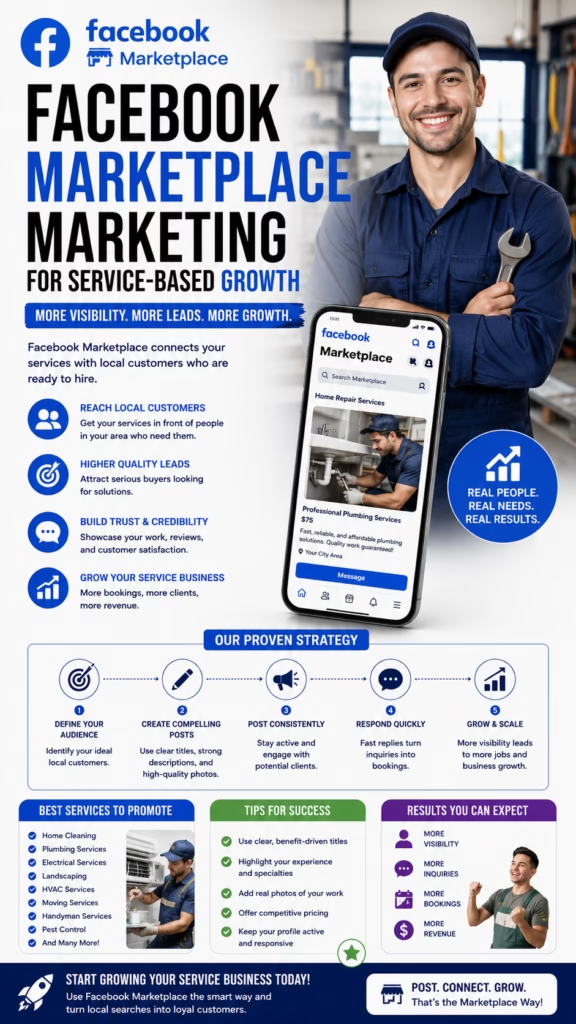
Facebook Marketplace Marketing for Service-Based Growth
Facebook Marketplace Marketing for Service-Based Growth explains how service businesses can use local Marketplace visibility, optimized listings, strong images, Messenger workflows, automation, tracking, and follow-up to generate more leads, appointments, quotes, and booked customers.
Introduction
Facebook Marketplace Marketing for Service-Based Growth is one of the most practical ways local service businesses can create more customer conversations. Marketplace is not only for selling physical products. Service companies can use it to promote estimates, appointments, seasonal services, home improvement help, repairs, consultations, emergency availability, and local offers.
For service-based businesses, growth depends on visibility, trust, speed, and follow-up. A potential customer may not be ready to search Google yet, but they may see a helpful Marketplace listing while browsing locally. If the listing is clear, visual, and easy to message about, that casual view can become a real lead.
Facebook Marketplace marketing supports service-based growth by turning local browsing into messages, quote requests, appointments, and booked jobs.
The strongest Marketplace strategy uses clear titles, strong visuals, service-focused descriptions, city targeting, direct offers, fast Messenger replies, saved responses, lead tracking, and follow-up systems. Posting alone is not enough. Businesses need a process that turns attention into action.
Facebook Marketplace also works best when connected to Google Maps, a business website, reviews, CRM tracking, SMS follow-up, and local SEO. Marketplace creates conversations. Google Maps captures search intent. The website builds proof. Automation helps prevent missed leads.
Main idea: Facebook Marketplace Marketing for Service-Based Growth works when businesses combine local visibility, trust-building listings, fast messaging, and organized follow-up.
Table of Contents
- 1) Why Marketplace works for service-based growth
- 2) How service customers respond on Marketplace
- 3) Service businesses that can use Marketplace
- 4) Building listings that attract local leads
- 5) Titles that create service interest
- 6) Images and proof that build trust
- 7) Descriptions that convert into messages
- 8) Local targeting and service-area strategy
- 9) Offers that increase lead volume
- 10) Messenger strategy and response speed
- 11) Automation and saved replies
- 12) Tracking Marketplace service leads
- 13) Follow-up systems for quotes and appointments
- 14) Common mistakes service businesses make
- 15) Final thoughts
- 16) FAQs
- 17) Extra keywords
1) Why Marketplace Works for Service-Based Growth
Facebook Marketplace works for service-based growth because it gives businesses another local discovery channel. Customers browsing Marketplace may be open to local solutions even if they are not actively searching on Google. This creates an opportunity to reach people earlier in the buying process.
A good service listing can spark interest by showing a problem, result, offer, or availability. For example, a painter can promote exterior estimates, a landscaper can promote seasonal cleanup, an HVAC company can promote maintenance openings, and a cleaner can promote move-out cleaning.
Marketplace can help service businesses generate:
- Messenger inquiries
- Phone calls
- Quote requests
- Free estimate requests
- Appointment bookings
- Project consultations
- Emergency service inquiries
- Seasonal service leads
- Local customer conversations
- Booked jobs
Facebook Marketplace Marketing for Service-Based Growth works because it creates more local entry points for potential customers.
2) How Service Customers Respond on Marketplace
Marketplace customers often respond through quick messages. They may ask about availability, pricing, service area, appointment openings, estimates, or project details. This makes Messenger response strategy extremely important.
Service companies should design listings that invite questions and make the next step simple. A customer should immediately know what service is offered, where the business works, and how to request help.
Marketplace service flow:
Customer sees local listing
Customer notices image and title
Customer reads service offer
Customer sends message
Business responds quickly
Lead becomes estimate, appointment, or booked job
Marketplace service leads often start as simple messages, so speed and clarity matter.
3) Service Businesses That Can Use Marketplace
Many service businesses can use Facebook Marketplace when the offer is framed clearly. The key is to make the service feel specific, local, and easy to inquire about.
Service businesses that can benefit include:
- Painting companies
- Roofing companies
- Landscapers
- HVAC companies
- Plumbers
- Cleaners
- Electricians
- Handymen
- Remodelers
- Flooring installers
- Pest control providers
- Mobile detailers
- Repair companies
Marketplace can support service-based growth when the business turns its service into a clear local offer.
4) Building Listings That Attract Local Leads
A service listing should not feel like a vague ad. It should quickly explain what service is available, who it helps, where the company works, and why the customer should message.
Strong listings use a visual hook, service-specific title, simple offer, trust proof, and a direct message CTA.
A strong service listing includes:
- Specific service title
- Clear local area
- Strong image
- Benefit-focused description
- Proof of work
- Simple offer
- Availability note
- Direct Messenger CTA
Marketplace listings attract better leads when they feel specific, local, and useful.
5) Titles That Create Service Interest
Titles are one of the first things Marketplace users see. A title should explain the service and give the customer a reason to click. It should be clear, not clever for the sake of being clever.
Marketplace service title examples:
Exterior Painting Estimates Available This Week
Local Lawn Care Help – Free Estimate Available
HVAC Service Appointments Open This Week
Move-Out Cleaning for Homes and Apartments
Roof Repair Estimates for Nearby Homeowners
Handyman Help Available in Your Area
Strong Marketplace titles help service businesses turn local browsing into service interest.
6) Images and Proof That Build Trust
Images matter because customers often decide whether to click based on visuals. Service businesses should use images that show results, professionalism, or proof of work.
Useful visuals include:
- Before-and-after photos
- Completed project photos
- Team photos
- Service vehicle photos
- Equipment photos
- Branded offer graphics
- Customer-approved examples
- Clean local service visuals
Images help service businesses build trust before the customer sends a message.
7) Descriptions That Convert Into Messages
The description should be short, clear, and action-focused. It should explain the service, benefit, service area, offer, proof, and next step.
Description formula:
What service is offered
Who it helps
Main benefits
Service area
Offer or availability
Trust proof
Message CTA
Descriptions convert better when they answer questions quickly and make messaging feel easy.
8) Local Targeting and Service-Area Strategy
Local targeting matters because service businesses need leads they can actually serve. Businesses should test cities, neighborhoods, and nearby markets, then focus on areas that produce quality appointments and booked jobs.
Service-area targeting should consider:
- Primary city
- Nearby suburbs
- Travel time
- Average job value
- Demand by service
- Neighborhood type
- Seasonal demand
- Competition level
- Repeat customer potential
Marketplace marketing grows faster when businesses focus on areas with real service demand.
9) Offers That Increase Lead Volume
Offers help customers take action. A good offer should be simple, believable, and tied to the service. Service-based offers often work because they lower the barrier to starting a conversation.
Marketplace service offer ideas:
- Free estimate
- Same-week appointments
- Emergency availability
- Seasonal inspection
- Neighborhood discount
- First-time customer offer
- Project consultation
- Limited schedule openings
- Maintenance package
Clear offers help turn Marketplace views into messages and appointments.
10) Messenger Strategy and Response Speed
Messenger is where Marketplace leads often convert or disappear. Businesses should respond quickly, ask good questions, and guide the customer toward an estimate, appointment, or next step.
Fast reply example:
Thanks for reaching out. Yes, we help with that service in your area.
What city are you located in?
If you can send a few details or photos, we can help with the next estimate window.
Fast Messenger response can turn a casual Marketplace inquiry into a serious lead.
11) Automation and Saved Replies
Automation helps service businesses avoid missed leads. Saved replies can answer common questions about service areas, pricing, estimates, appointment times, photos, and availability.
Automation can help with:
- Instant replies
- Service area questions
- Estimate instructions
- Appointment reminders
- Lead alerts
- Follow-up messages
- CRM updates
- Review requests
Automation supports service-based growth by helping businesses respond faster and follow up consistently.
12) Tracking Marketplace Service Leads
Tracking helps businesses know which listings, cities, offers, and services generate results. Without tracking, Marketplace activity can feel busy but unclear.
Marketplace lead tracking should include:
- Listing title
- Service offered
- City or service area
- Customer name
- Contact method
- Lead status
- Follow-up date
- Appointment status
- Booked job status
- Revenue outcome
Tracking turns Facebook Marketplace marketing into a measurable service growth channel.
13) Follow-Up Systems for Quotes and Appointments
Many Marketplace leads need follow-up before they book. They may ask questions, compare providers, wait for pricing, or forget to reply. Follow-up keeps the opportunity active.
Follow-up workflow:
Customer messages from Marketplace
Business responds quickly
Lead details are saved
Estimate or appointment is offered
Follow-up reminder is created
Lead is booked, nurtured, or closed
Follow-up helps service businesses convert more Marketplace messages into booked jobs.
14) Common Mistakes Service Businesses Make
Many service businesses struggle with Marketplace because they post without strategy. They use vague listings, weak visuals, slow replies, and no tracking.
- Generic service titles
- Weak images
- No before-and-after proof
- Vague service descriptions
- No clear service area
- No offer
- No direct call to action
- Slow Messenger replies
- No saved response system
- No lead tracking
- No follow-up process
- No testing of images, titles, or cities
- No connection to Google Maps, website, or CRM
Big mistake: treating Marketplace like random posting instead of a structured service lead generation system.
15) Final Thoughts
Facebook Marketplace Marketing for Service-Based Growth helps local businesses create more visibility, more messages, and more opportunities to book customers. Marketplace works because it connects service offers with people already browsing locally.
The best strategy includes optimized titles, strong visuals, local targeting, clear service descriptions, simple offers, fast replies, automation, lead tracking, and consistent follow-up. When Marketplace is connected to Google Maps, a website, reviews, CRM, and SMS follow-up, it becomes part of a complete service growth system.
Final takeaway: Facebook Marketplace marketing drives service-based growth when every listing is designed to capture attention, build trust, generate messages, and support follow-up.
16) FAQs
1) What is Facebook Marketplace marketing for service-based growth?
It is the process of using Marketplace listings, local targeting, messaging, automation, tracking, and follow-up to generate service leads and booked jobs.
2) Can service businesses use Facebook Marketplace?
Yes. Service businesses can promote estimates, appointments, emergency availability, seasonal services, and local offers.
3) What service businesses benefit from Marketplace?
Painters, roofers, landscapers, HVAC companies, plumbers, cleaners, remodelers, handymen, repair companies, and mobile services can benefit.
4) What makes a Marketplace service listing effective?
A strong title, clear image, service area, benefit-focused description, offer, trust proof, fast replies, and a clear next step make it effective.
5) Do Marketplace titles matter?
Yes. Titles help users quickly understand the service and decide whether to click.
6) Do images matter?
Yes. Images are often the first thing users notice and can strongly affect message volume.
7) What images work best?
Before-and-after photos, completed work, team photos, branded graphics, vehicles, and real project examples can work well.
8) What should descriptions include?
Descriptions should include the service, customer benefit, service area, offer, availability, proof, and message CTA.
9) Should service businesses include pricing?
Pricing can help when appropriate, but custom services may use estimates, ranges, or message-based pricing.
10) What offers work well?
Free estimates, same-week appointments, seasonal inspections, emergency availability, neighborhood discounts, and first-time customer offers can work well.
11) How fast should businesses reply?
Businesses should reply as quickly as possible because Marketplace users often message multiple providers.
12) Can automation help?
Yes. Automation and saved replies can help businesses respond faster and manage more inquiries.
13) Should Marketplace leads be tracked?
Yes. Tracking helps businesses know which listings, services, cities, and offers generate results.
14) What should businesses track?
Track listing title, service requested, city, customer contact, lead status, follow-up, appointment status, and revenue outcome.
15) Can Marketplace work with Google Maps?
Yes. Marketplace creates message-based leads while Google Maps captures high-intent local search leads.
16) Does a website help Marketplace leads?
Yes. A website provides proof, reviews, photos, service details, and contact options.
17) Can home service businesses use Marketplace?
Yes. Home service businesses can promote repairs, estimates, maintenance, seasonal services, and appointment availability.
18) Can contractors use Marketplace?
Yes. Contractors can use Marketplace to show project examples, offer estimates, and generate local inquiries.
19) What is the biggest Marketplace mistake?
The biggest mistake is posting generic listings without strong visuals, clear service details, fast replies, tracking, or follow-up.
20) Should businesses test different listings?
Yes. Testing titles, images, descriptions, offers, and cities can improve lead volume and quality.
21) Can Marketplace generate high-quality service leads?
Yes. It can generate quality leads when listings are clear, targeted, trustworthy, and supported by fast response.
22) Should Marketplace be used alone?
No. It works best as part of a broader local marketing system with Google Maps, websites, reviews, CRM, and follow-up.
23) How does Messenger affect conversion?
Messenger makes it easy for customers to ask quick questions, but businesses must reply fast to convert the lead.
24) What is the goal of Marketplace marketing for services?
The goal is to turn local Marketplace visibility into messages, quotes, appointments, and booked jobs.
25) Is Marketplace marketing a one-time task?
No. It works best with consistent testing, updated listings, fast replies, lead tracking, and follow-up.
17) Extra Keywords
- Facebook Marketplace Marketing for Service-Based Growth
- Facebook Marketplace marketing
- Marketplace lead generation
- service business marketing
- Facebook Marketplace for services
- local service leads
- Marketplace advertising
- Marketplace service listings
- Facebook Marketplace for contractors
- Facebook Marketplace for home services
- Marketplace ads for painters
- Marketplace ads for roofers
- Marketplace ads for landscapers
- Marketplace ads for HVAC companies
- Facebook local service marketing
- Marketplace message leads
- Marketplace appointment leads
- Marketplace quote requests
- local customer acquisition
- Messenger lead generation
- Facebook Marketplace automation
- Marketplace follow-up system
- service lead tracking
- multi-platform local marketing
- service-based growth strategy













