

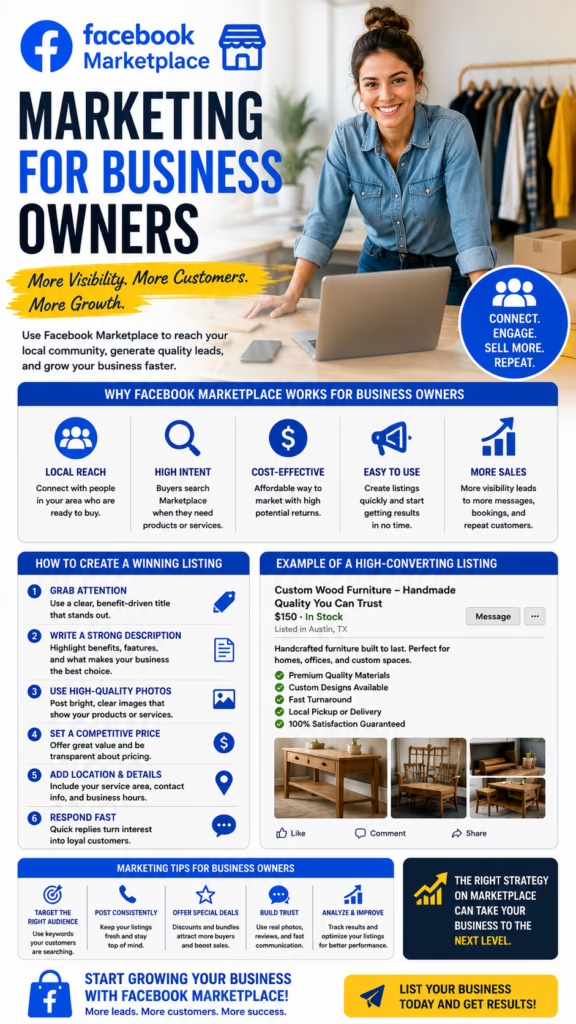
Facebook Marketplace Marketing for Business Owners
Facebook Marketplace Marketing for Business Owners explains how local companies can use Marketplace listings, stronger product photos, better titles, local keywords, trust signals, posting rotation, and fast response systems to generate more messages, calls, appointments, store visits, and sales opportunities from nearby buyers.
Introduction
Facebook Marketplace Marketing for Business Owners starts with one important reality: local buyers already use Facebook Marketplace to search for products, deals, services, vehicles, furniture, mattresses, mobile homes, equipment, home improvement offers, rentals, and nearby buying opportunities. That makes Marketplace a practical visibility channel for business owners who want more direct conversations with people in their area.
Unlike a standard social post that may disappear in the feed, a Marketplace listing is built around buyer intent. People open Marketplace because they are looking for something. They compare photos, titles, price points, locations, seller credibility, response speed, and availability. If a business listing is clear, professional, and easy to respond to, it can create real local lead flow.
Facebook Marketplace marketing works best when listings look real, local, trustworthy, and easy to message.
Many business owners underuse Marketplace because they treat it like a casual listing tool instead of a structured marketing channel. They post once, use weak photos, write generic descriptions, skip local keywords, forget trust signals, and respond too slowly. That makes the listing easy to ignore, even if the offer is strong.
A better approach uses Marketplace as part of a local lead generation system. The business creates clear listings, tests different product or service angles, rotates fresh offers, tracks buyer messages, follows up quickly, and uses Facebook conversations to move prospects toward calls, appointments, delivery, store visits, or purchases.
Main idea: Facebook Marketplace Marketing for Business Owners is not just about posting products. It is about turning local buyer attention into measurable messages, calls, visits, bookings, and sales opportunities.
Table of Contents
- 1) Why Facebook Marketplace matters for business owners
- 2) What Marketplace marketing can do for a local company
- 3) How buyers compare Marketplace listings
- 4) Building a Facebook Marketplace marketing strategy
- 5) Writing stronger Marketplace titles
- 6) Creating descriptions that generate messages
- 7) Using local keywords naturally
- 8) Creating offers that local buyers respond to
- 9) Trust signals that improve message quality
- 10) Photos and visuals for Marketplace success
- 11) Facebook Marketplace marketing for product businesses
- 12) Facebook Marketplace marketing for service businesses
- 13) Posting rotation for more visibility
- 14) Avoiding low-quality or repetitive listings
- 15) Lead tracking and Messenger follow-up
- 16) How Marketplace fits with Facebook Pages and ads
- 17) Common Facebook Marketplace marketing mistakes
- 18) Final thoughts
- 19) FAQs
- 20) Extra keywords
1) Why Facebook Marketplace Matters for Business Owners
Facebook Marketplace matters because it gives business owners access to buyers who are already searching locally. Instead of waiting for people to discover a brand through a feed post, Marketplace allows companies to appear where people are actively browsing categories, prices, products, and nearby offers.
For many local businesses, Marketplace can support direct conversations. A buyer sees the listing, checks the photos, reads the description, views the location, and sends a message. That message can become a phone call, quote request, delivery order, appointment, showroom visit, or sale.
Facebook Marketplace marketing can help business owners generate:
- Local buyer messages
- Phone call requests
- Product availability questions
- Delivery inquiries
- Financing questions
- Appointment requests
- Store visit interest
- Service estimate requests
- Inventory-specific leads
- Sales conversations through Messenger
Facebook Marketplace Marketing for Business Owners works because it connects local offers with buyers who are already searching inside a high-attention platform.
2) What Marketplace Marketing Can Do for a Local Company
Marketplace marketing can support many business goals. A mattress store may want more showroom visits. A furniture seller may want delivery inquiries. A mobile home dealer may want appointment leads. A contractor may want estimate requests. An appliance seller may want same-day pickup messages. A local service company may want more conversations with nearby homeowners.
The goal is to match the listing to the buyer’s intent. Marketplace users often want practical answers quickly: Is it available? How much is it? Where is it located? Can it be delivered? Can I finance it? How soon can someone help me? Can I message now?
Facebook Marketplace marketing goals:
Generate buyer messages
Promote local inventory
Book appointments
Drive store visits
Advertise delivery options
Promote financing
Move seasonal offers
Create quote requests
Reach nearby buyers
Test local product demand
The best Marketplace campaigns are built around buyer action, not just listing visibility.
3) How Buyers Compare Marketplace Listings
Marketplace buyers compare listings quickly. They scan the image first, then the title, price, distance, seller profile, description, and response experience. If a listing looks unclear, low-quality, or incomplete, buyers move on. If it looks clean and easy to understand, they are more likely to send a message.
That means every part of a Marketplace listing should reduce hesitation. The buyer should understand what is being offered, where it is located, whether it is available, why the business is credible, and what to ask next.
Buyer comparison flow:
Buyer opens Marketplace
Buyer searches or browses a category
Buyer scans photos
Buyer compares price and distance
Buyer opens relevant listings
Buyer reads description
Buyer checks seller credibility
Buyer sends a message
Business replies quickly
Conversation becomes a sale or appointment
A strong Marketplace listing makes the buyer feel comfortable starting a conversation.
4) Building a Facebook Marketplace Marketing Strategy
A Facebook Marketplace marketing strategy starts with knowing what the business wants to sell, promote, or generate. A business owner should not rely on one generic listing. Instead, the business should build listing categories around the products, services, buyer needs, locations, and offers that matter most.
The strategy should include title templates, photo guidelines, pricing rules, city targets, product categories, message scripts, follow-up timing, lead tracking, and weekly posting rotation. This turns Marketplace from random posting into a repeatable system.
A strong Marketplace marketing strategy includes:
- Target product or service categories
- Local city and radius focus
- Buyer pain points
- Offer angles
- Title variations
- Photo style rules
- Description templates
- Messenger response scripts
- Posting rotation
- Lead tracking and follow-up
Without a system, Marketplace can feel random. With a system, it becomes a local buyer conversation engine.
5) Writing Stronger Marketplace Titles
The title is one of the most important parts of Facebook Marketplace marketing. It helps buyers understand what the listing is before they click. A strong title should be clear, specific, searchable, and connected to the buyer’s intent.
Business owners should avoid titles that are too vague or too clever. A Marketplace buyer needs clarity fast. Good titles include the product or service, key benefit, size, condition, delivery option, financing option, or local availability when relevant.
Weak title:
Great Deal Available

Stronger title:
Queen Mattress Set - Same-Day Delivery Available

Weak title:
Furniture For Sale

Stronger title:
Modern Sofa Set - Local Delivery Options

Weak title:
Home Service Help

Stronger title:
Interior Painting Estimate - Local Scheduling Available
Strong Marketplace titles help listings show up for the right buyers and make the offer easier to understand.
6) Creating Descriptions That Generate Messages
The description should make the buyer comfortable enough to send a message. It should explain the offer clearly, answer the most common questions, and include a simple next step. The buyer should not have to guess about size, condition, availability, service area, delivery, financing, or contact process.
A strong Marketplace description is direct and easy to skim. It can include bullet-style details, product benefits, service details, location notes, trust signals, and a clear call-to-action.
A lead-focused Marketplace description should include:
- What is being offered
- Product or service details
- Location or service area
- Condition or availability
- Delivery or pickup options
- Financing or payment details when relevant
- Business trust signals
- Clear message prompt
- Phone number when appropriate
- Simple next step
Marketplace descriptions convert better when they answer the buyer’s first questions before the message begins.
7) Using Local Keywords Naturally
Local keywords help Marketplace listings match buyer searches and make the offer more relevant. Buyers may search by city, product type, neighborhood, brand, size, service, delivery, financing, or problem. Business owners should include these phrases naturally in the title and description.
The goal is not to overload the listing. The goal is to create useful relevance. A phrase like “Available for local delivery in Rochester, Henrietta, Brighton, and surrounding areas” is more helpful than repeating city names without context.
Useful Marketplace keyword types include:
- City names
- Nearby towns
- Neighborhoods
- Product categories
- Service categories
- Brand names
- Size or model details
- Delivery terms
- Financing terms
- Urgency phrases
Local keywords help Facebook Marketplace marketing reach buyers who are searching with location-based intent.
8) Creating Offers That Local Buyers Respond To
The offer gives the buyer a reason to message. On Marketplace, buyers often respond to clear availability, strong photos, fair pricing, delivery options, financing, limited inventory, bundles, fast scheduling, or simple pickup instructions.
A business owner should match the offer to the buyer’s likely concern. If buyers ask about price, use clear pricing language. If buyers need convenience, mention delivery. If buyers need confidence, include business details. If buyers need speed, mention same-day or same-week availability when accurate.
Marketplace offer examples:
Same-day delivery available
Local pickup available
Financing options available
Message for current inventory
Bundle pricing available
Limited quantity available
Free local estimate
Same-week scheduling
Ask about current specials
Call or message for availability
A strong Marketplace offer makes the buyer feel like messaging now is worth it.
9) Trust Signals That Improve Message Quality
Trust is one of the biggest factors in Facebook Marketplace marketing. Buyers may hesitate if a listing feels anonymous, incomplete, or too good to be true. Business owners can improve lead quality by making listings look real, local, and professional.
Trust signals can include a business name, business page mention, website, local phone number, store address, reviews mention, real photos, branded images, delivery details, warranty language, experience, and a professional Messenger response.
Trust signals that help Marketplace listings:
- Business name
- Business Facebook Page
- Website mention
- Local phone number
- Store or service area
- Real product photos
- Google review mention
- Years in business
- Delivery or warranty details
- Clear response instructions
Buyers are more likely to send quality messages when the listing feels legitimate and easy to verify.
10) Photos and Visuals for Marketplace Success
Photos are one of the strongest drivers of Facebook Marketplace performance. Buyers often decide whether to click based on the image before reading the title or description. Strong visuals can make a listing feel more valuable, trustworthy, and worth messaging.
Business owners should use bright, clear, real images whenever possible. Product businesses should show the item from multiple angles. Service businesses can use finished project photos, before-and-after images, branded graphics, crew photos, or examples of completed work.
Marketplace photo ideas:
Clean product photo
Multiple product angles
Inventory display
Before-and-after image
Finished project photo
Delivery vehicle photo
Showroom image
Branded offer graphic
Lifestyle product photo
Close-up detail image
On Marketplace, the image often earns the click before the words get a chance to sell.
11) Facebook Marketplace Marketing for Product Businesses
Product businesses are often a strong fit for Facebook Marketplace because buyers can quickly compare photos, prices, location, delivery, and availability. A product listing should make the item easy to understand and easy to ask about.
This can work for furniture stores, mattress stores, appliance sellers, mobile home dealers, equipment sellers, trailer sellers, tool sellers, local retailers, clearance inventory, and other businesses with physical products.
Product business listings should highlight:
- Current inventory
- Product size or model
- Brand details
- Condition details
- Price or starting price
- Pickup options
- Delivery options
- Financing availability
- Bundle deals
- Message for availability
Product businesses get better Marketplace leads when buyers can quickly understand what is available, how much it costs, and how to get it.
12) Facebook Marketplace Marketing for Service Businesses
Service businesses can also use Facebook Marketplace when listings are framed around specific local problems, offers, estimates, and scheduling. Even though Marketplace is often product-focused, local service listings can work when they feel helpful and direct.
Service businesses that may benefit include painters, HVAC companies, cleaners, landscapers, junk removal companies, remodelers, appliance repair providers, flooring companies, moving companies, pest control providers, and handyman services.
Service business listings should promote:
- Free estimates
- Fast scheduling
- Local service areas
- Before-and-after results
- Residential services
- Commercial services
- Repairs
- Installations
- Seasonal services
- Message to book a quote
Service businesses generate stronger Marketplace leads when listings clearly connect the buyer’s problem to a simple message-based next step.
13) Posting Rotation for More Visibility
Posting rotation helps business owners test multiple offers and reach different buyer intents. One listing may focus on price. Another may focus on delivery. Another may focus on financing. Another may focus on a specific product category, service, city, or seasonal need.
For example, a mattress store could rotate queen mattresses, king mattresses, same-day delivery, financing, clearance sets, and premium comfort options. A contractor could rotate interior painting, exterior painting, cabinet painting, move-in repainting, rental property work, and free estimates.
Marketplace rotation angles:
Price angle
Delivery angle
Financing angle
Limited inventory angle
City angle
Product category angle
Service category angle
Problem-solution angle
Seasonal angle
Before-and-after angle
Posting rotation helps business owners learn which Marketplace offers create the most useful buyer conversations.
14) Avoiding Low-Quality or Repetitive Listings
Marketplace marketing should be built around useful variation, not copy-paste repetition. Repeating the same listing without meaningful changes can make a business look careless and may reduce buyer trust. Each listing should have a specific purpose and buyer angle.
A better approach is to create distinct listings for different products, services, locations, price points, delivery options, financing offers, or seasonal needs. This gives buyers more relevant entry points and helps the business understand what gets the best response.
Important: Facebook Marketplace marketing performs better when each listing is clear, unique, and useful to a specific buyer need.
15) Lead Tracking and Messenger Follow-Up
Lead tracking is essential because Marketplace can generate many message-based conversations. Without tracking, a business owner may not know which listings create the best leads, which buyers need follow-up, or which offers produce actual sales.
Tracking can be simple. A spreadsheet, CRM, Messenger labels, saved replies, lead notes, call tracking, or daily message review process can help the business stay organized and improve results.
Track these Facebook Marketplace marketing metrics:
- Listing title
- Category
- Product or service type
- City or location
- Date posted
- Buyer messages
- Phone calls
- Appointments booked
- Delivery requests
- Store visits
- Closed sales
- Lead quality notes
Fast Messenger response matters. Many buyers contact multiple sellers, so speed can be the difference between a sale and a missed opportunity.
16) How Marketplace Fits With Facebook Pages and Ads
Facebook Marketplace can work alongside a business’s Facebook Page, organic posts, paid ads, reviews, Messenger workflows, and local brand presence. A buyer may discover a listing on Marketplace, then click into the seller profile or business page to decide whether the company looks legitimate.
This means the Marketplace strategy should match the rest of the business’s Facebook presence. Listings should use consistent branding, clear offers, real photos, professional replies, and contact details that support trust.
Marketplace can work alongside:
Facebook Business Page
Facebook posts
Facebook ads
Messenger follow-up
Review generation
Website visits
Google Business Profile
Instagram content
CRM tracking
Call tracking
Marketplace can create the conversation, while the business page, reviews, and follow-up process help convert the buyer.
17) Common Facebook Marketplace Marketing Mistakes
Many business owners get weak Marketplace results because they post quickly without a strategy. They use poor photos, unclear titles, vague descriptions, no trust signals, inconsistent pricing, slow replies, or duplicate listings with no clear purpose.
Most of these mistakes are fixable. Better visuals, clearer titles, stronger descriptions, local keywords, trust signals, offer testing, and faster Messenger follow-up can improve results.
Common mistakes to avoid:
- Using blurry or low-quality photos
- Writing vague titles
- Leaving out important details
- Forgetting local keywords
- Not explaining delivery or pickup
- Not mentioning availability
- Using no trust signals
- Responding too slowly
- Not tracking conversations
- Posting repetitive listings without a strategy
Marketplace marketing fails when listings are unclear, untrustworthy, hard to respond to, or poorly followed up.
18) Final Thoughts
Facebook Marketplace Marketing for Business Owners is about more than placing a product online. It is about creating a local marketing system that turns buyer attention into messages, calls, appointments, store visits, delivery orders, and sales opportunities.
The strongest Marketplace campaigns use clear titles, high-quality photos, helpful descriptions, local keywords, trust signals, strong offers, posting rotation, lead tracking, and fast Messenger follow-up. When these pieces work together, Marketplace can become a practical local lead source for businesses that sell products, services, or appointment-based offers.
Final takeaway: Facebook Marketplace marketing works for business owners when every listing makes the offer clearer, more trustworthy, more local, and easier to message than the alternatives.
19) FAQs
1) What is Facebook Marketplace marketing for business owners?
It is the process of using Facebook Marketplace listings to promote local products, services, inventory, appointments, delivery options, and business offers to nearby buyers.
2) Does Facebook Marketplace work for businesses?
Yes. Marketplace can work for businesses when listings are clear, local, professional, photo-driven, and supported by fast Messenger follow-up.
3) What types of businesses can use Facebook Marketplace?
Furniture stores, mattress stores, appliance sellers, mobile home dealers, equipment sellers, contractors, repair companies, service businesses, and local retailers can use Marketplace.
4) What should a Marketplace title include?
A strong title should include the product or service, important details, key benefit, delivery option, availability, or local buying reason.
5) How do I make a Marketplace listing stand out?
Use clear photos, a specific title, local keywords, a helpful description, trust signals, and a simple message-based call-to-action.
6) Are photos important on Facebook Marketplace?
Yes. Photos are often the first thing buyers notice, so clear and real images can strongly improve listing performance.
7) Should businesses include phone numbers in Marketplace listings?
When appropriate, yes. A phone number can help serious buyers move from Messenger to a faster sales conversation.
8) What are local keywords for Marketplace listings?
Local keywords include city names, neighborhoods, product categories, service areas, delivery terms, financing terms, and buyer problem phrases.
9) Should Marketplace listings mention delivery?
Yes, if delivery is available. Delivery can be a strong reason for buyers to message, especially for furniture, mattresses, appliances, and large items.
10) Should Marketplace listings mention financing?
Yes, if financing is available. Financing can help buyers understand their options and start a sales conversation.
11) Can service businesses use Facebook Marketplace?
Yes. Service businesses can use Marketplace when listings focus on clear services, local availability, free estimates, and easy booking steps.
12) Can product businesses use Facebook Marketplace?
Yes. Product businesses can use Marketplace to promote inventory, pricing, delivery, pickup, financing, and availability.
13) How often should a business post on Marketplace?
A business should post consistently while using useful listing variations based on different products, services, cities, offers, and buyer needs.
14) Should I repeat the same Marketplace listing?
It is better to create meaningful variations instead of repeating the same listing without changes.
15) What are trust signals on Facebook Marketplace?
Trust signals include a business name, real photos, local phone number, website, Facebook Page, review mentions, address, delivery details, and professional responses.
16) Why are my Marketplace listings not getting leads?
Your listings may have weak photos, unclear titles, poor descriptions, missing local keywords, no trust signals, bad pricing, or slow responses.
17) How do I track Marketplace leads?
You can track leads with a spreadsheet, CRM, Messenger labels, call logs, saved replies, or daily lead review process.
18) What should I track from Marketplace listings?
Track listing title, category, city, date posted, buyer messages, calls, appointments, delivery requests, store visits, sales, and lead quality.
19) Is Facebook Marketplace good for furniture businesses?
Yes. Furniture businesses can use Marketplace to promote inventory, delivery, local pickup, clearance items, and buyer messages.
20) Is Facebook Marketplace good for mattress stores?
Yes. Mattress stores can use Marketplace to promote mattress sets, delivery, financing, local availability, and store visits.
21) Can Marketplace help generate appointments?
Yes. Marketplace conversations can become appointments when listings are clear and the business follows up quickly.
22) How fast should businesses respond to Marketplace messages?
As fast as possible. Many buyers message multiple sellers, so quick responses can help win the conversation.
23) Should Marketplace be part of a larger marketing system?
Yes. Marketplace can work with a Facebook Page, website, Google Business Profile, reviews, CRM, call tracking, and paid ads.
24) What is the biggest Marketplace marketing mistake?
The biggest mistake is posting unclear listings without strong photos, trust signals, local keywords, tracking, or fast follow-up.
25) What is the main goal of Facebook Marketplace marketing?
The main goal is to turn Marketplace visibility into buyer messages, calls, appointments, store visits, delivery requests, and sales opportunities.
20) Extra Keywords
- Facebook Marketplace Marketing for Business Owners
- Facebook Marketplace marketing
- Facebook Marketplace ads for businesses
- Facebook Marketplace local marketing
- Facebook Marketplace lead generation
- Facebook Marketplace business leads
- Facebook Marketplace posting strategy
- Facebook Marketplace advertising for small businesses
- Facebook Marketplace local leads
- Facebook Marketplace direct response listings
- Facebook Marketplace service business listings
- Facebook Marketplace product business listings
- Facebook Marketplace contractor marketing
- Facebook Marketplace retailer marketing
- Facebook Marketplace listing optimization
- Facebook Marketplace local sales strategy
- Facebook Marketplace Messenger leads
- Facebook Marketplace posting services
- Facebook Marketplace listings that generate calls
- Facebook Marketplace appointment leads
- Facebook Marketplace delivery inquiries
- Facebook Marketplace buyer messages
- Facebook Marketplace lead tracking
- Facebook Marketplace sales opportunities
- Facebook Marketplace marketing system













