
Facebook Marketplace Listings That Get More Clicks
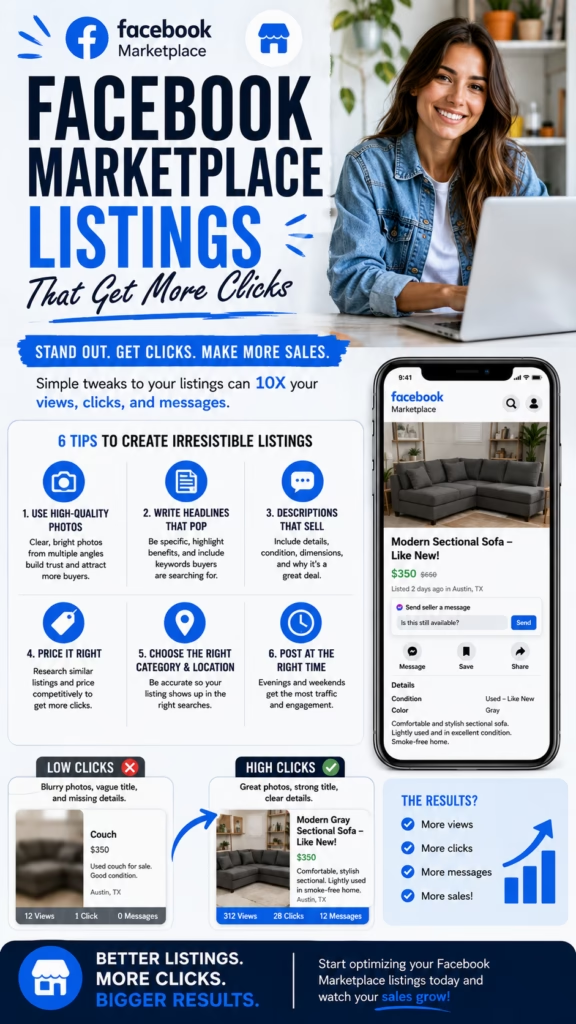
Facebook Marketplace Listings That Get More Clicks explains how sellers and local businesses can use better photos, stronger titles, clean descriptions, local keywords, trust signals, pricing strategy, and fast follow-up to turn more Marketplace views into messages and leads.
Introduction
Facebook Marketplace Listings That Get More Clicks starts with understanding how people browse. Most buyers scroll quickly. They judge listings by the main photo, title, price, location, trust signals, and how easy the next step feels. If a listing looks unclear, generic, low-quality, or confusing, it gets skipped.
Facebook Marketplace can be powerful for local businesses, product sellers, vehicle sellers, home service companies, real estate advertisers, furniture stores, appliance sellers, mattress stores, contractors, and anyone trying to reach nearby buyers. But getting attention requires more than simply posting an item or service angle. The listing has to be built for clicks.
Marketplace listings get more clicks when they are visual, specific, local, easy to understand, trustworthy, and built around a clear next step.
A strong listing does not rely on hype. It gives buyers the information they need quickly. It explains what is being offered, why it matters, where it is available, and what the buyer should do next. Photos, titles, and descriptions all work together.
Many Marketplace listings fail because they are too vague. A title like “available now” or “great deal” does not tell the buyer enough. A better title explains the item, category, benefit, condition, size, service, or local offer.
Main idea: Facebook Marketplace Listings That Get More Clicks are listings that stop the scroll, create trust, answer buyer questions, and make messaging feel easy.
Table of Contents
- 1) Why Facebook Marketplace clicks matter
- 2) How Marketplace buyers decide what to click
- 3) The role of the main photo
- 4) Writing titles that get more clicks
- 5) Creating descriptions that convert
- 6) Using local keywords correctly
- 7) Pricing strategy for more clicks
- 8) Trust signals that improve response
- 9) Listing photos that stand out
- 10) Marketplace listings for local businesses
- 11) Marketplace listings for service businesses
- 12) Marketplace listings for products
- 13) Marketplace listings for vehicles and equipment
- 14) Marketplace listings for furniture and home goods
- 15) Listing rotation and testing
- 16) Reducing low-quality messages
- 17) Follow-up that turns clicks into leads
- 18) Tracking Marketplace performance
- 19) Common Marketplace listing mistakes
- 20) Final thoughts
- 21) FAQs
- 22) Extra keywords
1) Why Facebook Marketplace Clicks Matter
Clicks matter because they are the bridge between visibility and conversations. A listing may appear in search or browsing results, but if people do not click, the listing cannot explain the offer, build trust, or generate messages.
More clicks can lead to more conversations, more qualified buyers, more local leads, and more booked appointments. The goal is not just views. The goal is to create listings that attract the right people and move them toward action.
More Marketplace clicks can help generate:
- More buyer messages
- More local leads
- More appointment requests
- More product inquiries
- More service requests
- More quote conversations
- More store visits
- More vehicle inquiries
- More furniture and appliance sales
- More repeat local visibility
A Marketplace click is the first step toward a real sales conversation.
2) How Marketplace Buyers Decide What to Click
Marketplace buyers decide quickly. They scan the photo, title, price, location, category, and visible details. If the listing looks relevant, clear, and trustworthy, they are more likely to click.
Buyers want confidence before they message. They want to know whether the listing matches their need, whether the seller looks real, and whether the offer feels worth their time.
Buyers usually evaluate:
Main photo
Title clarity
Price or offer
Location
Condition or service details
Category relevance
Seller trust
Description quality
Photo quality
Response expectations
The faster a listing communicates value, the more likely it is to earn the click.
3) The Role of the Main Photo
The main photo is often the most important part of a Facebook Marketplace listing. It is the first thing buyers see while scrolling. A strong main photo can stop the scroll before the buyer ever reads the title.
The main photo should be clear, bright, relevant, and focused. Avoid cluttered backgrounds, dark images, confusing screenshots, blurry photos, or images that do not show the product or service clearly.
Strong main photo qualities:
- Bright lighting
- Clear subject
- Clean background
- Sharp image quality
- Real item or real service visual
- Strong angle
- Accurate representation
- No unnecessary clutter
- Easy to understand at small size
- Professional but natural look
The main photo should make the buyer instantly understand what the listing is about.
4) Writing Titles That Get More Clicks
Titles should be specific and easy to scan. A title should explain what the listing is, what makes it useful, and why a buyer should click. Vague titles usually underperform because they do not give buyers enough information.
Good Marketplace titles include the item, service, benefit, condition, size, style, brand, location, or offer angle when relevant.
Weak title:
Great Deal Available

Better title:
Queen Mattress Set - Clean Condition - Local Pickup

Weak title:
Home Service

Better title:
Local Junk Removal Help - Garage Cleanouts & Hauling

Weak title:
Nice Couch

Better title:
Modern Gray Sofa - Great Condition - Ready Today

Weak title:
Car For Sale

Better title:
2018 Honda Civic - Clean Interior - Runs Great
Marketplace titles should tell buyers exactly what they are clicking on.
5) Creating Descriptions That Convert
The description should answer the buyer’s most important questions. It should explain what is included, condition, availability, pickup or service area, payment expectations when appropriate, and the best next step.
Descriptions should be clear, organized, and easy to read. Avoid long walls of text, confusing claims, and missing details.
A strong Marketplace description should include:
- What is being offered
- Condition or service details
- Size, model, or specifications when relevant
- Location or service area
- Availability
- What is included
- Why it is valuable
- Trust signals
- What details to message
- Clear next step
Descriptions convert better when they remove confusion and make messaging easy.
6) Using Local Keywords Correctly
Local keywords help Marketplace listings appear relevant to nearby buyers. Sellers and businesses should naturally mention city names, neighborhoods, service areas, product categories, and buyer-intent phrases.
The goal is not to stuff keywords. The goal is to help buyers and Marketplace understand what the listing is and where it is available.
Useful local keyword examples:
Available in [City]
Local pickup in [City]
Serving [City] and nearby areas
Same-day availability in [City]
Delivery available near [City]
Local furniture pickup
Local appliance sale
Local contractor service
Local hauling help
Local home service
Local keywords work best when they are natural, helpful, and relevant to the listing.
7) Pricing Strategy for More Clicks
Price affects clicks because buyers compare listings quickly. A price that feels confusing, unrealistic, or missing context can reduce interest. A price that feels clear and fair can increase clicks and messages.
For products, the price should match condition, demand, brand, and local competition. For services, pricing may require a quote, but the listing should still explain how estimates work.
Pricing tips for Marketplace clicks:
- Use clear pricing when possible
- Avoid misleading prices
- Explain quote-based pricing for services
- Use “starting at” only when accurate
- Compare similar local listings
- Mention what is included
- Clarify pickup or delivery terms
- Update pricing if listings go stale
- Avoid bait-and-switch pricing
- Keep price consistent with description
Misleading pricing may get clicks at first, but it often creates low-quality messages and weak trust.
8) Trust Signals That Improve Response
Trust signals help buyers feel safe enough to message. Marketplace users want to avoid scams, unclear sellers, poor communication, and disappointing experiences. Trust signals make the listing feel more legitimate.
Trust signals can include real photos, accurate details, seller history, business name, website, reviews, clear policies, pickup information, and professional communication.
Trust signals for Marketplace listings:
Real photos
Clear seller profile
Business name when applicable
Website when applicable
Review mention
Accurate condition
Clear pickup details
Clear service area
Fast response note
Professional description
No exaggerated claims
Consistent information
Trust signals help turn clicks into messages because buyers feel more comfortable reaching out.
9) Listing Photos That Stand Out
Marketplace photos should tell the story visually. One photo is rarely enough. Buyers want to see different angles, close-ups, details, condition, scale, and proof that the item or service is real.
For products, show the item from multiple angles. For services, show before-and-after photos, finished work, tools, team photos, or branded visuals that explain the service clearly.
Strong photo sets include:
- Main hero photo
- Side angles
- Close-up details
- Condition photos
- Size or scale photo
- Brand or model photo
- Before-and-after image when relevant
- Usage photo when helpful
- Clean background photos
- Accurate real-life photos
More clear photos usually reduce buyer hesitation and increase qualified messages.
10) Marketplace Listings for Local Businesses
Local businesses can use Facebook Marketplace to create additional visibility for products, offers, inventory, and local services. The key is to make listings feel useful rather than generic.
A local business should focus on what the buyer can do next: message, call, visit, request a quote, check availability, or schedule an appointment.
Local business listing angles:
New inventory available
Local delivery available
Limited appointment openings
Seasonal service offer
Product pickup today
Local estimate available
Storewide category listing
Popular item spotlight
Before-and-after service listing
Neighborhood service listing
Marketplace can support local businesses when listings are specific, visual, and action-focused.
11) Marketplace Listings for Service Businesses
Service businesses need to be careful and clear when using Marketplace. Listings should focus on a specific service, problem, project, or local need. Generic “services available” posts are usually weaker.
Examples include junk removal, moving help, landscaping, painting, handyman projects, furniture delivery, cleaning, pressure washing, and home improvement services.
Service listing ideas:
- Garage cleanout help
- Furniture delivery service
- Pressure washing appointments
- Interior painting estimates
- Handyman repair help
- Yard cleanup service
- Moving labor help
- Appliance removal
- Home refresh projects
- Local property cleanup
Service listings get more clicks when they solve one clear local problem.
12) Marketplace Listings for Products
Product listings should make the buying decision easier. Buyers want clear photos, condition, size, brand, model, pickup location, delivery options, and what is included.
Good product listings avoid vague language. They give enough detail for the buyer to know whether the item is worth clicking and messaging about.
Product listing details to include:
Brand
Model
Size
Condition
Color
Age if relevant
What is included
Pickup location
Delivery option
Reason for selling when helpful
Price firmness
Best contact method
Product listings get more clicks when buyers can quickly understand value, condition, and availability.
13) Marketplace Listings for Vehicles and Equipment
Vehicles and equipment listings need detailed information because buyers compare carefully. Missing details can reduce clicks or create repetitive questions.
Strong listings include year, make, model, mileage or hours, condition, service history, features, title status, location, and clear photos.
Vehicle and equipment listing details:
- Year
- Make
- Model
- Mileage or hours
- Condition
- Service history
- Title status
- Features
- Known issues
- Pickup or viewing location
Accuracy matters for high-value listings because buyers will verify details before purchasing.
14) Marketplace Listings for Furniture and Home Goods
Furniture and home goods listings perform best when photos show condition, style, size, and how the item fits in a space. Buyers often compare based on appearance, price, and pickup convenience.
Titles should mention the item, style, color, size, and condition when relevant.
Furniture listing angles:
Modern gray sofa
Queen mattress set
Solid wood dining table
Bedroom dresser set
Sectional couch
Office desk
Patio furniture set
TV stand
Bookshelf
Accent chair
Furniture listings get more clicks when the photo feels clean and the title explains the item clearly.
15) Listing Rotation and Testing
Listing rotation helps sellers test different titles, photos, categories, descriptions, and price points. Not every listing angle will perform the same way. Testing helps reveal what buyers actually click.
Rotation should be organized. Avoid posting random duplicates. Instead, test meaningful changes and track what improves messages and conversions.
Test these listing elements:
- Main photo
- Title style
- Opening description
- Price
- Category
- Local keywords
- Offer angle
- Photo order
- Call to action
- Posting time
Testing turns Marketplace posting from guessing into a repeatable growth process.
16) Reducing Low-Quality Messages
Low-quality messages often happen when listings are unclear. If the buyer does not know the price, location, condition, service area, availability, or next step, they may send short or unqualified messages.
Clear descriptions reduce repetitive questions and attract better leads.
To reduce weak messages, include:
Exact item or service
Location
Condition
Availability
Price details
Pickup or delivery information
What is included
What is not included
Best next step
Questions buyers should answer
Clear listings may get fewer random messages, but they usually attract better conversations.
17) Follow-Up That Turns Clicks Into Leads
Fast follow-up is critical. Marketplace buyers often message multiple sellers. The seller who replies quickly with a clear answer has a stronger chance of winning the buyer.
The reply should confirm availability, answer the question, and move the buyer toward the next step.
Simple Marketplace follow-up script:
“Thanks for reaching out. Yes, this is still available. Are you looking to pick up today, schedule a time, or get more details first? Send your preferred time and I can help with the next step.”
Marketplace clicks become leads when follow-up is fast, clear, and easy to respond to.
18) Tracking Marketplace Performance
Tracking helps sellers understand which listings actually perform. Without tracking, it is difficult to know which photos, titles, categories, prices, and descriptions generate the best results.
Track both activity and outcomes. Clicks matter, but messages, qualified leads, appointments, sales, and revenue matter more.
Track these Marketplace metrics:
Listing title
Category
Main photo
Price
Date posted
Views
Clicks
Messages
Qualified messages
Appointments booked
Items sold
Leads generated
Revenue
Best-performing listing angle
The best Marketplace strategy tracks which listings create real buyer conversations and sales.
19) Common Marketplace Listing Mistakes
Many Marketplace listings fail because they are unclear, incomplete, or visually weak. Sellers may use blurry photos, vague titles, missing prices, thin descriptions, no location details, and slow replies.
Most Marketplace listing mistakes are easy to fix with better structure and testing.
Common mistakes include:
- Blurry main photo
- Vague title
- Missing condition details
- No location information
- Weak description
- Misleading price
- No trust signals
- Not enough photos
- Wrong category
- Slow follow-up
Marketplace listings lose clicks when buyers have to work too hard to understand the offer.
20) Final Thoughts
Facebook Marketplace Listings That Get More Clicks come down to clarity, trust, visuals, local relevance, and speed. A strong listing uses a clean main photo, specific title, helpful description, accurate pricing, local keywords, and an easy next step.
The best Marketplace strategy is not random posting. It is a repeatable system for creating, testing, tracking, and improving listings. Sellers and businesses that understand what buyers click can create more messages, more leads, and more sales.
Final takeaway: Marketplace listings get more clicks when they look trustworthy, explain value quickly, and make it easy for buyers to message.
21) FAQs
1) What are Facebook Marketplace Listings That Get More Clicks?
They are listings built with clear photos, strong titles, useful descriptions, local keywords, trust signals, and a simple next step.
2) What makes a Marketplace listing get more clicks?
A strong main photo, specific title, fair price, clear description, and trustworthy seller details can help increase clicks.
3) How important is the main photo?
The main photo is extremely important because it is usually the first thing buyers notice while scrolling.
4) What should a Marketplace title include?
A title should include the item or service, key details, condition, style, size, brand, or local offer when relevant.
5) Should Marketplace descriptions be long?
Descriptions should be detailed enough to answer questions but organized enough to be easy to scan.
6) Do local keywords help Marketplace listings?
Yes. Local keywords help buyers understand where the item or service is available.
7) Should pricing be clear?
Yes. Clear pricing builds trust and reduces low-quality messages.
8) Can businesses use Facebook Marketplace?
Yes. Many local businesses use Marketplace to promote inventory, offers, products, and local service angles.
9) Can service businesses use Marketplace?
Yes, but service listings should be specific, clear, and focused on one local problem or need.
10) How many photos should a listing have?
Use enough photos to show the item, condition, angles, details, and proof clearly.
11) What photo mistakes should sellers avoid?
Avoid blurry photos, dark lighting, cluttered backgrounds, misleading angles, and irrelevant images.
12) What trust signals help listings?
Trust signals include real photos, accurate details, business name, website, reviews, seller history, and clear communication.
13) Should sellers rotate Marketplace listings?
Yes. Rotation and testing help identify which titles, photos, and descriptions perform best.
14) What should sellers test?
Test main photos, titles, descriptions, prices, categories, local keywords, and calls to action.
15) How can sellers reduce low-quality messages?
Include clear details about price, location, condition, availability, pickup, delivery, and next steps.
16) How fast should sellers reply?
As fast as possible. Buyers often message multiple sellers.
17) What should the first reply say?
The first reply should confirm availability, answer the buyer’s question, and guide them toward pickup, booking, or the next step.
18) Should Marketplace listings include calls to action?
Yes. A clear call to action helps buyers know whether to message, call, schedule, or ask for details.
19) Can better descriptions increase messages?
Yes. Clear descriptions can improve buyer confidence and reduce confusion.
20) What metrics should sellers track?
Track views, clicks, messages, qualified leads, appointments, sales, revenue, and best-performing listing angles.
21) What is the biggest Marketplace listing mistake?
The biggest mistake is posting vague listings with poor photos, unclear titles, missing details, and slow follow-up.
22) Do Marketplace listings need SEO?
Yes. Listing keywords, titles, categories, and descriptions can help Marketplace understand relevance.
23) Should sellers use hashtags?
Hashtags are less important than clear titles, keywords, categories, photos, and descriptions.
24) Can Marketplace listings generate leads?
Yes. Strong listings can generate local buyer messages, service inquiries, quote requests, and appointments.
25) What is the main goal of Marketplace listings?
The main goal is to turn visibility into clicks, clicks into messages, and messages into sales or leads.
22) Extra Keywords
- Facebook Marketplace Listings That Get More Clicks
- Facebook Marketplace listings
- Marketplace clicks
- Facebook Marketplace marketing
- Marketplace lead generation
- Facebook Marketplace titles
- Facebook Marketplace descriptions
- Marketplace listing strategy
- Facebook Marketplace SEO
- Marketplace photo tips
- Marketplace selling tips
- Facebook Marketplace ad strategy
- Marketplace listing optimization
- local Marketplace listings
- Facebook Marketplace leads
- Marketplace product listings
- Marketplace service listings
- Marketplace title examples
- Marketplace description examples
- Facebook Marketplace buyer messages
- Marketplace click strategy
- Marketplace listing photos
- Facebook Marketplace conversion
- Marketplace sales strategy
- Facebook Marketplace business listings