
Facebook Marketplace Lead Generation Without Facebook Ads
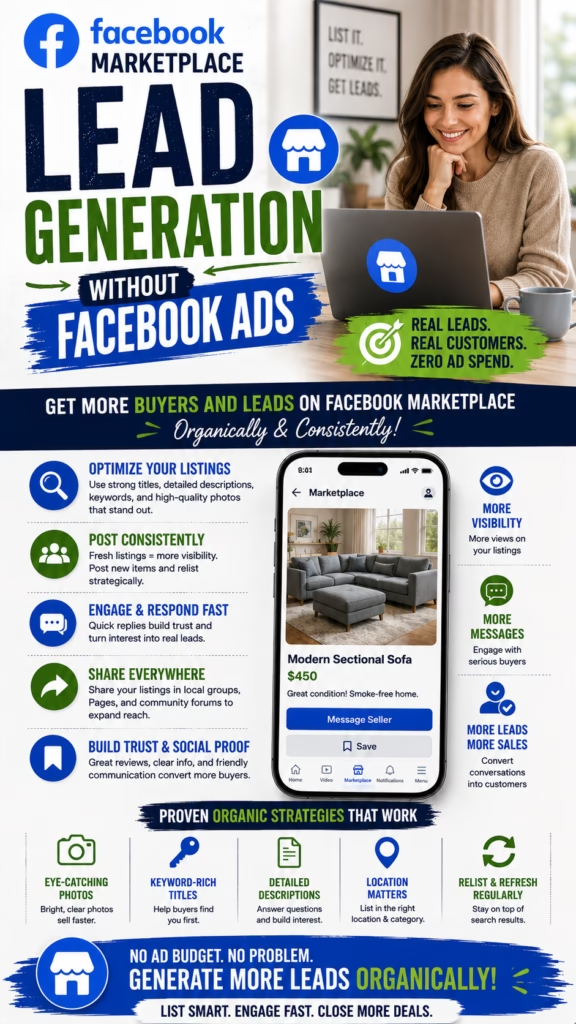
Facebook Marketplace lead generation without Facebook Ads can give local businesses another way to reach shoppers without making every customer acquisition opportunity dependent on paid social advertising. The strategy centers on legitimate physical product inventory, clear product titles, strong images, accurate prices, useful descriptions, local relevance, fast buyer response, qualification, CRM tracking, and sales follow-up. The goal is not simply to publish more listings. It is to turn organic Marketplace product discovery into qualified conversations, store visits, pickup opportunities, completed purchases, and measurable revenue.
Many businesses assume Facebook lead generation means paying for a Facebook Ads campaign.
Paid advertising can be valuable, but it is not the only way to create buyer conversations inside the Facebook ecosystem.
Facebook Marketplace can provide an organic path to local shoppers who are already browsing products.
That distinction matters.
Someone scrolling a general social feed may or may not be thinking about buying something.
Someone browsing Marketplace is already inside a shopping environment.
They may be searching for a sofa, refrigerator, mattress, flooring material, dining set, piece of equipment, building material, electronics, tools, storage products, or another physical item.
That creates natural buyer intent without requiring every impression to be purchased through an advertising auction.
Businesses can take advantage of that intent by publishing useful product listings around real inventory.
But success requires more than posting.
Listings need to be clear. Photos need to attract attention. Prices need to be accurate. Inventory needs to be current. Buyer messages need to be answered.
Most importantly, the business needs a system for turning conversations into real customers.
The Organic Marketplace Lead Formula
Eligible Physical Inventory + Organic Marketplace Visibility + Strong Product Listings + Fast Buyer Response + Qualification + Clear Next Step + CRM Tracking + Sales Attribution = Lead Generation Without Depending Entirely on Facebook Ads
What Facebook Marketplace Lead Generation Without Ads Really Means
Organic Marketplace lead generation means creating buyer opportunities through Marketplace product listings rather than paying for every click, impression, or lead through a Facebook Ads campaign.
Publish Real Products
The business starts with physical inventory that shoppers can genuinely purchase.
Earn Product Discovery
Buyers discover products while browsing or searching Marketplace.
Generate Buyer Messages
Shoppers ask about availability, price, size, specifications, pickup, or delivery.
Qualify Buyer Intent
The business determines whether the shopper has a realistic product need.
Create a Next Step
Conversations move toward store visits, pickup, delivery, or salesperson contact.
Track Revenue
Marketplace leads are connected to actual purchases and gross profit.
Facebook Marketplace Lead Generation vs Facebook Ads
Organic Marketplace marketing and paid Facebook Ads solve different problems.
Facebook Ads
Paid campaigns allow businesses to purchase exposure to selected audiences, test creative, build retargeting funnels, generate forms, and scale spend when campaigns perform.
Organic Marketplace Listings
Marketplace listings can place physical products inside an environment where users are already browsing items for sale.
Paid Reach vs Product Discovery
Ads purchase distribution. Organic Marketplace listings compete for buyer attention through product relevance, listing quality, inventory, geography, demand, and other platform factors.
They Can Work Together
Businesses do not necessarily need to choose one forever. Marketplace can create an organic lead source while paid advertising supports additional growth elsewhere.
The Strategic Advantage
An organic Marketplace system can create another acquisition channel so a business is not relying on only one paid advertising source for every new customer.
Use a Product-First Marketplace Strategy
Marketplace lead generation begins with a genuine physical product.
Make the Product the Hero
The first image, title, price, and description should all clearly communicate what is actually for sale.
Avoid Service-Only Positioning
Businesses should ensure Marketplace listings remain focused on eligible physical products and current platform requirements.
Use Real Product Details
Brand, model, size, condition, material, specifications, quantity, price, and pickup information can create better shopper confidence.
Keep Related Services Secondary
If delivery, setup, assembly, measurement, or installation is separately available for the product, describe it accurately without turning the listing into a service-only offer.
Understand Organic Marketplace Buyer Intent
Exact Product Buyers
These shoppers may search for a specific brand, model, SKU, or product name.
Category Buyers
They know the general type of product they need but are still comparing options.
Price Buyers
Price may be the primary decision factor.
Local Convenience Buyers
They want something nearby enough to pick up quickly.
Urgent Buyers
They may need the product today or within a few days.
High-Consideration Buyers
Furniture, flooring, appliances, mattresses, equipment, and other large purchases may require more information or a store visit.
Build Organic Marketplace Lead Generation Around Real Inventory
Inventory creates multiple buyer entry points.
Different Products Create Different Searches
A furniture retailer may have sofas, dining sets, bedroom sets, recliners, mattresses, and accent furniture.
A flooring retailer may have laminate, luxury vinyl plank, engineered hardwood, tile, carpet, and related materials.
An appliance retailer may have refrigerators, washers, dryers, ranges, microwaves, dishwashers, and freezers.
Each Product Can Become a Lead Source
Instead of promoting one generic business message, inventory allows the company to capture multiple types of shopper intent.
Keep Inventory Current
Remove or update sold, unavailable, or materially changed items.
Optimize Marketplace Listing Titles for Organic Buyer Discovery
Start With the Product
The title should immediately explain what is being offered.
Add Brand When Relevant
Brand names can improve clarity for shoppers looking for exact products.
Add Model or Collection
Exact model information can attract stronger intent.
Add Size or Key Attribute
Queen, king, 12 mm, stainless steel, leather, hardwood, 36-inch, commercial-grade, or other genuine attributes may help.
Title Framework
[Product Type] + [Brand/Model] + [Size/Material/Feature] + [Important Distinguishing Attribute]
Use Marketplace Keywords Naturally
Organic visibility benefits from language buyers actually use.
Primary Product Keyword
Use the most obvious name of the physical product.
Brand Keyword
Include accurate manufacturer information.
Model Keyword
Useful when buyers compare exact products.
Material Keyword
Leather, laminate, hardwood, steel, wood, stone, fabric, or vinyl can help narrow product intent.
Size Keyword
Dimensions or industry-standard sizes can improve relevance.
Avoid stuffing the same keyword repeatedly. Product clarity should remain the priority.
Use Better Product Photography to Generate More Organic Leads
Organic Marketplace marketing does not have paid ad creative forcing attention into the feed.
The product photo has to earn the click.
Make the First Photo Strong
Show the product clearly and prominently.
Use Good Lighting
Accurate color and visible detail improve buyer confidence.
Use Multiple Angles
Show the product from perspectives that answer likely buyer questions.
Show Important Details
Labels, controls, finishes, packaging, textures, condition, and model information can all matter.
Avoid Unrelated Stock Imagery
Photos should accurately represent the product being offered.
Write Descriptions That Turn Organic Views Into Buyer Messages
State What the Product Is
Do not make the shopper decode the listing.
Include Key Features
Explain the details that matter most to someone making a purchase.
Add Specifications
Size, material, model, capacity, quantity, finish, compatibility, or package information may be relevant.
Explain Condition
New, used, open-box, floor model, or other accurate condition.
Explain Pickup or Delivery
Give buyers a clear idea of how the transaction can happen.
Use Accurate Pricing to Improve Lead Quality
Organic lead generation works better when price expectations are established early.
Use the Actual Product Price
Avoid fake low-price placeholders designed only to generate messages.
Clarify Units
If flooring is sold per square foot, material by the box, equipment by the unit, or furniture as a set, state the unit clearly.
Clarify Starting Prices
If a genuine starting price applies to a specific product variation, explain what it represents.
Update Price Changes
Keep the listing synchronized with the real selling price.
Choose Marketplace Categories That Match the Product
Category relevance can help the right shoppers understand and discover the listing.
Use the Closest Product Category
Do not choose unrelated categories simply to chase visibility.
Complete Relevant Attributes
Product-specific fields can improve listing usefulness.
Maintain Consistency
The title, category, photos, description, and actual product should all align.
Use Local Relevance to Generate Organic Marketplace Leads
Local geography is one of Marketplace's biggest advantages.
Accurate Selling Location
Use a location that represents where the product can legitimately be purchased or picked up.
Consider Buyer Radius
Buyers may travel farther for high-value, unusual, or difficult-to- find products.
Use Delivery to Expand Reach
Businesses offering legitimate product delivery can serve shoppers beyond immediate pickup distance.
Route Buyers by Location
Multi-location retailers can direct shoppers to the closest store with matching inventory.
Use Genuine Product Variations to Create More Organic Entry Points
Different Sizes
Sizes often represent distinct buying intent.
Different Models
Different SKUs or model numbers can attract exact-product shoppers.
Different Materials
Material differences can represent completely different searches.
Different Styles
Modern, traditional, industrial, farmhouse, luxury, or other genuine design differences can attract different buyers.
Different Price Tiers
Budget, mid-range, and premium products reach different segments.
Every listing should represent real inventory rather than artificial duplication.
Use Marketplace to Generate Organic Leads for High-Ticket Products
High-ticket products can be particularly valuable because one qualified buyer may represent substantial revenue.
Furniture
Sofas, dining rooms, bedroom sets, recliners, sectionals, and premium pieces can generate local showroom traffic.
Mattresses
Product size, comfort category, brand, price, and availability can create specific buyer conversations.
Appliances
Brand, model, capacity, dimensions, features, and delivery can create strong local intent.
Flooring Materials
LVP, laminate, hardwood, carpet, and tile can be listed around real material specifications and unit pricing.
Equipment and Building Products
Product specifications, capacity, model, quantity, and local availability can help qualify serious buyers.
Use Facebook Marketplace as an Organic Local Retail Channel
Marketplace can function as another door into a retail business.
Instead of the customer discovering the business first and then browsing inventory, the shopper may discover the product first.
That creates a different acquisition path.
Product First
Buyer finds the item.
Conversation Second
Buyer asks about product details.
Business Relationship Third
The seller introduces store location, related inventory, pickup, delivery, or a salesperson when appropriate.
Sale Fourth
The product conversation becomes a retail purchase.
Improve Response Speed to Convert More Organic Marketplace Leads
Organic visibility has limited value if messages sit unanswered.
Respond to the Actual Product
Preserve the context of the listing that generated the message.
Answer Availability Quickly
If current inventory is known, give a direct answer.
Answer Pricing Clearly
Avoid forcing buyers through several messages to understand the product cost.
Move Serious Buyers Forward
Strong buyers can be routed toward pickup, delivery, store visits, or sales staff.
Use a Better First Reply for Organic Marketplace Leads
The first reply should feel useful rather than automated.
Step 1: Answer the Question
If they ask whether it is available, address availability.
Step 2: Add a Product Detail
Provide something useful about size, condition, model, quantity, pricing, or location.
Step 3: Ask One Question
Ask only the most useful qualification question.
Step 4: Create the Next Step
Pickup, store visit, delivery discussion, quantity confirmation, or salesperson conversation.
First Reply Formula
Answer → Product Detail → One Qualification Question → Clear Next Step
Qualify Organic Marketplace Buyers Efficiently
Product Need
Confirm what they are actually looking for.
Quantity
Important for flooring, building materials, equipment, bulk inventory, or multiple-unit purchases.
Size
Relevant for furniture, mattresses, flooring, appliances, storage, and other products.
Location
Helps determine pickup or delivery practicality.
Timing
A buyer needing the product today may be more sales-ready.
Store Visit Intent
High-ticket shoppers may want to see options in person.
Move Qualified Marketplace Buyers Toward Direct Contact When Appropriate
Give Value Before Asking
Answer the buyer's initial question first.
Use a Clear Reason
Direct contact may help coordinate delivery, pickup, inventory confirmation, store visits, or larger purchases.
Respect Buyer Preference
Some shoppers may prefer to remain in Marketplace messaging.
Capture Context
If the lead moves into CRM, preserve the exact product listing that generated it.
Turn Organic Marketplace Leads Into Store Visits
A Marketplace message does not have to end as an online conversation.
Confirm the Product
Make sure the item they want is available.
Show Related Options
If the business has additional legitimate inventory, a showroom visit may allow the shopper to compare.
Prepare Sales Staff
Tell staff which product generated the visit.
Track the Purchase
Attribute the eventual sale back to Marketplace.
Use Pickup as a Simple Marketplace Conversion Path
Local pickup can be one of the simplest ways to turn Marketplace intent into revenue.
Confirm Availability
Verify the product before asking the buyer to travel.
Confirm Quantity
Make sure sufficient inventory exists.
Provide Accurate Pickup Details
Use the real business or approved pickup process.
Track Completion
Mark the lead as purchased when the transaction occurs.
Use Delivery to Expand Organic Marketplace Lead Potential
Large Products Benefit Most
Furniture, mattresses, appliances, flooring, equipment, and building materials can be difficult for buyers to transport.
Explain Delivery Range
Be clear about which areas can genuinely be served.
Explain Fees
If delivery costs extra, disclose it accurately.
Use ZIP Code Qualification
Ask the buyer's ZIP code when delivery eligibility matters.
Do Not Overpromise
Availability, timing, setup, and fees should be confirmed before making commitments.
Use AI to Scale Marketplace Lead Handling Without Paid Facebook Ads
As organic listing volume grows, the challenge shifts from getting messages to handling them consistently.
AI can support repetitive parts of the workflow.
- Identify which listing generated the inquiry
- Answer approved product questions
- Confirm approved pricing
- Provide current specifications
- Ask buyer quantity
- Ask size or model preference
- Ask location when relevant
- Ask pickup or delivery preference
- Route qualified buyers to staff
- Create CRM records
Automation Should Support Accuracy
AI should be connected to reliable product information and clear escalation rules. It should not invent inventory, pricing, discounts, specifications, delivery terms, or availability.
Connect Organic Marketplace Leads With CRM
Capture Lead Details
- Buyer name
- Marketplace listing source
- Product name
- SKU or model
- Price
- Quantity requested
- Buyer location
- Pickup or delivery preference
- Contact information when appropriately provided
- Follow-up status
- Purchase outcome
Create Clear Stages
- New Marketplace inquiry
- First response sent
- Qualified buyer
- Inventory confirmed
- Store visit planned
- Pickup planned
- Delivery discussion
- Purchase pending
- Sold
- Lost
- Future opportunity
Follow Up With Marketplace Leads Without Becoming Spammy
Product Availability
Follow up when a requested product becomes available.
Pickup Reminder
Confirm a planned pickup where appropriate.
Store Visit Reminder
Confirm the visit and relevant product.
Alternative Product
If the original item sold, suggest a genuinely relevant alternative instead of sending a generic promotion.
Future Purchase Timing
Longer-term buyers may still become customers.
Re-Engage Prior Marketplace Buyers When Appropriate
Not every Marketplace conversation closes immediately.
Previous Inventory Inquiry
If a similar product arrives, prior interest may become relevant again.
Quantity Buyers
Commercial or repeat buyers may have recurring demand.
Past Customers
Related inventory can create future purchase opportunities.
Respect Communication Requirements
Any follow-up outside the original Marketplace conversation should follow applicable consent and communication requirements.
Scale Organic Marketplace Lead Generation Across Multiple Products
A business with large legitimate inventory can create many buyer entry points.
Organize by Product Category
Furniture retailers can separate living room, dining, bedroom, and mattress inventory.
Organize by Price Tier
Budget, mid-range, and premium products can reach different buyers.
Organize by Material
Flooring can be separated into LVP, laminate, hardwood, carpet, and tile.
Organize by Model
Appliances and equipment may generate exact-model searches.
Use Unique Product Information
Each listing should reflect the actual inventory item instead of becoming a duplicate template with only superficial changes.
Scale Organic Marketplace Lead Generation Across Multiple Locations
Match Inventory to the Correct Store
Avoid sending buyers to locations that do not have the product.
Route by Geography
Direct shoppers to the nearest practical location.
Route by Delivery Area
Different locations may serve different areas.
Use Shared CRM Tracking
Multi-location businesses should maintain consistent attribution.
Compare Location Performance
Track which markets generate the strongest organic Marketplace sales.
Track Organic Marketplace Leads Like a Real Marketing Channel
Listing Metrics
- Active listings
- Total inquiries
- Qualified inquiries
- Response time
- Pickup requests
- Delivery requests
- Store visits generated
Buyer Metrics
- Qualified buyer rate
- Contact information captured
- Store visit rate
- Pickup completion rate
- Purchase conversion rate
Track Marketplace Sales Instead of Only Messages
A business can receive hundreds of messages without generating meaningful profit.
The real question is what happens after the message.
| Metric | What It Measures |
|---|---|
| Qualified inquiries | How many buyers have realistic purchase intent |
| Store visits | How often Marketplace produces physical retail traffic |
| Pickups | How often local leads become completed transactions |
| Purchases | The number of Marketplace-attributed customers |
| Average order value | The average revenue created per Marketplace purchase |
| Gross profit | The financial contribution of Marketplace customers |
Measure Facebook Marketplace Lead Generation ROI Without Facebook Ads
Qualified Lead Rate
Qualified Lead Rate = Qualified Marketplace Buyers ÷ Total Valid Marketplace Inquiries × 100
Store Visit Rate
Store Visit Rate = Marketplace-Generated Store Visits ÷ Qualified Marketplace Buyers × 100
Purchase Conversion Rate
Purchase Conversion Rate = Marketplace Customers ÷ Qualified Marketplace Buyers × 100
Average Order Value
Average Order Value = Marketplace Revenue ÷ Marketplace Purchases
Organic Marketplace Acquisition Cost
Acquisition Cost = Marketplace Posting, Management, and Lead-Handling Cost ÷ New Marketplace Customers
Organic Marketplace ROI
ROI = (Gross Profit From Marketplace Customers − Organic Marketplace Marketing Cost) ÷ Organic Marketplace Marketing Cost × 100
Common Organic Marketplace Lead Generation Mistakes
Posting Service-Only Offers
Businesses should ensure listings are centered on eligible physical products.
Using Misleading Prices
Fake low-price placeholders can create poor lead quality and buyer frustration.
Using Weak Photos
Organic visibility depends heavily on visual presentation.
Writing Generic Titles
The buyer should know what the product is immediately.
Ignoring Inventory Changes
Sold or unavailable products create wasted messages.
Responding Slowly
Buyers can contact competing sellers quickly.
Over-Qualifying Too Early
Do not turn a simple buyer question into a long interrogation.
Not Creating a Next Step
Qualified leads need a path toward store visits, pickup, delivery, or purchase.
Not Tracking Source
Without attribution, Marketplace performance becomes difficult to evaluate.
Measuring Messages Instead of Revenue
Organic lead volume only matters when it creates profitable customers.
A 30-Day Facebook Marketplace Lead Generation Plan Without Facebook Ads
Week 1: Build the Organic Inventory Foundation
- Identify eligible physical products
- Organize products by category
- Verify current prices
- Verify product condition
- Verify quantities
- Verify store locations
- Document pickup options
- Document delivery options
Week 2: Improve Listing Quality
- Create clear product titles
- Add natural product keywords
- Improve first images
- Add multiple product photos
- Write useful descriptions
- Add specifications
- Clarify unit pricing
- Choose relevant categories
Week 3: Build the Lead Conversion System
- Create first-response frameworks
- Create product-specific answers
- Create buyer qualification questions
- Create store-visit workflows
- Create pickup workflows
- Create delivery workflows
- Create AI escalation rules
- Connect CRM tracking
Week 4: Measure Organic Results
- Track inquiries by listing
- Track qualified buyer rate
- Track response time
- Track store visits
- Track pickups
- Track completed purchases
- Track average order value
- Track gross profit
- Calculate organic Marketplace ROI
End-of-Month Outcome
After 30 days, the business should have a cleaner organic Marketplace system built around real inventory, stronger product titles, better photography, accurate pricing, faster response, better buyer qualification, clearer conversion paths, CRM attribution, and measurable visibility into which Marketplace listings create actual customers and revenue.
Final Takeaway: Facebook Marketplace Can Create Leads Without Making Every Lead a Paid Ad Lead
Effective Facebook Marketplace lead generation without Facebook Ads starts with understanding that Marketplace is a product-discovery environment.
Businesses should begin with genuine physical inventory rather than trying to force unrelated promotions into the platform.
The physical product creates the buyer's entry point.
The title explains what the product is.
The first photo earns attention.
The description answers buying questions.
The price establishes expectations.
The location determines practical buyer reach.
Inventory creates multiple search opportunities.
Once a buyer sends a message, the marketing problem changes.
It becomes a response problem.
Buyers should receive direct answers quickly.
The business should identify whether the shopper is genuinely interested, what product they need, how much they need, where they are located, and what next step makes sense.
That next step may be a store visit, local pickup, delivery discussion, product reservation, or salesperson conversation.
AI can help businesses process larger volumes of Marketplace conversations by answering approved product questions, collecting useful buyer information, and routing leads appropriately.
CRM integration can preserve the listing source and product context.
That gives the business a better way to measure Marketplace as a true acquisition channel rather than an isolated inbox.
Businesses can then compare organic Marketplace leads against other channels.
They can measure qualified lead rate, store-visit rate, purchase conversion, average order value, gross profit, and customer acquisition cost.
Those numbers reveal whether the strategy is actually producing profitable customers.
The biggest strategic advantage is diversification.
A business does not have to make every new customer dependent on a paid Facebook Ads campaign.
Marketplace can create a separate organic product-discovery path.
Paid advertising can still be used where it makes sense, but Marketplace gives product-based businesses another way to reach local buying intent.
When inventory, listing quality, local visibility, buyer response, qualification, AI assistance, CRM tracking, and revenue attribution work together, Facebook Marketplace can become a structured organic lead-generation channel rather than simply a place to post products and hope for messages.
Frequently Asked Questions
1. What is Facebook Marketplace lead generation without Facebook Ads?
It means using organic Marketplace product listings, buyer response, qualification, follow-up, and sales workflows to generate customers without relying entirely on paid Facebook advertising.
2. Can businesses generate Marketplace leads organically?
Yes. Eligible physical product listings can generate organic buyer inquiries.
3. Do I need Facebook Ads to get Marketplace inquiries?
No. Organic Marketplace product listings can produce inquiries without a traditional paid Facebook Ads campaign.
4. What products work well for organic Marketplace lead generation?
Eligible physical products with local demand, strong visuals, clear specifications, realistic pricing, and useful listing information can create buyer interest.
5. How important are Marketplace listing titles?
Very important. Titles help buyers immediately understand what product is being offered.
6. Should Marketplace listings include keywords?
Yes. Use natural product keywords including product type, brand, model, size, and material where relevant.
7. Do photos help organic Marketplace lead generation?
Yes. Strong original product photos can improve attention, understanding, and buyer confidence.
8. Should Marketplace listings use real prices?
Yes. Accurate pricing helps improve buyer trust and lead quality.
9. Can businesses generate local leads through Marketplace?
Yes. Marketplace can connect legitimate product inventory with nearby shoppers.
10. Can Marketplace generate store visits?
Yes. High-consideration product inquiries can be moved toward showroom or store visits.
11. Can Marketplace generate phone leads?
Marketplace conversations can progress toward direct contact when that next step is appropriate.
12. How quickly should Marketplace inquiries be answered?
As promptly as practical because serious shoppers may contact multiple sellers.
13. What should the first Marketplace reply say?
Answer the buyer's question, provide one useful detail, ask one relevant qualification question, and create a next step.
14. Can AI help manage Marketplace leads?
Yes. AI can support approved responses, qualification, routing, follow-up, and CRM organization.
15. Can AI answer product availability questions?
Yes when connected to accurate inventory data.
16. Can AI qualify Marketplace buyers?
Yes. AI can collect product need, size, quantity, location, timing, pickup, and delivery information when relevant.
17. Should Marketplace leads go into a CRM?
Yes. CRM tracking helps organize listing source, buyer context, follow-up, visits, purchases, and revenue.
18. Can Marketplace work for high-ticket products?
Yes. Eligible high-value physical products can attract serious local buyers when listings provide strong information.
19. Can Marketplace work for furniture stores?
Yes. Legitimate furniture inventory can generate local product inquiries and showroom traffic.
20. Can Marketplace work for mattress stores?
Yes. Eligible mattress products can be marketed with accurate sizes, pricing, condition, and inventory details.
21. Can Marketplace work for flooring stores?
Yes. Physical flooring materials can be listed using real material specifications and relevant unit pricing.
22. Can Marketplace work for appliance retailers?
Yes. Appliance listings can include brand, model, capacity, condition, pricing, and delivery or pickup information.
23. Should businesses create separate listings for different products?
Yes when the listings represent distinct legitimate inventory items.
24. Should businesses repeatedly duplicate the same listing?
Focus on accurate listings representing real inventory rather than unnecessary duplication.
25. How can businesses improve organic Marketplace visibility?
Improve product photos, titles, descriptions, pricing accuracy, categories, local relevance, inventory freshness, and response quality.
26. Can organic Marketplace leads be tracked?
Yes. Track inquiries, qualified buyers, store visits, pickups, purchases, revenue, gross profit, and attribution.
27. Can organic Marketplace lead generation guarantee sales?
No. Results depend on product demand, pricing, competition, location, listing quality, inventory, buyer behavior, response speed, and sales execution.
28. Should businesses review Marketplace policies?
Yes. Marketplace rules and seller eligibility can change, so current platform requirements should be reviewed regularly.
29. What is the biggest mistake in organic Marketplace lead generation?
A major mistake is using misleading or inaccurate listings that fail to represent the real product, price, condition, inventory, or location.
30. What is the goal of Facebook Marketplace lead generation without Facebook Ads?
The goal is to turn organic product discovery into qualified local buyer conversations, store visits, pickups, purchases, revenue, and measurable growth without relying entirely on paid Facebook advertising.
30 Additional SEO Keywords
Use these supporting phrases naturally across Marketplace marketing guides, organic lead-generation pages, local retail content, product-listing resources, FAQs, and internal links.
Turn Organic Facebook Marketplace Visibility Into Qualified Buyers and Measurable Sales
MarketWiz.ai helps businesses organize Facebook Marketplace product marketing, improve organic listing structure, strengthen product titles and descriptions, manage inventory-driven campaigns, respond to buyers faster, connect AI lead handling, qualify local shoppers, route inquiries to the right salesperson or location, connect CRM workflows, generate store visits, track Marketplace-attributed purchases, and measure revenue, gross profit, customer acquisition cost, and return on investment.
This article provides general Facebook Marketplace marketing, lead-generation, product-listing, retail, CRM, automation, and business information and does not provide legal, financial, tax, privacy, consumer-protection, intellectual-property, advertising, platform, or regulatory advice. Facebook Marketplace functionality, eligibility, categories, account access, ranking systems, Commerce Policies, seller requirements, and product restrictions can change. Businesses should review current Meta policies and applicable laws before publishing listings or building automated workflows. Product pricing, inventory, condition, specifications, delivery availability, promotions, warranties, and business policies should remain accurate. Organic Marketplace visibility, inquiries, store visits, purchases, revenue, and marketing results cannot be guaranteed and depend on product demand, competition, location, pricing, listing quality, account eligibility, buyer behavior, inventory, response speed, sales execution, and platform systems.