

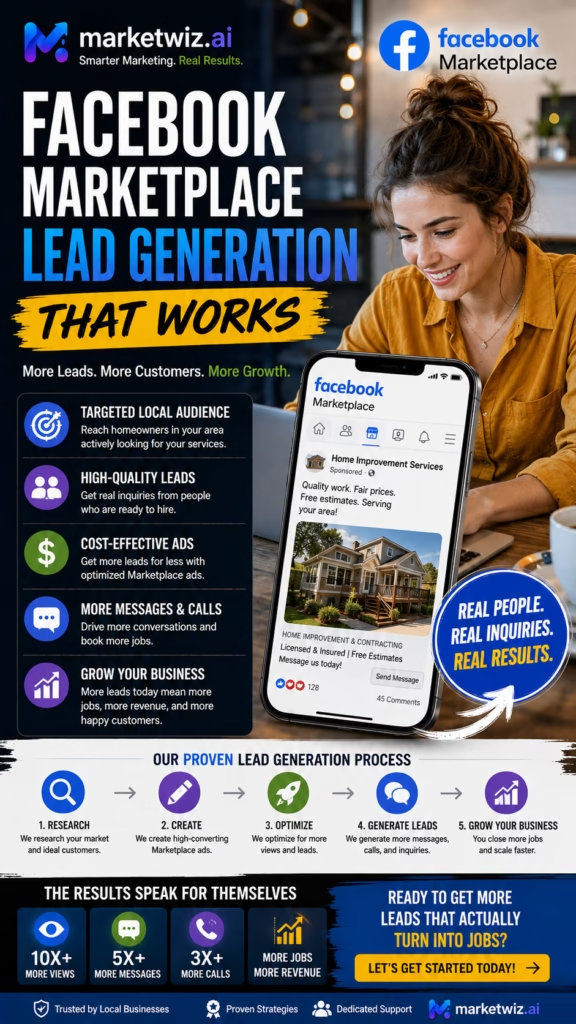
Facebook Marketplace Lead Generation That Works
Facebook Marketplace lead generation that works is not built around posting as many listings as possible and hoping that message volume turns into revenue. Strong Marketplace lead generation connects the right offer with the right local customer, creates a professional listing, responds quickly, qualifies the opportunity, moves the customer toward a clear next step, follows up, and tracks the outcome all the way to revenue and profit.
Businesses often assume Marketplace lead generation is working whenever messages arrive. That is only the beginning of the process.
A message is not automatically a qualified lead. A qualified lead is not automatically an appointment. An appointment is not automatically a customer. A customer does not automatically create profit.
Effective Facebook Marketplace lead generation connects each stage of that customer journey.
A strong system starts by attracting customers who are reasonably likely to need the business’s product or service.
The listing then needs to provide enough useful information to create confidence while encouraging the customer to continue the conversation.
Once the customer sends a message, the business needs to answer quickly, qualify the opportunity, collect the right contact information, and move the conversation toward an appointment, estimate, store visit, pickup, delivery, consultation, or purchase.
The Marketplace Lead Generation Formula
Right Offer + Right Local Market + Strong Listing + Original Photos + Fast Response + Qualification + Clear Next Step + Follow-Up + CRM Tracking = Marketplace Lead Generation That Works
What Makes Facebook Marketplace Lead Generation Work?
Relevant Local Offers
The product or service should match real customer demand in the local market.
Strong Listing Quality
Titles, descriptions, photos, pricing, and next steps should be easy to understand.
Fast Response
Customers may contact several businesses, making response speed an important part of conversion.
Useful Qualification
Businesses should quickly determine whether the opportunity matches their service area, offer, timing, minimums, and capabilities.
Consistent Follow-Up
Leads that do not immediately convert should not automatically disappear from the sales process.
Revenue Tracking
Businesses need to know which Marketplace opportunities become customers, revenue, gross profit, and repeat business.
Business Types That Can Benefit From Marketplace Lead Generation
Facebook Marketplace strategies can support a wide variety of local businesses when their listings and offers are eligible under current platform rules.
- Furniture stores
- Mattress retailers
- Appliance businesses
- Flooring companies
- Painting contractors
- Roofing companies
- Fence contractors
- Remodelers
- Landscaping companies
- Tree service companies
- Home improvement businesses
- Automotive-related businesses
- Equipment sellers
- Building material suppliers
- Moving companies
- Property maintenance companies
- Commercial service providers
- Retail stores
- Local specialty businesses
- Multi-location businesses
The exact strategy should match the actual product, service, inventory, local market, customer type, pricing model, and sales process.
Understand Marketplace Customer Intent Before Trying to Convert the Lead
Browsing Customers
These users may be comparing options without an immediate purchase deadline.
Comparison Shoppers
These customers may contact multiple businesses to compare price, availability, quality, reviews, service, and convenience.
High-Intent Buyers
High-intent customers may already know the product, project, location, timing, quantity, dimensions, or service they need.
Urgent Customers
Certain industries may receive time-sensitive requests involving repairs, storm damage, breakdowns, delivery needs, or property problems.
Commercial Customers
Property managers, landlords, contractors, investors, offices, and businesses may represent higher-value or repeat opportunities.
Set the Right Goals for Marketplace Lead Generation
Goal 1: Generate Qualified Conversations
Attract people who genuinely fit the product, service, price, location, inventory, project size, or customer criteria.
Goal 2: Capture Contact Information
Move qualified customers toward a phone number, appointment, estimate, store visit, or other legitimate conversion step.
Goal 3: Create Revenue
Track which leads become purchases, projects, service calls, deliveries, consultations, or recurring customers.
Goal 4: Build Customer Lifetime Value
A Marketplace customer may later generate additional purchases, projects, referrals, or recurring service.
Choose Marketplace Areas Where the Business Can Actually Win
Start With Real Coverage
Prioritize areas where the company can realistically provide pickup, delivery, estimates, service, installation, or customer support.
Review Local Demand
Population, housing activity, commercial activity, property turnover, income, weather, inventory demand, and competition can influence results.
Review Competitive Pressure
Stronger competition increases the importance of original photos, fast response, clear offers, and professional follow-up.
Review Fulfillment Cost
Fuel, delivery distance, crew travel, equipment transport, project minimums, and employee time should be included in the strategy.
Choose Marketplace Offers That Attract the Right Leads
Focus on Clear Customer Problems
Customers respond more easily when they understand exactly what the product or service solves.
Focus on Strong Demand
Marketplace performs better when the offer matches products and services local customers are already seeking.
Focus on Profitable Work
Lead volume should not be increased at the expense of margin.
Focus on Repeat Potential
Products and services that lead naturally to follow-up purchases, maintenance, upgrades, or additional work can create more value.
Build Focused Marketplace Campaigns
Separate Product Categories
Businesses with large inventory should organize campaigns by product type, brand, use case, condition, size, style, or price.
Separate Service Categories
Contractors and service businesses should separate repairs, installations, replacements, maintenance, remodeling, and related project categories.
Separate Customer Types
- Homeowners
- Landlords
- Property managers
- Real estate investors
- Commercial customers
- Other contractors
Separate Local Markets
Messaging can be adapted for neighborhoods, cities, counties, delivery zones, or service areas when appropriate.
Write Marketplace Titles That Attract Qualified Customers
Identify the Offer Immediately
Customers should understand the product, service, or project type without opening the listing.
Add One Useful Benefit
Useful benefits may include local delivery, professional estimates, installation availability, product condition, project type, or customer category.
Avoid Excessive Capitalization
Clear professional titles generally create more trust than aggressive headlines.
Avoid Keyword Stuffing
Repeating many cities, product names, service terms, and unrelated keywords can reduce readability.
Marketplace Title Examples
Local Home Improvement Estimates for Property Owners
Quality Furniture With Local Delivery Available
Professional Property Repairs and Project Estimates
Flooring Options With Installation Available
Write Marketplace Descriptions That Pre-Qualify Customers
Explain What Is Being Offered
Customers should understand exactly what product, service, project, installation, consultation, or appointment the listing represents.
Explain Who the Offer Is For
Mention relevant customer types such as homeowners, landlords, property managers, contractors, investors, or local consumers.
Explain Important Details
- Price or pricing context
- Service area
- Pickup or delivery
- Availability
- Project minimums
- Materials or product details
- Appointment process
- Next step
Reduce Repetitive Questions
Strong descriptions answer the obvious questions before the customer sends the first message.
Use Opening Lines That Move Customers Toward Action
Looking for a local business to help with your next purchase, project, repair, installation, or property improvement? Send us what you need, your location, and your preferred timing, and our team will help with the next step.
Lead With Relevance
Customers should immediately recognize that the listing matches their need.
Lead With Clarity
Avoid vague language that forces the customer to ask what the listing actually offers.
Use Original Photos That Make the Lead More Confident
Product Businesses
- Actual inventory
- Multiple angles
- Product condition
- Features and details
- Dimensions
- Packaging or delivery preparation
Service Businesses
- Completed projects
- Before-and-after results
- Work in progress
- Equipment
- Professional crews
- Clean finished work
Build Visual Trust
Photos should help customers understand what the company actually sells, installs, repairs, delivers, or completes.
Avoid Misleading Images
Do not use inventory, work, facilities, or equipment that does not accurately represent the business.
Use Pricing That Generates Better Leads Instead of More Confusion
Use Accurate Product Pricing
Product listings should make the listed amount easy to understand.
Use Starting Prices Carefully
Service businesses should explain what assumptions are included in the starting price.
Explain Minimums
Minimum orders, delivery minimums, project minimums, service-call charges, and installation minimums can improve qualification.
Explain Variables
Project size, materials, delivery, installation, access, travel, preparation, condition, and upgrades can affect the final price.
Better Pricing Can Mean Fewer but Better Messages
The goal is not to maximize raw message volume. The goal is to attract customers with realistic expectations who are more likely to convert.
Explain Location, Service Area, Pickup, and Delivery Clearly
Service Businesses
List the cities, counties, neighborhoods, or reasonable radius the business can serve.
Retail Businesses
Explain store, showroom, warehouse, or pickup information.
Delivery Businesses
Explain delivery zones, fees, restrictions, and scheduling.
Avoid Misleading Local Claims
Do not imply the company has physical locations where it does not.
Build Trust Before Asking the Customer to Take the Next Step
- Real business identity
- Original photos
- Clear local coverage
- Professional communication
- Transparent pricing
- Accurate credentials
- Clear customer process
- Reliable follow-up
Use Accurate Claims
Licenses, insurance, warranties, financing, certifications, partnerships, and guarantees should be stated accurately.
Explain the Next Step
Customers are more likely to continue when they know what happens after they send a message.
Use One Clear Call to Action
Send us what you need, your location, preferred timing, and any useful photos or details. Our team will review the request and help confirm availability and the best next step.
Match the CTA to the Offer
The next step could be an estimate, appointment, call, pickup, store visit, delivery quote, consultation, or purchase.
Avoid Too Many Competing Actions
Multiple links, phone numbers, forms, emails, and instructions can reduce clarity.
Fast Response Is One of the Most Important Parts of Marketplace Lead Generation
Thanks for reaching out. Please send the product or service you need, your location, preferred timing, and any useful photos or details so we can help with the next step.
Answer the Main Question First
If the customer asks about availability, price, delivery, or service area, address the main question before asking several follow-up questions.
Keep the Conversation Moving
Ask one or two useful qualification questions and move toward the next action.
Avoid Long Delays
Customers who contact several businesses may choose whichever company responds professionally first.
Qualify Marketplace Leads Without Making Them Feel Interrogated
Confirm the Need
Identify the exact product, project, repair, installation, service, quantity, or goal.
Confirm the Location
Determine whether the customer falls within the delivery, service, pickup, or market area.
Confirm the Scope
Ask for project dimensions, quantities, property type, product model, damage, condition, or other relevant details.
Confirm Timing
Determine whether the customer is buying now, comparing options, or planning for a future date.
Confirm Fit
Make sure the opportunity matches inventory, minimums, capabilities, scheduling, and customer expectations.
Move Qualified Marketplace Leads Toward Phone Capture
Ask at the Right Time
Customers are more likely to share a phone number after the business has answered the first question and created value.
Explain Why It Helps
A phone number may be useful for confirming an appointment, providing an estimate window, arranging delivery, or discussing project details.
Use Contact Information Responsibly
Follow applicable consent, privacy, call-recording, SMS, and communication requirements.
Add the Lead to the Sales Process
Once a qualified customer provides contact information, create a record and assign responsibility.
Turn Qualified Marketplace Leads Into Appointments
Offer Specific Appointment Options
Customers respond more easily to realistic scheduling options than completely open-ended questions.
Confirm Contact Information
Collect the customer name, phone number, location, service or product request, and relevant project information.
Confirm Appointment Purpose
The salesperson, estimator, store employee, or technician should understand exactly what the customer expects.
Send Reminders
Appointment reminders can improve show rates and customer preparation.
Recover Marketplace Leads When Calls Are Missed
Use Professional Voicemail
Ask callers to leave their name, request, location, and callback number.
Use Missed-Call Text Response
Thanks for calling [Business Name]. Sorry we missed you. Please reply with what you need, your location, and the best time to reach you.
Create a Callback Task
A missed call should never disappear without an owner or next step.
Marketplace Lead Generation Often Fails Because Follow-Up Stops Too Soon
Follow Up After the First Message
Some customers get distracted, compare several companies, or delay decisions.
Follow Up After Quotes and Estimates
Confirm receipt and answer remaining questions.
Follow Up Before Appointments
Reminders can reduce missed estimates, visits, pickups, and deliveries.
Track Lost Reasons
- Price
- Timing
- Outside coverage area
- Product unavailable
- Project did not fit
- Customer chose another business
- Unable to contact
- Purchase or project postponed
Improve the Sales Process After the Marketplace Lead Arrives
Preserve Listing Context
Employees should know which listing, product, service, or campaign generated the lead.
Review the Conversation
Avoid forcing customers to repeat everything when they move from Messenger to phone, CRM, or an appointment.
Prepare the Right Offer
Match the proposal, product, estimate, financing, delivery, scheduling, or service recommendation to the customer’s actual request.
Create a Clear Decision Path
Customers should understand pricing, scope, payment, delivery, installation, scheduling, or next steps.
Use Marketplace Leads to Build Repeat Customer Revenue
Track Customer History
Record products purchased, projects completed, preferences, warranties, locations, and future opportunities.
Identify Related Needs
One project or purchase may create opportunities for maintenance, installation, accessories, upgrades, repairs, or additional work.
Serve Multi-Property Customers
Landlords, investors, managers, and commercial customers may create recurring opportunities.
Ask for Referrals
A successful Marketplace customer can become a long-term referral source.
Use AI and Automation to Improve Marketplace Lead Response
AI Chat Applications
- Answer approved common questions
- Collect customer information
- Ask qualification questions
- Request photos
- Confirm service areas
- Offer appointment options
- Request phone numbers
- Create CRM records
AI Voice Applications
AI voice systems can support after-hours calls, missed-call recovery, qualification, appointment scheduling, and lead routing.
Automated Follow-Up
Automation can support appointment reminders, open-quote follow-up, missed-call response, and CRM task creation.
Maintain Human Oversight
Complex pricing, complaints, disputes, financing, safety issues, custom projects, commercial contracts, and unusual requests should be escalated.
Connect Marketplace Leads With a CRM
Create Complete Lead Records
- Customer name
- Phone number
- Email when appropriate
- Marketplace listing source
- Product or service requested
- Customer location
- Qualification status
- Appointment status
- Assigned employee
- Expected value
Use Clear Pipeline Stages
- New inquiry
- Contacted
- Qualified
- Appointment scheduled
- Estimate or quote completed
- Decision pending
- Sale or project booked
- Completed
- Repeat opportunity
- Closed lost
Track the Numbers That Show Whether Marketplace Lead Generation Is Actually Working
Lead Metrics
- Total inquiries
- Valid inquiries
- Qualified leads
- Average response time
- Phone numbers collected
- Service-area matches
Conversion Metrics
- Appointments scheduled
- Estimate completion rate
- Quote completion rate
- Appointment show rate
- Close rate
- Follow-up conversion rate
Financial Metrics
- Customers acquired
- Average customer value
- Total Marketplace revenue
- Gross profit
- Customer acquisition cost
- Repeat customer revenue
- Referral revenue
- Return on investment
Measure Marketplace Lead Generation Revenue and ROI
Qualified Lead Rate
Qualified Lead Rate = Qualified Marketplace Leads ÷ Total Valid Marketplace Inquiries × 100
Appointment Rate
Appointment Rate = Marketplace Appointments ÷ Qualified Marketplace Leads × 100
Close Rate
Close Rate = Marketplace Customers ÷ Qualified Marketplace Opportunities × 100
Customer Acquisition Cost
Customer Acquisition Cost = Total Marketplace Marketing and Sales Cost ÷ New Marketplace Customers
Marketplace ROI
ROI = (Gross Profit From Marketplace Customers − Total Marketplace Marketing Cost) ÷ Total Marketplace Marketing Cost × 100
| Metric | What It Measures |
|---|---|
| Inquiry volume | Whether the offer, listing, market, photos, and pricing create interest |
| Qualified lead rate | Whether inquiries actually match the business’s offer and customer criteria |
| Appointment rate | Whether the business turns qualified conversations into meaningful next steps |
| Close rate | Whether qualified opportunities become paying customers |
| Average customer value | The average revenue generated by Marketplace customers |
| Gross profit and ROI | Whether Marketplace lead generation is creating profitable growth |
Common Facebook Marketplace Lead Generation Mistakes
Measuring Only Messages
Message volume does not tell the business whether those people became qualified leads or customers.
Using Generic Listings
Different products, services, and customers need different messages.
Using Weak Photos
Poor visuals reduce trust and make it harder for customers to evaluate the offer.
Using Misleading Prices
Unrealistic pricing can create large numbers of unqualified inquiries.
Responding Too Slowly
The customer may choose another company before the business responds.
Asking Too Many Questions Too Soon
Qualification should help the customer move forward rather than create unnecessary friction.
Failing to Capture Contact Information
Qualified leads should be moved into a trackable sales process when appropriate.
Failing to Follow Up
Many Marketplace opportunities require more than one conversation.
Failing to Track Revenue
The final measurement should connect Marketplace activity with customers, revenue, gross profit, and ROI.
A 30-Day Facebook Marketplace Lead Generation Plan That Works
Week 1: Build the Foundation
- Identify priority products or services
- Define local markets
- Review Marketplace eligibility
- Define qualified lead criteria
- Set project, purchase, or delivery minimums
- Organize original photos
- Prepare lead routing
- Document current results
Week 2: Improve Marketplace Listings
- Create focused campaigns
- Write clear titles
- Write professional descriptions
- Add transparent pricing
- Add original photos
- Explain local coverage
- Add one clear call to action
- Publish in priority markets
Week 3: Improve Lead Conversion
- Create fast-response templates
- Create qualification questions
- Create phone-capture workflows
- Create appointment scheduling rules
- Create missed-call recovery
- Create follow-up sequences
- Connect AI when appropriate
- Connect CRM tracking
Week 4: Measure and Optimize
- Measure inquiries by listing
- Measure qualified lead rate
- Measure appointment rate
- Measure close rate
- Review lost reasons
- Track average customer value
- Track gross profit
- Calculate ROI
End-of-Month Outcome
After 30 days, the business should have better-focused Marketplace offers, stronger listings, improved response speed, clearer qualification, more organized phone and appointment capture, stronger follow-up, better CRM records, and measurable insight into which Marketplace leads turn into profitable customers.
Final Takeaway: Marketplace Lead Generation Works When the Entire System Works
Effective Facebook Marketplace lead generation that works is not defined by how many messages arrive.
It is defined by how consistently the business turns local Marketplace visibility into qualified customer conversations.
Strong lead generation begins with the right offer, right market, strong listing title, useful description, original photos, realistic pricing, accurate location information, and one clear next step.
Once a customer responds, the business should answer promptly, qualify efficiently, collect appropriate contact information, and move the customer toward an estimate, appointment, pickup, delivery, consultation, store visit, quote, or purchase.
Open opportunities should be followed up rather than forgotten.
AI chat, AI voice, missed-call response, appointment reminders, automated follow-up, and CRM integrations can help businesses handle Marketplace leads faster and more consistently.
Businesses should still maintain human oversight for pricing, complaints, safety, custom work, complex projects, financing, disputes, and high-value customer decisions.
Most importantly, Marketplace activity should be measured through qualified leads, appointments, close rates, average customer value, customer acquisition cost, revenue, gross profit, repeat business, referrals, and ROI.
When every stage works together, Facebook Marketplace can become more than a posting platform. It can become a measurable local customer-acquisition system.
Frequently Asked Questions
1. Does Facebook Marketplace lead generation really work?
Yes. Marketplace can generate local customer inquiries when the offer, listing, photos, response, qualification, and follow-up are handled professionally.
2. What makes Facebook Marketplace lead generation work?
Relevant offers, local targeting, strong listings, fast response, qualification, scheduling, follow-up, CRM tracking, and revenue measurement all contribute.
3. Which businesses can use Marketplace lead generation?
Eligible retailers, contractors, home service companies, furniture businesses, appliance companies, flooring businesses, and other local businesses may benefit.
4. Should businesses create multiple Marketplace listings?
Separate listings can improve relevance when they accurately represent different products, services, offers, or customer needs.
5. What makes a strong Marketplace title?
Clearly identify the offer or primary customer benefit without excessive capitalization or keyword repetition.
6. Should Marketplace listings include pricing?
Accurate pricing, ranges, starting prices, or minimums can improve transparency and lead quality.
7. Do photos improve Marketplace lead generation?
Yes. Original product, project, before-and-after, inventory, team, and equipment photos can improve trust.
8. How quickly should Marketplace leads receive a response?
Respond promptly because customers may contact several local businesses.
9. How should Marketplace leads be qualified?
Confirm the requested product or service, location, timing, scope, quantity, budget expectations, and whether the opportunity fits the business.
10. Should Marketplace leads provide phone numbers?
Qualified leads can be asked for contact information when it helps schedule or continue a legitimate customer conversation.
11. Can Marketplace generate appointments?
Yes. Marketplace conversations can lead to estimates, consultations, store visits, pickups, deliveries, and service appointments.
12. Can Marketplace generate product sales?
Yes. Eligible product listings can generate inquiries, visits, pickups, delivery requests, and sales.
13. Can Marketplace generate contractor leads?
Yes. Contractors may receive inquiries from property owners, investors, landlords, managers, and businesses needing eligible work.
14. How can businesses reduce low-quality leads?
Explain price, service area, minimums, availability, delivery, project requirements, and limitations clearly.
15. Should Marketplace leads be tracked in a CRM?
Yes. CRM tracking improves lead ownership, follow-up, appointments, sales tracking, and revenue attribution.
16. Can AI help manage Marketplace leads?
AI can collect approved information, qualify leads, schedule appointments, request photos, and update CRM records.
17. How should missed Marketplace calls be handled?
Use voicemail, missed-call texts, callback tasks, AI voice, scheduling links, and employee notifications.
18. How important is follow-up?
Follow-up is important because many customers compare multiple businesses and do not decide during the first conversation.
19. Can Marketplace leads become repeat customers?
Yes. Customers may return for additional products, maintenance, upgrades, repairs, projects, or recurring service.
20. Should businesses ask Marketplace customers for reviews?
Yes, after a successful customer experience and in a professional, compliant manner.
21. What Marketplace lead metrics should businesses track?
Track inquiries, qualified leads, response time, phone numbers, appointments, estimates, show rates, close rates, and lost reasons.
22. What financial metrics should businesses track?
Track customer value, revenue, gross profit, acquisition cost, repeat revenue, referral revenue, and ROI.
23. What is a good qualified lead rate?
There is no universal benchmark because lead quality differs by industry, market, price, offer, and qualification rules.
24. What is a good Marketplace response time?
Faster professional responses generally improve the chance of reaching customers before competitors.
25. Can Marketplace results be guaranteed?
No. Results depend on local demand, competition, offer quality, pricing, photos, reputation, response speed, and sales execution.
26. How long does Marketplace lead generation take?
Some listings may produce inquiries quickly, while others need testing across markets, offers, photos, pricing, and workflows.
27. Should Marketplace be combined with Google Maps?
Yes. Marketplace can work alongside Google Maps, local SEO, reviews, websites, social media, email, phone marketing, and paid advertising.
28. Should Marketplace leads be followed up automatically?
Automation can support reminders, missed-call recovery, appointment confirmation, and follow-up when used responsibly.
29. What is the biggest Marketplace lead-generation mistake?
Focusing on message volume without tracking qualification, appointments, customers, revenue, gross profit, and acquisition cost.
30. What is the goal of Facebook Marketplace lead generation that works?
The goal is to turn local visibility into qualified conversations, appointments, estimates, purchases, booked jobs, repeat customers, referrals, revenue, and measurable profit.
30 Additional SEO Keywords
Use these supporting phrases naturally across Marketplace marketing pages, lead-generation guides, local landing pages, case studies, FAQs, and internal links.
Build Facebook Marketplace Lead Generation That Produces Real Customers
MarketWiz.ai helps businesses organize Facebook Marketplace lead generation, build focused listings, improve titles and descriptions, organize product and project photos, respond to inquiries faster, qualify prospects, recover missed calls, capture customer information, schedule appointments, connect AI voice and CRM systems, follow up with open opportunities, and measure customers, revenue, gross profit, customer acquisition cost, and return on investment.
This article provides general advertising, Marketplace marketing, automation, lead-generation, and business information and does not provide legal, financial, licensing, insurance, safety, privacy, telecommunications, consumer-protection, platform-compliance, or regulatory advice. Facebook Marketplace features, listing eligibility, categories, commerce tools, interfaces, advertising requirements, shipping options, payment options, and platform policies may change. Businesses should review current Meta and Facebook Marketplace rules and applicable advertising, licensing, insurance, contract, warranty, financing, delivery, product-safety, call-recording, SMS, email, privacy, consent, consumer-protection, and industry-specific requirements before publishing listings or collecting customer information. Leads, appointments, estimates, sales, projects, revenue, and other results cannot be guaranteed and depend on local demand, competition, pricing, offer quality, service coverage, inventory, capacity, reputation, listing quality, photos, response speed, customer behavior, follow-up, and sales execution.













