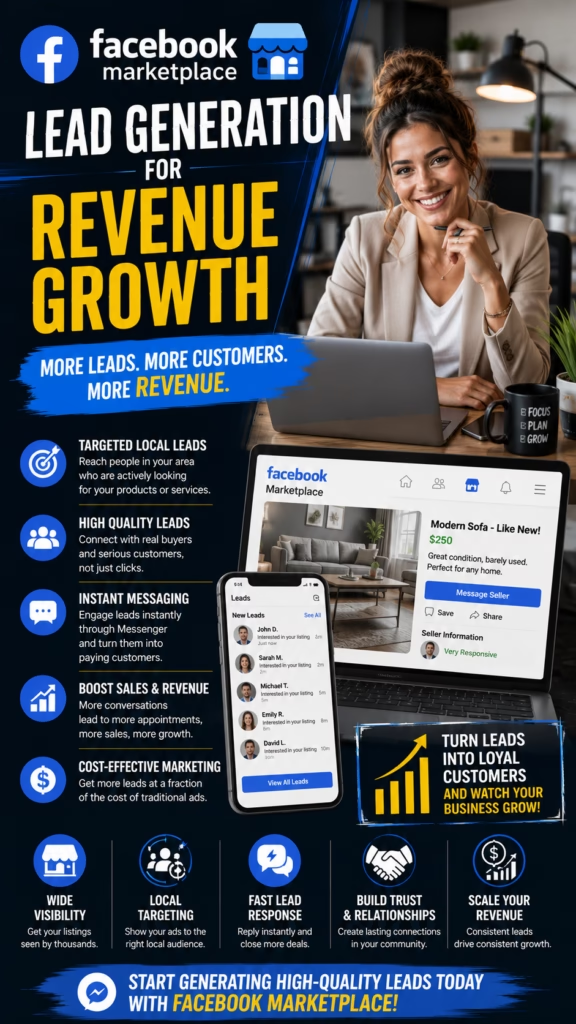
Facebook Marketplace Lead Generation for Revenue Growth
Facebook Marketplace Lead Generation for Revenue Growth explains how businesses can turn local Marketplace visibility into qualified messages, appointments, sales opportunities, repeat customers, and measurable revenue.
Introduction
Facebook Marketplace Lead Generation for Revenue Growth begins with a simple business principle: visibility only matters when it creates action. A listing can receive views, clicks, saves, and casual questions, but the real value comes from qualified buyer messages, estimate requests, showroom visits, appointments, completed transactions, booked services, and repeat business.
Facebook Marketplace gives local businesses access to people who are already browsing nearby products, practical services, vehicles, furniture, mattresses, appliances, home improvement options, equipment, delivery services, and household solutions. That local buying behavior creates an opportunity to build a repeatable lead-generation system without depending entirely on expensive advertising campaigns.
Facebook Marketplace lead generation supports revenue growth when listings attract the right people, create useful conversations, and move buyers toward a measurable sale or appointment.
Businesses often make the mistake of treating Marketplace like a place to post random inventory. A stronger approach treats every listing as a local landing page. The title attracts attention. The main photo creates trust. The description answers questions. The offer gives the buyer a reason to message. The reply process qualifies the lead. The follow-up system moves the conversation toward revenue.
This strategy can work for furniture stores, mattress retailers, appliance sellers, car dealers, home service companies, contractors, moving businesses, cleaning companies, junk removal providers, flooring companies, painters, remodelers, landscapers, pest control companies, equipment sellers, garage builders, shed companies, and other businesses that serve local customers.
Main idea: Facebook Marketplace Lead Generation for Revenue Growth is about building a complete path from local visibility to buyer message, from buyer message to qualified opportunity, and from qualified opportunity to measurable revenue.
Table of Contents
- 1) Why Facebook Marketplace can support revenue growth
- 2) The difference between views, leads, and revenue
- 3) Building a Marketplace revenue strategy
- 4) Identifying profitable products and services
- 5) Writing titles that attract qualified buyers
- 6) Using photos that improve buyer confidence
- 7) Writing descriptions that move buyers toward action
- 8) Using local keywords without sounding spammy
- 9) Creating offer angles that generate messages
- 10) Pricing language that improves lead quality
- 11) Trust signals that support higher conversions
- 12) Lead generation for product-based businesses
- 13) Lead generation for service-based businesses
- 14) Turning Marketplace messages into qualified leads
- 15) Fast follow-up and speed-to-lead
- 16) Marketplace reply scripts that support sales
- 17) Posting consistency and listing rotation
- 18) Tracking leads, sales, and revenue
- 19) Common Marketplace revenue mistakes
- 20) Final thoughts
- 21) FAQs
- 22) Extra keywords
1) Why Facebook Marketplace Can Support Revenue Growth
Facebook Marketplace can support revenue growth because it connects businesses with people who are already browsing locally. These users are often comparing options, checking prices, reviewing photos, asking about availability, and deciding whether to buy, visit, schedule, or request more information.
That intent can be valuable. A buyer searching for a mattress may need delivery. A homeowner looking at furniture may need assembly. A customer comparing vehicles may want a test drive. A homeowner browsing renovation-related listings may need a flooring estimate, painting service, pressure washing, moving help, or junk removal.
Marketplace can also create lower-cost lead opportunities because organic listings may continue generating attention without requiring a separate advertising charge for every click. That does not mean every listing will work automatically. Revenue growth depends on how well the business builds, manages, and tracks the process.
Marketplace can support revenue growth through:
- Local buyer discovery
- Direct buyer messages
- Pickup requests
- Delivery inquiries
- Product comparison conversations
- Service estimate requests
- Showroom visits
- Appointments and consultations
- Repeat customers
- Referral opportunities
Marketplace becomes valuable when local attention is connected to a structured sales process.
2) The Difference Between Views, Leads, and Revenue
Views are not the same as leads, and leads are not the same as revenue. A listing may receive a large number of views but generate very few serious messages. Another listing may receive fewer views but attract buyers who are ready to schedule delivery, visit a showroom, or request a quote.
Businesses should understand the full Marketplace conversion path. This prevents them from judging success based only on surface-level activity.
Marketplace revenue path:

Listing published
Local visibility
Buyer opens listing
Buyer evaluates photos, price, and trust
Buyer sends message
Business replies
Lead is qualified
Appointment, pickup, delivery, or estimate is scheduled
Sale or project is completed
Revenue is recorded
Follow-up creates repeat business or referral
Each stage can be improved. Better titles can increase listing opens. Better photos can improve trust. Better descriptions can increase message quality. Faster replies can improve appointment rates. Better lead tracking can show which listings generate profit.
Revenue growth requires improving the entire Marketplace funnel, not just increasing listing views.
3) Building a Marketplace Revenue Strategy
A strong Facebook Marketplace revenue strategy should begin with business goals. A retailer may want more product sales. A service business may want more estimate requests. A car dealer may want test drives. A furniture store may want delivery orders. A contractor may want project consultations.
Once the goal is clear, listings can be built around the actions most likely to produce revenue. Each listing should answer five questions: What is being offered? Who is it for? Why should the buyer care? What should the buyer do next? How will the business track the result?
Core Marketplace revenue strategy elements:
- Clear revenue goal
- Profitable product or service selection
- Specific listing angles
- Strong visual presentation
- Local buyer targeting
- Trust-building details
- Message-based calls to action
- Fast lead response
- Sales follow-up process
- Revenue tracking
A business should avoid publishing every possible offer at once without a plan. Start with products and services that have healthy margins, proven demand, reasonable delivery or service logistics, and a clear local audience.
Marketplace revenue growth becomes easier when every listing supports a specific business objective.
4) Identifying Profitable Products and Services
Not every product or service deserves equal Marketplace attention. Businesses should prioritize offers that are easy to explain, visually appealing, locally relevant, profitable, and likely to create direct buyer action.
For product businesses, good Marketplace offers often include items with clear photos, recognizable value, reasonable pricing, delivery potential, and strong local demand. For service businesses, the best offers solve immediate or specific problems.
Profitable product listing examples:
Mattresses
Sofas and sectionals
Dining sets
Appliances
Used vehicles
Tools and equipment
Storage buildings
Outdoor furniture
Office furniture
Clearance inventory

Profitable service listing examples:
Moving help
Furniture delivery
Junk removal
Painting
Flooring installation
Pressure washing
Cleaning
Pest control
Landscaping
Home repairs
Businesses should also consider average order value, gross margin, delivery cost, labor requirement, lead quality, close rate, and repeat purchase potential.
The best Marketplace offer is not always the one with the most views. It is the one that produces the strongest profit after all costs are considered.
5) Writing Titles That Attract Qualified Buyers
The title is one of the first opportunities to attract the right buyer. It should be specific enough to explain the offer but simple enough to scan quickly. Generic titles may receive weak attention because they do not communicate clear value.
A revenue-focused title should identify the product or service and include one relevant benefit, condition, size, local option, or action.
Weak title:
Great Deal

Better title:
Queen Mattress Available - Local Delivery Options

Weak title:
Furniture For Sale

Better title:
Modern Sectional Sofa - Clean Condition, Pickup Available

Weak title:
Home Services

Better title:
Interior Painting Estimates for Local Homeowners

Weak title:
Car Available

Better title:
Reliable Used SUV - Message for Test Drive Availability

Weak title:
Moving Company

Better title:
Local Moving & Furniture Delivery Help - Message for Quote
Titles should remain accurate. Avoid fake urgency, exaggerated savings, misleading prices, unrelated keywords, or claims that cannot be supported.
Strong titles attract buyers who understand the offer before they open the listing.
6) Using Photos That Improve Buyer Confidence
Marketplace is highly visual. The main photo can determine whether someone stops scrolling, opens the listing, or ignores it. High-quality images can improve buyer confidence before the description is read.
Product sellers should use real photos whenever possible. Show multiple angles, condition, size, brand details, included accessories, and any wear honestly. Service businesses should use project photos, before-and-after images, equipment, vehicles, teams, or clean branded graphics that accurately represent the offer.
Photos that can improve Marketplace response:
- Bright main product photo
- Multiple product angles
- Condition close-ups
- Brand or model details
- Size and scale photos
- Before-and-after service photos
- Completed project photos
- Showroom or inventory photos
- Delivery vehicle photos
- Professional team images
Photos should be current and relevant. Misleading stock photos may increase clicks temporarily but can reduce trust and create lower-quality conversations.
Better photos can improve both click-through rate and message conversion because buyers feel more confident about what they are seeing.
7) Writing Descriptions That Move Buyers Toward Action
A strong Marketplace description should answer the buyer’s most important questions before they ask. It should explain what is being offered, what is included, where it is available, how pricing works, and what the buyer should do next.
Descriptions should be complete without becoming difficult to scan. Use short paragraphs, simple lists, clear spacing, and direct language.
Revenue-focused description structure:

Opening benefit
Product or service details
Condition or project scope
Price or estimate guidance
Pickup, delivery, or service-area details
Trust signals
Availability
What the buyer should send
Clear call to action
Professional closing
Example product description opening:
Looking for a comfortable queen mattress without paying premium showroom prices? This option is available for local pickup, with delivery available in select nearby areas. Message for current availability, delivery details, or similar sizes.
Example service description opening:
Need help refreshing your home? Local interior painting estimates are available for bedrooms, living rooms, rental properties, and full-home projects. Send your city, project size, timeline, and a few photos for faster guidance.
A strong description should remove uncertainty and make the first message easy to send.
8) Using Local Keywords Without Sounding Spammy
Local keywords help buyers recognize that the offer is relevant to their location. However, repeating city names or keyword phrases excessively can make a listing difficult to read and may reduce trust.
Use local wording naturally in the title or description. Focus on service area, pickup, delivery, nearby availability, and local estimates.
Useful local Marketplace phrases:
- local pickup available
- delivery available in nearby areas
- message with your city for delivery options
- serving nearby homeowners
- local estimate availability
- pickup by appointment
- available in the surrounding area
- local showroom pickup if applicable
- message for service-area availability
- same-week openings when accurate
Location language should support the buyer experience. It should tell people whether they can realistically purchase, schedule, or receive delivery.
Local keywords work best when they improve clarity instead of simply repeating search phrases.
9) Creating Offer Angles That Generate Messages
The offer angle gives buyers a reason to open the listing and start a conversation. A product or service can be marketed from several angles depending on customer needs.
For example, a mattress can be promoted around comfort, size, delivery, affordability, guest-room use, or immediate availability. A painting company can promote interior refreshes, rental turnovers, cabinet painting, move-in projects, or same-week estimates.
Product offer angles:
Local delivery available
Popular size in stock
Clean condition
New arrival
Clearance inventory
Bundle pricing
Ready for pickup
Limited quantity if accurate
Ask about similar options
Message for current availability

Service offer angles:
Same-week estimate openings
Move-in or move-out service
Seasonal maintenance
Before-and-after transformation
Local project availability
Small job support
Full-service project help
Fast quote guidance
Message with photos
Ask about current scheduling
The right offer angle connects the listing to a real buyer motivation.
10) Pricing Language That Improves Lead Quality
Pricing can improve or damage Marketplace lead quality. Buyers may ignore listings with no price guidance, but they may also become frustrated if the displayed price does not match the real offer.
Product sellers should list accurate prices whenever possible. Service businesses should explain what affects the quote, such as project size, location, materials, labor, access, distance, or urgency.
Useful product pricing language:
- Price listed is for this exact item
- Pickup price shown
- Delivery available for an additional fee if applicable
- Bundle pricing available if offered
- Ask about similar options in your budget
- Open to reasonable offers if accurate
Useful service pricing language:
- Local estimates available
- Pricing depends on project size
- Send photos for faster quote guidance
- Message with your city and service needed
- Final pricing depends on scope and materials
- Ask about current appointment availability
Misleading low prices may increase messages temporarily, but they usually reduce trust, waste time, and damage conversion quality.
11) Trust Signals That Support Higher Conversions
Trust signals help buyers decide whether to continue the conversation. Marketplace buyers often worry about inaccurate listings, poor communication, hidden fees, unavailable products, unreliable pickup arrangements, or unprofessional service providers.
A business can stand out by being clear, responsive, honest, and easy to verify.
Marketplace trust signals:
Business name
Real photos
Accurate condition details
Clear price information
Pickup or delivery process
Service-area details
Reviews or reputation if available
Years of experience
Licensed or insured status if accurate
Professional response language
Warranty details if offered
Clear estimate process
Trust signals should be truthful. Do not claim licensing, insurance, warranties, approval rates, guarantees, or business history that cannot be verified.
Trust improves conversion because buyers feel safer moving from message to appointment or purchase.
12) Lead Generation for Product-Based Businesses
Product-based businesses can use Marketplace to generate direct sales and broader buyer conversations. A customer who asks about one item may also be interested in similar inventory, different sizes, related accessories, delivery, or bundle options.
The goal is not only to sell the first product. The goal is to understand the buyer’s need and guide them toward the best available option.
Product businesses that can benefit:
- Furniture stores
- Mattress retailers
- Appliance sellers
- Car dealers
- Equipment sellers
- Tool retailers
- Home improvement suppliers
- Shed and garage sellers
- Outdoor living retailers
- Office furniture companies
Product lead conversation:
Confirm availability
Ask what size, model, or style is needed
Ask about pickup or delivery
Offer similar inventory
Explain price and included items
Schedule pickup, delivery, or showroom visit
Record the sale source
Follow up for additional needs
Product-based businesses can increase revenue by using each message to understand the buyer’s full need.
13) Lead Generation for Service-Based Businesses
Service-based businesses can use Marketplace when the offer is clear, appropriate, and compliant with current platform rules. The strongest service listings focus on specific problems rather than broad company promotion.
A post for “home services available” is difficult to understand. A post for “move-out cleaning for homes and apartments” gives the buyer a clear reason to message.
Service listing ideas:
- Furniture delivery
- Local moving help
- Junk removal
- Move-out cleaning
- Interior painting
- Flooring installation
- Pressure washing
- Landscaping cleanup
- Pest control
- Handyman repairs
Service listings should explain service area, project type, estimate process, availability, and what information the customer should send.
Service lead quality improves when listings target one clear customer problem at a time.
14) Turning Marketplace Messages Into Qualified Leads
Not every message is a qualified lead. Some people are only browsing. Others may be outside the service area, unavailable for pickup, looking for a different price point, or asking about something the business does not offer.
A qualification process helps the business identify serious opportunities without making the conversation feel difficult.
Useful product lead questions:
- Which item, size, or model are you interested in?
- Are you looking for pickup or delivery?
- What city are you in?
- What timeline are you working with?
- Would you like similar options?
- What price range are you trying to stay within?
Useful service lead questions:
- What city or neighborhood are you in?
- What service do you need?
- How large is the project?
- When would you like the work completed?
- Can you send photos?
- What is the best phone number or contact method?
Lead qualification improves revenue by helping teams focus on buyers who are more likely to purchase or book.
15) Fast Follow-Up and Speed-to-Lead
Fast follow-up is one of the most important parts of Marketplace revenue growth. Buyers often message several sellers or service providers. The business that responds first with a clear, helpful answer may have a stronger chance of earning the sale.
Speed alone is not enough. The reply should also move the conversation forward. A response such as “yes, available” may keep the chat alive, but a better reply asks the next useful question.
Weak reply:
Yes, available.

Better reply:
Yes, this is available. Are you looking for local pickup or delivery, and what city are you in?

Weak service reply:
We can help.

Better service reply:
Thanks for reaching out. What city are you in, what service do you need, and what timeline are you hoping for? Photos help with faster quote guidance.
Businesses should create saved response templates for common questions while keeping the conversation personal and accurate.
Faster, more useful replies can improve appointment rates, sales conversion, and buyer satisfaction.
16) Marketplace Reply Scripts That Support Sales
Reply scripts help teams respond consistently without sounding robotic. Every script should confirm availability, answer the question, qualify the lead, and guide the buyer toward a next step.
General product reply:
Thanks for reaching out. This is currently available. Are you interested in pickup, delivery, or seeing similar options in the same price range?
Delivery reply:
Delivery may be available depending on location. What city or zip code are you in, and what day would work best?
Retail inventory reply:
This item is available right now. Are you looking for this exact size and style, or would you like a few similar options too?
Service estimate reply:
Happy to help. Send your city, the service you need, your preferred timeline, and a few photos if useful. We can review the details and guide the next step.
Appointment reply:
Thanks for the details. The next step is to schedule a quick call, showroom visit, or estimate appointment. What day and time work best for you?
Strong scripts reduce response delays and help more conversations reach a clear next step.
17) Posting Consistency and Listing Rotation
Consistent posting can improve Marketplace visibility, but consistency should not become repetitive spam. Businesses should rotate real products, services, photos, offer angles, customer problems, delivery options, and price points.
Listing rotation also helps identify which combinations generate the strongest revenue.
Marketplace listing rotation ideas:
New inventory
Clearance inventory
Best-selling product
Popular size or model
Delivery-focused listing
Pickup-focused listing
Bundle offer
Seasonal service
Before-and-after project
Service-area availability
Customer problem solution
Appointment opening
Businesses should remove sold, unavailable, outdated, or inaccurate listings. Keeping Marketplace inventory current improves buyer trust and reduces wasted conversations.
Smart listing rotation keeps the business visible while giving buyers fresh reasons to message.
18) Tracking Leads, Sales, and Revenue
Tracking is what turns Facebook Marketplace from random activity into a measurable revenue channel. Businesses should record which listings create messages, which messages become qualified leads, which leads become appointments, and which appointments become sales.
Track these Marketplace metrics:
Listing title
Product or service promoted
Main photo
Offer angle
Price
Service area or location
Date posted
Views if available
Messages received
Qualified leads
Appointments booked
Pickup requests
Delivery requests
Sales closed
Revenue generated
Gross profit if tracked
Response time
Best-performing CTA
Businesses should also track close rate, average sale value, cost to fulfill, delivery cost, labor cost, repeat customer value, and referral value.
Simple Marketplace conversion formulas:
Lead qualification rate:
Qualified leads / Total messages x 100

Appointment rate:
Appointments booked / Qualified leads x 100

Close rate:
Sales closed / Qualified leads x 100

Revenue per lead:
Total Marketplace revenue / Qualified leads

Average order value:
Total Marketplace revenue / Number of sales
Revenue tracking shows which Marketplace listings deserve more attention and which ones should be improved or removed.
19) Common Marketplace Revenue Mistakes
Many businesses receive Marketplace activity without generating meaningful revenue because the strategy stops at posting. Revenue growth requires listing quality, lead qualification, follow-up, closing, and tracking.
Common Marketplace revenue mistakes:
- Using vague listing titles
- Posting poor or unrelated photos
- Using misleading prices
- Posting the same listing repeatedly
- Failing to explain pickup or delivery
- Missing service-area information
- Using weak calls to action
- Replying too slowly
- Not qualifying leads
- Not tracking sales or revenue
Another common mistake is measuring success only by message count. A listing that generates twenty low-quality messages may produce less revenue than a listing that generates five qualified inquiries.
More messages do not automatically mean more revenue. Better conversations, faster follow-up, and stronger conversion create growth.
20) Final Thoughts
Facebook Marketplace Lead Generation for Revenue Growth is about building a complete local sales system. Strong Marketplace results come from selecting profitable offers, writing clear titles, using real photos, creating helpful descriptions, adding local relevance, showing trust signals, responding quickly, qualifying buyers, and tracking revenue.
The strongest Marketplace strategy does not chase views alone. It focuses on qualified conversations and measurable outcomes. Every listing should support a real business goal, whether that goal is a product sale, showroom visit, delivery order, service estimate, consultation, appointment, or booked project.
Businesses that use consistent posting, unique listing angles, fast reply systems, accurate pricing, professional communication, and revenue tracking can turn Facebook Marketplace into a dependable part of a larger local marketing strategy.
Final takeaway: Facebook Marketplace can support revenue growth when businesses turn local visibility into qualified messages, qualified messages into appointments or sales, and completed sales into repeatable, trackable revenue.
21) FAQs
1) What is Facebook Marketplace Lead Generation for Revenue Growth?
Facebook Marketplace Lead Generation for Revenue Growth is the process of using optimized Marketplace listings, local targeting, buyer messaging, lead qualification, follow-up, and sales tracking to generate measurable business revenue.
2) Can Facebook Marketplace generate leads for businesses?
Yes. Businesses can generate product inquiries, delivery requests, estimate requests, showroom visits, appointments, and sales when listings are clear, trustworthy, local, and easy to respond to.
3) How does Facebook Marketplace create revenue?
Marketplace creates revenue by helping local buyers discover offers, send messages, schedule pickup or delivery, request estimates, visit showrooms, book appointments, and complete purchases.
4) What businesses can benefit from Marketplace lead generation?
Furniture stores, mattress retailers, appliance sellers, car dealers, equipment companies, contractors, movers, cleaners, landscapers, painters, flooring companies, pest control businesses, and many other local companies can benefit.
5) What makes a Marketplace listing generate qualified leads?
A strong listing includes a specific title, real photos, accurate pricing, clear product or service details, local availability, trust signals, and a direct call to action.
6) Are listing views the same as leads?
No. Views show that people saw or opened the listing. A lead is someone who messages, calls, requests details, schedules, or takes another meaningful action.
7) Are all Marketplace messages qualified leads?
No. Some messages come from casual browsers, people outside the service area, or buyers who are not ready to act. Lead qualification helps identify stronger opportunities.
8) What should businesses ask Marketplace leads?
Ask about the product or service needed, location, pickup or delivery preference, timeline, budget range when appropriate, project size, and best contact method.
9) How fast should businesses reply to Marketplace messages?
Businesses should reply as quickly as possible because buyers often contact multiple sellers or service providers.
10) Do photos affect Marketplace revenue?
Yes. Clear, real, attractive photos can improve listing opens, buyer trust, message volume, and sales conversion.
11) Should businesses include prices?
Product sellers should include accurate prices whenever possible. Service businesses should explain the estimate process and what factors affect final pricing.
12) Can misleading prices increase leads?
They may increase low-quality messages temporarily, but misleading prices usually reduce trust, waste time, and hurt conversion quality.
13) Should Marketplace listings use local keywords?
Yes. Local keywords can help buyers understand pickup, delivery, service-area, and appointment availability when used naturally.
14) What trust signals work on Marketplace?
Trust signals include real photos, accurate condition details, business name, clear pricing, service-area information, reviews, experience, professional communication, and honest availability.
15) Can product sellers offer similar inventory?
Yes. When a buyer asks about one item, the seller can offer similar sizes, models, colors, price points, or related products.
16) Can service companies use Facebook Marketplace?
Certain service companies can use Marketplace when their listings are appropriate, compliant, clear, specific, and built around a real local customer need.
17) What service listings work well?
Moving help, delivery, junk removal, cleaning, painting, flooring, pressure washing, landscaping, pest control, and handyman services can work when presented clearly and appropriately.
18) How often should businesses post on Marketplace?
Businesses should post consistently while rotating unique products, services, photos, titles, prices, and offer angles. Avoid repetitive duplicate posting.
19) What is listing rotation?
Listing rotation means publishing fresh, relevant variations based on different products, services, customer needs, photos, price points, local areas, and calls to action.
20) How should businesses track Marketplace revenue?
Track the listing source, messages, qualified leads, appointments, pickups, deliveries, closed sales, revenue, response time, and average order value.
21) What is a good Marketplace close rate?
A good close rate varies by industry, price, product, service, market, lead quality, and sales process. Businesses should compare their own listings and improve over time.
22) Can Marketplace reduce paid advertising costs?
Marketplace can reduce part of paid advertising costs for some businesses by creating organic local visibility and direct buyer conversations.
23) What mistakes reduce Marketplace revenue?
Vague titles, poor photos, misleading prices, unclear descriptions, slow replies, duplicate posts, weak lead qualification, and no sales tracking can reduce revenue.
24) How does Marketplace fit into a larger marketing strategy?
Marketplace can support Google Maps, local SEO, Craigslist, OfferUp, Nextdoor, social media, paid advertising, email follow-up, CRM systems, and referral marketing.
25) What is the main goal of Facebook Marketplace lead generation?
The main goal is to turn local visibility into qualified messages, appointments, sales, repeat customers, referrals, and measurable revenue growth.
25) Extra Keywords
- Facebook Marketplace Lead Generation for Revenue Growth
- Facebook Marketplace lead generation
- Marketplace revenue growth
- Facebook Marketplace business marketing
- local lead generation
- Marketplace advertising
- Facebook Marketplace sales leads
- Facebook Marketplace conversion strategy
- Marketplace buyer messages
- Facebook Marketplace local marketing
- Marketplace listing optimization
- Facebook Marketplace revenue tracking
- Marketplace qualified leads
- Facebook Marketplace sales strategy
- Marketplace product leads
- Marketplace service leads
- Facebook Marketplace follow-up scripts
- Marketplace lead qualification
- Facebook Marketplace response strategy
- Marketplace appointment generation
- Facebook Marketplace local sales
- Marketplace conversion tracking
- Facebook Marketplace business growth
- Marketplace lead management
- Facebook Marketplace revenue strategy