

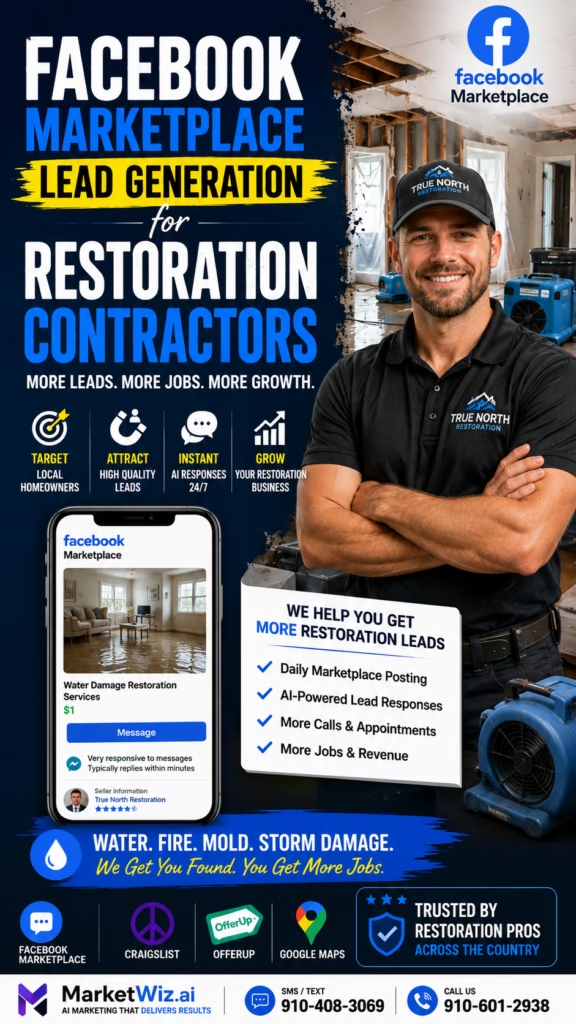
Facebook Marketplace Lead Generation for Restoration Contractors
Facebook Marketplace lead generation for restoration contractors can help water damage, fire damage, mold remediation, storm recovery, sewage cleanup, and property restoration companies improve local visibility, attract qualified property owners, respond faster, and convert more inquiries into inspections and restoration projects.
Facebook Marketplace lead generation for restoration contractors is a local customer-acquisition strategy designed to connect property restoration companies with homeowners, landlords, property managers, investors, and business owners who may need professional help after water, fire, smoke, mold, storm, sewage, or other property damage.
Restoration companies operate in one of the most time-sensitive segments of the local service industry. A homeowner with a burst pipe does not want to spend several days comparing marketing claims. A property manager dealing with water entering multiple units needs clear communication, reliable scheduling, and a contractor who can explain the next step.
These customers are often stressed, uncertain, and unfamiliar with the restoration process. They may not know whether the damage requires extraction, drying, demolition, cleaning, remediation, reconstruction, or specialized documentation. They may also be concerned about insurance, safety, cost, timing, and whether the contractor is trustworthy.
Marketplace visibility can introduce a restoration company to local property owners before or during this decision process. However, generating valuable restoration leads requires more than publishing generic advertisements. The campaign must provide useful information, communicate local relevance, build trust, and move the customer quickly toward professional evaluation.
The Core Restoration Marketing Principle
The objective is not simply to receive more messages. The objective is to connect with property owners who have a genuine restoration need and move them toward the safest, most appropriate professional next step.
What Is Facebook Marketplace Lead Generation for Restoration Contractors?
Facebook Marketplace lead generation for restoration contractors is a structured process that uses locally relevant Marketplace content, professional restoration imagery, educational messaging, fast inquiry response, lead qualification, inspection scheduling, and performance tracking.
A complete system answers several important questions:
- Which restoration services should be promoted?
- Which property owners or managers should be targeted?
- Which cities are profitable and operationally realistic?
- What information will create trust during a stressful event?
- How quickly can the company respond?
- How will inquiries be qualified?
- How will qualified prospects be scheduled for inspections?
- How will lead source, project value, and ROI be measured?
Marketplace should be treated as one entry point into a larger restoration sales process. A prospect may discover the company through a listing, review the business page, check Google reviews, visit the website, and then call or message.
Lead Volume Is Not the Same as Restoration Opportunity
A large number of messages does not necessarily produce strong projects. Some inquiries may be outside the service area. Others may involve services the contractor does not perform. Some may be general price shoppers without enough information for an estimate.
The better measurement is the number of qualified inquiries that turn into inspections, authorized work, reconstruction opportunities, repeat property-management relationships, and profitable revenue.
Why Restoration Contractor Marketing Is Different
Restoration marketing differs from ordinary home-service advertising because the customer may be experiencing property damage, safety concerns, business interruption, displacement, or uncertainty about what to do next.
Restoration Needs Can Be Urgent
Water can continue moving through building materials. Smoke odor can remain after visible fire damage is removed. Storm damage may allow additional moisture into the property. Sewage-related incidents can involve contamination concerns. Mold concerns may require inspection, moisture-source identification, containment, and appropriate remediation procedures.
Advertising should not create panic, but it should communicate that timely professional evaluation may help the property owner understand the situation and available next steps.
Customers Need Education Before They Can Buy
Many property owners have never hired a restoration contractor. They may not understand the differences between:
- Water extraction
- Structural drying
- Moisture inspection
- Demolition and removal
- Contents cleaning
- Smoke and odor treatment
- Mold remediation
- Reconstruction
- Emergency board-up
- Commercial loss recovery
Educational content can make the company easier to understand and more trustworthy. It also helps prospects provide better information when they contact the contractor.
Trust Is Critical
Restoration companies may enter homes, remove damaged materials, handle personal property, document affected areas, and coordinate multi-day projects. Customers want confidence that the contractor is experienced, organized, transparent, and respectful.
Understand the Intent Behind Restoration Inquiries
Not every prospect contacts a restoration contractor for the same reason. Recognizing the type of intent helps the company respond appropriately.
Active Property Damage
The prospect has current water, fire, smoke, sewage, storm, or moisture-related damage and needs immediate guidance.
Damage Discovered Later
The customer found staining, odor, moisture, deterioration, or suspected mold after the original event.
Estimate Comparison
The property owner has already spoken with another company and wants additional information, pricing, or availability.
Commercial Vendor Search
A property manager, landlord, investor, or facility operator is looking for a dependable restoration partner.
Preventive Planning
A customer wants moisture inspection, emergency planning, vendor setup, or information before a future event occurs.
Reconstruction Need
Mitigation is complete, but the property still requires drywall, flooring, painting, cabinets, or other repairs.
A useful response identifies the prospect's situation and moves them toward the correct department, inspection type, or scheduling process.
Set Clear Restoration Lead-Generation Goals
A campaign should be built around a specific business objective. Broad goals such as “get more restoration work” are difficult to measure and optimize.
Possible Campaign Goals
- Generate 25 qualified water-damage inquiries per month
- Schedule 15 property inspections
- Expand mold-remediation work in two nearby cities
- Develop more landlord and property-manager relationships
- Increase commercial restoration opportunities
- Promote reconstruction after mitigation
- Fill available crew capacity during slower periods
- Build a database of local referral partners
- Reduce dependence on shared lead platforms
- Increase average restoration project value
Match Lead Goals to Operational Capacity
Restoration marketing must reflect actual capacity. Before increasing campaign volume, confirm that the business has enough:
- Qualified technicians
- Project managers
- Vehicles and extraction equipment
- Drying and air-quality equipment
- Warehouse or storage capacity
- Administrative and documentation support
- Inspection availability
- After-hours communication coverage
- Reconstruction trade capacity
- Commercial-loss response capability
Do Not Advertise Capacity You Cannot Deliver
Claims such as 24/7 emergency response, same-hour arrival, or immediate commercial deployment should only be used when the company has the staffing, systems, equipment, and geographic coverage required to fulfill them.
Choose the Right Restoration Audiences
Restoration contractors can serve several customer types. Each audience has different priorities, buying processes, and project values.
Homeowners
Homeowners may need urgent guidance, clear explanations, help understanding the restoration process, and confidence that the company will protect the property.
Landlords and Real Estate Investors
Investors often value speed, documentation, cost control, communication, tenant coordination, and the ability to complete both mitigation and reconstruction.
Property Managers
Property managers may need vendors who can handle multiple units, communicate with residents, provide consistent reporting, and respond across a defined portfolio.
Commercial Property Owners
Commercial customers may prioritize business continuity, safety, project phasing, documentation, access control, scheduling, and minimizing operational disruption.
Real Estate Professionals
Agents, brokers, inspectors, and transaction coordinators may need help when moisture, mold concerns, storm damage, or other property issues arise before closing.
Other Contractors
Plumbers, roofers, HVAC companies, remodelers, and electricians may discover damage that requires extraction, drying, cleaning, or remediation. Referral relationships can create valuable lead opportunities.
Select Restoration Services to Promote
A listing should focus on a clear service category. Trying to promote every restoration capability in one advertisement may create a confusing message.
| Service | Common Customer Situation | Useful Marketing Focus |
|---|---|---|
| Water Damage Restoration | Burst pipes, appliance leaks, roof leaks, overflows | Inspection, extraction, moisture evaluation, drying |
| Fire and Smoke Restoration | Fire damage, soot, smoke odor, affected contents | Property stabilization, cleaning, odor treatment, recovery |
| Mold Remediation | Visible growth, odor, moisture issues, hidden damage | Inspection process, moisture source, containment, remediation |
| Storm Damage Restoration | Wind, rain, tree impact, roof intrusion, flooding | Property protection, water control, documentation, repairs |
| Sewage Cleanup | Backups, contaminated water, affected materials | Safety, controlled cleanup, removal, cleaning, drying |
| Commercial Restoration | Office, retail, multifamily, industrial, hospitality losses | Rapid coordination, documentation, continuity, scalable response |
| Reconstruction | Damaged drywall, flooring, cabinets, paint, finishes | Complete recovery from mitigation through final repairs |
Create Separate Listings Around Distinct Problems
Separate campaigns allow the company to use more relevant titles, images, descriptions, questions, and calls to action. A customer searching for mold remediation should not have to read through several paragraphs about storm board-up before finding useful information.
Choose Restoration Markets Based on Response Capability
Restoration service areas should be selected based on more than population. The contractor must consider travel time, technician availability, equipment location, average job value, traffic, weather patterns, and project-management capacity.
Primary Market
This is the area where the contractor can respond most efficiently, schedule inspections quickly, and serve projects profitably.
Secondary Market
This area may be farther away but still practical for qualified projects, commercial losses, larger remediation work, or reconstruction opportunities.
Test Market
A test market allows the company to evaluate inquiry volume and project quality before committing additional crews, vehicles, equipment, office space, or advertising.
Factors to Evaluate
- Population and property density
- Home age and plumbing infrastructure
- Flood, storm, freeze, and severe-weather exposure
- Multifamily and commercial property activity
- Average property value
- Drive time and traffic
- Competitor concentration
- Existing referral relationships
- Average restoration job value
- Ability to inspect and manage projects
Create Restoration Offers That Encourage Qualified Action
Restoration offers should focus on professional evaluation, useful information, reliable communication, and an appropriate next step rather than exaggerated urgency.
Potential Offer Angles
- Local property-damage inspection availability
- Water-damage moisture evaluation
- Commercial restoration consultation
- Landlord and property-manager response programs
- Fire and smoke damage assessment
- Storm damage documentation and recovery planning
- Mold and moisture consultation
- Reconstruction estimate after mitigation
- Property turnover restoration support
- Emergency vendor setup for commercial properties
Explain What the Offer Includes
If the company promotes an inspection, consultation, or estimate, explain:
- Who qualifies
- Which service areas are included
- What information is collected
- Whether photos or access are required
- Whether there is a fee
- What happens after the inspection
- What the company can and cannot determine remotely
Use Accurate, Professional Language
Avoid promising that every situation can be solved immediately. Focus on inspection, documentation, communication, service availability, and a clear restoration process.
Write Strong Marketplace Titles for Restoration Services
The title should identify the service, local relevance, and customer problem without relying on fear-based language.
Useful Restoration Title Formula
Restoration Service + Local Area + Professional Next Step
Examples include:
- Water Damage Restoration in Charlotte – Inspection Available
- Local Fire and Smoke Damage Cleanup in Raleigh
- Mold and Moisture Restoration Services in Tampa
- Storm Damage Property Restoration in Orlando
- Commercial Water Damage Response in Nashville
- Apartment and Rental Property Restoration in Dallas
- Water Extraction and Structural Drying in Atlanta
- Property Damage Cleanup and Reconstruction in Houston
Title Mistakes to Avoid
- Unsupported “best company” claims
- False guarantees
- Excessive capitalization
- Fear-based wording
- Misleading prices
- Unrelated keyword stuffing
- Claiming service areas the company cannot cover
Write Restoration Descriptions That Build Confidence
The description should help the property owner understand whether the company handles the type of damage involved and what happens after contact.
Start With the Situation You Solve
Water damage can affect flooring, drywall, insulation, cabinets, and other building materials even when the visible water has already been removed. Our local restoration team helps property owners evaluate affected areas, identify moisture concerns, and understand the next steps for extraction, drying, cleanup, or repair.
Identify the Customers You Serve
Mention whether the company works with:
- Homeowners
- Landlords
- Property managers
- Apartment communities
- Commercial property owners
- Real estate investors
- Retail and hospitality properties
- Warehouses and industrial facilities
Explain Common Damage Situations
- Burst or leaking pipes
- Water-heater failures
- Appliance supply-line leaks
- Roof and storm intrusion
- Bathroom or kitchen overflows
- Fire, smoke, and soot damage
- Sewage backups
- Moisture and suspected mold
- Commercial equipment leaks
- Multifamily unit damage
Explain the Process
A simple process may include:
- Customer provides the location and damage details.
- The company confirms service-area and scheduling fit.
- A qualified team member reviews photos or speaks with the customer.
- An inspection or site visit is scheduled when appropriate.
- The contractor explains findings and recommended restoration steps.
- The customer receives project, documentation, and scheduling information.
End With a Clear Call to Action
Message us with the property city, type of damage, when it occurred, which rooms or areas are affected, and the best phone number for follow-up. Include photos only when it is safe to do so.
Use Restoration Project Photos That Support Trust
Restoration customers want proof that the company understands professional containment, drying, cleaning, equipment placement, demolition, reconstruction, and job-site care.
Useful Restoration Images
- Professional technicians using moisture meters
- Extraction equipment in use
- Air movers and dehumidifiers placed professionally
- Containment barriers
- Commercial restoration setups
- Before-and-after project images
- Clean service vehicles
- Organized equipment and warehouse areas
- Completed reconstruction work
- Team members in professional uniforms
Protect Customer Privacy
Do not publish addresses, family photos, personal documents, identifying possessions, license plates, claim paperwork, or other sensitive information. Obtain appropriate authorization before using project images.
Do Not Misrepresent Projects
Only use images of work the company completed or images it is legally authorized to use. Do not present stock photography or another contractor's project as company experience.
Build Trust With Restoration Credentials and Proof
A restoration company may be hired during one of the most stressful moments a property owner experiences. Trust signals should be clear, accurate, and easy to verify.
Useful Trust Signals
- Accurate company name
- Years of restoration experience
- Relevant licensing where required
- Insurance information where appropriate
- Industry training and certifications
- Verified customer reviews
- Professional website
- Local service-area information
- Documented project experience
- Clear communication policies
Show the Restoration Process
Customers are more likely to trust a company that explains how inspections, documentation, equipment placement, monitoring, cleaning, demolition, and reconstruction are handled.
Avoid Unsupported Claims
Do not claim that every project will be completed in a specific number of days, that every insurance claim will be covered, or that every mold or odor issue can be resolved without an on-site evaluation.
Localize Marketplace Content for Restoration Markets
Restoration marketing should reflect the climate, property types, common damage patterns, and service capabilities of each market.
Local Details to Include
- Primary city and nearby service areas
- Typical response availability
- Residential or commercial property focus
- Storm, freeze, flood, humidity, or hurricane concerns
- Multifamily or rental property experience
- Local inspection scheduling
- Commercial vendor availability
Adapt to Local Property Conditions
Older housing may have different plumbing, roofing, insulation, and building-material concerns than newer construction. Coastal, humid, storm-prone, or freeze-prone markets may also generate different restoration needs.
Use Local Keywords Naturally
Mention the city where it helps the prospect understand service coverage. Avoid repeating the location unnaturally in every sentence.
Improve Restoration Lead Response Speed
Response speed can strongly affect conversion because restoration prospects often contact multiple companies. The first contractor to respond professionally and explain the next step may gain the inspection opportunity.
Create a Response Standard
- Assign responsibility for new Marketplace messages
- Set business-hours and after-hours response expectations
- Create accurate initial response templates
- Identify urgent safety or active-loss situations
- Collect essential property information
- Route qualified leads to an inspector or project manager
- Record every lead in a CRM or tracking system
Professional Initial Response Example
Thank you for contacting us. We help property owners with water, fire, smoke, mold, storm, and related restoration needs. Please send the property city, what happened, when the damage occurred, which areas are affected, and the best phone number to reach you. If there is an immediate safety concern, leave the affected area and contact the appropriate emergency service.
Do Not Attempt a Full Diagnosis Through Messaging
Messaging can collect information and support scheduling, but complex restoration conditions often require qualified inspection, moisture evaluation, testing, or other professional assessment.
Qualify Restoration Leads Without Delaying Help
Qualification should identify the location, type of loss, timing, project scope, safety concerns, and service fit. It should not become a long questionnaire that prevents the prospect from receiving assistance.
Essential Qualification Questions
- What city or ZIP code is the property in?
- What type of damage occurred?
- When did it happen?
- Is the source of water or damage controlled?
- Which rooms or areas are affected?
- Is the property residential, rental, multifamily, or commercial?
- Is anyone currently occupying the affected area?
- Are there known electrical, structural, fire, or contamination concerns?
- Has another contractor already inspected the property?
- What is the best phone number for immediate follow-up?
Prioritize Safety
When the prospect describes active fire, structural instability, electrical hazards, contaminated water, gas odors, or another immediate danger, the response should direct them toward appropriate emergency assistance rather than encouraging them to inspect or photograph the area.
Convert Qualified Marketplace Leads Into Inspections
The inspection is often the most important conversion step in a restoration campaign. The contractor must move from digital conversation to a clear on-site or professional evaluation process.
Offer Specific Scheduling Options
We currently have inspection availability this afternoon and tomorrow morning. Which option works better for the property owner or site contact?
Confirm the Appointment
- Customer name
- Property address
- Best phone number
- Type of damage
- Date and approximate time of loss
- Access instructions
- Occupancy information
- Pets, tenants, security, or parking considerations
- Inspection date and arrival window
- Name of the assigned team member
Explain What the Inspection Covers
Depending on the service and company capabilities, the inspection may involve visual assessment, moisture readings, documentation, evaluation of affected materials, equipment planning, remediation recommendations, or reconstruction discussion.
Discuss Insurance Carefully and Accurately
Insurance is often part of restoration conversations, but the contractor should avoid making promises about coverage or claim outcomes.
Appropriate Topics to Explain
- The company can document visible damage
- The customer may contact their insurer
- Coverage depends on the policy and claim circumstances
- The contractor can explain its scope and restoration process
- The company may provide project documentation when appropriate
- The property owner remains responsible for understanding policy terms
Statements to Avoid
- “Your insurance will definitely pay.”
- “There will be no out-of-pocket cost.”
- “We guarantee claim approval.”
- “You do not need to review your policy.”
- “Every damaged item will be replaced.”
Maintain Professional Boundaries
Restoration contractors should communicate within the limits of their role, licensing, contracts, and applicable law. Coverage decisions are generally made by the insurer under the terms of the policy.
Build Follow-Up for Restoration Prospects
Not every inquiry becomes an inspection immediately. Property owners may be waiting for access, discussing the situation with a landlord, contacting an insurer, comparing contractors, or trying to determine whether damage is still active.
| Follow-Up Timing | Purpose | Recommended Action |
|---|---|---|
| Immediately | Acknowledge the inquiry | Collect location, damage type, timing, and phone number |
| Same day | Complete qualification | Clarify affected areas and offer inspection options |
| Next business day | Recover an incomplete lead | Ask whether the property still needs evaluation |
| Three to five days | Support delayed decisions | Offer updated scheduling and answer process questions |
| Long-term | Create referral and repeat value | Use permission-based maintenance and prevention content |
Follow Up Without Creating Pressure
Restoration customers may already feel overwhelmed. Follow-up should remain helpful, professional, and focused on whether the property still needs assistance.
Generate Commercial Restoration Leads Through Marketplace Visibility
Commercial restoration opportunities may involve larger project values, multiple decision-makers, stricter documentation, and more complex scheduling.
Potential Commercial Audiences
- Apartment communities
- Property-management companies
- Retail stores
- Restaurants
- Hotels and extended-stay properties
- Warehouses
- Medical and professional offices
- Schools and childcare facilities
- Industrial properties
- Commercial real estate investors
Commercial Buyers Value Preparedness
Commercial listings and outreach should emphasize:
- Dedicated project communication
- Scalable equipment and staffing
- Documentation and reporting
- After-hours coordination
- Tenant or occupant communication support
- Project phasing
- Business continuity awareness
- Mitigation and reconstruction capabilities
Promote Vendor Relationships, Not Only Emergencies
Property managers may prefer to establish a restoration vendor before a major loss occurs. Marketplace content can introduce the contractor and create a conversation about vendor setup, service areas, communication procedures, and emergency planning.
Create Seasonal Restoration Campaigns
Restoration demand changes throughout the year. Campaigns should reflect local weather, property conditions, and seasonal risk patterns.
Winter and Freeze Campaigns
- Frozen and burst pipe awareness
- Water-heater and plumbing leak response
- Vacant-property inspections
- Commercial freeze preparation
Spring and Heavy Rain Campaigns
- Roof and window water intrusion
- Basement moisture concerns
- Storm-water damage
- Humidity and mold-prevention education
Summer Storm and Hurricane Campaigns
- Storm damage property inspections
- Emergency water extraction
- Commercial response planning
- Roof intrusion and interior drying
Fall Property Preparation
- Gutter and drainage awareness
- Vacant rental preparation
- Commercial emergency-vendor setup
- Moisture and leak inspection education
Track Restoration Leads From Inquiry to Revenue
Restoration campaigns should be measured through the complete sales and project cycle. Message volume alone does not show whether the campaign is producing profitable jobs.
Important Metrics
- Total Marketplace inquiries
- Qualified restoration leads
- Average first-response time
- Phone numbers collected
- Inspections scheduled
- Inspections completed
- Estimates or scopes provided
- Authorized mitigation projects
- Authorized reconstruction projects
- Commercial accounts created
- Average project value
- Lead acquisition cost
- Customer acquisition cost
- Gross profit by project type
- Total campaign revenue
- Return on investment
Track Each Service Separately
Water damage, mold remediation, fire restoration, storm response, commercial restoration, and reconstruction may have very different inquiry volume, sales cycles, project values, and profit margins.
Track Each Market Separately
One city may generate many low-value inquiries. Another may generate fewer but larger commercial or reconstruction projects. Market-level reporting helps the company allocate staff and advertising more effectively.
Optimize Restoration Marketplace Campaigns
Optimization should be based on customer behavior and project outcomes. Test one meaningful variable at a time whenever possible.
Elements to Test
- Water-damage versus general restoration titles
- Residential versus commercial positioning
- Before-and-after versus technician-focused images
- Inspection-focused versus education-focused offers
- Short versus detailed descriptions
- City-specific wording
- Call-first versus message-first calls to action
- Different response templates
- Different inspection scheduling options
- Different follow-up timing
Review the Full Conversion Funnel
If leads are not turning into projects, review:
- Response speed
- Qualification process
- Inspection availability
- Customer communication
- Estimate turnaround
- Documentation quality
- Pricing explanation
- Sales follow-up
- Online reputation
- Project experience
Common Facebook Marketplace Mistakes for Restoration Contractors
Using Generic Contractor Messaging
Restoration customers need specific information about damage, inspection, drying, cleanup, remediation, or recovery. Generic “we do all home repairs” messaging may not create enough confidence.
Using Fear-Based Advertising
Do not exaggerate health, structural, or insurance consequences to pressure the prospect. Communicate risks accurately and encourage appropriate professional evaluation.
Making Insurance Guarantees
Insurance coverage depends on the customer's policy, cause of loss, exclusions, documentation, and claim review. Avoid promising claim approval or zero customer cost.
Using Unverified Photos
Project images should be authentic, authorized, and professionally presented. Misrepresenting another company's work can damage trust and create legal concerns.
Responding Too Slowly
Restoration leads may contact several companies. Delays can result in lost inspection opportunities.
Failing to Ask About Location
The first response should confirm that the property is within the service area before the team spends significant time on remote evaluation.
Trying to Diagnose Everything by Message
Photos and descriptions can be helpful, but many restoration situations require on-site inspection, moisture evaluation, testing, or technical review.
Ignoring Follow-Up
Property owners may delay decisions because of access, insurance, family, tenants, or budgeting. A professional follow-up process can recover valuable projects.
Combine Marketplace With a Complete Restoration Marketing System
Marketplace should support a broader local customer-acquisition strategy. Property owners often verify a restoration company through several sources before scheduling an inspection.
Google Business Profile
Google Maps can show the company's location or service area, reviews, photos, hours, services, and local reputation.
Local SEO
Dedicated service pages can help the company appear for searches related to water damage, fire restoration, mold remediation, storm damage, sewage cleanup, commercial restoration, and reconstruction.
Website Content
Educational pages can explain the restoration process, common causes of damage, inspection expectations, documentation, and customer responsibilities.
Social Media
Social content can show project progress, equipment, team members, before-and-after results, seasonal prevention, and commercial response capabilities.
Referral Relationships
Plumbers, roofers, property managers, insurance professionals, real estate agents, and other contractors may become valuable referral sources.
CRM and Follow-Up
A CRM helps track inquiry source, inspection status, project type, estimate, authorization, follow-up tasks, and long-term referral value.
The Connected Restoration Journey
A property owner may discover the company through Marketplace, check Google reviews, visit the website, review project photos, call the office, and then schedule an inspection. Each channel supports the same decision.
Use Automation to Support Restoration Lead Management
Automation can help restoration companies respond faster and keep lead information organized, especially during weather events or periods of high inquiry volume.
Helpful Automation Applications
- Immediate inquiry acknowledgment
- Lead entry into a CRM or spreadsheet
- Urgency and service-type tagging
- Notification to the correct team member
- Inspection scheduling reminders
- Duplicate lead detection
- Follow-up task creation
- Response-time reporting
- Market and campaign source tracking
- Daily restoration lead summaries
Keep Automation Within Appropriate Limits
Automated systems should not diagnose damage, guarantee safety, promise insurance coverage, provide unsupported remediation instructions, or confirm unavailable appointment times.
Escalate Complex or Urgent Situations
Active losses, safety concerns, commercial incidents, severe contamination, fire damage, structural concerns, and high-value projects should be routed to a qualified human team member quickly.
A 30-Day Facebook Marketplace Action Plan for Restoration Contractors
Week 1: Strategy and Preparation
- Select the primary restoration service to promote
- Define the ideal customer and project type
- Choose primary and secondary service areas
- Review crew, inspection, and equipment capacity
- Gather authentic project images
- Prepare accurate credentials and trust information
- Create a lead-tracking system
- Assign inquiry-response responsibilities
Week 2: Listing and Response Development
- Write service-specific title variations
- Create localized descriptions
- Add professional calls to action
- Prepare homeowner and commercial versions
- Create initial response templates
- Create qualification questions
- Define inspection scheduling procedures
- Review insurance and safety language
Week 3: Campaign Launch
- Publish eligible Marketplace content
- Monitor inquiries and response times
- Record every lead source
- Qualify location and damage type
- Route urgent or complex leads appropriately
- Offer clear inspection options
- Begin professional follow-up
- Track common customer questions
Week 4: Analysis and Optimization
- Compare lead quality by service type
- Compare project opportunities by city
- Review title and image performance
- Measure inspections and authorized jobs
- Identify response and scheduling delays
- Improve descriptions based on customer questions
- Expand high-performing restoration campaigns
- Calculate lead cost, customer cost, revenue, and ROI
Expected Strategic Outcome
After 30 days, the company should understand which services, markets, audiences, listings, images, response methods, and inspection workflows generate the strongest restoration opportunities.
Final Takeaway: Restoration Lead Generation Requires Speed, Trust, and Structure
Facebook Marketplace lead generation for restoration contractors works best when local visibility is connected to a complete response, qualification, inspection, and follow-up system.
A clear title earns attention. A professional project image builds confidence. An educational description helps the property owner understand the service. A fast response starts the conversation. Careful qualification confirms fit. A clear scheduling process creates the inspection. Professional communication and reliable restoration work earn the project.
Restoration contractors should focus on becoming easier to find, easier to understand, easier to trust, and easier to contact during a stressful property-damage situation.
Marketplace can become a valuable part of a larger growth strategy that includes Google Maps, local SEO, referral relationships, social proof, website education, CRM organization, reputation management, and customer follow-up.
Sustainable lead generation does not come from publishing the greatest number of listings. It comes from building a repeatable system that turns local visibility into qualified restoration conversations and qualified conversations into professionally managed projects.
Frequently Asked Questions
1. What is Facebook Marketplace lead generation for restoration contractors?
It is a local marketing strategy that uses relevant Marketplace content, professional project visuals, educational descriptions, fast responses, lead qualification, and inspection scheduling to attract restoration opportunities.
2. Can restoration contractors use Facebook Marketplace for leads?
Restoration contractors may use eligible Marketplace and advertising opportunities where permitted, while following current platform rules, category requirements, advertising standards, and applicable local laws.
3. What restoration services can be promoted?
Potential service topics include water damage, fire and smoke restoration, mold remediation, storm recovery, sewage cleanup, structural drying, contents cleaning, commercial restoration, and reconstruction where permitted.
4. Why is local reach important for restoration companies?
Restoration projects depend heavily on service-area coverage, drive time, crew availability, equipment location, inspection timing, project management, and the ability to respond professionally.
5. What makes a restoration Marketplace listing effective?
Effective listings use a clear service focus, accurate location details, professional images, useful education, trustworthy company information, realistic claims, and a direct call to action.
6. Should restoration listings use before-and-after photos?
Before-and-after photos can demonstrate experience when they are authentic, authorized, professionally presented, and do not expose addresses, personal documents, or private customer information.
7. How quickly should restoration inquiries be answered?
Inquiries should be answered as quickly as reasonably possible because property damage can be time-sensitive and prospects may contact several restoration companies.
8. Can Facebook Marketplace generate water damage leads?
Marketplace visibility may help connect restoration companies with local property owners seeking water-damage information or professional help, depending on demand and current platform rules.
9. How should restoration leads be qualified?
Ask about the property location, damage type, when it occurred, affected areas, occupancy, source control, known safety concerns, insurance involvement, and best phone number.
10. What should restoration contractors avoid promising?
Avoid guaranteeing insurance coverage, claim approval, exact drying times, fixed costs without inspection, guaranteed mold outcomes, or any result the company cannot fully control.
11. Can Marketplace help reach property managers?
Yes. Local Marketplace visibility may introduce the company to landlords, apartment managers, investors, and commercial property professionals seeking restoration vendors.
12. What should a restoration listing description include?
Include the service type, service area, common damage situations, inspection process, company qualifications, response expectations, limitations, and clear contact instructions.
13. Should restoration companies mention insurance?
Companies may discuss documentation and the restoration process, but they should avoid guaranteeing insurance coverage or acting beyond their legal and professional role.
14. Can Marketplace marketing support local SEO?
Yes. Marketplace can generate direct conversations while local SEO helps customers verify the company through Google Maps, reviews, local service pages, and search results.
15. How long should a restoration Marketplace description be?
It should provide enough detail to explain the service, service area, process, qualifications, and next step without becoming difficult to scan.
16. What is a strong restoration call to action?
Ask the prospect to provide the property city, damage type, when it happened, affected rooms or areas, safe photos when available, and the best phone number.
17. Can small restoration contractors compete on Marketplace?
Small companies can compete through local expertise, rapid communication, professional documentation, specialized service, customer care, and strong project proof.
18. What causes restoration listings to underperform?
Weak images, vague descriptions, poor local targeting, unsupported claims, slow responses, missing credentials, confusing calls to action, and weak follow-up can reduce performance.
19. Can restoration leads become long-term customers?
Customers may later need reconstruction, cleaning, maintenance, prevention, or additional property services and may refer other owners or managers after a strong experience.
20. Should restoration listings mention emergency service?
Mention emergency response only when the company has the staff, equipment, communication systems, and service-area coverage required to provide it reliably.
21. Can automation help restoration lead response?
Automation can acknowledge inquiries, collect basic details, notify staff, route urgent requests, create follow-up tasks, and reduce missed opportunities when information remains accurate.
22. What metrics should restoration contractors track?
Track inquiries, qualified leads, response time, inspections, estimates, authorized projects, average job value, acquisition cost, close rate, revenue, gross profit, and ROI.
23. How often should restoration listings be reviewed?
Review listings regularly to confirm service areas, availability, credentials, images, descriptions, contact details, and calls to action remain accurate.
24. Can Marketplace help test new restoration markets?
Marketplace may help measure local interest in nearby cities before the contractor invests in more crews, vehicles, equipment, office space, or advertising.
25. Should restoration contractors post educational content?
Educational content can explain warning signs, safe first steps, moisture concerns, restoration processes, documentation, and when professional evaluation may be needed.
26. How can restoration inquiries become inspections?
Respond quickly, confirm location and service fit, collect essential damage information, explain the inspection process, and provide specific scheduling options.
27. Can restoration contractors advertise commercial services?
Eligible contractors may create content for apartment communities, offices, retail properties, warehouses, restaurants, hospitality properties, and other commercial facilities where permitted.
28. How long does Marketplace lead generation take to work?
Results vary by market, weather, service demand, competition, listing quality, reputation, response speed, and the contractor's ability to schedule and close inspections.
29. What is the main goal of restoration Marketplace marketing?
The goal is to connect the contractor with relevant local property owners and managers and convert visibility into qualified conversations, inspections, estimates, and projects.
30. Should restoration contractors combine Marketplace with other channels?
Yes. Marketplace works best as part of a broader strategy that includes Google Maps, local SEO, referrals, social media, website content, CRM follow-up, and reputation management.
30 Additional SEO Keywords
Use these supporting keyword phrases naturally in related blog posts, restoration service pages, city pages, image alt text, headings, internal links, and local marketing content.
Turn Marketplace Visibility Into More Restoration Inspections
MarketWiz.ai helps restoration contractors build organized local marketing systems with marketplace visibility, AI-assisted lead response, Google Maps strategies, local SEO, CRM workflows, appointment generation, and follow-up systems designed to produce measurable growth.
This article provides general marketing information and is not insurance, legal, environmental, health, safety, or remediation advice. Restoration contractors should follow current platform policies, licensing requirements, industry standards, advertising rules, privacy obligations, safety procedures, and applicable local, state, and federal laws.













