

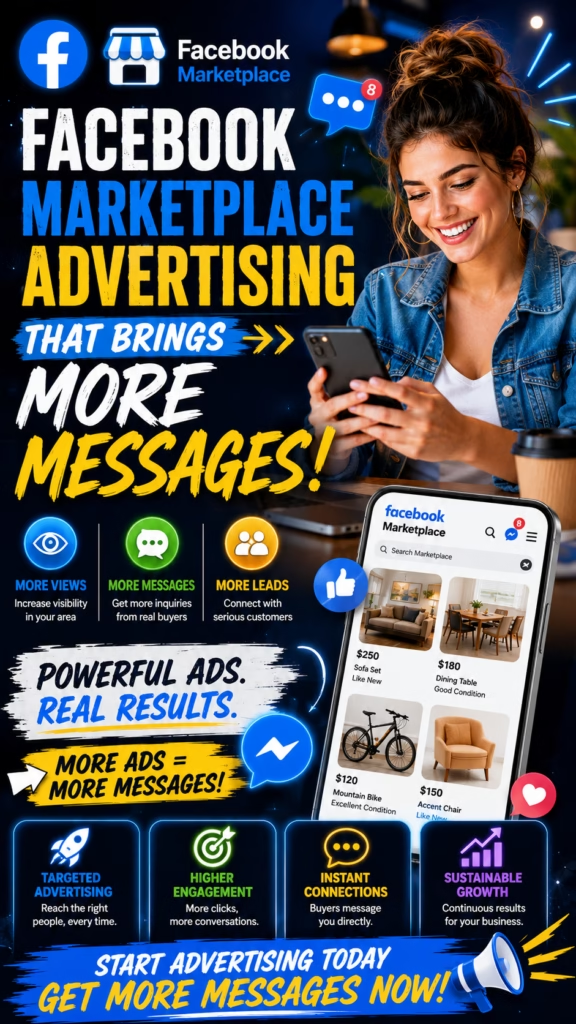
Facebook Marketplace Advertising That Brings More Messages
Facebook Marketplace Advertising That Brings More Messages explains how businesses can create better listings, stronger CTAs, clearer offers, and faster replies to generate more local buyer conversations.
Introduction
Facebook Marketplace Advertising That Brings More Messages starts with one simple goal: getting real local people to start conversations. Views are useful. Clicks are useful. Saves are useful. But for most businesses, the real value begins when a buyer, homeowner, renter, shopper, or service lead sends a message.
Marketplace advertising works best when the listing gives people a clear reason to ask a question, request a quote, check availability, schedule service, ask about delivery, compare options, or start a buying conversation. That means every part of the listing should be designed around message intent.
The best Facebook Marketplace advertising does not just get attention. It makes messaging feel easy, useful, and worth doing right now.
This guide is built for local service companies, contractors, retailers, product sellers, car dealers, mattress stores, moving companies, pest control businesses, flooring companies, remodelers, junk removal companies, and any business that wants more Marketplace conversations from nearby customers.
Main idea: Facebook Marketplace Advertising That Brings More Messages is about turning better listing visibility into more customer replies, quote requests, appointment opportunities, product inquiries, and sales conversations.
Table of Contents
- 1) Why messages matter more than views
- 2) What makes people message on Marketplace
- 3) Building a message-focused Marketplace strategy
- 4) Writing titles that trigger more messages
- 5) Choosing photos that create confidence
- 6) Writing descriptions that make messaging easy
- 7) Local keywords that attract nearby buyers
- 8) Offer angles that create more conversations
- 9) Pricing language that reduces hesitation
- 10) CTAs that increase message volume
- 11) Trust signals that make buyers comfortable
- 12) Message strategy for service businesses
- 13) Message strategy for product sellers
- 14) Message strategy for contractors
- 15) Message strategy for local retailers
- 16) Lead questions that improve message quality
- 17) Follow-up scripts for Marketplace messages
- 18) Posting consistency and listing rotation
- 19) Tracking message performance
- 20) Final thoughts
- 21) FAQs
- 22) Extra keywords
1) Why Messages Matter More Than Views
Views show that people saw the listing, but messages show real intent. A Marketplace listing can get hundreds of views and still fail if no one reaches out. A better listing turns attention into action by making the next step clear and simple.
Messages are where lead qualification begins. A business can ask questions, explain options, confirm availability, provide pricing guidance, schedule appointments, send delivery details, and move the customer closer to buying.
Marketplace messages can lead to:
- Product inquiries
- Service quote requests
- Appointment bookings
- Pickup scheduling
- Delivery requests
- Showroom visits
- Project estimates
- Test drive requests
- Follow-up conversations
- Closed sales and booked jobs
More messages usually means more opportunities to turn Marketplace attention into revenue.
2) What Makes People Message on Marketplace
People message when a listing feels relevant, clear, trustworthy, and easy to respond to. They need to understand what is being offered, whether it is available near them, how pricing works, and what question they should ask next.
If the listing feels confusing, incomplete, fake, or too generic, many buyers will scroll past it. If the listing answers the right questions and invites a simple reply, message volume can improve.
People usually message when they see:
Clear offer
Strong main photo
Specific title
Local availability
Helpful description
Pricing or estimate guidance
Trust signals
Simple CTA
Fast response language
Easy next step
Messages increase when the listing removes hesitation before the customer has to ask.
3) Building a Message-Focused Marketplace Strategy
A message-focused strategy starts with specific listings. A broad listing may get some attention, but specific listings make it easier for customers to know what to ask about. A moving company can post apartment moving, labor-only moving, and furniture delivery separately. A retailer can post individual product categories. A contractor can post project-specific offers.
The goal is to create listings that invite a useful message, not just a passive view.
Message-focused Marketplace strategy elements:
- Specific listing angles
- Clear message CTAs
- Strong title keywords
- Professional photos
- Local service-area language
- Pricing clarity
- Trust signals
- Lead qualification prompts
- Fast reply scripts
- Message tracking
A message-focused listing is built to start a conversation, not just display an offer.
4) Writing Titles That Trigger More Messages
The title should quickly tell the buyer what the listing is about. Strong titles create curiosity and clarity at the same time. They name the service, product, benefit, location, availability, or customer need.
Weak titles are often too vague. Strong titles make the buyer know exactly what they can message about.
Weak title:
Service Available

Better title:
Local Moving Help - Message for a Quick Quote

Weak title:
Great Mattress Deal

Better title:
Queen Mattresses Available - Ask About Local Delivery

Weak title:
Pest Control

Better title:
Ant & Roach Control - Message for Local Availability

Weak title:
Flooring Work

Better title:
LVP Flooring Installation - Send Photos for an Estimate
The best titles make the customer know what question to ask next.
5) Choosing Photos That Create Confidence
Photos can make or break message volume. A buyer may message because the photo looks real, clean, professional, and relevant. A weak photo can make the same offer feel risky or low quality.
For products, use bright real product photos. For services, use finished work, before-and-after examples, clean trucks, team photos, branded graphics, or proof of real service activity.
Photos that bring more messages:
- Real product photos
- Before-and-after results
- Finished project photos
- Clean service truck images
- Team or technician photos
- Showroom photos
- Close-up detail shots
- Photos showing size or condition
- Professional branded graphics
- Clear delivery or service visuals
Better photos make customers feel safer sending a message.
6) Writing Descriptions That Make Messaging Easy
The description should answer the customer’s first questions and then tell them what to send. A strong description reduces hesitation and creates a clear message path.
Do not make customers guess what information you need. Ask for the details that help you reply quickly.
Strong message-focused description structure:
Opening benefit
What is being offered
Who it helps
Local service or pickup area
Pricing or estimate process
Trust signals
Availability
What the buyer should send
Best contact method
Clear message CTA
A good description tells people what to message, not just that they can message.
7) Local Keywords That Attract Nearby Buyers
Local keywords help Marketplace buyers understand that the offer is relevant to them. Location matters for pickup, delivery, appointments, estimates, service areas, and response timing.
Use local wording naturally. The listing should feel nearby and convenient without looking like keyword spam.
Useful local message keywords:
- message for local availability
- local pickup available
- delivery available nearby
- local estimates available
- serving nearby homeowners
- message with your city
- same-week openings when available
- local quote available
- nearby appointment openings
- serving the surrounding area
Local keywords make the message feel more relevant and easier to start.
8) Offer Angles That Create More Conversations
The offer angle is the reason someone messages. Different buyers respond to different reasons: price, speed, delivery, convenience, expertise, availability, proof, urgency, product quality, or local service.
Testing multiple offer angles can help businesses discover what creates the most messages.
Message-focused offer angles:
Message for local delivery
Send photos for a quick estimate
Ask about same-week openings
Message for current inventory
Ask about pickup times
Message for available sizes
Ask about service areas
Message for quote details
Ask about bundle options
Message to schedule a visit
The right offer angle gives the customer a reason to start the conversation now.
9) Pricing Language That Reduces Hesitation
Pricing confusion reduces messages. Some customers will not reach out if they do not understand whether the price is fixed, estimated, negotiable, starting-based, or dependent on details.
Clear pricing language helps buyers feel comfortable asking the next question.
Useful pricing phrases:
- Message for current options
- Pricing depends on project size
- Send photos for faster estimate guidance
- Starting at $___ if accurate
- Delivery available for an additional fee if applicable
- Ask about current availability
- Bundle pricing available if offered
- Quote available after basic details
- Message with your budget range if helpful
- Price varies by size, service, or condition
Better pricing language creates more serious messages and fewer confused replies.
10) CTAs That Increase Message Volume
The call to action is where many listings fail. “Message me” is okay, but a stronger CTA tells the customer exactly what to message about.
Specific CTAs increase message quality because they guide the buyer’s first reply.
Weak CTA:
Message me

Better CTA:
Message with your city and what you need help with.

Weak CTA:
Ask for details

Better CTA:
Message with the size you need and whether you want pickup or delivery.

Weak CTA:
Contact for quote

Better CTA:
Send your project photos, city, and timeline for estimate guidance.

Weak CTA:
Available now

Better CTA:
Message with your preferred pickup or delivery time.
A strong CTA makes the first message easier to write.
11) Trust Signals That Make Buyers Comfortable
Trust signals help buyers decide whether it is safe to message. This matters for service businesses, contractors, product sellers, dealers, movers, and any company asking for appointments, quotes, delivery, pickup, or in-home service.
Use real proof and clear business details. Avoid fake reviews or exaggerated claims.
Trust signals that improve messages:
Business name
Real photos
Local service area
Years of experience
Reviews if available
Before-and-after examples
Licensed or insured status if accurate
Showroom or store details
Clear pickup or delivery process
Fast response language
Warranty or guarantee if offered
Professional communication
Trust signals make the customer more comfortable starting a conversation.
12) Message Strategy for Service Businesses
Service businesses should create listings that ask for the details needed to quote or schedule. A good service listing should mention the service type, area, availability, estimate process, and what the customer should send.
Service listings that can bring more messages:
- Move-out cleaning
- Junk removal help
- Local moving help
- Pest control service
- Pressure washing
- Interior painting
- Flooring installation
- Furniture delivery
- Handyman repairs
- Tree trimming estimates
Service messages improve when the listing asks for location, timeline, photos, and project details.
13) Message Strategy for Product Sellers
Product sellers should make it easy for buyers to ask about availability, pickup, delivery, size, condition, price, and similar items. Complete listings reduce basic confusion and create better conversations.
Product listing message prompts:
Message for pickup details
Ask about local delivery
Message for more photos
Ask about current availability
Message with the size you need
Ask about similar items
Message for bundle options
Ask about showroom pickup
Message with your preferred pickup time
Ask about current inventory
Product messages increase when buyers know what is available and what to ask next.
14) Message Strategy for Contractors
Contractors should use Marketplace listings to start estimate conversations. Project-specific listings usually perform better than broad contractor ads because customers instantly understand the service.
Contractor listing message prompts:
- Send photos for estimate guidance
- Message with your project timeline
- Ask about local estimate openings
- Message with room size or square footage
- Ask about material options
- Message with your city and project type
- Ask about same-week availability if accurate
- Message with before photos
Contractor messages improve when the listing makes estimate requests easy.
15) Message Strategy for Local Retailers
Local retailers can use Marketplace to start conversations around inventory, delivery, pickup, bundles, showroom visits, new arrivals, and clearance items. The listing should make the buyer feel comfortable asking what is currently available.
Retail message angles:
Message for current inventory
Ask about delivery options
Message for showroom details
Ask about pickup availability
Message for bundle pricing
Ask about new arrivals
Message for clearance options
Ask about similar products
Message with size or style preference
Ask about weekend availability
Retail messages increase when buyers know they can ask for options, availability, and delivery details.
16) Lead Questions That Improve Message Quality
More messages are good, but better messages are even better. Lead questions help customers send useful details in the first reply. This saves time and helps the business respond with a better answer.
Ask buyers to send:
- City or neighborhood
- Service or product needed
- Timeline
- Photos if helpful
- Approximate size or quantity
- Pickup or delivery preference
- Budget range if relevant
- Preferred appointment time
- Best contact method
- Any special details
Better lead questions turn simple messages into qualified opportunities.
17) Follow-Up Scripts for Marketplace Messages
Fast follow-up is critical. Customers often message multiple listings. A clear first reply can keep the conversation moving before the lead goes cold.
General reply:
Thanks for reaching out. This is available. Are you looking for pickup, delivery, a quote, or more details first?
Service reply:
Happy to help. What city are you in, what service do you need, and what timeline are you hoping for? Photos help if you want faster estimate guidance.
Product reply:
Thanks for the message. This item is currently available. Would you like pickup details, delivery options, or more photos?
The faster and clearer the reply, the more likely the message becomes a real customer conversation.
18) Posting Consistency and Listing Rotation
Posting consistency helps businesses stay visible, but the listings should not all look identical. Rotation helps create fresh message opportunities by changing titles, photos, descriptions, CTAs, offer angles, and local wording.
Message-focused rotation ideas:
Message for delivery listing
Send photos for estimate listing
Ask about current inventory listing
Same-week availability listing
Product-specific listing
Service-specific listing
Review-based listing
Before-and-after listing
Local area listing
Seasonal offer listing
Listing rotation gives buyers more reasons to message across different needs and timing.
19) Tracking Message Performance
Tracking helps businesses understand which Marketplace listings produce real conversations. Views matter, but messages, qualified leads, appointments, quote requests, booked jobs, and sales matter more.
Track these Marketplace message metrics:
Listing title
Main photo
Offer angle
Category
Local area
Date posted
Messages received
Qualified messages
Response time
Appointments booked
Quotes requested
Sales or jobs closed
Revenue generated
Best-performing CTA
Tracking shows which listings bring messages and which messages become revenue.
20) Final Thoughts
Facebook Marketplace Advertising That Brings More Messages is about making every listing easier to notice, understand, trust, and reply to. More messages come from better titles, better photos, stronger descriptions, clearer pricing, local keywords, trust signals, specific CTAs, and fast follow-up.
The strongest strategy includes message-focused listing angles, lead questions, local wording, listing rotation, and performance tracking.
Final takeaway: To get more Marketplace messages, make every listing more specific, more local, more trustworthy, and easier for the customer to respond to.
21) FAQs
1) What is Facebook Marketplace Advertising That Brings More Messages?
Facebook Marketplace Advertising That Brings More Messages is the process of creating listings designed to generate more buyer messages, service inquiries, quote requests, and sales conversations.
2) How do I get more messages on Facebook Marketplace?
Use clear titles, strong photos, helpful descriptions, local keywords, trust signals, pricing clarity, specific CTAs, and fast replies.
3) Do titles affect message volume?
Yes. Specific titles make it easier for buyers to understand what they can message about.
4) Do photos help bring more messages?
Yes. Clear, real, professional photos help buyers trust the listing and feel more comfortable messaging.
5) What CTA works best for Marketplace messages?
The best CTA tells the buyer exactly what to send, such as city, service needed, delivery preference, photos, timeline, or product size.
6) Should listings include pricing?
Yes, when possible. If pricing varies, explain what details are needed for a quote or estimate.
7) Should businesses use local keywords?
Yes. Local keywords help buyers understand whether pickup, delivery, or service is available near them.
8) How fast should businesses reply to Marketplace messages?
As fast as possible. Buyers often message multiple listings and may choose whoever replies clearly first.
9) What should the first reply say?
The first reply should confirm availability, answer the main question, and ask for the details needed to move forward.
10) Can service businesses get messages from Marketplace?
Yes. Service businesses can generate messages by posting specific services with clear quote instructions and trust signals.
11) Can product sellers get more Marketplace messages?
Yes. Product sellers can improve messages with complete listings, real photos, clear prices, pickup details, and delivery options.
12) Can contractors get Marketplace messages?
Yes. Contractors can get messages by posting project-specific listings with photos, estimate language, and lead questions.
13) What should buyers be asked to send?
Ask for location, service or product needed, timeline, photos if helpful, pickup or delivery preference, and best contact method.
14) Should listings be broad or specific?
Specific listings usually bring better messages because buyers can quickly tell whether the offer matches their need.
15) Should businesses rotate Marketplace listings?
Yes. Rotation helps test titles, photos, CTAs, offers, and local wording to find what brings the most messages.
16) What is a message-focused listing?
A message-focused listing is built to invite a clear first reply from the buyer instead of only showing information.
17) What trust signals should be included?
Use business name, real photos, reviews if available, local service area, years of experience, clear process, and professional communication.
18) What hurts Marketplace message volume?
Weak titles, poor photos, vague descriptions, unclear pricing, no CTA, no local details, and slow replies can reduce messages.
19) Should businesses use branded graphics?
Yes, if they are clean and clear. Real photos should also be used when possible.
20) How do I improve message quality?
Ask better lead questions and tell buyers exactly what details to send in the listing.
21) What should businesses track?
Track listing title, photo, offer angle, messages, qualified messages, response time, appointments, quotes, sales, and revenue.
22) Can Marketplace messages become booked jobs?
Yes. With fast follow-up and clear qualification, Marketplace messages can become appointments, quotes, sales, and booked services.
23) Can Marketplace replace paid ads?
Marketplace can replace part of paid ad spend for some businesses and can also support Google, SEO, social media, and referral marketing.
24) How does Marketplace fit into local marketing?
Marketplace should support a larger system that includes Google Business Profile, local SEO, reviews, website pages, social media, and follow-up automation.
25) What is the main goal of Marketplace advertising that brings more messages?
The main goal is to turn local visibility into more buyer conversations, qualified leads, appointments, sales, booked jobs, and revenue.
25) Extra Keywords
- Facebook Marketplace Advertising That Brings More Messages
- Facebook Marketplace messages
- Marketplace lead generation
- Facebook Marketplace advertising
- Marketplace posting strategy
- local Marketplace leads
- Facebook Marketplace business ads
- Facebook Marketplace message strategy
- Facebook Marketplace listing tips
- Facebook Marketplace CTAs
- Marketplace message scripts
- Facebook Marketplace local keywords
- Facebook Marketplace response strategy
- Facebook Marketplace service leads
- Facebook Marketplace product messages
- Facebook Marketplace contractor leads
- Marketplace quote requests
- Marketplace buyer messages
- Facebook Marketplace follow-up
- Marketplace trust signals
- Facebook Marketplace ad rotation
- Marketplace message tracking
- Facebook Marketplace conversion tips
- Facebook Marketplace local advertising
- Facebook Marketplace growth strategy













