

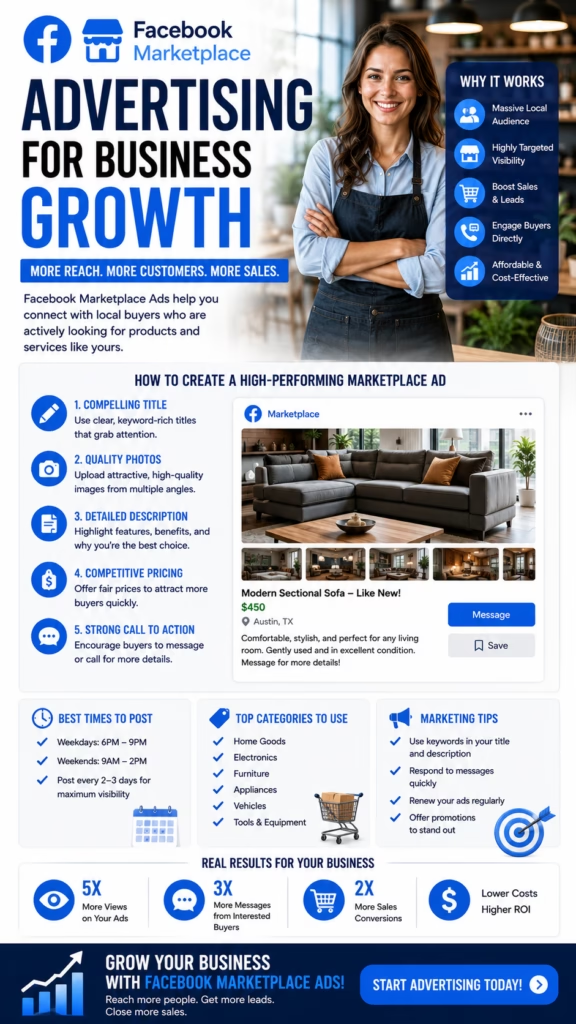
Facebook Marketplace Advertising for Business Growth
Facebook Marketplace Advertising for Business Growth explains how local businesses can use Marketplace listings, better photos, stronger titles, local keywords, trust signals, Messenger follow-up, posting rotation, and lead tracking to increase visibility, inquiries, appointments, and sales.
Introduction
Facebook Marketplace Advertising for Business Growth is one of the most practical strategies for local companies that want more visibility without relying only on traditional ads. Marketplace is built around buyers who are already browsing products, services, deals, vehicles, furniture, rentals, home goods, local inventory, and business offers.
For small businesses, the opportunity is simple: if your listing looks clear, local, trustworthy, and easy to respond to, you can turn Marketplace attention into real conversations. Those conversations can become calls, quote requests, appointments, deliveries, showings, test drives, showroom visits, or completed sales.
Facebook Marketplace advertising works best when every listing is treated like a local sales page, not a random post.
Business growth on Marketplace does not come from posting once and hoping. It comes from a system: strong photos, specific titles, buyer-focused descriptions, local keywords, trust signals, fast Messenger replies, organized follow-up, and clear tracking.
Main idea: Facebook Marketplace Advertising for Business Growth is about turning local buyer attention into measurable revenue opportunities.
Table of Contents
- 1) Why Facebook Marketplace can drive business growth
- 2) What Marketplace leads look like
- 3) How buyers choose which listing to message
- 4) Building a Marketplace advertising strategy
- 5) Writing titles that attract clicks
- 6) Creating descriptions that convert
- 7) Photos that build trust
- 8) Local keywords and buyer intent
- 9) Trust signals for business listings
- 10) Marketplace for product-based businesses
- 11) Marketplace for service businesses
- 12) Marketplace for dealers and inventory businesses
- 13) Offers that create more inquiries
- 14) Messenger follow-up strategy
- 15) Posting rotation for growth
- 16) Reducing low-quality messages
- 17) Tracking Marketplace results
- 18) Common mistakes businesses make
- 19) Final thoughts
- 20) FAQs
- 21) Extra keywords
1) Why Facebook Marketplace Can Drive Business Growth
Facebook Marketplace can drive business growth because it puts local offers in front of people who are already browsing with buying intent. Instead of interrupting users with cold ads, Marketplace listings appear where people are actively comparing options.
Marketplace can help businesses generate:
- Buyer messages
- Phone call requests
- Quote requests
- Appointment bookings
- Delivery inquiries
- Inventory questions
- Service-area leads
- Showroom visits
- Test drive requests
- Completed sales
2) What Marketplace Leads Look Like
Marketplace leads usually start as short messages. A buyer may ask if an item is available, whether delivery is offered, what the price is, if financing is available, when they can come see it, or how to schedule a service.
Strong Marketplace lead signals:
Asks if available
Asks about price
Requests delivery
Asks for appointment time
Wants a phone call
Mentions location
Asks about financing
Requests more photos
Asks about service area
Wants to buy or schedule soon
3) How Buyers Choose Which Listing to Message
Buyers decide quickly. They compare the main photo, title, price, location, description, seller trust, and response speed. If a listing looks incomplete or confusing, they keep scrolling.
Buyers usually evaluate:
- Main image
- Price
- Location
- Condition
- Availability
- Delivery option
- Seller credibility
- Business details
- Response speed
- Clear next step
4) Building a Marketplace Advertising Strategy
A business should create listings around specific products, services, buyer needs, or inventory categories. One broad listing rarely performs as well as multiple focused listings.
Marketplace strategy:
Create one listing per offer
Use unique photos
Write specific titles
Add local keywords
Mention price or estimate process
Show trust signals
Respond fast
Track leads
Rotate listings
Measure sales outcomes
5) Writing Titles That Attract Clicks
The title should make the offer clear immediately. Include the product, service, location, condition, size, delivery option, or buyer benefit.
Weak title:
Great Deal

Better title:
Queen Mattress Set - Local Delivery Available

Weak title:
Home Service

Better title:
Interior Painting Estimates - Same-Week Openings

Weak title:
Car Available

Better title:
2019 Honda CR-V EX - Test Drive Available
6) Creating Descriptions That Convert
A strong description answers buyer questions before they ask. It should explain what is offered, what is included, where it is available, why it is valuable, and what the next step is.
A strong description includes:
- Product or service details
- Price or estimate context
- Condition
- Included features
- Location
- Delivery or appointment info
- Business name
- Trust signals
- Availability
- Clear CTA
7) Photos That Build Trust
Photos are one of the biggest factors in Marketplace performance. Product businesses should show real inventory. Service businesses should show completed work, before-and-after photos, vehicles, team photos, or project examples.
Recommended photo types:
Main offer photo
Close-up details
Multiple angles
Before-and-after proof
Product condition photos
Inventory photos
Team or work photos
Delivery vehicle photos
Showroom photos
Finished project photos
8) Local Keywords and Buyer Intent
Local keywords help buyers understand whether the business serves their area. Use city names, neighborhoods, nearby towns, and service-area phrases naturally.
Useful keyword examples:
- [Product] in [City]
- [Service] near [City]
- Local delivery available
- Serving [City] and nearby areas
- Appointment available this week
- Free estimate in [City]
- Local showroom
- Pickup available
- Test drive available
- Same-week service
9) Trust Signals for Business Listings
Trust signals help buyers feel comfortable messaging a business. Marketplace users want to know the offer is real and the seller is responsive.
Trust signals:
Business name
Website
Phone number
Real photos
Local address if appropriate
Reviews mention
Years in business
Clear policies
Delivery details
Professional replies
10) Marketplace for Product-Based Businesses
Product-based businesses can use Marketplace to promote inventory, clearance items, new arrivals, bundles, delivery options, and local pickup offers.
Good product listing angles:
- New arrival
- Clearance offer
- Bundle deal
- Local delivery
- Limited stock
- Featured item
- Budget-friendly option
- Premium option
- Showroom pickup
- Same-day availability
11) Marketplace for Service Businesses
Service businesses can use Marketplace to generate estimate requests, appointment leads, and local inquiries. The key is to focus each listing on one specific service.
Service listing examples:
Interior painting estimates
Drain cleaning service
Lawn cleanup appointments
Junk removal pickup
Move-out cleaning
Handyman repairs
Towing service
Flooring installation
HVAC tune-ups
Electrical repair estimates
12) Marketplace for Dealers and Inventory Businesses
Dealers can use Marketplace to promote vehicles, RVs, mobile homes, furniture, mattresses, appliances, equipment, and other inventory. Each item should have its own listing with accurate details.
Dealer listing essentials:
- Inventory-specific title
- Full photo set
- Price
- Condition
- Features
- Location
- Financing info if available
- Appointment CTA
- Trade-in info if relevant
- Lead tracking
13) Offers That Create More Inquiries
A clear offer gives buyers a reason to message now. The offer should be simple, realistic, and tied to buyer intent.
Strong offer examples:
Local delivery available
Free estimate this week
New inventory available
Same-day pickup
Limited appointment openings
Test drive available
Ask about financing
Bundle pricing available
Seasonal service special
Message for availability
14) Messenger Follow-Up Strategy
Fast Messenger follow-up is where Marketplace growth happens. Many buyers message multiple listings. A quick, helpful response can win the conversation.
Follow-up script:
Thanks for reaching out. Yes, this is currently available. Are you looking for pricing details, delivery/pickup options, or to schedule a time to see it? I can help with the next step.
15) Posting Rotation for Growth
Posting rotation helps businesses test different listing angles, photos, titles, prices, and offers. This prevents stale posts and helps identify what creates the best leads.
Rotation ideas:
- Product-specific listing
- Service-specific listing
- Delivery-focused listing
- Budget-friendly listing
- Premium listing
- Seasonal offer
- New arrival
- Clearance item
- Appointment-focused listing
- Local area listing
16) Reducing Low-Quality Messages
Low-quality messages often happen when listings are missing basic details. Clear descriptions help buyers self-qualify before messaging.
Ask buyers to send:
Name
Location
Product or service needed
Budget range if relevant
Pickup or delivery preference
Timeline
Phone number
Appointment availability
Questions about financing
Best time to call
17) Tracking Marketplace Results
Tracking helps businesses understand which Marketplace listings actually create growth. Track more than messages. Track qualified leads, appointments, sales, and revenue.
Track these metrics:
- Listing title
- Offer type
- Messages received
- Qualified leads
- Calls booked
- Appointments scheduled
- Deliveries requested
- Sales completed
- Revenue
- Best-performing listing
18) Common Mistakes Businesses Make
Many businesses fail on Marketplace because listings are too generic. They may use weak photos, vague titles, missing prices, unclear descriptions, slow replies, or no tracking.
Common mistakes:
Poor photos
Generic titles
No price or estimate context
No local keywords
No trust signals
No clear CTA
Slow replies
No lead tracking
Same listing repeated too often
No follow-up system
Marketplace fails when listings create attention but do not guide buyers toward action.
19) Final Thoughts
Facebook Marketplace Advertising for Business Growth works when local businesses treat listings like conversion assets. Better photos, stronger titles, clearer descriptions, trust signals, fast replies, and tracking can turn Marketplace into a serious growth channel.
Final takeaway: Businesses grow from Facebook Marketplace when listings are specific, visual, local, trustworthy, and connected to fast follow-up.
20) FAQs
1) What is Facebook Marketplace advertising for business growth?
It is the process of using Marketplace listings to attract buyers, generate messages, book appointments, and increase sales.
2) Can businesses advertise on Facebook Marketplace?
Yes. Businesses can use Marketplace-style listings and local promotion strategies to generate buyer interest.
3) What businesses can use Marketplace?
Retailers, service businesses, dealers, contractors, home service companies, furniture sellers, car dealers, and local inventory businesses can use it.
4) What makes a strong Marketplace listing?
A strong listing has clear photos, a specific title, accurate description, price context, local keywords, trust signals, and a CTA.
5) Do photos matter?
Yes. Photos are one of the most important factors in buyer interest.
6) What should the title include?
The title should include the product, service, location, feature, price angle, or buyer benefit.
7) Should businesses mention price?
Yes, when possible. If pricing varies, explain the estimate or quote process.
8) Should businesses use local keywords?
Yes. Local keywords help buyers understand service area and availability.
9) What trust signals should be included?
Business name, website, phone number, real photos, reviews, years in business, and professional replies help build trust.
10) How fast should businesses reply?
As fast as possible. Fast replies can win buyers who message multiple listings.
11) What should the first reply say?
Confirm availability, answer the buyer’s question, and offer the next step.
12) Can Marketplace generate service leads?
Yes. Service businesses can use listings to generate estimate requests and appointments.
13) Can Marketplace generate product sales?
Yes. Product sellers can use listings to promote inventory, delivery, pickup, and special offers.
14) Can dealers use Marketplace?
Yes. Dealers can promote vehicles, mobile homes, RVs, furniture, appliances, and other inventory.
15) What is posting rotation?
Posting rotation means testing different listing angles, photos, titles, and offers.
16) How do businesses reduce bad leads?
Include clear details and ask buyers for location, timeline, budget, and contact information when relevant.
17) Should businesses track leads?
Yes. Tracking shows which listings create actual growth.
18) What should be tracked?
Track messages, qualified leads, calls, appointments, sales, and revenue.
19) What is the biggest Marketplace mistake?
The biggest mistake is posting vague listings with weak photos and no follow-up system.
20) Can Marketplace replace a website?
No. Marketplace should support the broader business growth system, including a website, Google profile, reviews, and CRM tracking.
21) Should businesses use different listings for different offers?
Yes. Specific listings usually perform better than one broad listing.
22) What offers work well?
Local delivery, free estimates, new inventory, same-week appointments, test drives, and bundle deals can work well.
23) How often should listings be updated?
Listings should be refreshed when inventory, pricing, photos, availability, or offers change.
24) What is the main goal?
The main goal is to turn local Marketplace visibility into qualified messages, appointments, sales, and business growth.
25) What is the best strategy?
Use strong photos, clear titles, local keywords, trust signals, fast Messenger replies, posting rotation, and lead tracking.
21) Extra Keywords
- Facebook Marketplace Advertising for Business Growth
- Facebook Marketplace advertising
- Facebook Marketplace marketing
- Marketplace lead generation
- business growth strategy
- local business growth
- Facebook Marketplace business leads
- Marketplace listings for businesses
- Facebook Marketplace sales strategy
- local Marketplace advertising
- Facebook Marketplace product listings
- Facebook Marketplace service listings
- Marketplace Messenger follow-up
- Facebook Marketplace lead tracking
- Facebook Marketplace for small business
- Marketplace business marketing
- Facebook Marketplace customer acquisition
- local lead generation
- Facebook Marketplace selling strategy
- Marketplace ad strategy
- Facebook Marketplace growth tips
- Marketplace listing optimization
- Facebook Marketplace conversion strategy
- business leads from Marketplace
- Facebook Marketplace sales growth













