

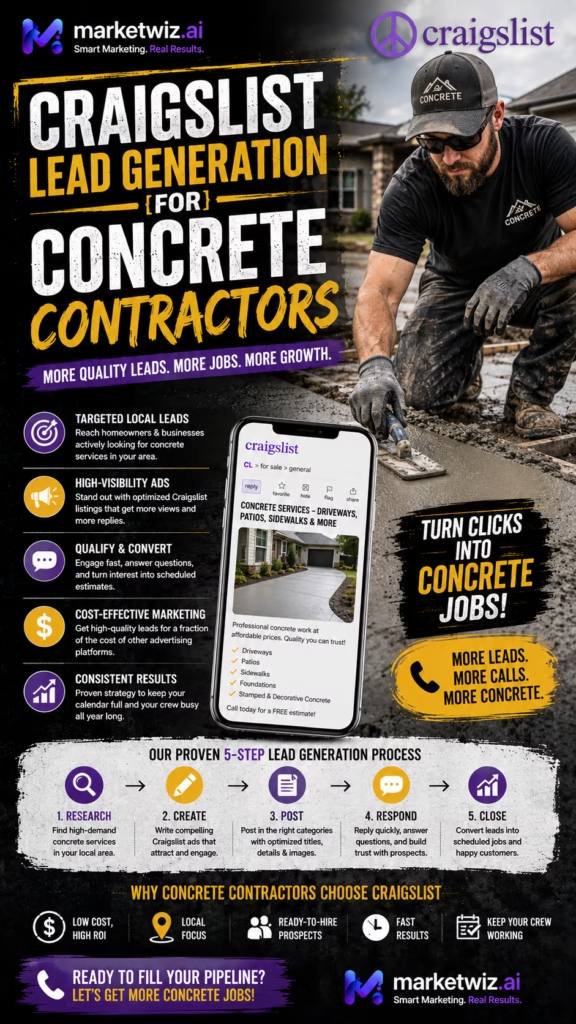
Craigslist Lead Generation for Concrete Contractors
Craigslist lead generation for concrete contractors can help local companies reach homeowners, landlords, investors, builders, property managers, and businesses searching for driveway installation, driveway replacement, patios, sidewalks, concrete slabs, garage floors, foundations, decorative concrete, stamped concrete, repairs, and commercial concrete work. The strongest approach is not simply publishing a generic “concrete work” ad. Contractors need project-specific titles, strong local targeting, genuine project photography, useful descriptions, accurate technical claims, fast lead response, basic project qualification, site visit scheduling, estimate follow-up, CRM attribution, and performance tracking connected to signed jobs and revenue.
Concrete contractors operate in a highly local, project-driven industry where one qualified lead can be worth substantially more than dozens of low-intent inquiries.
A homeowner may need a new driveway.
A landlord may need damaged concrete replaced.
A property manager may need sidewalks repaired.
A homeowner may want a backyard patio.
A shop owner may need a slab.
A builder may need concrete work for a new structure.
A commercial property owner may need parking-area or walkway improvements.
An investor may need several concrete projects completed on a renovation.
These are highly specific local needs.
That makes Craigslist potentially useful.
Craigslist users are often searching inside a specific geographic market.
Concrete contractors already work inside specific geographic territories.
That alignment creates opportunity.
But generic advertising wastes much of that opportunity.
A vague ad saying “Concrete Work Available” does not tell a homeowner whether the company pours driveways.
It does not tell them whether patios are available.
It does not show completed projects.
It does not explain the service area.
It does not establish credibility.
And it may not give the customer a strong reason to call.
Better concrete marketing is specific.
Driveway ads should look like driveway ads.
Patio ads should look like patio ads.
Slab ads should look like slab ads.
Decorative concrete ads should show decorative concrete.
Commercial ads should speak to commercial customers.
That creates relevance.
Then the contractor needs a process for turning replies into site visits, estimates, proposals, signed jobs, and revenue.
The Concrete Craigslist Lead Formula
Project-Specific Ads + Local Targeting + Real Concrete Photos + Strong Titles + Clear Descriptions + Accurate Claims + Fast Lead Response + Project Qualification + Site Visits + Estimate Follow-Up + CRM Tracking = Better Concrete Customer Acquisition
Why Craigslist Can Work for Concrete Contractors
Concrete Is Local
Most concrete contractors work inside defined service territories, which aligns naturally with Craigslist's local market structure.
Projects Have Clear Intent
Customers often know whether they need a driveway, patio, slab, sidewalk, or another specific concrete project.
Projects Can Have Meaningful Value
One qualified concrete job can justify substantial marketing effort.
Concrete Is Visual
Finished driveways, patios, slabs, and decorative projects create strong marketing assets.
Different Services Can Be Tested
Contractors can compare demand for driveways, patios, slabs, repairs, and commercial work.
Results Can Be Measured
Leads can be connected with estimates, signed projects, and project revenue.
Understand Concrete Customer Intent
Replacement Intent
The customer may have an old driveway, sidewalk, patio, or slab that needs to be removed and replaced.
New Construction Intent
A homeowner, builder, or business may need new concrete installed.
Outdoor-Living Intent
Patio and decorative concrete customers may be improving the appearance and usability of a property.
Repair Intent
Cracked, settled, broken, or deteriorated concrete can create repair inquiries.
Commercial Intent
Property managers, developers, builders, and business owners may have larger or recurring needs.
Planning Intent
Some customers may be gathering estimates before a future project.
Build a Real Craigslist Lead Generation Strategy
Choose the Services You Actually Want
Not every concrete project is equally valuable or operationally attractive.
Choose the Service Territory
Determine the cities and surrounding areas where crews can work efficiently.
Choose the Customer Type
Residential, commercial, builder, landlord, investor, or property-manager leads may require different messaging.
Build Separate Project Campaigns
High-priority project categories deserve focused ads.
Collect Strong Visual Proof
Organize project photos by service.
Create a Lead Workflow
Know who responds and what questions are asked.
Track Revenue
Connect Craigslist to actual signed work.
Write Better Craigslist Titles for Concrete Contractors
Lead With the Concrete Project
“Concrete Driveway Contractor” is clearer than “Home Improvement Services.”
Use Genuine Geographic Wording
City names can improve relevance when accurate.
Use Customer Language
Driveway, patio, sidewalk, slab, stamped concrete, and concrete repair are easy for homeowners to understand.
Avoid Keyword Strings
Titles should read naturally.
Avoid Fake Discounts
Promotional claims should be genuine.
Avoid Unsupported Claims
Do not claim to be the cheapest, best, or number one without a legitimate basis.
Specific Titles Improve Customer Fit
A homeowner needing a driveway is more likely to engage with an ad clearly about driveways than with an ad attempting to promote every possible concrete service at once.
Write Better Concrete Craigslist Ad Descriptions
Explain the Primary Project
Make the main service obvious at the beginning.
List Related Services Carefully
Mention related work without turning the ad into an unreadable keyword list.
Explain the Service Area
Tell customers where the company genuinely works.
Explain the Next Step
Let the customer know whether the process begins with a call, project discussion, or site visit.
Use Real Project Examples
Finished work can reinforce credibility.
Use Accurate Business Information
Make it clear that the customer is dealing with a real contractor.
Keep It Readable
Clear headings and shorter sections make long ads easier to scan.
Target the Right Local Concrete Markets
Concrete is highly dependent on local logistics.
Crew Travel
Travel time affects labor efficiency.
Material Logistics
Concrete delivery and project scheduling can make geography important.
Equipment Movement
Excavation, demolition, forming, finishing, and cleanup equipment may need to travel to the site.
Site Visits
Estimators may need to inspect projects before quoting.
Project Value
Larger jobs may justify a wider radius.
Profitability
Track which cities create the strongest margins.
Use Real Concrete Project Photos
Finished Driveways
Show clean, completed driveway projects.
Finished Patios
Use wide views that show outdoor-living space.
Concrete Slabs
Show real shop, shed, garage, or equipment slab projects where appropriate.
Stamped Concrete
Show genuine patterns and finishes.
Sidewalks and Walkways
Show finished paths and transitions.
Commercial Work
Use genuine larger-scale project photography.
Concrete Contractors Generate Their Own Marketing Assets
Every completed driveway, patio, walkway, slab, and commercial pour can become useful marketing content for Craigslist, websites, social media, Google Business Profile, case studies, and sales follow-up.
Use Before-and-After Concrete Projects
Driveway Replacement
Show cracked or deteriorated concrete followed by the completed replacement.
Patio Replacement
Show how an outdoor area changed.
Sidewalk Replacement
Demonstrate damaged-to-finished results.
Decorative Concrete
Highlight upgraded finishes.
Use Similar Angles
Comparable photos make the transformation easier to understand.
Advertise Concrete Driveways Separately
Driveways can be one of the strongest residential project categories for concrete contractors.
New Driveways
Target homeowners building or expanding access.
Driveway Replacement
Focus on old, cracked, damaged, or deteriorated concrete.
Driveway Extensions
Mention expansion work when genuinely offered.
Decorative Driveways
Show finishes only when the contractor actually provides them.
Large Residential Projects
Wide driveways can represent higher-value opportunities.
Advertise Concrete Patios Separately
Backyard Patios
Position patios around useful outdoor space.
Patio Replacement
Show old and new projects.
Stamped Patios
Use genuine decorative examples.
Patio Extensions
Highlight additional outdoor living area when offered.
Poolside Concrete
Advertise only when genuinely within the contractor's service capabilities and applicable safety requirements.
Advertise Concrete Slabs
Garage Slabs
Show genuine completed projects.
Shop Slabs
Larger accessory buildings can create valuable projects.
Shed Slabs
Smaller slab jobs may fit certain contractors.
Equipment Pads
Mention when genuinely offered and properly designed for the intended use.
Building Slabs
Technical requirements should be evaluated for each specific project.
Advertise Concrete Sidewalks and Walkways
Residential Walkways
Homeowners may want new paths or replacements.
Entry Walkways
Front-entry projects can improve appearance and accessibility.
Commercial Sidewalks
Property managers and businesses may have maintenance or replacement needs.
Replacement Projects
Damaged sections can generate repair or replacement opportunities.
Accessibility Considerations
Commercial and public-access projects may involve specific requirements that should be handled appropriately.
Advertise Garage and Shop Concrete Floors
Residential Garages
New garages may require concrete floors.
Detached Shops
Shop slabs can create substantial project opportunities.
Storage Buildings
Advertise appropriate slab work.
Commercial Workspaces
Larger floors may require a different estimating and project-management process.
Technical Requirements
Thickness, reinforcement, subgrade, drainage, and load requirements should be determined for the actual project rather than generalized in marketing copy.
Advertise Decorative Concrete
Decorative Patios
Use finished images that show genuine style options.
Colored Concrete
Mention only when genuinely offered.
Textured Finishes
Use real project examples.
Borders and Details
Close-up photography can showcase craftsmanship.
Accurate Expectations
Avoid implying that every decorative finish will look identical across all projects.
Advertise Stamped Concrete With Strong Visual Proof
Stamped concrete is especially visual.
Show Patterns Clearly
Use genuine completed work.
Show Wide Views
Customers should understand how the finish looks across the full space.
Show Color Variation
Only represent colors actually used on the photographed project.
Explain Applications
Patios, walkways, and other genuine applications can be highlighted.
Avoid Fake Project Images
Decorative concrete customers rely heavily on visual proof.
Advertise Concrete Repair and Replacement Carefully
Cracked Concrete
Some situations may be repairable while others require replacement.
Broken Sections
Small replacement areas can be marketed when they fit company operations.
Settled Concrete
The correct solution depends on conditions and contractor capability.
Surface Damage
Do not promise repair methods without inspecting the project.
Replacement Projects
Before-and-after imagery can show clear results.
Advertise Foundation Work Only When the Company Is Properly Equipped
Foundation work can involve more technical responsibility than basic flatwork.
Residential Foundations
Advertise only if genuinely within the contractor's scope.
Additions
Foundation work may support room additions or structural expansion.
Accessory Buildings
Shops, garages, and other structures may require engineered or code-compliant foundation systems.
Structural Requirements
Follow applicable engineering, design, inspection, permitting, and building-code requirements.
Avoid Universal Specifications
Foundation requirements vary by structure, soil, climate, jurisdiction, design, and intended load.
Advertise Commercial Concrete Separately
Business Properties
Sidewalks, pads, slabs, and other legitimate commercial projects may generate inquiries.
Property Managers
Strong relationships can create repeat work.
Builders
General contractors may need subcontractor relationships.
Investors
Multi-property owners may create recurring opportunities.
Commercial Qualification
Insurance, scheduling, documentation, safety, access, specifications, and project-management expectations can differ from residential work.
Build Project-Specific Craigslist Campaigns
Driveway Campaign
Focus on installation and replacement.
Patio Campaign
Focus on backyard and outdoor-living projects.
Slab Campaign
Focus on shops, garages, sheds, and other appropriate uses.
Decorative Campaign
Focus on stamped and decorative finishes.
Repair Campaign
Focus on concrete replacement or repair services actually offered.
Commercial Campaign
Focus on business and property-management needs.
General Concrete Campaign
Use a broader company overview alongside more focused service ads.
Handle Concrete Pricing Carefully
Concrete projects depend on many variables.
Project Dimensions
Length, width, and total area matter.
Thickness
Requirements vary by application.
Site Preparation
Excavation and subgrade work affect scope.
Demolition
Existing concrete removal can add labor and disposal requirements.
Reinforcement
Project design and applicable requirements affect reinforcement choices.
Finish
Standard, broom, decorative, stamped, or other finishes can affect cost.
Access
Difficult sites can change labor and equipment requirements.
Drainage and Grade
Site conditions matter.
Avoid Misleading “Too Good to Be True” Pricing
Concrete customers may respond quickly to low advertised prices, but those inquiries can become poor-quality leads when the actual project could never be completed near the advertised figure.
Use Technical Concrete Claims Carefully
Thickness
Avoid presenting one thickness as appropriate for every project.
Reinforcement
Do not make universal reinforcement claims when project design varies.
Concrete Strength
Mix specifications should be appropriate for the project.
Drainage
Site grading and water management require project-specific evaluation.
Foundations
Structural projects may require engineering and permitting.
Warranty Claims
Only advertise warranties actually offered under clear terms.
Code Claims
Requirements vary by jurisdiction.
Build Trust Inside the Concrete Craigslist Ad
Use the Real Business Name
Customers should know who they are contacting.
Use Genuine Project Photos
Real work demonstrates capability.
Use Accurate Contact Information
Make customer communication easy.
Use Accurate Credentials
Licensing, insurance, certifications, experience, and other claims should remain current and factual.
Explain the Service Area
Customers should know whether the contractor serves their location.
Avoid Unsupported Claims
Do not fabricate awards, years in business, customer counts, technical capabilities, or guarantees.
Use One Clear Call to Action
Concrete customers usually need a simple next step.
Call to Discuss the Project
A phone conversation can identify basic fit quickly.
Schedule a Site Visit
Many projects require an in-person evaluation.
Request an Estimate
Qualified leads can move toward pricing.
Avoid Multiple Competing Actions
One primary next step keeps the ad easier to understand.
Respond to Concrete Leads Quickly
Homeowners may call several companies while planning a project.
Identify the Project
Driveway, patio, slab, walkway, foundation, decorative, repair, or commercial work.
Confirm Location
Make sure the property fits the territory.
Ask Approximate Size
Dimensions can help determine project fit.
Ask About Existing Conditions
Is demolition or removal required?
Ask About Timing
Determine whether the customer is ready soon or planning ahead.
Create the Next Step
Move qualified projects toward an appropriate site visit or estimate.
Qualify Concrete Projects Before Sending an Estimator
Project Type
Identify exactly what the customer needs.
Property Location
Confirm service-area fit.
Approximate Dimensions
A rough size helps evaluate project scope.
Existing Concrete
Determine whether demolition may be required.
Site Access
Access can influence project logistics.
Residential or Commercial
Different projects may require different workflows.
Desired Timeline
Understand customer timing.
Project Fit
Not every inquiry needs an on-site estimate.
Protect Estimating Time
Concrete estimators can spend substantial time driving, measuring, evaluating demolition, reviewing access, calculating materials, and preparing proposals. Basic qualification helps reserve that effort for realistic opportunities.
Move Qualified Leads Toward Site Visits
Confirm the Address
Make sure the site is inside the service area.
Confirm the Project
Verify what the customer wants evaluated.
Confirm Appointment Timing
Reduce missed visits.
Prepare Before Arrival
Collect basic project details in advance.
Document the Source
Record that the opportunity came from Craigslist.
Improve Concrete Estimate Conversion
Explain Scope Clearly
Customers should understand what the estimate covers.
Explain Important Variables
Demolition, prep, access, finish, reinforcement, dimensions, and other project details may influence the proposal.
Set Realistic Expectations
Avoid promising schedules or results before confirming project conditions.
Follow Up After the Proposal
Customers may compare multiple bids.
Track Win Rate
Understand whether Craigslist estimates turn into signed work.
Build a Concrete Lead Follow-Up System
Follow Up After Initial Contact
Qualified customers may need time to schedule a visit.
Follow Up After the Site Visit
Keep communication organized.
Follow Up After the Estimate
Ask whether the customer has questions.
Track Future Projects
Some prospects may be planning for another season.
Respect Customer Preferences
Follow-up should remain appropriate and not become unwanted repeated contact.
Track Craigslist Concrete Leads in CRM
- Lead name
- Phone number
- Email where provided
- Craigslist source
- Ad or campaign reference
- City or ZIP code
- Project type
- Approximate dimensions
- Residential or commercial
- Existing concrete or demolition needs
- Desired timing
- Qualification status
- Site visit status
- Estimate amount
- Won or lost status
- Closed project revenue
Suggested Concrete Lead Pipeline
- New Craigslist lead
- Contacted
- Qualified
- Site visit scheduled
- Site visit completed
- Estimate sent
- Follow-up
- Won
- Lost
- Project scheduled
- Project completed
- Review requested
Track Concrete Craigslist Marketing Performance
Responses
How many inquiries does each ad generate?
Qualified Leads
How many inquiries match company services and geography?
Site Visits
How many leads are worth an on-site evaluation?
Estimates
How many qualified leads receive proposals?
Close Rate
How many proposals turn into signed work?
Average Project Value
Which project types produce the largest jobs?
Revenue
What concrete revenue comes from Craigslist?
| Metric | Why It Matters |
|---|---|
| Ad responses | Measures initial market interest |
| Qualified leads | Measures project and geographic fit |
| Site visits | Shows how many leads deserve estimator time |
| Estimate value | Measures potential project revenue |
| Close rate | Measures estimate conversion |
| Average project value | Shows economic quality of leads |
| Revenue and ROI | Measures the business value of Craigslist |
Track Concrete Leads by City and Service Area
Lead Volume
Which cities generate the most concrete inquiries?
Lead Quality
Which markets generate realistic projects?
Average Project Value
Some areas may generate larger driveways, patios, or commercial work.
Close Rate
Compare estimates and signed jobs by market.
Travel Cost
Distance affects estimator and crew efficiency.
Profitability
The strongest lead market is not always the market with the most replies.
Track Results by Concrete Project Type
Driveways
Measure inquiry volume, site visits, close rate, and average job size.
Patios
Track seasonal demand and decorative upgrade opportunities.
Slabs
Compare small and large slab economics.
Sidewalks
Measure residential and commercial demand separately.
Decorative Concrete
Track lead quality and higher-end finish demand.
Repair and Replacement
Compare small repairs with larger replacement jobs.
Commercial Concrete
Measure repeat-client potential and contract size.
Improve Concrete Lead Quality Instead of Chasing More Replies
Use Specific Titles
Attract the right project type.
Use Accurate Geographic Wording
Reduce leads outside the service territory.
Show Real Projects
Serious customers can evaluate the contractor's work.
Explain Core Services
Help customers self-select.
Avoid Unrealistic Pricing
Poor pricing expectations create poor leads.
Qualify Before the Site Visit
Protect estimator time.
Understand Concrete Lead Generation Seasonality
Concrete demand and project feasibility can vary by climate and season.
Spring
Homeowners may begin planning driveways, patios, sidewalks, and outdoor projects.
Summer
In many regions, outdoor concrete activity can remain strong.
Fall
Customers may try to complete projects before colder conditions.
Winter
Local climate can significantly affect outdoor concrete work and lead volume.
Commercial Cycles
Commercial demand may follow different schedules than residential demand.
Prepare Advertising Before Peak Season
Build ads, photography, intake scripts, and CRM tracking before lead volume increases.
Build a Strong Concrete Craigslist Ad Library
Concrete contractors have many legitimate advertising angles.
Driveway Ads
Focus on installation and replacement.
Patio Ads
Focus on outdoor living.
Slab Ads
Focus on garages, shops, sheds, and equipment.
Stamped Concrete Ads
Focus on decorative visual appeal.
Sidewalk Ads
Focus on residential or commercial walkways.
Repair Ads
Focus on replacement or repair capabilities.
Commercial Ads
Speak directly to property managers, business owners, and builders.
Company Overview Ads
Introduce the broader concrete service mix.
Connect Craigslist With Other Concrete Marketing Channels
Google Maps
Local search can reach customers actively looking for concrete contractors.
Organic SEO
Driveway, patio, slab, and other service pages can capture search demand.
Social Media
Project photography can showcase completed work.
Referrals
Satisfied customers can create high-trust future projects.
Builders and Property Managers
B2B relationships can create recurring work.
CRM
Track all lead sources consistently.
Craigslist should be evaluated as one part of the full concrete customer acquisition system.
Common Craigslist Mistakes Concrete Contractors Should Avoid
Generic Ads
“Concrete Work” is less useful than project-specific messaging.
Poor Project Photos
Concrete customers want visual proof.
Fake Project Images
Do not present stock or generated images as real completed work.
Misleading Prices
Do not use unrealistic teaser pricing.
Unsupported Technical Claims
Thickness, reinforcement, mix design, structural capability, and warranty claims should be accurate.
Claiming Work Not Offered
Advertising should reflect real services.
Claiming Areas Not Served
Geographic information should remain accurate.
Ignoring Qualification
Estimator time is valuable.
Responding Too Slowly
Customers may contact several concrete contractors.
Failing to Follow Up
Customers may need time after receiving an estimate.
Failing to Track Leads
Without source attribution, marketing performance becomes difficult to measure.
Measuring Replies Instead of Signed Jobs
Customer revenue matters more than response volume.
Ignoring Platform Rules
Contractors should follow applicable Craigslist terms, posting categories, and requirements.
A 30-Day Craigslist Lead Generation Plan for Concrete Contractors
Week 1: Build the Foundation
- List the company's most profitable concrete services
- Define the real service territory
- Organize driveway project photos
- Organize patio project photos
- Organize slab project photos
- Organize sidewalk project photos
- Organize decorative concrete photos
- Collect before-and-after images
- Review business credentials and claims
- Define the lead qualification process
Week 2: Build the Ad Library
- Create driveway ad copy
- Create patio ad copy
- Create slab ad copy
- Create sidewalk ad copy
- Create decorative concrete ad copy
- Create repair or replacement ad copy
- Create commercial concrete ad copy
- Create a general company ad
- Build multiple clear title variations
- Add one clear customer action
Week 3: Improve Lead Handling
- Create a standard intake process
- Ask project type
- Ask property location
- Ask approximate dimensions
- Ask whether existing concrete requires removal
- Ask project timing
- Ask about residential or commercial use
- Define site-visit qualification rules
- Create estimate follow-up reminders
- Track Craigslist as the lead source
Week 4: Measure and Improve
- Compare responses by ad
- Compare qualified lead rates
- Compare site-visit rates
- Compare estimates by project type
- Compare estimate values
- Compare close rates
- Compare average project value
- Compare results by city
- Identify weak titles
- Identify poor-performing project categories
- Identify high-value campaigns
- Improve future ads based on signed-job data
End-of-Month Outcome
After 30 days, the concrete company should have a stronger library of project-specific Craigslist ads, clearer local targeting, better project proof, more disciplined qualification, more organized site visits and estimates, stronger CRM attribution, and a clearer picture of which concrete services and markets generate profitable customers.
Final Takeaway: Craigslist Should Generate Concrete Projects, Not Just Replies
Concrete contractors should evaluate Craigslist based on business outcomes.
Not views.
Not replies alone.
Not phone calls alone.
The objective is profitable concrete work.
Driveways.
Patios.
Slabs.
Sidewalks.
Garage floors.
Decorative concrete.
Commercial projects.
Repairs.
Foundations where appropriate.
The ads should therefore be built around project intent.
A driveway customer should see a driveway ad.
A patio customer should see a patio ad.
A shop owner should see slab-related capability.
A commercial property manager should see commercial relevance.
That specificity improves the chance that customers recognize the contractor as a fit.
Titles are the first step.
Make them clear.
Concrete Driveway Contractor.
Concrete Patio Installation.
Concrete Slabs for Garages and Shops.
Stamped Concrete Patios.
Concrete Sidewalk Replacement.
The exact wording can vary.
The principle is specificity.
The description then adds depth.
Explain the work.
Explain related project types.
Explain where the contractor works.
Explain the next step.
Use real project photos.
Use accurate business information.
Avoid promises that cannot be supported.
Project photography is one of the strongest advantages concrete companies have.
Every completed pour can become marketing content.
Photograph the site before work.
Photograph the project after completion.
Photograph wide views.
Photograph finish details.
Photograph stamped patterns.
Photograph driveway edges.
Photograph patio transitions.
Photograph commercial scale.
Build a project library.
Organize it by service.
Then match the strongest photos with the most relevant ads.
Pricing should be handled carefully.
Concrete is not one-size-fits-all.
Project size matters.
Site conditions matter.
Demolition matters.
Access matters.
Grade matters.
Drainage matters.
Finish matters.
Reinforcement requirements matter.
Thickness requirements matter.
Material and labor costs matter.
Local codes can matter.
This is why an unrealistic low price can create more problems than opportunities.
The customer calls expecting one number.
The real project requires something very different.
Trust declines.
Lead quality declines.
Estimating time gets wasted.
Better marketing creates realistic expectations.
Technical claims deserve the same discipline.
Do not claim one slab thickness is right for everything.
Do not claim one reinforcement design works everywhere.
Do not advertise structural specifications without project context.
Do not make engineering claims outside the company's expertise.
Concrete work can involve significant structural and safety considerations.
Advertising should remain accurate.
Geography matters because concrete work is operationally local.
Estimators travel.
Crews travel.
Equipment travels.
Materials must reach the project.
Weather matters.
Scheduling matters.
Long-distance projects can reduce profitability.
Track lead performance by city.
Maybe one market produces many driveway leads.
Another produces larger commercial jobs.
Another generates low-value inquiries too far from the shop.
Another creates repeat property-management work.
That information helps the contractor decide where advertising effort belongs.
Track by project type too.
Driveways may produce strong average job values.
Patios may be seasonal.
Slabs may attract garage and shop projects.
Decorative concrete may generate higher-end customers.
Small repair leads may or may not fit the company's operating model.
Commercial projects may have longer sales cycles but larger values.
CRM tracking reveals those differences.
When a Craigslist lead calls, record the source.
Record the project type.
Record the city.
Record approximate size.
Record project timing.
Record whether the lead qualified.
Record whether a site visit was scheduled.
Record the estimate.
Record whether the job closed.
Record project revenue.
Then calculate the real value of the channel.
Lead response is equally important.
A customer may call three concrete companies in one afternoon.
If one company responds clearly and professionally while the others do not, that can create an advantage.
Ask what they need.
Ask where the project is.
Ask approximate dimensions.
Ask whether existing concrete must be removed.
Ask about timing.
Determine whether the job fits.
Then schedule the next step.
Qualification protects profitability.
Every site visit costs time.
Every estimate costs time.
Measuring takes time.
Driving takes time.
Proposal preparation takes time.
The contractor should not spend that time on every vague inquiry.
Basic qualification can identify serious opportunities.
Follow-up then protects the estimate.
Concrete customers often compare bids.
They may need to discuss the project with a spouse.
A business customer may need approval.
A property manager may need owner authorization.
A homeowner may wait for financing.
A customer may wait for weather.
One estimate can remain active for days or weeks.
Organized follow-up helps the company stay connected without relying on memory.
Craigslist should also support a broader concrete marketing system.
Google Maps can capture local searches.
SEO can rank concrete service pages.
Social media can display finished work.
Referrals can create trusted opportunities.
Builders can create recurring subcontractor work.
Property managers can create repeat projects.
Craigslist can provide another source of local demand.
Diversification reduces dependence on one channel.
Finally, avoid shortcuts.
Do not fabricate project photos.
Do not fabricate reviews.
Do not use fake locations.
Do not invent licenses.
Do not advertise structural expertise that does not exist.
Do not publish misleading pricing.
Do not claim technical specifications that may be wrong for the project.
Do not advertise areas the company cannot serve.
Do not measure success only by replies.
Build stronger assets instead.
Better titles.
Better project photos.
Better descriptions.
Better local targeting.
Better lead response.
Better qualification.
Better site visits.
Better estimates.
Better follow-up.
Better tracking.
Better measurement.
That is how Craigslist lead generation can become a useful customer acquisition channel for concrete contractors.
Frequently Asked Questions
1. Can concrete contractors get leads from Craigslist?
Yes. Concrete contractors may generate local inquiries for driveways, patios, slabs, sidewalks, decorative concrete, repairs, commercial work, and other genuine concrete services.
2. What concrete services can be advertised on Craigslist?
Driveways, patios, sidewalks, slabs, garage floors, stamped concrete, decorative concrete, repairs, foundations, and commercial work can be advertised when genuinely offered.
3. Should concrete contractors create separate ads for different services?
Yes. Project-specific advertising can make the offer more relevant to customers searching for a particular type of concrete work.
4. What makes a good Craigslist concrete title?
A strong title clearly identifies the concrete project, uses useful local wording when accurate, and avoids repetitive keyword stuffing.
5. Should concrete ads mention the city?
Local geographic wording can improve customer relevance when it accurately reflects the contractor's real service area.
6. Should concrete contractors use project photos?
Yes. Genuine completed-project photos can help customers evaluate the contractor's workmanship and service capabilities.
7. Are before-and-after photos useful?
Yes. They can demonstrate driveway replacement, patio upgrades, sidewalk replacement, decorative concrete, and other transformations.
8. Should concrete ads include prices?
Pricing should only be used when accurate and appropriate because concrete costs depend on project-specific variables.
9. Should concrete contractors use very low teaser prices?
No. Misleading pricing can attract poor-fit inquiries and create false customer expectations.
10. How should concrete contractors qualify Craigslist leads?
Ask about project type, location, approximate dimensions, existing conditions, demolition requirements, access, timing, and whether the work fits the company's services.
11. Should driveways have separate Craigslist ads?
Yes. Driveway installation and replacement represent clear customer intent and often deserve dedicated advertising.
12. Should patios have separate Craigslist ads?
Yes. Patio campaigns can focus on outdoor living, replacement, stamped concrete, and decorative options genuinely offered by the contractor.
13. Can slab projects be advertised?
Yes. Garage, shop, shed, equipment, and other legitimate slab projects may be advertised when within company capabilities.
14. Can sidewalk work generate Craigslist leads?
Yes. Homeowners, landlords, businesses, and property managers may need sidewalks and walkways installed or replaced.
15. Can stamped concrete be advertised?
Yes. Genuine stamped and decorative concrete work can be promoted using real project images and accurate descriptions.
16. Can foundation work be advertised?
Yes, when genuinely offered and performed in accordance with applicable licensing, engineering, structural, permitting, inspection, and code requirements.
17. Can commercial concrete contractors use Craigslist?
Yes. Commercial ads can reach business owners, property managers, builders, investors, and other local commercial prospects.
18. Should ads mention concrete thickness or reinforcement?
Only when the information is accurate and appropriate for the advertised service. Project requirements can vary significantly.
19. How quickly should concrete contractors respond to Craigslist leads?
As promptly as operationally practical because customers may contact several contractors while collecting estimates.
20. Should concrete leads be tracked in CRM?
Yes. CRM tracking can connect Craigslist leads with qualification, site visits, estimates, signed jobs, and revenue.
21. Should concrete contractors follow up after estimates?
Yes. Qualified customers may compare multiple bids or need additional time before making a decision.
22. How can concrete contractors improve lead quality?
Use specific project titles, accurate geography, real photos, clear service descriptions, realistic expectations, and basic qualification.
23. Should concrete Craigslist ads use SEO keywords?
Natural project and local terminology can improve clarity, but keyword stuffing should be avoided.
24. What metrics should concrete contractors track?
Track responses, qualified leads, site visits, estimates, estimate value, close rate, average project value, revenue, and marketing return.
25. Should concrete contractors track leads by city?
Yes. Lead quality, project size, travel cost, close rate, and profitability can vary by market.
26. Should results be tracked by project type?
Yes. Driveways, patios, slabs, sidewalks, decorative concrete, repairs, and commercial work can have different economics.
27. Can Craigslist replace every other concrete marketing channel?
Usually not. Concrete contractors generally benefit from diversified lead generation across several channels.
28. What Craigslist mistakes should concrete contractors avoid?
Avoid fake prices, fake project photos, false locations, unsupported technical claims, weak targeting, services not offered, slow response, and failure to track leads.
29. How long does Craigslist concrete lead generation take to work?
Results vary based on local demand, weather, seasonality, competition, project type, ad quality, pricing, and lead handling.
30. What is the goal of Craigslist lead generation for concrete contractors?
The goal is to turn relevant local advertising into qualified concrete inquiries, site visits, estimates, signed projects, revenue, and measurable business growth.
30 Additional SEO Keywords
Use these supporting phrases naturally across concrete marketing articles, Craigslist guides, contractor lead-generation pages, service pages, FAQs, case studies, and relevant internal links.
Build a Stronger Lead Generation System for Your Concrete Company
MarketWiz.ai helps local businesses strengthen customer acquisition through automated advertising, local marketing, lead capture, follow-up, CRM integration, and measurable campaign reporting designed to turn more local opportunities into real customers.
This article provides general information about Craigslist advertising, concrete contractor marketing, local lead generation, CRM tracking, estimate follow-up, customer acquisition, and business growth. It does not provide legal, tax, financial, structural, architectural, engineering, geotechnical, building-code, contractor-licensing, concrete-design, reinforcing-design, foundation-design, excavation, drainage, permitting, zoning, inspection, environmental, occupational safety, insurance, privacy, consumer-protection, regulatory, or platform advice. Craigslist posting categories, prices, geographic availability, posting requirements, account policies, prohibited content rules, and terms can change. Concrete contractors should follow current Craigslist requirements and all applicable local laws, licensing rules, permits, building codes, design requirements, engineering specifications, inspections, safety rules, concrete standards, manufacturer requirements, environmental requirements, and professional obligations. Business names, contact information, locations, service areas, credentials, licenses, insurance claims, warranties, project photos, customer reviews, prices, technical specifications, concrete strengths, slab thicknesses, reinforcement details, project capabilities, timing claims, discounts, and other customer-facing information should remain accurate. Contractors should not fabricate reviews, project photos, locations, credentials, licenses, warranties, technical specifications, project experience, prices, or other claims. Concrete project requirements can vary based on soil, climate, structural loads, use, dimensions, subgrade, drainage, reinforcement, design, materials, access, local codes, engineering, and other project-specific conditions. Craigslist inquiries, site visits, estimates, signed projects, customer revenue, and ROI cannot be guaranteed and can vary based on seasonality, weather, competition, market demand, service area, project type, ad quality, pricing, company reputation, response speed, qualification, estimating, follow-up, sales execution, crew capacity, and other factors.













