Market Wiz AI

Market Wiz

With ingenious automation fused with human dedication 24/7, Market Wiz puts the local marketing competition on notice – they’ve created a new standard operating system for dominating every digital front.All-Platform Compatibility: Facebook, Craigslist, Google, you name it. This system plays well with all the big players, ensuring your ads are everywhere they need to be.The Cherry on Top: There's a ton more under the hood, each feature adding more muscle to your marketing efforts.Bottom line: Market Wiz.ai isn’t just another tool; it’s your 24/7 digital marketing powerhouse. In the world of local advertising, it's the smartest move you’ll make.Market Wiz automates your online ads.|

AI Marketing for Contractors Explained

ChatGPT Image Jun 6 2026 08 58 13 AM
AI Marketing for Contractors Explained

AI Marketing for Contractors Explained

AI Marketing for Contractors Explained shows how local contractors can use artificial intelligence to generate more leads, improve Google Maps visibility, automate follow-up, create content, manage reviews, track opportunities, and build a more consistent marketing system.

Introduction

AI Marketing for Contractors Explained starts with one simple idea: contractors do not just need more marketing activity. They need faster, smarter, more consistent systems that turn attention into real booked jobs. Artificial intelligence can help contractors improve lead generation, follow-up, local SEO, social media, paid ads, review requests, customer communication, and sales tracking.

Many contractors still depend on referrals, word-of-mouth, yard signs, Facebook posts, and occasional ads. Those channels can work, but they often lack consistency. AI marketing helps fill the gap by automating repetitive tasks, improving response speed, organizing leads, creating content faster, and helping contractors show up more often where customers are searching.

Contractors win with AI marketing when they use it to support real business goals: more calls, more estimate requests, faster follow-up, better local visibility, and more booked projects.

AI does not replace good workmanship, reputation, or customer service. Instead, it helps contractors market those strengths more efficiently. A fence contractor, painter, roofer, remodeler, flooring installer, landscaper, HVAC company, plumber, electrician, junk removal company, or handyman business can use AI to create better systems around visibility and conversion.

The biggest benefit is speed. When a homeowner submits a form, messages a business, calls after hours, or asks for pricing, an AI-powered marketing system can help respond faster and keep the lead from going cold.

Main idea: AI Marketing for Contractors Explained is about using automation and intelligence to turn local attention into qualified leads, estimates, and booked contractor jobs.

Table of Contents

  • 1) What AI marketing means for contractors
  • 2) Why contractors need better marketing systems
  • 3) How AI helps contractor lead generation
  • 4) AI for Google Maps and local SEO
  • 5) AI for contractor website content
  • 6) AI for social media marketing
  • 7) AI for paid ads and local campaigns
  • 8) AI for lead follow-up
  • 9) AI chatbots for contractor websites
  • 10) AI phone agents for missed calls
  • 11) AI for review generation
  • 12) AI for email and SMS campaigns
  • 13) AI for estimating support
  • 14) AI for CRM organization
  • 15) AI for customer segmentation
  • 16) AI for reporting and tracking
  • 17) Best contractor services for AI marketing
  • 18) Common AI marketing mistakes
  • 19) 90-day AI marketing plan for contractors
  • 20) Final thoughts
  • 21) FAQs
  • 22) Extra keywords

1) What AI Marketing Means for Contractors

AI marketing for contractors means using artificial intelligence tools to improve how a contractor attracts, follows up with, qualifies, and converts local leads. It can support search engine optimization, Google Maps visibility, social media content, ad creation, website chat, phone answering, email follow-up, review requests, and customer tracking.

For contractors, AI marketing should not feel complicated. The best systems are practical. They help answer common questions, respond to leads faster, create better marketing content, and organize opportunities so fewer jobs slip through the cracks.

AI marketing can help contractors with:

  • Lead generation
  • Google Maps optimization
  • Local SEO content
  • Website chat
  • Missed call handling
  • Text message follow-up
  • Email campaigns
  • Social media posts
  • Review requests
  • Lead tracking and reporting

AI marketing works best when it supports the contractor’s real sales process instead of replacing it.

2) Why Contractors Need Better Marketing Systems

Contractors often lose leads because of slow response times, inconsistent posting, weak local SEO, poor follow-up, missed calls, unclear service pages, and no organized tracking. Even great contractors can struggle when their marketing system is not consistent.

AI helps contractors create a more reliable system. Instead of manually writing every post, remembering every follow-up, or checking every missed call, AI can help keep the process moving.

Common contractor marketing problems:
Missed phone calls
Slow lead response
No follow-up system
Weak Google Maps visibility
Few recent reviews
Inconsistent social media
Poor website content
No CRM organization
No lead tracking
No city/service pages
No automated quote reminders
No reporting on what works

AI marketing gives contractors a way to make their marketing more consistent, even when the business owner is busy running jobs.

3) How AI Helps Contractor Lead Generation

AI can help contractors generate leads by improving the content, targeting, follow-up, and visibility that bring local customers into the business. It can help create landing pages, ads, social posts, Google Business Profile posts, blog content, email campaigns, and lead qualification scripts.

The biggest advantage is that AI can help contractors create more relevant marketing faster. A painting company can create posts for interior painting, exterior painting, cabinet painting, and drywall repair. A fence company can create content for privacy fences, vinyl fences, wood fences, and gate repair.

AI can support lead generation through:

  • Local landing pages
  • Service-specific ad copy
  • Google Business Profile posts
  • SEO blog articles
  • Social media captions
  • Lead magnets
  • Quote request forms
  • Follow-up sequences
  • Missed call replies
  • Customer reactivation campaigns

AI lead generation is strongest when it connects visibility with fast follow-up.

4) AI for Google Maps and Local SEO

AI can help contractors improve Google Maps and local SEO by creating better service descriptions, city pages, FAQs, Google posts, review responses, and keyword plans. It can also help organize service-area content so the business appears more relevant to local searches.

Google Maps optimization still requires real business signals like reviews, accurate information, photos, citations, and customer trust. AI helps contractors create and maintain the supporting content more efficiently.

AI can help local SEO by creating:
Google Business Profile descriptions
Service descriptions
Review response templates
City page outlines
Service page content
FAQ sections
Blog topics
Internal linking ideas
Google post ideas
Citation descriptions
Keyword clusters
Local content calendars

AI can speed up local SEO work, but the contractor still needs real reviews, real photos, accurate information, and strong customer service.

5) AI for Contractor Website Content

Contractor websites need clear, helpful content that explains services, locations, benefits, project types, and next steps. AI can help create service pages, city pages, FAQs, blogs, case studies, and calls to action.

This matters because customers want to know if the contractor handles their specific project. A general website is weaker than a website with pages for each major service and service area.

AI can help create pages for:

  • Roofing services
  • Fence installation
  • Interior painting
  • Exterior painting
  • Flooring installation
  • Bathroom remodeling
  • Kitchen remodeling
  • HVAC repair
  • Junk removal
  • Handyman services

AI website content should be edited to sound local, specific, useful, and true to the contractor’s actual services.

6) AI for Social Media Marketing

AI can help contractors create social media content faster. This includes captions, short-form video scripts, before-and-after post ideas, project highlights, seasonal reminders, customer education posts, and local service promotions.

Contractors often have good project photos but do not know what to write. AI can turn those photos into polished posts that explain the service, location, transformation, and call to action.

AI social media content ideas:
Before-and-after project captions
Short-form video scripts
Facebook posts
Instagram captions
TikTok hooks
YouTube Shorts scripts
Project highlight posts
Seasonal service reminders
Review spotlight posts
Local offer posts
Educational tips
FAQ-style content

AI helps contractors turn everyday job photos into consistent marketing content.

7) AI for Paid Ads and Local Campaigns

AI can help contractors create ad headlines, descriptions, landing page copy, audience ideas, offer angles, and testing variations. This is useful for Facebook ads, Google ads, local service campaigns, retargeting ads, and seasonal promotions.

AI can also help create different ad angles based on service type. For example, a fence contractor can test privacy fence ads, vinyl fence ads, gate repair ads, and storm damage fence repair ads.

AI can help with paid ads by creating:

  • Ad headlines
  • Ad descriptions
  • Landing page copy
  • Offer ideas
  • Audience concepts
  • Creative variations
  • Retargeting messages
  • Seasonal campaign angles
  • Lead form questions
  • Follow-up scripts

AI can create more ad testing options, but contractors still need strong offers, good photos, and fast follow-up.

8) AI for Lead Follow-Up

Lead follow-up is one of the highest-value uses of AI marketing for contractors. Many leads go cold because the business replies too slowly or forgets to follow up after the first conversation.

AI can help send quick responses, ask qualifying questions, confirm service needs, collect project photos, request location details, and move the customer toward an estimate.

Example AI-assisted follow-up:
Thanks for reaching out. We can help with that type of project. What city are you located in, and can you send a few photos of the area? Also, what timeline are you hoping for? Once we have those details, we can help with the next step for an estimate.

AI follow-up helps contractors respond before the customer chooses a competitor.

9) AI Chatbots for Contractor Websites

AI chatbots can help contractor websites capture leads even when the office is closed or the owner is busy. A chatbot can answer common questions, collect customer details, ask about the project, and encourage the visitor to request an estimate.

The chatbot should be simple and helpful. It should not pretend to be a human if it is not. It should guide users toward the next step and collect the information the contractor needs.

A contractor chatbot can collect:

  • Name
  • Phone number
  • Email address
  • City or service area
  • Project type
  • Photos
  • Timeline
  • Property type
  • Preferred contact method
  • Best time for an estimate

A good AI chatbot turns website visitors into organized lead opportunities.

10) AI Phone Agents for Missed Calls

Missed calls are expensive for contractors. Many customers call the first few companies they find and book with whoever answers quickly. AI phone agents can help answer calls, collect lead details, qualify projects, and route important calls to the business.

An AI phone agent can be especially useful after hours, during job site work, or when the office is overwhelmed.

AI phone agent uses:
Answer missed calls
Collect customer information
Ask project questions
Confirm service area
Capture urgent jobs
Schedule callbacks
Send appointment reminders
Route qualified leads
Handle after-hours inquiries
Reduce lost opportunities

AI phone agents help contractors stop losing leads just because no one picked up the phone.

11) AI for Review Generation

Reviews are critical for contractors because customers want proof before inviting someone to their home or business. AI can help create review request messages, follow-up reminders, review response templates, and reputation tracking systems.

The best review requests are personal, simple, and sent soon after a successful job. AI can help standardize that process.

AI can help contractors with reviews by:

  • Creating review request templates
  • Sending follow-up reminders
  • Writing review replies
  • Identifying review themes
  • Tracking recent reviews
  • Creating review spotlight posts
  • Turning reviews into website content
  • Encouraging service-specific reviews
  • Encouraging location-specific reviews
  • Improving customer trust signals

AI review systems help contractors build trust consistently after every completed job.

12) AI for Email and SMS Campaigns

Email and SMS campaigns help contractors stay in touch with leads, past customers, and old estimates. AI can help create messages for quote follow-up, seasonal reminders, reactivation campaigns, referral requests, and maintenance reminders.

This is especially useful for contractors with long sales cycles or repeat-service opportunities.

AI campaign ideas:
Estimate follow-up
Missed call follow-up
Old lead reactivation
Past customer check-in
Seasonal service reminder
Referral request
Review request
Maintenance reminder
Project photo request
Limited availability message
Storm damage follow-up
Holiday cleanup promotion

AI email and SMS campaigns help contractors stay visible without manually writing every message.

13) AI for Estimating Support

AI can support estimating by helping organize project details before a contractor reviews the job. It can ask questions, collect photos, identify project type, gather location details, and prepare a summary for the estimator.

AI should not replace professional judgment for pricing complex contractor jobs. Instead, it should help gather better information so the contractor can respond faster and more accurately.

AI can prepare estimate summaries with:

  • Customer name
  • Project type
  • Service location
  • Photos received
  • Timeline
  • Property type
  • Material preferences
  • Urgency level
  • Special notes
  • Recommended next step

AI can support estimate preparation, but final pricing and scope should be reviewed by the contractor.

14) AI for CRM Organization

Contractors need organized lead tracking. AI can help categorize leads, summarize conversations, update CRM notes, assign follow-up tasks, and identify which opportunities need attention.

This helps reduce missed opportunities. A contractor can quickly see which leads are new, which need follow-up, which have estimates pending, and which jobs were won or lost.

AI CRM organization can track:
New leads
Qualified leads
Unqualified leads
Estimate requested
Estimate sent
Follow-up needed
Appointment scheduled
Job booked
Job completed
Review requested
Customer reactivation
Lost lead reason

AI helps contractors keep their sales pipeline cleaner and easier to manage.

15) AI for Customer Segmentation

Customer segmentation means grouping leads and customers based on service type, location, timeline, budget, project size, or status. AI can help contractors understand which groups are most valuable and which messages should be sent to each group.

For example, a roofing contractor may separate storm damage leads from roof replacement leads. A painter may separate interior painting leads from cabinet painting leads. A landscaper may separate one-time cleanups from recurring maintenance leads.

Useful contractor segments include:

  • New leads
  • Past customers
  • Unbooked estimates
  • High-value projects
  • Urgent service requests
  • Service-specific leads
  • City-specific leads
  • Commercial customers
  • Residential customers
  • Referral opportunities

Segmentation helps contractors send the right message to the right customer at the right time.

16) AI for Reporting and Tracking

AI can help contractors understand marketing performance by organizing data from calls, forms, ads, website traffic, Google Business Profile activity, reviews, and booked jobs. Better reporting helps the contractor know what is actually producing revenue.

Without tracking, contractors may spend money on marketing without knowing which campaigns work. AI can help summarize performance and highlight opportunities.

AI reporting can help track:
Calls generated
Forms submitted
Messages received
Booked estimates
Closed jobs
Cost per lead
Cost per booked job
Top service keywords
Top city pages
Best-performing ads
Review growth
Google Maps activity
Revenue by lead source

AI reporting helps contractors make smarter marketing decisions based on real lead and job data.

17) Best Contractor Services for AI Marketing

AI marketing can work for many contractor categories. It is especially useful for businesses that depend on local leads, estimate requests, calls, reviews, and repeat follow-up.

Contractor businesses that can benefit from AI marketing include:

  • Roofing contractors
  • Fence contractors
  • Painting companies
  • Flooring companies
  • Remodeling contractors
  • HVAC companies
  • Plumbing companies
  • Electrical contractors
  • Landscaping companies
  • Junk removal companies

Any contractor that depends on local visibility and fast lead response can benefit from AI marketing.

18) Common AI Marketing Mistakes

AI marketing can create problems when contractors use it without strategy. The goal is not to publish generic content everywhere. The goal is to create useful, accurate, local, conversion-focused marketing that supports real services.

Contractors should avoid robotic content, fake claims, inaccurate service promises, spammy keywords, and automation that feels impersonal.

Common AI marketing mistakes:
Using generic content
Not editing AI output
Making false service claims
Ignoring local details
Keyword stuffing
No review strategy
No lead follow-up system
No tracking
Over-automating conversations
Using fake project photos
Publishing duplicate city pages
Not connecting AI to real sales goals

AI marketing works best when it is guided by real business knowledge and edited for accuracy.

19) 90-Day AI Marketing Plan for Contractors

A 90-day AI marketing plan helps contractors build a stronger system step by step. The goal is to improve visibility, automate follow-up, organize leads, build trust, and create more consistent marketing output.

Days 1-30:

  • Audit current marketing
  • Optimize Google Business Profile
  • Set up lead tracking
  • Create review request templates
  • Build basic follow-up scripts
  • Identify top services
  • Create a local keyword plan

Days 31-60:

  • Create service pages
  • Create city page outlines
  • Launch social content calendar
  • Set up email or SMS follow-up
  • Create Google posts
  • Improve website calls to action
  • Start tracking booked estimates

Days 61-90:

  • Add AI chatbot or phone support
  • Build reactivation campaigns
  • Improve ad copy and landing pages
  • Analyze lead quality
  • Expand content by service area
  • Improve reporting dashboard
  • Double down on best lead sources

A 90-day AI marketing plan helps contractors move from random marketing activity to a more organized lead generation system.

20) Final Thoughts

AI Marketing for Contractors Explained comes down to using artificial intelligence as a practical growth tool. Contractors do not need AI for flashy technology. They need it to save time, respond faster, create better content, organize leads, improve local SEO, and convert more opportunities into booked jobs.

The strongest AI marketing system includes Google Maps optimization, local SEO content, website conversion tools, social media content, ad support, review generation, CRM organization, AI chat, AI phone support, email follow-up, SMS campaigns, and performance tracking.

Final takeaway: Contractors can use AI marketing to become more visible, more responsive, more organized, and more consistent in turning local demand into real revenue.

21) FAQs

1) What is AI marketing for contractors?

AI marketing for contractors means using artificial intelligence tools to improve lead generation, follow-up, local SEO, content creation, reviews, ads, and customer communication.

2) Why should contractors use AI marketing?

Contractors should use AI marketing to save time, respond faster, create content consistently, organize leads, and improve local visibility.

3) Can AI help contractors get more leads?

Yes. AI can support lead generation through better content, faster follow-up, Google Maps optimization, ads, social media, and website conversion tools.

4) Can AI improve Google Maps rankings?

AI can help create supporting content, review responses, Google posts, service descriptions, and local SEO plans that support Google Maps visibility.

5) Does AI replace contractor marketing?

No. AI supports contractor marketing, but it should not replace real customer service, reviews, photos, workmanship, or strategy.

6) Can AI write contractor website pages?

Yes. AI can help draft service pages, city pages, FAQs, blogs, and calls to action, but the content should be edited for accuracy.

7) Can AI help with social media?

Yes. AI can create captions, video scripts, post ideas, project highlights, and seasonal content for contractors.

8) Can AI help with paid ads?

Yes. AI can generate ad headlines, descriptions, landing page copy, campaign angles, and testing variations.

9) Can AI follow up with contractor leads?

Yes. AI can help send replies, ask qualifying questions, collect project details, and move leads toward estimates.

10) What is an AI chatbot for contractors?

An AI chatbot is a website tool that answers questions, collects lead details, and helps visitors request estimates.

11) Can AI answer contractor phone calls?

Yes. AI phone agents can answer calls, collect customer information, qualify leads, and schedule callbacks.

12) Can AI help with missed calls?

Yes. AI can respond to missed calls quickly and help prevent leads from going cold.

13) Can AI help contractors get more reviews?

Yes. AI can create review request messages, reminders, and review response templates.

14) Can AI send email campaigns?

Yes. AI can help write email campaigns for follow-up, seasonal reminders, reactivation, referrals, and reviews.

15) Can AI send SMS campaigns?

Yes. AI can help create SMS follow-up messages, appointment reminders, and lead reactivation campaigns.

16) Can AI create estimates?

AI can help organize estimate information, but final pricing and scope should be reviewed by the contractor.

17) Can AI help organize contractor leads?

Yes. AI can summarize conversations, categorize leads, update CRM notes, and identify follow-up tasks.

18) What contractor businesses can use AI marketing?

Roofers, painters, fence contractors, remodelers, flooring companies, HVAC companies, plumbers, electricians, landscapers, junk removal companies, and handyman businesses can use AI marketing.

19) What is the biggest AI marketing mistake?

The biggest mistake is using generic AI content without editing it for accuracy, local relevance, and real business details.

20) Is AI marketing expensive?

Costs vary depending on tools and setup, but AI marketing can save time and improve lead handling when used correctly.

21) Can AI help contractors close more jobs?

Yes. AI can help by improving response speed, follow-up consistency, lead organization, and customer communication.

22) Should contractors use AI for SEO?

Yes. AI can help create SEO plans, service pages, city pages, FAQs, blog ideas, and local keyword content.

23) Should contractors use AI for reviews?

Yes. Reviews are important for trust, and AI can help create a consistent review request system.

24) Does AI marketing work for small contractors?

Yes. Small contractors can benefit because AI helps save time, improve follow-up, and create consistent marketing output.

25) What is the main goal of AI marketing for contractors?

The main goal is to turn local visibility and customer interest into qualified leads, booked estimates, and completed jobs.

22) Extra Keywords

  1. AI Marketing for Contractors Explained
  2. AI marketing for contractors
  3. contractor marketing automation
  4. AI lead generation for contractors
  5. local SEO for contractors
  6. contractor AI tools
  7. AI advertising for contractors
  8. AI follow-up for contractors
  9. AI chatbot for contractors
  10. AI phone agent for contractors
  11. contractor lead automation
  12. AI Google Maps optimization
  13. AI review generation
  14. AI social media for contractors
  15. AI website content for contractors
  16. AI CRM for contractors
  17. AI SMS marketing for contractors
  18. AI email marketing for contractors
  19. contractor sales automation
  20. AI marketing system for contractors
  21. AI tools for local contractors
  22. contractor lead response automation
  23. AI SEO for contractors
  24. AI ads for home services
  25. AI contractor lead generation

© 2026 Your Brand

```

AI Marketing for Contractors Explained Read More »

Google Maps SEO Tips for Local Businesses

ChatGPT Image Jun 5 2026 01 54 03 PM
Google Maps SEO Tips for Local Businesses

Google Maps SEO Tips for Local Businesses

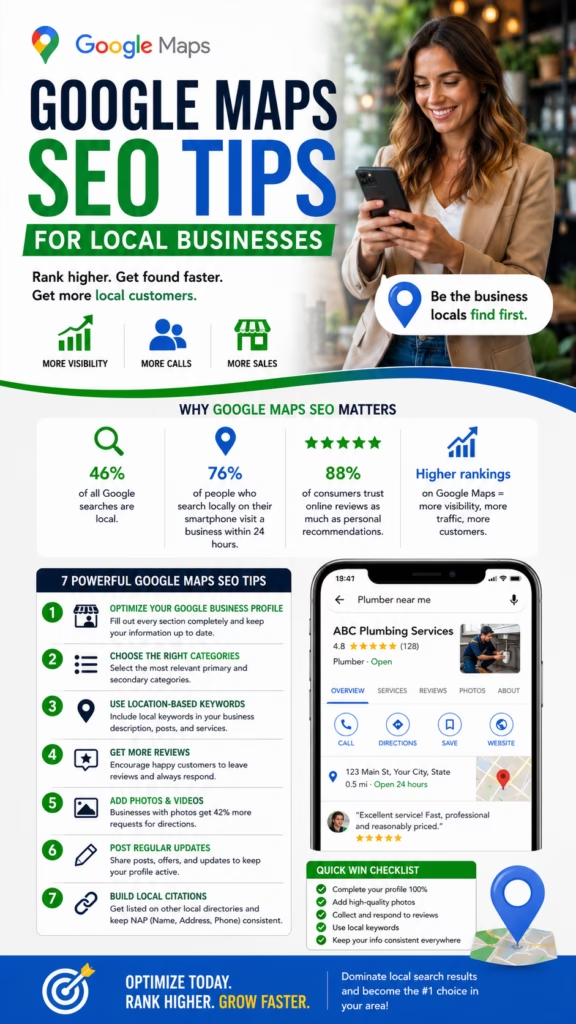
Google Maps SEO Tips for Local Businesses explains how small businesses can improve Google Maps visibility, optimize Google Business Profile, build reviews, add photos, publish updates, strengthen website signals, improve local relevance, and turn nearby searches into calls, visits, bookings, and leads.

Introduction

Google Maps SEO Tips for Local Businesses can help companies become easier to find when nearby customers search for products, services, stores, restaurants, contractors, healthcare providers, professional services, and local solutions. Google Maps is often one of the first places customers compare local options before calling, visiting, booking, or requesting a quote.

Local businesses need more than a basic profile. A strong Google Maps presence requires accurate business information, the right categories, helpful services, strong reviews, real photos, local website content, citations, posts, customer engagement, and consistent tracking.

Google Maps SEO works best when the business clearly proves what it does, where it operates, and why nearby customers should trust it.

Google explains local ranking through relevance, distance, and prominence. Relevance means how well a business matches the search. Distance means how close the business is to the searcher or searched area. Prominence means how well-known and trusted the business appears. A local SEO strategy should support all three.

Whether the business is a plumber, painter, HVAC company, flooring contractor, restaurant, gym, dentist, retail store, landscaper, roofer, cleaner, attorney, salon, or real estate office, Google Maps SEO can help create more visibility and more local customer actions.

Main idea: Google Maps SEO Tips for Local Businesses are about improving relevance, distance clarity, prominence, trust, and conversion.

Table of Contents

  • 1) Why Google Maps SEO matters for local businesses
  • 2) How Google Maps rankings work
  • 3) Optimize Google Business Profile completely
  • 4) Choose the right business categories
  • 5) Add services and products clearly
  • 6) Keep name, address, and phone details consistent
  • 7) Build better Google reviews
  • 8) Respond to reviews professionally
  • 9) Upload real photos and videos
  • 10) Use Google Posts consistently
  • 11) Improve website signals
  • 12) Build strong service pages
  • 13) Create useful city and location pages
  • 14) Build citations and local mentions
  • 15) Improve customer actions
  • 16) Track Google Maps leads
  • 17) Common Google Maps SEO mistakes
  • 18) Google Maps SEO checklist
  • 19) Final thoughts
  • 20) FAQs
  • 21) Extra keywords

1) Why Google Maps SEO Matters for Local Businesses

Google Maps SEO matters because local customers often search when they are close to taking action. Someone searching for “plumber near me,” “best restaurant nearby,” “flooring contractor in my area,” or “dentist open today” may already be ready to call, visit, or book.

When a business ranks better on Google Maps, it can receive more phone calls, direction requests, website clicks, appointment requests, messages, store visits, and quote inquiries. This makes Google Maps one of the most important local visibility channels for many businesses.

Google Maps SEO can help local businesses generate:

  • Phone calls
  • Direction requests
  • Website visits
  • Messages
  • Appointment bookings
  • Quote requests
  • Store visits
  • Restaurant visits
  • Service calls
  • Local sales opportunities

Google Maps SEO helps local businesses turn nearby search intent into real customer actions.

2) How Google Maps Rankings Work

Google Maps rankings are mainly influenced by relevance, distance, and prominence. Relevance is how well the business matches the search. Distance is how close the business is to the customer or searched location. Prominence is how trusted, known, and established the business appears.

A local business should not rely on one ranking trick. The best strategy improves the entire local presence: Google Business Profile, reviews, photos, website content, service pages, citations, local mentions, and customer engagement.

Core local ranking factors:
Relevance
Distance
Prominence
Google Business Profile completeness
Business categories
Services and products
Reviews
Photos
Website content
Citations
Local mentions
Customer actions

Strong Google Maps SEO improves the signals Google and customers use to evaluate a local business.

3) Optimize Google Business Profile Completely

Google Business Profile is the foundation of Google Maps SEO. It gives Google and customers essential information about the business, including name, location, phone number, website, hours, categories, services, products, photos, reviews, and updates.

A complete profile helps Google understand the business better and helps customers decide whether to take action. Missing details can reduce trust and make the business look less active.

Google Business Profile checklist:

  • Correct business name
  • Accurate address or service area
  • Correct phone number
  • Website link
  • Updated hours
  • Primary category
  • Secondary categories
  • Services and products
  • Photos and posts
  • Reviews and Q&A

A complete Google Business Profile gives customers and Google clearer reasons to trust the business.

4) Choose the Right Business Categories

Categories help Google understand what kind of business you operate. The primary category should describe the main business as accurately as possible. Secondary categories can support additional services, but they should only be used when they are truly relevant.

Wrong categories can attract poor-fit leads or confuse Google. A plumber, painter, restaurant, dentist, flooring company, gym, salon, or attorney should choose categories that match real services and real customer searches.

Category tips:
Choose the most accurate primary category
Add relevant secondary categories
Avoid unrelated categories
Match categories to real services
Review competitors carefully
Keep categories aligned with website content
Update categories when services change
Avoid keyword stuffing business names
Use services for extra detail
Keep the profile accurate

The right categories help Google connect the business with the right local searches.

5) Add Services and Products Clearly

Services and products help Google and customers understand what the business offers. A service business can list repair, installation, estimates, inspections, consultations, maintenance, and emergency services. A retail business can list product categories, brands, delivery options, or featured items.

Adding specific services and products can improve relevance for searches that are more detailed than the business category alone.

Examples of useful services and products:

  • AC repair
  • Interior painting
  • Flooring installation
  • Drain cleaning
  • Lawn maintenance
  • Dental cleaning
  • Personal training
  • Mattress delivery
  • Lunch specials
  • Free consultations

Detailed services and products make the profile more useful and more relevant to specific searches.

6) Keep Name, Address, and Phone Details Consistent

NAP stands for name, address, and phone number. Consistent NAP details help Google and customers trust the business information. If the business has different phone numbers, old addresses, duplicate listings, or inconsistent names across the web, it can create confusion.

Local businesses should keep their business name, address, phone number, website, and hours accurate across Google Business Profile, the website, directories, social profiles, and major citation sources.

NAP consistency checklist:
Correct business name
Correct address
Correct phone number
Correct website URL
Consistent business hours
Accurate service areas
Updated holiday hours
No duplicate profiles
No old addresses
No outdated phone numbers

Accurate business information reduces friction for customers who want to call, visit, or book.

7) Build Better Google Reviews

Reviews are one of the strongest trust signals for local businesses. Customers often compare reviews before choosing who to call or visit. Strong, recent, detailed reviews can improve customer confidence and support prominence.

Businesses should ask satisfied customers for reviews in a simple, honest way. The best reviews mention specific services, products, locations, team members, and outcomes. Review growth should be natural and consistent.

Review signals to build:

  • Review count
  • Review rating
  • Review freshness
  • Service-specific details
  • Location mentions
  • Staff or team mentions
  • Customer outcome details
  • Review response quality
  • Consistent review growth
  • Authentic customer sentiment

Reviews help local businesses build trust before the customer ever calls or visits.

8) Respond to Reviews Professionally

Responding to reviews shows customers that the business is active and cares about feedback. Positive review responses should be thankful and professional. Negative review responses should be calm, respectful, and focused on resolution.

Review responses also help future customers evaluate the business. A professional response can strengthen trust even when the review is not perfect.

Review response tips:
Thank the customer
Mention the service naturally
Stay professional
Do not argue
Address concerns calmly
Invite offline follow-up if needed
Respond consistently
Use a human tone
Avoid keyword stuffing
Keep responses concise

Review responses are not only for the reviewer. They are also for future customers comparing businesses.

9) Upload Real Photos and Videos

Photos and videos help customers understand the business visually. They can show products, services, staff, projects, storefronts, vehicles, menus, results, facilities, and customer experiences.

Real images usually build more trust than generic stock photos. A contractor can upload project photos, a restaurant can upload food photos, a retail store can upload product displays, and a service business can upload team and vehicle images.

Photo and video ideas:

  • Exterior storefront photos
  • Interior business photos
  • Team photos
  • Product photos
  • Before-and-after project photos
  • Service vehicle photos
  • Menu or food photos
  • Customer experience photos
  • Short walkthrough videos
  • Seasonal update images

Real photos make the profile feel more active, trustworthy, and useful.

10) Use Google Posts Consistently

Google Posts allow businesses to share updates, offers, events, service highlights, product announcements, and seasonal reminders directly on the Google Business Profile. Posts can help keep the profile active and give customers more reasons to engage.

Posts should be useful and customer-focused. They can promote seasonal services, new products, limited offers, recent projects, helpful tips, or appointment availability.

Google Post ideas:
Seasonal service reminder
Special offer
New product announcement
Recent project highlight
Before-and-after update
Appointment availability
Event announcement
FAQ-style post
Customer review spotlight
Holiday hours update

Google Posts help keep the profile fresh, useful, and connected to current customer needs.

11) Improve Website Signals

The website connected to Google Business Profile should support the same services, locations, and trust signals shown on the profile. A strong website can help explain the business in more detail and turn profile visitors into customers.

The website should load quickly, work well on mobile, include clear contact details, and have pages for important services or locations. Customers should not have to hunt for the phone number or booking option.

Website signals that support local SEO:

  • Service pages
  • Location pages
  • Consistent contact information
  • Click-to-call buttons
  • Contact forms
  • Reviews and testimonials
  • Project or product photos
  • Local FAQs
  • Schema markup
  • Fast mobile performance

A strong website reinforces the same relevance and trust signals as the Google Business Profile.

12) Build Strong Service Pages

Service pages help local businesses rank for specific searches. Instead of relying on one general homepage, businesses should create pages for their most important services. A plumber might have drain cleaning, leak repair, and water heater pages. A painter might have interior painting, exterior painting, and cabinet painting pages.

Each service page should be useful, detailed, and connected to customer intent. It should explain the service, common problems, process, photos, FAQs, reviews, and next step.

Strong service page elements:
Clear service title
Problem solved
Service details
Process overview
Project photos
FAQs
Reviews or testimonials
Service-area details
Call-to-action
Internal links

Service pages help Google and customers understand what the business actually does.

13) Create Useful City and Location Pages

City and location pages can help businesses build local relevance in target areas. These pages should be unique and useful. Copying the same page and swapping city names is weak and can hurt user experience.

A strong city page includes services offered in that area, local context, project examples, customer reviews, FAQs, nearby neighborhoods, and a clear call-to-action.

A strong city page includes:

  • City-specific heading
  • Services offered in that city
  • Local project examples
  • Customer reviews
  • Photos from nearby work
  • Neighborhood references
  • Local FAQs
  • Service-area details
  • Clear CTA
  • Internal links to services

Location pages work best when they are genuinely helpful for customers in that area.

14) Build Citations and Local Mentions

Citations are mentions of the business name, address, phone number, and website across directories and local platforms. Local mentions can come from chamber pages, sponsorships, community websites, local news, industry directories, supplier pages, and partner websites.

Consistent citations help reinforce that the business is real and established. Incorrect details can create confusion, so quality and accuracy matter more than random quantity.

Useful citation and mention sources:
Google Business Profile
Bing Places
Apple Business Connect
Yelp
BBB if applicable
Chamber of commerce
Industry directories
Local directories
Supplier pages
Community sponsorship pages
Local news mentions
Partner websites

Citations and local mentions support prominence by showing that the business exists beyond its own website.

15) Improve Customer Actions

Customer actions show whether people find the profile useful. These actions may include calls, website clicks, direction requests, messages, bookings, product views, menu views, photo views, and appointment requests.

Businesses can improve customer actions by making the profile complete, adding strong photos, keeping hours accurate, responding to reviews, and making calls-to-action clear.

Customer actions to improve:

  • Phone calls
  • Website clicks
  • Direction requests
  • Messages
  • Bookings
  • Quote requests
  • Photo views
  • Product views
  • Menu views
  • Store visits

Google Maps SEO should create measurable customer actions, not just profile views.

16) Track Google Maps Leads

Tracking helps businesses understand whether Google Maps SEO is creating real results. Rankings are useful, but the final goal is calls, bookings, visits, estimates, sales, and revenue.

Businesses should track Google Business Profile calls, website clicks, direction requests, messages, booked appointments, store visits, quote requests, and closed sales when possible.

Track these Google Maps metrics:
Profile views
Search views
Map views
Phone calls
Website clicks
Direction requests
Messages
Bookings
Quote requests
Store visits
Review growth
Top search queries
Ranking movement
Lead quality
Closed sales

The best local SEO strategy tracks both visibility and business outcomes.

17) Common Google Maps SEO Mistakes

Many local businesses underperform because their Google Business Profile is incomplete, outdated, or inconsistent. Common mistakes include wrong categories, missing services, old hours, weak photos, few reviews, no review responses, duplicate listings, thin website content, and poor tracking.

Most mistakes are fixable. A regular audit can help find profile gaps, website issues, citation errors, and conversion problems.

Common mistakes include:

  • Wrong primary category
  • Missing services or products
  • Old business hours
  • Incorrect phone number
  • Weak photos
  • No review strategy
  • No review responses
  • Duplicate profiles
  • Thin website pages
  • No lead tracking

Google Maps SEO fails when businesses treat the profile like a one-time setup instead of an active local marketing asset.

18) Google Maps SEO Checklist

A simple checklist can help local businesses stay organized. Google Maps SEO is not a one-time task. It should be reviewed regularly as services, hours, photos, reviews, offers, and locations change.

Google Maps SEO checklist:
Verify Google Business Profile
Complete all profile details
Choose accurate categories
Add services and products
Update hours
Add photos and videos
Publish Google Posts
Ask for reviews
Respond to reviews
Fix citation errors
Improve website pages
Create service pages
Create useful location pages
Track calls and leads
Review performance monthly

Consistent optimization helps local businesses stay more visible, trusted, and ready for customer action.

19) Final Thoughts

Google Maps SEO Tips for Local Businesses are about building a stronger local presence where customers are already searching. A strong Google Maps strategy includes Google Business Profile optimization, accurate categories, services, reviews, photos, posts, website content, citations, location pages, customer actions, and tracking.

The businesses that win on Google Maps are usually the ones that look relevant, trusted, active, local, and easy to contact. A complete profile is important, but it works best when supported by a strong website, real reviews, useful content, and consistent customer experience.

Final takeaway: Google Maps SEO helps local businesses turn nearby search visibility into calls, visits, appointments, quote requests, and sales.

20) FAQs

1) What is Google Maps SEO?

Google Maps SEO is the process of improving a business’s visibility in Google Maps and local search results through Google Business Profile, reviews, website content, citations, and local signals.

2) Why does Google Maps SEO matter for local businesses?

It matters because nearby customers often search Google Maps before calling, visiting, booking, or buying.

3) What are the main Google local ranking factors?

Google says local rankings are mainly based on relevance, distance, and prominence.

4) What is relevance in Google Maps SEO?

Relevance means how well a business matches what the searcher is looking for.

5) What is distance in Google Maps SEO?

Distance means how close the business is to the searcher or the searched location.

6) What is prominence in Google Maps SEO?

Prominence means how well-known, trusted, reviewed, and established the business appears.

7) How do I optimize Google Business Profile?

Complete all business details, choose accurate categories, add services, upload photos, post updates, collect reviews, and keep information current.

8) Do categories matter for Google Maps rankings?

Yes. Categories help Google understand what kind of business you operate and which searches you should match.

9) Should I add services and products?

Yes. Services and products help customers and Google understand what the business offers.

10) Do reviews help Google Maps SEO?

Reviews can support trust, prominence, and customer decision-making.

11) Should I respond to reviews?

Yes. Professional review responses show that the business is active and values customer feedback.

12) Do photos help Google Maps SEO?

Photos can improve trust and engagement by showing the business, products, services, projects, or customer experience.

13) Should I use Google Posts?

Yes. Google Posts can keep the profile active and promote offers, updates, services, events, and seasonal reminders.

14) What is NAP consistency?

NAP consistency means the business name, address, and phone number are accurate across Google, the website, and directories.

15) Do citations still matter?

Citations can support local trust and prominence when they are accurate and consistent.

16) Can a website help Google Maps rankings?

Yes. A strong website reinforces services, locations, trust, content depth, and conversion paths.

17) Should local businesses create service pages?

Yes. Service pages help explain specific offerings and support relevant local searches.

18) Should local businesses create city pages?

Yes, when useful and unique. City pages should provide real local value and not be copied templates with only city names changed.

19) How often should I update Google Business Profile?

Update the profile whenever hours, services, photos, offers, locations, or business details change.

20) How do I track Google Maps SEO results?

Track calls, website clicks, direction requests, messages, bookings, quote requests, visits, rankings, reviews, and closed sales.

21) What is the biggest Google Maps SEO mistake?

The biggest mistake is leaving the profile incomplete, outdated, or unsupported by a strong website and review strategy.

22) Can service-area businesses rank on Google Maps?

Yes. Service-area businesses can rank locally when their profile, website, reviews, and service-area signals are strong and accurate.

23) How long does Google Maps SEO take?

Results vary by competition, profile strength, website quality, reviews, citations, and consistency. Local SEO usually improves over time.

24) Can Google Maps SEO replace paid ads?

No. Google Maps SEO can reduce dependency on ads over time, but paid ads may still be useful for faster visibility or competitive markets.

25) What is the main goal of Google Maps SEO?

The main goal is to turn local search visibility into calls, visits, bookings, quote requests, and real customers.

21) Extra Keywords

  1. Google Maps SEO Tips for Local Businesses
  2. Google Maps SEO
  3. local SEO tips
  4. Google Business Profile optimization
  5. Google Maps ranking
  6. local business SEO
  7. local search optimization
  8. Google local rankings
  9. Google Maps lead generation
  10. Google Business Profile tips
  11. local pack rankings
  12. Google Maps visibility
  13. local SEO checklist
  14. Google reviews SEO
  15. Google Posts for local businesses
  16. local citations
  17. NAP consistency
  18. service-area SEO
  19. city page SEO
  20. service page SEO
  21. local SEO for small businesses
  22. Google Maps marketing
  23. improve Google Maps ranking
  24. local business lead generation
  25. Google Maps SEO checklist

© 2026 Your Brand

Google Maps SEO Tips for Local Businesses Read More »

How Flooring Companies Can Rank on Google Maps

ChatGPT Image Jun 5 2026 01 53 59 PM
How Flooring Companies Can Rank on Google Maps

How Flooring Companies Can Rank on Google Maps

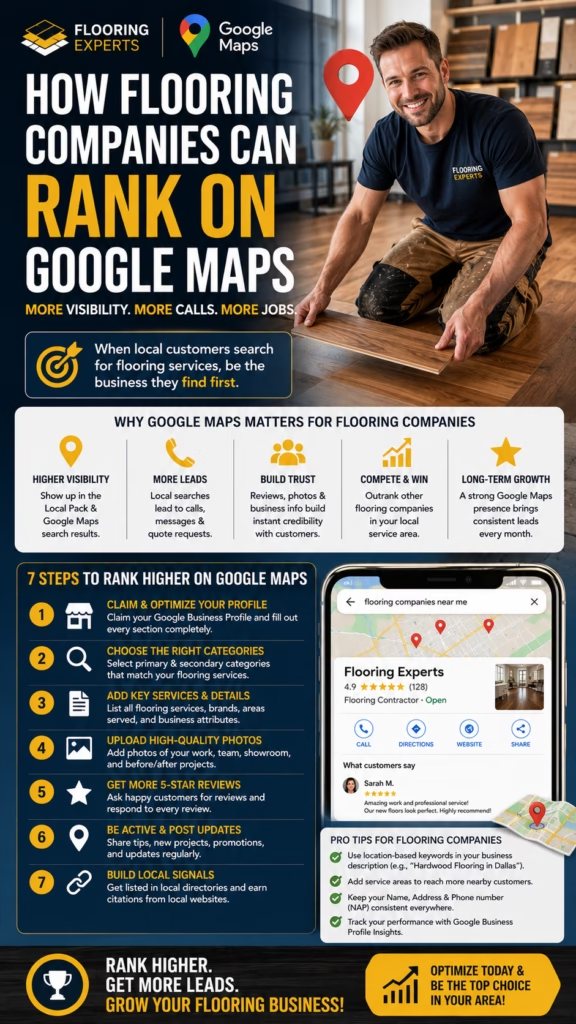
How Flooring Companies Can Rank on Google Maps explains how flooring contractors can improve local visibility, optimize Google Business Profile, rank for flooring installation and repair searches, build stronger reviews, upload project photos, target service areas, and generate more local flooring leads.

Introduction

How Flooring Companies Can Rank on Google Maps is one of the most important topics for flooring contractors that depend on local homeowners, property managers, remodelers, builders, and commercial clients. When someone searches for flooring installation, hardwood flooring, vinyl plank flooring, tile installation, carpet installation, floor repair, laminate flooring, or flooring contractors near me, Google Maps can become one of the first places they compare local companies.

For flooring companies, Google Maps visibility can directly affect phone calls, estimate requests, showroom visits, website clicks, and booked projects. A strong Google Business Profile can help the company appear when nearby customers are ready to compare flooring providers. A weak or incomplete profile can cause the company to lose leads to competitors with better reviews, clearer services, stronger photos, and more complete local signals.

Flooring companies rank better on Google Maps when their profile, website, reviews, photos, services, and local content clearly support the flooring searches customers are making.

Flooring searches are often high intent. A homeowner searching for “vinyl plank flooring installation near me” may be planning a project soon. A property manager searching for “flooring contractor in my area” may need a fast estimate. A business owner searching for “commercial flooring installer” may be comparing qualified providers. Google Maps SEO helps flooring companies appear in those moments.

This guide explains how flooring companies can improve Google Maps rankings with Google Business Profile optimization, accurate categories, flooring services, reviews, project photos, posts, local landing pages, citations, website content, call tracking, and consistent follow-up.

Main idea: How Flooring Companies Can Rank on Google Maps comes down to improving relevance, distance clarity, prominence, trust, and conversion signals.

Table of Contents

  • 1) Why Google Maps SEO matters for flooring companies
  • 2) How Google Maps rankings work
  • 3) Google Business Profile optimization for flooring
  • 4) Choosing the right flooring categories
  • 5) Adding flooring services correctly
  • 6) Flooring keywords that matter
  • 7) Service areas for flooring contractors
  • 8) Reviews and reputation for flooring rankings
  • 9) Project photos that build trust
  • 10) Google Posts for flooring companies
  • 11) Website signals that support Maps rankings
  • 12) Flooring service pages
  • 13) Flooring city pages and local landing pages
  • 14) Citations and local flooring mentions
  • 15) Residential flooring SEO strategy
  • 16) Commercial flooring SEO strategy
  • 17) Tracking Google Maps flooring leads
  • 18) Common Google Maps SEO mistakes
  • 19) Final thoughts
  • 20) FAQs
  • 21) Extra keywords

1) Why Google Maps SEO Matters for Flooring Companies

Google Maps SEO matters for flooring companies because flooring projects are local, visual, and trust-based. Customers want to compare contractors nearby, see examples of past work, read reviews, check service areas, and request estimates. A strong Maps presence can help a flooring business appear when customers are actively searching.

Flooring work also tends to involve larger purchase decisions. A customer may compare multiple companies before choosing who to call. That means the Google Business Profile must make the company look credible, experienced, and easy to contact.

Google Maps SEO can help flooring companies generate:

  • Flooring installation calls
  • Hardwood flooring estimate requests
  • Vinyl plank flooring leads
  • Laminate flooring inquiries
  • Tile installation leads
  • Carpet installation requests
  • Floor repair leads
  • Commercial flooring inquiries
  • Showroom visits
  • Website clicks and form submissions

For flooring companies, Google Maps can turn local search intent into real estimate requests and booked jobs.

2) How Google Maps Rankings Work

Google explains local ranking through relevance, distance, and prominence. Relevance means how well the business matches the search. Distance means how close the business is to the searcher or searched location. Prominence means how well-known, trusted, and established the business appears.

For flooring companies, this means the business needs accurate categories, detailed flooring services, strong reviews, real project photos, consistent business information, and a website that reinforces the same services and locations.

Important Google Maps SEO factors:
Relevance to flooring searches
Distance from searcher or searched city
Prominence and reputation
Google Business Profile completeness
Correct flooring categories
Detailed service list
Review count and quality
Project photos
Website service pages
Local citations
Customer engagement

Flooring companies should optimize for relevance, distance clarity, and prominence instead of chasing one ranking shortcut.

3) Google Business Profile Optimization for Flooring

Google Business Profile is the foundation of Google Maps SEO for flooring companies. It tells Google and customers what the business does, where it operates, when it is open, how to contact it, and why customers trust it.

A flooring company profile should be complete and accurate. The business name should match the real company name. The phone number should be correct. The website should be linked. The hours should be updated. The services should reflect real flooring work. The profile should include flooring photos, posts, reviews, products, services, and service areas.

Flooring Google Business Profile checklist:

  • Correct business name
  • Accurate phone number
  • Website link
  • Updated business hours
  • Primary flooring category
  • Relevant secondary categories
  • Full flooring service list
  • Service areas
  • Project photos
  • Reviews, posts, products, and Q&A

A complete Google Business Profile gives Google and customers clearer reasons to trust the flooring company.

4) Choosing the Right Flooring Categories

Categories help Google understand what kind of business the company is. The primary category should match the main business as closely as possible. Secondary categories can support related services when accurate.

Flooring companies should avoid unrelated categories. Incorrect categories can confuse Google and attract the wrong leads. The categories should match the real services the business provides, such as flooring contractor, flooring store, wood floor installation service, tile contractor, carpet installer, or related categories when appropriate.

Category optimization tips:
Choose the most accurate primary category
Add relevant secondary categories
Avoid unrelated categories
Match categories to real services
Review competitor categories carefully
Keep categories aligned with the website
Update categories when services change
Avoid keyword stuffing in the business name
Use services for more detail
Keep the profile honest and accurate

The right categories help Google connect the flooring company with the right local searches.

5) Adding Flooring Services Correctly

Services help Google and customers understand what the flooring company offers. A profile that only says “flooring contractor” may be less specific than one that lists hardwood installation, vinyl plank installation, laminate flooring, tile installation, carpet installation, floor repair, refinishing, and commercial flooring.

Each service should be real, accurate, and connected to work the company actually performs. Service descriptions can help customers understand project options and request the right estimate.

Flooring services to consider adding:

  • Hardwood flooring installation
  • Luxury vinyl plank installation
  • Laminate flooring installation
  • Tile flooring installation
  • Carpet installation
  • Floor repair
  • Floor refinishing
  • Subfloor repair
  • Commercial flooring
  • Flooring estimates

Detailed services help turn a generic flooring profile into a more relevant local search asset.

6) Flooring Keywords That Matter

Flooring companies should target keywords that match real customer searches. These keywords should appear naturally across the Google Business Profile, website, service pages, reviews, Google Posts, and local landing pages.

The best flooring keywords are specific. A customer searching for vinyl plank installation may have different intent than someone searching for hardwood refinishing or commercial flooring.

Flooring keyword ideas:
Flooring company near me
Flooring contractor near me
Flooring installation near me
Hardwood floor installation
Vinyl plank flooring installation
Luxury vinyl plank installer
Laminate flooring installation
Tile flooring contractor
Carpet installation near me
Floor repair service
Hardwood floor refinishing
Commercial flooring contractor

Specific flooring keywords help the business rank for the services customers are actually searching for.

7) Service Areas for Flooring Contractors

Service areas help customers understand where the flooring company works. Flooring companies often serve multiple cities, towns, neighborhoods, and counties. The Google Business Profile should reflect real service areas without exaggeration.

Adding every city in a region does not automatically create rankings everywhere. Service-area relevance should also be supported by website content, reviews, project examples, local mentions, and real customer activity.

Service-area optimization ideas:

  • List real service cities
  • Add nearby towns honestly
  • Create useful city pages
  • Collect reviews from different areas
  • Publish project examples by city
  • Use consistent contact information
  • Track calls by service area
  • Avoid unrealistic service-area stuffing
  • Match website locations to real coverage
  • Keep service information accurate

Service-area SEO works best when the company supports target cities with real content, reviews, and project proof.

8) Reviews and Reputation for Flooring Rankings

Reviews are a major part of flooring company trust. Customers want to know the installer showed up on time, communicated clearly, completed clean work, respected the home, and delivered a good finished result. Strong reviews can improve customer confidence and support prominence.

Flooring reviews are most helpful when they mention specific services, materials, rooms, cities, team members, and outcomes. Business owners should respond professionally to reviews and thank customers for detailed feedback.

Helpful flooring review signals:
Review count
Review rating
Review freshness
Service-specific review details
City mentions
Material mentions
Installation quality
Clean-up mentions
Team member mentions
Before-and-after satisfaction
Owner responses

Flooring companies should treat reviews as both a ranking asset and a conversion asset.

9) Project Photos That Build Trust

Flooring is visual. Project photos can be one of the strongest parts of a Google Business Profile. Customers want to see finished floors, before-and-after transformations, material quality, clean transitions, stairs, kitchens, living rooms, bathrooms, commercial spaces, and detailed craftsmanship.

Photos should be real, bright, and organized by project type. A profile with strong flooring photos can look much more trustworthy than a competitor with few or generic images.

Flooring photo ideas:

  • Before-and-after flooring projects
  • Hardwood installation photos
  • Vinyl plank installation photos
  • Laminate flooring photos
  • Tile flooring photos
  • Carpet installation photos
  • Stair flooring photos
  • Commercial flooring photos
  • Close-up finish details
  • Showroom or sample displays

Project photos help customers believe the flooring company can deliver the result they want.

10) Google Posts for Flooring Companies

Google Posts allow flooring companies to share updates, offers, project highlights, service reminders, product spotlights, and seasonal content directly on the Google Business Profile. Posts can help keep the profile active and useful for customers.

Flooring companies can post about new flooring options, recent installations, free estimate availability, waterproof flooring, pet-friendly flooring, commercial flooring projects, and before-and-after transformations.

Google Post ideas for flooring:
Recent vinyl plank project
Hardwood installation spotlight
Waterproof flooring options
Pet-friendly flooring ideas
Free estimate availability
Commercial flooring project
Before-and-after floor update
New showroom product arrival
Floor repair service reminder
Seasonal home upgrade promotion

Google Posts help flooring companies keep their profile active, visual, and connected to customer needs.

11) Website Signals That Support Maps Rankings

The website linked from the Google Business Profile should reinforce the same flooring services and locations. A strong website can help Google and customers understand the business in more detail than the profile alone.

The website should include service pages, city pages, project galleries, reviews, FAQs, contact forms, click-to-call buttons, financing details if offered, showroom information if applicable, and clear estimate calls-to-action.

Flooring website signals:

  • Service pages
  • City pages
  • Consistent phone number
  • Project gallery
  • Review sections
  • Material pages
  • Click-to-call buttons
  • Estimate request forms
  • Local schema markup
  • Fast mobile performance

A strong flooring website supports Google Maps rankings by reinforcing relevance, trust, and service-area authority.

12) Flooring Service Pages

Service pages help flooring companies rank for specific flooring searches. Instead of having one general page, the website should include separate pages for major services such as hardwood flooring, vinyl plank flooring, tile flooring, laminate flooring, carpet installation, floor repair, and commercial flooring.

Each service page should explain the service, materials, process, project examples, FAQs, and estimate next step. Thin pages with only a few sentences are usually not enough in competitive markets.

Useful flooring service pages:
Hardwood flooring installation
Luxury vinyl plank installation
Laminate flooring installation
Tile flooring installation
Carpet installation
Floor repair
Hardwood refinishing
Subfloor repair
Commercial flooring
Flooring estimate page

Service pages help Google and customers understand exactly what flooring services the company offers.

13) Flooring City Pages and Local Landing Pages

City pages help flooring companies build relevance in specific service areas. A good city page should be useful and local. It should not be a copied page with only the city name changed.

Strong city pages include service details, local project examples, customer reviews, photos, FAQs, nearby neighborhoods, and a clear estimate call-to-action. They should support real service areas and real customer demand.

A strong flooring city page includes:

  • City-specific heading
  • Services offered in that city
  • Local project examples
  • Flooring material options
  • Customer reviews
  • Photos from nearby jobs
  • Local FAQs
  • Service-area details
  • Estimate request CTA
  • Internal links to service pages

City pages work best when they are genuinely useful for customers in that location.

14) Citations and Local Flooring Mentions

Citations are mentions of the business name, address, phone number, and website across directories and local platforms. Local mentions can also come from chamber pages, supplier pages, contractor directories, community sponsorships, local news, and industry associations.

Consistent citations help reinforce that the business is real and established. Incorrect phone numbers, old addresses, duplicate listings, and inconsistent names can create confusion.

Useful citation sources:
Google Business Profile
Bing Places
Apple Business Connect
Yelp
BBB if applicable
Chamber of commerce
Local directories
Flooring supplier pages
Contractor directories
Home service directories
Community sponsorship pages
Industry associations

Clean citations and local mentions support prominence and help customers find accurate business information.

15) Residential Flooring SEO Strategy

Residential flooring SEO should focus on homeowner intent. Customers may search for flooring installation, material comparisons, waterproof flooring, pet-friendly flooring, kitchen flooring, bathroom flooring, basement flooring, stair flooring, and floor repair.

Residential content should explain options clearly and use project photos to build confidence. Homeowners want to know what flooring fits their space, budget, lifestyle, and timeline.

Residential flooring content ideas:

  • Best flooring for kitchens
  • Best flooring for bathrooms
  • Pet-friendly flooring options
  • Waterproof flooring guide
  • Vinyl plank versus laminate
  • Hardwood installation process
  • Basement flooring options
  • Stair flooring updates
  • Floor repair signs
  • Home flooring estimate guide

Residential flooring SEO should help homeowners choose materials and request estimates with confidence.

16) Commercial Flooring SEO Strategy

Commercial flooring SEO should target businesses, offices, retail spaces, restaurants, rental properties, apartment buildings, property managers, and builders. Commercial customers often care about durability, scheduling, safety, minimal disruption, and long-term value.

Commercial flooring pages should include project examples, material options, scheduling details, and industries served. Reviews and photos from commercial jobs can help build trust.

Commercial flooring targets:
Office flooring
Retail flooring
Restaurant flooring
Apartment flooring
Rental property flooring
Property manager flooring
Commercial vinyl flooring
Commercial tile flooring
High-traffic flooring
Business flooring installation

Commercial flooring SEO should speak to decision-makers who need reliable scheduling and durable results.

17) Tracking Google Maps Flooring Leads

Tracking helps flooring companies understand whether Google Maps SEO is producing real results. Rankings are useful, but the final goal is calls, estimate requests, showroom visits, booked projects, and revenue.

Flooring companies should track Google Business Profile calls, website clicks, direction requests, form submissions, booked estimates, project types, service areas, average job value, and closed revenue.

Track these flooring Google Maps metrics:

  • Profile views
  • Map views
  • Search views
  • Phone calls
  • Website clicks
  • Direction requests
  • Messages
  • Estimate requests
  • Showroom visits
  • Booked projects
  • Project type
  • Revenue by lead source

The best flooring SEO strategy measures both visibility and booked revenue.

18) Common Google Maps SEO Mistakes

Many flooring companies lose local visibility because their profiles are incomplete, outdated, or inconsistent. Common mistakes include weak categories, missing services, few photos, no review strategy, outdated hours, thin website pages, duplicate profiles, and no service-area content.

These issues can reduce trust and make the company less competitive. A regular audit can help find and fix problems before competitors win the local search traffic.

Common flooring Google Maps SEO mistakes:
Wrong primary category
Missing flooring services
No service-area strategy
Weak review profile
No review responses
Few project photos
Outdated hours
Thin website content
No flooring service pages
No city pages
Duplicate profiles
Inconsistent citations
No lead tracking

Google Maps SEO fails when flooring companies treat the profile like a static listing instead of an active lead generation asset.

19) Final Thoughts

How Flooring Companies Can Rank on Google Maps is about building a stronger local presence where customers are already searching. Flooring companies can improve visibility by optimizing Google Business Profile, choosing accurate categories, adding detailed services, building reviews, uploading project photos, publishing posts, improving website pages, and tracking leads.

The flooring companies that win in Google Maps are usually the ones that look relevant, trusted, active, local, and easy to contact. A complete profile alone is not enough. The profile, website, reviews, service pages, citations, photos, and customer experience should all work together.

Final takeaway: Flooring companies can rank on Google Maps by strengthening relevance, distance clarity, prominence, project proof, and customer trust.

20) FAQs

1) How can flooring companies rank on Google Maps?

Flooring companies can rank on Google Maps by optimizing Google Business Profile, choosing accurate categories, adding services, building reviews, uploading project photos, creating service pages, and improving local signals.

2) What are the main Google Maps ranking factors?

Google says local rankings are mainly based on relevance, distance, and prominence.

3) Why does Google Business Profile matter for flooring companies?

It helps Google and customers understand the company’s services, location, hours, reviews, photos, and contact options.

4) What category should a flooring company use?

The company should choose the most accurate primary flooring-related category available and add relevant secondary categories that match real services.

5) Should flooring companies add services to GBP?

Yes. Services such as hardwood installation, vinyl plank installation, tile installation, carpet installation, and floor repair help improve relevance.

6) Do reviews help flooring companies rank?

Reviews can support trust, prominence, and customer decision-making. Review quality, quantity, freshness, and responses all matter.

7) Should flooring companies respond to reviews?

Yes. Review responses show professionalism and help customers see that the company is active and engaged.

8) What photos should flooring companies upload?

They should upload before-and-after photos, finished floor projects, material examples, showroom photos, installation photos, and close-up detail shots.

9) Do Google Posts help flooring companies?

Google Posts can help keep the profile active and promote project highlights, service updates, offers, and flooring education.

10) Should flooring companies create service pages?

Yes. Service pages help explain hardwood, vinyl plank, laminate, tile, carpet, repair, refinishing, and commercial flooring services.

11) Should flooring companies create city pages?

Yes, when done properly. City pages should be unique, useful, and supported by real service-area relevance.

12) What flooring keywords should be targeted?

Important keywords include flooring contractor near me, flooring installation, hardwood floor installation, vinyl plank flooring, tile flooring, carpet installation, and floor repair.

13) How can flooring companies rank for vinyl plank flooring?

They should create vinyl plank service content, add the service to GBP, upload vinyl plank project photos, and collect reviews mentioning the service.

14) How can flooring companies rank for hardwood flooring?

They should optimize hardwood flooring pages, add hardwood services, upload project photos, and collect hardwood-related reviews.

15) Can commercial flooring companies rank on Google Maps?

Yes. Commercial flooring companies can rank by optimizing commercial service pages, adding commercial services, collecting reviews, and publishing project proof.

16) Do citations matter for flooring SEO?

Yes. Accurate citations help reinforce business information and local prominence.

17) What is NAP consistency?

NAP consistency means the business name, address, and phone number are accurate across Google, the website, and directories.

18) Can a website improve Google Maps rankings?

Yes. A strong website can reinforce services, locations, trust, project examples, and conversion opportunities.

19) How often should flooring companies update GBP?

They should update it whenever hours, services, photos, offers, service areas, or business details change.

20) How should flooring companies track Maps leads?

They should track calls, website clicks, direction requests, messages, estimate requests, showroom visits, booked projects, and revenue.

21) What is the biggest Google Maps SEO mistake for flooring companies?

The biggest mistake is treating the profile as a static listing instead of an active local SEO and lead generation asset.

22) How long does Google Maps SEO take?

Results vary based on competition, profile strength, website quality, reviews, service areas, and consistency. Local SEO usually improves over time.

23) Can service-area flooring companies rank?

Yes. Service-area flooring companies can rank locally when their profile, website, reviews, and service-area signals are strong and accurate.

24) Should flooring companies upload before-and-after photos?

Yes. Before-and-after photos can build trust and show the value of the flooring work.

25) What is the main goal of Google Maps SEO for flooring companies?

The main goal is to turn local flooring searches into qualified calls, estimate requests, showroom visits, and booked flooring projects.

21) Extra Keywords

  1. How Flooring Companies Can Rank on Google Maps
  2. flooring Google Maps SEO
  3. flooring local SEO
  4. flooring company Google Business Profile
  5. flooring contractor SEO
  6. Google Maps ranking for flooring companies
  7. flooring leads
  8. flooring installation SEO
  9. hardwood flooring SEO
  10. vinyl plank flooring SEO
  11. tile flooring SEO
  12. carpet installation SEO
  13. floor repair SEO
  14. commercial flooring SEO
  15. flooring contractor near me SEO
  16. flooring company local rankings
  17. flooring Google reviews
  18. flooring project photos
  19. flooring service pages
  20. flooring city pages
  21. flooring citation building
  22. flooring Maps optimization
  23. flooring lead generation
  24. flooring SEO checklist
  25. flooring company local marketing

© 2026 Your Brand

How Flooring Companies Can Rank on Google Maps Read More »

Google Maps Optimization for Fence Contractors

ChatGPT Image Jun 5 2026 01 53 42 PM
Google Maps Optimization for Fence Contractors

Google Maps Optimization for Fence Contractors

Google Maps Optimization for Fence Contractors explains how local fence companies can use Google Business Profile optimization, service-area keywords, reviews, citations, project photos, city pages, fence installation content, and fast follow-up to generate more local fence leads.

Introduction

Google Maps Optimization for Fence Contractors is one of the most powerful ways for fence companies to generate local leads because most homeowners search nearby when they need fence installation, fence repair, privacy fencing, wood fencing, vinyl fencing, chain link fencing, aluminum fencing, gate repair, or commercial fence work.

Fence customers often have strong buying intent. They may need a new backyard fence, a privacy fence after moving into a home, a pet fence, a pool safety fence, a replacement fence after storm damage, or a repair before selling a property. When they search on Google, they usually compare the fence contractors visible inside the Google Maps results.

Fence contractors win on Google Maps when their profile is complete, trusted, photo-rich, locally relevant, review-driven, and supported by strong website SEO.

Ranking higher on Google Maps is not just about having a profile. It requires a complete local SEO system. That system includes Google Business Profile optimization, accurate business information, strong categories, service-area setup, reviews, project photos, city pages, fence service pages, citations, backlinks, and ongoing activity.

A fence contractor with a basic profile may get occasional calls. A fence contractor with a complete Google Maps optimization strategy can attract more searches for “fence company near me,” “fence installation near me,” “privacy fence contractor,” “wood fence installation,” “vinyl fence company,” “chain link fence repair,” and “gate installation near me.”

Main idea: Google Maps Optimization for Fence Contractors is about turning local search visibility into phone calls, estimate requests, and booked fence jobs.

Table of Contents

  • 1) Why Google Maps matters for fence contractors
  • 2) What Google Maps optimization means for fence companies
  • 3) How fence customers search locally
  • 4) Optimizing the Google Business Profile
  • 5) Choosing the right business categories
  • 6) Writing a strong fence contractor business description
  • 7) Building service-area relevance
  • 8) Fence contractor keywords that help rankings
  • 9) Photos and project proof for fence contractors
  • 10) Reviews and reputation strategy
  • 11) Local citations and directory consistency
  • 12) Website SEO for Google Maps support
  • 13) City pages for fence contractors
  • 14) Service pages for fence installation leads
  • 15) Google Business Profile posts
  • 16) Local backlinks for fence contractors
  • 17) Tracking Google Maps calls and leads
  • 18) Common Google Maps mistakes
  • 19) 90-day Google Maps optimization plan
  • 20) Final thoughts
  • 21) FAQs
  • 22) Extra keywords

1) Why Google Maps Matters for Fence Contractors

Google Maps matters for fence contractors because fence installation and repair are local services. Homeowners usually want a contractor who works nearby, understands local property styles, responds quickly, and can provide an estimate without delay.

When a homeowner searches for a fence company, the Google Maps section often appears before organic website results. This means the companies with stronger profiles, better reviews, better photos, and stronger local relevance can win the first call.

Google Maps can help fence contractors generate:

  • Fence installation estimate requests
  • Privacy fence leads
  • Wood fence installation calls
  • Vinyl fence leads
  • Chain link fence repair inquiries
  • Aluminum fence installation leads
  • Gate repair appointments
  • Pool fence estimate requests
  • Commercial fencing leads
  • Storm damage fence repair jobs

Google Maps puts fence contractors in front of local customers who are actively looking for estimates.

2) What Google Maps Optimization Means for Fence Companies

Google Maps optimization means improving the signals that help a fence company appear more prominently in local Google search results. These signals include relevance, proximity, prominence, reviews, profile completeness, website quality, citations, local backlinks, and activity.

For fence companies, optimization should make it clear that the business provides fence installation, fence repair, gate installation, privacy fences, wood fences, vinyl fences, chain link fences, aluminum fences, and commercial fencing in specific local service areas.

Core Google Maps optimization signals:
Google Business Profile optimization
Correct business name, address, and phone
Primary and secondary categories
Service-area setup
Fence installation keywords
Fence repair keywords
Customer reviews
Review replies
Project photos
Google posts
Website service pages
City landing pages
Local citations
Local backlinks
Consistent NAP information
Lead response speed

Google Maps optimization helps Google and customers understand why your fence company is a trusted local choice.

3) How Fence Customers Search Locally

Fence customers search in many different ways. Some search broad phrases like “fence company near me.” Others search based on the material, project type, repair need, or location.

A strong fence contractor SEO strategy should target broad fence searches and specific fence searches. This helps the company appear for more job types and more buyer-intent searches.

Common fence search patterns include:

  • fence company near me
  • fence contractor near me
  • fence installation near me
  • privacy fence contractor
  • wood fence installation
  • vinyl fence installation
  • chain link fence repair
  • aluminum fence company
  • gate repair near me
  • commercial fence contractor

The best Google Maps strategy matches the exact terms customers use when they are ready to request a fence estimate.

4) Optimizing the Google Business Profile

The Google Business Profile is the foundation of Google Maps optimization for fence contractors. It should be complete, accurate, active, and focused on the fence services the business wants to rank for.

Fence contractors should update every major profile section, including business information, categories, services, service areas, description, hours, website link, photos, posts, and reviews.

Google Business Profile optimization checklist:
Correct business name
Correct phone number
Correct website link
Accurate business hours
Primary category selected
Secondary categories selected
Service areas added
Fence services added
Business description written
Logo uploaded
Cover photo uploaded
Project photos uploaded
Reviews requested
Review replies posted
Google posts published
Quote link added if available
Messaging or call tracking configured

A complete profile helps fence customers quickly understand what you do, where you work, and how to request an estimate.

5) Choosing the Right Business Categories

Business categories are one of the most important Google Business Profile settings. Fence contractors should choose the most relevant primary category available and only add secondary categories that honestly match the business.

The category should support the main service. If the company primarily installs fences, the profile should clearly reflect fence contracting and fence installation.

Possible category themes for fence contractors may include:

  • Fence contractor
  • Fence supply store when applicable
  • Deck builder when applicable
  • Railing contractor when applicable
  • Gate installation service when applicable
  • General contractor only when truly relevant
  • Landscaper only when truly relevant

Do not choose unrelated categories just to chase rankings. Relevance matters more than category stuffing.

6) Writing a Strong Fence Contractor Business Description

The business description should explain what the fence company does, where it works, and what types of fence projects it handles. The description should include natural keywords without sounding spammy.

A strong description should mention installation, repair, replacement, fence materials, gates, service areas, residential work, commercial work if applicable, and the estimate process.

Example description structure:
[Company Name] provides professional fence installation and fence repair services in [City] and surrounding areas. We help homeowners and businesses with privacy fences, wood fences, vinyl fences, chain link fences, aluminum fences, gates, fence replacement, storm damage repair, and custom fence projects. Contact us for reliable local service, quality workmanship, and a clear fence estimate.

The description should make it obvious that the company handles fence projects in the customer’s local area.

7) Building Service-Area Relevance

Many fence contractors serve multiple towns, neighborhoods, and counties. Google Maps optimization works better when the business clearly communicates its real service area across the profile, website, citations, reviews, and content.

Service-area relevance should be built naturally. The goal is to show where the company works, not to stuff city names into every sentence.

Service-area optimization can include:

  • Main city targeting
  • Nearby city mentions
  • County-level relevance
  • Neighborhood references
  • City-specific landing pages
  • Local project photos
  • Reviews mentioning city and fence type
  • Local citations
  • Google posts about local fence projects
  • Website content for each major service area

Google Maps visibility improves when the business consistently proves it serves the locations it wants to rank in.

8) Fence Contractor Keywords That Help Rankings

Fence contractor keywords should match real customer searches. A good keyword strategy includes broad keywords, material-specific keywords, repair keywords, commercial keywords, and city-based keywords.

These keywords should appear naturally in website content, Google Business Profile services, Google posts, photo context, headings, FAQs, and reviews.

High-value fence contractor keywords:
fence contractor
fence company
fence company near me
fence installation
fence installation near me
privacy fence installation
wood fence installation
vinyl fence installation
chain link fence installation
chain link fence repair
aluminum fence contractor
gate installation
gate repair
fence repair
fence replacement
residential fence contractor
commercial fence contractor
pool fence installation
backyard fence installation
local fence contractor

Keyword strategy works best when it reflects the exact fence services customers are ready to buy.

9) Photos and Project Proof for Fence Contractors

Photos are extremely important for fence contractors because customers want to see finished work before calling. A profile with real fence project photos usually feels more trustworthy than a profile with stock images or no photos.

Fence contractors should upload before-and-after photos, finished fences, gates, crew photos, trucks, equipment, wood fences, vinyl fences, chain link fences, aluminum fences, and commercial fence projects.

Best photo types for fence contractor SEO:

  • Finished fence installations
  • Before-and-after fence projects
  • Privacy fence photos
  • Wood fence photos
  • Vinyl fence photos
  • Chain link fence photos
  • Aluminum fence photos
  • Gate installation photos
  • Commercial fencing projects
  • Branded truck and crew photos

Real project photos help homeowners trust the fence contractor before the first phone call.

10) Reviews and Reputation Strategy

Reviews are one of the strongest trust signals for fence contractors. A homeowner is more likely to call a fence company with strong reviews, recent reviews, detailed reviews, and professional owner responses.

The best reviews mention the fence type, city, and customer experience. For example, a review that mentions “privacy fence installation in Fort Worth” gives stronger local and service context than a generic review.

Good review request prompt:
Thanks again for choosing us for your fence project. If you were happy with the work, would you mind leaving a quick Google review? Mentioning the type of fence we helped with, like privacy fence, wood fence, vinyl fence, chain link fence, or gate repair, is always appreciated.

Detailed reviews help customers and Google understand what fence services the company is trusted for.

11) Local Citations and Directory Consistency

Local citations are business listings across the web that include the company name, phone number, website, category, and service information. Citations help reinforce business consistency and local trust.

Fence contractors should make sure their business information is consistent across major directories, local directories, contractor directories, chamber listings, and industry-related sites.

Citation consistency should include:

  • Same business name
  • Same phone number
  • Same website URL
  • Correct business category
  • Consistent service area
  • Accurate business hours
  • Updated description
  • Updated logo
  • Updated photos
  • No duplicate listings

Inconsistent citations can confuse search engines. Clean citations help strengthen local trust.

12) Website SEO for Google Maps Support

The website supports Google Maps rankings by giving Google more information about the company’s services, locations, experience, and trust signals. A strong website can help the Google Business Profile perform better.

A fence contractor website should include service pages, city pages, project photos, reviews, calls to action, clear contact information, fast loading speed, and content that explains each fence service.

Website pages fence contractors should consider:
Home page
Fence installation page
Fence repair page
Privacy fence page
Wood fence page
Vinyl fence page
Chain link fence page
Aluminum fence page
Gate installation page
Commercial fencing page
Service area pages
About page
Contact page
Reviews page
Project gallery
FAQ page

A strong website gives Google more proof that the business is relevant for fence searches in the local area.

13) City Pages for Fence Contractors

City pages help fence contractors rank for searches in nearby service areas. Each city page should be unique, useful, and written for a real location the company serves.

A city page should not be copied with only the city name changed. It should include service details, local project examples, neighborhoods when relevant, fence types, and a clear estimate call to action.

A strong fence contractor city page should include:

  • City-specific title
  • Local fence installation introduction
  • Fence services offered in that city
  • Nearby neighborhoods or areas
  • Fence material options
  • Local project photos if available
  • Review snippets when available
  • City-specific FAQs
  • Clear phone number
  • Quote request form

City pages help fence contractors expand visibility beyond the main business location.

14) Service Pages for Fence Installation Leads

Service pages help fence contractors rank for specific types of fence jobs. Not every customer searches “fence contractor.” Some search for “wood fence installation,” “vinyl fence company,” “chain link fence repair,” or “gate installation.”

Each service page should explain the fence type, benefits, ideal use cases, installation process, repair options, and how to request an estimate.

High-value fence contractor service pages:
Fence Installation
Fence Repair
Privacy Fence Installation
Wood Fence Installation
Vinyl Fence Installation
Chain Link Fence Installation
Aluminum Fence Installation
Gate Installation
Gate Repair
Pool Fence Installation
Commercial Fence Installation
Fence Replacement

Service pages help capture specific searches from homeowners who already know what type of fence they need.

15) Google Business Profile Posts

Google Business Profile posts help keep the profile active and give customers more reasons to call. Fence contractors can post about seasonal availability, privacy fence estimates, storm damage repair, gate installation, new fence projects, and completed local jobs.

Posts should be simple, local, and action-focused. They should include a clear call to request an estimate or call the business.

Google post ideas for fence contractors:

  • Privacy fence estimate openings
  • Wood fence installation projects
  • Vinyl fence installation reminders
  • Chain link fence repair availability
  • Gate repair service
  • Storm damage fence repair
  • Backyard fence installation
  • Pool fence installation
  • Commercial fencing projects
  • Seasonal fence replacement offers

Active Google posts make the fence company profile look current, helpful, and ready for new estimates.

16) Local Backlinks for Fence Contractors

Local backlinks are links from other websites that point to the fence company’s website. They can help build authority, trust, and local relevance.

Fence contractors can earn backlinks from local chambers, builder directories, realtors, landscapers, home service partners, property managers, community sponsorships, local blogs, and neighborhood organizations.

Local backlink opportunities:
Chamber of commerce
Local contractor directories
Home builder partners
Realtor referral pages
Property manager resources
Landscaping partners
Pool company partners
Community sponsorships
Local event pages
Neighborhood associations
Local blog features
Local news mentions

Local backlinks help Google see the fence contractor as a real and trusted business in the local market.

17) Tracking Google Maps Calls and Leads

Tracking is important because Google Maps optimization should create measurable business results. Fence contractors should track calls, website clicks, quote forms, booked estimates, fence type, customer city, and closed jobs.

Tracking helps identify which keywords, service pages, city pages, and Google Maps actions are producing the best leads.

Track these Google Maps optimization metrics:

  • Phone calls
  • Website clicks
  • Direction requests
  • Quote form submissions
  • Messages
  • Estimate appointments
  • Fence type requested
  • Customer city
  • Lead source
  • Closed job value

The goal is not only higher rankings. The goal is more qualified fence estimates and booked jobs.

18) Common Google Maps Mistakes

Many fence contractors struggle on Google Maps because their profiles are incomplete, inactive, or unclear. They may have poor photos, weak reviews, wrong categories, no service pages, no city pages, inconsistent citations, or slow follow-up.

These issues make it harder for Google to rank the company and harder for customers to trust the business.

Common mistakes:
Incomplete Google Business Profile
Wrong primary category
No service-area strategy
Few recent reviews
No review replies
No project photos
Using stock photos only
No Google posts
Weak website content
No fence service pages
No city pages
Inconsistent citations
Duplicate listings
No lead tracking
Slow estimate follow-up

Google Maps optimization fails when the profile looks inactive, incomplete, or less trustworthy than competitors.

19) 90-Day Google Maps Optimization Plan

A 90-day plan helps fence contractors build stronger Google Maps visibility step by step. The goal is to improve profile quality, build local relevance, earn reviews, publish content, and track lead results.

Days 1-30:

  • Optimize Google Business Profile
  • Fix categories and services
  • Update business description
  • Add service areas
  • Upload project photos
  • Start requesting reviews
  • Audit citations

Days 31-60:

  • Create core fence service pages
  • Create top city pages
  • Publish Google posts weekly
  • Build citations
  • Add more project photos
  • Reply to all reviews
  • Track calls and quote requests

Days 61-90:

  • Build local backlinks
  • Add fence blog content
  • Expand city pages
  • Improve internal linking
  • Analyze lead quality
  • Update top-performing pages
  • Double down on best fence keywords

A consistent 90-day Google Maps optimization plan can help fence contractors build stronger visibility and better lead flow.

20) Final Thoughts

Google Maps Optimization for Fence Contractors is one of the most important marketing systems for fence companies that want more local calls, estimate requests, and booked projects. Customers searching on Google usually have real intent, and the companies that look trusted, active, local, and relevant are more likely to win the lead.

The strongest strategy includes Google Business Profile optimization, reviews, service-area targeting, citations, website SEO, city pages, service pages, project photos, Google posts, local backlinks, and lead tracking. These pieces work together to help fence contractors appear more often and convert more searchers into customers.

Final takeaway: Fence contractors can win more local jobs when their Google Maps presence proves they are nearby, trusted, active, and ready to provide quality fence estimates.

21) FAQs

1) What is Google Maps optimization for fence contractors?

Google Maps optimization for fence contractors is the process of improving a fence company’s Google Business Profile, website, reviews, citations, and local SEO signals to rank higher in local search.

2) Why is Google Maps important for fence contractors?

Google Maps is important because homeowners often search locally when they need fence installation, fence repair, privacy fencing, or gate work.

3) How can a fence contractor rank higher on Google Maps?

A fence contractor can rank higher by optimizing the profile, earning reviews, adding project photos, building citations, creating city pages, and improving website SEO.

4) What keywords should fence contractors target?

Important keywords include fence company near me, fence installation, fence contractor, privacy fence, wood fence, vinyl fence, chain link fence, and gate repair.

5) Does the Google Business Profile matter?

Yes. The Google Business Profile is the foundation of Google Maps optimization for fence contractors.

6) What should a fence contractor business description include?

It should include fence services, service areas, fence materials, installation, repair, gates, residential work, commercial work, and estimate information.

7) Are reviews important for fence contractor SEO?

Yes. Reviews build trust, improve conversion, and support local relevance.

8) How often should fence contractors request reviews?

Fence contractors should request reviews consistently after completed jobs, especially from happy customers.

9) Should fence contractors reply to reviews?

Yes. Review replies show professionalism and keep the profile active.

10) Do photos help Google Maps optimization?

Yes. Photos help customers see the quality of work and make the profile more trustworthy.

11) What photos should fence contractors upload?

They should upload finished fences, before-and-after projects, gates, crew photos, trucks, wood fences, vinyl fences, chain link fences, and aluminum fences.

12) What are citations?

Citations are online business listings that include the company name, phone number, website, category, and business details.

13) Why do citations matter?

Citations help reinforce business consistency and local trust across the web.

14) Should fence contractors create city pages?

Yes. City pages help target nearby service areas and attract local fence leads.

15) Should fence contractors create service pages?

Yes. Service pages help rank for specific searches like privacy fence installation, wood fence installation, vinyl fence installation, and gate repair.

16) What is the best primary category for a fence company?

The best category is usually the most relevant fence contractor category available for the business.

17) How long does Google Maps optimization take?

Results vary, but fence contractors should treat Google Maps optimization as an ongoing strategy that builds over weeks and months.

18) Can Google posts help fence companies?

Yes. Google posts keep the profile active and can promote fence estimates, seasonal projects, repairs, and completed work.

19) What are local backlinks?

Local backlinks are links from local websites, partners, directories, or community pages that point to the fence contractor’s website.

20) How can fence contractors get local backlinks?

They can earn backlinks from chambers, directories, realtors, landscapers, pool companies, builders, sponsorships, and local community sites.

21) Should fence contractors track calls?

Yes. Call tracking helps measure which Google Maps and SEO efforts are producing real fence leads.

22) What is the biggest Google Maps mistake fence contractors make?

The biggest mistake is having an incomplete or inactive profile with weak reviews, poor photos, and no local SEO support.

23) Can a fence contractor rank in multiple cities?

Yes, but it requires service-area relevance, city pages, citations, reviews, and consistent local content.

24) Does website SEO help Google Maps rankings?

Yes. A strong website supports Google Maps rankings by giving Google more service and location context.

25) What is the main goal of Google Maps optimization for fence contractors?

The main goal is to turn local Google visibility into phone calls, estimate requests, and booked fence projects.

22) Extra Keywords

  1. Google Maps Optimization for Fence Contractors
  2. fence contractor SEO
  3. Google Maps SEO for fence companies
  4. fence installation leads
  5. local SEO for fence contractors
  6. Google Business Profile fence contractor
  7. fence company marketing
  8. fence company SEO
  9. fence contractor near me SEO
  10. privacy fence SEO
  11. wood fence installation SEO
  12. vinyl fence installation SEO
  13. chain link fence repair SEO
  14. aluminum fence contractor SEO
  15. gate repair SEO
  16. gate installation SEO
  17. commercial fence contractor SEO
  18. residential fence contractor SEO
  19. Google Maps ranking for fence companies
  20. fence contractor website SEO
  21. fence company citation building
  22. fence contractor review strategy
  23. local fence company SEO
  24. fence replacement SEO
  25. fence contractor lead generation

© 2026 Your Brand

```

Google Maps Optimization for Fence Contractors Read More »

Google Maps SEO for Junk Removal Companies

ChatGPT Image Jun 5 2026 01 53 35 PM
Google Maps SEO for Junk Removal Companies

Google Maps SEO for Junk Removal Companies

Google Maps SEO for Junk Removal Companies explains how junk removal businesses can use Google Business Profile optimization, service-area keywords, local citations, customer reviews, city pages, photos, posting activity, and fast lead follow-up to generate more local junk removal jobs.

Introduction

Google Maps SEO for Junk Removal Companies is one of the most valuable marketing strategies for local junk removal businesses because customers usually need fast, nearby help. When someone searches for junk removal, garage cleanout, furniture removal, appliance removal, estate cleanout, construction debris removal, or trash hauling, they often choose one of the companies visible inside the Google Maps results.

Junk removal is a local-intent service. Most people are not browsing casually. They have junk, clutter, debris, old furniture, rental property mess, moving leftovers, yard waste, appliances, or unwanted items that need to be removed soon. This makes Google Maps one of the highest-value places for a junk removal company to appear.

Junk removal companies win on Google Maps when their profile is complete, trusted, locally relevant, review-rich, photo-active, and supported by strong local SEO signals.

Ranking higher on Google Maps is not about one single trick. It requires a complete local SEO system. That system includes an optimized Google Business Profile, accurate business information, service categories, service areas, review generation, consistent citations, website location pages, junk removal service pages, local backlinks, keyword relevance, photos, posts, and fast lead handling.

A junk removal company that only has a basic profile may still receive some calls. But a company that actively builds Google Maps SEO can appear more often for searches like “junk removal near me,” “furniture removal near me,” “garage cleanout,” “appliance removal,” “hot tub removal,” “estate cleanout,” and “construction debris hauling.”

Main idea: Google Maps SEO for Junk Removal Companies is about turning local search visibility into phone calls, quote requests, booked cleanouts, and repeat local customers.

Table of Contents

  • 1) Why Google Maps matters for junk removal companies
  • 2) What Google Maps SEO means for junk removal
  • 3) How junk removal customers search locally
  • 4) Optimizing the Google Business Profile
  • 5) Choosing the right business categories
  • 6) Writing a powerful junk removal business description
  • 7) Building service-area relevance
  • 8) Junk removal keywords that help rankings
  • 9) Photos and visual proof for junk removal SEO
  • 10) Reviews and reputation strategy
  • 11) Local citations and directory consistency
  • 12) Website SEO for Google Maps support
  • 13) City pages for junk removal companies
  • 14) Service pages for junk removal leads
  • 15) Google Business Profile posts
  • 16) Local backlinks for junk removal companies
  • 17) Tracking Google Maps calls and leads
  • 18) Common Google Maps SEO mistakes
  • 19) 90-day Google Maps SEO action plan
  • 20) Final thoughts
  • 21) FAQs
  • 22) Extra keywords

1) Why Google Maps Matters for Junk Removal Companies

Google Maps matters for junk removal companies because customers usually want fast local service. A homeowner, landlord, property manager, realtor, contractor, or business owner may search for junk removal when they need immediate help clearing items from a garage, apartment, office, warehouse, rental unit, yard, or construction site.

When that search happens, the Google Maps section often appears near the top of the search results. The companies shown there can receive calls, direction requests, website visits, and quote inquiries before the customer ever scrolls further.

Google Maps can help junk removal companies generate:

  • Phone calls from local homeowners
  • Garage cleanout leads
  • Furniture removal jobs
  • Appliance removal calls
  • Estate cleanout requests
  • Rental property cleanout leads
  • Construction debris hauling inquiries
  • Hot tub removal jobs
  • Office cleanout requests
  • Same-day junk removal appointments

Google Maps puts junk removal companies in front of customers who are already searching with buying intent.

2) What Google Maps SEO Means for Junk Removal

Google Maps SEO means improving the signals that help a junk removal company appear more prominently in Google’s local results. These signals include proximity, relevance, prominence, reviews, business information, website content, citations, photos, activity, and local trust.

For junk removal businesses, Google Maps SEO is especially important because many customers compare companies quickly. They look at reviews, rating, photos, service descriptions, hours, location, and whether the business looks active and trustworthy.

Core Google Maps SEO signals:
Google Business Profile optimization
Correct business name, address, and phone
Primary and secondary categories
Service-area setup
Customer reviews
Review keywords
Photos and videos
Google posts
Website landing pages
Local citations
Local backlinks
Consistent NAP information
Service keyword relevance
City keyword relevance
Lead response speed

Google Maps SEO for junk removal is the process of making Google and customers trust that your company is a strong local option for junk removal searches.

3) How Junk Removal Customers Search Locally

Junk removal customers search in practical, urgent, and service-specific ways. Some search broad terms like “junk removal near me.” Others search based on the exact item or project they need handled.

A strong local SEO strategy should target both broad and specific searches. This helps the company appear for more types of jobs, not just one general junk removal keyword.

Common junk removal search patterns include:

  • junk removal near me
  • junk removal company near me
  • furniture removal near me
  • appliance removal near me
  • garage cleanout service
  • estate cleanout company
  • hot tub removal near me
  • construction debris removal
  • trash hauling near me
  • same day junk removal

The best junk removal SEO strategy matches the real phrases customers use when they are ready to book.

4) Optimizing the Google Business Profile

The Google Business Profile is the foundation of Google Maps SEO for junk removal companies. It should be complete, accurate, active, and focused on the services the business wants to rank for.

A profile with missing information, weak descriptions, poor photos, wrong categories, or few reviews will usually struggle against competitors that are actively optimized.

Google Business Profile optimization checklist:
Correct business name
Correct phone number
Correct website link
Accurate business hours
Primary category selected
Secondary categories selected
Service areas added
Services added
Business description written
Photos uploaded
Logo uploaded
Cover photo uploaded
Reviews requested
Review replies posted
Google posts published
Messaging or call tracking configured
Appointment or quote link added if available

A complete Google Business Profile helps Google understand what your junk removal company does and helps customers feel confident enough to call.

5) Choosing the Right Business Categories

Categories are one of the most important parts of Google Business Profile optimization. Junk removal companies need to choose the most relevant primary category available and add secondary categories that match real services.

The category should not be chosen randomly. It should match the main service and the most valuable searches the business wants to appear for.

Possible category themes for junk removal companies may include:

  • Garbage collection service
  • Waste management service
  • Debris removal service
  • House clearance service
  • Moving and storage service when relevant
  • Demolition contractor when relevant
  • Cleaning service when relevant
  • Hauling service when available

Only use categories that honestly match the business. Irrelevant categories can confuse Google and customers.

6) Writing a Powerful Junk Removal Business Description

The business description should clearly explain what the company does, where it works, and what types of junk removal jobs it handles. It should include natural keywords without sounding robotic or stuffed.

A good description should mention the main services, service area, customer types, and benefits such as fast scheduling, professional crews, clean removal, and reliable communication.

Example description structure:
[Company Name] provides professional junk removal services in [City] and surrounding areas. We help homeowners, landlords, realtors, businesses, and contractors with furniture removal, appliance removal, garage cleanouts, estate cleanouts, rental cleanouts, yard debris removal, construction debris hauling, and general junk hauling. Contact us for fast scheduling, clear pricing, and reliable local junk removal service.

The description should make it obvious that the company handles junk removal jobs in the customer’s local area.

7) Building Service-Area Relevance

Many junk removal companies serve multiple cities, towns, neighborhoods, and counties. Google Maps SEO works better when the business clearly communicates where it operates. This includes the Google Business Profile, website content, city pages, service pages, citations, and reviews.

Service-area relevance should be built naturally. A company should not stuff dozens of cities into every sentence. Instead, it should create useful content for the areas it actually serves.

Service-area SEO can include:

  • Primary city optimization
  • Nearby town mentions
  • County-level relevance
  • Neighborhood references
  • City-specific landing pages
  • Local project photos
  • Review requests that mention city and service
  • Local business citations
  • Google posts about local cleanout jobs
  • Website content for each major service area

Google Maps rankings improve when the business consistently proves it is relevant to the cities it wants to serve.

8) Junk Removal Keywords That Help Rankings

Junk removal keywords should reflect real customer searches. The business should use a mix of broad keywords, item-specific keywords, cleanout keywords, commercial keywords, and city-based keywords.

These keywords should appear naturally in the website, Google Business Profile services, Google posts, photo descriptions, reviews, and page headings.

High-value junk removal keywords:
junk removal
junk removal near me
junk removal company
local junk removal
same day junk removal
furniture removal
appliance removal
garage cleanout
estate cleanout
rental cleanout
trash hauling
debris removal
construction debris removal
yard waste removal
hot tub removal
mattress removal
office cleanout
commercial junk removal
residential junk removal
property cleanout

Keyword strategy works best when it reflects the actual services customers are trying to book.

9) Photos and Visual Proof for Junk Removal SEO

Photos are powerful for junk removal companies because customers want proof that the business is real, active, and capable. Google Business Profile photos also help make the listing look more trustworthy and engaging.

Junk removal companies should upload real photos of trucks, crew members, cleanout projects, before-and-after results, equipment, branded uniforms, and completed jobs.

Best photo types for junk removal SEO:

  • Before-and-after cleanout photos
  • Truck photos
  • Crew photos
  • Garage cleanouts
  • Furniture removal jobs
  • Appliance removal jobs
  • Construction debris removal
  • Yard debris removal
  • Estate cleanout examples
  • Branded company images

Real photos help customers trust the company before they call.

10) Reviews and Reputation Strategy

Reviews are one of the biggest trust signals for Google Maps SEO. A junk removal company with strong reviews, recent reviews, detailed reviews, and owner responses will usually look more trustworthy than a company with few or outdated reviews.

The best reviews mention the service, city, and customer experience. For example, a review that says “fast garage cleanout in Tampa” provides more useful local relevance than a review that only says “great job.”

Good review request prompt:
Thanks again for choosing us. If you were happy with the junk removal service, would you mind leaving a quick Google review? It helps local homeowners find us. Mentioning the type of job we helped with, like garage cleanout, furniture removal, or appliance removal, is always appreciated.

Recent, detailed reviews help both customers and Google understand why the business is a trusted local junk removal option.

11) Local Citations and Directory Consistency

Local citations are online listings that mention the business name, address or service area, phone number, website, and category. They help reinforce business legitimacy and consistency across the web.

For junk removal companies, citations may include general business directories, local chambers, waste management directories, contractor directories, neighborhood sites, and local service platforms.

Citation consistency should include:

  • Same business name
  • Same phone number
  • Same website URL
  • Same business category where possible
  • Consistent service area
  • Accurate business hours
  • Correct description
  • Updated logo
  • Updated photos
  • No duplicate listings

Inconsistent citations can weaken trust. Consistent citations help reinforce the company’s local identity.

12) Website SEO for Google Maps Support

The website supports Google Maps rankings by giving Google more context about services, locations, expertise, and legitimacy. A weak website can limit local SEO performance, while a strong website can support better visibility.

A junk removal website should include clear service pages, city pages, contact information, click-to-call buttons, customer reviews, photos, pricing guidance when appropriate, and fast page speed.

Website pages junk removal companies should consider:
Home page
Junk removal service page
Furniture removal page
Appliance removal page
Garage cleanout page
Estate cleanout page
Commercial junk removal page
Construction debris removal page
Hot tub removal page
Service area pages
About page
Contact page
Reviews page
Blog articles
FAQ page

A strong website gives Google more proof that the business is relevant for junk removal searches in the local area.

13) City Pages for Junk Removal Companies

City pages help junk removal companies target nearby areas with unique, local content. Each city page should be written for a real service area and should explain the types of jobs handled in that location.

City pages should not be copied with only the city name changed. They should include unique details, service examples, local relevance, photos when possible, and a clear call to action.

A strong city page should include:

  • City-specific title
  • Local junk removal introduction
  • Services offered in that city
  • Nearby neighborhoods or areas
  • Photos from local jobs if available
  • Review snippets when available
  • FAQs for that service area
  • Clear phone number
  • Quote request form
  • Internal links to service pages

City pages help expand local reach beyond the main business location.

14) Service Pages for Junk Removal Leads

Service pages help a junk removal company rank for specific job types. Not every customer searches for “junk removal.” Some search for “mattress removal,” “appliance removal,” “garage cleanout,” “estate cleanout,” or “construction debris removal.”

Each service page should explain the service, what is included, what items can be removed, who the service is for, and how to book.

High-value junk removal service pages:
Furniture Removal
Appliance Removal
Garage Cleanouts
Estate Cleanouts
Rental Property Cleanouts
Commercial Junk Removal
Construction Debris Removal
Hot Tub Removal
Yard Waste Removal
Mattress Removal
Office Cleanouts
Foreclosure Cleanouts

Service pages help capture specific searches from customers who know exactly what they need removed.

15) Google Business Profile Posts

Google Business Profile posts help keep the profile active and give customers more reasons to contact the business. Junk removal companies can post about seasonal cleanouts, same-day availability, garage cleanouts, moving cleanouts, estate cleanouts, and local service reminders.

Posts should be simple, local, and action-focused. They should include a clear call to call, request a quote, or schedule service.

Google post ideas for junk removal companies:

  • Same-day junk removal openings
  • Garage cleanout specials
  • Furniture removal reminders
  • Appliance removal service
  • Estate cleanout help
  • Moving cleanout support
  • Rental property cleanout service
  • Construction debris pickup
  • Spring cleaning junk removal
  • Holiday cleanout availability

Active Google posts make the profile feel fresh, helpful, and ready for new customers.

16) Local Backlinks for Junk Removal Companies

Local backlinks are links from other websites that point to the junk removal company’s website. They can help build authority and local trust. Good local backlinks may come from chambers of commerce, local sponsorships, community pages, business directories, local blogs, partner businesses, and event pages.

For junk removal companies, local relationships can be a strong source of backlinks. Realtors, property managers, storage facilities, moving companies, contractors, restoration companies, and apartment communities may all be useful referral partners.

Local backlink opportunities:
Chamber of commerce
Local business directories
Neighborhood associations
Realtor partner pages
Property manager resources
Storage facility partners
Moving company partners
Contractor referral pages
Community sponsorships
Local charity cleanout events
Local news mentions
Local blog features

Local backlinks help Google see the junk removal company as a real and trusted part of the local market.

17) Tracking Google Maps Calls and Leads

Tracking is critical because Google Maps SEO should produce measurable business results. Junk removal companies should track calls, form submissions, quote requests, booked jobs, service type, city, and revenue when possible.

Tracking helps the company understand which services and locations are producing the best leads. It also helps guide future SEO content, review requests, posts, and service-area focus.

Track these Google Maps SEO metrics:

  • Phone calls
  • Website clicks
  • Direction requests
  • Quote form submissions
  • Messages
  • Booked appointments
  • Service type requested
  • Customer city
  • Lead source
  • Revenue from Google Maps leads

The goal is not just rankings. The goal is more qualified junk removal jobs.

18) Common Google Maps SEO Mistakes

Many junk removal companies lose leads because their Google Maps presence is incomplete or inconsistent. They may have the wrong category, few reviews, no recent photos, weak descriptions, poor website content, inconsistent citations, or no city/service pages.

These mistakes make it harder for Google to understand the business and harder for customers to trust the company.

Common mistakes:
Incomplete Google Business Profile
Wrong primary category
No service-area strategy
Few or outdated reviews
No review replies
No real project photos
No Google posts
Weak website content
No city pages
No service pages
Inconsistent citations
Duplicate listings
Slow lead response
No call tracking
No local backlink strategy

Google Maps SEO fails when the profile looks inactive, unclear, or less trustworthy than competitors.

19) 90-Day Google Maps SEO Action Plan

A 90-day plan helps junk removal companies build momentum. Google Maps SEO takes consistency, but the right steps can improve visibility, trust, and lead quality over time.

Days 1-30:

  • Optimize Google Business Profile
  • Fix categories and services
  • Update description
  • Add photos
  • Clean up business information
  • Start requesting reviews
  • Audit citations

Days 31-60:

  • Create core service pages
  • Create top city pages
  • Publish Google posts weekly
  • Build citations
  • Add more project photos
  • Reply to every review
  • Track calls and quote requests

Days 61-90:

  • Build local backlinks
  • Add blog content
  • Expand city pages
  • Improve internal linking
  • Analyze lead quality
  • Update top-performing pages
  • Double down on best service keywords

A consistent 90-day Google Maps SEO plan can create stronger local visibility and more predictable junk removal leads.

20) Final Thoughts

Google Maps SEO for Junk Removal Companies is one of the most important marketing systems for businesses that want more local calls and booked cleanouts. Customers searching on Google usually have real intent, and the companies that look trustworthy, active, local, and relevant are more likely to win the lead.

The strongest strategy includes Google Business Profile optimization, reviews, service-area targeting, local citations, website SEO, city pages, service pages, photos, Google posts, local backlinks, and lead tracking. These pieces work together to help the business appear more often and convert more searchers into customers.

Final takeaway: Junk removal companies can win more local jobs when their Google Maps SEO system proves they are nearby, trusted, active, and ready to help.

21) FAQs

1) What is Google Maps SEO for junk removal companies?

Google Maps SEO for junk removal companies is the process of optimizing a junk removal business to appear higher in Google Maps and local search results for relevant service searches.

2) Why is Google Maps important for junk removal leads?

Google Maps is important because customers often search locally when they need fast junk removal, cleanouts, hauling, or debris removal.

3) How can a junk removal company rank higher on Google Maps?

A company can rank higher by optimizing its Google Business Profile, earning reviews, adding photos, building citations, creating local service pages, and improving website SEO.

4) What keywords should junk removal companies target?

Important keywords include junk removal near me, furniture removal, appliance removal, garage cleanout, estate cleanout, debris removal, and same-day junk removal.

5) Does the Google Business Profile matter?

Yes. The Google Business Profile is the foundation of Google Maps SEO and should be fully optimized.

6) What should be included in a junk removal business description?

The description should include services, service areas, customer types, benefits, and a clear explanation of what the company removes.

7) Are reviews important for junk removal SEO?

Yes. Reviews build trust, improve conversion, and can support local ranking signals.

8) How often should junk removal companies request reviews?

They should request reviews consistently after completed jobs, especially from happy customers.

9) Should junk removal companies reply to reviews?

Yes. Replying to reviews shows professionalism and keeps the profile active.

10) Do photos help Google Maps SEO?

Photos help customers trust the business and make the profile look active and legitimate.

11) What photos should junk removal companies upload?

They should upload truck photos, crew photos, before-and-after cleanouts, garage cleanouts, appliance removals, and completed project photos.

12) What are citations?

Citations are online business listings that include the company name, phone number, website, category, and service information.

13) Why do citations matter?

Citations help reinforce business consistency and local trust across the web.

14) Should junk removal companies create city pages?

Yes. City pages help target specific service areas and attract customers in nearby locations.

15) Should junk removal companies create service pages?

Yes. Service pages help rank for specific searches like furniture removal, appliance removal, garage cleanout, and estate cleanout.

16) What is the best primary category for junk removal?

The best category depends on what is available and most relevant to the business, but it should closely match junk removal, waste removal, hauling, or debris removal services.

17) How long does Google Maps SEO take?

Results vary, but many businesses should treat Google Maps SEO as an ongoing strategy that builds over weeks and months.

18) Can Google posts help junk removal companies?

Yes. Google posts help keep the profile active and can promote services, seasonal cleanouts, and same-day availability.

19) What are local backlinks?

Local backlinks are links from local websites, directories, partners, or community pages that point to the company website.

20) How can junk removal companies get local backlinks?

They can earn backlinks from chambers, local directories, sponsorships, realtors, property managers, storage facilities, and community partnerships.

21) Should junk removal companies track calls?

Yes. Tracking calls helps measure how many leads come from Google Maps and which services are producing results.

22) What is the biggest Google Maps SEO mistake?

The biggest mistake is having an incomplete or inactive Google Business Profile with few reviews, weak photos, and poor local relevance.

23) Can a junk removal company rank in multiple cities?

Yes, but it usually requires a strong service-area strategy, city pages, reviews, citations, and local relevance.

24) Does website SEO help Google Maps rankings?

Yes. A strong website supports Google Maps SEO by providing service, location, and trust signals.

25) What is the main goal of Google Maps SEO for junk removal?

The main goal is to turn local Google visibility into phone calls, quote requests, cleanout appointments, and booked junk removal jobs.

22) Extra Keywords

  1. Google Maps SEO for Junk Removal Companies
  2. junk removal SEO
  3. Google Maps SEO
  4. junk removal leads
  5. local SEO for junk removal
  6. Google Business Profile junk removal
  7. junk removal marketing
  8. junk removal company SEO
  9. junk removal near me SEO
  10. furniture removal SEO
  11. appliance removal SEO
  12. garage cleanout SEO
  13. estate cleanout SEO
  14. construction debris removal SEO
  15. trash hauling SEO
  16. debris removal SEO
  17. same day junk removal leads
  18. junk removal Google ranking
  19. Google Maps ranking for junk removal
  20. junk removal website SEO
  21. junk removal citation building
  22. junk removal review strategy
  23. junk hauling local SEO
  24. cleanout company SEO
  25. junk removal lead generation

© 2026 Your Brand

```

Google Maps SEO for Junk Removal Companies Read More »

Nextdoor Lead Generation for Solar Companies

ChatGPT Image Jun 4 2026 04 53 45 PM
Nextdoor Lead Generation for Solar Companies

Nextdoor Lead Generation for Solar Companies

Nextdoor Lead Generation for Solar Companies explains how solar businesses can use neighborhood trust, Business Pages, helpful posts, recommendations, local offers, consultation-focused calls-to-action, homeowner education, lead tracking, and fast follow-up to generate more qualified solar leads.

Introduction

Nextdoor Lead Generation for Solar Companies is powerful because solar is a local trust-based decision. Homeowners rarely choose a solar company from one ad alone. They want to understand cost, savings potential, financing options, installation timelines, equipment quality, roof fit, warranties, local incentives, and whether the company can be trusted.

Nextdoor gives solar companies a neighborhood-focused environment where homeowners ask questions, share recommendations, discuss home improvements, and look for trusted local providers. This makes it a strong channel for building familiarity before a homeowner books a consultation.

Nextdoor lead generation works for solar companies when content educates homeowners, builds trust, and guides interested neighbors toward a clear consultation.

Solar companies should not use Nextdoor only for aggressive sales posts. A better approach is to become a helpful local resource. Posts about solar basics, utility bill questions, roof readiness, battery storage, financing questions, net metering topics, and installation timelines can warm up homeowners before they are ready to request a quote.

Because solar is a higher-consideration purchase, the best Nextdoor strategy combines education, social proof, neighborhood recommendations, local offers, strong Business Page details, and fast follow-up. When these pieces work together, Nextdoor can support a steady flow of local solar conversations.

Main idea: Nextdoor Lead Generation for Solar Companies is about turning neighborhood trust and homeowner education into qualified solar consultations.

Table of Contents

  • 1) Why Nextdoor can work for solar companies
  • 2) What solar leads look like on Nextdoor
  • 3) Why neighborhood trust matters for solar
  • 4) Setting up a Nextdoor Business Page for solar
  • 5) Building recommendations for solar companies
  • 6) Solar education content that attracts homeowners
  • 7) Nextdoor posts for solar lead generation
  • 8) Local offers and consultation calls-to-action
  • 9) Nextdoor Ads for solar companies
  • 10) Solar keywords and neighborhood topics
  • 11) Trust signals for solar companies
  • 12) Roof, battery, and utility-bill content angles
  • 13) Safe wording for solar savings and financing
  • 14) Lead qualification questions for solar prospects
  • 15) Follow-up system for solar consultations
  • 16) Tracking Nextdoor solar leads
  • 17) Common Nextdoor mistakes solar companies make
  • 18) Nextdoor solar lead generation checklist
  • 19) Final thoughts
  • 20) FAQs
  • 21) Extra keywords

1) Why Nextdoor Can Work for Solar Companies

Nextdoor can work for solar companies because solar buyers often rely on local trust. Homeowners want to know whether a solar company is reputable, whether other people nearby had a good experience, and whether solar makes sense for homes in their area.

Nextdoor is designed around neighborhoods, recommendations, local conversations, and nearby businesses. That creates an opportunity for solar companies to educate homeowners, answer common questions, and become familiar in the communities they serve.

Nextdoor can help solar companies generate:

  • Solar consultation requests
  • Roof solar assessment leads
  • Battery storage inquiries
  • Utility bill review requests
  • Homeowner education conversations
  • Referral-based leads
  • Local recommendation leads
  • Neighborhood awareness
  • Financing question leads
  • Solar quote requests

Nextdoor gives solar companies a way to build trust before homeowners are ready to request a quote.

2) What Solar Leads Look Like on Nextdoor

Solar leads on Nextdoor may start with questions instead of immediate quote requests. A homeowner may ask whether solar is worth it, how panels affect roof work, whether batteries make sense, how financing works, or whether a neighbor recommends a local installer.

The best solar leads usually include homeownership status, location, average electric bill, roof condition, timeline, and interest level. A strong Nextdoor strategy should guide homeowners toward sharing those details in a consultation.

Strong solar lead signals:
Asks about solar consultation
Mentions high utility bills
Asks about battery storage
Owns a home
Shares city or neighborhood
Asks about roof suitability
Wants to compare solar options
Asks about financing
Mentions timeline
Requests a quote or call

A better Nextdoor solar lead is someone who owns a home, has a real energy question, and is open to a consultation.

3) Why Neighborhood Trust Matters for Solar

Neighborhood trust matters because solar is a major home decision. A homeowner may hesitate if they feel the company is unknown, too aggressive, or unclear. Recommendations from nearby homeowners can make the decision feel safer.

Solar companies can build trust by sharing local installation examples, answering questions honestly, explaining the process clearly, and avoiding exaggerated savings claims.

Trust factors that matter for solar:

  • Local recommendations
  • Clear Business Page
  • Real project photos
  • Local service area
  • Transparent consultation process
  • Licensed or certified team details if applicable
  • Equipment and warranty information
  • Professional replies
  • Educational posts
  • No exaggerated claims

Solar lead conversion improves when homeowners feel educated instead of pressured.

4) Setting Up a Nextdoor Business Page for Solar

A Nextdoor Business Page gives a solar company a local profile where homeowners can learn about the business, services, service areas, contact options, and recommendations. A complete page can improve trust before a homeowner starts a conversation.

The page should clearly explain the company’s solar services, consultation process, roof assessment options, battery storage services, financing guidance, and service locations.

Solar Business Page checklist:
Business name
Logo
Service category
Solar services
Battery storage services
Service areas
Phone number
Website
Business hours
Consultation CTA
Project photos
Recommendations
Warranty or equipment info if applicable

A complete Business Page helps a solar company look local, legitimate, and easy to contact.

5) Building Recommendations for Solar Companies

Recommendations can be extremely valuable for solar companies because the service is trust-heavy and often referral-driven. When homeowners see that neighbors had a positive solar experience, they may be more willing to schedule a consultation.

Solar companies should ask satisfied customers for honest recommendations after installation, after inspection milestones, or after a positive consultation experience. The request should be simple, polite, and never forced.

Recommendation-building process:

  • Deliver a strong customer experience
  • Ask happy customers politely
  • Share a direct recommendation link when possible
  • Thank customers professionally
  • Highlight local success stories
  • Respond to questions
  • Avoid fake recommendations
  • Build trust over time
  • Track referral-based leads
  • Use recommendations in follow-up conversations

Recommendations help solar companies turn happy customers into neighborhood proof.

6) Solar Education Content That Attracts Homeowners

Solar education content works well because many homeowners are interested but unsure. They may not know if their roof qualifies, whether their utility bill is high enough, how batteries work, what incentives may be available, or how long the installation process takes.

Educational posts can attract homeowners without sounding pushy. The goal is to answer real questions and invite people to request a personalized review.

Solar education topics:
How solar consultations work
What makes a roof solar-ready
Questions to ask before going solar
How battery storage fits into a home
What affects solar savings
How utility bills are reviewed
Solar panel placement basics
Solar installation timeline
Common solar myths
How to compare solar proposals

Solar education builds trust because it helps homeowners understand the decision before booking a consultation.

7) Nextdoor Posts for Solar Lead Generation

Nextdoor posts for solar lead generation should be local, helpful, and easy to act on. A solar company can post homeowner tips, local project examples, consultation availability, battery storage education, utility bill review offers, and answers to common solar questions.

The best posts create conversation without overwhelming the reader. Each post should focus on one topic and one next step.

Solar post ideas for Nextdoor:

  • “Is your roof a good fit for solar?”
  • “What to know before getting a solar quote”
  • “Battery storage basics for homeowners”
  • “How a solar consultation works”
  • “Questions to ask any solar company”
  • “Local solar project spotlight”
  • “Utility bill review appointments available”
  • “Solar myths homeowners should know”
  • “Roof age and solar: what matters?”
  • “Neighborhood solar consultation openings”

Nextdoor posts work best when they educate homeowners and invite a low-pressure next step.

8) Local Offers and Consultation Calls-to-Action

Local offers can help solar companies turn interest into action. Instead of using aggressive sales language, solar companies can promote educational offers such as free solar consultations, utility bill reviews, roof-readiness checks, battery storage reviews, or proposal comparisons.

The call-to-action should be simple and clear. Homeowners should know exactly what happens next after they message or click.

Solar CTA examples:
Schedule a free solar consultation
Request a utility bill review
Ask about roof solar readiness
Message for a local solar assessment
Book a battery storage consultation
Compare your current energy costs
Request a no-pressure solar quote
Check available appointment times
Ask how solar may fit your home
Start with a quick homeowner review

Solar offers convert better when they feel educational, local, and low-pressure.

9) Nextdoor Ads for Solar Companies

Nextdoor Ads can help solar companies reach more homeowners in specific neighborhoods or service areas. Paid campaigns should be built around clear lead goals such as consultation requests, quote requests, bill reviews, or battery storage inquiries.

Solar ads should avoid exaggerated promises. The best ad copy uses trust, education, local relevance, and a clear next step.

Nextdoor solar ad elements:

  • Clear solar consultation offer
  • Local neighborhood targeting
  • Simple homeowner-focused headline
  • Trust-building image
  • Educational copy
  • No exaggerated savings claims
  • Strong landing page
  • Call tracking
  • Lead source tracking
  • Fast appointment follow-up

Nextdoor Ads for solar companies should focus on trust and consultations, not hype.

10) Solar Keywords and Neighborhood Topics

Solar keywords help organize posts, Business Page content, and offers. On Nextdoor, keywords should still sound natural and helpful. Posts should read like local homeowner education, not keyword-stuffed ads.

Good topics include solar consultation, solar panels, solar battery, home solar, utility bill review, solar quote, roof solar assessment, energy savings review, and local solar installer.

Solar keyword ideas:
Solar consultation
Solar company near me
Local solar installer
Home solar panels
Solar panel installation
Solar battery storage
Utility bill review
Solar quote
Roof solar assessment
Residential solar
Solar financing questions
Solar energy consultation

Solar keywords work best when they support helpful content instead of sounding forced.

11) Trust Signals for Solar Companies

Trust signals are critical for solar companies because homeowners need confidence before scheduling a consultation. A solar company should make it clear who they are, where they operate, what process they use, and what customers can expect.

Trust signals can include local project photos, recommendations, business credentials, warranties, equipment details, service areas, consultation steps, reviews, and professional communication.

Solar trust signals include:

  • Business name
  • Website
  • Local service area
  • Customer recommendations
  • Project photos
  • Equipment information
  • Warranty information
  • Consultation process
  • Licensed or certified details if applicable
  • Professional follow-up

Solar trust is built by showing proof, explaining the process, and avoiding pressure-heavy messaging.

12) Roof, Battery, and Utility-Bill Content Angles

Solar companies can generate leads by creating content around the three questions homeowners often care about: Is my roof a good fit? Should I consider battery storage? Could my utility bill make solar worth exploring?

These topics are practical and homeowner-friendly. They also create natural paths into a consultation.

High-interest solar content angles:
Roof age and solar readiness
Shade and panel placement
Battery storage basics
Backup power questions
Utility bill review
Monthly payment questions
Solar proposal comparison
Solar installation timeline
Panel and inverter basics
Maintenance expectations

Solar content converts when it answers the questions homeowners already have before they talk to a sales rep.

13) Safe Wording for Solar Savings and Financing

Solar companies should be careful with savings and financing language. Avoid guaranteed savings, unrealistic claims, or promises that may not apply to every homeowner. Solar outcomes can depend on location, utility rates, roof condition, shade, energy usage, incentives, financing terms, and equipment design.

Safer wording focuses on reviewing options, estimating potential savings, comparing current energy costs, and helping homeowners understand whether solar may make sense for their home.

Safer solar wording examples:

  • Review your solar options
  • Estimate potential savings
  • Compare your current utility costs
  • See whether solar may fit your home
  • Request a personalized consultation
  • Explore available financing options
  • Ask about local solar incentives
  • Understand roof readiness
  • Review battery storage options
  • Get a no-pressure solar quote

Important: Solar messaging should be clear, accurate, and personalized instead of promising guaranteed results.

14) Lead Qualification Questions for Solar Prospects

Lead qualification helps solar companies separate casual interest from serious homeowner opportunities. A good follow-up should ask for basic details without overwhelming the prospect.

The goal is to understand whether the person owns the home, where it is located, what their electric bill looks like, whether the roof is suitable, and when they may want to explore installation.

Solar qualification questions:
Do you own the home?
What city or neighborhood are you in?
What is your average monthly electric bill?
How old is your roof?
Is your roof shaded most of the day?
Are you interested in battery storage?
Are you comparing quotes already?
What timeline are you considering?
Would you prefer a call or online consultation?
Can you share a recent utility bill for review?

Good qualification questions help solar companies move interested homeowners toward the right consultation.

15) Follow-Up System for Solar Consultations

Follow-up is where Nextdoor solar leads become appointments. Homeowners may ask questions casually at first, but a clear response can guide them toward a consultation.

The best follow-up should thank the homeowner, answer the question, ask one or two qualifying questions, and offer a simple next step.

Simple solar follow-up script:

“Thanks for reaching out. We can help review whether solar may make sense for your home. What city are you in, and do you own the property? If you have a recent electric bill, we can use that to start a more accurate consultation.”

Nextdoor solar leads convert better when follow-up is fast, helpful, and consultation-focused.

16) Tracking Nextdoor Solar Leads

Tracking helps solar companies understand whether Nextdoor is producing real opportunities. Because solar has a longer buying cycle, the business should track more than clicks or likes. It should track conversations, qualified leads, consultations, proposals, contracts, and referrals.

Lead tracking should include the post, ad, neighborhood, offer, message source, appointment outcome, and close status.

Track these Nextdoor solar metrics:
Business Page views
Post engagement
Recommendations
Messages
Calls
Website clicks
Utility bill review requests
Consultations booked
Qualified homeowner leads
Proposals created
Contracts signed
Referral source
Cost per consultation
Close rate
Revenue by lead source

Solar companies should measure Nextdoor by qualified consultations and closed deals, not only engagement.

17) Common Nextdoor Mistakes Solar Companies Make

Many solar companies underperform on Nextdoor because they sound too aggressive, make broad savings claims, post generic ads, ignore recommendations, leave the Business Page incomplete, or fail to follow up quickly.

Nextdoor works better when solar companies educate, answer questions, build trust, and guide homeowners toward a no-pressure consultation.

Common solar Nextdoor mistakes include:

  • Using hype-heavy solar claims
  • Making guaranteed savings promises
  • Posting generic ads
  • Ignoring homeowner questions
  • No consultation process explained
  • No recommendations strategy
  • Incomplete Business Page
  • No local project proof
  • Slow follow-up
  • No lead tracking

Nextdoor fails for solar companies when posts feel like pressure instead of helpful local guidance.

18) Nextdoor Solar Lead Generation Checklist

A simple checklist can help solar companies build a repeatable Nextdoor system. The goal is to make the company visible, trustworthy, educational, and easy to contact.

Nextdoor solar checklist:
Claim Business Page
Complete profile details
Add solar services
Add battery storage if offered
Clarify service areas
Upload real project photos
Ask happy customers for recommendations
Post helpful homeowner education
Test consultation offers
Run local ads carefully
Respond quickly
Ask qualification questions
Track consultations and closed deals
Improve monthly

A consistent Nextdoor system can help solar companies build neighborhood trust and generate more qualified consultations.

19) Final Thoughts

Nextdoor Lead Generation for Solar Companies works because solar is local, trust-based, and education-driven. Homeowners need confidence before they book a consultation, and Nextdoor gives solar companies a way to build that confidence through neighborhood visibility, recommendations, helpful posts, and clear offers.

The strongest solar strategy uses a complete Business Page, customer recommendations, educational posts, local consultation offers, accurate savings language, lead qualification, and fast follow-up. Instead of pushing hard sales messages, solar companies should become a trusted local resource for homeowners exploring energy options.

Final takeaway: Nextdoor can generate solar leads when the company uses local trust, homeowner education, safe wording, clear consultation offers, and organized follow-up.

20) FAQs

1) What is Nextdoor lead generation for solar companies?

It is the process of using Nextdoor Business Pages, posts, recommendations, ads, offers, and follow-up systems to generate local solar consultations and homeowner leads.

2) Can solar companies get leads from Nextdoor?

Yes. Solar companies can use Nextdoor to build neighborhood trust, educate homeowners, and guide interested prospects toward consultations.

3) Why is Nextdoor useful for solar marketing?

Nextdoor is useful because solar decisions often depend on local trust, recommendations, homeowner education, and community confidence.

4) What should solar companies post on Nextdoor?

Solar companies should post educational content, consultation offers, roof-readiness tips, battery storage explainers, project highlights, and utility bill review invitations.

5) Should solar companies use Nextdoor Ads?

Nextdoor Ads can be worth testing when the campaign has a clear service area, consultation offer, landing page, and tracking system.

6) What makes a good solar offer on Nextdoor?

A good offer is educational and low-pressure, such as a free solar consultation, utility bill review, roof-readiness check, or battery storage consultation.

7) Should solar companies make savings claims?

Solar companies should avoid guaranteed savings claims and instead offer personalized reviews based on utility usage, roof fit, incentives, and financing options.

8) What trust signals should solar companies include?

Trust signals include recommendations, project photos, website, service areas, consultation process, equipment details, warranties, and professional communication.

9) Are recommendations important for solar companies?

Yes. Recommendations can help homeowners feel more confident because solar is a major home decision.

10) How can solar companies get more recommendations?

They can deliver a strong customer experience, ask happy customers politely, and make it easy to recommend the business on Nextdoor.

11) What questions should solar companies ask leads?

Ask whether they own the home, where they are located, their average utility bill, roof age, shade level, battery interest, and timeline.

12) Should solar companies mention financing?

Yes, if financing options are available, but the wording should be accurate and avoid misleading promises.

13) Should solar companies mention incentives?

Yes, but incentive information should be accurate, current, and framed as something to review during consultation.

14) What content gets homeowners interested in solar?

Roof readiness, utility bill reviews, battery storage, installation timelines, financing questions, solar myths, and proposal comparisons can all create interest.

15) How fast should solar companies follow up?

As fast as possible. Homeowners may be comparing multiple solar companies, so speed and professionalism matter.

16) What should the first solar follow-up message say?

It should thank the homeowner, answer their question, ask for location and homeownership status, and offer a consultation or bill review.

17) Can Nextdoor replace Google Ads for solar companies?

No. Nextdoor should support a larger marketing system that may include Google Ads, SEO, Google Business Profile, referrals, email, and retargeting.

18) Can Nextdoor help with solar referrals?

Yes. Nextdoor can support referral-style growth through recommendations and local conversations.

19) Should solar companies use project photos?

Yes. Local project photos can make the company feel more real and trustworthy.

20) What is the biggest Nextdoor mistake solar companies make?

The biggest mistake is posting aggressive sales content instead of helpful educational content and trust-building proof.

21) How should solar companies track Nextdoor leads?

Track messages, calls, website clicks, consultations booked, qualified leads, proposals created, contracts signed, and revenue.

22) What is a good CTA for solar companies?

Good CTAs include “Schedule a free solar consultation,” “Request a utility bill review,” or “Ask whether your roof may be solar-ready.”

23) Can battery storage be promoted on Nextdoor?

Yes. Battery storage education can attract homeowners interested in backup power and energy independence.

24) How long does Nextdoor solar marketing take to work?

Results vary by market, offer, trust signals, recommendations, ad budget, follow-up speed, and local demand.

25) What is the main goal of Nextdoor for solar companies?

The main goal is to turn neighborhood visibility and trust into qualified solar consultations, proposals, referrals, and closed installations.

21) Extra Keywords

  1. Nextdoor Lead Generation for Solar Companies
  2. Nextdoor solar leads
  3. solar company marketing
  4. solar lead generation
  5. Nextdoor for solar companies
  6. local solar leads
  7. solar consultation leads
  8. solar advertising on Nextdoor
  9. Nextdoor solar marketing
  10. solar Business Page Nextdoor
  11. solar recommendations Nextdoor
  12. solar consultation marketing
  13. residential solar leads
  14. home solar marketing
  15. solar quote requests
  16. solar appointment leads
  17. solar utility bill review leads
  18. solar battery storage leads
  19. solar roof assessment leads
  20. solar homeowner education
  21. Nextdoor Ads for solar
  22. solar neighborhood marketing
  23. local solar installer marketing
  24. solar referral marketing
  25. solar lead tracking

© 2026 Your Brand

Nextdoor Lead Generation for Solar Companies Read More »

Why Nextdoor Marketing Converts So Well

ChatGPT Image Jun 4 2026 04 53 41 PM
Why Nextdoor Marketing Converts So Well

Why Nextdoor Marketing Converts So Well

Why Nextdoor Marketing Converts So Well explains how local businesses can turn neighborhood trust, recommendations, service-area relevance, Business Pages, helpful posts, local offers, ads, and fast follow-up into better local leads, calls, appointments, visits, referrals, and sales.

Introduction

Why Nextdoor Marketing Converts So Well starts with a simple truth: local customers trust local proof. When people need a plumber, HVAC company, painter, landscaper, cleaner, roofer, contractor, restaurant, pet service, real estate agent, or neighborhood shop, they often want more than an advertisement. They want a business that feels nearby, familiar, recommended, and safe to contact.

Nextdoor marketing converts well because the platform is built around neighborhoods. People use it for local recommendations, community updates, nearby questions, service requests, lost-and-found posts, local events, and trusted business suggestions. That environment creates a different type of attention than broad social media.

Nextdoor marketing converts so well because it puts local businesses inside trust-based neighborhood conversations.

For local businesses, conversion is not only about clicks. It is about turning visibility into real actions: calls, messages, quote requests, appointments, store visits, bookings, orders, service jobs, referrals, and repeat customers. Nextdoor can support all of these when the business uses clear positioning, helpful posts, strong recommendations, and fast lead follow-up.

The businesses that perform best on Nextdoor usually do not treat it like a generic ad board. They treat it like a neighborhood trust channel. They show up with useful content, clear offers, authentic recommendations, and local relevance.

Main idea: Nextdoor marketing converts because it combines local intent, neighborhood trust, social proof, proximity, and direct customer action.

Table of Contents

  • 1) Why Nextdoor feels different from other platforms
  • 2) Neighborhood trust and conversion power
  • 3) Why recommendations increase buyer confidence
  • 4) How local intent improves lead quality
  • 5) Why service-area relevance matters
  • 6) Nextdoor Business Pages and trust
  • 7) Business Posts that warm up local buyers
  • 8) Local offers that drive action
  • 9) Nextdoor Ads and neighborhood targeting
  • 10) Why home service companies convert well
  • 11) Why retail and restaurants can convert well
  • 12) Why professional services can convert well
  • 13) How to write Nextdoor content that converts
  • 14) How to avoid sounding spammy
  • 15) Lead follow-up that protects conversions
  • 16) Tracking Nextdoor conversions
  • 17) Common conversion mistakes
  • 18) Nextdoor conversion checklist
  • 19) Final thoughts
  • 20) FAQs
  • 21) Extra keywords

1) Why Nextdoor Feels Different From Other Platforms

Nextdoor feels different because users are usually thinking locally. They may be asking about a contractor, warning neighbors about a local issue, looking for a nearby recommendation, discussing home projects, sharing community updates, or searching for a trusted business. This local mindset creates a stronger environment for local business conversion.

On many platforms, business content competes with entertainment, national news, influencers, memes, and broad interest content. On Nextdoor, the context is more neighborhood-based. That can make business posts, recommendations, and local offers feel more relevant.

Nextdoor has conversion-friendly local context because users often care about:

  • Nearby services
  • Local recommendations
  • Neighborhood safety
  • Home improvement
  • Local events
  • Community updates
  • Trusted providers
  • Nearby deals
  • Local shops
  • Reliable neighbors and businesses

Nextdoor converts well because the audience is already thinking about local needs and nearby solutions.

2) Neighborhood Trust and Conversion Power

Trust is one of the biggest reasons Nextdoor marketing converts. A person may ignore a random ad but pay attention when a business appears in a neighborhood context. If the business is recommended, active, helpful, and locally visible, it feels less risky to contact.

This is especially important for home services. Hiring someone to enter a home, repair a system, paint a room, install flooring, clean a property, or perform a repair requires trust. Nextdoor can help reduce that hesitation by placing the business closer to local word-of-mouth.

Trust-driven conversion signals:
Neighbor recommendations
Complete Business Page
Real local presence
Helpful posts
Clear service area
Project proof
Fast replies
Professional tone
Customer stories
Local familiarity

Neighborhood trust shortens the path from awareness to contact.

3) Why Recommendations Increase Buyer Confidence

Recommendations are powerful because they create social proof. When local people recommend a business, new customers feel more confident. A recommendation can make a business feel less like an unknown advertiser and more like a trusted neighborhood option.

For service companies, recommendations can be especially valuable. A homeowner may be more likely to contact a plumber, HVAC company, painter, cleaner, landscaper, roofer, or handyman if other nearby residents had a good experience.

Recommendations help buyers feel confident because they show:

  • Real customer experiences
  • Local proof
  • Service reliability
  • Neighborhood familiarity
  • Reduced hiring risk
  • Positive word-of-mouth
  • Community approval
  • Repeatable service quality
  • Trust before contact
  • Confidence in the next step

Nextdoor recommendations can turn satisfied customers into conversion assets.

4) How Local Intent Improves Lead Quality

Nextdoor conversion can be strong because many users have local intent. They are not only browsing randomly. They may be looking for a provider, asking for advice, comparing businesses, or planning a nearby purchase or project.

Local intent creates better lead quality because the person is more likely to live or work inside the service area. A local business does not need national exposure if its best customers are nearby.

Local intent examples:
Who do neighbors recommend for AC repair?
Need a painter for a bedroom refresh
Looking for a reliable landscaper
Any local cleaners available next week?
Best nearby restaurant for takeout?
Need a roofer after the storm
Looking for a handyman for small repairs
Any local shop with delivery?
Need a pet sitter nearby
Who does good fence repair?

Local intent improves conversions because the audience is closer to the business and closer to action.

5) Why Service-Area Relevance Matters

Service-area relevance is one of the biggest reasons Nextdoor can convert well. A business can focus on neighborhoods, towns, or areas it actually serves. This reduces wasted attention and helps the business connect with customers who are close enough to book.

For home service companies, this matters because distance affects scheduling, route efficiency, and response time. For retail and restaurants, proximity can drive visits, pickup, delivery, and repeat customers.

Service-area relevance helps with:

  • Better-fit leads
  • Lower wasted exposure
  • More local conversations
  • Better route planning
  • More neighborhood recognition
  • Stronger referral loops
  • More repeat customers
  • More relevant offers
  • Faster response potential
  • Better lead tracking by area

Nextdoor marketing converts better when the business focuses on the neighborhoods it can actually serve well.

6) Nextdoor Business Pages and Trust

A Nextdoor Business Page can act like a local profile for the company. It gives neighbors a place to learn what the business does, where it serves, how to contact it, and how other customers feel about it.

A complete Business Page can improve conversion because it answers trust questions before the lead reaches out. A weak or incomplete page can create hesitation.

Business Page conversion checklist:
Business name
Logo
Category
Service area
Phone number
Website
Hours
Business description
Photos
Services
Recommendations
Clear call-to-action

A complete Business Page makes the business easier to trust and easier to contact.

7) Business Posts That Warm Up Local Buyers

Business Posts can help warm up local buyers before they need to make a decision. A helpful post can educate neighbors, show proof, promote a timely offer, or remind people about seasonal needs.

The best posts are not random sales pitches. They are useful, local, and connected to real customer problems. When a business consistently posts helpful content, it becomes more familiar over time.

Business Posts that can improve conversions include:

  • Seasonal reminders
  • Before-and-after projects
  • Helpful tips
  • Local offers
  • Appointment availability
  • Customer recommendation highlights
  • New service announcements
  • Community involvement
  • FAQ-style posts
  • Neighborhood-specific updates

Helpful posts improve conversions by building familiarity before the buyer is ready to act.

8) Local Offers That Drive Action

Local offers can convert well on Nextdoor because they are connected to nearby needs. A homeowner may respond to a seasonal HVAC tune-up, painting estimate, lawn cleanup, pest control inspection, roof inspection, cleaning special, restaurant deal, or retail promotion if it feels relevant and timely.

The best local offers are simple, specific, and easy to act on. They should not be confusing or overloaded with fine print.

High-converting local offer examples:
Free estimate this week
Seasonal tune-up special
Neighborhood-only discount
Same-week appointment openings
Limited local delivery offer
Spring cleanup promotion
New customer special
Inspection offer
Local pickup discount
Weekend restaurant special

Local offers convert when they match a timely neighborhood need and give people a clear reason to act.

9) Nextdoor Ads and Neighborhood Targeting

Nextdoor Ads can help businesses increase reach beyond organic posts and recommendations. Ads can work well when the offer is clear, the service area is defined, and the call-to-action is easy to track.

Paid Nextdoor campaigns should be tested with realistic goals. The business should track calls, clicks, messages, booked appointments, visits, and closed sales instead of judging only impressions.

Nextdoor ad conversion elements:

  • Clear local offer
  • Defined service area
  • Simple image
  • Specific headline
  • Trust-building copy
  • Direct call-to-action
  • Fast landing page
  • Call tracking
  • Lead source tracking
  • Follow-up process

Nextdoor Ads convert better when they promote a clear local action instead of broad brand awareness only.

10) Why Home Service Companies Convert Well

Home service companies often convert well on Nextdoor because their services are trust-heavy and local. People frequently ask neighbors for recommendations before hiring plumbers, HVAC companies, painters, landscapers, cleaners, roofers, pest control companies, electricians, remodelers, movers, and handymen.

These businesses should use Nextdoor to show proof, build recommendations, post helpful tips, and promote estimate availability. A strong profile and fast replies can help turn neighborhood attention into booked jobs.

Home service conversion angles:
Free estimates
Seasonal maintenance
Emergency service
Before-and-after proof
Neighborhood project highlights
Same-week openings
Local service-area clarity
Customer recommendations
Helpful repair tips
Fast quote follow-up

Home service companies convert well because neighbors often want trusted local providers, not unknown random contractors.

11) Why Retail and Restaurants Can Convert Well

Retail stores and restaurants can also convert well on Nextdoor because they depend on local awareness, repeat customers, and timely offers. A nearby customer may respond to a lunch special, weekend event, new inventory arrival, local delivery offer, holiday sale, or neighborhood promotion.

Retail and restaurant posts should be visual, clear, and timely. The goal is to turn neighborhood attention into visits, orders, pickup, delivery, and repeat awareness.

Retail and restaurant conversion angles:

  • Daily specials
  • Weekend offers
  • New arrivals
  • Local pickup
  • Delivery reminders
  • Family meal deals
  • Store events
  • Holiday promotions
  • Limited inventory
  • Neighborhood discounts

Local shops and restaurants can convert well when the offer is timely, nearby, and easy to redeem.

12) Why Professional Services Can Convert Well

Professional services can convert on Nextdoor when they build familiarity and authority. Real estate agents, insurance agents, accountants, attorneys, financial professionals, consultants, tutors, and wellness providers can use educational posts to become trusted local resources.

The best strategy is not aggressive selling. It is helpful local education. People are more likely to contact a professional they have seen answering questions, sharing useful tips, and staying visible in the community.

Professional service conversion content:
Local market updates
Home buying tips
Insurance reminders
Tax deadline reminders
Legal FAQ posts
Small business advice
Consultation availability
Community resource guides
Checklist posts
Local educational updates

Professional services convert when expertise becomes familiar and locally trusted.

13) How to Write Nextdoor Content That Converts

Nextdoor content that converts should be local, helpful, specific, and easy to act on. The copy should sound like it belongs in a neighborhood feed. It should not feel like a loud generic ad.

A strong post usually includes a local hook, useful detail, trust signal, and clear next step. It may mention a seasonal issue, common problem, available appointment window, nearby service area, or special offer.

High-converting content formula:

  • Start with a local need
  • Explain the problem or offer clearly
  • Add trust or proof
  • Keep the tone neighbor-friendly
  • Use a simple call-to-action
  • Make the next step obvious

The best Nextdoor content feels helpful first and promotional second.

14) How to Avoid Sounding Spammy

Nextdoor users may ignore businesses that post repetitive, aggressive, or generic sales content. To convert well, a business should sound local, useful, and professional. It should not flood the feed with the same promotion over and over.

The best approach is to rotate helpful tips, project proof, local offers, customer stories, and service reminders. This builds trust without exhausting the audience.

Anti-spam strategy:
Use helpful advice
Post real photos
Avoid exaggerated claims
Keep offers simple
Do not repeat the same post constantly
Respond respectfully
Mention service areas clearly
Use a neighbor-friendly tone
Balance education and promotion
Track which posts create real leads

Nextdoor conversion drops when businesses sound like spam instead of trusted local providers.

15) Lead Follow-Up That Protects Conversions

Nextdoor marketing can create interest, but follow-up determines whether that interest becomes revenue. When someone comments, messages, calls, clicks, or asks for more information, the business should respond quickly and guide the person toward the next step.

The response should confirm the need, ask one or two helpful questions, and move toward a call, quote, appointment, visit, booking, or order.

Simple follow-up flow:

  • Reply quickly
  • Thank the person
  • Confirm what they need
  • Ask for location or project details
  • Offer the next step
  • Move to quote, call, booking, visit, or order
  • Log the lead source
  • Follow up if they go quiet

Fast follow-up protects the conversion opportunity that Nextdoor creates.

16) Tracking Nextdoor Conversions

Tracking is important because Nextdoor can create both direct and assisted conversions. A customer may click immediately, message the business, call later, search the business on Google, or ask a neighbor after seeing a post.

Businesses should track direct leads and watch for increases in branded searches, referrals, calls, appointments, and neighborhood recognition. Tracking helps determine whether Nextdoor is worth scaling.

Track these Nextdoor conversion metrics:
Business Page views
Post engagement
Recommendations
Messages
Calls
Website clicks
Ad clicks
Offer redemptions
Booked appointments
Store visits
Quote requests
Closed sales
Cost per lead
Lead quality
Repeat customers

Nextdoor should be measured by real customer actions, not just views or likes.

17) Common Conversion Mistakes

Many businesses struggle to convert on Nextdoor because they use generic ads, incomplete profiles, weak offers, slow replies, no recommendations, no tracking, and overly promotional posts. These issues reduce trust and weaken response quality.

Most mistakes are fixable. A business can improve conversions by completing its Business Page, collecting recommendations, posting helpful content, testing clear offers, and following up quickly.

Common mistakes include:

  • Incomplete Business Page
  • No recommendations
  • Generic sales posts
  • No local relevance
  • Unclear offers
  • No real photos
  • Slow replies
  • No lead tracking
  • Too much repetition
  • No connection to website or phone follow-up

Nextdoor conversion fails when businesses create attention but do not build trust or guide the next step.

18) Nextdoor Conversion Checklist

A simple conversion checklist can help local businesses get better results from Nextdoor. The goal is to make the business easy to discover, easy to trust, and easy to contact.

Nextdoor conversion checklist:
Claim Business Page
Complete profile details
Add services and service areas
Upload real photos
Encourage recommendations
Post helpful local content
Test clear local offers
Use simple calls-to-action
Respond quickly
Track calls and leads
Measure booked jobs or sales
Improve monthly

Nextdoor conversion improves when trust, clarity, offer, and follow-up all work together.

19) Final Thoughts

Why Nextdoor Marketing Converts So Well comes down to the power of local trust. People are more likely to contact a business when it feels nearby, recommended, helpful, and familiar. Nextdoor gives businesses a platform where neighborhood context can make that trust easier to build.

The strongest results come from combining Business Pages, recommendations, helpful posts, local offers, ads, service-area clarity, real photos, and fast follow-up. When these pieces work together, Nextdoor can turn neighborhood visibility into calls, appointments, visits, referrals, bookings, and sales.

Final takeaway: Nextdoor marketing converts so well because it connects local businesses with nearby customers through trust, relevance, recommendations, and clear next steps.

20) FAQs

1) Why does Nextdoor marketing convert so well?

Nextdoor marketing converts well because it combines local intent, neighborhood trust, recommendations, service-area relevance, and direct calls-to-action.

2) Is Nextdoor good for local businesses?

Yes. Nextdoor can be useful for local businesses that depend on nearby customers, recommendations, and community trust.

3) What types of businesses convert well on Nextdoor?

Home services, restaurants, local retail, real estate, professional services, pet services, wellness businesses, and community-focused businesses can all test Nextdoor.

4) Why are recommendations important on Nextdoor?

Recommendations create local social proof and help potential customers feel more confident before contacting a business.

5) What is a Nextdoor Business Page?

A Business Page is a local profile where businesses can show contact details, services, service areas, photos, recommendations, and calls-to-action.

6) How does a Business Page help conversions?

A complete Business Page answers trust questions and makes it easier for neighbors to contact the business.

7) Do Nextdoor Business Posts help conversions?

Yes. Helpful posts can build familiarity, educate customers, promote offers, and remind neighbors when they need a service.

8) What should businesses post on Nextdoor?

Businesses should post helpful tips, seasonal reminders, before-and-after proof, local offers, FAQs, customer highlights, and appointment availability.

9) Are Nextdoor Ads worth testing?

Nextdoor Ads can be worth testing when the business has a clear local offer, defined service area, and strong tracking.

10) What makes a Nextdoor offer convert?

A strong offer is local, simple, timely, relevant, easy to redeem, and connected to a real customer need.

11) Why do home service companies convert well on Nextdoor?

Home service companies convert well because homeowners often ask neighbors for trusted recommendations before hiring.

12) Can restaurants convert customers from Nextdoor?

Yes. Restaurants can promote specials, events, menu items, catering, takeout, and neighborhood offers.

13) Can retailers convert customers from Nextdoor?

Yes. Retailers can promote new inventory, local pickup, delivery, clearance events, and neighborhood discounts.

14) Can professional services use Nextdoor?

Yes. Professional services can build trust by sharing educational local content, checklists, reminders, and consultation availability.

15) How do businesses avoid sounding spammy?

They should post helpful, local, authentic content and avoid repeating aggressive sales messages too often.

16) How fast should businesses follow up with Nextdoor leads?

As fast as possible. Quick follow-up helps convert interest before the customer contacts a competitor.

17) What should a Nextdoor follow-up message include?

It should thank the person, confirm the need, ask for location or project details, and offer the next step.

18) How should Nextdoor conversions be tracked?

Track messages, calls, clicks, recommendations, offer redemptions, booked appointments, store visits, quote requests, and closed sales.

19) Can Nextdoor replace Google Business Profile?

No. Nextdoor should support Google Business Profile, website SEO, reviews, referrals, paid ads, and other local marketing channels.

20) Does Nextdoor help with word-of-mouth?

Yes. Nextdoor can support digital word-of-mouth through recommendations and neighborhood conversations.

21) What is the biggest reason Nextdoor converts?

The biggest reason is trust. People are more likely to act when a business feels recommended and local.

22) What is the biggest Nextdoor marketing mistake?

The biggest mistake is treating Nextdoor like a generic ad board instead of a neighborhood trust platform.

23) How often should businesses post on Nextdoor?

A practical starting point is weekly or biweekly posts, then adjusting based on engagement, leads, and customer response.

24) How long does Nextdoor marketing take to convert?

Results vary by business type, area, offer, recommendations, content quality, and follow-up speed.

25) What is the main goal of Nextdoor marketing?

The main goal is to turn neighborhood visibility and trust into calls, messages, appointments, visits, referrals, bookings, and sales.

21) Extra Keywords

  1. Why Nextdoor Marketing Converts So Well
  2. Nextdoor marketing
  3. Nextdoor lead generation
  4. Nextdoor conversion strategy
  5. Nextdoor for local businesses
  6. Nextdoor business marketing
  7. Nextdoor recommendations
  8. Nextdoor Business Page
  9. Nextdoor Business Posts
  10. Nextdoor Ads
  11. Nextdoor local offers
  12. neighborhood marketing
  13. local business lead generation
  14. local trust marketing
  15. community marketing for businesses
  16. Nextdoor marketing tips
  17. Nextdoor marketing strategy
  18. Nextdoor for service companies
  19. Nextdoor for home services
  20. Nextdoor local business leads
  21. Nextdoor advertising strategy
  22. Nextdoor customer acquisition
  23. Nextdoor conversion tracking
  24. local recommendation marketing
  25. Nextdoor neighborhood advertising

© 2026 Your Brand

Why Nextdoor Marketing Converts So Well Read More »

Nextdoor Posting for More Qualified Leads

ChatGPT Image Jun 4 2026 04 51 33 PM
Nextdoor Posting for More Qualified Leads

Nextdoor Posting for More Qualified Leads

Nextdoor Posting for More Qualified Leads shows local businesses how to create neighborhood-specific posts, attract serious buyers, use trust signals, ask better qualifying questions, promote clear service-area offers, and turn local visibility into stronger calls, appointments, estimates, and customers.

Introduction

Nextdoor Posting for More Qualified Leads starts with one important truth: more visibility does not always mean better leads. A business can get attention from local neighbors and still waste time on weak inquiries if the posts are vague, too broad, or missing qualification details.

Nextdoor works best when posts speak directly to nearby people who are already thinking about a specific problem, service, product, appointment, repair, estimate, or purchase. The goal is not just to post more. The goal is to post in a way that attracts the right neighbors at the right time.

Qualified Nextdoor leads come from clear posts that explain who the service is for, what problem it solves, where it is available, and what the next step should be.

Many local businesses make the mistake of posting generic promotions. They say “call us today” without explaining the offer, service area, pricing context, availability, proof, or ideal customer. A better Nextdoor posting strategy filters the audience before the message ever starts.

Main idea: Nextdoor posting works best when every post is local, specific, helpful, trust-building, and designed to attract serious prospects instead of random attention.

Table of Contents

  • 1) Why qualified leads matter more than more leads
  • 2) What makes a Nextdoor lead qualified
  • 3) How neighbors decide who to contact
  • 4) Creating clearer Nextdoor post angles
  • 5) Writing posts that filter the right buyers
  • 6) Using local keywords naturally
  • 7) Building trust before the lead arrives
  • 8) Creating offers that attract serious prospects
  • 9) Nextdoor posting for home service companies
  • 10) Nextdoor posting for local retailers
  • 11) Nextdoor posting for professional services
  • 12) Posting rotation for better lead quality
  • 13) Tracking lead quality from Nextdoor
  • 14) Turning Nextdoor messages into appointments
  • 15) Common posting mistakes
  • 16) Final thoughts
  • 17) FAQs
  • 18) Extra keywords

1) Why Qualified Leads Matter More Than More Leads

Qualified leads matter because not every message is worth the same. A qualified lead is more likely to have a real need, live in your service area, understand what you offer, have buying intent, and be ready for the next step.

Qualified Nextdoor leads usually have:

  • A specific service need
  • A real local address or service area match
  • A clear timeline
  • A budget or price expectation
  • Interest in booking, buying, or requesting a quote
  • Trust in the business before contact
  • Understanding of the offer
  • Willingness to answer follow-up questions
  • Need for a local provider
  • Intent beyond casual browsing

The goal is not just more Nextdoor messages. The goal is better messages from better-fit customers.

2) What Makes a Nextdoor Lead Qualified

A Nextdoor lead becomes qualified when the person matches the business’s service area, has a real problem or buying need, understands the offer, and is willing to take a next step such as calling, booking, requesting an estimate, visiting a store, or sending project details.

Qualified lead signals:
They mention a specific problem
They live in your service area
They ask about scheduling
They ask for an estimate
They send photos or details
They ask about availability
They mention timing
They understand the service
They respond to follow-up questions
They are open to a call or appointment

A strong Nextdoor post should help qualify the lead before the conversation begins.

3) How Neighbors Decide Who to Contact

Neighbors usually contact businesses that feel local, trusted, recommended, clear, and responsive. They often compare multiple options before reaching out. If your post answers more questions and shows more proof, you have a better chance of attracting serious leads.

Neighbor decision flow:
Sees helpful local post
Recognizes the problem
Checks business name
Looks for recommendations
Checks service area
Reads offer details
Looks for photos or proof
Sends message or calls
Business replies quickly
Lead becomes appointment or sale

Better posts make the business easier to trust before the neighbor reaches out.

4) Creating Clearer Nextdoor Post Angles

Clear post angles help attract qualified leads because they tell the right person, “this is for you.” Instead of posting general promotions, build posts around a specific need, season, service, problem, neighborhood, or result.

Strong Nextdoor post angles include:

  • Problem-solution posts
  • Seasonal reminder posts
  • Before-and-after posts
  • Free estimate posts
  • Availability update posts
  • Local service-area posts
  • Common mistake posts
  • Checklist posts
  • Customer story posts
  • Neighborhood offer posts

Specific post angles attract more serious leads because they match a real local need.

5) Writing Posts That Filter the Right Buyers

A good Nextdoor post should not just create interest. It should also filter out poor-fit leads. That means being clear about service area, service type, availability, starting price when appropriate, required details, and next steps.

Post qualification elements:
Who the offer is for
What service is included
Where the service is available
When appointments are available
What information the customer should send
Whether photos are helpful
What the next step is
How to call or message
What makes the business trustworthy
What result the customer can expect

The more clearly your post explains the offer, the less time you waste on confused leads.

6) Using Local Keywords Naturally

Local keywords help the post feel relevant to nearby neighbors. Use city names, neighborhoods, service areas, service categories, common problems, appointment terms, and estimate phrases naturally.

Local keyword examples:
local service near me
same-week appointment
free local estimate
neighborhood contractor
trusted local business
recommended by neighbors
home service in your city
local delivery available
service-area availability
nearby appointment openings

Use local keywords naturally. Do not force city names or repeat the same phrase too many times.

7) Building Trust Before the Lead Arrives

Trust improves lead quality because serious buyers want to know they are contacting a real, reliable business. The more trust your post creates, the more likely qualified prospects are to reach out.

Trust signals that improve Nextdoor lead quality:

  • Business name
  • Real photos
  • Before-and-after results
  • Customer recommendations
  • Years in business
  • Local phone number
  • Website link
  • Service-area details
  • Professional tone
  • Fast response promise

Qualified leads are more likely to respond when the business already feels credible.

8) Creating Offers That Attract Serious Prospects

Strong offers help separate casual attention from real intent. A clear offer gives the right neighbor a reason to act now and gives the business a way to guide the conversation.

Qualified lead offer examples:
Free estimate this week
Same-week appointment openings
Message photos for a quick quote
Limited local scheduling spots
New customer service-area special
Seasonal maintenance reminder
Local delivery available
Book a consultation
Request a project quote
Call for current availability

A good offer tells qualified prospects exactly what to do next.

9) Nextdoor Posting for Home Service Companies

Home service companies can use Nextdoor posting to attract homeowners who need repairs, maintenance, inspections, installations, upgrades, or estimates. The best posts connect a common homeowner problem with a clear local solution.

Home service posts should include:

  • Problem being solved
  • Service offered
  • Neighborhood or city served
  • Estimate or quote language
  • Photos or project proof
  • Availability details
  • Trust signals
  • Recommended-by-neighbors language when true
  • Simple CTA
  • Follow-up question prompt

Home service companies get better leads when posts make the problem and next step obvious.

10) Nextdoor Posting for Local Retailers

Local retailers can use Nextdoor posting to attract shoppers who are nearby, ready to buy, or looking for a local option instead of ordering online. Qualified retail leads often come from posts with clear inventory, delivery, pricing, financing, or store visit details.

Retail post angles:
New inventory available
Local delivery available
Weekend store special
Limited quantity item
Clearance event
Financing options available
Family-owned business spotlight
Product comparison post
Neighborhood discount
Visit the showroom today

Retail posts attract better leads when they explain what is available and why someone should visit or message now.

11) Nextdoor Posting for Professional Services

Professional services can use Nextdoor to attract qualified consultations by leading with education, trust, and local relevance. The best posts help the reader understand a problem before offering a consultation.

Professional service post ideas:

  • Common mistake posts
  • Checklist posts
  • Local market updates
  • FAQ posts
  • Consultation offer posts
  • Educational tip posts
  • Deadline reminder posts
  • Case study posts
  • Problem awareness posts
  • Service explanation posts

Professional service leads improve when posts educate first and sell second.

12) Posting Rotation for Better Lead Quality

Posting rotation helps businesses avoid repetitive content while testing which post types attract the best leads. The goal is to rotate content by intent level, not just topic.

Lead-quality posting rotation:
High-intent offer post
Helpful tip post
Before-and-after proof post
Customer recommendation post
Seasonal reminder post
Availability update post
Common problem post
Checklist post
Local service-area post
Follow-up CTA post

Posting rotation helps businesses discover which content attracts serious buyers, not just casual readers.

13) Tracking Lead Quality From Nextdoor

Tracking lead quality is different from tracking volume. A business should measure whether Nextdoor leads become calls, appointments, quotes, store visits, purchases, or closed jobs.

Track these Nextdoor lead quality metrics:

  • Post topic
  • Offer type
  • Neighborhood or service area
  • Messages received
  • Qualified conversations
  • Phone calls
  • Quote requests
  • Appointments booked
  • Closed customers
  • Revenue from each post angle

Tracking quality helps businesses stop chasing weak leads and double down on posts that create real customers.

14) Turning Nextdoor Messages Into Appointments

Qualified leads still need a strong follow-up process. Many local buyers contact multiple businesses. Fast, clear, professional replies can turn a Nextdoor message into a booked appointment before the lead cools off.

Message-to-appointment workflow:
Reply quickly
Thank the neighbor
Confirm the service or product need
Ask for location or service area
Ask one qualifying question
Offer available times
Move to call, quote, visit, or booking
Confirm the next step
Follow up if they go quiet
Track the result

Better follow-up turns Nextdoor interest into booked calls, estimates, appointments, and sales.

15) Common Posting Mistakes

Many businesses get weak Nextdoor leads because their posts are too general. If the post does not explain the service, area, offer, proof, and next step, the business may attract low-quality messages or no messages at all.

Common mistakes include:

  • Posting vague offers
  • Not identifying the ideal customer
  • No service-area details
  • No qualifying language
  • No photos or proof
  • No recommendations
  • No clear next step
  • No response process
  • Only measuring message volume
  • Replying too slowly

Nextdoor posting fails when it creates attention without creating qualified intent.

16) Final Thoughts

Nextdoor Posting for More Qualified Leads is about using clearer, more intentional posts to attract better-fit local prospects.

The strongest strategy includes specific post angles, local keywords, service-area details, trust signals, qualifying prompts, strong offers, posting rotation, lead-quality tracking, and fast follow-up.

Final takeaway: To get more qualified leads from Nextdoor, make every post easier to understand, easier to trust, and easier for serious buyers to respond to.

17) FAQs

1) What is Nextdoor posting for more qualified leads?

Nextdoor posting for more qualified leads is the process of creating local posts that attract serious prospects who are more likely to call, book, request a quote, visit, or buy.

2) Does Nextdoor generate qualified leads?

Yes. Nextdoor can generate qualified leads when posts are specific, local, trust-building, and clear about the service or offer.

3) What makes a Nextdoor lead qualified?

A qualified lead has a real need, fits the service area, understands the offer, has buying intent, and is willing to take the next step.

4) What should a Nextdoor post include?

A strong post should include the problem, service, service area, proof, trust signals, offer, and clear call to action.

5) How do I get better leads from Nextdoor?

Use specific post angles, local keywords, recommendations, proof, qualifying questions, and fast follow-up.

6) Should Nextdoor posts include pricing?

When appropriate, pricing or starting price language can help qualify leads and reduce weak inquiries.

7) Should businesses mention service areas?

Yes. Service-area details help filter leads and attract people the business can actually serve.

8) Are recommendations important for lead quality?

Yes. Recommendations increase trust and can help attract more serious local prospects.

9) What types of posts attract qualified leads?

Problem-solution posts, seasonal reminders, before-and-after posts, availability updates, local offers, and checklist posts can attract qualified leads.

10) Can home service companies use Nextdoor for qualified leads?

Yes. Home service companies can use Nextdoor to attract homeowners who need repairs, maintenance, inspections, installations, and estimates.

11) Can local retailers get qualified leads from Nextdoor?

Yes. Retailers can attract nearby shoppers with inventory updates, delivery offers, store specials, financing details, and product posts.

12) Can professional services use Nextdoor?

Yes. Professional services can attract qualified consultations by posting helpful educational content and clear consultation offers.

13) What is a qualifying question?

A qualifying question helps determine whether the lead is a good fit, such as asking for location, timeline, service needed, or project details.

14) Should businesses ask for photos in Nextdoor messages?

For many services, yes. Photos can help qualify the lead and speed up the quote process.

15) How fast should businesses respond to Nextdoor leads?

Businesses should respond as quickly as possible because local buyers may contact several providers.

16) How often should businesses post on Nextdoor?

Businesses should post consistently while rotating helpful tips, offers, proof, recommendations, and service-area updates.

17) What is posting rotation?

Posting rotation means using different content angles to stay visible and test what produces the best lead quality.

18) How do I track Nextdoor lead quality?

Track messages, qualified conversations, calls, appointments, quotes, customers, and revenue by post topic and offer.

19) Why are my Nextdoor leads weak?

Your posts may be too vague, missing service-area details, lacking proof, unclear about the offer, or not asking the right qualifying questions.

20) Should posts be educational or promotional?

The best strategy uses both. Educational posts build trust, while promotional posts create action.

21) Should businesses use before-and-after photos?

Yes. Before-and-after photos can improve trust and attract more serious leads.

22) What is the best CTA for qualified Nextdoor leads?

A strong CTA is specific, such as “Message your ZIP code and project details for a quick estimate.”

23) What is the biggest Nextdoor posting mistake?

The biggest mistake is posting generic content that attracts attention but does not qualify the lead.

24) Can Nextdoor leads become appointments?

Yes. With clear posts and fast replies, Nextdoor messages can become calls, estimates, bookings, store visits, and appointments.

25) What is the main goal of Nextdoor posting?

The main goal is to turn neighborhood visibility into qualified conversations, appointments, estimates, sales, and long-term customers.

18) Extra Keywords

  1. Nextdoor Posting for More Qualified Leads
  2. Nextdoor lead generation
  3. qualified local leads
  4. Nextdoor posting strategy
  5. Nextdoor business leads
  6. Nextdoor local marketing
  7. Nextdoor service leads
  8. Nextdoor qualified prospects
  9. Nextdoor appointment leads
  10. Nextdoor quote requests
  11. neighborhood lead generation
  12. local business lead quality
  13. Nextdoor home service leads
  14. Nextdoor contractor leads
  15. Nextdoor retail leads
  16. Nextdoor professional service leads
  17. Nextdoor customer acquisition
  18. Nextdoor local visibility
  19. Nextdoor service-area posts
  20. Nextdoor recommendations
  21. Nextdoor trust signals
  22. Nextdoor offer posts
  23. Nextdoor lead tracking
  24. Nextdoor response strategy
  25. Nextdoor marketing system

© 2026 Your Brand

```

Nextdoor Posting for More Qualified Leads Read More »

Nextdoor Marketing for Better Visibility

ChatGPT Image Jun 4 2026 04 51 27 PM
Nextdoor Marketing for Better Visibility

Nextdoor Marketing for Better Visibility

Nextdoor Marketing for Better Visibility shows local businesses how to build neighborhood trust, improve local awareness, get more recommendations, promote services, create helpful posts, track leads, and turn nearby visibility into real calls, appointments, store visits, and customers.

Introduction

Nextdoor Marketing for Better Visibility starts with one simple truth: many customers want to hire businesses that feel close, trusted, recommended, and familiar inside their own neighborhood.

Unlike broad advertising platforms, Nextdoor is built around local neighborhoods, nearby conversations, recommendations, community activity, and location-based discovery. That makes it especially valuable for contractors, home service providers, local retailers, real estate professionals, wellness providers, pet services, cleaning companies, landscapers, HVAC companies, painters, roofers, remodelers, and other local businesses.

Businesses win on Nextdoor when they stop acting like advertisers and start becoming visible, trusted local resources.

Many local businesses struggle on Nextdoor because they only post sales messages. A better strategy combines helpful content, neighborhood-specific offers, business page optimization, recommendations, trust signals, fast replies, and consistent tracking.

Main idea: Nextdoor marketing works best when a business builds neighborhood familiarity before asking for the lead.

Table of Contents

  • 1) Why Nextdoor matters for local visibility
  • 2) What businesses can promote on Nextdoor
  • 3) How neighbors choose local businesses
  • 4) Optimizing your Nextdoor business presence
  • 5) Writing posts that attract local attention
  • 6) Using neighborhood keywords naturally
  • 7) Building trust with recommendations
  • 8) Creating service-area offers
  • 9) Nextdoor strategy for home service companies
  • 10) Nextdoor strategy for local retailers
  • 11) Nextdoor strategy for professional services
  • 12) Posting rotation for better visibility
  • 13) Tracking Nextdoor leads
  • 14) Turning messages into customers
  • 15) Common Nextdoor marketing mistakes
  • 16) Final thoughts
  • 17) FAQs
  • 18) Extra keywords

1) Why Nextdoor Matters for Local Visibility

Nextdoor matters because local buyers often trust neighborhood recommendations more than generic ads. When someone asks for a plumber, roofer, painter, landscaper, mattress store, cleaning company, HVAC technician, real estate agent, or local service provider, they are often looking for a nearby business with social proof.

Nextdoor can help local businesses generate:

  • Neighborhood awareness
  • Local recommendations
  • Service-area visibility
  • Homeowner inquiries
  • Phone calls
  • Quote requests
  • Appointment bookings
  • Store visits
  • Repeat customers
  • Referral-based leads

Nextdoor is powerful because it connects local intent with neighborhood trust.

2) What Businesses Can Promote on Nextdoor

Businesses can promote services, specials, local availability, seasonal offers, community involvement, helpful advice, customer results, before-and-after photos, store updates, events, and neighborhood-specific announcements.

Nextdoor promotion examples:
Free local estimates
Same-week appointment availability
Seasonal maintenance reminders
Before-and-after project photos
Neighborhood service specials
Local delivery offers
New inventory announcements
Community event participation
Helpful homeowner tips
Customer success stories

The best Nextdoor content feels useful to the neighborhood, not just promotional.

3) How Neighbors Choose Local Businesses

Neighbors usually compare local businesses based on trust, location, reviews, responsiveness, professionalism, and whether other people nearby have recommended them. Nextdoor visibility improves when your business consistently appears helpful, credible, and easy to contact.

Neighbor decision flow:
Sees business mentioned
Checks recommendations
Looks at business profile
Reads service details
Checks location or service area
Looks for photos or proof
Sends message or calls
Business replies quickly
Lead becomes customer

A strong Nextdoor presence makes the business feel familiar before the customer reaches out.

4) Optimizing Your Nextdoor Business Presence

Your Nextdoor presence should clearly explain who you serve, what you offer, where you work, and why local customers should trust you. The goal is to make your profile feel complete, local, professional, and easy to act on.

A strong Nextdoor business presence includes:

  • Accurate business name
  • Clear service categories
  • Local service area
  • Phone number
  • Website link
  • Business description
  • Photos of work, products, team, or storefront
  • Customer recommendations
  • Hours of operation
  • Simple call to action

An incomplete profile makes people hesitate. A complete profile builds confidence.

5) Writing Posts That Attract Local Attention

Nextdoor posts should be clear, helpful, and locally relevant. Strong posts often mention a common neighborhood problem, a seasonal need, a service reminder, a local special, or a useful tip.

Post angles that work:
Helpful tip post
Seasonal reminder post
Before-and-after post
Availability update
Limited-time local offer
Neighborhood project spotlight
Common problem explanation
Customer story
Service-area announcement
Educational checklist

Helpful posts earn more trust than aggressive sales posts.

6) Using Neighborhood Keywords Naturally

Neighborhood keywords help your content feel more relevant. Use city names, nearby areas, service categories, neighborhood phrases, homeowner problems, local delivery terms, appointment language, and quote-related words naturally.

Neighborhood keyword examples:
local service near me
home repair in your city
neighborhood contractor
same-week appointment
local delivery available
nearby home service
trusted local business
service area availability
free local estimate
recommended by neighbors

Use local keywords naturally. Avoid stuffing posts with repeated city names or unnatural phrases.

7) Building Trust With Recommendations

Recommendations are one of the most valuable parts of Nextdoor marketing. When real local customers recommend your business, your visibility becomes more credible. Businesses should actively ask satisfied customers to leave honest recommendations.

Ways to earn more recommendations:

  • Ask happy customers after a successful job
  • Send a simple follow-up message
  • Make the recommendation process easy
  • Thank customers for referrals
  • Respond professionally to mentions
  • Share helpful local advice
  • Show real project results
  • Provide fast service
  • Stay consistent in the neighborhood
  • Deliver a strong customer experience

Recommendations help local businesses become the obvious choice when neighbors ask who to hire.

8) Creating Service-Area Offers

Service-area offers help businesses turn visibility into action. The best offers are clear, local, seasonal, and easy to respond to.

Service-area offer examples:
Free estimate this week
Same-week appointments available
Local delivery special
Neighborhood-only promotion
Spring maintenance special
Fall cleanup availability
New customer discount
Emergency service availability
Message for a quick quote
Call today for local scheduling

A strong local offer gives neighbors a reason to contact the business now.

9) Nextdoor Strategy for Home Service Companies

Home service companies can use Nextdoor to build trust with homeowners who need repairs, maintenance, installations, inspections, improvements, and estimates. This includes HVAC, plumbing, electrical, roofing, painting, landscaping, remodeling, pest control, cleaning, and handyman services.

Home service posts should include:

  • Common homeowner problem
  • Service offered
  • Local service area
  • Before-and-after proof
  • Estimate language
  • Scheduling availability
  • Trust signals
  • Review or recommendation mention
  • Phone or message CTA
  • Simple next step

Home service companies win on Nextdoor by becoming trusted local problem solvers.

10) Nextdoor Strategy for Local Retailers

Local retailers can use Nextdoor to promote inventory, store events, delivery options, seasonal specials, financing, clearance items, and community involvement. The goal is to make nearby shoppers aware of what is available locally.

Retail post ideas:
New inventory arrival
Local delivery available
Weekend store special
Holiday promotion
Clearance event
Family-owned business spotlight
Product education post
Customer favorite item
Neighborhood discount
Store visit invitation

Retailers win when nearby shoppers remember they have a local option before buying elsewhere.

11) Nextdoor Strategy for Professional Services

Professional services can also use Nextdoor for visibility. Real estate agents, insurance agents, accountants, attorneys, consultants, wellness providers, tutors, and financial professionals can build trust by posting useful, educational, and locally relevant content.

Professional service content ideas:

  • Local market updates
  • Educational tips
  • Common mistake posts
  • Checklist posts
  • Service explanation posts
  • Local event commentary
  • Client success stories
  • Seasonal reminders
  • FAQ-style posts
  • Consultation offers

Professional services should lead with education before asking for the appointment.

12) Posting Rotation for Better Visibility

Posting rotation helps businesses stay visible without sounding repetitive. Instead of posting the same offer repeatedly, rotate educational posts, proof posts, seasonal offers, service reminders, customer stories, and local updates.

Nextdoor posting rotation:
Helpful tip
Seasonal reminder
Before-and-after result
Customer recommendation
Local offer
Service-area update
Common question answer
Project spotlight
Community involvement
Appointment availability

Posting rotation keeps your business visible while making the content feel fresh and useful.

13) Tracking Nextdoor Leads

Tracking helps businesses understand whether Nextdoor is producing visibility, conversations, appointments, and sales. Without tracking, it is easy to confuse activity with results.

Track these Nextdoor marketing metrics:

  • Post topic
  • Service promoted
  • Neighborhood or service area
  • Date posted
  • Messages received
  • Phone calls
  • Quote requests
  • Appointments booked
  • Store visits
  • Closed sales

Tracking turns Nextdoor from casual posting into a measurable local visibility system.

14) Turning Messages Into Customers

Visibility only matters if the business follows up well. Many local buyers contact multiple providers. The business that responds quickly, answers clearly, and offers a simple next step has a much better chance of winning the customer.

Message-to-customer workflow:
Reply quickly
Thank the neighbor
Confirm the service needed
Ask one helpful follow-up question
Confirm location or service area
Offer appointment or quote options
Move to phone, visit, booking, or estimate
Follow up if they go quiet
Track the lead source
Improve future posts

Fast, friendly replies turn Nextdoor visibility into real local business.

15) Common Nextdoor Marketing Mistakes

Many businesses struggle on Nextdoor because they post too aggressively, ignore recommendations, fail to complete their profile, use vague offers, reply slowly, or never track results.

Common mistakes include:

  • Posting only sales messages
  • Using a weak business profile
  • No service-area details
  • No recommendations
  • No photos or proof
  • No local context
  • No clear offer
  • No response system
  • No lead tracking
  • Slow replies

Nextdoor marketing fails when businesses act like strangers instead of trusted neighborhood resources.

16) Final Thoughts

Nextdoor Marketing for Better Visibility is about earning local attention through trust, relevance, helpful content, recommendations, and consistent follow-up.

The strongest strategy includes a complete business profile, neighborhood-specific posts, service-area offers, helpful content, real photos, recommendations, lead tracking, and fast replies.

Final takeaway: To win on Nextdoor, make your business easier to notice, easier to trust, and easier to contact than the competition.

17) FAQs

1) What is Nextdoor marketing for better visibility?

Nextdoor marketing for better visibility is the process of using Nextdoor to help nearby customers discover, trust, recommend, and contact a local business.

2) Does Nextdoor work for local businesses?

Yes. Nextdoor can help local businesses generate neighborhood awareness, recommendations, messages, calls, appointments, and leads.

3) What businesses should use Nextdoor?

Home service companies, contractors, retailers, real estate professionals, wellness providers, pet services, cleaning companies, and local service businesses can use Nextdoor.

4) What should a Nextdoor business profile include?

It should include the business name, service area, phone number, website, description, photos, hours, categories, recommendations, and a clear call to action.

5) What should businesses post on Nextdoor?

Businesses should post helpful tips, seasonal reminders, local offers, project photos, customer stories, service updates, and educational content.

6) Are recommendations important on Nextdoor?

Yes. Recommendations are one of the strongest trust signals because they come from local neighbors and customers.

7) How can businesses get more Nextdoor recommendations?

They can ask happy customers, follow up after completed work, provide great service, and make it easy for customers to recommend them.

8) Should businesses post sales offers on Nextdoor?

Yes, but sales offers should be balanced with helpful content, local value, and trust-building posts.

9) What are good Nextdoor post ideas?

Good ideas include seasonal tips, before-and-after projects, local specials, service reminders, customer stories, and common problem explanations.

10) Can Nextdoor help home service companies?

Yes. Home service companies can use Nextdoor to attract homeowners who need repairs, maintenance, estimates, and installations.

11) Can Nextdoor help local retailers?

Yes. Retailers can promote inventory, delivery, store events, local specials, clearance offers, and community involvement.

12) Can professional services use Nextdoor?

Yes. Professional services can use Nextdoor to share helpful advice, local updates, educational posts, and consultation offers.

13) What makes a Nextdoor post effective?

A post is effective when it is local, clear, helpful, trustworthy, visually appealing, and easy to respond to.

14) Should businesses use photos on Nextdoor?

Yes. Photos help show proof, products, projects, team members, store locations, and real customer results.

15) What are local keywords for Nextdoor?

Local keywords include city names, service areas, neighborhood phrases, service categories, local estimate terms, and nearby availability terms.

16) How often should businesses post on Nextdoor?

Businesses should post consistently, but the content should vary between helpful tips, offers, proof, updates, and recommendations.

17) What is posting rotation?

Posting rotation means using different content angles so the business stays visible without repeating the same message.

18) How should businesses respond to Nextdoor messages?

They should respond quickly, answer clearly, ask one useful follow-up question, and offer a simple next step.

19) How can businesses track Nextdoor leads?

Track post topics, messages, calls, quote requests, appointments, store visits, closed sales, and revenue from Nextdoor activity.

20) Why is my business not getting visibility on Nextdoor?

The profile may be incomplete, posts may be too promotional, recommendations may be missing, or the business may not be posting consistently.

21) Should businesses mention service areas?

Yes. Service-area details help nearby customers know whether the business can serve them.

22) Can Nextdoor help generate referrals?

Yes. Nextdoor can support referral-based growth when customers recommend the business to neighbors.

23) What is the biggest Nextdoor marketing mistake?

The biggest mistake is treating Nextdoor like a pure ad platform instead of a neighborhood trust platform.

24) What makes a business trusted on Nextdoor?

Trust comes from recommendations, complete profile details, real photos, helpful content, professional replies, and consistent local presence.

25) What is the main goal of Nextdoor marketing?

The main goal is to turn neighborhood visibility into trust, conversations, calls, appointments, store visits, and customers.

18) Extra Keywords

  1. Nextdoor Marketing for Better Visibility
  2. Nextdoor marketing
  3. Nextdoor lead generation
  4. Nextdoor business visibility
  5. local business visibility
  6. neighborhood marketing
  7. Nextdoor recommendations
  8. Nextdoor business page optimization
  9. Nextdoor local advertising
  10. Nextdoor home service leads
  11. Nextdoor contractor marketing
  12. Nextdoor service-area marketing
  13. local service business marketing
  14. neighborhood lead generation
  15. Nextdoor customer acquisition
  16. Nextdoor marketing strategy
  17. Nextdoor posts for businesses
  18. Nextdoor visibility strategy
  19. Nextdoor local trust marketing
  20. Nextdoor small business marketing
  21. Nextdoor local service leads
  22. Nextdoor business recommendations
  23. Nextdoor appointment leads
  24. Nextdoor local growth strategy
  25. Nextdoor marketing system

© 2026 Your Brand

```

Nextdoor Marketing for Better Visibility Read More »

How Contractors Can Dominate OfferUp Leads

ChatGPT Image Jun 3 2026 06 43 20 PM
How Contractors Can Dominate OfferUp Leads

How Contractors Can Dominate OfferUp Leads

How Contractors Can Dominate OfferUp Leads explains how local contractors can use service-specific listings, before-and-after project photos, local keywords, trust signals, quote-focused descriptions, posting rotation, and fast follow-up to attract more homeowners and booked jobs.

Introduction

How Contractors Can Dominate OfferUp Leads starts with understanding how homeowners search for help. Many people use local marketplaces when they need repairs, renovations, upgrades, cleanouts, installations, painting, flooring, fencing, handyman work, landscaping, remodeling, or home improvement services. OfferUp can help contractors show up in front of those local buyers with practical, service-focused listings.

Contractors often rely on referrals, Google, Facebook, yard signs, and repeat customers. Those channels are important, but OfferUp can become another local lead source when listings are built correctly. The key is to avoid generic posts and instead create listings around specific homeowner needs.

Contractors dominate OfferUp leads when their listings are visual, specific, local, trustworthy, and built around quote requests.

A contractor should not post one broad listing that says “contractor available” and expect strong results. A better strategy is to create multiple listings for services like bathroom remodeling, kitchen updates, drywall repair, flooring installation, deck repair, fence installation, painting, handyman projects, junk removal, landscaping, and small repairs.

OfferUp leads are won by clarity. Homeowners need to understand what the contractor does, where the contractor works, what kind of projects are accepted, and how to request the next step. Photos, trust signals, and fast replies make the difference.

Main idea: How Contractors Can Dominate OfferUp Leads is about turning local marketplace visibility into qualified quote requests and booked projects.

Table of Contents

  • 1) Why OfferUp can work for contractors
  • 2) What contractor leads look like on OfferUp
  • 3) How homeowners decide who to message
  • 4) Building an OfferUp strategy for contractors
  • 5) Writing contractor listing titles that get clicks
  • 6) Creating quote-focused descriptions
  • 7) Using project photos and before-and-after proof
  • 8) Local keywords for contractor leads
  • 9) Trust signals for contractors
  • 10) Remodeling lead strategy
  • 11) Handyman and repair lead strategy
  • 12) Painting and flooring lead strategy
  • 13) Deck, fence, and outdoor project strategy
  • 14) Landscaping, cleanup, and property service strategy
  • 15) Posting rotation for contractor leads
  • 16) Reducing low-quality contractor inquiries
  • 17) Message follow-up that books estimates
  • 18) Tracking OfferUp contractor leads
  • 19) Common OfferUp mistakes contractors make
  • 20) Final thoughts
  • 21) FAQs
  • 22) Extra keywords

1) Why OfferUp Can Work for Contractors

OfferUp can work for contractors because it connects local buyers with local sellers and service providers. Homeowners browsing OfferUp may already be thinking about upgrades, repairs, moving, home projects, used materials, furniture, tools, or property improvement. That local intent can create opportunities for contractors.

Contractor services are often visual and practical. A clean before-and-after photo, a finished deck, a repaired wall, a painted room, a new floor, or a remodeled bathroom can instantly show the value of the work. OfferUp gives contractors a place to present that proof in a local marketplace environment.

OfferUp can help contractors generate:

  • Remodeling estimate requests
  • Handyman repair leads
  • Painting leads
  • Flooring installation leads
  • Drywall repair inquiries
  • Deck repair leads
  • Fence installation leads
  • Landscaping project leads
  • Cleanout and junk removal leads
  • Small project appointments

OfferUp gives contractors another way to get in front of nearby homeowners who are already thinking about local projects.

2) What Contractor Leads Look Like on OfferUp

Contractor leads on OfferUp may start as simple messages. A homeowner might ask if the contractor does bathrooms, flooring, drywall, cabinets, painting, fence repair, deck work, or small handyman jobs. The lead may be casual at first, but a strong follow-up can turn it into an estimate.

The best contractor leads include a project type, city, timeline, photos, rough budget, and preferred appointment time. A good listing should encourage homeowners to send these details in the first message.

Strong contractor lead signals:
Mentions a specific project
Shares city or neighborhood
Sends project photos
Asks about estimate availability
Mentions timeline
Asks about service area
Requests repair or installation help
Mentions room, deck, fence, floor, wall, or yard
Wants a phone call
Asks for next available appointment

A better OfferUp contractor lead is someone with a real project, local location, and clear interest in an estimate.

3) How Homeowners Decide Who to Message

Homeowners usually decide quickly. They look at the main photo, listing title, project examples, description, location, trust signals, and response style. If the listing feels clear and professional, they are more likely to message.

Because contractors work inside or around a customer’s home, trust matters. A homeowner wants to feel that the contractor is reliable, local, experienced, and easy to communicate with.

Homeowners usually evaluate:

  • Before-and-after photos
  • Specific service offered
  • Service area
  • Professional description
  • Project examples
  • Business name or identity
  • Reviews or reputation signals
  • Response speed
  • Estimate process
  • Ease of booking

The easier a contractor makes the estimate process feel, the more likely a homeowner is to reach out.

4) Building an OfferUp Strategy for Contractors

A strong OfferUp strategy for contractors starts with service separation. Instead of one general listing, create separate posts for different services. This lets homeowners find the exact project type they care about.

A contractor can create listings for bathroom remodeling, kitchen updates, tile work, flooring, drywall repair, painting, deck repair, fence work, pressure washing, property cleanups, handyman projects, and seasonal repairs.

OfferUp contractor listing angles:
Bathroom remodeling
Kitchen updates
Drywall repair
Interior painting
Exterior painting
Flooring installation
Tile work
Deck repair
Fence installation
Handyman repairs
Property cleanup
Small project help

Contractors dominate OfferUp by creating listings that match specific homeowner projects instead of broad contractor ads.

5) Writing Contractor Listing Titles That Get Clicks

The title should tell the homeowner exactly what service is being offered. Vague titles like “contractor available” or “home work” are weak. Strong titles mention the project type and the next step.

Good titles can include “free estimate,” “local contractor,” “same-week openings,” “repair help,” “installation,” or a specific service name.

Weak title:
Contractor Available

Better title:
Bathroom Remodeling Estimates - Local Contractor Available

Weak title:
Home Repairs

Better title:
Handyman Repairs & Small Project Help

Weak title:
Floor Work

Better title:
Flooring Installation Estimates - Local Service

Weak title:
Deck Help

Better title:
Deck Repair & Outdoor Project Estimates

Contractor titles should be specific enough to match the project a homeowner already has in mind.

6) Creating Quote-Focused Descriptions

A quote-focused description should explain the service, service area, project types, availability, and what information the homeowner should send. The listing should guide the person toward an estimate, not just describe the contractor.

The description should feel professional and easy to scan. It should answer the most common questions before the buyer messages.

A strong contractor description should include:

  • Specific service offered
  • Project types accepted
  • Service area
  • Estimate availability
  • Before-and-after proof
  • Residential or commercial focus
  • Materials or scope notes when relevant
  • Trust signals
  • What details to message
  • Clear next step

Quote-focused descriptions turn OfferUp interest into estimate conversations.

7) Using Project Photos and Before-and-After Proof

Photos are one of the strongest tools contractors have on OfferUp. Homeowners want proof. Before-and-after images, finished rooms, repaired walls, painted surfaces, installed flooring, completed decks, and clean project photos help the listing stand out.

Photos should be real, bright, and relevant to the service. A bathroom remodel listing should show bathroom projects. A deck repair listing should show outdoor work. A painting listing should show finished paint results.

Best contractor photo types:
Before-and-after photos
Finished project photos
Close-up detail work
Room transformation images
Deck or fence results
Floor installation photos
Drywall repair photos
Painting project photos
Tool or work setup photos
Clean branded project image

Project photos help contractors build trust before the first message.

8) Local Keywords for Contractor Leads

Local keywords help contractor listings reach nearby homeowners. Contractors should naturally mention city names, nearby towns, service areas, and project types. This helps clarify where the contractor works and what services are available.

Local keywords should be used naturally in the title and description. The goal is to improve relevance, not to stuff the listing with repeated city names.

Useful contractor keywords include:

  • Local contractor
  • Home repair service
  • Remodeling estimate
  • Handyman near me
  • Flooring installation
  • Bathroom remodel
  • Drywall repair
  • Deck repair
  • Fence installation
  • Free estimate in [City]

Local keywords help OfferUp contractor listings attract homeowners who are close enough to book.

9) Trust Signals for Contractors

Trust is critical for contractors because homeowners are hiring someone to work on their property. Listings should include trust signals that make the business feel legitimate and professional.

Trust signals may include a business name, website, phone number, reviews, years in business, insured status if applicable, project photos, service areas, clean communication, and clear estimate process.

Trust signals for contractor listings:
Business name
Website
Phone number
Years in business
Licensed mention if applicable
Insured mention if applicable
Review mention
Project photos
Service area
Clear estimate process
Professional tone
Fast reply process

Trust signals help homeowners choose your contractor listing over a vague service post.

10) Remodeling Lead Strategy

Remodeling listings can attract higher-value contractor leads. Homeowners may be looking for bathroom updates, kitchen improvements, room renovations, basement finishing, tile work, cabinet updates, or full interior upgrades.

Remodeling listings should show transformation and explain the estimate process. Because remodeling projects can be larger, homeowners need confidence before reaching out.

Remodeling listing ideas:

  • Bathroom remodeling estimates
  • Kitchen update services
  • Tile installation
  • Cabinet updates
  • Basement finishing
  • Room renovation
  • Interior upgrade projects
  • Small remodel help
  • Before-and-after remodel photos
  • Local remodeling consultation

Remodeling listings should sell confidence, project proof, and a simple estimate path.

11) Handyman and Repair Lead Strategy

Handyman and repair listings can generate steady OfferUp leads because many homeowners need smaller projects completed. These can include drywall repair, fixture replacement, door repair, trim work, shelving, minor carpentry, patching, mounting, and general home repairs.

These listings should be clear about project types accepted and should invite homeowners to send photos for a quick first look.

Handyman listing angles:
Small home repairs
Drywall patching
Door repair
Trim repair
Shelving installation
Fixture replacement
Minor carpentry
Wall mounting
Rental property repairs
Punch-list project help

Handyman listings work best when they target specific small problems homeowners want fixed soon.

12) Painting and Flooring Lead Strategy

Painting and flooring are strong OfferUp categories because they are visual and easy for homeowners to understand. A listing can show fresh walls, updated rooms, new floors, refinished surfaces, or before-and-after transformations.

Painting and flooring posts should include photos, service area, estimate availability, and project details. They should also ask homeowners to message with room size, photos, timeline, and location.

Painting and flooring listing ideas:

  • Interior painting estimates
  • Exterior painting estimates
  • Cabinet painting
  • Room repainting
  • Flooring installation
  • Vinyl plank flooring
  • Laminate flooring
  • Tile installation
  • Floor repair
  • Move-in home refresh

Painting and flooring listings should focus on visible transformation and easy quote requests.

13) Deck, Fence, and Outdoor Project Strategy

Deck, fence, and outdoor project listings can attract homeowners planning repairs, upgrades, or seasonal improvements. These services often perform well when supported by strong photos and local availability.

Listings can focus on deck repair, fence installation, gate repair, patio updates, pressure washing, staining, railing repair, and outdoor carpentry.

Outdoor contractor listing angles:
Deck repair
Deck staining
Fence installation
Fence repair
Gate repair
Patio updates
Railing repair
Outdoor carpentry
Pressure washing
Seasonal outdoor project help

Outdoor project listings should use seasonal timing, project photos, and neighborhood service-area language.

14) Landscaping, Cleanup, and Property Service Strategy

Contractors who offer landscaping, cleanup, junk removal, hauling, pressure washing, or property services can use OfferUp to attract homeowners who need fast local help. These services often have urgent or seasonal demand.

Listings should explain what is included, service area, availability, and how the homeowner can request a quote.

Property service listing ideas:

  • Yard cleanup
  • Brush removal
  • Junk hauling
  • Garage cleanout
  • Pressure washing
  • Mulch installation
  • Property cleanup
  • Small demolition cleanup
  • Move-out cleanup
  • Seasonal maintenance help

Property service listings should focus on convenience, speed, and local availability.

15) Posting Rotation for Contractor Leads

Posting rotation helps contractors test which services create the best OfferUp leads. Instead of posting the same listing repeatedly, contractors should rotate service-specific ads based on demand, season, city, and project type.

This helps identify whether bathroom remodels, handyman repairs, painting, flooring, decks, fences, or property services are producing the best leads.

Contractor posting rotation:
Bathroom remodeling listing
Handyman repair listing
Drywall repair listing
Painting listing
Flooring installation listing
Deck repair listing
Fence installation listing
Property cleanup listing
Seasonal maintenance listing
City-specific contractor listing

Posting rotation helps contractors find the OfferUp listing angles that produce real quote requests.

16) Reducing Low-Quality Contractor Inquiries

Low-quality inquiries often happen when listings are too vague. If a listing does not explain the service, location, project type, or estimate process, homeowners may send short messages that are hard to qualify.

Contractors can improve lead quality by asking homeowners to send project type, city, photos, timeline, and preferred contact method.

Ask contractor leads to send:

  • City or neighborhood
  • Project type
  • Photos of the area
  • Desired timeline
  • Residential or commercial property
  • Approximate project size
  • Repair or new installation
  • Budget range if appropriate
  • Best time for estimate
  • Phone number if they want a call

Better contractor leads usually come from listings that explain what details the homeowner should provide.

17) Message Follow-Up That Books Estimates

Fast follow-up is essential. Homeowners may message several contractors. The contractor who responds quickly and professionally has a better chance of booking the estimate.

The reply should thank the homeowner, confirm the project type, ask for location and photos, and guide them toward an estimate.

Simple follow-up script:

“Thanks for reaching out. We can help with that type of project. What city are you in, and can you send a few photos of the area? Also, what timeline are you hoping for? Once we have those details, we can help with the next step for an estimate.”

OfferUp contractor leads convert better when the reply is fast, helpful, and estimate-focused.

18) Tracking OfferUp Contractor Leads

Tracking helps contractors understand which OfferUp listings generate the best leads. Without tracking, it is difficult to know whether remodeling, repairs, painting, flooring, deck work, fencing, or cleanup posts are producing the best jobs.

Each listing should be tracked by title, service type, city, messages, qualified leads, estimates booked, jobs won, and revenue when possible.

Track these OfferUp contractor metrics:
Listing title
Service type
City or service area
Date posted
Messages received
Qualified leads
Estimate requests
Appointments booked
Jobs won
Average job value
Best-performing photos
Best-performing descriptions

The best OfferUp strategy for contractors tracks which listings create real estimates and booked work.

19) Common OfferUp Mistakes Contractors Make

Many contractors struggle on OfferUp because their listings look too generic. They may use weak titles, no project photos, vague descriptions, no service area, no estimate process, and slow replies. These mistakes make it harder to win homeowner trust.

Most of these issues are fixable. Contractors can improve results by using service-specific listings, stronger photos, local keywords, trust signals, quote-focused descriptions, and faster follow-up.

Common mistakes include:

  • Posting “contractor available” with no details
  • Using no before-and-after photos
  • Not listing service areas
  • Not explaining the estimate process
  • Using blurry project photos
  • Not separating services into different listings
  • Ignoring small repair leads
  • Not asking for project details
  • Responding too slowly
  • Not tracking which posts work

OfferUp fails for contractors when listings create attention but do not guide homeowners toward an estimate.

20) Final Thoughts

How Contractors Can Dominate OfferUp Leads comes down to creating a clear and repeatable local listing system. Contractors can use OfferUp to promote remodeling, repairs, painting, flooring, decks, fences, landscaping, cleanup, handyman work, and other project-based services.

The strongest contractor strategy uses service-specific titles, real project photos, local keywords, trust signals, quote-focused descriptions, posting rotation, fast replies, and lead tracking. Instead of waiting for referrals only, contractors can use OfferUp as another local channel for homeowners ready to start a project.

Final takeaway: Contractors can dominate OfferUp leads when listings are specific, visual, local, trustworthy, and built around fast estimate follow-up.

21) FAQs

1) How can contractors dominate OfferUp leads?

Contractors can dominate OfferUp leads by creating service-specific listings, using project photos, adding local keywords, building trust, and following up quickly.

2) Can contractors get leads from OfferUp?

Yes. Contractors can use OfferUp to attract local homeowners looking for repairs, remodeling, painting, flooring, decks, fences, cleanup, and handyman services.

3) What should contractors post on OfferUp?

Contractors should post listings for specific services such as bathroom remodeling, drywall repair, painting, flooring, deck repair, fence installation, and handyman work.

4) What makes a strong contractor listing title?

A strong title names the service clearly and includes a local or estimate-focused benefit.

5) Should contractors use before-and-after photos?

Yes. Before-and-after photos help build trust and show project quality.

6) What should a contractor description include?

It should include service details, service area, project types, estimate availability, trust signals, and what details the homeowner should send.

7) Should contractors list service areas?

Yes. Service areas help attract local leads and reduce messages from outside the coverage area.

8) What keywords should contractors use?

Useful keywords include local contractor, home repair, remodeling estimate, handyman, drywall repair, flooring installation, deck repair, and fence installation.

9) Can remodelers use OfferUp?

Yes. Remodelers can post bathroom, kitchen, tile, flooring, basement, and interior upgrade listings.

10) Can handyman businesses use OfferUp?

Yes. Handyman listings can generate small repair, punch-list, drywall, fixture, shelving, door, and trim work leads.

11) Can painters use OfferUp?

Yes. Painters can use OfferUp for interior painting, exterior painting, cabinet painting, and room repainting leads.

12) Can flooring contractors use OfferUp?

Yes. Flooring contractors can post vinyl, laminate, tile, repair, and installation listings.

13) Can deck and fence contractors use OfferUp?

Yes. Deck repair, fence installation, staining, railing, and outdoor carpentry listings can attract local project leads.

14) Should contractors post multiple listings?

Yes. Multiple service-specific listings usually perform better than one broad contractor post.

15) What is posting rotation for contractors?

Posting rotation means rotating listings for different services, cities, project types, and seasonal needs.

16) How do contractors reduce weak inquiries?

Ask leads to provide city, project type, photos, timeline, property type, and preferred estimate time.

17) How fast should contractors reply?

As fast as possible. Homeowners may message several contractors, so response speed matters.

18) What should the first reply say?

The first reply should thank the homeowner, confirm the project, ask for location and photos, and guide them toward an estimate.

19) What trust signals should contractors include?

Business name, website, phone number, reviews, years in business, licensed or insured mention when applicable, project photos, and clear estimate process.

20) Should contractors include pricing?

Contractors can include starting-price context when appropriate, but many projects require a custom estimate.

21) How should contractors track OfferUp leads?

Track listing title, service type, city, messages, qualified leads, estimates booked, jobs won, and revenue.

22) What is the biggest OfferUp mistake contractors make?

The biggest mistake is posting vague contractor listings without project photos, service areas, trust signals, or a clear estimate process.

23) Can OfferUp replace a contractor website?

No. OfferUp should support the larger marketing system, including a website, Google Business Profile, reviews, SEO, and referrals.

24) How do contractors get better-quality OfferUp leads?

Use specific listings, strong photos, local keywords, qualification questions, trust signals, and fast estimate follow-up.

25) What is the main goal of OfferUp for contractors?

The main goal is to turn local marketplace visibility into qualified quote requests, appointments, and booked contractor jobs.

22) Extra Keywords

  1. How Contractors Can Dominate OfferUp Leads
  2. OfferUp contractor leads
  3. OfferUp for contractors
  4. contractor lead generation
  5. local contractor marketing
  6. OfferUp service leads
  7. contractor advertising
  8. home improvement leads
  9. remodeling leads
  10. handyman leads
  11. painting contractor leads
  12. flooring contractor leads
  13. deck repair leads
  14. fence installation leads
  15. drywall repair leads
  16. OfferUp remodeling leads
  17. OfferUp handyman leads
  18. OfferUp local service leads
  19. contractor listing strategy
  20. OfferUp quote requests
  21. home repair leads
  22. contractor project leads
  23. OfferUp business marketing
  24. contractor marketplace leads
  25. OfferUp lead generation for contractors

© 2026 Your Brand

How Contractors Can Dominate OfferUp Leads Read More »

Scroll to Top