
Market Wiz AI

Market Wiz

With ingenious automation fused with human dedication 24/7, Market Wiz puts the local marketing competition on notice – they’ve created a new standard operating system for dominating every digital front.All-Platform Compatibility: Facebook, Craigslist, Google, you name it. This system plays well with all the big players, ensuring your ads are everywhere they need to be.The Cherry on Top: There's a ton more under the hood, each feature adding more muscle to your marketing efforts.Bottom line: Market Wiz.ai isn’t just another tool; it’s your 24/7 digital marketing powerhouse. In the world of local advertising, it's the smartest move you’ll make.Market Wiz automates your online ads.|

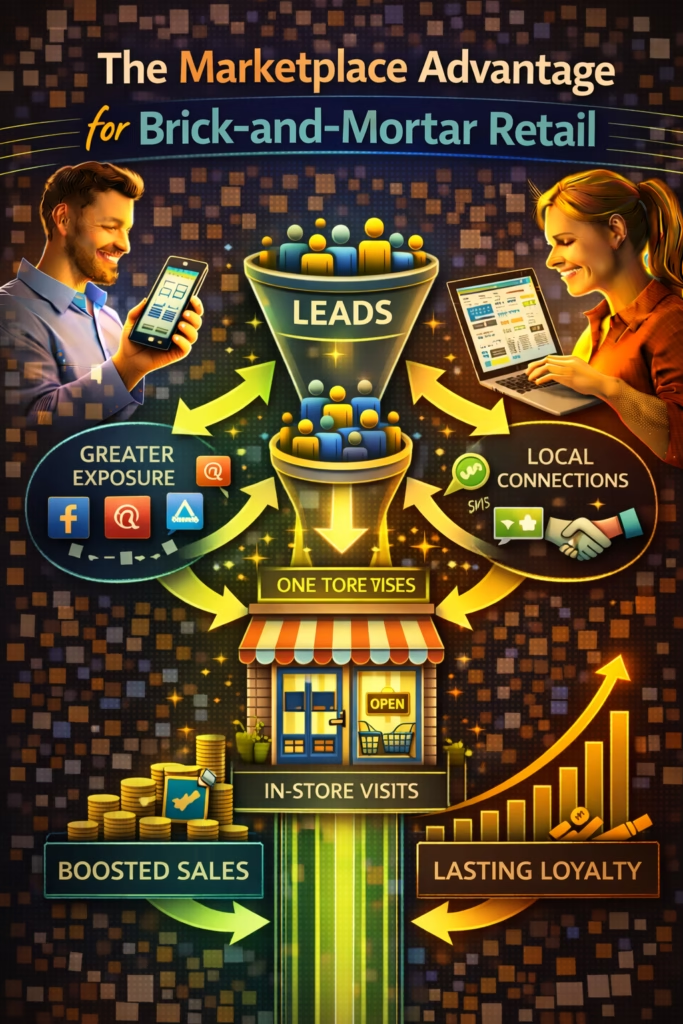
The Marketplace Advantage for Brick-and-Mortar Retail
ChatGPT Image Feb 27 2026 02 19 33 PM
The Marketplace Advantage for Brick-and-Mortar Retail

The Marketplace Advantage for Brick-and-Mortar Retail

The Marketplace Advantage for Brick-and-Mortar Retail is the blueprint for using Marketplace like a digital showroom—driving local messages, calls, store visits, pickups, and deliveries with consistent, compliant activity.

Digital Showroom Drivers: Listing Cadence Real Photos Variety Response Speed Follow-Up In-Store Close

Note: This is general guidance. Follow platform rules, keep claims truthful, and confirm compliance with privacy/marketing rules before posting or automating follow-ups.

Introduction

The Marketplace Advantage for Brick-and-Mortar Retail comes down to one shift that changed local buying forever:

Your showroom is no longer only a physical space. It’s also a feed.

Buyers don’t start in a store anymore. They start on a phone—scrolling, comparing, saving, and messaging. Platforms like Facebook Marketplace have become the new “walk-in traffic,” except the customer is already pre-qualified: they’re local, interested, and ready to ask a question.

If you run a retail store and you want more local sales, Marketplace is not a “nice extra.” It’s a demand channel—when you treat it like a system.

Big idea: Marketplace turns your inventory into daily exposure. Your process turns that exposure into revenue.

Expanded Table of Contents

1) Why Marketplace is a retail channel (not a side project)

Retailers often treat Marketplace like a classifieds page: post a few items, hope for messages, move on.

But the reality is simple:

Marketplace is a discovery feed where local buyers browse before they decide where to buy.

What makes Marketplace different from traditional ads?

  • Buyers browse with intent (they’re actively shopping)
  • Messaging is frictionless (low barrier to inquire)
  • Local proximity is built-in (you’re competing locally, not globally)
  • Inventory creates exposure (each listing can be a mini billboard)

Rule: Treat Marketplace like a daily showroom, not an occasional posting platform.

2) The digital showroom model for brick-and-mortar stores

A physical showroom works because buyers can:

  • See real options
  • Compare easily
  • Ask questions instantly
  • Leave with confidence

Marketplace can do the same—if you design it to.

The digital showroom stack

Visibility
Consistent listings create daily impressions.
Confidence
Real photos, clear pricing, clear details.
Speed
Fast reply + fast next step.
Value
Local delivery/setup options and accountability.
Conversion
Scripts that book visits, pickups, deliveries.
Retention
Follow-up and repeat buyer loops.

Pro move: Every listing should make a buyer feel: “This is real, local, and easy.”

3) Turning inventory into leads: the surface area principle

Marketplace rewards one thing that brick-and-mortar stores already have: inventory variety.

Each listing is a surface area opportunity—another way to appear for another buyer intent.

Surface area comes from

  • Different product types (or categories)
  • Different price tiers (value, mid, premium)
  • Different use cases (guest room, primary, kids, small space)
  • Different offers (delivery, setup, financing, bundle)
  • Different thumbnails (first photo tests)

Rule: Exposure grows when you list variety—not when you repost duplicates.

4) Offer stacks that beat online shopping friction

Online giants compete on convenience. Local stores win on certainty and speed—when they package it.

Offer stack examples (mix-and-match)

Offer elementWhat it signalsWhy it wins
Real local inventoryCertaintyBuyers hate “maybe available”
Same-day pickup/deliverySpeedBeats shipping delays
Help choosing the right optionGuidanceReduces returns and regret
Local accountabilityTrustA real store stands behind the sale
Bundles / add-onsValueShifts focus away from price-only comparison

Offer copy template

Real photos ✅ Local store ✅
In-stock options ✅ Fast pickup/delivery ✅
Tell me your zip + timeline (today/this week) and I’ll recommend the best fit.

Pro move: Don’t sell “the item.” Sell “the easiest decision.”

5) The listing system: cadence + variety + compliance

The biggest Marketplace mistake retailers make is inconsistency: big bursts of posting, then silence.

A sustainable listing cadence

Solo operator

  • 2–5 listing actions/day
  • Weekly photo + title upgrades
  • Monthly winner rotation (replace weak listings)

Small team

  • 10–30 listing actions/day (distributed)
  • Daily QA for duplication risk
  • Weekly A/B tests (thumbnail + hook)

Multi-location

  • Local variations per city
  • Stagger posting windows per market
  • KPIs tracked per location

Retail rule

  • Steady beats spiky
  • Variety beats duplication
  • Messages beat views

Rule: Cadence is the engine. Variety is the fuel.

6) The anti-flag framework: variety without duplication

Marketplace platforms reduce exposure when listings look duplicated or spam-like. The solution is structured variety that stays truthful.

Variety checklist

  • Different intent angle (value vs speed vs premium vs trust)
  • Different first photo (thumbnail)
  • Different opening hook line
  • Different feature emphasis
  • Different posting time windows

Intent-angle matrix (example)

AngleWho it attractsHook example
ValueBudget-conscious buyers“Great value if you want quality without overspending.”
SpeedUrgent buyers“Available now—fast pickup/delivery options.”
PremiumComfort/quality buyers“For buyers who want the best experience.”
TrustSkeptical buyers“Real photos + clear details from a local store.”
FitConfused buyers“Tell me your needs—I'll point you to the best match.”

Important: Avoid posting identical duplicates. Rotate responsibly and follow platform rules.

7) Response speed: the Marketplace conversion multiplier

Marketplace creates messages. Your response speed determines whether those messages become revenue.

Why speed matters

  • Buyers message multiple sellers (fast reply wins)
  • Intent decays quickly (minutes, not days)
  • Momentum is fragile (one delay can lose the sale)

Speed-to-lead benchmarks

Reply timeImpactInterpretation
< 1 minuteExcellentYou capture peak intent
< 5 minutesStrongCompetitive with most local sellers
1–3 hoursWeakBuyer likely moved on
Next dayVery weakAlmost always lost

Rule: Fast response is not a “nice-to-have.” It’s the conversion gate.

8) Message-to-visit scripts that book store traffic

Your goal is not to chat. Your goal is to book a next step.

Instant reply (universal)

Yes — I can help ✅
What city/zip are you in, and are you looking for today or this week?
I’ll confirm the best options.

Availability + booking

Yes — available ✅
Quickest next step is a short visit or pickup.
Which works best: today, tomorrow, or this weekend?

Delivery quote prompt

I can quote delivery/setup.
Send your zip + preferred day (today/this week) and I’ll confirm the fastest options.

When they ask “best price?”

I can help you get the best value.
If you tell me your zip + budget range, I’ll recommend the best option that fits what you need.

Pro move: One question + three options books more visits than long descriptions.

9) Follow-up loops that recover “lost” buyers

Most buyers don’t say “no.” They disappear. Follow-up brings them back.

Simple follow-up cadence

WhenMessageGoal
+2 hours“Do you want the fastest option today or this week?”Recover momentum
+24 hours“Want me to recommend the best options for your budget?”Offer help
+72 hours“If you send your zip, I can confirm delivery/pickup options.”Reduce friction
+7 days“Should I keep this open for you?”Reactivation

Rule: Follow-up turns “ghosts” into sales—if it’s helpful, not pushy.

10) Pairing Marketplace with Google Maps for full-funnel capture

Marketplace captures browsing demand. Google Maps captures “ready to buy nearby” demand.

Why pairing works

  • Marketplace feeds you messages (top-of-funnel)
  • Maps feeds you calls, directions, and visits (bottom-of-funnel)
  • Each channel reinforces trust for the other

Maps basics that matter most

  • Accurate hours and category
  • Consistent new photos (weekly is better than monthly)
  • Review cadence (steady beats bursts)
  • Clear services and product language
  • Fast call handling and follow-up

Pro move: When someone messages on Marketplace, they often check your Maps listing next. Make it strong.

11) Testing plan: improve conversion weekly

Most retailers don’t need more leads. They need higher conversion.

Test priority order

  1. First photo (thumbnail)
  2. Title clarity
  3. First 2 lines of description
  4. CTA question
  5. Booking script (today/tomorrow/weekend)

Simple test process

1) Pick one variable
2) Run 3–7 days
3) Track messages/day + booked next steps
4) Keep the winner
5) Repeat weekly

Rule: One small improvement per week compounds into domination.

12) KPIs for Marketplace retail success

KPIWhat it measuresTarget direction
Listings activeSurface areaUp
Views → messagesListing qualityUp
Median reply timeSpeed-to-leadDown
Messages → booked stepsBooking script effectivenessUp
Booked steps → salesClose rateUp
Follow-up recoverySaved leadsUp
Flags/removalsCompliance riskDown

Pro move: Track “booked next steps” weekly—it’s the closest KPI to revenue.

13) 30–60–90 day rollout plan

Days 1–30 (Build the digital showroom)

  1. Standardize listing templates (real photos, clear titles, clear offers)
  2. Set a sustainable daily cadence (steady beats bursts)
  3. Implement instant reply + booking question
  4. Start tracking reply time and booked next steps
  5. Create 5 intent angles to rotate (value/speed/premium/trust/fit)

Days 31–60 (Increase demand capture)

  1. Expand listing surface area with compliant variety
  2. Run weekly thumbnail + hook A/B tests
  3. Deploy follow-up cadence
  4. Improve Maps listing strength (photos + reviews cadence)

Days 61–90 (Systemize and scale)

  1. Document SOPs for posting, QA, messaging, follow-up
  2. Train staff on booking scripts (today/tomorrow/weekend)
  3. Optimize weekly based on KPIs
  4. Scale to more categories, more offers, or more locations

Rule: Marketplace becomes a predictable lead asset when it’s consistent, varied, and fast.

14) 25 Frequently Asked Questions

1) What is the marketplace advantage for brick-and-mortar retail?

Using Marketplace as a digital showroom to generate local messages and convert them into visits, pickups, and deliveries.

2) Does Facebook Marketplace work for retail stores?

Yes—especially when you post consistently, use real photos, and respond fast.

3) What’s the fastest way to get more Marketplace leads?

Upgrade your first photo and title, increase consistent cadence, and reply faster.

4) What makes Marketplace different from ads?

It’s a discovery feed where buyers browse and message with low friction.

5) What is a digital showroom?

Your inventory represented in a feed with real photos, clear offers, and easy next steps.

6) How do I turn Marketplace messages into store visits?

Confirm availability, ask zip + timeline, and offer a simple next step (today/tomorrow/weekend).

7) What response time should I aim for?

Under 5 minutes is strong; under 1 minute is best.

8) How often should I post listings?

As often as you can sustain consistently—steady beats bursts.

9) What causes listings to get flagged or lose exposure?

Duplicate patterns, spam-like behavior, and policy-risk content.

10) How do I post more without duplicating?

Rotate intent angles, thumbnails, hooks, and feature emphasis while staying truthful.

11) Should I use stock photos?

Real photos typically build more trust and convert better.

12) What should the first line of my listing say?

Something that signals trust and clarity: “Real photos + clear details ✅”

13) What is the best CTA question?

“What city/zip are you in, and are you looking for today or this week?”

14) How do I quote delivery quickly?

Ask for zip + preferred day, then confirm options.

15) Do Marketplace leads buy same-day?

Many do—especially when availability and next steps are simple.

16) What’s the best offer to beat online shopping?

Speed, certainty, and local accountability—often with pickup/delivery options.

17) How do I measure Marketplace success?

Views-to-messages, reply time, and booked next steps.

18) What KPI predicts revenue best?

Booked next steps (visits/pickups/deliveries), not just views.

19) How do I recover leads that stopped replying?

Use a helpful follow-up cadence at 2 hours, 24 hours, 72 hours, and 7 days.

20) Can Marketplace help my Google Maps performance?

Indirectly—Marketplace attention can drive searches, calls, and visits if your Maps listing is strong.

21) Why should I pair Marketplace with Google Maps?

Marketplace captures browsing demand; Maps captures high-intent local search.

22) How long until results improve?

Often within 1–2 weeks, compounding over 30–90 days.

23) Should my staff handle messages?

Yes if trained—speed and booking scripts matter more than long chats.

24) Can automation help?

Automation can help with response speed and follow-up when used compliantly.

25) What’s the biggest mistake retailers make on Marketplace?

Posting inconsistently and replying too slowly.

15) 25 Extra Keywords

  1. The Marketplace Advantage for Brick-and-Mortar Retail
  2. marketplace advantage for retail
  3. Facebook Marketplace for brick and mortar
  4. brick and mortar marketplace strategy
  5. local retail leads marketplace
  6. digital showroom strategy
  7. marketplace listing system for retailers
  8. convert marketplace leads in store
  9. marketplace messaging scripts
  10. book store visits from marketplace
  11. marketplace response speed retail
  12. speed to lead marketplace
  13. anti-flag listing framework
  14. avoid duplicate marketplace listings
  15. retail offer stack marketplace
  16. local inventory marketing
  17. same-day pickup delivery retail
  18. marketplace follow up cadence
  19. marketplace lead conversion KPI
  20. marketplace retail marketing 2026
  21. brick and mortar demand capture
  22. marketplace + Google Maps strategy
  23. local store digital marketing blueprint
  24. organic local leads for retailers
  25. turn marketplace into lead asset

© 2026 Your Brand. All Rights Reserved.
General information only—confirm compliance with platform policies and applicable privacy/marketing rules before posting, messaging, or automating follow-ups.

The Marketplace Advantage for Brick-and-Mortar Retail Read More »
How Local Stores Win Against Online Giants

ChatGPT Image Feb 27 2026 02 19 35 PM
How Local Stores Win Against Online Giants

How Local Stores Win Against Online Giants

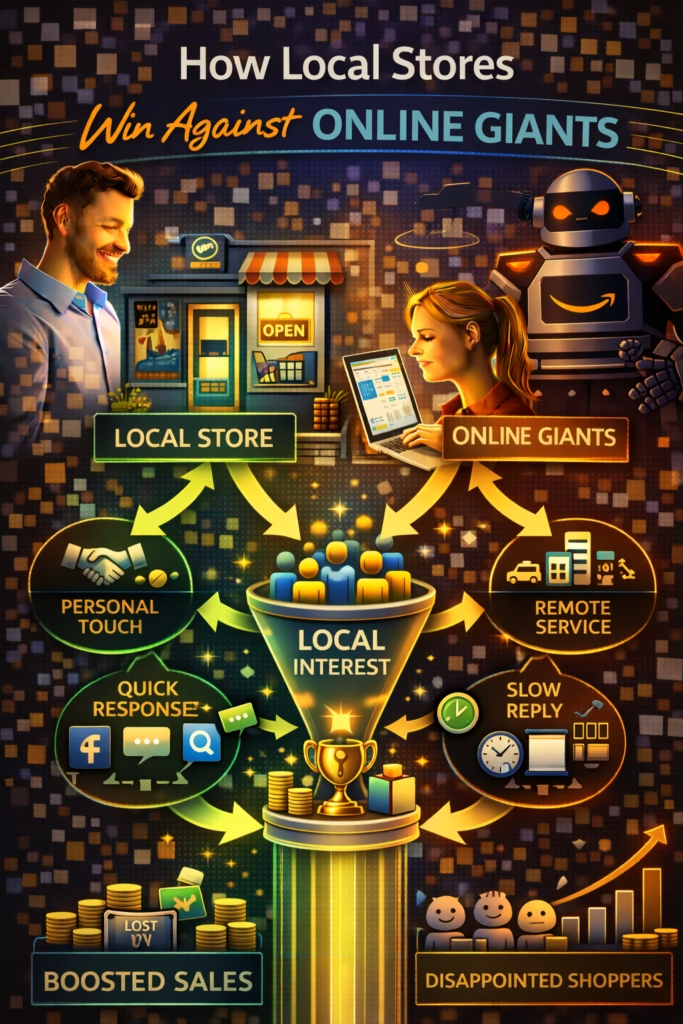
How Local Stores Win Against Online Giants is the blueprint for beating e-commerce with a local advantage stack—speed, trust, service, and demand capture through Marketplace + Google Maps.

Local Advantage Stack: Same-Day Human Help Real Proof Marketplace Google Maps Follow-Up

Note: This is general guidance. Keep claims truthful and comply with platform rules, consumer protection laws, and privacy/marketing rules before posting or automating follow-ups.

Introduction

How Local Stores Win Against Online Giants starts with a simple truth:

You don’t beat online giants by copying them. You beat them by stacking what they can’t do.

Online giants are great at search scale, endless inventory, and shipping logistics. But local stores have something more valuable: proximity, certainty, real human support, and the ability to deliver an experience that reduces risk.

In 2025–2026, local retailers win when they turn these advantages into a system—capturing demand where it starts (feeds and maps), responding fast, booking a next step, and closing with confidence in-store.

Big idea: Local retail is not dead. It’s just moved upstream—into Marketplace browsing and Google Maps intent.

Expanded Table of Contents

1) What online giants do best (and what they don’t)

To win, you have to stop fighting on their battlefield.

Online giants are great at

  • Endless selection
  • Fast shipping (sometimes)
  • Price comparison at scale
  • Mass review volume

Online giants struggle with

  • Certainty: “Will this actually fit me / work for my space?”
  • Timing: same-day needs and last-minute decisions
  • Human guidance: real help during confusion
  • Local accountability: “Who do I talk to if there’s an issue?”
  • Experience: feel, comfort, demonstration, setup confidence

Pro move: Your marketing should make the buyer feel: “This is easier and safer than ordering online.”

2) The local advantage stack

Local stores win when they combine multiple small advantages into one big, obvious reason to buy locally.

Speed
Same-day pickup/delivery and fast responses.
Certainty
Real photos, real inventory, real answers.
Human Help
Guidance, recommendations, and clarity.
Experience
Showroom validation and confidence.
Accountability
A local place and person to stand behind the sale.
Demand Capture
Marketplace browsing + Maps intent.

Rule: One advantage is “nice.” Five advantages is a no-brainer.

3) The “certainty advantage”: see it, trust it, get it

Online shopping creates uncertainty. Local stores eliminate it.

Certainty builders

  • Real photos of your inventory (not just stock images)
  • Clear pricing and clear options
  • Availability language that’s honest
  • Simple next step: visit/pickup/delivery

Certainty copy template

Real photos ✅
In-stock options ✅
Clear pricing ✅
Local pickup/delivery ✅
What zip are you in and are you looking for today or this week?

Rule: The more certainty you provide, the fewer “price shoppers” you attract.

4) Speed wins: same-day availability and fast answers

Speed is where local stores can dominate—if they operationalize it.

Speed-to-lead targets

MetricTargetWhy it matters
Reply time< 5 minutesCaptures peak intent
Booking prompt1 messageMomentum is fragile
Same-day optionWhenever possibleBeats shipping delays

Pro move: Your fastest reply should be one question that books the next step.

5) Experience wins: showroom and human guidance

Online giants cannot replicate the confidence created by a real demonstration and a helpful person.

Showroom advantages to highlight

  • Try/see/feel before buying
  • Expert recommendations for needs and budgets
  • Better fit, fewer returns, less regret
  • Local delivery/setup support

Rule: Don’t sell “products.” Sell “confidence.”

6) Demand capture: Marketplace + Google Maps

Local stores win when they show up in two places:

  • Marketplace feeds: where buyers browse and compare
  • Google Maps: where buyers search with purchase intent

Why the combo works

ChannelBuyer mindsetYour goal
MarketplaceBrowsing, comparingEarn messages + attention
Google MapsHigh intent, localEarn calls/visits now

Pro move: Marketplace fills your top-of-funnel. Maps converts the bottom-of-funnel.

7) Offer frameworks that beat online comparison

You can’t always win on sticker price. But you can win on total value and speed.

Value stack offer examples

  • Same-day pickup/delivery options
  • Setup assistance (or simple add-on)
  • Guided selection to avoid wrong buys
  • Local accountability if something goes wrong
  • Financing/payment options where applicable

Offer line template

Local, real inventory + real photos.
Fast pickup/delivery options.
Tell me your zip and timeline (today/this week) and I’ll recommend the best fit.

Rule: Online sells “cheap.” Local sells “easy and certain.”

8) Messaging scripts that book visits and pickups

Instant reply

Yes — I can help ✅
What city/zip are you in, and are you looking for today or this week?
I’ll confirm the best options.

3-option booking prompt

Quickest next step is a short visit or pickup.

Which works best?
1) Today
2) Tomorrow
3) This weekend

Send your option + your zip and I’ll lock it in.

When they say “I’m just looking”

No worries at all — totally normal.
If you tell me your zip + budget range, I’ll point you to the best options so you don’t waste time.

Pro move: Every message should reduce friction and move toward a booked step.

9) Follow-up and retention loops that giants can’t replicate

Local stores win long-term when they treat every lead as a relationship, not a transaction.

Simple follow-up cadence

WhenMessageGoal
+2 hours“Do you want the fastest option today or this week?”Recover momentum
+24 hours“Want me to recommend the best option for your budget?”Offer help
+72 hours“If you send zip + timeline, I’ll line it up.”Reduce friction
+7 days“Should I keep this open for you?”Reactivation

Retention loop ideas

  • Post-purchase check-in (simple and helpful)
  • Accessory add-ons or upgrade path
  • Seasonal promos for past buyers
  • Referral ask after a positive outcome

Rule: The easiest customer to win is the one who already trusts you.

10) Testing plan: improve conversion weekly

Most local stores don’t need a new channel. They need better conversion.

Test priority order

  1. First photo (thumbnail)
  2. Title clarity
  3. First 2 lines of the description
  4. CTA question
  5. Booking script

Simple test process

1) Pick one variable
2) Run 3–7 days
3) Track messages/day + booked next steps
4) Keep the winner
5) Repeat weekly

Pro move: One small win per week compounds into a dominant local system.

11) KPIs that predict local revenue

KPIWhat it measuresTarget direction
Views → messagesListing clarity + offer strengthUp
Median reply timeSpeed-to-leadDown
Messages → booked stepsScript effectivenessUp
Booked steps → salesClose rateUp
Follow-up recoverySaved leadsUp
Repeat/referral rateRetention strengthUp

Rule: Track “booked next steps” weekly. It’s the closest KPI to revenue.

12) 30–60–90 day rollout plan

Days 1–30 (Build the local advantage stack)

  1. Upgrade photos, titles, and first lines for clarity
  2. Deploy instant reply + one-question CTA
  3. Implement 3-option booking script
  4. Start posting varied inventory angles (no duplicates)
  5. Track booked next steps weekly

Days 31–60 (Capture more demand)

  1. Expand Marketplace surface area with intent-based variations
  2. Improve Maps presence (hours, photos, reviews cadence)
  3. Run weekly A/B tests on thumbnails and hooks
  4. Implement follow-up cadence

Days 61–90 (Systemize and scale)

  1. Document SOPs for posting, messaging, follow-up
  2. Automate safe parts (routing, reminders, instant replies)
  3. Optimize by KPI trends weekly
  4. Expand to a second local market (or second channel)

Pro move: Once your system works in one city, it can work in many.

13) 25 Frequently Asked Questions

1) Can local stores really compete with online giants?

Yes—by stacking speed, certainty, human help, and local accountability into a system.

2) What’s the biggest local advantage?

Speed and certainty: buyers can confirm and get it today.

3) Do local stores need to match online prices?

Not always. Win on total value: speed, setup, support, and trust.

4) What channels matter most in 2026?

Google Maps for high-intent searches and Marketplace for browsing demand.

5) Why does Marketplace work for retailers?

It’s where buyers browse first—like a digital showroom.

6) What makes a Marketplace listing convert?

Real photos, clear pricing, clear availability, and a strong next step.

7) What response time should local stores aim for?

Under 5 minutes is strong; under 1 minute is best.

8) What’s the best CTA question?

“What city/zip are you in, and are you looking for today or this week?”

9) How do I book store visits from messages?

Use a 3-option booking prompt (today/tomorrow/weekend).

10) How do I avoid duplicate listing flags?

Rotate photos, hooks, and intent angles while staying truthful.

11) Do stock photos hurt conversion?

Usually—real photos tend to build more trust.

12) What’s the biggest reason leads go cold?

Slow replies and no follow-up cadence.

13) How often should I follow up?

2 hours, 24 hours, 72 hours, and 7 days is a solid baseline.

14) What does “certainty” mean in retail marketing?

Reducing risk: real proof, clear details, and easy next steps.

15) How do I win buyers who are “just comparing”?

Offer guidance and reduce effort: recommend the best fit quickly.

16) How do local stores beat shipping speed?

Same-day pickup/delivery and fast confirmation.

17) How do reviews affect local competition?

They are a trust amplifier—especially on Maps.

18) What if I don’t have many reviews?

Start a consistent request process after positive outcomes.

19) What KPI predicts revenue best?

Booked next steps (visits, pickups, deliveries).

20) How do I measure Marketplace performance?

Views-to-messages, reply time, and messages-to-booked steps.

21) How long does it take to see results?

Often 1–2 weeks, compounding over 30–90 days.

22) Can service beat price?

Yes—buyers pay for certainty, speed, and reduced hassle.

23) Should local stores use automation?

Automation can help with response speed and follow-up when used compliantly.

24) What should I avoid automating?

Spam-like posting and aggressive bulk messaging that violates rules.

25) What’s the simplest change to win more sales?

Reply faster and guide every lead toward a booked next step.

14) 25 Extra Keywords

  1. How Local Stores Win Against Online Giants
  2. local stores vs online giants
  3. compete with Amazon locally
  4. local retail marketing strategy 2026
  5. Facebook Marketplace for retailers
  6. Google Maps SEO for local stores
  7. local showroom advantage
  8. digital showroom strategy
  9. same-day retail delivery advantage
  10. speed to lead retail
  11. marketplace lead conversion system
  12. local trust signals marketing
  13. booked next steps KPI
  14. retail messaging scripts
  15. how to book store visits from marketplace
  16. local buyer intent capture
  17. marketplace vs ecommerce conversion
  18. local retail demand capture
  19. reduce returns with showroom confidence
  20. local store customer service advantage
  21. organic local leads marketplace
  22. maps marketing for retailers
  23. retail follow up cadence
  24. local retail competitive strategy
  25. turn browsers into local buyers

© 2026 Your Brand. All Rights Reserved.
General information only—confirm compliance with platform policies and applicable privacy/marketing rules before posting, messaging, or automating follow-ups.

How Local Stores Win Against Online Giants Read More »

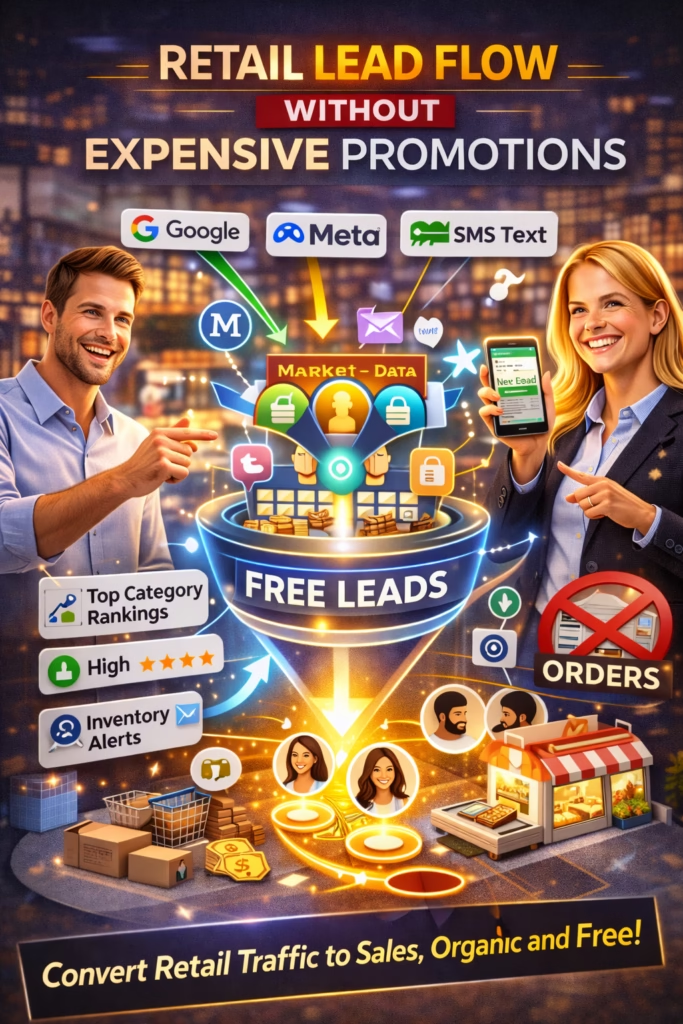
Retail Lead Flow Without Expensive Promotions

ChatGPT Image Feb 27 2026 02 19 28 PM
Retail Lead Flow Without Expensive Promotions

Retail Lead Flow Without Expensive Promotions

Retail Lead Flow Without Expensive Promotions is the blueprint for consistent customer inquiries—by building an organic lead system across marketplaces, Google Maps, local SEO, and fast response workflows.

Lead Flow Drivers: Marketplace Listings Google Maps Local SEO Offer Design Cadence Response Speed

Note: This is general guidance. Follow platform rules, avoid spam-like behavior, and keep offers and claims truthful and compliant.

Introduction

Retail Lead Flow Without Expensive Promotions is about breaking a common trap in retail marketing:

If the only way you can drive traffic is discounting, you don’t have lead flow—you have a promotion dependency.

Promotions have their place. But when your business depends on expensive discounts, constant boosted posts, or never-ending ad spend, you end up with unpredictable demand and shrinking margins.

The modern alternative is a lead flow system: a set of organic channels and conversion workflows that produce consistent inquiries whether you’re running a sale or not.

Big idea: You don’t need “more promotions.” You need more distribution, better capture, and faster conversion.

Expanded Table of Contents

1) What “retail lead flow” really means

Retail lead flow is the consistent stream of inbound signals that can become revenue:

  • Messages (Marketplace, DMs)
  • Calls
  • Direction requests
  • Website clicks
  • Appointment requests
  • Walk-ins driven by intent-based discovery

Important: Lead flow is not “traffic.” Lead flow is inquiries with intent.

The lead flow equation

Lead Flow = Distribution × Capture × Conversion

Promotions try to brute-force distribution with money. A system improves all three pieces—so lead flow becomes stable.

2) The promotion trap: why expensive promos fail long-term

Expensive promotions create short spikes, but they often cause long-term damage:

  • Margin compression: you pay with profit
  • Training behavior: customers wait for deals
  • Volatility: you spike then crash
  • Lead quality drops: bargain-hunters require more time

Warning: If your pipeline disappears the moment the promo ends, you’re renting attention, not building a system.

Better approach: Use promotions as a tool—not as your engine.

3) The modern retail lead stack (organic-first)

The most reliable retail lead stacks combine:

Distribution

Marketplace listings, short-form video, local posts, product variation.

Capture

Google Maps/GBP, local SEO, call + directions, simple landing pages.

Conversion

Fast replies, one-question CTA, follow-up, scheduling, proof.

Rule: If you only have one channel, you don’t have a stack—you have a dependency.

4) Marketplace distribution: the fastest organic channel

Marketplaces (and social commerce feeds) often deliver the highest intent with the lowest cost—if you follow a consistent cadence and avoid duplicate patterns.

Marketplace lead drivers

  • Strong first photo (thumbnail)
  • Clear title (what it is, size, key feature, option)
  • Offer design (delivery/financing/bundles)
  • Variety (angles, categories, featured benefits)
  • Fast response speed

Anti-flag variety checklist

  • Rotate the first photo
  • Change the listing angle (value vs premium vs availability)
  • Change the first 1–2 lines (hook)
  • Change featured benefits (comfort, durability, size, delivery)
  • Stagger posting windows

Pro move: More variety creates more surface area—more chances to be discovered.

5) Google Maps capture: intent you don’t pay for

Google Maps is where retail intent lives: “near me,” “open now,” “best,” “reviews,” and category searches.

GBP optimization essentials

  • Correct primary + secondary categories
  • High-quality photos updated regularly
  • Weekly posts (offers, new arrivals, highlights)
  • Review request system (consistent)
  • Accurate services/products (where applicable)
  • Fast response to Q&A and messages

Rule: Maps capture is compounding. Every review and photo improves conversion.

6) Offer design that removes friction without discounting

The best offers are not always “cheaper.” They are easier.

Friction removers (high ROI)

  • Delivery available (even for a fee)
  • Financing options
  • Bundle options (set + individual)
  • Fast pickup windows
  • Availability clarity (“in stock today”)

Offer ladder example

Offer elementWhat it signalsLead impact
Delivery availableConvenienceVery high
FinancingAffordabilityHigh
Bundle pricingValueHigh
In-stock todaySpeedHigh
Real proof photosTrustHigh

Pro move: Replace discounts with convenience and clarity.

7) Cadence: how consistency compounds reach

Cadence is the difference between “random leads” and “daily leads.”

Cadence frameworks

Solo retailer

  • 2–5 actions/day (post, refresh, photo rotate)
  • Weekly: upgrade top 5 thumbnails/titles
  • Monthly: replace weak performers

Store team

  • 10–30 actions/day split across roles
  • Daily: QA for duplicates + accuracy
  • Weekly: A/B test thumbnails and hooks

Rule: Steady beats bursty. Consistency trains platforms to trust you.

8) Response speed: the hidden conversion multiplier

Most retailers lose leads because they respond too late. Buyers message multiple businesses.

Instant reply (universal)

Yes — it’s available ✅
What zip/city are you in, and are you looking for today or this week?

Why this works

  • Confirms availability (reduces uncertainty)
  • Asks one question (moves toward action)
  • Filters serious buyers (improves efficiency)

Pro move: If you can’t respond fast, you must simplify your response workflow.

9) Retargeting-lite follow-up (no ad budget required)

You don’t need paid retargeting to recover lost leads. You need follow-up.

Simple 3-touch follow-up

Touch 1 (same day): Quick check-in + next step
Touch 2 (next day): “Still looking?” + option reminder (delivery/financing)
Touch 3 (48–72h): New angle + availability window

Example follow-up message

Just checking in ✅
Are you still looking, or did you already find something?
If you want, tell me your zip and I’ll confirm the fastest options.

Rule: Follow-up converts more leads than “more posts.”

10) Testing plan: find your highest-lead assets

Testing prevents guessing. Start with the variables that change lead volume the most.

Test priority order

  1. First photo (thumbnail)
  2. Title clarity
  3. Offer (delivery/financing/bundle wording)
  4. Hook line (first 1–2 sentences)
  5. CTA question

Simple test SOP

1) Change one variable
2) Run 3–7 days
3) Track inquiries/day and booked next steps
4) Keep the winner
5) Repeat

Pro move: Track “booked next steps” (appointments/visits), not just messages.

11) KPIs to measure real lead flow

KPIWhat it measuresTarget direction
Inquiries/dayLead volumeUp
Median response timeSpeed-to-leadDown
Booked next stepsConversion momentumUp
Show rateLead qualityUp
Close rateSales efficiencyUp
Directions/calls (GBP)Maps captureUp
Flags/removalsCompliance riskDown

Rule: A healthy lead system increases volume while lowering response time.

12) 30–60–90 day rollout plan

Days 1–30 (Stabilize)

  1. Upgrade thumbnails and titles
  2. Implement instant reply + one-question CTA
  3. Post consistently with variety (avoid duplicates)
  4. Optimize GBP basics (photos, categories, posts)
  5. Start tracking inquiries/day and response time

Days 31–60 (Expand)

  1. Increase surface area with more varied listings
  2. Rotate hero photos weekly on top performers
  3. Add offer friction removers (delivery/financing/bundles)
  4. Start a simple follow-up process
  5. A/B test thumbnails and hooks

Days 61–90 (Compound)

  1. Document SOPs for posting and response
  2. Build a proof engine (reviews + photos)
  3. Double down on top categories that produce the most leads
  4. Refine the pipeline to maximize booked next steps

Rule: Lead flow grows when distribution is consistent and conversion is fast.

13) 25 Frequently Asked Questions

1) What is retail lead flow without expensive promotions?

A repeatable system that generates inquiries using organic distribution, Maps capture, and fast conversion workflows without heavy discounting.

2) Can retailers generate leads without paid ads?

Yes—many do through marketplaces, GBP, local SEO, consistent posting, and fast replies.

3) What channels drive the most affordable retail leads?

Marketplace listings, Google Maps/GBP, local SEO, short-form video, and follow-up.

4) Why are expensive promotions a problem for retail?

They compress margin, train customers to wait, and create unstable demand.

5) What is the fastest organic lead flow upgrade?

Better thumbnails/titles + faster response + consistent cadence.

6) How does Facebook Marketplace generate leads?

It surfaces your listings to local buyers with intent; strong listings convert views into messages.

7) How does Google Business Profile help?

GBP captures “near me” intent and converts it into calls and directions.

8) Do reviews impact lead volume?

Yes—reviews improve trust, click-through, and conversions.

9) What is the best offer for lead generation?

Offers that remove friction: delivery, financing, bundles, availability clarity.

10) How do I increase leads without lowering price?

Increase perceived value, add convenience options, and respond faster.

11) What is a lead loop?

Publish → inquiries → fast replies → booked step → follow-up → close → proof → publish again.

12) How often should I post?

Daily or near-daily consistency is best.

13) How do I avoid duplicate flags?

Rotate photos, angles, titles, hooks, and posting windows while staying truthful.

14) What matters most in a thumbnail?

Clarity and trust: bright lighting, full product in frame, real photos.

15) What is the best CTA?

One question: “What zip/city are you in and are you looking for today or this week?”

16) How fast should I respond?

Under 5 minutes is strong; under 1 minute is ideal.

17) Do follow-ups increase conversion?

Yes—simple follow-ups recover leads that would otherwise go cold.

18) What is retargeting-lite?

Non-ad re-engagement: follow-ups, reminders, and fresh posting angles.

19) What KPIs should I track?

Inquiries/day, response time, booked next steps, show rate, close rate.

20) How do I turn messages into store visits?

Confirm availability fast and schedule a time window.

21) Do local SEO pages help?

Yes—city/category pages capture search demand and support Maps visibility.

22) Can short-form video replace promotions?

It can reduce reliance on promotions by increasing trust and awareness.

23) How long does organic lead flow take to build?

Often 7–14 days for lift; 30–90 days for compounding results.

24) Biggest mistake with organic leads?

Inconsistent posting, weak listings, slow replies, and no follow-up.

25) Simplest system to start with?

Upgrade photos/titles, post consistently with variety, respond fast, then optimize GBP.

14) 25 Extra Keywords

  1. Retail Lead Flow Without Expensive Promotions
  2. retail lead flow without promotions
  3. retail leads without paid ads
  4. organic retail lead generation
  5. small business lead flow system
  6. Facebook Marketplace retail leads
  7. Google Maps retail lead generation
  8. Google Business Profile lead flow
  9. local SEO for retail stores
  10. retail marketing without discounts
  11. how to get retail customers without ads
  12. organic traffic for retail businesses
  13. retail inquiry generation
  14. retail conversion workflow
  15. speed to lead retail
  16. retail response time script
  17. lead follow-up system retail
  18. retail offer design without discounting
  19. delivery financing bundle offers retail
  20. retail posting cadence strategy
  21. avoid duplicate listing flags
  22. retargeting-lite follow-up
  23. 2026 retail marketing strategy
  24. retail lead generation stack
  25. consistent retail leads organic

© 2026 Your Brand. All Rights Reserved.
General information only—confirm compliance with platform policies and applicable privacy/marketing rules before posting, messaging, or automating follow-ups.

Retail Lead Flow Without Expensive Promotions Read More »

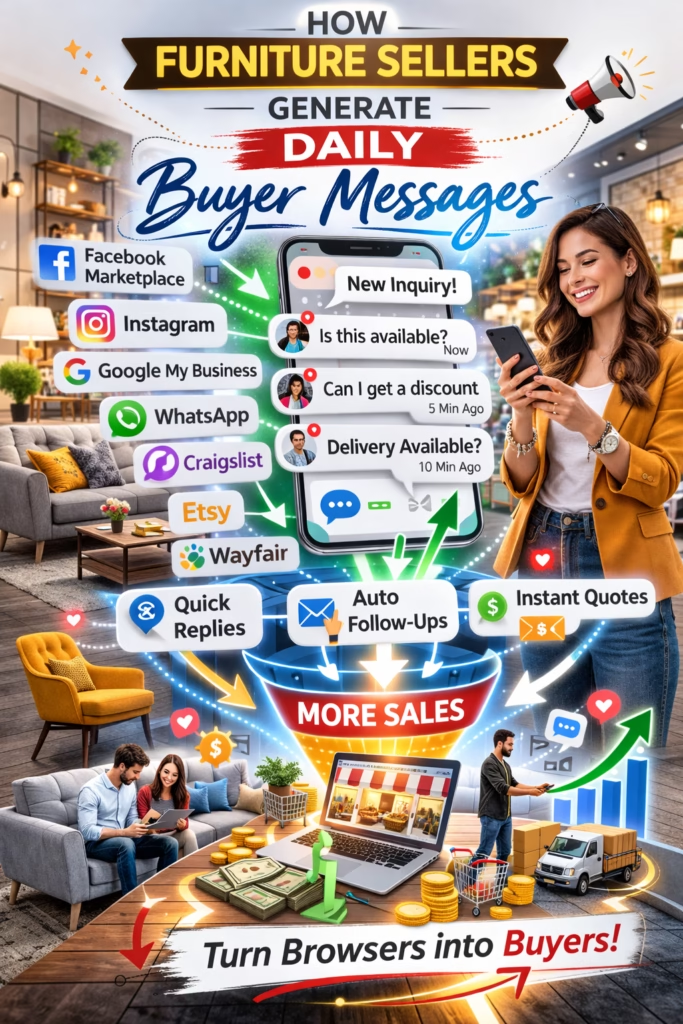
How Furniture Sellers Generate Daily Buyer Messages

ChatGPT Image Feb 27 2026 02 19 30 PM
How Furniture Sellers Generate Daily Buyer Messages

How Furniture Sellers Generate Daily Buyer Messages

How Furniture Sellers Generate Daily Buyer Messages is the blueprint for turning views into inquiries—by upgrading thumbnails, titles, pricing, variety, trust signals, and response speed.

Message Drivers: First Photo Title Clarity Pricing Variety Delivery/Options Fast Replies

Note: This is general guidance. Follow marketplace rules, avoid spam-like posting patterns, and keep listings truthful and accurate.

Introduction

How Furniture Sellers Generate Daily Buyer Messages is less about luck and more about mechanics.

Furniture buyers don’t “browse.” They compare. Your job is to win the click, reduce uncertainty, and make the next step easy.

Furniture is one of the highest-intent categories in local marketplaces. People are moving, upgrading, furnishing a new place, or replacing something that broke. When your listing hits the right combination of clarity, value, trust, and availability, messages happen naturally.

But the opposite is also true: if your photos are weak, your title is vague, your price is confusing, or your response time is slow, buyers will choose the next seller—without messaging you once.

Big idea: Daily messages come from a repeatable system: strong thumbnails + clear titles + fair pricing + steady cadence + fast replies.

Expanded Table of Contents

1) The “message math” behind furniture selling

To generate daily buyer messages, you don’t need magic. You need a predictable chain:

Impressions → Clicks

Your first photo + title decide if you get clicked.

Clicks → Messages

Your details + price + trust + CTA decide if you get messaged.

Messages → Sales

Your response speed + next step decide if the buyer commits.

Sales → More Messages

More proof + reviews + steady activity increases future reach.

Rule: If you want more messages, fix the earliest break in the chain: thumbnail, title, price, or response time.

2) The first photo rule: win the click

The first photo is the most powerful lever for furniture sellers.

What a “message-driving” thumbnail looks like

  • Bright, clean lighting (near a window is enough)
  • Full item in frame (wide shot)
  • Minimal clutter around it
  • Angle that shows shape and size clearly
  • Color looks accurate (avoid heavy filters)

Furniture photo set checklist (6–12 photos)

[ ] Hero photo (thumbnail candidate)
[ ] Second wide angle (different side)
[ ] Close-up of fabric/wood grain
[ ] Any flaws shown honestly
[ ] Brand tag / label (if available)
[ ] Measurement photo (tape measure)
[ ] Context photo (room perspective)
[ ] Delivery/pickup readiness photo (optional)

Pro move: Rotate your first photo weekly on top listings. A better thumbnail can increase messages without posting more.

3) Titles that buyers actually search

Most furniture titles fail because they’re too vague. Buyers search by:

  • Item type (sectional, dresser, dining set, bed frame)
  • Size (queen, king, 6-chair, 9ft)
  • Material/style (solid wood, modern, farmhouse, mid-century)
  • Intent keywords (delivery, set, like new, excellent condition)

High-performing title formula

[Item Type] + [Size] + [Key Feature/Style] + [Condition/Option]

Examples

  • Sectional Sofa 9ft – Modern Gray – Delivery Available
  • Solid Wood Dining Set (Table + 6 Chairs) – Excellent Condition
  • Queen Bed Frame – Platform Style – Like New
  • Large Dresser – 6 Drawer – Clean – Ready for Pickup
  • Office Desk – Wide + Sturdy – Great for WFH

Rule: Your title should answer “what is it?” in one glance.

4) Descriptions that reduce uncertainty

Furniture buyers hesitate when details are missing. The easiest way to get more messages is to reduce uncertainty.

Message-driving description template

✅ Real photos + clean, ready to go

What it is:
- [Item type + style]
- Condition: [honest]
- Included: [what’s included]

Measurements:
- [L x W x H] (approx)

Pickup/Delivery:
- Pickup near: [area]
- Delivery: [available / fee / range]

📩 Quick question:
What zip are you in, and are you looking for pickup today or this week?

Pro move: Add a measurement photo. It instantly filters serious buyers and increases quality messages.

5) Pricing strategies that increase inquiries

Furniture pricing is psychological. Buyers compare fast and message the listing that feels like the best “deal” with the least risk.

Simple pricing rules

  • Price in a range that matches local market expectations
  • Include a simple offer path: “Open to reasonable offers”
  • If you can deliver, your price can be higher (convenience premium)
  • Bundles can justify a stronger anchor price

Offer ladder (easy + clean)

OptionWhat it signalsMessage impact
Pickup todayFast, availableHigh
Pickup this weekFlexibleMedium
Delivery availableConvenienceVery high
Bundle discountDeal valueHigh

Avoid: Unclear “DM for price” listings. Buyers skip friction.

6) Offer design: delivery, bundles, and options

Daily buyer messages increase when you offer “paths” instead of one rigid option.

Offers that boost messages

  • Delivery available for a fee (even limited range)
  • Bundle pricing (set price + individual price)
  • Hold policy (simple and fair)
  • Ready now (pickup today window)

Clean “hold policy” line

First come, first served. I can hold with a scheduled pickup time.

Rule: Convenience creates messages.

7) Variety system: how to post more without duplicates

More listings can mean more messages—but only if your activity looks natural and varied.

Anti-duplicate variety checklist

  • Change the first photo
  • Change the angle (value vs premium vs fast pickup vs delivery)
  • Change the first two lines (new hook)
  • Change the highlighted features (fabric vs size vs set includes)
  • Change posting windows (don’t post identical batches at identical times)

Angle library (rotate weekly)

Value Angle: “Great value for the condition—clean and ready.”
Speed Angle: “Ready today—quick pickup window available.”
Premium Angle: “High-quality build—solid, sturdy, comfortable.”
Convenience Angle: “Delivery available—tell me your zip.”
Trust Angle: “Real photos + measurements + honest notes.”
Bundle Angle: “Set includes X—bundle price available.”

Important: Keep everything truthful. Variety is presentation, not deception.

8) Cadence frameworks (solo, store, multi-location)

Daily messages come from a cadence you can sustain.

Solo seller cadence

  • Post: 2–5 listings/day (or refresh + photo rotation)
  • Weekly: improve top 5 listings (photo + title)
  • Daily: reply within minutes when possible

Furniture store cadence

  • Post: 10–30 listings/day across categories
  • Daily: QA for duplicate risk + price/availability accuracy
  • Weekly: rotate hero photos and angles on best performers

Multi-location cadence

  • Localize titles with city/area keywords
  • Stagger posting schedules by market
  • Track KPIs per location: messages/day and booked pickups

Pro move: Avoid “spike then silence.” Steady beats bursty.

9) Response speed scripts that keep buyers engaged

Furniture buyers message multiple sellers. The fastest, clearest responder wins more often than the cheapest listing.

Instant reply (universal)

Yes — it’s available ✅
What zip are you in, and are you looking for pickup today or this week?

Delivery qualifier

Delivery may be available ✅
What’s your zip code? I’ll confirm the delivery option and fee.

Hold / scheduling reply

I can hold it with a scheduled pickup time ✅
What day/time works best for you?

Rule: Every reply should move the buyer to a next step.

10) A/B testing SOP: prove what drives messages

Testing prevents guessing and helps you scale what works.

Test priority order

  1. First photo (thumbnail)
  2. Title clarity
  3. Price + offer wording
  4. First two lines (hook)
  5. CTA question

Simple testing process

1) Change one variable
2) Run 3–7 days
3) Track messages/day and messages per listing
4) Keep the winner
5) Test the next variable

Pro move: Track “messages per listing” so volume doesn’t hide weak listings.

11) KPIs for daily message production

KPIWhat it measuresTarget direction
Listings posted/dayCadenceStable
Active listingsSurface areaUp
Messages/dayDemandUp
Messages per listingListing qualityUp
Median response timeSpeed-to-leadDown
Scheduled pickups/deliveriesConversionUp
Flags/removalsCompliance riskDown

Rule: More messages come from better listings and faster replies—not just more posts.

12) 30–60–90 day rollout plan

Days 1–30 (Fix the basics)

  1. Upgrade photo set (6–12 photos per item)
  2. Rewrite titles using the formula (type + size + feature + option)
  3. Add measurements to every listing
  4. Use a single-question CTA
  5. Set response SOP (instant reply template)

Days 31–60 (Increase volume safely)

  1. Increase cadence gradually and consistently
  2. Build an angle library and rotate weekly
  3. Offer delivery/pickup options where possible
  4. A/B test thumbnails and titles weekly

Days 61–90 (Compound)

  1. Document SOPs for photos, posting, and messaging
  2. Replace weak performers monthly
  3. Track KPI dashboard weekly
  4. Double down on top categories that produce the most messages

Rule: Daily buyer messages are the result of consistent, varied, high-trust listings.

13) 25 Frequently Asked Questions

1) How do furniture sellers get daily buyer messages?

By combining strong thumbnails, clear searchable titles, fair pricing, steady cadence, trust signals, and fast responses.

2) What is the most important part of a furniture listing?

The first photo. It controls click-through and drives inquiries.

3) What titles generate the most messages for furniture?

Titles with item type + size + key feature + condition/option.

4) Should I use stock photos?

Real photos usually perform better and build trust.

5) How many photos should I use?

Typically 6–12 photos including wide shots, close-ups, flaws, and measurements.

6) What categories get the most messages?

Often sectionals, sofas, mattresses, bedroom sets, dressers, dining sets, and desks.

7) How often should I post?

Daily or near-daily is best, even at low volume, if sustainable.

8) Does reposting help?

It can if allowed, but responsible edits and photo rotation are safer than duplication.

9) How do I avoid duplicate flags?

Rotate first photos, angles, titles, opening lines, and timing windows.

10) What price strategy gets more messages?

Fair market pricing plus a simple “reasonable offers” path and clear options like delivery.

11) Should I list higher to negotiate down?

Slightly can work, but being too high reduces inquiries.

12) What’s the fastest way to increase messages?

Upgrade the first photo, rewrite the title, add measurements, and reply faster.

13) Do measurements increase messages?

Yes—they reduce uncertainty and improve lead quality.

14) How do I write descriptions that get messages?

Hook + bullets + condition + measurements + pickup/delivery + one-question CTA.

15) What CTA works best?

“What zip are you in, and are you looking for pickup today or this week?”

16) How fast should I respond?

Under 5 minutes is strong; under 1 minute is ideal.

17) What auto-reply should I use?

A short confirmation plus one qualifying question about zip and timing.

18) Should I offer delivery?

If possible, yes—delivery reduces friction and increases inquiries.

19) Does “pickup today” help?

Yes—clear availability can drive faster decisions.

20) How do I build trust online?

Real photos, honest flaw notes, measurements, clear pickup info, and fast replies.

21) What keywords should I include?

Type, size, style, material, brand, and intent terms like delivery and set.

22) How do I sell faster without paid ads?

Improve thumbnails, titles, cadence, variety, and response speed.

23) Do bundles get more messages?

Often yes—bundles feel like a deal and reduce buyer effort.

24) What’s the biggest mistake sellers make?

Weak photos, vague titles, missing measurements, inconsistent posting, and slow responses.

25) How long until I get daily messages?

Often within 7–14 days after fixes, with compounding improvements over 30–90 days.

14) 25 Extra Keywords

  1. How Furniture Sellers Generate Daily Buyer Messages
  2. furniture sellers buyer messages
  3. daily buyer inquiries furniture
  4. Facebook Marketplace furniture messages
  5. furniture listing strategy
  6. how to sell furniture fast locally
  7. best furniture listing titles
  8. furniture thumbnail photo tips
  9. furniture pricing strategy marketplace
  10. get more messages on furniture listings
  11. furniture listing description template
  12. measurements in furniture listings
  13. delivery available furniture listing
  14. bundle pricing furniture sets
  15. avoid duplicate listing flags
  16. anti-flag listing variety
  17. posting cadence for furniture sellers
  18. best time to post furniture listings
  19. furniture lead generation without ads
  20. local furniture sales system
  21. messages per listing KPI
  22. response speed furniture buyers
  23. speed to lead marketplace furniture
  24. 2026 furniture marketplace strategy
  25. organic furniture sales growth

© 2026 Your Brand. All Rights Reserved.
General information only—confirm compliance with platform policies and applicable privacy/marketing rules before posting, messaging, or automating follow-ups.

How Furniture Sellers Generate Daily Buyer Messages Read More »

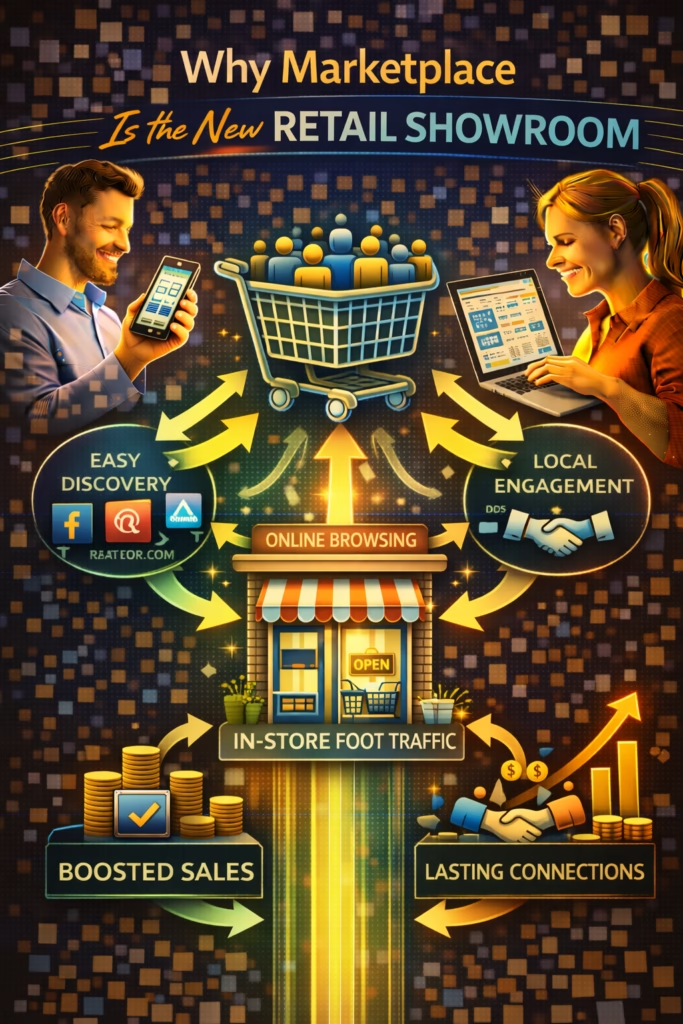
Why Marketplace Is the New Retail Showroom

ChatGPT Image Feb 26 2026 01 27 32 PM
Why Marketplace Is the New Retail Showroom

Why Marketplace Is the New Retail Showroom

Why Marketplace Is the New Retail Showroom is the blueprint for retailers using Marketplace as a digital showroom—turning browsing into messages, messages into visits, and visits into local purchases.

Showroom Drivers: Real Photos Trust Signals Inventory Variety Response Speed Follow-Up Booked Visits

Note: This is general guidance. Follow platform rules, keep claims truthful, and avoid spam/duplication. Confirm compliance before automating posting or messaging.

Introduction

Why Marketplace Is the New Retail Showroom is not hype. It’s a behavior shift.

Shoppers don’t “start at the store” anymore. They start in a feed.

For decades, retailers relied on location, signage, and walk-in traffic. Today, local buyers browse on their phone first—comparing options, checking photos, validating prices, and deciding who feels safe and easy to buy from before they ever drive anywhere.

This is why Marketplace has become the new showroom. It’s where people “walk the aisles” digitally—scrolling thumbnails the way they used to walk rows of inventory.

Big idea: If you treat Marketplace like a showroom, you stop chasing “random leads” and start building a predictable local buyer engine.

Expanded Table of Contents

1) The showroom shift: how buyers shop now

Buyers still want the same outcomes: a good product, a fair price, a safe transaction, and no wasted time. What changed is where they begin the journey.

Old path vs new path

Old retail pathNew retail pathWhat this changes
Drive → browse in storeBrowse feed → shortlist sellersDiscovery happens online
Talk to staff firstMessage firstChat is the new handshake
See inventory in personSee thumbnails firstPhotos become the “aisle”
Decide after walking aroundDecide before drivingTrust must be earned early

Pro move: Stop thinking “Marketplace = classified ads.” Start thinking “Marketplace = showroom traffic.”

2) Why Marketplace beats traditional retail discovery

Marketplace wins because it matches what local shoppers want: speed, comparison, transparency, and convenience.

Marketplace advantages as a showroom

Immediate comparison

Buyers can compare options in minutes instead of driving store-to-store.

Visual-first decision

Photos communicate faster than ads. Thumbnails decide who gets clicked.

Local intent

Buyers are browsing with local pickup, delivery, and timing in mind.

Low friction messaging

Messaging is easier than calling. It feels safer for buyers.

Rule: The platform isn’t replacing the store. It’s replacing the first visit.

3) What a “digital showroom” actually is

A showroom is not a building. It’s an experience: clarity, variety, confidence, and help at the moment of decision.

Your Marketplace showroom is built from

  • Thumbnail wall: your first photos and titles (the “front window”)
  • Inventory aisles: listing variety that covers different buyer intents
  • Salesperson effect: fast responses that guide the buyer
  • Trust anchors: proof, transparency, and local legitimacy
  • Checkout path: booked visit, pickup, delivery, or quote

Pro move: If your store is clean but your Marketplace looks chaotic, buyers will never walk in.

4) The conversion path: thumbnail → message → visit

Retailers win when they design the entire path—not just the listing.

The 6-step path

  1. Impression: buyer sees your thumbnail in feed/search
  2. Click: title + photo win the scroll
  3. Confidence: listing proves it’s real, clear, local
  4. Message: buyer asks availability/price/option
  5. Momentum: you reply fast and guide to next step
  6. Visit: appointment booked (or pickup/delivery scheduled)

Rule: Views are not the goal. Booked next steps are the goal.

5) Trust signals that replace “in-store confidence”

In a physical showroom, trust is built by seeing a real place and real people. Online, trust must be communicated through signals.

High-impact trust signals

  • Real photos (not just polished brand images)
  • Clear location language (neighborhood/city + hours if applicable)
  • Reviews/testimonials (screenshots or links when possible)
  • Consistent branding and clean listing structure
  • Fast, helpful replies

Trust stack template (add to listings/messages)

Real photos ✅
Clear details ✅
Local pickup/delivery options ✅
Fast replies ✅
What zip are you in and are you looking for today or this week?

Pro move: Trust is built in layers. Add one trust element every week and your conversion rate compounds.

6) Inventory variety: how to create showroom depth without spam

A showroom feels “big” because it serves multiple intents: value, premium, quick pickup, financing, bundles, and availability. Your Marketplace presence should do the same—without duplicating.

Showroom variety map

Buyer intentListing angleExample hook line
ValueBest budget option“Solid choice if you want quality without overspending.”
FastAvailable now“Quick pickup/delivery options—tell me your zip.”
PremiumUpgraded experience“For buyers who want the best comfort/quality.”
TrustProof-heavy listing“Real photos + transparent details + local pickup.”
PaymentsFinancing/terms“Options available—ask what fits your budget.”

Important: Avoid posting identical duplicates. Rotate photos, hooks, and angles responsibly and stay truthful.

7) Offer framing that turns browsing into action

In a showroom, a salesperson makes buying feel easy. Online, your offer must do that job.

The “low-friction offer” checklist

  • Clear price (or a clear range when appropriate)
  • Clear availability (what’s actually in stock)
  • Clear next step (visit, pickup, delivery, quote)
  • Clear convenience (timing options)
  • Clear trust (real photos, proof, transparency)

Rule: If the buyer has to ask 5 questions, your offer is too complex.

8) Speed-to-lead: the showroom salesperson effect

When someone walks into a showroom and no one greets them, they leave. Marketplace works the same way.

Response speed targets

Response timeEffect
< 1 minuteBest: captures peak intent
< 5 minutesStrong: competitive advantage
> 30 minutesHigh leakage risk

Pro move: Your fastest reply should be the shortest reply—one question that moves the sale forward.

9) Message scripts that book local visits

Universal instant reply

Yes — I can help ✅
What city/zip are you in, and are you looking for today or this week?
I’ll confirm the best options.

3-option booking (turn messages into visits)

Perfect — quickest next step is a quick visit.

Which works best?
1) Today (late afternoon)
2) Tomorrow (morning)
3) This weekend

Send your preferred option + your zip and I’ll lock it in.

When they ask “best price?”

Totally fair question.
If you tell me your zip + timeline (today/this week), I’ll confirm the best option and the fastest next step.

Rule: Don’t pitch. Guide. Book. Confirm.

10) Follow-up that feels helpful (and recovers sales)

Most local retail revenue is lost in silence. Follow-up recovers it—when done correctly.

Simple follow-up cadence

WhenMessageGoal
+2 hours“Do you want the fastest option today or this week?”Recover intent
+24 hours“Want me to recommend the best option for your budget?”Offer help
+72 hours“If you tell me zip + timeline, I’ll line it up.”Reduce friction
+7 days“Should I keep this open for you?”Reactivation

Pro move: Follow-up should feel like customer service, not pressure.

11) KPIs for a Marketplace showroom system

KPIWhat it measuresTarget direction
Views → messagesListing clarity + offer strengthUp
Median response timeSalesperson effectDown
Messages → booked visitsScript effectivenessUp
Booked visits → salesIn-store close qualityUp
Follow-up recovery rateSaved “lost” leadsUp
Flags/removalsCompliance riskDown

Rule: “Booked next steps” is your revenue KPI. Track it weekly.

12) 30–60–90 day rollout plan

Days 1–30 (Build the showroom foundation)

  1. Upgrade first photos + titles for clarity
  2. Add trust elements (proof, transparency, local legitimacy)
  3. Deploy instant replies + one-question CTA
  4. Implement 3-option booking script
  5. Start tracking booked next steps

Days 31–60 (Increase showroom depth)

  1. Expand listings by intent (value/speed/premium/trust)
  2. Rotate photos and hooks to avoid duplication
  3. Run weekly A/B tests (thumbnail + first line)
  4. Improve follow-up cadence

Days 61–90 (Systemize and scale)

  1. Document SOPs for posting, messaging, and follow-up
  2. Automate safe parts (instant replies, routing, reminders)
  3. Optimize based on KPI trends weekly
  4. Replicate system across a second platform

Pro move: When your showroom system is stable, scaling becomes easy and predictable.

13) 25 Frequently Asked Questions

1) What does “Why Marketplace Is the New Retail Showroom” mean?

It means Marketplace is now the first place shoppers browse, compare, and shortlist sellers—like a digital showroom.

2) Why do shoppers browse Marketplace before visiting a store?

They want fast comparison, real photos, pricing clarity, and less wasted time.

3) How do retailers convert browsing into store visits?

Use clear listings, trust signals, fast replies, and a simple booked next step.

4) Do real photos matter?

Yes. Real photos increase trust, click-through, and messages.

5) What’s the best CTA for Marketplace retail?

Ask: “What city/zip are you in, and are you looking for today or this week?”

6) What’s the best way to book visits?

Use a 3-option booking prompt (today/tomorrow/weekend).

7) What’s the biggest reason retailers lose Marketplace leads?

Slow responses and no follow-up system.

8) How many listings should a retailer post?

As many as you can sustain with variety and compliance—avoid duplicates.

9) What causes Marketplace flags/removals?

Duplicate patterns, misleading claims, and spam-like behavior.

10) How do I create variety without duplicating?

Change intent angle, photos, opening hook, and feature emphasis while staying truthful.

11) Is Marketplace better than paid ads?

They serve different goals. Marketplace can produce strong organic leads because buyers are already shopping.

12) How do I build trust fast in messages?

Be clear, helpful, and fast. Share proof when appropriate.

13) What’s the best proof to show?

Reviews, real in-store photos, delivery/setup photos, and testimonials.

14) Should I include pricing?

Yes—pricing clarity reduces friction and increases serious messages.

15) What if my pricing varies?

Use a truthful range and clarify the exact price after the buyer shares needs.

16) How do I follow up without being pushy?

Offer help and reduce friction with one simple question.

17) What follow-up schedule works best?

2 hours, 24 hours, 72 hours, and 7 days.

18) What is the “showroom salesperson effect”?

Fast helpful responses mimic a salesperson greeting a customer in-store.

19) What KPI matters most?

Booked next steps (visits, pickups, deliveries) because it predicts revenue.

20) How do I track success?

Track views-to-messages, response time, messages-to-booked steps, and booked steps-to-sales.

21) How quickly can results improve?

Often within 1–2 weeks, compounding over 30–90 days.

22) Does this work for high-ticket retail?

Yes—high-ticket buyers often rely even more on trust and proof before visiting.

23) Should retailers use automation?

Automation can protect response speed and follow-up when used compliantly.

24) What should I not automate?

Spam-like bulk messaging or repetitive posting that violates platform rules.

25) What’s the simplest improvement I can make today?

Reply faster and ask one question that moves the buyer to a next step.

14) 25 Extra Keywords

  1. Why Marketplace Is the New Retail Showroom
  2. marketplace as retail showroom
  3. Facebook Marketplace showroom strategy
  4. digital showroom for retailers
  5. local retail leads marketplace
  6. turn marketplace browsing into store visits
  7. marketplace to in-store sales
  8. retail marketplace conversion
  9. speed to lead marketplace retail
  10. retail follow up scripts marketplace
  11. booked next steps KPI
  12. local buyer trust signals
  13. real photos marketplace selling
  14. marketplace inventory variety strategy
  15. avoid duplicate listing flags
  16. marketplace messaging scripts retail
  17. how to book showroom visits from marketplace
  18. local retail marketing 2026
  19. marketplace lead conversion system
  20. turn browsers into buyers locally
  21. organic marketplace leads for stores
  22. marketplace as sales funnel
  23. retail appointment booking scripts
  24. marketplace trust and proof stacking
  25. how retailers use facebook marketplace

© 2026 Your Brand. All Rights Reserved.
General information only—confirm compliance with platform policies and applicable privacy/marketing rules before posting, messaging, or automating follow-ups.

Why Marketplace Is the New Retail Showroom Read More »

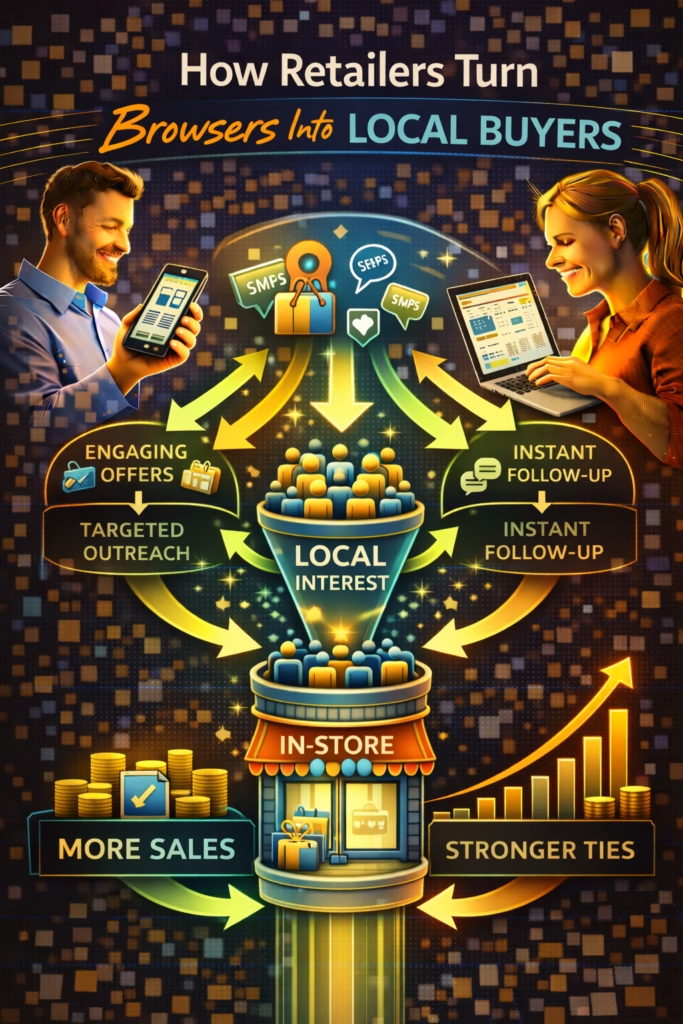
How Retailers Turn Browsers Into Local Buyers

ChatGPT Image Feb 26 2026 01 27 35 PM
How Retailers Turn Browsers Into Local Buyers

How Retailers Turn Browsers Into Local Buyers

How Retailers Turn Browsers Into Local Buyers is the blueprint for converting online attention into in-store revenue—by using trust, clarity, speed-to-lead, and a frictionless “next step” system.

Conversion Drivers: Trust Signals Offer Clarity Response Speed Follow-Up Appointment Booking Local Proof

Note: This is general guidance. Follow platform policies, keep claims truthful, and avoid spam/duplication. Confirm compliance before automating messages or posting at scale.

Introduction

How Retailers Turn Browsers Into Local Buyers comes down to one reality most retailers ignore:

Browsers aren’t low intent. They’re high intent with low trust and high friction.

People browse because it’s safe. Buying is risky. They worry about price, availability, scams, wasted time, poor quality, and confusing processes. If your listing, profile, and first message don’t remove that risk quickly, they drift away—even if they genuinely want what you sell.

This guide gives you a conversion system that works across marketplaces, social, and local search. The goal is simple:

Turn views → messages → booked next steps → local purchases.

Expanded Table of Contents

1) Why browsers don’t buy (and what they’re really thinking)

Most retailers think “browsers are just window shoppers.” But most browsers are actually shoppers who haven’t been convinced you’re the safest, easiest option yet.

The 6 silent objections behind browsing

1) “Is this real?”

They worry about scams, bait-and-switch, or outdated listings.

2) “Is it worth my time?”

They fear long drives, wasted visits, or unclear availability.

3) “Will they respond?”

They’ve been ignored before. Slow replies kill intent.

4) “What’s the total price?”

Hidden fees, unclear terms, confusing financing = friction.

5) “Will I regret it?”

No proof, no reviews, no reassurance = uncertainty.

6) “Is there a better option?”

If you don’t control the comparison, competitors will.

Goal: Your content and messaging should answer these objections before the buyer asks.

2) The local trust equation: how buyers decide fast

Local buyers decide quickly when trust is high and friction is low.

The trust equation

Local Purchase Likelihood = (Clarity + Proof + Responsiveness) − Friction

What increases trustWhat decreases trustWhat reduces friction
Real photosStock-only imagesSimple next step
Reviews/testimonialsNo proofClear hours/location
Transparent pricingHidden fees3 appointment options
Fast repliesDelayed repliesShort answers + scripts

Pro move: Don’t “sell harder.” Make buying feel safer and simpler.

3) Clarity sells: the listing framework that removes friction

Clarity is the conversion engine. The best listings remove questions faster than the buyer can form them.

The high-converting retail listing structure

  1. First photo: clean, real, well-lit, shows the item clearly
  2. Title: product + local benefit + key option (delivery/financing)
  3. First line: “Real photos + available now ✅” (or truthful equivalent)
  4. Bullets: 5–7 benefits (not specs overload)
  5. Local trust: location, hours, pickup/delivery options
  6. Next step CTA: one question (city/zip + timeline)

Copy/paste listing template

Title: [Product] + [Local Hook] + [Option]
First line: Real photos + clear details ✅

Highlights:
• [Benefit #1]
• [Benefit #2]
• [Benefit #3]
• [Option: delivery / setup / financing if available]
• [Local reassurance: showroom pickup / same-day options if true]

Next step:
What city/zip are you in, and are you looking for today or this week?

Rule: The best retail listings feel like a helpful salesperson—not a messy warehouse.

4) Proof stacking: the fastest conversion multiplier

Proof makes buyers feel safe. If your proof is weak, your price becomes the only argument—and that’s a losing game.

Proof assets retailers should collect weekly

  • Customer reviews (screenshots or linkable proof)
  • “In-store” photos (clean, real environment)
  • Delivery/setup photos (if applicable)
  • Short testimonial clips (10–20 seconds)
  • Before/after (space upgrades, room setups, etc.)

Proof placement map

StageWhere proof goesWhy it works
ScrollPhoto set + bulletsReduces uncertainty
Message1 proof screenshotBuilds instant trust
AppointmentMap/location + hoursRemoves friction

Pro move: Keep a “Proof Folder” and drop in 3 new items per week. Proof compounds conversion.

5) Offer framing: how retailers win without racing to the bottom

Retailers lose when they try to “discount their way” into trust. Instead, build an offer that feels safe and easy.

The 5 retail offer pillars

Clarity

Clear price, availability, and options.

Convenience

Delivery, pickup, setup, flexible timing (if true).

Confidence

Reviews, real photos, transparent process.

Comparison control

Explain why your option is safer/better.

Next step simplicity

One clear action: book a visit or get a quote.

Offer language that converts (without hype)

  • “Real photos + available options today.”
  • “Quick answers—tell me your zip and timeline.”
  • “We’ll make this simple—here are your fastest next steps.”

Rule: Don’t sell price. Sell safety + simplicity + speed.

6) Speed-to-lead: the #1 leak in local retail sales

If you improve only one thing, improve response speed.

Why response speed matters

  • Intent is highest in the first minutes after a message
  • Buyers contact multiple sellers at once
  • Fast replies create trust and momentum

Response targets

TimeOutcome
< 1 minuteBest: highest conversion
< 5 minutesStrong: competitive advantage
> 30 minutesHigh leakage risk

Pro move: A fast reply with one question beats a long pitch sent late.

7) Message flow that books appointments (scripts included)

Retail conversion messaging should do three things: confirm, qualify, and offer a next step.

Universal instant reply

Yes — I can help ✅

What city/zip are you in, and are you looking for today or this week?
I’ll confirm the best options.

When they ask “Is this still available?”

Yes — available ✅
What city/zip are you in, and are you looking for today or this week?

When they ask “What’s your best price?”

Totally fair question.
If you tell me your zip + timeline (today/this week), I’ll confirm the best option and the fastest next step.

When they go silent after your reply

Quick check — do you want the fastest option today, or are you shopping for later this week?
What zip are you in?

Rule: Keep it short. One question. One next step.

8) Turning messages into visits: the 3-option booking method

Retailers win when they offer structured options that feel easy to say “yes” to.

3-option booking message (copy/paste)

Perfect — quickest next step is a quick visit/pickup option.

Which works best?
1) Today (late afternoon)
2) Tomorrow (morning)
3) This weekend

Send your preferred option + your zip and I’ll lock it in.

Why this works

  • Reduces decision fatigue
  • Creates momentum
  • Turns browsing into action

Pro move: “Options” convert better than “Let me know when you want to come by.”

9) Follow-up that feels helpful (not pushy)

Follow-up is a service: it keeps the buyer from restarting the search.

Follow-up schedule

WhenMessageGoal
+2 hours“Do you want the fastest option today or this week?”Recover intent
+24 hours“Want me to recommend the best option for your budget?”Offer help
+72 hours“If you tell me zip + timeline, I’ll line it up.”Reduce friction
+7 days“Should I keep this open for you?”Reactivation

Rule: Follow-up should move the buyer forward, not guilt them.

10) Inventory presentation: how to show choices without overwhelming

Too many choices kills local conversion. Your job is to guide the buyer to the best fit.

The “3 choices” inventory method

  • Good: best value option
  • Better: most popular option
  • Best: premium upgrade option

Message template for 3 choices

Based on what most local buyers want, here are 3 solid options:

1) Good (best value): [Option]
2) Better (most popular): [Option]
3) Best (premium upgrade): [Option]

Which direction fits you best — value, most popular, or premium?

Pro move: Help them choose. Don’t dump a catalog in chat.

11) Compliant automation: what to automate and what not to

Automation can protect response speed and prevent lead leakage—if it stays compliant and buyer-friendly.

Automate (usually safe)

  • Instant reply asking city/zip + timeline
  • Lead routing to staff
  • Follow-up reminders
  • Daily KPI reporting

Be careful with

  • Bulk repetitive messaging
  • Spam-like posting patterns
  • Misleading urgency or claims

Important: Always follow platform rules and local regulations. Keep automation helpful, truthful, and respectful.

12) KPIs that predict local sales

KPIWhat it measuresTarget direction
Views → messages rateListing clarity + offer strengthUp
Median response timeSpeed-to-leadDown
Messages → booked stepsScript effectivenessUp
Booked steps → purchasesIn-store close qualityUp
Follow-up recovery rateSaved “lost” leadsUp
Refunds/complaintsExpectation alignmentDown

Rule: Track booked next steps weekly. That’s where local revenue is created.

13) 30–60–90 day rollout plan

Days 1–30 (Fix leakage + build trust)

  1. Improve first photos + titles for clarity
  2. Deploy instant replies and response targets
  3. Implement 3-option booking method
  4. Start follow-up schedule
  5. Build proof folder (3 proof assets/week)

Days 31–60 (Increase conversion throughput)

  1. Standardize scripts across team
  2. Rotate offer angles (value/speed/premium/trust)
  3. Introduce 3-choice inventory guidance
  4. Run weekly A/B tests (thumbnail + hook)

Days 61–90 (Systemize and scale)

  1. Document SOPs (posting, messaging, follow-up)
  2. Automate reminders + reporting
  3. Replicate system to second platform
  4. Optimize based on KPI trends weekly

Pro move: Don’t chase more leads until your conversion system is tight. Fix leakage first.

14) 25 Frequently Asked Questions

1) What does “How Retailers Turn Browsers Into Local Buyers” mean?

It means building a repeatable system that moves people from viewing to messaging to booking a next step and buying locally.

2) Why do most browsers never become buyers?

Because trust is low and friction is high: unclear details, weak proof, slow response, and no clear next step.

3) What is the fastest way to turn a browser into a buyer?

Clarity + fast response + one-question CTA + simple appointment options.

4) Do local buyers care more about trust or price?

Trust often decides the sale—especially for higher-ticket purchases.

5) How important is response speed for retail leads?

It’s critical. The first minutes are when intent is highest.

6) What should my first reply say?

Confirm help/availability and ask city/zip + timeline.

7) What’s the best CTA for retailers?

“What zip are you in, and are you looking for today or this week?”

8) How do I get more messages from views?

Improve first photo, title clarity, proof, and simplify the offer.

9) Are real photos better than stock photos?

Yes—real photos build trust and improve conversion.

10) What proof converts fastest?

Reviews, real in-store photos, and simple outcome proof.

11) How do I follow up without being pushy?

Offer help and reduce friction with one clear question.

12) What follow-up timing works best?

2 hours, 24 hours, 72 hours, and 7 days.

13) What if they only ask “price”?

Answer briefly, then ask zip + timeline to move to a next step.

14) How do I book more appointments?

Use the 3-option booking method instead of open-ended invites.

15) What is the 3-option booking method?

Offer three time windows and ask them to choose one.

16) How do I avoid overwhelming buyers with inventory?

Show only 3 choices: good, better, best.

17) What’s the biggest leak in local retail conversion?

Slow responses and no follow-up system.

18) How do I improve conversion without discounting?

Increase proof, clarity, convenience, and next-step simplicity.

19) What KPIs matter most?

Views-to-messages, response time, messages-to-booked steps, booked steps-to-sales.

20) What KPI predicts revenue best?

Booked next steps.

21) How long does it take to see results?

Often within 1–2 weeks, with compounding over 30–90 days.

22) Can this work without paid ads?

Yes—organic conversion systems can drive local sales consistently.

23) Should I automate messages?

Automate low-risk items like instant replies and reminders where allowed.

24) What should I not automate?

Spam-like bulk messaging or repetitive posting patterns.

25) What’s the simplest improvement I can make today?

Reply faster and ask one question that moves the sale forward.

15) 25 Extra Keywords

  1. How Retailers Turn Browsers Into Local Buyers
  2. turn browsers into local buyers
  3. local retail lead conversion
  4. retail conversion system
  5. convert marketplace leads to sales
  6. turn messages into appointments
  7. speed to lead retail
  8. retail follow up scripts
  9. local buyer psychology
  10. in store appointment booking
  11. how to convert online shoppers locally
  12. retail trust signals
  13. proof stacking for retailers
  14. high converting retail listings
  15. marketplace conversion tips
  16. Facebook Marketplace retail strategy
  17. Google Business Profile conversion
  18. local store marketing system
  19. reduce lead leakage retail
  20. message scripts for retailers
  21. turn views into buyers
  22. convert browsers into customers
  23. local retail marketing 2026
  24. retail sales follow up process
  25. booked next steps KPI

© 2026 Your Brand. All Rights Reserved.
General information only—confirm compliance with platform policies and applicable privacy/marketing rules before posting, messaging, or automating follow-ups.

How Retailers Turn Browsers Into Local Buyers Read More »

How Automation Levels the Playing Field

ChatGPT Image Feb 26 2026 01 27 28 PM
How Automation Levels the Playing Field

How Automation Levels the Playing Field

How Automation Levels the Playing Field is the blueprint for helping smaller businesses compete with bigger brands—by automating speed, consistency, follow-up, and customer experience.

Automation Wins: Speed-to-Lead Follow-Up Consistency Proof Scheduling Reporting

Note: This is general guidance. Follow platform policies, avoid spam-like behavior, protect customer privacy, and provide a clear path to a real person for sensitive issues.

Introduction

How Automation Levels the Playing Field comes down to one simple truth:

Big companies win by buying speed, coverage, and consistency with headcount. Small businesses can build the same advantage with automation.

For most SMBs, the problem is not a lack of skill or quality. It’s a lack of time and systems. The owner is the marketer, salesperson, customer service rep, operations manager, and closer—often all on the same day.

Meanwhile, larger competitors have:

  • Teams responding instantly
  • Follow-up sequences that never forget
  • Scheduling and reminders to reduce no-shows
  • Consistent content and visibility routines
  • Dashboards that show what’s working

The good news: those advantages are not “special.” They’re systemized. Automation makes them accessible.

Big idea: Automation doesn’t replace your business—it protects it from inconsistency.

Expanded Table of Contents

1) What automation really means for SMBs

Automation is not “spam.” It’s not blasting messages. It’s not removing humans.

How Automation Levels the Playing Field starts with one goal:

Make sure the right things happen every time—without relying on memory, mood, or free time.

Automation can handle

  • Instant replies and lead routing
  • Missed-call text backs
  • Follow-up sequences that stop when customers respond
  • Appointment confirmations and reminders
  • Review requests and review response prompts
  • Simple lead tracking and weekly reporting

Humans should handle

  • Complex questions and sensitive support
  • High-trust conversations
  • Custom quotes and judgment calls
  • Escalations and conflict resolution

Rule: Automate timing and consistency. Keep the relationship human.

2) Why automation levels the playing field

Most SMBs lose for predictable reasons:

  • They respond too late
  • They forget to follow up
  • They don’t capture proof consistently
  • They don’t request reviews at scale
  • They don’t know which channels are working

Automation counters each one by making good behavior automatic.

Big brand advantageWhat it really isAutomation equivalent
Call center / fast repliesSpeed-to-leadInstant reply + lead routing
Dedicated sales follow-upConsistencyFollow-up sequences + reminders
Brand trustProofReview requests + proof capture routine
Operations teamProcessIntake forms + scheduling automation
Analytics teamVisibilityWeekly KPI dashboard + alerts

Pro move: You don’t need “more leads” first. You need fewer leaks.

3) Speed-to-lead: the first automation priority

If you only automate one thing, automate speed-to-lead.

Why: The best lead is the one that’s still paying attention.

Instant reply template (universal)

Yes — I can help ✅
What city/zip are you in, and are you looking for today or this week?

Share one detail and I’ll confirm the fastest next step.

Missed-call text back (simple)

Hey! Sorry I missed your call — how can I help?
What city/zip are you in, and what are you looking to get done?

Lead routing rules

  • Route urgent leads to the fastest responder
  • Route by service type if you have specialists
  • Route by location/market if multi-city

Pro move: Speed is not only a conversion boost—it’s a reputation boost.

4) Follow-up automation: recover “lost” leads

Many leads aren’t lost because they said no. They’re lost because nothing happened next.

The simplest follow-up sequence

T+2 hours: Quick check-in + one next step
Next day: Offer a time window / option
3 days: “Still looking?” message
7 days: Final polite touch

Follow-up scripts (short + human)

T+2 hours: Just checking — do you want to do this today or later this week?
Next day: I have an opening [day/time]. Want me to lock it in?
3 days: Still looking for help with this, or did you get it handled?
7 days: No worries either way — if you need anything later, just reply here.

Important: Automation should stop when someone replies. Never “sequence over” the customer.

5) Consistency automation: show up every day without burnout

Consistency is where automation becomes a competitive moat. Big competitors can publish, post, and follow routines because staff exists for it. SMBs can replicate that with scheduled workflows.

Consistency that compounds

Visibility consistency

Scheduled posts, weekly updates, and routine activity signals keep your presence “alive.”

Sales consistency

Every lead gets the same fast reply, the same next step, and the same follow-up.

Ops consistency

Every job triggers the same “proof capture” and “review request” workflow.

Measurement consistency

Every week, you see what happened—and what needs to change.

Rule: Your business grows when good behavior becomes the default behavior.

6) Intake and qualification: reduce time-to-quote

One of the biggest SMB disadvantages is slow quoting. Bigger brands have staff collecting details. Automation collects them for you.

Intake questions that speed everything up

  • City/zip
  • What do you need help with?
  • Timing: today / this week / this month
  • Best contact method
  • Photos (if relevant)

Micro-intake script (message-friendly)

Got it ✅
1) What city/zip?
2) Are you looking for today or this week?
3) Any photo you can share?

Pro move: Intake is not a formality. It’s conversion.

7) Scheduling and reminders: reduce no-shows

No-shows and missed appointments silently crush SMB capacity. Automation fixes this with confirmations and reminders.

Reminder sequence (simple + effective)

Immediately: Confirm date/time + location
24 hours before: Reminder + what to prepare
2 hours before: Quick “still good?” confirmation

Reminder templates

Confirm: You’re set for [day/time]. Reply YES to confirm.
24hr: Reminder for [day/time]. If anything changes, reply here.
2hr: Still good for [time]? Reply YES and I’ll see you soon.

Rule: The less friction you remove, the more capacity you create.

8) Review automation: increase trust with less effort

Reviews are a trust engine. Big brands get reviews at scale because they have systems. SMBs can do the same with automation that triggers after a job completes.

Review request trigger

Trigger: Job marked complete / invoice paid / delivery confirmed
Send: Review request link
Reminder: 48–72 hours if no review (optional)
Notify: Team to reply to review within 24 hours

Review request message

Hey [Name] — quick favor 🙏
If you were happy with everything, could you leave a quick review?
It helps local customers find us. Here’s the link: [link]
Thank you!

Important: Keep review requests honest and policy-compliant. Never incentivize in restricted ways.

9) Proof-content workflows: automate the “capture” habit

Most SMBs don’t need to become content creators. They need to become proof collectors.

Proof capture checklist

[ ] 3 before photos
[ ] 3 after photos
[ ] 1 short walkthrough video (10–20s)
[ ] 1 customer quote (optional)
[ ] Save to a folder by job/date

Proof post templates (rotate weekly)

  • Before/After: “Swipe to see the difference.”
  • FAQ: “People ask us [question]—here’s the answer.”
  • Availability: “Openings this week in [city].”

Pro move: Proof is the content that converts. You don’t need trends. You need evidence.

10) Reporting: automate your weekly KPI reality check

When you can’t see your numbers, you can’t improve them. Automation gives you a simple scoreboard.

KPIWhat it measuresWhy it matters
Median response timeSpeed-to-leadPredicts conversions
Booked next stepsPipeline healthPredicts revenue
Follow-up completionConsistencyRecovers leads
Review requests sentTrust actionsIncreases proof
Reviews earnedTrust outputImproves conversion
Close rateOffer strengthShows what to fix

Rule: Weekly reporting turns automation into a compounding advantage.

11) What NOT to automate

Automation is powerful, but some areas should remain human-first:

  • Conflict resolution and complaints
  • Complex medical/legal/financial guidance
  • Promises about availability you can’t guarantee
  • Anything that could violate platform policies
  • Long “spammy” sequences that keep firing after replies

Important: The fastest way to damage trust is to automate dishonesty or confusion.

12) Compliance and customer trust principles

How Automation Levels the Playing Field only works long-term when customers trust the experience.

Trust rules

  • Keep messages short and helpful
  • Be truthful about what you offer
  • Give an easy path to a human
  • Protect customer data
  • Respect opt-outs and quiet hours

Pro move: A “human handoff” button is not optional—it’s protection.

13) A simple SMB automation stack

You don’t need a complex stack to win. Start lean:

Core components

  • CRM (even a simple one)
  • Missed-call text back
  • Instant reply templates
  • 4-step follow-up sequence
  • Booking link + reminders
  • Review request trigger
  • Weekly KPI dashboard

Rule: Build the minimum viable system first. Improve it every month.

14) 30–60–90 day rollout plan

Days 1–30 (Fix leakage)

  1. Deploy instant replies + missed-call text backs
  2. Launch a simple follow-up sequence that stops on reply
  3. Install intake questions to speed quoting
  4. Start tracking response time + booked next steps

Days 31–60 (Standardize)

  1. Add scheduling confirmations + reminders
  2. Launch review request automation
  3. Document your SOPs
  4. Start weekly KPI review

Days 61–90 (Compound)

  1. Automate proof capture workflow
  2. Improve scripts based on conversions
  3. Scale the best lead sources
  4. Add reporting alerts for response time and follow-up failures

Rule: Automation wins when it improves outcomes—speed, clarity, and follow-through.

15) 25 Frequently Asked Questions

1) How does automation level the playing field for small businesses?

It gives SMBs speed, consistency, and follow-up discipline—advantages big companies usually buy with headcount.

2) What should a small business automate first?

Speed-to-lead and follow-up: instant replies, missed-call texts, and a short nurture sequence.

3) Will automation make my business feel impersonal?

Not if you keep messaging human and provide easy handoff to a real person.

4) What is lead leakage?

Leads that don’t convert due to slow replies, forgotten follow-ups, or unclear next steps.

5) Is automation only for big companies?

No—SMBs often benefit more because automation replaces headcount.

6) Do I need AI to automate?

No. Simple rule-based automation can deliver major gains.

7) What KPIs improve most with automation?

Response time, booked next steps, close rate, and time-to-quote.

8) What is speed-to-lead?

How fast you respond to a new inquiry.

9) How do I automate follow-up without annoying people?

Keep messages short, helpful, spaced out, and stop when they reply.

10) What should I not automate?

Sensitive support issues, complex decisions, and anything that risks policy violations or misleading claims.

11) Does automation help organic marketing?

Yes—better response and follow-up increases conversion, which increases proof and reviews over time.

12) Can automation improve Google Business Profile results?

Indirectly—better conversion and review velocity support trust and outcomes.

13) Can automation help with reviews?

Yes—automated requests and reminders increase review velocity.

14) How does automation help with staffing shortages?

It handles repetitive tasks so humans focus on judgment-based work.

15) Is it expensive to automate?

It can start very affordable—especially compared to losing leads.

16) How long does it take to see results?

Often within days for response time, and 30–90 days for compounding gains.

17) What is the simplest automation stack?

CRM + instant replies + missed-call text back + follow-up + scheduling reminders + KPI tracking.

18) Does automation replace salespeople?

No—it supports them by guaranteeing speed and consistency.

19) How do I keep automation compliant?

Be truthful, avoid spam patterns, respect opt-outs, protect data, and follow platform policies.

20) What’s the best first message to automate?

A confirmation plus one question about location and timing.

21) How do I automate appointment scheduling?

Use a booking link and automated reminders with confirmation messages.

22) Can automation help with quotes?

Yes—intake questions and automated follow-ups reduce time-to-quote and lead drop-off.

23) What’s the biggest automation mistake SMBs make?

Over-automating without a human handoff—or continuing sequences after replies.

24) How do I measure automation ROI?

Track response time, booked next steps, recovered leads, and revenue changes before and after.

25) What is the best long-term automation strategy?

Automate speed and follow-up first, then layer reviews, content workflows, and reporting improvements over time.

16) 25 Extra Keywords

  1. How Automation Levels the Playing Field
  2. automation levels the playing field
  3. small business automation
  4. automation for SMBs
  5. business automation systems
  6. speed to lead automation
  7. automated follow up for leads
  8. lead nurturing automation
  9. missed call text back automation
  10. appointment reminder automation
  11. review request automation
  12. local marketing automation
  13. AI automation for small business
  14. sales process automation SMB
  15. customer service automation for SMB
  16. automation to reduce lead leakage
  17. improve close rate with automation
  18. pipeline automation for small business
  19. automation workflow SOPs
  20. booked next steps KPI
  21. conversion optimization automation
  22. automated intake questions
  23. 2026 small business automation strategy
  24. automate local SEO workflows
  25. automated reporting dashboard SMB

© 2026 Your Brand. All Rights Reserved.
General information only—confirm compliance with platform policies and applicable privacy/marketing rules before posting, messaging, or automating follow-ups.

How Automation Levels the Playing Field Read More »

Small Business Growth Without Paid Media

ChatGPT Image Feb 26 2026 01 27 30 PM
Small Business Growth Without Paid Media

Small Business Growth Without Paid Media

Small Business Growth Without Paid Media is the blueprint for building a lead engine that compounds—using organic visibility, proof, speed-to-lead, and systems—without relying on monthly ad spend.

Growth Levers: Google Maps Reviews Local SEO Proof Content Partnerships Speed-to-Lead

Note: This is general guidance. Follow platform rules, avoid misleading claims, and keep outreach/review requests compliant with applicable laws and policies.

Introduction

Small Business Growth Without Paid Media is not about “never spending a dollar.” It’s about not needing ads to survive.

When your business depends on paid media, growth feels fragile. If costs rise, leads drop. If ads pause, revenue slows. Organic growth fixes that by building a system that keeps producing even when you’re not buying attention.

In 2025–2026, local growth is dominated by a handful of forces:

  • Intent channels: people searching for help right now (Maps, local SEO, marketplaces)
  • Proof signals: reviews, photos, and reputation velocity
  • Speed-to-lead: how fast you respond and guide the next step
  • Consistency: small weekly actions that compound

The good news: you don’t need a huge team to win. You need the right stack, a weekly routine, and a simple measurement system.

Big idea: Organic growth is not a tactic. It’s a workflow.

Expanded Table of Contents

1) What “Small Business Growth Without Paid Media” really means

Small Business Growth Without Paid Media means you can consistently produce leads and revenue without depending on ads as your main fuel source.

It does not mean

  • Never spending money on marketing
  • Refusing all tools or automation
  • Posting nonstop on social media

It does mean

  • Owning your demand capture channels (Maps + SEO)
  • Building proof systems (reviews + photos)
  • Converting leads with speed-to-lead
  • Creating a weekly routine that compounds

Pro move: The goal is “ads optional.” Not “ads forbidden.”

2) Why paid media feels like a trap for SMBs

Paid media can work, but for many SMBs it creates a fragile system:

  • Costs rise: CPCs go up, margins go down
  • Learning curves are steep: creative, targeting, landing pages, tracking
  • Stop spending = stop leads
  • Inconsistent ops: slow response + weak follow-up wastes spend

Rule: Ads amplify what’s already working. If your organic conversion is weak, ads magnify the leak.

When ads become safer

  • You have a proven offer
  • You respond fast
  • You have proof and a clean conversion flow
  • You can measure booked jobs, not just clicks

3) The organic growth stack (2025–2026)

This is the modern foundation for Small Business Growth Without Paid Media:

LayerGoalWhat to build
Demand CaptureShow up for local intentGBP + local SEO pages
TrustRemove buyer hesitationReviews + proof photos
Proof DistributionStay current and visibleShort-form proof + posts
ConversionTurn inquiries into bookingsScripts + one-question CTA
Retention + ReferralsCompound growthFollow-up + referral loops
TrackingImprove weeklyKPI dashboard + SOPs

Pro move: A stack is a sequence. Build it in order: capture → trust → convert → follow up → measure.

4) Google Business Profile: the organic demand capture machine

For local businesses, Google Business Profile is often the highest leverage asset because it captures people who are already searching.

GBP essentials (non-negotiable)

  • Correct primary category + accurate services
  • Consistent name, address, phone (NAP)
  • Fresh photos weekly
  • Clear service areas (if applicable)
  • Fast response to calls/messages

GBP weekly routine (20–30 minutes)

[ ] Add 5–10 new real photos
[ ] Publish 1 post (proof / offer / update)
[ ] Ask 5 customers for reviews
[ ] Reply to every review
[ ] Check Q&A and messages

Rule: Most SMBs don’t lose because they’re not good. They lose because their GBP looks inactive.

5) Review velocity: the trust multiplier

Review velocity is how consistently you earn reviews over time. It matters because buyers (and platforms) trust businesses that look active and proven.

What review velocity does

Boosts trust

Buyers choose the business that looks safest. Reviews reduce risk.

Improves conversion

More inquiries turn into booked jobs when proof is strong.

Supports visibility

Active profiles tend to perform better than stale ones.

Raises pricing power

Strong proof reduces price sensitivity.

Review request script (simple + effective)

Hey [Name] — quick favor 🙏
If you were happy with the experience, could you leave us a quick Google review?
It helps local customers find us. Here’s the link: [link]
Thank you!

Important: Don’t gate or manipulate reviews. Ask consistently and keep it honest.

6) Local SEO pages: turning searches into calls

Local SEO wins when your pages do two things well: answer intent and reduce objections fast.

Local page must-haves

  • Clear H1: service + city
  • Proof block: reviews + photos
  • Service bullets: what you do (and don’t)
  • Process: 3 steps to the next result
  • FAQ: real objections answered
  • CTA: call/text/form, with a single next step

Local landing page blueprint

H1: [Service] in [City]
Intro: who you help + outcome
Proof: 3 reviews + 6 photos
Services: bullets
Process: 3 steps
FAQ: 8–12 questions
CTA: call/text + short form

Rule: Your local page is your closer. Treat it like a salesperson.

7) Proof content: make your work sell itself

Proof content is not “influencer content.” It’s evidence.

Proof content that converts

  • Before/after photos
  • Short walkthrough videos (10–30 seconds)
  • Customer quotes and testimonials
  • Behind-the-scenes process clips
  • FAQ clips (answer one question on camera)

The 3-post weekly loop (simple + sustainable)

PostWhat to showOutcome
Proofresult / before-aftertrust
FAQone objection answeredclarity
Updateavailability / seasonal tipfreshness

Pro move: Proof content builds your “organic close rate.” The better you prove, the less you persuade.

8) Marketplaces: optional but powerful (when relevant)

For many SMB categories (retail, home services, local delivery, certain repairs), marketplaces can produce fast results because buyers are already browsing with intent.

Marketplace success pillars

  • Variety: multiple angles, offers, and listings
  • Freshness: steady cadence you can sustain
  • Thumbnails: first photo wins the scroll
  • Speed-to-lead: quick replies win inquiries

Avoid: Posting identical duplicates. Rotate photos, hooks, and angles while staying truthful and compliant.

9) Partnerships: the hidden organic lead source

Partnerships are one of the most underused strategies in Small Business Growth Without Paid Media.

Best partners are adjacent, not competing

  • A painter partners with a realtor, contractor, or property manager
  • A mattress store partners with movers, chiropractors, or apartment communities
  • A landscaper partners with pool companies or fence installers

Partnership pitch template

Hey [Name] — quick idea.
We both serve the same local customers, just at different steps.
If we send each other a few referrals each month, both businesses win.
Want to test it for 30 days and track results?

Rule: Partnerships work when you make referrals frictionless and trackable.

10) Referrals: the compounding growth loop

Referrals are the most “paid-media-proof” lead source because they come pre-trusted.

Referral loop SOP

[ ] Ask at the moment of success (right after a great outcome)
[ ] Make it easy: “If you know someone who needs help, text me their name.”
[ ] Thank them quickly
[ ] Track referrals weekly
[ ] Follow up with the referred lead within 5 minutes

Referral ask script

Glad you’re happy with everything 🙌
If you know anyone else who needs help, I can take care of them too.
Want to text me their name/number and I’ll reach out politely?

Pro move: Referral requests fail when they feel like marketing. Make it about helping their friend.

11) Speed-to-lead: the unfair advantage

Most businesses lose leads because they reply too late. Organic channels are “free,” but only if you can convert the leads you already receive.

Instant reply (universal)

Yes — I can help ✅
What city/zip are you in, and are you looking for today or this week?

If you share one detail, I’ll confirm the fastest next step.

Why speed-to-lead increases growth without ads

  • More inquiries become booked jobs
  • More booked jobs generate reviews
  • More reviews increase Maps conversion
  • More conversion increases organic visibility and referral momentum

Rule: Fast response is the multiplier that makes every organic channel stronger.

12) Follow-up: most “lost leads” are just unmanaged

Leads often don’t say “no.” They just disappear because they got busy, got distracted, or are waiting for clarity.

Follow-up timing sequence (simple)

T+2 hours: quick check-in
Next day: offer a next step
3 days: “still looking?” message
7 days: final polite check-in

Follow-up scripts

T+2 hours: Just checking — do you want to schedule this for today or later this week?
Next day: I have an opening [day/time]. Want me to lock it in?
3 days: Still looking for help with this, or did you get it handled?
7 days: No worries either way — if you need anything later, just reply here.

Pro move: Follow-up is not pressure. It’s clarity.

13) SOPs: the system that makes organic scalable

Organic marketing fails when it’s “someone’s job when they have time.” SOPs turn it into a routine.

Minimum SOP list

  • Weekly GBP routine
  • Review request workflow
  • Proof capture workflow (photos/video)
  • Instant reply + follow-up scripts
  • Weekly KPI review

Weekly organic routine (60 minutes total)

Mon: Update GBP (photos + post) (20 min)
Wed: Ask for reviews + reply to reviews (15 min)
Fri: Post proof + update your page/FAQ (25 min)

Rule: A simple routine you keep beats a perfect plan you abandon.

14) KPIs: what to measure weekly

KPIWhat it measuresTarget direction
Leads by sourceChannel performanceStable / Up
Booked next stepsPipeline healthUp
Close rateOffer + trust strengthUp
Median response timeLead leakageDown
Review velocityTrust growthUp
Proof outputs/weekContent consistencyStable / Up

Pro move: Track “booked next steps” weekly. That metric predicts revenue better than views.

15) 30–60–90 day rollout plan

Days 1–30 (Stabilize)

  1. Fix/optimize GBP and add fresh photos weekly
  2. Start consistent review requests (5/week)
  3. Create 1 strong local landing page (service + city)
  4. Deploy instant reply + follow-up sequence
  5. Track leads by source + response time

Days 31–60 (Grow)

  1. Add 2–4 additional local pages (services/cities)
  2. Run the 3-post proof loop weekly
  3. Launch 3–5 partnerships with adjacent businesses
  4. Improve scripts and close rate

Days 61–90 (Compound)

  1. Standardize SOPs
  2. Increase proof production (photos/videos)
  3. Double down on best sources
  4. Expand referral loop and track outcomes

Rule: Organic growth compounds when trust, consistency, and conversion improve together.

16) 25 Frequently Asked Questions

1) Can a small business grow without paid media?

Yes. Small Business Growth Without Paid Media works by building an organic stack: GBP, reviews, local SEO, proof content, partnerships, referrals, and fast response systems.

2) What is the fastest organic channel for local businesses?

Google Business Profile (Maps) is often the fastest because it captures existing intent. Marketplaces can also be fast when relevant.

3) What matters more than posting every day?

Consistency, proof, and response speed. A small weekly routine can outperform daily bursts followed by silence.

4) How do I get more leads without ads?

Improve GBP, grow reviews steadily, build local SEO pages, publish proof content weekly, and respond fast with strong follow-up.

5) Do I need a website to grow organically?

A website helps, but a clean landing page plus a strong GBP can be enough to start.

6) How many reviews do I need?

There’s no single number, but steady review velocity matters. Consistency builds trust and conversion over time.

7) How do I increase review velocity safely?

Ask every satisfied customer, make it easy with a link, and reply to reviews. Avoid manipulation.

8) What’s the best way to rank in Google Maps?

Strong relevance (categories/services), trustworthy proof (reviews/photos), and ongoing profile activity help performance.

9) What should I post on my GBP?

Proof posts, offers, updates, and seasonal tips—kept simple and consistent.

10) How often should I add photos?

Weekly is strong. Fresh photos improve trust and keep your profile active.

11) What is proof content?

Photos, videos, testimonials, and results that show real outcomes and reduce buyer hesitation.

12) Do social media followers matter for local growth?

Followers can help, but local intent + proof + conversion matters more than vanity metrics.

13) Are partnerships really effective?

Yes. Adjacent partners can send warm leads consistently with very low cost.

14) What’s the best partnership strategy?

Pick adjacent businesses, propose a 30-day test, make referrals easy, and track results.

15) How do I generate more referrals?

Ask at the moment of success, keep it casual, and make the referral action simple.

16) What is speed-to-lead?

How fast you respond to new inquiries. Faster response increases bookings dramatically.

17) What response time should I aim for?

Under 5 minutes is strong; under 1 minute is best when possible.

18) What’s the best CTA question?

“What city/zip are you in, and are you looking for today or this week?”

19) Why do leads go cold?

Slow response, unclear next steps, and weak follow-up. Many “lost leads” are just unmanaged.

20) How many follow-ups should I send?

A simple 2-hour, next-day, 3-day, and 7-day sequence is often enough.

21) Do I need a CRM?

You need a place to track leads and next steps. A spreadsheet works until volume increases.

22) What KPI matters most?

Booked next steps. It predicts revenue better than views or clicks.

23) How long does organic growth take?

Many businesses see improvements within 30–90 days of consistent execution.

24) When should I use paid ads?

When your organic conversion is strong and you can handle lead volume with fast response and follow-up.

25) What’s the biggest mistake SMBs make?

Inconsistent routines and slow response times. Organic wins come from steady compounding.

17) 25 Extra Keywords

  1. Small Business Growth Without Paid Media
  2. small business growth without paid media
  3. organic small business growth
  4. grow a small business without ads
  5. local marketing without ads
  6. free lead generation for small business
  7. Google Business Profile growth strategy
  8. Google Maps marketing without ads
  9. local SEO growth strategy
  10. service business growth without ads
  11. how to get more customers organically
  12. review velocity strategy
  13. get more Google reviews ethically
  14. proof content marketing for local business
  15. before and after marketing strategy
  16. speed to lead system
  17. follow up system for leads
  18. partnership marketing for local businesses
  19. referral system for small business
  20. organic lead generation system
  21. local business growth plan 2026
  22. small business marketing SOPs
  23. how to grow without Facebook ads
  24. how to grow without Google ads
  25. organic local marketing stack

© 2026 Your Brand. All Rights Reserved.
General information only—confirm compliance with platform policies and applicable privacy/marketing rules before posting, messaging, or automating follow-ups.

Small Business Growth Without Paid Media Read More »

Turning Platforms Into Lead Assets

ChatGPT Image Feb 25 2026 02 07 30 PM
Turning Platforms Into Lead Assets

Turning Platforms Into Lead Assets

Turning Platforms Into Lead Assets is the blueprint for transforming “rented attention” into compounding lead systems—through consistent cadence, proof stacking, response speed, follow-up workflows, and compliant automation.

Lead Asset Drivers: Cadence Freshness Proof Conversion Follow-Up Retargeting

Note: This is general guidance. Follow each platform’s rules, keep claims truthful, avoid spam/duplication, and confirm compliance before automating messaging or posting.

Introduction

Turning Platforms Into Lead Assets starts with a mindset shift: you’re not “posting.” You’re building an asset.

Most businesses treat platforms like a slot machine. They post when they remember, run a promo when leads dip, and hope the algorithm smiles on them.

That approach creates spikes. Assets create compounding.

When you treat platforms as assets, every action has a job:

  • Cadence creates stability and “freshness” signals.
  • Proof builds trust and improves conversion rate.
  • Response speed prevents lead drop-off.
  • Follow-up turns inquiries into booked next steps.
  • Retargeting captures the “not ready yet” buyers.

Big idea: You don’t need more platforms. You need a system that turns each platform into a lead-producing machine.

Expanded Table of Contents

1) What a “lead asset” actually is

A lead asset is a channel component that produces inquiries predictably because it’s been built to compound over time.

Examples of lead assets

  • An optimized marketplace listing library with rotating angles and photos
  • A Google Business Profile with consistent posts, photos, and review momentum
  • A short-form content library that produces inbound traffic weekly
  • A follow-up workflow that converts old leads into appointments
  • A retargeting audience that keeps your brand in front of intent buyers

Rule: If it only works when you “push,” it’s not an asset. If it works because you built a repeatable system, it is.

2) The platform asset stack (visibility → proof → conversion)

Turning Platforms Into Lead Assets is easiest when you use a simple stack:

LayerGoalWhat you build
VisibilityEarn impressions and clicksCadence + keywords + thumbnails + variety
ProofIncrease trust and message rateReviews, real photos, results, social proof
ConversionTurn leads into booked next stepsFast response + scripts + follow-up SOP
RetentionIncrease LTV and referralsAfter-sale messaging + review asks + reactivation

Rule: Most businesses chase visibility and ignore proof and conversion. The winners build the whole stack.

3) Platform types: marketplace, local search, social, and messaging

Not all platforms behave the same. Lead assets work when you match the system to the platform’s incentives.

Marketplaces

Incentive: recency + engagement + trust.

Assets: rotating listing library, fast replies, photo testing.

Local search (GBP / Maps)

Incentive: proximity + relevance + prominence.

Assets: reviews, photos, consistent posts, category alignment.

Social (TikTok/IG/FB)

Incentive: watch time + saves + shares.

Assets: repeatable short-form formats + content batching.

Messaging / CRM

Incentive: speed and follow-through.

Assets: scripts, routing, follow-up sequences, next-step booking.

Pro move: Build one platform into an asset first. Then replicate the system across platforms.

4) Cadence systems that don’t collapse

Cadence is the heartbeat of your lead asset. Without it, the platform assumes you’re inactive and stops distributing your content as often.

The “Minimum Viable Cadence” framework

  • Daily: 5–20 minutes of response + follow-up
  • Daily: 1–5 visibility actions (post/refresh/rotate)
  • Weekly: 60 minutes batching + one A/B test
  • Monthly: proof refresh (reviews, photos, top posts)

Daily cadence checklist (copy/paste)

[ ] Respond to new leads immediately
[ ] Follow up on open conversations (5–15)
[ ] Post/refresh 1–3 assets (with variation)
[ ] Upgrade 1 weak asset (photo/title/hook)
[ ] Capture 1 proof item (screenshot/review/before-after)

Rule: Small, sustainable daily cadence beats big bursts followed by silence.

5) Freshness loops: how recency compounds reach

Freshness is one of the most reliable platform incentives because it’s measurable and correlated with buyer satisfaction.

Freshness actions that are usually low-risk

  • Rotate first photo (thumbnail testing)
  • Rewrite title for clarity and intent
  • Update first 1–2 lines (hook) to improve CTR
  • Refresh proof (new photos, new reviews, new results)
  • Replace stale assets with stronger variants

Avoid: rapid repetitive edits, duplicate reposting, or manipulative behavior. Keep changes meaningful and spaced out.

Pro move: Treat freshness like maintenance. A little consistent upkeep beats rebuilding everything every month.

6) Content rotation without duplication (anti-flag framework)

Consistency fails when businesses repeat the same content and trigger spam signals. You need a rotation system.

The 5-axis rotation checklist

  • Angle: value / speed / premium / trust / convenience
  • Thumbnail: 3–5 first-photo candidates
  • Hook: 3–5 opening lines per offer
  • Features: rotate benefit emphasis
  • Timing: stagger time windows

Angle matrix (example)

AngleHookCTA
Value“Strong option if you want quality without overspending.”“What’s your budget range?”
Speed“Available now—quick next steps.”“Today or this week?”
Premium“For buyers who want the best experience.”“What matters most to you?”
Trust“Real photos, transparent details.”“What city/zip are you in?”
Convenience“Simple process—fast answers.”“Want the fastest option?”

Rule: Posting more without rotation increases risk. Posting consistently with rotation increases reach.

7) Proof stacking: the fastest way to improve conversion

Proof is the most underrated lead asset lever. Proof turns skeptical buyers into quick “yes” decisions.

Proof stack components

  • Real photos (not just stock)
  • Reviews and testimonials
  • Before/after examples
  • Process transparency (what happens next)
  • Outcome clarity (what the buyer gets)

Proof placement strategy

First impression

Use a strong thumbnail and a clarity-first hook.

Mid-scroll

Add proof bullets (reviews, results, guarantees if applicable).

Message stage

Send proof as a short screenshot or one-line testimonial at the right moment.

Close

Offer a simple next step with low friction.

Pro move: Build a “proof folder” and add to it weekly. Proof is an asset that compounds conversions.

8) Conversion workflows: from message to booked next step

A platform becomes a lead asset when it produces booked next steps, not just messages.

The conversion ladder

  1. Impression
  2. Click
  3. Scroll
  4. Message
  5. Fast reply
  6. Qualification
  7. Booked next step

Instant reply template (universal)

Yes — I can help ✅

What city/zip are you in, and are you looking to do this today or this week?
I’ll confirm the best next step.

Qualification questions (keep it simple)

  • Where are you located?
  • What’s your timeline (today/this week/this month)?
  • What matters most: price, speed, or quality?

Rule: Keep conversion friction low. One question beats five paragraphs.

9) Follow-up systems that recover “lost” leads

Most leads don’t say “no.” They say nothing. Follow-up turns silence into sales.

Follow-up schedule (simple and effective)

TimeGoalMessage
+2 hoursKeep momentum“Just checking—do you want the fastest option today or this week?”
+24 hoursRecover intent“Still want help with this? City/zip + timeline and I’ll line it up.”
+72 hoursOffer clarity“If you tell me what matters most (price/speed/quality), I’ll recommend the best option.”
+7 daysReactivation“Last quick check—should I keep this open for you?”

Pro move: Follow-up is not pressure. It’s service. Buyers get busy. Your job is to make it easy to continue.

10) Compliant automation: what to automate and what not to

Automation can strengthen your lead asset—if it stays compliant and human-like.

Automate (usually safe)

  • Instant replies that ask one question
  • Routing leads to the right person
  • Follow-up reminders
  • KPI tracking and reporting
  • Template libraries for approved messaging

Be careful with

  • Bulk messaging
  • High-volume repetitive posting
  • Anything that mimics spam patterns
  • Claims you can’t support

Important: Always follow platform rules. Avoid spam-like patterns, keep messages truthful, and ensure automation enhances buyer experience.

11) Retargeting layers: capturing buyers who aren’t ready

Retargeting turns “not now” into “later.” It’s how platforms become long-term assets.

Retargeting asset examples

  • Website visitor audiences
  • Engaged video viewers
  • Messenger/DM re-engagement audiences (where allowed)
  • Email list reactivation sequences

Rule: Retargeting isn’t just ads. It’s any system that keeps you in the buyer’s world after the first touch.

12) KPIs and dashboards for lead assets

KPIWhat it measuresTarget direction
Actions/dayCadence stabilityStable
Active assetsSurface areaUp
Messages/dayDemandUp
Messages per assetQuality per unitUp
Median response timeSpeed-to-leadDown
Booked next stepsRevenue predictorUp
Lead leakageFollow-up failureDown
Flags/removalsCompliance riskDown

Pro move: Measure “booked next steps” weekly. It’s the KPI that turns platforms into predictable revenue.

13) 30–60–90 day rollout plan

Days 1–30 (Build the foundation)

  1. Choose one primary platform and build a baseline cadence
  2. Create 3–5 angles and 10–20 content variants
  3. Deploy instant reply + follow-up schedule
  4. Start KPI tracking (messages/day, response time, booked steps)
  5. Begin proof stacking weekly

Days 31–60 (Expand and optimize)

  1. Increase surface area with varied assets
  2. Run weekly A/B tests on thumbnails/titles/hooks
  3. Replace weak performers systematically
  4. Add retargeting or reactivation layer (if applicable)

Days 61–90 (Systemize and replicate)

  1. Document SOPs for posting, rotation, response, follow-up
  2. Automate low-risk steps (routing, reminders, reporting)
  3. Replicate the system to a second platform
  4. Double down on winners by angle/category/location

Rule: Platforms become assets when you build systems that compound—cadence + proof + conversion + follow-up.

14) 25 Frequently Asked Questions

1) What does “Turning Platforms Into Lead Assets” mean?

It means building repeatable systems on platforms so they produce leads consistently—rather than relying on one-off posts.

2) What is a lead asset?

A channel component that produces inquiries predictably: optimized profiles, listing libraries, content libraries, follow-up flows, and audiences.

3) Why do platforms outperform “campaigns” for many local businesses?

Because platforms can compound distribution via freshness, engagement, trust, and proof signals over time.

4) What’s the first platform I should turn into an asset?

The one where your buyers already have intent (often marketplaces or Google/Maps).

5) Do I need to be on every platform?

No—one strong asset beats five neglected channels.

6) What’s the most important lever for turning platforms into assets?

Consistency: stable cadence + fast response + follow-up.

7) How does posting cadence affect results?

Cadence strengthens freshness signals and keeps your inventory/content in circulation.

8) What is a freshness loop?

A cycle where consistent updates create engagement, which increases distribution, which creates more leads.

9) How do I avoid duplication and flags?

Rotate angles, photos, hooks, feature emphasis, and timing windows—while keeping everything truthful.

10) What matters more: volume or quality?

Quality per asset and response speed usually outperform raw volume.

11) How fast should I respond to leads?

Under 5 minutes is strong; under 1 minute is best.

12) What’s the best first reply?

Confirm help/availability and ask one question that advances the next step (city/zip + timeline).

13) Why is follow-up so important?

Most leads go silent, not “no.” Follow-up recovers sales you already paid for with effort.

14) What follow-up schedule works best?

2 hours, 24 hours, 72 hours, and 7 days is a simple, effective sequence.

15) What is proof stacking?

Collecting and deploying proof assets (reviews, photos, results) weekly to increase conversion.

16) Where should proof appear?

In thumbnails/photos, mid-scroll bullets, and in-message screenshots at the decision moment.

17) What should I automate?

Instant replies, routing, reminders, reporting, and templated follow-ups (where allowed).

18) What should I be cautious automating?

High-volume repetitive posting and bulk messaging—these can trigger spam signals or policy issues.

19) What are the best KPIs for lead assets?

Messages/day, response time, booked next steps, and messages per asset.

20) What KPI predicts revenue best?

Booked next steps (appointments, pickups, quotes), not views.

21) How long does it take to build a lead asset?

Often 30–90 days of consistent execution for compounding results.

22) Can lead assets work without paid ads?

Yes—organic systems can compound through consistency, proof, and conversion workflows.

23) Do I need new content daily?

No—rotate and refresh strategically. Consistent variety matters more than constant novelty.

24) How do I scale to more platforms?

Document SOPs and replicate the same cadence + rotation + response + follow-up system.

25) What’s the biggest mistake people make?

Treating platforms like a slot machine instead of building a lead asset system.

15) 25 Extra Keywords

  1. Turning Platforms Into Lead Assets
  2. platform lead assets
  3. marketplace lead asset system
  4. Facebook Marketplace lead generation
  5. social media lead system
  6. local SEO lead asset
  7. Google Business Profile lead asset
  8. compounding lead generation strategy
  9. freshness loop marketing
  10. posting cadence framework
  11. content rotation anti-flag
  12. avoid duplicate listing flags
  13. proof stacking strategy
  14. testimonial marketing system
  15. response speed lead conversion
  16. speed-to-lead marketplace
  17. follow-up SOP for leads
  18. lead leakage prevention
  19. booked next steps KPI
  20. messages per listing KPI
  21. organic lead asset blueprint
  22. retargeting layers for local business
  23. compliant marketing automation
  24. 2026 lead generation blueprint
  25. turn platforms into revenue system

© 2026 Your Brand. All Rights Reserved.
General information only—confirm compliance with platform policies and applicable privacy/marketing rules before posting, messaging, or automating follow-ups.

Turning Platforms Into Lead Assets Read More »

Why Consistency Beats Campaigns

ChatGPT Image Feb 25 2026 02 07 33 PM
Why Consistency Beats Campaigns

Why Consistency Beats Campaigns

Why Consistency Beats Campaigns is the blueprint for compounding leads and visibility—by using steady, compliant daily action to improve trust, freshness, engagement, and conversion signals.

Compounding Drivers: Cadence Freshness Asset Upgrades Follow-Up Response Speed Testing

Note: This is general guidance. Follow platform rules, avoid misleading claims, rotate content responsibly, and do not spam duplicate listings or messages.

Introduction

Why Consistency Beats Campaigns comes down to one uncomfortable truth: most businesses don’t lose because they’re “bad at marketing.” They lose because they only market when they feel like it.

They run a big push. They get a spike. They feel relief. Then life happens—operations get busy, the momentum fades, and the lead flow drops back to zero.

The platform didn’t “change.” The buyer didn’t “stop buying.” The business stopped showing up.

Campaigns are bursts. Consistency is a system. Bursts can win for a weekend. Systems win for years.

In 2025–2026, marketplaces, social platforms, and local search all reward the same thing: stable activity + engagement + trust + speed. That’s why a smaller business with consistent daily execution often outperforms a larger competitor running occasional promotions.

Big idea: Consistency is not “doing more.” It’s doing the right small things repeatedly—so results compound instead of resetting.

Expanded Table of Contents

1) What “consistency” really means (and what it doesn’t)

Consistency is not “posting every hour.” It’s not “being everywhere.” And it’s definitely not repeating the same content until you get flagged.

Why Consistency Beats Campaigns is about building a repeatable baseline—so you keep earning attention, conversations, and conversions even when you’re busy.

Consistency means

  • A predictable cadence: small daily actions that don’t collapse
  • Asset upgrades: improving first photos, titles, hooks, offers, and proof
  • Follow-up discipline: a process that prevents leads from disappearing
  • Response standards: speed-to-lead stays fast
  • Testing rhythm: you improve systematically instead of guessing

Consistency does NOT mean

  • Copy-pasting identical listings or posts (high flag risk)
  • Doing “more” when your process is broken
  • Running discounts as your only lever
  • Operating without a scoreboard (KPIs)

Rule: Consistency is “repeatable quality,” not “repeatable noise.”

2) Why campaigns spike and fade

Campaigns often feel productive because they produce visible activity: new ads, new creatives, a promotion, a blast of posts. But the results usually follow the same curve:

Week 1: The spike

More impressions, more clicks, more inquiries—because the platform is “testing” your new activity and your audience notices the burst.

Week 2–3: The fade

Engagement stabilizes. If you don’t keep showing up, distribution decreases because signals weaken and buyers move on.

Week 4: The reset

Your pipeline empties. Response speed slows. Follow-ups lag. Momentum disappears.

Week 5: Panic marketing

You run another campaign—often with lower quality, less testing, and more discounting.

Campaigns fail when they’re used as a substitute for a system.

Campaign-only behaviorResultWhat consistency fixes
Marketing happens in burstsLeads are unpredictableBaseline keeps pipeline stable
Creatives are rushedCTR and conversion sufferWeekly improvement cadence
Follow-ups are inconsistentLead leakage increasesFollow-up SOP + templates
Response speed dropsConversations dieInstant reply + routing
No KPI trackingGuesswork and randomnessSimple dashboard and tests

Rule: If your results only appear during campaigns, you don’t have marketing—you have occasional promotion.

3) The compounding model: how consistency creates durable growth

Why Consistency Beats Campaigns is easiest to understand as a compounding loop:

  1. Consistent activity increases visibility and surface area.
  2. Visibility generates clicks, saves, messages, and calls.
  3. Fast response + follow-up increases conversions.
  4. Conversions create proof: reviews, screenshots, testimonials, before/after photos.
  5. Proof improves trust and conversion rates—making each future impression worth more.
  6. Data reveals winners—so you double down intelligently.

Pro move: Your goal is not “more posts.” Your goal is a loop that turns activity into proof and proof into higher conversion.

The “small daily wins” checklist

This is the simplest form of consistency that still compounds:

  • 1–3 visibility actions (post, refresh, rotate first photo, update titles)
  • 10–30 minutes of response + follow-ups
  • 1 improvement action (upgrade a weak thumbnail, add clearer bullets, refine CTA)
  • 1 proof capture (screenshot, testimonial request, before/after, delivered order photo)

Rule: If you do 3–10 meaningful actions daily, you outpace most competitors within 30–90 days.

4) The platform signals consistency improves

Many platforms can’t “see” your business quality directly. They infer it through behavior and outcomes. Consistency improves the signals platforms can measure.

SignalWhat the platform seesWhat consistency does
FreshnessNew posts, meaningful updatesKeeps your presence current
EngagementClicks, saves, watch time, messagesCreates repeatable engagement
ReliabilityResponse speed and completionReduces abandoned conversations
QualityCTR, message rate, conversionImproves assets steadily
RiskDuplication/spam patternsVaried templates reduce flags

Consistency is a trust signal

Buyers behave differently when they feel a seller is active:

  • They message sooner (fear of missing out / faster response expectation)
  • They trust availability more (freshness)
  • They commit to next steps more (less uncertainty)

Translation: Consistency doesn’t just win distribution. It wins buyer confidence.

5) Build your baseline system (daily + weekly)

If Why Consistency Beats Campaigns had a single actionable takeaway, it’s this:

Build a baseline you can keep even on your busiest week.

Daily baseline (30–60 minutes)

Visibility

  • Post or refresh 1–5 items
  • Rotate first photo on one listing
  • Update one title for clarity

Conversion

  • Instant reply to new leads
  • Follow-up on 5–15 open conversations
  • Confirm next step (appointment/pickup/quote)

Improvement

  • Upgrade one weak listing/post
  • Save winning hooks and CTAs
  • Capture one proof asset

Weekly baseline (60–90 minutes)

  • Batch 10–30 variations (angles + hooks + CTAs)
  • Review top performers and extract patterns
  • Replace or rewrite bottom performers
  • Run 1 simple A/B test (first photo OR title OR hook)
  • Update your KPI dashboard

Baseline templates you can reuse

Daily (10 minutes):
[ ] Respond to all new leads
[ ] Send follow-up to open conversations
[ ] Confirm one next step (appointment/pickup/quote)

Daily (20 minutes):
[ ] Post/refresh one item
[ ] Rotate first photo on one listing
[ ] Improve one title or first line

Weekly (60 minutes):
[ ] Write 5 angles x 3 hooks each (15 hooks total)
[ ] Choose 10 photos/thumbnails and label by angle
[ ] Queue/schedule with variation and staggered timing

Rule: If you can’t do it in a busy week, it’s not a baseline—it’s a fantasy.

6) Cadence frameworks (solo, small team, multi-location)

Consistency is not one cadence. It’s the cadence you can sustain.

Solo operator (minimum viable consistency)

  • Visibility: 1–3 actions/day
  • Conversion: 15–30 minutes/day responding + following up
  • Weekly: upgrade top 3 assets (thumbnail/title/hook)

Small team (consistent output without chaos)

  • Visibility: 10–30 actions/day across roles (where allowed)
  • Quality control: one person checks duplication risk and accuracy
  • Weekly: A/B test one variable and document results

Multi-location (consistency with localization)

  • Localize keywords, offers, and proof (city/area references)
  • Stagger schedules by market to avoid unnatural spikes
  • Track KPIs per market (messages/day, booked steps, response time)
Team typePrimary constraintConsistency solution
SoloTimeSmall checklist + batching
Small teamCoordinationSOPs + QA + roles
Multi-locationVariation and trackingTemplates + localization + dashboards

Pro move: Stability beats intensity. Avoid “big days” followed by silence.

7) Content rotation without duplication (anti-flag framework)

One reason people abandon consistency is fear: “If I post regularly, I’ll get flagged.” That fear is valid—if your content is repetitive.

Why Consistency Beats Campaigns requires variety inside a stable cadence.

The 5-axis variety checklist

  • Angle: value vs speed vs premium vs trust vs convenience
  • First photo: rotate thumbnail candidates
  • Hook: first 1–2 lines change meaningfully
  • Feature emphasis: highlight different benefits honestly
  • Timing: stagger time windows rather than bursts

Angle library (use this to generate endless variety)

Value

“Best option if you want quality without overspending.”

Budget-friendly Clear details

Speed

“Available now—fast pickup/delivery options.”

Availability Convenience

Premium

“For buyers who want a better experience and long-term value.”

Upgraded Best-in-class

Trust

“Real photos, transparent details, straightforward process.”

Proof No surprises

Payments

“Options available—ask what fits your budget.”

Flexible Accessible

Bundle

“Bundle options available to simplify your decision.”

Simplify Best deal

Avoid: identical titles, identical first photos, identical hooks, or mass-posting the same item repeatedly. Keep changes meaningful, spaced, and truthful.

8) Offer sequencing: consistency without discounting

Many businesses use campaigns because it’s the easiest lever: “Run a sale.” But that trains buyers to wait—and forces you to keep discounting to create urgency.

Why Consistency Beats Campaigns gives you better options: sequence offers without racing to the bottom.

The 4-tier offer ladder

TierWhat it isWhy it works
1) ClarityClear details, proof, processReduces uncertainty (higher conversion)
2) ConvenienceDelivery, scheduling, fast answersSaves time (buyers pay for ease)
3) ConfidenceWarranty, guarantee, reviewsIncreases trust (less price sensitivity)
4) IncentiveLimited promo / bonusOnly after value is clear

Consistency-friendly incentives (low-risk)

  • Free add-on for fast scheduling (bonus, not discount)
  • Priority delivery window
  • Bundle upgrade option
  • Consultation/measurement included
  • Limited availability messaging (truthful)

Pro move: Use consistency to improve clarity and trust first. Incentives become optional when conversion is strong.

9) Response speed: the hidden consistency multiplier

You can post perfectly and still lose—if you reply late. Consistency is not just outward marketing. It’s also inward operations: how reliably you handle leads.

Rule: Consistent lead response turns attention into revenue. Inconsistent response turns attention into wasted effort.

Instant reply (universal)

Yes — it’s available ✅

What city/zip are you in, and are you looking to do this today or this week?
I’ll confirm the fastest options.

Follow-up reply (24 hours later)

Quick follow-up — do you still want help with this?

If you tell me your city/zip + your timeline (today/this week),
I’ll line up the best next step.

Why response speed compounds

  • Higher conversion: you catch the buyer while intent is hot
  • More completed conversations: fewer drop-offs
  • Better data: you learn which angles trigger real demand
  • Stronger trust: buyers feel the process is “easy”

Pro move: If you can’t reply quickly, reduce posting volume and protect conversion first. Consistency must include response standards.

10) Testing plan: scale winners, retire losers

The fastest way to make consistency profitable is to avoid repeating the wrong thing. Testing prevents you from consistently executing a losing strategy.

Test priority order (highest impact first)

  1. First photo / thumbnail
  2. Title clarity + intent
  3. Hook line (first 1–2 sentences)
  4. CTA question
  5. Offer sequencing
  6. Posting windows

Simple test process

1) Choose ONE variable
2) Run for 3–7 days (same product/service)
3) Track messages/day + booked next steps
4) Keep the winner
5) Document the result
6) Test the next variable

Example test card (copy/paste)

TEST NAME: Thumbnail A vs B
DATES: ______ to ______
VARIABLE: First photo only
CONTROL: A
CHALLENGER: B
RESULTS:
- Messages/day: A ___ | B ___
- Booked next steps: A ___ | B ___
WINNER: ______
NOTES: __________________________________

Rule: Consistency without testing can lock you into average results. Consistency with testing produces compounding upgrades.

11) KPIs and dashboards for “consistency health”

Consistency becomes easy when you can see it working. Your dashboard should be simple, not overwhelming.

KPIWhat it measuresTarget direction
Actions/dayCadence stabilityStable
Active assetsSurface area (listings/posts/videos)Up
Messages/dayDemand + distributionUp
Messages per assetQuality per unitUp
Median response timeSpeed-to-leadDown
Booked next stepsRevenue predictorUp
Lead leakageUnanswered / un-followed leadsDown
Flags/removalsCompliance riskDown

The 3 numbers that matter most

  • Messages/day (are you creating demand?)
  • Response time (are you converting demand?)
  • Booked next steps (is it turning into revenue?)

Pro move: Track “booked next steps” as your north star. Views and likes don’t pay bills—next steps do.

12) 30–60–90 day rollout plan

Days 1–30 (Stabilize consistency)

  1. Choose a sustainable daily baseline (30–60 minutes)
  2. Deploy instant replies + follow-up templates
  3. Improve first photos and titles on top assets
  4. Start a simple KPI dashboard (messages/day, response time, booked steps)
  5. Create a small angle library (value/speed/premium/trust)

Days 31–60 (Increase surface area safely)

  1. Expand asset count with varied angles and visuals
  2. Rotate thumbnails on a schedule (3–7 day tests)
  3. Replace bottom performers weekly
  4. Add proof weekly (reviews, screenshots, before/after)
  5. Run one A/B test per week and document it

Days 61–90 (Systemize and scale)

  1. Document SOPs: posting, rotation, replies, follow-up, QA
  2. Automate low-risk steps (templated replies, reminders, reporting)
  3. Double down on winners by angle/category/location
  4. Reduce wasted actions and protect response speed
  5. Plan “campaigns” as multipliers—not lifelines

Rule: In 90 days, consistent daily action becomes a system. Systems outperform campaigns because they don’t reset.

13) 25 Frequently Asked Questions

1) What does “Why Consistency Beats Campaigns” mean in marketing?

It means steady daily execution compounds trust, distribution, and conversions—while campaign spikes often fade when the burst ends.

2) Are campaigns still useful if consistency is better?

Yes. Campaigns work best as a multiplier on top of a consistent baseline, not as a replacement for it.

3) Why do inconsistent campaigns fail for many small businesses?

Because the business resets between pushes—momentum, platform signals, and operational habits don’t compound.

4) What’s the biggest advantage of consistency?

Compounding: better assets, better trust, better response speed, and better distribution over time.

5) How does consistency improve organic reach?

It strengthens freshness and engagement signals while avoiding spam patterns through responsible variety.

6) How many actions per day are enough to be “consistent”?

Enough to be sustainable. Many businesses win with 5–20 quality actions per day.

7) What’s the difference between activity and spam?

Activity is meaningful, varied, and compliant. Spam is repetitive, duplicate, manipulative, or misleading.

8) How do I stay consistent with limited time?

Use a daily checklist, batch weekly content, and template repetitive steps like replies and follow-ups.

9) What channels benefit most from consistency?

Marketplaces, local SEO/GBP, short-form video, social posting, and email follow-up.

10) Does consistency matter more than creativity?

Usually yes. Consistent good-enough creative beats rare bursts of excellent creative that don’t repeat.

11) How does consistency improve conversion rates?

It improves response time, follow-up discipline, proof accumulation, and first-impression assets (photos/titles/hooks).

12) What’s a baseline marketing system?

A minimum daily/weekly routine that keeps leads flowing: cadence, speed-to-lead, follow-ups, upgrades, and tracking.

13) What is the best cadence for Facebook Marketplace posting?

A steady rhythm you can sustain with content variety and compliance—avoid big spikes followed by silence.

14) How do I rotate content without duplicating?

Rotate angle, first photo, hook, feature emphasis, and timing windows while keeping details truthful.

15) Why does response speed matter so much?

It prevents lead drop-off. Faster replies keep intent alive and increase booked next steps.

16) What KPIs prove consistency is working?

Messages/day, booked next steps, response time, message-to-appointment conversion, and lead leakage.

17) How long until consistent marketing shows results?

Often 7–14 days for early lift, and 30–90 days for compounding gains.

18) Should I pause everything and run one big campaign?

Usually no. Build the baseline first. Then run campaigns as multipliers.

19) What’s the best way to avoid burnout while staying consistent?

Keep the baseline small, batch weekly, reuse templates, and track only a few core KPIs.

20) How do I create a weekly content batch in 60 minutes?

Pick 3–5 angles, write short hooks, reuse structure, rotate photos, and queue with staggered timing.

21) Do I need new creative every day?

No. You need varied creative regularly—rotate first images, headlines, hooks, and refresh winners on schedule.

22) How do I test what works without guessing?

Change one variable at a time, run 3–7 days, and track messages/day plus booked next steps.

23) What’s the #1 mistake when trying to be consistent?

Doing too much at once. A small sustainable baseline wins long-term.

24) What does a 30–60–90 day consistency plan look like?

Stabilize routines and response first, then expand surface area and tests, then document SOPs and scale winners.

25) How do I keep consistency while staying compliant on marketplaces?

Avoid duplicates, keep claims truthful, rotate responsibly, maintain human-like patterns, and prioritize meaningful improvements over raw volume.

14) 25 Extra Keywords

  1. Why Consistency Beats Campaigns
  2. consistency marketing strategy
  3. campaign vs consistency marketing
  4. daily marketing habits for small business
  5. compounding marketing growth
  6. consistent posting cadence
  7. marketplace consistency strategy
  8. Facebook Marketplace posting cadence
  9. avoid duplicate listing flags
  10. anti-flag content rotation
  11. response speed lead conversion
  12. speed-to-lead improvement
  13. follow-up SOP for leads
  14. baseline marketing system
  15. local SEO consistency plan
  16. GBP posting consistency
  17. content batching workflow
  18. marketing KPI dashboard
  19. messages per listing KPI
  20. booked next steps metric
  21. organic lead generation system
  22. 2026 marketing consistency blueprint
  23. small business marketing routine
  24. testing plan for marketing assets
  25. compounding visibility strategy

© 2026 Your Brand. All Rights Reserved.
General information only—confirm compliance with platform policies and applicable privacy/marketing rules before posting, messaging, or automating follow-ups.

Why Consistency Beats Campaigns Read More »

Scroll to Top