
Market Wiz AI

Market Wiz

With ingenious automation fused with human dedication 24/7, Market Wiz puts the local marketing competition on notice โ€“ theyโ€™ve created a new standard operating system for dominating every digital front.All-Platform Compatibility: Facebook, Craigslist, Google, you name it. This system plays well with all the big players, ensuring your ads are everywhere they need to be.The Cherry on Top: There's a ton more under the hood, each feature adding more muscle to your marketing efforts.Bottom line: Market Wiz.ai isnโ€™t just another tool; itโ€™s your 24/7 digital marketing powerhouse. In the world of local advertising, it's the smartest move youโ€™ll make.Market Wiz automates your online ads.|

Craigslist Marketing for Garage Door Businesses
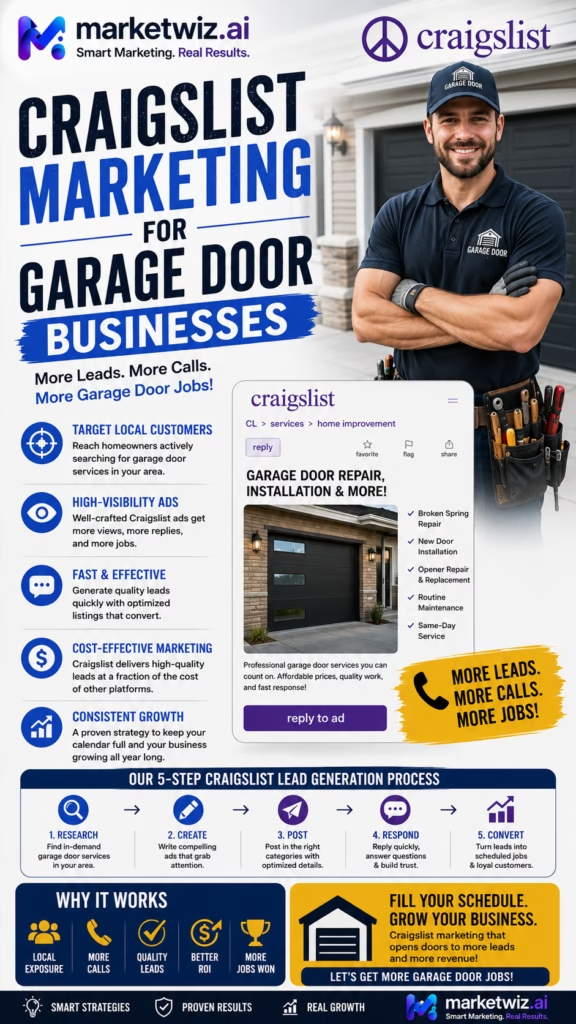
ChatGPT Image Aug 19 2026 05 39 30 PM
Craigslist Marketing for Garage Door Businesses | MarketWiz.ai
Garage Door Craigslist Marketing Guide

Craigslist Marketing for Garage Door Businesses

Craigslist marketing for garage door businesses can help local companies reach homeowners, landlords, builders, property managers, investors, and commercial property owners searching for garage door replacement, new doors, opener installation, opener replacement, spring service, tracks, rollers, cables, panels, tune-ups, and commercial garage door work. The strongest strategy is not simply publishing one generic โ€œgarage door repairโ€ advertisement. Businesses need service-specific titles, accurate geographic targeting, genuine project photos, professional descriptions, honest pricing, clear contact information, fast lead response, qualification, estimate follow-up, CRM tracking, and measurement tied to actual repairs, installations, customers, and revenue.

๐Ÿšช Reach Local Garage Door Customers ๐Ÿ”ง Generate Repair & Replacement Leads ๐Ÿ“ˆ Turn Craigslist Ads Into Revenue

Garage door businesses operate in a local market where customer intent can be extremely specific.

A homeowner may need a completely new garage door.

Another may have a door that will not open.

Someone may need a new opener.

Another customer may have a broken spring.

A landlord may need a damaged panel replaced.

A property manager may need several garage doors serviced.

A commercial business may need a larger overhead door repaired or replaced.

Those are different customer needs.

They should not all receive the same advertising message.

Craigslist can provide access to local customers looking for solutions in their own market.

But success depends heavily on relevance.

If the customer needs a replacement door, the ad should make replacement obvious.

If they need an opener, the ad should focus on openers.

If they are comparing repair companies, the advertising should explain repair capabilities clearly.

If they own commercial property, they should understand whether commercial work is available.

That means Craigslist marketing should be organized around real service intent.

Strong titles create relevance.

Strong descriptions create clarity.

Genuine project photos create trust.

Local targeting reduces wasted inquiries.

Fast response creates opportunity.

Qualification protects technician and estimator time.

Follow-up helps close replacement opportunities.

CRM tracking shows whether Craigslist actually creates revenue.

The Garage Door Craigslist Growth Formula

Service-Specific Ads + Local Targeting + Real Installation Photos + Strong Titles + Clear Descriptions + Accurate Pricing + Fast Lead Response + Customer Qualification + Appointments + Follow-Up + CRM Tracking = Better Garage Door Customer Acquisition

Why Craigslist Can Work for Garage Door Businesses

1

Garage Door Demand Is Local

Most garage door companies work within a defined geographic territory.

2

Customer Intent Is Specific

Customers often know whether they need repair, replacement, an opener, or another specific service.

3

Replacement Jobs Can Have Strong Value

One qualified replacement-door lead can be economically meaningful.

4

Projects Are Visual

New doors and completed installations create compelling before-and-after marketing material.

5

Different Services Can Be Tested

Businesses can compare replacement, repair, opener, spring, and commercial lead performance.

6

Results Can Be Tracked

Craigslist leads can be connected to appointments, repairs, installations, sales, and revenue.

Understand Garage Door Customer Intent

Replacement Intent

A homeowner may already know the existing garage door needs complete replacement.

Repair Intent

The customer may need help diagnosing a malfunctioning door.

Opener Intent

A customer may want an opener replaced, installed, or evaluated.

Appearance Upgrade Intent

Some homeowners replace a functioning door because they want to improve curb appeal.

Property Management Intent

Landlords and property managers may need recurring service across multiple properties.

Commercial Intent

Businesses may need commercial overhead doors, operators, or related service.

Urgent Intent

Some customers have a door that is stuck, damaged, or preventing access.

Build a Real Craigslist Marketing Strategy

Identify the Most Valuable Services

Determine which services produce the strongest combination of demand, margin, and customer value.

Define the Real Service Area

Focus on cities technicians can reach efficiently.

Separate Repair From Replacement

These customer journeys can be very different.

Separate Residential and Commercial

Commercial customers may have different requirements and buying processes.

Collect Genuine Project Photos

Organize photos by door type, project type, and service category.

Build a Lead Intake Process

Make sure staff know what questions to ask.

Track Customer Revenue

Measure the channel based on completed work.

Write Better Craigslist Titles for Garage Door Businesses

Lead With the Main Service

โ€œGarage Door Replacementโ€ is clearer than โ€œHome Services.โ€

Use Real Local Wording

Mention cities or local areas only when the business genuinely serves them.

Use Customer Language

Garage door repair, garage door opener, spring replacement, and new garage doors are easy for customers to understand.

Avoid Keyword Stuffing

Titles should remain readable.

Avoid False Urgency

Do not invent limited-time offers or fake shortages.

Avoid Unsupported Superlatives

Claims such as โ€œbest in townโ€ should not be used without a legitimate basis.

Match the Title to the Customer's Problem

Someone searching for a replacement door is more likely to respond to a clear replacement-focused title than to a generic ad listing ten unrelated services.

Write Better Craigslist Garage Door Descriptions

Start With the Main Service

Tell the customer what the ad is about immediately.

Explain Related Work

Mention relevant related services naturally.

Explain the Service Area

Make geographic coverage clear.

Explain Product Options Carefully

Mention door styles, materials, insulation, or opener options only when actually available.

Use Genuine Project Examples

Real installations can help customers understand what the company does.

Use Accurate Business Information

Make the ad feel professional and credible.

End With One Clear Action

The customer should know how to move forward.

Target the Right Local Garage Door Markets

Technician Travel Time

Service calls become less profitable when technicians spend excessive time driving.

Installation Logistics

Full replacement jobs may involve door delivery, equipment, and scheduling.

Market Density

Dense service territories can improve routing efficiency.

Customer Value

Some markets may produce more replacement jobs while others produce mostly small repairs.

Commercial Opportunities

Industrial and commercial zones may generate different lead types.

Track Profitability by City

Do not assume the highest lead volume automatically produces the best market.

Use Real Garage Door Project Photos

New Door Installations

Show finished residential garage doors.

Before-and-After Replacements

Demonstrate curb-appeal improvements.

Carriage-Style Doors

Show genuine installations when available.

Modern Garage Doors

Use actual projects rather than generic catalog images where possible.

Commercial Doors

Show legitimate business and warehouse installations.

Openers and Hardware

Use product imagery only when it accurately represents equipment offered or installed.

Garage Door Companies Have Strong Visual Marketing Assets

Every completed replacement can provide exterior before-and-after photos, close-up finish images, door-style examples, opener photos, and customer proof that can support Craigslist, websites, social media, Google Business Profile, and sales follow-up.

Use Before-and-After Garage Door Projects

Old-to-New Door Replacement

Show the property before removal and after installation.

Damaged Door Replacement

Demonstrate restoration of appearance and function.

Style Upgrades

Show how a new design changes curb appeal.

Color Changes

Use genuine project comparisons.

Use Similar Camera Angles

Similar framing makes the transformation obvious.

Advertise Garage Door Replacement Separately

Full replacement should often have its own Craigslist campaign.

Old Door Replacement

Target homeowners with worn or outdated doors.

Damaged Door Replacement

Some doors may be damaged beyond practical repair.

Exterior Upgrade

Homeowners may replace doors primarily for appearance.

Insulated Door Options

Mention insulation only when genuine product options are available.

Multi-Door Properties

Two- and three-car garages can produce larger opportunities.

Accurate Product Claims

Do not advertise styles, materials, or specifications that the company cannot actually provide.

Advertise New Garage Doors With Clear Product Messaging

Door Size

Different openings require different products.

Door Style

Traditional, carriage, modern, or other genuine styles can be shown.

Material

Mention materials only when actually available.

Insulation

Describe insulation accurately without oversimplifying performance.

Windows

Window options can be highlighted where applicable.

Color and Finish

Show genuine options rather than inventing availability.

Advertise Garage Door Openers Separately

Opener Replacement

Customers with older or failed operators may need replacement.

New Opener Installation

New doors or existing manual doors may require an opener.

Remote and Control Issues

Mention services the company genuinely provides.

Smart Features

Only advertise connected or smartphone features when supported by the specific products offered.

Brand Compatibility

Avoid claiming universal compatibility.

Safety Features

Do not encourage customers to bypass or disable safety systems.

Advertise Garage Door Spring Service Carefully

Spring-related service can be a strong customer need, but it also involves meaningful mechanical hazards.

Broken Spring Calls

Customers may report that the door suddenly became extremely heavy or stopped functioning properly.

Spring Replacement

Advertise professional service when genuinely offered.

Do Not Provide Hazardous DIY Instructions

Garage door springs can store significant mechanical energy.

Use Professional Messaging

Encourage customers to schedule appropriate service rather than attempting dangerous adjustments.

Avoid Universal Pricing Claims

Door type, spring system, size, and conditions can affect the job.

Advertise Garage Door Rollers and Track Service

Noisy Operation

Customers may contact a company because the door is operating poorly or loudly.

Damaged Rollers

Roller-related service can be marketed when genuinely offered.

Track Problems

Bent or damaged components may require professional evaluation.

Alignment Issues

Do not diagnose every problem from the ad itself.

Professional Inspection

Encourage evaluation when multiple components may be involved.

Advertise Garage Door Cable Service

Garage door cables can be part of a tensioned lifting system.

Cable Replacement

Advertise the service when provided by trained personnel.

Visible Damage

Frayed or damaged components may require prompt evaluation.

Avoid DIY Repair Messaging

Advertising should focus on professional service rather than hazardous repair instructions.

Related Component Inspection

Cable issues may occur alongside other mechanical problems.

Advertise Garage Door Panel Service

Damaged Panels

Accidents and impact damage can create customer demand.

Panel Replacement

Availability can depend on door model, age, style, and manufacturer.

Full Door Replacement

Some panel problems may make full replacement more practical.

Accurate Availability

Do not promise matching replacement panels before confirming that they are available.

Advertise Garage Door Tune-Ups and Maintenance

Operational Inspection

Maintenance visits can identify visible wear or operational issues.

Noise Concerns

Customers may request service because of unusual sounds.

Door Balance and Operation

Evaluation should be handled appropriately by trained personnel.

Hardware Inspection

Explain maintenance services accurately.

Avoid Overpromising

Maintenance does not guarantee that every component will avoid future failure.

Advertise Commercial Garage Door Services Separately

Warehouses

Businesses may need overhead door service or replacement.

Auto Shops

Service bays can generate commercial door needs.

Storage Facilities

Multi-unit properties can create recurring opportunities.

Industrial Properties

Larger doors and operators may require specialized capabilities.

Property Managers

Commercial property relationships can generate repeat work.

Commercial Qualification

Confirm size, door type, operating conditions, property type, access, scheduling, and business requirements.

Build Service-Specific Craigslist Campaigns

Replacement Door Campaign

Focus on full residential replacement.

Repair Campaign

Focus on malfunctioning doors and professional service.

Opener Campaign

Focus on opener installation and replacement.

Spring Service Campaign

Focus on professional spring-related service.

Commercial Campaign

Focus on businesses and property managers.

New Door Campaign

Showcase genuine product and style options.

General Company Campaign

Introduce the broader garage door service mix.

Handle Garage Door Pricing Carefully

Garage door pricing can vary widely.

Door Size

Single and double doors have different requirements.

Material

Product construction affects price.

Insulation

Insulated products can have different pricing.

Design

Windows, decorative hardware, and premium styles can affect cost.

Opener Requirements

Opener installation may be separate from door replacement.

Existing Conditions

Track, hardware, framing, and other conditions can influence scope.

Commercial Door Size

Commercial products can have substantially different costs.

Accurate Pricing Improves Lead Quality

Very low teaser pricing may generate more inquiries, but it can also attract customers whose expectations do not match the actual product or repair. Honest pricing creates a stronger sales conversation.

Use Garage Door Brand Names Carefully

Only Mention Brands You Actually Work With

Do not imply authorized relationships that do not exist.

Do Not Invent Inventory

Product availability can change.

Avoid Universal Compatibility Claims

Garage door parts and openers may have specific compatibility requirements.

Verify Model Details

Product specifications should be accurate.

Use Genuine Product Photos

Do not show products that are unavailable and imply they are current inventory.

Use Warranty Claims Carefully

Manufacturer Warranties

Describe them only as actually provided.

Labor Warranties

Explain terms accurately.

Parts Warranties

Avoid implying that every part carries identical coverage.

Do Not Use โ€œLifetimeโ€ Casually

Any lifetime claim should have clear, genuine terms.

Keep Advertising Consistent With Written Terms

Marketing should not promise more than the actual warranty provides.

Build Trust Inside the Craigslist Ad

Use the Real Business Name

Customers should understand who they are contacting.

Use Accurate Contact Information

Make it easy to reach the business.

Use Genuine Installation Photos

Real work is stronger than generic claims.

Use Accurate Credentials

Licensing, insurance, certifications, years of experience, and other claims should be factual.

Use Genuine Reviews

Do not fabricate testimonials.

Explain the Service Area

Local customers should know whether their location is covered.

Use One Clear Call to Action

Garage door customers should understand the next step immediately.

Call for Service

Useful for repair-focused leads.

Request a Replacement Estimate

Useful for new-door prospects.

Schedule an Appointment

Appropriate for evaluation and service.

Ask About a Door or Opener

Useful when product details need confirmation.

Avoid Too Many Competing Actions

One primary next step improves clarity.

Respond to Garage Door Leads Quickly

Customers may contact multiple local companies.

Identify the Main Need

Replacement, repair, opener, spring, commercial door, or another service.

Confirm the Location

Make sure the property is within the service territory.

Identify Residential or Commercial

The workflow may differ.

Ask About Door Size or Number of Doors

Basic project information helps qualification.

Understand Timing

Determine whether the customer needs immediate service or is planning a future replacement.

Create the Next Step

Move the customer toward the right appointment or estimate.

Qualify Garage Door Craigslist Leads

Location

Is the customer inside the service area?

Service Type

Repair, replacement, opener, spring, panel, commercial, or another need.

Door Count

One door and several doors can represent very different opportunities.

Approximate Door Size

Size can help estimate product requirements.

Current Condition

Is the door stuck, damaged, noisy, off track, or simply outdated?

Opener Needs

Determine whether opener work is part of the project.

Timing

Understand urgency.

Project Fit

Not every inquiry requires the same level of technician or estimator time.

Qualification Improves Routing

A broken spring, a full replacement, an opener problem, and a commercial overhead door are very different jobs. Basic qualification helps route the lead to the correct service workflow.

Move Qualified Leads Toward Appointments

Confirm the Address

Make sure routing information is correct.

Confirm the Service Need

Know what the customer reported before the visit.

Confirm Contact Information

Reduce missed appointments.

Confirm the Time Window

Set realistic expectations.

Record the Source

Mark Craigslist as the lead source.

Improve Garage Door Estimate Conversion

Explain Product Options Clearly

Replacement customers may need help comparing styles and features.

Explain What Is Included

Customers should understand installation scope.

Explain Opener Options Separately

Avoid confusing door and opener pricing.

Use Real Photos or Samples

Visual examples can support the sales process.

Follow Up After the Estimate

Replacement customers may be comparing several companies.

Track Estimate-to-Sale Rate

Understand whether Craigslist replacement leads actually close.

Build a Garage Door Lead Follow-Up System

Follow Up After Initial Contact

Customers may need time to schedule.

Follow Up After a Replacement Quote

Prospects may be comparing doors and prices.

Follow Up on Future Projects

Some homeowners may be planning a later exterior renovation.

Track Commercial Opportunities

Business customers may have longer decision cycles.

Respect Customer Preferences

Follow-up should remain appropriate and stop when the customer indicates they are no longer interested.

Track Craigslist Garage Door Leads in CRM

  • Lead name
  • Phone number
  • Email where provided
  • Craigslist source
  • Ad or campaign reference
  • City or ZIP code
  • Residential or commercial
  • Service requested
  • Number of doors
  • Approximate door size
  • Opener needs
  • Urgency
  • Qualification status
  • Appointment status
  • Estimate value
  • Won or lost status
  • Closed customer revenue

Suggested Garage Door Lead Pipeline

  • New Craigslist lead
  • Contacted
  • Qualified
  • Appointment scheduled
  • Inspection or estimate completed
  • Quote sent
  • Follow-up
  • Won
  • Lost
  • Service completed
  • Review requested

Track Garage Door Craigslist Marketing Performance

Responses

How many inquiries does each ad produce?

Qualified Leads

How many inquiries fit the service area and service mix?

Appointments

How many leads move into a real service or estimate opportunity?

Repair Jobs

How many repair-focused leads become paying customers?

Replacement Sales

How many replacement leads become sold installations?

Average Ticket

Compare customer value by campaign.

Revenue

Measure actual sales attributed to Craigslist.

MetricWhy It Matters
Ad responsesMeasures initial customer interest
Qualified leadsMeasures service and geographic fit
AppointmentsShows how many leads move forward
Repair bookingsMeasures conversion of service leads
Replacement salesMeasures high-value customer acquisition
Average ticketShows the economic quality of the channel
Revenue and ROIMeasures actual business impact

Track Craigslist Garage Door Results by City

Lead Volume

Which cities create the most inquiries?

Lead Quality

Which areas generate the strongest customer fit?

Replacement Demand

Some neighborhoods may produce more full-door replacement opportunities.

Repair Demand

Other markets may produce mostly service calls.

Travel Time

Technician routing affects profitability.

Commercial Demand

Business districts may create different lead profiles.

Track Craigslist Results by Garage Door Service Type

Full Door Replacement

Track average sale value and close rate.

Garage Door Repair

Measure appointment conversion and average repair ticket.

Openers

Track replacement and installation demand.

Springs

Measure call volume and service conversion.

Panels

Track whether panel inquiries result in repair or full replacement.

Commercial Doors

Measure average project value and repeat-business potential.

Improve Garage Door Lead Quality Instead of Chasing More Replies

Use Specific Titles

Attract the right customer intent.

Use Accurate Geography

Avoid unnecessary out-of-area leads.

Use Genuine Installation Photos

Better visual proof can create more serious inquiries.

Explain the Service Clearly

Help customers understand whether the business can solve their problem.

Use Accurate Pricing

Avoid false expectations.

Qualify Before Dispatch

Basic intake information can improve technician routing.

Understand Garage Door Marketing Seasonality

Winter Conditions

Cold weather can affect mechanical systems and customer urgency in some markets.

Spring Home Improvement

Homeowners may begin exterior upgrades and replacement projects.

Summer Renovations

Larger exterior projects may create replacement demand.

Fall Preparation

Some homeowners may address door problems before winter.

Storm or Impact Events

Severe weather can temporarily change local demand.

Commercial Cycles

Business customers may operate on different maintenance and capital budgets.

Build a Strong Garage Door Craigslist Ad Library

Garage door businesses have many legitimate advertising angles.

Replacement Door Ads

Focus on complete residential replacement.

Repair Ads

Focus on professional diagnosis and service.

Opener Ads

Focus on opener installation and replacement.

Spring Service Ads

Focus on professional spring-related service.

Modern Door Ads

Showcase genuine modern styles.

Carriage-Style Door Ads

Focus on curb appeal where those products are offered.

Commercial Door Ads

Speak directly to business properties.

General Company Ads

Introduce the broader service mix.

Connect Craigslist With Other Garage Door Marketing Channels

Google Maps

Local customers frequently search for nearby garage door companies.

Organic SEO

Replacement, repair, opener, and commercial pages can capture search demand.

Social Media

Before-and-after door installations create strong visual content.

Referral Marketing

Homeowners can refer neighbors, friends, and family.

Builders and Property Managers

B2B relationships can create recurring work.

CRM

Central tracking allows channels to be compared fairly.

Keep Safety in Mind When Advertising Garage Door Services

Garage door systems can involve heavy moving components, tensioned springs, cables, powered operators, and safety sensors.

Do Not Encourage Dangerous DIY Repairs

Marketing content should not pressure customers to adjust high-tension components without appropriate training.

Do Not Recommend Disabling Safety Features

Safety sensors and protective systems should not be bypassed.

Use Trained Personnel

Technical work should be handled appropriately.

Avoid Remote Diagnosis Guarantees

A symptom may have several possible causes.

Be Accurate About Urgency

Do not manufacture fear simply to generate calls.

Professional Service Is the Safer Message

Garage doors can weigh hundreds of pounds, and springs and cables may be under substantial tension. Advertising should focus on professional evaluation and service rather than hazardous repair instructions.

Common Craigslist Mistakes Garage Door Businesses Should Avoid

Generic Titles

โ€œGarage Door Servicesโ€ may be less effective than clear service-specific messaging.

Weak Photos

Door replacement is highly visual.

Fake Project Photos

Do not present stock or AI-generated images as genuine completed installations.

Fake Prices

Avoid unrealistic teaser offers.

Fake Discounts

Promotions should be real.

Unsupported Brand Claims

Do not imply dealer, installer, or authorization relationships that do not exist.

Unsupported Warranty Claims

Advertise warranty coverage accurately.

Claiming Areas Not Served

Geographic targeting should reflect real operations.

Vague Repair Advertising

Customers should understand the service mix.

Slow Lead Response

Customers may contact competitors.

No Lead Qualification

Better intake improves scheduling and routing.

No Follow-Up

Replacement customers may take time to choose.

No CRM Tracking

Without attribution, it is difficult to determine whether Craigslist creates profitable customers.

Measuring Replies Instead of Revenue

Customer value matters more than raw response count.

Unsafe DIY Advice

Do not use advertising content to encourage dangerous spring, cable, or door adjustments.

Ignoring Platform Rules

Businesses should follow applicable Craigslist posting requirements, categories, and terms.

A 30-Day Craigslist Marketing Plan for Garage Door Businesses

Week 1: Build the Foundation

  • List the company's most profitable garage door services
  • Define the genuine service territory
  • Organize replacement-door photos
  • Organize before-and-after photos
  • Organize opener installation photos
  • Organize commercial door photos
  • Review current brands and product availability
  • Review warranty claims
  • Review business credentials
  • Define the lead qualification process

Week 2: Build the Ad Library

  • Create garage door replacement ad copy
  • Create garage door repair ad copy
  • Create opener ad copy
  • Create spring service ad copy
  • Create new-door ad copy
  • Create commercial garage door ad copy
  • Create a general company ad
  • Build multiple clear title variations
  • Add genuine local wording
  • Add one clear customer action

Week 3: Improve Lead Handling

  • Create a standard lead intake process
  • Ask location
  • Ask residential or commercial
  • Ask whether the customer needs repair or replacement
  • Ask the number of doors
  • Ask approximate size when known
  • Ask whether opener service is needed
  • Ask about urgency
  • Create estimate follow-up reminders
  • Track Craigslist as the lead source

Week 4: Measure and Improve

  • Compare responses by ad
  • Compare qualified lead rate
  • Compare appointments
  • Compare repair bookings
  • Compare replacement estimates
  • Compare replacement sales
  • Compare average customer value
  • Compare performance by city
  • Compare performance by service type
  • Identify weak titles
  • Identify weak offers
  • Improve future campaigns based on revenue

End-of-Month Outcome

After 30 days, the garage door business should have a stronger library of service-specific Craigslist ads, clearer local targeting, more genuine project proof, stronger customer qualification, faster routing, organized estimate follow-up, CRM attribution, and a clearer understanding of which garage door services and markets generate profitable customers.

Final Takeaway: Craigslist Should Produce Garage Door Customers, Not Just Inquiries

Garage door businesses should not judge Craigslist based only on how many people reply.

Replies are only the beginning.

Calls are only the beginning.

Appointment requests are only the beginning.

The actual business outcome is completed work.

Repair jobs.

Opener installations.

Spring service.

Panel work.

Full replacement doors.

Commercial projects.

Repeat customers.

Revenue.

That means Craigslist marketing should be built around customer intent.

If the customer needs a replacement door, show replacement work.

If they need an opener, talk about openers.

If they need repair, explain professional repair capability.

If they own commercial property, show commercial experience.

Specific advertising helps customers recognize the company as a better match.

Titles matter because they determine whether customers open the ad.

Keep them simple.

Garage Door Replacement.

Garage Door Repair.

Garage Door Opener Installation.

New Garage Doors.

Commercial Garage Door Service.

Spring Service.

Add real local wording where appropriate.

Avoid trying to cram every service into the title.

The description can explain the broader offer.

Tell customers what the company does.

Tell them where the company works.

Tell them what kinds of doors or services are available.

Tell them what the next step is.

Use real business information.

Use real project photos.

Use accurate product information.

Avoid unsupported guarantees.

Photography is one of the most valuable marketing assets garage door businesses can build.

Garage door replacement creates dramatic visual change.

Photograph the old door.

Photograph the new door.

Use a similar angle.

Show the full front of the property.

Show close-up details.

Show windows.

Show panel design.

Show hardware.

Show color.

Build an organized photo library.

Traditional doors.

Carriage-style doors.

Modern doors.

Commercial doors.

Opener installations.

Before-and-after replacements.

Those assets can support more than Craigslist.

They can support Google Business Profile.

Social media.

Website galleries.

Sales presentations.

Follow-up.

Estimates.

The more genuine proof the business has, the easier it becomes to build trust.

Pricing needs equal attention.

A garage door is not simply one product with one price.

Size matters.

Material matters.

Insulation matters.

Design matters.

Windows matter.

Decorative hardware matters.

Existing tracks and framing may matter.

Opener requirements matter.

Commercial applications can be completely different.

That is why teaser pricing can cause problems.

A customer may call expecting one low number.

Then discover that the product they actually need costs substantially more.

That creates frustration.

Better marketing sets realistic expectations.

Brands should be accurate too.

Do not advertise brands the company does not sell or service.

Do not claim to be an authorized dealer if that relationship does not exist.

Do not show unavailable inventory and imply that it is currently available.

Product accuracy improves customer trust.

Warranty claims deserve the same discipline.

If a product carries a manufacturer warranty, describe it accurately.

If the company provides a labor warranty, make the terms clear.

Do not use broad โ€œlifetimeโ€ language without clear genuine coverage.

Marketing should match written warranty terms.

Lead handling then determines whether the advertising creates revenue.

A homeowner may contact three companies.

They may be standing in the garage looking at a door that will not open.

They may want help immediately.

Or they may be planning a replacement over the next few weeks.

The business needs to understand which situation it is.

Ask the location.

Ask whether the property is residential or commercial.

Ask whether they need repair or replacement.

Ask how many doors are involved.

Ask whether they have an opener issue.

Ask what happened.

Ask when they need service.

That information helps route the customer appropriately.

It also helps distinguish between a small repair and a larger replacement opportunity.

Qualification should not become an interrogation.

The goal is efficiency.

Gather enough information to send the right technician, prepare for an estimate, or identify that the lead does not fit.

Then create the next step.

Schedule the appointment.

Schedule the estimate.

Confirm the address.

Confirm the time.

Record the source.

Follow-up becomes especially important for replacement work.

Repair customers may decide quickly.

Replacement customers may take longer.

They may compare door styles.

They may compare insulation.

They may compare colors.

They may compare windows.

They may compare opener options.

They may compare several contractors.

They may need to discuss the purchase with someone else.

That means an estimate should not simply be sent and forgotten.

Follow up professionally.

Ask whether they have questions.

Clarify product options.

Help them understand the scope.

Track the decision.

CRM attribution makes the whole system measurable.

Record Craigslist as the lead source.

Record the city.

Record the service.

Repair.

Replacement.

Opener.

Spring.

Commercial.

Record whether the lead qualified.

Record whether an appointment was scheduled.

Record the quote.

Record the final sale.

Record customer revenue.

Then compare campaigns.

Which ads create the highest-value customers?

Which city produces the strongest replacement demand?

Which title generates poor-quality repair calls?

Which opener campaign closes well?

Which commercial market creates repeat business?

Which ads are producing activity but not revenue?

Those answers improve the next round of advertising.

Businesses should also remember that garage door work can involve significant mechanical hazards.

Springs may be under substantial tension.

Cables may be part of a tensioned lifting system.

Garage doors themselves can be extremely heavy.

Openers have moving components.

Safety sensors exist for a reason.

Marketing should not encourage customers to bypass safety systems or perform hazardous repairs they are not trained to perform.

Professional service is a stronger message.

Craigslist should also be only one part of the garage door customer acquisition system.

Google Maps can capture high-intent local searches.

Organic SEO can rank garage door service pages.

Social media can showcase transformations.

Referrals can create high-trust customers.

Builders can create installation opportunities.

Property managers can create recurring service.

Craigslist can add another source of local demand.

Diversified marketing creates stability.

Finally, avoid shortcuts.

Do not fabricate reviews.

Do not fabricate project photos.

Do not use false locations.

Do not claim products the business does not offer.

Do not invent dealer relationships.

Do not publish misleading prices.

Do not exaggerate warranty coverage.

Do not encourage dangerous DIY repairs.

Do not measure success only by response count.

Build stronger marketing instead.

Better titles.

Better service-specific ads.

Better project photos.

Better local targeting.

Better response.

Better qualification.

Better appointment routing.

Better estimates.

Better follow-up.

Better CRM tracking.

Better measurement.

That is how Craigslist marketing can become a useful lead-generation channel for garage door businesses.

Frequently Asked Questions

1. Can garage door companies get leads from Craigslist?

Yes. Garage door companies may generate local inquiries for replacement, repair, openers, springs, panels, commercial doors, and other genuine services.

2. What garage door services can be advertised on Craigslist?

Genuine services can include replacement doors, new doors, openers, springs, rollers, tracks, cables, panels, maintenance, commercial doors, and related repair work.

3. Should garage door businesses create separate ads for different services?

Yes. Service-specific advertising can create stronger relevance for customers looking for a particular solution.

4. What makes a good Craigslist garage door title?

A strong title clearly identifies the service or product, uses useful local wording where accurate, and avoids unnecessary keyword stuffing.

5. Should garage door ads include city names?

Local geographic wording can be useful when it genuinely reflects the service territory.

6. Should garage door companies use project photos?

Yes. Real replacement and installation photos can help customers evaluate quality and style.

7. Are before-and-after garage door photos useful?

Yes. They can clearly demonstrate exterior improvements and completed replacement work.

8. Should garage door ads include pricing?

Pricing should only be included when accurate and genuinely applicable to the advertised product or service.

9. Should garage door businesses use fake low prices?

No. Misleading teaser pricing can create poor-quality leads and damage trust.

10. Can garage door replacement have its own Craigslist ad?

Yes. Full replacement is a distinct customer need and often benefits from dedicated advertising.

11. Can garage door openers have separate ads?

Yes. Opener replacement and installation can be promoted separately when genuinely offered.

12. Can garage door spring service be advertised?

Yes. Professional spring service can be advertised, but businesses should avoid encouraging hazardous DIY spring repairs.

13. Can cable repair be advertised?

Yes, when cable service is genuinely offered and performed appropriately.

14. Can roller and track repair be advertised?

Yes. Roller, track, alignment, and related service can be advertised when genuinely available.

15. Can commercial garage door companies use Craigslist?

Yes. Commercial campaigns may reach business owners, property managers, warehouses, contractors, and other local commercial customers.

16. Should garage door ads mention brands?

Only mention brands that the business genuinely sells, installs, services, or otherwise works with.

17. Should garage door ads mention warranties?

Yes, when warranty information is accurate and consistent with the actual written terms.

18. How should garage door companies qualify Craigslist leads?

Ask about location, residential or commercial property, repair versus replacement, number of doors, approximate size, opener needs, visible damage, and timing.

19. How quickly should garage door companies respond?

Businesses should respond as promptly as operationally practical because customers may be comparing several local providers.

20. Should garage door leads be tracked in CRM?

Yes. CRM tracking connects Craigslist leads with appointments, estimates, repairs, replacement sales, and revenue.

21. Should garage door companies follow up after estimates?

Yes. Replacement-door prospects may compare several products and contractors before making a decision.

22. How can garage door businesses improve lead quality?

Use specific titles, accurate geography, genuine photos, clear services, honest pricing, professional information, and basic qualification.

23. Should garage door Craigslist ads use keywords?

Natural service and local language can improve clarity, but repetitive keyword stuffing should be avoided.

24. What metrics should garage door businesses track?

Track inquiries, qualified leads, appointments, repair bookings, replacement estimates, replacement sales, average customer value, revenue, and marketing return.

25. Should garage door companies track results by city?

Yes. Customer value, service demand, travel cost, close rate, and profitability can vary by market.

26. Should garage door results be tracked by service type?

Yes. Repairs, replacements, openers, springs, panels, and commercial doors can have very different economics.

27. Can Craigslist replace every other garage door marketing channel?

Usually not. Most businesses benefit from diversified customer acquisition across multiple local marketing channels.

28. What Craigslist mistakes should garage door companies avoid?

Avoid misleading prices, fake photos, fake reviews, false locations, unsupported warranty or brand claims, vague descriptions, slow response, and weak tracking.

29. How long does Craigslist garage door marketing take to work?

Results vary based on market demand, competition, ad quality, seasonality, service type, pricing, and lead handling.

30. What is the goal of Craigslist marketing for garage door businesses?

The goal is to turn relevant local visibility into qualified garage door inquiries, appointments, repairs, replacement installations, customers, revenue, and measurable business growth.

30 Additional SEO Keywords

Use these supporting phrases naturally across garage door marketing articles, Craigslist guides, local service pages, FAQs, case studies, and relevant internal links.

Craigslist garage door marketing Craigslist garage door advertising garage door Craigslist ads Craigslist garage door leads garage door lead generation Craigslist garage door repair Craigslist ads garage door replacement Craigslist garage door replacement leads garage door opener Craigslist ads garage door opener leads garage door spring Craigslist marketing garage door spring leads commercial garage door Craigslist ads commercial garage door lead generation garage door contractor marketing garage door company advertising local garage door lead generation garage door business Craigslist garage door installation advertising garage door local marketing Craigslist ads for garage door companies garage door contractor Craigslist leads garage door service advertising garage door repair marketing garage door replacement marketing garage door contractor CRM garage door lead tracking garage door customer acquisition Craigslist home service lead generation how garage door companies get Craigslist leads

Build a Stronger Lead Generation System for Your Garage Door Business

MarketWiz.ai helps local businesses strengthen customer acquisition through automated advertising, local marketing, lead capture, follow-up, CRM integration, and measurable campaign reporting designed to turn more local opportunities into real customers.

Craigslist Marketing for Garage Door Businesses Read More ยป

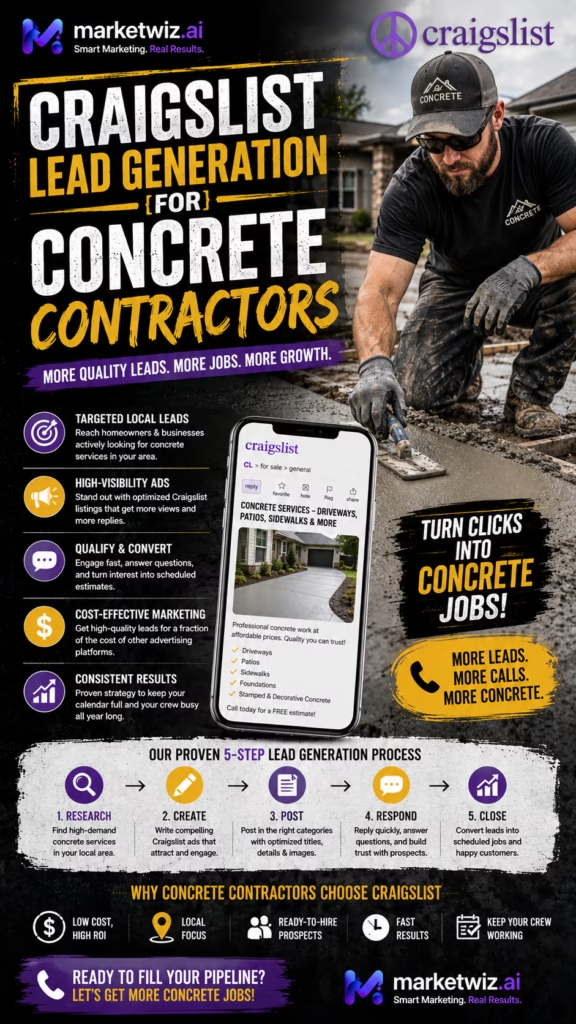
Craigslist Lead Generation for Concrete Contractors

ChatGPT Image Aug 19 2026 05 39 26 PM
Craigslist Lead Generation for Concrete Contractors | MarketWiz.ai
Concrete Contractor Craigslist Growth Guide

Craigslist Lead Generation for Concrete Contractors

Craigslist lead generation for concrete contractors can help local companies reach homeowners, landlords, investors, builders, property managers, and businesses searching for driveway installation, driveway replacement, patios, sidewalks, concrete slabs, garage floors, foundations, decorative concrete, stamped concrete, repairs, and commercial concrete work. The strongest approach is not simply publishing a generic โ€œconcrete workโ€ ad. Contractors need project-specific titles, strong local targeting, genuine project photography, useful descriptions, accurate technical claims, fast lead response, basic project qualification, site visit scheduling, estimate follow-up, CRM attribution, and performance tracking connected to signed jobs and revenue.

๐Ÿ— Reach Local Concrete Customers ๐Ÿšง Generate Project-Specific Leads ๐Ÿ“ˆ Turn Estimates Into Revenue

Concrete contractors operate in a highly local, project-driven industry where one qualified lead can be worth substantially more than dozens of low-intent inquiries.

A homeowner may need a new driveway.

A landlord may need damaged concrete replaced.

A property manager may need sidewalks repaired.

A homeowner may want a backyard patio.

A shop owner may need a slab.

A builder may need concrete work for a new structure.

A commercial property owner may need parking-area or walkway improvements.

An investor may need several concrete projects completed on a renovation.

These are highly specific local needs.

That makes Craigslist potentially useful.

Craigslist users are often searching inside a specific geographic market.

Concrete contractors already work inside specific geographic territories.

That alignment creates opportunity.

But generic advertising wastes much of that opportunity.

A vague ad saying โ€œConcrete Work Availableโ€ does not tell a homeowner whether the company pours driveways.

It does not tell them whether patios are available.

It does not show completed projects.

It does not explain the service area.

It does not establish credibility.

And it may not give the customer a strong reason to call.

Better concrete marketing is specific.

Driveway ads should look like driveway ads.

Patio ads should look like patio ads.

Slab ads should look like slab ads.

Decorative concrete ads should show decorative concrete.

Commercial ads should speak to commercial customers.

That creates relevance.

Then the contractor needs a process for turning replies into site visits, estimates, proposals, signed jobs, and revenue.

The Concrete Craigslist Lead Formula

Project-Specific Ads + Local Targeting + Real Concrete Photos + Strong Titles + Clear Descriptions + Accurate Claims + Fast Lead Response + Project Qualification + Site Visits + Estimate Follow-Up + CRM Tracking = Better Concrete Customer Acquisition

Why Craigslist Can Work for Concrete Contractors

1

Concrete Is Local

Most concrete contractors work inside defined service territories, which aligns naturally with Craigslist's local market structure.

2

Projects Have Clear Intent

Customers often know whether they need a driveway, patio, slab, sidewalk, or another specific concrete project.

3

Projects Can Have Meaningful Value

One qualified concrete job can justify substantial marketing effort.

4

Concrete Is Visual

Finished driveways, patios, slabs, and decorative projects create strong marketing assets.

5

Different Services Can Be Tested

Contractors can compare demand for driveways, patios, slabs, repairs, and commercial work.

6

Results Can Be Measured

Leads can be connected with estimates, signed projects, and project revenue.

Understand Concrete Customer Intent

Replacement Intent

The customer may have an old driveway, sidewalk, patio, or slab that needs to be removed and replaced.

New Construction Intent

A homeowner, builder, or business may need new concrete installed.

Outdoor-Living Intent

Patio and decorative concrete customers may be improving the appearance and usability of a property.

Repair Intent

Cracked, settled, broken, or deteriorated concrete can create repair inquiries.

Commercial Intent

Property managers, developers, builders, and business owners may have larger or recurring needs.

Planning Intent

Some customers may be gathering estimates before a future project.

Build a Real Craigslist Lead Generation Strategy

Choose the Services You Actually Want

Not every concrete project is equally valuable or operationally attractive.

Choose the Service Territory

Determine the cities and surrounding areas where crews can work efficiently.

Choose the Customer Type

Residential, commercial, builder, landlord, investor, or property-manager leads may require different messaging.

Build Separate Project Campaigns

High-priority project categories deserve focused ads.

Collect Strong Visual Proof

Organize project photos by service.

Create a Lead Workflow

Know who responds and what questions are asked.

Track Revenue

Connect Craigslist to actual signed work.

Write Better Craigslist Titles for Concrete Contractors

Lead With the Concrete Project

โ€œConcrete Driveway Contractorโ€ is clearer than โ€œHome Improvement Services.โ€

Use Genuine Geographic Wording

City names can improve relevance when accurate.

Use Customer Language

Driveway, patio, sidewalk, slab, stamped concrete, and concrete repair are easy for homeowners to understand.

Avoid Keyword Strings

Titles should read naturally.

Avoid Fake Discounts

Promotional claims should be genuine.

Avoid Unsupported Claims

Do not claim to be the cheapest, best, or number one without a legitimate basis.

Specific Titles Improve Customer Fit

A homeowner needing a driveway is more likely to engage with an ad clearly about driveways than with an ad attempting to promote every possible concrete service at once.

Write Better Concrete Craigslist Ad Descriptions

Explain the Primary Project

Make the main service obvious at the beginning.

List Related Services Carefully

Mention related work without turning the ad into an unreadable keyword list.

Explain the Service Area

Tell customers where the company genuinely works.

Explain the Next Step

Let the customer know whether the process begins with a call, project discussion, or site visit.

Use Real Project Examples

Finished work can reinforce credibility.

Use Accurate Business Information

Make it clear that the customer is dealing with a real contractor.

Keep It Readable

Clear headings and shorter sections make long ads easier to scan.

Target the Right Local Concrete Markets

Concrete is highly dependent on local logistics.

Crew Travel

Travel time affects labor efficiency.

Material Logistics

Concrete delivery and project scheduling can make geography important.

Equipment Movement

Excavation, demolition, forming, finishing, and cleanup equipment may need to travel to the site.

Site Visits

Estimators may need to inspect projects before quoting.

Project Value

Larger jobs may justify a wider radius.

Profitability

Track which cities create the strongest margins.

Use Real Concrete Project Photos

Finished Driveways

Show clean, completed driveway projects.

Finished Patios

Use wide views that show outdoor-living space.

Concrete Slabs

Show real shop, shed, garage, or equipment slab projects where appropriate.

Stamped Concrete

Show genuine patterns and finishes.

Sidewalks and Walkways

Show finished paths and transitions.

Commercial Work

Use genuine larger-scale project photography.

Concrete Contractors Generate Their Own Marketing Assets

Every completed driveway, patio, walkway, slab, and commercial pour can become useful marketing content for Craigslist, websites, social media, Google Business Profile, case studies, and sales follow-up.

Use Before-and-After Concrete Projects

Driveway Replacement

Show cracked or deteriorated concrete followed by the completed replacement.

Patio Replacement

Show how an outdoor area changed.

Sidewalk Replacement

Demonstrate damaged-to-finished results.

Decorative Concrete

Highlight upgraded finishes.

Use Similar Angles

Comparable photos make the transformation easier to understand.

Advertise Concrete Driveways Separately

Driveways can be one of the strongest residential project categories for concrete contractors.

New Driveways

Target homeowners building or expanding access.

Driveway Replacement

Focus on old, cracked, damaged, or deteriorated concrete.

Driveway Extensions

Mention expansion work when genuinely offered.

Decorative Driveways

Show finishes only when the contractor actually provides them.

Large Residential Projects

Wide driveways can represent higher-value opportunities.

Advertise Concrete Patios Separately

Backyard Patios

Position patios around useful outdoor space.

Patio Replacement

Show old and new projects.

Stamped Patios

Use genuine decorative examples.

Patio Extensions

Highlight additional outdoor living area when offered.

Poolside Concrete

Advertise only when genuinely within the contractor's service capabilities and applicable safety requirements.

Advertise Concrete Slabs

Garage Slabs

Show genuine completed projects.

Shop Slabs

Larger accessory buildings can create valuable projects.

Shed Slabs

Smaller slab jobs may fit certain contractors.

Equipment Pads

Mention when genuinely offered and properly designed for the intended use.

Building Slabs

Technical requirements should be evaluated for each specific project.

Advertise Concrete Sidewalks and Walkways

Residential Walkways

Homeowners may want new paths or replacements.

Entry Walkways

Front-entry projects can improve appearance and accessibility.

Commercial Sidewalks

Property managers and businesses may have maintenance or replacement needs.

Replacement Projects

Damaged sections can generate repair or replacement opportunities.

Accessibility Considerations

Commercial and public-access projects may involve specific requirements that should be handled appropriately.

Advertise Garage and Shop Concrete Floors

Residential Garages

New garages may require concrete floors.

Detached Shops

Shop slabs can create substantial project opportunities.

Storage Buildings

Advertise appropriate slab work.

Commercial Workspaces

Larger floors may require a different estimating and project-management process.

Technical Requirements

Thickness, reinforcement, subgrade, drainage, and load requirements should be determined for the actual project rather than generalized in marketing copy.

Advertise Decorative Concrete

Decorative Patios

Use finished images that show genuine style options.

Colored Concrete

Mention only when genuinely offered.

Textured Finishes

Use real project examples.

Borders and Details

Close-up photography can showcase craftsmanship.

Accurate Expectations

Avoid implying that every decorative finish will look identical across all projects.

Advertise Stamped Concrete With Strong Visual Proof

Stamped concrete is especially visual.

Show Patterns Clearly

Use genuine completed work.

Show Wide Views

Customers should understand how the finish looks across the full space.

Show Color Variation

Only represent colors actually used on the photographed project.

Explain Applications

Patios, walkways, and other genuine applications can be highlighted.

Avoid Fake Project Images

Decorative concrete customers rely heavily on visual proof.

Advertise Concrete Repair and Replacement Carefully

Cracked Concrete

Some situations may be repairable while others require replacement.

Broken Sections

Small replacement areas can be marketed when they fit company operations.

Settled Concrete

The correct solution depends on conditions and contractor capability.

Surface Damage

Do not promise repair methods without inspecting the project.

Replacement Projects

Before-and-after imagery can show clear results.

Advertise Foundation Work Only When the Company Is Properly Equipped

Foundation work can involve more technical responsibility than basic flatwork.

Residential Foundations

Advertise only if genuinely within the contractor's scope.

Additions

Foundation work may support room additions or structural expansion.

Accessory Buildings

Shops, garages, and other structures may require engineered or code-compliant foundation systems.

Structural Requirements

Follow applicable engineering, design, inspection, permitting, and building-code requirements.

Avoid Universal Specifications

Foundation requirements vary by structure, soil, climate, jurisdiction, design, and intended load.

Advertise Commercial Concrete Separately

Business Properties

Sidewalks, pads, slabs, and other legitimate commercial projects may generate inquiries.

Property Managers

Strong relationships can create repeat work.

Builders

General contractors may need subcontractor relationships.

Investors

Multi-property owners may create recurring opportunities.

Commercial Qualification

Insurance, scheduling, documentation, safety, access, specifications, and project-management expectations can differ from residential work.

Build Project-Specific Craigslist Campaigns

Driveway Campaign

Focus on installation and replacement.

Patio Campaign

Focus on backyard and outdoor-living projects.

Slab Campaign

Focus on shops, garages, sheds, and other appropriate uses.

Decorative Campaign

Focus on stamped and decorative finishes.

Repair Campaign

Focus on concrete replacement or repair services actually offered.

Commercial Campaign

Focus on business and property-management needs.

General Concrete Campaign

Use a broader company overview alongside more focused service ads.

Handle Concrete Pricing Carefully

Concrete projects depend on many variables.

Project Dimensions

Length, width, and total area matter.

Thickness

Requirements vary by application.

Site Preparation

Excavation and subgrade work affect scope.

Demolition

Existing concrete removal can add labor and disposal requirements.

Reinforcement

Project design and applicable requirements affect reinforcement choices.

Finish

Standard, broom, decorative, stamped, or other finishes can affect cost.

Access

Difficult sites can change labor and equipment requirements.

Drainage and Grade

Site conditions matter.

Avoid Misleading โ€œToo Good to Be Trueโ€ Pricing

Concrete customers may respond quickly to low advertised prices, but those inquiries can become poor-quality leads when the actual project could never be completed near the advertised figure.

Use Technical Concrete Claims Carefully

Thickness

Avoid presenting one thickness as appropriate for every project.

Reinforcement

Do not make universal reinforcement claims when project design varies.

Concrete Strength

Mix specifications should be appropriate for the project.

Drainage

Site grading and water management require project-specific evaluation.

Foundations

Structural projects may require engineering and permitting.

Warranty Claims

Only advertise warranties actually offered under clear terms.

Code Claims

Requirements vary by jurisdiction.

Build Trust Inside the Concrete Craigslist Ad

Use the Real Business Name

Customers should know who they are contacting.

Use Genuine Project Photos

Real work demonstrates capability.

Use Accurate Contact Information

Make customer communication easy.

Use Accurate Credentials

Licensing, insurance, certifications, experience, and other claims should remain current and factual.

Explain the Service Area

Customers should know whether the contractor serves their location.

Avoid Unsupported Claims

Do not fabricate awards, years in business, customer counts, technical capabilities, or guarantees.

Use One Clear Call to Action

Concrete customers usually need a simple next step.

Call to Discuss the Project

A phone conversation can identify basic fit quickly.

Schedule a Site Visit

Many projects require an in-person evaluation.

Request an Estimate

Qualified leads can move toward pricing.

Avoid Multiple Competing Actions

One primary next step keeps the ad easier to understand.

Respond to Concrete Leads Quickly

Homeowners may call several companies while planning a project.

Identify the Project

Driveway, patio, slab, walkway, foundation, decorative, repair, or commercial work.

Confirm Location

Make sure the property fits the territory.

Ask Approximate Size

Dimensions can help determine project fit.

Ask About Existing Conditions

Is demolition or removal required?

Ask About Timing

Determine whether the customer is ready soon or planning ahead.

Create the Next Step

Move qualified projects toward an appropriate site visit or estimate.

Qualify Concrete Projects Before Sending an Estimator

Project Type

Identify exactly what the customer needs.

Property Location

Confirm service-area fit.

Approximate Dimensions

A rough size helps evaluate project scope.

Existing Concrete

Determine whether demolition may be required.

Site Access

Access can influence project logistics.

Residential or Commercial

Different projects may require different workflows.

Desired Timeline

Understand customer timing.

Project Fit

Not every inquiry needs an on-site estimate.

Protect Estimating Time

Concrete estimators can spend substantial time driving, measuring, evaluating demolition, reviewing access, calculating materials, and preparing proposals. Basic qualification helps reserve that effort for realistic opportunities.

Move Qualified Leads Toward Site Visits

Confirm the Address

Make sure the site is inside the service area.

Confirm the Project

Verify what the customer wants evaluated.

Confirm Appointment Timing

Reduce missed visits.

Prepare Before Arrival

Collect basic project details in advance.

Document the Source

Record that the opportunity came from Craigslist.

Improve Concrete Estimate Conversion

Explain Scope Clearly

Customers should understand what the estimate covers.

Explain Important Variables

Demolition, prep, access, finish, reinforcement, dimensions, and other project details may influence the proposal.

Set Realistic Expectations

Avoid promising schedules or results before confirming project conditions.

Follow Up After the Proposal

Customers may compare multiple bids.

Track Win Rate

Understand whether Craigslist estimates turn into signed work.

Build a Concrete Lead Follow-Up System

Follow Up After Initial Contact

Qualified customers may need time to schedule a visit.

Follow Up After the Site Visit

Keep communication organized.

Follow Up After the Estimate

Ask whether the customer has questions.

Track Future Projects

Some prospects may be planning for another season.

Respect Customer Preferences

Follow-up should remain appropriate and not become unwanted repeated contact.

Track Craigslist Concrete Leads in CRM

  • Lead name
  • Phone number
  • Email where provided
  • Craigslist source
  • Ad or campaign reference
  • City or ZIP code
  • Project type
  • Approximate dimensions
  • Residential or commercial
  • Existing concrete or demolition needs
  • Desired timing
  • Qualification status
  • Site visit status
  • Estimate amount
  • Won or lost status
  • Closed project revenue

Suggested Concrete Lead Pipeline

  • New Craigslist lead
  • Contacted
  • Qualified
  • Site visit scheduled
  • Site visit completed
  • Estimate sent
  • Follow-up
  • Won
  • Lost
  • Project scheduled
  • Project completed
  • Review requested

Track Concrete Craigslist Marketing Performance

Responses

How many inquiries does each ad generate?

Qualified Leads

How many inquiries match company services and geography?

Site Visits

How many leads are worth an on-site evaluation?

Estimates

How many qualified leads receive proposals?

Close Rate

How many proposals turn into signed work?

Average Project Value

Which project types produce the largest jobs?

Revenue

What concrete revenue comes from Craigslist?

MetricWhy It Matters
Ad responsesMeasures initial market interest
Qualified leadsMeasures project and geographic fit
Site visitsShows how many leads deserve estimator time
Estimate valueMeasures potential project revenue
Close rateMeasures estimate conversion
Average project valueShows economic quality of leads
Revenue and ROIMeasures the business value of Craigslist

Track Concrete Leads by City and Service Area

Lead Volume

Which cities generate the most concrete inquiries?

Lead Quality

Which markets generate realistic projects?

Average Project Value

Some areas may generate larger driveways, patios, or commercial work.

Close Rate

Compare estimates and signed jobs by market.

Travel Cost

Distance affects estimator and crew efficiency.

Profitability

The strongest lead market is not always the market with the most replies.

Track Results by Concrete Project Type

Driveways

Measure inquiry volume, site visits, close rate, and average job size.

Patios

Track seasonal demand and decorative upgrade opportunities.

Slabs

Compare small and large slab economics.

Sidewalks

Measure residential and commercial demand separately.

Decorative Concrete

Track lead quality and higher-end finish demand.

Repair and Replacement

Compare small repairs with larger replacement jobs.

Commercial Concrete

Measure repeat-client potential and contract size.

Improve Concrete Lead Quality Instead of Chasing More Replies

Use Specific Titles

Attract the right project type.

Use Accurate Geographic Wording

Reduce leads outside the service territory.

Show Real Projects

Serious customers can evaluate the contractor's work.

Explain Core Services

Help customers self-select.

Avoid Unrealistic Pricing

Poor pricing expectations create poor leads.

Qualify Before the Site Visit

Protect estimator time.

Understand Concrete Lead Generation Seasonality

Concrete demand and project feasibility can vary by climate and season.

Spring

Homeowners may begin planning driveways, patios, sidewalks, and outdoor projects.

Summer

In many regions, outdoor concrete activity can remain strong.

Fall

Customers may try to complete projects before colder conditions.

Winter

Local climate can significantly affect outdoor concrete work and lead volume.

Commercial Cycles

Commercial demand may follow different schedules than residential demand.

Prepare Advertising Before Peak Season

Build ads, photography, intake scripts, and CRM tracking before lead volume increases.

Build a Strong Concrete Craigslist Ad Library

Concrete contractors have many legitimate advertising angles.

Driveway Ads

Focus on installation and replacement.

Patio Ads

Focus on outdoor living.

Slab Ads

Focus on garages, shops, sheds, and equipment.

Stamped Concrete Ads

Focus on decorative visual appeal.

Sidewalk Ads

Focus on residential or commercial walkways.

Repair Ads

Focus on replacement or repair capabilities.

Commercial Ads

Speak directly to property managers, business owners, and builders.

Company Overview Ads

Introduce the broader concrete service mix.

Connect Craigslist With Other Concrete Marketing Channels

Google Maps

Local search can reach customers actively looking for concrete contractors.

Organic SEO

Driveway, patio, slab, and other service pages can capture search demand.

Social Media

Project photography can showcase completed work.

Referrals

Satisfied customers can create high-trust future projects.

Builders and Property Managers

B2B relationships can create recurring work.

CRM

Track all lead sources consistently.

Craigslist should be evaluated as one part of the full concrete customer acquisition system.

Common Craigslist Mistakes Concrete Contractors Should Avoid

Generic Ads

โ€œConcrete Workโ€ is less useful than project-specific messaging.

Poor Project Photos

Concrete customers want visual proof.

Fake Project Images

Do not present stock or generated images as real completed work.

Misleading Prices

Do not use unrealistic teaser pricing.

Unsupported Technical Claims

Thickness, reinforcement, mix design, structural capability, and warranty claims should be accurate.

Claiming Work Not Offered

Advertising should reflect real services.

Claiming Areas Not Served

Geographic information should remain accurate.

Ignoring Qualification

Estimator time is valuable.

Responding Too Slowly

Customers may contact several concrete contractors.

Failing to Follow Up

Customers may need time after receiving an estimate.

Failing to Track Leads

Without source attribution, marketing performance becomes difficult to measure.

Measuring Replies Instead of Signed Jobs

Customer revenue matters more than response volume.

Ignoring Platform Rules

Contractors should follow applicable Craigslist terms, posting categories, and requirements.

A 30-Day Craigslist Lead Generation Plan for Concrete Contractors

Week 1: Build the Foundation

  • List the company's most profitable concrete services
  • Define the real service territory
  • Organize driveway project photos
  • Organize patio project photos
  • Organize slab project photos
  • Organize sidewalk project photos
  • Organize decorative concrete photos
  • Collect before-and-after images
  • Review business credentials and claims
  • Define the lead qualification process

Week 2: Build the Ad Library

  • Create driveway ad copy
  • Create patio ad copy
  • Create slab ad copy
  • Create sidewalk ad copy
  • Create decorative concrete ad copy
  • Create repair or replacement ad copy
  • Create commercial concrete ad copy
  • Create a general company ad
  • Build multiple clear title variations
  • Add one clear customer action

Week 3: Improve Lead Handling

  • Create a standard intake process
  • Ask project type
  • Ask property location
  • Ask approximate dimensions
  • Ask whether existing concrete requires removal
  • Ask project timing
  • Ask about residential or commercial use
  • Define site-visit qualification rules
  • Create estimate follow-up reminders
  • Track Craigslist as the lead source

Week 4: Measure and Improve

  • Compare responses by ad
  • Compare qualified lead rates
  • Compare site-visit rates
  • Compare estimates by project type
  • Compare estimate values
  • Compare close rates
  • Compare average project value
  • Compare results by city
  • Identify weak titles
  • Identify poor-performing project categories
  • Identify high-value campaigns
  • Improve future ads based on signed-job data

End-of-Month Outcome

After 30 days, the concrete company should have a stronger library of project-specific Craigslist ads, clearer local targeting, better project proof, more disciplined qualification, more organized site visits and estimates, stronger CRM attribution, and a clearer picture of which concrete services and markets generate profitable customers.

Final Takeaway: Craigslist Should Generate Concrete Projects, Not Just Replies

Concrete contractors should evaluate Craigslist based on business outcomes.

Not views.

Not replies alone.

Not phone calls alone.

The objective is profitable concrete work.

Driveways.

Patios.

Slabs.

Sidewalks.

Garage floors.

Decorative concrete.

Commercial projects.

Repairs.

Foundations where appropriate.

The ads should therefore be built around project intent.

A driveway customer should see a driveway ad.

A patio customer should see a patio ad.

A shop owner should see slab-related capability.

A commercial property manager should see commercial relevance.

That specificity improves the chance that customers recognize the contractor as a fit.

Titles are the first step.

Make them clear.

Concrete Driveway Contractor.

Concrete Patio Installation.

Concrete Slabs for Garages and Shops.

Stamped Concrete Patios.

Concrete Sidewalk Replacement.

The exact wording can vary.

The principle is specificity.

The description then adds depth.

Explain the work.

Explain related project types.

Explain where the contractor works.

Explain the next step.

Use real project photos.

Use accurate business information.

Avoid promises that cannot be supported.

Project photography is one of the strongest advantages concrete companies have.

Every completed pour can become marketing content.

Photograph the site before work.

Photograph the project after completion.

Photograph wide views.

Photograph finish details.

Photograph stamped patterns.

Photograph driveway edges.

Photograph patio transitions.

Photograph commercial scale.

Build a project library.

Organize it by service.

Then match the strongest photos with the most relevant ads.

Pricing should be handled carefully.

Concrete is not one-size-fits-all.

Project size matters.

Site conditions matter.

Demolition matters.

Access matters.

Grade matters.

Drainage matters.

Finish matters.

Reinforcement requirements matter.

Thickness requirements matter.

Material and labor costs matter.

Local codes can matter.

This is why an unrealistic low price can create more problems than opportunities.

The customer calls expecting one number.

The real project requires something very different.

Trust declines.

Lead quality declines.

Estimating time gets wasted.

Better marketing creates realistic expectations.

Technical claims deserve the same discipline.

Do not claim one slab thickness is right for everything.

Do not claim one reinforcement design works everywhere.

Do not advertise structural specifications without project context.

Do not make engineering claims outside the company's expertise.

Concrete work can involve significant structural and safety considerations.

Advertising should remain accurate.

Geography matters because concrete work is operationally local.

Estimators travel.

Crews travel.

Equipment travels.

Materials must reach the project.

Weather matters.

Scheduling matters.

Long-distance projects can reduce profitability.

Track lead performance by city.

Maybe one market produces many driveway leads.

Another produces larger commercial jobs.

Another generates low-value inquiries too far from the shop.

Another creates repeat property-management work.

That information helps the contractor decide where advertising effort belongs.

Track by project type too.

Driveways may produce strong average job values.

Patios may be seasonal.

Slabs may attract garage and shop projects.

Decorative concrete may generate higher-end customers.

Small repair leads may or may not fit the company's operating model.

Commercial projects may have longer sales cycles but larger values.

CRM tracking reveals those differences.

When a Craigslist lead calls, record the source.

Record the project type.

Record the city.

Record approximate size.

Record project timing.

Record whether the lead qualified.

Record whether a site visit was scheduled.

Record the estimate.

Record whether the job closed.

Record project revenue.

Then calculate the real value of the channel.

Lead response is equally important.

A customer may call three concrete companies in one afternoon.

If one company responds clearly and professionally while the others do not, that can create an advantage.

Ask what they need.

Ask where the project is.

Ask approximate dimensions.

Ask whether existing concrete must be removed.

Ask about timing.

Determine whether the job fits.

Then schedule the next step.

Qualification protects profitability.

Every site visit costs time.

Every estimate costs time.

Measuring takes time.

Driving takes time.

Proposal preparation takes time.

The contractor should not spend that time on every vague inquiry.

Basic qualification can identify serious opportunities.

Follow-up then protects the estimate.

Concrete customers often compare bids.

They may need to discuss the project with a spouse.

A business customer may need approval.

A property manager may need owner authorization.

A homeowner may wait for financing.

A customer may wait for weather.

One estimate can remain active for days or weeks.

Organized follow-up helps the company stay connected without relying on memory.

Craigslist should also support a broader concrete marketing system.

Google Maps can capture local searches.

SEO can rank concrete service pages.

Social media can display finished work.

Referrals can create trusted opportunities.

Builders can create recurring subcontractor work.

Property managers can create repeat projects.

Craigslist can provide another source of local demand.

Diversification reduces dependence on one channel.

Finally, avoid shortcuts.

Do not fabricate project photos.

Do not fabricate reviews.

Do not use fake locations.

Do not invent licenses.

Do not advertise structural expertise that does not exist.

Do not publish misleading pricing.

Do not claim technical specifications that may be wrong for the project.

Do not advertise areas the company cannot serve.

Do not measure success only by replies.

Build stronger assets instead.

Better titles.

Better project photos.

Better descriptions.

Better local targeting.

Better lead response.

Better qualification.

Better site visits.

Better estimates.

Better follow-up.

Better tracking.

Better measurement.

That is how Craigslist lead generation can become a useful customer acquisition channel for concrete contractors.

Frequently Asked Questions

1. Can concrete contractors get leads from Craigslist?

Yes. Concrete contractors may generate local inquiries for driveways, patios, slabs, sidewalks, decorative concrete, repairs, commercial work, and other genuine concrete services.

2. What concrete services can be advertised on Craigslist?

Driveways, patios, sidewalks, slabs, garage floors, stamped concrete, decorative concrete, repairs, foundations, and commercial work can be advertised when genuinely offered.

3. Should concrete contractors create separate ads for different services?

Yes. Project-specific advertising can make the offer more relevant to customers searching for a particular type of concrete work.

4. What makes a good Craigslist concrete title?

A strong title clearly identifies the concrete project, uses useful local wording when accurate, and avoids repetitive keyword stuffing.

5. Should concrete ads mention the city?

Local geographic wording can improve customer relevance when it accurately reflects the contractor's real service area.

6. Should concrete contractors use project photos?

Yes. Genuine completed-project photos can help customers evaluate the contractor's workmanship and service capabilities.

7. Are before-and-after photos useful?

Yes. They can demonstrate driveway replacement, patio upgrades, sidewalk replacement, decorative concrete, and other transformations.

8. Should concrete ads include prices?

Pricing should only be used when accurate and appropriate because concrete costs depend on project-specific variables.

9. Should concrete contractors use very low teaser prices?

No. Misleading pricing can attract poor-fit inquiries and create false customer expectations.

10. How should concrete contractors qualify Craigslist leads?

Ask about project type, location, approximate dimensions, existing conditions, demolition requirements, access, timing, and whether the work fits the company's services.

11. Should driveways have separate Craigslist ads?

Yes. Driveway installation and replacement represent clear customer intent and often deserve dedicated advertising.

12. Should patios have separate Craigslist ads?

Yes. Patio campaigns can focus on outdoor living, replacement, stamped concrete, and decorative options genuinely offered by the contractor.

13. Can slab projects be advertised?

Yes. Garage, shop, shed, equipment, and other legitimate slab projects may be advertised when within company capabilities.

14. Can sidewalk work generate Craigslist leads?

Yes. Homeowners, landlords, businesses, and property managers may need sidewalks and walkways installed or replaced.

15. Can stamped concrete be advertised?

Yes. Genuine stamped and decorative concrete work can be promoted using real project images and accurate descriptions.

16. Can foundation work be advertised?

Yes, when genuinely offered and performed in accordance with applicable licensing, engineering, structural, permitting, inspection, and code requirements.

17. Can commercial concrete contractors use Craigslist?

Yes. Commercial ads can reach business owners, property managers, builders, investors, and other local commercial prospects.

18. Should ads mention concrete thickness or reinforcement?

Only when the information is accurate and appropriate for the advertised service. Project requirements can vary significantly.

19. How quickly should concrete contractors respond to Craigslist leads?

As promptly as operationally practical because customers may contact several contractors while collecting estimates.

20. Should concrete leads be tracked in CRM?

Yes. CRM tracking can connect Craigslist leads with qualification, site visits, estimates, signed jobs, and revenue.

21. Should concrete contractors follow up after estimates?

Yes. Qualified customers may compare multiple bids or need additional time before making a decision.

22. How can concrete contractors improve lead quality?

Use specific project titles, accurate geography, real photos, clear service descriptions, realistic expectations, and basic qualification.

23. Should concrete Craigslist ads use SEO keywords?

Natural project and local terminology can improve clarity, but keyword stuffing should be avoided.

24. What metrics should concrete contractors track?

Track responses, qualified leads, site visits, estimates, estimate value, close rate, average project value, revenue, and marketing return.

25. Should concrete contractors track leads by city?

Yes. Lead quality, project size, travel cost, close rate, and profitability can vary by market.

26. Should results be tracked by project type?

Yes. Driveways, patios, slabs, sidewalks, decorative concrete, repairs, and commercial work can have different economics.

27. Can Craigslist replace every other concrete marketing channel?

Usually not. Concrete contractors generally benefit from diversified lead generation across several channels.

28. What Craigslist mistakes should concrete contractors avoid?

Avoid fake prices, fake project photos, false locations, unsupported technical claims, weak targeting, services not offered, slow response, and failure to track leads.

29. How long does Craigslist concrete lead generation take to work?

Results vary based on local demand, weather, seasonality, competition, project type, ad quality, pricing, and lead handling.

30. What is the goal of Craigslist lead generation for concrete contractors?

The goal is to turn relevant local advertising into qualified concrete inquiries, site visits, estimates, signed projects, revenue, and measurable business growth.

30 Additional SEO Keywords

Use these supporting phrases naturally across concrete marketing articles, Craigslist guides, contractor lead-generation pages, service pages, FAQs, case studies, and relevant internal links.

Craigslist concrete contractor leads Craigslist marketing for concrete contractors concrete contractor Craigslist ads Craigslist concrete advertising concrete lead generation Craigslist driveway contractor Craigslist ads concrete driveway leads concrete patio Craigslist ads concrete patio leads concrete slab advertising concrete sidewalk leads stamped concrete Craigslist ads decorative concrete lead generation commercial concrete Craigslist ads concrete repair Craigslist leads concrete contractor local marketing local concrete lead generation Craigslist ads for concrete companies concrete contractor advertising strategy Craigslist home improvement leads Craigslist driveway advertising concrete contractor ad titles concrete Craigslist ad copy concrete contractor CRM tracking concrete estimate lead generation concrete contractor customer acquisition local driveway contractor leads patio contractor lead generation concrete contractor marketing ideas how concrete contractors get Craigslist leads

Build a Stronger Lead Generation System for Your Concrete Company

MarketWiz.ai helps local businesses strengthen customer acquisition through automated advertising, local marketing, lead capture, follow-up, CRM integration, and measurable campaign reporting designed to turn more local opportunities into real customers.

Craigslist Lead Generation for Concrete Contractors Read More ยป

Why Craigslist Works Better Than Expected for Small Businesses

ChatGPT Image Aug 19 2026 05 38 36 PM
Why Craigslist Works Better Than Expected for Small Businesses | MarketWiz.ai
Small Business Craigslist Marketing Guide

Why Craigslist Works Better Than Expected for Small Businesses

Craigslist is often dismissed as an outdated advertising channel, yet for the right local business, market, product, and offer, it can still create meaningful customer opportunities. The reason is simple: Craigslist remains built around local intent. People visit the platform because they are looking for something specific in a particular geographic market. Small businesses that combine clear titles, targeted offers, genuine photos, accurate pricing, professional ad copy, fast lead response, qualification, follow-up, and CRM tracking can sometimes generate more value from Craigslist than expected.

๐Ÿ“ Reach Local Buyers ๐Ÿ’ผ Create Small Business Leads ๐Ÿ“ˆ Turn Local Ads Into Customers

Craigslist is one of the rare marketing platforms that many businesses dismiss before they have ever tested it correctly.

The platform looks simple.

It does not have the visual polish of modern social media.

It does not look like a sophisticated advertising dashboard.

It does not provide the same branding environment businesses expect from modern digital marketing platforms.

Because of that, small-business owners sometimes assume that Craigslist cannot generate serious customers.

That assumption can be wrong.

Craigslist works differently from many modern platforms.

It is often less about passive discovery and more about immediate local intent.

People browse because they need something.

They may need a contractor.

A mover.

A cleaning company.

Flooring.

Furniture.

Equipment.

Home improvement.

Repair work.

Property-related help.

Or a physical product available nearby.

Those customers may already know what they want.

That can make their intent more valuable than broad awareness traffic.

The challenge is that many businesses use Craigslist badly.

They write weak titles.

They publish generic descriptions.

They use poor photos.

They give customers no reason to trust them.

They respond slowly.

They fail to qualify leads.

They fail to follow up.

And then they conclude that Craigslist does not work.

The better question is not whether Craigslist works universally.

No advertising platform works universally.

The better question is whether a particular small business can use Craigslist effectively in its local market with the right offer and lead-handling system.

The Craigslist Small Business Growth Formula

Local Intent + Clear Offer + Strong Title + Professional Description + Genuine Photos + Accurate Pricing + Geographic Relevance + Fast Response + Lead Qualification + Follow-Up + CRM Tracking = Better Small Business Customer Acquisition

Why Small Businesses Underestimate Craigslist

1

The Platform Looks Old

Businesses sometimes confuse visual simplicity with lack of customer intent.

2

It Is Not Social Media

Craigslist does not depend on followers, entertainment content, or viral engagement.

3

Businesses Post Generic Ads

Weak advertising often creates weak results and reinforces the idea that the platform does not work.

4

Lead Handling Is Often Poor

A business may blame the platform when the real problem is slow response or weak sales follow-up.

5

Businesses Measure Replies Instead of Revenue

Raw inquiry count does not reveal whether the channel creates profitable customers.

6

They Expect One Ad to Do Everything

Strong campaigns often require service-specific or product-specific messaging rather than one generic advertisement.

Craigslist Is Built Around Local Intent

One of Craigslist's most useful characteristics for small businesses is its geographic structure.

Customers browse local markets.

That creates a natural connection between local sellers and local buyers.

Local Services

Contractors, movers, cleaners, landscapers, repair companies, and similar businesses benefit from customers located within a workable service territory.

Local Products

Furniture, building materials, equipment, flooring, home goods, machinery, and other physical products may appeal to nearby buyers.

Local Property Needs

Landlords, investors, homeowners, tenants, and property managers may search for services tied directly to a local property.

Local Urgency

Some customers are looking for a solution quickly rather than conducting months of research.

Local Comparison

Prospects can compare multiple nearby businesses in a short period.

Local Relevance Is the Core Advantage

Small businesses rarely need attention from everyone. They need attention from the right people located close enough to purchase, schedule, visit, or hire. Craigslist's local structure can make that possible.

Understand Craigslist Customer Intent

Immediate Need

Some users are searching because they need a product or service now.

Comparison Shopping

Some users are reviewing several local options.

Price Research

Some users are trying to understand what a product or service might cost.

Project Planning

Homeowners may be planning renovations or improvements.

Replacement Need

A customer may need to replace flooring, furniture, equipment, appliances, or other products.

Business Need

Commercial buyers may be seeking equipment, contractors, property services, or other local solutions.

The strongest Craigslist ads are written around the customer's specific intent instead of simply describing the business in general terms.

Which Small Businesses Can Benefit From Craigslist?

  • Remodeling contractors
  • Roofing companies
  • Painting contractors
  • Flooring businesses
  • Landscaping companies
  • Deck builders
  • Fence companies
  • Moving companies
  • Cleaning businesses
  • Appliance repair businesses
  • Property maintenance companies
  • Small retailers
  • Furniture stores
  • Mattress stores
  • Equipment dealers
  • Building-material sellers
  • Mobile-home businesses
  • Auto-related local businesses where applicable
  • Rental-related businesses where applicable
  • Other legitimate local businesses with clear products or services

The key is not the industry name alone.

The key is whether local Craigslist users actively search for the type of product or service the business offers.

Why Craigslist Can Work for Contractors

Contractors operate in one of the strongest categories for local-intent marketing.

Project-Specific Demand

Homeowners often know the type of contractor they need.

Large Customer Value

One remodeling, roofing, flooring, deck, or exterior project can justify significant lead-generation effort.

Visual Proof

Contractors can show genuine completed projects.

Service-Specific Ads

Different campaigns can focus on different legitimate project types.

Local Geography

Contractors already work within defined service territories.

Repeat and Referral Potential

A successful project can produce future business beyond the original lead.

Why Craigslist Can Work for Local Retail Businesses

Physical Products

Buyers may be searching specifically for products available nearby.

Local Pickup

Customers may prefer to see or purchase products locally.

Inventory Categories

Businesses can create clear advertising around legitimate product types.

Price Visibility

Accurate product prices can help customers compare options.

Retail Store Traffic

Local ads can potentially generate phone inquiries or in-store interest where appropriate.

Product Photography

Genuine inventory images can strengthen trust.

Why Craigslist Can Work for Moving Companies

Immediate Local Need

Moving customers often have a defined date and location.

Residential Moves

Homeowners and renters may be comparing moving companies.

Apartment Moves

Local apartment customers may have smaller but urgent moving needs.

Office Moves

Businesses may require local commercial moving help.

Clear Qualification

Pickup location, destination, date, size, stairs, and inventory can help qualify moving inquiries.

Why Craigslist Can Work for Cleaning Companies

Residential Cleaning

Homeowners may search for recurring or one-time cleaning.

Move-Out Cleaning

Tenants and property owners often have deadline-driven needs.

Rental Turnovers

Landlords and property managers can become valuable repeat customers.

Commercial Cleaning

Local businesses may be comparing cleaning providers.

Property-Specific Demand

Cleaning services naturally align with local geography.

Why Craigslist Can Work for Home Improvement Companies

Painting

Before-and-after images can demonstrate transformation.

Flooring

Product-focused or project-focused ads can target specific buyer intent.

Decks

Outdoor projects can be marketed visually.

Fencing

Customers can understand project type quickly.

Remodeling

Kitchen, bathroom, basement, and broader renovation projects can be separated.

Landscaping

Seasonal property-improvement demand can generate local inquiries.

Why Craigslist Can Work for Property-Related Businesses

Property Managers

May need contractors, cleaning companies, turnover services, or repair providers.

Landlords

Often need local maintenance and renovation help.

Investors

Property investors may need recurring renovation, cleanup, flooring, painting, landscaping, or repair services.

Homeowners

Local property owners can represent high-value service customers.

Real Estate-Related Businesses

Some legitimate property services may align with appropriate Craigslist categories and local demand.

Why Craigslist Can Work for Physical Products

Physical products can benefit from the platform's local buyer intent.

Furniture

Customers often want to shop locally for large items.

Flooring Materials

Buyers may search by product type, price, quantity, and location.

Mattresses

Local buyers may compare physical inventory and pricing.

Building Materials

Contractors and homeowners may search for nearby materials.

Equipment

Business and consumer buyers may prefer local inspection or pickup.

Specialty Inventory

Niche local products can benefit when customers actively search by category.

Write Better Craigslist Titles

State the Main Product or Service

Customers should understand the offer quickly.

Use Useful Local Context

City or market wording can make the ad more relevant when accurate.

Include a Real Differentiator

Product type, project type, size, material, category, or other factual information can improve clarity.

Avoid Keyword Stuffing

A title should sound natural rather than like a list of search terms.

Avoid Fake Urgency

Do not invent deadlines, scarcity, or discounts.

Avoid Unsupported Superlatives

Claims such as โ€œbest,โ€ โ€œnumber one,โ€ or โ€œlowest price anywhereโ€ should not be used without a legitimate basis.

Write Better Craigslist Ad Descriptions

Explain the Offer Immediately

Do not make customers search for the point of the ad.

Explain Who It Is For

Homeowners, businesses, landlords, consumers, contractors, or another customer type can be identified naturally.

Explain the Product or Service

Give enough detail for customers to decide whether the offer fits.

Explain Geographic Coverage

State genuine areas served.

Use Accurate Business Information

Customers should understand who is behind the ad when appropriate.

Use Scannable Formatting

Clear sections make longer ads easier to read.

End With One Clear Action

Tell customers what to do next.

Simple Does Not Mean Weak

Craigslist ads do not need complicated design. They need clarity, relevance, credibility, useful information, and a strong customer path.

Use Better Photos to Increase Trust

Real Products

Show actual physical inventory where applicable.

Real Projects

Contractors should show genuine completed work.

Before-and-After Photos

Transformation businesses can use visual proof effectively.

Storefront Photos

Local retailers can help customers recognize the business.

Equipment and Vehicles

Operational imagery can strengthen legitimacy.

Consistent Image Quality

Well-lit, clear images help customers evaluate the offer.

Avoid Misrepresentation

Do not present stock or AI-generated images as real customer projects or current inventory when they are not.

Improve Local Targeting Instead of Chasing Every Market

Use Real Service Areas

Advertise where the business can actually operate.

Consider Travel Time

Service businesses should account for distance.

Consider Delivery Range

Product sellers should understand fulfillment economics.

Track Customer Quality by Market

Some cities may produce stronger customers.

Track Revenue by Market

High lead volume does not always equal high revenue.

Prioritize Profitable Geography

Focus on markets where the business can deliver strong customer experiences and healthy margins.

Build Clearer Offers

Small businesses sometimes describe themselves instead of describing what the customer can buy.

Product Offer

Explain the physical item clearly.

Service Offer

Explain the specific work performed.

Project Offer

Contractors can focus on a specific customer project.

Category Offer

Retailers can focus on one category of inventory.

Problem-Solution Offer

Explain the customer problem and how the business addresses it.

Avoid Vague Messaging

โ€œWe do everythingโ€ is often weaker than a clear offer.

Use Pricing Carefully

Use Real Prices

Product ads should represent genuine pricing.

Use Genuine Starting Prices

โ€œStarting atโ€ pricing should be supported by a real available offer.

Avoid Fake $1 or $0 Pricing

Misleading placeholder pricing can reduce trust and create poor-quality inquiries.

Explain Variable Pricing

Service businesses can explain that project scope affects cost.

Do Not Invent Discounts

Discounts and specials should be genuine.

Use Price to Qualify

Accurate pricing can sometimes help customers self-select before contacting the business.

Build Trust Inside the Craigslist Ad

Use Accurate Business Information

Customers should know who they are dealing with.

Use Genuine Photos

Real proof builds credibility.

Use Accurate Credentials

Licensing, certifications, awards, warranties, and experience claims should be factual.

Explain the Service Area

Local customers want to know whether they are covered.

Use Professional Language

Clear communication can separate a legitimate business from low-quality spam.

Avoid Overpromising

Accuracy creates stronger long-term trust than exaggerated claims.

Use One Clear Call to Action

The customer should know exactly what to do after reading the ad.

Call

Useful for businesses that qualify leads by phone.

Visit

Appropriate for genuine local retail locations.

Request an Estimate

Useful for service and project businesses.

Ask About the Product

Appropriate where product details or availability need confirmation.

Avoid Too Many Directions

Multiple competing actions can reduce clarity.

Respond to Craigslist Leads Quickly

The customer may contact several local businesses.

Identify the Need

Determine what the customer wants.

Confirm Geographic Fit

Make sure the customer is within the service or sales territory.

Understand Timing

Determine whether the customer is purchasing immediately or researching.

Answer Basic Questions

Make the next step easy.

Advance Qualified Leads

Move the customer toward the correct appointment, estimate, visit, purchase, or consultation.

Advertising Creates Opportunity โ€” Response Converts It

Even a strong Craigslist campaign can produce weak results when the business does not answer customers, qualify them properly, or follow up.

Qualify Craigslist Leads Before Investing Too Much Time

Product or Service Fit

Does the business provide what the customer needs?

Location

Is the customer inside the real territory?

Timing

When does the customer want to buy or begin the project?

Scope

Is the opportunity large enough or appropriate for the business?

Customer Type

Homeowner, business, landlord, investor, contractor, consumer, or another type may affect the workflow.

Purchase Readiness

Determine whether the lead is actively buying or only researching.

Follow Up With Qualified Craigslist Prospects

Not every buyer makes a decision immediately.

Follow Up After the First Contact

Qualified leads may need additional information.

Follow Up After an Estimate

Service customers may be comparing several providers.

Follow Up After a Product Inquiry

Buyers may still be evaluating options.

Record Timing

Some leads need follow-up later rather than immediately.

Respect Customer Preferences

Follow-up should remain appropriate and not become unwanted repeated contact.

Track Craigslist Leads in CRM

  • Lead name
  • Phone number
  • Email where provided
  • Craigslist source
  • Campaign or ad reference
  • City or market
  • Product or service requested
  • Customer type
  • Timing
  • Qualification status
  • Appointment or estimate status
  • Proposal or purchase value
  • Won or lost status
  • Customer revenue
  • Repeat business

Suggested Craigslist Lead Pipeline

  • New Craigslist lead
  • Contacted
  • Qualified
  • Next step scheduled
  • Estimate or product discussion completed
  • Follow-up
  • Won
  • Lost
  • Customer completed
  • Repeat or referral opportunity

Track Real Business Outcomes From Craigslist

Ad Responses

How many inquiries does an ad generate?

Qualified Leads

How many inquiries are realistic opportunities?

Appointments or Estimates

How many leads move forward?

Purchases or Projects

How many leads become customers?

Average Customer Value

How valuable is each closed customer?

Revenue

How much sales volume comes from Craigslist?

Marketing Return

Does the channel create enough customer value to justify the effort?

MetricWhat It Shows
ResponsesInitial interest in the ad
Qualified leadsWhether the ad attracts the right customers
Appointments / estimatesHow many leads advance
Close rateHow well opportunities convert
Average customer valueEconomic quality of the leads
RevenueTotal business created from the channel
ROIWhether Craigslist contributes profitable growth

Compare Craigslist Performance by City

Lead Volume

Which markets create the most responses?

Lead Quality

Which markets create the strongest customer fit?

Close Rate

Which local areas create actual customers?

Average Sale or Project Value

Some cities may produce larger transactions.

Travel or Delivery Cost

Geography can affect profitability.

Repeat-Customer Potential

Some markets may create stronger long-term relationships.

Compare Craigslist Results by Service

High-Value Services

Determine whether larger projects generate sufficient lead quality.

Recurring Services

Cleaning, maintenance, lawn care, and similar services can create long-term customer value.

Emergency Services

Urgent customer intent may behave differently from planned projects.

Seasonal Services

Demand can change throughout the year.

General vs. Specialized Ads

Compare broad company advertising with service-specific messaging.

Compare Craigslist Results by Product Category

High-Ticket Products

Track customer value rather than raw inquiry count.

Commodity Products

Price and availability may influence buyer behavior strongly.

Large Physical Products

Local pickup can increase the usefulness of Craigslist.

Specialty Products

Niche buyers may be highly motivated when they find exactly what they need.

Clearance or Promotional Inventory

Use promotional language only when the offer is genuine.

Improve Craigslist Lead Quality Instead of Chasing Maximum Responses

Write More Specific Titles

General titles often generate less targeted interest.

Use Real Pricing

Accurate prices can filter unrealistic customers.

Explain Geographic Limits

Reduce out-of-area inquiries.

Explain Product or Service Fit

Help customers determine whether the offer matches their need.

Use Genuine Photos

Better proof can attract more serious prospects.

Qualify Quickly

Protect business time.

Quality Matters More Than Reply Count

Ten serious local prospects can be worth substantially more than one hundred low-intent inquiries that never become customers.

Build a Strong Craigslist Ad Library

Small businesses often have more legitimate advertising angles than they realize.

Product-Specific Ads

Focus on individual physical product categories.

Service-Specific Ads

Focus on different customer needs.

Project-Specific Ads

Contractors can highlight genuine project categories.

Customer-Type Ads

Residential, commercial, landlord, investor, or business customers may need different messaging.

Seasonal Ads

Change focus when demand changes.

Location-Focused Ads

Use genuine local relevance where appropriate.

Case-Study Ads

Real completed work can become useful advertising material.

Understand Craigslist Seasonality

Home Improvement

Demand can rise during planning and construction seasons.

Moving

Moving demand can increase during warmer months and housing transitions.

Cleaning

Move-out, seasonal, and holiday demand can create different peaks.

Landscaping

Weather has a major impact.

Retail

Product demand can change around holidays, home projects, and seasonal buying.

Prepare Before Peak Demand

Create ads, images, lead workflows, and tracking systems before the market becomes busiest.

Use Craigslist Competition to Your Advantage

Craigslist may appear crowded, but many competing ads are weak.

Weak Titles Create Opportunity

A clear title can stand out against vague advertising.

Poor Photos Create Opportunity

Real professional images can increase trust.

Bad Descriptions Create Opportunity

Useful details can separate the business from low-effort posts.

Slow Responses Create Opportunity

Better lead handling can outperform companies with similar advertising.

No Follow-Up Creates Opportunity

Organized sales processes can recover prospects competitors forget.

You Do Not Need Every Competitor to Be Weak

Small improvements across title quality, photos, local targeting, customer response, qualification, and follow-up can create meaningful competitive separation.

Connect Craigslist With Other Marketing Channels

Google Maps

Local search can reach customers actively searching on Google.

Organic SEO

Website content can capture broader search demand.

Facebook

Social content can showcase products and projects.

Email

Existing leads and customers can be nurtured appropriately.

Referrals

Strong customer experiences can create future business.

CRM

Centralized tracking makes channel comparisons possible.

Craigslist becomes more useful when it is measured alongside the rest of the marketing system rather than judged in isolation.

Use Automation Carefully in Craigslist Marketing

Automation can improve operational efficiency, but it should not replace accuracy or compliance.

Lead Tracking

Automatically record source information when possible.

CRM Organization

Route leads into the correct pipeline.

Follow-Up Reminders

Prevent qualified customers from being forgotten.

Performance Reporting

Organize results by city, category, service, product, and campaign.

Ad Management

Businesses should ensure any workflow used to create or manage advertising follows applicable platform rules.

Automation Should Not Create Spam

Do not use automation to flood categories with duplicate posts, fabricate identities, create fake locations, misrepresent offers, or bypass applicable posting restrictions. The goal is operational efficiency, not deceptive or abusive behavior.

Common Craigslist Mistakes Small Businesses Should Avoid

Generic Titles

Customers need to understand the offer quickly.

Weak Descriptions

A vague ad gives customers little reason to contact the business.

Fake Pricing

Misleading $0 or $1 pricing can attract poor-quality inquiries and reduce trust.

Fake Discounts

Promotions should be genuine.

Fake Reviews

Do not fabricate customer feedback.

Fake Photos

Do not misrepresent images as actual work or inventory.

Fake Locations

Businesses should not create false geographic identities.

Irrelevant Categories

Advertise in appropriate sections.

Advertising Products or Services Not Offered

Customer-facing information should be accurate.

Keyword Stuffing

Natural language is easier to trust.

Duplicate Low-Value Posts

Build genuinely useful ad variations rather than unnecessary repetitive content.

Poor Local Targeting

Out-of-area inquiries waste time.

Slow Lead Response

Customers may contact competitors.

No Qualification

Not every reply deserves the same amount of business time.

No Follow-Up

Some qualified customers need time to decide.

No CRM Tracking

Without attribution, business owners cannot evaluate the channel accurately.

Measuring Replies Instead of Customers

Revenue is a stronger business metric than raw response volume.

Ignoring Platform Rules

Advertising should follow applicable Craigslist terms, posting requirements, and category rules.

A 30-Day Craigslist Marketing Plan for Small Businesses

Week 1: Define the Opportunity

  • Identify the most important products or services
  • Identify genuine local markets
  • Identify ideal customer types
  • Review real prices and offers
  • Collect genuine product or project photos
  • Organize business contact information
  • Review current credentials and claims
  • Define lead qualification rules
  • Define who handles incoming inquiries
  • Define how results will be tracked

Week 2: Build Better Ads

  • Create clear title variations
  • Create product-specific ads
  • Create service-specific ads
  • Create customer-specific ads where useful
  • Add genuine local wording
  • Add accurate pricing
  • Add real photos
  • Add clear business information
  • Add one clear call to action
  • Review every ad for accuracy

Week 3: Improve Lead Handling

  • Create a standard intake process
  • Ask what the customer needs
  • Confirm location
  • Confirm timing
  • Confirm scope or product fit
  • Identify purchase readiness
  • Move qualified leads toward the next step
  • Create follow-up reminders
  • Record Craigslist as the lead source
  • Track won and lost opportunities

Week 4: Measure and Improve

  • Compare response rates by ad
  • Compare qualified lead rates
  • Compare results by city
  • Compare results by product
  • Compare results by service
  • Measure appointments or estimates
  • Measure purchases or closed projects
  • Measure average customer value
  • Measure revenue
  • Identify weak titles
  • Identify weak offers
  • Improve future ads based on customer outcomes

End-of-Month Outcome

After 30 days, the business should have a stronger library of Craigslist ads, clearer local targeting, better product or service positioning, more professional customer-facing information, faster lead handling, stronger qualification, CRM attribution, and a clearer understanding of whether Craigslist is producing meaningful business value.

Final Takeaway: Craigslist Works When Small Businesses Treat It Like a Real Marketing Channel

The biggest mistake businesses make with Craigslist is assuming that the platform itself determines the result.

It does not.

The platform creates access to an audience.

The business still has to do the marketing.

That means choosing the right offer.

The right market.

The right title.

The right photos.

The right description.

The right price.

The right lead process.

The right follow-up.

And the right measurement.

Craigslist can look old while still serving a useful commercial purpose.

Customers do not necessarily care whether a platform looks modern.

They care whether they can find what they need.

If someone needs flooring, they want flooring.

If someone needs a mover, they want a mover.

If someone needs a painter, they want a painter.

If someone needs furniture, they want furniture.

If someone needs a contractor, they want a contractor.

If someone needs equipment, they want equipment.

That direct customer intent creates opportunity.

But the ad has to respect that intent.

Do not make customers guess.

Tell them what you sell.

Tell them what you do.

Tell them where you work.

Tell them what the product costs when appropriate.

Show them what the product looks like.

Show them what your work looks like.

Give them one clear next step.

That creates a much better customer experience.

Small businesses also need to stop evaluating Craigslist based only on response volume.

Responses are not customers.

Calls are not customers.

Messages are not customers.

Clicks are not customers.

A useful marketing channel creates economically valuable outcomes.

Qualified prospects.

Appointments.

Estimates.

Purchases.

Projects.

Repeat business.

Revenue.

Profit.

Those are the metrics that matter.

That is why CRM tracking changes how Craigslist should be evaluated.

When a lead arrives, record the source.

Record the city.

Record the product or service.

Record whether the lead qualified.

Record whether the customer moved forward.

Record whether the transaction closed.

Record customer value.

Then analyze the channel.

Maybe one service produces very few leads but high project values.

Maybe another produces many leads but weak close rates.

Maybe one city creates strong commercial customers.

Maybe another creates mostly low-value inquiries.

Maybe one physical product category performs consistently.

Maybe another receives almost no demand.

Without tracking, the owner cannot see those differences.

Strong titles can improve performance.

Generic ads blend together.

Specific ads communicate value.

Instead of saying โ€œHome Improvement Services,โ€ explain the actual project.

Kitchen remodeling.

Bathroom remodeling.

Flooring.

Deck construction.

Interior painting.

Customers respond to specificity.

Retailers should use the same principle.

Do not simply say โ€œGreat Deals Available.โ€

Explain the product.

Mattress type.

Flooring style.

Furniture category.

Equipment type.

Size.

Material.

Price.

Location.

Useful details improve lead quality.

Photos matter because Craigslist buyers are evaluating credibility quickly.

A contractor can show finished work.

A retailer can show real inventory.

A moving company can show legitimate vehicles and equipment.

A flooring company can show physical materials.

A furniture store can show actual products.

A landscaper can show transformations.

Real proof removes uncertainty.

Pricing should remove uncertainty too.

Fake low prices may increase clicks or replies.

But they often decrease trust.

They can also fill the sales pipeline with customers who expected something that never actually existed.

Accurate pricing creates better alignment.

Service businesses with variable pricing can explain that project size, materials, distance, labor, complexity, and scope affect the final cost.

Product businesses can show genuine current pricing.

The purpose is clarity.

Geographic discipline matters just as much.

Small businesses sometimes assume more markets always mean more growth.

But more distance can mean lower profitability.

Contractors travel farther.

Movers travel farther.

Cleaners travel farther.

Delivery costs increase.

Scheduling becomes harder.

Customers may be too far away to serve effectively.

Better marketing targets markets the business actually wants.

That improves lead quality before the phone even rings.

Lead response then becomes critical.

Craigslist users may contact multiple businesses quickly.

The company that responds clearly and professionally can have an advantage.

Ask the right questions.

What do they need?

Where are they located?

When do they need it?

What size project or purchase is involved?

Does the business offer the right solution?

Is the lead realistic?

Then create the next step.

Schedule the estimate.

Confirm the store visit.

Discuss the product.

Schedule the moving quote.

Schedule the property visit.

The exact action varies by business.

The principle stays the same.

Make it easy to move forward.

Follow-up creates another advantage.

Many small businesses do not follow up consistently.

A prospect calls.

Asks a question.

Says they need time.

And disappears from the business's attention.

That may be a missed customer.

Organized follow-up can recover those opportunities.

This is especially important for larger purchases and projects.

Remodeling.

Flooring.

Moving.

Large furniture purchases.

Equipment.

Property work.

Buyers may take time to compare.

One professional follow-up may be enough to reopen the conversation.

Businesses should also build a larger library of useful advertising.

One generic ad is rarely enough.

Create legitimate variations around customer needs.

Different products.

Different services.

Different project categories.

Different customer types.

Different seasons.

Different local markets.

Each ad should still be genuinely useful.

The goal is not duplication.

The goal is relevance.

A kitchen customer should see kitchen messaging.

A moving customer should see moving messaging.

A flooring buyer should see flooring.

A retail customer should see the physical product.

A landlord should see property-related relevance.

That is stronger marketing.

Craigslist should also be integrated into a larger local customer acquisition strategy.

Google Maps can capture search demand.

SEO can capture website searches.

Facebook can showcase products or projects.

Referrals can create high-trust customers.

Email can nurture existing relationships.

Craigslist can capture another slice of local intent.

The strongest small businesses do not necessarily depend on one channel.

They build multiple sources of demand.

Then they track all of them.

Which source creates the best customers?

Which source closes fastest?

Which source produces the highest average customer value?

Which source creates repeat business?

Which source is profitable?

Those are better questions than asking whether Craigslist is old.

Old does not automatically mean ineffective.

New does not automatically mean profitable.

The value of a marketing channel depends on customer behavior.

If people in a local market are actively using Craigslist to look for what a business sells, there is opportunity.

Businesses should test that opportunity professionally.

Use accurate information.

Use relevant categories.

Use real prices.

Use real photos.

Use strong titles.

Use clear descriptions.

Use genuine geography.

Respond quickly.

Qualify leads.

Follow up.

Track revenue.

Avoid shortcuts.

Do not fabricate reviews.

Do not fabricate locations.

Do not fabricate inventory.

Do not fabricate project photos.

Do not publish misleading prices.

Do not claim services that are not offered.

Do not treat repetitive spam as a strategy.

Build stronger advertising assets instead.

Better copy.

Better offers.

Better photos.

Better targeting.

Better response.

Better qualification.

Better follow-up.

Better tracking.

Better measurement.

That is why Craigslist can work better than expected for small businesses.

Not because it is perfect.

Not because every business should use it.

And not because every ad will generate customers.

It works when local customer intent matches a legitimate offer and the business has a strong system for turning that attention into real revenue.

Frequently Asked Questions

1. Why can Craigslist still work for small businesses?

Craigslist connects local customers with nearby products and services. Businesses with clear offers, useful ads, strong targeting, and responsive lead handling can still generate meaningful inquiries.

2. What types of small businesses can use Craigslist?

Contractors, retailers, movers, cleaners, flooring businesses, landscapers, home-improvement companies, product sellers, property-related businesses, and many other legitimate local companies may find opportunities.

3. Is Craigslist only useful for low-cost services?

No. Depending on the market, Craigslist can produce inquiries for larger purchases and higher-value projects as well.

4. Why does local targeting matter?

Craigslist is built around local markets, so geographic relevance helps businesses reach customers they can realistically serve or sell to.

5. What makes a good Craigslist title?

A strong title clearly states the product or service, uses useful local context when appropriate, and avoids exaggerated or repetitive wording.

6. How important is Craigslist ad copy?

Strong copy helps customers understand the offer, business, location, price, product or service, and next step.

7. Should small businesses use photos?

Genuine product, project, inventory, storefront, team, or equipment photos can strengthen customer trust when relevant.

8. Should businesses use stock photos?

Stock photography should not be presented as if it represents actual inventory, customer projects, employees, or locations when it does not.

9. Should every service be included in one ad?

Not necessarily. Major services or customer needs can benefit from clearer service-specific messaging where appropriate.

10. Can contractors use Craigslist?

Yes. Contractors may reach homeowners and property-related customers looking for legitimate local projects.

11. Can retailers use Craigslist?

Yes. Eligible physical products can be advertised accurately with genuine prices, photos, and product information where appropriate.

12. Can moving companies use Craigslist?

Yes. Local moving demand can align well with Craigslist because customers usually have specific locations and moving dates.

13. Can cleaning companies use Craigslist?

Yes. Residential, move-out, rental-turnover, and commercial cleaning can create local customer intent.

14. Can home-improvement businesses use Craigslist?

Yes. Painting, flooring, remodeling, decks, fencing, landscaping, and other legitimate home-improvement categories may generate inquiries.

15. Does Craigslist generate qualified leads?

Lead quality varies, but better titles, clear offers, accurate geography, genuine photos, and qualification can improve results.

16. Why do some businesses fail on Craigslist?

Weak ads, bad targeting, misleading prices, slow response, poor qualification, no follow-up, and lack of tracking can all reduce performance.

17. Should Craigslist ads mention prices?

Use prices when they are accurate and useful. Avoid misleading teaser or placeholder pricing.

18. Should Craigslist ads include a business name?

Accurate business information can help establish legitimacy when appropriate for the posting format.

19. Should businesses respond quickly to Craigslist leads?

Yes. Customers may be actively comparing several local options, making prompt response valuable.

20. Should businesses qualify Craigslist leads?

Yes. Location, service or product fit, timing, scope, customer type, and purchase readiness can help determine whether an inquiry is worth pursuing.

21. Should Craigslist leads be tracked in CRM?

Yes. CRM tracking connects inquiries with appointments, estimates, purchases, closed customers, and revenue.

22. Can follow-up improve Craigslist results?

Yes. Qualified prospects may need additional time before purchasing or hiring, so organized follow-up can recover opportunities.

23. Should businesses track results by city?

Yes. Lead quality, customer value, travel cost, demand, and close rate can vary substantially by market.

24. Should results be tracked by product or service?

Yes. This helps identify which offers produce stronger customers and revenue.

25. Can Craigslist complement Google and Facebook?

Yes. Craigslist can be one local customer-acquisition channel alongside Google Maps, SEO, social media, referrals, and other marketing.

26. Should businesses depend entirely on Craigslist?

Most businesses benefit from diversified marketing rather than relying on a single channel.

27. What should businesses avoid in Craigslist advertising?

Avoid fake prices, fake reviews, inaccurate photos, false locations, unsupported claims, irrelevant categories, deceptive offers, and products or services the business does not actually provide.

28. How should Craigslist success be measured?

Measure qualified leads, appointments, estimates, purchases, projects, customer value, revenue, and marketing return rather than response count alone.

29. How long does Craigslist advertising take to work?

Results vary by market, offer, category, competition, seasonality, pricing, ad quality, and lead handling.

30. What is the goal of Craigslist marketing for a small business?

The goal is to turn relevant local visibility into qualified inquiries, customers, purchases, projects, revenue, and measurable business growth.

30 Additional SEO Keywords

Use these supporting phrases naturally across Craigslist marketing articles, local advertising guides, small-business lead-generation pages, FAQs, case studies, and relevant internal links.

Craigslist marketing for small businesses Craigslist advertising for small business Craigslist small business leads Craigslist local advertising Craigslist lead generation strategy Craigslist business marketing Craigslist local lead generation Craigslist customer acquisition Craigslist ads for local businesses Craigslist marketing strategy how small businesses use Craigslist does Craigslist work for businesses Craigslist contractor advertising Craigslist retail marketing Craigslist moving company advertising Craigslist cleaning company marketing Craigslist home improvement ads Craigslist product advertising Craigslist service business marketing Craigslist local customer leads Craigslist ad title strategy Craigslist ad copy for businesses Craigslist local targeting Craigslist lead qualification Craigslist CRM tracking Craigslist follow up strategy Craigslist advertising ROI Craigslist business lead tracking Craigslist organic local marketing why Craigslist still works

Build a Stronger Local Lead Generation System for Your Small Business

MarketWiz.ai helps local businesses strengthen customer acquisition through automated advertising, local marketing, lead capture, follow-up, CRM integration, and measurable campaign reporting designed to turn more local opportunities into real customers.

Why Craigslist Works Better Than Expected for Small Businesses Read More ยป

Craigslist Advertising for Remodeling Companies

ChatGPT Image Aug 19 2026 05 38 33 PM
Craigslist Advertising for Remodeling Companies | MarketWiz.ai
Craigslist Remodeling Lead Generation Guide

Craigslist Advertising for Remodeling Companies

Craigslist advertising for remodeling companies can help contractors reach homeowners and property owners actively looking for kitchen remodeling, bathroom renovation, basement finishing, flooring, painting, decks, home additions, interior renovation, exterior improvements, and other remodeling work. The strongest strategy is not simply posting the same generic contractor ad repeatedly. Remodelers need clear local targeting, project-specific titles, useful descriptions, genuine photos, realistic service information, strong lead qualification, fast response, organized follow-up, CRM attribution, and performance tracking connected to estimates, signed projects, project value, and revenue.

๐Ÿ  Reach Local Remodeling Customers ๐Ÿ›  Promote High-Value Projects ๐Ÿ“ˆ Turn Craigslist Leads Into Revenue

Remodeling companies often spend heavily on lead-generation platforms without first building a strong system for capturing local demand from simpler channels.

Craigslist can still play a role in that system.

Homeowners use Craigslist for many different reasons.

Some are searching for contractors.

Some are comparing options.

Some are looking for a kitchen remodeler.

Some need a bathroom renovated.

Some want a basement finished.

Some need flooring replaced.

Some want interior painting.

Some are considering a new deck.

Some are planning a home addition.

Some need several trades coordinated as part of a broader renovation.

The opportunity for remodeling companies comes from meeting that local intent with advertising that is clear, professional, specific, and easy to respond to.

Generic ads tend to underperform.

A title that simply says โ€œRemodeling Servicesโ€ gives customers very little reason to stop.

A description that lists twenty unrelated services without explaining the company or the project process creates little trust.

An ad with poor photos makes it difficult to evaluate workmanship.

An ad with no geographic relevance can produce leads outside the service area.

And an excellent ad can still fail when leads are not answered promptly.

That means successful Craigslist advertising is not just a posting activity.

It is a customer acquisition workflow.

The Remodeling Craigslist Growth Formula

Strong Local Titles + Service-Specific Ads + Genuine Project Photos + Clear Descriptions + Accurate Geographic Targeting + Fast Lead Response + Qualification + Estimate Scheduling + Follow-Up + CRM Tracking = Better Remodeling Customer Acquisition

Why Craigslist Can Work for Remodeling Companies

1

Local Audience

Craigslist is organized around geographic markets, making it naturally useful for local-service businesses.

2

High-Intent Searches

Some users are actively looking for contractors rather than casually browsing general content.

3

Project Diversity

Remodelers can attract kitchen, bathroom, basement, flooring, painting, deck, addition, and general renovation opportunities.

4

Flexible Ad Messaging

Different ads can focus on different legitimate project categories and customer needs.

5

Local Testing

Businesses can compare lead quality across cities and service types.

6

Complementary Channel

Craigslist can supplement Google, referrals, social media, organic search, and other remodeling lead sources.

Understand Remodeling Customer Intent Before Writing Ads

Immediate Project Intent

Some homeowners already know what they want and are ready to speak with contractors.

Comparison Intent

Some prospects are collecting multiple estimates.

Planning Intent

Others may be researching a project several months before construction.

Problem-Solving Intent

A homeowner may have a damaged bathroom, outdated kitchen, unfinished basement, deteriorating deck, worn flooring, or another practical problem.

Investment Intent

Landlords, investors, and property managers may need renovation work to prepare a property for sale, rental, or occupancy.

Upgrade Intent

Some projects are driven by design, lifestyle, convenience, resale value, or modernization.

Build a Real Craigslist Advertising Strategy

A remodeling company should not treat Craigslist as a place to publish one generic advertisement and forget about it.

Define the Core Services

Identify the projects the company most wants to sell.

Define the Geography

Identify the cities and neighborhoods the company can genuinely serve.

Define the Customer

Homeowners, landlords, investors, commercial owners, or property managers may require different messages.

Define the Project Value

Determine which services create the strongest revenue and gross profit.

Define the Lead Workflow

Know who answers inquiries and what happens after contact.

Define the Tracking

Record which ad, service, and city generated each lead where practical.

Write Better Craigslist Titles for Remodeling Companies

The title is the first opportunity to earn attention.

Be Specific

โ€œKitchen Remodeling Contractorโ€ communicates more than โ€œHome Improvement.โ€

Use Local Language

A genuine city or area can make the ad more immediately relevant.

Include the Project Type

Kitchen, bathroom, basement, deck, flooring, or whole-home renovation can be highlighted.

Avoid Excessive Capitalization

Professional titles are easier to trust.

Avoid Repetitive Keyword Strings

A title should read like useful information rather than a search-engine list.

Avoid Misleading Claims

Do not use false urgency, invented pricing, or unsupported guarantees.

Think Like the Homeowner

A homeowner scanning remodeling ads wants to know three things quickly: what kind of work you do, whether you work locally, and whether the ad appears relevant to the project they are planning.

Write Better Craigslist Remodeling Ad Descriptions

Lead With the Service

Make the primary offer clear immediately.

Explain Common Project Types

Give the customer examples of work the company actually performs.

Explain Geographic Coverage

State where the company genuinely works.

Explain the Process

Customers often appreciate knowing whether the next step is a call, consultation, property visit, estimate, or project discussion.

Build Confidence

Use accurate business information and genuine project proof.

Keep the Copy Readable

Short sections, clear headings, and natural formatting can make long ads easier to scan.

End With One Clear Action

Do not overwhelm the customer with several competing next steps.

Use Strong Local Targeting

Advertise Where the Company Can Work

Avoid generating inquiries from unrealistic territories.

Consider Drive Time

Remodeling jobs require repeated travel during estimating and construction.

Consider Crew Logistics

Larger service areas can reduce production efficiency.

Consider Project Value

A major addition may justify more travel than a smaller renovation.

Track Close Rate by City

Some local markets may produce better customers than others.

Track Project Value by City

Geographic differences can influence average project size.

Use Real Remodeling Project Photos

Remodeling is visual.

Homeowners want to see completed work.

Kitchen Photos

Show cabinetry, countertops, islands, flooring, lighting, and finished spaces.

Bathroom Photos

Show showers, tubs, vanities, tile, fixtures, and finished layouts.

Basement Photos

Show finished living spaces, offices, entertainment areas, or other genuine renovations.

Flooring Photos

Show the finished material clearly.

Deck Photos

Show completed outdoor living projects where applicable.

Whole-Home Renovations

Use broad interior and exterior views to show the scale of work.

Real Project Photography Builds Trust Faster

Remodelers constantly create marketing assets during normal business operations. Every completed project can potentially supply photos for future ads, project galleries, case studies, social content, and sales follow-up.

Use Before-and-After Remodeling Projects

Kitchens

Show the old layout or finishes followed by the completed renovation.

Bathrooms

Before-and-after images can communicate transformation quickly.

Basements

Unfinished-to-finished comparisons can demonstrate value.

Flooring

Show old flooring followed by the completed surface.

Painting

Color and condition transformations are easy to understand visually.

Decks

Replacement and expansion projects are useful before-and-after examples.

Use Similar Camera Angles

Comparable framing makes the transformation more obvious.

Advertise Kitchen Remodeling Separately

Kitchen projects often deserve their own Craigslist campaign.

Cabinet Projects

Show genuine replacement, installation, or remodeling work.

Countertops

Mention countertop-related work only when genuinely offered.

Flooring

Integrated flooring work can be part of kitchen remodeling.

Lighting

Explain project coordination where appropriate.

Layout Changes

Larger renovations can involve substantial planning.

Complete Renovations

Use finished kitchen photos and project descriptions to demonstrate scope.

Advertise Bathroom Remodeling Separately

Shower Remodeling

Show real tile, glass, fixtures, and completed shower projects.

Tub Replacement

Explain replacement work when offered.

Vanities

Show genuine vanity and countertop projects.

Flooring

Bathroom flooring can be highlighted visually.

Full Bathroom Renovation

Show complete transformations.

Primary Bathroom Projects

Larger bathrooms may represent high-value remodeling opportunities.

Advertise Basement Remodeling and Finishing

Finished Living Spaces

Show genuine completed basement rooms.

Entertainment Areas

Highlight completed projects where relevant.

Home Offices

Finished basement office spaces can be compelling project examples.

Guest Areas

Describe work accurately and in compliance with applicable building requirements.

Whole-Basement Renovations

Use wide project photos to communicate scope.

Advertise Flooring as Part of Remodeling Projects

Flooring work can be a standalone project or part of a larger renovation.

Luxury Vinyl

Mention physical materials and installation capabilities accurately where offered.

Laminate

Use genuine project images.

Hardwood

Describe relevant remodeling work accurately.

Tile

Kitchen and bathroom projects often include tile flooring.

Whole-Home Flooring

Larger flooring projects can generate substantial remodeling opportunities.

Advertise Painting Within Remodeling Campaigns

Interior Painting

Show finished rooms and real color transformations.

Exterior Painting

Use genuine exterior project photography.

Cabinet Painting

Mention the service if genuinely offered.

Renovation Finishing

Painting often forms the final stage of larger remodeling projects.

Before-and-After Images

Painting produces easy-to-understand visual transformations.

Advertise Deck and Outdoor Remodeling Projects

New Deck Construction

Show genuine completed decks.

Deck Replacement

Before-and-after photos are particularly useful.

Deck Expansion

Explain larger outdoor-living projects accurately.

Railings and Stairs

Show finished details.

Composite and Wood Decking

Mention materials only when genuinely offered.

Advertise Home Additions Carefully

Additions can represent some of the highest-value remodeling leads.

Room Additions

Explain genuine project capability.

Primary Suite Additions

Larger residential projects can require substantial planning.

Sunrooms

Mention only where genuinely offered.

Garage Conversions

Advertise only when appropriate and compliant with applicable local requirements.

Structural Changes

Avoid oversimplifying projects that may require design, engineering, permitting, or inspection.

Advertise Whole-Home Renovation Projects

Multiple-Room Remodeling

Explain that the company can coordinate larger renovation scopes when true.

Investor Renovations

Property investors may need broad renovation capability.

Pre-Sale Renovations

Homeowners may renovate before listing a property.

Older Home Updates

Use genuine examples where appropriate.

Project Management

Larger renovations often require scheduling and coordination across multiple trades.

Advertise Commercial Remodeling When It Fits the Business

Office Renovation

Highlight genuine office remodeling capability.

Retail Improvements

Show completed commercial interiors where relevant.

Rental Property Renovation

Property managers and landlords can be valuable repeat customers.

Apartment Turnovers

Mention only if this type of work is genuinely offered.

Commercial Project Qualification

Commercial leads may require different scheduling, documentation, insurance, and project requirements.

Build Service-Specific Craigslist Campaigns

A remodeling company can create clearer advertising by separating major customer needs.

Kitchen Campaign

Target homeowners specifically planning kitchen work.

Bathroom Campaign

Focus on bathroom renovations and related project types.

Basement Campaign

Focus on finishing and renovation.

Deck Campaign

Focus on outdoor living.

Whole-Home Campaign

Focus on larger renovations.

General Remodeling Campaign

Use one broader advertisement that introduces the company and the full service mix.

Handle Remodeling Pricing Carefully

Remodeling projects vary dramatically.

Do Not Invent Starting Prices

A low number can attract poor-fit leads when it does not represent actual project economics.

Do Not Use Misleading Teaser Pricing

Advertising should not create false expectations.

Explain That Scope Matters

Size, materials, layout, demolition, structural changes, electrical, plumbing, permitting, and finish choices can all affect project cost.

Use Real Prices Only When Appropriate

If a contractor offers a genuine standardized package, pricing can be more specific.

Focus on Project Fit

Strong advertising attracts realistic customers rather than simply maximizing response volume.

Build Trust Inside the Craigslist Ad

Use the Real Business Name

Customers should know who they are contacting.

Use Accurate Contact Information

Make the next step simple.

Use Real Project Photography

Authentic completed work is stronger than generic claims.

Use Accurate Credentials

Licensing, insurance, certifications, or experience claims should only be stated when current and accurate.

Explain the Service Area

Customers should know whether the contractor serves their property.

Avoid Unsupported Claims

Do not invent awards, rankings, customer counts, guarantees, or experience.

Use One Clear Call to Action in the Ad

The ad should lead naturally toward one next step.

Phone Call

Useful for businesses that qualify projects by phone.

Estimate Request

Appropriate when the customer can move toward a property visit or consultation.

Project Discussion

Larger renovations may require a discovery conversation.

Avoid Too Many Actions

A customer should not have to choose between five different contact pathways.

Clarity Improves Conversion

The ad should explain what you do, where you work, what kinds of projects you handle, and exactly what the customer should do next.

Respond to Craigslist Remodeling Leads Quickly

Homeowners often contact several contractors.

Identify the Project Type

Kitchen, bathroom, basement, deck, addition, whole-home, or another project.

Confirm the Location

Determine whether the property fits the service area.

Understand Timing

Determine whether the project is immediate or future.

Understand Scope

Ask enough to decide whether the project matches the company's capabilities.

Create the Next Step

Qualified leads should move toward an estimate, property visit, or consultation.

Qualify Remodeling Leads Before Investing Estimating Time

Project Type

Identify the exact type of renovation.

Property Location

Confirm geographic fit.

Property Type

Owner-occupied home, rental property, commercial property, investment property, or another type.

Approximate Scope

Understand the size of the project.

Desired Timing

Some homeowners are ready immediately while others are planning months ahead.

Decision-Maker Status

Determine whether the contact can authorize the project.

Project Fit

Not every lead should become an estimate.

Move Qualified Craigslist Leads Toward Estimates

Schedule the Site Visit

In-person evaluation may be appropriate for many remodeling projects.

Collect Basic Project Details

Avoid starting from zero when arriving at the property.

Confirm the Appointment

Reduce missed appointments.

Document the Lead Source

Record that the opportunity originated from Craigslist.

Track the Estimate

Do not let proposals disappear without follow-up.

Build a Remodeling Lead Follow-Up System

Many homeowners do not hire a contractor during the first conversation.

Follow Up After the Initial Inquiry

Qualified prospects may need additional information.

Follow Up After the Site Visit

Keep communication organized.

Follow Up After the Proposal

Ask whether the customer has questions.

Track Decision Timing

Some remodeling projects have longer sales cycles.

Stop When Appropriate

Respect customer preferences and avoid excessive unwanted contact.

Track Craigslist Remodeling Leads in CRM

  • Lead name
  • Phone number
  • Email when provided
  • Craigslist source
  • Ad or campaign reference
  • City
  • Project type
  • Property type
  • Approximate scope
  • Project timing
  • Qualification status
  • Estimate status
  • Proposal value
  • Won or lost status
  • Closed project value

Suggested Remodeling Lead Pipeline

  • New Craigslist lead
  • Contacted
  • Qualified
  • Estimate scheduled
  • Site visit completed
  • Proposal sent
  • Follow-up
  • Won
  • Lost
  • Project completed
  • Review requested

Track Craigslist Remodeling Marketing Performance

Responses

How many inquiries does each ad produce?

Qualified Leads

How many responses match the contractor's service and territory?

Estimate Requests

How many leads reach the estimating stage?

Proposals

How many estimates become formal proposals?

Closed Projects

How many Craigslist leads become customers?

Project Revenue

What revenue can be attributed to Craigslist?

Average Project Value

Which services produce the highest-value jobs?

MetricWhy It Matters
Ad responsesMeasures initial market interest
Qualified leadsMeasures customer fit
Estimate rateShows how many leads advance
Proposal valueMeasures potential project revenue
Closed projectsMeasures actual customer acquisition
Average project valueShows which campaigns attract higher-value work
Revenue and ROIMeasures business value of the channel

Measure Craigslist Remodeling Results by City

Remodeling demand varies by market.

Lead Volume

Which cities generate the most inquiries?

Lead Quality

Which cities produce realistic projects?

Average Project Size

Certain markets may produce larger renovations.

Close Rate

High response volume means little if few leads become customers.

Travel Cost

Geographic expansion can reduce project profitability.

Customer Lifetime Value

Investors and property managers may produce repeat projects.

Measure Craigslist Results by Remodeling Service

Kitchen Remodeling

Track inquiry quality and average project value.

Bathroom Remodeling

Compare volume and close rate.

Basement Finishing

Measure project scope and seasonality.

Deck Projects

Track outdoor-living demand.

Flooring

Compare standalone and larger remodeling projects.

Whole-Home Renovations

Track larger opportunities separately.

Commercial Remodeling

Measure repeat-customer potential and contract size.

Improve Craigslist Lead Quality Instead of Chasing More Responses

Use Specific Titles

Attract customers looking for the right service.

Use Accurate Geography

Reduce out-of-area inquiries.

Explain Project Types

Help customers self-select.

Use Genuine Photos

Build confidence and clarify project capability.

Set Realistic Expectations

Avoid misleading claims that attract poor-fit prospects.

Qualify Before Estimating

Protect estimator time.

Better Leads Beat More Leads

A remodeling company benefits more from five serious homeowners with realistic projects than from fifty vague inquiries outside the company's services, territory, or project range.

Improve Craigslist Remodeling Ad Copy Over Time

Review Which Titles Produce Qualified Leads

Not all high-response titles attract strong projects.

Review Which Services Perform Best

Kitchen and bathroom campaigns may behave differently.

Review Which Photos Improve Response Quality

Strong project proof may produce better leads.

Review Which Cities Close Best

Geographic performance matters.

Review Which Descriptions Reduce Poor-Fit Calls

Clear information can improve qualification before contact.

Use Performance Data

Improve copy based on customer results rather than personal preference alone.

Build a Sustainable Library of Remodeling Ads

Remodeling companies should have enough genuine marketing angles that they do not need to rely on one repetitive advertisement.

Kitchen Ads

Focus on complete kitchen renovation.

Bathroom Ads

Focus on full bathroom updates.

Basement Ads

Focus on finishing unused space.

Deck Ads

Focus on outdoor living.

Investor Renovation Ads

Focus on rental and resale properties where applicable.

Whole-Home Ads

Focus on larger renovation scope.

Project-Story Ads

Highlight genuine completed projects and before-and-after work.

Plan Craigslist Remodeling Advertising Around Seasonality

Winter

Interior renovation demand may remain strong in colder climates.

Early Spring

Homeowners begin planning broader improvements.

Summer

Decks, additions, exterior projects, and whole-home renovations may see increased interest in some markets.

Fall

Customers may plan indoor renovations before winter.

Investor Cycles

Property investment activity can create renovation demand at different times.

Prepare Before Demand Peaks

Build ad copy, project photos, lead workflows, and CRM tracking before the busiest periods.

Connect Craigslist With Other Remodeling Marketing Channels

Craigslist does not need to operate alone.

Google Maps

Local search can generate additional contractor demand.

Organic SEO

Service pages can attract homeowners researching remodeling projects.

Facebook

Project photos can support social proof and local visibility.

Referral Marketing

Completed customers can generate future projects.

Email Follow-Up

Existing leads and past customers can support longer-term pipeline development when communication is appropriate.

CRM

Centralized tracking allows marketing channels to be compared fairly.

Common Craigslist Advertising Mistakes Remodeling Companies Should Avoid

Using Generic Titles

โ€œRemodeling Servicesโ€ provides little differentiation.

Posting Unclear Descriptions

Customers should understand what the contractor actually does.

Using Misleading Pricing

Unrealistic teaser prices attract poor-fit leads.

Using Fake Photos

Do not represent stock or generated imagery as genuine completed work.

Claiming Services Not Offered

Advertising should match real business capabilities.

Claiming Areas Not Served

Geographic information should remain accurate.

Using Unsupported Credentials

Licensing, insurance, experience, and awards should be verifiable.

Repeating Low-Value Ads

A broader library of useful project-specific messaging is stronger than relying on one generic advertisement.

Ignoring Lead Response

An ad cannot close a project when nobody answers the customer.

Failing to Qualify Leads

Estimator time is expensive.

Failing to Follow Up

Remodeling decisions often take time.

Failing to Track Sources

Without attribution, marketing performance becomes difficult to evaluate.

Measuring Responses Instead of Revenue

Raw inquiry volume does not necessarily indicate profitable marketing.

Ignoring Platform Rules

Advertising should follow the applicable posting rules, categories, and terms.

A 30-Day Craigslist Advertising Plan for Remodeling Companies

Week 1: Build the Foundation

  • List the company's most profitable remodeling services
  • Identify genuine service cities
  • Organize kitchen project photos
  • Organize bathroom project photos
  • Organize basement project photos
  • Organize deck and exterior project photos
  • Collect before-and-after images
  • Review business contact information
  • Review current credentials and claims
  • Define the lead qualification process

Week 2: Build the Ad Library

  • Create kitchen remodeling ad copy
  • Create bathroom remodeling ad copy
  • Create basement remodeling ad copy
  • Create deck remodeling ad copy
  • Create whole-home renovation ad copy
  • Create a general remodeling company ad
  • Build multiple clear title variations
  • Add genuine local wording
  • Add real project descriptions
  • Add one clear contact action

Week 3: Improve Lead Handling

  • Create a standard lead intake process
  • Ask project type
  • Ask property location
  • Ask approximate scope
  • Ask project timing
  • Confirm decision-maker status
  • Define estimate qualification rules
  • Create appointment confirmation workflow
  • Create proposal follow-up workflow
  • Track Craigslist source in CRM

Week 4: Measure and Improve

  • Compare leads by service
  • Compare leads by city
  • Compare qualified lead rate
  • Compare estimate rate
  • Compare proposal value
  • Compare closed projects
  • Compare project revenue
  • Identify weak titles
  • Identify weak descriptions
  • Identify poor-performing cities
  • Identify high-performing service campaigns
  • Improve future ads based on customer outcomes

End-of-Month Outcome

After 30 days, the remodeling company should have a stronger library of service-specific Craigslist ads, better local targeting, more genuine project proof, clearer lead qualification, organized estimate follow-up, CRM attribution, and a better understanding of which services and cities generate profitable remodeling opportunities.

Final Takeaway: Craigslist Should Generate Remodeling Opportunities, Not Just Responses

Remodeling companies can easily become distracted by surface-level advertising metrics.

Views.

Replies.

Calls.

Clicks.

Those numbers can be useful.

But they are not the final business outcome.

A remodeling contractor needs projects.

The company needs kitchens.

Bathrooms.

Basements.

Decks.

Flooring.

Additions.

Whole-home renovations.

Commercial projects.

The goal is not simply to produce activity.

It is to produce qualified demand.

That starts with targeting.

The ad should reach people in the correct market.

It should describe a project the company actually performs.

It should explain the service clearly.

It should use genuine business information.

It should show real completed work.

And it should give the customer a clear next step.

Service-specific advertising is particularly important for remodeling companies.

A homeowner planning a kitchen renovation thinks differently from someone replacing a deck.

A bathroom customer thinks differently from a property investor renovating an entire rental.

A basement finishing prospect has different questions than someone planning a room addition.

Separate those customer journeys.

Build ads around project intent.

Kitchen remodeling.

Bathroom remodeling.

Basement finishing.

Deck construction.

Flooring.

Painting.

Whole-home renovation.

Commercial remodeling.

Each campaign can have its own title, photos, project examples, customer language, and qualification workflow.

That creates relevance.

Project photography creates trust.

Remodelers have a natural visual advantage.

Every project produces marketing material.

Photograph the original room.

Photograph progress where appropriate.

Photograph the finished room.

Photograph details.

Photograph wide views.

Keep images organized by service.

Kitchen projects should support kitchen advertising.

Bathroom projects should support bathroom advertising.

Basement projects should support basement advertising.

Deck projects should support deck advertising.

This creates a growing asset library.

The advertising becomes stronger as the company completes more work.

Titles should remain clear.

Avoid trying to fit every possible keyword into one line.

Tell the customer what the ad is about.

Tell them where the company works.

Tell them what kind of project is being promoted.

That is enough.

Descriptions should then provide depth.

Explain the company.

Explain the project type.

Explain related services.

Explain geographic coverage.

Explain the next step.

Use real project examples where possible.

Use factual credentials.

Use accurate business information.

Avoid exaggerated promises.

Pricing deserves particular care.

Remodeling is highly variable.

One kitchen can be very different from another.

One bathroom can be very different from another.

Materials differ.

Layouts differ.

Demolition differs.

Plumbing differs.

Electrical work differs.

Structural requirements differ.

Permitting requirements differ.

Finish choices differ.

This makes misleading low-price advertising especially dangerous.

Attract customers with relevance rather than unrealistic pricing.

Geography also deserves discipline.

A remodeling project requires repeated site visits.

Estimators travel.

Crews travel.

Materials travel.

Managers travel.

Long-distance projects create operational costs.

So local advertising should align with the territory where the business can profitably work.

Then track performance.

Maybe one city generates many inquiries but few customers.

Another produces fewer inquiries but larger projects.

Another generates strong investor work.

Another produces mostly projects outside the company's preferred scope.

Geographic data helps reveal those differences.

Service data matters too.

Kitchen campaigns may produce fewer but larger projects.

Bathroom campaigns may produce consistent mid-size work.

Deck campaigns may be more seasonal.

Basement campaigns may perform strongly during colder periods.

Investor renovation campaigns may produce repeat customers.

Commercial remodeling may involve longer sales cycles but higher lifetime value.

Measure each category separately.

Lead response remains critical.

A homeowner may contact several remodelers.

If the business waits too long, the opportunity may disappear.

Create a simple intake process.

Ask what they want remodeled.

Ask where the property is.

Ask the approximate scope.

Ask the desired timeline.

Determine whether the project fits.

Then move the lead toward the next appropriate step.

Qualification protects the business.

Estimating time is expensive.

Driving is expensive.

Site visits are expensive.

Detailed proposals are expensive.

Do not send an estimator to every vague inquiry.

Determine whether the project is realistic first.

Follow-up protects the opportunity.

Remodeling projects are rarely impulse purchases.

Homeowners compare options.

They discuss budgets.

They consider materials.

They speak with spouses or partners.

They may need financing.

They may wait for a particular season.

That means a lead can remain valuable even when it does not close immediately.

Use CRM tracking.

Record the source.

Record the city.

Record the project category.

Record project timing.

Record whether the lead qualified.

Record whether the estimate occurred.

Record proposal value.

Record whether the job closed.

Record revenue.

Then compare the numbers.

Which ads create the strongest customers?

Which services create the highest-value projects?

Which cities close best?

Which titles attract poor-fit inquiries?

Which project photos improve lead quality?

Which campaigns create real revenue?

These questions improve future advertising.

Craigslist should also be treated as one part of a larger marketing system.

Google Maps can generate local search demand.

SEO can attract project research.

Social media can showcase finished work.

Referrals can produce high-trust leads.

CRM follow-up can recover opportunities.

Craigslist can add another source of local intent.

When those channels are tracked together, remodeling companies can see which customer acquisition sources genuinely work.

Avoid shortcuts.

Do not fabricate reviews.

Do not invent project photos.

Do not claim licenses the company does not have.

Do not advertise work the company cannot perform.

Do not claim cities the business cannot serve.

Do not publish misleading pricing.

Do not rely on one repetitive advertisement forever.

Build stronger assets.

Better titles.

Better descriptions.

Better photos.

Better local targeting.

Better qualification.

Better lead response.

Better follow-up.

Better tracking.

Better measurement.

That is how Craigslist advertising can become a legitimate remodeling lead-generation channel rather than simply another place to post ads.

Frequently Asked Questions

1. What is Craigslist advertising for remodeling companies?

It is the use of locally targeted Craigslist advertisements to reach homeowners, property owners, investors, landlords, and other prospects looking for remodeling and renovation services.

2. Can remodeling companies get leads from Craigslist?

Yes. Results depend on local demand, ad quality, service type, competition, targeting, and how quickly the business handles inquiries.

3. What remodeling services can be advertised?

Genuine services can include kitchen remodeling, bathroom remodeling, basement finishing, flooring, painting, decks, additions, interior renovation, exterior work, and whole-home remodeling.

4. Should remodeling companies create separate ads for different services?

Yes. Service-specific advertising can make the message more relevant to homeowners searching for a particular type of renovation.

5. What makes a strong Craigslist remodeling title?

A strong title clearly communicates the remodeling service, uses relevant local language, avoids unnecessary keyword stuffing, and accurately represents the offer.

6. Should remodeling companies use city names in titles?

Local geographic wording can be useful when it accurately represents the company's real service area.

7. Should remodeling ads include project photos?

Genuine project photography can help customers evaluate the contractor's capabilities where the posting format supports images.

8. Should remodelers use before-and-after photos?

Yes. Before-and-after projects can communicate the value of remodeling work quickly and visually.

9. Should Craigslist remodeling ads include pricing?

Pricing should only be included when accurate and appropriate. Avoid misleading low-price claims that do not realistically represent the project.

10. Should contractors post identical ads repeatedly?

Contractors should follow applicable platform requirements and build useful service-specific advertising rather than relying on unnecessary duplicate content.

11. How important is the ad description?

Very important. The description explains the project type, service area, business information, capabilities, and next step.

12. Should remodeling ads include contact information?

Businesses should give customers a clear appropriate way to inquire while following the applicable posting format and platform rules.

13. Should kitchen remodeling have separate ads?

Yes. Kitchen projects have distinct customer needs, project examples, and purchase intent.

14. Should bathroom remodeling have separate ads?

Yes. Bathroom projects can be marketed around genuine shower, tile, vanity, flooring, fixture, and complete renovation work.

15. Can basement remodeling be advertised?

Yes, when basement finishing or renovation is genuinely part of the contractor's services.

16. Can remodeling companies advertise decks?

Yes, when deck construction or renovation is legitimately offered.

17. Can flooring be part of Craigslist remodeling ads?

Yes. Flooring can be marketed as a standalone remodeling project or part of kitchens, bathrooms, basements, and whole-home renovations.

18. Can remodelers advertise home additions?

Yes, where additions are genuinely offered and the company follows applicable licensing, permitting, design, structural, and construction requirements.

19. Should every service be listed in one ad?

Not necessarily. Major services often benefit from dedicated ads that speak directly to the customer's project type.

20. How should remodeling companies qualify Craigslist leads?

Ask about project type, property location, approximate scope, timing, property type, decision-maker status, and whether the project fits the company's capabilities.

21. Should Craigslist remodeling leads be tracked in CRM?

Yes. CRM attribution helps connect Craigslist inquiries with estimates, proposals, closed projects, project value, and revenue.

22. How quickly should remodeling companies respond?

As promptly as operationally practical because homeowners may contact multiple contractors during their search.

23. Should qualified remodeling leads receive follow-up?

Yes. Organized follow-up can help customers who need time to compare contractors, materials, project options, and budgets.

24. How can remodelers improve Craigslist lead quality?

Use specific services, accurate geographic targeting, genuine project photos, clear descriptions, realistic expectations, and strong qualification.

25. Should remodeling ads use SEO keywords?

Natural local and service language can improve clarity, but keyword stuffing should be avoided.

26. What metrics should remodeling companies track?

Track responses, qualified leads, estimates, proposals, closed projects, average project value, revenue, and marketing return.

27. Can Craigslist replace all other remodeling marketing channels?

Usually not. A diversified lead-generation system can reduce dependence on one platform.

28. What Craigslist advertising mistakes should remodelers avoid?

Avoid inaccurate claims, misleading prices, poor targeting, fake project photos, unsupported credentials, irrelevant services, weak lead handling, and poor tracking.

29. How long does Craigslist remodeling advertising take to work?

Results vary depending on local demand, ad quality, service category, competition, timing, posting consistency, and lead response.

30. What is the goal of Craigslist advertising for remodeling companies?

The goal is to turn relevant local advertising into qualified remodeling leads, estimates, signed projects, revenue, and measurable business growth.

30 Additional SEO Keywords

Use these supporting phrases naturally across remodeling marketing articles, Craigslist guides, contractor lead-generation pages, service pages, FAQs, and internal links.

Craigslist remodeling advertising Craigslist marketing for remodelers remodeling Craigslist ads contractor Craigslist advertising Craigslist lead generation for remodelers Craigslist remodeling leads home remodeling Craigslist marketing kitchen remodeling Craigslist ads bathroom remodeling Craigslist ads basement remodeling Craigslist ads deck contractor Craigslist ads flooring Craigslist advertising painting contractor Craigslist marketing whole home remodeling leads local remodeling lead generation Craigslist contractor marketing strategy Craigslist ads for general contractors remodeling contractor lead generation local contractor Craigslist ads Craigslist home improvement advertising Craigslist renovation leads Craigslist remodeling titles Craigslist remodeling ad copy Craigslist contractor lead tracking Craigslist remodeling CRM Craigslist advertising for home services local remodeling marketing Craigslist contractor customer acquisition Craigslist ads for renovation companies how remodelers get Craigslist leads

Build a Stronger Lead Generation System for Your Remodeling Company

MarketWiz.ai helps local businesses strengthen customer acquisition through automated advertising, local marketing, lead capture, follow-up, CRM integration, and measurable campaign reporting designed to turn more local opportunities into real customers.

Craigslist Advertising for Remodeling Companies Read More ยป

Google Maps Optimization Best Practices for 2026

ChatGPT Image Aug 18 2026 02 36 22 PM
Google Maps Optimization Best Practices for 2026 | MarketWiz.ai
2026 Local SEO & Google Maps Guide

Google Maps Optimization Best Practices for 2026

Google Maps optimization best practices for 2026 focus on building a complete, accurate, relevant, trustworthy, and conversion-ready local business presence. Strong local visibility is not created by one keyword, one review, one category, or one profile edit. Businesses need an optimized Google Business Profile, accurate categories and services, current business information, authentic reviews, professional photos, strong website content, useful service and location pages, consistent citations, relevant authority, mobile-friendly conversion paths, geographic ranking analysis, lead attribution, and ongoing measurement tied to real customer acquisition.

๐Ÿ“ Strengthen Google Maps Visibility โญ Build Real Local Authority ๐Ÿ“ˆ Turn Rankings Into Customers

Google Maps optimization in 2026 is less about chasing one isolated ranking and more about building the strongest legitimate local business presence possible.

Local customers increasingly expect businesses to be easy to find, easy to understand, easy to evaluate, and easy to contact.

They may discover a company through Google Maps.

They may see the business in a local search result.

They may compare reviews.

They may inspect photos.

They may read services.

They may visit the website.

They may compare competitors.

They may call directly.

Or they may submit an estimate or contact request.

Every one of those actions is connected.

This means local SEO cannot be treated as a single profile optimization task.

Businesses need to think about the complete customer journey.

First comes visibility.

Then relevance.

Then trust.

Then conversion.

Then follow-up.

Then customer acquisition.

Then measurement.

A business can improve rankings but still fail to produce enough customers if the profile is incomplete, the website is weak, reviews are outdated, calls are missed, or prospects cannot understand the offer.

The strongest 2026 strategy connects all of those pieces.

The 2026 Google Maps Optimization Formula

Accurate Google Business Profile + Strong Relevance + Real Geographic Fit + Local Prominence + Genuine Reviews + High-Quality Photos + Strong Website + Service Pages + Useful Location Content + Accurate Citations + Relevant Authority + Fast Lead Response + CRM Attribution + Revenue Measurement = Stronger Local Search Performance

What Google Maps Optimization Means in 2026

Google Maps optimization should not be viewed as a checklist that ends after a profile is verified.

A verified profile is a starting point.

The business still needs to become relevant to customer searches.

It needs to demonstrate legitimacy.

It needs to build reputation.

It needs to communicate what it does.

It needs to explain where it operates.

It needs to maintain accurate information.

It needs a website capable of supporting the business entity.

And it needs a conversion system capable of turning searchers into customers.

1

Accuracy

Business information should reflect the real-world operation.

2

Relevance

Profiles and websites should clearly explain services, products, and customer needs.

3

Reputation

Genuine reviews, project proof, and customer experience help build trust.

4

Authority

Citations, links, local mentions, industry relationships, and website quality strengthen the business entity.

5

Conversion

Local visibility should make it easy for customers to call, visit, purchase, or request information.

6

Measurement

Rankings should ultimately be evaluated against qualified leads, customers, revenue, and profitability.

Understand the Core Local Ranking Fundamentals

Google's public guidance describes local results primarily around three broad concepts: relevance, distance, and prominence.

Those ideas remain a useful framework for local businesses in 2026.

Relevance

How closely does the business match the user's search?

Distance

How geographically close is the business to the location associated with the search?

Prominence

How established, trusted, and recognized does the business appear?

Businesses cannot treat these as isolated switches.

They interact.

A highly relevant company farther away may sometimes compete with a closer company.

A prominent business with strong reviews and authority may outperform a weaker competitor.

A nearby company with poor relevance may fail to perform for certain services.

Think in Systems, Not Tricks

The safest and most durable strategy is to make the business genuinely easier for search engines and customers to understand: what it does, where it operates, why customers trust it, and how people can take the next step.

Improve Local Relevance in 2026

Choose Accurate Categories

Categories should describe the actual business.

Add Important Services

Customers should be able to understand what the company provides.

Build Dedicated Service Pages

Important services deserve enough website content to establish clear relevance.

Use Natural Service Language

Explain services using words customers actually understand.

Build Useful FAQs

Answer the questions prospective customers repeatedly ask.

Support Services With Proof

Use genuine project examples, products, case studies, photos, or customer experiences where appropriate.

Maintain Consistency

The profile and website should describe the same real business.

Understand Distance and Geographic Visibility

Google Maps is inherently geographic.

A business can perform differently depending on where the customer is searching from.

Do Not Judge Rankings From One Location

One search performed from one address gives only a narrow view.

Know Your Strongest Geographic Zone

Businesses often have stronger visibility closer to their location.

Understand Real Customer Geography

Track where qualified leads and customers actually come from.

Do Not Assume Service Areas Override Distance

Adding cities to a service-area list should not be treated as a guaranteed ranking mechanism.

Use Geographic Tracking

Multi-point ranking reports can help show how visibility changes across the market.

Prioritize Profitable Markets

A business does not need equally strong visibility in every possible city.

Build Local Prominence

Prominence grows from the broader footprint of the business.

Earn Genuine Reviews

Real customer feedback supports reputation.

Build a Strong Website

Quality content and legitimate authority strengthen the business online.

Maintain Accurate Citations

Core business information should remain consistent across reputable sources.

Earn Relevant Backlinks

Links from trusted local, industry, editorial, supplier, manufacturer, and partner sources can strengthen authority.

Participate in the Community

Genuine partnerships, memberships, sponsorships, and community involvement can create natural local mentions.

Build a Recognizable Brand

Consistent business identity across the web helps reinforce the company as a real local entity.

Fully Optimize Google Business Profile

Profile optimization in 2026 begins with completeness and accuracy.

Business Name

Use the real-world name of the business.

Primary Category

Select the category that best describes the core business.

Secondary Categories

Add relevant secondary categories only when they represent real operations.

Phone Number

Make sure customers reach a working and monitored number.

Website URL

Link to the most useful website destination.

Business Hours

Keep regular and special hours accurate.

Services

Include genuine services the business actually offers.

Business Description

Explain what the company does naturally and accurately.

Photos

Add authentic images that help prospective customers understand the business.

Ongoing Review

Revisit important information periodically rather than assuming the profile never needs maintenance.

Choose Accurate Categories

Categories communicate the nature of the business.

Prioritize the Core Business

The primary category should match the company's main service or business type.

Use Secondary Categories Selectively

Secondary categories can support other genuine business functions.

Avoid Irrelevant Categories

Do not add unrelated categories simply because they appear attractive for additional visibility.

Review Categories When Services Change

Business models evolve.

Review Available Category Options Periodically

Platform options can change over time.

Category Accuracy Beats Category Quantity

A smaller set of highly accurate categories is more useful than an overloaded profile trying to represent services the company does not really perform.

Add Genuine Services Customers Care About

Service details help users understand the business before contacting it.

Use Customer-Friendly Service Names

Avoid unnecessary jargon.

Match the Website

Important profile services should be clearly supported by website content.

Prioritize Revenue-Producing Services

Make important business offerings easy to understand.

Do Not Invent Services

Only describe services actually offered.

Update Services When the Business Changes

Remove outdated services and add genuine new offerings.

Use Service Pages for Deeper Detail

The website can explain each major service more completely than a profile field.

Improve the Google Business Profile Description

Explain What the Business Does

Make the core offer obvious.

Explain Who the Business Serves

Residential, commercial, B2B, retail, or other customer types can be mentioned when relevant.

Explain Real Geographic Coverage

Mention important local markets naturally.

Explain Genuine Differentiators

Experience, specialization, product selection, project capability, or other factual strengths can help.

Avoid Promotional Overload

Write clearly instead of stuffing the description with repetitive keywords.

Keep Claims Verifiable

Awards, credentials, experience, guarantees, and other claims should be accurate.

Keep Business Information Accurate Across the Web

Business Name

Use consistent real-world branding.

Address

Follow current requirements for businesses that display a customer-facing location and for service-area businesses.

Phone Number

Keep the primary customer-facing contact information accurate.

Website

Use the correct domain and secure destination.

Hours

Keep hours consistent wherever customers rely on them.

Business Identity

Major directories, websites, social profiles, and other listings should describe the same real company.

Maintain Accurate Business and Special Hours

Regular Hours

Display the hours customers can reasonably expect to reach or visit the business.

Holiday Hours

Use special hours where appropriate.

Seasonal Hours

Businesses with seasonal operations should update information when schedules change.

Appointment-Based Businesses

Make customer expectations clear.

After-Hours Leads

Forms and digital inquiries may remain available even when staff are unavailable, but response expectations should remain realistic.

Optimize Service Areas Correctly in 2026

Service-area businesses often misunderstand this part of Google Maps optimization.

Service areas should represent genuine operational geography.

Use Real Markets

Add areas the business genuinely serves.

Do Not Add Cities Merely to Chase Rankings

Service-area settings should not be treated as a direct geographic ranking override.

Consider Operational Capacity

Travel time, delivery costs, crew capacity, profitability, and customer expectations matter.

Support Priority Markets With Website Content

Important areas can have useful local pages and project content.

Track Customers by Geography

Some markets may create more profitable leads than others.

Service Area Is an Operational Decision Too

SEO should not drive a company into markets it cannot profitably or reliably serve. Strong local marketing aligns search visibility with actual business capacity.

Build a Genuine Google Review Strategy

Ask Real Customers

Review requests should go to customers who genuinely experienced the business.

Ask Consistently

Build review generation into the normal customer process.

Make Reviewing Easy

Reduce unnecessary steps.

Let Customers Use Their Own Words

Do not dictate false experiences or require specific claims.

Maintain Review Recency

A steady flow of customer feedback can show that the business remains active.

Watch Review Themes

Customer comments can reveal what the business does particularly well and where operations need improvement.

Avoid Manipulation

Do not purchase, fabricate, exchange, or otherwise create misleading reviews.

Respond to Google Reviews Professionally

Positive Reviews

Thank customers naturally.

Detailed Reviews

Reference the experience carefully without exposing private information.

Negative Reviews

Respond calmly and avoid emotional public disputes.

Protect Customer Privacy

Do not disclose unnecessary account, project, health, payment, address, or personal information.

Learn From Patterns

Recurring feedback can identify operational problems before they grow.

Use Better Google Business Profile Photos

Strong images can help customers evaluate a business quickly.

Storefront or Office

Customer-facing locations should be easy to recognize.

Products

Retail and product businesses can show genuine merchandise.

Completed Projects

Contractors and service businesses can show real work.

Before-and-After Images

Transformations can demonstrate value clearly.

Team Photos

Authentic staff imagery can increase familiarity.

Vehicles and Equipment

Branded operational assets can reinforce legitimacy.

Interior Photos

Retailers, offices, studios, clinics, showrooms, restaurants, and other customer-facing businesses can help visitors understand what to expect.

Avoid Misleading Images

Do not represent stock photography as genuine business work when doing so would mislead customers.

Use Google Business Profile Posts Strategically

Recent Projects

Share authentic completed work.

Products

Highlight genuine products or product categories.

Seasonal Services

Communicate relevant seasonal demand.

Educational Content

Help customers understand important services or products.

Company Updates

Share meaningful business information.

Events

Promote real events when appropriate.

Posts should support the broader business profile rather than becoming a source of repetitive keyword stuffing.

Strengthen the Website Behind Google Maps

The website remains an important part of the local-search ecosystem.

Clear Business Identity

Make it obvious who the company is.

Clear Services

Explain major products and services.

Local Relevance

Explain real service geography.

Project or Product Proof

Use genuine examples.

Strong Mobile Experience

Local traffic should not struggle on a phone.

Clear Conversion Actions

Make calls, appointments, purchases, forms, or visits easy.

Fast Loading

Avoid unnecessary page weight.

Useful Content

Pages should answer real customer questions.

Create Strong Service Pages

Businesses with multiple important services should avoid forcing everything onto one generic page.

Use One Clear Primary Topic

Each page should have a defined customer purpose.

Explain the Customer Need

Describe why someone seeks the service.

Explain the Service

Make the process and offer understandable.

Provide Proof

Add real project examples, products, case studies, testimonials, or imagery where relevant.

Add FAQs

Answer real buying questions.

Add Local Context

Explain where the service is genuinely available.

Add a Clear Next Step

Make conversion easy.

Create Useful Location Pages Instead of Thin Doorway Pages

Use Genuine Service Locations

Build pages around real business coverage.

Add Local Project Examples

Genuine work in the market can make the page more meaningful.

Discuss Local Customer Needs

Climate, neighborhoods, property types, customer demographics, building stock, transportation, or regional needs may influence demand.

Use Local Photos

Real images can improve credibility.

Answer Local Questions

Useful location-specific FAQs can improve customer value.

Avoid Copy-and-Paste Pages

Changing only the city name creates little meaningful value.

Build Accurate Local Citations

Citations remain useful when they accurately represent the business.

Major Business Platforms

Maintain accurate core information.

Industry Directories

Use relevant professional platforms.

Local Organizations

Chambers, associations, community resources, and regional directories can reinforce local presence.

Supplier and Manufacturer Directories

Legitimate dealer, installer, retailer, or partner listings may be useful.

Correct Old Information

Remove outdated phone numbers, domains, addresses, and company names.

Prioritize Quality

A smaller number of useful and accurate listings can be more valuable than large volumes of irrelevant directory submissions.

Use Structured Data Correctly in 2026

Structured data can help search engines understand entities and page content.

Represent Visible Information Accurately

Markup should match what users can actually see on the page.

Use Appropriate Schema Types

Article, Organization, BreadcrumbList, LocalBusiness, Product, Service-related information, and other schema types should be used only where appropriate.

Do Not Invent Structured Data Claims

Schema is not a place to hide unsupported reviews, ratings, prices, addresses, credentials, or other information.

Validate Markup

Technical validation can help identify syntax and eligibility issues.

Keep Markup Updated

Structured data should evolve when business information changes.

Structured Data Supports Understanding, Not Guaranteed Rankings

Schema markup should be viewed as a technical communication layer that helps search engines understand content. It is not a shortcut that guarantees a particular Google Maps position.

Publish Useful Local Content

Customer Questions

Turn common sales questions into useful articles.

Service Education

Help customers understand when they need a service.

Product Education

Retail and product businesses can explain options and differences.

Cost Factors

Explain what influences pricing without inventing universal costs.

Project Case Studies

Show real examples.

Local Guides

Explain regional considerations where useful.

Seasonal Topics

Prepare content before predictable demand cycles.

Industry Changes

Explain meaningful updates that affect customers.

Improve Mobile Conversion From Google Maps Traffic

A large portion of local customer journeys can happen on smartphones.

Fast Loading

Compress images and remove unnecessary page weight.

Readable Content

Avoid tiny text.

Clear Phone Actions

Make calling simple where calls are an appropriate conversion.

Simple Forms

Avoid demanding excessive information before a customer can inquire.

Easy Navigation

Customers should find products, services, locations, and contact information quickly.

Mobile-Friendly Galleries

Images should display cleanly.

Clear Next Step

The customer should know what to do after landing on the site.

Turn Google Maps Visibility Into More Qualified Calls

Local SEO can only create opportunity.

The business still has to convert it.

Answer Promptly

Local buyers may contact several companies.

Know the Lead Source

Track whether the inquiry came from Google Maps, organic search, advertising, or another channel.

Understand the Need

Ask what product or service the customer wants.

Confirm Location

Ensure the customer fits the real service geography.

Understand Timing

Immediate buyers and future researchers may require different follow-up.

Create the Next Step

Move qualified customers toward the correct purchase, appointment, estimate, consultation, reservation, visit, or other action.

Qualify Local Leads Instead of Measuring Raw Inquiry Volume

Product or Service Fit

Does the business offer what the customer wants?

Geographic Fit

Can the business realistically serve the customer?

Timing

When does the customer want to move forward?

Scope

Is the project or purchase aligned with business capacity?

Customer Type

Residential, commercial, consumer, business, property manager, investor, or other segments may require different workflows.

Purchase Intent

Determine whether the person is researching or actively buying.

Qualified Leads Beat Vanity Metrics

Ten high-intent local inquiries that become customers can be more valuable than one hundred weak calls that do not fit the business.

Connect Google Maps Leads to CRM

  • Lead name
  • Phone number
  • Email where provided
  • Google Maps or local-search source
  • Product or service requested
  • Customer location
  • Customer type
  • Project or purchase scope
  • Timing
  • Qualification status
  • Appointment status
  • Estimate or proposal status
  • Closed or lost status
  • Customer revenue
  • Repeat-customer status

Suggested Local Lead Pipeline

  • New Google lead
  • Contacted
  • Qualified
  • Next step scheduled
  • Estimate or consultation completed
  • Proposal or purchase opportunity
  • Follow-up
  • Won
  • Lost
  • Repeat customer

Track Google Maps Performance With Business Outcomes

Geographic Visibility

Where does the company appear?

Calls

How many inquiries reach the business?

Website Visits

How much local search traffic reaches the website?

Contact Actions

How many people submit forms, book appointments, request estimates, or take other useful actions?

Qualified Leads

How many inquiries fit the business?

Customers

How many leads become paying customers?

Revenue

What revenue can be attributed to local search?

Profitability

Which products, services, and markets generate the strongest economics?

MetricWhat It Tells You
Geographic visibilityWhere the business appears across the target market
Profile engagementHow customers interact with the local listing
Calls and formsHow much inquiry activity local search creates
Qualified leadsWhether visibility is reaching appropriate customers
CustomersWhether local-search opportunities convert
RevenueFinancial value generated by local search
ROIWhether local SEO investment produces profitable growth

Use Geographic Rank Tracking Instead of One Search Result

Local rankings vary geographically.

Measure Multiple Locations

Check important search points across the real target market.

Track Core Keywords

Monitor important products and services separately.

Track Over Time

Look for patterns rather than reacting to one daily fluctuation.

Compare With Competitors

Understand where competitors have stronger or weaker local coverage.

Compare Rankings With Leads

Visibility only matters when it supports customer acquisition.

Prioritize High-Value Zones

Focus optimization around markets capable of producing profitable customers.

Analyze Local Competitors More Intelligently

Categories

Review how competitors describe their core business.

Reviews

Compare quantity, recency, sentiment, and response quality.

Photos

Evaluate the quality of their business and project proof.

Services

Understand which customer needs competitors emphasize.

Website

Review service pages, location pages, content quality, mobile usability, and conversion.

Citations

Identify relevant business directories and local resources.

Backlinks

Look for legitimate authority sources.

Content Gaps

Find useful questions and topics competitors are not covering well.

Do Not Copy Competitors Blindly

Competitor research should reveal opportunities to strengthen your own business assets. A competitor ranking well does not automatically mean every tactic they use is responsible for that performance.

Use AI Carefully for Google Maps Optimization in 2026

AI can make local SEO workflows faster, but accuracy still matters.

Keyword Research Support

AI can organize service and customer-topic ideas.

Content Planning

AI can help build outlines for service, location, FAQ, and educational pages.

Content Drafting

Drafts can be generated from verified business information.

Review Response Assistance

AI can help produce professional responses when customer context is verified.

Lead Categorization

AI can organize incoming inquiries by service, location, urgency, or customer type.

Reporting

Ranking, lead, and customer data can be summarized more efficiently.

Do Not Let AI Invent Local Business Facts

Never fabricate addresses, office locations, service areas, customer reviews, years in business, licenses, awards, certifications, services, prices, warranties, products, project examples, team members, opening hours, or other customer-facing information simply to make content appear stronger.

Google Maps Optimization Best Practices for Multi-Location Businesses

Maintain Genuine Locations

Each location should represent a real eligible business operation.

Keep Location Information Distinct

Phones, addresses, hours, services, and location details should remain accurate.

Create Useful Location Pages

Each real location can have a useful page containing relevant local information.

Use Location-Specific Reviews and Photos Naturally

Customer feedback and imagery can help users evaluate individual locations.

Track Performance Separately

Compare rankings, calls, customers, and revenue by location.

Maintain Central Brand Consistency

Each location should still clearly belong to the same genuine organization where applicable.

Google Maps Best Practices for Service-Area Businesses

Follow Address Requirements

Configure location visibility according to current eligibility and service-area rules.

Use Genuine Service Geography

Do not claim markets the business cannot realistically serve.

Create Strong Service Pages

Build relevance around the actual work performed.

Create Useful Market Pages

Important cities can have unique local content.

Collect Real Project Proof

Photos and case studies can demonstrate real geographic activity.

Track Leads by ZIP Code or City

Determine which markets produce the best customers.

Google Maps Best Practices for Local Retail Businesses

Accurate Store Hours

Customers need to know when they can visit.

Clear Store Location

Make the business easy to find.

Strong Interior and Exterior Photos

Help customers recognize the location.

Product Information

Explain important physical products and categories.

Customer Reviews

Build authentic retail reputation.

Local Website Pages

Location-specific inventory, services, hours, and customer information can be useful where accurate.

Track Store Visits and Purchases

Local SEO should ultimately support real customer transactions.

Google Maps Best Practices for Contractors and Home Service Companies

Build Service-Specific Pages

Roofing, plumbing, electrical, HVAC, painting, landscaping, flooring, decks, fencing, remodeling, concrete, and other trades should clearly explain major services.

Use Real Project Photos

Completed work is one of the strongest trust assets a contractor can produce.

Track Territory Carefully

Drive time and job economics matter.

Build a Review Process

Genuine customer feedback supports reputation.

Answer Leads Quickly

Homeowners may call multiple contractors.

Track Estimate Conversion

Rankings become more meaningful when tied to signed projects.

Google Maps Optimization Mistakes to Avoid in 2026

Keyword Stuffing the Business Name

Use the real-world business name.

Creating Fake Locations

Do not manufacture offices or addresses for ranking purposes.

Buying Reviews

Build legitimate customer reputation.

Using Irrelevant Categories

Categories should describe the actual business.

Claiming Unrealistic Service Areas

Geography should reflect operational reality.

Creating Thin City Pages

Local pages need meaningful differentiation.

Ignoring the Website

Google Business Profile and website optimization should support each other.

Ignoring Mobile Performance

Local customers frequently search from phones.

Using Fake Photos

Do not misrepresent stock or generated imagery as authentic completed work.

Ignoring Review Responses

Customer engagement matters.

Ignoring Citation Accuracy

Outdated business information creates confusion.

Buying Random Backlinks

Focus on relevance and legitimacy.

Publishing AI Content Without Verification

Customer-facing information should remain accurate.

Measuring One Ranking From One Computer

Local visibility varies geographically.

Measuring Rankings Without Leads

Visibility should support customer acquisition.

Expecting Immediate Results

Local search growth is competitive and cumulative.

Guaranteeing Number-One Rankings

No legitimate optimization process can guarantee a particular ranking position.

A 30-Day Google Maps Optimization Plan for 2026

Week 1: Audit Accuracy and Eligibility

  • Verify Google Business Profile access
  • Confirm the real-world business name
  • Confirm address or service-area configuration
  • Confirm phone number
  • Confirm website URL
  • Review primary category
  • Review secondary categories
  • Review services
  • Review business hours
  • Review business description
  • Review photos
  • Review customer reviews

Week 2: Strengthen Relevance

  • Improve core service information
  • Create or improve major service pages
  • Improve website home page messaging
  • Review location-page quality
  • Add genuine project or product photos
  • Create useful FAQs
  • Improve internal linking
  • Review mobile navigation
  • Review conversion actions
  • Add accurate structured data where appropriate

Week 3: Strengthen Prominence

  • Create a consistent review-request process
  • Respond to existing reviews
  • Audit important local citations
  • Correct inconsistent business information
  • Review industry directories
  • Review local organization opportunities
  • Review supplier or manufacturer listings
  • Identify legitimate backlink opportunities
  • Publish one useful local article
  • Publish one authentic business update

Week 4: Improve Conversion and Measurement

  • Improve mobile page speed
  • Make primary contact actions easier
  • Simplify lead forms
  • Track Google Maps lead source
  • Connect qualified leads to CRM
  • Track calls
  • Track forms or appointments
  • Track qualified leads
  • Track closed customers
  • Track revenue
  • Measure geographic ranking visibility
  • Compare results by product, service, and market

End-of-Month Outcome

After 30 days, the business should have a cleaner Google Business Profile, stronger service relevance, better review management, more useful business photos, stronger website support, improved citation accuracy, better internal linking, clearer geographic reporting, improved lead attribution, and a more reliable system for measuring whether Google Maps visibility is producing real customers.

Final Takeaway: The Best Google Maps Strategy for 2026 Is to Build a Stronger Local Business Entity

Local SEO continues to attract businesses because the opportunity is simple to understand.

Customers search locally.

Businesses want to appear.

But the temptation is to search for shortcuts.

One category trick.

One keyword.

One profile change.

One review strategy.

One backlink package.

One location setting.

One tactic that supposedly changes everything.

That is not the strongest way to approach Google Maps optimization in 2026.

The better strategy is to strengthen the complete business entity.

Start with accuracy.

Use the real business name.

Use the real phone number.

Use the correct website.

Use accurate hours.

Use genuine categories.

Use genuine services.

Use legitimate location information.

Do not create confusion.

Then improve relevance.

A roofing company should clearly explain roofing.

A flooring company should clearly explain flooring.

A restaurant should clearly explain the dining experience.

A retailer should clearly explain what it sells.

A plumber should clearly explain plumbing services.

A landscaping company should clearly explain landscaping.

A medical practice should clearly explain its legitimate specialties and services.

The profile should communicate that relevance.

The website should reinforce it.

Important services should have strong pages.

Products should have useful information.

FAQs should answer real customer questions.

Project examples should prove capability.

Then consider geography.

Local rankings are local.

They change across a market.

A company may be visible close to its location.

Less visible several miles away.

Strong in one neighborhood.

Weak in another.

This is why one manual ranking check is not enough.

Geographic tracking provides context.

Use multiple points.

Use major products and services.

Track important markets.

Compare performance over time.

Then connect rankings with customer data.

Which areas generate calls?

Which areas generate qualified leads?

Which areas create customers?

Which areas create profitable customers?

Geographic SEO becomes much more useful when it answers those questions.

Prominence should be built honestly.

Earn genuine reviews.

Ask customers consistently.

Respond professionally.

Avoid manipulation.

Build a strong website.

Build relevant citations.

Build legitimate backlinks.

Participate in the local market.

Join real organizations.

Develop real partnerships.

Earn mentions.

Build the business's reputation over time.

Photos should strengthen trust.

Show the location.

Show the team.

Show products.

Show projects.

Show before-and-after transformations.

Show equipment.

Show genuine proof of business activity.

Do not rely entirely on generic stock photography when customers need to understand the actual business.

Website quality matters too.

A customer should not leave Google Maps and land on a slow, confusing, outdated website.

The home page should explain the company.

The service pages should explain the offer.

Location pages should add local value.

Contact actions should be obvious.

Mobile users should be able to navigate easily.

Project photos should load quickly.

Forms should be simple.

The customer journey should feel professional.

Citations should reinforce the same entity.

Business name.

Address where applicable.

Phone number.

Website.

Category.

Hours.

Business information should not conflict unnecessarily across the web.

Structured data can strengthen technical clarity.

Use markup that accurately represents visible page information.

Do not use schema to hide fabricated claims.

Do not invent reviews.

Do not invent ratings.

Do not invent prices.

Do not invent locations.

Do not invent credentials.

Technical optimization still depends on accuracy.

AI creates new opportunities in 2026.

AI can organize keyword ideas.

It can create article outlines.

It can help write service-page drafts.

It can organize review responses.

It can categorize leads.

It can summarize ranking data.

It can accelerate reporting.

But AI does not eliminate the need for factual verification.

Local SEO content describes a real business.

The details matter.

The address matters.

The service area matters.

The services matter.

The credentials matter.

The products matter.

The hours matter.

The customer claims matter.

Automation should improve accuracy and productivity rather than manufacture authority.

Conversion remains one of the most overlooked parts of Google Maps SEO.

A business can improve visibility dramatically and still fail to grow.

Calls can be missed.

Forms can go unanswered.

Staff can respond slowly.

Customers can receive generic replies.

Salespeople can forget follow-up.

Leads can disappear.

That is why lead handling belongs inside the local SEO strategy.

Answer quickly.

Understand the customer.

Determine service fit.

Determine location fit.

Determine timing.

Create the next step.

Track the lead.

Follow up.

Record the outcome.

CRM attribution closes the loop.

The business should know whether the customer came from Google.

It should know which service they requested.

It should know which city they came from.

It should know whether they qualified.

It should know whether an appointment happened.

It should know whether the customer purchased.

It should know how much revenue was created.

That information changes local SEO from a ranking project into a customer acquisition system.

The strongest 2026 reporting therefore connects four layers.

Visibility.

Engagement.

Leads.

Customers.

Visibility tells you where the business appears.

Engagement tells you whether searchers interact.

Lead tracking tells you whether they inquire.

CRM tracking tells you whether they buy.

Revenue tracking tells you whether the strategy is profitable.

That is the standard businesses should aim for.

Not simply โ€œAre we number one?โ€

Ask better questions.

Are we visible for the right searches?

Are we visible in the right geographic areas?

Are searchers engaging with the profile?

Are they reaching the website?

Are they calling?

Are they qualified?

Are they becoming customers?

Are those customers profitable?

Which services perform best?

Which locations perform best?

Which pages create leads?

Which improvements produce measurable business growth?

Those questions create a much stronger local SEO program.

The businesses that perform well over time are usually not the businesses chasing every shortcut.

They are the businesses building stronger assets.

Better profile information.

Better website pages.

Better local content.

Better customer reviews.

Better project proof.

Better citations.

Better authority.

Better mobile experiences.

Better lead response.

Better CRM tracking.

Better measurement.

That is what Google Maps optimization best practices for 2026 ultimately come down to: building a more complete, more accurate, more relevant, more trusted, more useful, and more measurable local business presence.

Frequently Asked Questions

1. What are the most important Google Maps optimization best practices for 2026?

Maintain a complete and accurate Google Business Profile, strengthen service relevance, earn genuine reviews, publish authentic photos, support the profile with a strong website, maintain accurate citations, build legitimate authority, optimize mobile conversion, and track customers rather than rankings alone.

2. What are Google's main local ranking factors in 2026?

Google continues to describe local results primarily around relevance, distance, and prominence.

3. What does relevance mean in Google Maps SEO?

Relevance refers to how closely the business matches what the customer searched for. Accurate categories, services, profile details, and website content can strengthen relevance.

4. What does distance mean in Google Maps rankings?

Distance reflects geography between the business and the location associated with the search, which is why visibility can change across a local market.

5. What does prominence mean for Google Maps SEO?

Prominence relates to how established or recognized the business appears through reputation, reviews, website authority, citations, links, and other legitimate references.

6. Should businesses completely fill out Google Business Profile?

Businesses should keep relevant profile fields complete and accurate, including categories, services, contact information, hours, website, location information, and business details.

7. Are Google Business Profile categories important?

Yes. Choose the most accurate primary category and only add relevant secondary categories that reflect actual operations.

8. Should businesses add services to Google Business Profile?

Yes. Accurate service information helps customers understand whether the business is a good fit.

9. Are Google reviews still important in 2026?

Yes. Genuine reviews remain important for customer trust and local business reputation.

10. Should businesses respond to Google reviews?

Yes. Professional review responses demonstrate engagement and can improve the experience for future customers evaluating the profile.

11. Should businesses buy Google reviews?

No. Businesses should build authentic customer feedback rather than buying, fabricating, or manipulating reviews.

12. Do photos help Google Business Profile performance?

Real photos can help customers understand the company, location, team, products, services, and completed work and can improve trust and engagement.

13. How often should Google Business Profile information be reviewed?

Review it regularly and whenever services, categories, phone numbers, websites, hours, locations, or other business information changes.

14. Do service areas control Google Maps rankings?

Service areas communicate where a business operates, but businesses should not assume that selecting additional cities automatically causes the profile to rank in those markets.

15. Should businesses create location pages in 2026?

Yes, where useful and appropriate. Strong location pages should contain genuine local information rather than duplicated text.

16. Should businesses create hundreds of duplicate city pages?

No. Thin pages that simply replace one city name with another provide little useful differentiation.

17. Are local citations still useful in 2026?

Accurate citations across relevant directories, industry resources, local organizations, and trusted platforms can support business consistency and local presence.

18. Do backlinks matter for Google Maps SEO?

Legitimate relevant links can strengthen the authority of the website and business entity supporting local-search visibility.

19. Does website SEO affect Google Maps visibility?

A strong website supports service relevance, business authority, geographic context, customer trust, and conversion from local search traffic.

20. Should businesses create separate service pages?

Important products and services can benefit from dedicated pages that answer customer questions and demonstrate genuine expertise.

21. Does structured data help local business SEO?

Accurate structured data can help search engines understand page content and business entities, but it should accurately reflect visible information and follow current technical guidelines.

22. Should local businesses optimize for mobile users?

Yes. Local customers frequently search from phones, so speed, navigation, contact actions, readable content, and simple forms matter.

23. Should businesses use Google Business Profile posts?

Posts can communicate useful project, product, service, seasonal, educational, event, and company information where relevant.

24. Can AI be used for Google Maps optimization in 2026?

Yes. AI can support research, content drafting, review responses, reporting, lead categorization, and planning, but customer-facing facts should always be verified.

25. Should businesses track Google Maps rankings from more than one location?

Yes. Multi-point tracking provides a more realistic picture because local visibility can vary significantly across a market.

26. What Google Maps metrics should businesses track?

Track geographic visibility, calls, website visits, contact actions, qualified leads, appointments, customers, revenue, acquisition cost, and ROI.

27. Can Google Maps rankings be guaranteed in 2026?

No. Local rankings vary based on relevance, distance, prominence, user location, competition, search intent, business history, and Google's systems.

28. What Google Maps tactics should businesses avoid?

Avoid fake locations, keyword-stuffed business names, purchased reviews, fabricated business information, irrelevant categories, duplicate thin city pages, and deceptive optimization practices.

29. How long does Google Maps optimization take?

There is no universal timeline. Competition, proximity, business history, profile quality, website authority, reviews, local relevance, and market conditions all affect progress.

30. What is the goal of Google Maps optimization in 2026?

The goal is to build stronger relevant local visibility and convert that visibility into qualified inquiries, appointments, purchases, customers, revenue, and measurable business growth.

30 Additional SEO Keywords

Use these supporting phrases naturally across local SEO articles, service pages, location pages, Google Maps guides, case studies, FAQs, internal links, and customer education content.

Google Maps SEO 2026 Google Maps optimization 2026 Google Business Profile SEO 2026 Google Business Profile optimization 2026 local SEO best practices 2026 Google Maps ranking factors 2026 how to rank higher on Google Maps 2026 local search optimization 2026 Google local SEO strategy Google Maps local ranking strategy Google Business Profile ranking tips Google Maps lead generation local SEO lead generation Google Maps customer acquisition Google Maps review strategy Google Maps photo optimization Google Business Profile categories Google Business Profile services Google Maps service area SEO local citation building 2026 local backlink strategy 2026 local business structured data Google Maps rank tracking local search grid tracking Google Maps competitor analysis local SEO location pages Google Maps website optimization Google Maps conversion optimization Google Maps marketing strategy 2026 best Google Maps SEO practices

Build a Stronger Google Maps Growth System for 2026

MarketWiz.ai helps local businesses strengthen Google Maps visibility through Google Business Profile optimization, local SEO, citation development, website relevance, geographic ranking analysis, lead attribution, and measurable customer-acquisition reporting.

Google Maps Optimization Best Practices for 2026 Read More ยป

How Contractors Can Dominate Google Maps Rankings

ChatGPT Image Aug 18 2026 02 36 19 PM
How Contractors Can Dominate Google Maps Rankings | MarketWiz.ai
Contractor Google Maps Growth Guide

How Contractors Can Dominate Google Maps Rankings

Contractors competing for local customers need more than a basic Google Business Profile and a handful of reviews. Strong Google Maps visibility comes from building an entire local-search ecosystem around the business: accurate profile information, relevant categories, detailed service coverage, authentic reviews, real project photography, strong local website content, useful service and location pages, consistent citations, local authority, effective internal linking, fast mobile performance, responsive lead handling, CRM attribution, and ongoing measurement. The contractors that build these assets consistently are better positioned to compete for valuable searches and turn Google visibility into qualified calls, estimates, projects, customers, and revenue.

๐Ÿ“ Build Stronger Local Visibility ๐Ÿ›  Reach More Qualified Contractor Leads ๐Ÿ“ˆ Turn Maps Rankings Into Revenue

For contractors, Google Maps can be one of the most valuable places to appear when local customers are ready to hire.

Homeowners search for roofers.

They search for plumbers.

They search for electricians.

They search for painters.

They search for HVAC companies.

They search for landscapers.

They search for deck builders.

They search for remodelers.

They search for siding contractors.

They search for flooring companies.

They search for fence contractors.

They search for concrete companies.

And many of those searches have immediate local intent.

The customer does not want an article explaining what a contractor is.

They want a local company.

They want someone who can answer the phone.

They want someone who works in their city.

They want someone who performs the service they need.

They want proof of quality.

They want reviews.

They want photos.

They want confidence.

And they want an easy next step.

That creates an enormous opportunity for contractors who build strong local search assets.

But dominating Google Maps is not the same as opening a profile and hoping for the best.

It is a system.

The profile matters.

The website matters.

Reviews matter.

Local citations matter.

Project photography matters.

Service relevance matters.

Geographic relevance matters.

Local authority matters.

Lead response matters.

Conversion matters.

Tracking matters.

The contractors that treat these elements as one integrated system can become substantially more competitive in local search.

The Contractor Google Maps Domination Formula

Accurate Google Business Profile + Strong Service Relevance + Genuine Reviews + Real Project Photos + Optimized Contractor Website + Useful Service Pages + Accurate Location Content + Local Citations + Relevant Backlinks + Local Authority + Fast Lead Response + CRM Tracking = Stronger Google Maps Visibility and Customer Acquisition

What It Really Means for Contractors to Dominate Google Maps Rankings

Domination does not mean ranking number one for every keyword in every city.

Local search does not work that way.

Results can vary based on searcher location.

Results can vary based on query wording.

Results can vary based on proximity.

Results can vary based on competition.

Results can vary based on Google's systems.

A stronger definition is consistent visibility across the portions of a genuine service area that matter most to the business.

1

Strong Core-Service Visibility

The contractor appears for the services that create meaningful revenue.

2

Strong Geographic Coverage

Visibility extends across important neighborhoods and cities within the legitimate service area.

3

Strong Reputation

Customers see recent genuine reviews and professional responses.

4

Strong Project Proof

Authentic project photos help demonstrate contractor capability.

5

Strong Conversion

Search visibility produces qualified calls, estimates, and customers.

6

Strong Measurement

The company knows which services and markets create revenue.

Dominate the Market That Matters to Your Business

A contractor does not need meaningless rankings across an enormous territory. The stronger goal is high-quality visibility in the areas where the business can realistically serve customers, close profitable projects, and deliver an excellent customer experience.

Understand the Core Local Search Ranking Factors

Google describes local results in terms of factors such as relevance, distance, and prominence.

Relevance

How closely does the business match what the customer searched for?

A roofing company should clearly communicate roofing.

A plumber should clearly communicate plumbing.

An electrician should clearly communicate electrical services.

Service pages, categories, profile details, website content, and other signals can help establish relevance.

Distance

Local search is geographic.

A contractor's visibility can change significantly depending on where the customer is searching from.

This is why checking one ranking from one computer does not represent the entire market.

Prominence

Google can consider how established and well-known a business appears.

Reviews, links, citations, online references, website authority, and broader reputation can contribute to this picture.

Local SEO Is an Ecosystem

Google Maps rankings should not be reduced to one tactic. Contractors build stronger local visibility by improving the entire business entity across Google Business Profile, the website, reviews, local references, authoritative links, project content, and customer engagement.

Fully Optimize the Contractor Google Business Profile

The profile should accurately reflect the real business.

Use the Real Business Name

Do not insert unnecessary city or service keywords into the business name.

Choose the Correct Primary Category

The primary category should represent the contractor's main business activity.

Add Accurate Secondary Categories

Use secondary categories only when they represent services actually provided.

Add a Reliable Phone Number

Customers should reach someone capable of handling new leads.

Add the Correct Website

Link to the strongest relevant website experience.

Maintain Accurate Hours

Use regular and special hours appropriately.

Add Services

Clearly explain important contractor offerings where available.

Add Photos

Real work should visually support the profile.

Maintain the Profile

Optimization is ongoing rather than a one-time setup.

Choose Accurate Contractor Categories

Contractor businesses can offer many related services, but categories should still remain accurate.

Primary Category

Choose the business's dominant real-world service.

Secondary Categories

Add genuine supporting services.

Do Not Add Everything

An unrelated category does not become appropriate simply because it generates search volume.

Review Category Options Periodically

Google's category options can evolve.

Align Categories With Website Content

The website should clearly explain major services associated with the business.

Add Important Contractor Services to the Profile

Contractors should make it easy for customers to understand what they do.

Potential services vary by industry.

Roofing Contractors

  • Roof replacement
  • Roof repair
  • Storm-damage roofing
  • Metal roofing where offered
  • Shingle roofing
  • Commercial roofing where offered

Plumbing Contractors

  • Plumbing repair
  • Water heater services
  • Drain services
  • Fixture installation
  • Leak repair
  • Emergency plumbing where genuinely offered

Electrical Contractors

  • Electrical repair
  • Panel upgrades
  • Lighting installation
  • Electrical troubleshooting
  • EV charger installation where offered
  • Generator-related services where offered

Painting Contractors

  • Interior painting
  • Exterior painting
  • Cabinet painting
  • Commercial painting
  • House painting
  • Surface preparation

General Contractors and Remodelers

  • Kitchen remodeling
  • Bathroom remodeling
  • Home remodeling
  • Room additions
  • Deck construction
  • Interior renovations

Only include services the contractor genuinely performs.

Improve the Contractor Business Description

Explain the Core Trade

Tell customers what type of contractor the company is.

Explain Important Services

Mention the services most relevant to customer needs.

Explain Customer Types

Residential, commercial, property management, investor, HOA, or other customer segments can be included when accurate.

Explain Genuine Geographic Coverage

Service-area information can be communicated naturally.

Explain Real Differentiators

Communication, experience, specialty work, project management, or other genuine strengths can be useful.

Avoid Keyword Stuffing

Write naturally rather than repeating services and cities unnecessarily.

Keep Contractor Business Information Accurate Across the Web

Business Name

Use consistent real-world branding.

Address

Follow platform requirements for storefronts and service-area companies.

Phone

Keep the primary customer-facing number accurate.

Website

Use the correct domain.

Hours

Keep business availability current.

Service Areas

Only claim areas the contractor actually serves.

Accuracy Builds the Foundation

If Google, customers, directories, and business websites all show conflicting information, the contractor is creating unnecessary confusion before the sales conversation even begins.

Optimize Contractor Service Areas Correctly

Most contractors operate as service-area businesses.

They travel to homes, commercial buildings, rental properties, job sites, or construction locations.

Use Real Service Geography

Choose markets crews can realistically reach.

Consider Drive Time

Travel can reduce efficiency and profitability.

Consider Project Value

Larger projects may justify wider territory than smaller service calls.

Consider Crew Capacity

Expanding marketing into additional cities is only useful if the company can actually fulfill the work.

Support Major Markets With Local Content

Important genuine markets can have useful location content on the website.

Track Profitability by Area

Not every city creates the same customer economics.

Build a Consistent Google Review System

Reviews are one of the most visible trust assets in local search.

Ask Real Customers

Customers who genuinely used the service can be invited to share feedback.

Ask Consistently

Build review generation into the customer workflow.

Make the Process Easy

Reduce friction.

Let Customers Write Naturally

Do not force specific keyword phrases or false claims.

Monitor Review Recency

A profile with years-old reviews and no recent activity may not inspire the same customer confidence as an active business.

Avoid Fake Reviews

Do not buy reviews, fabricate customer accounts, or manipulate customer experiences.

Respond to Contractor Reviews Professionally

Thank Positive Customers

Keep responses natural.

Acknowledge Project Context

Reference the type of project when appropriate without exposing private customer information.

Handle Criticism Calmly

Avoid emotional public arguments.

Protect Customer Privacy

Do not reveal unnecessary details about disputes, addresses, payments, or personal information.

Learn From Review Patterns

Recurring complaints about communication, scheduling, cleanup, estimates, billing, or workmanship can reveal operational weaknesses.

Publish Better Contractor Project Photos

Contractors have an advantage that many industries do not.

They constantly create visual proof of their work.

Finished Projects

Show completed work clearly.

Before-and-After Projects

Demonstrate transformations.

Detail Photography

Show craftsmanship and finishing work.

Large Project Views

Show overall scale and context.

Team Photos

Authentic crew photos can reinforce legitimacy.

Branded Vehicles

Professional trucks and trailers can strengthen trust.

Jobsite Photos

Show work in progress where appropriate and safe.

Real Projects Are Powerful Local SEO Assets

Genuine project photography can support Google Business Profile activity, website galleries, service pages, case studies, social media, and sales follow-up while helping customers understand the contractor's capabilities.

Use Before-and-After Content Strategically

Roof Replacement

Show genuine exterior transformations.

Painting

Show color and condition changes.

Decks

Show old structures followed by finished replacements.

Landscaping

Show property transformations.

Remodeling

Show kitchens, bathrooms, and interior changes.

Flooring

Show old surfaces followed by the finished material.

Use Similar Angles

Consistent framing makes transformations easier to understand.

Use Google Business Profile Posts to Stay Active

Completed Projects

Share genuine recent work.

Seasonal Services

Promote relevant services when demand changes.

Helpful Tips

Publish concise educational information.

Business Updates

Share real changes or announcements.

Project Spotlights

Explain an interesting customer challenge and solution.

Service Education

Help customers understand when a particular contractor service may be useful.

Strengthen the Contractor Website Behind Google Maps

A Google Business Profile should connect to a website that reinforces the same business entity.

Clear Home Page

State the primary contractor service and geographic market.

Dedicated Service Pages

Important revenue-producing services should have useful content.

Project Galleries

Show genuine completed work.

Location Relevance

Explain genuine service coverage naturally.

Mobile Performance

Make the site easy to use on a phone.

Clear Contact Actions

Make calls and estimate requests simple.

Trust Signals

Real project photography, reviews, company information, and accurate credentials can improve confidence.

Build Dedicated Contractor Service Pages

One generic โ€œServicesโ€ page is often insufficient for a contractor with several major service categories.

Give Important Services Their Own Pages

Each major service should answer customer questions.

Explain the Problem

What causes customers to seek the service?

Explain the Solution

What does the contractor do?

Show Relevant Projects

Use service-specific project photography.

Explain the Process

Give customers a realistic picture of the next steps.

Add Local Relevance

Explain where the service is available without excessive keyword repetition.

Link to Related Services

Build useful internal connections across the site.

Build Useful Contractor Location Pages

Use Real Service Markets

Only build pages for cities the business genuinely serves.

Add Local Projects

Real work in the area makes a location page more useful.

Add Local Service Context

Different cities may have different housing stock, property styles, commercial areas, climate conditions, or common customer needs.

Add Real Photos

Use relevant project imagery where possible.

Avoid Duplicate Templates

Changing only the city name across dozens of pages creates weak content.

Connect Location Pages With Services

Use natural internal linking.

Build Accurate Local Citations

Major Business Directories

Keep core information correct.

Industry Directories

Contractor-specific directories may support relevant discovery.

Supplier and Manufacturer Listings

Genuine dealer or installer programs can create valuable business references.

Local Organizations

Chambers, associations, and community business resources can reinforce geographic relevance.

Correct Old Data

Remove outdated phone numbers, websites, addresses, and business names.

Focus on Quality

Hundreds of low-quality directory submissions are not automatically better than a smaller set of accurate, relevant listings.

Build Real Local Authority Beyond Directories

A contractor can strengthen local prominence by becoming a visible and trusted business in the community.

Publish Case Studies

Show genuine local projects.

Participate in the Community

Real involvement can create natural brand mentions.

Build Partnerships

Strong local business relationships can create referrals and recognition.

Develop Expertise

Publish useful content that demonstrates knowledge.

Create Strong Customer Experiences

Reputation compounds when customers recommend the company.

Maintain Consistent Branding

The same business entity should be recognizable across platforms.

How Roofing Contractors Can Compete in Google Maps

Create Roofing Service Pages

Roof replacement, repair, storm damage, metal roofing, shingle roofing, and commercial roofing may deserve dedicated content when genuinely offered.

Use Real Roofing Projects

Exterior transformations create strong visual proof.

Build Review Consistency

Customers often discuss communication, cleanup, scheduling, and workmanship.

Track Emergency and Project Leads Separately

Different roofing inquiries can have very different value and urgency.

Track Leads by Market

Storm-related demand and competition can vary geographically.

How Plumbing Contractors Can Compete in Google Maps

Optimize Core Plumbing Services

Create useful pages for genuine high-demand services.

Emphasize Fast Lead Handling

Plumbing searches can have high urgency.

Use Relevant Project Photos

Water heaters, fixtures, remodel work, equipment, and company vehicles can be useful visual assets.

Build Genuine Reviews

Fast response and customer service often appear naturally in reviews.

Track Service Calls by Type

Different plumbing leads have different margins and customer value.

How Electrical Contractors Can Compete in Google Maps

Create Electrical Service Pages

Panel work, troubleshooting, lighting, EV chargers, wiring, and other genuine services can have dedicated content.

Use Accurate Technical Information

Avoid exaggerated or unsafe electrical claims.

Show Professional Work

Finished installations, panels, lighting, vehicles, and team imagery can build trust.

Track Residential and Commercial Leads Separately

Customer value may differ substantially.

Keep Credentials Accurate

Licensing and certification claims should be current and truthful.

How Painting Contractors Can Compete in Google Maps

Use Before-and-After Photos

Painting produces highly visible transformations.

Create Interior and Exterior Pages

Major painting services can be separated for relevance.

Add Real Project Galleries

Show kitchens, living spaces, exteriors, cabinets, and commercial work where offered.

Build Review Recency

Consistent reviews can support customer confidence.

Track Estimates and Close Rate

Strong visibility is valuable only when estimates convert.

How HVAC Contractors Can Compete in Google Maps

Build Service-Specific Content

Repair, replacement, maintenance, heating, cooling, and indoor-air-quality services may require different pages.

Prepare for Seasonal Demand

Heating and cooling search activity can change sharply by season and weather.

Maintain Fast Response

HVAC customers may have urgent needs during extreme temperatures.

Show Equipment and Team Photos

Real installations and branded technicians can build trust.

Track Repair vs. Replacement Leads

The customer economics can differ significantly.

How Landscaping Contractors Can Compete in Google Maps

Show Real Landscapes

Landscaping is highly visual.

Create Pages for Major Services

Lawn care, landscape design, hardscaping, irrigation, cleanup, planting, and commercial landscaping can be separated where offered.

Prepare Seasonal Content

Search demand changes throughout the year.

Build Location Relevance

Local climate, property types, and planting conditions can create useful content.

Track Recurring Customer Value

Maintenance contracts can make one Google lead valuable for years.

How Deck Builders Can Compete in Google Maps

Show Completed Deck Projects

Use real wood, composite, railing, stair, porch, and outdoor-living projects.

Create Material-Specific Pages

Composite and wood decking can have separate service content.

Build Deck Replacement Content

Before-and-after transformations can be especially effective.

Target Genuine Service Cities

Build local content only where crews actually work.

Track Project Value

Deck leads may have substantial average project values.

How Remodeling Contractors Can Compete in Google Maps

Create Kitchen Remodeling Pages

Show genuine finished kitchens.

Create Bathroom Remodeling Pages

Highlight real project transformations.

Create Whole-Home Remodeling Content

Larger projects can have separate case studies.

Use Project Galleries

Visual proof strongly influences remodeling customers.

Track Project Scope

Remodeling inquiries can vary from small upgrades to major renovations.

Improve Mobile Conversion From Google Maps Traffic

Contractors can rank well and still lose customers because of a poor mobile website.

Improve Page Speed

Avoid oversized images and unnecessary scripts.

Make Calling Easy

Phone actions should be obvious.

Use Simple Forms

Do not require unnecessary information before a customer can request an estimate.

Use Readable Typography

Customers should not need to zoom.

Make Service Pages Easy to Find

Mobile navigation should remain simple.

Make Project Photos Fast

Galleries should load smoothly.

Turn Google Maps Rankings Into Contractor Calls

Visibility is wasted if the lead-handling system fails.

Answer Promptly

Customers may contact several contractors.

Identify the Service

Determine exactly what the customer needs.

Confirm Location

Make sure the project fits the service area.

Understand the Project

Ask enough questions to evaluate fit.

Understand Timing

Immediate projects should be handled differently from future planning.

Create the Next Step

Move qualified prospects toward an estimate, inspection, consultation, or appointment.

Qualify Contractor Leads From Google Maps

Service Fit

Does the company perform the requested work?

Location Fit

Is the project inside the target territory?

Project Type

Is this repair, replacement, new installation, maintenance, or remodeling?

Timing

When does the customer want the work completed?

Scope

How large is the project?

Customer Type

Homeowner, property manager, landlord, investor, business, or another customer type may influence the workflow.

Purchase Readiness

Is the prospect gathering information or actively seeking estimates?

Lead Quality Is the Real Test of Google Maps Visibility

A contractor should not celebrate rankings that create mostly unrelated, distant, low-value, or unqualified calls. Strong local SEO should improve the flow of realistic opportunities.

Connect Google Maps Contractor Leads to CRM

  • Lead name
  • Phone number
  • Email where provided
  • Google Maps or organic local source
  • Service requested
  • Project location
  • Project type
  • Residential or commercial
  • Approximate scope
  • Project timing
  • Estimate status
  • Appointment status
  • Proposal value
  • Won or lost status
  • Closed revenue

Suggested Contractor Pipeline

  • New Google lead
  • Contacted
  • Qualified
  • Estimate scheduled
  • Appointment completed
  • Proposal sent
  • Follow-up
  • Won
  • Lost
  • Project completed
  • Review requested

Track Contractor Google Maps Performance

Visibility

Where does the business appear across the market?

Calls

How many phone leads originate from local search?

Website Visits

How much relevant local traffic reaches the site?

Forms

How many estimate requests are submitted?

Qualified Leads

How many inquiries fit service, geography, and project requirements?

Appointments

How many leads reach the estimate or consultation stage?

Closed Jobs

How many become customers?

Revenue

What financial value is attributable to local search?

MetricWhy It Matters
Local visibilityShows where the contractor appears geographically
CallsMeasures direct local lead activity
Estimate requestsShows stronger customer intent
Qualified leadsMeasures fit rather than raw inquiry volume
AppointmentsMeasures lead advancement
Closed jobsMeasures actual customer acquisition
Revenue and ROIMeasures business value of local SEO

Use Geographic Ranking Grids to Understand the Real Market

Local rankings can change block by block.

Measure Multiple Points

Look across the service territory rather than one location.

Measure Major Keywords

Track core contractor services separately.

Measure Important Cities

Focus on genuine target markets.

Compare Over Time

Look for patterns rather than reacting to one daily fluctuation.

Compare Rankings With Customers

Ranking data becomes much more valuable when connected with qualified leads, closed projects, and revenue.

Do Not Manage Local SEO From One Ranking Screenshot

A contractor can look excellent from one search point and weak from another. Geographic ranking analysis gives a more realistic picture of local market coverage.

Analyze Local Contractor Competitors

Profile Categories

Review how competitors position their core businesses.

Review Profiles

Compare review quantity, recency, sentiment, and response quality.

Project Photos

Evaluate how well competitors demonstrate their work.

Website Structure

Review service pages, location pages, project galleries, and conversion paths.

Local Citations

Identify legitimate directories and local resources.

Backlinks

Review supplier, manufacturer, association, editorial, and local references.

Content Gaps

Find useful customer questions competitors are not answering well.

Competitive Research Should Improve Your Own Assets

The purpose is not to copy a competitor's wording, listings, or tactics. It is to identify where your contractor business can build stronger profiles, service content, project proof, reviews, website quality, authority, and customer experience.

Publish Better Local Contractor Content

Project Case Studies

Explain real customer challenges and completed results.

Service Guides

Help customers understand major services.

Material Comparisons

Explain genuine options without unsupported performance claims.

Maintenance Information

Publish useful content related to the contractor's trade.

Cost Factors

Explain what influences project cost without inventing universal pricing.

Local Considerations

Climate, housing stock, building styles, terrain, weather, and regional property needs can create useful content.

Seasonal Topics

Publish ahead of predictable demand where relevant.

Frequently Asked Questions

Answer the same questions customers repeatedly ask the sales team.

Common Google Maps Mistakes Contractors Should Avoid

Keyword Stuffing the Business Name

Use the real business name.

Creating Fake Locations

Do not fabricate offices, addresses, or storefronts.

Buying Fake Reviews

Build genuine reputation instead.

Using Irrelevant Categories

Categories should represent real services.

Ignoring Profile Maintenance

A profile requires ongoing accuracy and improvement.

Using Weak Project Photography

Contractors should capitalize on the visual proof their work creates.

Ignoring the Website

The website reinforces service relevance and customer confidence.

Creating Hundreds of Duplicate City Pages

Thin location content creates little customer value.

Claiming Service Areas the Contractor Cannot Serve

Geographic claims should remain accurate.

Ignoring Citations

Outdated business information can create confusion.

Ignoring Local Backlinks

Real authority often comes from legitimate local relationships.

Responding Too Slowly

Search visibility is wasted when leads are neglected.

Failing to Use CRM Attribution

Without source tracking, revenue cannot be connected to local SEO.

Measuring Only Rankings

Customer acquisition matters more than screenshots.

Expecting Instant Results

Local SEO is competitive and cumulative.

Making Guaranteed Ranking Claims

No contractor or marketing company can legitimately guarantee a specific Google Maps position.

A 30-Day Plan for Contractors Who Want Stronger Google Maps Rankings

Week 1: Audit the Foundation

  • Verify Google Business Profile ownership
  • Confirm the real business name
  • Confirm phone number
  • Confirm website URL
  • Review storefront or service-area configuration
  • Review primary category
  • Review secondary categories
  • Review listed services
  • Review hours
  • Review business description
  • Review photos
  • Review current customer reviews

Week 2: Strengthen Relevance

  • Improve important profile services
  • Improve the business description
  • Add genuine project photos
  • Add before-and-after projects
  • Review service-area accuracy
  • Improve the home page
  • Create or improve major service pages
  • Review location-page quality
  • Improve internal linking
  • Improve mobile calls to action

Week 3: Strengthen Prominence

  • Audit major local citations
  • Correct inaccurate directory listings
  • Review industry directories
  • Review supplier or manufacturer opportunities
  • Review association opportunities
  • Create a consistent review-request process
  • Respond to existing reviews
  • Publish one recent project update
  • Publish one useful local article
  • Identify legitimate local backlink opportunities

Week 4: Improve Conversion and Measurement

  • Improve mobile page speed
  • Make phone actions easier
  • Simplify estimate forms
  • Track Google Maps lead source
  • Connect qualified leads to CRM
  • Track calls
  • Track estimate requests
  • Track appointments
  • Track proposals
  • Track won customers
  • Track project revenue
  • Measure geographic ranking visibility

End-of-Month Outcome

After 30 days, the contractor should have a cleaner Google Business Profile, stronger service relevance, better project proof, a more consistent review process, improved website support, cleaner citations, stronger local authority, better mobile conversion, geographic ranking visibility, and a clearer system for measuring whether Google Maps is producing qualified customers.

Final Takeaway: Contractors Dominate Google Maps by Building the Strongest Local Business Entity

Contractors often search for one secret ranking trick.

They want one setting.

One category.

One keyword.

One backlink.

One review strategy.

One shortcut that suddenly moves the business to the top of Google Maps.

Strong local search performance is rarely that simple.

The better approach is to build a contractor business that looks complete, relevant, trusted, established, active, and useful across the entire local-search ecosystem.

Start with the Google Business Profile.

Make the business name accurate.

Make the category accurate.

Make the phone number accurate.

Make the website accurate.

Make the hours accurate.

Make the service areas accurate.

Make the services accurate.

Make the photos real.

That creates a trustworthy foundation.

Then strengthen service relevance.

A roofer should have strong roofing pages.

A plumber should have strong plumbing pages.

An electrician should have strong electrical pages.

A painter should have strong interior and exterior painting pages.

A deck builder should have deck pages.

A landscaper should have landscaping pages.

A remodeler should have remodeling pages.

Do not expect one generic home page to communicate every important service equally well.

Build dedicated pages.

Explain customer problems.

Explain the service.

Explain the process.

Show completed projects.

Answer common questions.

Link related pages together.

Make the content useful.

Location relevance comes next.

Contractors should focus on cities they genuinely serve.

They should understand travel time.

Crew capacity.

Project economics.

Material logistics.

Scheduling.

Territory should be operationally realistic.

Then create local content where it adds value.

Use genuine local projects.

Discuss relevant neighborhoods or property types.

Discuss real service differences.

Avoid building fifty pages that say the same thing.

Customer experience and reputation matter just as much.

Ask real customers for reviews.

Ask consistently.

Make the process easy.

Respond professionally.

Learn from feedback.

Do not buy reviews.

Do not create fake reviews.

Do not pressure customers into false statements.

Authentic reputation compounds.

Project photos create another competitive advantage.

Contractors generate content every day.

Finished roofs.

Painted homes.

New decks.

Remodeled kitchens.

Landscaping transformations.

New flooring.

Electrical installations.

Plumbing upgrades.

HVAC installations.

Use those genuine projects.

Build galleries.

Build case studies.

Update the Google Business Profile.

Support service pages.

Give future customers visual confidence.

Citations reinforce the contractor's business identity.

The business name should match.

The phone should match.

The website should match.

Old information should be cleaned up.

Relevant contractor directories can be useful.

Local directories can be useful.

Association profiles can be useful.

Supplier and manufacturer programs can be useful.

Quality and relevance matter more than meaningless volume.

Backlinks strengthen the broader website.

Contractors should build real relationships.

Suppliers.

Manufacturers.

Realtors.

Property managers.

Builders.

Designers.

Local organizations.

Chambers.

Trade associations.

Community partners.

Genuine relationships often create better authority than manufactured links.

Then comes lead conversion.

Google Maps generates a phone call.

Does anyone answer?

Is the customer treated professionally?

Does someone determine the service?

Does someone confirm location?

Does someone understand project scope?

Does someone determine timing?

Does the lead receive a clear next step?

Weak lead handling can destroy the value of strong rankings.

Contractors should track every opportunity.

Record the source.

Record the service.

Record the city.

Record the project.

Record whether the lead qualified.

Record whether an estimate was scheduled.

Record whether the proposal was sent.

Record whether the job was won.

Record revenue.

Then compare that customer data with ranking data.

Which keywords generate the strongest customers?

Which cities generate the strongest customers?

Which service pages create leads?

Which geographic zones produce revenue?

Which areas generate poor-fit calls?

Which services have the strongest close rate?

Which services have the highest project value?

That is how local SEO becomes a business system rather than a vanity metric.

Geographic ranking grids can help provide additional context.

A contractor may rank strongly near the business location.

Moderately in nearby neighborhoods.

Weakly farther away.

That pattern is normal in local search.

Instead of obsessing over one ranking, monitor the entire target market.

Look at multiple points.

Look at multiple services.

Look at multiple cities.

Compare visibility over time.

Compare it with actual lead production.

That gives management a much more useful picture.

Competitive analysis can identify gaps.

Maybe competitors have stronger review recency.

Improve the review process.

Maybe they have more project photos.

Improve project documentation.

Maybe they have stronger service pages.

Improve website content.

Maybe they have more local mentions.

Build genuine community authority.

Maybe their websites convert better.

Improve calls to action and mobile usability.

Competitive analysis should produce better assets, not imitation.

Contractors should avoid risky shortcuts.

Do not create fake offices.

Do not keyword-stuff business names.

Do not buy fake reviews.

Do not create fake customer accounts.

Do not claim cities that are not served.

Do not publish hundreds of duplicate location pages.

Do not fabricate project photos.

Do not invent credentials.

Do not promise guaranteed number-one rankings.

Build stronger legitimate assets.

Accurate profile.

Strong services.

Real reviews.

Real projects.

Strong website.

Useful local pages.

Accurate citations.

Relevant backlinks.

Strong community presence.

Fast lead response.

CRM tracking.

Customer-level measurement.

That is how contractors build durable Google Maps visibility.

And that is what real local market domination looks like.

Frequently Asked Questions

1. What does it mean for contractors to dominate Google Maps rankings?

It means building consistently strong visibility for important local contractor searches across genuine service areas while converting that visibility into qualified customers.

2. Why is Google Maps important for contractors?

Many homeowners, property managers, and businesses use local Google searches when they are actively looking for contractors nearby.

3. Can contractors guarantee top Google Maps rankings?

No. Rankings depend on relevance, proximity, prominence, competition, user location, Google's systems, and other changing factors.

4. What affects contractor Google Maps rankings?

Profile relevance, proximity, prominence, reviews, website strength, categories, services, citations, backlinks, local content, and other signals can influence performance.

5. Should contractors fully optimize Google Business Profile?

Yes. Keep categories, services, phone numbers, website, hours, service areas, description, photos, and other profile information accurate.

6. What Google Business Profile category should a contractor use?

Choose the most accurate available primary category for the contractor's main real-world business and only use relevant secondary categories.

7. Should contractors add services to Google Business Profile?

Yes. Accurate services help customers understand what the contractor actually offers.

8. Do reviews help contractor Google Maps visibility?

Reviews can support customer trust and local prominence when they come from genuine customers.

9. Should contractors respond to Google reviews?

Yes. Professional responses can strengthen customer confidence and show that the business pays attention to customer experience.

10. Do contractor project photos matter?

Yes. Genuine project photography can demonstrate workmanship, service range, professionalism, and completed results.

11. Should contractors create individual service pages?

Yes. Important services can benefit from useful pages explaining the problem, service, process, project examples, and local availability.

12. Should contractors create location pages?

Yes, where appropriate, but location pages should be useful, unique, and based on genuine service coverage rather than duplicated city-name content.

13. What are local citations for contractors?

Citations are references to core contractor business information across relevant local, professional, and industry websites.

14. Does business information consistency matter?

Yes. Consistent business information reduces confusion across Google, websites, directories, and local platforms.

15. Can service-area contractors optimize Google Maps?

Yes. Service-area businesses can optimize their profiles while following Google's address and service-area requirements.

16. Should contractors list cities they do not serve?

No. Geographic information should accurately reflect markets where the contractor genuinely works.

17. Can Google Business Profile posts help contractors?

Posts can communicate recent projects, seasonal services, educational information, and real business updates.

18. Do backlinks help contractor local SEO?

Legitimate relevant links from suppliers, manufacturers, local organizations, industry resources, partners, and editorial websites can strengthen website authority.

19. Should contractors optimize websites for mobile users?

Yes. Fast mobile performance, clear phone actions, readable text, easy navigation, and simple estimate forms can improve conversion.

20. Can roofers use this strategy?

Yes. Roofers can apply the framework using roofing service pages, real projects, reviews, citations, local content, Google Business Profile optimization, and lead tracking.

21. Can plumbers use this strategy?

Yes. Plumbing businesses can apply the same framework to plumbing services, urgent local searches, reviews, website relevance, and conversion.

22. Can electricians use this strategy?

Yes. Electrical contractors can optimize around genuine electrical services, project content, reviews, local authority, and lead tracking.

23. Can painting contractors use this strategy?

Yes. Painting contractors can use strong before-and-after photos, service pages, local reviews, citations, project content, and CRM attribution.

24. How should contractors track Google Maps leads?

Track calls, forms, estimate requests, qualified leads, appointments, proposals, closed jobs, revenue, and source attribution.

25. Should contractors use local ranking grids?

Geographic ranking grids can provide a more realistic picture of local visibility across the service territory than a single ranking check.

26. How long does contractor Google Maps SEO take?

There is no guaranteed timeline. Competition, proximity, website strength, reviews, profile quality, local authority, and many other factors can affect progress.

27. What is the biggest contractor Google Maps mistake?

Treating Google Business Profile as a one-time setup while ignoring website quality, reviews, photos, citations, links, content, lead handling, and conversion tracking.

28. Should contractors focus on rankings or leads?

Rankings are useful, but qualified calls, estimates, proposals, signed projects, customer value, revenue, and profitability are stronger business outcomes.

29. Can contractors dominate Google Maps without fake locations?

Contractors should build legitimate visibility through real service areas, strong business information, genuine reviews, useful website content, local authority, citations, project proof, and customer experience.

30. What is the goal of contractor Google Maps optimization?

The goal is to turn stronger local search visibility into qualified contractor calls, estimates, customers, signed projects, revenue, and measurable business growth.

30 Additional SEO Keywords

Use these supporting phrases naturally across contractor service pages, Google Maps SEO guides, local landing pages, project galleries, FAQs, case studies, articles, and relevant internal links.

contractor Google Maps SEO Google Maps SEO for contractors contractor local SEO strategy Google Business Profile contractors contractor Google Maps rankings Google Maps optimization for contractors local SEO for contractors contractor lead generation SEO home service Google Maps SEO contractor near me SEO contractor service area SEO contractor citation building contractor backlink strategy contractor review strategy contractor website SEO contractor location pages contractor service page SEO contractor local search optimization Google Maps leads for contractors contractor local marketing roofing contractor Google Maps SEO plumber Google Maps SEO electrician Google Maps SEO painting contractor Google Maps SEO HVAC contractor Google Maps SEO landscaping contractor Google Maps SEO deck builder Google Maps SEO remodeling contractor local SEO contractor local rank tracking how contractors rank higher on Google Maps

Build a Stronger Google Maps Growth System for Your Contracting Business

MarketWiz.ai helps local businesses improve Google Maps visibility through stronger Google Business Profile optimization, local SEO, citation development, website relevance, geographic ranking analysis, lead attribution, and measurable customer-acquisition reporting.

How Contractors Can Dominate Google Maps Rankings Read More ยป

Google Maps SEO for Deck Builders

ChatGPT Image Aug 18 2026 02 36 03 PM
Google Maps SEO for Deck Builders | MarketWiz.ai
Google Maps Deck Builder SEO Guide

Google Maps SEO for Deck Builders

Google Maps SEO for deck builders can help deck contractors, outdoor living companies, porch builders, railing installers, composite decking specialists, and residential construction businesses improve local visibility when homeowners search for deck-related services. Strong Google Maps performance requires more than creating a Google Business Profile. Deck builders need accurate business information, relevant categories, detailed services, genuine customer reviews, professional project photos, strong local website content, accurate citations, useful location pages, mobile-friendly conversion paths, lead attribution, and ongoing optimization focused on qualified calls, estimate requests, booked appointments, closed deck projects, and profitable customer acquisition.

๐Ÿ“ Improve Local Deck Builder Visibility ๐Ÿชต Reach More Homeowners ๐Ÿ“ž Turn Maps Searches Into Deck Leads

When homeowners decide they want a new deck, replace an aging deck, upgrade to composite decking, add railings, or create a better outdoor living space, many begin their search on Google.

They search for a deck builder near them.

They search for a deck contractor.

They search for composite deck builders.

They search for wood deck contractors.

They search for deck replacement.

They search for deck repair.

They search for railing installation.

They search for porch builders.

They search for pergola builders.

They search for outdoor living contractors.

Those searches frequently have strong local intent.

A homeowner usually does not want a deck contractor located several states away.

They want someone who can realistically serve their property.

That is where Google Maps and local search visibility become important.

But appearing in local search is only the first step.

Homeowners still need a reason to contact the business.

They want to see completed deck projects.

They want to know whether the contractor works with composite or wood.

They want to see railings.

They may want to see stairs.

They may want multi-level deck examples.

They may want covered-deck or porch examples.

They want customer reviews.

They want clear contact information.

They want confidence that the builder serves their area.

They want an easy way to request an estimate.

Strong Google Maps SEO connects all of those pieces.

The profile generates visibility.

Reviews create trust.

Project photos demonstrate quality.

The website explains services.

Location content reinforces geographic relevance.

Citations reinforce business information.

Lead tracking connects local search visibility to actual revenue.

The Deck Builder Google Maps Growth Formula

Accurate Google Business Profile + Relevant Deck Services + Genuine Reviews + High-Quality Project Photos + Strong Local Website + Useful Service Pages + Accurate Citations + Local Authority + Fast Lead Response + CRM Tracking = Stronger Deck Builder Customer Acquisition

Why Google Maps Matters for Deck Builders

1

High Local Intent

Deck-building searches frequently come from homeowners actively looking for a contractor who serves their area.

2

High Project Value

Deck projects can represent significant construction opportunities, making qualified local visibility valuable.

3

Strong Visual Selling

Completed deck photography can immediately demonstrate craftsmanship, design, materials, and project capability.

4

Review Influence

Homeowners often compare ratings, recent reviews, and customer experiences before requesting an estimate.

5

Service Comparison

Google allows customers to compare deck contractors, outdoor-living companies, remodelers, and other local builders quickly.

6

Referral and Repeat Potential

A strong completed deck project can generate future referrals, repairs, additions, and other outdoor-living work.

Understand Deck-Building Local Search Intent

New Deck Construction

Customers may be starting from an empty backyard or replacing a patio with a new raised deck.

Deck Replacement

An existing structure may be worn, outdated, undersized, or no longer meet the homeowner's needs.

Composite Decking

Homeowners may specifically want lower-maintenance decking products.

Wood Decking

Some buyers prefer traditional wood appearance, construction, or material characteristics.

Deck Repair

Customers may search for stairs, boards, railings, framing, or other repair work.

Outdoor Living

Larger searches may combine decks with pergolas, covered areas, outdoor kitchens, patios, or other improvements.

Research Intent

Homeowners may search for deck costs, material comparisons, railing options, planning information, or design ideas before contacting builders.

Optimize the Deck Builder Google Business Profile Completely

Business Name

Use the genuine real-world business name rather than inserting unnecessary keywords.

Primary Category

Choose the category that best represents the company's real core business.

Secondary Categories

Add relevant categories only when they accurately reflect genuine services.

Phone Number

Use a reliable number that is actively monitored.

Website

Link to a useful, mobile-friendly website that clearly explains deck services.

Hours

Keep regular and special business hours accurate.

Services

Add actual deck-building and outdoor-living services where the profile supports them.

Photos

Upload genuine project and business photography.

Make It Easy for Homeowners to Understand the Business

A homeowner should be able to determine quickly whether the company builds the type of deck they want, works in their area, has completed similar projects, and offers an easy path to request an estimate.

Choose Accurate Google Business Profile Categories

Category selection helps Google and customers understand the business.

Choose the Best Primary Category

Use the closest accurate category for the company's main activity.

Add Relevant Secondary Categories

Secondary categories may support related services such as porch work, outdoor structures, remodeling, or other genuine business offerings.

Avoid Category Stuffing

Do not add unrelated categories simply because they could generate additional impressions.

Review Categories Periodically

Available categories can change, so revisit the profile setup periodically.

Support Categories With Website Content

If a category represents a major service, explain that service clearly on the website.

Add Deck-Building Services Customers Actually Search For

  • New deck construction
  • Deck replacement
  • Composite decking
  • Wood decking
  • Deck remodeling
  • Deck expansion
  • Deck resurfacing where offered
  • Deck repair
  • Deck railing installation
  • Deck stair construction
  • Covered decks
  • Screened porches where offered
  • Front porches
  • Back porches
  • Pergolas
  • Outdoor living structures
  • Multi-level decks
  • Pool decks where offered
  • Deck lighting where offered
  • Deck design

Only list services the company genuinely performs.

Improve the Deck Builder Business Description

Explain the Core Business

State clearly whether the company specializes in decks, porches, outdoor living, remodeling, or a broader construction category.

Explain Major Materials

Composite and wood decking can be mentioned when genuinely offered.

Explain Project Types

New construction, replacement, multi-level decks, railings, stairs, covered decks, or other specialties may be useful.

Explain the Service Area

Mention genuine geographic markets naturally.

Explain Real Differentiators

Project design, communication, craftsmanship, material knowledge, or other factual strengths can help customers understand the business.

Avoid Keyword Stuffing

Write naturally for customers rather than repeating โ€œdeck builderโ€ and city names unnaturally.

Keep Deck Builder Business Information Accurate Everywhere

Business Name

Use consistent branding.

Address

Follow Google requirements for storefront and service-area businesses.

Phone

Use a reliable customer-facing number.

Website

Use the correct primary domain.

Hours

Keep office or sales availability accurate.

Service Areas

Only claim communities the company realistically serves.

Optimize Deck Builder Service Areas Accurately

Deck builders typically travel to the customer's property, making service-area accuracy important.

Use Real Geographic Coverage

Choose cities and communities that crews can serve efficiently.

Consider Project Value

A larger custom deck may justify more travel than a smaller repair project.

Consider Crew Logistics

Travel time, material delivery, inspections, permits, and project management all influence practical territory.

Support Major Markets With Website Content

Important locations can have useful local pages where the business genuinely performs work.

Track Lead Quality by City

Some markets may produce higher project values or stronger close rates.

A Bigger Service Area Does Not Automatically Mean Better Rankings

Local results are influenced by many factors including proximity. Businesses should focus on genuine service geography rather than assuming that selecting more cities will automatically create stronger visibility everywhere.

Maintain Accurate Business Hours

Regular Hours

Keep standard office and sales hours accurate.

Special Hours

Update holiday hours where appropriate.

Seasonal Changes

Some deck builders adjust office availability during slower winter months.

Lead Handling Outside Business Hours

If estimate forms remain available after hours, make follow-up expectations clear rather than promising unrealistic response times.

Use Better Deck Project Photos

Deck construction is highly visual.

Completed Composite Decks

Show color, board layout, fascia, railings, stairs, and finished details.

Completed Wood Decks

Show genuine examples of the materials and styles the company builds.

Multi-Level Decks

Larger projects can demonstrate design and structural complexity.

Deck Railings

Show wood, metal, cable, composite, or other railing systems when genuinely installed.

Deck Stairs

Clear stair and landing photos can demonstrate attention to detail.

Porches and Covered Decks

Show roof integration and outdoor-living spaces where applicable.

Team and Equipment

Professional crews, vehicles, trailers, and jobsite imagery can support trust.

Real Work Is a Powerful Marketing Asset

Authentic completed deck photography helps homeowners imagine what the contractor could build on their own property.

Use Before-and-After Deck Projects

Deck Replacement

Show an aging structure followed by the completed replacement.

Deck Expansion

Show how a small existing structure became a larger outdoor-living space.

Railing Upgrades

Show the visual difference between older railings and the finished system.

Material Conversion

Show genuine wood-to-composite transformations when performed.

Use Similar Angles

Comparable before-and-after framing makes transformations easier to understand.

Respect Customer Privacy

Avoid exposing addresses, license plates, people, or other identifying details unnecessarily.

Build a Strong Google Review Strategy for Deck Builders

Ask Real Customers

Request reviews from homeowners who genuinely completed projects with the company.

Ask Consistently

A steady review process can support a healthier reputation profile over time.

Make Reviewing Easy

Reduce unnecessary steps for the customer.

Let Customers Use Their Own Words

Do not script false experiences or pressure buyers into specific claims.

Watch Review Themes

Customers may naturally discuss communication, workmanship, cleanup, scheduling, design, materials, or project management.

Avoid Fake Reviews

Never buy reviews or create artificial customer accounts.

Respond Professionally to Deck Builder Reviews

Positive Reviews

Thank the customer naturally.

Detailed Project Reviews

Reference the project carefully without exposing private information.

Neutral Feedback

Acknowledge constructive criticism.

Negative Reviews

Respond calmly and avoid public arguments.

Operational Learning

Repeated comments about scheduling, cleanup, estimates, communication, or quality can reveal opportunities for improvement.

Use Google Business Profile Posts for Deck Marketing

Recent Deck Projects

Share completed work with genuine project images.

Composite Decking Projects

Highlight real material styles and finished projects.

Deck Replacement

Show before-and-after transformations.

Outdoor Living

Highlight porches, pergolas, lighting, stairs, and railings when relevant.

Planning Content

Share useful information for homeowners considering a deck project.

Seasonal Updates

Discuss project scheduling, planning, or maintenance based on real business availability and seasonality.

Strengthen the Deck Builder Website Behind Google Maps

Clear Home Page

Explain the company's primary deck and outdoor-living services.

Dedicated Service Pages

Important deck categories should have enough content for homeowners to evaluate them.

Project Galleries

Use genuine completed projects.

Location Relevance

Explain real geographic coverage without creating thin doorway pages.

Mobile Usability

Homeowners searching from phones should have an easy experience.

Estimate Calls to Action

Make phone calls and project estimate requests easy to complete.

Accurate Business Information

Keep phone, website, service area, and company name aligned with the Google Business Profile.

Create Dedicated Deck Service Pages

New Deck Construction

Explain planning, design, material choices, construction, and project workflow.

Composite Decking

Discuss the material options genuinely offered and show real projects.

Wood Decks

Explain available wood materials and maintenance considerations accurately.

Deck Replacement

Explain how older decks are evaluated and replaced.

Deck Railings

Show genuine railing systems and completed work.

Porches and Covered Decks

Create separate content if these services represent a major part of the business.

Create Useful Location Pages for Deck Building Markets

Use Genuine Service Markets

Only create location pages for communities where the company truly performs deck work.

Add Local Project Examples

Genuine nearby deck projects can make the page more useful.

Discuss Local Housing Context

Different neighborhoods may have different lot sizes, home styles, HOA considerations, terrain, or outdoor-living opportunities.

Discuss Real Service Differences

A market may have greater demand for elevated decks, pool decks, composite replacements, or other genuine project types.

Avoid Duplicate Pages

Do not copy the same page repeatedly while changing only the city name.

Build Accurate Local Citations for Deck Contractors

Major Business Platforms

Keep core information accurate.

Home-Service Directories

Relevant contractor or remodeling directories can reinforce local presence where legitimate.

Industry Listings

Genuine manufacturer, dealer, builder, or professional directory relationships may provide useful authority.

Local Directories

Chambers and regional organizations can support local discovery.

Correct Old Information

Remove outdated websites, phone numbers, addresses, or business names.

Avoid Citation Spam

Focus on quality, relevance, and accuracy rather than meaningless directory volume.

Optimize Google Maps SEO for Composite Decking

Composite decking can represent high-intent local search demand.

Create a Composite Decking Page

Explain the types of composite projects the business genuinely installs.

Show Completed Composite Projects

Use real photos showing boards, trim, railings, stairs, and finished details.

Explain Material Choices Accurately

Avoid making unsupported claims about specific products.

Discuss Maintenance

Explain general maintenance differences accurately.

Use Customer Reviews Naturally

Customers may mention composite decking in genuine project reviews.

Optimize Google Maps SEO for Wood Decks

Create a Wood Deck Page

Explain wood deck construction where this is an important service.

Show Genuine Wood Projects

Use real finished deck photography.

Explain Material Options

Only describe woods the company genuinely uses.

Explain Maintenance

Provide useful, factual care information.

Compare Materials Carefully

Help homeowners understand tradeoffs without exaggerating performance claims.

Optimize for Deck Replacement Searches

Create a Dedicated Replacement Page

Explain how deck replacement projects work.

Use Before-and-After Images

Replacement projects are ideal for visual proof.

Explain Design Changes

Customers may increase deck size, change materials, modify railings, or update stairs.

Discuss Existing Conditions Carefully

Avoid diagnosing structural conditions without an appropriate on-site evaluation.

Track Replacement Lead Value

Replacement projects can represent significant construction opportunities.

Optimize for Deck Railing Searches

Railing Installation

Create useful content if railing work is a major service.

Show Different Railing Styles

Use genuine examples installed by the business.

Show Stair Railings

Detail photos can demonstrate craftsmanship.

Explain Material Options

Only list wood, composite, metal, cable, or other systems genuinely installed.

Respect Code Requirements

Actual railing construction should follow applicable local building codes, permitting requirements, and manufacturer instructions.

Optimize for Deck Stair Construction

Show Real Stair Projects

Include stairs, landings, rails, and transitions.

Explain Integration

Stairs can be discussed as part of new deck construction or replacement.

Use Useful Project Content

Explain design considerations without giving unsafe construction shortcuts.

Use Customer-Friendly Language

Homeowners may search for โ€œdeck stairs,โ€ โ€œstairs from deck to yard,โ€ or similar terminology.

Optimize Google Maps SEO for Porches and Covered Decks

Front Porches

Show completed porch projects where genuinely offered.

Back Porches

Highlight outdoor living and backyard use.

Covered Decks

Show real roofed deck and porch structures.

Screened Porches

Create separate service content if the business genuinely builds them.

Complex Project Qualification

Covered structures can involve additional design, permitting, structural, and roofing considerations.

Optimize for Pergola and Outdoor Structure Searches

Pergola Projects

Show genuine completed structures.

Deck Integration

Pergolas can be presented as part of a broader outdoor-living project.

Material Options

Use only material types actually offered.

Project Galleries

Strong visual proof can help homeowners understand scale and style.

Service Relevance

Only target pergola searches if this is genuinely part of the company's work.

Optimize Google Maps SEO for Deck Repair

Deck Board Replacement

Explain common repair categories without promising that isolated board replacement is always appropriate.

Railing Repair

Show genuine completed repair work where possible.

Stair Repair

Explain that actual scope depends on on-site conditions.

Structural Concerns

Avoid making technical structural assessments based only on photos or phone descriptions.

Repair Versus Replacement

Useful educational content can help homeowners understand that some decks may require a more complete evaluation.

Optimize for Outdoor Living Projects

Some homeowners are not searching only for a deck.

They are searching for a complete backyard experience.

Decks

Use completed deck projects as the foundation.

Pergolas

Add shade and architectural interest where genuinely offered.

Covered Spaces

Highlight covered outdoor living where appropriate.

Lighting

Show real integrated lighting systems if offered.

Railings and Stairs

Show finished details.

Multi-Feature Projects

Larger outdoor-living projects may represent high-value search intent.

Publish Better Local Deck-Building Content

Composite vs. Wood Decking

Provide a balanced explanation of relevant material differences.

Deck Replacement Planning

Explain what homeowners should consider before replacing an older deck.

Deck Design Ideas

Discuss stairs, railings, layout, levels, seating areas, and outdoor use.

Deck Maintenance

Offer factual maintenance guidance appropriate to common materials.

Project Case Studies

Explain homeowner goals, design decisions, materials, challenges, and completed outcomes.

Local Project Considerations

Discuss genuine regional factors such as climate, lot conditions, property styles, or permitting without giving false legal or code advice.

Improve Mobile Conversion From Google Maps Traffic

Fast Website Loading

Avoid unnecessarily heavy pages and oversized media.

Clear Phone Number

Make calling easy for mobile users.

Simple Estimate Form

Ask only for information genuinely needed at the first inquiry stage.

Mobile Project Galleries

Deck photos should display clearly without awkward navigation.

Easy Service Navigation

Visitors should quickly find composite decking, replacement, railings, porches, or other relevant pages.

Clear Calls to Action

Make the next step obvious.

Turn Google Maps Visibility Into More Deck Builder Calls

Ranking visibility matters only when the company can convert the resulting opportunity.

Answer Promptly

Homeowners may call several deck contractors.

Identify the Project

Determine whether the customer wants a new deck, replacement, repair, railing, porch, pergola, or another project.

Ask Property Location

Confirm that the project falls inside the service area.

Ask Approximate Size

Basic project dimensions or desired size can help with qualification.

Ask Material Preference

Composite versus wood may affect project planning.

Ask Timing

Determine whether the homeowner is planning now or researching for later.

Advance the Lead

Move qualified prospects toward an estimate or consultation.

Qualify Deck Builder Leads From Google Maps

Project Type

New deck, replacement, repair, railing, porch, or another service.

Property Location

Confirm service-area fit.

Approximate Size

Understand the likely scope.

Material Preference

Composite, wood, or undecided can influence the conversation.

Project Timing

Determine whether the homeowner wants to move forward soon.

Existing Structure

Replacement projects may require additional on-site evaluation.

Budget Alignment

Where appropriate, understand whether the project expectations reasonably align with the company's market and services.

Qualified Calls Matter More Than Raw Calls

A deck builder should measure whether Google Maps visibility creates realistic projects in the right service area, not simply whether the phone rings more often.

Connect Google Maps Deck Leads to CRM

  • Lead name
  • Phone number
  • Email when provided
  • Google Maps or local search source
  • Project address or city
  • Project type
  • New deck or replacement
  • Approximate size
  • Material preference
  • Project timing
  • Estimate status
  • Appointment status
  • Proposal value
  • Won or lost status
  • Closed project value

Suggested Deck Builder Pipeline

  • New Google lead
  • Contacted
  • Qualified
  • Estimate scheduled
  • Site visit completed
  • Proposal sent
  • Follow-up
  • Won
  • Lost
  • Project completed
  • Review requested

Track Google Maps SEO Performance for Deck Builders

Local Visibility

How often is the business visible across the target service area?

Calls

How many local inquiries reach the business?

Website Visits

How much qualified search traffic reaches deck service pages?

Estimate Requests

How many visitors request project pricing or consultation?

Qualified Leads

How many inquiries fit the company's services, location, project type, and timing?

Closed Deck Projects

How many local-search leads become customers?

Revenue

What project value is attributable to local search?

MetricWhat It Shows
Geographic visibilityWhere the business appears across the service area
Google callsDirect lead activity from local search
Estimate requestsHigh-intent homeowner actions
Qualified leadsProject and territory fit
Proposal rateHow many qualified leads reach estimating
Closed projectsActual customer acquisition
Revenue and ROIEconomic value of the local SEO channel

Measure Geographic Deck Builder Rankings Across the Service Area

Use Multiple Search Points

One ranking checked from one location does not represent the entire market.

Track Core Keywords

Monitor deck builder, deck contractor, composite deck builder, deck replacement, and other important service phrases.

Track Multiple Cities

Focus on communities the business genuinely serves.

Compare Changes Over Time

Look for meaningful trends rather than reacting to isolated ranking changes.

Compare Rankings With Leads

A visibility increase becomes more meaningful when it produces additional qualified calls or estimates.

Analyze Competing Deck Builders in Google Maps

Google Business Profile Categories

Review how competitors position their businesses.

Customer Reviews

Compare review quantity, recency, themes, and response quality.

Project Photography

Evaluate whether competitors show real work effectively.

Service Coverage

Understand which project categories they emphasize.

Website Quality

Compare composite pages, replacement pages, galleries, local pages, and conversion paths.

Local Authority

Review directories, suppliers, manufacturer relationships, community mentions, and other legitimate authority signals.

Use Competitor Research to Find Gaps

Do not simply copy competitors. Identify where your profile, service pages, reviews, photos, local content, and customer experience can become stronger.

Plan Google Maps SEO Around Deck-Building Seasonality

Winter Planning

Homeowners may begin researching projects before construction season.

Early Spring

Search interest can increase as homeowners prepare outdoor spaces.

Late Spring and Summer

Deck-building demand may increase substantially in many markets.

Fall

Homeowners may plan replacements or upgrades before winter.

Regional Differences

Climate affects construction season and search behavior.

Prepare SEO Before Peak Demand

Create service pages, project galleries, review processes, and local content before the busiest period rather than waiting until lead volume peaks.

Common Google Maps SEO Mistakes Deck Builders Should Avoid

Using an Inaccurate Business Name

Do not stuff keywords into the company name.

Choosing Irrelevant Categories

Categories should represent real services.

Using Poor Project Photos

Weak images make it harder for customers to evaluate craftsmanship.

Ignoring Reviews

A stale or poorly managed review profile can reduce customer confidence.

Buying Fake Reviews

Artificial reviews create trust and policy risks.

Using Thin Service Pages

A few generic sentences about decks provide little value.

Creating Duplicate City Pages

Repeating nearly identical text across dozens of locations creates weak content.

Claiming Cities the Business Does Not Serve

Geographic information should remain accurate.

Ignoring Mobile Conversion

Many homeowners search for contractors from phones.

Responding Slowly to Calls

Strong rankings can still produce weak sales results when leads are not handled effectively.

Failing to Track Estimate Requests

Without CRM attribution, businesses cannot connect SEO work to actual projects.

Measuring Only Rankings

Revenue and qualified projects are stronger business outcomes.

Expecting Instant Ranking Changes

Local SEO improvements take time and depend on many competitive factors.

Making Unsupported Ranking Guarantees

No legitimate strategy can guarantee a specific Google Maps position.

A 30-Day Google Maps SEO Plan for Deck Builders

Week 1: Audit the Local SEO Foundation

  • Verify Google Business Profile ownership
  • Verify the real business name
  • Verify phone number
  • Verify website URL
  • Review address or service-area configuration
  • Review primary category
  • Review secondary categories
  • Review operating hours
  • Review deck services
  • Review business description
  • Review existing photos
  • Review current reviews and responses

Week 2: Improve Deck Service Relevance

  • Add accurate deck-building services
  • Improve the business description
  • Add genuine completed deck photos
  • Add before-and-after deck replacements
  • Review service-area accuracy
  • Create or improve new deck construction page
  • Create or improve composite decking page
  • Create or improve wood deck page
  • Create or improve deck replacement page
  • Create or improve railing page
  • Create or improve porch or pergola pages where applicable

Week 3: Strengthen Local Authority

  • Audit major local citations
  • Correct inaccurate business information
  • Review contractor directories
  • Review manufacturer or supplier directories
  • Review local business directories
  • Create a consistent review-request process
  • Respond to existing reviews
  • Publish a recent project update
  • Publish one useful deck-planning article
  • Improve internal linking between service pages
  • Improve project gallery content

Week 4: Improve Lead Conversion and Tracking

  • Improve mobile website speed
  • Make phone actions more visible
  • Simplify deck estimate forms
  • Track Google lead source
  • Connect qualified leads to CRM
  • Track calls
  • Track estimate requests
  • Track booked site visits
  • Track proposals
  • Track won projects
  • Track project revenue
  • Measure geographic ranking visibility

End-of-Month Outcome

After 30 days, the deck builder should have a more complete Google Business Profile, stronger deck-service relevance, better project photos, improved review management, cleaner citation data, stronger website support, better geographic tracking, and a more reliable system for measuring whether Google Maps visibility is producing qualified deck leads and closed projects.

Final Takeaway: Google Maps SEO Should Produce Better Deck Projects, Not Just Better Ranking Screenshots

Effective Google Maps SEO for deck builders should always connect local search visibility with real customer acquisition.

Rankings matter.

Visibility matters.

Profile views matter.

Website visits matter.

But those metrics are not the final goal.

The deck contractor needs qualified homeowners.

The business needs estimate requests.

It needs site visits.

It needs proposals.

It needs signed projects.

It needs profitable deck construction.

That is why successful local SEO starts with accurate information.

The Google Business Profile should use the genuine company name.

It should use the correct phone number.

It should use the correct website.

It should accurately represent the service territory.

It should use relevant categories.

It should list real services.

That creates a strong foundation.

Service relevance comes next.

If the business specializes in composite decks, make that clear.

Build a strong composite decking page.

Show genuine composite projects.

Explain material choices accurately.

If the business builds wood decks, create useful wood-deck content.

If replacement projects are important, create a dedicated deck-replacement page.

Show before-and-after transformations.

If the company installs railings, show railings.

If it builds porches, show porches.

If it installs pergolas, show pergolas.

If it builds multi-level decks, show complex completed projects.

Specificity helps customers understand what the company can do.

Project photography is especially important in deck construction.

Homeowners are visual buyers.

They want to imagine a new deck behind their house.

They want to imagine family gatherings.

They want to imagine outdoor furniture.

They want to imagine stairs leading into the yard.

They want to imagine a clean railing system.

They want to imagine composite boards that complement the home.

Strong project photography helps create that connection.

Use wide-angle finished shots.

Use detail shots.

Show railings.

Show fascia.

Show stairs.

Show transitions.

Show covered areas.

Show outdoor-living layouts.

Show genuine before-and-after work.

That provides visual evidence that the company performs the services it claims.

Reviews add social proof.

Homeowners may naturally discuss communication.

Scheduling.

Material selection.

Craftsmanship.

Cleanup.

Design.

Project management.

Build a consistent review-request process.

Ask real customers.

Make it easy.

Respond professionally.

Never manufacture reviews.

Never buy fake reviews.

Never create fake customer accounts.

Authentic customer feedback is more valuable than artificial review volume.

The website should reinforce the profile.

A homeowner who clicks from Google Maps should not land on a vague construction page.

They should see deck projects.

They should see service information.

They should understand material options.

They should understand whether the company works in their area.

They should have an easy path to request an estimate.

Service pages can support that experience.

Create useful pages for new deck construction.

Composite decking.

Wood decking.

Deck replacement.

Railings.

Stairs.

Porches.

Pergolas.

Outdoor living.

Each page should provide genuine customer value.

Location pages can support important markets too.

But they should not simply repeat the same content dozens of times.

A useful local page can discuss real projects.

Genuine service coverage.

Common project types.

Local property considerations.

Relevant deck examples.

The goal is to create useful pages, not a collection of city-name substitutions.

Citations support consistency.

The company name should remain accurate.

The phone number should remain accurate.

The website should remain accurate.

Old directory listings should be corrected.

Relevant contractor and home-service platforms can be reviewed.

Manufacturer and supplier relationships can sometimes create useful industry visibility.

Local business organizations can strengthen geographic presence.

Real authority is more useful than random directory volume.

Lead conversion is where the marketing strategy becomes financially meaningful.

A homeowner calls.

What happens next?

Does someone answer?

Does the company ask what kind of deck they need?

Does it ask whether there is an existing deck?

Does it ask property location?

Does it ask approximate size?

Does it ask material preference?

Does it ask project timing?

Does it move the homeowner toward an estimate?

Strong local SEO can still underperform when lead handling is weak.

That is why CRM attribution matters.

Track the original source.

Track the service requested.

Track the city.

Track the approximate project size.

Track material preference.

Track estimate status.

Track proposal value.

Track whether the project was won or lost.

Track final revenue.

Those numbers make local SEO measurable.

A ranking improvement becomes meaningful when it creates more qualified homeowners.

More qualified homeowners become meaningful when they schedule estimates.

More estimates become meaningful when they create proposals.

More proposals become meaningful when they create signed deck projects.

Signed projects become meaningful when they generate healthy gross profit.

That is the complete local SEO chain.

Deck builders should also measure visibility geographically.

Local rankings are not uniform.

A company may perform strongly close to its business location and differently farther away.

One community may generate high-value composite deck projects.

Another may generate mostly repair inquiries.

Another may generate large covered porch projects.

Another may have poor lead quality.

Geographic reporting helps identify those differences.

Measure deck builder rankings.

Measure composite deck rankings.

Measure deck replacement rankings.

Measure major cities.

Then compare visibility with calls and project revenue.

Seasonality should also be considered.

In many climates, deck demand increases before and during warmer months.

Homeowners may begin researching during winter.

They may request estimates in early spring.

Construction demand may increase through spring and summer.

Planning may continue into fall.

The exact cycle varies by market.

A strong SEO strategy prepares before demand peaks.

Build service pages before the busy season.

Improve project galleries before the busy season.

Strengthen the review process before the busy season.

Improve citation consistency before the busy season.

Build local content before the busy season.

Improve CRM tracking before the busy season.

Then the business is positioned to capture demand when homeowners begin searching.

Finally, avoid shortcuts.

Do not stuff keywords into the business name.

Do not create fake addresses.

Do not buy fake reviews.

Do not create dozens of duplicate location pages.

Do not claim services the company does not offer.

Do not claim geographic areas the company cannot serve.

Do not make unsupported ranking guarantees.

Build strong local assets instead.

Accurate profile.

Strong service pages.

Real deck photos.

Genuine reviews.

Accurate citations.

Useful location content.

Professional lead handling.

CRM attribution.

Customer-level measurement.

When those elements work together, Google Maps SEO can become a meaningful customer-acquisition channel for deck builders.

Frequently Asked Questions

1. What is Google Maps SEO for deck builders?

It is the process of improving Google Business Profile, deck-service relevance, local website signals, reviews, project photos, citations, geographic authority, and conversion tracking to improve visibility for local deck-building searches.

2. Why is Google Maps important for deck builders?

Homeowners frequently use local search to find nearby deck contractors, composite deck builders, porch builders, and outdoor-living companies.

3. Can deck contractors rank in Google local results?

Yes. Visibility depends on relevance, proximity, prominence, profile quality, reviews, website signals, competition, and other local-search factors.

4. What Google Business Profile category should a deck builder use?

Choose the most accurate available category for the contractor's real core business and use secondary categories only for genuine related services.

5. Should deck builders add services to Google Business Profile?

Yes. Add genuine services such as new decks, deck replacement, composite decking, wood decks, railings, stairs, porches, pergolas, or repairs where offered.

6. Do Google reviews help deck builders?

Reviews can strengthen customer confidence and provide useful reputation signals when they come from genuine customers.

7. Should deck builders respond to reviews?

Yes. Professional responses can demonstrate communication and customer care.

8. Do project photos matter for deck builder SEO?

Yes. High-quality real project photos help homeowners understand the contractor's craftsmanship and project capabilities.

9. What photos should deck builders upload?

Use genuine composite decks, wood decks, railings, stairs, multi-level decks, porches, pergolas, before-and-after projects, crews, and business imagery.

10. Should deck builders use before-and-after photos?

Yes. Deck replacements, expansions, railing upgrades, and material changes can create strong before-and-after content.

11. Does a deck builder website affect Google Maps performance?

A strong website can reinforce deck service relevance, local relevance, project credibility, customer conversion, and business information.

12. Should deck builders create individual service pages?

Yes. Important services such as composite decking, wood decks, replacement, railings, porches, and pergolas can benefit from dedicated content.

13. Should deck contractors create location pages?

Location pages can be useful for genuine service markets when each page provides unique and helpful local content.

14. What are local citations for deck builders?

Citations are online references to core business information across relevant directories, contractor platforms, local resources, and professional websites.

15. Does business information consistency matter?

Yes. Consistent core business information helps reduce confusion across Google, directories, websites, and local platforms.

16. Can service-area deck builders optimize Google Maps?

Yes. Deck contractors can optimize service-area profiles while accurately following Google's service-area and address requirements.

17. Should deck builders list cities they do not serve?

No. Service-area information and website location content should accurately reflect communities the company serves.

18. Can Google Business Profile posts help deck builders?

Posts can highlight real deck projects, design ideas, material information, replacement projects, and other useful business updates.

19. What content should deck builders publish?

Useful topics include composite versus wood decking, deck replacement, railings, project planning, maintenance, outdoor living, and genuine case studies.

20. Can deck builders optimize for composite decking searches?

Yes. Dedicated composite-deck pages, real project galleries, local relevance, customer reviews, and accurate material information can support those searches.

21. Can deck builders optimize for wood deck searches?

Yes. Create useful wood deck content supported by genuine project examples and accurate material information.

22. Can deck builders optimize for deck replacement?

Yes. Deck replacement pages, before-and-after photography, reviews, service information, and local relevance can support replacement searches.

23. How should deck builders track Google Maps leads?

Track phone calls, forms, qualified leads, estimates, site visits, proposals, closed projects, project revenue, and local search source information.

24. Should deck builders track Google Business Profile calls?

Call tracking can help measure local lead quality when implemented carefully and consistently.

25. What keywords should deck builders target?

Target genuine services and local intent such as deck builder, deck contractor, composite deck builder, wood deck builder, deck replacement, railing installation, porch builder, pergola builder, and relevant city combinations.

26. How long does Google Maps SEO take for deck builders?

There is no guaranteed timeline. Progress depends on competition, proximity, reviews, website strength, profile quality, local authority, and many other factors.

27. Can Google Maps rankings be guaranteed?

No. Local rankings vary based on searcher location, relevance, competition, proximity, prominence, Google's systems, and other changing factors.

28. What is the biggest Google Maps SEO mistake deck builders make?

Treating Google Business Profile as a one-time setup instead of continually improving profile accuracy, project proof, reviews, website quality, local authority, and lead tracking.

29. Should deck builders focus on rankings or leads?

Rankings are useful, but qualified calls, estimate requests, proposals, closed projects, project value, and profitability are stronger business outcomes.

30. What is the goal of Google Maps SEO for deck builders?

The goal is to turn stronger local search visibility into qualified deck leads, estimates, signed projects, revenue, and measurable business growth.

30 Additional SEO Keywords

Use these supporting phrases naturally across deck service pages, Google Maps SEO guides, local landing pages, project galleries, FAQs, articles, case studies, and relevant internal links.

deck builder Google Maps SEO Google Maps SEO for deck contractors deck contractor local SEO Google Business Profile deck builder deck building local search optimization Google Maps rankings for deck builders deck company Google ranking local SEO for deck contractors composite deck builder SEO wood deck builder SEO deck replacement local SEO deck railing SEO porch builder Google Maps SEO pergola builder local SEO deck builder Google Business Profile optimization deck contractor lead generation Google Maps leads for deck builders deck builder service area SEO deck contractor citation building deck builder review strategy deck contractor website SEO deck builder location pages outdoor living local SEO deck installation local SEO deck builder near me optimization deck contractor near me SEO local deck building marketing deck builder SEO strategy deck contractor SEO lead tracking how deck builders rank higher on Google Maps

Build a Stronger Google Maps Growth System for Your Deck Business

MarketWiz.ai helps local businesses improve Google Maps visibility through stronger Google Business Profile optimization, local SEO, citation development, website relevance, geographic ranking analysis, lead attribution, and measurable customer-acquisition reporting.

Google Maps SEO for Deck Builders Read More ยป

Google Maps Optimization for Landscaping Businesses

ChatGPT Image Aug 18 2026 02 35 58 PM
Google Maps Optimization for Landscaping Businesses | MarketWiz.ai
Google Maps Landscaping SEO Guide

Google Maps Optimization for Landscaping Businesses

Google Maps optimization for landscaping businesses can help lawn care companies, landscape contractors, hardscaping businesses, irrigation specialists, garden designers, maintenance companies, and full-service landscapers improve visibility when local customers search for help. Strong local visibility depends on much more than creating a Google Business Profile. Landscaping companies need accurate business information, relevant categories, complete service details, genuine reviews, high-quality project photos, useful local website content, consistent citations, strong service-area relevance, conversion-focused pages, lead tracking, and ongoing optimization built around real customer outcomes.

๐Ÿ“ Improve Local Google Visibility ๐ŸŒฟ Reach More Landscaping Customers ๐Ÿ“ž Turn Maps Searches Into Calls & Leads

Landscaping customers rarely begin their search by driving around town looking for trucks with logos.

Many begin with Google.

They search for a landscaper near them.

They search for lawn care.

They search for landscape design.

They search for patio installation.

They search for retaining walls.

They search for irrigation repair.

They search for mulch installation.

They search for spring cleanup.

They search for commercial landscaping.

And when those searches have strong local intent, Google Maps and the local search results can play an important role in which businesses receive attention.

That makes local visibility valuable.

But visibility alone is not enough.

A landscaping business can appear in search and still lose the customer.

The profile may have weak photos.

The reviews may be outdated.

The business category may be inaccurate.

The website may load slowly.

The service pages may be vague.

The phone number may be difficult to find.

The business may not explain whether it offers lawn maintenance, hardscaping, irrigation, landscape design, planting, cleanup, or other services.

The result is visibility without conversion.

Strong Google Maps optimization connects discovery with trust and action.

The customer sees a relevant landscaping company.

They see real project photos.

They see reviews.

They see services that match what they need.

They see a professional website.

They understand the areas the company serves.

And they have a clear way to call or request an estimate.

The Landscaping Google Maps Growth Formula

Accurate Google Business Profile + Relevant Landscaping Categories + Complete Services + Real Reviews + High-Quality Project Photos + Strong Local Website + Consistent Citations + Local Authority + Fast Lead Response + Conversion Tracking = Stronger Landscaping Customer Acquisition

Why Google Maps Matters for Landscaping Businesses

1

Strong Local Intent

Landscaping searches often come from customers looking for a nearby business capable of serving a specific property.

2

Phone-Call Potential

A strong local profile can make it easy for homeowners and property managers to call directly from search.

3

Visual Proof

Landscaping is highly visual, making photos and completed-project galleries particularly valuable.

4

Review Influence

Customers can evaluate reputation before contacting a landscaping company.

5

Service Comparison

Buyers can quickly compare landscapers, lawn companies, hardscape contractors, and other local providers.

6

Recurring Customer Potential

One local lead can become a recurring lawn-maintenance or commercial landscaping customer.

Understand Local Landscaping Search Intent

Different landscaping searches represent different levels of urgency and value.

Immediate Service Searches

Searches such as โ€œlandscaper near meโ€ or โ€œlawn service near meโ€ may indicate a customer actively comparing local companies.

Project Searches

Searches for patios, retaining walls, landscape design, sod installation, or irrigation systems may represent larger project opportunities.

Maintenance Searches

Lawn mowing, trimming, pruning, and recurring landscape maintenance can create long-term customer value.

Seasonal Searches

Spring cleanup, fall cleanup, leaf removal, mulching, planting, and winter preparation can shift throughout the year.

Commercial Searches

Property managers, HOAs, offices, apartment communities, and retail properties may search for ongoing landscape maintenance.

Research Searches

Customers may also search for landscaping ideas, costs, materials, design options, or maintenance tips before requesting an estimate.

Optimize the Google Business Profile Completely

A partially completed profile leaves useful information unavailable to customers.

Business Name

Use the genuine real-world business name.

Primary Category

Select the category that most accurately reflects the core landscaping business.

Secondary Categories

Add additional relevant categories only where they accurately match services genuinely offered.

Phone Number

Keep the primary contact information accurate and monitored.

Website

Send customers to a useful page where they can learn about services and request the next step.

Hours

Maintain accurate regular and special hours.

Services

Add genuine landscaping services where the profile interface supports them.

Photos

Use authentic business and project photography.

Profile Completeness Supports Customer Confidence

Customers should not have to guess whether the landscaping business performs the service they need, serves their area, or is currently available to contact.

Choose Accurate Google Business Profile Categories

Categories help communicate what the business actually does.

Primary Category

The primary category should represent the company's main line of business as accurately as possible.

Secondary Categories

Secondary categories can support additional genuine services when appropriate.

Avoid Irrelevant Categories

Adding unrelated categories in an attempt to reach more searches can create inaccurate business information.

Review Categories Periodically

Available Google categories can evolve, so businesses should periodically check whether their current setup still matches their operation.

Align Categories With Website Content

Important services reflected in profile categories should also be explained clearly on the website.

Add Landscaping Services Customers Actually Search For

Service information can help customers understand whether the business is a match.

  • Lawn mowing
  • Lawn maintenance
  • Landscape maintenance
  • Landscape design
  • Landscape installation
  • Hardscaping
  • Patio installation
  • Walkway installation
  • Retaining walls
  • Paver installation
  • Sod installation
  • Mulching
  • Planting
  • Tree and shrub planting
  • Pruning
  • Garden bed installation
  • Irrigation installation
  • Irrigation repair
  • Drainage solutions
  • Spring cleanup
  • Fall cleanup
  • Leaf removal
  • Commercial landscaping
  • Property maintenance

Only include services the business genuinely offers.

Improve the Landscaping Business Description

A business description should help a prospective customer quickly understand the company.

Explain the Core Business

State whether the company specializes in landscaping, lawn maintenance, hardscaping, landscape design, irrigation, or a broader mix.

Explain the Customer Type

Residential, commercial, HOA, property management, or other customer types can be included where accurate.

Explain the Geographic Focus

Mention genuine service geography naturally.

Explain Differentiators Carefully

Highlight real capabilities, experience, design focus, communication standards, or other factual differentiators.

Avoid Keyword Stuffing

Write for customers first rather than repeating city and service phrases unnaturally.

Keep Landscaping Business Information Accurate Everywhere

Business Name

Use consistent branding.

Address

Follow Google's address-display requirements, especially for service-area businesses.

Phone

Use a reliable number that reaches the business.

Website

Keep the correct primary domain across local listings.

Hours

Keep operating information updated.

Service Areas

Do not claim communities the business does not realistically serve.

Optimize Landscaping Service Areas Accurately

Landscaping companies often serve customers at their properties rather than at a retail storefront.

Use Real Service Geography

List communities and areas the business genuinely serves.

Avoid Excessive Geographic Expansion

A very large service area does not automatically create stronger local visibility.

Match Service Areas With Operations

Crew travel time, equipment logistics, job size, and scheduling should influence realistic territory.

Build Website Support

Important markets can have useful local website content where the company genuinely performs work.

Track Results by City

Some service areas may generate stronger lead quality and profitability than others.

Maintain Accurate Business and Seasonal Hours

Landscaping companies can experience seasonal operating changes.

Regular Hours

Keep standard business hours accurate.

Seasonal Changes

Update hours if the office or sales team changes availability during slower seasons.

Holiday Hours

Use special hours when appropriate.

After-Hours Lead Handling

If customers can submit forms or requests outside business hours, explain how follow-up works without creating unrealistic expectations.

Use High-Quality Landscaping Photos

Landscaping is one of the most visual local service industries.

Completed Landscapes

Show attractive finished properties.

Patios and Hardscapes

Show real paver, stone, walkway, retaining-wall, and outdoor-living projects.

Lawn Work

Show healthy lawns, edging, mowing, and maintenance results.

Planting Beds

Show mulch, shrubs, flowers, trees, and landscape design.

Irrigation

Show real system work when visually useful.

Team and Equipment

Professional crews, branded vehicles, tools, and equipment can reinforce legitimacy.

Use Real Landscaping Work Whenever Possible

Authentic project photography helps prospective customers evaluate what the company actually does and can be more useful than generic stock imagery.

Use Before-and-After Landscaping Photos Strategically

Show the Original Condition

Let customers understand the starting point.

Show the Completed Transformation

Use a similar angle when possible.

Explain the Project

Describe what changed.

Identify the Service Type

Landscaping, sod, hardscaping, planting, drainage, or another service can be stated accurately.

Protect Customer Privacy

Avoid unnecessarily exposing identifying information from customer properties.

Build a Strong Google Review Strategy for Landscaping

Reviews can influence both trust and conversion.

Ask Real Customers

Request feedback from customers who genuinely used the service.

Ask Consistently

A steady review process can be more sustainable than occasional bursts.

Make the Process Easy

Reduce unnecessary friction in the review request.

Do Not Script False Experiences

Customers should describe their genuine experience in their own words.

Avoid Review Manipulation

Do not buy fake reviews, create reviews internally, or pressure customers to make misleading claims.

Track Review Themes

Customer feedback can reveal strengths and recurring service issues.

Respond Professionally to Landscaping Reviews

Positive Reviews

Thank customers naturally and reference the project only when appropriate.

Neutral Reviews

Acknowledge constructive feedback.

Negative Reviews

Respond calmly and avoid arguing publicly.

Protect Privacy

Do not reveal private customer or project details unnecessarily.

Use Feedback Operationally

Reviews can help identify communication, scheduling, cleanup, quality-control, or service issues.

Use Google Business Profile Posts for Landscaping Marketing

Recent Projects

Highlight completed landscaping work with authentic imagery.

Seasonal Services

Discuss cleanup, mulching, planting, irrigation, or maintenance when seasonally relevant.

Helpful Tips

Publish concise educational content about lawn and landscape care.

Business Updates

Share accurate operational news.

Service Highlights

Educate customers about genuine services the company offers.

Strengthen the Landscaping Website Behind the Google Business Profile

A Google Business Profile does not operate in isolation.

Clear Home Page

State the landscaping company's core services and service geography.

Strong Service Pages

Give important services their own useful content.

Project Galleries

Show genuine landscaping work.

Location Relevance

Explain where the company works without creating repetitive doorway pages.

Mobile Usability

Customers searching from phones should be able to navigate easily.

Clear Calls to Action

Make phone calls and estimate requests easy.

Accurate Business Information

Keep contact details aligned with other local listings.

Create Individual Landscaping Service Pages

Important services deserve enough content for customers to understand them.

Lawn Care

Explain mowing, edging, maintenance, fertilization if offered, and service schedules.

Landscape Design

Explain the design process, property goals, planting plans, and implementation.

Hardscaping

Explain patios, pavers, retaining walls, walkways, and outdoor-living projects.

Irrigation

Explain installation, repairs, controllers, zones, and maintenance where offered.

Planting and Mulching

Explain bed preparation, mulch, shrubs, trees, and seasonal planting.

Commercial Landscaping

Explain recurring maintenance, property types, and service capabilities.

Create Useful Landscaping Location Pages

Location pages should provide genuine value.

Use Real Service Areas

Only create pages for places the company genuinely serves.

Add Local Project Context

Discuss relevant landscaping work performed in or near the area where appropriate.

Add Locally Relevant Services

Customer needs may vary by housing type, terrain, lot size, climate, or property use.

Avoid Duplicate City Pages

Changing only the city name across dozens of nearly identical pages creates weak content.

Link Location Pages Naturally

Connect them with relevant service pages and navigation where useful.

Build Accurate Local Citations for Landscaping Businesses

Local citations help establish consistent business information across the web.

Major Business Directories

Keep core information accurate.

Industry Directories

Relevant landscaping, lawn care, contractor, home-service, or professional directories can be useful where legitimate.

Local Directories

Chambers, community organizations, and regional business resources can strengthen local visibility.

Correct Old Information

Update outdated phone numbers, websites, addresses, or business names.

Avoid Low-Quality Citation Spam

More listings are not automatically better if they are inaccurate, irrelevant, or low quality.

Optimize Google Maps Visibility for Lawn Care Searches

Create a Lawn Care Page

Explain recurring maintenance services clearly.

Use Lawn Project Photos

Show edging, mowing, maintenance, cleanup, and healthy landscapes.

Earn Lawn Care Reviews Naturally

Customer reviews may naturally mention ongoing maintenance experiences.

Explain Service Frequency

Weekly, biweekly, seasonal, or customized schedules should only be stated where accurate.

Track Recurring Customer Value

One lawn-care lead can represent months or years of revenue.

Optimize for Landscape Design Searches

Show Design Quality

Use completed projects and layout examples.

Explain the Design Process

Customers may want to understand consultation, planning, plant selection, and installation.

Show Different Property Styles

Front yards, backyards, gardens, pool landscapes, and outdoor-living areas can demonstrate range.

Use Detailed Case Studies

Explain goals, constraints, materials, and the completed outcome.

Track Project Value

Design-focused leads may have higher average project values than basic maintenance leads.

Optimize Google Maps Visibility for Hardscaping

Patios

Create useful patio installation content with genuine project photos.

Pavers

Explain available material types where genuinely offered.

Retaining Walls

Show real wall projects and discuss appropriate uses.

Walkways

Use project galleries to demonstrate design and installation quality.

Outdoor Living

Landscaping businesses offering outdoor-living construction can explain those services separately.

Hardscaping Often Represents High-Value Search Intent

Customers searching for patios, retaining walls, pavers, or outdoor living projects may represent substantial project opportunities, making strong qualification and conversion tracking especially important.

Optimize Google Maps Visibility for Irrigation Services

Irrigation Installation

Explain genuine system-installation capabilities.

Irrigation Repair

Describe troubleshooting and repair services where offered.

Sprinkler Systems

Use customer-friendly terminology alongside accurate technical information.

Controllers and Zones

Explain common system components when useful.

Seasonal Irrigation Content

Publish useful watering and maintenance information appropriate to the local market.

Optimize for Mulching, Planting, and Garden Services

Mulch Installation

Show clean bed preparation and finished landscaping.

Shrub Planting

Demonstrate genuine planting projects.

Tree Planting

Explain tree-selection and installation capabilities where offered.

Flower Beds

Seasonal color can make strong visual content.

Garden Design

Use project galleries and local planting knowledge.

Optimize for Seasonal Landscaping Cleanup Searches

Spring Cleanup

Highlight debris removal, bed preparation, pruning, mulch, and lawn preparation where offered.

Fall Cleanup

Explain leaf removal and seasonal property preparation.

Storm Cleanup

Only promote services genuinely offered and suitable for the company's equipment and capabilities.

Seasonal Timing

Update content and profile posts before peak demand begins.

Recurring Maintenance

Seasonal cleanup customers can sometimes become ongoing maintenance customers.

Optimize Google Maps for Commercial Landscaping Leads

Commercial landscaping requires a different customer-acquisition perspective.

Property Managers

May oversee multiple sites.

Apartment Communities

Can require recurring landscape maintenance.

HOAs

May need scheduled maintenance across common areas.

Office Properties

Curb appeal and ongoing maintenance can be important.

Retail Properties

Landscaping may contribute to property presentation and customer experience.

Track Contract Value

Commercial leads may have substantially greater lifetime value than one-time residential projects.

Publish Better Local Landscaping Content

Useful local content can strengthen the website and attract customers earlier in their buying journey.

Seasonal Lawn Guides

Explain timing for common lawn tasks in the local climate.

Planting Guides

Discuss locally relevant plants, shrubs, or trees.

Hardscape Planning

Help homeowners think through patios, walkways, and retaining walls.

Drainage Education

Explain common yard drainage problems without overstating technical conclusions.

Project Case Studies

Show genuine project challenges and outcomes.

Service-Area Content

Discuss real local landscaping considerations without creating thin location pages.

Improve Mobile Conversion From Google Maps Traffic

Many local landscaping searches happen on mobile devices.

Fast Loading

Avoid unnecessarily heavy pages.

Readable Text

Service information should be easy to scan.

Clear Phone Action

Make calling straightforward.

Simple Estimate Forms

Do not ask for unnecessary information before a customer can inquire.

Visible Project Photos

Galleries should work smoothly on smaller screens.

Strong Service Navigation

Customers should quickly find landscaping, hardscaping, lawn care, irrigation, or other relevant pages.

Turn Google Maps Visibility Into More Landscaping Calls

Rankings are useful only if customers take action.

Answer Promptly

Local prospects may call several landscaping companies.

Identify the Service

Determine whether the customer needs lawn care, design, hardscaping, irrigation, cleanup, or another service.

Ask Location

Confirm that the property fits the service territory.

Ask Project Type

Understand the scope at a high level.

Ask Timing

Determine whether the project is immediate or future.

Advance the Lead

Move qualified customers toward an estimate, consultation, property visit, or other appropriate next step.

Qualify Landscaping Leads From Google Maps

Service Fit

Does the company perform the requested service?

Location Fit

Is the property within the service territory?

Project Type

Lawn maintenance and major hardscaping projects require different workflows.

Timing

When does the customer want the work completed?

Property Type

Residential, commercial, HOA, apartment, or other property categories may have different requirements.

Project Scope

Understand the approximate size before allocating estimating resources.

Local Ranking Quality Should Be Measured by Lead Quality

Ranking for broad landscaping searches has limited business value if the resulting calls are outside the territory, unrelated to services offered, or consistently poor fits.

Connect Google Maps Landscaping Leads to CRM

  • Lead name
  • Phone number
  • Email where provided
  • Google Maps or organic local source
  • Service requested
  • Property location
  • Residential or commercial
  • Project description
  • Timing
  • Estimate status
  • Appointment status
  • Proposal value
  • Closed or lost status
  • Customer revenue
  • Recurring customer status

Suggested Landscaping Pipeline

  • New Google lead
  • Contacted
  • Qualified
  • Estimate scheduled
  • Estimate completed
  • Proposal sent
  • Follow-up
  • Won
  • Lost
  • Recurring customer

Track Google Maps and Local SEO Performance

Rankings alone provide an incomplete picture.

Calls

How many phone inquiries came from local search?

Website Visits

How much qualified local traffic reached the site?

Estimate Requests

How many visitors requested a quote or consultation?

Qualified Leads

How many inquiries matched the company's services and geography?

Closed Customers

How many leads became paying customers?

Revenue

How much business came from local search?

MetricWhy It Matters
Local visibilityShows geographic search presence
Profile engagementShows customer interaction with the business listing
CallsMeasures direct local lead activity
Estimate requestsMeasures conversion intent
Qualified leadsMeasures business-fit quality
Closed jobsMeasures customer acquisition
Revenue and ROIMeasures economic value

Measure Landscaping Visibility Across the Service Area

Local visibility can change dramatically across short distances.

Track Multiple Search Points

A single ranking checked from one location does not represent the entire market.

Track Important Services

Measure landscaping, lawn care, hardscaping, irrigation, and other core services separately.

Track Important Cities

Focus on markets the business genuinely serves.

Compare Over Time

Look for trends rather than reacting to one isolated ranking check.

Connect Rankings to Leads

Visibility should eventually be evaluated alongside calls, estimates, customers, and revenue.

Analyze Landscaping Competitors in Google Maps

Categories

Review how accurately competitors position their businesses.

Reviews

Compare review volume, recency, themes, and response quality.

Photos

Evaluate the quality and quantity of genuine project imagery.

Services

Understand which customer needs competitors emphasize.

Website Quality

Compare service pages, location content, project galleries, and mobile conversion.

Local Authority

Review directories, local mentions, partnerships, and industry references.

Competitive Analysis Should Improve Your Own Business Assets

The goal is not to copy competitors. Use competitive research to identify gaps in your profile, website, review process, project content, and local authority.

Plan Google Maps Optimization Around Landscaping Seasonality

Late Winter

Prepare spring cleanup, lawn care, planting, and design content before demand accelerates.

Spring

Highlight cleanup, mulch, planting, irrigation, lawn preparation, and project installation.

Summer

Focus on maintenance, irrigation, landscape upgrades, and active installation work.

Fall

Highlight cleanup, leaf removal, pruning, planting, and seasonal preparation.

Winter

Depending on climate and services, focus on planning, design, commercial contracts, offseason projects, or other relevant work.

Prepare Before Peak Search Demand

Do not wait until a service is already at peak demand to create all supporting content.

Common Google Maps Optimization Mistakes Landscaping Businesses Should Avoid

Using Inaccurate Business Information

Customers and search platforms need reliable details.

Choosing Irrelevant Categories

Categories should represent genuine services.

Ignoring the Website

A weak website can reduce trust and conversion.

Using Generic Stock Photos Only

Landscaping customers benefit from seeing real completed work.

Ignoring Reviews

Reputation can strongly influence customer decisions.

Buying Fake Reviews

Review manipulation can create trust and policy risks.

Creating Duplicate Location Pages

Thin city pages add little customer value.

Claiming Service Areas the Company Does Not Serve

Geographic information should remain accurate.

Ignoring Seasonal Search Demand

Landscaping demand changes throughout the year.

Failing to Answer Calls Quickly

Strong rankings can still produce weak results if leads are not handled well.

Measuring Rankings Without Revenue

Visibility should ultimately support real business outcomes.

Making Constant Unnecessary Profile Changes

Optimization should be deliberate and based on accurate business information.

Keyword Stuffing

Write naturally for customers rather than forcing repetitive service and city phrases.

Expecting Instant Results

Local SEO requires ongoing improvement and cannot guarantee a specific ranking timeline.

A 30-Day Google Maps Optimization Plan for Landscaping Businesses

Week 1: Audit the Local SEO Foundation

  • Verify Google Business Profile ownership and access
  • Verify business name
  • Verify phone number
  • Verify website URL
  • Verify address or service-area setup
  • Review primary category
  • Review secondary categories
  • Review business hours
  • Review listed services
  • Review business description
  • Review current photos
  • Review current Google reviews

Week 2: Improve Landscaping Relevance

  • Add accurate core landscaping services
  • Improve business description
  • Add authentic completed-project photos
  • Add before-and-after project images
  • Review service-area accuracy
  • Create or improve lawn care page
  • Create or improve landscaping page
  • Create or improve hardscaping page
  • Create or improve irrigation page where applicable
  • Create or improve commercial landscaping page where applicable

Week 3: Strengthen Local Authority

  • Audit major local citations
  • Correct inconsistent contact information
  • Review relevant industry directories
  • Review local business directories
  • Build a consistent review-request process
  • Respond to existing reviews
  • Publish one useful Google Business Profile update
  • Publish one local landscaping article
  • Add internal links between service pages
  • Improve project gallery content

Week 4: Improve Conversion and Measurement

  • Improve mobile website speed
  • Make phone actions more visible
  • Simplify estimate-request forms
  • Create source tracking for Google leads
  • Connect qualified leads to CRM
  • Track calls
  • Track estimate requests
  • Track qualified leads
  • Track booked estimates
  • Track won customers
  • Track revenue
  • Measure local visibility by geography

End-of-Month Outcome

After 30 days, the landscaping business should have a more complete Google Business Profile, stronger service relevance, better landscaping photos, improved review management, more accurate local citations, stronger website support, cleaner lead tracking, and a better system for measuring whether Google Maps visibility is turning into qualified landscaping customers.

Final Takeaway: Google Maps Optimization Should Produce Better Landscaping Customers

Effective Google Maps optimization for landscaping businesses should not be treated as a contest to achieve one ranking screenshot.

Local visibility matters.

Rankings matter.

Profile engagement matters.

But those metrics are intermediate steps.

Landscaping businesses ultimately need customers.

They need calls from people in the service area.

They need homeowners looking for services the company actually offers.

They need property managers with realistic commercial opportunities.

They need qualified estimate requests.

They need profitable projects.

And for maintenance companies, they need recurring customers who create long-term value.

The process begins with accurate business information.

The landscaping company's name should be correct.

The phone number should work.

The website should be accurate.

The hours should be accurate.

The business category should represent the company honestly.

Service areas should reflect places the company genuinely serves.

That creates the foundation.

Next comes service relevance.

If the company provides lawn maintenance, explain lawn maintenance.

If it performs landscape design, explain the design process.

If it installs patios, show patio projects.

If it builds retaining walls, publish genuine retaining-wall examples.

If it installs irrigation systems, create useful irrigation information.

If it performs seasonal cleanup, prepare that content before seasonal demand.

If it serves commercial properties, explain commercial landscaping separately.

Specificity helps customers understand the business.

Visual proof is especially important in landscaping.

Prospective customers want to see what the company can do.

A written claim that a landscaper creates beautiful outdoor spaces is less persuasive than genuine completed-project photos.

Show lawns.

Show planting beds.

Show patios.

Show pavers.

Show retaining walls.

Show walkways.

Show gardens.

Show outdoor living areas.

Show transformations.

Show the team when appropriate.

Show branded equipment and vehicles when useful.

These assets can improve customer confidence.

Reviews add another layer of trust.

A landscaping business should not wait until it desperately needs more reviews.

Build a consistent process.

Ask genuine customers.

Make the process easy.

Respond professionally.

Learn from recurring feedback.

Do not manipulate reviews.

Do not buy reviews.

Do not create fake customer accounts.

Do not instruct customers to make claims that are not true.

Authentic reputation is more valuable than artificial numbers.

The website should support everything the profile communicates.

If the profile says the company offers hardscaping, the website should explain hardscaping.

If the company serves several important communities, the website can provide useful local information for those markets.

If the business specializes in commercial maintenance, create a commercial landscaping page.

If lawn maintenance is a major revenue source, create a strong lawn-care page.

Avoid thin pages.

Avoid duplicate city content.

Avoid repetitive keyword stuffing.

Build pages that help real customers decide whether to contact the company.

Local citations reinforce the business's presence across other online properties.

The company name should stay consistent.

The phone number should stay consistent.

The website should stay consistent.

Old information should be corrected.

Relevant local and industry directories are more useful than meaningless directory volume.

Local links and mentions can strengthen authority as well.

Landscaping businesses naturally interact with nurseries.

Suppliers.

Builders.

Property managers.

Chambers of commerce.

Community organizations.

Home-service businesses.

Professional associations.

Genuine business relationships can lead to useful mentions and referrals.

Conversion then becomes critical.

A customer sees the landscaping business in Google Maps.

They call.

What happens next?

Does someone answer?

Does the customer receive a useful response?

Does the company ask what service is needed?

Does it ask where the property is located?

Does it ask whether the property is residential or commercial?

Does it ask about project timing?

Does it create a clear next step?

Strong local SEO with weak lead handling produces wasted opportunity.

That is why CRM attribution matters.

A Google Maps lead should not disappear into an untracked phone call.

Record the service requested.

Record the location.

Record the lead source.

Record whether the estimate was scheduled.

Record whether the proposal was sent.

Record whether the customer hired the company.

Record job value.

Record recurring customer value where relevant.

That information changes how local SEO performance is evaluated.

A ranking improvement becomes meaningful when it creates more qualified calls.

More qualified calls become meaningful when they create estimates.

More estimates become meaningful when they create customers.

More customers become meaningful when they create profitable revenue.

That is the complete chain.

Landscaping businesses should also respect seasonality.

Search demand changes throughout the year.

Customers may search heavily for cleanup and mulch in spring.

Lawn maintenance may increase during the growing season.

Irrigation searches may increase during hot and dry periods.

Leaf cleanup may increase in fall.

Design and hardscaping demand may follow different patterns.

Commercial contract planning may begin months before work starts.

Good local marketing prepares before demand peaks.

Finally, measure results geographically.

A landscaping business may appear strongly close to its base and weakly farther away.

One city may generate excellent leads.

Another may create poor-fit inquiries.

One neighborhood may produce recurring lawn customers.

Another may produce high-value hardscaping projects.

Local ranking data becomes much more valuable when connected with real lead and revenue data.

Track visibility.

Track calls.

Track forms.

Track estimates.

Track qualified leads.

Track closed customers.

Track revenue.

Track recurring customer value.

Then improve the markets, services, pages, profile assets, reviews, and customer workflows that create the strongest results.

That is the purpose of Google Maps optimization.

Not ranking for the sake of ranking.

Not publishing photos for the sake of publishing photos.

Not collecting reviews for the sake of a bigger number.

The goal is stronger local visibility that produces qualified landscaping opportunities and sustainable business growth.

Frequently Asked Questions

1. What is Google Maps optimization for landscaping businesses?

It is the process of improving Google Business Profile, service relevance, website content, reviews, photos, local citations, geographic signals, and conversion tracking to support stronger landscaping visibility in local search.

2. Why is Google Maps important for landscapers?

Customers frequently use local search to find landscapers, lawn care companies, hardscaping contractors, irrigation services, and other nearby outdoor-service businesses.

3. Can landscaping companies rank in Google local results?

Landscaping businesses can appear in local results when their relevance, prominence, location signals, profile quality, website, reviews, and other local-search factors support the query.

4. What Google Business Profile category should a landscaper use?

Use the most accurate available category for the company's primary line of business and relevant secondary categories only when they truthfully describe genuine services.

5. Should landscaping businesses add services to Google Business Profile?

Yes. Accurate service information can help customers understand whether the company offers lawn care, landscaping, hardscaping, irrigation, planting, cleanup, or other services.

6. Do Google reviews help landscaping businesses?

Reviews can strengthen customer trust and reputation when they come from real customers and accurately reflect genuine experiences.

7. Should landscapers respond to Google reviews?

Yes. Professional responses can demonstrate attention to customer experience and provide useful context to future buyers.

8. Do photos matter for landscaping Google Maps optimization?

Yes. Landscaping is highly visual, and real completed-project photos can help customers understand the company's capabilities.

9. What landscaping photos should be uploaded?

Use genuine completed landscapes, lawns, patios, retaining walls, plantings, irrigation work, before-and-after projects, teams, vehicles, and other relevant business imagery.

10. Should landscapers use before-and-after photos?

Yes, when they accurately represent real landscaping work and respect customer privacy.

11. Does a landscaping website affect Google Maps performance?

A strong website can reinforce service and local relevance while giving searchers a better place to evaluate the company and request an estimate.

12. Should landscaping companies create individual service pages?

Yes. Important services can benefit from dedicated pages containing useful, accurate, unique information.

13. Should landscapers create location pages?

Location pages can be useful for real service markets when each page provides genuine local value rather than duplicated city-name content.

14. What are local citations for landscaping businesses?

Citations are online references to core business information across relevant directories, associations, and local platforms.

15. Does business information consistency matter?

Yes. Consistent core business information can reduce confusion across Google, directories, websites, and other local resources.

16. Can service-area landscaping businesses optimize Google Maps?

Yes. Service-area landscapers can optimize their profiles while accurately following Google's address and service-area requirements.

17. Should landscapers list cities they do not actually serve?

No. Geographic claims should reflect places the landscaping company genuinely serves.

18. Can Google Business Profile posts help landscaping companies?

Posts can highlight real projects, seasonal services, helpful landscaping information, and business updates.

19. What seasonal content should landscapers publish?

Topics may include spring cleanup, lawn preparation, summer maintenance, irrigation, fall cleanup, planting, pruning, mulch, and other locally relevant seasonal services.

20. Can landscaping companies use local SEO for lawn care leads?

Yes. Strong lawn-care pages, reviews, photos, Google Business Profile information, and local website signals can support lawn-service visibility.

21. Can landscapers optimize for hardscaping searches?

Yes. Businesses offering hardscaping can build strong service content and project proof around patios, pavers, retaining walls, walkways, and outdoor living.

22. Can landscapers optimize for irrigation leads?

Yes, when irrigation is genuinely offered. Use accurate service pages, project information, reviews, and local signals.

23. How should landscaping companies track Google Maps leads?

Track calls, website visits, estimate requests, qualified leads, appointments, closed customers, revenue, and local-search source information.

24. Should landscapers track calls from Google Business Profile?

Call tracking can help measure local lead volume and quality when implemented carefully and accurately.

25. What landscaping keywords should businesses target?

Target genuine service and local-intent phrases such as landscaping company, lawn care, landscape design, hardscaping, irrigation, mulching, cleanup, and relevant city-based combinations.

26. How long does Google Maps optimization take?

There is no guaranteed timeline. Competition, proximity, reviews, profile quality, website strength, local authority, and many other factors can affect progress.

27. Can Google Maps rankings be guaranteed?

No. Local rankings vary by user location, search query, competition, relevance, prominence, proximity, and Google's changing systems.

28. What is the biggest Google Maps mistake landscaping businesses make?

Treating the profile as a one-time setup instead of continually improving accuracy, reviews, photos, service content, website quality, local authority, and lead tracking.

29. Should landscaping businesses optimize for calls or rankings?

Rankings are useful, but qualified calls, estimate requests, closed customers, revenue, and profitability are stronger business outcomes.

30. What is the goal of Google Maps optimization for landscaping businesses?

The goal is to turn stronger local visibility into qualified landscaping calls, estimate requests, customers, recurring accounts, revenue, and measurable business growth.

30 Additional SEO Keywords

Use these supporting phrases naturally across landscaping service pages, Google Maps SEO guides, local landing pages, project galleries, FAQs, articles, case studies, and internal links.

landscaping Google Maps SEO Google Maps SEO for landscapers landscaper local SEO Google Business Profile landscaping landscaping local search optimization Google Maps rankings for landscapers landscaping company Google ranking lawn care Google Maps SEO local SEO for lawn care companies landscape design local SEO hardscaping Google Maps optimization irrigation company local SEO landscaping Google Business Profile optimization landscaping local lead generation Google Maps leads for landscapers landscaping service area SEO landscaping citation building landscaping review strategy landscaping website SEO landscaping location pages commercial landscaping local SEO lawn maintenance local SEO landscaper near me optimization landscaping company near me SEO landscape contractor Google Maps landscaping SEO strategy local landscaping marketing Google Maps customer acquisition landscaping SEO lead tracking how landscapers rank higher on Google Maps

Build a Stronger Google Maps Growth System for Your Landscaping Business

MarketWiz.ai helps local businesses improve Google Maps visibility through stronger Google Business Profile optimization, local SEO, citation development, website relevance, location tracking, lead attribution, and measurable customer-acquisition reporting.

Google Maps Optimization for Landscaping Businesses Read More ยป

Facebook Marketplace Posting for Marketing Success

ChatGPT Image Aug 17 2026 05 34 05 PM
Facebook Marketplace Posting for Marketing Success | MarketWiz.ai
Facebook Marketplace Marketing Guide

Facebook Marketplace Posting for Marketing Success

Facebook Marketplace posting for marketing success is not simply about publishing as many listings as possible. Strong Marketplace marketing starts with legitimate eligible products, accurate prices, compelling product images, useful specifications, genuine local relevance, current inventory, responsive buyer communication, qualification, CRM attribution, follow-up, purchase conversion, repeat-customer development, and measurable profitability. Businesses that treat Marketplace as part of a complete customer-acquisition system can make better decisions about what to list, where to focus, which buyers deserve priority, and which products are actually creating business growth.

๐Ÿ› Build Better Product Listings ๐Ÿ“ Reach More Relevant Local Buyers ๐Ÿ“ˆ Turn Marketplace Activity Into Results

Facebook Marketplace posting can generate visibility, but visibility by itself does not create marketing success.

A business can publish many listings and still receive weak results.

It can generate messages from buyers who do not understand the price.

It can attract customers who live too far away.

It can receive inquiries about sold products.

It can spend time answering repetitive questions that the listing should have answered before the buyer clicked.

It can generate many conversations without producing enough purchases.

That is why businesses should define Marketplace success differently.

Success begins with the product.

Is it something buyers genuinely want?

Is the price competitive and accurate?

Is the product actually available?

Are the specifications clear?

Do the images accurately represent the item?

Does the listing clearly explain what the advertised price buys?

Is the location realistic for the intended customer?

Those questions come before posting frequency.

Once a qualified buyer responds, marketing success depends on what happens next.

The business should know which listing created the inquiry.

It should respond promptly.

It should answer the buyer's actual question.

It should confirm availability.

It should clarify price or quantity where needed.

It should determine whether the buyer is a realistic fit.

It should provide a clear next step.

Then the business should track the final result.

Did the buyer purchase?

What was the order value?

Did that customer buy again later?

What gross profit did the customer create?

What did it cost to acquire that customer?

That information turns Facebook Marketplace posting into a measurable marketing strategy.

The Marketplace Marketing Success Formula

Strong Physical Product + Accurate Price + Better Images + Useful Description + Genuine Local Relevance + Fast Response + Buyer Qualification + CRM Attribution + Follow-Up + Customer Conversion + Profit Measurement = Stronger Marketplace Marketing

What Facebook Marketplace Marketing Success Really Means

1

More Qualified Buyers

Successful posts attract people who actually fit the product, price, geography, quantity, and purchase requirements.

2

Better Conversion

A stronger percentage of qualified inquiries progress toward real purchases.

3

Higher Order Value

Better qualification can uncover larger purchases and commercial opportunities.

4

Faster Lead Handling

Buyers receive useful answers before opportunities go cold.

5

More Repeat Customers

Marketplace can introduce buyers who later purchase again.

6

Better Marketing Economics

The business understands customer acquisition cost, gross profit, and ROI.

Choose the Right Products Before You Focus on Posting Volume

Marketing success depends heavily on what is being marketed.

Products With Existing Demand

Buyers are easier to attract when the product solves a real need or fits an active shopping category.

Products With Clear Pricing

Customers should be able to understand what they are buying and what it costs.

Products With Strong Visual Appeal

Furniture, flooring, appliances, home-improvement materials, equipment, and other visually understandable products can benefit from strong images.

Products With Useful Specifications

Dimensions, model, material, condition, quantity, finish, color, capacity, and other facts help buyers decide.

Products With Adequate Inventory

Strong marketing for unavailable inventory creates frustration instead of sales.

Products With Healthy Profitability

Posting activity should ultimately support sustainable customer economics.

Do Not Try to Fix Weak Product Demand With Endless Posting

If a legitimate product repeatedly generates weak response, review pricing, product-market fit, visual presentation, specifications, inventory, local demand, and customer value before assuming that more posting is the only solution.

Use a Product-First Facebook Marketplace Strategy

The physical item should remain central to the listing.

Make the Product Obvious

Buyers should understand what is for sale without having to interpret vague promotional copy.

Make the Price Obvious

The advertised price should accurately connect to the product or pricing unit.

Make the Specifications Obvious

Important facts should be easy to find.

Make Availability Accurate

Avoid generating interest in products that cannot be fulfilled.

Avoid Service-Only Misrepresentation

Businesses should not disguise a service-only offer as a physical product.

Understand Facebook Marketplace Buyer Intent

Immediate Buyer

May ask whether they can pick up the product today.

Comparison Buyer

May compare several sellers before choosing.

Quantity Buyer

May need multiple items or project-level inventory.

Specification Buyer

May need an exact size, model, finish, material, or capacity.

Future Buyer

May have a legitimate need but a longer timeline.

Commercial Buyer

May need larger quantities or repeat purchasing.

Marketing success improves when these buyer types are recognized and handled differently.

Build Genuine Local Relevance Into Marketplace Posts

Facebook Marketplace is often strongly influenced by location.

Store Location

Retailers can reach shoppers who can realistically visit.

Warehouse Location

Material and equipment sellers can attract buyers who can arrange pickup.

Pickup Distance

A product may be attractive but impractical if the buyer is too far away.

Delivery Area

Only advertise delivery where the business genuinely offers it.

Multi-Location Businesses

Route customers toward the closest relevant location with appropriate inventory.

Local Relevance Improves Conversion Quality

A smaller pool of buyers who can realistically complete the transaction may be more valuable than a much larger audience with poor geographic fit.

Write Better Facebook Marketplace Titles

A title should help qualify the buyer before the listing is opened.

Start With the Product

Make the physical item clear.

Add an Important Specification

Size, material, model, style, condition, color, quantity, or another important fact can improve relevance.

Add Accurate Pricing Context

If helpful, clarify whether the amount is per unit, box, piece, bundle, or square foot.

Add Genuine Location Context When Useful

A real city or region can help local shoppers understand pickup relevance.

Avoid Empty Promotional Language

Strong titles communicate product value rather than relying only on exaggerated hype.

Marketplace Title Formula

[Real Product] + [Verified Specification] + [Accurate Price or Genuine Local Context]

Write Marketplace Descriptions That Make Buying Easier

Explain Exactly What Is Included

The customer should know what they receive for the posted price.

Explain Condition

New, used, open-box, refurbished, surplus, or another condition should be stated accurately.

Explain Material

Physical composition can strongly influence buying decisions.

Explain Dimensions

Furniture, appliances, doors, cabinets, equipment, and building materials may require exact measurements.

Explain Quantity

Buyers should know whether inventory is individual, packaged, bundled, or sold in larger quantities.

Explain Pickup or Delivery

Only describe logistics options that genuinely exist.

Explain the Next Step

Customers should understand what information to provide when they contact the business.

Use Accurate Pricing in Facebook Marketplace Posts

Pricing can dramatically influence lead quality.

Use Genuine Selling Prices

Do not use a number that does not represent what the customer can purchase.

Clarify Pricing Units

Per square foot, panel, unit, box, piece, bundle, or package should be obvious.

Clarify Starting Prices

If a legitimate product range begins at a certain price, identify what that amount applies to.

Clarify Bulk Pricing

Quantity-based pricing should be explained accurately.

Avoid Fake Promotional Claims

Discounts, clearance, limited-time pricing, percentage savings, or other promotional claims should only be used when factual.

Clear Pricing Filters Buyers Before They Message

A smaller number of buyers who understand the real price may generate stronger results than a larger number of inquiries created by confusing or unrealistic pricing.

Use Better Product Images for Marketplace Marketing Success

Make the Product Dominant

Buyers should immediately understand what item is being sold.

Show Several Useful Angles

Different views can answer condition and design questions.

Show Texture and Finish

Flooring, cabinets, furniture, dรฉcor, siding, and other visual products can benefit from close-up detail.

Show Scale

Large products should have enough context for buyers to understand proportions.

Show Packaging Where Helpful

Boxes, cartons, product labels, or bundles can clarify what is included.

Avoid Misleading Editing

Do not hide meaningful defects or materially change what the buyer will actually receive.

Include Useful Product Specifications

Furniture

  • Dimensions
  • Material
  • Color
  • Condition
  • Style
  • Quantity

Flooring

  • Material category
  • Price per square foot
  • Thickness where verified
  • Plank dimensions where verified
  • Finish
  • Package quantity

Appliances

  • Brand
  • Model
  • Dimensions
  • Condition
  • Major verified features

Equipment

  • Brand
  • Model
  • Capacity
  • Power requirements
  • Condition
  • Included attachments

Keep Marketplace Product Availability Current

Remove Sold Inventory

Stop generating inquiries for unavailable products.

Update Quantity

Bulk and project buyers may need more than one unit.

Update Pricing

Customer-facing prices should match actual current selling terms.

Update Product Variants

Colors, finishes, sizes, models, and styles should remain accurate.

Update Location

Businesses with multiple stores or warehouses should know where inventory is actually located.

Inventory Accuracy Is Marketing Accuracy

A strong listing that promotes unavailable inventory creates a poor customer experience and weakens the value of the lead.

Respond to Facebook Marketplace Buyers Quickly

The listing attracts the inquiry.

The response process helps determine whether the inquiry becomes a customer.

Preserve Listing Context

Know which product created the message.

Answer the Buyer's Question

Do not begin with an unrelated generic response.

Confirm Availability

Verify inventory before moving forward.

Confirm Price

Make sure both sides understand the actual pricing unit.

Ask One Useful Question

Quantity, location, timing, or product requirements can quickly establish fit.

Give a Clear Next Step

Pickup, store visit, quantity confirmation, or another legitimate purchase step should be easy to understand.

Use a Better Marketplace First-Response Formula

Answer

Address the immediate question.

Confirm

Confirm product, price, or availability.

Qualify

Ask one question that helps establish customer fit.

Advance

Give the buyer a next step.

Marketplace Response Formula

Answer โ†’ Confirm โ†’ Qualify โ†’ Advance

Qualify Marketplace Leads Without Creating Unnecessary Friction

Product Fit

Is this the product the buyer actually needs?

Quantity

How much do they need?

Location

Can the customer realistically complete the transaction?

Timing

Are they buying now or researching for later?

Specifications

Do the dimensions, material, model, finish, or capacity match?

Purchase Readiness

Is the buyer prepared to move toward a real transaction?

Ask About Quantity to Find Higher-Value Opportunities

Quantity is often one of the most valuable Marketplace qualification questions.

One-Unit Buyer

Can often complete the transaction quickly.

Multi-Unit Buyer

May create a larger order.

Project Buyer

May need flooring, fencing, cabinets, materials, or other products in substantial quantities.

Commercial Buyer

May represent bulk or recurring demand.

Repeat Buyer

May purchase additional products over time.

Qualify Buyer Location

Pickup Distance

Determine whether the product location is practical.

Store Routing

Multi-location businesses can direct customers appropriately.

Warehouse Routing

Larger orders may need a specific pickup location.

Delivery Geography

Only discuss areas where real delivery is available.

Market Analytics

Buyer locations can reveal which neighborhoods, cities, or regions produce the strongest customers.

Qualify Marketplace Purchase Timing

Immediate

The customer may be ready to purchase today.

Near Term

The purchase may happen within days or weeks.

Project Timing

Material buyers may need products when a renovation or construction project begins.

Future Buyer

The customer may be gathering information well in advance.

Commercial Procurement

Business customers may have approval processes or purchasing schedules.

Ask for Measurements When They Influence Product Fit

Furniture

The product must fit the room and sometimes the doorway.

Appliances

Width, height, and depth can be critical.

Flooring

Square footage helps estimate material volume.

Doors and Windows

Dimensions determine compatibility.

Building Materials

Project dimensions may determine quantity.

Prioritize Marketplace Leads by Intent and Value

High-Intent Buyer

Asking about pickup, exact quantity, availability, or purchase timing.

Qualified Comparison Buyer

Comparing several products but showing realistic buying intent.

Future Buyer

Has a legitimate need but a longer timeline.

Low-Fit Inquiry

Price, geography, product requirements, or timing do not align.

Commercial Opportunity

Large quantities, repeated purchasing, or business-account potential may justify faster escalation.

Not Every Marketplace Message Has Equal Business Value

Prioritization helps sales teams spend more time on buyers who are ready, qualified, and economically attractive.

Use Internal Listing IDs for Better Marketplace Tracking

Identify the Product

Assign a reference to each listing.

Identify the Product Category

Compare furniture, flooring, appliances, materials, equipment, or other categories.

Identify the Market

Know which local area created the inquiry.

Identify the Customer

Preserve the original listing in the buyer record.

Identify the Revenue

Connect completed purchases back to the listing.

Connect Facebook Marketplace Leads to CRM

Marketplace marketing becomes much easier to improve when lead data is structured.

  • Customer name
  • Contact details when voluntarily provided
  • Marketplace source
  • Listing ID
  • Product category
  • Specific product
  • Quantity requested
  • Buyer ZIP code or location
  • Important measurements
  • Purchase timing
  • Qualification status
  • Follow-up status
  • Purchase status
  • Order value
  • Repeat-customer status

CRM Attribution Turns Marketplace Into a Measurable Marketing Channel

Once every qualified inquiry retains its listing source, businesses can compare products, markets, lead quality, purchases, order value, customer acquisition cost, and ROI.

Build Better Marketplace Lead Routing

Store Location

Route local shoppers to the appropriate store.

Warehouse

Route inventory and bulk-order questions to the right team.

Product Specialist

Technical questions may need specialized knowledge.

Commercial Sales

Larger quantity buyers may deserve a different process.

Customer Support

Existing-customer questions should not be confused with new sales opportunities.

Create a Marketplace Follow-Up System

Some qualified buyers need more than one conversation.

Product Follow-Up

Reconnect with serious shoppers who have not completed a purchase.

Quantity Follow-Up

Larger orders may require inventory planning.

Future-Timing Follow-Up

Buyers may need products closer to an upcoming project.

Alternative Product Follow-Up

If the requested item is unavailable, verified alternatives may be discussed when appropriate.

Commercial Follow-Up

Business buyers may require more detailed communication.

Repeat Buyer Follow-Up

Relevant future products may be useful to existing customers.

Automate Administrative Marketplace Work

Automation is most useful when it improves organization without compromising accuracy.

Lead Capture

Qualified buyer details can be organized consistently.

CRM Entry

Listing and product information can be preserved.

Lead Routing

Buyers can be directed toward the correct team or location.

Inventory Synchronization

Product information can remain closer to the business's source of truth.

Follow-Up Reminders

Serious prospects are less likely to be forgotten.

Performance Reporting

Management can review leads, customers, sales, CAC, and ROI.

Use AI to Improve Marketplace Marketing Without Inventing Facts

Listing Drafting

AI can transform verified product data into clearer titles and descriptions.

Buyer Intake

AI can collect approved information about quantity, location, timing, and product requirements.

Common Questions

Approved answers can reduce repetitive work.

Lead Summaries

Buyer conversations can be organized for sales teams.

CRM Organization

Structured data can improve attribution.

Follow-Up Assistance

AI can support approved workflows for qualified prospects.

Do Not Use AI to Fabricate Marketplace Selling Points

Never invent price, inventory, availability, quantity, condition, dimensions, specifications, brands, models, discounts, clearance status, warranties, financing, reviews, delivery options, pickup terms, or other material customer-facing facts.

Test Marketplace Posts Using Real Marketing Outcomes

Test Product Selection

Compare real products with different levels of customer demand.

Test Title Structure

Compare factual title styles.

Test Product Images

Evaluate which accurate image presentation produces stronger buyers.

Test Description Depth

More detail may improve customer self-qualification.

Test Pricing Clarity

Make the selling unit easier to understand.

Test Local Markets

Different geographic areas can produce different customer economics.

Measure Customers, Not Just Messages

A post with fewer messages can outperform another when it creates more qualified buyers, completed transactions, repeat customers, or gross profit.

Facebook Marketplace Posting for Retail Businesses

Use Product-Specific Listings

Individual products create clearer purchase intent than generic store advertisements.

Use Real Prices

Help shoppers determine whether the product fits their budget.

Show the Product Clearly

Strong retail photography can increase confidence.

Drive Appropriate Store Visits

Local buyers may complete purchases offline.

Track In-Store Conversion

Understand which Marketplace posts create actual store customers.

Track Repeat Shoppers

A Marketplace buyer may become a long-term retail customer.

Facebook Marketplace Posting for Flooring Sellers

Focus on Physical Flooring Materials

Luxury vinyl, laminate, engineered hardwood, commercial flooring, and other physical products should remain central.

Use Genuine Material Pricing

Clearly state the actual per-square-foot or package price where applicable.

Show Planks and Product Cartons

Buyers should see texture, finish, and the physical product.

Use Verified Specifications

Thickness, dimensions, ratings, wear layer, and other details should only be used when confirmed.

Ask Square Footage

This can immediately reveal likely order size.

Keep Installation Secondary

If separately available, installation should not replace the physical flooring product as the primary offer.

Facebook Marketplace Posting for Furniture Stores

Show Dimensions

Buyers need to know whether a piece fits.

Show Material

Wood, upholstery, leather, metal, and other materials matter.

Show Condition

Used furniture should be represented honestly.

Use Multiple Product Angles

Buyers often want to inspect the full piece.

Explain Pickup Logistics

Large furniture may require appropriate transportation.

Track Product Categories

Sofas, mattresses, tables, bedroom furniture, and other categories may convert differently.

Facebook Marketplace Posting for Appliance Sellers

Use Brand and Model

Buyers often search for specific appliance types.

Use Accurate Condition

New, used, open-box, scratch-and-dent, or refurbished should be represented correctly.

List Dimensions

Fit can determine the purchase.

List Verified Features

Product capabilities should come from real specifications.

Explain Pickup or Delivery

Use only genuine options.

Track Product-Level Conversion

Refrigerators, washers, dryers, ranges, and other categories may have different marketing economics.

Facebook Marketplace Posting for Building Material Sellers

Flooring

Clarify material, finish, unit pricing, and quantity.

Fence Panels

Show dimensions, material, style, and price per panel.

Doors

Size, material, configuration, and condition matter.

Cabinets

Explain dimensions, finish, construction, and whether pricing is per cabinet or set.

Siding Products

Use verified dimensions, material information, finish, and package details.

Commercial Buyers

Contractors, landlords, builders, and property managers may need larger quantities.

Facebook Marketplace Posting for Equipment Sellers

Use Brand and Model

Equipment buyers often compare technical specifications.

Show Real Condition

Do not hide meaningful wear.

Show Included Attachments

Make clear what comes with the purchase.

Use Verified Capacity Information

Ratings and specifications should be factual.

Explain Pickup Requirements

Larger equipment may require trailers, loading, or transportation planning.

Use Marketplace Posting to Attract Commercial Buyers

Some Marketplace inquiries can produce higher-value business relationships.

Contractors

May purchase materials repeatedly.

Property Managers

May need products across several locations.

Landlords

May purchase repeatedly for unit turns and maintenance.

Investors

Renovation projects can create larger orders.

Small Businesses

Equipment, furniture, fixtures, or other products may create business-account opportunities.

Track Long-Term Value

One commercial Marketplace buyer can be worth significantly more than the first transaction alone.

Turn Marketplace Buyers Into Repeat Customers

Strong Marketplace marketing does not have to end after one purchase.

Track the Original Source

Know which post introduced the buyer.

Track Additional Purchases

Repeat transactions increase customer value.

Identify Relevant Complementary Products

Additional genuine needs may create future sales.

Deliver a Good Customer Experience

Accurate information and organized communication support trust.

Measure Lifetime Value

The first Marketplace transaction may represent only part of the customer's eventual value.

Scale the Marketplace Posting Strategies That Actually Work

Businesses should scale proven customer-acquisition systems rather than simply increasing activity.

Scale Strong Products

Give more attention to products with better qualified buyer and purchase data.

Scale Strong Local Markets

Focus on areas producing better customer economics.

Scale Strong Listing Formats

Reuse structures that make products easier for buyers to understand.

Scale Fast Response

Make lead handling consistent as buyer volume grows.

Scale CRM Tracking

Preserve attribution even as campaigns become larger.

Scale Follow-Up

Ensure qualified prospects are not forgotten.

Track the Marketplace Metrics That Define Marketing Success

Valid Inquiries

How many genuine buyers responded?

Qualified Lead Rate

What percentage of inquiries matched the product and buying requirements?

Response Time

How quickly did the business respond?

Purchase Conversion

How many qualified buyers became customers?

Average Order Value

How much did the average Marketplace customer purchase?

Repeat Customer Rate

How many buyers returned?

MetricWhy It Matters
Valid inquiriesMeasures genuine buyer interest
Qualified lead rateMeasures product and listing fit
Response timeMeasures speed of lead handling
Purchase conversionMeasures customer acquisition effectiveness
Average order valueMeasures revenue quality
Repeat customer rateMeasures long-term customer value
CAC and ROIMeasures marketing efficiency and profitability

Measure Facebook Marketplace Customer Acquisition Cost

Marketplace CAC = Total Attributable Marketplace Marketing and Lead-Handling Cost รท New Customers Attributed to Marketplace

Include Listing Production

Photography, copywriting, creative work, and listing preparation may have cost.

Include Management Cost

Staff or software used to organize campaigns can be part of acquisition cost.

Include Lead-Handling Cost

Buyer communication takes time.

Use Customers, Not Messages

Messages are not completed acquisitions.

Compare CAC by Product

Some products may create customers more efficiently.

Compare CAC by Market

Local performance can differ significantly.

Measure Facebook Marketplace ROI

Qualified Lead Rate

Qualified Lead Rate = Qualified Marketplace Leads รท Valid Marketplace Inquiries ร— 100

Purchase Conversion Rate

Purchase Conversion = New Marketplace Customers รท Qualified Marketplace Leads ร— 100

Repeat Customer Rate

Repeat Customer Rate = Repeat Marketplace Customers รท Total Marketplace Customers ร— 100

Customer Acquisition Cost

Marketplace CAC = Marketplace Acquisition Cost รท New Marketplace Customers

Marketplace ROI

ROI = (Gross Profit From Marketplace Customers โˆ’ Marketplace Marketing Cost) รท Marketplace Marketing Cost ร— 100

These metrics can be reviewed by product, listing, local market, product category, store location, and time period.

Common Facebook Marketplace Posting Mistakes That Hurt Marketing Success

Posting Weak Products

Poor product demand cannot always be fixed with better posting.

Using Misleading $0 or $1 Prices

Customer expectations begin with accurate pricing.

Disguising Services as Physical Products

Listings should accurately reflect what is actually for sale.

Using Weak Images

Buyers may struggle to evaluate the product.

Using Thin Descriptions

Missing information creates repetitive questions.

Leaving Out Specifications

Buyers cannot determine whether the product fits.

Leaving Sold Inventory Active

Outdated availability creates wasted conversations.

Responding Too Slowly

High-intent buyers may purchase elsewhere.

Not Asking Quantity

Larger opportunities may be missed.

Not Qualifying Location

Poor geographic fit reduces conversion.

Not Following Up

Qualified buyers can disappear after the initial conversation.

Not Tracking Listing Sources

The business cannot identify what is producing customers.

Measuring Success by Messages Alone

Large message volume does not automatically create profitable marketing.

Scaling Before the Process Works

More posting can multiply operational problems if inventory, lead response, and CRM systems are weak.

A 30-Day Facebook Marketplace Posting Plan for Marketing Success

Week 1: Audit the Marketplace Foundation

  • Identify genuine physical products
  • Prioritize products with real customer demand
  • Verify current prices
  • Verify pricing units
  • Verify inventory
  • Verify product specifications
  • Verify product condition
  • Review local markets
  • Review existing product photos
  • Document current lead and customer results

Week 2: Improve Marketplace Posts

  • Create product-focused titles
  • Add accurate pricing
  • Clarify pricing units
  • Add useful specifications
  • Improve descriptions
  • Improve product photography
  • Add genuine location information
  • Remove unavailable products
  • Create internal listing IDs
  • Create a reliable inventory source

Week 3: Improve Buyer Conversion

  • Create first-response workflows
  • Preserve listing context
  • Confirm availability
  • Confirm price
  • Ask quantity
  • Ask buyer location
  • Ask purchase timing
  • Ask measurements where relevant
  • Connect qualified leads to CRM
  • Create follow-up workflows

Week 4: Optimize for Marketing Results

  • Track valid inquiries
  • Track qualified lead rate
  • Track response time
  • Track purchase conversion
  • Track average order value
  • Track repeat customers
  • Compare product categories
  • Compare local markets
  • Calculate Marketplace CAC
  • Calculate gross profit
  • Calculate Marketplace ROI
  • Scale products producing strong customer economics

End-of-Month Outcome

After 30 days, the business should have clearer Marketplace listings, more accurate pricing, stronger product images, better local relevance, faster buyer response, improved lead qualification, stronger CRM attribution, better customer conversion data, and a clearer understanding of which products and markets produce meaningful marketing results.

Final Takeaway: Marketplace Posting Success Comes From the Entire Customer-Acquisition System

Effective Facebook Marketplace posting for marketing success does not begin with the question, โ€œHow many listings can we publish?โ€

It begins with the question, โ€œWhich listings can create qualified customers?โ€

That changes the entire strategy.

Instead of focusing only on activity, the business begins with product quality.

It asks whether people want the product.

It asks whether the price makes sense.

It asks whether inventory is available.

It asks whether the product can be represented clearly.

It asks whether the local market contains realistic buyers.

Those questions help the business choose better things to promote.

The listing itself should then make buying easier.

A buyer should understand the product immediately.

They should see a clear image.

They should see an accurate price.

They should understand what the price represents.

They should understand important specifications.

They should understand condition.

They should understand location.

They should understand pickup or genuine delivery options.

They should understand quantity.

They should know what to do next.

That information reduces uncertainty.

Better information can reduce repetitive questions.

It can reduce unrealistic price inquiries.

It can reduce geographic mismatches.

It can reduce product-fit problems.

It can increase the percentage of inquiries from people who genuinely understand the offer.

Once the buyer sends a message, the next stage begins.

Response speed becomes important.

Marketplace buyers can compare many products quickly.

They may contact several sellers.

They may purchase from whichever seller gives the most useful answer first.

A strong first response should answer the question.

It should confirm the product.

It should confirm availability.

It should confirm price.

Then it should qualify.

The business may need quantity.

It may need location.

It may need timing.

It may need dimensions.

It may need model preferences.

Those questions help identify real buying intent.

A shopper asking, โ€œIs this available?โ€ is difficult to evaluate.

A shopper saying, โ€œI need 800 square feet and can pick it up Fridayโ€ provides much stronger information.

A shopper saying, โ€œI need 24 matching chairs for my restaurantโ€ may represent a commercial opportunity.

A property manager asking for multiple appliances may represent repeat business.

Qualification helps the business recognize those differences.

Lead prioritization then becomes possible.

High-intent buyers can receive immediate attention.

Larger opportunities can be routed properly.

Future buyers can enter follow-up.

Poor-fit inquiries can be handled efficiently.

CRM attribution brings the whole process together.

Each buyer can retain the original Marketplace listing.

The product can be recorded.

The category can be recorded.

The buyer location can be recorded.

Quantity can be recorded.

Purchase timing can be recorded.

Follow-up can be recorded.

The sale can be recorded.

Revenue can be recorded.

Future purchases can be recorded.

That information allows the business to make much better marketing decisions.

Which Marketplace products produce the most qualified buyers?

Which listings create the highest purchase conversion?

Which products produce the largest average orders?

Which local markets create the strongest customers?

Which listings produce many messages but little revenue?

Which categories create repeat customers?

Which products produce the best gross profit?

Those insights are much more valuable than simply knowing how many posts were published.

Automation can help businesses maintain the system as activity grows.

Lead capture can be standardized.

CRM entry can be standardized.

Routing can be standardized.

Follow-up reminders can be standardized.

Reporting can be standardized.

AI can support these workflows.

AI can help transform verified product data into stronger listing language.

It can help answer approved repetitive questions.

It can ask quantity.

It can ask location.

It can ask timing.

It can summarize conversations.

It can support CRM organization.

It can support follow-up.

But AI should never become a source of invented product information.

Do not invent prices.

Do not invent stock.

Do not invent availability.

Do not invent discounts.

Do not invent warranty coverage.

Do not invent financing.

Do not invent brands.

Do not invent models.

Do not invent measurements.

Do not invent ratings.

Do not invent customer reviews.

Do not invent delivery options.

Accurate Marketplace marketing creates better customer expectations.

Better expectations can create better sales conversations.

Better sales conversations can create stronger conversion.

Stronger conversion can create profitable customers.

Finally, businesses should measure the financial outcome.

Track valid inquiries.

Track qualified buyers.

Track response time.

Track purchase conversion.

Track average order value.

Track repeat customers.

Track customer acquisition cost.

Track gross profit.

Track ROI.

Then compare those outcomes by product.

Compare them by category.

Compare them by local market.

Compare them by listing structure.

Scale what produces stronger customers.

Improve what produces weak conversion.

Remove outdated inventory.

Keep prices accurate.

Keep buyer response fast.

Keep qualification simple.

Keep CRM attribution complete.

Keep measurement focused on customers rather than activity alone.

When product quality, Marketplace posting, local targeting, buyer qualification, CRM tracking, follow-up, conversion, repeat-customer development, and financial measurement work together, Facebook Marketplace can become a stronger part of a broader marketing strategy.

Frequently Asked Questions

1. What is Facebook Marketplace posting for marketing success?

It means using legitimate product listings, accurate information, local relevance, fast response, buyer qualification, CRM attribution, follow-up, and customer conversion measurement as part of a complete marketing system.

2. Can Facebook Marketplace help a business market products locally?

Yes. Marketplace can help eligible product sellers reach nearby buyers when listings accurately represent genuine products and current platform requirements are followed.

3. What makes a successful Marketplace listing?

A strong product, accurate price, useful images, relevant specifications, current inventory, local context, and a clear next step are important.

4. Should Marketplace listings focus on physical products?

Where Marketplace categories are intended for physical goods, businesses should accurately represent the genuine physical product being sold.

5. Should businesses use fake prices to attract Marketplace leads?

No. Pricing should accurately represent the item, quantity, package, or pricing unit being sold.

6. How important are Facebook Marketplace titles?

Titles can help buyers quickly understand the product, important specifications, and relevant pricing or local context.

7. How important are Marketplace descriptions?

Descriptions can answer buyer questions about price, condition, quantity, dimensions, material, availability, pickup, and other decision-making details.

8. Do photos affect Marketplace marketing performance?

Yes. Strong product-focused images can improve buyer understanding and confidence.

9. Does location matter in Facebook Marketplace posting?

Yes. Many Marketplace transactions depend on practical pickup, store, warehouse, or delivery geography.

10. How often should businesses review Marketplace inventory?

Often enough to ensure customer-facing pricing, availability, quantity, variants, and location remain accurate.

11. How quickly should businesses respond to Marketplace messages?

As promptly as practical because serious buyers may be contacting several sellers at once.

12. What should the first Marketplace response include?

Answer the question, confirm product and availability, clarify price, ask a useful qualification question, and provide the next step.

13. Should Marketplace buyers be qualified?

Yes. Product fit, quantity, geography, timing, specifications, measurements, and purchase readiness can all matter.

14. Why should businesses ask Marketplace buyers about quantity?

Quantity helps determine inventory fit and can reveal larger commercial or project-level opportunities.

15. Should Marketplace leads go into a CRM?

Yes. CRM attribution connects the original listing with buyer information, follow-up, purchases, revenue, and repeat-customer activity.

16. What is Marketplace listing attribution?

Listing attribution identifies which exact product listing and local market generated a buyer or customer.

17. Can AI help with Facebook Marketplace posting?

AI can organize verified product information, help draft listings, support buyer intake, qualification, summaries, CRM organization, and follow-up.

18. Should AI invent product details for Marketplace listings?

No. Customer-facing details such as price, inventory, availability, specifications, warranty, discounts, and delivery should remain accurate.

19. Can automation improve Marketplace marketing?

Automation can support lead capture, CRM entry, routing, follow-up reminders, inventory synchronization, and performance reporting.

20. Should businesses follow up with Facebook Marketplace leads?

Qualified buyers can receive reasonable and relevant follow-up when they have expressed genuine interest but have not completed the transaction.

21. How can businesses reduce low-quality Marketplace inquiries?

Clear prices, specifications, product images, availability, quantity information, local context, and detailed descriptions can help.

22. Should businesses test different Marketplace listings?

Yes. Compare legitimate product, title, image, description, pricing, and market variations using qualified buyer and customer outcomes.

23. Can Marketplace buyers become repeat customers?

Yes. Future purchases can be tracked to understand the long-term value of Marketplace-acquired customers.

24. What Marketplace metrics should businesses track?

Track valid inquiries, qualified leads, response time, purchase conversion, average order value, repeat customers, CAC, gross profit, and ROI.

25. How is Facebook Marketplace customer acquisition cost calculated?

Divide attributable Marketplace marketing and lead-handling cost by the number of new customers attributed to Marketplace.

26. Should Marketplace success be measured by messages?

Messages are useful, but qualified buyers, purchases, order value, repeat customers, gross profit, and CAC provide stronger performance indicators.

27. Can Facebook Marketplace results be guaranteed?

No. Demand, competition, product quality, pricing, inventory, location, listing quality, response speed, and sales execution all affect results.

28. Should businesses scale every Marketplace product equally?

No. Prioritize products and markets that produce stronger qualified leads, customers, order values, and profitability.

29. What is the biggest Facebook Marketplace posting mistake?

Focusing on posting volume instead of product quality, listing accuracy, response speed, qualification, CRM tracking, conversion, and profitability.

30. What is the goal of Facebook Marketplace posting for marketing success?

The goal is to turn legitimate Marketplace product visibility into qualified buyer inquiries, completed purchases, repeat customers, revenue, gross profit, and measurable customer acquisition.

30 Additional SEO Keywords

Use these phrases naturally across Facebook Marketplace marketing guides, product pages, lead-generation resources, FAQs, case studies, and relevant internal links.

Facebook Marketplace posting strategy Facebook Marketplace marketing success Facebook Marketplace product marketing Marketplace listing strategy Facebook Marketplace business leads Marketplace customer acquisition Facebook Marketplace qualified leads Marketplace local marketing Facebook Marketplace product listings Marketplace sales strategy Facebook Marketplace buyer leads Marketplace listing optimization Facebook Marketplace title optimization Marketplace description optimization Facebook Marketplace pricing strategy Marketplace product photography Facebook Marketplace local leads Marketplace buyer qualification Facebook Marketplace lead tracking Marketplace CRM integration Facebook Marketplace follow up Marketplace customer conversion Facebook Marketplace sales automation Marketplace AI marketing Facebook Marketplace repeat customers Marketplace product lead generation Facebook Marketplace customer acquisition cost Marketplace conversion optimization Facebook Marketplace marketing ROI how to succeed with Facebook Marketplace

Build a Stronger Facebook Marketplace Marketing System

MarketWiz.ai helps businesses organize Facebook Marketplace campaigns, improve product-focused titles and descriptions, structure genuine product data, qualify buyer inquiries, connect CRM workflows, improve follow-up, and measure customers, repeat purchases, revenue, customer acquisition cost, gross profit, and return on investment.

Facebook Marketplace Posting for Marketing Success Read More ยป

Facebook Marketplace Lead Generation for Fast Growth

ChatGPT Image Aug 17 2026 05 34 03 PM
Facebook Marketplace Lead Generation for Fast Growth | MarketWiz.ai
Facebook Marketplace Growth Strategy

Facebook Marketplace Lead Generation for Fast Growth

Facebook Marketplace lead generation for fast growth requires more than publishing listings and waiting for messages. Businesses that want stronger customer acquisition need a complete system built around legitimate eligible products, accurate pricing, strong images, useful specifications, genuine local visibility, fast buyer responses, lead qualification, CRM attribution, follow-up, automation, purchase conversion, repeat-customer development, and measurable profitability. Fast growth does not come from chasing the highest possible message count. It comes from turning more of the right Marketplace buyers into real customers.

๐Ÿš€ Generate More Qualified Leads ๐Ÿ“ Reach High-Intent Local Buyers ๐Ÿ“ˆ Turn Marketplace Activity Into Growth

Fast business growth does not come from collecting more messages.

It comes from creating more customers.

That distinction is especially important on Facebook Marketplace.

A business can generate dozens of buyer inquiries and still produce weak sales.

It can publish many listings and still have poor customer acquisition.

It can receive high message volume from buyers who do not understand the price.

It can attract people who live outside the practical buying area.

It can generate questions about products that are no longer available.

It can spend hours responding to low-intent shoppers.

None of those outcomes automatically produce fast growth.

A stronger approach starts with product quality.

The business needs something real to sell.

The product needs genuine buyer demand.

The price needs to be accurate.

The images need to help buyers understand the item.

The description needs to answer important questions.

The specifications need to help buyers decide whether the product fits.

The location information needs to be genuine.

The inventory needs to be current.

Then the lead-conversion system begins.

Buyers need prompt responses.

Serious buyers need qualification.

High-intent opportunities need prioritization.

Leads need CRM attribution.

Qualified buyers need follow-up.

Completed purchases need to be tracked.

Repeat purchases need to be connected to the original customer source.

Revenue needs to be measured.

Gross profit needs to be measured.

Customer acquisition cost needs to be measured.

That is what turns Facebook Marketplace from a collection of listings into a customer-growth system.

The Marketplace Fast-Growth Formula

Strong Physical Product + Accurate Price + Better Images + Useful Specifications + Genuine Local Targeting + Fast Response + Buyer Qualification + CRM Attribution + Follow-Up + Purchase Conversion + Repeat Customers = Faster Marketplace Growth

What Fast Facebook Marketplace Growth Really Means

Fast growth should be defined by customer outcomes rather than activity alone.

1

More Qualified Leads

The business attracts buyers who genuinely fit the product, location, price, and purchase requirements.

2

Faster Response

Buyer questions receive prompt attention before the opportunity cools.

3

Higher Conversion

A greater percentage of qualified Marketplace inquiries become customers.

4

Higher Order Value

Better qualification can uncover larger quantities and stronger purchase opportunities.

5

Repeat Customer Growth

Some Marketplace buyers return for future products or larger purchases.

6

Better Acquisition Economics

Customer acquisition cost and gross profit improve as the system becomes more efficient.

Fast Growth Is Not the Same as Reckless Growth

Businesses should scale what produces qualified customers, healthy margins, accurate customer expectations, and operationally manageable demand.

Start With Strong Physical Products

Marketplace lead generation begins before the listing is written.

It begins with product selection.

High-Demand Products

Products with existing buyer demand naturally provide a stronger foundation.

Visually Appealing Products

Furniture, flooring, appliances, equipment, building materials, home goods, and similar physical items can benefit from strong visual presentation.

Products With Clear Pricing

Buyers should quickly understand what the product costs.

Products With Useful Specifications

Size, model, material, condition, finish, quantity, capacity, or other verified specifications can improve lead quality.

Products With Adequate Inventory

Strong demand creates little value if the product cannot actually be fulfilled.

Products With Healthy Gross Profit

Fast growth should still be economically sustainable.

Understand Facebook Marketplace Buyer Intent

Not every Marketplace message represents the same opportunity.

Immediate Buyer

This customer may ask when they can pick up the product.

Quantity Buyer

This buyer may need multiple units, boxes, pieces, panels, or bundles.

Specification Buyer

They may need a specific model, dimension, finish, or material.

Price Comparison Buyer

They may be comparing similar Marketplace offers.

Future Buyer

They may be planning a purchase for a later date.

Commercial Buyer

A contractor, landlord, property manager, investor, or business may need repeated or larger orders.

Understanding these different forms of buyer intent allows the business to prioritize conversations more effectively.

Keep Marketplace Listings Accurate and Appropriate

Fast growth should not come at the expense of listing accuracy.

Use Genuine Physical Products

The listing should clearly represent the actual eligible item being sold.

Do Not Disguise Services as Products

Service-only advertising should not be misrepresented as physical inventory.

Use Real Pricing

Avoid fake placeholder prices that do not represent what the buyer can purchase.

Use Accurate Product Details

Brands, models, dimensions, condition, quantity, materials, warranties, and other customer-facing facts should be verified.

Review Current Marketplace Requirements

Categories, commerce rules, product eligibility, interfaces, and seller requirements can change.

Target Genuine Local Buyers for Faster Marketplace Growth

Geography can be one of the strongest qualification factors on Marketplace.

Pickup Customers

Buyers should realistically be able to reach the product location.

Store Customers

Retail businesses can use Marketplace to generate store traffic from nearby shoppers.

Warehouse Customers

Bulk product sellers may attract local contractors and commercial buyers.

Delivery Customers

Delivery areas should only be stated when genuinely available.

Multi-Location Businesses

Leads can be routed toward the closest location with appropriate inventory.

Local Lead Quality Can Matter More Than Total Reach

A nearby buyer ready to purchase today may be substantially more valuable than several distant inquiries that are unlikely to complete a transaction.

Write Better Facebook Marketplace Titles

Lead With the Product

Make the physical item obvious.

Add an Important Specification

Size, material, model, style, finish, condition, or quantity can improve relevance.

Add Accurate Pricing Context

Clarify whether the price is per unit, piece, box, square foot, bundle, or another measure.

Add Genuine Local Context

Real city or regional references can improve pickup relevance where useful.

Avoid Empty Clickbait

More clicks are not valuable if the wrong buyers respond.

Marketplace Fast-Growth Title Formula

[Physical Product] + [Verified Specification] + [Accurate Price or Genuine Local Context]

Write Marketplace Descriptions That Generate Better Leads

Explain the Product

Buyers should know exactly what they are considering.

Explain the Selling Unit

Clarify whether pricing is per piece, box, bundle, square foot, or complete item.

Explain Condition

New, used, refurbished, open-box, surplus, or another condition should be accurate.

Explain Specifications

Give the buyer the important decision-making details.

Explain Location

Help buyers determine whether pickup or a store visit is practical.

Explain Availability

Do not imply that products are available when stock has not been confirmed.

Explain the Next Step

Buyers should understand what information to provide or how to move forward.

Use Accurate Pricing to Improve Marketplace Lead Quality

Price is both a sales tool and a qualification tool.

Use the Real Product Price

Buyers should know what the advertised amount actually purchases.

Clarify Pricing Units

A $2.50 price means very different things if it represents one piece, one square foot, or one box.

Clarify Starting Prices

If a category genuinely begins at a certain price, clearly explain which item the starting price represents.

Clarify Bulk Pricing

If larger quantities receive different legitimate pricing, explain the terms accurately.

Avoid Unsupported Promotions

Do not invent discounts, clearance pricing, limited-time deals, or percentage-off claims.

Accurate Price Information Can Increase Conversion Quality

Buyers who understand the true price before messaging are more likely to enter the conversation with realistic expectations.

Use Better Product Images to Generate More Marketplace Leads

Make the Product the Hero

The item should dominate the visual.

Show Multiple Angles

Help buyers inspect important areas before contacting the seller.

Show Texture and Finish

Flooring, furniture, cabinets, building materials, and decorative products can benefit from close-up details.

Show Condition Accurately

Used products should not be photographed or edited to hide meaningful defects.

Show Packaging Where Useful

Boxes, cartons, bundles, labels, or product samples can reinforce what is actually being sold.

Use Mobile-Readable Text

When graphics contain product names or pricing, make sure the wording remains clear on smaller screens.

Include Useful Specifications to Pre-Qualify Marketplace Buyers

Dimensions

Furniture, appliances, doors, equipment, cabinets, and many building materials are size-sensitive.

Material

Wood, steel, vinyl, laminate, engineered hardwood, aluminum, composite, fabric, or another material may influence buying decisions.

Model

Appliances and equipment often depend on exact model information.

Condition

Buyers should understand whether the item is new, used, open-box, or another condition.

Quantity

Product availability matters for project and bulk buyers.

Color or Finish

Visual categories often depend heavily on appearance.

Keep Marketplace Inventory Current

Remove Sold Products

Outdated listings create wasted buyer conversations.

Update Quantity

A project buyer may need substantially more than one unit.

Update Price

Product pricing should reflect actual current selling terms.

Update Variants

Colors, styles, sizes, and models should remain accurate.

Track Location

Multi-location businesses should know where each item is physically available.

Fast Growth Requires Operational Accuracy

A campaign that creates buyer demand faster than the business can verify or fulfill inventory can produce frustration instead of growth.

Respond to Facebook Marketplace Leads Quickly

A buyer may contact several sellers within minutes.

Know the Product

Preserve the exact listing context.

Answer the Question

Respond to what the buyer actually asked.

Confirm Availability

Verify stock before moving further.

Confirm Price

Make sure the buyer understands the pricing unit.

Ask a Qualification Question

Quantity, location, timing, or measurements can help determine buyer fit.

Give the Next Step

Move the buyer toward pickup, store visit, quantity confirmation, or another appropriate purchase action.

Use a Better Marketplace First-Response Formula

Answer

Address the buyer's immediate question.

Confirm

Confirm product, price, or availability.

Qualify

Ask one useful buyer question.

Advance

Give the buyer a clear next step.

Fast-Growth Response Formula

Answer โ†’ Confirm โ†’ Qualify โ†’ Advance

Qualify Facebook Marketplace Buyers Efficiently

Fast growth becomes easier when sales time is focused on stronger opportunities.

Product Fit

Does the item match what the buyer needs?

Quantity

How much does the buyer want?

Location

Can the buyer realistically complete the transaction?

Timing

Are they buying today, this week, or later?

Specifications

Do size, material, finish, model, or performance requirements match?

Purchase Readiness

Is the prospect moving toward a real buying decision?

Ask About Quantity to Find Higher-Value Marketplace Leads

Single-Unit Buyers

Some customers want one product and can purchase quickly.

Multi-Unit Buyers

Quantity can increase order value.

Project Buyers

Flooring, fencing, materials, cabinets, and similar categories can involve larger project quantities.

Commercial Buyers

Contractors or businesses may need bulk quantities.

Repeat Buyers

Certain buyers may return frequently for additional inventory.

One Quantity Question Can Change the Value of the Lead

A buyer asking about one flooring plank sample and a buyer needing 2,000 square feet of material are very different opportunities.

Ask About Buyer Location

Pickup Distance

Determine whether the trip is realistic.

Store Location

Multi-location businesses can route buyers toward a convenient store.

Delivery Geography

Only discuss delivery options the business genuinely offers.

Commercial Buyers

Larger orders may justify a broader geographic range depending on logistics.

Market Attribution

Buyer ZIP codes can reveal which areas generate stronger customers.

Ask About Purchase Timing

Today

Immediate buyers deserve quick attention.

This Week

Near-term buyers can enter active sales follow-up.

Upcoming Project

A buyer may need materials when construction or renovation begins.

Future Purchase

Long-term buyers can be treated differently from immediate opportunities.

Commercial Procurement

Business customers may have approval or purchasing timelines.

Ask About Measurements When Product Fit Depends on Size

Flooring

Square footage can help estimate material quantity.

Furniture

Buyers should verify that the product fits the intended space.

Appliances

Width, depth, and height can be critical.

Doors and Windows

Size compatibility is essential.

Building Materials

Project dimensions can influence quantity requirements.

Prioritize Marketplace Leads by Purchase Intent

High-Intent Buyer

Asking about pickup, quantity, exact price, or availability.

Qualified Comparison Buyer

Comparing products or specifications but showing genuine purchase interest.

Future Buyer

Has a legitimate need but a longer timeline.

Low-Fit Buyer

Geography, price, quantity, or specifications do not align.

Commercial Opportunity

Larger quantities or repeat purchasing potential may justify immediate escalation.

Fast Growth Requires Smart Prioritization

High-intent and high-value buyers should not wait behind conversations that have little realistic chance of converting.

Use Internal Listing IDs to Track Marketplace Lead Sources

Identify the Product

Give each product listing an internal reference.

Identify the Market

Track where the lead originated.

Identify the Category

Compare different product categories.

Identify the Buyer

Preserve the original listing with the lead record.

Identify the Sale

Revenue can then be connected with the listing that generated the customer.

Connect Facebook Marketplace Leads to CRM

CRM attribution converts scattered Marketplace conversations into measurable customer data.

  • Customer name
  • Contact information where voluntarily provided
  • Marketplace source
  • Listing ID
  • Product category
  • Specific product
  • Quantity requested
  • Buyer location
  • Purchase timing
  • Important measurements
  • Qualification status
  • Follow-up status
  • Purchase status
  • Order value
  • Repeat-customer status

CRM Tracking Makes Fast Growth Measurable

Without source attribution, a business may see higher revenue while still not knowing which Marketplace products, listings, or markets actually created the growth.

Route Marketplace Leads Properly

Retail Location

Store-based buyers can be routed toward the correct location.

Product Specialist

Technical product questions may require specialist knowledge.

Warehouse

Larger quantities may require inventory confirmation.

Commercial Sales

Bulk or repeat buyer opportunities can move to the appropriate team.

Manager Review

Higher-value opportunities may deserve faster escalation.

Build a Facebook Marketplace Follow-Up System

Many qualified buyers do not complete the transaction during the first conversation.

Product Follow-Up

Reconnect with serious buyers who requested information.

Quantity Follow-Up

Larger orders may require inventory planning.

Future-Timing Follow-Up

Buyers may need the product closer to a project date.

Alternative-Product Follow-Up

If the original item is unavailable, verified alternatives may be discussed when relevant.

Commercial Follow-Up

Larger buyers may require several conversations.

Reasonable Frequency

Follow-up should remain useful and relevant rather than excessive.

Automate Repetitive Marketplace Lead Work

Lead Capture

Organize qualified buyer information into structured records.

Lead Routing

Send opportunities to the correct store, salesperson, or department.

CRM Entry

Preserve source, product, and buyer details.

Inventory Checks

Connect customer communication with verified inventory sources where possible.

Follow-Up Reminders

Prevent serious buyers from being forgotten.

Performance Reporting

Summarize leads, customers, order value, acquisition cost, and ROI.

Use AI to Accelerate Marketplace Lead Generation Without Inventing Facts

Listing Drafting

AI can organize verified product information into clearer titles and descriptions.

Buyer Intake

AI can collect quantity, location, timing, measurements, and product requirements.

Common Questions

Approved answers can reduce repetitive sales work.

Lead Summaries

Salespeople can receive concise buyer information.

CRM Organization

Lead data can be structured consistently.

Follow-Up Support

AI can assist with approved follow-up workflows.

AI Should Never Fabricate Marketplace Selling Points

Do not invent prices, inventory, availability, product dimensions, brands, models, warranties, discounts, financing, customer reviews, delivery options, specifications, product condition, quantity, or other material customer-facing facts.

Test Marketplace Listings Using Real Customer Outcomes

Test Product Categories

Compare genuine products based on qualified demand.

Test Title Formats

Determine which factual structures generate stronger buyer intent.

Test Product Images

Compare accurate image styles and angles.

Test Description Detail

More useful information can reduce repetitive questions.

Test Local Markets

Different areas may have significantly different customer economics.

Measure Purchases

The listing with the most messages is not automatically the best listing.

Optimize for Customers, Not Conversations

A listing generating fewer inquiries can outperform another listing when it produces more qualified buyers, more completed transactions, larger orders, or stronger gross profit.

Facebook Marketplace Fast Growth for Retail Businesses

Promote Specific Products

Individual product offers usually create clearer buying intent than generic store advertisements.

Use Real Prices

Let customers qualify themselves before visiting.

Drive Store Visits

Local Marketplace interest may produce offline purchases.

Track Product-to-Store Conversion

Know which listings create real in-store customers.

Identify Repeat Shoppers

A first Marketplace purchase can lead to future retail business.

Facebook Marketplace Fast Growth for Flooring Sellers

Lead With Physical Flooring Materials

Luxury vinyl, laminate, engineered hardwood, and other legitimate material products can create strong local demand.

Use Genuine Per-Square-Foot Pricing

Buyers should clearly understand material cost.

Show Planks and Cartons

Product-focused visuals reinforce the physical item.

Ask Square Footage

One measurement can reveal order size.

Qualify Project Timing

Buyers may need material immediately or later in a renovation.

Keep Installation Secondary

Where separately available, installation should not replace the physical product as the primary Marketplace offer.

Facebook Marketplace Fast Growth for Furniture Sellers

Use Strong Lifestyle Images

Show the furniture clearly while keeping the product visually dominant.

List Dimensions

Buyers need to know whether the item fits.

List Material

Wood, fabric, leather, metal, and other materials affect buying decisions.

Show Condition

Used furniture should be represented accurately.

Explain Pickup Logistics

Large items may require appropriate transportation.

Facebook Marketplace Fast Growth for Appliance Sellers

Use Brand and Model

Specific product identification improves buyer confidence.

List Dimensions

Fit is critical for refrigerators, washers, dryers, ranges, and other appliances.

Show Condition

New, used, scratch-and-dent, open-box, or refurbished should be represented accurately.

Show Verified Features

Do not invent technical capabilities.

Track Category Conversion

Different appliance categories may produce different customer acquisition economics.

Facebook Marketplace Fast Growth for Building Material Sellers

Use Product-First Listings

Doors, fence panels, cabinets, flooring, siding, hardware, fixtures, and other physical products can be promoted clearly.

Clarify Pricing Units

Per panel, box, piece, bundle, or square foot should be obvious.

Ask Quantity

Construction buyers may need project-level volume.

Ask Project Location

Location can influence pickup or delivery logistics.

Track Commercial Accounts

Contractors and property managers can become repeat buyers.

Facebook Marketplace Fast Growth for Equipment Sellers

Use Brand and Model

Equipment buyers often shop by exact specifications.

Show Condition

Realistic photography builds trust.

Show Attachments

Clarify what is included.

Use Verified Capacity Information

Technical ratings should be accurate.

Qualify Buyer Logistics

Heavy equipment may require transport or loading arrangements.

Attract Commercial Marketplace Buyers

Some of the strongest Marketplace leads may represent business customers.

Contractors

May purchase building materials repeatedly.

Property Managers

May need products across several properties.

Landlords

Rental turnover can create repeat demand.

Investors

Renovation projects can involve larger orders.

Small Businesses

Commercial product needs may create recurring purchasing relationships.

Track Account Lifetime Value

The initial Marketplace purchase may be only the beginning of a larger customer relationship.

Turn Marketplace Buyers Into Repeat Customers

Fast growth becomes more sustainable when customers purchase more than once.

Track the First Purchase

Know which Marketplace listing created the relationship.

Track Future Purchases

Repeat sales reveal true customer value.

Identify Complementary Products

Relevant additional products can increase customer value.

Improve Customer Experience

Accurate listings and organized communication can increase trust.

Measure Lifetime Value

The initial Marketplace transaction may represent only a fraction of future revenue.

Scale Facebook Marketplace Lead Generation Without Losing Quality

Scaling should happen after the underlying system works.

Standardize Product Data

Maintain accurate price, inventory, specifications, and images.

Standardize Lead Response

Buyers should receive consistently useful answers.

Standardize Qualification

Quantity, geography, timing, and product needs should be collected consistently.

Standardize CRM Attribution

Every lead should retain its source.

Standardize Reporting

Compare products, markets, listings, customers, and ROI.

Scale Proven Categories

Invest more operational attention in products and markets that produce strong customer economics.

Track the Right Facebook Marketplace Growth Metrics

Valid Inquiries

How many real buyers contacted the business?

Qualified Leads

How many matched product, price, location, timing, and other buying requirements?

Response Time

How quickly were buyers helped?

Purchase Conversion

How many qualified leads became customers?

Average Order Value

How much revenue did the typical Marketplace customer generate?

Repeat Customer Rate

How many customers purchased again?

MetricWhat It Reveals
Valid inquiriesReal top-of-funnel buyer interest
Qualified lead rateListing and targeting quality
Response timeSpeed of sales execution
Purchase conversionLead-to-customer effectiveness
Average order valueRevenue quality of Marketplace customers
Repeat customer rateLong-term channel value
CAC and ROICustomer-acquisition efficiency and profitability

Measure Facebook Marketplace Customer Acquisition Cost

Marketplace CAC = Total Attributable Marketplace Marketing and Lead-Handling Cost รท New Marketplace Customers

Include Listing Production

Product photography, listing preparation, and creative work can have cost.

Include Management Cost

Staff or software resources used to manage campaigns may be included.

Include Lead-Handling Cost

Sales conversations consume time.

Use Customers, Not Messages

Messages are an intermediate step.

Compare CAC by Product

Some products may acquire customers more efficiently.

Compare CAC by Market

Local customer economics may differ significantly.

Measure Facebook Marketplace ROI for Fast Growth

Qualified Lead Rate

Qualified Lead Rate = Qualified Marketplace Leads รท Valid Marketplace Inquiries ร— 100

Purchase Conversion Rate

Purchase Conversion = New Marketplace Customers รท Qualified Marketplace Leads ร— 100

Repeat Customer Rate

Repeat Customer Rate = Repeat Marketplace Customers รท Total Marketplace Customers ร— 100

Customer Acquisition Cost

Marketplace CAC = Marketplace Acquisition Cost รท New Marketplace Customers

Marketplace ROI

ROI = (Gross Profit From Marketplace Customers โˆ’ Marketplace Marketing Cost) รท Marketplace Marketing Cost ร— 100

Measure Growth Over Time

Fast growth should show improving customer volume, purchase conversion, average order value, repeat business, gross profit, or acquisition efficiencyโ€”not merely an increase in listing activity.

Common Facebook Marketplace Lead-Generation Mistakes That Slow Growth

Listing Weak Products

Poor demand cannot always be fixed by better marketing.

Using Fake $0 or $1 Prices

Misleading pricing creates poor customer expectations.

Disguising Services as Products

Listings should accurately represent the physical item being sold.

Using Weak Product Images

Buyers need visual confidence.

Using Thin Descriptions

Missing information creates repetitive questions.

Ignoring Specifications

Buyers cannot determine whether the product fits.

Leaving Sold Products Active

Outdated listings create wasted conversations.

Responding Too Slowly

Buyers may move to another seller.

Not Asking Quantity

High-value opportunities may go unnoticed.

Not Qualifying Location

Distant buyers may have low conversion probability.

Not Following Up

Qualified buyers can disappear after the first message.

Not Tracking Listing Source

The business cannot identify which products create customers.

Measuring Messages Instead of Sales

Message volume alone can create a false impression of success.

Scaling Before the System Works

More activity amplifies weak processes as easily as strong ones.

A 30-Day Facebook Marketplace Lead-Generation Plan for Fast Growth

Week 1: Build the Foundation

  • Identify genuine physical products
  • Prioritize products with strong demand
  • Verify current prices
  • Verify pricing units
  • Verify inventory
  • Verify product specifications
  • Verify product condition
  • Review local markets
  • Organize accurate product images
  • Document current customer conversion

Week 2: Improve Marketplace Listings

  • Create product-first titles
  • Add accurate pricing
  • Clarify quantity and units
  • Add useful specifications
  • Improve product descriptions
  • Improve product photography
  • Add genuine local context
  • Remove unavailable products
  • Create internal listing IDs
  • Create one reliable inventory source

Week 3: Accelerate Lead Conversion

  • Create fast-response workflows
  • Preserve listing context
  • Confirm product availability
  • Ask quantity
  • Ask buyer location
  • Ask purchase timing
  • Ask measurements where relevant
  • Prioritize high-intent buyers
  • Connect qualified leads to CRM
  • Create follow-up workflows

Week 4: Scale What Produces Customers

  • Track valid inquiries
  • Track qualified lead rate
  • Track response time
  • Track purchase conversion
  • Track average order value
  • Track repeat customers
  • Compare products
  • Compare local markets
  • Calculate Marketplace CAC
  • Calculate gross profit
  • Calculate Marketplace ROI
  • Scale proven product categories

End-of-Month Outcome

After 30 days, the business should have stronger Marketplace product listings, more accurate pricing, better images, stronger local relevance, faster buyer responses, improved qualification, better CRM attribution, stronger purchase conversion, clearer repeat-customer tracking, and a better understanding of which products and markets can support faster profitable growth.

Final Takeaway: Fast Marketplace Growth Comes From Faster Customer Conversion

Effective Facebook Marketplace lead generation for fast growth should not revolve around how many listings a business can publish.

It should revolve around how efficiently those listings create customers.

Listing volume can create visibility.

Visibility can create messages.

But messages are not the finish line.

The finish line is a completed transaction.

And for many businesses, the real finish line is a profitable customer relationship that continues beyond the first transaction.

That is why product selection matters first.

Businesses should identify physical products customers genuinely want.

Products should have clear pricing.

Products should have current inventory.

Products should have useful specifications.

Products should have strong visual presentation.

Those fundamentals create a better starting point than trying to force weak products into a high-volume posting strategy.

Once the right product is selected, listing quality becomes the next growth lever.

The title should immediately explain what is being sold.

The price should be clear.

The pricing unit should be clear.

The dimensions should be clear where relevant.

The material should be clear.

The condition should be clear.

The quantity should be clear.

The pickup area should be clear.

The images should help the buyer decide.

Better listing information creates better self-qualification.

That means fewer unnecessary questions.

It means fewer buyers surprised by price.

It means fewer buyers discovering the product does not fit.

It means more inquiries from people who already understand what they are considering.

Response speed then becomes critical.

Marketplace buyers can move quickly.

They may look at several sellers in one session.

They may ask the same question to multiple businesses.

They may purchase from the first seller who confirms what they need.

That makes the first response part of the marketing strategy.

Answer the buyer.

Confirm the product.

Confirm availability.

Confirm the price.

Then qualify.

Ask quantity.

Ask location.

Ask timing.

Ask measurements where relevant.

Those questions help distinguish casual browsing from real purchase intent.

Quantity is especially important.

A customer asking about one box of flooring may be a small transaction.

A customer needing 1,800 square feet may represent a substantial order.

A buyer asking about one fence panel may be replacing a damaged section.

A property manager asking for forty panels may represent a larger commercial opportunity.

A customer asking about one chair may be a simple retail buyer.

A business asking for twenty chairs may represent a commercial account.

One qualification question can change how the business prioritizes the lead.

That is why lead scoring matters.

High-intent buyers should receive fast attention.

High-value buyers should receive appropriate escalation.

Future buyers can enter follow-up.

Low-fit leads can be handled efficiently.

This protects sales capacity while improving conversion.

CRM attribution makes the system scalable.

Each lead can retain the original Marketplace listing.

The product can be recorded.

The market can be recorded.

The buyer's requested quantity can be recorded.

Their location can be recorded.

Their timing can be recorded.

Their purchase status can be recorded.

Their order value can be recorded.

Future purchases can be recorded.

That creates valuable customer-acquisition data.

The business can identify which Marketplace products generate the highest qualified lead rate.

It can identify which products produce the highest purchase conversion.

It can identify which categories create larger orders.

It can identify which cities produce better customers.

It can identify which listings produce many messages but weak sales.

It can identify which customers purchase again.

Those insights allow the business to grow faster because marketing decisions are based on customer outcomes rather than assumptions.

Automation can support that growth.

Repetitive lead entry can be standardized.

Routing can be standardized.

Follow-up reminders can be standardized.

Performance reporting can be standardized.

AI can add another layer of efficiency.

AI can help organize verified product information.

It can help draft listing titles.

It can help structure descriptions.

It can answer approved questions.

It can collect buyer quantity.

It can collect location.

It can collect timing.

It can create conversation summaries.

It can create CRM records.

It can support follow-up.

But automation should never come at the expense of accuracy.

Do not invent pricing.

Do not invent inventory.

Do not invent availability.

Do not invent discounts.

Do not invent warranties.

Do not invent product specifications.

Do not invent financing.

Do not invent reviews.

Do not invent delivery.

Do not invent condition.

Fast growth based on inaccurate information is not sustainable growth.

Finally, businesses need to measure what is happening financially.

Measure valid inquiries.

Measure qualified leads.

Measure response time.

Measure purchase conversion.

Measure average order value.

Measure repeat customers.

Measure customer acquisition cost.

Measure gross profit.

Measure Marketplace ROI.

Then scale the products and markets that produce the strongest customer economics.

That is how Marketplace can support faster business growth.

Better products create stronger interest.

Better listings create better qualification.

Faster responses protect the opportunity.

Better qualification identifies stronger buyers.

Better routing improves sales execution.

Better follow-up prevents qualified leads from disappearing.

Better CRM attribution creates measurable data.

Better conversion creates customers.

Repeat customers compound growth.

And disciplined measurement tells the business where to scale next.

Frequently Asked Questions

1. What is Facebook Marketplace lead generation?

Facebook Marketplace lead generation uses legitimate eligible product listings, local visibility, accurate pricing, fast response, buyer qualification, CRM tracking, and follow-up to create customer opportunities.

2. Can Facebook Marketplace help businesses grow faster?

Marketplace can support faster growth when strong products, good listing quality, accurate inventory, fast response, and effective conversion systems work together.

3. What creates high-quality Marketplace leads?

Product fit, realistic pricing, geography, quantity, timing, specifications, and genuine purchase intent are important lead-quality factors.

4. Should businesses list physical products on Facebook Marketplace?

Businesses should accurately list eligible physical products where permitted and follow current Marketplace requirements.

5. Should services be disguised as Marketplace products?

No. Service-only offers should not be misrepresented as physical items.

6. Should Marketplace listings use real prices?

Yes. Accurate prices improve buyer expectations and qualification.

7. How important are Marketplace product images?

Very important. Product-focused images help buyers evaluate appearance, condition, scale, texture, finish, and other details.

8. What should a Facebook Marketplace title include?

A strong title can include the real product, an important verified specification, and accurate pricing or local context when useful.

9. How can businesses generate Marketplace leads faster?

Improve product selection, listing clarity, images, pricing, local relevance, inventory accuracy, response speed, qualification, and follow-up.

10. Does local targeting improve Marketplace lead generation?

Yes. Genuine local targeting can improve the percentage of buyers who can realistically complete the transaction.

11. How quickly should businesses respond to Marketplace leads?

As promptly as practical because buyers may be comparing several sellers simultaneously.

12. What should a Marketplace first response include?

Answer the question, confirm product and availability, clarify price, ask one useful qualification question, and provide the next step.

13. Should Marketplace leads be qualified?

Yes. Qualification helps distinguish serious buyers from poor-fit or low-intent inquiries.

14. What questions should businesses ask Marketplace buyers?

Ask product, quantity, location, timing, relevant specifications, measurements where useful, and purchase readiness.

15. Should Marketplace leads be added to a CRM?

Yes. CRM attribution connects buyer inquiries with listings, products, follow-up, purchases, revenue, and repeat-customer activity.

16. What is Marketplace listing attribution?

Listing attribution identifies which specific product listing and local market generated each lead and customer.

17. Can AI help with Facebook Marketplace lead generation?

AI can support approved listing drafting, lead intake, qualification, summaries, CRM organization, routing, and follow-up.

18. Can AI write Marketplace listings?

Yes, using verified information. AI should not invent material product or promotional claims.

19. Can AI qualify Facebook Marketplace leads?

AI can collect approved information such as quantity, location, timing, product needs, and measurements.

20. Should businesses follow up with Marketplace buyers?

Qualified buyers can receive reasonable follow-up when they expressed genuine purchase interest but did not complete the transaction.

21. How can businesses reduce low-quality Marketplace leads?

Use clearer pricing, useful specifications, accurate inventory, strong images, local information, and detailed descriptions.

22. Should businesses use fake $0 or $1 prices?

No. Pricing should accurately represent the product or selling unit.

23. Can Marketplace leads become repeat customers?

Yes. Businesses can track future purchases to measure longer-term customer value.

24. Should businesses keep Marketplace inventory updated?

Yes. Sold or unavailable products should be updated or removed.

25. What Marketplace metrics should businesses track?

Track valid inquiries, qualified leads, response time, purchases, average order value, repeat customers, CAC, gross profit, and ROI.

26. How is Marketplace customer acquisition cost calculated?

Divide attributable Marketplace marketing and lead-handling cost by the number of new customers attributed to Marketplace.

27. Can Facebook Marketplace lead growth be guaranteed?

No. Buyer demand, competition, pricing, inventory, product quality, local markets, response speed, and sales execution all influence results.

28. Should Marketplace performance be measured by messages or sales?

Sales, customer value, and profitability are generally more meaningful than raw message volume alone.

29. What is the biggest Marketplace lead-generation mistake?

Focusing on listing volume instead of genuine products, buyer qualification, response speed, CRM attribution, customer conversion, and profitability.

30. What is the goal of Facebook Marketplace lead generation for fast growth?

The goal is to turn legitimate Marketplace visibility into qualified buyers, completed transactions, repeat customers, revenue, gross profit, and scalable customer acquisition.

30 Additional SEO Keywords

Use these supporting phrases naturally across Facebook Marketplace lead-generation guides, marketing pages, product resources, FAQs, case studies, and internal links.

Facebook Marketplace fast growth Facebook Marketplace lead generation strategy Facebook Marketplace business leads Marketplace customer acquisition Facebook Marketplace marketing strategy Marketplace qualified leads Facebook Marketplace local leads Marketplace sales growth Facebook Marketplace business growth Marketplace lead conversion Facebook Marketplace customer leads Marketplace listing optimization Facebook Marketplace title optimization Marketplace description optimization Facebook Marketplace pricing strategy Marketplace product photography Facebook Marketplace buyer qualification Marketplace lead response Facebook Marketplace lead tracking Marketplace CRM integration Facebook Marketplace follow up Marketplace sales automation Facebook Marketplace AI marketing Marketplace customer conversion Facebook Marketplace repeat customers Marketplace growth strategy Facebook Marketplace customer acquisition cost Marketplace conversion optimization Facebook Marketplace ROI how to grow with Facebook Marketplace

Build a Faster Facebook Marketplace Lead-Generation System

MarketWiz.ai helps businesses organize Facebook Marketplace campaigns, improve product-focused titles and descriptions, structure genuine product data, qualify buyer inquiries, connect CRM workflows, improve follow-up, and measure customers, repeat purchases, revenue, customer acquisition cost, gross profit, and return on investment.

Facebook Marketplace Lead Generation for Fast Growth Read More ยป

Scroll to Top