

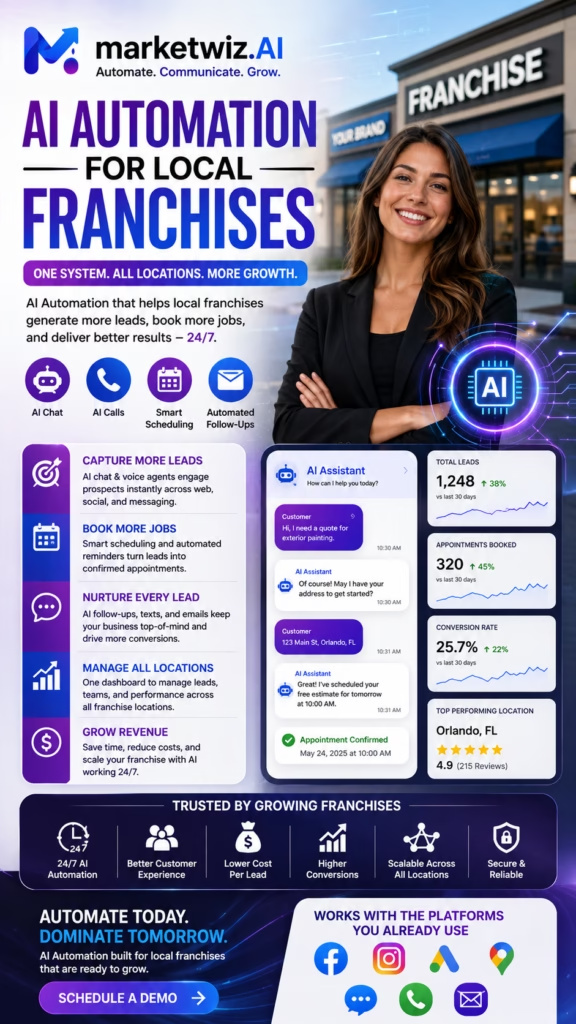
AI Automation for Local Franchises
AI automation for local franchises can help franchisors and franchisees generate more local leads, improve customer response speed, route inquiries to the correct location, schedule appointments, maintain brand standards, strengthen review management, organize CRM activity, reduce repetitive work, and connect marketing and operations to measurable location-level revenue.
Local franchises face a difficult balancing act: every location must deliver a consistent brand experience while also responding to local customers, local competition, local schedules, local demand, and location-specific operational conditions.
One franchise location may need more residential leads, another may need commercial accounts, another may struggle with slow phone response, and another may need stronger reviews or more appointment availability.
Without a connected system, inquiries can be routed incorrectly, locations may use outdated offers, customer follow-up may stop, reviews may remain unanswered, local pages may become inaccurate, and corporate teams may have limited visibility into what is happening.
Artificial intelligence and automation can create a more organized operating system. AI can help identify customer needs, locate the correct franchise, answer approved questions, schedule appointments, send reminders, update records, request reviews, publish local content, and report performance.
The strongest system does not remove local managers or customer service teams. It gives them better tools, cleaner information, faster workflows, and clearer accountability.
The Local Franchise Automation Formula
Central Brand Standards + Accurate Location Data + Fast AI Response + Correct Lead Routing + Local Human Ownership + Consistent Follow-Up + Location-Level Reporting = Scalable Franchise Growth
Why AI Automation Matters for Local Franchises
Faster Customer Response
AI can acknowledge inquiries, answer common questions, and collect customer information before local staff respond.
Correct Location Routing
Leads can be assigned using ZIP code, service territory, customer address, availability, or franchise ownership.
Consistent Brand Experience
Approved scripts, content, offers, disclosures, and workflows can be standardized across the franchise network.
Local Flexibility
Locations can maintain their own hours, calendars, service areas, staff assignments, inventory, and authorized offers.
Reduced Repetitive Work
Automation can reduce manual data entry, appointment confirmation, reminders, review requests, and reporting work.
Better Network Visibility
Corporate and local leaders can compare leads, response, appointments, revenue, reviews, and retention across locations.
Build a Clear Franchise Automation Strategy
Define the Primary Business Goal
- Increase local lead volume
- Improve speed to lead
- Book more appointments
- Reduce missed calls
- Improve review generation
- Increase repeat business
- Standardize local marketing
- Improve location reporting
Choose the First Workflow
A franchise should not automate every process at once. Begin with a valuable workflow such as missed-call response, website lead qualification, appointment booking, review requests, lead routing, or CRM updates.
Map Corporate and Local Responsibilities
Define which decisions belong to the franchisor, which belong to franchisees, and which require shared approval. This may include offers, pricing, content, calendars, customer complaints, data ownership, and lead reassignment.
Define the Customer Journey
Document what happens from first inquiry through qualification, routing, appointment, service, payment, review, repeat business, and customer retention.
Balance Franchise Brand Control With Local Flexibility
Centralized Brand Elements
- Approved company description
- Brand voice
- Service terminology
- Visual identity
- Required disclosures
- Approved claims
- Escalation rules
- Customer service standards
Location-Specific Elements
- Address
- Phone number
- Business hours
- Service territory
- Staff assignments
- Appointment availability
- Authorized local offers
- Community events
Create Permission Levels
Corporate administrators, regional managers, franchise owners, local managers, salespeople, and customer-service employees may need different access.
Use Approved Content Libraries
Store corporate-approved answers, templates, service descriptions, offer language, review responses, images, videos, and compliance guidance in a centralized library.
Standardize the Framework, Not Every Conversation
The system should maintain brand quality while allowing local employees to respond intelligently to real customer needs.
Organize Accurate Franchise Location Data
Core Location Fields
- Franchise location name
- Street address
- Phone number
- Website or location page
- Regular hours
- Holiday hours
- Service territory
- Appointment calendar
- Manager and lead owner
- Services offered
Operational Location Fields
- Current staffing
- Daily capacity
- Appointment duration
- Emergency availability
- Inventory or equipment
- Languages supported
- Local pricing rules
- Authorized promotions
Create One Source of Truth
Website pages, ads, Google Business Profiles, chat, voice, email, SMS, directories, and CRM records should use synchronized location information.
Update Changes Promptly
Closed locations, new owners, revised territories, changing hours, new phone numbers, service restrictions, and temporary capacity issues should be reflected quickly.
Automate Local Franchise Lead Generation
Potential Lead Sources
- Local SEO
- Google Maps
- Paid search
- Paid social media
- Facebook Marketplace
- Craigslist
- Website forms
- AI chat
- Phone calls
- Referral campaigns
Use Location-Specific Campaigns
Ads and landing pages should match the local service area, local phone number, local offer, available appointment times, and services offered by that location.
Separate Consumer and Business Leads
A franchise serving both homeowners and businesses may require different qualification, routing, pricing, and follow-up workflows.
Track the Original Source
Preserve campaign, platform, location, keyword, advertisement, landing page, and referral information inside the CRM.
Route Leads to the Correct Franchise Location
Routing Methods
- ZIP code
- City
- County
- Customer address
- Defined franchise territory
- Nearest eligible location
- Appointment capacity
- Service expertise
- Existing customer ownership
- Round-robin assignment
Handle Territory Conflicts
Establish rules for overlapping territories, customer preference, national accounts, existing relationships, relocated customers, mobile service teams, and unavailable locations.
Create Reassignment Procedures
A lead may need reassignment when the location cannot provide the requested service, lacks capacity, misses the response target, or operates outside the customer area.
Notify the Location Immediately
Use CRM tasks, email, SMS, internal notifications, or dashboards to alert the correct owner.
Use AI Website Chat Across Franchise Locations
Useful Chat Functions
- Identify customer need
- Collect city or ZIP code
- Find the correct location
- Answer approved questions
- Collect contact details
- Confirm service availability
- Offer appointment times
- Transfer complex conversations
Use Location Context
A visitor on a local page should receive the correct address, hours, services, offers, calendar, and phone number for that location.
Keep the Chat Efficient
Ask only enough questions to help the customer and route the lead. Do not create a long interrogation before providing basic help.
Escalate Sensitive Issues
Complaints, refunds, safety concerns, legal issues, account disputes, emergencies, and unusual service requests should be transferred to qualified employees.
Use AI Voice Automation for Franchise Calls
AI Voice Applications
- Answer missed calls
- Identify the nearest location
- Collect customer information
- Answer basic service questions
- Schedule appointments
- Provide business hours
- Route calls to employees
- Send follow-up messages
Use Location-Specific Information
Voice systems should access accurate hours, service areas, calendars, phone routing, offers, and escalation contacts.
Support After-Hours Leads
AI can collect contact details and appointment preferences when a location is closed, then notify the local team.
Review Call Quality
Monitor incorrect answers, failed transfers, appointment errors, customer frustration, long call duration, and unresolved questions.
Automate Franchise Appointment Booking
Appointment Information
- Customer name
- Phone number
- Email address
- Location
- Requested service
- Appointment date
- Appointment time
- Assigned employee
- Preparation instructions
- Special customer notes
Use Location Capacity
Calendars should reflect staffing, service duration, operating hours, travel time, technician skills, equipment, and local capacity.
Send Confirmations and Reminders
Include the location address, appointment time, employee contact, preparation instructions, cancellation rules, and rescheduling options.
Handle No-Shows
Automated follow-up can offer a new time while updating the CRM and notifying the location.
Automate Franchise Email Marketing
Email Campaign Types
- New lead response
- Appointment confirmation
- Estimate follow-up
- Location-specific promotion
- Seasonal service reminder
- Customer education
- Reactivation campaign
- Review request
Use Local Personalization
Include the correct franchise location, manager, phone number, address, service area, offer, appointment link, and local availability.
Segment the Audience
Segment customers by location, service, purchase history, appointment status, customer type, timing, and engagement.
Protect Brand and Deliverability
Use approved templates, accurate sender information, clean lists, proper opt-out handling, and controlled sending volume.
Use SMS Automation for Local Franchise Follow-Up
Useful SMS Workflows
- Lead acknowledgment
- Appointment confirmation
- Appointment reminder
- Technician or employee arrival update
- Requested information
- Estimate follow-up
- Review request
- Customer reactivation
Identify the Business and Location
Customers should understand which franchise location is contacting them and why.
Use Frequency Controls
Avoid sending repeated messages from both corporate and local teams about the same inquiry.
Honor Communication Preferences
Maintain appropriate consent records, identification, opt-out handling, quiet-hour rules, and channel preferences.
Use AI Automation to Improve Franchise Local SEO
Important Location Pages
- Franchise service page by city
- Individual location page
- Service-area page
- Location-specific offer page
- Local frequently asked questions
- Local case studies
- Neighborhood service content
- Location contact page
Automate Content Support
AI can help create outlines, metadata, FAQs, internal links, service descriptions, location summaries, and content updates.
Keep Every Location Page Unique
Add real staff, services, hours, neighborhoods, reviews, offers, photos, customer questions, service-area details, and local proof.
Avoid Mass-Produced Thin Pages
Replacing only the city name across hundreds of pages provides limited value and creates a poor local experience.
Strengthen Google Maps Visibility for Franchise Locations
Maintain Accurate Profiles
- Real-world business name
- Correct location address
- Accurate map pin
- Local phone number
- Business hours
- Relevant categories
- Location website page
- Original local photos
Centralize Profile Monitoring
Corporate teams can monitor profile ownership, duplicate listings, category changes, hours, reviews, photos, posts, and location accuracy.
Use Local Content
Add location-specific posts, services, products, questions, photos, and updates rather than publishing identical information everywhere.
Connect Maps to Lead Tracking
Track calls, website visits, direction requests, messages, appointments, and revenue by location.
Automate Franchise Review and Reputation Workflows
Review Request Moments
- After a completed appointment
- After a successful service
- After a product purchase
- After customer support
- After delivery or installation
- After resolving a concern
Monitor Review Themes
AI can categorize feedback related to staff, response time, quality, cleanliness, communication, price, scheduling, delivery, and customer service.
Draft Response Suggestions
Approved templates can support routine responses while allowing local managers to personalize them.
Escalate High-Risk Reviews
Safety claims, legal threats, discrimination concerns, refunds, injuries, fraud allegations, media attention, and serious complaints should receive human review.
Automate Marketplace Marketing for Local Franchises
Potential Marketplace Uses
- Local product listings
- Equipment sales
- Home-service advertisements
- Vehicle inventory
- Furniture and retail products
- Local promotional offers
- Appointment-generating listings
Standardize Listing Data
- Location name
- City
- Product or service
- Price
- Description
- Photos
- Availability
- Lead-routing number
Use Location-Specific Posting
Listings should reflect the correct service area, inventory, price, phone number, location capacity, and customer instructions.
Connect Inquiry Response
AI can answer basic questions, identify the customer location, collect contact information, qualify the inquiry, and route it to the correct franchise.
Use AI to Improve Franchise Paid Advertising
Campaign Structures
- Corporate national campaigns
- Regional campaigns
- Location-level campaigns
- Service-specific campaigns
- Seasonal campaigns
- Retargeting campaigns
- New-location launches
- Franchise recruitment campaigns
Use Accurate Geographic Targeting
Advertising boundaries should align with franchise territories, service areas, location capacity, and operational coverage.
Match Ads to Local Landing Pages
The page should show the correct location, offer, phone number, service, availability, and appointment process.
Measure Location-Level Outcomes
Track qualified leads, appointments, transactions, revenue, and acquisition cost instead of evaluating only clicks and forms.
Use AI to Qualify Local Franchise Leads
Core Qualification Questions
- What service or product do you need?
- Where are you located?
- When do you need help?
- What is the approximate project or order size?
- Are you an existing customer?
- Which appointment time works?
Use Franchise-Specific Rules
Qualification can vary by industry, location, territory, minimum order, service type, product availability, emergency status, and customer type.
Prioritize High-Intent Leads
Customers requesting immediate service, a quote, a booking, product availability, or a sales conversation may require faster routing.
Record Disqualification Reasons
Examples include unsupported territory, unavailable service, minimum value not met, duplicate inquiry, invalid contact, or customer request outside the franchise model.
Create a Better AI-to-Local-Team Handoff
Handoff Information
- Customer name
- Contact information
- Lead source
- Assigned location
- Requested service
- Qualification answers
- Conversation summary
- Appointment details
- Urgency
- Recommended next action
Set Location Response Targets
Define how quickly local teams should respond to new leads, qualified opportunities, missed calls, complaints, and appointment requests.
Escalate Unhandled Leads
Leads that remain untouched can be escalated to managers, reassigned, or returned to a central support team.
Prevent Repetitive Questions
Employees should review the AI summary before contacting the customer.
Connect AI With Franchise CRM Workflows
CRM Automation Tasks
- Create lead records
- Assign the franchise location
- Assign the lead owner
- Record the source
- Summarize conversations
- Schedule appointments
- Create follow-up tasks
- Update pipeline stages
- Record transactions
- Track customer retention
Standardize Pipeline Stages
- New inquiry
- Contacted
- Qualified
- Appointment scheduled
- Appointment completed
- Estimate or proposal sent
- Sale pending
- Closed won
- Closed lost
Allow Local and Corporate Visibility
Local teams need operational detail, while corporate teams need standardized reporting across territories and locations.
Protect Data Quality
Prevent duplicate contacts, conflicting ownership, incorrect territories, missing sources, incomplete outcomes, and unauthorized data access.
Reactivate Older Franchise Leads With AI
Potential Reactivation Segments
- Unresponsive inquiries
- No-show appointments
- Old estimates
- Former customers
- Seasonal customers
- Expired memberships
- Past product buyers
- Customers due for service
Use a Legitimate Reason to Reconnect
New availability, seasonal timing, maintenance needs, an authorized offer, a local event, a new product, or a service reminder may create a relevant reason.
Use the Correct Location
Contact should come from the appropriate franchise location or clearly identified central team.
Respect Permissions
Review consent, opt-out history, customer status, channel rules, and privacy requirements before reactivation.
Use AI Automation to Improve Customer Retention
Retention Workflows
- Maintenance reminders
- Membership renewals
- Reorder reminders
- Service follow-up
- Customer satisfaction surveys
- Loyalty offers
- Referral requests
- Win-back campaigns
Use Purchase and Service History
Send relevant reminders based on completed services, products, timing, warranties, memberships, or customer preferences.
Identify At-Risk Customers
AI can flag missed renewals, declining visits, unresolved complaints, poor survey feedback, or customers who have not returned.
Measure Lifetime Value
Compare customer retention, repeat purchases, referrals, average transaction value, and lifetime revenue across locations.
Automate Local Franchise Operations
Operational Automation Opportunities
- Daily lead summaries
- Appointment reminders
- Missed-call alerts
- Unanswered lead escalation
- Review alerts
- Inventory notifications
- Staff task creation
- End-of-day reporting
Use Exception-Based Alerts
Managers do not need an alert for every normal event. Notify them when response targets are missed, appointments fail, complaints appear, inventory is unavailable, or conversion changes.
Support Staff, Not Just Management
Frontline employees need simple workflows, clear assignments, conversation context, and useful customer information.
Document Human Override
Employees should be able to correct routing, pause automation, update information, escalate cases, and record exceptions.
Build Franchise-Wide Reporting and Dashboards
Corporate Reporting
- Total franchise leads
- Leads by location
- Response time
- Appointment rate
- Conversion rate
- Review rating
- Revenue by source
- Customer retention
Local Reporting
- New leads
- Unanswered inquiries
- Upcoming appointments
- No-shows
- Open estimates
- Follow-up tasks
- Recent reviews
- Location revenue
Regional Reporting
Regional managers can compare territories, identify underperforming locations, review adoption, and support local teams.
Use Comparable Definitions
Every location should use the same definitions for lead, appointment, qualified opportunity, sale, revenue, cancellation, and customer.
Protect Franchise Compliance, Privacy, and Data
Franchise Governance Controls
- Approved content
- Authorized offers
- Brand standards
- Required disclosures
- Territory rules
- Customer escalation
- Access permissions
- Audit records
Communication Controls
- Clear business identification
- Accurate sender information
- Consent records
- Opt-out handling
- Contact-frequency limits
- Call-recording procedures
- Platform compliance
Protect Customer Information
Use secure systems, limited permissions, approved integrations, data minimization, retention policies, account controls, and incident procedures.
Use Human Review for High-Risk Situations
Complaints, discrimination concerns, injuries, legal threats, refunds, financial information, employment issues, and sensitive customer records require qualified review.
Track AI Automation Performance by Franchise Location
Lead Metrics
- Total inquiries
- Valid lead rate
- Qualified lead rate
- Lead-routing accuracy
- Average response time
- Unanswered lead rate
Appointment Metrics
- Appointments scheduled
- Appointment booking rate
- Show rate
- No-show rate
- Rescheduling rate
- Average booking delay
Sales Metrics
- Estimates or proposals
- Sales conversion rate
- Average transaction value
- Revenue by location
- Gross profit
- Customer acquisition cost
Customer Metrics
- Review volume
- Average review rating
- Repeat-customer rate
- Customer retention
- Referral rate
- Lifetime value
Measure Franchise Automation Revenue and ROI
Lead Routing Accuracy
Routing Accuracy = Correctly Assigned Leads ÷ Total Routed Leads × 100
Qualified Lead Rate
Qualified Lead Rate = Qualified Local Leads ÷ Total Franchise Inquiries × 100
Appointment Booking Rate
Appointment Rate = Scheduled Appointments ÷ Qualified Local Leads × 100
Location Conversion Rate
Location Conversion Rate = Completed Transactions ÷ Qualified Opportunities × 100
Cost per Acquired Customer
Customer Acquisition Cost = Total Location Marketing and Automation Cost ÷ New Customers
Franchise Automation ROI
ROI = (Gross Profit From Attributed Franchise Customers − Total Automation Cost) ÷ Total Automation Cost × 100
| Metric | What It Measures |
|---|---|
| Response time | How quickly franchise locations engage new inquiries |
| Routing accuracy | Whether leads reach the correct territory and owner |
| Appointment rate | Whether qualified leads become scheduled opportunities |
| Location conversion rate | Whether local teams convert opportunities into customers |
| Customer retention | Whether automation supports repeat business and loyalty |
| Attributed gross profit | Profit connected to the complete franchise automation system |
Common AI Automation Mistakes Local Franchises Should Avoid
Using Incorrect Location Information
Outdated hours, phone numbers, territories, offers, calendars, and services can create poor customer experiences.
Routing Leads Incorrectly
Territory errors can create franchise disputes, slow response, and lost customers.
Automating Without Local Ownership
Automation cannot succeed when nobody at the location owns the lead, appointment, complaint, or follow-up.
Using Identical Content Everywhere
Local customers need accurate information about their specific location, staff, service area, availability, and community.
Allowing Unapproved Local Claims
Locations should not publish unsupported guarantees, unauthorized discounts, inaccurate prices, or misleading service claims.
Automating Sensitive Complaints
Serious customer issues require empathy, judgment, investigation, and management involvement.
Creating Duplicate CRM Records
Duplicate leads can cause repeated messages, conflicting assignments, poor reporting, and customer frustration.
Ignoring Franchisee Adoption
A system will underperform if local owners and staff do not understand the workflow, trust the data, or use the assigned tasks.
Measuring Leads Without Revenue
Lead volume matters, but the franchise should track appointments, transactions, revenue, gross profit, repeat customers, and ROI.
Trying to Automate Everything Immediately
Begin with a focused workflow, test it, improve it, and then expand across more locations and processes.
A 30-Day AI Automation Plan for Local Franchises
Week 1: Build the Franchise Foundation
- Define the primary automation goal
- Select the first workflow
- Document corporate responsibilities
- Document local responsibilities
- Collect accurate location data
- Map franchise territories
- Define qualification rules
- Select performance metrics
Week 2: Build Content and Routing
- Create approved response templates
- Create local variables
- Build lead-routing rules
- Connect location calendars
- Create email and SMS templates
- Prepare review workflows
- Review brand standards
- Review compliance requirements
Week 3: Launch Core Automations
- Connect website forms
- Configure AI chat
- Configure voice response
- Connect the CRM
- Assign lead owners
- Create appointment reminders
- Create escalation alerts
- Test location handoff
Week 4: Measure and Improve
- Review routing accuracy
- Measure response time
- Measure qualified lead rate
- Measure appointment booking
- Review location adoption
- Identify unanswered leads
- Improve scripts and workflows
- Calculate revenue and ROI
End-of-Month Outcome
After 30 days, the franchise should have cleaner location data, clearer corporate and local responsibilities, working lead routing, faster customer response, connected appointment calendars, standardized CRM records, stronger local accountability, and measurable insight into which locations and campaigns produce real revenue.
Final Takeaway: Build a Scalable Local Franchise Automation System
Effective AI automation for local franchises requires more than adding a chatbot, scheduling software, or automated messages.
The franchise must begin with accurate location data, clear territories, brand standards, approved content, local calendars, lead ownership, qualification rules, customer escalation, CRM stages, and measurable business goals.
AI can then support local lead generation, website chat, voice response, appointment scheduling, email, SMS, Google Maps, local SEO, review management, social media, marketplace listings, paid advertising, customer reactivation, retention, and reporting.
Franchise owners, managers, salespeople, technicians, and customer service employees remain essential for local relationships, technical expertise, service delivery, complaints, pricing, negotiation, and quality control.
The strongest workflow moves smoothly from inquiry to location identification, qualification, correct territory routing, appointment, human follow-up, service or sale, review request, repeat business, and referral.
Performance should be measured through response time, routing accuracy, qualified leads, appointments, show rates, estimates, transactions, revenue, gross profit, reviews, repeat customers, lifetime value, and return on investment.
AI automation becomes even more effective when connected with Google Maps, local SEO, Facebook Marketplace, Craigslist, paid search, paid social, email, SMS, voice, social media, customer reviews, loyalty programs, referrals, and consistent CRM follow-up.
When the complete system works together, a local inquiry can become a correctly routed lead, scheduled appointment, completed service, positive review, repeat customer, referral, stronger franchise location, and measurable network growth.
Frequently Asked Questions
1. What is AI automation for local franchises?
It uses artificial intelligence and connected workflows to manage local leads, customer response, appointments, reviews, CRM activity, follow-up, reporting, and repeatable operations.
2. How can AI automation help franchise locations?
AI can improve response speed, lead routing, scheduling, follow-up, review generation, local marketing, CRM updates, and performance tracking.
3. Can AI work across multiple franchise locations?
Yes. Centralized standards can be combined with location-specific phone numbers, territories, calendars, offers, staff, inventory, and reporting.
4. Can franchisees control local AI workflows?
Authorized local teams can manage hours, calendars, staffing, lead ownership, local offers, and customer follow-up within corporate rules.
5. Can AI replace franchise employees?
AI can automate repetitive tasks, but employees remain important for customer service, sales, service delivery, complaints, technical questions, and management.
6. Can AI generate leads for local franchises?
Yes. AI can support local SEO, Google Maps, paid ads, marketplaces, chat, forms, phone response, social media, email, and SMS.
7. Can AI route leads to the correct franchise?
AI can route leads by ZIP code, address, territory, service, appointment capacity, existing ownership, language, or local availability.
8. Can AI schedule franchise appointments?
AI can show available times, collect details, schedule the appointment, send reminders, update calendars, and notify employees.
9. Can AI answer franchise customer calls?
AI voice systems can answer common questions, identify the location, collect lead information, schedule appointments, route calls, and transfer customers.
10. Can franchises use AI website chat?
AI chat can identify customer needs, find the appropriate location, answer approved questions, collect details, and book appointments.
11. Can AI automate franchise email marketing?
AI can segment contacts, personalize local messages, send follow-up, promote offers, reactivate customers, and support corporate campaigns.
12. Can AI automate franchise SMS communication?
AI can support permitted lead response, confirmations, reminders, updates, review requests, and follow-up with proper controls.
13. Can AI help franchise locations rank locally?
AI can support location pages, Google Business Profile updates, local FAQs, metadata, internal links, reviews, and local reporting.
14. Can AI manage franchise reviews?
AI can send requests, monitor feedback, categorize review topics, draft response suggestions, alert managers, and report location performance.
15. Should AI respond automatically to every review?
Routine feedback may use approved assistance, but complaints, safety issues, legal concerns, and sensitive matters need human review.
16. Can AI help franchisees post on social media?
AI can adapt approved content for local staff, events, offers, communities, phone numbers, addresses, and service areas.
17. Can AI automate marketplace posting?
AI may support eligible listings, posting schedules, inquiry response, qualification, routing, and tracking subject to platform requirements.
18. Can AI connect with a franchise CRM?
AI can create records, assign locations and owners, summarize conversations, update stages, create tasks, and track outcomes.
19. Can AI reactivate older franchise leads?
Yes. AI can reconnect with permitted leads using seasonal services, new offers, availability, events, maintenance needs, and appointment opportunities.
20. Can AI improve customer retention?
AI can support reminders, renewals, reorders, loyalty communication, surveys, referrals, follow-up, and win-back campaigns.
21. How can franchises maintain brand consistency?
Use approved templates, prompts, offers, claims, visual rules, escalation procedures, permission levels, and centralized content libraries.
22. Can locations use different offers?
Yes, when the offers are authorized, accurate, available, properly disclosed, and consistent with franchise agreements.
23. How should franchise leads be tracked?
Track location, source, service, response time, qualification, appointment, estimate, transaction, revenue, profit, and follow-up.
24. Which franchise automation metrics matter?
Track response time, qualified leads, appointments, show rate, conversion, acquisition cost, transaction value, retention, revenue, and ROI.
25. Can AI compare franchise location performance?
Yes. AI can organize location reporting for leads, response, appointments, sales, reviews, retention, costs, and revenue.
26. What are common franchise automation mistakes?
Common mistakes include bad location data, incorrect routing, outdated offers, duplicate records, excessive automation, weak handoff, and poor reporting.
27. Does franchise AI require human oversight?
Yes. Human review is essential for complaints, pricing, legal issues, refunds, service quality, sensitive information, and local management.
28. How long does franchise automation take to work?
Timing depends on location count, systems, data quality, integrations, market demand, staff adoption, and process complexity.
29. Should AI connect with other franchise marketing?
Yes. Connect it with local SEO, Google Maps, paid ads, social media, marketplaces, email, SMS, phone, reviews, loyalty, and CRM follow-up.
30. What is the main goal of AI automation for local franchises?
The goal is to improve local customer experiences, convert more leads, reduce repetitive work, strengthen accountability, and produce measurable network growth.
30 Additional SEO Keywords
Use these supporting phrases naturally across franchise service pages, location pages, automation pages, local marketing guides, case studies, FAQs, internal links, and multi-location growth campaigns.
Turn AI Automation Into More Local Franchise Leads, Customers, and Revenue
MarketWiz.ai helps local franchises generate and route leads, automate customer response, book appointments, improve Google Maps visibility, manage reviews, coordinate marketplace posting, connect CRM workflows, reactivate older customers, strengthen retention, and measure location-level revenue, gross profit, and return on investment.
This article provides general marketing, automation, operational, and business information and does not provide legal, franchise, privacy, telecommunications, employment, financial, consumer-protection, platform-compliance, or regulatory advice. Franchisors and franchisees should review current franchise agreements, brand standards, territory rights, advertising rules, customer privacy requirements, email and SMS consent requirements, call-recording laws, review policies, data-security obligations, platform rules, employment requirements, and applicable local, state, and federal laws before implementing automated targeting, communication, routing, recording, scheduling, review, reporting, or customer follow-up systems. AI-generated messages, offers, prices, service claims, location data, recommendations, and customer responses should receive appropriate human review.










Scale Local Franchise Social Media With AI
Corporate Content
Local Content
Use Approved Adaptation
AI can adapt corporate campaigns with local addresses, phone numbers, service areas, events, employees, and authorized offers.
Maintain Quality Control
Review claims, spelling, location tags, images, offers, dates, links, brand voice, and required disclosures before publishing.