
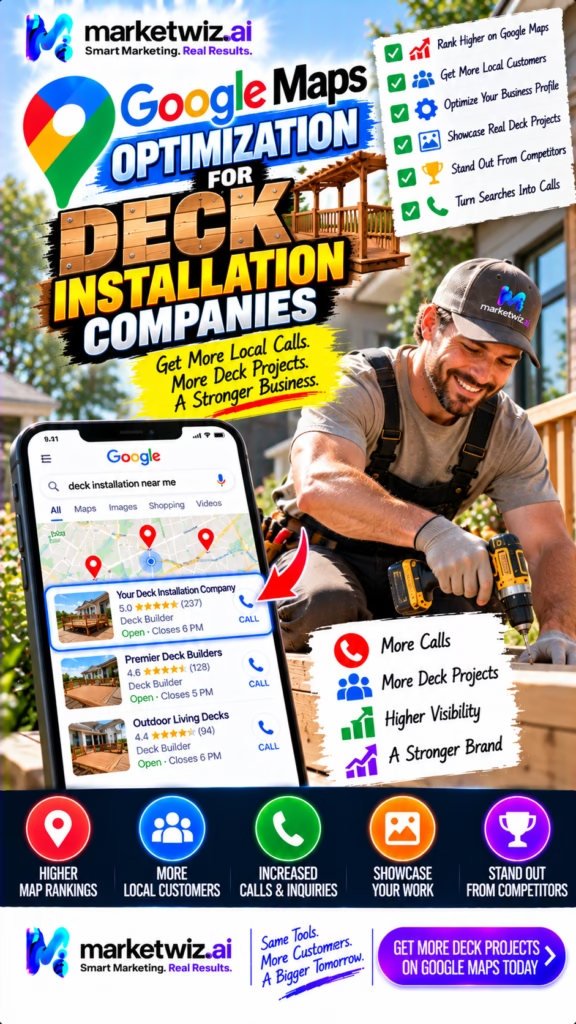
Google Maps Optimization for Deck Installation Companies
Homeowners searching for a deck builder are often preparing for a significant outdoor living investment. Discover how deck installation companies can strengthen Google Maps visibility, improve local search rankings, showcase beautiful completed projects, attract qualified homeowners, and convert Google searches into profitable deck installation opportunities using Google Business Profile optimization, local SEO, authentic reviews, AI-assisted marketing, and organized lead management.
Updated October 20261. Understand the Google Maps Opportunity for Deck Installation Companies
Deck installation is a highly localized construction category. Homeowners typically want contractors who can evaluate their property, understand local construction requirements, recommend appropriate materials, provide an estimate, and complete the project within a realistic schedule.
When someone searches Google for a deck builder, deck installation company, composite deck contractor, or deck replacement specialist, they may already be evaluating contractors for an upcoming project.
Google Maps provides an opportunity for local deck companies to appear during that research process.
Unlike broad brand-awareness advertising, many local deck-related searches come from homeowners who have already identified an outdoor improvement they want to pursue.
The opportunity is particularly meaningful because deck installation projects can involve substantial budgets, multiple design decisions, and careful contractor comparisons.
The objective is not simply higher Google Maps visibility. A successful strategy helps the right homeowners discover the business, evaluate its workmanship, request an estimate, and eventually move toward a signed deck installation project.
Google Maps optimization should therefore connect search visibility with reputation, project photography, website content, lead qualification, estimate scheduling, proposal management, and completed-project revenue.
2. Understand How Homeowners Search for Deck Contractors
Homeowners do not all search for deck contractors using the same terminology. Some search broadly because they are beginning their research. Others know exactly which material or deck style they want.
A homeowner interested in replacing an aging pressure-treated deck may use different search terms than someone planning a new elevated composite deck with aluminum railings and integrated lighting.
Common deck installation search themes include:
- Deck builders near me
- Deck installation companies
- Local deck contractors
- Custom deck builders
- Composite deck installation
- Wood deck construction
- Deck replacement contractors
- Deck repair contractors
- Backyard deck builders
- Elevated deck installation
- Multi-level deck construction
- Covered deck contractors
- Deck railing installation
- Outdoor living contractors
- Deck construction estimates
Not every company performs every type of work. The marketing strategy should emphasize only the deck categories and construction capabilities the business actually offers.
Match Content to Real Project Intent
A homeowner researching composite decking should find relevant composite deck information. Someone planning a wood deck should find useful wood deck content. A homeowner replacing an unsafe or deteriorating deck should be able to understand whether replacement is within the contractor's capabilities.
3. Build a Strong Google Business Profile Foundation
Google Business Profile is a central component of local search marketing for deck installation companies.
It provides business information that can appear across Google Search and Google Maps, helping prospective customers understand the company before contacting it.
A strong profile should be complete, accurate, and representative of the actual deck installation business.
Important profile elements include:
- Accurate business name
- Appropriate primary business category
- Relevant additional categories
- Correct phone number
- Working website link
- Accurate operating hours
- Legitimate business address or service-area configuration
- Professional business description
- Authentic project photography
- Customer reviews
- Eligible profile features and attributes
Google Business Profile information should follow Google's eligibility and representation requirements. Contractors should not create fictional locations, use unauthorized addresses, or insert extra keywords into the business name unless those words are genuinely part of the real-world business name.
Accuracy establishes the foundation for a sustainable local marketing strategy.
4. Choose Accurate Google Business Profile Categories
Business categories help describe what a company does. For deck installation contractors, choosing categories that accurately represent the business is more useful than adding unrelated categories simply to target additional search terms.
The most appropriate primary category depends on the company's actual business model and the categories currently available within Google Business Profile.
A company primarily constructing decks may have different category needs than a general contractor that also builds decks, a remodeling company, or a business focused on outdoor living construction.
Category selection should consider:
- The company's main source of revenue
- The work it performs directly
- Its actual construction specialization
- The types of customers it serves
- Relevant available Google categories
Additional categories should only be used when they truthfully describe meaningful parts of the company's operations.
Do not confuse keyword targeting with business categorization. A deck builder can create website content for composite decks, wood decks, deck replacement, and other legitimate offerings without attempting to force every keyword into its business categories.
5. Keep Deck Contractor Business Information Accurate
Homeowners comparing contractors need reliable contact information. An incorrect phone number, outdated website link, or misleading business location can interrupt the customer journey before the company receives an inquiry.
Deck companies should periodically review important information across their Google Business Profile, website, and relevant business listings.
Review the following information:
- Business name
- Phone number
- Website address
- Operating hours
- Holiday hours where relevant
- Real operating territory
- Business location information where applicable
- Contact forms
- Estimate request pathways
Consistency helps homeowners move between Google Maps, the company website, and other online profiles without encountering conflicting information.
For businesses operating as service-area companies, profile settings should accurately reflect the real business model and comply with applicable Google Business Profile requirements.
6. Define the Most Valuable Deck Installation Service Areas
Deck builders often serve a main city plus several surrounding suburbs, towns, and residential communities.
However, the largest possible territory is not always the most profitable territory.
Deck construction involves site visits, material deliveries, crew travel, inspections, scheduling, and project management. These factors affect which locations make financial sense.
Evaluate local markets using:
- Homeowner demand
- Residential property characteristics
- Typical deck project budgets
- Travel distance
- Material delivery logistics
- Crew availability
- Existing project concentration
- Local competition
- Historical close rates
- Average project profitability
A contractor may discover that one nearby suburb produces larger composite deck projects while another market generates more modest wood deck installations.
That information can guide both local SEO content and sales priorities.
Build Geographic Targeting Around Profitability
Instead of targeting every city equally, prioritize legitimate operating areas that combine customer demand, efficient project delivery, appropriate budgets, and strong conversion potential.
7. Organize Google Maps Marketing Around Deck Project Types
Deck installation is not one uniform product. Different homeowners want different materials, layouts, features, construction methods, and budgets.
A well-organized website can explain these differences while reinforcing the company's overall local presence.
Composite Decks
Showcase completed composite deck projects, relevant material options, railing combinations, and design possibilities.
Wood Decks
Explain the wood decking materials the company actually installs, along with project examples and relevant maintenance considerations.
Deck Replacement
Help homeowners understand the company's replacement process, evaluation approach, and completed replacement projects.
Custom Deck Construction
Highlight unique layouts, multi-level structures, stairs, railings, lighting, and other custom features genuinely offered.
The objective is to make the business easier to understand for homeowners with different project requirements.
8. Build Local SEO Around Composite Deck Installation
Composite decking is an important category for many deck builders. Homeowners researching composite materials may be comparing appearance, maintenance expectations, available colors, project design, and installation costs.
Companies that genuinely install composite decks can create dedicated content addressing those questions.
Useful composite deck content may include:
- Composite deck installation
- Custom composite deck construction
- Composite deck replacement
- Composite deck design options
- Composite decking material comparisons
- Composite deck railings
- Composite deck stairs
- Composite deck lighting
- Completed composite deck galleries
- Composite deck installation estimates
Material claims should be accurate and based on the specific products the contractor uses.
For example, maintenance requirements, warranties, surface characteristics, and product limitations can differ among manufacturers and product lines.
Avoid presenting every composite decking product as identical.
Composite deck SEO should combine search relevance with visual proof. A detailed project gallery showing real composite installations can help homeowners evaluate design quality and craftsmanship before requesting an estimate.
9. Build Local SEO Around Wood Deck Construction
Wood decking remains relevant to homeowners seeking traditional appearances, specific material characteristics, or project budgets suited to particular wood products.
Deck contractors offering wood construction can create pages that explain their actual material options, construction process, and completed projects.
Potential wood deck content includes:
- Wood deck installation
- Pressure-treated deck construction
- Cedar deck installation where offered
- Custom wood decks
- Wood deck replacement
- Wood deck stairs
- Wood deck railings
- Wood deck maintenance considerations
- Wood deck project galleries
The page should help homeowners understand the company's capabilities rather than simply repeat variations of the phrase wood deck builder.
Authentic project photography can reinforce the content by showing completed construction details and workmanship.
10. Optimize for Deck Replacement and Renovation Searches
Many homeowners are not starting with an empty backyard. They already have a deck that may be aging, deteriorating, outdated, undersized, or poorly suited to their current needs.
Deck replacement searches can represent meaningful opportunities for companies that perform this work.
Useful replacement content may address:
- Replacing an existing deck
- Deck demolition and removal where offered
- Evaluating an aging deck
- Upgrading deck materials
- Changing deck layouts
- Replacing stairs and railings
- Transitioning from wood to composite decking
- Understanding project scope
- Permits and inspections where applicable
Avoid making structural safety determinations through marketing content alone. Actual deck conditions may require an appropriate on-site evaluation by qualified professionals.
A replacement-focused page should explain the company's process and help customers understand the next step.
11. Create Useful Deck Installation City Pages
A deck builder operating across multiple communities may benefit from dedicated pages for important cities and service areas.
However, each location page should offer meaningful information. Publishing dozens of nearly identical pages with only the city name changed creates a weaker customer experience.
A useful city page may include:
- The specific community served
- Deck installation work available in that market
- Relevant project types
- Real completed projects from the area when available
- Local project considerations
- Nearby communities legitimately served
- Customer questions
- Links to deck-specific pages
- Clear contact information
A contractor serving several communities should develop a logical location structure instead of creating unnecessary duplicate pages.
Use Real Local Project Experience
If the company has completed a deck installation in a target community, an approved project description and authentic photography may provide more useful local context than generic claims about serving that city.
12. Strengthen the Deck Installation Company Website
Google Maps often acts as a discovery point. The company website can become the next step in the homeowner's evaluation process.
Deck installation is a visually driven, relatively high-consideration purchase. Homeowners may compare several companies before requesting or accepting a proposal.
A strong website should answer important questions while presenting the company's work professionally.
Important website elements include:
- Clear company positioning
- Deck installation information
- Composite decking pages
- Wood decking pages
- Custom deck construction pages
- Deck replacement pages where applicable
- Completed project galleries
- Accurate service areas
- Customer testimonials used appropriately
- Relevant licenses or credentials when accurately represented
- Frequently asked questions
- Mobile-friendly navigation
- Clear estimate request options
The website should help homeowners understand whether the company is a good match for their desired project.
A homeowner looking for an elaborate multi-level composite deck should not have to search through unrelated content to find examples of similar work.
13. Improve Technical SEO and Mobile Performance
Homeowners frequently research deck builders on phones, especially while looking at their backyard, comparing inspiration photos, or discussing potential projects with family members.
A slow or difficult-to-navigate website can create friction before the contractor receives an inquiry.
Technical SEO priorities include:
- Mobile responsiveness
- Fast page loading
- HTTPS
- Logical navigation
- Descriptive page titles
- Useful meta descriptions
- Clear heading structure
- Image compression
- Descriptive image alternative text
- Internal linking
- Broken-link correction
- Indexability
- Appropriate structured data
- Duplicate-content management
Deck websites often contain large image galleries. Those images should be optimized carefully so the visual presentation does not unnecessarily slow the website.
A visually impressive project portfolio is most useful when visitors can load and navigate it comfortably.
14. Build a Consistent Google Review Strategy
Homeowners evaluating deck installation companies often want reassurance about workmanship, professionalism, communication, scheduling, and the overall construction experience.
Authentic customer reviews can provide additional perspective on those factors.
A consistent review process should be part of normal customer operations rather than an occasional marketing campaign.
Deliver a Professional Project Experience
Communicate clearly, maintain realistic expectations, respect the property, and manage the project professionally.
Invite Honest Customer Feedback
After completed work, give legitimate customers a straightforward opportunity to share their experience.
Monitor Customer Feedback
Review comments for recurring strengths and potential improvements in communication, workmanship, or scheduling.
Respond Professionally
Thank customers appropriately and address legitimate concerns without revealing private information.
Review requests should follow applicable Google policies. Avoid fabricated reviews, prohibited incentives, and selective solicitation designed to suppress negative customer feedback.
15. Focus on Authentic Deck Builder Reviews
For deck installation companies, reviews can help potential customers understand more than the appearance of a finished deck.
They may reveal how the contractor communicates, whether the project was managed professionally, and how the customer felt about the overall experience.
The business should never dictate what a customer must write or pressure the customer to provide a particular rating.
A strong reputation process emphasizes:
- Real completed projects
- Genuine customer experiences
- Consistent communication
- Professional project management
- Honest feedback requests
- Respectful review responses
- Continuous operational improvement
Better reviews begin with better customer experiences. Marketing can organize the review-request process, but it cannot replace reliable workmanship, professional communication, and responsible project delivery.
16. Respond to Deck Installation Reviews Professionally
Review responses are visible to prospective customers. They can influence how a homeowner perceives the contractor's professionalism.
A thoughtful response should sound natural and reflect the actual customer experience.
Useful response principles include:
- Thank customers appropriately
- Use professional language
- Keep responses relevant
- Avoid repetitive keyword stuffing
- Respect customer privacy
- Address concerns constructively
- Avoid unnecessary arguments
- Do not invent project details
AI may assist with drafting review responses, but the business should verify accuracy before publishing them.
A customer review should not become an excuse to insert a long list of cities and deck-related keywords into the response.
17. Showcase Authentic Deck Installation Project Photography
Deck construction is one of the local contractor categories where visual presentation can be especially valuable.
A homeowner may understand the quality and style of a contractor's work more quickly through a strong project gallery than through generic marketing descriptions.
Useful project photo categories include:
- Completed composite decks
- Completed wood decks
- Multi-level decks
- Elevated decks
- Deck stairs
- Custom railings
- Deck lighting
- Covered deck structures where offered
- Outdoor living integrations
- Before-and-after projects
- Construction details
- Finished backyard transformations
Photographs should accurately represent real work. Obtain appropriate permission before publishing customer property images.
AI-generated concept images should not be presented as photographs of completed customer projects.
Create a Project Photography System
Document completed projects consistently. Capture wide views, detail views, railing finishes, stairs, materials, and overall backyard context. Organize the images by deck type and location so the marketing team can find relevant examples quickly.
18. Turn Completed Deck Projects Into SEO Assets
Every completed deck can potentially provide useful marketing material when the homeowner has approved the necessary photography and project information.
A project portfolio can do more than display images. It can help explain the company's real experience.
A useful project entry may include:
- Deck type
- Materials used
- General project location
- Design considerations
- Railing style
- Stair configuration
- Special features
- Completed project photography
- Relevant links to installation pages
A composite deck project with custom railings can support the composite deck page.
A wood deck replacement can support the replacement page.
A completed project in a legitimate service area may also provide useful local context.
This creates a growing library of real work that supports both customer trust and website content development.
19. Strengthen Local Relevance Across the Deck Building Brand
Local relevance should reflect the company's actual geographic operations.
Simply repeating a city name throughout the website does not create the same value as useful local content, accurate business information, and real project experience.
Local relevance can be supported through:
- Accurate Google Business Profile information
- Legitimate service-area pages
- Real local project galleries
- Authentic customer reviews
- Consistent business information
- Relevant local mentions
- Community involvement where applicable
- Useful geographic content
- Clear operating territory information
The goal is to establish a coherent relationship between the company, the work it performs, and the communities it genuinely serves.
20. Maintain Accurate Local Business Citations
Deck contractors may appear across business directories, mapping platforms, contractor listings, industry profiles, and social media accounts.
Important profiles should present accurate, consistent business information.
Review information such as:
- Company name
- Phone number
- Website URL
- Business location information where applicable
- Operating territory
- Business description
- Relevant categories
- Hours
Prioritize legitimate, relevant listings instead of creating large numbers of low-quality profiles.
Consistency makes it easier for customers to recognize the same company across different online platforms.
21. Publish Helpful Deck Construction Content
Deck installation companies can answer many of the questions homeowners ask before committing to a construction project.
Educational content can support organic search while helping prospective customers make better-informed decisions.
Potential article topics include:
- Composite versus wood decking
- Planning a backyard deck
- Questions to ask a deck builder
- Deck railing options
- Deck stair design considerations
- Understanding deck replacement
- Preparing for a deck installation consultation
- Deck lighting ideas
- Multi-level deck design considerations
- Common deck project planning mistakes
- Factors that influence deck installation cost
- Deck maintenance considerations
- Understanding permits and inspections
- Choosing a deck contractor
Technical content should be accurate. Building codes, permit requirements, structural design, and material specifications can vary by jurisdiction and project.
Do not present generic marketing content as a substitute for project-specific professional evaluation.
22. Use AI to Support Deck Contractor Local SEO
Deck companies often have limited time for content planning, marketing administration, lead organization, and reporting.
AI can help streamline repetitive tasks without replacing the contractor's real-world expertise.
AI-assisted workflows may include:
- Keyword organization
- Content planning
- Service-page outlines
- Location-page drafts
- Project description drafts
- Photo caption preparation
- Frequently asked question drafts
- Review-response drafts
- Social content repurposing
- Lead summaries
- CRM note organization
- Monthly reporting
Human review remains essential. AI should not invent completed projects, customer testimonials, material warranties, licenses, certifications, pricing, or construction capabilities.
Use AI to improve consistency, not manufacture credibility. The strongest deck contractor marketing is built around verified business information, authentic completed work, and real customer experiences.
23. Connect Google Maps Visibility to Deck Installation Leads
Visibility only becomes commercially meaningful when it leads to qualified customer opportunities.
A homeowner may discover a deck builder through Google Maps, examine the project gallery, read reviews, visit the website, and then request an estimate.
That inquiry should enter an organized workflow.
Useful lead information may include:
- Customer name
- Phone number
- Email address
- Project city
- Property type
- New installation or replacement
- Preferred decking material
- Approximate project size
- Desired features
- Estimated budget where available
- Desired timeline
- Lead source
- Next action
Qualification should be efficient. The objective is to understand whether the project is a good fit without creating unnecessary barriers for the homeowner.
24. Track Deck Installation Opportunities in a CRM
Deck projects may involve multiple stages between the first inquiry and a signed contract.
A homeowner may request an estimate, schedule a consultation, review design options, compare materials, evaluate a proposal, and then make a purchasing decision.
A CRM can help the company track these stages consistently.
Useful pipeline stages include:
- New inquiry
- Contact attempted
- Contact established
- Qualified lead
- Consultation scheduled
- Site visit completed
- Estimate prepared
- Proposal delivered
- Follow-up required
- Contract signed
- Project scheduled
- Project completed
- Lost opportunity
The company can then identify where qualified opportunities are progressing and where potential customers are being lost.
This information can improve both marketing and sales operations.
25. Turn Google Maps Inquiries Into Qualified Deck Estimates
Not every deck inquiry will become a profitable installation project.
Some homeowners may be early in the research process. Others may have unrealistic budgets, live outside the company's territory, or request work the contractor does not perform.
The goal is to move appropriate inquiries toward useful consultations and estimates.
| Customer Stage | What to Evaluate |
|---|---|
| Discovery | Is the homeowner finding the company through relevant local searches? |
| Engagement | Is the customer reviewing projects, business information, and reputation? |
| Inquiry | Does the request involve deck work the company actually performs? |
| Qualification | Does the location, project type, budget, and timeline fit the business? |
| Consultation | Does the qualified customer schedule the appropriate next step? |
| Proposal | Does the company provide a clear and professional estimate or proposal? |
| Contract | Does the opportunity become a signed project? |
| Revenue | Does the project generate profitable completed work? |
A strong Google Maps strategy should be evaluated across this entire customer journey.
26. Adapt Deck Builder SEO to Seasonal Demand
Deck installation demand may change throughout the year depending on climate, construction conditions, homeowner planning, and local market behavior.
In some markets, homeowners research outdoor projects well before the preferred construction season.
In others, favorable weather may allow construction across much of the year.
Seasonal planning should consider:
- Historical inquiry volume
- Past project start dates
- Local weather conditions
- Consultation demand
- Construction capacity
- Material lead times
- Permit processing considerations
- Homeowner planning cycles
- Historical conversion rates
Content planning should reflect real customer behavior in the company's operating markets.
Plan Around the Sales Cycle
A homeowner researching a deck today may not begin construction immediately. Track the time between initial inquiry, consultation, signed contract, and project completion so marketing can support the actual buying cycle.
27. Combine Google Maps With Multi-Channel Deck Marketing
Google Maps is an important discovery channel, but deck installation companies can benefit from a broader marketing strategy.
Different platforms can support different stages of the homeowner's research and decision-making process.
Complementary channels may include:
- Google Maps optimization
- Organic local SEO
- Project portfolio content
- Facebook business pages
- Instagram project galleries
- Short-form project videos
- YouTube project showcases
- Local community marketing
- Customer referrals
- Email follow-up
- Facebook Marketplace where permitted
- Paid advertising where appropriate
- AI-assisted marketing workflows
A completed deck project can provide material for several channels.
The project gallery supports the website.
Approved photographs support social content.
A project description can support relevant educational content.
Authentic customer feedback can support reputation.
The CRM tracks the commercial outcome.
This creates a more connected marketing system rather than a collection of unrelated campaigns.
28. Measure Deck Contractor Google Maps Performance
Local rankings are useful indicators, but they do not tell the entire story of marketing performance.
A deck company may receive many inquiries while signing relatively few profitable projects.
Another market may produce fewer inquiries but significantly stronger project opportunities.
Revenue-focused measurement helps distinguish these situations.
| Metric | Business Meaning |
|---|---|
| Local Search Visibility | Whether the company is being discovered for relevant searches. |
| Website Visits | How much search interest reaches the website. |
| Calls and Inquiries | How many prospective customers initiate contact. |
| Qualified Leads | How many inquiries fit the company's project criteria. |
| Consultations | How many qualified homeowners progress to a project discussion. |
| Proposals | How many opportunities receive formal estimates. |
| Signed Contracts | How many proposals become actual projects. |
| Average Project Value | The typical contract value of acquired projects. |
| Customer Acquisition Cost | The marketing and sales cost associated with acquiring customers. |
| Project Revenue | The revenue generated from completed or contracted work. |
The company should also monitor project profitability, not merely contract value.
Material costs, labor requirements, travel, subcontracting, and project complexity can affect the value of different leads.
29. Avoid Common Google Maps Mistakes for Deck Builders
Many deck companies underperform online because their marketing does not accurately communicate their work or connect visibility to customer acquisition.
Common mistakes include:
- Incomplete Google Business Profiles
- Inaccurate phone numbers
- Outdated business hours
- Irrelevant business categories
- Misleading business locations
- Weak project photography
- Stock photos presented as completed work
- Neglected customer reviews
- Artificial review tactics
- Thin deck installation pages
- Duplicated city pages
- Ignoring composite deck searches
- Ignoring wood deck searches
- Ignoring replacement searches when relevant
- Slow mobile websites
- Broken estimate forms
- Unorganized customer inquiries
- Slow lead follow-up
- Failure to track proposals
- Failure to measure signed contracts
- Focusing only on rankings
- Ignoring project profitability
Google Maps optimization should support the real deck construction business. Accurate local visibility, strong project galleries, authentic reviews, useful website content, reliable customer communication, and organized sales tracking should work together.
30. Follow a 90-Day Deck Installation Google Maps Growth Plan
A structured 90-day plan can help deck installation companies improve their local marketing foundation without relying on shortcuts.
Days 1–30: Establish the Foundation
- Audit the Google Business Profile.
- Verify business information.
- Review business categories.
- Confirm legitimate service areas.
- Check website and phone links.
- Review existing Google reviews.
- Establish an honest review-request workflow.
- Audit existing project photography.
- Review website mobile performance.
- Identify missing deck-specific pages.
- Audit important local citations.
- Establish lead-source tracking.
Days 31–60: Strengthen Local Relevance
- Improve the main deck installation page.
- Develop composite deck content where relevant.
- Develop wood deck content where relevant.
- Improve deck replacement content.
- Build useful location pages.
- Add authentic completed-project galleries.
- Improve image optimization.
- Strengthen internal linking.
- Publish helpful homeowner content.
- Continue collecting honest customer reviews.
- Improve estimate inquiry workflows.
- Track qualified consultations.
Days 61–90: Optimize for Revenue
- Compare local markets.
- Compare deck project categories.
- Review qualified lead volume.
- Review consultation scheduling.
- Track proposal delivery.
- Measure proposal acceptance.
- Measure signed contracts.
- Evaluate average project value.
- Review customer acquisition cost.
- Identify weak conversion stages.
- Improve marketing content using real customer questions.
- Use AI to streamline repetitive tasks.
- Expand successful local content.
- Continue reputation development.
- Connect reporting to revenue and profitability.
The Deck Builder Google Maps Growth Formula
Accurate Google Business Profile + legitimate service areas + authentic customer reviews + compelling project photography + deck-specific website pages + useful city content + technical SEO + organized lead response + CRM tracking + AI-assisted workflows + signed-contract measurement + profitable project growth.
Turn Google Maps Into a Long-Term Deck Installation Growth Channel
Google Maps optimization for deck installation companies is not simply about appearing higher in local search results. It is about creating a reliable connection between homeowners researching deck projects and contractors capable of delivering those projects professionally.
The opportunity begins when a homeowner searches for a deck builder, composite deck installer, wood deck contractor, or deck replacement company.
That search may represent the beginning of a significant outdoor living investment.
The homeowner may already have a design in mind.
They may be comparing composite and wood decking.
They may be evaluating railing options.
They may want a multi-level deck.
They may be considering integrated lighting.
They may need to replace an aging structure.
They may be researching the cost of expanding an existing outdoor living area.
They may be deciding whether to build a new deck this season or begin planning for a future construction window.
Regardless of the exact project, the customer is looking for useful information and a contractor they can trust.
A well-maintained Google Business Profile helps introduce the company.
The business name should be accurate.
The phone number should work.
The website should be accessible.
The business categories should represent the work actually performed.
The operating areas should reflect the company's real geographic coverage.
The hours should be current.
The business information should be consistent.
That foundation makes the company easier to evaluate.
The next layer is reputation.
Deck construction can be a major home improvement decision.
Homeowners may spend considerable time researching contractors before signing a contract.
They want reassurance about workmanship.
They want clear communication.
They want realistic expectations.
They want professional project management.
They want confidence that the contractor understands the type of deck they envision.
Authentic customer reviews can provide valuable perspective during that process.
Reviews should grow from genuine experiences.
Complete projects professionally.
Communicate clearly.
Respect the homeowner's property.
Manage expectations.
Then provide customers with an appropriate opportunity to leave honest feedback.
The company should not attempt to manufacture a reputation through fake reviews or misleading review tactics.
A trustworthy reputation is more useful than an artificially inflated one.
Project photography is another important part of the strategy.
Deck installation is highly visual.
Homeowners often want to see what a contractor can actually build.
A completed composite deck may demonstrate the company's ability to create a modern outdoor living space.
A wood deck project may demonstrate traditional construction craftsmanship.
A multi-level deck may showcase experience with complex layouts.
Custom railings may demonstrate attention to finishing details.
Deck stairs can show construction quality and design integration.
A before-and-after gallery can help homeowners understand the transformation of an existing outdoor space.
These photographs should represent real completed projects.
A company should not present computer-generated concepts as finished customer installations.
Authenticity matters because homeowners are evaluating the actual contractor.
The website should continue the experience established by Google Maps.
A homeowner interested in composite decking should find useful composite deck information.
A homeowner interested in wood construction should find relevant wood deck examples.
Someone replacing an existing deck should understand whether the company performs replacement work.
A homeowner planning a custom project should be able to explore the company's design and construction capabilities.
This is why a deck installation website benefits from organized service pages.
Each page should serve a clear purpose.
It should explain the relevant work.
It should answer common homeowner questions.
It should include accurate project information.
It should connect to related pages.
It should make the next step clear.
The goal is not to repeat keywords as many times as possible.
The goal is to provide useful content for real customers.
Location pages should follow the same principle.
Many deck builders operate across multiple nearby communities.
A contractor may serve a central city plus surrounding suburbs and towns.
Some communities may generate larger custom deck projects.
Others may produce more standard deck installations.
Some may have higher demand for composite decking.
Others may produce more wood deck replacement opportunities.
The company should use real business data to understand these differences.
A useful city page can explain the contractor's actual work within that market.
It can include approved project examples.
It can describe relevant deck offerings.
It can answer common local questions.
It can connect homeowners to the appropriate installation pages.
But the location must represent a genuine operating area.
Creating pages for cities the contractor does not realistically serve does not create a sound marketing foundation.
Geographic targeting should also consider business profitability.
Deck construction involves labor.
Materials.
Transportation.
Scheduling.
Site visits.
Project management.
Potential permit requirements.
And coordination among different stages of construction.
These factors affect the economics of serving different communities.
A city that produces many inquiries may not necessarily produce the strongest projects.
A smaller nearby market may generate fewer inquiries but better qualified homeowners and stronger project margins.
This is why lead tracking matters.
Google Maps visibility should connect to an organized customer acquisition process.
The company needs to know which inquiries came from local search.
It needs to know the project location.
It needs to understand the desired deck type.
It needs to identify the project scope.
It needs to understand the customer's timeline.
It may need to discuss the budget.
It needs to determine whether the project fits the company's capabilities.
Qualified opportunities should move toward an appropriate consultation.
The consultation should lead to a clear next step.
That may involve a site visit.
It may involve design discussions.
It may involve material selection.
It may involve preparing a proposal.
The exact workflow depends on the contractor's business model.
A CRM can help organize the process.
Without a CRM or comparable tracking system, a company may know how many calls it received but not how many became profitable projects.
It may not know which cities produce the strongest customers.
It may not know whether composite deck inquiries close more frequently than wood deck inquiries.
It may not know which marketing channel generated a particular signed contract.
It may not know where prospects are dropping out of the sales process.
Organized tracking makes those questions easier to answer.
The company can monitor new inquiries.
Qualified leads.
Scheduled consultations.
Completed site visits.
Delivered proposals.
Signed contracts.
Project revenue.
And project profitability.
These measurements provide a more complete view of marketing performance.
Rankings remain useful.
They can help identify visibility changes.
They can help compare different markets.
They can help diagnose potential local SEO problems.
But rankings should not become the only objective.
A company that improves visibility without generating qualified inquiries still has work to do.
A company that generates inquiries without booking consultations may have a lead-response problem.
A company that books consultations without signing contracts may need to evaluate qualification, proposal quality, pricing, or the sales process.
A company that signs contracts without sufficient profitability may need to reconsider which projects and markets it prioritizes.
This is why Google Maps optimization should be integrated with business operations.
AI can help reduce the repetitive administrative work involved in this process.
It can organize keyword research.
It can assist with content outlines.
It can prepare project descriptions.
It can draft educational articles.
It can organize location-page information.
It can prepare review-response drafts.
It can summarize customer inquiries.
It can create CRM notes.
It can help produce monthly reports.
It can repurpose approved project content for social media.
But AI should work from verified information.
It should not invent completed projects.
It should not invent customer testimonials.
It should not invent licenses or certifications.
It should not invent material specifications.
It should not invent warranty terms.
It should not invent project pricing.
It should not create unsupported construction claims.
A contractor's actual work should remain the foundation of the marketing strategy.
The company can also strengthen its local presence through multiple marketing channels.
Google Maps can support high-intent local discovery.
Website SEO can support broader organic searches.
Project galleries can help homeowners evaluate craftsmanship.
Facebook can showcase completed deck projects.
Instagram can highlight visual design details.
Short-form videos can demonstrate outdoor living transformations.
Educational content can answer homeowner questions.
Customer referrals can create high-trust opportunities.
Email follow-up can support prospects still evaluating their project options.
AI-assisted workflows can help connect these activities.
The strongest approach is not necessarily the one using the most platforms.
It is the one that uses appropriate channels consistently and measures the resulting customer opportunities.
Market Wiz AI approaches local business growth through connected marketing systems.
Google Maps optimization, local SEO, AI-assisted content, social marketing, lead organization, and customer acquisition workflows can reinforce one another.
For deck installation companies, the long-term objective should be clear.
Become easier to discover for relevant local searches.
Present the business accurately.
Showcase authentic workmanship.
Build a trustworthy reputation.
Create useful deck-specific content.
Develop meaningful local pages.
Improve the mobile website experience.
Respond to qualified inquiries.
Schedule appropriate consultations.
Deliver professional proposals.
Track signed projects.
Measure revenue.
Evaluate profitability.
Then use those results to improve future marketing decisions.
A deck company does not need to pursue every possible keyword, every nearby city, or every available platform at the same time.
It can begin with its strongest markets.
Its most profitable deck categories.
Its best completed projects.
Its most useful website pages.
And a reliable process for turning qualified inquiries into customer opportunities.
From there, the company can expand systematically.
More completed projects create additional portfolio material.
More authentic customer experiences create opportunities for honest reviews.
More lead data helps identify valuable markets.
More signed contracts provide clearer revenue measurement.
And better operational information helps refine the marketing strategy.
Google Maps optimization for deck installation companies is most valuable when it becomes part of this continuous improvement process.
The result is a more organized local marketing system designed to help qualified homeowners discover a real deck contractor, evaluate its capabilities, request an estimate, and move toward a successful deck installation project.
Frequently Asked Questions About Google Maps Optimization for Deck Installation Companies
1. What is Google Maps optimization for deck installation companies?
Google Maps optimization for deck installation companies is the process of improving a deck contractor's local business presence through an accurate Google Business Profile, relevant categories, authentic reviews, project photos, local website content, and customer-focused search optimization.
2. Why is Google Maps important for deck builders?
Google Maps helps homeowners discover nearby deck contractors when researching new deck construction, composite decking, wood decks, deck replacement, and other outdoor living projects.
3. Can Google Maps generate deck installation leads?
Yes. Google Maps can contribute to phone calls, website visits, estimate inquiries, and other customer actions from homeowners researching local deck installation companies.
4. How should deck contractors optimize their Google Business Profile?
Deck contractors should maintain accurate business information, choose appropriate categories, define legitimate operating areas, upload authentic project photos, maintain current hours, and encourage honest customer reviews.
5. What Google Business Profile category should a deck builder use?
A deck builder should choose the most accurate category available for its real business operations and add only relevant secondary categories that truthfully describe additional work performed.
6. Do Google reviews help deck installation companies?
Authentic Google reviews can help homeowners evaluate workmanship, communication, scheduling, professionalism, and the overall customer experience of a deck installation company.
7. How can deck builders get more Google reviews?
Deck builders can consistently invite real customers to leave honest feedback after completed projects while avoiding review incentives, selective solicitation, and other prohibited manipulation.
8. Should deck contractors respond to customer reviews?
Yes. Professional review responses demonstrate attention to customer feedback and help future homeowners evaluate how the contractor communicates.
9. Do deck project photos help Google Maps optimization?
Authentic deck project photos can help prospective customers understand the contractor's workmanship, deck styles, materials, and project capabilities.
10. Should deck companies create separate pages for composite and wood decks?
Separate composite and wood decking pages can be useful when the company genuinely installs both materials and each page provides meaningful information about the relevant project type.
11. Should deck installation companies create city pages?
Useful city pages can support local SEO when they represent real service areas and include meaningful local information instead of duplicated content with only city names changed.
12. Can deck contractors rank in nearby cities?
Deck contractors can improve their broader local presence through legitimate location content and strong local SEO, but Google Maps visibility varies by searcher location, competition, relevance, and other factors.
13. How important is a deck builder website for local SEO?
A professional website can reinforce local visibility by explaining deck installation offerings, project types, operating areas, completed work, company information, and customer contact options.
14. What keywords should deck installation companies target?
Relevant keywords may include deck builder, deck installation, deck contractor, composite deck installation, wood deck construction, deck replacement, and location-specific variations when those offerings are accurate.
15. Can Google Maps SEO help composite deck installers?
Yes. Composite deck installers can create accurate content explaining composite decking projects, material options, completed work, and legitimate operating areas.
16. Can Google Maps SEO help wood deck builders?
Yes. Wood deck builders can develop relevant content and project galleries for the wood decking materials and construction work they actually offer.
17. Should deck builders optimize for deck replacement searches?
Companies that perform deck replacement can create dedicated content explaining replacement projects, evaluation processes, project considerations, and operating areas.
18. Can local SEO help deck repair companies?
Yes. Contractors that genuinely perform deck repair can create useful repair-related pages and local content to reach homeowners researching that type of work.
19. Should deck companies add photos regularly?
Deck companies should maintain an accurate and useful collection of authentic project photos, adding relevant new examples as completed work becomes available.
20. How can deck builders improve local relevance?
Deck builders can strengthen local relevance through accurate business information, real service-area content, authentic reviews, relevant project galleries, and useful website pages.
21. Can AI help deck builders with Google Maps marketing?
AI can assist with keyword organization, content outlines, project descriptions, review-response drafts, lead summaries, reporting, and other repetitive marketing tasks when information is verified.
22. How should deck companies track Google Maps leads?
Deck companies can track inquiries, lead sources, project locations, deck types, estimated budgets, appointments, proposals, signed contracts, completed projects, and revenue.
23. What local SEO metrics should deck contractors monitor?
Useful metrics include local visibility, website traffic, calls, qualified estimate requests, consultations, proposals, signed contracts, average project value, customer acquisition cost, and revenue.
24. How long does Google Maps optimization take for deck builders?
There is no guaranteed timeline. Results depend on the company's existing profile, competition, location, website quality, reputation, content, and other factors.
25. Should deck contractors target every nearby city?
Deck contractors should prioritize communities they genuinely serve and evaluate market demand, travel time, project profitability, and operational capacity before expanding geographic targeting.
26. Does website speed matter for deck contractor SEO?
Website speed and mobile usability improve the customer experience and support a technically sound SEO foundation, especially when homeowners research contractors on mobile devices.
27. Should deck companies combine Google Maps with social media?
Yes. Social media can showcase completed decks, highlight craftsmanship, explain project options, and reinforce the trust homeowners develop through Google search.
28. What are common Google Maps mistakes for deck builders?
Common mistakes include inaccurate profiles, weak project photos, neglected reviews, irrelevant categories, thin location pages, poor mobile websites, inconsistent business information, and failure to track qualified leads.
29. Should deck contractors measure rankings or signed projects?
Rankings help diagnose visibility, but qualified consultations, proposals, signed contracts, project profitability, and revenue provide stronger measures of business performance.
30. What is the best Google Maps strategy for deck installation companies?
A strong strategy combines an accurate Google Business Profile, authentic reviews, compelling project photography, deck-specific website content, legitimate location pages, technical SEO, lead tracking, responsive sales workflows, and revenue-focused measurement.
30 Additional SEO Keywords
These supporting keyword themes expand topical relevance around Google Maps optimization, deck builder local SEO, composite decking, wood deck construction, deck installation lead generation, contractor reputation, and AI-assisted marketing.
Turn Local Deck Searches Into More Qualified Projects
Market Wiz AI helps deck installation companies strengthen Google Maps visibility, local SEO, AI-assisted marketing, project-focused content, lead tracking, and multi-channel customer acquisition so more qualified homeowners can discover their business.
Call MarketWiz.ai: (910) 601-2938