
Google Maps SEO vs Traditional SEO for Local Businesses
Google Maps SEO and traditional organic SEO can both help local businesses attract customers, but they operate across different search surfaces and influence the buyer journey in different ways. Understanding how local pack visibility, Google Business Profile optimization, website rankings, reviews, content, backlinks, proximity, and conversion strategy work together can help businesses build a stronger and more diversified customer acquisition system.
When a local business starts investing in search engine optimization, one of the most important strategic questions is whether to prioritize Google Maps SEO, traditional SEO, or both. These strategies are closely related, but they are not identical. Google Maps SEO is designed to strengthen local business visibility in map-based and local results, while traditional SEO focuses primarily on getting website pages discovered in organic search.
For a local contractor, dentist, flooring company, lawn care business, attorney, restaurant, retailer, HVAC company, auto dealer, medical practice, or other location-dependent business, that distinction matters because customers can discover the company through multiple areas of the same Google results page.
A homeowner searching for "roof repair near me" might first see advertisements, then a local map section, then organic website results. Another customer searching for "how much does roof replacement cost in Raleigh" may see informational website results before ever viewing a map listing.
These are different customer journeys, but both can ultimately produce the same result: a phone call, estimate request, appointment, showroom visit, or sale.
1. What Is Google Maps SEO?
Google Maps SEO is the process of improving how prominently a business appears in Google's local search ecosystem, particularly Google Maps and map-oriented local search results.
The strategy typically centers around the company's Google Business Profile and the broader digital signals that help search engines understand:
- what the business does,
- where it operates,
- whether the business information is trustworthy,
- how relevant it is to a local search,
- how established the business appears,
- how customers interact with and review the business.
Google Maps SEO can involve:
- Google Business Profile optimization,
- business category selection,
- service information,
- business descriptions,
- photos and videos,
- review acquisition and management,
- business information consistency,
- local citations,
- website optimization,
- location relevance,
- local content,
- authority development.
The objective is not simply to make the profile look complete. The objective is to increase the business's ability to appear when potential customers perform relevant local searches.
2. What Is Traditional SEO?
Traditional SEO focuses primarily on increasing a website's visibility in organic search results.
Instead of optimizing a Google Business Profile as the main asset, traditional SEO places much more emphasis on the website itself.
Traditional SEO typically includes:
- keyword research,
- technical SEO,
- site architecture,
- on-page optimization,
- content creation,
- internal linking,
- external backlinks,
- page speed,
- mobile usability,
- structured data,
- search intent alignment,
- authority building.
A roofing contractor, for example, might create pages targeting:
- roof repair,
- roof replacement,
- commercial roofing,
- storm damage repair,
- metal roofing,
- roof inspections,
- specific service areas.
If those pages perform well organically, they can attract searchers even when the business does not appear in the map section for every query.
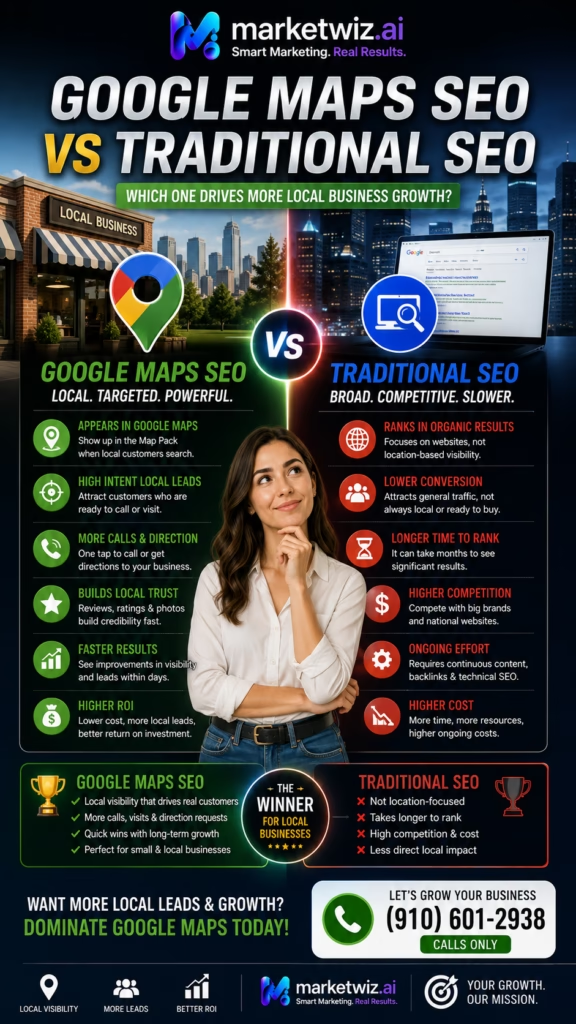
3. The Core Difference Between Google Maps SEO and Traditional SEO
The biggest difference is the search surface each strategy is primarily trying to influence.
| Factor | Google Maps SEO | Traditional SEO |
|---|---|---|
| Primary Asset | Google Business Profile | Website |
| Primary Search Surface | Google Maps and local results | Organic website results |
| Geographic Sensitivity | Very high | Moderate to high for local queries |
| Reviews | Major local trust factor | Helpful indirectly for trust and conversion |
| Business Categories | Important | Not a direct website SEO element |
| Website Content | Supports local relevance | Core ranking asset |
| Backlinks | Support broader authority | Important authority factor |
| Proximity | Often highly relevant | Usually less directly influential |
| Conversion Path | Calls, directions, website visits | Website visits, forms, calls, purchases |
Google Maps SEO is strongly connected to the physical or service-area identity of the business.
Traditional SEO can target a much broader range of informational, commercial, and transactional searches.
4. Google Maps Searches Often Show Strong Local Intent
A major advantage of Google Maps SEO is customer intent.
Someone searching:
- HVAC repair near me,
- dentist near me,
- flooring store Dallas,
- roofing contractor Raleigh,
- car dealer near me,
- landscaper Wilmington,
- pizza near me,
- plumber open now
may be relatively close to taking action.
The searcher often wants a nearby company, not a national article explaining the industry.
Google Maps results are designed to help the user compare local options quickly.
The prospect may evaluate:
- review rating,
- number of reviews,
- business category,
- distance,
- photos,
- hours,
- business description,
- website,
- phone number.
This creates a powerful opportunity for local customer acquisition.
5. Traditional SEO Captures a Broader Range of Search Intent
Traditional SEO can reach customers before, during, and after the immediate local buying stage.
For example, a homeowner might search:
- best flooring for dogs,
- laminate vs luxury vinyl plank,
- how much does hardwood installation cost,
- how long does roof replacement take,
- what size HVAC system do I need,
- how often should a lawn be fertilized?
These searches are not always immediate purchase searches.
However, they can introduce customers to a business earlier in the buying journey.
A business that consistently answers relevant questions can establish authority before the customer is ready to contact a provider.
6. Google Business Profile Is Central to Google Maps SEO
The Google Business Profile is one of the most important assets in a local search strategy.
Businesses should maintain accurate information including:
- business name,
- primary category,
- secondary categories where appropriate,
- phone number,
- website,
- business hours,
- address or service-area configuration,
- services,
- photos,
- business description,
- other relevant profile attributes.
Completeness alone does not guarantee high rankings, but inaccurate or weak profile information can create unnecessary disadvantages.
7. The Website Is Central to Traditional SEO
Traditional SEO depends heavily on the quality of the website.
Search engines need to understand:
- what topics the website covers,
- which services the company provides,
- which pages best answer specific searches,
- how the pages connect to one another,
- whether the website appears trustworthy and useful.
A well-structured local business website can include:
- home page,
- individual service pages,
- location pages,
- industry-specific pages,
- project galleries,
- case studies,
- FAQs,
- educational articles,
- contact pages.
This gives traditional SEO substantially more room to target complex search demand than a Google Business Profile alone.
8. Understanding the Google Local Pack
The local pack is a map-oriented group of business results that can appear when Google determines that a search has local intent.
For a local business, appearing prominently in this area can be valuable because the customer can quickly compare nearby providers.
The local pack may provide direct access to:
- business names,
- ratings,
- reviews,
- business categories,
- operating hours,
- directions,
- websites,
- phone actions.
This shortens the distance between search and customer action.
9. Understanding Traditional Organic Search Results
Below or around other search features, Google can display organic website results.
These results may include:
- local business websites,
- service pages,
- location pages,
- blogs,
- directories,
- industry publications,
- national brands.
Traditional SEO attempts to earn visibility in these results.
A local business can rank organically even when the searcher is not physically close enough for the business to dominate the map results.
That broader visibility is one reason traditional SEO remains valuable.
10. Proximity Matters More in Google Maps SEO
Location plays a major role in local search.
A user searching from one side of a city may see a different set of businesses than someone performing the same search several miles away.
This is one reason local rankings can appear inconsistent when checked from different locations.
Google Maps SEO should therefore be measured geographically, not only with one manual search from one computer.
Traditional website SEO can also be localized, but organic rankings generally are not as tightly connected to the searcher's immediate physical distance as map-based visibility.
11. Business Categories Matter Much More in Google Maps SEO
Google Business Profile categories help describe what the business is.
The primary category can be particularly important because it helps search systems understand the core business type.
Examples might include:
- HVAC contractor,
- flooring store,
- roofing contractor,
- real estate agency,
- used car dealer,
- landscaper,
- dentist,
- plumber.
Traditional website SEO does not use Google Business Profile categories in the same way.
Instead, website relevance is communicated through:
- page topics,
- titles,
- headings,
- body content,
- internal links,
- site architecture,
- external authority signals.
12. Reviews Play a Larger Direct Role in Local Search Marketing
Reviews are highly visible in local business results.
A potential customer can often compare:
- star rating,
- review volume,
- review recency,
- customer experiences,
- business responses.
Even when two businesses have similar visibility, stronger review profiles can influence which company receives the call.
Traditional SEO benefits from reputation too, but reviews are generally less prominent inside ordinary organic website listings.
Review Strategy Should Focus on Real Customers
Businesses should build legitimate review acquisition systems based on authentic customer experiences.
Avoid fabricated reviews, review manipulation, or incentives that violate platform policies.
13. Local Citations Are More Closely Associated With Google Maps SEO
A local citation is a mention of a business's information on another website or directory.
Common information can include:
- business name,
- address,
- phone number,
- website,
- business category.
Citation consistency can help reduce confusion across the local search ecosystem.
Traditional SEO may still benefit from strong industry directories and local websites, especially when they provide legitimate links, referral traffic, or authority.
However, citations are generally discussed more heavily in local SEO because business identity and location consistency matter more directly.
14. Backlinks Are More Central to Traditional SEO
Backlinks are links from other websites to the business website.
They can help search engines understand that a website has earned references or authority from other online sources.
Potential sources can include:
- industry organizations,
- local chambers,
- local news,
- business partners,
- suppliers,
- professional organizations,
- community sponsorships,
- relevant publications.
Traditional SEO strategies often invest heavily in earning legitimate, relevant links.
Backlinks can also support the website authority behind a local Maps strategy, meaning they should not be considered irrelevant to Google Maps SEO.
15. Content Plays Different Roles in Maps SEO and Traditional SEO
Traditional SEO can use extensive content to target many searches.
A local HVAC company could create articles around:
- AC not cooling,
- HVAC maintenance costs,
- furnace replacement signs,
- heat pump efficiency,
- thermostat problems,
- indoor air quality.
That content can rank organically and attract potential customers at different stages of awareness.
Google Maps SEO uses content differently.
Useful content on the website can reinforce:
- service relevance,
- geographic relevance,
- local expertise,
- business legitimacy.
Google Business Profile updates and profile information can also support customer engagement and freshness.
16. Location Pages Connect Traditional SEO and Local SEO
Location pages are one of the clearest areas where traditional SEO and local SEO overlap.
A multi-market business might have useful pages for:
- Raleigh,
- Durham,
- Cary,
- Chapel Hill,
- Wake Forest.
Each page should provide useful information relevant to that market.
A high-quality location page can discuss:
- services available in the city,
- local project examples,
- service areas,
- local customer questions,
- geographic context,
- appropriate calls to action.
Avoid copying the same page dozens of times and changing only the city name.
Useful differentiation matters.
17. Service Pages Are a Major Traditional SEO Asset
A Google Business Profile has limited space compared with a website.
A website can create detailed pages for each important service.
For example, a painting company could create separate pages for:
- interior painting,
- exterior painting,
- cabinet painting,
- commercial painting,
- deck staining,
- fence painting,
- drywall repair.
Each page can target different search demand and answer service-specific questions.
Traditional SEO therefore creates substantial room for keyword expansion that would be difficult to achieve through the Google Business Profile alone.
18. Conversion Behavior Is Different Across Maps and Organic SEO
A Google Maps visitor may call directly from the search result without opening the website.
A traditional SEO visitor is more likely to enter the website first.
That means conversion optimization should account for both paths.
Google Maps Conversion
Optimize reviews, photos, profile information, categories, business hours, contact details, and customer trust signals.
Website SEO Conversion
Optimize page clarity, calls to action, forms, mobile design, trust signals, service information, reviews, and navigation.
The best local marketing system makes it easy for customers to take action regardless of which search surface introduced them to the business.
19. Lead Quality Can Differ Between Maps SEO and Traditional SEO
Map searches can produce strong local commercial intent.
Someone searching "emergency plumber near me" is likely looking for immediate help.
Traditional SEO may produce a wider range of leads because content can rank for both research and purchase-intent searches.
For example:
- "why is my water heater leaking" may be informational,
- "water heater repair Raleigh" is more commercial,
- "water heater replacement near me" may be highly transactional.
A good SEO strategy maps content and search visibility to the different stages of the customer journey.
20. Track Google Maps SEO and Traditional SEO Differently
Local businesses should not judge SEO performance based only on rankings.
Useful Google Maps metrics can include:
- local search visibility,
- calls,
- website actions,
- direction requests where relevant,
- profile interactions,
- review growth,
- lead volume.
Traditional SEO metrics can include:
- organic impressions,
- organic clicks,
- keyword visibility,
- landing page traffic,
- engagement,
- form submissions,
- phone calls,
- sales.
The most important measurement is downstream business performance.
Rankings only matter when visibility contributes to qualified opportunities and revenue.
21. Competition Looks Different in Google Maps and Organic SEO
A local business may have completely different competitors depending on the search surface.
In Google Maps, the business may compete primarily against nearby companies in the same category.
In traditional organic results, the business might compete against:
- other local companies,
- national directories,
- large brands,
- publishers,
- lead generation websites,
- industry organizations.
This can make traditional organic SEO substantially more competitive for certain keywords.
On the other hand, a highly competitive local map area may also require substantial time, reputation, content, authority, and optimization.
22. Service-Area Businesses Need Both Strategies
Plumbers, HVAC contractors, roofers, painters, landscapers, flooring contractors, mobile home companies, pest control companies, electricians, cleaning companies, and other service-area businesses often serve customers across multiple cities.
Google Maps can help capture nearby local demand.
Traditional SEO can expand visibility across a broader service area through:
- service pages,
- city pages,
- educational content,
- project pages,
- local case studies.
When properly structured, the two strategies reinforce each other.
23. Multi-Location Businesses Have Even More to Gain
Businesses with multiple legitimate locations can create a scalable search strategy around both Maps and website SEO.
Each location may have:
- its own eligible Google Business Profile,
- accurate address and phone information,
- local reviews,
- location-specific photos,
- a dedicated website location page,
- local service information.
This creates multiple local search entry points.
The website can then connect individual locations to broader service and educational content.
24. Is Google Maps SEO Faster Than Traditional SEO?
There is no universal answer.
SEO timelines depend on factors such as:
- market competition,
- business age,
- profile history,
- website authority,
- review strength,
- technical SEO,
- existing content,
- backlinks,
- local competition,
- geographic conditions.
A business with an established Google Business Profile but weak optimization might see improvements differently from a brand-new business entering a saturated market.
Similarly, an established website with strong authority may rank new content faster than a brand-new domain.
25. Compare the Cost Structure of Maps SEO and Traditional SEO
Both strategies require resources.
Google Maps SEO may involve:
- profile optimization,
- review systems,
- local citations,
- photo creation,
- local landing pages,
- competitive tracking,
- ongoing profile management.
Traditional SEO may involve:
- technical optimization,
- content creation,
- website development,
- internal linking,
- authority building,
- link acquisition,
- conversion optimization,
- ongoing analysis.
Businesses should compare marketing investments against customer value rather than simply choosing whichever option appears cheapest.
26. Common Google Maps SEO vs Traditional SEO Mistakes
Choosing Only One Channel Without a Strategic Reason
Many local businesses unnecessarily treat Maps SEO and traditional SEO as an either-or decision.
Ignoring the Website Because the Maps Profile Ranks
Competitors with stronger websites may eventually build broader search visibility and capture more stages of the customer journey.
Ignoring Google Maps Because the Website Ranks
The business may miss high-intent customers who choose directly from local results.
Keyword Stuffing
Artificially repeating city and service keywords can reduce readability and create low-quality content.
Using Fake Business Information
Businesses should not create false locations, misleading names, or inaccurate business information in an attempt to manipulate local search.
Building Thin City Pages
Do not create dozens of near-identical pages with only city names changed.
Ignoring Reviews
A business may achieve visibility but still lose customers because competitors appear more trusted.
Tracking Rankings Instead of Revenue
SEO should ultimately contribute to measurable business outcomes.
27. The Best Strategy Is Usually Google Maps SEO + Traditional SEO
For many local businesses, the strongest system combines both strategies.
Optimize the Google Business Profile
Maintain accurate categories, services, hours, contact information, photos, website links, and other relevant information.
Build a Strong Website
Create fast, mobile-friendly pages that clearly explain the company's services, locations, experience, and value.
Create Dedicated Service Pages
Give each major service enough depth to compete for relevant organic searches.
Create Valuable Location Content
Build useful pages for genuine markets rather than mass-producing thin geographic pages.
Build Legitimate Reviews
Create a consistent process for asking real customers for feedback.
Strengthen Business Information Consistency
Keep important business data accurate across reputable online sources.
Develop Authority
Earn legitimate mentions, relationships, citations, and backlinks from relevant sources.
Improve Conversion
Make phone calls, forms, appointments, directions, estimates, and other desired actions easy for customers.
Track Leads by Source
Understand whether inquiries came through Google Maps, organic website searches, paid ads, referrals, or other channels.
Scale What Produces Revenue
Increase investment where search visibility consistently generates qualified customers.
28. How AI Can Support Both Google Maps SEO and Traditional SEO
AI can help local businesses manage larger amounts of SEO data and repetitive marketing work.
Local Keyword Research
AI can help organize service and location keyword opportunities.
Content Planning
AI can help create topic clusters around services, customer questions, locations, and commercial intent.
Review Response Assistance
AI can help prepare personalized drafts for customer review responses.
Competitive Analysis
AI can organize competitor categories, content gaps, service pages, review patterns, and local visibility data.
Internal Linking
AI can identify opportunities to connect related service, city, and educational pages.
Reporting
AI can summarize ranking movement, lead data, website traffic, Google Business Profile activity, and conversion trends.
29. A 90-Day Google Maps + Traditional SEO Plan
Days 1–30: Build the Search Foundation
- Audit the Google Business Profile.
- Verify business information.
- Review categories.
- Review service information.
- Audit reviews.
- Audit citations.
- Run a technical website audit.
- Map important service keywords.
- Map local keywords.
- Review competitor websites and profiles.
- Fix major website technical issues.
- Set up lead and conversion tracking.
Days 31–60: Expand Local Relevance
- Improve core service pages.
- Create missing high-value service pages.
- Strengthen location content.
- Add genuine local project information.
- Improve internal linking.
- Add useful FAQs.
- Improve title tags and headings.
- Continue review acquisition.
- Add new Google Business Profile photos.
- Correct important citation inconsistencies.
- Improve mobile conversion paths.
Days 61–90: Build Authority and Scale
- Publish useful educational content.
- Develop legitimate backlink opportunities.
- Strengthen local partnerships.
- Expand high-performing topics.
- Improve weak location pages.
- Analyze Maps visibility geographically.
- Analyze organic landing page performance.
- Track qualified lead sources.
- Improve call and form conversion.
- Prioritize the services and markets producing revenue.
30. Final Verdict: Google Maps SEO vs Traditional SEO for Local Businesses
Google Maps SEO and traditional SEO solve different parts of the same customer acquisition problem.
Google Maps SEO helps local businesses compete for customers searching for nearby providers.
Traditional SEO helps businesses build a broader website presence capable of targeting service searches, location searches, educational questions, comparisons, and multiple stages of the customer journey.
The strongest local marketing strategy usually combines:
- Google Business Profile optimization,
- Google Maps visibility,
- legitimate reviews,
- accurate citations,
- professional photos,
- strong service pages,
- useful location pages,
- technical SEO,
- educational content,
- internal linking,
- relevant backlinks,
- conversion optimization,
- CRM and lead tracking,
- AI-assisted marketing workflows,
- continuous performance analysis.
A business that ranks only in Maps may miss customers researching services through organic results.
A business that ranks only organically may miss customers ready to call a nearby provider immediately.
When both strategies work together, the company can create multiple entry points into the search results and reach customers at more stages of the buying process.
The best question is therefore not "Google Maps SEO or traditional SEO?" It is "How can both channels work together to generate more qualified local customers?"
Frequently Asked Questions About Google Maps SEO vs Traditional SEO
1. What is Google Maps SEO?
Google Maps SEO focuses on improving a business's visibility in Google Maps and local search results through Google Business Profile optimization, reviews, accurate business information, website support, local relevance, and related signals.
2. What is traditional SEO?
Traditional SEO focuses primarily on improving website visibility in organic search through technical SEO, content, keywords, internal linking, backlinks, user experience, and authority.
3. What is the biggest difference between Maps SEO and traditional SEO?
Maps SEO primarily targets local map-oriented search visibility, while traditional SEO primarily targets organic website rankings.
4. Is Google Maps SEO better for local businesses?
It can be especially valuable for businesses dependent on nearby customers, but a combined Maps and website SEO strategy is often stronger than relying on either one alone.
5. Does traditional SEO help Google Maps?
A strong website can reinforce services, relevance, geographic information, expertise, and authority as part of a broader local SEO strategy.
6. Can Google Maps SEO generate phone calls?
Yes. Customers can often evaluate local businesses and initiate calls directly from Google's local results.
7. Can traditional SEO generate local leads?
Yes. Local service pages, location pages, and organic website rankings can generate calls, forms, estimates, appointments, and sales.
8. What is Google Business Profile optimization?
It involves maintaining accurate categories, services, business information, photos, hours, website links, reviews, and other relevant profile information.
9. Are reviews more important for Google Maps SEO?
Reviews are particularly visible in local results and can influence both local trust and customer conversion.
10. Do backlinks matter for Google Maps SEO?
Relevant backlinks can strengthen website authority and the broader local search presence, although Maps visibility also depends on local-specific factors.
11. Do citations matter for local SEO?
Accurate business information across reputable directories and data sources can support local search consistency and credibility.
12. Does proximity affect Google Maps rankings?
Yes. Searcher location can influence which local businesses appear for geographically relevant searches.
13. Does proximity affect traditional SEO?
Organic search can be localized, but website rankings are generally less directly tied to immediate physical proximity than Google Maps results.
14. Should local businesses create city pages?
Useful, unique, and genuinely relevant location pages can support organic visibility. Avoid mass-producing thin pages with only the city name changed.
15. Should a local business focus on Maps or its website first?
The best priority depends on the business's current assets and competition, but both channels should generally be developed as part of the same local search strategy.
16. Is Google Maps SEO faster than traditional SEO?
Not necessarily. Timelines vary according to competition, business history, website authority, profile quality, reviews, content, links, and geography.
17. Can service-area businesses use Google Maps SEO?
Yes, when they meet Google's eligibility rules and configure their Google Business Profile correctly.
18. Which businesses benefit most from Google Maps SEO?
Local service providers, contractors, retailers, restaurants, professional services, medical practices, auto businesses, and other businesses serving geographic markets can benefit.
19. Which businesses benefit from traditional SEO?
Traditional SEO can benefit local businesses, ecommerce companies, professional services, publishers, SaaS companies, national brands, and many other organizations.
20. Can both strategies target the same keywords?
Yes. A local service keyword can trigger map results and organic website results, even though each search surface requires different optimization strategies.
21. What is the Google local pack?
The local pack is a map-focused group of nearby business results that can appear for searches with local intent.
22. What are organic search results?
Organic search results are unpaid website listings selected by search engines based on relevance, quality, authority, usefulness, and other ranking systems.
23. Can AI help with Google Maps SEO?
AI can support keyword analysis, reporting, review-response drafting, profile management workflows, local content planning, and competitive analysis.
24. Can AI help with traditional SEO?
Yes. AI can support research, content planning, internal linking, technical analysis, reporting, and content drafting with appropriate quality control.
25. Does website content help Google Maps SEO?
Strong website content can reinforce the business's services, locations, expertise, and local relevance.
26. Should Maps SEO and traditional SEO be tracked separately?
Businesses should understand the performance of each channel while also measuring how both contribute to total calls, qualified leads, appointments, sales, and revenue.
27. Can Google Maps SEO replace paid ads?
It can reduce dependence on paid traffic for some companies, but organic local visibility and paid advertising provide different advantages and can work together.
28. Can traditional SEO replace paid advertising?
Traditional SEO can build sustainable organic traffic, while paid advertising can provide faster visibility and more direct campaign control.
29. Which strategy has better ROI?
ROI depends on execution, competition, customer value, conversion, geography, and business model. Measure qualified leads and revenue rather than rankings alone.
30. What is the best SEO strategy for a local business?
Combine Google Maps SEO, Google Business Profile optimization, technically strong website SEO, service and location content, legitimate reviews, citations, relevant backlinks, conversion optimization, lead tracking, and continuous improvement.
30 Additional SEO Keywords
These additional keyword ideas can support future service pages, blog content, internal linking, local SEO campaigns, Google Maps optimization pages, educational resources, and broader topical authority.
Build a Stronger Local Search Engine
MarketWiz.ai combines AI-powered Google Maps optimization, local SEO, traditional organic search strategies, lead generation, automation, CRM workflows, and customer acquisition technology designed to help local businesses create more visibility, generate more opportunities, and turn search demand into measurable growth.
Call MarketWiz.ai: (910) 601-2938