

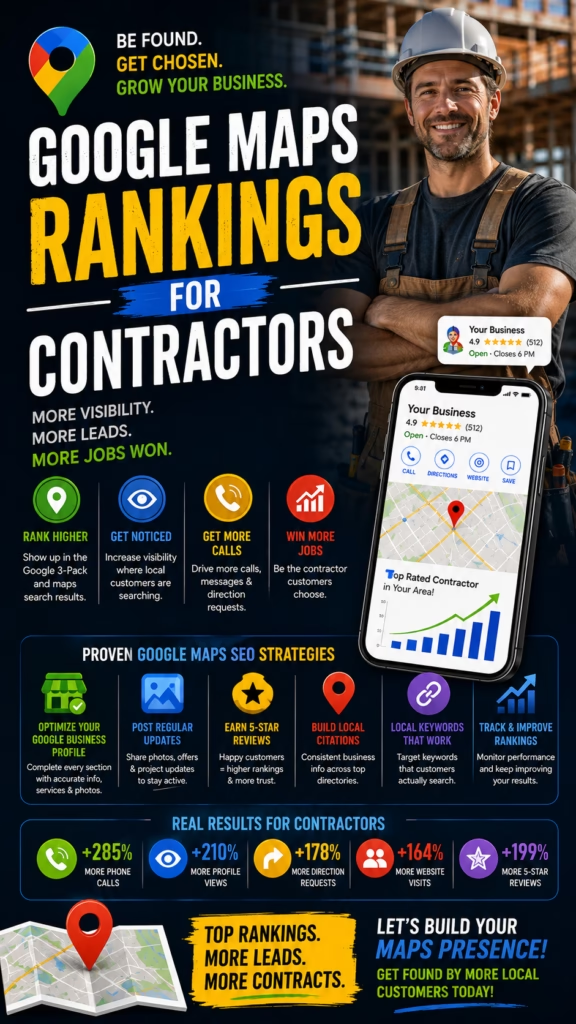
Google Maps Rankings for Contractors
A complete contractor-focused strategy for improving Google Maps visibility, reaching local customers, generating more calls and estimate requests, and turning high-intent searches into profitable projects.
When homeowners or businesses need a contractor, Google is often one of the first places they search. They may need an HVAC technician immediately, a roofer after storm damage, a painter for a renovation, a plumber for an emergency repair, or a remodeling contractor for a major project.
These searches create a high-value opportunity because the prospective customer frequently has a real problem, a defined service need, and a reason to contact someone soon. Strong Google Maps rankings for contractors can place a company directly in front of these high-intent prospects.
For contractors, Google Maps SEO is not simply about obtaining more impressions. The real objective is to turn local visibility into phone calls, estimate requests, appointments, booked projects, repeat customers, referrals, and revenue.
What Are Google Maps Rankings for Contractors?
Google Maps rankings describe how prominently a contractor appears when a user performs a locally relevant search in Google Search or Google Maps.
Searches might include phrases such as:
- roofing contractor near me;
- HVAC repair near me;
- plumber in Dallas;
- electrician nearby;
- house painter in Tampa;
- general contractor Charlotte NC;
- bathroom remodeling company;
- flooring contractor near me;
- emergency water damage restoration;
- best local contractor.
Google may display local businesses in a map-based section often called the local pack or map pack. Visibility can also occur directly inside Google Maps.
The order of contractors can vary according to the query, the searcher's location, the contractor's location or service-area context, business relevance, reputation, authority, competition, and other local signals.
There is rarely one universal contractor ranking
Contractors sometimes ask, “What position do I rank in Google Maps?” The better question is, “Where do I rank across the areas and searches that generate profitable customers?”
A contractor could appear prominently three miles from its business location while ranking much lower on the opposite side of the city. Different services may also generate different results.
For example, an HVAC company might rank strongly for “AC repair” but have much weaker visibility for “furnace installation” or “ductless mini split installer.”
Why Google Maps Matters for Contractors
Contractor services are naturally local. A homeowner usually does not need a plumber located 500 miles away. A property owner looking for roof repair wants a company that actually serves the property.
Google Maps connects geographic intent with service intent, creating one of the most commercially valuable search environments for contractors.
Urgent Demand
Plumbing leaks, broken HVAC systems, electrical problems, storm damage, and restoration needs can create immediate searches.
High-Value Projects
Roofing, remodeling, flooring, concrete, painting, and construction searches can lead to projects worth thousands of dollars.
Local Trust
Reviews, project photos, ratings, service information, and local presence can strongly influence contractor selection.
Direct Actions
Prospects can call, visit the website, compare reviews, and evaluate a contractor directly from Google's local results.
Contractor customers often search close to the buying decision
Many forms of marketing target consumers long before they are ready to purchase. Contractor searches frequently happen after the customer has already identified a problem.
A homeowner searching “water heater repair near me” probably has a very different level of intent than someone casually watching a home improvement video on social media.
This is why contractor local SEO can become an important customer acquisition channel when it is executed correctly.
Understanding Contractor Local Search Intent
The strongest contractor SEO strategies focus on customer intent instead of simply collecting keywords.
Emergency intent
Some contractor searches indicate immediate urgency:
- emergency plumber;
- AC repair now;
- roof leak repair;
- emergency electrician;
- water damage cleanup;
- no heat HVAC repair.
These prospects may prioritize speed, availability, proximity, reviews, and ease of contact.
Project research intent
Larger contractor projects usually have a longer research cycle. Searches might include:
- kitchen remodeling contractor;
- cost to replace roof;
- best flooring for rental property;
- house painting company;
- bathroom renovation contractor;
- concrete driveway installer.
These prospects may inspect several contractors, compare reviews, look at portfolios, visit websites, and request multiple estimates.
Location-specific intent
Customers frequently combine a service with a city, neighborhood, county, or “near me” modifier.
However, explicit geographic words are not always necessary. Google can understand that many contractor searches have local intent automatically.
Core Google Maps Ranking Factors
Contractors should avoid strategies built around supposed secret ranking tricks. Sustainable local SEO is better understood through broader concepts including relevance, distance, and prominence.
| Factor | Contractor Meaning | Optimization Approach |
|---|---|---|
| Relevance | How closely the contractor matches the customer's requested service. | Use accurate categories, services, website pages, and business information. |
| Distance | How geographically appropriate the contractor is for the searcher's location. | Build strong visibility throughout legitimate service markets while understanding that proximity cannot be completely controlled. |
| Prominence | How established and trusted the contractor appears online and locally. | Strengthen reviews, authority, citations, website quality, brand recognition, and local mentions. |
Contractors cannot optimize proximity away
Distance is one reason local rankings differ throughout a city. A contractor should therefore avoid obsessing over one screenshot from one location.
Instead, measure whether visibility is improving across economically important parts of the service area.
Relevance can be strengthened systematically
Contractors can improve the clarity of their business by accurately identifying services across the Google Business Profile and website.
If a company offers roofing repair, replacement, metal roofing, commercial roofing, and storm damage work, those legitimate capabilities should be clearly represented where appropriate rather than leaving Google and customers to guess.
Google Business Profile Optimization for Contractors
The Google Business Profile is one of the most important assets in a contractor local SEO campaign.
Use the legitimate contractor business name
Contractors should represent the business using its real-world name rather than stuffing city names, services, or promotional language into the profile name.
A legitimate business called “ABC Roofing” should not become “ABC Roofing Best Roof Repair Contractor Dallas TX” solely for SEO purposes.
Configure the business model correctly
Many contractors travel to customers instead of serving them at a customer-facing storefront. The Google Business Profile setup should accurately reflect how the company operates and comply with eligibility rules.
Keep hours accurate
Customers may use business hours when deciding whom to call. Contractors that offer emergency or extended-hour services should ensure all displayed information accurately represents the real operation.
Use the correct phone number
Calls are often one of the most valuable contractor conversion actions. The phone number should lead quickly to someone or a system capable of handling the inquiry.
Link to a strong website destination
A contractor profile should send users to a page that clearly communicates services, credibility, project information, service areas, and next steps.
Write a useful business description
The description should summarize the contractor's primary services, experience, service area, and customer value without becoming an unnatural paragraph of repeated keywords.
Contractor Categories and Services
Categories help Google understand the type of contractor represented by a listing.
Select the most accurate primary category
The primary category should closely represent the company's main revenue activity.
Depending on the business, that could include categories associated with roofing, HVAC, plumbing, electrical work, painting, remodeling, flooring, general contracting, landscaping, or another legitimate contractor specialty.
Use secondary categories strategically but accurately
Secondary categories can represent additional genuine services. A business should not add unrelated categories simply because they might generate traffic.
Build out contractor services
Service information should reflect the actual work the contractor performs.
An HVAC contractor, for example, could organize legitimate offerings such as:
- air conditioning repair;
- AC installation;
- heating repair;
- furnace replacement;
- heat pump service;
- ductless mini-split installation;
- HVAC maintenance;
- indoor air quality services.
This gives both the customer and the search engine a clearer understanding of the company's capabilities.
Reviews and Contractor Reputation
Reputation is especially important in contractor marketing because customers are often inviting someone into a home, entrusting them with expensive property, or purchasing a high-value project.
A homeowner considering a $15,000 roof replacement may examine reviews much more carefully than someone purchasing a low-cost retail product.
Build a consistent review process
Contractors should create a routine process for requesting honest feedback from satisfied customers.
The strongest review programs usually happen as part of the normal customer journey rather than through occasional bursts of outreach.
- Complete the project professionally.
- Confirm customer satisfaction.
- Ask for an honest review at an appropriate point.
- Make the review process easy.
- Respond professionally to feedback.
Recent reviews can strengthen buyer confidence
A homeowner may wonder whether a company with hundreds of reviews from several years ago is still delivering the same quality today.
A natural flow of current reviews demonstrates ongoing business activity and recent customer experience.
Use negative feedback as operating intelligence
Negative reviews can reveal recurring problems such as poor scheduling, slow callbacks, cleanup issues, missed expectations, billing confusion, or weak communication.
Fixing the underlying operational issue can improve future ratings and customer retention at the same time.
Contractor Website SEO and Google Maps Rankings
A strong contractor website supports Google Maps visibility by reinforcing services, locations, expertise, business identity, and authority.
Create a clear contractor website structure
A contractor website should make the major revenue-producing services easy to find.
For example, a remodeling contractor might organize the site around:
- kitchen remodeling;
- bathroom remodeling;
- basement finishing;
- home additions;
- whole-home renovation;
- commercial remodeling.
Each important service deserves enough information to help customers understand the process and determine whether the contractor is a good fit.
Keep contractor information consistent
The company name, phone number, branding, service information, and legitimate location data should not conflict across the website and local profile.
Show real proof of work
Contractor websites can benefit from before-and-after photos, project galleries, testimonials, case studies, service explanations, credentials, team information, and other legitimate trust signals.
Make mobile conversion easy
A homeowner with a leaking pipe may not patiently navigate a complicated website. Mobile users should immediately understand what the company does and how to request service.
Service Pages That Support Contractor Rankings
Contractors sometimes try to make one homepage rank for every service they offer. That can limit relevance.
A stronger approach is to build dedicated pages for major services.
What a contractor service page should answer
- What service does the contractor provide?
- What customer problems does the service solve?
- Who is the service for?
- What types of projects are handled?
- What does the process generally involve?
- What factors influence the project?
- Which markets are genuinely served?
- Why should a prospect consider the contractor?
- How can the customer request an estimate or consultation?
Match pages to actual commercial services
Keyword research should not cause a contractor to create pages for services the business does not actually offer.
Local SEO works best when search relevance and real-world business capability match.
City and Service-Area Pages for Contractors
Contractors frequently serve multiple cities. Local landing pages can help explain that coverage when created thoughtfully.
Do not clone the same contractor page 100 times
A common low-quality strategy is producing identical pages and swapping “Dallas” for “Plano,” “Frisco,” “McKinney,” and every nearby city.
Stronger location pages provide useful market-specific context.
Useful city page elements
- services genuinely available in the city;
- local project examples;
- relevant property types;
- customer testimonials when applicable;
- regional climate or construction considerations;
- photos of work completed in the market;
- service availability information;
- local FAQs;
- clear contact options.
Build pages for important markets first
Contractors do not need to create hundreds of pages immediately. Begin with high-priority markets where there is real service capacity and commercial opportunity.
Project Photos and Media for Contractor SEO
Contractors have an advantage in local marketing because their work is often highly visual.
A roof replacement, kitchen remodel, flooring installation, painted home, concrete driveway, landscaping transformation, or HVAC installation can provide authentic media that demonstrates real experience.
Useful photo categories
- before-and-after projects;
- completed installations;
- team members at work;
- branded service vehicles;
- equipment;
- job-site progress;
- finished craftsmanship;
- commercial projects;
- residential projects;
- showroom or office photos where applicable.
Authenticity beats generic stock media
Stock imagery may make a website visually attractive, but real project photos can establish a much stronger connection between the contractor and the work being advertised.
Video can demonstrate expertise
Short videos can explain common customer problems, show project stages, introduce technicians, demonstrate equipment, or provide walkthroughs of completed work.
These assets can support customer trust across Google, the website, social platforms, and sales follow-up.
Contractor Citations and Local Authority
Citations are references to a contractor's business information across other websites and platforms.
These might appear on:
- major business directories;
- local chambers of commerce;
- industry associations;
- manufacturer or dealer directories;
- mapping platforms;
- local business organizations;
- supplier websites;
- community sponsorship pages;
- reputable contractor directories.
Quality and accuracy matter
The goal should not be to submit the company to thousands of random directories. Relevant and trustworthy references are more useful than indiscriminate volume.
Earn local links and mentions
Contractors can build legitimate authority through partnerships, sponsorships, local organizations, project features, useful resources, supplier relationships, industry memberships, and community involvement.
Contractor Content Strategy
Contractor content should answer the questions that real customers ask before making a buying decision.
Roofing content ideas
- signs a roof needs replacement;
- roof repair versus replacement;
- storm damage inspection guidance;
- metal roof versus shingles;
- roof lifespan by material;
- questions to ask a roofing contractor.
HVAC content ideas
- why an AC system stops cooling;
- repair versus HVAC replacement;
- heat pump versus furnace;
- common causes of high energy bills;
- HVAC maintenance schedules;
- signs an AC system is oversized or undersized.
Painting content ideas
- interior paint preparation;
- exterior painting season;
- how long house painting takes;
- best finishes for high-traffic rooms;
- painting before selling a home;
- professional painting versus DIY.
Remodeling content ideas
- kitchen renovation planning;
- bathroom remodel timelines;
- home addition considerations;
- renovation budgeting factors;
- choosing materials;
- questions to ask a remodeling contractor.
Helpful content can increase organic visibility while demonstrating expertise before the customer ever speaks with the contractor.
Turning Google Maps Rankings Into Contractor Leads
Ranking well does not guarantee that a contractor will win the job. Prospects still evaluate competing businesses.
Step 1: Win visibility
The contractor needs to appear for commercially valuable searches in relevant portions of the service area.
Step 2: Win the profile comparison
The homeowner may compare:
- ratings;
- review count;
- recent reviews;
- photos;
- business category;
- services;
- hours;
- professional appearance.
Step 3: Win the phone call
Someone needs to answer professionally, understand the customer's need, collect the correct information, and move the prospect toward the next appropriate step.
Step 4: Win the estimate
The estimating experience can become a major competitive advantage. Fast communication, clear expectations, professional presentation, and reasonable follow-up can influence the customer's decision.
Step 5: Win the project
A well-trained sales and estimating process should turn qualified Google Maps opportunities into profitable work.
Step 6: Generate future reputation
Successful jobs can produce reviews, referrals, project photography, case studies, testimonials, repeat work, and local word of mouth.
Tracking Contractor Google Maps Rankings
Contractors should measure local SEO at both the search visibility level and the revenue level.
Use geographic rank tracking
A contractor's ranking can change block by block and neighborhood by neighborhood. Grid-based tracking can reveal where the company is strong and where competitors dominate.
Track important service queries separately
Do not combine every keyword into one vague average.
A roofer might separately track:
- roofing contractor;
- roof repair;
- roof replacement;
- metal roofing;
- commercial roofing;
- storm damage roof repair.
Track leads
Important metrics include:
- phone calls;
- estimate requests;
- website forms;
- appointment requests;
- qualified prospects;
- booked estimates.
Track sales outcomes
Contractors should eventually connect local SEO with business outcomes:
- number of estimates issued;
- estimate-to-sale close rate;
- average project value;
- revenue from local search leads;
- gross profit from local search customers;
- repeat and referral revenue.
Track review growth
Monitor the pace, quality, rating, and sentiment of customer feedback. Reputation should ideally strengthen as more projects are completed.
Contractor Google Maps SEO Mistakes to Avoid
1. Stuffing keywords into the company name
Use the legitimate contractor business name rather than trying to create an artificially optimized profile name.
2. Using fake business locations
A contractor should not manufacture offices or storefronts simply to attempt to rank in additional cities.
3. Adding services the contractor does not provide
Search traffic has little value if it generates irrelevant inquiries the company cannot fulfill.
4. Ignoring negative reviews
Recurring customer complaints can hurt conversion even when the contractor maintains good rankings.
5. Purchasing fake reviews
Manipulated reviews can create compliance, trust, and reputation problems.
6. Building thin city pages
Pages should help customers, not simply repeat the same contractor content with different location names.
7. Ignoring the mobile website
A slow or confusing website can waste high-intent traffic from Google Maps.
8. Tracking only one ranking point
Local rankings should be evaluated geographically across the service territory.
9. Letting calls go unanswered
SEO cannot compensate for weak lead handling. Missed calls and slow follow-up can erase the value of strong rankings.
10. Focusing only on rankings
Contractor SEO should support revenue. Calls, estimates, booked projects, customer acquisition cost, and profitability matter more than vanity ranking reports.
Competing in Difficult Contractor Markets
Roofing, HVAC, plumbing, painting, remodeling, landscaping, and restoration can be extremely competitive in large metropolitan markets.
In these environments, every visible contractor may already have optimized profiles and hundreds of reviews. Winning requires deeper execution.
Perform a contractor competitor gap analysis
Compare top competitors across:
- primary categories;
- secondary categories;
- service coverage;
- review volume;
- review freshness;
- rating quality;
- website authority;
- service pages;
- local pages;
- backlinks;
- citations;
- project photos;
- brand strength;
- conversion quality.
Identify the weakest competitive layer
A contractor may already have strong reviews but weak service pages. Another may have excellent website SEO but poor customer ratings.
Prioritize the improvements that create the greatest competitive gain.
Compete on conversion as well as ranking
A contractor ranked third may still generate more projects than a competitor ranked first if the third-place company has stronger reviews, better project photos, faster response, better estimating, and a higher sales close rate.
Ranking is only one layer of competitive advantage.
Google Maps SEO by Contractor Industry
Roofing contractors
Roofing companies can target repair, replacement, storm damage, commercial roofing, metal roofing, inspections, and other legitimate service categories.
Project photography and customer reviews are especially valuable because homeowners frequently compare multiple roofers before requesting estimates.
HVAC contractors
HVAC companies can benefit from both emergency demand and planned replacement searches. Seasonal peaks make accurate hours, fast lead handling, and strong service pages particularly important.
Plumbing contractors
Plumbing search behavior is often urgent. Customers may prioritize proximity, availability, reviews, emergency service information, and the ability to speak with someone immediately.
Electricians
Electrical contractors can build visibility around repairs, panel work, EV chargers, generators, lighting, rewiring, commercial work, and other legitimate services.
Painting contractors
Interior and exterior painters can use project galleries, before-and-after photography, local pages, customer reviews, and service content to differentiate the company.
Remodeling contractors
Remodelers should emphasize project portfolios, detailed service pages, testimonials, process information, and high-quality visual proof because customers often perform extensive research before selecting a company.
Flooring contractors
Flooring businesses can build service relevance around product and project types including LVP, laminate, hardwood, tile, refinishing, commercial flooring, or other genuine offerings.
Landscaping contractors
Landscapers can use local SEO around lawn services, landscape design, hardscaping, drainage, outdoor living, tree work, and related services where applicable.
Pest control contractors
Pest control companies can create strong local relevance around common regional pest problems, treatment types, seasonal issues, and customer education.
Concrete contractors
Driveways, patios, foundations, walkways, slabs, decorative concrete, and commercial concrete work can each create different local search opportunities.
General contractors
General contractors may need a particularly clear site structure because the business can span many project categories. Core revenue services should be organized logically rather than placing everything on one generic page.
Google Maps SEO vs. Paid Contractor Advertising
Contractors often use several acquisition channels at once, including Google Ads, Local Services Ads where eligible, social advertising, marketplaces, referrals, direct mail, and organic search.
| Factor | Google Maps SEO | Paid Advertising |
|---|---|---|
| Traffic model | Organic local visibility | Paid exposure or clicks |
| Speed | Often develops over time | Can generate exposure quickly |
| Long-term value | Can compound through stronger assets and reputation | Usually depends on continuing ad spend |
| Reputation integration | Reviews and profile quality strongly influence conversion | Landing page and ad messaging carry more of the conversion burden |
| Control | Exact ranking position cannot be guaranteed | Campaign budgets and targeting offer greater direct control |
Many contractors use paid media to generate near-term opportunities while building organic Google Maps visibility as a longer-term acquisition asset.
How Contractor Google Maps SEO Compounds Over Time
Strong local SEO can produce assets that become more valuable as the contractor completes more jobs.
- More projects create more photography.
- More satisfied customers can create more reviews.
- More projects can produce case studies.
- More local activity can increase brand recognition.
- More useful content can expand organic visibility.
- More authority can strengthen competitive positioning.
This compounding effect is one reason contractors should think about local SEO as an ongoing business asset instead of a temporary campaign.
Contractor Lead Response Is Part of SEO ROI
A contractor can spend months improving rankings and still lose the commercial benefit if inquiries are poorly managed.
Answer quickly
A homeowner may contact several companies, particularly for urgent work. Slow responses allow competitors to establish the relationship first.
Qualify efficiently
Staff should gather useful information about the customer's property, service need, timeline, location, project type, and appropriate next step.
Schedule estimates efficiently
Reduce unnecessary friction between inquiry and appointment. Clear scheduling and confirmation can improve show rates.
Follow up consistently
Some customers do not purchase immediately. Professional follow-up can convert estimates that would otherwise be lost.
Building a Contractor Google Maps Growth System
Phase 1: Establish the foundation
- verify profile eligibility;
- correct business information;
- confirm categories;
- add legitimate services;
- review hours and contact information;
- audit the website;
- establish baseline ranking data.
Phase 2: Strengthen contractor relevance
- improve core service pages;
- create high-value market pages;
- improve internal linking;
- publish customer-focused contractor content;
- build useful FAQs.
Phase 3: Build reputation
- create a consistent review request process;
- respond to reviews;
- monitor customer sentiment;
- fix recurring operational complaints.
Phase 4: Build local authority
- improve citations;
- earn legitimate local links;
- build industry relationships;
- develop supplier or association visibility;
- create content worthy of references.
Phase 5: Improve contractor conversion
- improve mobile website speed;
- improve calls to action;
- add stronger project photography;
- improve estimate-request flow;
- improve call answering;
- improve sales follow-up.
Phase 6: Track revenue
Measure local rankings, calls, estimates, booked jobs, average project value, closing percentage, and profit contribution. The objective is to determine whether improved local visibility creates real contractor growth.
Contractor Google Maps Ranking Checklist
- Confirm profile eligibility.
- Use the real contractor business name.
- Configure the address or service area correctly.
- Select the strongest primary category.
- Add relevant secondary categories.
- List important contractor services.
- Keep phone numbers accurate.
- Keep business hours accurate.
- Link to the correct contractor website page.
- Write a useful business description.
- Add authentic project photos.
- Add team and vehicle photos where appropriate.
- Create a repeatable review process.
- Respond to customer feedback.
- Audit business citations.
- Improve major contractor service pages.
- Create useful location pages.
- Improve mobile website performance.
- Add real project examples.
- Publish customer-focused content.
- Build local authority.
- Monitor contractor competitors.
- Track rankings geographically.
- Track phone calls.
- Track estimate requests.
- Track booked estimates.
- Track close rate.
- Track project revenue.
- Improve lead response times.
- Repeat optimization continuously.
Final Thoughts on Google Maps Rankings for Contractors
Google Maps can become one of the strongest customer acquisition channels available to a contractor because it connects businesses with local prospects at moments of real service demand.
However, long-term success requires more than chasing a number-one ranking. Contractors should build a complete local presence that combines:
- accurate Google Business Profile optimization;
- strong service relevance;
- authentic customer reviews;
- professional project photography;
- high-quality contractor website SEO;
- local landing pages;
- credible citations and authority;
- fast lead response;
- professional estimates;
- excellent project delivery.
When those pieces work together, improved Google Maps rankings can become far more than an SEO metric. They can help create a sustainable flow of local calls, estimates, customers, projects, reviews, referrals, and contractor revenue.
Frequently Asked Questions About Google Maps Rankings for Contractors
1. What are Google Maps rankings for contractors?
Google Maps rankings describe how prominently a contractor appears in local Google results when customers search for relevant contractor services.
2. Why are Google Maps rankings important for contractors?
Strong rankings can increase exposure to homeowners and businesses that are actively searching for contractors, potentially creating more calls, estimate requests, and booked projects.
3. How can contractors improve Google Maps rankings?
Contractors can improve their local presence through accurate profile optimization, relevant categories and services, authentic reviews, contractor website SEO, useful location pages, citations, project media, and stronger local authority.
4. Do reviews help contractor Google Maps performance?
Reviews can strengthen contractor reputation, contribute to a stronger local presence, and influence whether prospects choose the company after seeing it in local search.
5. Should contractors use service-area settings?
Contractors that travel to customers should configure their profile in a way that accurately reflects the real business operation and follows Google's eligibility and service-area rules.
6. Does a contractor website affect Google Maps SEO?
Yes. The website can reinforce contractor services, locations, credibility, authority, and customer conversion, making it an important element of a complete local SEO strategy.
7. How long does contractor Google Maps SEO take?
Results vary based on competition, geography, profile history, review strength, website authority, service category, and the quality of the contractor's existing local presence.
8. Which contractors benefit most from Google Maps?
Roofing companies, HVAC contractors, plumbers, electricians, painters, remodelers, flooring companies, landscapers, pest control companies, concrete contractors, restoration businesses, and many other local service providers can benefit.
9. Should contractors add all services to their profile?
Contractors should accurately represent important services they genuinely provide rather than adding unrelated services simply to attract additional searches.
10. Can a contractor rank in multiple cities?
Contractors can build visibility across multiple legitimate service areas, although ranking strength will vary according to proximity, competition, relevance, authority, and other local factors.
11. Do city pages help contractor local SEO?
High-quality city pages can support relevance when they provide useful information for real service areas instead of simply repeating identical content with different city names.
12. Which Google Business Profile category should contractors use?
Contractors should choose the primary category that most accurately describes their main business activity and use legitimate secondary categories where appropriate.
13. Should keywords be added to the contractor business name?
The profile should use the contractor's legitimate real-world business name rather than artificial keyword additions designed solely to manipulate rankings.
14. Do project photos help contractor local marketing?
Yes. Authentic project photos can demonstrate workmanship, improve customer confidence, make profiles more persuasive, and provide valuable visual proof of completed work.
15. Can Google Maps directly generate contractor leads?
Yes. Customers can discover contractors, compare reviews, visit websites, and make phone calls directly from Google local results.
16. What is local rank tracking for contractors?
Local rank tracking measures contractor visibility from different geographic points across the service area rather than assuming one ranking represents the entire market.
17. Why do contractor rankings vary throughout a city?
Rankings can vary according to searcher location, proximity, competition, query relevance, business prominence, and other contextual local search factors.
18. Do backlinks help contractor Google Maps SEO?
Relevant, legitimate backlinks can strengthen the contractor website's authority and broader digital presence, supporting the overall local SEO strategy.
19. What are local citations for contractors?
Citations are references to contractor business information across directories, local organizations, associations, mapping platforms, supplier websites, and other legitimate sources.
20. Should contractors respond to Google reviews?
Professional responses can demonstrate customer care and provide additional context for future prospects evaluating the contractor.
21. Which contractor keywords should a business target?
Focus on real services, high-value project types, customer problems, and legitimate geographic markets rather than targeting unrelated terms purely because they have search volume.
22. Can a new contractor rank on Google Maps?
A new contractor can build visibility by creating a legitimate profile, developing a quality website, publishing useful service information, earning authentic reviews, and strengthening local authority over time.
23. Does Google Maps SEO work for emergency contractor services?
Yes. Urgent services such as plumbing, HVAC repair, electrical work, restoration, and roof leak repair can benefit significantly from local search because customers often need help immediately.
24. Should contractors publish blog content?
Useful articles can answer customer questions, demonstrate expertise, strengthen service relevance, and attract organic search traffic before customers are ready to request an estimate.
25. Does mobile speed matter for contractor leads?
Yes. Many contractor prospects search from smartphones, and a slow or confusing mobile website can reduce phone calls, estimate requests, and other conversions.
26. Can contractors use Google Maps SEO without Google Ads?
Yes. Google Maps SEO focuses on organic local visibility and can be used independently from paid Google advertising, although many contractors use both.
27. What should contractors track from local SEO?
Track geographic rankings, phone calls, website conversions, qualified leads, estimate requests, booked appointments, closed projects, review growth, average project value, and revenue where possible.
28. Can fake reviews hurt a contractor?
Fake reviews can create platform, legal, and reputation risk. Contractors should build genuine feedback from real customer experiences.
29. What is the biggest Google Maps SEO mistake contractors make?
A major mistake is treating ranking position as the entire goal while ignoring reputation, profile quality, website conversion, call handling, estimates, follow-up, and customer service.
30. What is the best Google Maps ranking strategy for contractors?
Build an accurate Google Business Profile, strong contractor website, detailed service pages, useful local content, authentic reviews, legitimate citations, project media, local authority, geographic rank tracking, and a reliable lead-conversion system.
30 Additional SEO Keywords
Turn Contractor Google Maps Rankings Into More Leads
Build stronger local visibility with Google Maps SEO, AI-powered local ranking strategies, contractor reputation optimization, and customer acquisition systems designed to help your business generate more calls, estimates, and opportunities.
Schedule a MarketWiz.ai Demo












