
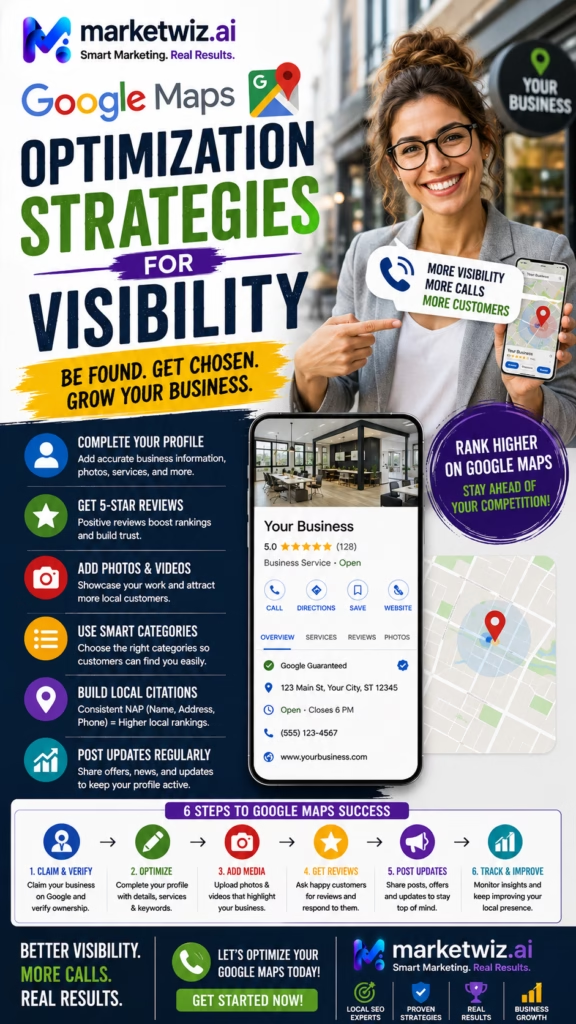
Google Maps Optimization Strategies for Visibility
Google Maps optimization strategies for visibility should help a legitimate business become easier to discover across the local searches that actually matter. Strong visibility is created through accurate Google Business Profile information, relevant categories, real service areas, genuine reviews, useful photos, strong website SEO, accurate citations, legitimate backlinks, geographic ranking analysis, customer conversion, lead tracking, CRM attribution, and measurable revenue.
Google Maps visibility is not about appearing once.
It is about becoming discoverable across the searches, neighborhoods, cities, suburbs, and customer journeys that matter to the business.
A local business might rank strongly near its office.
But barely appear five miles away.
A service company might rank well for one service.
But poorly for another.
A retailer might have excellent visibility for its business name.
But weak visibility for the products customers actually search for.
A contractor might dominate one suburb.
Yet have almost no visibility in a nearby high-value market.
This is why Google Maps optimization should be approached as a system.
Not a trick.
Not a single field.
Not one ranking screenshot.
A system.
The system begins with accurate business information.
Real name.
Real address or eligible service-area setup.
Real phone number.
Real categories.
Real services.
Real website.
Real hours.
Then comes customer trust.
Genuine reviews.
Real photos.
Project evidence.
Strong branding.
Helpful information.
Then website strength.
Service pages.
City pages.
Project pages.
Internal links.
Local content.
Technical quality.
Then local authority.
Citations.
Backlinks.
Associations.
Suppliers.
Community presence.
Partnerships.
Then measurement.
Ranking grids.
Calls.
Website leads.
Appointments.
Estimates.
Customers.
Revenue.
That is how Google Maps visibility becomes meaningful.
Because visibility that never creates a customer is only partial success.
The goal is qualified visibility.
Be visible for the right service.
In the right geography.
To the right customer.
At the right stage of demand.
That is the foundation of a stronger local search strategy.
The Google Maps Visibility Formula
Accurate Profile + Strong Relevance + Genuine Reviews + Real Photos + Website SEO + Local Citations + Legitimate Backlinks + Geographic Rank Tracking + Customer Conversion + CRM Attribution + Revenue Measurement = Stronger Google Maps Visibility
What Google Maps Visibility Really Means
Search Visibility
The business needs to appear for searches that match its genuine services, products, or category.
Geographic Visibility
Rankings should be measured across the actual local territory instead of one search point.
Commercial Visibility
The most valuable rankings are generally connected to meaningful customer demand.
Brand Visibility
Customers should easily find the legitimate business when searching directly for the company.
Conversion Visibility
The profile should provide enough information and trust to encourage customer action.
Revenue Visibility
Marketing data should eventually reveal which areas and searches create actual business value.
Understand the Core Local Ranking Framework
Google describes local search results using three broad concepts.
Relevance
How well does the business match what the customer searched for?
Distance
How geographically relevant is the business to the searcher's location or the location implied in the search?
Prominence
How established or well known does the business appear within the broader local environment?
These concepts should not be treated as three isolated checkboxes.
They interact.
A highly relevant business can still struggle if it is far from the searcher.
A nearby business can still struggle if its profile and website provide weak service context.
A well-established company can still miss opportunities if customer-facing information is inaccurate.
Strong visibility comes from building the full local ecosystem.
Improve Relevance Before Trying to Expand Visibility
Choose Accurate Categories
The primary category should match the core real-world business.
Add Genuine Services
Make important offerings clear.
Build Dedicated Website Pages
Important services deserve useful supporting content.
Use Natural Customer Language
Write for people instead of repeating keywords unnaturally.
Document Real Work
Project examples can reinforce what the business genuinely does.
Align the Profile and Website
Categories, services, branding, geography, and content should tell a consistent story.
Understand How Distance Affects Maps Visibility
One of the biggest mistakes in local SEO is assuming that a business has one fixed Google Maps ranking.
It does not.
A customer near the business may see one result.
A customer several miles away may see another.
Search Near the Business
Visibility may be strong around the legitimate location.
Search Across Town
Different competitors may become more geographically relevant.
Search From a Nearby Suburb
Ranking order may change significantly.
Search With Geographic Modifiers
Searches containing city or neighborhood names can introduce different local context.
Do Not Manufacture Proximity
Fake offices and fabricated locations are not legitimate visibility strategies.
Distance Makes Geographic Rank Tracking Essential
A business can look dominant from one search location while having weak coverage across most of its actual market. Ranking grids provide a much more useful view.
Build Local Prominence Without Shortcuts
Earn Genuine Reviews
Real customer feedback can strengthen trust.
Build Website Authority
Helpful content and legitimate links strengthen the broader digital presence.
Maintain Accurate Citations
Business information should remain consistent on important sources.
Build Local Partnerships
Real relationships can create referrals, mentions, and authority.
Document Local Projects
Real work helps demonstrate genuine geographic activity.
Build Brand Awareness
Recognition can increase direct searches and customer familiarity.
Optimize the Google Business Profile Foundation
Complete Important Information
Customers should understand the business quickly.
Use Accurate Categories
Represent actual operations.
Add Real Services
Explain what the business actually provides.
Add Genuine Photos
Show the real company, products, services, work, team, or facilities.
Build Genuine Reviews
Customer feedback supports trust.
Maintain Hours
Keep operating information current.
Maintain Contact Information
Incorrect phone or website details can directly cost customers.
Use the Correct Business Name
Match Real Branding
Use the genuine customer-facing business name.
Avoid Keyword Stuffing
Do not append cities or services simply to manipulate rankings.
Keep Branding Consistent
Website, signage, directories, invoices, and important profiles should align where appropriate.
Avoid Artificial Variations
Do not create multiple keyword-focused names for the same business.
Choose Accurate Google Business Profile Categories
Primary Category
Choose the closest available match for the main business activity.
Secondary Categories
Add only genuine additional categories.
Avoid Category Stuffing
More categories do not automatically mean stronger visibility.
Review Category Options
Available choices can change.
Support Categories With Website Content
Major services should be represented meaningfully on the website.
Handle Address Settings Correctly
Customer-Facing Locations
Public locations should satisfy current eligibility requirements.
Service-Area Businesses
Businesses that travel to customers can use the appropriate service-area setup where eligible.
Do Not Create Fake Offices
Fabricated addresses can create profile risk.
Do Not Use Ineligible Virtual Locations
Review current Google Business Profile requirements.
Do Not Create Duplicate Profiles Without Genuine Eligibility
Each profile should correspond to a legitimate qualifying operation.
Use Genuine Service Areas
Map Actual Markets
Identify real cities, suburbs, counties, and ZIP codes served.
Do Not Add Every Nearby City
A larger service-area list does not automatically improve ranking coverage.
Track Travel Economics
Distant customers may have different profitability.
Track Customer Value
Some markets may support larger average sales.
Track Conversion
Different areas can produce very different close rates.
Prioritize Profitable Reach
Local visibility should support real business economics.
Add Relevant Services Customers Actually Search For
Use Clear Service Names
Help customers understand the offering.
Prioritize High-Value Services
Important revenue-producing work deserves clear visibility.
Do Not Add Services You Do Not Provide
Accuracy protects trust.
Support Services With Website Pages
Build useful content for important offerings.
Track Leads by Service
Different service categories may produce different customer values.
Write a Better Google Business Profile Description
Explain the Core Business
Customers should understand what the company does.
Mention Services Naturally
Avoid repetitive keyword stuffing.
Describe Genuine Geography
Mention real service areas naturally where useful.
Explain Customer Types
Residential, commercial, retail, property management, professional, or other legitimate segments may matter.
Avoid Unsupported Claims
Keep promotional statements accurate.
Use Accurate Contact Information
Use a Monitored Phone Number
Local visibility has limited value if customers cannot reach the business.
Use the Correct Website
Avoid outdated or broken destination URLs.
Track Calls Where Appropriate
Attribution can connect visibility with real opportunities.
Track Missed Calls
Missed demand can hide behind strong ranking reports.
Track Qualified Calls
Separate real prospects from unrelated phone activity.
Keep Business Hours Accurate
Regular Hours
Keep the profile current.
Holiday Hours
Update special schedules.
Emergency Hours
Only claim 24-hour availability when genuinely offered.
Appointment-Based Operations
Make customer expectations clear.
Protect Conversion
Customers may skip the business if they believe it is closed.
Add Better Photos to Improve Profile Visibility and Conversion
Exterior Photos
Useful for customer-facing locations.
Interior Photos
Show offices, showrooms, stores, or facilities.
Team Photos
Real employees can reinforce legitimacy.
Vehicle Photos
Useful for service businesses.
Product Photos
Retail businesses can showcase genuine merchandise.
Project Photos
Contractors should document completed work.
Equipment Photos
Specialized tools or equipment can demonstrate real capability.
Build Genuine Reviews That Strengthen Local Trust
Ask Real Customers
Reviews should reflect genuine experiences.
Ask Consistently
Build the request process into normal operations.
Make It Easy
Reduce unnecessary friction.
Do Not Buy Reviews
Fabricated feedback creates platform and trust risk.
Do Not Manipulate Sentiment
Let customers describe their actual experience.
Track Review Growth Over Time
Look for steady legitimate development.
Respond to Reviews Professionally
Positive Reviews
Thank customers naturally.
Critical Reviews
Stay professional and calm.
Protect Customer Privacy
Avoid exposing unnecessary details.
Avoid Keyword Stuffing
Review responses should sound human.
Use Feedback Operationally
Repeated complaints can reveal conversion or service problems.
Use Google Business Profile Posts as Supporting Content
Project Updates
Share genuine completed work.
Service Highlights
Explain real offerings.
Product Highlights
Retail businesses can showcase legitimate products.
Seasonal Content
Highlight timely customer needs.
Company Updates
Share real operational information.
Posts can make the profile more informative, but frequency alone does not guarantee stronger rankings.
Strengthen the Website Behind the Google Business Profile
Clear Homepage
Explain the main business quickly.
Dedicated Service Pages
Important offerings should be easy to find.
Useful Local Pages
Genuine geographic content can support local relevance.
Project Galleries
Show actual work.
Mobile Conversion
Make calls and forms easy.
Technical Quality
Improve crawlability, page speed, indexing, and site structure.
Trust Signals
Display accurate licenses, certifications, associations, warranties, and customer proof where applicable.
The Website Can Strengthen the Entire Maps Customer Journey
A customer may discover the business on Google Maps but make the final decision after visiting the website. Local visibility and website conversion should be optimized together.
Build Dedicated Service Pages
Match Specific Search Intent
Different services often represent different customer needs.
Explain the Service Thoroughly
Describe scope, process, customer questions, and real capabilities.
Use Genuine Photos
Real visual proof strengthens credibility.
Add FAQs
Answer questions customers ask before calling.
Add Natural Local Context
Mention genuine markets where useful.
Track Page Conversion
Know which services create profitable leads.
Build Useful City Pages for Genuine Markets
Target Real Service Areas
Do not create pages for cities the business cannot serve.
Add Local Project Examples
Genuine work can increase usefulness.
Discuss Local Conditions
Housing, climate, customer demand, property type, or other relevant factors may vary.
Avoid Duplicate Content
Changing only the city name creates weak pages.
Track Leads by City
Determine whether local content generates real business.
Build Local Project Pages to Demonstrate Real Activity
Project Location
Mention genuine geographic context.
Customer Need
Explain the original problem or project goal.
Work Performed
Describe actual service.
Photos
Use genuine project images.
Final Outcome
Explain the result accurately.
Internal Links
Connect the project with related service and location pages.
Publish Helpful Local Content That Expands Visibility
Pricing Factors
Explain what influences cost.
Service Comparisons
Help customers understand legitimate options.
Problem-Solution Content
Explain common customer issues.
Project Planning
Help customers understand process and timing.
Local Conditions
Discuss meaningful geographic considerations.
Buyer Guides
Useful educational resources can build trust before contact.
Improve Internal Linking
Homepage to Services
Make core offerings easy to reach.
Services to Related Services
Show connected solutions.
City Pages to Services
Connect geography with commercial intent.
Project Pages to Services
Connect proof with action.
Blog Articles to Commercial Pages
Help educational visitors find the right next step.
Use Relevant Structured Data Carefully
Organization or Local Business Schema
Represent the business accurately.
Service Schema
Clarify genuine services where appropriate.
Article Schema
Use on educational content.
Breadcrumb Schema
Clarify site structure.
FAQ Schema
Use where supported by visible content and current search guidance.
Do Not Mark Up Fabricated Reviews
Structured data should reflect genuine information.
Build Accurate Local Citations
Major Directories
Keep important listings accurate.
Industry Sources
Use legitimate relevant directories.
Local Chambers
Genuine membership can support local recognition.
Professional Associations
Legitimate affiliations can strengthen authority.
Supplier or Dealer Directories
Genuine partner relationships can create additional discovery.
Prioritize Quality
Large quantities of weak directories are not automatically useful.
Improve Name, Address, and Phone Consistency
Business Name
Use legitimate branding.
Address
Keep genuine public location information current.
Phone Number
Correct outdated numbers.
Website
Major listings should point to the correct official domain.
Correct Old Listings
Legacy information can confuse customers and platforms.
Earn Legitimate Backlinks
Suppliers
Real partner directories may provide useful references.
Associations
Genuine memberships can create authority.
Local Partnerships
Complementary businesses can create referrals and mentions.
Community Organizations
Genuine participation may create local visibility.
Local Media
Newsworthy projects can earn coverage.
Useful Content
Strong resources can attract natural links.
Avoid Link Schemes
Sustainable authority should come from legitimate sources.
Build Real Local Authority
Serve Local Customers
Reputation begins with real transactions.
Build Referral Relationships
Local business relationships can create long-term demand.
Earn Customer Reviews
Genuine feedback strengthens trust.
Publish Local Projects
Real work demonstrates geographic activity.
Build Community Recognition
Familiar local brands can benefit from direct and branded demand.
Create Useful Local Content
Helpful information reinforces relevance and expertise.
Use Geographic Grid Tracking to Measure True Visibility
A single search result cannot accurately describe local coverage.
Define the Target Area
Track the actual local market.
Use Consistent Search Points
Comparable spacing makes trend analysis easier.
Track Consistent Keywords
Measure important commercial search terms.
Identify Strong Zones
See where the business performs well.
Identify Weak Zones
Find geographic gaps.
Compare Competitors
Understand who dominates each part of the market.
Ranking Grids Turn Local Visibility Into a Geographic Strategy
Instead of asking, “What position are we?” businesses can ask, “Where are we visible, where are we weak, and which areas are most valuable?”
Measure Neighborhood-Level Visibility
High-Value Neighborhoods
Some areas may produce stronger average customer value.
Dense Residential Areas
Population concentration may create additional demand.
Older Housing Areas
Certain service categories may have more demand.
New Construction Areas
Growing neighborhoods can create different service opportunities.
Commercial Districts
B2B services may prioritize business-heavy locations.
Measure Visibility Across Nearby Suburbs
Track Distance
Proximity may influence ranking strength.
Track Competition
Different suburbs can have different market density.
Track Lead Quality
Not every area produces equally valuable customers.
Track Drive Time
Operational costs matter.
Track Revenue
Use final customer value to prioritize markets.
Measure City-Level Google Maps Visibility
Core City
Understand the primary market.
Secondary Cities
Compare legitimate expansion areas.
Service + City Keywords
Track explicit local intent.
Compare Leads
More visibility does not automatically mean better leads.
Compare Customer Value
High-value markets may deserve greater optimization effort.
Track the Keywords That Matter
Primary Service Terms
Track the core business offering.
Secondary Service Terms
Measure additional revenue-producing services.
Near-Me Searches
Useful for understanding proximity-based visibility.
Service + City Searches
Track explicit geographic intent.
Commercial Searches
B2B services may need separate keyword sets.
High-Value Searches
Prioritize keywords connected with meaningful business demand.
Analyze Local Competitors Strategically
Compare Categories
Understand legitimate positioning.
Compare Reviews
Look at recency, quality, themes, and customer trust.
Compare Photos
Evaluate visual credibility.
Compare Websites
Review service depth, local pages, technical quality, and conversion.
Compare Geographic Rankings
Different competitors may dominate different areas.
Compare Authority Sources
Review legitimate links, citations, associations, and partnerships.
Track Calls Generated by Google Maps Visibility
Total Calls
Measure direct phone activity.
Qualified Calls
Identify genuine prospects.
Missed Calls
Reveal preventable lead loss.
Service Requested
Understand demand.
Customer Geography
Compare markets.
Final Outcome
Track appointment, estimate, or sale.
Track Website Leads From Google Maps Traffic
Lead Source
Preserve Google attribution.
Service
Identify customer need.
City or ZIP Code
Measure geographic demand.
Project Timing
Understand urgency.
Project Size
Estimate potential opportunity value.
Final Outcome
Connect the lead to appointments, estimates, and customers.
Track Google Maps Leads in CRM
- Lead date
- Customer name
- Phone number
- Email where provided
- Google Maps / Google Business Profile source
- Organic Google source where applicable
- Customer city
- ZIP code
- Neighborhood where useful
- Service or product requested
- Residential or commercial
- Project or purchase size
- Customer timing
- Call or form source
- Qualification status
- Appointment status
- Estimate status
- Estimate amount
- Follow-up status
- Sale status
- Final revenue
- Repeat customer opportunity
- Review request status
- Referral opportunity
Suggested Local Search Lead Pipeline
- New Google lead
- Responded
- Location qualified
- Service qualified
- Appointment scheduled
- Appointment completed
- Estimate prepared
- Estimate delivered
- Follow-up
- Customer won
- Work or purchase completed
- Review requested
- Repeat opportunity
- Referral opportunity
- Lost / not qualified
Track Appointments Generated From Maps Visibility
Appointments Scheduled
Measure deeper customer intent.
Appointments Completed
Track real sales opportunities.
Lead Source
Preserve Google attribution.
Service Type
Compare conversion across offerings.
Customer Geography
Compare market quality.
Track Estimates Generated From Local Search
Estimate Volume
Measure serious opportunities.
Estimate Value
Understand potential revenue.
Close Rate
Compare sales performance.
Lost Reason
Price, timing, competition, location, fit, or capacity may reveal patterns.
Revenue Outcome
Connect estimates with completed customers.
Connect Google Maps Visibility to Revenue
| Metric | Why It Matters |
|---|---|
| Maps visibility | Measures search exposure |
| Qualified calls | Measures real phone opportunities |
| Website leads | Measures post-profile conversion |
| Appointments | Measures deeper buying intent |
| Estimates | Measures legitimate sales opportunities |
| Close rate | Measures customer conversion |
| Average customer value | Measures economic lead quality |
| Revenue by city or ZIP | Shows where visibility creates the most value |
| Repeat and referral value | Measures downstream customer value |
Visibility Is Strongest When It Produces Profitable Demand
A business does not need to rank first everywhere. It needs enough qualified visibility in the right places to generate profitable customers consistently.
Use Automation to Support Google Maps Optimization
Ranking Reports
Track geographic visibility consistently.
Lead Routing
Send local inquiries to the right employee or team.
CRM Attribution
Preserve Google Maps as the original source where appropriate.
Missed-Call Follow-Up
Help recover qualified opportunities.
Appointment Reminders
Improve customer follow-through.
Estimate Follow-Up
Keep sales opportunities organized.
Revenue Reporting
Compare local visibility with actual customer value.
Automation Should Support a Real Local Business
Do not use automation to create fake reviews, fabricated addresses, false service areas, duplicate Google profiles, keyword-stuffed business names, fake customer engagement, fabricated project photos, mass doorway pages, spam citations, or manipulative backlink networks intended to distort Google Maps rankings.
Common Google Maps Visibility Mistakes
Checking Rankings From One Location
Local visibility changes geographically.
Assuming One Ranking Applies Everywhere
Different neighborhoods can show different results.
Tracking Irrelevant Keywords
Focus on searches connected to customer value.
Ignoring Proximity
Distance affects local visibility.
Keyword Stuffing the Business Name
Use legitimate branding.
Creating Fake Locations
Do not manufacture geographic presence.
Creating Duplicate Profiles
Profiles should represent eligible real operations.
Using Irrelevant Categories
Categories should match actual business activity.
Buying Fake Reviews
Review manipulation creates risk.
Using Fake Project Images
Do not represent stock or generated imagery as completed work.
Ignoring Website SEO
Website relevance supports broader local visibility.
Building Thin City Pages
Local content should be useful and unique.
Building Spammy Backlinks
Sustainable authority should be legitimate.
Ignoring Calls and Leads
Rankings should connect to business activity.
Ignoring Revenue by Geography
Some markets may be much more valuable than others.
Failing to Answer Calls
Better visibility cannot fix poor customer response.
Failing to Follow Up
High-value prospects may require multiple contacts.
Ignoring Current Google Business Profile Requirements
Eligibility, verification, features, and policies can change.
A 30-Day Google Maps Visibility Optimization Plan
Week 1: Fix the Profile Foundation
- Verify the legitimate business name
- Review the primary category
- Review relevant secondary categories
- Confirm eligible address or service-area setup
- Confirm phone number
- Confirm website URL
- Update business hours
- Add genuine services
- Improve the business description
- Review real service areas
- Remove inaccurate profile information
- Review current Google Business Profile requirements
Week 2: Strengthen Trust and Relevance
- Upload genuine business photos
- Add project or product imagery
- Review recent customer feedback
- Respond professionally to reviews
- Create a consistent review request process
- Improve major service pages
- Add local project examples
- Improve website phone visibility
- Improve mobile conversion
- Review important local content
Week 3: Strengthen Authority and Geographic Reach
- Audit important citations
- Correct outdated business information
- Identify legitimate backlink opportunities
- Build useful city pages
- Improve internal linking
- Publish helpful local content
- Select priority ranking keywords
- Define the target geographic market
- Create a local ranking grid
- Compare major competitors
Week 4: Connect Visibility With Business Results
- Track Maps visibility geographically
- Track total calls
- Track qualified calls
- Track website leads
- Track appointments
- Track estimates
- Track estimate values
- Track close rates
- Track completed customer revenue
- Track revenue by city or ZIP
- Compare visibility with customer value
- Prioritize the strongest growth opportunities
End-of-Month Outcome
After 30 days, the business should have a cleaner Google Business Profile, stronger service relevance, better reputation assets, improved website support, cleaner citations, stronger local authority, a geographic ranking baseline, improved lead attribution, and a clearer understanding of how Google Maps visibility translates into calls, customers, and revenue.
Final Takeaway: Optimize Google Maps for Qualified Visibility
The phrase “more visibility” sounds simple.
But visibility by itself is not always useful.
A business can be visible for searches that do not produce customers.
It can rank in areas that are too far away to serve profitably.
It can receive traffic from services it barely provides.
It can rank well and still lose customers because the profile looks weak.
It can generate calls and still lose them because nobody answers.
That means optimization should focus on qualified visibility.
Visibility that matches the business.
Visibility in the right market.
Visibility for the right customer.
Visibility for the right service.
Visibility that creates measurable opportunities.
Start with accuracy.
Real business name.
Correct category.
Correct phone number.
Correct website.
Correct hours.
Real services.
Real address or eligible service-area configuration.
That foundation prevents unnecessary confusion.
Then build relevance.
If you are a roofer, your profile and website should clearly reflect roofing.
Roof replacement.
Roof repair.
Commercial roofing.
Storm-related work where genuinely provided.
If you are a flooring business:
flooring products.
flooring categories.
project examples.
real service areas.
If you are a remodeler:
kitchens.
bathrooms.
cabinets.
flooring.
actual project examples.
Relevance comes from clarity.
Then build trust.
Reviews.
Photos.
Customer experiences.
Professional branding.
Real projects.
Real people.
Real facilities.
Real products.
Customers often compare local businesses in seconds.
A strong visual presentation can influence which profile receives the call.
Then strengthen the website.
A Google Maps visitor may click because they want more detail.
What services?
Which cities?
What projects?
What experience?
What next step?
The website should answer those questions.
Dedicated service pages help.
Useful city pages help.
Project pages help.
Helpful blog content helps.
Internal linking helps.
Technical performance helps.
Then build authority.
Local citations.
Industry directories.
Suppliers.
Chambers.
Associations.
Community groups.
Local media.
Business partnerships.
Real relationships create better long-term authority than artificial shortcuts.
Geography comes next.
One of the most important things to understand is that Google Maps visibility changes across the market.
Near the office:
strong visibility.
Across town:
moderate visibility.
Another suburb:
weak visibility.
Different service keyword:
different pattern.
This is why one ranking screenshot is not enough.
Use geographic rank tracking.
Map the real service territory.
Identify strong areas.
Identify weak areas.
Identify high-value areas.
Identify competitive areas.
Then connect rankings with customer data.
That is where local SEO becomes much more useful.
Suppose City A produces:
30 calls.
10 estimates.
3 sales.
$8,000 in revenue.
City B produces:
12 calls.
8 estimates.
5 sales.
$32,000 in revenue.
Which city deserves more attention?
Probably City B.
This is why raw visibility does not tell the whole story.
Customer economics matter.
Another example:
Neighborhood A ranks number one.
But generates low-value inquiries.
Neighborhood B ranks number five.
But generates high-value projects.
Improving Neighborhood B may create more revenue than protecting number one in Neighborhood A.
This is why ranking analysis should be connected to CRM data.
Track city.
ZIP.
Service.
Call.
Website lead.
Appointment.
Estimate.
Estimate value.
Customer.
Revenue.
Now local visibility becomes measurable.
Automation can make this easier.
Ranking reports run.
Leads enter CRM.
Source gets recorded.
Geography gets tracked.
Appointments get recorded.
Estimates get tracked.
Revenue gets attributed.
Now management can compare visibility with results.
That is a stronger use of automation.
Not fake reviews.
Not fake offices.
Not fake service areas.
Not spam links.
Not duplicate profiles.
Not mass doorway pages.
Real automation should improve measurement and customer response.
Ultimately, Google Maps optimization should answer four questions.
Are we visible?
Are we visible in the right places?
Are customers choosing us?
Is that visibility generating profitable business?
If the answer to all four is yes, local SEO is doing its job.
That is what Google Maps optimization strategies for visibility should ultimately accomplish.
Frequently Asked Questions
1. What is Google Maps optimization?
Google Maps optimization is the process of improving a business's Google Business Profile, website relevance, reviews, photos, citations, local authority, geographic visibility, and customer conversion.
2. Can Google Maps optimization improve business visibility?
Yes. Stronger profile accuracy, local relevance, website quality, reputation, and authority can support better local discovery.
3. What affects Google Maps visibility?
Relevance, distance, prominence, categories, business information, website strength, reviews, citations, links, competition, and searcher location can influence local results.
4. Does searcher location affect Maps visibility?
Yes. Local search results can vary significantly depending on where the customer is located.
5. Does the Google Business Profile category matter?
Yes. The primary category should accurately represent the core real-world business activity.
6. Do service areas improve Google Maps visibility?
Service areas describe real operating territory, but adding locations does not automatically create stronger rankings in those areas.
7. Do reviews help Google Maps visibility?
Genuine reviews can strengthen customer trust and support a business's broader local presence.
8. How many reviews are needed to rank?
There is no universal number. Competition, review quality, authenticity, recency, relevance, proximity, and prominence can all matter.
9. Should businesses respond to Google reviews?
Yes. Professional responses can strengthen customer confidence and show active reputation management.
10. Do Google Business Profile photos help visibility?
Genuine useful photos can make the profile more informative and help customers evaluate the business.
11. Does website SEO affect Google Maps performance?
Website relevance, authority, technical quality, service pages, local content, internal links, and backlinks can support the broader local SEO ecosystem.
12. Should businesses build dedicated service pages?
Yes. Dedicated pages can help customers and search engines understand genuine services.
13. Should businesses build city pages?
Yes, when they represent genuine markets and contain useful unique local information.
14. Do local citations help Google Maps optimization?
Accurate legitimate citations can support business information consistency and local discovery.
15. What is NAP consistency?
NAP means business name, address, and phone information. Important listings should contain accurate core business details.
16. Do backlinks help local SEO visibility?
Relevant legitimate backlinks can support website authority and broader local search strength.
17. What is a Google Maps ranking grid?
A ranking grid measures local visibility from multiple geographic search points instead of relying on one location.
18. Why should businesses track rankings from multiple locations?
Maps visibility can change across neighborhoods, cities, and suburbs because searcher location and competition vary.
19. Should businesses track Google Maps calls?
Yes. Call tracking can connect local visibility with genuine customer opportunities.
20. Should businesses track website leads from Maps traffic?
Yes. Forms, appointments, estimates, and other conversion activity can provide useful evidence of performance.
21. Should Google Maps leads be tracked in CRM?
Yes. CRM attribution can connect Google visibility with appointments, estimates, customers, repeat business, referrals, and revenue.
22. Can Maps optimization help service businesses?
Yes. Service businesses can benefit because customers often need nearby providers who serve a specific property or area.
23. Can Maps optimization help storefront businesses?
Yes. Eligible stores, offices, restaurants, dealerships, practices, and other customer-facing businesses can benefit from stronger local discovery.
24. Should businesses publish Google Business Profile posts?
Useful posts can make a profile more informative, although posting alone does not guarantee stronger rankings.
25. Can Google Maps rankings be guaranteed?
No. Rankings can change because of geography, competition, algorithms, relevance, proximity, prominence, and other factors.
26. Can fake reviews improve Maps visibility?
Businesses should not use fake or manipulated reviews. They can violate platform requirements and undermine customer trust.
27. Can fake addresses expand Google Maps visibility?
Businesses should not create fabricated addresses, offices, or profiles to manipulate geographic visibility.
28. How long does Google Maps optimization take?
Timing varies by market, competition, geography, profile quality, website authority, reviews, citations, backlinks, and starting position.
29. Should businesses focus on rankings or customer leads?
Rankings are useful visibility metrics, but qualified calls, leads, appointments, estimates, customers, and revenue provide stronger business measures.
30. What is the goal of Google Maps optimization strategies for visibility?
The goal is to create qualified local visibility that helps more nearby customers discover, trust, contact, and choose the business.
30 Additional SEO Keywords
Use these supporting phrases naturally across Google Maps articles, local SEO pages, service pages, city pages, ranking guides, FAQs, project content, and relevant internal links.
Build Stronger Google Maps Visibility Across Your Best Local Markets
MarketWiz.ai helps local businesses strengthen Google Maps visibility, local SEO, geographic rank tracking, lead capture, customer response, CRM integration, and measurable reporting designed to turn stronger local discovery into qualified calls, customers, and revenue.
This article provides general information about Google Maps optimization, Google Business Profile management, local SEO, geographic ranking measurement, reviews, citations, backlinks, website optimization, local lead generation, CRM attribution, and revenue tracking. It does not provide legal, tax, financial, accounting, professional, licensing, telecommunications, privacy, consumer-protection, advertising-law, regulatory, compliance, or Google policy advice. Google Business Profile eligibility, verification procedures, address requirements, service-area rules, profile features, business categories, review policies, structured data guidance, ranking systems, and Google Search systems can change. Businesses should review current Google Business Profile and Google Search documentation before implementing substantial profile or SEO changes. Business names, addresses, phone numbers, websites, categories, service areas, hours, services, licenses, certifications, warranties, project photos, products, pricing claims, customer reviews, promotional claims, and other public-facing information should remain accurate. Businesses should not create fake locations, fabricated offices, ineligible virtual locations, keyword-stuffed business names, duplicate profiles, false service areas, fake customer reviews, purchased positive reviews, fabricated customer activity, misleading categories, fake project photos, mass doorway pages, spam citations, manipulative backlink networks, or other tactics intended to distort Google Maps rankings or bypass platform requirements. Review requests should be directed to genuine customers and handled in accordance with applicable laws and platform requirements. Stock, generated, conceptual, manufacturer, or third-party imagery should not be represented as completed work, real staff, exact inventory, business facilities, or customer projects when it is not. Ranking grids, local rank trackers, third-party SEO platforms, and search simulations may provide estimates rather than universal exact rankings because local search can vary based on searcher location, query, device, personalization, time, competition, and other factors. Call tracking, automated communication, customer follow-up, CRM storage, and marketing automation should comply with applicable privacy, telecommunications, consent, and data-handling requirements. Google Maps rankings cannot be guaranteed. Local visibility can vary based on searcher location, proximity, relevance, prominence, competition, website authority, reviews, citations, backlinks, business information, device, query, profile history, and algorithm changes. Higher visibility does not guarantee more calls, leads, appointments, estimates, customers, or revenue. Google Maps lead volume, qualified call volume, conversion rates, customer values, revenue, profitability, referrals, repeat business, and return on marketing investment can vary based on local demand, geography, competition, pricing, reputation, website conversion, phone response, sales execution, operational capacity, seasonality, market conditions, and other business factors.













