

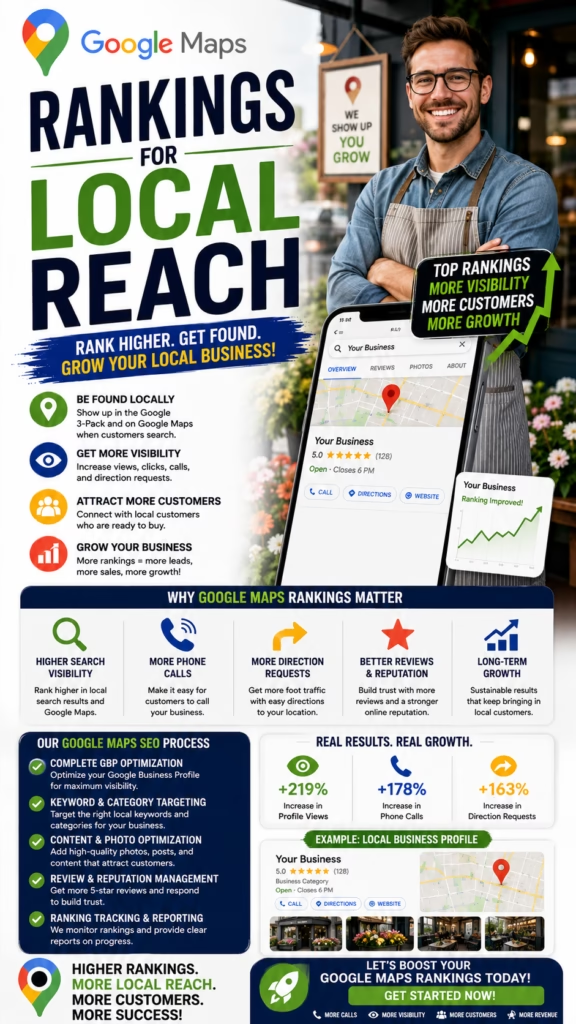
Google Maps Rankings for Local Reach
Google Maps rankings for local reach are about more than seeing a business in one search result. Strong local reach means creating meaningful visibility across the neighborhoods, ZIP codes, cities, and service areas where profitable customers are actually searching. That requires accurate Google Business Profile optimization, genuine reviews, strong photos, relevant services, website SEO, local citations, legitimate backlinks, geographic ranking analysis, lead tracking, CRM attribution, and revenue measurement.
Google Maps rankings are often discussed as if every business has one single ranking.
Number one.
Number two.
Number three.
But local search is much more geographic than that.
A business can rank extremely well near its physical location.
Moderately well five miles away.
Poorly ten miles away.
And barely appear at all on the other side of a major metro.
That means the real question is not simply:
“What position do we rank?”
The better question is:
“Where do we rank?”
And after that:
“Where do we need to rank?”
Those are very different questions.
A local business may serve:
one city.
several suburbs.
multiple ZIP codes.
an entire county.
or a large metropolitan area.
Customers in each part of that territory may see different Maps results.
That makes geographic visibility one of the most important concepts in Google Maps optimization.
Imagine a roofer serving a metro area.
The company ranks strongly near its office.
But most profitable roofing jobs are actually coming from higher-value suburbs farther away.
A ranking report taken only from the office could look fantastic.
Yet the business may still have weak visibility where it matters most.
Or imagine a kitchen remodeler.
The company ranks third across most of the city.
But ranks first in two neighborhoods that generate high-value projects.
That may be more profitable than ranking first everywhere for low-value search demand.
This is why local reach should be measured through business value.
Not vanity rankings.
Not screenshots.
Not one search from one phone.
Real geographic visibility.
Real leads.
Real customers.
Real revenue.
Google Maps optimization therefore combines several layers.
Relevance.
Proximity.
Prominence.
Google Business Profile quality.
Website authority.
Service pages.
Reviews.
Photos.
Citations.
Backlinks.
Local project evidence.
Geographic rank tracking.
Lead attribution.
Revenue tracking.
When those pieces work together, Google Maps becomes much more than a listing.
It becomes a local customer acquisition channel.
The Local Reach Formula
Accurate Profile + Strong Relevance + Genuine Local Authority + Real Reviews + Useful Photos + Strong Website SEO + Geographic Rank Tracking + Qualified Lead Measurement + Revenue by Market = Smarter Google Maps Local Reach
What Google Maps Local Reach Really Means
Visibility Across Multiple Search Points
True local reach measures where a business appears across the geographic territory, not from one device or office.
Visibility for the Right Services
Strong reach for irrelevant keywords is less valuable than visibility for profitable services.
Visibility in Profitable Areas
Some neighborhoods and ZIP codes can produce better customer economics than others.
Qualified Calls and Leads
Local reach should ultimately result in real customer opportunities.
Consistent Market Coverage
Geographic ranking analysis can reveal weak spots across a service territory.
Revenue by Geography
The strongest local reach strategy connects visibility with actual customer value.
Understand the Core Google Maps Ranking Framework
Google describes local results using three broad concepts:
Relevance
How well does the business match what the customer searched for?
Distance
How geographically relevant is the business to the searcher's location or the location implied in the search?
Prominence
How established or well known does the business appear within the broader local ecosystem?
Businesses should avoid trying to reduce these concepts to one simplistic tactic.
Local search is influenced by many interacting signals.
Categories.
Business information.
Website relevance.
Reviews.
Local authority.
Searcher location.
Competition.
Business prominence.
No single field guarantees a ranking.
Improve Google Maps Relevance
Choose the Correct Category
The primary category should accurately represent the main business.
Add Genuine Services
Customers and search engines need clear service context.
Build Strong Service Pages
Important offerings should be explained thoroughly on the website.
Use Natural Search Language
Write for customers rather than stuffing exact-match phrases unnaturally.
Add Relevant Project Examples
Real project evidence can reinforce what the business actually does.
Keep the Profile and Website Aligned
Business categories, services, and website content should tell a consistent story.
Understand Distance and Searcher Proximity
Proximity is one reason Google Maps rankings can look dramatically different from one part of a city to another.
Search Near the Business
The company may perform strongly close to its legitimate location.
Search Several Miles Away
Other competitors may become more geographically relevant.
Search From Another Suburb
Local rankings can change substantially.
Search With a City Modifier
The geographic context of the query may also affect results.
Do Not Try to Fake Proximity
Businesses should not create fabricated addresses or ineligible locations to manipulate local reach.
Proximity Is Why One Ranking Check Can Be Misleading
A business can rank number one at its office and much lower across town. Geographic grid tracking provides a more realistic picture of visibility.
Build Local Prominence Over Time
Earn Genuine Reviews
Customer feedback can support reputation and trust.
Build Website Authority
Useful content and legitimate backlinks can strengthen the broader online presence.
Maintain Accurate Citations
Consistent business information supports legitimate local discovery.
Build Local Partnerships
Real community and business relationships can generate mentions and referrals.
Publish Real Project Evidence
Local work can reinforce geographic credibility.
Build Brand Awareness
Established businesses may benefit from more branded searches and local recognition.
Optimize the Google Business Profile Foundation
Complete Important Fields
Make the business easy to understand.
Use Accurate Categories
Match genuine business activities.
Add Services
Explain real offerings.
Add Photos
Show the business and actual work.
Build Reviews
Encourage legitimate customer feedback.
Maintain Hours
Keep availability current.
Maintain Contact Information
Wrong phone or website information can directly cost leads.
Use the Legitimate Business Name
Match Customer-Facing Branding
Use the name the business genuinely operates under.
Avoid Keyword Stuffing
Do not append cities and service phrases purely for ranking purposes.
Keep Branding Consistent
Website, directories, signage, invoices, and major profiles should align where appropriate.
Avoid Artificial Local Variations
The same business should not pretend to have different keyword-focused names in nearby cities.
Choose the Most Accurate Business Categories
Primary Category
Select the best available match for the core business.
Secondary Categories
Add only genuine additional categories.
Avoid Irrelevant Expansion
Do not add unrelated categories simply to chase more searches.
Review Category Changes
Available category options can change over time.
Align With the Website
Major categories should be supported by genuine website content.
Use the Correct Address or Service-Area Configuration
Customer-Facing Locations
Public locations should satisfy current eligibility requirements.
Service-Area Businesses
Businesses that travel to customers can use service-area configurations where eligible.
Do Not Use Fake Offices
Fabricated geographic presence creates substantial profile risk.
Do Not Use Ineligible Virtual Offices
Check current Google Business Profile requirements.
Do Not Create Duplicate Profiles Without Real Eligibility
Each profile should represent a legitimate qualifying operation.
Use Service Areas to Describe Real Operations
List Genuine Areas
Focus on locations the business actually serves.
Do Not Add Every Nearby City
A larger service-area list does not automatically create more rankings.
Compare Travel Economics
Drive time can affect profitability.
Compare Customer Value
Certain markets may support higher-value projects.
Track Local Conversion
A city producing many leads may still produce poor close rates.
Focus on Real Business Reach
Geographic SEO should support actual operations.
Add Services That Match Local Search Demand
Use Clear Service Names
Help customers understand what the business offers.
Prioritize Important Services
Core revenue-producing services deserve strong visibility.
Do Not Add Services You Do Not Provide
Accuracy matters.
Support Services With Website Pages
Build useful content around important offerings.
Track Leads by Service
Different services can produce different economics.
Improve the Google Business Profile Description
Explain What the Business Does
Make the primary service clear.
Mention Important Services Naturally
Avoid repetitive keyword stuffing.
Describe Real Local Coverage
Mention genuine service geography where appropriate.
Explain Customer Types
Residential, commercial, retail, property management, or other segments may be relevant.
Keep Claims Accurate
Avoid unsupported claims about rankings, results, pricing, awards, or superiority.
Use Accurate Contact Information
Use a Monitored Number
Local visibility only matters if customers can reach the business.
Track Calls
Proper attribution can connect Maps visibility to customer opportunities.
Track Missed Calls
Missed opportunities can hide behind strong ranking reports.
Track Qualified Calls
Separate real customers from spam or unrelated calls.
Track Final Outcome
Connect calls to appointments, estimates, sales, or completed work.
Keep Business Hours Accurate
Regular Hours
Maintain normal operating times.
Holiday Hours
Update special schedules.
Emergency Availability
Only claim 24-hour availability when genuinely offered.
Appointment Businesses
Make scheduling expectations clear.
Protect Conversion
Customers may choose another provider if they believe the business is closed.
Add Genuine Photos That Strengthen Local Conversion
Exterior Images
Useful for customer-facing locations.
Interior Images
Show showrooms, offices, stores, or facilities where appropriate.
Team Images
Real staff can humanize the business.
Vehicles
Branded local vehicles can reinforce legitimacy.
Products
Retail businesses can show real inventory.
Completed Projects
Contractors and service businesses should document genuine work.
Build Genuine Google Reviews Across the Customer Base
Ask Real Customers
Reviews should reflect actual experiences.
Ask Consistently
Build the process into normal operations.
Make It Easy
Reduce friction for genuine customers.
Do Not Buy Reviews
Fabricated feedback creates platform and reputation risk.
Do Not Manipulate Review Sentiment
Customer feedback should remain authentic.
Track Review Development
Compare review growth with local visibility and conversion.
Respond to Reviews Professionally
Positive Reviews
Thank customers naturally.
Negative Reviews
Remain calm and professional.
Protect Privacy
Avoid disclosing unnecessary customer information.
Avoid SEO-Stuffed Responses
Review replies should sound human.
Use Feedback Operationally
Repeated complaints can reveal business issues affecting future customers.
Use Google Business Profile Posts as Supporting Content
Recent Projects
Share genuine local work.
Service Highlights
Explain actual services.
Product Highlights
Retail businesses can showcase real products.
Seasonal Information
Certain services have seasonal demand.
Company Updates
Share legitimate developments.
Posting can make the profile more informative, but posting frequency alone should not be treated as a guaranteed ranking factor.
Strengthen the Website Behind the Google Business Profile
Clear Homepage
Explain the main business quickly.
Dedicated Service Pages
Give important services useful standalone pages.
Local Landing Pages
Build genuine city or service-area relevance.
Project Galleries
Show completed work.
Mobile Conversion
Make phone calls and forms easy.
Technical SEO
Improve page speed, crawlability, indexing, and site structure.
Trust Signals
Display legitimate licenses, certifications, warranties, affiliations, or customer proof where applicable.
Google Maps and Website SEO Should Reinforce Each Other
The profile can create local discovery. The website provides deeper service relevance, project proof, geographic context, and conversion opportunities.
Build Dedicated Pages for High-Value Services
Match Search Intent
Different services often represent different customer needs.
Explain the Service Thoroughly
Describe scope, process, common customer questions, and real capabilities.
Use Real Photos
Genuine project evidence supports trust.
Add FAQs
Answer questions customers ask before contacting the business.
Add Local Relevance
Mention genuine markets naturally.
Track Conversion by Service
Know which pages create qualified opportunities.
Build Useful City Pages for Real Markets
Target Genuine Service Areas
Do not create pages for cities the business does not serve.
Add Local Project Examples
Real nearby work strengthens usefulness.
Add Market-Specific Information
Housing, climate, commercial property types, customer needs, or other local characteristics may vary.
Avoid Duplicate Doorway Pages
Changing only the city name is not a strong strategy.
Track Local Leads
Measure whether each geographic page contributes to real business.
Build Local Project Pages to Demonstrate Real Geographic Activity
Project Location
Mention genuine city or neighborhood context where appropriate.
Customer Need
Explain the original problem or goal.
Service Performed
Describe actual work.
Photos
Show before, during, and after where useful.
Final Result
Explain what changed without exaggerating.
Link to Related Services
Connect project proof with commercial pages.
Publish Local Content That Expands Topical Reach
Service Questions
Answer what customers commonly ask.
Pricing Factors
Explain cost variables carefully.
Comparison Guides
Help customers evaluate legitimate options.
Project Planning
Explain timing, preparation, and next steps.
Local Conditions
Discuss meaningful geographic differences.
Commercial Content
Create separate resources for business buyers where relevant.
Use Internal Linking to Strengthen Local SEO Structure
Homepage to Services
Make major offerings easy to find.
Service Pages to Related Services
Help customers understand the full offering.
City Pages to Services
Connect geographic relevance with service intent.
Project Pages to Services
Connect proof with customer action.
Blog Articles to Commercial Pages
Help educational traffic progress toward relevant services.
Use Relevant Structured Data Carefully
Organization or Local Business Schema
Represent the business accurately.
Service Schema
Clarify real services where appropriate.
Article Schema
Use for relevant educational content.
Breadcrumb Schema
Clarify website structure.
FAQ Schema
Use where supported by visible content and current search guidelines.
Never Mark Up Fake Reviews
Structured data should reflect genuine information.
Build Accurate Local Citations
Major Directories
Keep important listings accurate.
Industry Sources
Use legitimate relevant directories.
Local Organizations
Chambers and community groups can support local discovery.
Professional Associations
Genuine memberships can strengthen authority.
Supplier or Dealer Listings
Legitimate relationships may create additional citations.
Prioritize Accuracy
Low-quality directory quantity should not replace real consistency.
Improve Name, Address, and Phone Consistency
Business Name
Use legitimate branding.
Address
Keep real location information accurate where publicly displayed.
Phone Number
Avoid old or disconnected numbers.
Website
Important listings should point to the correct official domain.
Correct Legacy Information
Old addresses can confuse customers and business listings.
Earn Legitimate Backlinks That Strengthen Local Authority
Suppliers
Genuine partner directories can create useful references.
Associations
Legitimate memberships may produce links.
Community Organizations
Local participation can create genuine mentions.
Business Partnerships
Complementary businesses can create referrals and links.
Local Media
Newsworthy work can earn coverage.
Useful Content
High-quality resources can attract natural references.
Avoid Link Schemes
Spammy networks can create long-term SEO risk.
Build Real Local Authority in the Markets You Want to Reach
Serve Real Customers
Genuine local work creates reputation.
Build Local Partnerships
Work with complementary businesses and organizations.
Earn Local Reviews
Customer experiences can naturally reflect different markets.
Publish Local Projects
Show actual work across service areas.
Build Referral Networks
Local authority extends beyond search.
Build Brand Demand
Strong awareness can increase branded searches and direct demand.
Use Geographic Grid Tracking to Measure Google Maps Reach
A ranking grid allows businesses to evaluate visibility from multiple geographic points.
Track a Defined Area
Use a grid covering the actual target market.
Track Consistent Keywords
Compare the same service phrases over time.
Use Consistent Grid Spacing
This makes trend comparison easier.
Measure Average Visibility
Look beyond one ranking point.
Identify Weak Zones
See where the business loses visibility.
Compare With Competitors
Determine which businesses dominate particular geographic pockets.
One Ranking Number Cannot Describe Local Reach
Geographic ranking grids reveal where visibility is strong, average, or weak across a real market. That information is more useful than a single ranking screenshot.
Track Google Maps Rankings by Neighborhood
High-Value Neighborhoods
Some areas can produce stronger average customer values.
High-Density Neighborhoods
Population concentration may create additional demand.
Older Housing Areas
Certain service categories may benefit from older property stock.
New Construction Areas
Growth corridors can create different service opportunities.
Commercial Districts
B2B services may prioritize business-heavy areas.
Track City-Level Google Maps Visibility
Core City
Measure coverage near the main business territory.
Secondary Cities
Compare visibility in legitimate expansion markets.
City-Specific Keywords
Track service plus city searches where relevant.
Compare Lead Quality
More visibility is not automatically more profitable.
Compare Customer Value
Some cities may justify stronger marketing investment.
Track Local Reach Across Suburbs
Measure Distance From the Business
Proximity can affect ranking strength.
Measure Competition
Different suburbs can have very different competitor density.
Measure Project Value
Customer economics may differ.
Measure Drive Time
Operational cost matters.
Measure Conversion
Compare calls, estimates, and completed sales.
Track the Right Google Maps Keywords
Primary Service Keyword
Track the main commercial service.
Secondary Services
Measure additional revenue-producing offerings.
Near-Me Searches
Helpful for understanding proximity-driven intent.
Service + City Searches
Useful for explicit geographic intent.
Commercial Keywords
Track B2B searches separately when relevant.
High-Value Keywords
Prioritize searches associated with profitable customer opportunities.
Analyze Which Competitors Control Local Reach
Compare Grid Coverage
One competitor may dominate north of town while another dominates the south.
Compare Categories
Review legitimate business positioning.
Compare Reviews
Look at quality, recency, themes, and overall reputation.
Compare Websites
Review service depth, local content, authority, and conversion.
Compare Citations and Links
Identify legitimate authority sources.
Compare Local Projects
Real geographic activity may reveal why certain competitors are stronger.
Track Calls Generated by Local Maps Visibility
Total Calls
Measure overall phone engagement.
Qualified Calls
Separate genuine prospects.
City or ZIP Code
Understand where the customer came from.
Service Requested
Connect calls with keyword themes.
Appointment Outcome
Track progression.
Revenue Outcome
Connect the call to final customer value.
Track Website Leads From Local Search
Lead Source
Preserve Google attribution.
City and ZIP
Understand geographic demand.
Service
Identify the customer's need.
Project Timing
Understand urgency.
Project Size
Help estimate potential value.
Conversion Outcome
Track appointment, estimate, and sale.
Track Google Maps Leads in CRM
- Lead date
- Customer name
- Phone number
- Email where provided
- Google Maps / Google Business Profile source
- Organic Google source where applicable
- Customer city
- ZIP code
- Neighborhood where useful
- Service requested
- Residential or commercial
- Project size
- Timeline
- Call or form source
- Qualification status
- Appointment status
- Estimate status
- Estimate amount
- Follow-up status
- Sale status
- Final revenue
- Repeat customer opportunity
- Review request status
- Referral opportunity
Suggested Local Lead Pipeline
- New Google lead
- Responded
- Location qualified
- Service qualified
- Appointment scheduled
- Appointment completed
- Estimate prepared
- Estimate delivered
- Follow-up
- Customer won
- Work scheduled
- Work completed
- Review requested
- Referral opportunity
- Lost / not qualified
Track Appointments by Geographic Area
Appointments Scheduled
Measure deeper customer intent.
Appointments Completed
Track actual sales opportunities.
Customer Location
Compare market quality.
Service Type
Different offerings may convert differently.
Lead Source
Preserve Google Maps attribution.
Track Estimates by City, ZIP Code, and Service
Estimate Volume
Compare opportunity count.
Estimate Value
Compare economic potential.
Close Rate
See which geographic markets convert best.
Lost Reason
Price, timing, competition, location, project fit, or other issues can reveal useful trends.
Travel Economics
A distant high-value project may still be more profitable than several nearby low-value jobs.
Track Which Google Maps Leads Become Customers
Customer Acquisition
Know which geographic searches create actual buyers.
Average Customer Value
Compare different cities and services.
Close Rate
Measure sales efficiency.
Repeat Business
One Maps customer may create long-term value.
Referral Value
Strong local customers can generate additional business.
Track Google Maps Revenue by Local Market
| Metric | Why It Matters |
|---|---|
| Maps grid visibility | Measures geographic search reach |
| Qualified calls | Measures real phone opportunities |
| Website leads | Measures post-profile conversion |
| Appointments | Measures deeper customer intent |
| Estimates | Measures sales opportunities |
| Close rate by market | Shows geographic sales efficiency |
| Average customer value | Shows economic lead quality |
| Revenue by city or ZIP | Shows where local reach is most profitable |
| Repeat and referral value | Measures downstream customer value |
The Best Local Reach Is Profitable Local Reach
A business does not need to dominate every square mile. It needs strong enough visibility in the right areas to generate a reliable flow of qualified, profitable customers.
Use Automation to Improve Local Ranking Measurement and Lead Handling
Ranking Reports
Compare geographic visibility consistently.
Lead Routing
Route customers based on geography or service.
CRM Attribution
Preserve Maps and local-search source information.
Missed-Call Follow-Up
Help recover qualified opportunities.
Appointment Reminders
Improve attendance.
Estimate Follow-Up
Keep sales opportunities organized.
Revenue Reporting
Compare geographic rankings with actual customer value.
Automation Should Measure and Support Real Local Reach
Do not use automation to create fake reviews, fabricated addresses, false service areas, duplicate profiles, keyword-stuffed business names, fake customer engagement, fabricated project photos, spam citations, manipulative backlink networks, or mass doorway pages intended to distort Google Maps rankings.
Common Google Maps Ranking Mistakes That Limit Local Reach
Checking Rankings From One Location
Local visibility is geographic.
Assuming One Ranking Applies Everywhere
Results can change by neighborhood.
Tracking Vanity Keywords
Focus on searches tied to real customer value.
Ignoring Proximity
Distance influences local results.
Keyword Stuffing the Business Name
Use legitimate branding.
Creating Fake Locations
Do not manufacture geographic presence.
Creating Duplicate Profiles
Profiles should correspond to genuine eligible operations.
Using Irrelevant Categories
Relevance matters.
Buying Fake Reviews
Manipulated reviews create risk.
Using Fake Project Images
Do not misrepresent stock or generated imagery as real work.
Ignoring Website SEO
The website supports broader local relevance and conversion.
Creating Thin City Pages
Local pages should be unique and useful.
Building Spammy Links
Sustainable authority should be legitimate.
Ignoring Lead Quality
More calls do not always mean better business.
Ignoring Revenue by Market
Some geographic areas may be substantially more profitable.
Failing to Answer Calls
Better rankings cannot fix poor lead response.
Failing to Follow Up
High-value customers may need multiple conversations.
Ignoring Current Google Business Profile Requirements
Eligibility, verification, profile features, and policies can change.
A 30-Day Google Maps Local Reach Optimization Plan
Week 1: Build the Ranking Foundation
- Verify the legitimate business name
- Review the primary category
- Review relevant secondary categories
- Confirm eligible address or service-area setup
- Confirm phone number
- Confirm website URL
- Update business hours
- Add genuine services
- Improve the business description
- Review real service areas
- Remove inaccurate profile information
- Review current Google Business Profile requirements
Week 2: Strengthen Relevance and Prominence
- Upload genuine project photos
- Add team or business photos
- Review existing customer feedback
- Respond to genuine reviews
- Create a consistent review request process
- Improve important service pages
- Add local project examples
- Audit important citations
- Correct old business information
- Identify legitimate backlink opportunities
Week 3: Map Geographic Visibility
- Select priority keywords
- Define the target service territory
- Create a geographic tracking grid
- Measure rankings near the business
- Measure rankings across the main city
- Measure rankings in nearby suburbs
- Measure high-value ZIP codes
- Compare competitor visibility
- Identify weak geographic areas
- Identify strongest geographic areas
Week 4: Connect Reach to Business Results
- Track calls by city and ZIP
- Track website leads by area
- Track appointments
- Track estimates
- Track estimate values
- Track close rates
- Track average customer values
- Track revenue by city
- Track revenue by ZIP code
- Compare ranking strength with profitability
- Prioritize the best local markets
- Build the next 90-day optimization plan
End-of-Month Outcome
After 30 days, the business should have a cleaner Google Business Profile, stronger local relevance, better review and photo assets, stronger website support, cleaner citations, a geographic ranking baseline, clear competitor visibility data, improved lead attribution, and a better understanding of which local markets generate the most valuable customers.
Final Takeaway: Local Reach Is About Winning the Right Geography, Not Every Ranking
Businesses often become obsessed with one number.
Position one.
Number one on Google Maps.
Top three.
But local search does not work like a national organic ranking report.
Geography changes everything.
Search near the business.
One result.
Search five miles away.
Different result.
Search ten miles away.
Different again.
Search from another suburb.
Completely different competitors may appear.
That means businesses need to stop thinking about one ranking.
Think about coverage.
Where are you strong?
Where are you weak?
Where are customers valuable?
Where is competition strongest?
Where can operations profitably serve?
Those questions create a better strategy.
Imagine a contractor serving twenty ZIP codes.
The company ranks well in eight.
Moderately in six.
Poorly in six.
The instinct may be:
improve all twelve weak areas.
But business data may reveal something different.
Four of those weak ZIP codes produce low-value leads.
Two are far from the business.
Three generate high-value projects.
Three are rapidly growing suburbs.
Now the priorities become clearer.
Local SEO should follow opportunity.
Not ego.
Geographic grid tracking helps reveal this.
One map.
Multiple search points.
Same keyword.
Suddenly local visibility becomes visual.
Green zones.
Strong rankings.
Yellow zones.
Moderate visibility.
Red zones.
Weak reach.
That view is more useful than saying:
“We rank number two.”
Number two where?
For which keyword?
At what distance?
In which neighborhood?
Against which competitors?
These details matter.
But ranking maps are still only one layer.
The business needs a strong profile.
Accurate name.
Correct category.
Real address or eligible service-area setup.
Correct phone.
Correct website.
Real services.
Accurate hours.
That is the foundation.
Then relevance.
Does the business clearly explain what it does?
Does the website support the same service categories?
Does each major service have enough useful content?
Are local markets represented accurately?
Are real projects documented?
Search engines and customers both need context.
Then prominence.
Reviews.
Citations.
Backlinks.
Local partnerships.
Business history.
Brand recognition.
These pieces strengthen the broader local footprint.
Reviews deserve special attention.
Customers often compare Maps profiles visually.
Business A:
strong recent reviews.
genuine photos.
professional profile.
Business B:
few old reviews.
weak photos.
incomplete information.
Ranking near the top is useful.
But conversion can still differ dramatically.
This means local reach should combine:
visibility and trust.
Photos strengthen that trust.
Contractors can show projects.
Retailers can show products.
Restaurants can show food and interiors.
Professional businesses can show offices and teams.
Dealers can show inventory.
Service businesses can show vehicles and equipment.
Real imagery helps prove the business exists and performs real work.
Then the website deepens the relationship.
Maps user clicks.
Now they want answers.
What services?
Which cities?
What projects?
What process?
What experience?
What next step?
The website should answer those questions.
Service pages help.
City pages help.
Project pages help.
FAQs help.
Internal links help.
But quality matters.
Do not build city pages simply because every competitor has them.
Build useful pages.
Real city.
Real service.
Real projects.
Real customer questions.
Real local context.
That creates a better asset.
Citations reinforce consistency.
Business name.
Address.
Phone.
Website.
Keep important information accurate.
Backlinks reinforce authority.
But do not chase quantity.
One legitimate local association.
One supplier partnership.
One chamber.
One local article.
One strong referral partnership.
Those can be more meaningful than hundreds of junk links.
Then comes the most important measurement layer.
Leads.
Rankings are only valuable if they produce business.
Track calls.
Track forms.
Track appointments.
Track estimates.
Track sales.
Track revenue.
Track location.
Now the Maps ranking grid becomes far more powerful.
Imagine Area A:
average Maps rank 2.5.
30 leads.
average sale $900.
Area B:
average Maps rank 5.
12 leads.
average sale $8,000.
Which area deserves attention?
Probably Area B.
Because even moderate ranking improvement could create major revenue growth.
This is how ranking strategy becomes business strategy.
Another example:
suburb one has strong rankings.
but customers rarely close.
suburb two has weaker rankings.
but excellent customer values.
Local SEO should not blindly optimize the strongest or weakest area.
Optimize the best opportunity.
CRM data makes this possible.
Every lead should carry geography.
City.
ZIP.
Neighborhood where useful.
Service.
Source.
Estimate.
Revenue.
Then compare it with visibility.
That is how businesses identify:
strong markets.
weak markets.
profitable markets.
unprofitable markets.
growth markets.
saturated markets.
Automation can support this analysis.
Ranking reports run consistently.
Leads enter CRM.
Geography is tagged.
Services are tagged.
Sales are recorded.
Revenue is attributed.
Then the business can compare:
visibility vs. revenue.
That is much stronger than comparing rankings alone.
Businesses should also avoid shortcuts.
Fake addresses do not create sustainable reach.
Fake reviews do not create sustainable authority.
Keyword-stuffed names do not create sustainable branding.
Duplicate profiles do not create sustainable expansion.
Spam backlinks do not create sustainable prominence.
Mass duplicate city pages do not create sustainable relevance.
Build the real business.
Improve profile accuracy.
Improve service relevance.
Improve website authority.
Improve reviews.
Improve local relationships.
Improve project proof.
Improve geographic tracking.
Improve lead response.
Improve revenue attribution.
That creates durable local reach.
The final goal is not:
“rank number one everywhere.”
The final goal is:
become visible enough in the right places to consistently attract profitable customers.
That is what Google Maps rankings for local reach should ultimately accomplish.
Frequently Asked Questions
1. What are Google Maps rankings?
Google Maps rankings refer to where a business appears in local search results for relevant services, business categories, and geographic searches.
2. Can higher Google Maps rankings improve local reach?
Stronger local visibility can help more nearby customers discover the business, although rankings vary geographically.
3. What affects Google Maps rankings?
Relevance, distance, prominence, business information, categories, website quality, reviews, citations, authority, competition, and searcher location can influence the broader local search environment.
4. Does proximity affect Google Maps rankings?
Yes. Searcher location is an important reason local results can differ across a city or metro area.
5. Does the primary Google Business Profile category matter?
Yes. Businesses should choose the category that most accurately represents their core real-world operation.
6. Do service areas improve Google Maps rankings?
Service areas describe genuine operating territory, but adding more areas does not automatically create stronger rankings.
7. Do Google reviews help local visibility?
Genuine reviews can strengthen customer trust and support the broader local presence of a business.
8. How many reviews are needed to rank?
There is no universal number. Competition, recency, quality, authenticity, relevance, proximity, and prominence all matter.
9. Should businesses respond to Google reviews?
Yes. Professional review responses can improve customer confidence and demonstrate active reputation management.
10. Do photos help Google Maps performance?
Genuine photos can help customers understand the business and may improve profile conversion.
11. Does website SEO affect local rankings?
Website relevance, authority, service content, local content, backlinks, internal links, and technical quality can support broader local visibility.
12. Should businesses create separate service pages?
Yes. Dedicated pages can help customers and search engines understand major genuine services.
13. Should businesses create city pages?
Yes, when the business genuinely serves those markets and pages contain unique useful information.
14. Do citations help Google Maps rankings?
Accurate legitimate citations can support business information consistency and local discovery.
15. What is NAP consistency?
NAP means name, address, and phone information. Important listings should contain accurate core business details.
16. Do backlinks help local SEO?
Relevant legitimate backlinks can support website authority and the broader local SEO ecosystem.
17. What is a Google Maps ranking grid?
A ranking grid measures a business from multiple geographic search points to visualize local ranking coverage.
18. Why do Google Maps rankings change by neighborhood?
Searcher proximity, local competition, relevance, and other signals can differ from one area to another.
19. Should businesses track rankings from multiple locations?
Yes. Multiple search points provide a more realistic view of local reach.
20. Should businesses track calls from Google Maps?
Yes. Call tracking can connect local visibility with actual customer opportunities.
21. Should businesses track website leads from Google?
Yes. Forms, appointments, estimates, purchases, and other conversions should be attributed where practical.
22. Should Google Maps leads be tracked in CRM?
Yes. CRM tracking can connect Google leads with sales outcomes and revenue.
23. Can Google Maps rankings help service-area businesses?
Yes. Local Maps visibility can help service-area businesses reach nearby customers looking for providers.
24. Can Google Maps rankings help storefront businesses?
Yes. Eligible customer-facing businesses can benefit from stronger local discovery and direction-based intent.
25. Can Google Maps rankings be guaranteed?
No. Rankings can fluctuate based on algorithms, geography, competition, relevance, prominence, and profile changes.
26. Can businesses buy fake reviews to rank higher?
Businesses should not use fake or manipulated reviews. They can violate platform rules and damage trust.
27. Can fake locations expand local reach?
Businesses should not create fabricated addresses, offices, or profiles to manipulate geographic visibility.
28. How long does it take to improve Google Maps rankings?
Timing varies by market, competition, profile quality, website authority, reviews, citations, backlinks, geography, and starting position.
29. Should businesses focus on rankings or revenue?
Rankings are useful visibility metrics, but qualified leads, customers, revenue, and profitability are stronger measures of business impact.
30. What is the goal of Google Maps rankings for local reach?
The goal is to create strong enough visibility in profitable geographic areas to generate qualified customers and measurable business growth.
30 Additional SEO Keywords
Use these supporting phrases naturally across Google Maps resources, local SEO pages, service pages, geographic landing pages, FAQs, ranking guides, project content, and relevant internal links.
Build Stronger Google Maps Visibility Across Your Best Local Markets
MarketWiz.ai helps local businesses strengthen Google Maps visibility, local SEO, geographic rank tracking, lead capture, customer response, CRM integration, and measurable reporting designed to turn stronger local reach into qualified calls, customers, and revenue.
This article provides general information about Google Maps rankings, Google Business Profile optimization, geographic ranking measurement, local SEO, service areas, reviews, citations, backlinks, website optimization, local lead generation, CRM attribution, and revenue tracking. It does not provide legal, tax, financial, accounting, privacy, telecommunications, professional, licensing, consumer-protection, advertising-law, regulatory, compliance, or Google policy advice. Google Business Profile eligibility, local ranking systems, verification procedures, address rules, service-area requirements, business categories, profile features, review policies, structured data guidance, and Google Search systems can change. Businesses should review current Google Business Profile and Google Search documentation before making substantial profile or SEO changes. Business names, addresses, phone numbers, websites, categories, service areas, hours, services, certifications, licenses, warranties, product information, customer reviews, project photos, pricing claims, promotional claims, and other public-facing information should remain accurate. Businesses should not create fake locations, fabricated addresses, ineligible virtual offices, keyword-stuffed business names, duplicate profiles, false service areas, fake customer reviews, purchased positive reviews, fabricated customer activity, misleading categories, fake project photos, mass doorway pages, spam citations, artificial backlink networks, or other activity intended to manipulate Google Maps rankings or bypass platform requirements. Review requests should be directed to genuine customers and handled according to applicable laws and platform requirements. Stock, generated, manufacturer, conceptual, or third-party imagery should not be represented as completed work, exact inventory, real facilities, real staff, or actual customer projects when it is not. Ranking tracking tools, geographic grids, search simulations, and third-party local SEO platforms may produce estimates rather than exact universal results because local search can vary based on searcher location, device, personalization, query, time, competition, and other factors. Google Maps rankings cannot be guaranteed. Higher rankings do not guarantee more calls, appointments, estimates, customers, sales, or revenue. Local visibility may vary based on proximity, relevance, prominence, competition, website authority, review signals, business information, citations, links, searcher behavior, profile history, algorithm changes, and other factors. Google Maps leads, qualified call volume, website conversions, appointment rates, estimate values, close rates, average customer value, repeat business, referrals, revenue, profitability, and return on marketing investment can vary based on local demand, geography, service mix, competition, pricing, reputation, website conversion, customer response, sales execution, operational capacity, seasonality, market conditions, and other business factors.













