

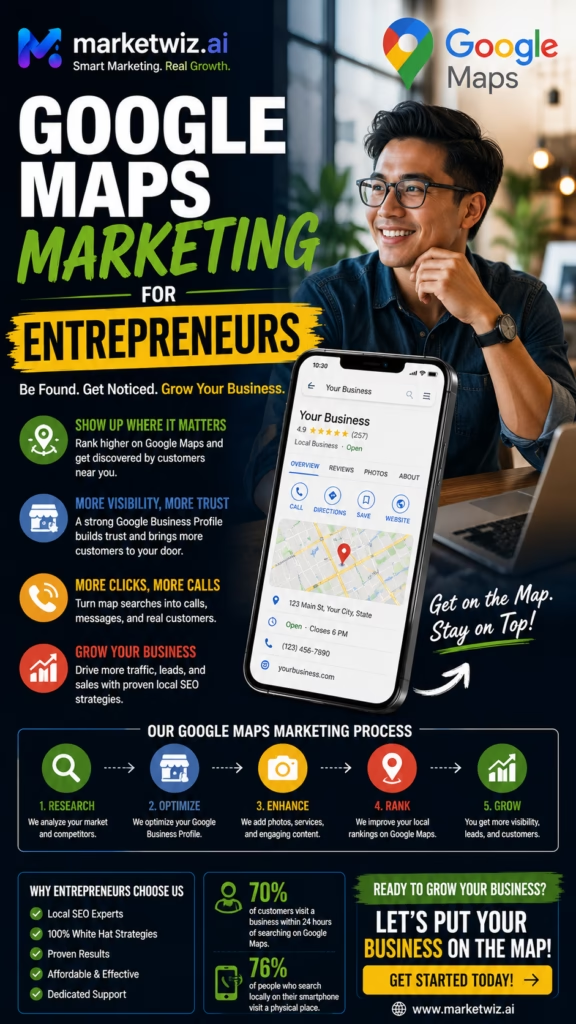
Google Maps Marketing for Entrepreneurs
Google Maps marketing for entrepreneurs can help independent business owners, founders, local operators, consultants, contractors, retailers, service providers, and growing companies become more visible when nearby customers actively search for what they sell. Strong local marketing combines an optimized Google Business Profile, accurate categories, genuine reviews, original photos, local website content, citations, authority signals, fast customer response, automation, CRM tracking, and clear measurement of leads, customers, revenue, and profit.
Entrepreneurs often spend heavily on customer acquisition before fully developing the local search assets they already control.
A customer may discover a business through a referral, social media post, paid advertisement, marketplace listing, direct mail piece, networking event, or word of mouth and still search the company on Google before making contact.
Other customers begin directly with local search.
They search for a contractor, professional, retailer, consultant, repair company, local product, appointment, specialty service, or nearby business that solves an immediate problem.
Google Maps creates an opportunity for entrepreneurs to appear during those high-intent moments.
But local visibility should never be treated as the finish line.
Strong Google Maps marketing should connect visibility with trust, phone calls, website visits, appointments, store visits, consultations, purchases, follow-up, repeat customers, referrals, revenue, gross profit, and measurable return on investment.
The Entrepreneur Google Maps Formula
Accurate Profile + Strong Local Relevance + Reviews + Original Photos + Useful Website + Trusted Citations + Local Authority + Fast Lead Response + Conversion Tracking = Sustainable Local Growth
Why Google Maps Marketing Matters for Entrepreneurs
High-Intent Customers
Local searches often come from people actively researching or choosing a provider.
Local Brand Discovery
Customers can discover an entrepreneur even when they have never seen the brand before.
Trust Before Contact
Reviews, photos, website links, and profile information help customers evaluate the business.
Direct Customer Actions
Maps visibility can generate calls, visits, website clicks, appointments, and other customer actions.
Compounding Marketing Value
Reviews, citations, content, and local authority can strengthen over time.
Measurable Revenue
Entrepreneurs can connect Maps leads with actual sales, customers, and ROI.
The Google Maps Opportunity for Entrepreneurs
Compete With Larger Companies Locally
A smaller business can compete by having better local relevance, stronger customer service, faster response, better reviews, and more useful content.
Build Trust Faster
Entrepreneurs often depend heavily on personal reputation. Google reviews and authentic business photos can help convert that reputation into visible proof.
Own More of the Customer Journey
Instead of depending entirely on paid platforms, entrepreneurs can build local search assets around their own brand, website, reviews, content, and customer data.
Create Repeatable Customer Acquisition
Once local marketing systems are documented, they can be applied to additional services, teams, locations, or markets.
Understand the Foundations of Local Google Visibility
Relevance
Search engines need to understand what the entrepreneur's business offers and which customer needs it addresses.
Distance
Geographic relationships between the searcher, business, and service area can affect local results.
Prominence
Reviews, citations, website authority, local mentions, backlinks, business history, and reputation can contribute to prominence.
Local Visibility Is an Ecosystem
Entrepreneurs should avoid looking for one isolated ranking trick. Strong local performance usually comes from making the entire business presence more complete, trustworthy, relevant, and useful.
Optimize the Google Business Profile Completely
Use the Real Business Name
Use the name customers see in the real world rather than inserting extra cities, services, or keywords simply for rankings.
Use an Accurate Phone Number
Calls should reach a real customer-response process.
Use Accurate Hours
Keep standard hours and special hours current.
Use the Best Website URL
Send customers to a landing page that clearly explains the business and the next action.
Complete Relevant Profile Fields
Categories, services, products, photos, business description, attributes, location settings, and other eligible profile data should be accurate.
Choose Categories That Match the Real Business
Select the Best Primary Category
The primary category should closely match the entrepreneur's main customer-facing business activity.
Add Relevant Secondary Categories
Secondary categories can describe genuine additional offerings.
Avoid Category Stuffing
Unrelated categories may create confusion rather than stronger local relevance.
Align Categories With Website Content
Major services shown on Google should also be clearly supported by the website.
Add Products and Services That Customers Actually Understand
Use Clear Service Names
Avoid internal terminology that customers are unlikely to search.
Describe Customer Outcomes
Explain what the service helps accomplish and who it is designed for.
Show Priority Offers
Important revenue-generating products and services should be easy to find.
Stay Accurate
Do not list services or products that the business cannot reliably provide.
Keep Entrepreneur Business Information Consistent Everywhere
Business Name
Use consistent branding across Google, the website, social profiles, citations, and customer communications.
Phone Number
Maintain accurate primary customer contact information.
Address
Use an eligible legitimate address where applicable.
Website
Make sure major profiles and directories point to the correct domain.
Hours
Keep public business hours accurate across major channels.
Manage Physical Locations and Service Areas Correctly
Storefront Entrepreneurs
Businesses that serve customers at a legitimate location should accurately represent that location.
Service-Area Entrepreneurs
Businesses that travel to customers should describe the real areas they serve.
Hybrid Businesses
Some entrepreneurs operate both from a customer-facing location and in surrounding service areas.
Avoid Fake Expansion
Do not create artificial offices or addresses simply to target additional cities.
Write a Business Description That Helps Customers Understand the Offer
[Business Name] helps customers throughout [Primary Market] with [Primary Product or Service]. We focus on professional communication, reliable service, and a straightforward customer experience. Contact our team to learn more about pricing, availability, appointments, or the best next step for your needs.
Explain the Core Business
Customers should not need to guess what the company does.
Explain the Customer
Mention relevant customer types when useful.
Use Geographic Language Naturally
Reference the primary market without forcing long lists of city names.
Use Original Business Photos to Build Entrepreneurial Trust
Founder and Team Photos
Entrepreneurs can humanize the company by showing the people behind the business.
Product Photos
Show actual products, inventory, packaging, or demonstrations.
Project Photos
Service businesses can show completed work, installations, before and after results, or equipment.
Location Photos
Storefronts, offices, showrooms, studios, and customer-facing facilities can increase confidence.
Brand Photos
Vehicles, uniforms, signs, displays, and branded equipment can reinforce legitimacy.
Build a Consistent Google Review System
Ask Real Customers
Request honest feedback after a successful purchase, project, consultation, appointment, or service experience.
Make the Process Easy
Give customers a simple path to the review form.
Keep the Process Ongoing
Consistent review activity can support long-term reputation growth.
Avoid Review Manipulation
Purchased, fake, or improperly incentivized reviews can create serious trust and policy issues.
Respond to Reviews in a Way That Strengthens the Brand
Respond to Positive Feedback
Thank customers naturally rather than using an identical canned response every time.
Respond to Negative Feedback Calmly
Avoid public arguments and invite the customer to continue the conversation privately when appropriate.
Look for Operational Patterns
Reviews may reveal recurring issues involving communication, scheduling, pricing, product quality, delivery, service, or expectations.
Build a Website That Supports Google Maps Marketing
Make the Business Easy to Understand
Visitors should quickly understand what the entrepreneur sells.
Create Dedicated Product and Service Pages
Give important offerings enough space to explain customer needs, benefits, pricing context, process, and next steps.
Use Local Information
Add legitimate location, service-area, neighborhood, and market context.
Build Trust
Include real photos, company information, FAQs, reviews or testimonials where appropriate, and clear customer expectations.
Make Conversion Easy
Calls, forms, appointment booking, directions, or purchases should be simple.
Target Local Keywords That Reflect Real Customer Intent
Service + City
Combine relevant services with legitimate cities and markets.
Product + City
Local retailers and product entrepreneurs can target high-intent product discovery searches.
Customer Problem Searches
Customers often search for a problem rather than the technical name of the solution.
Commercial Searches
B2B entrepreneurs can target property managers, contractors, businesses, offices, investors, retailers, and other commercial customer segments.
Near-Me Searches
Build genuine local relevance instead of repeatedly stuffing “near me” phrases into content.
Create High-Quality Product and Service Pages
Focus Each Page
Each important page should answer one major category of customer intent.
Explain the Problem
Show the customer when or why the product or service is useful.
Explain the Process
Tell customers what happens after they contact the company.
Explain Pricing Context
Use accurate pricing, ranges, starting points, or factors that influence cost where appropriate.
Add a Clear Next Step
Encourage one primary customer action.
Create Useful Location Pages for Real Markets
Use Unique Market Information
Explain how the company serves that specific city or area.
Show Local Customer Needs
Different markets may have different housing, commercial, demographic, seasonal, or logistical needs.
Add Local Proof
Relevant projects, case studies, reviews, photos, or customer examples can strengthen credibility.
Avoid Duplicate City Pages
Pages should contain real differences rather than swapping one city name for another.
Build Accurate Local Business Citations
Start With Reputable Platforms
Major directories, maps platforms, business listings, local organizations, and industry sites can support consistency.
Keep Information Accurate
Business name, address where applicable, phone number, website, categories, and hours should remain aligned.
Correct Outdated Listings
Old numbers, previous addresses, or duplicate listings can confuse customers.
Prioritize Quality Over Volume
Trusted and relevant citations are more useful than mass submission to low-quality directories.
Earn Local Backlinks and Business Mentions
Business Partnerships
Suppliers, vendors, contractors, retailers, professional partners, and complementary businesses may create legitimate linking opportunities.
Local Organizations
Chambers, business groups, trade associations, charities, and community organizations can create local authority signals.
Local Media
New services, expansions, events, hiring, charitable work, milestones, and interesting entrepreneurial stories may earn local coverage.
Industry Resources
Associations, suppliers, publications, podcasts, and niche websites can strengthen authority when the relationship is legitimate.
Publish Local Content That Builds Search Relevance and Trust
Answer Customer Questions
Turn frequent calls, emails, and sales questions into useful content.
Create Buying Guides
Help customers understand options, pricing, features, materials, timelines, or service differences.
Create Local Guides
Explain how local conditions influence the customer's decision.
Publish Case Studies
Show real examples of customer problems, solutions, projects, and outcomes.
Build FAQ Content
FAQ content can support both conversion and broader search relevance.
Optimize the Customer Experience for Mobile Local Search
Keep Pages Fast
Customers should not have to wait for oversized pages or media to load.
Use Clear Calls to Action
Phone calls, forms, directions, booking, or shopping actions should be obvious.
Make Content Easy to Scan
Use headings, short paragraphs, lists, and clear spacing.
Keep Forms Simple
Ask only for the information needed to begin the sales or service conversation.
Turn Google Maps Visibility Into Qualified Local Leads
Answer Calls
Local visibility is wasted when customers repeatedly reach voicemail.
Respond to Forms Quickly
Potential customers may contact several companies at once.
Use Strong Landing Pages
Customers arriving from Google should see messaging relevant to the search that brought them there.
Create Clear Next Steps
Move customers toward an appointment, estimate, consultation, visit, purchase, or other meaningful conversion.
Use Speed to Lead as an Entrepreneurial Competitive Advantage
Entrepreneurs may not always have the largest advertising budget, biggest staff, or longest operating history.
Fast, professional customer response can become a meaningful competitive advantage.
Simple Speed-to-Lead Workflow
Answer the customer's main question, confirm what they need, collect location and timing when relevant, determine fit, capture contact information, and move the opportunity toward the next step.
Recover Missed Calls
Use a callback process or missed-call text response.
Assign Lead Ownership
Every qualified opportunity should have a person or system responsible for the next action.
Qualify Local Leads Before Spending Too Much Sales Time
Confirm the Need
Identify the exact product, service, project, consultation, or solution the customer wants.
Confirm the Location
Make sure the opportunity falls within the company's market.
Confirm Timing
Determine whether the customer is buying now or planning for the future.
Confirm Scope
Ask for the dimensions, quantity, project details, budget context, or other information needed to determine fit.
Confirm the Next Step
Move qualified opportunities toward a clear action.
Use AI and Automation to Help Entrepreneurs Respond at Scale
AI Chat Applications
- Answer approved common questions
- Collect customer information
- Confirm location
- Ask qualification questions
- Request project details or photos
- Offer appointment options
- Route qualified leads
- Create CRM records
AI Voice Applications
Voice systems can support after-hours calls, overflow, missed-call recovery, scheduling, and basic lead qualification.
Automated Follow-Up
Automation can support appointment reminders, quote follow-up, reactivation, and open opportunity management.
Keep Human Oversight
Complex pricing, contracts, disputes, custom work, financing, complaints, and sensitive customer situations should be escalated.
Connect Google Maps Leads With a CRM
Capture the Source
Record whether the lead came from Google Maps, organic local search, a website page, a call, or another source.
Capture Customer Details
- Name
- Phone number
- Email when appropriate
- Product or service requested
- Location
- Timing
- Qualification status
- Appointment status
- Assigned owner
- Expected value
Use Simple Pipeline Stages
- New inquiry
- Contacted
- Qualified
- Appointment scheduled
- Quote or proposal sent
- Decision pending
- Won
- Completed
- Repeat opportunity
- Lost
Track Google Maps Marketing Like a Real Business Channel
Visibility Metrics
- Local keyword movement
- Google Business Profile visibility
- Local search website traffic
- Calls attributed to local search
- Direction requests when relevant
Lead Metrics
- Total inquiries
- Qualified leads
- Average response time
- Appointments scheduled
- Store or office visits
- Missed calls
Sales Metrics
- Quotes or proposals
- Close rate
- Average customer value
- Repeat customer revenue
- Referral revenue
- Total revenue by source
Measure Google Maps Marketing Revenue and ROI
Qualified Lead Rate
Qualified Lead Rate = Qualified Google Maps Leads ÷ Total Valid Google Maps Inquiries × 100
Appointment Rate
Appointment Rate = Google Maps Appointments ÷ Qualified Google Maps Leads × 100
Close Rate
Close Rate = New Google Maps Customers ÷ Qualified Google Maps Opportunities × 100
Customer Acquisition Cost
Customer Acquisition Cost = Total Local Marketing and Sales Cost ÷ New Google Maps Customers
Google Maps ROI
ROI = (Gross Profit From Google Maps Customers − Local Marketing Cost) ÷ Local Marketing Cost × 100
| Metric | What It Measures |
|---|---|
| Maps visibility | Whether the business is becoming easier to discover locally |
| Qualified leads | Whether local search attracts customers who fit the offer |
| Appointment rate | Whether inquiries turn into meaningful next steps |
| Close rate | Whether qualified opportunities become customers |
| Average customer value | The average revenue generated by local search customers |
| Gross profit and ROI | Whether Google Maps marketing produces profitable growth |
Scale Google Maps Marketing as the Entrepreneur Grows
Strengthen the Core Market First
Build consistent local visibility, lead handling, and customer experience before expanding aggressively.
Add New Services Carefully
New services should receive their own useful content, offers, photos, and tracking.
Add New Markets Legitimately
Build real service-area content and eligible profiles rather than fake local presence.
Track Markets Separately
Compare qualified leads, close rates, average customer value, reviews, and ROI by location.
Standardize Successful Systems
Document profile management, review requests, call handling, qualification, CRM tracking, and follow-up so they can scale with the company.
Common Google Maps Marketing Mistakes Entrepreneurs Should Avoid
Using a Keyword-Stuffed Business Name
Use the real business identity customers recognize.
Creating Fake Offices
Artificial locations can create serious policy and suspension risks.
Ignoring Reviews
Reputation can strongly influence whether local customers choose the business.
Using Only Generic Stock Images
Original business photos create stronger trust.
Creating Thin Local Pages
City pages should be genuinely useful rather than mass-produced.
Ignoring Mobile Experience
A slow or confusing website can waste valuable Maps traffic.
Missing Calls and Form Leads
Visibility has little value without effective response.
Tracking Rankings Instead of Business Results
The real measurement is customers, revenue, gross profit, and ROI.
A 30-Day Google Maps Marketing Plan for Entrepreneurs
Week 1: Build the Foundation
- Audit or create the Google Business Profile
- Confirm real business name
- Choose accurate categories
- Verify phone number
- Verify website
- Verify hours
- Configure location or service area
- Document initial rankings and lead volume
Week 2: Improve Relevance
- Add accurate products and services
- Improve the business description
- Add original business photos
- Improve key product or service pages
- Create useful location pages
- Improve mobile usability
- Improve calls to action
- Build core citations
Week 3: Build Trust and Authority
- Create a review request process
- Respond to existing reviews
- Build local partnerships
- Join relevant business organizations
- Seek legitimate backlinks
- Publish useful local content
- Create missed-call recovery
- Connect CRM tracking
Week 4: Improve Conversion and Measurement
- Measure qualified leads
- Measure response time
- Measure appointment rate
- Measure close rate
- Review lost reasons
- Track average customer value
- Track revenue from local search
- Calculate ROI
End-of-Month Outcome
After 30 days, the entrepreneur should have a stronger Google Business Profile, more consistent local information, better photos, clearer services, improved review systems, stronger local website relevance, more organized lead response, and better measurement of which Google Maps activity creates customers and revenue.
Final Takeaway: Google Maps Marketing Should Help Entrepreneurs Build an Asset
Effective Google Maps marketing for entrepreneurs is not simply about ranking higher for a few keywords.
It is about building a stronger local business presence that helps customers discover, evaluate, contact, and choose the company.
That starts with accurate profile information, legitimate categories, clear services, strong local website content, original photos, and genuine customer reviews.
Citations, local partnerships, useful content, backlinks, brand mentions, and consistent customer experience can strengthen local authority over time.
Entrepreneurs should also treat every Maps interaction as part of a larger customer journey.
Calls and forms need fast responses. Leads need qualification. Qualified opportunities need appointments, quotes, consultations, visits, or purchase paths. Open opportunities need follow-up.
AI chat, AI voice, missed-call recovery, appointment scheduling, lead routing, and CRM integration can help entrepreneurs manage growing local demand without losing consistency.
The final goal is measurable business performance: qualified leads, new customers, repeat customers, average customer value, revenue, gross profit, customer acquisition cost, referrals, and ROI.
When those systems work together, Google Maps can become a durable local growth asset for entrepreneurs rather than simply another marketing listing.
Frequently Asked Questions
1. Why is Google Maps marketing important for entrepreneurs?
It can help entrepreneurs appear in front of nearby customers actively searching for relevant products, services, and local solutions.
2. Can entrepreneurs generate leads from Google Maps?
Yes. Maps visibility can lead to calls, website visits, appointments, visits, consultations, estimates, and purchases.
3. How should an entrepreneur optimize a Google Business Profile?
Use accurate categories, contact information, services, hours, photos, description, website, and legitimate location or service-area settings.
4. What category should an entrepreneur choose?
Choose the category that most accurately represents the main real-world business activity.
5. Do Google reviews help entrepreneurs?
Yes. Genuine reviews strengthen trust, reputation, and customer confidence.
6. How can entrepreneurs get more Google reviews?
Ask real customers for honest feedback after successful transactions, projects, appointments, or service experiences.
7. Should entrepreneurs respond to reviews?
Yes. Professional responses show active customer service and reputation management.
8. Do photos matter for Google Maps marketing?
Yes. Original photos help customers understand the real business, products, services, team, and location.
9. Should entrepreneurs use stock photos?
Original photos are generally more useful because they build stronger business credibility.
10. Does an entrepreneur need a website for Google Maps marketing?
A strong website can support local relevance, customer education, trust, and conversion.
11. What local keywords should entrepreneurs target?
Target real products, services, customer problems, and legitimate local markets naturally.
12. Should entrepreneurs create location pages?
Yes, when those pages provide useful information about real markets the business serves.
13. Do citations help Google Maps marketing?
Accurate citations can support consistency, verification, and local credibility.
14. Do backlinks help entrepreneurs rank locally?
Relevant legitimate local and industry backlinks can strengthen website authority.
15. Can service-area entrepreneurs rank in nearby cities?
Yes. Legitimate relevance can be built through service areas, local content, reviews, citations, and authority.
16. Should entrepreneurs create multiple Google Business Profiles?
Only for legitimate eligible locations that meet current platform requirements.
17. Can fake addresses damage Google Maps marketing?
Yes. Misleading or ineligible locations can create suspension and visibility risks.
18. How important is mobile optimization?
Very important because many local searches happen on mobile devices.
19. Should entrepreneurs use call tracking?
Call tracking can help measure qualified leads, appointments, customers, and revenue by source.
20. Should Google Maps leads go into a CRM?
Yes. CRM tracking improves follow-up, lead ownership, sales attribution, and revenue measurement.
21. Can AI help entrepreneurs respond to Google Maps leads?
Yes. AI can help collect information, qualify inquiries, recover missed calls, schedule appointments, and create CRM records.
22. What Google Maps metrics should entrepreneurs track?
Track visibility, calls, website traffic, qualified leads, appointments, customers, revenue, and ROI.
23. How should entrepreneurs measure lead quality?
Measure whether inquiries match the location, offer, customer type, budget expectations, timing, and business capabilities.
24. How long does Google Maps marketing take?
Timelines vary depending on competition, profile strength, reviews, website quality, market size, and local authority.
25. Can Google Maps rankings be guaranteed?
No. Specific ranking positions cannot be legitimately guaranteed.
26. Should entrepreneurs combine Maps marketing with paid advertising?
Yes. Local Maps marketing can complement paid search, social, marketplace advertising, email, and referral channels.
27. Should entrepreneurs publish local content?
Yes. Useful local content can support relevance, authority, and customer education.
28. Can Google Maps marketing help B2B entrepreneurs?
Yes. It can help reach local businesses, property managers, contractors, retailers, professionals, and other commercial customers.
29. What is the biggest Google Maps marketing mistake entrepreneurs make?
Focusing only on rankings while ignoring customer response, reviews, conversion, follow-up, revenue, and acquisition cost.
30. What is the goal of Google Maps marketing for entrepreneurs?
The goal is to turn stronger local visibility into qualified leads, customers, repeat business, revenue, and measurable growth.
30 Additional SEO Keywords
Use these supporting phrases naturally across entrepreneur marketing pages, local SEO guides, service pages, location pages, FAQs, case studies, and internal links.
Turn Google Maps Visibility Into More Qualified Customers and Business Growth
MarketWiz.ai helps entrepreneurs organize Google Maps marketing, strengthen Google Business Profile optimization, improve local keyword coverage, build service and location pages, organize reviews and citations, strengthen local authority, recover missed calls, connect AI voice and CRM systems, track qualified leads, and measure customers, revenue, gross profit, customer acquisition cost, and return on investment.
This article provides general local SEO, Google Maps marketing, entrepreneurship, automation, and business information and does not provide legal, financial, licensing, insurance, privacy, telecommunications, consumer-protection, platform-compliance, tax, or regulatory advice. Google Business Profile features, categories, eligibility requirements, interfaces, local ranking systems, and policies may change. Entrepreneurs should review current platform rules and applicable business-registration, licensing, advertising, privacy, call-recording, SMS, email, contract, consumer-protection, industry-specific, and local regulatory requirements before implementing marketing or customer communication systems. Rankings, calls, appointments, customers, revenue, and other results cannot be guaranteed and depend on competition, geographic proximity, profile quality, reviews, website strength, local authority, service coverage, reputation, customer experience, response speed, pricing, market demand, and sales execution.













