
Google Maps SEO for Startups
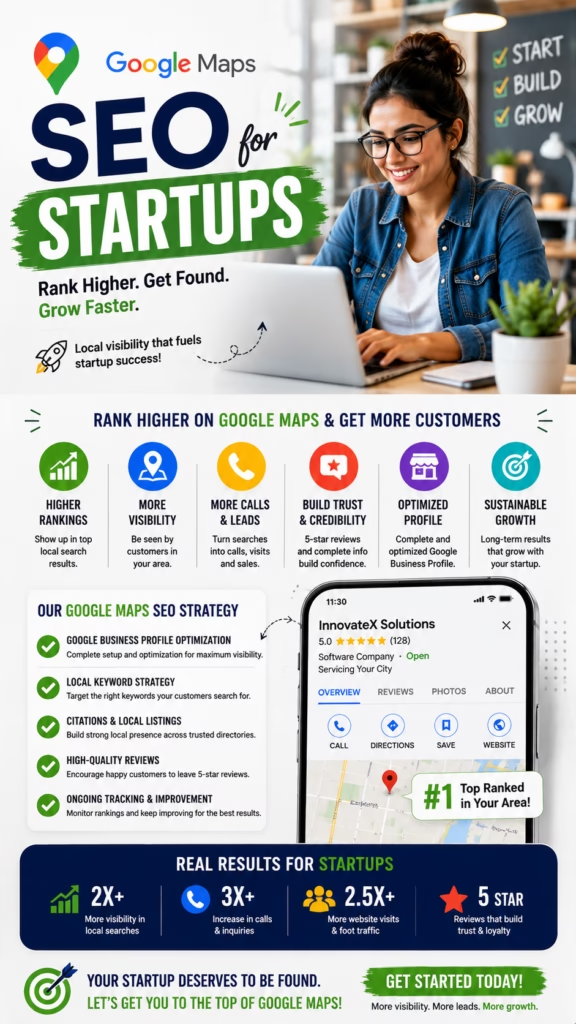
Google Maps SEO for startups can help a new business build local visibility before it has years of brand recognition, thousands of customers, or a large advertising budget. A well-built local search strategy can help startups appear in front of nearby customers searching for products, services, appointments, consultations, repairs, retail locations, professional solutions, and other local needs. The strongest approach combines Google Business Profile optimization, accurate categories, useful website content, genuine reviews, citations, local authority, fast customer response, and measurable lead tracking.
Startups often need to generate customer trust before the market has had enough time to become familiar with the brand.
That is one reason local search can be so valuable.
A potential customer may not know the startup's name, but they may already be searching for the exact product, service, appointment, consultation, repair, installation, or solution the company provides.
Google Maps creates an opportunity for a startup to become visible during that moment of intent.
A strong profile can help customers understand what the company does, where it operates, when it is open, how to contact it, what customers think about it, and what the business looks like.
But visibility alone is not the goal.
Startups should build local SEO as a complete customer-acquisition system that connects search visibility with calls, website visits, appointments, product inquiries, store visits, consultations, purchases, recurring customers, reviews, referrals, revenue, and measurable profit.
The Startup Google Maps Growth Formula
Accurate Google Business Profile + Local Relevance + Useful Website + Genuine Reviews + Original Photos + Accurate Citations + Local Authority + Fast Response + Conversion Tracking = Sustainable Local Startup Growth
Why Google Maps SEO Can Be Powerful for Startups
Local Purchase Intent
Customers searching locally may already be close to choosing a provider or product.
Brand Discovery
A startup can be discovered even when the customer has never heard of the brand before.
Trust Signals
Reviews, photos, business information, and website links can help reduce uncertainty around a newer company.
Direct Customer Actions
Search visibility can lead directly to phone calls, website visits, directions, appointments, or purchases.
Compounding Value
Reviews, content, citations, and local authority can continue building value as the startup grows.
Measurable Growth
Startups can connect local visibility with leads, customers, revenue, acquisition cost, and ROI.
The Startup Advantage: Build Local SEO Correctly From the Beginning
Established companies may need to repair years of inconsistent listings, duplicate profiles, old phone numbers, weak websites, and outdated branding.
Startups have the opportunity to establish cleaner local signals from day one.
Use One Consistent Business Identity
Decide how the business name, phone number, website, location, and branding should appear before distributing that information across directories.
Build the Website Around Real Services
Organize the site around the products and services customers actually search for.
Create a Review Process Early
Do not wait until the startup has hundreds of customers before asking satisfied customers for feedback.
Track Lead Sources From the Start
Early attribution makes it easier to understand whether local SEO is contributing to growth.
Understand the Foundations of Google Maps Rankings
Relevance
Search engines need clear information about what the startup does and which customer problems it solves.
Distance
Local results are influenced by geographic relationships between the searcher, business, and relevant service or market area.
Prominence
Reviews, links, citations, website strength, brand mentions, business history, and broader online reputation can contribute to local prominence.
No Single Local SEO Trick Controls Rankings
Strong Maps performance usually comes from improving legitimate business information, website relevance, reputation, local authority, customer experience, and conversion systems together.
Build a Complete Google Business Profile for the Startup
Use the Real Business Name
The profile should reflect the company's actual branding rather than a keyword-loaded variation invented for search rankings.
Use Accurate Contact Information
The phone number should reach the correct sales, service, or customer support process.
Use Accurate Hours
Keep standard hours, special hours, and appointment availability current where applicable.
Use the Correct Website URL
Link to the page that best introduces the startup and makes the next customer action obvious.
Complete Relevant Fields
Add accurate categories, services, products, description, photos, attributes, location information, and other relevant details.
Choose Google Business Categories That Match the Startup
Primary Category
Choose the category that best describes the company's primary business activity.
Secondary Categories
Add secondary categories when they accurately reflect additional meaningful services or business functions.
Avoid Category Inflation
Adding unrelated categories can confuse customers and weaken business accuracy.
Align Categories With the Website
Core website services should reinforce the business model represented on the profile.
Add Startup Products and Services Clearly
Use Customer-Friendly Service Names
Customers should understand what the startup provides without needing to know internal company terminology.
Use Clear Service Descriptions
Explain the basic customer benefit, process, or use case.
Only Add Real Services
Do not create services simply to target search terms the company does not actually support.
Prioritize Revenue-Producing Offers
The profile should make the startup's most important products or services easy to understand.
Keep Startup Business Information Consistent
Business Name
Use the same real-world brand identity across the website, Google, social profiles, major directories, and customer communications.
Address
Use a legitimate eligible address where applicable and follow service-area rules when customers are served at their locations.
Phone
Keep the primary customer contact information accurate.
Website
Make sure directory and profile links point to the correct domain.
Hours
Keep business hours consistent and updated across major platforms.
Configure Startup Location and Service Areas Correctly
Storefront Startups
Businesses serving customers at a legitimate physical location should provide accurate location information.
Service-Area Startups
Businesses traveling to customers should configure real service areas rather than pretending to have offices in every city.
Hybrid Models
Some startups may serve customers both at a location and throughout a wider service area.
Avoid Fake Locations
Long-term local visibility should be built around real operations rather than fabricated offices.
Write a Startup Google Business Description That Builds Trust
[Business Name] helps customers throughout [Primary Market] with [Primary Product or Service]. We focus on [Primary Customer Benefit], professional communication, and a straightforward customer experience. Contact our team to learn more about availability, pricing, appointments, or the best next step.
Explain What the Company Does
Avoid vague startup language that does not help customers understand the actual offer.
Explain Who the Company Serves
Mention relevant local customer groups when useful.
Explain Geographic Relevance
Reference the primary market naturally without stuffing many city names into the description.
Use Original Photos to Make the Startup Look Established and Trustworthy
Team Photos
Introduce the founders, employees, technicians, sales staff, or customer-facing team.
Product Photos
Show actual products, inventory, packaging, demonstrations, or customer use cases.
Service Photos
Show real projects, installations, completed work, equipment, or professional activity.
Location Photos
Show the storefront, office, showroom, studio, warehouse, or other eligible customer-facing location when applicable.
Branding Photos
Vehicles, uniforms, signage, packaging, and branded environments can reinforce business legitimacy.
Start Building Google Reviews Early
New startups often have fewer reviews than established competitors. That makes a consistent review system especially important.
Ask After Successful Customer Experiences
Request feedback after purchases, appointments, completed projects, deliveries, successful consultations, or resolved service issues.
Make the Review Process Simple
Customers are more likely to respond when the process is easy to understand.
Do Not Manufacture Reviews
Purchased, fabricated, or manipulated reviews can create policy and reputation risk.
Build Review Consistency
Ongoing review growth can be more sustainable than occasional review campaigns.
Respond to Reviews Like a Professional Brand
Positive Reviews
Thank customers naturally and reinforce the company's commitment to service.
Negative Reviews
Respond calmly, avoid arguments, and invite the customer to continue the conversation through the appropriate private channel.
Use Review Feedback to Improve Operations
Repeated complaints can reveal weaknesses in communication, scheduling, pricing, delivery, customer support, or fulfillment.
Build a Website That Supports Google Maps SEO
Explain the Startup Immediately
Visitors should understand what the business does within seconds.
Create Dedicated Service or Product Pages
Important revenue-producing offerings deserve their own useful pages.
Use Strong Local Signals
Include legitimate location, service area, contact information, and local customer context.
Make Contact Easy
Phone, forms, appointments, store information, or other next steps should be obvious.
Build Trust
Use real photos, testimonials where appropriate, company information, FAQs, policies, and clear expectations.
Target Local Keywords That Match Real Startup Demand
Service + Location Keywords
Combine real services with legitimate cities, neighborhoods, counties, or nearby markets.
Product + Location Keywords
Retail and product startups can target local product discovery terms when relevant.
Problem-Based Keywords
Customers may search for the problem they need solved rather than the exact name of the service.
Near-Me Intent
Build strong local relevance rather than repeatedly stuffing “near me” phrases into website copy.
Commercial Intent Keywords
B2B startups can target local business, property-management, contractor, professional, or industry-specific search intent.
Create Strong Service Pages for Startup Local SEO
One Primary Topic Per Page
Give important services enough space to explain the customer need, process, benefits, location, pricing context, and next step.
Answer Real Questions
Include information customers actually need before contacting the startup.
Use Original Examples
Real projects, products, use cases, processes, and results can make service pages more useful.
Connect Pages Internally
Link related service, location, FAQ, case study, and contact pages logically.
Build Local Landing Pages Without Creating Duplicate Content
Use Real Market Knowledge
Explain how the startup serves that specific area.
Add Unique Local Context
Mention relevant neighborhoods, customer types, service logistics, project patterns, or local needs.
Use Local Testimonials or Projects Where Appropriate
Real local proof can strengthen relevance and trust.
Avoid Mass-Produced City Swaps
Pages should provide real value beyond replacing one city name with another.
Build Accurate Local Citations for the Startup
Start With Major Trusted Platforms
Establish accurate business information across major directories, maps platforms, local listings, and relevant industry sites.
Keep Core Information Consistent
Name, address where applicable, phone number, website, category, and business description should not contradict one another.
Prioritize Quality
A smaller number of accurate, reputable citations can be more useful than hundreds of weak directory entries.
Update Listings as the Startup Evolves
If the business moves, changes phone numbers, expands hours, or updates branding, major listings should be corrected.
Earn Local Backlinks and Brand Mentions
Local Business Partnerships
Suppliers, vendors, contractors, retailers, organizations, and complementary businesses may create legitimate linking opportunities.
Chambers and Associations
Memberships and business organizations can provide credibility and local exposure.
Local Press
New launches, expansions, hiring, events, innovations, community work, and business milestones may attract legitimate media coverage.
Sponsorships and Community Involvement
Authentic participation can create useful local brand mentions.
Publish Local Content That Helps Customers Before They Contact You
Educational Content
Answer questions about pricing, timelines, products, services, preparation, comparisons, and common customer problems.
Local Guides
Explain how local conditions, neighborhoods, regulations, seasons, or customer needs affect the service.
Case Studies
Show real examples of how the startup helped customers solve problems.
FAQ Content
Build pages around the questions prospects repeatedly ask sales and service teams.
Optimize the Startup Website for Mobile Local Search
Fast Loading
Customers should not need to wait for heavy pages to load before finding basic business information.
Clear Contact Options
Phone numbers, forms, appointments, store directions, or other next steps should be easy to access.
Readable Content
Use short sections, clear headings, and mobile-friendly spacing.
Simple Navigation
Customers should be able to reach service, location, pricing, contact, and FAQ pages quickly.
Turn Google Maps Visibility Into Real Startup Leads
Answer Calls Professionally
Train the team to understand how to identify the customer's need quickly.
Respond to Forms Quickly
Local customers may contact multiple businesses within a short period.
Use Clear Appointment Options
Make it easy for qualified customers to move forward.
Use One Primary CTA
Avoid overwhelming users with too many competing next steps.
Track the Source
Make sure the startup can identify leads coming from Google Maps and local search.
Fast Response Can Help Startups Compete With Larger Businesses
A startup may have fewer reviews or less brand recognition than an established competitor, but it can still compete through customer experience.
Speed-to-Lead Advantage
Respond quickly, answer the customer's primary question, collect the most important qualification details, and create a clear next step such as an appointment, call, estimate, consultation, or purchase.
Use Missed-Call Recovery
A missed-call text or callback process can prevent qualified local leads from disappearing.
Use Lead Routing
Make sure the right employee receives the right type of inquiry.
Use AI and Automation to Make a Small Startup Team More Responsive
AI Chat Applications
- Answer approved common questions
- Collect customer information
- Confirm service areas
- Ask qualification questions
- Offer appointment options
- Request photos or details
- Create CRM records
- Route qualified opportunities
AI Voice Applications
Voice systems can support after-hours calls, overflow, missed-call recovery, appointment scheduling, and initial lead qualification.
Automated Follow-Up
Automation can support appointment reminders, quote follow-up, lead-status updates, and open opportunity reminders.
Maintain Human Oversight
Complex pricing, complaints, disputes, custom projects, contracts, financing, safety issues, and sensitive decisions should be escalated appropriately.
Connect Google Maps Leads With the Startup CRM
Create Complete Lead Records
- Customer name
- Phone number
- Email when appropriate
- Google Maps or local search source
- Product or service requested
- Customer location
- Qualification status
- Appointment status
- Assigned team member
- Expected value
Use Simple Pipeline Stages
- New lead
- Contacted
- Qualified
- Appointment scheduled
- Proposal or quote sent
- Decision pending
- Won
- Completed
- Repeat opportunity
- Lost
Track Google Maps Performance Like a Growth Channel
Visibility Metrics
- Local keyword ranking movement
- Google Business Profile visibility
- Website traffic from local search
- Calls from local search
- Direction requests when applicable
Lead Metrics
- Total local leads
- Qualified local leads
- Average response time
- Appointments scheduled
- Store visits
- Missed calls
Sales Metrics
- Quotes or proposals
- Close rate
- Average customer value
- Repeat customers
- Referral customers
- Revenue by source
Measure Startup Google Maps Revenue and ROI
Qualified Lead Rate
Qualified Lead Rate = Qualified Google Maps Leads ÷ Total Valid Google Maps Leads × 100
Appointment Rate
Appointment Rate = Google Maps Appointments ÷ Qualified Google Maps Leads × 100
Close Rate
Close Rate = New Google Maps Customers ÷ Qualified Google Maps Opportunities × 100
Customer Acquisition Cost
Customer Acquisition Cost = Total Local SEO and Sales Cost ÷ New Google Maps Customers
Google Maps ROI
ROI = (Gross Profit From Google Maps Customers − Local SEO Cost) ÷ Local SEO Cost × 100
| Metric | What It Measures |
|---|---|
| Maps visibility | Whether the startup is becoming easier to discover locally |
| Qualified leads | Whether visibility is reaching customers who fit the business |
| Appointment rate | Whether the startup converts local inquiries into meaningful next steps |
| Close rate | Whether qualified local opportunities become customers |
| Average customer value | The average revenue generated by Maps customers |
| Gross profit and ROI | Whether Google Maps SEO contributes to profitable startup growth |
Scale Google Maps SEO as the Startup Expands
Strengthen the First Market Before Expanding
Build a repeatable local marketing and customer service system before aggressively entering additional cities.
Create Market-Specific Content
New areas should receive useful local pages, customer proof, service information, and market-specific messaging.
Create Legitimate Profiles Only
Additional Google Business Profiles should reflect legitimate eligible locations rather than virtual or artificial expansion.
Track Each Market Separately
Compare leads, customer value, close rates, reviews, local ranking strength, and profitability by area.
Standardize Review and Lead Handling
Growth is easier when every location or team follows consistent customer response and reputation systems.
Common Google Maps SEO Mistakes Startups Should Avoid
Using a Keyword-Stuffed Business Name
Use the company's real-world business identity.
Creating Fake Locations
Artificial offices can create policy and suspension risks.
Ignoring Reviews Until Later
Reputation should be developed as the first customers arrive.
Using Only Stock Photos
New businesses especially benefit from showing real people, products, projects, and operations.
Creating Thin City Pages
Duplicate pages with only the city name changed provide little customer value.
Publishing Inconsistent Contact Information
New startups should avoid creating conflicting business details across dozens of platforms.
Ignoring Lead Response
Strong rankings do not help if calls and forms go unanswered.
Measuring Rankings Instead of Revenue
Local SEO performance should ultimately connect to customers, revenue, gross profit, and ROI.
A 30-Day Google Maps SEO Plan for Startups
Week 1: Build the Local Foundation
- Confirm business name and branding
- Set primary customer phone number
- Confirm eligible location or service-area model
- Create or audit Google Business Profile
- Select accurate categories
- Set accurate hours
- Connect the correct website
- Document initial local rankings
Week 2: Improve Relevance and Trust
- Add products or services
- Write the business description
- Add original photos
- Create or improve service pages
- Create useful local landing pages
- Check mobile usability
- Add clear contact options
- Begin citation building
Week 3: Build Reputation and Authority
- Create a customer review process
- Respond to existing reviews
- Build local partnership opportunities
- Join relevant organizations
- Seek legitimate local backlinks
- Publish useful local content
- Create missed-call recovery
- Connect CRM tracking
Week 4: Measure and Optimize
- Review ranking movement
- Track local calls
- Measure qualified lead rate
- Measure appointment rate
- Measure close rate
- Track customer value
- Track local search revenue
- Calculate local SEO ROI
End-of-Month Outcome
After 30 days, the startup should have a stronger Google Business Profile, more consistent business information, better local website relevance, a functioning review process, stronger photos, cleaner citations, more organized lead response, and measurable insight into how Google Maps contributes to customer acquisition.
Final Takeaway: Start Local SEO Early and Let the Advantage Compound
Effective Google Maps SEO for startups can give a new business a meaningful way to compete for local customers before the brand has years of history behind it.
The process begins with accurate business information, a complete Google Business Profile, correct categories, legitimate location or service-area settings, clear products and services, and original business photos.
Genuine customer reviews help build trust while useful website content explains what the startup does, who it serves, and where it operates.
Accurate citations, local partnerships, legitimate backlinks, community mentions, city pages, service pages, and useful content can strengthen broader local authority over time.
Startups should also remember that rankings are only one stage of customer acquisition.
Phone calls, messages, forms, appointment requests, and website visits need to be answered quickly and professionally.
AI chat, AI voice, missed-call recovery, appointment scheduling, automated follow-up, and CRM integration can help a small team handle more local demand without losing consistency.
The strongest startup local SEO strategy connects visibility with qualified leads, appointments, customers, average customer value, repeat business, referrals, customer acquisition cost, gross profit, and ROI.
When the startup builds these systems correctly from the beginning, Google Maps can become a long-term local growth asset rather than just another marketing channel.
Frequently Asked Questions
1. Why is Google Maps SEO important for startups?
Google Maps can help new businesses appear in front of nearby customers searching for relevant products and services even before the startup has strong brand recognition.
2. Can a new startup rank on Google Maps?
Yes. A startup can build local relevance through an accurate profile, useful website, reviews, citations, and local authority.
3. How should a startup optimize its Google Business Profile?
Complete all relevant fields accurately, including categories, services, hours, contact information, website, photos, description, and location or service-area information.
4. What category should a startup choose on Google?
Choose the category that most accurately reflects the startup's primary real-world business activity.
5. Should startups add many categories?
No. Add relevant categories only when they accurately describe actual products or services.
6. Do Google reviews help startup local SEO?
Genuine reviews can strengthen customer trust, reputation, and local prominence.
7. How can a startup get more Google reviews?
Ask real customers for honest feedback after successful purchases, appointments, projects, or service experiences.
8. Should startups respond to reviews?
Yes. Professional review responses can demonstrate active customer service and brand credibility.
9. Do photos help startup Google Maps rankings?
Original team, product, project, service, facility, and branding photos can improve profile quality and customer trust.
10. Should startups use stock photos?
Original photos are generally more useful because they show the company's real operations and capabilities.
11. Does a startup need a website for Google Maps SEO?
A strong website can support local relevance, customer trust, lead conversion, and broader search visibility.
12. What local keywords should startups target?
Target real products, services, customer problems, and legitimate geographic markets naturally.
13. Should startups create city landing pages?
Yes, when the pages provide unique and useful information about real markets the startup serves.
14. Do local citations help startups?
Accurate citations on trusted directories can support business consistency, verification, and local credibility.
15. Do backlinks help startup local SEO?
Relevant links from legitimate local and industry sources can strengthen website authority.
16. Can a home-based startup use Google Business Profile?
Eligibility depends on the business model and current platform requirements, so location and service-area settings should be configured accurately.
17. Can a service-area startup rank in nearby cities?
Yes. Legitimate nearby relevance can be built through accurate service areas, local content, reviews, citations, and website authority.
18. Should a startup create multiple Google Business Profiles?
Only for legitimate eligible locations that comply with current profile requirements.
19. Can fake addresses hurt startup Google Maps visibility?
Yes. Misleading or ineligible addresses can create suspension risk and damage long-term visibility.
20. How important is mobile optimization for startups?
Very important. Many local searches happen from mobile devices, so fast pages and easy contact options improve customer experience.
21. Should startups use call tracking?
Call tracking can help measure qualified calls, customer source, appointments, sales, and revenue.
22. Should startups track Google Maps leads in a CRM?
Yes. CRM tracking helps connect local visibility with real customers and revenue.
23. What Google Maps metrics should startups track?
Track visibility, calls, website visits, qualified leads, appointments, customers, revenue, and ROI.
24. How long does Google Maps SEO take for a startup?
Timelines vary based on competition, market size, profile strength, website quality, reviews, and local authority.
25. Can Google Maps rankings be guaranteed?
No. Specific positions cannot be guaranteed because rankings depend on multiple changing factors.
26. Should startups combine Google Maps SEO with paid advertising?
Yes. Local SEO can work alongside paid search, social media, marketplace advertising, email, and referral marketing.
27. Should startups publish local content?
Useful local service, product, FAQ, and educational content can support relevance and trust.
28. Can AI help startups handle Google Maps leads?
AI can help collect information, qualify inquiries, schedule appointments, recover missed calls, and update CRM records.
29. What is the biggest local SEO mistake startups make?
Focusing only on rankings while ignoring reviews, website quality, response speed, lead conversion, tracking, and revenue.
30. What is the goal of Google Maps SEO for startups?
The goal is to turn stronger local visibility into qualified customer interactions, appointments, purchases, repeat business, revenue, and measurable growth.
30 Additional SEO Keywords
Use these supporting phrases naturally across startup marketing pages, local SEO guides, service pages, landing pages, FAQs, case studies, and internal links.
Turn Google Maps Visibility Into Real Startup Growth
MarketWiz.ai helps startups organize Google Maps SEO, strengthen Google Business Profile optimization, improve local keyword coverage, build service and location pages, organize review growth, strengthen citations and local authority, recover missed calls, connect AI voice and CRM systems, track qualified local leads, and measure customers, revenue, gross profit, customer acquisition cost, and return on investment.
This article provides general local SEO, Google Maps marketing, startup marketing, automation, and business information and does not provide legal, financial, licensing, insurance, privacy, telecommunications, platform-compliance, consumer-protection, or regulatory advice. Google Business Profile features, categories, eligibility requirements, interfaces, local ranking systems, and policies may change. Startups should review current platform rules and applicable licensing, business-registration, advertising, privacy, call-recording, SMS, email, consumer-protection, contract, industry-specific, and local regulatory requirements before implementing marketing or customer communication systems. Rankings, calls, appointments, customers, revenue, and other results cannot be guaranteed and depend on competition, location, geographic proximity, profile quality, reviews, website strength, local authority, service coverage, reputation, customer experience, response speed, pricing, market demand, and sales execution.