
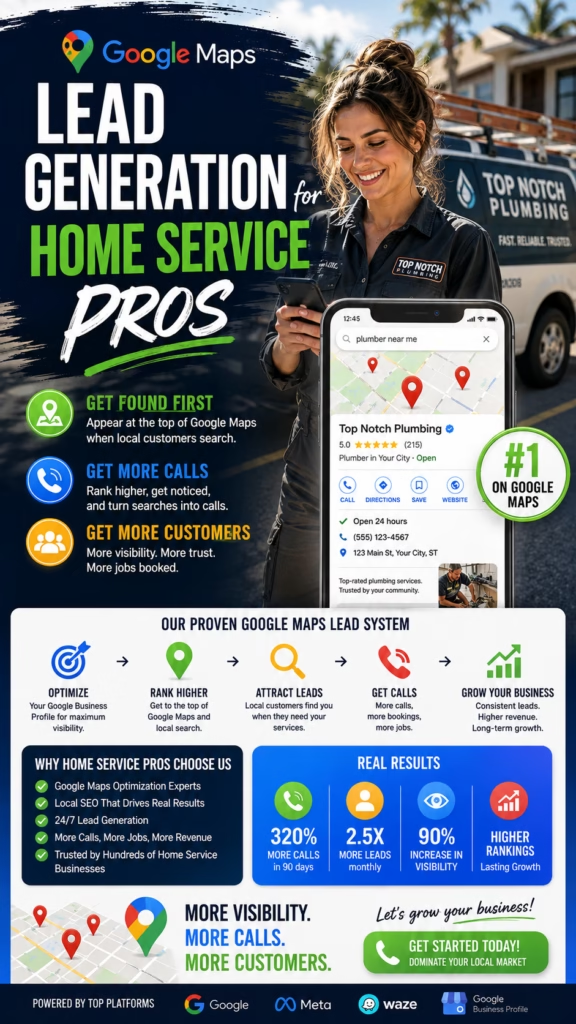
Google Maps Lead Generation for Home Service Pros
Google Maps lead generation for home service pros helps contractors connect with homeowners who are actively searching for repairs, installations, inspections, maintenance, estimates, emergency services, and local project specialists. A strong strategy combines Google Business Profile optimization, local SEO, reviews, photos, service-area content, fast phone response, estimate booking, CRM follow-up, and accurate revenue tracking.
Home service customers often search when they have an immediate problem, active project, upcoming maintenance need, or urgent repair.
A homeowner may search for an HVAC contractor when the air conditioner stops cooling, a plumber when a pipe begins leaking, a roofer after storm damage, a painter before selling a home, or a restoration company after water or fire damage.
In many of these situations, the homeowner is not casually researching. The customer may be ready to call, schedule, request an estimate, compare reviews, or hire a contractor.
Google Maps can place a home service company directly in front of that demand. However, visibility alone is not enough. The profile must clearly communicate the service, location, experience, availability, phone number, reviews, photos, and next step.
The business must also answer the call, qualify the project, schedule the appointment, deliver the estimate, follow up, and track whether the lead becomes a profitable job.
The Home Service Google Maps Formula
Local Visibility + Accurate Profile + Strong Reviews + Real Project Photos + Relevant Service Pages + Fast Response + Easy Estimate Booking + Consistent Follow-Up = More Booked Home-Service Jobs
Why Google Maps Matters for Home Service Lead Generation
High Local Intent
Homeowners searching for nearby contractors often have a real project, problem, or service need.
Immediate Phone Access
Customers can call directly from the profile without visiting several website pages.
Review-Based Trust
Homeowners can compare ratings, review details, photos, and recent customer experiences.
Service-Area Visibility
Contractors can connect with homeowners searching within legitimate service areas.
Mobile-Friendly Conversion
Customers can call, visit the website, request directions, or schedule from a phone.
Measurable Local Demand
Calls, forms, appointments, estimates, jobs, and revenue can be connected with local search activity.
Understand How Homeowners Search for Contractors
Emergency Searches
- Emergency plumber near me
- AC repair open now
- Storm damage roofer
- Water damage restoration company
- Electrician for power outage
Project-Based Searches
- Kitchen remodeling contractor
- Interior house painter
- Fence installation company
- Attic insulation contractor
- New HVAC system estimate
Maintenance Searches
- Annual AC maintenance
- Roof inspection
- Gutter cleaning
- Pest-control service
- Pressure washing company
Comparison Searches
Homeowners may compare reviews, prices, availability, warranties, service areas, years of experience, project photos, and appointment timing before making contact.
Understand Local Ranking Factors
Relevance
Relevance reflects how well the profile and connected website match the customer’s requested service. Categories, services, project photos, website pages, reviews, and descriptions can help communicate relevance.
Distance
Local visibility may vary depending on the searcher’s location, the contractor’s address or service area, and the specific search context.
Prominence
Reviews, website authority, local mentions, brand recognition, customer activity, links, directories, and business history may support prominence.
Local Rankings Can Vary
The same contractor may appear differently across neighborhoods, devices, keywords, times, and customers. No responsible provider can guarantee one fixed ranking everywhere.
Build a Complete Google Business Profile Foundation
Complete Every Relevant Field
- Real-world business name
- Primary contractor category
- Relevant secondary categories
- Address or service-area settings
- Working phone number
- Website URL
- Business hours
- Emergency or after-hours availability
- Services
- Business description
- Appointment or estimate link
- Original photos
Control Profile Ownership
Business owners should know which email account owns the profile, who has management access, and how agencies or former employees will be removed.
Review the Profile Monthly
Service areas, hours, phone routing, employees, service categories, website links, and seasonal availability can change.
Prevent Conflicting Information
The website, advertisements, directories, social profiles, and customer-service scripts should match the profile.
Choose the Best Categories for the Home Service Business
Select the Main Service as the Primary Category
An HVAC company should choose a category that reflects HVAC work, while a roofing business should choose a roofing category rather than a broad category that does not match the main service.
Add Legitimate Secondary Categories
Secondary categories can represent real services, but contractors should avoid adding unrelated categories simply to appear for more searches.
Align Categories With Website Pages
Every important category should connect with clear, useful website content explaining the service.
Review Categories When Services Change
New divisions, discontinued services, acquisitions, and seasonal services may require category updates.
Configure Service Areas Correctly
Use Real Service Coverage
Add locations the company can realistically serve with available crews, travel time, pricing, equipment, permits, and response capacity.
Do Not Expect Service Areas Alone to Create Rankings
Listing a city does not automatically make the contractor visible throughout that city. Distance, competition, relevance, reviews, website content, and local authority still matter.
Hide Addresses When Appropriate
Eligible contractors that travel to customers and do not serve customers at the business address may use service-area settings that hide the address.
Avoid Ineligible Virtual Locations
Contractors should not create profiles for offices, mailboxes, or locations that do not meet current eligibility requirements.
Maintain Accurate Business and Emergency Hours
Match Listed Hours With Real Phone Coverage
When the profile shows the company as open, the customer should reach an employee, call center, voicemail system, or approved AI response workflow.
Use Special Hours
Holiday schedules, weather closures, seasonal hours, and temporary changes should be updated when appropriate.
Be Accurate About Emergency Availability
Do not advertise 24-hour service unless the company can actually respond at all hours.
Create an After-Hours Process
Collect the customer’s name, phone number, location, service need, urgency, and preferred callback time.
Optimize the Phone Number for Lead Conversion
Use a Reliable Business Number
The number should route to the correct team, location, or service department.
Test Call Routing
Confirm that transfers, extensions, voicemail, after-hours rules, and employee notifications work correctly.
Use a Professional Greeting
Thank you for calling [Business Name]. What service do you need help with today?
Track the Source
The call system or CRM should record that the customer came from Google Maps or Google Business Profile when possible.
Add Clear Home Service Descriptions
Organize Services by Customer Need
- Repair services
- Installation services
- Replacement services
- Maintenance services
- Inspection services
- Emergency services
- Residential services
- Commercial services when applicable
Use Language Homeowners Understand
Avoid relying only on technical terms. Explain the customer problem, solution, and next step.
Include Important Qualification Details
Mention service areas, property types, project minimums, equipment, materials, appointment requirements, or availability when useful.
Keep Services Current
Remove discontinued work and add new services when crews, licensing, equipment, or business strategy changes.
Write a Strong Home Service Business Description
Explain Who the Company Helps
Identify whether the company serves homeowners, landlords, property managers, builders, investors, commercial properties, or other customer groups.
Explain the Main Services
Summarize core repair, installation, maintenance, inspection, and emergency services.
Explain the Service Area
Mention the main region naturally without forcing a long list of cities into the description.
Avoid Unsupported Claims
Do not claim guaranteed rankings, guaranteed savings, guaranteed project outcomes, or unverified superlatives.
Build a Review Strategy for Home Service Jobs
Choose the Right Review Moment
- After a completed repair
- After installation
- After a passed inspection
- After project completion
- After resolving a customer concern
- After successful maintenance
Make the Request Easy
Send a direct review path through email, SMS, receipts, customer portals, or follow-up messages.
Ask Every Appropriate Customer Consistently
A regular review process usually produces a healthier profile than occasional review campaigns.
Allow Honest Feedback
Customers should choose their own rating and wording without being pressured to include specific keywords or positive language.
Detailed Reviews Build Confidence
Reviews that naturally mention communication, punctuality, cleanliness, workmanship, employees, services, and outcomes can help future homeowners understand the contractor.
Respond to Home Service Reviews Professionally
Thank Satisfied Customers
Acknowledge the customer naturally and reinforce the company’s commitment to quality service.
Respond Calmly to Negative Feedback
Avoid arguments, accusations, threats, or public disclosure of sensitive project details.
Move Complex Issues Offline
Invite the customer to speak directly with a manager when the issue involves billing, workmanship, delays, damage, safety, or contractual concerns.
Use Review Trends to Improve Operations
Repeated feedback about communication, scheduling, cleanup, pricing, or employee conduct should influence training and process improvements.
Use Original Project Photos to Generate More Leads
Show Real Work
- Before-and-after projects
- Completed installations
- Repair work
- Equipment
- Materials
- Work vehicles
- Uniformed employees
- Customer-facing facilities
Use Clear, Professional Images
Photos should be well lit, relevant, and easy to understand.
Protect Customer Privacy
Avoid showing sensitive addresses, personal information, license plates, children, valuables, or identifiable customer details without appropriate permission.
Add Photos Consistently
New jobs, crews, vehicles, equipment, services, and seasonal projects create ongoing content opportunities.
Publish Useful Google Business Profile Posts
Home Service Post Ideas
- Seasonal maintenance reminders
- Emergency-service availability
- Completed project highlights
- New equipment or services
- Customer education
- Weather-related preparation
- Appointment openings
- Financing information when accurate
Use a Clear Benefit
Explain why the update matters to the homeowner.
Include One Next Step
Encourage the customer to call, schedule, request an estimate, or learn more.
Keep Every Post Accurate
Verify dates, offers, service areas, pricing, links, and availability.
Manage Homeowner Questions and Answers
Common Home Service Questions
- Do you provide free estimates?
- Do you offer emergency service?
- Which cities do you serve?
- Do you work on older homes?
- Do you offer financing?
- How soon can you schedule?
- Are you licensed and insured?
- Do you provide warranties?
Provide Direct, Accurate Answers
Avoid vague language and unsupported promises.
Turn Questions Into Website Content
Frequently asked questions can become service-page sections, estimate guides, videos, blog posts, and customer instructions.
Review Public Answers
Incorrect answers from other users may confuse homeowners and should be addressed through available profile tools.
Strengthen the Website Connected to Google Maps
Create a Mobile-First Experience
Homeowners often search and call from mobile devices. The website should load clearly and make calling or requesting an estimate easy.
Use Visible Calls to Action
- Call now
- Request an estimate
- Schedule service
- Book an inspection
- Request emergency help
- Send project photos
Build Trust
Show reviews, project photos, service areas, employee information, experience, insurance or licensing details when appropriate, and a clear customer process.
Match the Profile
Services, phone numbers, hours, business names, service areas, and offers should remain consistent.
Build Home Service Pages That Convert Local Traffic
Explain the Customer Problem
Describe common symptoms, project needs, risks, and reasons a homeowner may need the service.
Explain the Service Process
- Customer contacts the company
- Team qualifies the request
- Appointment or inspection is scheduled
- Technician evaluates the project
- Estimate or recommendation is provided
- Work is scheduled and completed
- Customer receives follow-up
Add Proof
- Customer reviews
- Project photos
- Service experience
- Employee qualifications
- Warranty details when accurate
- Local project examples
Add a Clear Next Step
Make it easy to call, schedule, request an estimate, or ask a question.
Build Location Pages for Real Service Areas
Use Unique Local Information
Explain neighborhoods, housing types, weather conditions, common service needs, project examples, local scheduling, and customer questions.
Add Local Project Proof
- Recent jobs
- Customer testimonials
- Before-and-after photos
- Local service examples
- Neighborhood coverage
- Community involvement
Use Accurate Contact Information
Include the appropriate phone number, service area, hours, estimate process, and appointment options.
Avoid Duplicated City Pages
Every location page should provide meaningful customer value beyond changing the city name.
Build Local Authority for the Home Service Brand
Earn Relevant Local Mentions
- Local news websites
- Business associations
- Chambers of commerce
- Builder organizations
- Property-management partners
- Supplier partnerships
- Community events
- Local sponsorships
Create Useful Local Resources
Publish maintenance guides, storm-preparation checklists, seasonal tips, permit explanations, material comparisons, and homeowner FAQs.
Build a Recognizable Brand
Branded vehicles, uniforms, signs, community presence, customer referrals, reviews, and consistent service can strengthen local recognition.
Focus on Real Expertise
Authority should come from completed work, customer results, professional knowledge, and useful information.
Generate More Qualified Calls From Google Maps
Give Homeowners a Reason to Call
- Fast appointment availability
- Clear service coverage
- Emergency response
- Estimate scheduling
- Relevant expertise
- Real customer reviews
- Professional project photos
- Responsive support
Make the Call Experience Easy
Customers should reach a knowledgeable person or system that can quickly identify the problem and provide a next step.
Reduce Uncertainty
Clear hours, service descriptions, service areas, photos, reviews, and website information can increase confidence before the call.
Track Qualified Calls
Separate legitimate homeowner calls from vendors, wrong numbers, job applicants, spam, and unsupported service requests.
Generate More Estimate Requests From Website Forms
Keep the Form Short
- Name
- Phone number
- Service address or ZIP code
- Requested service
- Short project description
Allow Photo Uploads When Useful
Photos can help contractors understand damage, project scope, equipment, access, or installation conditions.
Explain the Next Step
Tell the customer whether the team will call, send appointment options, request more information, or schedule an inspection.
Respond Immediately
Send confirmation and notify the appropriate employee as soon as the request arrives.
Book More Home Service Appointments
Offer Specific Appointment Windows
We have an appointment available Tuesday morning or Wednesday afternoon. Which option works better for you?
Collect Appointment Details
- Customer name
- Service address
- Phone number
- Service requested
- Property type
- Access instructions
- Preferred timing
Send Confirmations and Reminders
Include the date, time window, technician or company name, preparation instructions, and rescheduling process.
Reduce No-Shows
Reminders and arrival updates can improve appointment attendance and customer satisfaction.
Improve Home Service Call Handling
Ask Useful Qualification Questions
- What problem are you experiencing?
- Where is the property located?
- Is this an emergency?
- What type of property is it?
- When did the issue begin?
- Have you received another estimate?
- When would you like service?
Do Not Over-Qualify
Ask enough questions to route and schedule the customer without creating an unnecessarily long call.
Offer a Clear Next Step
Book the appointment, create an emergency dispatch, request photos, transfer the caller, or schedule a callback.
Document the Conversation
Store the service need, urgency, location, appointment, customer questions, and employee ownership in the CRM.
Recover Missed Home Service Calls
Send a Missed-Call Text
Thank you for calling [Business Name]. We are sorry we missed you. Please reply with your location and the service you need, and our team will follow up.
Create an Immediate Callback Task
Assign the missed call to an employee with a defined response target.
Use a Helpful Voicemail Message
Request the customer’s name, number, location, service need, and urgency.
Measure Recovery
Track how many missed calls become conversations, appointments, estimates, jobs, and revenue.
Use AI Voice Automation for Home Service Leads
AI Voice Capabilities
- Answer after-hours calls
- Collect homeowner information
- Confirm service areas
- Identify the requested service
- Ask basic qualification questions
- Schedule appointments
- Route emergency calls
- Create CRM records
Use Approved Information
The system should have current hours, services, service areas, appointment rules, emergency procedures, and employee contacts.
Transfer Sensitive Calls
Complaints, property damage, billing disputes, emergencies, injuries, insurance issues, and technical questions require human handling.
Review Performance
Monitor scheduling accuracy, transfers, abandoned calls, incorrect answers, and customer feedback.
Connect Google Maps Leads With the CRM
Create Complete Lead Records
- Customer name
- Phone number
- Service address
- Lead source
- Service requested
- Urgency
- Appointment status
- Estimate status
- Assigned employee
Use Clear Pipeline Stages
- New lead
- Contacted
- Qualified
- Appointment scheduled
- Inspection completed
- Estimate sent
- Decision pending
- Job booked
- Closed lost
Automate Follow-Up Tasks
Estimates, no-shows, unanswered calls, open proposals, and unscheduled projects should trigger tasks.
Track the Final Outcome
Record job value, gross profit, lost reason, completion date, review status, and repeat-service opportunities.
Track Google Maps Lead Quality
Lead Metrics
- Total calls
- Total forms
- Valid leads
- Qualified leads
- Service-area matches
- Emergency leads
- Spam or vendor calls
- Duplicate leads
Appointment Metrics
- Appointments booked
- Appointment rate
- Show rate
- Cancellation rate
- No-show rate
- Reschedule rate
Estimate Metrics
- Inspections completed
- Estimates sent
- Estimate acceptance rate
- Average estimate value
- Time to estimate
- Lost estimate reasons
Revenue Metrics
- Jobs booked
- Average job value
- Revenue
- Gross profit
- Repeat-service revenue
- Customer lifetime value
Measure Revenue and Google Maps ROI
Qualified Lead Rate
Qualified Lead Rate = Qualified Google Maps Leads ÷ Total Valid Google Maps Leads × 100
Appointment Booking Rate
Appointment Rate = Scheduled Appointments ÷ Qualified Google Maps Leads × 100
Estimate Conversion Rate
Estimate Conversion Rate = Approved Estimates ÷ Total Qualified Estimates Sent × 100
Lead-to-Customer Rate
Lead-to-Customer Rate = New Customers ÷ Qualified Google Maps Leads × 100
Customer Acquisition Cost
Customer Acquisition Cost = Total Google Maps Marketing and Sales Cost ÷ New Google Maps Customers
Google Maps Marketing ROI
ROI = (Gross Profit From Google Maps Customers − Total Google Maps Marketing Cost) ÷ Total Google Maps Marketing Cost × 100
| Metric | What It Measures |
|---|---|
| Local visibility | Whether homeowners can discover the contractor |
| Qualified lead rate | Whether Google Maps generates relevant customer inquiries |
| Appointment rate | Whether the team converts inquiries into scheduled visits |
| Estimate acceptance | Whether inspections and proposals become booked work |
| Average job value | The revenue value of completed Google Maps customers |
| Gross profit and ROI | Whether the full local marketing system is profitable |
Common Google Maps Mistakes Home Service Pros Should Avoid
Using an Inaccurate Business Name
Adding unnecessary services, cities, slogans, or promotional language can create profile and trust problems.
Choosing Irrelevant Categories
Categories should represent real services rather than every search the contractor wants to target.
Listing Unrealistic Service Areas
Extremely broad service areas do not create automatic local visibility.
Ignoring Reviews
Strong rankings may still produce weak leads when customer trust is low.
Using Only Stock Photos
Homeowners want to see the real company, crews, equipment, and projects.
Publishing Duplicate City Pages
Thin location content provides little value and may confuse customers.
Missing Calls
High-intent homeowners may immediately contact the next contractor.
Sending Estimates Too Slowly
A delayed estimate gives competitors more time to win the project.
Failing to Follow Up
Homeowners may need reminders, answers, scheduling options, or financing information before approving work.
Measuring Leads Instead of Profit
The final goal is booked, profitable work—not only profile views, calls, or form submissions.
A 30-Day Google Maps Lead Generation Action Plan
Week 1: Audit the Profile
- Confirm profile ownership
- Review business name
- Review categories
- Review service areas
- Test phone routing
- Review hours
- Review services
- Document current lead volume
Week 2: Improve Trust and Conversion
- Update the business description
- Add original project photos
- Create a review-request workflow
- Respond to recent reviews
- Update questions and answers
- Improve phone scripts
- Create missed-call recovery
- Add estimate-booking options
Week 3: Strengthen Website Support
- Improve mobile click-to-call buttons
- Improve estimate forms
- Update core service pages
- Create useful location pages
- Add reviews
- Add project galleries
- Add local FAQs
- Connect CRM tracking
Week 4: Measure and Improve
- Track calls and forms
- Measure qualified leads
- Measure appointment rate
- Measure estimate rate
- Measure close rate
- Review lost reasons
- Improve follow-up
- Calculate revenue and ROI
End-of-Month Outcome
After 30 days, the contractor should have a more accurate profile, stronger reviews and project photos, better phone and form response, working appointment and missed-call workflows, cleaner CRM records, and measurable insight into which Google Maps leads become profitable jobs.
Final Takeaway: Turn Local Search Into Booked Home Service Jobs
Effective Google Maps lead generation for home service pros requires more than appearing near the top of a local search result.
The contractor must create a complete customer journey from local discovery to phone call, form submission, appointment, inspection, estimate, follow-up, booked job, review, and repeat service.
The Google Business Profile should contain accurate categories, service areas, hours, phone numbers, services, photos, reviews, customer answers, and website links.
The website should support the profile with strong service pages, useful location pages, visible call buttons, short estimate forms, original project proof, and clear appointment options.
The team must answer quickly, qualify the project, schedule the customer, send estimates efficiently, follow up consistently, and record the outcome.
AI voice systems, missed-call text response, appointment automation, CRM alerts, and follow-up workflows can help home service companies respond more consistently without removing the need for human expertise.
Performance should be measured through qualified calls, estimate requests, appointment rate, show rate, estimates sent, estimate acceptance, jobs booked, average job value, revenue, gross profit, customer acquisition cost, repeat service, and return on investment.
When the entire system works together, a local Google Maps search can become a trusted profile view, qualified homeowner conversation, scheduled estimate, completed project, positive review, repeat customer, referral, and measurable business growth.
Frequently Asked Questions
1. What is Google Maps lead generation for home service pros?
It uses Google Business Profile optimization, local SEO, reviews, photos, service-area content, and lead-response workflows to generate calls, estimates, appointments, and jobs.
2. Which home service businesses can use Google Maps lead generation?
HVAC, plumbing, electrical, roofing, painting, landscaping, restoration, remodeling, fencing, flooring, insulation, cleaning, and many other local services can benefit.
3. How can a home service company rank higher on Google Maps?
Maintain accurate information, choose relevant categories, earn genuine reviews, add original photos, improve website pages, and build local authority.
4. Does a higher Google Maps ranking guarantee more leads?
No. Results also depend on demand, location, reviews, response speed, profile quality, website conversion, competition, and sales follow-up.
5. What Google Business Profile category should a contractor use?
The primary category should closely match the contractor’s main real-world service.
6. Can a service-area contractor rank without showing an address?
Eligible service-area businesses can hide their address and list accurate service areas while following profile requirements.
7. How important are reviews for home service lead generation?
Reviews build trust, describe completed work, and influence whether homeowners contact one contractor instead of another.
8. How can contractors get more Google reviews?
Ask real customers after completed jobs, successful repairs, installations, inspections, maintenance, or resolved service issues.
9. Should home service companies respond to reviews?
Yes. Professional responses show attentiveness and help future customers understand how the company communicates.
10. Do photos help home service companies generate leads?
Original photos of employees, equipment, vehicles, projects, and completed work can improve trust and conversion.
11. What photos should a contractor add?
Add project photos, before-and-after examples, branded vehicles, uniformed employees, equipment, materials, and real customer-facing locations.
12. Do Google Business Profile posts generate leads?
Posts can support engagement with seasonal updates, project examples, service reminders, and appointment opportunities, but they do not guarantee results.
13. Should contractors list every city in their service area?
Use accurate, realistic service areas. Listing many cities does not guarantee visibility in every location.
14. Do location pages help contractors rank locally?
Useful location pages can support relevance when they contain unique local services, projects, reviews, photos, and FAQs.
15. Can duplicate city pages hurt local SEO?
Thin pages that only replace city names provide limited value. Each page should contain meaningful local information.
16. What should a home service page include?
Include the customer problem, service process, service area, timing, pricing context, proof, FAQs, and a clear next step.
17. How can contractors get more calls from Google Maps?
Improve reviews, photos, services, phone access, hours, website conversion, appointment links, and customer-response workflows.
18. How quickly should a home service company answer leads?
Respond promptly because homeowners may contact several contractors, especially for urgent repairs and estimates.
19. Can AI help answer home service calls?
AI voice systems can collect details, confirm service areas, answer approved questions, schedule appointments, and route calls.
20. What happens when a contractor misses a Google Maps call?
The lead may contact a competitor. Use voicemail, missed-call text response, AI voice, callback tasks, and CRM alerts.
21. Can Google Maps generate estimate requests?
Yes. A strong profile can encourage homeowners to call, visit the website, send a message, or schedule an estimate.
22. Should contractors use call tracking?
Proper call tracking can help measure qualified calls, appointments, booked jobs, revenue, and source performance.
23. How can a contractor track lead quality?
Track service requested, location, urgency, appointment, estimate, booked revenue, lost reason, and customer value.
24. Can Google Maps help emergency service contractors?
Yes, when profile hours, phone coverage, service areas, and actual response capacity accurately reflect emergency availability.
25. How long does Google Maps optimization take for contractors?
Timing varies by competition, location, profile history, reviews, website quality, service category, and local authority.
26. Can contractors guarantee Google Maps rankings?
No responsible provider can guarantee one fixed position for every searcher, neighborhood, keyword, device, or time.
27. What metrics should home service companies track?
Track visibility, calls, qualified leads, appointments, estimates, close rate, job value, revenue, gross profit, acquisition cost, and ROI.
28. How can home service pros improve lead conversion?
Improve response speed, qualification, scheduling, estimate delivery, follow-up, trust signals, and CRM organization.
29. Should Google Maps connect with other marketing channels?
Yes. Connect it with local SEO, service pages, ads, social media, email, SMS, phone systems, reviews, calendars, and CRM.
30. What is the main goal of Google Maps lead generation for home service pros?
The goal is to turn local visibility into qualified calls, estimates, appointments, booked jobs, positive reviews, repeat customers, and profit.
30 Additional SEO Keywords
Use these supporting phrases naturally across contractor service pages, location pages, Google Maps guides, local SEO content, case studies, FAQs, and internal links.
Turn Google Maps Searches Into More Estimates, Appointments, and Booked Jobs
MarketWiz.ai helps home service companies strengthen Google Maps visibility, optimize Google Business Profile information, build review workflows, improve project content, respond to leads faster, recover missed calls, connect AI voice and CRM systems, schedule estimates, and measure booked jobs, revenue, gross profit, and return on investment.
This article provides general marketing, local SEO, automation, and business information and does not provide legal, licensing, financial, privacy, telecommunications, consumer-protection, platform-compliance, insurance, or regulatory advice. Google Business Profile features, requirements, interfaces, and local ranking behavior may change. Home service companies should review current Google requirements and applicable contractor licensing, advertising, call-recording, SMS, email, privacy, data-use, insurance, consent, and industry-specific rules before collecting customer data, recording calls, requesting reviews, using tracking numbers, advertising emergency availability, or implementing automated lead-response systems. Rankings, calls, appointments, estimates, booked jobs, revenue, and other outcomes cannot be guaranteed and depend on market demand, customer location, competition, profile quality, website quality, pricing, capacity, service quality, and sales execution.













