How to Avoid Getting Reported on Nextdoor
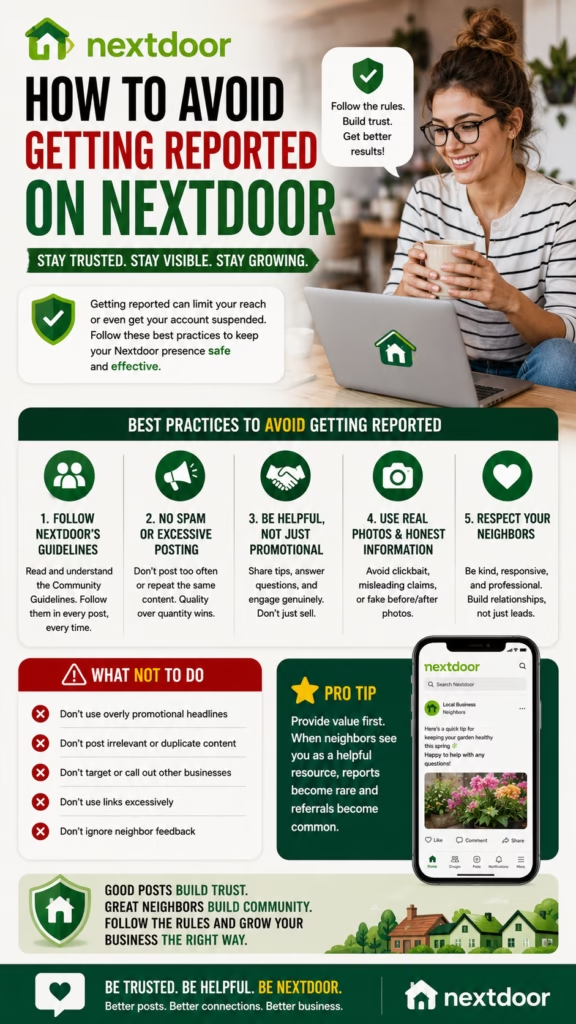
How to Avoid Getting Reported on Nextdoor explains how businesses can post respectfully, avoid spammy behavior, build neighborhood trust, and create better customer response without irritating local residents.
Introduction
How to Avoid Getting Reported on Nextdoor starts with one important truth: Nextdoor is not just another advertising feed. It is a neighborhood-focused platform where residents expect helpful, respectful, local, and community-aware content. Businesses that treat it like a spam board can quickly frustrate neighbors and increase the chance of reports.
Nextdoor can still be a powerful channel for small businesses, home service companies, contractors, retail stores, movers, pest control companies, cleaners, landscapers, car dealers, restaurants, and local shops. But success depends on tone, trust, relevance, and posting behavior.
The best way to avoid getting reported on Nextdoor is to post like a trusted local business, not like an aggressive advertiser.
That means your posts should be helpful, honest, local, non-repetitive, respectful, and easy to act on. Instead of blasting the same promotion over and over, businesses should share useful tips, service availability, seasonal reminders, real customer proof, clear offers, and friendly responses.
Main idea: How to Avoid Getting Reported on Nextdoor is about building neighborhood trust while staying visible, useful, and respectful.
Table of Contents
- 1) Why businesses get reported on Nextdoor
- 2) What residents expect from business posts
- 3) How to post without sounding spammy
- 4) Writing neighbor-friendly business posts
- 5) Avoiding overposting and repetition
- 6) Using honest offers and clear language
- 7) Keeping posts local and relevant
- 8) Building trust before selling
- 9) Using reviews without sounding fake
- 10) Avoiding aggressive sales language
- 11) Posting helpful tips instead of constant ads
- 12) Responding respectfully to comments
- 13) Avoiding controversial topics
- 14) Handling complaints professionally
- 15) What not to post on Nextdoor
- 16) Better post examples for small businesses
- 17) Posting schedule that reduces report risk
- 18) Tracking response and complaint signals
- 19) Common mistakes that trigger reports
- 20) Final thoughts
- 21) FAQs
- 22) Extra keywords
1) Why Businesses Get Reported on Nextdoor
Businesses usually get reported on Nextdoor when their posts feel disruptive, misleading, repetitive, irrelevant, aggressive, or out of place. Residents may tolerate occasional helpful business updates, but they are less patient with spammy posting patterns.
Reports can happen when a business posts too often, copies the same promotion repeatedly, uses exaggerated claims, argues with residents, hides important details, or turns every comment into a sales pitch.
Common reasons businesses get reported:
- Posting the same message repeatedly
- Using aggressive sales language
- Posting in unrelated conversations
- Making misleading claims
- Ignoring community tone
- Arguing with neighbors
- Using fake reviews or fake urgency
- Posting too many promotions
- Commenting only to advertise
- Not being transparent about the business
Most reports happen when a business acts like it is interrupting the neighborhood instead of helping it.
2) What Residents Expect From Business Posts
Residents usually expect business posts to be local, useful, honest, respectful, and easy to understand. They want to know who the business is, what it offers, where it serves, why it is relevant, and how to contact it if interested.
A good business post should feel like a helpful local update, not a loud advertisement. The tone should be neighbor-friendly and professional.
Residents usually prefer posts that are:
Helpful
Local
Specific
Transparent
Respectful
Relevant
Easy to read
Not repetitive
Not exaggerated
Easy to respond to
Nextdoor users respond better when the business sounds like part of the community.
3) How to Post Without Sounding Spammy
Spammy posts often repeat the same claim, push too hard, or fail to offer real value. A better approach is to post content that helps residents understand a problem, prepare for a season, compare options, or take a simple next step.
Businesses should avoid posting only sales messages. Mix promotions with helpful tips, community updates, educational content, review highlights, seasonal reminders, and service availability posts.
To avoid sounding spammy:
- Post with a clear local purpose
- Use a helpful tone
- Avoid copy-and-paste repetition
- Do not hijack unrelated threads
- Limit hype and urgency
- Be transparent about offers
- Use real examples
- Respect neighbor comments
- Rotate post topics
- Track response quality
A helpful post feels like a resource. A spammy post feels like pressure.
4) Writing Neighbor-Friendly Business Posts
A neighbor-friendly business post should be simple, clear, and local. It should explain the service or offer without sounding pushy. The best posts often start with a real neighborhood problem or seasonal need.
Instead of saying “best company in town,” explain what you help with and who it is for.
Weak post:
Best Service Around! Call Now Before It Is Too Late!

Better post:
If your yard needs cleanup after recent weather, we are helping local homeowners with debris removal, trimming, and outdoor cleanup this week.

Weak post:
Huge Sale! Nobody Beats Our Prices!

Better post:
New weekend arrivals are available at our local shop. We have gift options, home goods, and customer favorites ready for pickup.

Weak post:
We Do Everything! Message Now!

Better post:
Need help with a small home project? We are available for handyman repairs, furniture assembly, and minor fixes in the local area.
Neighbor-friendly posts are specific, calm, and useful.
5) Avoiding Overposting and Repetition
Overposting is one of the fastest ways to frustrate residents. Even if the business is legitimate, repeated posts can feel intrusive when they show up too often or say the same thing every time.
Instead of posting the same ad daily, rotate different topics and give each post a reason to exist. If a post does not provide new value, it may be better to wait or rewrite it.
Better rotation topics:
- Helpful local tip
- Seasonal reminder
- Customer review highlight
- Service availability update
- Before-and-after example
- Product arrival
- Community event
- Frequently asked question
- Limited appointment availability
- Local offer with clear details
Posting more is not always better. Posting with better timing and better value is safer.
6) Using Honest Offers and Clear Language
Misleading offers can create complaints. If a business says “free,” “guaranteed,” “limited time,” “lowest price,” or “same-day service,” the details should be accurate and easy to understand.
Clear offer language builds trust and reduces frustration. Customers should know what is included, what may cost extra, where the offer applies, and how to respond.
Clear offer language:
Local estimates available this week
Message with your neighborhood and project details
Pricing depends on project size and materials
Pickup available during store hours
Delivery available in nearby areas
Same-week openings when available
Ask about current appointment times
Limited availability based on schedule
Photos help us provide a faster quote
Offer applies to select services only
Honest offers reduce report risk and improve customer trust.
7) Keeping Posts Local and Relevant
Nextdoor is neighborhood-focused, so relevance matters. A post should connect to local residents, local needs, local service areas, local products, or local timing.
Posts that feel too broad or generic may not perform well. A business should mention its service area naturally and explain why the message matters to nearby residents.
Ways to keep posts local:
- Mention nearby service availability
- Use neighborhood-friendly wording
- Reference seasonal local needs
- Talk about local pickup or delivery
- Share local project examples
- Highlight community events
- Use real customer questions
- Post about local appointment openings
- Explain the service area clearly
- Keep the tone neighbor-friendly
Local relevance helps a business post feel welcome instead of random.
8) Building Trust Before Selling
Trust should come before the pitch. Residents are more likely to respond when they understand who the business is, what it does, where it serves, and why it can be trusted.
Trust signals are especially important for home services, contractors, moving companies, pest control businesses, cleaning companies, auto businesses, and anyone entering a customer’s property.
Trust signals to include:
Business name
Local service area
Years of experience
Real photos
Customer reviews if available
Neighbor recommendations
Clear estimate process
Licensed or insured status if accurate
Friendly communication
Fast response language
Trust-building posts are less likely to feel like spam and more likely to create real leads.
9) Using Reviews Without Sounding Fake
Reviews and recommendations can help businesses build credibility, but they must be used carefully. Fake-sounding review posts can create suspicion. Real review language, customer appreciation, and honest project examples work better.
A business should never invent reviews or exaggerate results. Instead, use real feedback, thank customers, and invite satisfied customers to recommend the business naturally.
Review-friendly post ideas:
- Thank a customer for a recommendation
- Share a real customer question
- Highlight a recent service win
- Mention a popular service
- Share a before-and-after project
- Thank the neighborhood for support
- Invite honest feedback
- Share a common problem solved
- Feature a customer favorite
- Promote a review-backed service
Real trust beats fake hype every time.
10) Avoiding Aggressive Sales Language
Aggressive sales language can make residents uncomfortable. Phrases that feel pushy, exaggerated, or manipulative may trigger negative reactions. Nextdoor usually works better with a calm, helpful, neighbor-friendly tone.
Instead of shouting about urgency, explain availability. Instead of claiming superiority, show proof. Instead of pressuring people to act, invite them to message if the offer is useful.
Avoid language like:
Call now or miss out
Nobody beats us
Best in the city
Guaranteed cheapest
You need this today
Do not wait
This deal will disappear
We are number one

Use language like:
Local appointments available
Message with your project details
Ask about current openings
We are helping nearby residents this week
Here is what is included
Photos help us provide a better estimate
Happy to answer questions
Calm and clear usually performs better than loud and pushy.
11) Posting Helpful Tips Instead of Constant Ads
Helpful tips can reduce report risk because they give residents value even if they are not ready to buy. A pest control company can post seasonal prevention tips. A mover can post packing tips. A retailer can post gift ideas. A contractor can post project planning advice.
Helpful posts also build familiarity. When residents later need the service, they may remember the business.
Helpful post examples:
- Spring home maintenance checklist
- How to prepare for a moving quote
- Signs a tree may need trimming
- When to schedule pest prevention
- How to choose flooring for rentals
- Gift ideas from a local shop
- How to prepare for pressure washing
- What photos help with a remodel estimate
- How to reduce junk removal costs
- Seasonal cleaning reminders
Helpful content makes your business feel like a local resource.
12) Responding Respectfully to Comments
Comments can help or hurt a business. A respectful reply can build trust, even when someone asks a tough question. A defensive or sarcastic reply can create more problems and may encourage reports.
Businesses should respond professionally, answer questions directly, and move detailed sales conversations to private messages when appropriate.
Good response habits:
Thank people for questions
Answer clearly
Avoid arguing
Do not insult anyone
Stay calm with criticism
Correct misinformation politely
Invite private messages for details
Acknowledge concerns
Be transparent
End with a helpful next step
Your comment behavior can be just as important as your original post.
13) Avoiding Controversial Topics
Businesses should avoid unnecessary controversy. Political arguments, personal attacks, inflammatory claims, public shaming, and unrelated community debates can damage trust and increase report risk.
Even if a topic gets attention, it may not help the business. A small business should stay focused on useful local content, customer needs, services, products, community value, and professional communication.
Safer business post topics:
- Service availability
- Local tips
- Product updates
- Seasonal reminders
- Customer appreciation
- Community events
- Business hours
- Project examples
- Helpful FAQs
- Local offers
Attention is not always good marketing. Trust is better.
14) Handling Complaints Professionally
Complaints should be handled calmly and professionally. Even if the complaint feels unfair, the response should show maturity. Other residents may judge the business by how it handles pressure.
A good complaint response acknowledges the concern, avoids blame, offers to help, and moves private details offline.
Complaint response structure:
Thank them for sharing
Acknowledge the concern
Avoid arguing publicly
Offer to review details
Invite private message or direct contact
Explain next step calmly
Keep the tone professional
Do not blame the customer
Do not reveal private information
Follow through quickly
A calm complaint response can protect reputation and reduce escalation.
15) What Not to Post on Nextdoor
Businesses should avoid posts that are misleading, repetitive, irrelevant, disrespectful, inflammatory, or overly aggressive. A post may be technically promotional, but it should still fit the neighborhood environment.
If the post would annoy residents, confuse customers, or make the business look untrustworthy, it should be rewritten.
Avoid posting:
- Copy-and-paste ads every day
- Fake reviews or fake testimonials
- Misleading discounts
- Exaggerated guarantees
- Public arguments
- Insults or personal attacks
- Unrelated comments just to advertise
- Fear-based claims
- Spammy hashtags
- Unclear offers with hidden details
If the post does not help, inform, invite, or clarify, it probably needs improvement.
16) Better Post Examples for Small Businesses
Better Nextdoor posts are local, helpful, and specific. They explain the offer without sounding pushy and give residents a simple next step.
Home service example:
We are helping nearby homeowners with gutter cleaning and small exterior maintenance this week. If your gutters are overflowing or your downspouts need attention, message with your neighborhood and a few photos for the next step.

Retail example:
New weekend arrivals are in. We have gift options, home goods, and customer favorites available for local pickup. Message us if you are looking for something specific.

Moving example:
Planning a local move soon? Send your pickup area, drop-off area, move date, and approximate room count if you would like help with a quote.

Pest control example:
Seeing ants, roaches, or outdoor pests around the house? We are offering local pest inspections and treatment options this week. Message with your neighborhood and the pest issue you are seeing.
The best posts sound helpful before they sound promotional.
17) Posting Schedule That Reduces Report Risk
A smart posting schedule reduces report risk because it prevents repetitive posting. Instead of posting the same sales message repeatedly, rotate topics across the week or month.
The right schedule depends on the business type and local response. The goal is consistency without annoyance.
Example weekly posting rotation:
- Monday: Helpful tip post
- Tuesday: Service availability update
- Wednesday: Customer review or project proof
- Thursday: Seasonal reminder
- Friday: Local offer or appointment opening
- Saturday: Community-friendly product or service post
- Sunday: FAQ or soft reminder post
Posting consistency should feel useful, not overwhelming.
18) Tracking Response and Complaint Signals
Tracking helps businesses understand what works and what may be creating friction. If posts receive positive comments, messages, recommendations, and leads, the content is likely aligned with the audience. If posts receive negative comments or low-quality responses, the strategy may need adjustment.
Track more than leads. Track tone, reactions, questions, complaints, and comment quality.
Track these Nextdoor signals:
Post topic
Date posted
Neighborhood or audience
Messages received
Positive comments
Negative comments
Questions asked
Reports or removals if known
Leads generated
Appointments booked
Sales or jobs closed
Best-performing tone
Topics that create friction
Good tracking helps businesses post smarter and avoid repeating mistakes.
19) Common Mistakes That Trigger Reports
Many businesses get reported because they treat Nextdoor like a high-volume ad feed. Residents usually respond better to calm, helpful, local content than repeated sales pitches.
Businesses should focus on being useful, honest, and respectful. That approach usually improves lead quality and reduces report risk.
Common report-triggering mistakes:
- Posting too often
- Posting the same message repeatedly
- Using misleading claims
- Arguing in comments
- Hijacking unrelated posts
- Ignoring local relevance
- Using fake urgency
- Sounding too aggressive
- Not being transparent
- Failing to respect neighborhood tone
Nextdoor rewards trust more than noise.
20) Final Thoughts
How to Avoid Getting Reported on Nextdoor comes down to respect, relevance, honesty, and consistency. Businesses can still use Nextdoor to generate leads, appointments, store visits, referrals, and customer conversations, but they must post in a way that fits the neighborhood environment.
The strongest strategy includes helpful posts, local wording, clear offers, real trust signals, respectful replies, review-based credibility, seasonal content, smart posting rotation, and performance tracking.
Final takeaway: To avoid getting reported on Nextdoor, post less like a spammer and more like a helpful local business residents can recognize, trust, and recommend.
21) FAQs
1) How do businesses avoid getting reported on Nextdoor?
Businesses can avoid reports by posting helpful, local, respectful, honest, non-repetitive content and responding professionally to comments and messages.
2) Why do businesses get reported on Nextdoor?
Businesses may get reported for spammy posts, repeated promotions, misleading claims, irrelevant comments, aggressive language, or disrespectful behavior.
3) Can businesses post on Nextdoor?
Yes, businesses can use Nextdoor, but posts should follow platform expectations and fit the local community environment.
4) What type of business post works best?
Helpful, local, specific posts usually work best. Examples include seasonal reminders, service availability, customer reviews, product updates, and local tips.
5) Is posting daily on Nextdoor too much?
It can be too much if posts are repetitive or overly promotional. Businesses should rotate useful topics and track response quality.
6) Should businesses use aggressive sales language?
No. Calm, clear, helpful language usually performs better and creates less friction.
7) Can fake reviews get a business reported?
Fake reviews can create distrust and may increase report risk. Businesses should only use real customer feedback.
8) Should businesses reply to negative comments?
Yes, but replies should be calm, professional, and helpful. Avoid public arguments.
9) What should a business do if someone complains?
Acknowledge the concern, stay professional, offer to review details, and move private information to direct communication.
10) Should businesses comment on unrelated posts?
Businesses should avoid hijacking unrelated posts just to advertise. Comments should be relevant and helpful.
11) What is a safe Nextdoor posting strategy?
A safe strategy includes helpful tips, local service updates, real reviews, seasonal reminders, clear offers, and respectful follow-up.
12) How can businesses make posts less spammy?
Use a helpful tone, avoid repetition, add local relevance, explain the offer clearly, and avoid exaggerated claims.
13) Should businesses mention service areas?
Yes. Local service-area wording helps residents know whether the business is relevant to them.
14) Are hashtags useful on Nextdoor?
Heavy hashtag use can look spammy. Clear writing is usually more useful than stuffing posts with hashtags.
15) What should businesses avoid posting?
Avoid fake reviews, misleading discounts, aggressive claims, repeated ads, personal attacks, unrelated promotions, and controversial arguments.
16) How often should businesses post?
Businesses should post consistently but avoid repetition. A balanced rotation of tips, offers, reviews, and updates usually works better.
17) Can helpful tips reduce report risk?
Yes. Helpful tips provide value and make the business feel like a local resource instead of a constant advertiser.
18) What tone works best on Nextdoor?
A professional but neighbor-friendly tone works best. Posts should feel helpful, clear, respectful, and local.
19) Should businesses use fear-based messaging?
No. Fear-based messaging can feel manipulative. Clear problem-solution language is safer and more trustworthy.
20) How can businesses build trust on Nextdoor?
Use real photos, real reviews, clear service areas, honest offers, friendly replies, and consistent helpful posts.
21) Can repeated posts cause complaints?
Yes. Repeating the same promotional post too often can frustrate residents and increase report risk.
22) How should businesses track report risk?
Track comments, complaints, message quality, post topics, response tone, and any posts that create negative reactions.
23) Is Nextdoor still good for small business marketing?
Yes. Nextdoor can work well when businesses use trust-based, local, helpful, and respectful posting strategies.
24) What is the biggest mistake businesses make on Nextdoor?
The biggest mistake is treating Nextdoor like a spam board instead of a neighborhood trust platform.
25) What is the main goal of safe Nextdoor posting?
The main goal is to stay visible, earn trust, generate leads, and avoid frustrating the neighborhood audience.
22) Extra Keywords
- How to Avoid Getting Reported on Nextdoor
- Nextdoor posting rules
- Nextdoor business posting
- Nextdoor marketing tips
- avoid Nextdoor reports
- Nextdoor small business marketing
- neighborhood posting strategy
- Nextdoor business guidelines
- Nextdoor spam prevention
- Nextdoor respectful posting
- Nextdoor local marketing
- Nextdoor report risk
- Nextdoor post etiquette
- Nextdoor community-friendly posts
- Nextdoor business content
- Nextdoor lead generation
- Nextdoor trust marketing
- Nextdoor customer response
- Nextdoor review marketing
- Nextdoor posting schedule
- Nextdoor content strategy
- Nextdoor local business leads
- Nextdoor safe posting
- Nextdoor complaint prevention
- Nextdoor small business growth