
Why Nextdoor Marketing Is Worth Trying for Local Businesses
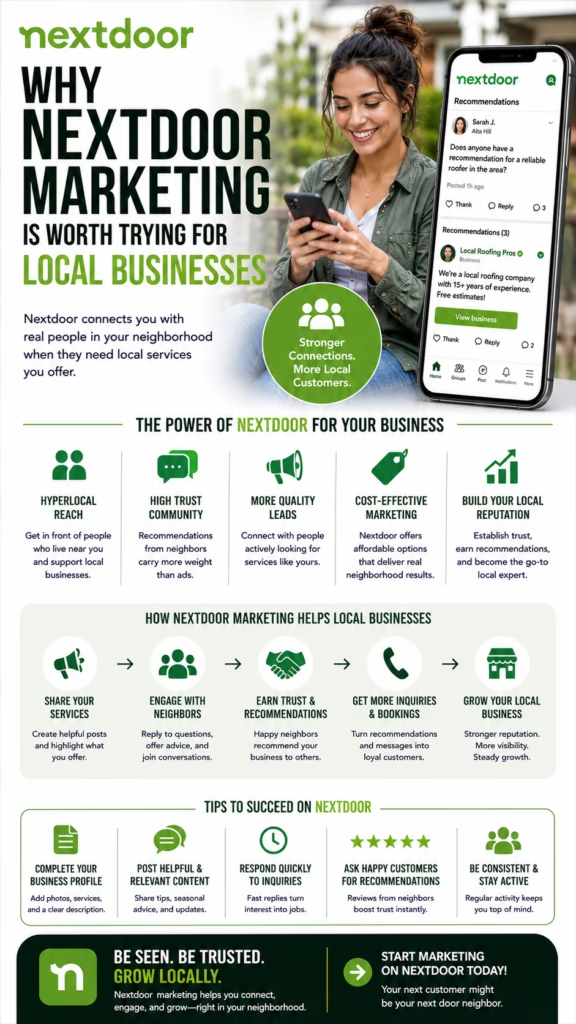
Why Nextdoor Marketing Is Worth Trying for Local Businesses explains how neighborhood-based visibility, recommendations, Business Pages, local posts, ads, trust signals, and community engagement can help local companies attract nearby customers who are already looking for trusted providers.
Introduction
Why Nextdoor Marketing Is Worth Trying for Local Businesses comes down to one simple idea: people trust local recommendations. When homeowners, renters, parents, neighbors, and community members need a plumber, painter, landscaper, HVAC company, cleaner, roofer, restaurant, gym, real estate agent, or local shop, they often want to know who nearby people already trust.
Nextdoor is built around neighborhoods, local conversations, recommendations, and nearby businesses. That makes it different from broad social media platforms where local intent can get buried under entertainment content, national trends, and unrelated posts. For a local business, the value of Nextdoor is its neighborhood context.
Nextdoor marketing is worth trying because it gives local businesses a way to build visibility where nearby customers are already asking for recommendations and local help.
For many service businesses, trust is the hard part. A customer may not know which HVAC contractor, painter, plumber, lawn care company, handyman, cleaner, pest control provider, or remodeler to contact. If the business appears in the right local conversation with a complete profile, strong recommendations, helpful posts, and clear offers, it can create more qualified leads.
Nextdoor marketing does not need to replace Google Maps SEO, Facebook, Craigslist, OfferUp, email marketing, referrals, or paid search. It can support the full local lead generation system by adding another neighborhood-focused channel.
Main idea: Nextdoor marketing is worth testing for local businesses that depend on trust, neighborhood visibility, recommendations, and nearby customers.
Table of Contents
- 1) What Nextdoor marketing means
- 2) Why local businesses should consider Nextdoor
- 3) How neighborhood trust affects lead generation
- 4) Nextdoor Business Pages
- 5) Nextdoor Business Posts
- 6) Nextdoor recommendations
- 7) Nextdoor Ads and local deals
- 8) Best business types for Nextdoor marketing
- 9) Nextdoor for home service companies
- 10) Nextdoor for local retail businesses
- 11) Nextdoor for restaurants and food businesses
- 12) Nextdoor for real estate and professional services
- 13) What to post on Nextdoor
- 14) How to build trust without sounding spammy
- 15) Nextdoor lead follow-up strategy
- 16) How to track Nextdoor marketing results
- 17) Common Nextdoor marketing mistakes
- 18) Nextdoor marketing checklist
- 19) Final thoughts
- 20) FAQs
- 21) Extra keywords
1) What Nextdoor Marketing Means
Nextdoor marketing means using Nextdoor’s local business tools and neighborhood-based audience to promote a business, build trust, encourage recommendations, share updates, and attract local leads. It can include claiming a Business Page, posting helpful updates, running local ads, promoting offers, responding professionally, and encouraging satisfied customers to recommend the business.
The main difference between Nextdoor and broad social media is the neighborhood layer. People use Nextdoor to talk about local issues, local services, local events, lost pets, community updates, recommendations, and nearby businesses. That makes it a useful testing ground for businesses that serve specific neighborhoods, towns, or service areas.
Nextdoor marketing can include:
- Claiming a Business Page
- Completing business information
- Publishing Business Posts
- Sharing local updates
- Promoting Local Deals
- Running Nextdoor Ads
- Encouraging recommendations
- Responding to local interest
- Building neighborhood trust
- Tracking calls, clicks, messages, and leads
Nextdoor marketing is local-first marketing built around neighborhood visibility and trust.
2) Why Local Businesses Should Consider Nextdoor
Local businesses should consider Nextdoor because the platform is designed around nearby communities. Many customers do not only want the cheapest option. They want a provider that feels trusted, recommended, responsive, and local. Nextdoor can help businesses show up in that trust-driven environment.
Nextdoor’s business resources emphasize Business Pages, Business Posts, recommendations, local discovery, and ads as ways for small businesses to reach nearby customers. For businesses that depend on local reputation, these tools can be worth testing as part of a broader marketing strategy.
Nextdoor may help local businesses with:
Neighborhood visibility
Recommendation-driven trust
Local customer awareness
Service-area targeting
Community engagement
Business Page discovery
Offer promotion
Local lead generation
Brand familiarity
Repeat customer relationships
Nextdoor is worth trying when a business wants more visibility with nearby customers who care about local trust.
3) How Neighborhood Trust Affects Lead Generation
Neighborhood trust can strongly influence local buying decisions. A homeowner may feel more comfortable hiring a plumber, painter, HVAC company, landscaper, cleaner, pest control provider, roofer, or handyman if nearby neighbors have recommended that business.
This is why Nextdoor can be valuable. It is not only about posting promotions. It is about showing up as a helpful, legitimate, local business that people in the area can recognize and recommend.
Trust signals that matter on Nextdoor:
- Business recommendations
- Complete Business Page
- Local service area clarity
- Professional profile photo or logo
- Helpful neighborhood posts
- Clear contact information
- Response speed
- Positive customer experiences
- Consistent local presence
- Community-friendly tone
Trust-based marketing works best when the business acts like a helpful local neighbor, not just an advertiser.
4) Nextdoor Business Pages
A Nextdoor Business Page gives a local business a presence on the platform. It can help neighbors find the business, learn what it offers, see basic information, and interact with the company. For local businesses, claiming and completing the Business Page is usually the first step.
A strong Business Page should include accurate business details, service areas, categories, contact information, website link, photos, and a clear description. The page should make it obvious who the business helps and what problem it solves.
Business Page checklist:
Business name
Category
Service area
Phone number
Website
Hours
Business description
Logo or profile image
Photos
Services offered
Customer recommendations
Clear call-to-action
A complete Business Page makes the business easier to discover, trust, and contact on Nextdoor.
5) Nextdoor Business Posts
Business Posts allow local businesses to share updates with nearby neighbors. These posts can be used to announce services, promote seasonal offers, share helpful tips, highlight recent projects, introduce team members, or remind customers about common local needs.
The best Business Posts are helpful and local. A post that says “Call us now” may feel too promotional. A post that explains how to prepare an AC system before summer, when to repaint exterior trim, or how to spot early plumbing leaks can feel more useful.
Good Nextdoor Business Post ideas:
- Seasonal service reminders
- Neighborhood-specific offers
- Before-and-after project highlights
- Customer education tips
- Local event involvement
- New service announcements
- Limited appointment availability
- Community appreciation posts
- FAQ-style posts
- Helpful home maintenance advice
Business Posts perform best when they feel useful, timely, and relevant to the neighborhood.
6) Nextdoor Recommendations
Recommendations are one of the most important reasons to test Nextdoor marketing. When neighbors recommend a business, that recommendation can carry more trust than a generic advertisement. Local businesses should create a great customer experience and make it easy for happy customers to recommend them.
Businesses should never pressure customers or fake recommendations. The better strategy is to ask satisfied customers politely and make the process simple. Over time, authentic recommendations can help a local business look more trusted in the community.
Recommendation-building strategy:
Deliver great service
Ask happy customers politely
Make recommendation links easy to find
Thank customers professionally
Respond to feedback
Keep service quality consistent
Use recommendations as trust signals
Track which jobs came from referrals
Build reputation over time
Avoid fake or forced reviews
Nextdoor recommendations can help local businesses turn customer satisfaction into neighborhood visibility.
7) Nextdoor Ads and Local Deals
Nextdoor Ads and Local Deals can help businesses promote offers to nearby customers. These tools can be useful when a business wants more predictable visibility than organic posting alone. A local deal might promote a seasonal tune-up, painting estimate, cleaning special, restaurant offer, gym trial, or retail discount.
Paid promotion should be tested carefully. Businesses should start with clear goals, simple offers, and trackable calls-to-action. The goal is not just impressions. The goal is leads, calls, bookings, visits, purchases, or quote requests.
Nextdoor ad and deal ideas:
- Free estimate offer
- Seasonal maintenance promotion
- New customer discount
- Limited-time local deal
- Neighborhood-only special
- Restaurant weekly offer
- Retail clearance event
- Service appointment promotion
- Home improvement consultation
- Local event promotion
Nextdoor paid marketing is worth testing when the offer is local, clear, trackable, and tied to a real business outcome.
8) Best Business Types for Nextdoor Marketing
Nextdoor marketing can work especially well for businesses that depend on local trust, neighborhood awareness, and repeat customer relationships. Home services, local retail, restaurants, real estate, professional services, wellness businesses, pet services, and community-focused companies can all test Nextdoor.
The strongest fit is usually a business that serves a defined local area and benefits from word-of-mouth. If neighbors are likely to ask each other for recommendations in that category, the business may be a good fit.
Good fits for Nextdoor marketing:
Plumbers
HVAC companies
Painters
Landscapers
Roofers
Cleaners
Handymen
Pest control companies
Restaurants
Local retailers
Real estate agents
Insurance agents
Pet care providers
Fitness studios
Professional services
Nextdoor is especially worth trying for businesses that already win customers through local reputation and referrals.
9) Nextdoor for Home Service Companies
Home service companies can benefit from Nextdoor because homeowners frequently ask neighbors for trusted recommendations. This includes plumbing, HVAC, painting, roofing, landscaping, cleaning, pest control, remodeling, flooring, electrical work, moving, junk removal, and handyman services.
Home service businesses should focus on helpful posts, before-and-after proof, service-area clarity, seasonal reminders, and fast lead follow-up. The tone should be professional but neighbor-friendly.
Home service post ideas:
- “Signs your AC needs service before summer”
- “When to repaint exterior trim”
- “How to spot a small plumbing leak early”
- “Spring lawn cleanup reminder”
- “Before-and-after cabinet painting project”
- “Same-week estimate availability”
- “Storm cleanup appointment openings”
- “Winter furnace inspection reminder”
- “Neighborhood discount for first-time customers”
- “Recent project spotlight”
Home service businesses should use Nextdoor to build trust before the customer has an urgent need.
10) Nextdoor for Local Retail Businesses
Local retail businesses can use Nextdoor to promote store events, new arrivals, seasonal sales, local pickup, delivery, financing, community offers, and neighborhood specials. The platform can help stores remind nearby customers that they have a local option before they buy from a national chain.
Retail posts should include strong photos, clear offers, store location, hours, and a simple reason to visit. A local mattress store, furniture store, appliance store, boutique, hardware store, or specialty shop can use Nextdoor to stay visible with nearby customers.
Retail Nextdoor post ideas:
New inventory arrival
Weekend sale
Local pickup available
Same-day delivery
Neighborhood discount
Holiday shopping event
Clearance promotion
Featured product spotlight
Customer favorite product
Store anniversary event
Local retail businesses can use Nextdoor to remind nearby customers that shopping local is convenient and trustworthy.
11) Nextdoor for Restaurants and Food Businesses
Restaurants, bakeries, coffee shops, food trucks, catering companies, and local food businesses can use Nextdoor to promote specials, events, new menu items, neighborhood discounts, takeout options, catering availability, and community involvement.
Food-related posts should be visual and timely. A strong image, clear offer, and neighborhood-friendly tone can help drive visits, orders, and repeat awareness.
Restaurant and food post ideas:
- Daily lunch special
- Weekend brunch announcement
- New menu item
- Neighborhood catering offer
- Family meal deal
- Holiday preorder reminder
- Local event participation
- Happy hour promotion
- Customer favorite dish
- Takeout and delivery update
Food businesses can use Nextdoor to turn nearby awareness into visits, orders, and local loyalty.
12) Nextdoor for Real Estate and Professional Services
Real estate agents, insurance agencies, accountants, financial professionals, attorneys, consultants, and other professional service providers can use Nextdoor to build local authority. These businesses often depend on trust and reputation, which makes neighborhood visibility valuable.
The best strategy is educational. Instead of posting hard sales messages, professionals should share useful local insights, common questions, market updates, checklists, and helpful reminders.
Professional service post ideas:
Local market update
Home buying checklist
Insurance coverage reminder
Tax deadline reminder
Small business tip
Estate planning FAQ
Neighborhood resource guide
First-time buyer advice
Home value education
Consultation availability
Professional services should use Nextdoor to become familiar, helpful, and trusted in the local area.
13) What to Post on Nextdoor
The best Nextdoor content feels local, helpful, timely, and specific. Businesses should avoid posting the same generic sales message repeatedly. Instead, they should rotate educational posts, offers, updates, customer proof, seasonal reminders, and community-focused content.
Every post should have a clear purpose. Some posts build trust. Some drive calls. Some promote offers. Some answer common questions. Some remind customers about seasonal needs.
Strong content categories:
- Helpful tips
- Seasonal reminders
- Local offers
- Before-and-after results
- Customer testimonials
- Team introductions
- Service spotlights
- Event announcements
- FAQs
- Community appreciation posts
Nextdoor content should feel like it belongs in the neighborhood, not like a generic ad copied from another platform.
14) How to Build Trust Without Sounding Spammy
Nextdoor users may be sensitive to overly aggressive promotion. A local business should focus on usefulness, clarity, and professionalism. The goal is to become a known local resource, not to flood the feed with repetitive offers.
Businesses can build trust by answering questions, sharing helpful information, posting real project examples, thanking customers, highlighting local involvement, and keeping offers simple.
Trust-building approach:
Post helpful advice
Use a neighbor-friendly tone
Avoid exaggerated claims
Use real photos
Share actual service examples
Mention service areas clearly
Respond professionally
Do not over-post the same offer
Thank customers
Track what creates real leads
The best Nextdoor marketing sounds local, helpful, and credible instead of loud or pushy.
15) Nextdoor Lead Follow-Up Strategy
Nextdoor marketing only works if leads are handled quickly. When someone comments, messages, calls, clicks, or asks for information, the business needs a simple follow-up process. A delayed response can cause the lead to contact a competitor.
The follow-up should confirm the customer’s need, ask one or two helpful questions, and move toward a quote, call, appointment, visit, order, or booking.
Simple follow-up flow:
- Respond quickly
- Thank the person
- Confirm what they need
- Ask for location or service details
- Offer the next step
- Move to call, booking, quote, or visit
- Log the lead source
- Follow up if they go quiet
Nextdoor leads become valuable when the business follows up fast and guides the person toward action.
16) How to Track Nextdoor Marketing Results
Tracking is important because Nextdoor may create both direct and indirect results. A person may see a post, remember the business, ask a neighbor, search the company later, or call after seeing a recommendation. Businesses should track direct leads and watch for assisted visibility.
Useful tracking methods include unique phone numbers, UTM links, offer codes, lead source questions, CRM notes, appointment tags, and monthly reporting.
Track these Nextdoor metrics:
Business Page views
Post engagement
Ad impressions
Clicks
Messages
Calls
Website visits
Offer redemptions
Recommendations
Booked appointments
Store visits
Closed sales
Cost per lead
Lead quality
Repeat customers
Nextdoor marketing should be judged by local leads, booked jobs, customer quality, and neighborhood visibility—not just likes or impressions.
17) Common Nextdoor Marketing Mistakes
Many businesses struggle with Nextdoor because they treat it like a generic ad board. They post too aggressively, use vague offers, ignore comments, fail to complete the Business Page, never ask for recommendations, or do not track results.
Nextdoor works best when the business respects the local nature of the platform. The content should be neighborhood-relevant, useful, honest, and easy to act on.
Common mistakes include:
- Leaving the Business Page incomplete
- Posting only sales messages
- Using generic non-local content
- Ignoring recommendations
- Not responding quickly
- Not using real photos
- Promoting unclear offers
- Not tracking calls or leads
- Over-posting repetitive content
- Not connecting Nextdoor to the broader marketing system
Nextdoor marketing fails when businesses act like outsiders advertising at neighbors instead of helpful local providers engaging with the community.
18) Nextdoor Marketing Checklist
A good Nextdoor marketing system should be simple, consistent, and measurable. Start by claiming the Business Page, completing the profile, adding photos, clarifying services, publishing helpful posts, encouraging recommendations, testing offers, and tracking the results.
The goal is not perfection. The goal is to test whether neighborhood visibility can create more trust, conversations, calls, and sales for the business.
Nextdoor marketing checklist:
Claim Business Page
Complete business profile
Add services and categories
Upload logo and photos
Clarify service area
Publish helpful posts
Promote local offers
Encourage recommendations
Respond quickly
Track leads and sales
Test ads carefully
Review performance monthly
A simple Nextdoor system can help local businesses test neighborhood marketing without overcomplicating the process.
19) Final Thoughts
Why Nextdoor Marketing Is Worth Trying for Local Businesses comes down to local trust. Many customers want to hire, visit, or buy from businesses that feel nearby, recommended, and familiar. Nextdoor gives local businesses another place to build that presence.
Nextdoor marketing is especially worth testing for home services, retail stores, restaurants, real estate professionals, wellness businesses, pet services, and community-focused companies. It can support word-of-mouth, local recommendations, Business Page visibility, posts, ads, and local offers.
Final takeaway: Nextdoor marketing is worth trying when a local business wants to become more visible, more trusted, and easier to recommend inside the neighborhoods it serves.
20) FAQs
1) Why is Nextdoor marketing worth trying for local businesses?
Nextdoor marketing is worth trying because it helps businesses reach nearby customers in a neighborhood-based platform where recommendations and local trust matter.
2) What is Nextdoor marketing?
Nextdoor marketing means using Business Pages, posts, recommendations, ads, local deals, and community engagement to promote a business locally.
3) Can Nextdoor help generate local leads?
Yes. Nextdoor can help generate local leads when the business has a complete profile, helpful posts, strong recommendations, clear offers, and fast follow-up.
4) What businesses should try Nextdoor?
Home service companies, local retailers, restaurants, real estate professionals, wellness providers, pet services, and professional service businesses can all test Nextdoor.
5) Is Nextdoor good for home service companies?
Yes. Home service businesses often benefit because neighbors frequently ask for trusted local recommendations.
6) Is Nextdoor good for restaurants?
Yes. Restaurants can use Nextdoor to promote specials, events, new menu items, catering, takeout, and neighborhood offers.
7) Is Nextdoor good for retail stores?
Yes. Retail stores can promote local inventory, sales, store events, delivery, pickup, and neighborhood specials.
8) What is a Nextdoor Business Page?
A Business Page is a local business profile on Nextdoor where neighbors can find business information, services, contact details, and recommendations.
9) What should I put on my Nextdoor Business Page?
Add your business name, category, service area, phone number, website, hours, description, logo, photos, services, and call-to-action.
10) What should businesses post on Nextdoor?
Businesses should post helpful tips, seasonal reminders, local offers, before-and-after photos, service updates, events, FAQs, and community-focused content.
11) Are Nextdoor recommendations important?
Yes. Recommendations can build trust because they come from people in the local community.
12) How do businesses get more recommendations?
Businesses can provide great service, ask happy customers politely, make recommendation links easy to find, and thank customers professionally.
13) Should businesses run Nextdoor Ads?
Nextdoor Ads can be worth testing when the business has a clear local offer, defined service area, and a way to track results.
14) What are Local Deals on Nextdoor?
Local Deals are promotional offers that businesses can use to reach nearby customers with a specific discount or incentive.
15) How do I avoid sounding spammy on Nextdoor?
Post helpful, local, authentic content. Avoid repetitive hard-sell messages and focus on useful neighborhood value.
16) How often should a business post on Nextdoor?
Posting should be consistent but not overwhelming. A practical approach is to test useful weekly or biweekly posts and measure engagement.
17) What makes a good Nextdoor offer?
A good offer is clear, local, easy to understand, time-sensitive when appropriate, and connected to a real customer need.
18) Can Nextdoor replace Google Business Profile?
No. Nextdoor should support the broader local marketing system. Google Business Profile, SEO, reviews, website content, and referrals still matter.
19) Can Nextdoor help with word-of-mouth?
Yes. Nextdoor can support digital word-of-mouth by making recommendations and neighborhood conversations more visible.
20) How should businesses follow up with Nextdoor leads?
Respond quickly, confirm the need, ask for location or project details, and move the person toward a quote, appointment, call, booking, or visit.
21) How do I track Nextdoor marketing results?
Track messages, calls, clicks, website visits, recommendations, booked appointments, store visits, offer redemptions, and closed sales.
22) What is the biggest Nextdoor marketing mistake?
The biggest mistake is treating Nextdoor like a generic ad board instead of a neighborhood trust and recommendation platform.
23) Is Nextdoor better for organic posts or paid ads?
Both can be useful. Organic posts can build trust, while paid ads can increase reach when the offer is clear and trackable.
24) How long does Nextdoor marketing take to work?
Results vary by business type, neighborhood, offer, competition, recommendations, and consistency. It should be tested and tracked over time.
25) What is the main goal of Nextdoor marketing?
The main goal is to turn neighborhood visibility and trust into local leads, calls, appointments, visits, referrals, and sales.
21) Extra Keywords
- Why Nextdoor Marketing Is Worth Trying for Local Businesses
- Nextdoor marketing
- Nextdoor for local businesses
- Nextdoor business marketing
- Nextdoor local advertising
- Nextdoor Ads for small businesses
- Nextdoor Business Page
- Nextdoor Business Posts
- Nextdoor recommendations
- Nextdoor Local Deals
- neighborhood marketing
- local business advertising
- local lead generation
- home service marketing
- local service business marketing
- Nextdoor marketing strategy
- Nextdoor lead generation
- local trust marketing
- community marketing for businesses
- small business neighborhood advertising
- Nextdoor marketing tips
- Nextdoor advertising strategy
- local recommendation marketing
- Nextdoor for home services
- Nextdoor local business leads













