
How to Make Nextdoor Posts Stand Out
How to Make Nextdoor Posts Stand Out explains how small businesses can create better neighborhood posts that attract attention, build trust, increase engagement, and generate more local customer inquiries.
Introduction
How to Make Nextdoor Posts Stand Out is an important question for any local business trying to reach nearby residents. Nextdoor is different from many other marketing platforms because it is built around neighborhoods, trust, recommendations, local conversations, and community relevance.
Small businesses cannot rely on generic posts alone. Residents want useful, clear, local information. They want to know who the business helps, what problem it solves, where it serves, why it can be trusted, and what to do next.
The best Nextdoor posts stand out because they feel local, helpful, trustworthy, and easy to respond to.
Home service companies, contractors, cleaners, landscapers, painters, HVAC businesses, plumbers, roofers, restaurants, retailers, wellness providers, pet services, real estate professionals, and local storefronts can all use Nextdoor to create visibility. But the post must be built for neighborhood attention.
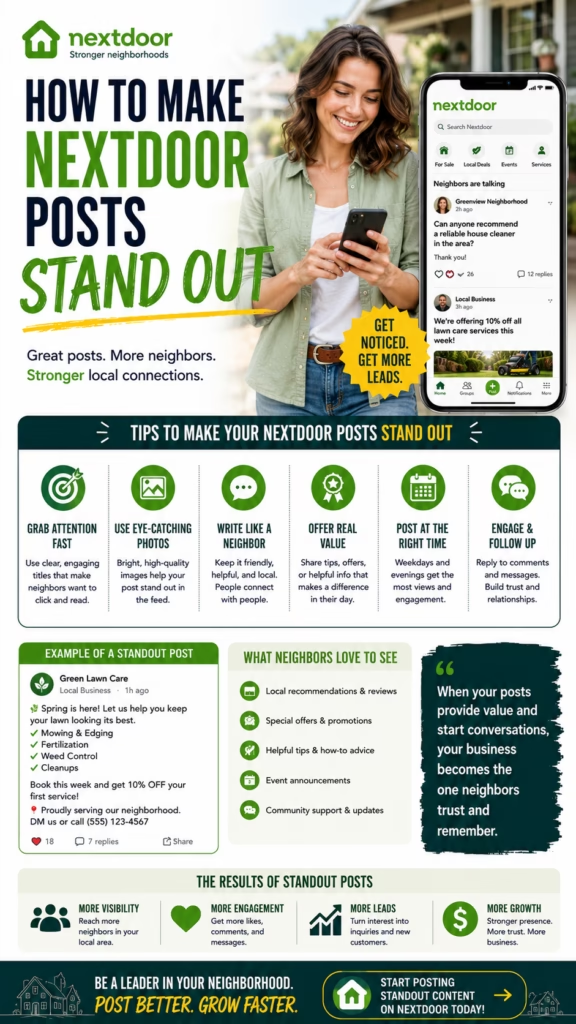
A strong Nextdoor post uses a clear hook, local relevance, helpful content, proof, photos, service-area clarity, trust signals, and a direct call to action. When these elements work together, a simple post can become a lead-generation tool.
Main idea: Nextdoor posts stand out when they help residents quickly understand the value, trust the business, and take the next step.
Table of Contents
- 1) Why standing out on Nextdoor matters
- 2) Start with a strong local hook
- 3) Make the post feel neighborhood-specific
- 4) Lead with helpful value, not just promotion
- 5) Use real photos and visual proof
- 6) Add service-area clarity
- 7) Use recommendations and trust signals
- 8) Write in a simple, human tone
- 9) Create stronger offers and CTAs
- 10) Make seasonal posts more relevant
- 11) Use before-and-after examples
- 12) Respond quickly to comments and messages
- 13) Track which Nextdoor posts work best
- 14) Common mistakes that make posts blend in
- 15) Final thoughts
- 16) FAQs
- 17) Extra keywords
1) Why Standing Out on Nextdoor Matters
Standing out on Nextdoor matters because residents see many local updates, recommendations, questions, and business posts. A weak post can get ignored quickly. A strong post can create attention, comments, messages, calls, quote requests, visits, and appointments.
Nextdoor visibility is not only about being seen. It is about being trusted. A post that feels useful and local is more likely to get engagement than one that feels like a generic ad.
Strong Nextdoor posts can help businesses increase:
- Neighborhood visibility
- Customer messages
- Phone calls
- Quote requests
- Recommendations
- Store visits
- Appointment bookings
- Local trust
- Engagement
- Lead generation
How to Make Nextdoor Posts Stand Out starts with making every post feel useful to nearby residents.
2) Start With a Strong Local Hook
The first line of a Nextdoor post matters. Residents should immediately understand why the post is relevant. A strong hook can mention a local problem, seasonal need, neighborhood benefit, common homeowner issue, or simple offer.
Weak hooks sound generic. Strong hooks feel specific and timely.
Weak hook:
We offer great service.

Better hook:
Spring yard cleanup appointments are open this week for nearby homeowners.

Weak hook:
Call us for painting.

Better hook:
Thinking about freshening up a room before summer? Local interior painting estimates are available this week.
A strong local hook helps Nextdoor posts stand out because residents quickly understand why the post matters.
3) Make the Post Feel Neighborhood-Specific
Nextdoor users respond to local relevance. Posts should feel connected to the neighborhood, city, service area, season, or local customer need. A post that could be copied anywhere may not feel meaningful.
Businesses can mention nearby service areas, local availability, neighborhood-friendly offers, or common issues residents are facing.
Neighborhood-specific post angles:
- Service available in nearby neighborhoods
- Appointments open this week
- Seasonal local reminder
- Project example from a nearby home
- Store visit invitation
- Local delivery availability
- Neighborhood discount or special
- Common local problem solved
Neighborhood relevance makes posts feel more personal and less like generic advertising.
4) Lead With Helpful Value, Not Just Promotion
Posts that only ask for business can blend in. Posts that help residents often stand out more. Helpful content builds trust before asking for action.
A contractor can share maintenance tips. A cleaner can share move-out cleaning reminders. A mattress store can share sleep comfort guidance. A landscaper can share seasonal yard tips. A restaurant can share local event or menu updates.
Helpful post structure:
Start with a local tip
Explain why it matters
Show how your business can help
Add a simple CTA
Helpful posts work because they give residents value before asking for a call, message, or visit.
5) Use Real Photos and Visual Proof
Photos help Nextdoor posts stand out visually. Real images can build trust faster than plain text. Photos should be clear, relevant, and connected to the business or offer.
Before-and-after photos, completed project images, storefront photos, product photos, team photos, service vehicle photos, and local work examples can make posts feel more credible.
Useful Nextdoor visuals include:
- Before-and-after photos
- Completed project images
- Storefront photos
- Team photos
- Product photos
- Service vehicle photos
- Local work examples
- Simple offer graphics
Real photos help Nextdoor posts stand out because they make the business feel active, local, and trustworthy.
6) Add Service-Area Clarity
Residents need to know whether the business serves their area. Clear service-area language helps reduce confusion and improves lead quality.
Service-area clarity can include cities, neighborhoods, nearby communities, delivery areas, appointment zones, or a message asking residents to confirm availability.
Service-area examples:
Serving nearby homeowners this week.
Available for local appointments in the area.
Delivery available in nearby neighborhoods.
Message us to confirm service in your neighborhood.
Serving the surrounding community with local estimates.
Service-area clarity helps Nextdoor posts stand out by making the offer feel immediately relevant.
7) Use Recommendations and Trust Signals
Recommendations are powerful on Nextdoor because residents often trust neighbors. Small businesses should build recommendation strategies and include trust signals when appropriate.
Trust signals may include years in business, local customers served, before-and-after proof, repeat customers, family-owned language, fast response, licensed or insured details when accurate, or customer-friendly guarantees.
Trust signals that can help:
- Customer recommendations
- Local project examples
- Before-and-after proof
- Clear contact information
- Real team or storefront photos
- Review reminders
- Fast response promise
- Helpful community tone
Trust signals help residents feel safer messaging, calling, visiting, or requesting a quote.
8) Write in a Simple, Human Tone
Nextdoor posts should sound human and local. Overly polished advertising language can feel out of place. A clear, friendly, helpful tone usually works better.
The post should be easy to read. Short paragraphs, simple wording, and a clear message help residents understand the value quickly.
Good tone:
Friendly
Local
Helpful
Clear
Specific
Neighborly
Professional without sounding corporate
A human tone helps Nextdoor posts stand out because the platform is built around neighborhood communication.
9) Create Stronger Offers and CTAs
A strong call to action tells residents what to do next. Without a CTA, a post may get attention but fail to generate leads.
Good CTAs invite residents to message, call, request a quote, ask about availability, schedule a visit, send photos, or confirm service in their neighborhood.
CTA examples:
Message us for a quick local estimate.
Call today to check availability.
Ask about appointments this week.
Send project photos for a quote.
Visit us nearby this weekend.
Message us to confirm service in your neighborhood.
Strong CTAs help turn Nextdoor visibility into measurable customer action.
10) Make Seasonal Posts More Relevant
Seasonal posts can stand out because they match what residents are thinking about right now. Weather changes, holidays, home maintenance seasons, school schedules, moving periods, and local events can all create timely post angles.
Seasonal relevance gives businesses a natural reason to post without sounding random.
Seasonal Nextdoor post ideas:
- Spring yard cleanup reminders
- Summer AC service reminders
- Fall gutter or exterior prep
- Winter heating check reminders
- Holiday home refresh offers
- Move-out cleaning periods
- Back-to-school local specials
- Weekend store visit offers
Seasonal posts stand out because they match current neighborhood needs.
11) Use Before-and-After Examples
Before-and-after examples are especially powerful for home services, cleaning, landscaping, painting, remodeling, pressure washing, flooring, furniture restoration, and visual products.
They show proof quickly. Residents can see the difference without needing a long explanation.
Before-and-after post structure:
Show the problem
Show the result
Explain the service briefly
Mention the service area
Add a message or quote CTA
Before-and-after examples help Nextdoor posts stand out because results are easier to trust than claims.
12) Respond Quickly to Comments and Messages
Engagement does not stop after posting. Businesses should respond to comments, questions, messages, and recommendations quickly. Fast replies can turn interest into a real lead.
Residents may contact multiple businesses. A fast, helpful response can make the difference between winning the inquiry and losing it.
A strong response workflow includes:
- Reply quickly
- Answer clearly
- Ask qualifying questions
- Offer the next step
- Schedule quote or visit
- Follow up if no response
- Track the lead source
Fast engagement helps Nextdoor posts produce more calls, messages, quotes, visits, and bookings.
13) Track Which Nextdoor Posts Work Best
Tracking helps businesses understand which posts create results. Without tracking, a business may keep posting without knowing what produces messages, calls, visits, quotes, or sales.
Businesses can track post topic, date, service, neighborhood, message count, call count, quote requests, booked jobs, and revenue.
Track:
Post topic
Date posted
Photos used
Messages received
Calls received
Quote requests
Appointments booked
Jobs or sales closed
Best-performing content
Tracking helps businesses create better Nextdoor posts over time instead of guessing.
14) Common Mistakes That Make Posts Blend In
Many Nextdoor posts fail because they look and sound like every other generic promotion. A post must create local relevance, trust, and action quickly.
- Using vague hooks
- Posting only promotions
- No local relevance
- No real photos
- No service-area clarity
- No customer proof
- No clear call to action
- Overly corporate language
- Slow replies to comments
- No recommendation strategy
- No lead tracking
- Posting inconsistently
Big mistake: making Nextdoor posts look like generic ads instead of helpful neighborhood updates.
15) Final Thoughts
How to Make Nextdoor Posts Stand Out comes down to local relevance, helpful value, trust, proof, and clear next steps. The best posts do not feel random. They feel useful to nearby residents.
Small businesses should use strong hooks, real photos, service-area clarity, recommendations, helpful content, seasonal relevance, simple CTAs, and fast follow-up. When these elements work together, Nextdoor can become a strong neighborhood lead-generation channel.
Final takeaway: Nextdoor posts stand out when they help residents quickly see the value, trust the business, and know exactly how to respond.
16) FAQs
1) How do you make Nextdoor posts stand out?
Use a clear local hook, helpful content, real photos, neighborhood relevance, trust signals, and a direct call to action.
2) What kind of Nextdoor posts get attention?
Helpful tips, seasonal reminders, project examples, neighborhood offers, customer stories, and recommendation-based posts can get attention.
3) Can Nextdoor posts generate leads?
Yes. Nextdoor posts can generate leads when they build trust and make it easy for residents to message, call, or request a quote.
4) What should businesses avoid in Nextdoor posts?
Businesses should avoid vague promotions, weak photos, no local relevance, no CTA, and overly spammy language.
5) Why do some Nextdoor posts fail?
They fail because they sound generic, lack proof, do not feel local, and give residents no clear next step.
6) Should Nextdoor posts use photos?
Yes. Real photos help posts stand out and make the business feel more trustworthy.
7) Are before-and-after photos useful?
Yes. Before-and-after photos are excellent for visual services like painting, cleaning, landscaping, remodeling, and pressure washing.
8) Should businesses mention service areas?
Yes. Service-area clarity helps residents know whether the business is available near them.
9) What is a good Nextdoor hook?
A good hook mentions a local need, seasonal issue, helpful tip, common problem, or specific offer.
10) Should posts be promotional or helpful?
Helpful posts often work best, especially when they include a natural offer or CTA.
11) Can restaurants use Nextdoor posts?
Yes. Restaurants can post menu highlights, neighborhood specials, events, and reasons to visit.
12) Can contractors use Nextdoor posts?
Yes. Contractors can share project examples, seasonal reminders, service offers, and before-and-after proof.
13) Can retailers use Nextdoor posts?
Yes. Retailers can share new products, local deals, events, delivery options, and store visit invitations.
14) Should businesses ask for recommendations?
Yes. Recommendations build trust and can help future posts perform better.
15) How important is response speed?
Response speed is very important because residents may contact multiple businesses.
16) Should posts include a CTA?
Yes. A CTA tells residents whether to message, call, visit, request a quote, or check availability.
17) How often should businesses post on Nextdoor?
Businesses should post consistently without spamming. Useful weekly or monthly posts can work well.
18) What tone works best on Nextdoor?
A friendly, helpful, local, and human tone usually works best.
19) Can Nextdoor posts support Google Maps?
Yes. Nextdoor can create awareness while Google Maps helps customers verify reviews, photos, hours, and location.
20) Can Nextdoor posts support a website?
Yes. A website can provide deeper details, service pages, photos, forms, and contact options.
21) What should businesses track?
Businesses should track post topic, messages, calls, quote requests, appointments, visits, and sales.
22) What makes a Nextdoor post feel local?
It feels local when it mentions nearby needs, service areas, local timing, neighborhood concerns, or community relevance.
23) Should small businesses use offers on Nextdoor?
Yes, but offers should be clear, helpful, and not the only type of content posted.
24) What is the biggest Nextdoor post mistake?
The biggest mistake is posting generic ads that do not build local trust or give residents a clear reason to respond.
25) What is the main goal of a Nextdoor post?
The main goal is to turn neighborhood visibility into trust, engagement, messages, calls, visits, quotes, and customers.
17) Extra Keywords
- How to Make Nextdoor Posts Stand Out
- Nextdoor marketing
- Nextdoor posts
- Nextdoor for business
- neighborhood marketing
- local lead generation
- local business marketing
- Nextdoor engagement
- Nextdoor post ideas
- Nextdoor lead generation
- Nextdoor business posts
- neighborhood customer leads
- Nextdoor content strategy
- local customer acquisition
- Nextdoor posting tips
- small business Nextdoor marketing
- Nextdoor recommendations
- local trust marketing
- Nextdoor profile optimization
- community-based marketing
- service-area marketing
- Nextdoor customer inquiries
- local business visibility
- Nextdoor growth strategy
- neighborhood business marketing