

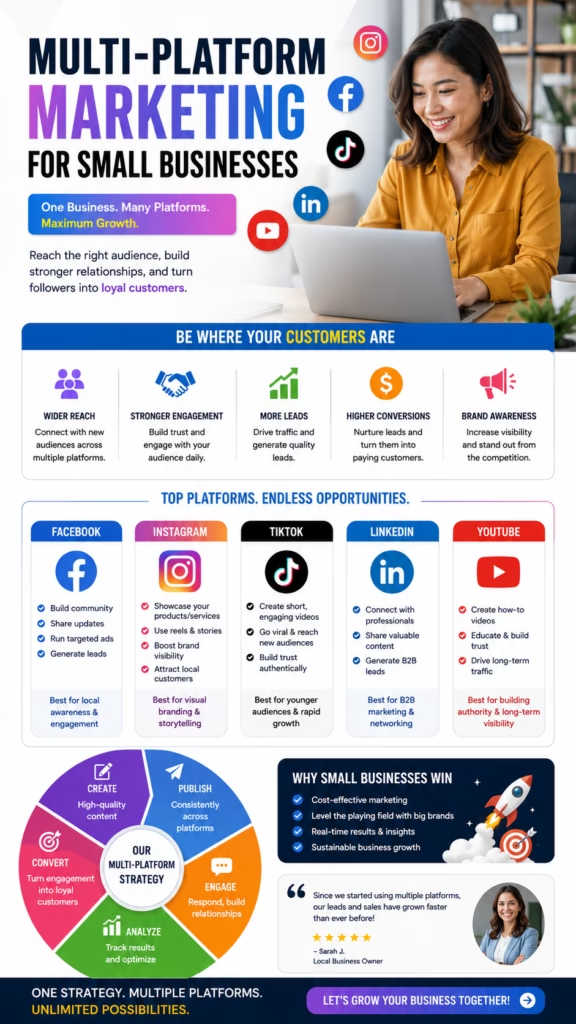
Multi-Platform Marketing for Small Businesses
Multi-Platform Marketing for Small Businesses explains how local companies can use Google Maps, websites, SEO, Craigslist, Facebook Marketplace, OfferUp, Nextdoor, social media, ads, email, SMS, tracking, automation, and follow-up systems to generate more leads and customers.
Introduction
Multi-Platform Marketing for Small Businesses is one of the most important growth strategies for companies that want steady visibility, stronger local reach, and more customer inquiries. Small businesses can no longer depend on one platform, one ad, or one source of traffic. Customers search, browse, compare, message, and buy across many different channels.
Some customers find businesses on Google Maps. Others search websites and local SEO pages. Some browse Facebook Marketplace, Craigslist, or OfferUp. Others ask neighbors on Nextdoor. Many discover brands through social media, short-form video, paid ads, email, SMS, or referrals. A small business that shows up across multiple platforms has more chances to be found, trusted, and contacted.
Multi-platform marketing for small businesses connects visibility, trust, offers, lead capture, tracking, automation, and follow-up across several customer channels.
The goal is not to randomly post everywhere. The goal is to build a system where every channel has a purpose. Google Maps can capture high-intent local searchers. A website can explain services and convert visitors. Marketplace platforms can generate message-based leads. Nextdoor can build neighborhood trust. Social media can create awareness. Paid ads can accelerate visibility. Email and SMS can follow up with interested customers.
When these pieces work together, small businesses can create a stronger marketing engine. Instead of depending on one platform, the business has multiple ways to attract leads, track performance, and convert inquiries into revenue.
Main idea: Multi-Platform Marketing for Small Businesses helps companies turn scattered online activity into an organized, measurable customer growth system.
Table of Contents
- 1) What multi-platform marketing means
- 2) Why small businesses need more than one channel
- 3) Google Maps and local search visibility
- 4) Websites and SEO as the conversion hub
- 5) Craigslist, Marketplace, and OfferUp marketing
- 6) Nextdoor and neighborhood trust
- 7) Social media and content marketing
- 8) Paid ads and faster visibility
- 9) Email, SMS, and customer follow-up
- 10) Offers and calls to action
- 11) Lead tracking and source attribution
- 12) Automation and CRM workflows
- 13) Measuring performance and improving results
- 14) Common mistakes small businesses make
- 15) Final thoughts
- 16) FAQs
- 17) Extra keywords
1) What Multi-Platform Marketing Means
Multi-platform marketing means using several marketing channels together to reach customers, capture inquiries, and grow the business. Instead of relying on one platform, the business creates multiple pathways for people to discover, evaluate, and contact it.
A true multi-platform system connects the front-end marketing channels with back-end tracking and follow-up. Every call, message, form submission, booking, quote request, or customer conversation should be connected to a source.
A multi-platform marketing system can include:
- Google Maps
- Google Business Profile
- Website SEO
- Landing pages
- Craigslist
- Facebook Marketplace
- OfferUp
- Nextdoor
- Social media
- Paid ads
- Email and SMS
- CRM and automation
Multi-Platform Marketing for Small Businesses works best when every platform feeds into one organized lead and customer management system.
2) Why Small Businesses Need More Than One Channel
Small businesses need more than one channel because customers do not all behave the same way. Some search with urgency. Some browse casually. Some compare reviews. Some wait for offers. Some trust recommendations. Some need several touchpoints before contacting a business.
Relying on one platform can create risk. Algorithm changes, ad cost increases, account issues, ranking changes, or slow seasons can reduce lead flow. A multi-platform approach creates more balance and more opportunities.
Single-channel marketing:
One platform changes
Leads drop
Business reacts late

Multi-platform marketing:
Several channels create visibility
Leads are tracked by source
Follow-up improves conversion
Business has more stability
Small businesses create stronger growth when they reach customers across the platforms those customers already use.
3) Google Maps and Local Search Visibility
Google Maps is one of the most important platforms for local businesses because customers often use it when they are ready to take action. They may call, request directions, visit a website, read reviews, book appointments, or request quotes.
Small businesses should optimize their Google Business Profile with accurate information, categories, services, photos, reviews, posts, and contact options. This helps customers find and trust the business.
Google Maps can generate:
- Phone calls
- Website clicks
- Direction requests
- Messages
- Appointment bookings
- Quote requests
- Store visits
- Local search visibility
Google Maps should be a core part of multi-platform marketing for small businesses that depend on local customers.
4) Websites and SEO as the Conversion Hub
A website acts as the central conversion hub for multi-platform marketing. Customers from Google Maps, social media, paid ads, marketplace listings, Nextdoor, and referrals often visit the website before deciding to contact the business.
The website should clearly explain services, locations, offers, reviews, photos, FAQs, and next steps. It should load quickly on mobile and make it easy to call, book, request a quote, or submit a form.
A small business website should include:
- Clear service pages
- Location pages
- Strong calls to action
- Contact forms
- Click-to-call buttons
- Reviews and testimonials
- Photos and project proof
- FAQ sections
- Fast mobile loading
- Tracking and analytics
A strong website helps turn traffic from every platform into measurable leads.
5) Craigslist, Marketplace, and OfferUp Marketing
Craigslist, Facebook Marketplace, and OfferUp can help small businesses reach local buyers and message-driven customers. These platforms can work for products, services, vehicles, mobile homes, furniture, mattresses, equipment, local offers, and appointment-based businesses.
Successful marketplace marketing depends on strong photos, clear titles, local targeting, helpful descriptions, fair pricing, and fast replies. Each platform should have listings adapted to its audience.
Marketplace lead flow:
Customer sees listing
Customer reads details and views photos
Customer sends message or calls
Business replies quickly
Lead is tracked and followed up with
Customer books, buys, visits, or requests a quote
Marketplace platforms can add high-volume local message leads to a small business marketing system.
6) Nextdoor and Neighborhood Trust
Nextdoor is useful for small businesses that rely on local trust and neighborhood recommendations. Home service companies, contractors, retailers, repair providers, restaurants, and local professionals can use Nextdoor to become more visible in communities.
Small businesses can post helpful local content, share offers, show project photos, ask for recommendations, and respond to nearby customer inquiries. Nextdoor works best when businesses provide useful community value instead of only posting sales messages.
Nextdoor can support:
- Neighborhood visibility
- Local recommendations
- Service requests
- Referral conversations
- Homeowner leads
- Local offers
- Community trust
Nextdoor helps small businesses turn neighborhood trust into local customer conversations.
7) Social Media and Content Marketing
Social media helps small businesses create awareness, build familiarity, educate customers, and stay top of mind. Platforms such as Facebook, Instagram, TikTok, YouTube, and LinkedIn can support different types of content and customer relationships.
Content can include short videos, before-and-after posts, customer stories, testimonials, tips, behind-the-scenes clips, product highlights, offers, and local updates. The key is consistency and relevance.
Useful social media content includes:
- Short-form videos
- Before-and-after posts
- Customer testimonials
- Educational tips
- Local service reminders
- Product highlights
- Promotional offers
- Team introductions
- Project examples
Social media supports multi-platform marketing by building trust before customers are ready to buy.
8) Paid Ads and Faster Visibility
Paid ads can help small businesses get visibility faster than organic channels alone. Businesses can use search ads, social ads, retargeting ads, local service ads, or boosted posts to promote specific offers and reach targeted audiences.
Paid ads work best when connected to landing pages, lead forms, call tracking, message flows, and CRM follow-up. Running ads without tracking can waste budget.
Paid ad system:
Target the right audience
Promote a clear offer
Send traffic to landing page or message flow
Capture lead details
Track cost per lead
Follow up quickly
Paid ads should feed into the same tracking and follow-up system as every other marketing channel.
9) Email, SMS, and Customer Follow-Up
Email and SMS help small businesses follow up with leads and customers after the first interaction. Many customers do not buy immediately. Follow-up keeps the conversation alive and increases the chance of conversion.
Businesses can use email and SMS for appointment reminders, quote follow-up, promotions, reactivation campaigns, review requests, event announcements, and customer education.
Email and SMS can support:
- Lead follow-up
- Missed call text-back
- Appointment reminders
- Quote reminders
- Review requests
- Customer reactivation
- Promotional campaigns
- Service reminders
Follow-up channels help small businesses convert more leads without needing more traffic.
10) Offers and Calls to Action
Every platform should include a clear reason for customers to respond. Offers and calls to action make the next step obvious. Depending on the business, the offer may be a free estimate, consultation, quote, appointment, discount, financing option, local pickup, service check, or product availability.
The call to action should match the platform. On Google Maps, it may be “call now.” On a website, it may be “request a quote.” On Marketplace, it may be “message for availability.” On Nextdoor, it may be “ask about local openings.”
CTA examples:
Call for a free estimate
Request a quote today
Message us for availability
Book your appointment
Ask about local openings
Get pricing details
Schedule a consultation
Clear calls to action turn attention into measurable customer inquiries.
11) Lead Tracking and Source Attribution
Lead tracking is essential for multi-platform marketing. Small businesses need to know which channels create calls, messages, bookings, sales, and revenue. Without tracking, it is hard to know what is working.
Source attribution connects each lead to the platform or campaign that produced it. This can be done with CRM tags, call tracking, UTM links, form fields, intake questions, spreadsheets, and automation tools.
Lead tracking should include:
- Lead name
- Phone or email
- Lead source
- Platform or campaign
- Service or product interest
- Location
- Lead status
- Follow-up date
- Appointment status
- Closed revenue
Multi-Platform Marketing for Small Businesses becomes more powerful when every lead is tracked by source and outcome.
12) Automation and CRM Workflows
Automation and CRM workflows help small businesses organize leads and respond faster. When inquiries come from several platforms, it is easy for messages to get missed. A CRM helps centralize customer information and follow-up steps.
Automation can send lead alerts, missed call texts, appointment reminders, quote follow-ups, review requests, and customer reactivation messages. It helps the business stay consistent even when the team is busy.
Automation workflow:
Lead comes in
Source is tagged
Team gets notified
Lead receives confirmation
Follow-up task is created
Appointment reminder is sent
Outcome is tracked
CRM and automation help small businesses turn scattered inquiries into organized sales opportunities.
13) Measuring Performance and Improving Results
Multi-platform marketing should be measured regularly. Small businesses should review which platforms produce leads, which leads convert, which offers work, and where time or money is being wasted.
Performance data helps businesses make better decisions. If Google Maps produces high-quality calls, invest more in profile optimization. If Marketplace creates messages but low conversions, improve qualification. If ads cost too much, refine the offer or landing page.
Important performance metrics:
- Leads by source
- Calls by platform
- Messages by channel
- Website form submissions
- Cost per lead
- Appointment booking rate
- Close rate
- Revenue by source
- Follow-up response rate
- Customer acquisition cost
Measuring performance helps small businesses improve the channels that drive real growth.
14) Common Mistakes Small Businesses Make
Many small businesses try multi-platform marketing but struggle because they do not have a system. They post inconsistently, use unclear offers, ignore tracking, respond slowly, or fail to connect platforms into one lead management process.
- Posting on many platforms without a plan
- No clear offer
- No lead tracking
- No source attribution
- Slow response times
- No follow-up process
- Weak website or landing pages
- Inconsistent branding
- No CRM
- No automation support
- No performance review
- Stopping before collecting enough data
Big mistake: confusing activity with strategy. Posting everywhere is not the same as building a multi-platform marketing system.
15) Final Thoughts
Multi-Platform Marketing for Small Businesses is about creating multiple ways for customers to discover, trust, and contact the business. A strong system does not depend on one platform. It connects Google Maps, websites, marketplaces, Nextdoor, social media, paid ads, email, SMS, tracking, automation, and follow-up.
Small businesses that build organized multi-platform systems can generate more consistent leads, better understand what works, reduce wasted effort, and convert more inquiries into customers. The key is not just visibility. The key is visibility connected to tracking and follow-up.
Final takeaway: Multi-platform marketing helps small businesses turn online visibility into organized, measurable, repeatable customer growth.
16) FAQs
1) What is multi-platform marketing for small businesses?
It is the process of using multiple marketing channels together to attract, capture, track, and convert leads.
2) Why is multi-platform marketing important?
It helps small businesses reach customers across different platforms and reduce dependence on one lead source.
3) What platforms should small businesses use?
Small businesses can use Google Maps, websites, SEO, Craigslist, Facebook Marketplace, OfferUp, Nextdoor, social media, paid ads, email, SMS, and referrals.
4) How does Google Maps fit into multi-platform marketing?
Google Maps captures high-intent local customers who are actively searching for nearby businesses.
5) Why is a website important?
A website acts as the central conversion hub where customers can learn more, call, book, request quotes, or submit forms.
6) Can Craigslist, Marketplace, and OfferUp generate leads?
Yes. These platforms can generate calls, messages, product inquiries, service leads, and local customer conversations.
7) Can Nextdoor help small businesses?
Yes. Nextdoor can help businesses build neighborhood trust, earn recommendations, and generate local inquiries.
8) Does social media help lead generation?
Yes. Social media builds awareness, trust, and engagement that can lead to calls, messages, and website visits.
9) Should small businesses use paid ads?
Paid ads can help when they are connected to clear offers, landing pages, tracking, and follow-up.
10) What is source attribution?
Source attribution is identifying which platform, campaign, or channel produced each lead.
11) Why is lead tracking important?
Lead tracking helps businesses understand which platforms produce leads, appointments, sales, and revenue.
12) What should businesses track?
Businesses should track lead source, contact details, service requested, location, lead status, follow-up date, appointment status, and revenue.
13) Can automation help?
Yes. Automation can help with lead alerts, missed call text-back, appointment reminders, quote follow-up, and review requests.
14) What is a CRM?
A CRM is a system used to organize leads, customer details, follow-up tasks, appointments, and sales outcomes.
15) What is the biggest multi-platform marketing mistake?
The biggest mistake is using many platforms without a clear strategy, tracking system, follow-up process, or consistent offer.
16) Should every platform use the same message?
The core message should be consistent, but each platform should be adapted to the way customers use it.
17) How do offers help?
Offers give customers a reason to take action, such as calling, booking, messaging, or requesting a quote.
18) How does SMS help marketing?
SMS can help with fast follow-up, appointment reminders, missed call responses, and customer reactivation.
19) How does email help marketing?
Email can support follow-up, promotions, customer education, review requests, and reactivation campaigns.
20) How often should results be reviewed?
Results should be reviewed regularly to identify which platforms are producing the best leads and customers.
21) Can local service businesses use multi-platform marketing?
Yes. Local service businesses can use multiple platforms to generate calls, quotes, appointments, and booked jobs.
22) Can retailers use multi-platform marketing?
Yes. Retailers can use Google Maps, websites, marketplace listings, social media, ads, email, and local offers.
23) How can businesses improve lead quality?
They can improve lead quality with better targeting, clearer offers, stronger landing pages, qualification questions, and follow-up.
24) Is multi-platform marketing expensive?
It can be built at different budget levels. The key is tracking results and focusing on platforms that create profitable leads.
25) What is the main goal of multi-platform marketing?
The main goal is to turn visibility across multiple channels into organized leads, customers, sales, and repeatable growth.
17) Extra Keywords
- Multi-Platform Marketing for Small Businesses
- multi-platform marketing
- small business marketing
- local marketing
- Google Maps marketing
- Google Business Profile marketing
- Marketplace marketing
- Craigslist marketing
- OfferUp marketing
- Nextdoor marketing
- social media marketing for small businesses
- local SEO
- small business lead generation
- multi-channel marketing
- local customer acquisition
- lead tracking system
- CRM for small businesses
- marketing automation
- website lead capture
- landing page conversion
- paid ads for small businesses
- email marketing follow-up
- SMS marketing follow-up
- marketplace lead generation
- small business growth system













