Nextdoor Customer Engagement Strategies
Nextdoor Customer Engagement Strategies explains how local businesses can build stronger neighborhood relationships, increase conversations, earn recommendations, answer customer questions, and turn nearby engagement into real leads.
Introduction
Nextdoor Customer Engagement Strategies are important because local customers often choose businesses they recognize, trust, and see active in their community. A nearby resident may need a painter, plumber, HVAC company, cleaner, landscaper, mattress store, restaurant, pet service, real estate professional, wellness provider, or local shop. Before reaching out, that customer usually wants confidence.
Nextdoor gives businesses a way to build that confidence through neighborhood-level engagement. Unlike broad social platforms, Nextdoor centers conversations around local communities. That means businesses can interact with people who live nearby and may actually become customers.
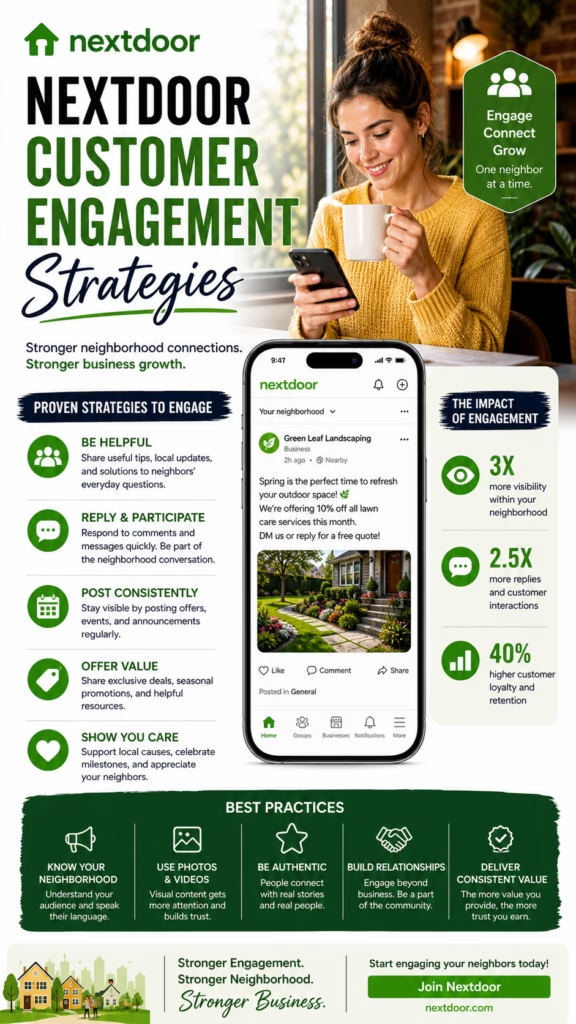
Nextdoor customer engagement strategies work when businesses use helpful communication, local trust, recommendations, strong profiles, clear offers, and fast replies to create real customer action.
Engagement is more than posting. It includes responding to comments, answering questions, thanking customers, asking for recommendations, sharing useful local tips, promoting timely offers, and guiding interested residents toward calls, messages, bookings, visits, or quote requests.
Many businesses fail on Nextdoor because they treat engagement like advertising only. They post generic promotions and then disappear. The stronger approach is to act like a trusted local resource. When a business is helpful, responsive, and consistent, it becomes easier for nearby customers to remember and contact.
Main idea: Nextdoor customer engagement strategies help businesses turn neighborhood visibility into conversations, trust, inquiries, appointments, visits, and leads.
Table of Contents
- 1) Why engagement matters on Nextdoor
- 2) How neighborhood conversations create customer trust
- 3) Building a profile that supports engagement
- 4) Posting helpful local content
- 5) Responding to comments and messages
- 6) Using recommendations to increase engagement
- 7) Offers that encourage customer conversations
- 8) Photos and visuals that improve response
- 9) Service-area messaging that feels local
- 10) Turning engagement into inquiries
- 11) Engagement strategies for service businesses
- 12) Engagement strategies for storefronts
- 13) Tracking engagement and lead quality
- 14) Common engagement mistakes
- 15) Final thoughts
- 16) FAQs
- 17) Extra keywords
1) Why Engagement Matters on Nextdoor
Engagement matters on Nextdoor because people often use the platform to ask local questions, compare businesses, share experiences, and discover nearby services. A business that engages professionally can become part of those local conversations.
When residents see a business answering questions, sharing helpful updates, and receiving recommendations, the business becomes more familiar. Familiarity can lead to trust, and trust can lead to inquiries.
Nextdoor engagement can help businesses increase:
- Neighborhood visibility
- Direct messages
- Phone calls
- Quote requests
- Store visits
- Customer recommendations
- Local brand awareness
- Website clicks
- Appointment bookings
- Repeat customer interest
Nextdoor customer engagement strategies matter because local conversations can turn into real customer opportunities.
2) How Neighborhood Conversations Create Customer Trust
Neighborhood conversations create trust because they feel closer to real-life word-of-mouth. When a resident asks for a recommendation and neighbors respond, the conversation can influence buying decisions. A business that appears in those conversations can gain credibility.
Trust is especially important for local services. Customers want to know that the business is reliable, professional, responsive, and familiar with the area. Engagement can help communicate those qualities before the first call.
Resident asks a local question
Business or customer responds helpfully
Other residents see the conversation
Trust and awareness increase
Customer inquiry becomes more likely
Nextdoor engagement works best when businesses participate in ways that feel helpful, local, and trustworthy.
3) Building a Profile That Supports Engagement
A strong business profile supports engagement because residents may click the profile after seeing a comment, post, recommendation, or offer. If the profile is incomplete, the resident may lose interest. If the profile is clear and professional, the resident is more likely to continue the conversation.
The profile should explain what the business does, who it serves, where it works, and how customers can take the next step. It should support every engagement point with credibility.
An engagement-focused profile should include:
- Clear business name
- Accurate contact information
- Service areas
- Business category
- Professional description
- Photos or visuals
- Website link
- Customer recommendations
- Simple call to action
A complete profile helps turn Nextdoor engagement into customer confidence and action.
4) Posting Helpful Local Content
Helpful local content is one of the best ways to create engagement. Instead of only posting promotions, businesses should share information that residents actually care about. This may include seasonal reminders, maintenance tips, buying advice, neighborhood offers, local service availability, or project examples.
Helpful posts can increase comments, saves, messages, and awareness. They also position the business as useful instead of pushy.
Helpful post formula:
Local problem or need
Simple advice or useful insight
Business relevance
Clear next step
Friendly call to action
Helpful content increases engagement because it gives nearby residents a reason to pay attention, respond, and remember the business.
5) Responding to Comments and Messages
Responses are a major part of customer engagement. When residents comment or message, the business should reply quickly and professionally. A good response can turn casual interest into a qualified inquiry.
The response should answer the question, provide helpful information, and guide the person to a next step. If the business only gives short or unclear replies, the lead may fade.
Strong response habits include:
- Reply quickly
- Use a friendly tone
- Answer clearly
- Provide useful details
- Ask a simple qualifying question
- Offer a clear next step
- Move serious inquiries toward call, quote, booking, or visit
Fast and helpful responses can turn Nextdoor engagement into real customer inquiries.
6) Using Recommendations to Increase Engagement
Recommendations can create powerful engagement because they come from customer experiences. When residents recommend a business, others may comment, ask questions, visit the profile, or send a message. This creates a trust-based engagement loop.
Businesses should encourage satisfied customers to recommend them naturally. This is especially useful after a completed project, successful purchase, positive service appointment, or strong customer experience.
Recommendations can increase:
- Customer trust
- Profile visits
- Message volume
- Phone calls
- Local recognition
- Word-of-mouth visibility
- Customer confidence
Recommendations are one of the strongest engagement signals because they make the business feel trusted by the neighborhood.
7) Offers That Encourage Customer Conversations
Offers can encourage engagement when they are relevant and easy to understand. A resident may comment or message when they see a free estimate, seasonal discount, same-week appointment opening, local delivery option, new customer special, or neighborhood-only promotion.
The offer should not feel spammy. It should feel helpful, timely, and local. Strong offers explain what is available, who it helps, where it applies, and how to respond.
Offer structure:
Clear offer
Local relevance
Simple benefit
Availability or timing
Message/call CTA
Offers increase customer engagement when they give residents a clear reason to start a conversation.
8) Photos and Visuals That Improve Response
Photos and visuals can make posts more engaging. People are more likely to notice content that looks real, clear, and useful. For local businesses, visuals can show proof of work, products, storefronts, team members, service vehicles, before-and-after results, or branded local offers.
Real visuals often build more trust than generic graphics. A mix of professional photos, project examples, and clean branded images can improve engagement.
Useful engagement visuals include:
- Before-and-after photos
- Completed project images
- Product photos
- Storefront images
- Team photos
- Service vehicle photos
- Local offer graphics
- Customer-friendly branded images
Strong visuals improve engagement by making the business feel more real, active, and trustworthy.
9) Service-Area Messaging That Feels Local
Service-area messaging helps residents know whether the business is relevant to them. Instead of vague language, businesses should mention cities, neighborhoods, regions, or nearby communities they serve. This makes posts feel more personal and useful.
Local language can increase engagement because residents recognize their area. A post that says “serving nearby homeowners in [city] this week” feels more relevant than a generic national-style message.
Nextdoor customer engagement strategies work better when businesses speak directly to nearby neighborhoods and service areas.
10) Turning Engagement Into Inquiries
Engagement should lead somewhere. Likes and comments are useful, but the real goal is customer action. Businesses should guide interested residents toward calls, messages, quote requests, bookings, appointments, visits, or website clicks.
Every post and profile should have a simple path to the next step. The clearer the path, the easier it is for engagement to become a lead.
Engagement to inquiry flow:
Resident sees post
Resident comments or messages
Business replies quickly
Business answers question
Business offers next step
Inquiry becomes call, quote, booking, or visit
Nextdoor engagement becomes valuable when it turns attention into measurable customer inquiries.
11) Engagement Strategies for Service Businesses
Service businesses can use Nextdoor engagement to show expertise and availability. Contractors, painters, plumbers, HVAC companies, cleaners, landscapers, roofers, electricians, pest control companies, movers, and handymen can all benefit from helpful local interaction.
Service businesses should answer common questions, post tips, share project photos, mention appointment availability, ask for recommendations, and invite residents to request estimates.
Service business engagement ideas:
- Seasonal maintenance tips
- Free estimate posts
- Before-and-after project photos
- Common problem explanations
- Emergency availability updates
- Neighborhood service reminders
- Customer recommendation requests
Service businesses increase engagement when they show expertise, proof, and clear availability.
12) Engagement Strategies for Storefronts
Storefronts can use Nextdoor engagement to increase local awareness, calls, visits, product questions, and repeat interest. Restaurants, mattress stores, furniture shops, boutiques, wellness centers, pet stores, and local retailers can share updates that give residents a reason to visit.
Storefronts should post about new arrivals, local specials, events, product highlights, delivery options, hours, seasonal offers, and customer favorites.
Storefront engagement ideas:
- New product announcements
- Limited-time local specials
- Event reminders
- Same-day delivery updates
- Customer favorite highlights
- Store hours reminders
- Neighborhood shopping incentives
Storefronts increase engagement when they give nearby residents timely reasons to call, visit, ask questions, or shop locally.
13) Tracking Engagement and Lead Quality
Tracking is important because not all engagement has the same value. A post may get attention, but the business needs to know whether that attention becomes customer inquiries, appointments, store visits, or sales.
Businesses can track engagement using profile views, comments, messages, phone calls, website clicks, quote requests, bookings, offer redemptions, and customers who mention Nextdoor.
Important engagement metrics include:
- Post views
- Comments
- Direct messages
- Recommendations
- Profile visits
- Phone calls
- Website clicks
- Quote requests
- Appointments booked
- Closed customers
Tracking helps businesses understand which Nextdoor customer engagement strategies create real leads.
14) Common Engagement Mistakes
Many businesses struggle with Nextdoor engagement because they post without a plan. They may use generic copy, ignore messages, fail to respond to comments, avoid recommendations, or post only sales content. These mistakes reduce trust and lower inquiry potential.
- Posting only promotions
- Ignoring comments
- Responding too slowly
- Using generic non-local language
- Leaving the profile incomplete
- Not asking for recommendations
- Using poor visuals
- No clear call to action
- No tracking system
- No follow-up process
Big mistake: treating engagement as random posting instead of a system for building trust and generating customer inquiries.
15) Final Thoughts
Nextdoor Customer Engagement Strategies help local businesses build stronger neighborhood relationships and turn local attention into meaningful customer action. The best engagement is helpful, responsive, clear, and trust-focused.
Businesses that succeed on Nextdoor usually do more than post occasional promotions. They complete their profile, share useful content, reply quickly, earn recommendations, use strong visuals, promote relevant offers, and guide residents toward the next step.
Final takeaway: Nextdoor customer engagement strategies work when businesses build neighborhood trust, create useful conversations, respond quickly, and turn local attention into calls, messages, visits, bookings, and leads.
16) FAQs
1) What are Nextdoor customer engagement strategies?
They are methods businesses use to interact with nearby residents, build trust, answer questions, earn recommendations, and generate inquiries.
2) Why does engagement matter on Nextdoor?
Engagement matters because residents are more likely to contact businesses that feel active, helpful, local, and trustworthy.
3) Can Nextdoor engagement generate leads?
Yes. Engagement can generate leads when businesses turn conversations into calls, messages, quote requests, bookings, or visits.
4) What businesses should use Nextdoor engagement?
Service businesses, contractors, retailers, restaurants, wellness providers, real estate professionals, pet services, and storefronts can benefit.
5) What should businesses post on Nextdoor?
They should post helpful tips, local updates, offers, project examples, service availability, product highlights, and community-relevant content.
6) Should businesses reply to comments?
Yes. Replying to comments helps build trust and can turn casual interest into inquiries.
7) How fast should businesses respond?
Businesses should respond as quickly as possible because interested residents may contact competitors too.
8) Do recommendations increase engagement?
Yes. Recommendations can increase profile visits, messages, trust, and local awareness.
9) Should businesses use photos?
Yes. Photos make posts and profiles more real, credible, and engaging.
10) What is a good call to action?
A good call to action is clear, such as “Message us for a free estimate” or “Call today to check availability.”
11) Can Nextdoor help service businesses?
Yes. Service businesses can use Nextdoor to answer questions, show expertise, share proof, and generate local inquiries.
12) Can Nextdoor help storefronts?
Yes. Storefronts can use Nextdoor to increase product questions, calls, visits, and neighborhood awareness.
13) Should businesses mention service areas?
Yes. Service-area messaging helps residents know whether the business serves them.
14) Are offers useful for engagement?
Yes. Clear local offers can encourage residents to comment, message, call, or visit.
15) What is the biggest engagement mistake?
The biggest mistake is posting generic promotions without building trust, responding, or creating a clear next step.
16) How can businesses track engagement?
They can track comments, messages, profile visits, recommendations, phone calls, website clicks, quote requests, and bookings.
17) Should businesses connect Nextdoor to a website?
Yes. A website helps interested residents learn more, request quotes, book appointments, or verify the business.
18) How often should businesses post?
Businesses should post consistently without spamming. Weekly or seasonal updates can work well.
19) Should posts be conversational?
Yes. Conversational, helpful, local posts often feel more natural than aggressive ads.
20) Can Nextdoor engagement support local SEO?
Yes. It can support local awareness alongside Google Maps, website SEO, reviews, and other local channels.
21) Can engagement increase customer calls?
Yes. Strong engagement can build enough trust for residents to call the business directly.
22) Can engagement increase quote requests?
Yes. Helpful posts and clear CTAs can encourage residents to ask for quotes.
23) Should businesses use branded graphics?
Yes, but they should also use real photos when possible to build trust.
24) Is Nextdoor engagement a one-time task?
No. It works best as an ongoing local visibility and relationship-building process.
25) What is the main goal of Nextdoor customer engagement?
The main goal is to turn neighborhood attention into trust, conversations, inquiries, appointments, visits, and leads.
17) Extra Keywords
- Nextdoor Customer Engagement Strategies
- Nextdoor engagement
- Nextdoor marketing
- Nextdoor for business
- local customer engagement
- neighborhood marketing
- Nextdoor lead generation
- local business engagement
- customer inquiries
- local business leads
- Nextdoor recommendations
- community engagement marketing
- local customer conversations
- neighborhood business growth
- local service marketing
- home service engagement
- storefront engagement
- local trust marketing
- word-of-mouth marketing
- Nextdoor customer messages
- local quote requests
- Nextdoor profile optimization
- customer response strategy
- local engagement strategy
- Nextdoor customer acquisition