
How Google Maps Rankings Influence Customer Calls
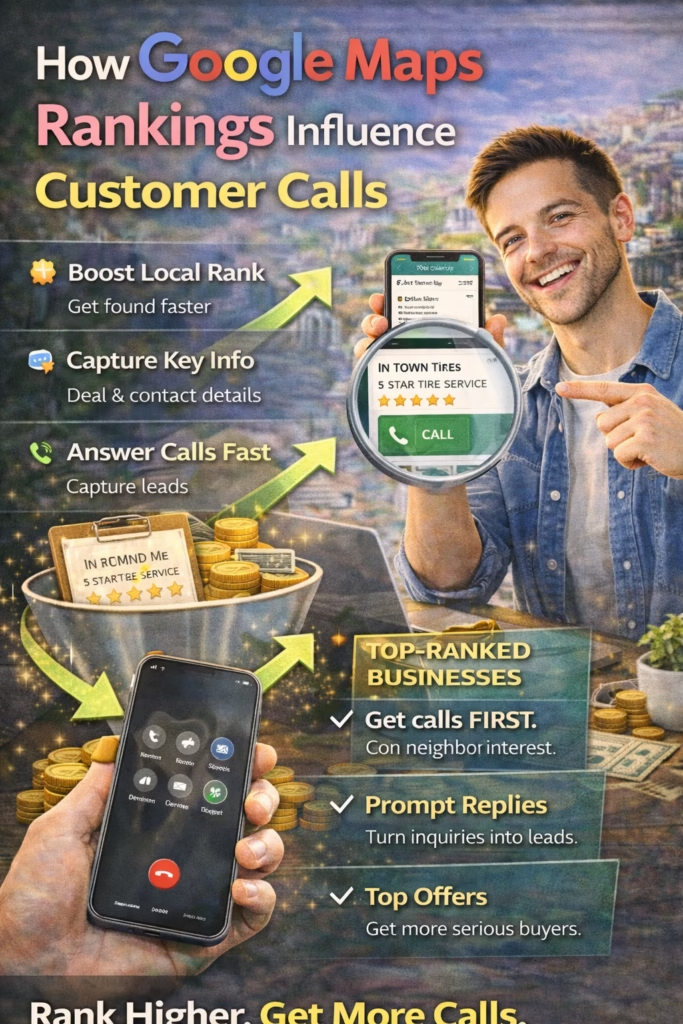
How Google Maps Rankings Influence Customer Calls explains how stronger Google Maps rankings increase local visibility, improve Google Business Profile performance, and create more customer phone calls by putting a business in front of nearby high-intent searchers more often.
Introduction
How Google Maps Rankings Influence Customer Calls is one of the most practical questions any local business can ask. Most businesses want more calls, but not every business understands how strongly those calls are tied to ranking position in Google Maps. Local search behavior is fast. People often search with immediate need, compare a few businesses quickly, and tap the call button on the option that feels both visible and trustworthy. That means rankings matter not only for visibility, but for call opportunity.
Still, rankings alone do not tell the whole story. A business may rank well and still underperform if the profile feels weak. The reverse is also true. A strong profile that rarely appears misses the chance to be chosen. That is why understanding the relationship between rankings and call volume is so important. Rankings influence who gets seen. Profile quality influences who gets called. The businesses that win usually improve both together.
Google Maps rankings influence customer calls because higher visibility creates more chances to be contacted, especially when the business appears at the exact moment local need is strongest.
This matters across many industries. Painters, plumbers, mattress stores, roofers, HVAC businesses, chiropractors, cleaners, electricians, landscapers, and many other local companies often depend heavily on phone calls from local searchers. If the business rises in Maps visibility and the profile feels strong enough to earn trust, call volume often rises too. If rankings fall, the call opportunities usually shrink.
That is why Maps rankings are not just about SEO vanity. They are directly tied to lead flow. Businesses that improve rankings gain more exposure to nearby searchers. Businesses that pair those rankings with stronger categories, reviews, photos, services, and profile completeness make those impressions much more likely to turn into calls.
Main idea: Google Maps rankings influence customer calls by controlling how often a business is seen in local search and how often high-intent searchers have the chance to choose it first.
Table of Contents
- 1) Why Google Maps rankings matter for customer calls
- 2) How rankings influence local search visibility
- 3) Why higher visibility often leads to more phone calls
- 4) The role of intent in Maps-driven call behavior
- 5) Why ranking alone is not enough
- 6) Categories and ranking relevance
- 7) Reviews and their effect on call conversion
- 8) Photos and how they affect call decisions
- 9) Service details that strengthen the ranking-to-call path
- 10) Trust signals that increase call confidence
- 11) Why top-ranking businesses often get disproportionate calls
- 12) Common mistakes that weaken Maps call performance
- 13) A practical workflow for improving rankings and calls
- 14) Why ongoing optimization matters for long-term call growth
- 15) Final thoughts
- 16) FAQs
- 17) Extra keywords
1) Why Google Maps Rankings Matter for Customer Calls
Google Maps rankings matter because local searchers often call the businesses they see first or the businesses that feel strongest among the top results. If a company rarely appears in the most visible part of Maps, it gets fewer opportunities to earn the call. More visibility usually means more profile views, and more profile views create more chances for a phone call to happen.
This is especially true in urgent or practical local searches. Someone looking for help nearby often does not scroll endlessly. They compare a few visible options, decide quickly, and act. That means ranking position influences whether the business is even part of the conversation.
Higher Maps rankings often improve:
- Local search visibility
- Profile impressions
- Brand familiarity in the area
- Call opportunities
- Lead flow from high-intent searchers
Customer calls often begin with ranking visibility because businesses usually need to be seen before they can be chosen.
2) How Rankings Influence Local Search Visibility
Google Maps rankings influence local visibility by determining where and how often a business appears for searches related to its services or products. When the profile appears closer to the top of the most relevant results, it naturally receives more attention from nearby searchers. That attention is the first stage in the path toward a call.
Stronger rankings do not guarantee calls, but they increase the number of local people who can evaluate the business. Without visibility, even an excellent profile cannot perform. That is why rankings remain a central part of Maps call strategy.
Search happens
Business appears in Maps
Profile gets noticed
Searcher compares options
Call becomes possible
A business with weak Maps rankings often loses calls before the profile even gets the chance to compete.
3) Why Higher Visibility Often Leads to More Phone Calls
Higher visibility often leads to more calls because it increases exposure to local people with real intent. Google Maps users are frequently looking for a nearby solution they can contact right away. The more often the business appears in that decision window, the more likely it is to receive calls from people ready to act.
This relationship is not complicated. More relevant impressions create more profile interactions. More profile interactions create more opportunities for people to tap the phone number or call button. The key is that the visibility must be relevant and locally aligned with the search.
Google Maps rankings influence calls most strongly when the business is visible for searches tied to immediate local need.
4) The Role of Intent in Maps-Driven Call Behavior
Intent is one of the biggest reasons Google Maps rankings matter so much. Many local searchers using Maps are not just researching. They are actively looking for a business to contact, visit, or hire. That makes visibility inside Maps especially powerful compared with more passive forms of traffic.
A searcher looking for a nearby mattress store, HVAC company, painter, or plumber may be one click away from making a decision. If the business ranks well at that moment, the ranking directly affects whether the call opportunity exists.
Google Maps rankings influence calls more strongly than many other channels because Maps often captures people closer to action.
5) Why Ranking Alone Is Not Enough
Although rankings matter, ranking alone is not enough. A business can appear prominently in Maps and still lose the call if the profile feels weak, incomplete, or less trustworthy than nearby competitors. Searchers compare more than position. They compare reviews, photos, categories, service details, and overall confidence.
That is why Maps call growth is really a two-part system. The ranking creates the opportunity. The profile quality converts the opportunity.
Higher rankings create more chances for customer calls, but profile strength determines how many of those chances become real conversations.
6) Categories and Ranking Relevance
Categories matter because they shape how relevant the listing is to the search in the first place. Strong category selection helps the business appear for the right searches, and it also helps the searcher understand quickly whether the business is a fit. That means categories influence both visibility and call potential.
When the business uses stronger primary and supporting categories, it improves the likelihood of showing up in front of people who are more likely to call. Weak categories may attract the wrong visibility or reduce visibility altogether.
Better categories make Google Maps rankings more valuable by helping the business appear for searches more likely to produce phone calls.
7) Reviews and Their Effect on Call Conversion
Reviews play a major role in how rankings influence calls. A top-ranking listing with poor review strength may still lose attention to a slightly lower listing with stronger credibility. Searchers often use reviews as the deciding factor once a business appears in front of them.
That is why reviews amplify the impact of rankings. Higher visibility plus stronger review trust often produces much better call conversion than visibility alone.
Reviews strengthen the ranking-to-call relationship because they reduce hesitation when the searcher is deciding which visible business feels safest to contact.
8) Photos and How They Affect Call Decisions
Photos affect call decisions because they help the profile feel more real, active, and professional. Searchers often compare several businesses quickly, and visuals help shape which one feels more current or credible. Better photos can reinforce the trust created by ranking position.
For service businesses, photos may show work examples, vehicles, team presence, or real project evidence. For retail businesses, they may show the storefront, products, showroom, or buying environment. In both cases, stronger visuals support stronger call behavior.
Photos help rankings influence more calls because they make the visible business easier to trust at first glance.
9) Service Details That Strengthen the Ranking-to-Call Path
Service details matter because searchers want confirmation that the business handles the exact need they have in mind. When a Maps listing clearly communicates services, specialties, or categories of work, the path from ranking to call becomes much smoother.
Without clear service detail, the searcher may hesitate, open a competitor, or choose a different listing that feels more directly aligned with the problem. Businesses that dominate call volume often remove this uncertainty.
Rankings influence more calls when the profile clearly tells the searcher that the business is relevant to the exact job or need being searched.
10) Trust Signals That Increase Call Confidence
Trust signals make it easier for the searcher to act quickly. Reviews, complete information, strong categories, accurate hours, useful photos, and a professional profile all help reinforce the decision to call. These signals reduce the emotional cost of choosing one visible business over another.
Strong review profile
Accurate business details
Useful service information
Better photos
Clear category fit
Professional profile appearance
Rankings create more calls only when the profile feels trustworthy enough to turn visibility into confidence.
11) Why Top-Ranking Businesses Often Get Disproportionate Calls
Top-ranking businesses often get a disproportionate share of calls because local search behavior is compressed. Many people do not evaluate every option. They focus on the most visible businesses and make decisions quickly. That means even a small ranking improvement can sometimes create a large difference in call volume.
When that top-ranking visibility is combined with stronger reviews and stronger profile quality, the advantage grows even more. The business becomes both easier to notice and easier to trust.
Top Maps rankings often influence customer calls disproportionately because local searchers usually make decisions from a short list, not the full market.
12) Common Mistakes That Weaken Maps Call Performance
Many businesses try to improve rankings but overlook the factors that actually convert rankings into calls. They may have weak photos, thin reviews, incomplete services, poor categories, or outdated information. As a result, the business appears but does not get contacted as often as it could.
Common mistakes include:
- Focusing only on visibility without improving the profile
- Using weak or inaccurate categories
- Ignoring review growth and freshness
- Using poor or outdated photos
- Leaving services unclear
- Failing to keep profile information accurate
- Treating Maps optimization like a one-time task
Big mistake: assuming that better rankings automatically create more calls when the listing itself is not strong enough to win the customer’s trust.
13) A Practical Workflow for Improving Rankings and Calls
If a business wants to apply How Google Maps Rankings Influence Customer Calls in a practical way, it helps to follow a simple workflow.
Step 1: Improve primary and supporting categories
Step 2: Complete all core business profile details
Step 3: Strengthen reviews and review strategy
Step 4: Add better photos and trust-building visuals
Step 5: Clarify services and relevance
Step 6: Keep hours and contact details accurate
Step 7: Monitor local visibility and call activity
Step 8: Improve both ranking and conversion signals continuously
This works because call growth usually comes from improving both profile visibility and profile strength together.
Businesses get more calls from Google Maps when they strengthen the full ranking-to-conversion path instead of only chasing rank position.
14) Why Ongoing Optimization Matters for Long-Term Call Growth
Ongoing optimization matters because local competition changes and profile strength changes over time. A business that keeps improving categories, reviews, photos, services, and accuracy usually maintains stronger visibility and stronger call conversion than a business that stops updating its profile.
This ongoing attention is one of the reasons some businesses steadily increase Maps call volume while others plateau. Long-term call growth often reflects long-term profile management.
Google Maps rankings influence customer calls most consistently when optimization stays active and the profile keeps getting stronger over time.
15) Final Thoughts
How Google Maps Rankings Influence Customer Calls comes down to one simple truth: local visibility creates call opportunity. When a business ranks better, it appears in front of more nearby searchers with real intent. That increased exposure can directly lead to more customer calls, especially when the profile looks strong enough to earn trust quickly.
The businesses that benefit most from this usually improve more than rank position. They improve categories, reviews, profile details, photos, service clarity, and overall profile strength. That complete approach helps rankings influence calls more powerfully. Instead of just being visible, the business becomes the option local searchers actually feel comfortable contacting first.
Final takeaway: Google Maps rankings influence customer calls by increasing visibility to local high-intent searchers, but the strongest call growth happens when ranking strength is matched with a profile strong enough to convert that visibility into immediate trust and action.
16) FAQs
1) How do Google Maps rankings influence customer calls?
They influence customer calls by increasing how often a business appears in front of nearby searchers ready to act.
2) Why do higher rankings usually lead to more calls?
Because higher visibility puts the business into more local decisions and creates more chances for the call button to be clicked.
3) Can a business rank well and still get weak call volume?
Yes. Weak reviews, weak photos, unclear services, and low trust can limit calls even when rankings are strong.
4) What factors help rankings influence calls more strongly?
Strong categories, better reviews, accurate details, stronger photos, clear services, and overall profile trust help.
5) What is the biggest mistake businesses make?
One of the biggest mistakes is improving rankings without improving the profile’s ability to convert local searchers into calls.
6) Why do Maps rankings matter so much for local businesses?
Because Maps often captures people with stronger local intent who are ready to contact a business quickly.
7) Do categories really affect call volume?
Yes. Better categories improve relevance, which helps the business appear for more call-worthy searches.
8) Why do reviews matter after the ranking is earned?
Because reviews help determine whether the visible business feels safe and proven enough to contact.
9) Do photos really influence call decisions?
Yes. Stronger photos help the business feel more real, current, and trustworthy.
10) How do service details help?
They help by showing the searcher that the business is directly relevant to the need they have in mind.
11) What are trust signals in a Google Maps profile?
Trust signals include reviews, accurate details, useful photos, clear services, strong category fit, and profile completeness.
12) Why is profile completeness important?
Because complete profiles usually feel more dependable and easier to choose.
13) Do top-ranking businesses get more than their fair share of calls?
Often yes, because local searchers usually choose from a small visible group of businesses.
14) What usually weakens Maps call performance?
Weak reviews, poor visuals, inaccurate info, weak categories, unclear services, and stale optimization often weaken it.
15) Is ranking more important than profile quality?
Neither works well alone. Rankings create visibility, and profile quality creates conversion.
16) Can small businesses improve Maps calls without ads?
Yes. Better Google Business Profile optimization can improve call volume without paid ads.
17) What should businesses track?
They should track rankings, profile views, calls, clicks, reviews, and local engagement signals.
18) Is ongoing optimization really necessary?
Yes. Ongoing improvements help rankings and conversion stay strong over time.
19) Why do some visible businesses still get skipped?
Usually because the listing does not look as trustworthy or as complete as the nearby alternatives.
20) Does local intent make Maps more valuable than some other channels?
Yes. Many Maps users are closer to action than general browsing users are.
21) Can review growth improve calls quickly?
Yes. Better reviews often make the listing more persuasive very quickly.
22) Is this more about SEO or conversion?
It is about both, but conversion determines how much business value the rankings actually create.
23) What is the main goal of Maps ranking strategy?
The main goal is to turn stronger local search visibility into more real customer actions, especially calls.
24) Can incomplete listings still rank?
Sometimes yes, but they usually generate fewer calls than stronger profiles do.
25) What is the core principle behind how Maps rankings influence calls?
The core principle is that better local visibility creates more chances to be chosen, and stronger profile trust turns more of those chances into phone calls.
17) Extra Keywords
- How Google Maps Rankings Influence Customer Calls
- Google Maps rankings
- customer calls from Google Maps
- Google Business Profile
- local SEO
- Google Maps marketing
- local business calls
- Google Maps call volume
- Google Maps visibility
- Google Maps local intent
- Google Maps reviews
- Google Maps categories
- Google Maps photos
- Google Maps trust signals
- Google Maps service details
- Google Business Profile calls
- Google Maps lead generation
- Google Maps ranking strategy
- Google Maps local conversion
- Google Maps business profile optimization
- Google Maps phone leads
- Google Maps local rankings
- Google Maps call conversion
- Google Maps small business marketing
- Google Maps SEO and calls