
Market Wiz AI

Uncategorized

Leads Not Responding? Here’s What To Do

874305135990291467
Leads Not Responding? Here’s What To Do | Market Wiz AI

Leads Not Responding? Here’s What To Do

Reignite Your Pipeline with Proven Follow-Up Tactics by Market Wiz AI

Table of Contents

Introduction: Leads Not Responding? Here’s What To Do

Leads Not Responding? Here’s What To Do tackles the frustration of radio-silence from promising prospects. Instead of letting inquiries slip through the cracks, apply targeted tactics to re-engage cold leads, optimize your follow-up cadence, and prevent future drop-offs—so you keep your pipeline full and your revenue on track.

1. Why Leads Go Cold

1.1 High Initial Interest But No Commitment

Prospects may click or reply out of curiosity but hesitate to take the next step without clear value or urgency.

1.2 Poor Timing or Follow-Up Windows

Missing the ideal follow-up window—too early or too late—can cause leads to lose momentum or forget about you.

1.3 Lack of Personalization

Generic messages fail to resonate; leads need tailored information that speaks to their specific needs.

1.4 Overwhelming or Generic Messages

Blasting lengthy emails or multiple channels at once can overwhelm prospects and prompt them to tune out.

1.5 Misaligned Expectations

Leads may expect certain solutions or pricing that your initial pitch didn’t address, causing disengagement.

2. Immediate Actions to Re-Engage

2.1 Timing Your Follow-Up

Reach out within 24–48 hours of initial contact when their interest is still fresh; avoid waiting too long.

2.2 Crafting a Re-Engagement Message

Use concise language, reference prior interactions, and include a clear call-to-action tailored to their needs.

2.3 Leveraging Multiple Channels

Combine email, SMS, LinkedIn, or even a brief phone outreach to increase visibility without spamming.

2.4 Offering Value or Incentives

Share a helpful resource, limited-time discount, or exclusive invite to renew interest and prompt a response.

2.5 Personalizing Your Approach

Highlight something specific—company name, recent achievement, or mutual connection—to make your follow-up stand out.

3. Preventative Strategies for Future Leads

3.1 Automated Follow-Up Sequences

Set time-based sequences in your CRM to send reminders and messages at optimal intervals without manual effort.

3.2 Lead Segmentation & Scoring

Rank leads by engagement level, industry, or deal size to focus follow-ups where they matter most.

3.3 CRM Task Reminders & Tasks

Create tasks with clear due dates and notes to ensure no lead is forgotten in your pipeline.

3.4 Qualifying Leads Upfront

Use short qualification forms or chatbots to confirm fit before investing heavy follow-up resources.

3.5 Setting Realistic Expectations

Communicate next steps, timelines, and deliverables early to align with prospect needs and avoid surprises.

4. Tools & Tactics to Boost Response Rates

4.1 CRM Task Reminders

Platforms like HubSpot or Salesforce automatically prompt you when it’s time to reach back out.

4.2 SMS and Email Automation

Integrate tools like Twilio or Mailchimp to send timely, personalized follow-ups via the prospect’s preferred channel.

4.3 Chatbots for Instant Replies

Deploy bots on your website or Messenger to capture cold visitors and nurture them until a human handoff.

4.4 Engagement Analytics

Track opens, clicks, and replies to refine messaging, timing, and channel mix for higher engagement.

4.5 A/B Testing Your Messaging

Test subject lines, call-to-actions, and message lengths to discover what resonates best with each segment.

5. Case Studies & Success Stories

5.1 SaaS Company Increased Replies by 50%

By adding a one-sentence value-add in follow-up emails and segmenting by industry, a SaaS firm saw reply rates jump from 10% to 15%.

5.2 Local Service Provider Doubled Callbacks

An HVAC business integrated SMS reminders and personalized audio messages—doubling customer callbacks within two weeks.

6. Conclusion & Next Steps

Tackling “Leads Not Responding? Here’s What To Do” means blending rapid, personalized follow-ups with long-term pipeline hygiene. Implement immediate re-engagement tactics, automate your sequences, and leverage analytics to refine your approach. Consistency and relevance will transform cold leads into engaged opportunities.

Experience Market Wiz AI to automate follow-ups, score leads, and never miss an opportunity again.

7. 25 Frequently Asked Questions

1. Why are my leads not replying?

Common causes include poor timing, generic messaging, or lacking clear next steps.

2. How soon should I follow up?

Within 24–48 hours after initial contact to capitalize on fresh interest.

3. How many follow-ups are effective?

Typically 3–5 touches spaced over 10–14 days yields the best balance of persistence and respect.

4. Should I switch channels?

Yes—if email falls flat, try SMS, LinkedIn InMail, or a brief phone call.

5. What’s a re-engagement message?

A concise note referencing prior talks, adding value, and prompting a specific action.

6. Do incentives help?

Limited-time offers or free resources can motivate hesitant leads to respond.

7. How do I personalize at scale?

Use merge fields, dynamic content blocks, and CRM data to tailor messages automatically.

8. Can chatbots replace human follow-up?

They handle initial outreach and qualification, but complex conversations still need a human touch.

9. What metrics should I track?

Monitor open rates, click-throughs, reply rates, and progression to next stage.

10. How do I avoid spamming?

Space out messages, offer clear opt-out options, and always provide value in each touch.

11. Is SMS more effective than email?

SMS sees higher open rates but use sparingly to avoid intrusiveness.

12. How do I qualify leads early?

Incorporate short forms or chat flows asking key budget and timeline questions upfront.

13. Should I call after no response?

A polite call after your digital sequence can demonstrate sincerity and spark engagement.

14. What’s the best subject line?

Use curiosity or benefit-driven lines—e.g., “Quick question about [Prospect’s Company].”

15. How do I set reminders?

Leverage your CRM’s task feature or calendar integrations to auto-generate follow-up tasks.

16. Can automation hurt personalization?

Only if over-automated—always review templates for relevance before sending.

17. How do I segment effectively?

Group by industry, company size, role, or engagement level for tailored sequences.

18. Should I use video messages?

Short personalized videos can boost response by adding a human face to your outreach.

19. How do I measure ROI?

Compare additional revenue from re-engaged leads to time or tool costs invested in follow-up.

20. When should I drop a lead?

If no response after five touches and two weeks, consider moving the lead to a long-term nurture track.

21. Can social proof help?

Including testimonials or case snippets builds credibility and encourages engagement.

22. What role do webinars play?

Invite cold leads to free webinars as a soft re-engagement tool offering value first.

23. How do I handle objections?

Address common pushbacks proactively in your follow-up content and messaging.

24. Should I share competitor comparisons?

Framed positively, they help leads understand your unique value—but use strategically.

25. Where can I learn more?

Visit Market Wiz AI’s blog for deep dives, templates, and AI-powered follow-up automations.

8. 25 Extra Keywords

  1. re-engage cold leads
  2. follow-up strategies
  3. improve lead response
  4. sales cadence tips
  5. CRM follow-up automation
  6. SMS vs email follow-up
  7. personalized outreach
  8. timing follow-up messages
  9. prevent lead drop-off
  10. chatbot lead qualification
  11. A/B test follow-up emails
  12. sales task reminders
  13. lead scoring best practices
  14. cold lead conversion tips
  15. value-add follow-up
  16. incentives for cold leads
  17. video follow-up messages
  18. webinar re-engagement
  19. social proof in emails
  20. CRM segmentation tactics
  21. sales process optimization
  22. reply rate benchmarks
  23. avoid spamming prospects
  24. long-term nurture campaigns
  25. Market Wiz AI follow-up guide

© 2025 Market Wiz AI. All Rights Reserved.

Leads Not Responding? Here’s What To Do Read More »

The #1 Reason Your Craigslist Ads Get Flagged

874304435910613678
The #1 Reason Your Craigslist Ads Get Flagged | Market Wiz AI

The #1 Reason Your Craigslist Ads Get Flagged

Keep Your Listings Live and Visible with Market Wiz AI

Table of Contents

Introduction: The #1 Reason Your Craigslist Ads Get Flagged

The #1 Reason Your Craigslist Ads Get Flagged often comes down to one critical mistake that trips Craigslist’s automated filters and volunteer moderators. Understanding this root cause is the key to keeping your posts live, reaching more potential buyers, and avoiding wasted time on reposts. In this guide, we’ll explore the flagging process, reveal the top culprit, and show you how to safeguard every ad you publish.

1. Understanding Craigslist Flagging

1.1 What Is Craigslist Flagging?

Craigslist flagging allows community members and the platform’s automated systems to report or remove posts that violate rules. Each flag contributes to a post’s removal if it crosses a threshold.

1.2 Why Flags Matter

Flagged ads disappear from search results, costing you visibility and potential inquiries. Repeated violations can lead to account or IP address suspensions.

2. The #1 Reason Your Craigslist Ads Get Flagged

2.1 Violation of Craigslist Rules

While many issues trigger flags, the primary reason is unintentional rule violations. Craigslist’s policies prohibit duplicate or recycled posts.

2.2 Common Rule Break: Duplicate Posts

Posting identical ads across multiple categories or reposting the same content too frequently signals spam. Craigslist’s system flags these as duplicates.

2.3 How Craigslist Detects Duplicates

The platform scans titles, descriptions, and images for similarities. If your new post matches a recent one too closely, it’s automatically flagged.

3. Additional Common Flag Triggers

3.1 Prohibited Content

Ads for banned items—like weapons or illegal services—get instant flags from moderators.

3.2 Pricing Red Flags

Unrealistic pricing or “$0” offers can appear deceptive and prompt user flags.

3.3 Inaccurate Location

Mislabeling your city or ZIP code to reach wider audiences violates Craigslist’s location policy.

3.4 Suspicious URLs

Including external links to sales pages or affiliate sites often triggers spam filters.

4. How to Avoid Getting Flagged

4.1 Ad Rotation Best Practices

Repost manually every 48 hours rather than using automated bulk reposts. Vary your repost intervals to mimic natural activity.

4.2 Unique Titles & Descriptions

Rewrite titles and tweak descriptions slightly on each repost to avoid matching previous content exactly.

4.3 Correct Category & Subcategory

Always choose the most relevant category to reduce moderator flags and improve buyer targeting.

4.4 Use of Images

Rotate or edit photos so your visual assets differ from older posts—this helps bypass duplicate checks.

4.5 Timing & Frequency

Space out reposts and avoid posting during peak flagging hours (e.g., early morning when moderators are most active).

5. Tools & Automation to Safeguard Ads

5.1 Scheduler Tools

Use tools like MarketWiz.ai’s scheduler to plan varied reposts and automate safe intervals.

5.2 Anti-Flag Optimization Software

Platforms that auto-rotate titles, descriptions, and images can help avoid duplicate detection.

5.3 Ad Management Dashboards

Centralized dashboards let you monitor flag rates, view removal histories, and adjust tactics in real time.

6. Case Studies: Flagging Avoidance Success

6.1 Furniture Reseller

A reseller avoided flags by rewriting ad copy and swapping photos, reducing removals by 85% in one month.

6.2 Real Estate Rental Agent

An agent implemented unique posting templates per neighborhood, cutting flag incidents from 10/week to 2/week.

7. Conclusion & Next Steps

Understanding The #1 Reason Your Craigslist Ads Get Flagged empowers you to craft compliant, varied postings that stay live. Implement ad rotation best practices, use the right tools, and monitor your flag rates. With Market Wiz AI’s automation and insights, you’ll maximize exposure and minimize downtime.

Start protecting your Craigslist ads today with Market Wiz AI’s smart scheduling and anti-flag technology.

8. 25 Frequently Asked Questions

1. Why did my Craigslist ad get flagged?

Most often due to duplicate content or rule violations—review your post for similarities to prior listings.

2. How many flags remove an ad?

Typically 3–4 flags from unique accounts trigger automatic removal, though community moderator decisions vary.

3. Can I repost after a flag?

Yes—wait at least 48 hours, alter your title, description, and images, then repost in the correct category.

4. What counts as a duplicate post?

Same title, identical description, and matching images within a short timeframe are flagged as duplicates.

5. How do I check if my ad is flagged?

Search for your listing URL or keywords—if it doesn’t appear, it’s likely removed or hidden.

6. Are certain categories more prone to flags?

High-volume sections like “For Sale” and “Housing” see more flags due to spam and volume.

7. Do paid reposting tools help?

They can schedule safe intervals, but you must still vary content to avoid duplicate detection.

8. Can images alone trigger flags?

Reusing identical images without text changes contributes to duplicate flags in automated scans.

9. How long does a flag last?

A removed ad remains down until you repost with sufficient changes; flags don’t “expire” but content does.

10. What about pricing rules?

Listing items at $0 or using misleading pricing can trigger user flags for deceptive practices.

11. Is linking out allowed?

Carlimited external URLs—only link to safe, relevant pages; avoid affiliate or tracked links.

12. How do I appeal a flag?

Use Craigslist’s “Contact Us” link to request review, but compliance is the fastest remedy.

13. Can user flags differ from system flags?

Yes—community members can flag for content issues, while automated systems detect duplicates.

14. Should I clear my browser cache?

Cache does not affect flagging—focus on content variation and posting strategy instead.

15. Do proxies help avoid flags?

Changing IPs can delay bans but doesn’t solve duplicate content issues; focus on compliance.

16. How often can I repost?

Every 48–72 hours with meaningful edits to avoid triggering duplicate filters.

17. Are there cheat-sheet best practices?

Yes—rotate titles, tweak descriptions, swap images, and vary posting times to mimic natural users.

18. Can I schedule posts in bulk?

Use reputable schedulers that randomize intervals and automate content variation for you.

19. Do emojis affect flags?

Unlikely—but avoid overusing special characters or symbols that could trigger spam filters.

20. How do I track flag rates?

Maintain a spreadsheet with post URLs, dates, and flag incidents to analyze patterns.

21. What if my account gets suspended?

Contact Craigslist support and review your posting habits; multiple suspensions may require new account setup.

22. Can I use different accounts for reposting?

Possible, but Craigslist monitors user patterns—focus on content variation over account switching.

23. How do I stay updated on rules?

Regularly review Craigslist’s Posting Guidelines and community help forums for policy changes.

24. Will changing punctuation help?

Minor edits like punctuation changes contribute, but must be combined with title/description adjustments.

25. Where can I learn more?

Visit Market Wiz AI’s blog for advanced Craigslist strategies, scheduling tools, and compliance guides.

9. 25 Extra Keywords

  1. craigslist ads flag reason
  2. avoid craigslist flagging
  3. craigslist duplicate posting
  4. craigslist posting rules
  5. how to keep craigslist ad live
  6. craigslist flag prevention
  7. craigslist scheduling tool
  8. anti-flag software craigslist
  9. craigslist ad best practices
  10. vary craigslist listing
  11. craigslist image rotation
  12. craigslist category tips
  13. craigslist timing strategy
  14. craigslist IP suspension
  15. craigslist account flag
  16. craigslist compliance guide
  17. craigslist moderator flag
  18. craigslist user flag
  19. craigslist rule violations
  20. craigslist posting frequency
  21. craigslist repost interval
  22. craigslist pricing rules
  23. craigslist URL guidelines
  24. craigslist location policy
  25. market wiz ai craigslist

© 2025 Market Wiz AI. All Rights Reserved.

The #1 Reason Your Craigslist Ads Get Flagged Read More »

Why You’re Not Getting Facebook Messages (and How to Fix It)

873889484087806997
Why You’re Not Getting Facebook Messages (and How to Fix It) | Market Wiz AI

Why You’re Not Getting Facebook Messages (and How to Fix It)

Recover Your Messenger Flow with Market Wiz AI

Table of Contents

Introduction: Why You’re Not Getting Facebook Messages (and How to Fix It)

Why You’re Not Getting Facebook Messages (and How to Fix It) dives into the hidden reasons your Messenger inbox may be empty, and provides clear steps to restore message delivery. Whether you’re missing customer inquiries or personal chats, this guide will help you diagnose issues and implement fixes fast.

1. Common Reasons You’re Not Getting Facebook Messages

1.1 Message Requests Folder

Messages from non-friends may land in “Message Requests” instead of your main inbox—overlooked if you don’t check regularly.

1.2 Privacy & Messaging Settings

Your privacy configuration may block certain messages. Custom filters can prevent unknown contacts from reaching you.

1.3 Page Role & Permissions

If you manage a Facebook Page, lacking the correct admin or moderator role will hide incoming page messages.

1.4 Third-Party App Conflicts

Extensions or other messaging apps can interfere with Messenger’s notifications or delivery pipeline.

1.5 Network or App Glitches

Poor internet, outdated app versions, or server outages can temporarily disrupt message reception.

2. Troubleshooting Step-by-Step

2.1 Check Message Requests

Open Messenger → Click your profile icon → Select “Message Requests” to review hidden conversations.

2.2 Review Privacy Settings

In Settings → Privacy → Message Delivery, adjust filters to allow messages from everyone or desired groups.

2.3 Update Page & Admin Roles

Go to your Page → Settings → Page Roles, and confirm you have proper permissions to view and respond.

2.4 Clear Cache & Reinstall App

On mobile, clear Messenger cache in app settings or reinstall to eliminate corrupted files.

2.5 Test on Desktop vs Mobile

Try Facebook.com’s desktop Messenger—if messages appear there, the mobile app may be misconfigured.

3. Optimizing for Consistent Inbound Messages

3.1 Enable Instant Replies

Set up instant auto-replies in Page settings to acknowledge messages and prevent drop-offs.

3.2 Use Saved Replies & Labels

Create templated responses and label conversations to streamline follow-up and organization.

3.3 Promote Messenger CTA

Add “Message Us” buttons on your website and ads to drive traffic directly into your inbox.

3.4 Leverage Automated Bots

Deploy bots that ask qualification questions and route serious inquiries to live agents.

3.5 Pin Important Conversations

Pin high-priority chats to the top of Messenger so you never lose track of key leads.

4. Best Practices to Never Miss a Message

4.1 Regular Inbox Audits

Schedule weekly reviews of Message Requests and hidden folders to catch overlooked leads.

4.2 Assign Team Members

Delegate specific inbox roles so someone is always monitoring incoming messages.

4.3 Integrate with CRM

Sync Messenger with your CRM to log every conversation and trigger follow-up tasks.

4.4 Monitor Notifications

Ensure push and email notifications are enabled so you’re alerted to each new message.

4.5 Set Up Alerts & Reminders

Use third-party tools to send SMS or Slack alerts for unaddressed messages after a set time.

5. Tools & Integrations to Enhance Messaging

5.1 Messenger Bots & Chatflows

Platforms like ManyChat and Chatfuel automate greetings, FAQs, and data collection.

5.2 Zapier & API Connectors

Use Zapier to forward messages into Slack, email, or your CRM for centralized management.

5.3 Helpdesk Integrations

Tools like Zendesk and Freshdesk import Messenger threads as support tickets.

5.4 Analytics Dashboards

Services such as Dashbot track response times, volume, and conversation outcomes for optimization.

6. Case Studies: Inbox Recoveries

6.1 Small Retailer Boosts Replies by 70%

A boutique storefront uncovered 30 hidden message requests and implemented auto-replies, increasing reply rate by 70% in two weeks.

6.2 Service Business Reduces Missed Leads by 90%

An HVAC provider integrated Messenger with their CRM and set up Slack alerts, cutting missed inquiries by 90%.

7. Conclusion & Next Steps

Why You’re Not Getting Facebook Messages (and How to Fix It) reveals that most issues stem from hidden folders, misconfigured settings, or missing permissions. Follow the troubleshooting steps above, optimize your inbox workflows, and leverage integrations to ensure every customer message reaches you—no more missed opportunities.

Experience Market Wiz AI to automate Messenger monitoring and never lose a lead again.

8. 25 Frequently Asked Questions

1. Why am I not receiving messages from non-friends?

They go to your “Message Requests” folder—check it under your Messenger profile icon.

2. How do I find hidden messages?

In Messenger, tap your profile picture → “Message Requests” → “See Filtered Messages.”

3. Can privacy settings block messages?

Yes—adjust “Message Delivery” in Facebook Settings to allow messages from everyone or friends of friends.

4. Why aren’t page messages showing?

Ensure you have the correct Page Role (Admin, Editor, or Moderator) in Page Settings → Page Roles.

5. Do I need the Facebook app?

No—desktop Messenger on Facebook.com also displays messages and requests.

6. How often should I check Message Requests?

At least once daily to avoid missing time-sensitive inquiries.

7. Will reinstalling fix delivery issues?

Clearing cache or reinstalling can resolve corrupted data preventing new messages.

8. How do I enable instant replies?

On your Page, go to Inbox → Automated Responses → Instant Reply and customize your message.

9. Can I use chatbots to filter spam?

Yes—bots can ask qualifying questions and block or tag unqualified leads automatically.

10. Why aren’t I getting notifications?

Check device settings to allow Messenger push notifications and email alerts.

11. How do I integrate with my CRM?

Use native Facebook integrations or Zapier to send new messages into your CRM as contacts.

12. What third-party tools help?

ManyChat, Chatfuel, Dashbot, Zendesk, Zapier—each automates aspects of message management.

13. Can network issues cause missed messages?

Yes—poor connectivity can delay or drop incoming messages until reconnection.

14. How do I test on desktop?

Visit Facebook.com → Messages icon → View your inbox and requests in the sidebar.

15. Why do some messages show “Sent” but not arrive?

They may be pending in Message Requests or blocked by your recipient’s settings.

16. What is “Filtered Messages”?

Older or less relevant requests moved out of main requests—access under Message Requests.

17. How do I clear Messenger cache?

On Android: Settings → Apps → Messenger → Storage → Clear Cache. On iOS, reinstall the app.

18. Can I pin my inbox?

Yes—press and hold a conversation on mobile or click the pin icon on desktop to keep it at top.

19. Will API errors hide messages?

Misconfigured bots or API connectors can intercept messages—check your integration logs.

20. How do I see archived chats?

In Messenger, tap your profile → “Archived Chats” to review stored conversations.

21. Can I forward Messenger to email?

Not directly—use Zapier or a helpdesk integration to send new messages to your email.

22. How do I restore deleted messages?

Deleted messages cannot be recovered—only archived conversations remain accessible.

23. Why am I not getting group messages?

Check group settings—some groups miss notifications unless you’re tagged or mentioned.

24. How do I appeal a removed listing?

This applies to Marketplace; for Messenger, ensure compliance with Facebook’s community standards.

25. Where can I get more help?

Visit Market Wiz AI’s blog for advanced troubleshooting guides and automated Messenger solutions.

9. 25 Extra Keywords

  1. Facebook messages not coming through
  2. Messenger not receiving messages
  3. fix Facebook Messenger delivery
  4. no messages in inbox Facebook
  5. message requests missing messages
  6. Messenger hidden chat folder
  7. Facebook page messages not showing
  8. Messenger notification issues
  9. clear Messenger cache fix
  10. Messenger privacy settings block
  11. message filtering Facebook
  12. Messenger app reinstall
  13. desktop vs mobile Messenger
  14. instant reply setup Facebook
  15. Messenger chatbot integration
  16. CRM Facebook Messenger sync
  17. helpdesk Messenger integration
  18. Zapier Messenger automation
  19. ManyChat message handling
  20. Chatfuel Messenger fix
  21. Messenger API errors
  22. Facebook outage messaging fix
  23. group message notifications
  24. Messenger archived chats
  25. Messenger support guide

© 2025 Market Wiz AI. All Rights Reserved.

Why You’re Not Getting Facebook Messages (and How to Fix It) Read More »

Social Media Funnels for Auto Dealerships

873880792147751543
Social Media Funnels for Auto Dealerships | Market Wiz AI

Social Media Funnels for Auto Dealerships

Turn Clicks into Cars with Market Wiz AI

Table of Contents

Introduction: Social Media Funnels for Auto Dealerships

Social Media Funnels for Auto Dealerships empower car dealers to guide prospects seamlessly from discovering your brand to driving off the lot in a new vehicle. By leveraging targeted ads, engaging content, and automation, you transform passive scrollers into qualified leads and loyal customers.

1. Understanding Social Media Funnels for Auto Dealerships

1.1 Why Funnels Matter in Automotive Sales

In a competitive market, scattering ad spend across channels wastes budget. A funnel focuses on buyer stages—awareness, consideration, and purchase—to nurture leads efficiently.

1.2 Mapping the Buyer’s Journey

Prospects start by researching models, then request quotes, and finally book test drives. A funnel aligns content to each step, keeping your dealership top-of-mind.

2. Key Funnel Stages

2.1 Awareness

Use broad-reach ads and video content to introduce your dealership and highlight unique offers—new arrivals, special financing, or certified pre-owned deals.

2.2 Interest & Engagement

Retarget website visitors and video viewers with carousel ads showcasing inventory and customer testimonials to deepen interest.

2.3 Decision & Conversion

Offer lead magnets like downloadable buying guides or 0% financing calculators in exchange for contact information.

2.4 Retention & Advocacy

After purchase, continue engaging via owner care videos, service reminders, and referral incentives to foster loyalty and referrals.

3. Platform-Specific Strategies

3.1 Facebook & Instagram Ads

Leverage lookalike audiences of past buyers, dynamic ads showing relevant models, and Stories takeovers to capture attention.

3.2 TikTok & Reels

Create short, authentic videos—walkarounds, feature highlights, and dealership culture—to engage Gen Z and millennial buyers.

3.3 YouTube Video Funnels

Produce in-depth model comparisons and how-to content. Use TrueView for action ads to prompt dealership website visits.

3.4 LinkedIn for Fleet Sales

Target business owners and fleet managers with sponsored content about commercial vehicle packages and bulk discounts.

3.5 Emerging Channels

Explore Snapchat and Pinterest to capture niche audiences—EV enthusiasts on Pinterest or Gen Z on Snapchat.

4. Creating Funnel Content

4.1 Engaging Video & Stories

Showcase walkarounds, customer testimonials, and behind-the-scenes shop tours. Keep videos under 60 seconds for Stories and Reels.

4.2 Carousel & Collection Ads

Highlight multiple models or features in a swipeable format to increase interaction and dwell time.

4.3 Lead Magnets & Contests

Offer free maintenance check vouchers or entry into a giveaway for email sign-ups and form fills.

4.4 Customer Testimonials

Real owner stories build trust—feature short clips of happy customers discussing their purchase and experience.

5. Tools & Integrations

5.1 CRM & Lead Capture

Integrate Facebook Leads Ads directly into your CRM to automate lead assignment and follow-up tasks.

5.2 Chatbots & Automation

Deploy Messenger bots to qualify leads, schedule test drives, and send reminders—all without manual effort.

5.3 Analytics & Tracking

Use UTM parameters, Facebook Pixel, and Google Analytics to track funnel drop-offs and optimize accordingly.

6. Measuring Success & KPIs

6.1 Cost Per Lead (CPL)

Divide total ad spend by leads generated—aim to lower CPL with better targeting and creative.

6.2 Conversion Rate

Track percentage of leads who book test drives or request quotes to evaluate funnel health.

6.3 Customer Lifetime Value (LTV)

Measure revenue over time per customer. Compare LTV to acquisition costs to ensure profitability.

7. Case Studies & Examples

7.1 Family-Owned Dealership

By implementing a Facebook funnel with video ads and Messenger bots, a local dealer increased monthly test-drive bookings by 50%.

7.2 Luxury Auto Boutique

Leveraging Instagram Stories and lookalike audiences, a luxury dealer saw website traffic from social increase 3×, with a 20% boost in sales.

8. Best Practices & Tips

  • Use video captions—many watch on mute.
  • Refresh creative every 2–3 weeks to combat ad fatigue.
  • Test audience segments and optimize budget allocation.
  • Maintain fast response times—under 15 minutes ideal.
  • Combine retargeting with lookalikes for full-funnel coverage.

9. Conclusion & Next Steps

Implementing Social Media Funnels for Auto Dealerships streamlines lead generation, nurtures prospects at every stage, and drives measurable sales growth. Start with a pilot funnel on Facebook, integrate your CRM, and expand to Instagram and TikTok. Monitor key metrics, iterate on content, and watch your dealership thrive in the digital showroom.

Sign up for Market Wiz AI to automate and optimize your social media funnels today.

10. 25 Frequently Asked Questions

1. What are social media funnels for auto dealerships?

Funnels guide prospects through awareness, engagement, conversion, and retention using targeted social media tactics.

2. Why use funnels instead of one-off ads?

Funnels nurture leads systematically, increasing quality and conversion rates over ad blasts alone.

3. Which platform is best to start?

Facebook & Instagram offer the largest reach and advanced targeting for dealerships of all sizes.

4. How much budget do I need?

Start with $500–$1,000/month for testing; scale up based on CPL and conversion performance.

5. What content works best in awareness stage?

Short video tours, new model highlights, and dealership brand stories capture attention.

6. How often should I refresh creative?

Every 2–3 weeks to prevent ad fatigue and keep engagement high.

7. Can I automate test-drive scheduling?

Yes—chatbots can collect user info and book appointments directly in your calendar.

8. What is a lookalike audience?

An audience modeled on your best customers to find similar prospects on Facebook and Instagram.

9. How do I track conversions?

Use Facebook Pixel and CRM integration to attribute form fills and test-drive bookings to ads.

10. What’s a good CPL for auto leads?

$20–$50 CPL is typical; adjust based on your sales margins and LTV.

11. Do I need a Business Manager account?

Yes—Business Manager centralizes ad accounts, assets, and permissions for dealers and agencies.

12. How do I retarget website visitors?

Install Pixel, create a custom audience of visitors, and serve tailored ads showcasing inventory.

13. Should I use organic posts too?

Yes—organic engagement supports paid efforts and builds trust with your community.

14. What’s the role of Instagram Stories?

Stories offer immersive, full-screen experiences—ideal for quick promotions and behind-the-scenes content.

15. Can TikTok work for dealerships?

Absolutely—creative, authentic short-form videos resonate with younger buyers exploring their first cars.

16. How do I measure ROI?

Compare revenue from social leads to ad spend; factor in LTV for long-term value assessments.

17. What KPIs matter most?

CPL, conversion rate, cost per test drive, and lead-to-sale ratio are critical metrics.

18. How do I prevent spam leads?

Use qualification questions in lead forms and chatbots to filter non-serious inquiries.

19. What’s dynamic creative?

A Facebook feature that automatically combines headlines, images, and CTAs to find top-performing combos.

20. How do I integrate with my CRM?

Use native integrations or Zapier to push leads from Facebook into your CRM in real time.

21. Should I run A/B tests?

Yes—test audience segments, ad formats, and messaging to optimize funnel performance.

22. How long does it take to see results?

Initial data appears within 2–4 weeks; meaningful optimization occurs over 2–3 months.

23. Are carousel ads effective?

Yes—carousels showcase multiple models or features, increasing time spent on your ad.

24. How do I handle GDPR/CCPA?

Include privacy disclosures on lead forms and honor data deletion requests promptly.

25. Where can I learn more?

Visit the Market Wiz AI blog for in-depth guides, templates, and video tutorials on social media funnels.

11. 25 Extra Keywords

  1. automotive social media funnel
  2. car dealer funnel strategy
  3. Facebook funnel auto dealership
  4. Instagram lead gen dealerships
  5. TikTok car dealer marketing
  6. YouTube auto sales funnel
  7. LinkedIn fleet sales funnel
  8. messenger bot for auto leads
  9. CRM integration Facebook leads
  10. CPL auto dealership benchmark
  11. conversion optimization car dealers
  12. video ads for auto sales
  13. dynamic ads car dealership
  14. retargeting auto website visitors
  15. lead magnet ideas for dealers
  16. dealership Facebook pixel setup
  17. social proof for auto dealers
  18. car dealership giveaway ideas
  19. owner testimonial ads
  20. organic vs paid social auto
  21. funnel automation for dealerships
  22. dealer service reminder funnels
  23. first-time buyer funnel
  24. EV marketing social media
  25. market wiz ai auto funnels

© 2025 Market Wiz AI. All Rights Reserved.

Social Media Funnels for Auto Dealerships Read More »

Why Facebook Marketplace Is the Best Free Lead Source

873879711963431477
Why Facebook Marketplace Is the Best Free Lead Source | Market Wiz AI

Why Facebook Marketplace Is the Best Free Lead Source

Unlock Zero-Cost, High-Intent Leads with Market Wiz AI

Table of Contents

Introduction: Why Facebook Marketplace Is the Best Free Lead Source

Why Facebook Marketplace Is the Best Free Lead Source is not just a catchy phrase—it’s a game-changer for businesses seeking quality leads without any ad spend. Facebook Marketplace connects sellers to millions of active buyers every day. In this guide, we’ll explore why it reigns supreme as a zero-cost lead engine and how you can harness its power to fuel your growth.

1. What Is Facebook Marketplace Leads?

1.1 Marketplace vs. Traditional FB Ads

Unlike paid ads, Marketplace listings are free to post. Buyers browse items based on location and interest, not ad targeting budgets.

1.2 Who Uses Marketplace?

Over 800 million people use Facebook Marketplace monthly, spanning local shoppers, bargain hunters, and business buyers.

1.3 Types of Listings That Convert

Products, services, rentals, and event tickets all perform well—especially when listings are clear, honest, and timely.

2. Advantages of Facebook Marketplace as a Free Lead Source

2.1 Zero Cost Listings

No budgets, no bidding wars. Post as many listings as you like and reach buyers free of charge.

2.2 Massive, Local Audience

Marketplace prioritizes local searches, so your listing appears to high-intent buyers in your community.

2.3 High Buyer Intent

Users on Marketplace are actively shopping—leads come pre-qualified by their intent to purchase.

2.4 Instant Messenger Integration

Conversations happen in Messenger, keeping all leads in one familiar inbox with real-time notifications.

2.5 Mobile-First Platform

With 75% of Marketplace traffic on mobile, you reach buyers where they are—on their phones.

3. Optimizing Your Marketplace Listings

3.1 Keyword-Rich Titles & Descriptions

Include “for sale,” your location, and primary benefits—e.g., “Paint Service Near Me: Deck & Fence Coating.”

3.2 Professional Photos

Use bright, high-resolution images with multiple angles to build trust and showcase quality.

3.3 Competitive Pricing Strategies

Research similar listings and position your price slightly below to stand out in search results.

3.4 Correct Category & Tags

Select the most relevant category and add tags like “home services,” “local contractor,” or product type.

3.5 Fast Response Tactics

Enable instant replies or saved replies in Messenger to engage leads within minutes.

4. Integrating Marketplace into Your Lead Funnel

4.1 CRM & API Integrations

Sync Messenger conversations to your CRM using tools like Zapier or native integrations to track every lead.

4.2 Automated Chatbots

Deploy chatbots to qualify prospects instantly, collect contact info, and schedule follow-ups automatically.

4.3 Follow-Up Sequences

After initial contact, nurture leads via email or SMS sequences that drive them toward booking.

5. Case Studies & Success Stories

5.1 Local Retail Business

A boutique furniture store generated 120 leads in one month—with zero ad spend—by posting clearance items daily.

5.2 Home Services Contractor

An HVAC company increased service calls by 35% by listing seasonal tune-up specials each spring and summer.

6. Potential Limitations & Workarounds

6.1 Listing Visibility Decay

Listings drop after 7 days; refresh them or repost to maintain top visibility.

6.2 Messaging Volume Management

Use auto-tags and folders in Messenger to organize leads and respond systematically.

6.3 Trust & Verification

Include credentials, reviews, and a link to your website in listings to build credibility quickly.

7. Conclusion & Next Steps

Why Facebook Marketplace Is the Best Free Lead Source boils down to cost, reach, and buyer intent. With zero listing fees, a massive built-in audience, and integrated messaging, it outperforms many paid channels. Start posting optimized listings today, integrate with your CRM, and automate follow-ups to turn Marketplace into your top free lead generator.

Get started with Market Wiz AI to supercharge your Marketplace leads with AI-driven automations.

8. 25 Frequently Asked Questions

1. What makes Facebook Marketplace a lead source?

Facebook Marketplace connects buyers and sellers locally, allowing businesses to generate inquiries directly through listings.

2. Is Marketplace totally free?

Yes—no fees to list or respond to leads on Facebook Marketplace.

3. How quickly do leads respond?

Most buyers message within hours of seeing a listing. Fast replies boost conversion.

4. Can I target specific neighborhoods?

Marketplace shows listings based on zip code radius. Adjust your location filters to reach desired areas.

5. Do I need a Facebook Business Page?

Not to list—personal profiles can post—but a Business Page adds credibility and branding.

6. How do I handle spam inquiries?

Use auto-filters or simple qualification questions via Messenger bots to pre-screen leads.

7. Can I schedule listings in advance?

No native scheduling—use third-party tools or set reminders to repost at peak times.

8. What’s the best posting time?

Evenings and weekends see the highest engagement on Marketplace.

9. How do I measure Marketplace ROI?

Track inquiries, conversion rate, and sales revenue from Marketplace separately in your CRM.

10. Can I integrate with my CRM?

Yes—use APIs or automation platforms like Zapier to send leads into your CRM automatically.

11. Are Marketplace leads high quality?

Generally yes—users browse intending to buy. Quality depends on clarity and competitiveness of your listing.

12. How often should I repost?

Every 5–7 days to keep listings near the top of search results.

13. Do images matter?

Highly—listings with multiple, clear photos see up to 80% more inquiries.

14. Can I advertise services?

Yes—list local services under the Services category to reach relevant customers.

15. How do I price services?

Research competitor rates, then position yours slightly lower or offer bundled discounts.

16. What categories work best?

Electronics, furniture, home services, and vehicles are among top-performing categories.

17. Do paid boosts help?

You can boost listings for extra reach—but often organic visibility is sufficient.

18. How do I build trust?

Share reviews, credentials, and a link to your website in the listing description.

19. Can I respond from desktop?

Yes—access Marketplace messages via Facebook.com on desktop or Business Suite.

20. How to avoid account limits?

Follow Facebook’s commerce policies—avoid prohibited items and inaccurate descriptions.

21. What if my listing gets removed?

Appeal via the Support Inbox and ensure your listing complies with Marketplace rules.

22. Can I export leads?

Export conversations using your CRM integration or copy manually for smaller volumes.

23. How do chatbots work?

They auto-answer initial questions and collect contact info before handing off to you.

24. Are marketplace leads better than Google Ads?

Often—because Marketplace buyers are already on a transaction-focused platform.

25. Where to learn more?

Visit Market Wiz AI’s blog for deep dives, tutorials, and AI-powered Marketplace automations.

9. 25 Extra Keywords

  1. Facebook Marketplace lead generation
  2. free lead source Facebook
  3. FBM listing tips
  4. local leads Facebook
  5. Marketplace SEO strategies
  6. organic leads Facebook Marketplace
  7. high-intent Facebook buyers
  8. zero cost lead gen
  9. Marketplace vs classifieds
  10. Messenger automation
  11. marketplace listing optimization
  12. free business leads
  13. Facebook selling tips
  14. marketplace for services
  15. bulk listing tools
  16. local marketplace hacks
  17. lead funnel integration
  18. Messenger CRM sync
  19. automated response chatbot
  20. marketplace case studies
  21. lead management Facebook
  22. free marketing channels
  23. repost scheduling
  24. marketplace visibility tips
  25. marketplace best practices

© 2025 Market Wiz AI. All Rights Reserved.

Why Facebook Marketplace Is the Best Free Lead Source Read More »

Best CRM for Contractors Who Hate Tech

873879165428881074
Best CRM for Contractors Who Hate Tech | Market Wiz AI

Best CRM for Contractors Who Hate Tech

Streamlined Client Management for the Non-Tech-Savvy by Market Wiz AI

Table of Contents

Introduction: Why You Need a CRM Even If You Hate Tech

If the thought of learning yet another software gives you a headache, you’re not alone. Many contractors avoid CRMs because they believe they’re too complex. But the right CRM can actually simplify your day—centralizing client info, scheduling jobs, and automating reminders—without the tech overwhelm. In this guide, we’ll uncover the best CRM for contractors who hate tech, so you can manage projects and grow your business without a steep learning curve.

1. Why Contractors Need a CRM

1.1 Centralized Client Data

No more sticky notes or scattered spreadsheets. A CRM stores every lead, estimate, and contact in one place, so you can find job details in seconds.

1.2 Job & Schedule Management

Assign crews, track progress, and view your calendar at a glance. With built-in scheduling, you’ll never double-book or miss a deadline again.

1.3 Invoicing & Payment Tracking

Create, send, and track invoices directly from your CRM. Automate payment reminders to clients and reduce late payments without extra effort.

2. Challenges Contractors Face with Tech

2.1 Steep Learning Curves

Complex dashboards and hidden menus can frustrate anyone. Contractors need CRMs that work out of the box, not weeks of training.

2.2 Overwhelming Features

Many CRMs boast hundreds of options. If you only need job tracking and invoicing, extra modules become clutter.

2.3 Mobile & Offline Issues

On-site connectivity can be spotty. An ideal CRM offers reliable offline access so you can update jobs even with no signal.

3. Key Features of an Ideal CRM for Tech-Averse Contractors

3.1 Intuitive Interface

Look for clear menus, big buttons, and straightforward workflows—no hidden settings or jargon.

3.2 Mobile App & Offline Mode

An app that syncs automatically and works without Wi-Fi ensures your job notes and photos are saved on the spot.

3.3 Customizable Job Tracking

Drag-and-drop task lists, progress bars, and status updates that you tailor to your workflow keep everyone on the same page.

3.4 Automated Reminders

Text or email reminders for upcoming appointments, follow-ups, and billing deadlines—set them once, forget them forever.

3.5 Simple Invoicing

Generate estimates, convert them to invoices, and collect payments without switching tools or clicking through complex menus.

4. Top 5 CRMs for Contractors Who Hate Tech

4.1 Jobber

Designed for field service pros, Jobber offers one-click scheduling, simple invoicing, and a user-friendly mobile app—no tech support required.

4.2 Housecall Pro

A mobile-first CRM with drag-and-drop calendars, automated dispatch, and easy payment processing that contractors can master in minutes.

4.3 ServiceM8

Focus on jobs, not settings. ServiceM8 automatically generates quotes, tracks materials, and logs time with a tap.

4.4 FieldPulse

A lightweight platform offering offline access, customizable checklists, and quick-send invoices that get paid faster.

4.5 HubSpot CRM

Free, cloud-based, and surprisingly simple. HubSpot’s core features cover contact management, email templates, and basic task tracking—perfect for solo contractors.

5. How to Choose the Right CRM

5.1 Define Your Pain Points

List your top struggles—scheduling, invoicing, or lead tracking—and match them to CRM features.

5.2 Evaluate Usability

Request a live demo or free trial. Check if your team can perform core tasks without a manual.

5.3 Test Mobile Features

Ensure the app works smoothly on your device and offers offline syncing for job sites.

5.4 Consider Pricing

Compare plans by feature sets, user limits, and extra costs—avoid surprises on your monthly bill.

5.5 Check Support

Look for readily available chat or phone support, plus clear setup guides and tutorials.

6. Getting Started: Implementation Tips

6.1 Start Small

Begin with one feature—like client contacts—then layer on scheduling and invoicing as you gain confidence.

6.2 Use Templates

Leverage prebuilt workflows and job templates to avoid building processes from scratch.

6.3 Cheat-Sheet Training

Create a one-page guide with step-by-step instructions for common tasks your crew can reference.

6.4 Automate Gradually

Turn on automated reminders and follow-ups one at a time, measuring impact before moving on.

7. Case Studies & Success Stories

7.1 Plumbing Business Saved 10 Hours/Week

After switching to Jobber, a small plumbing team reduced paperwork by 80% and reclaimed over 10 hours each week to focus on billable work.

7.2 Electrical Contractor Boosted Follow-Ups 40%

By using automated SMS reminders in Housecall Pro, an electrical contractor increased booked follow-ups by 40% without extra admin.

8. Conclusion & Next Steps

Choosing the Best CRM for Contractors Who Hate Tech doesn’t have to be painful. Focus on user-friendly features—intuitive interface, mobile offline mode, and simple invoicing. Start a free trial of Jobber, Housecall Pro, ServiceM8, FieldPulse, or HubSpot CRM to see which fits your workflow. Implement one feature at a time, train your team with cheat sheets, and watch productivity—and profits—climb.

Ready to streamline your contracting business? Get started with Market Wiz AI today and discover even more tools to keep your operations running smoothly.

9. 25 Frequently Asked Questions

1. What is a CRM?

A CRM (Customer Relationship Management) system stores client data, tracks interactions, and automates business workflows.

2. Why do contractors need a CRM?

CRMs centralize contacts, schedule jobs, automate invoicing, and reduce manual admin—freeing you to focus on fieldwork.

3. Are CRMs difficult to learn?

Not when you choose one built for simplicity. Many offer guided setup and user-friendly interfaces for quick adoption.

4. How long does it take to set up?

Basic setup can be completed in under an hour, especially when using prebuilt templates and guided tours.

5. Can I use a CRM offline?

Yes—solutions like FieldPulse and ServiceM8 sync data once you regain internet access.

6. Does a CRM require constant internet?

No—look for mobile apps with offline mode to keep working on job sites with poor connectivity.

7. How much does a contractor CRM cost?

Prices range from free tiers (HubSpot CRM) to $30–$100 per user/month depending on features and support.

8. Are there free CRMs for contractors?

HubSpot CRM offers a robust free plan, and some field-service apps include free trials or limited free tiers.

9. Can I invoice clients through my CRM?

Most contractor CRMs include built-in invoicing—create estimates, convert to invoices, and accept payments online.

10. Do CRMs integrate with QuickBooks?

Yes—many CRMs sync customers, invoices, and payments directly to QuickBooks for seamless accounting.

11. How can I migrate existing contacts?

Most CRMs allow CSV import of contacts, jobs, and invoices—just export from your current system and upload.

12. Can multiple users share one account?

Yes—user permissions let you control access and roles for each team member.

13. How do I train my crew?

Create brief cheat sheets, run short demo sessions, and take advantage of vendor tutorials and support.

14. What mobile platforms are supported?

iOS and Android are universally supported; check offline capabilities before committing.

15. How secure is my data?

Reputable CRMs use encryption in transit and at rest, plus regular backups to protect your information.

16. Can I customize job stages?

Yes—most CRMs let you rename and reorder job stages to match your workflow exactly.

17. What kind of reporting is available?

Standard reports cover revenue, job status, team performance, and client metrics—often exportable to PDF or CSV.

18. How do automated reminders work?

Set triggers based on dates or status changes—SMS or email reminders send automatically without manual effort.

19. Can I track expenses and materials?

Certain CRMs include cost tracking and inventory modules for full job profitability analysis.

20. Are there industry-specific templates?

Yes—many CRMs come with presets for plumbing, electrical, HVAC, landscaping, and more.

21. How do I cancel my subscription?

Most vendors allow cancellation from your account settings or by contacting support—check their refund policy first.

22. What if I outgrow the CRM?

Evaluate scalability—ensure your vendor offers higher-tier plans or enterprise features as you expand.

23. Can I test before buying?

Absolutely—take advantage of free trials to compare usability, mobile performance, and support responsiveness.

24. What ROI can I expect?

Contractors often see 20–40% time savings on admin tasks within the first month, translating to more billable hours.

25. Where can I get help?

Visit Market Wiz AI’s blog for tutorials, video walkthroughs, and one-on-one implementation support to ensure your success.

10. 25 Extra Keywords

  1. best CRM for contractors
  2. simple contractor CRM
  3. CRM for construction
  4. easy to use CRM
  5. mobile CRM for contractors
  6. CRM with offline mode
  7. field service CRM
  8. CRM for plumbers
  9. CRM for electricians
  10. CRM for HVAC contractors
  11. non-tech CRM software
  12. CRM for small contractors
  13. no-code CRM
  14. CRM for field workers
  15. construction job tracking
  16. contractor management software
  17. CRM with invoicing
  18. CRM with scheduling
  19. CRM for service businesses
  20. user-friendly CRM
  21. lightweight CRM
  22. CRM for tradespeople
  23. CRM integration QuickBooks
  24. cloud CRM contractors
  25. CRM free trial contractors

© 2025 Market Wiz AI. All Rights Reserved.

Best CRM for Contractors Who Hate Tech Read More »

How to Get More Local Leads With Google My Business in 2025

ChatGPT Image Jun 11 2025 03 06 43 PM
How to Get More Local Leads With Google My Business in 2025 | Market Wiz AI

How to Get More Local Leads With Google My Business in 2025

Unlock Your Local Growth Potential by Market Wiz AI

Table of Contents

Introduction

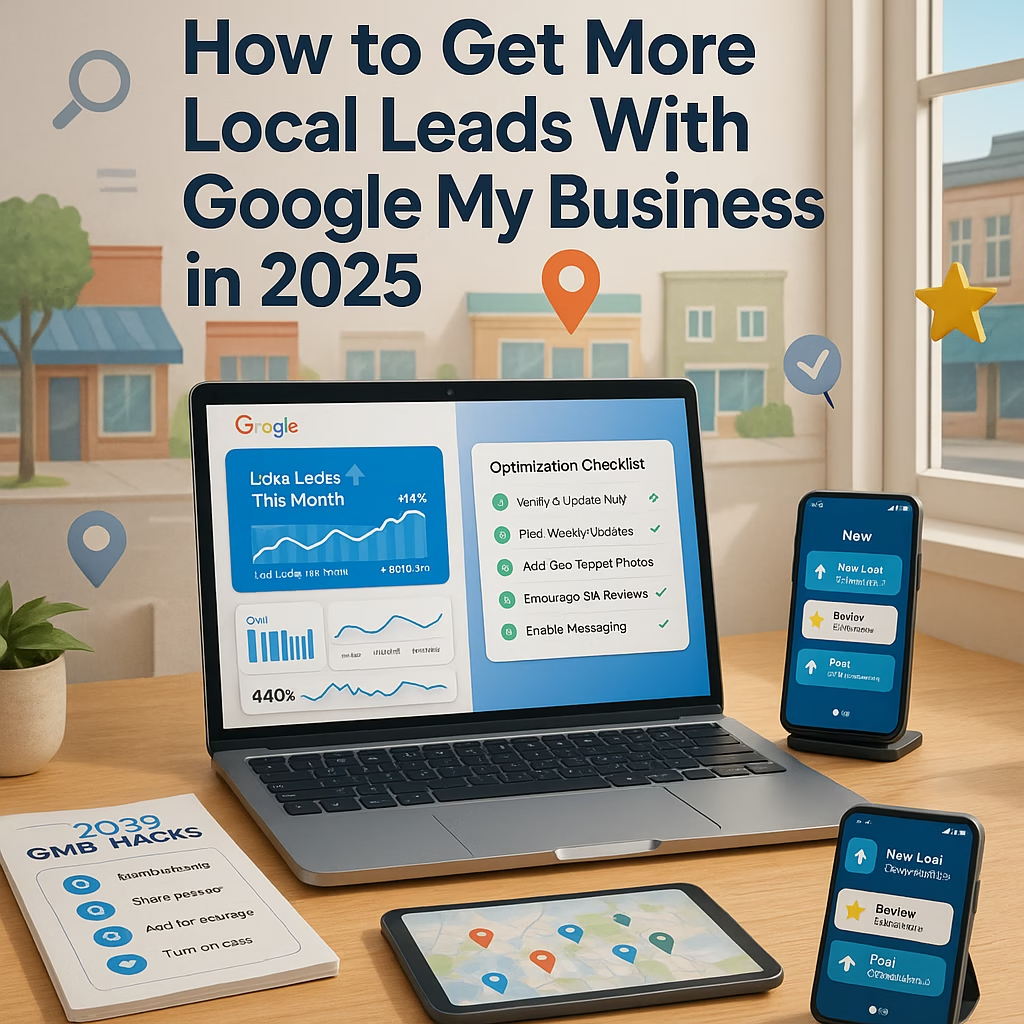
How to Get More Local Leads With Google My Business in 2025 is your ultimate, step-by-step playbook for turning your GMB listing into a powerful lead-generation engine. As local search evolves, optimizing every facet of your listing and leveraging new GMB features will ensure you appear in front of high-intent customers—driving calls, bookings, and foot traffic in your service area.

1. Optimize Your Google My Business Profile for Maximum Visibility

1.1 Verify and Claim Your Listing

Ensure ownership by completing the verification process—postcard, phone, or email—so you can manage all listing details and gain trust from Google and customers.

1.2 Complete Every Profile Field

Fill in business hours, categories, specialties, attributes (e.g., “women-led,” “wheelchair accessible”), and service areas to match as many relevant searches as possible.

1.3 Add High-Resolution Photos & Videos

Upload 5–10 professional photos of your premises, team, and work examples. Include short videos (30–60 seconds) showcasing your service process or customer testimonials.

1.4 Craft a Compelling Business Description

Write a 750-character description focusing on your unique selling points, incorporating local keywords naturally (e.g., “plumbing services in [City]”). Use a friendly, informative tone.

2. Leverage GMB Features to Attract Leads

2.1 Posts: Promotions, Events & Offers

Regularly publish GMB posts—weekly specials, open house events, limited-time offers—to keep your listing active and engage searchers directly in the results.

2.2 Q&A: Anticipate & Answer Key Questions

Seed your Q&A section with common queries (“Do you service emergency calls?”) and provide concise, helpful answers to build authority and reduce friction.

2.3 Messaging: Enable Direct Chat

Turn on the Message feature to allow prospects to chat with you from your GMB listing. Set up automated greetings and routing rules to ensure no message goes unanswered.

2.4 Bookings: Appointment Buttons

Integrate with booking tools like Calendly or Acuity so customers can schedule appointments or consultations directly from your GMB profile with a single click.

3. Implement Local SEO Best Practices

3.1 Keyword Research for “Near Me” Searches

Use tools like Ahrefs or Keywords Everywhere to identify high-value local queries (e.g., “emergency electrician near me,” “best roof repair [City]”). Map these to your business description and posts.

3.2 Maintain NAP Consistency Across Citations

Ensure your Name, Address, and Phone (NAP) match exactly across directories, social profiles, and your website to avoid confusion and improve local ranking.

3.3 Build Quality Local Citations & Backlinks

List your business in relevant local directories (chamber of commerce, industry sites) and earn backlinks from local news or community blogs to boost authority.

3.4 Use Schema Markup to Enhance Rich Results

Implement LocalBusiness schema on your website to provide structured data that complements your GMB listing and improves search result enhancements.

4. Encourage & Manage Google Reviews

4.1 Automated Review Request Workflows

Use email or SMS automation to send a review link after service completion. Timing is key—request within 24 hours of a positive experience.

4.2 Responding to Reviews Professionally

Thank customers for positive feedback and address negative reviews with empathy and solutions, demonstrating your commitment to service excellence.

4.3 Showcasing Reviews in Marketing

Highlight star ratings and excerpts on your website, social media, and in GMB posts to reinforce trust and social proof.

4.4 Turning Negative Feedback into Opportunities

Offer to make things right—discounts, follow-up service—then request the customer update their review to reflect the resolution.

5. Analyze & Iterate with GMB Insights

5.1 Track Views, Searches & Actions

Monitor how users find you (direct, discovery, branded), and which actions they take (calls, website visits, direction requests) to gauge performance.

5.2 Integrate GMB Data with Google Analytics

Combine GMB insights with on-site behavior in GA—use UTM parameters on your website link in GMB to see journey from search to conversion.

5.3 A/B Test Posts & Offers

Rotate different GMB post types (promo vs. event vs. product) and measure click-through and engagement to optimize content strategy.

5.4 Continuous Optimization Based on Data

Adjust your posting schedule, messaging, and service offerings quarterly using insights to refine your approach and maintain growth.

6. Advanced Growth Strategies

6.1 Local Service Ads Integration

Combine GMB with Google Local Service Ads to appear at the very top of search results for service queries, boosting lead volume and credibility.

6.2 Bulk Management via GMB API

Use the Google My Business API for multi-location enterprises to update posts, offers, and attributes at scale with a single script.

6.3 Offline Campaigns & Cross-Promotion

Promote your GMB listing on offline assets—flyers, signage, receipts—to drive more branded “near me” searches and actions.

6.4 Competitor Monitoring & Alerts

Set up alerts for competitor GMB changes using tools like BrightLocal or Whitespark to stay one step ahead in your local market.

7. Conclusion & Action Plan

How to Get More Local Leads With Google My Business in 2025 is your end-to-end blueprint for dominating local search and converting browsers into buyers. Implement this roadmap:

  1. Verify and fully optimize your GMB profile with keywords and visuals.
  2. Activate GMB features: posts, Q&A, messaging, and bookings.
  3. Apply local SEO best practices and build citations.
  4. Drive and manage reviews with automated workflows.
  5. Use insights to track performance and iteratively improve.
  6. Leverage advanced strategies like Local Service Ads and API integrations.

Follow these steps to ensure your business captures more local leads and grows sustainably throughout 2025.

8. 25 Frequently Asked Questions

1. How to Get More Local Leads With Google My Business in 2025?

Optimize your GMB profile completely, leverage GMB posts and messaging, implement local SEO, manage reviews, analyze insights, and iterate continuously.

2. How often should I post on GMB?

At least once a week, ideally 2–3 posts weekly to keep your listing active and engage users.

3. What types of GMB posts work best?

Promotions, event announcements, product highlights, and COVID-19 updates drive the highest engagement.

4. How do I get verified on GMB?

Verify via postcard, phone, or email—follow Google’s prompts in your GMB dashboard for confirmation.

5. Can I manage multiple locations?

Yes—use the GMB API or bulk location manager to update listings across all your service areas at scale.

6. What is the best photo size?

Use 720×720px images for best display; panorama and logo images have specific recommended dimensions in Google’s guidelines.

7. How do GMB posts affect SEO?

Active posting signals freshness to Google, can rank in “Posts” carousel, and indirectly boosts local SEO by increasing engagement.

8. How do I ask for reviews?

Send automated follow-up emails or SMS with a direct review link within 24 hours of service completion.

9. What is GMB Insights?

GMB Insights provides data on how customers find your listing, what actions they take, and the performance of your posts.

10. How do I measure phone calls from GMB?

Enable call tracking in GMB and use unique tracking numbers or integrate with CallRail to attribute calls to GMB.

11. Should I use business categories?

Select primary and secondary categories that accurately describe your core services to improve relevance in searches.

12. How to handle negative reviews?

Respond promptly, acknowledge the issue, offer remediation, and request an updated review once resolved.

13. What is the difference between discovery and direct searches?

Direct searches occur when users search your business name; discovery searches are generic queries where your listing appears among results.

14. Can I schedule appointments via GMB?

Yes—integrate with scheduling tools like Calendly or Booksy to display a “Book” button on your GMB profile.

15. How do I optimize for “near me” queries?

Include location-based keywords in your business description, posts, and services sections to capture “near me” traffic.

16. What is the ideal business description length?

Up to 750 characters—use the first 250 to cover key points and keywords as only this portion shows above the fold.

17. How do I update my hours for holidays?

Use the “Special hours” feature in GMB to reflect holiday schedules and avoid customer frustration.

18. Can I use UTM parameters with GMB?

Yes—append UTMs to your website URL in GMB so Analytics can track GMB referrals separately.

19. What’s the impact of Q&A on lead gen?

Well-managed Q&A builds trust, provides instant answers, and can reduce friction in customer decision-making.

20. How do I handle multiple service areas?

Define all service areas in your listing and ensure your address is set to your primary location for accuracy.

21. Should I respond to all reviews?

Yes—responding to positive and negative reviews shows care and encourages more customers to leave feedback.

22. How to use attributes effectively?

Select relevant attributes—“free Wi-Fi,” “wheelchair accessible,” “women-led”—to stand out in niche searches.

23. What’s the role of booking buttons?

They reduce friction by letting customers schedule without leaving GMB, improving appointment rates.

24. How often to refresh your cover photo?

Update seasonally or when launching major promotions—every 3–4 months to keep visuals fresh.

25. Where can I learn more?

Visit Market Wiz AI’s blog for actionable templates, video tutorials, and in-depth case studies on GMB success.

10. 25 Extra Keywords

  1. GMB optimization 2025
  2. Google My Business local leads
  3. GMB for service businesses
  4. local SEO 2025
  5. near me searches GMB
  6. GMB post strategies
  7. GMB Q&A best practices
  8. GMB messaging automation
  9. GMB appointment integration
  10. Google Local Service Ads
  11. GMB review automation
  12. GMB insights analysis
  13. GMB bulk location management
  14. hyperlocal marketing 2025
  15. Google My Business schema
  16. GMB UTM tracking
  17. GMB holiday hours
  18. mobile-first local search
  19. GMB AI chatbots
  20. GMB competitor alerts
  21. GMB attributes list
  22. GMB call tracking setup
  23. GMB cover photo tips
  24. GMB performance benchmarks
  25. Market Wiz AI local guide

© 2025 Market Wiz AI. All Rights Reserved.

How to Get More Local Leads With Google My Business in 2025 Read More »

Craigslist Advertising for Service Businesses [Ultimate Guide]

ChatGPT Image Jun 11 2025 03 04 59 PM
Craigslist Advertising for Service Businesses [Ultimate Guide] | Market Wiz AI

Craigslist Advertising for Service Businesses [Ultimate Guide]

Your Complete Roadmap by Market Wiz AI

Table of Contents

Introduction

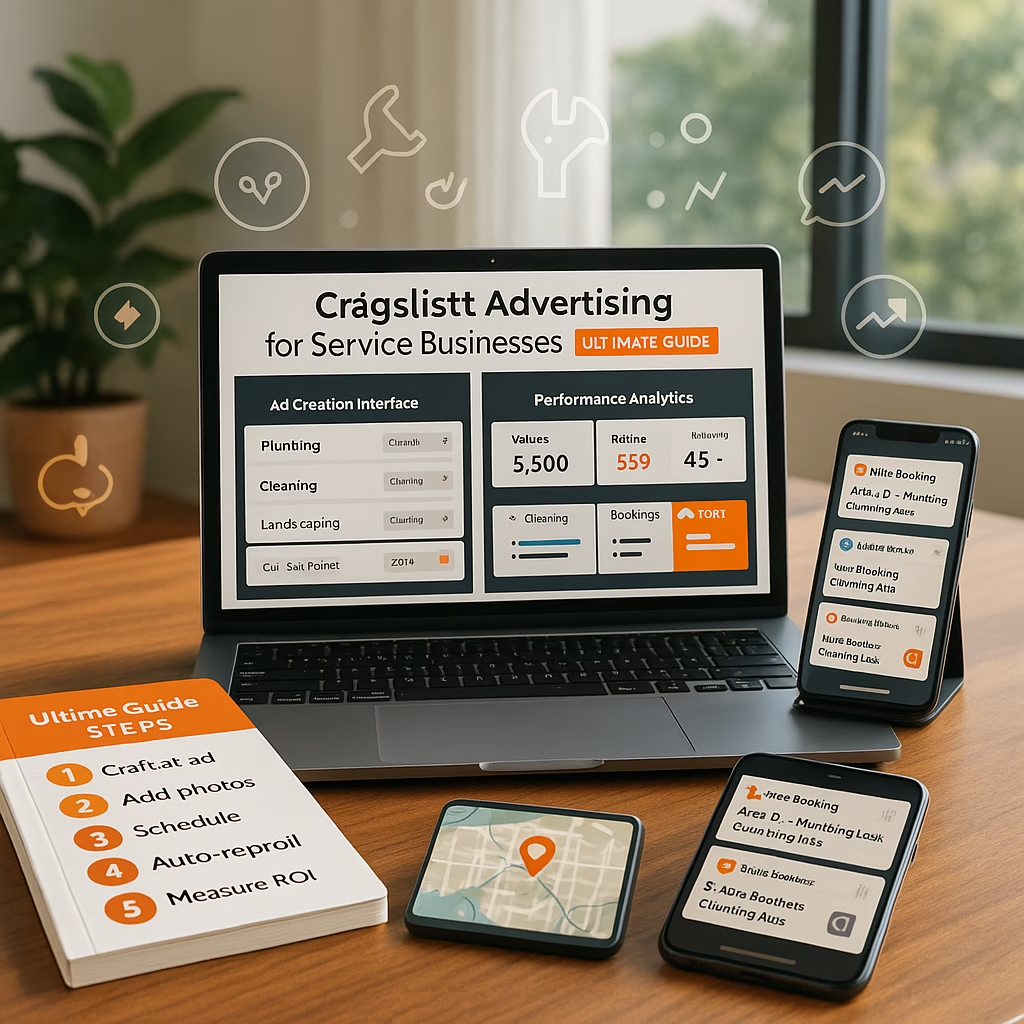
Craigslist Advertising for Service Businesses [Ultimate Guide] is your comprehensive blueprint to leverage the world’s largest classifieds site for lead generation. Whether you’re a plumber, personal trainer, or IT consultant, this guide teaches you how to craft compelling ads, automate postings, engage prospects instantly, and track ROI—helping you scale your service business with precision and efficiency.

1. Why Craigslist Advertising for Service Businesses [Ultimate Guide] Matters

1.1 Hyper-Local Demand

Craigslist connects you directly with people in your service area actively seeking solutions—no wasted reach beyond your local market.

1.2 Cost-Effective Lead Generation

With free listings and optional paid boosts, Craigslist offers an affordable way to generate high-intent inquiries without hefty ad budgets.

1.3 Competitive Differentiation

Crafting standout listings and automating follow-ups gives you an edge over competitors who rely on sporadic or manual postings.

2. Identifying Ideal Service Businesses

2.1 Home Maintenance & Repairs

Plumbers, electricians, HVAC technicians, and handymen thrive on Craigslist where homeowners search for immediate service.

2.2 Personal & Professional Services

Tutors, personal trainers, event planners, and consultants can reach local clients ready to book appointments.

2.3 Mobile & Emergency Services

Pest control, locksmiths, and mobile car repair services benefit from rapid inquiry-to-call workflows facilitated by Craigslist ads.

3. Crafting High-Impact Craigslist Ads

3.1 Title Optimization

Include your service, location, and a key benefit: “Emergency Plumbing—Downtown—5min Response.” This boosts search relevance and click-through.

3.2 Description Best Practices

  • Lead with your unique selling proposition.
  • Use bullet points for services, pricing, guarantees.
  • Include contact methods—phone, email, or messaging.

3.3 Visual Asset Guidelines

Upload 4–6 high-resolution photos of completed work or branded service vans. Add a brief video walkthrough for mobile engagement.

3.4 Pricing & Calls-to-Action

Display transparent rates or starting prices. Use urgency: “Call now for 10% off first service this week!”

4. Automation & Reposting Strategies

4.1 Scheduling Tools

Use AutoRepost or CL Auto Poster to batch-schedule ads across categories and regions with custom time slots.

4.2 Dynamic Template Variations

Create multiple versions of each listing—varying headlines, images, and calls-to-action—to refresh your ads and avoid algorithmic penalties.

4.3 Repost Cadence & Compliance

Repost every 48–72 hours to maintain top placement. Adhere to Craigslist’s rules by rotating content and avoiding exact duplicates.

5. Managing Inquiries & Conversions

5.1 Unified Inbox & Auto-Responses

Consolidate messages with tools like ManyChat or Zendesk. Set up AI-driven quick replies to handle FAQs instantly and route complex queries to your team.

5.2 Rapid Qualification

Use chatbots to ask key questions—service needed, timeline, budget—and assign lead scores to prioritize follow-up.

5.3 Appointment Scheduling Integration

Embed Calendly or Google Calendar booking links in your auto-responses, allowing prospects to schedule consults or service calls on the spot.

6. Tracking Performance & ROI

6.1 Key Metrics to Monitor

  • Number of Inquiries
  • Response Time
  • Qualified Leads
  • Conversion Rate
  • Revenue per Lead

6.2 Call & Form Tracking

Use CallRail for call attribution and unique landing pages with UTM parameters for form inquiries to capture lead source data.

6.3 Analytics & Reporting

Consolidate data in Google Data Studio or your CRM for dashboards showing campaign performance, cost per lead, and ROI trends.

7. Best Practices & Common Pitfalls

  • ✅ Vary ad content regularly to avoid Fatigue or Shadowbans.
  • ✅ Personalize quick-reply templates to reflect your brand voice.
  • ✅ Monitor compliance with Craigslist’s policies to prevent account suspensions.
  • ❌ Don’t spam—overposting can damage reputation.
  • ❌ Avoid neglecting follow-ups—automated or manual, prompt responses win deals.

8. Conclusion & Next Steps

Craigslist Advertising for Service Businesses [Ultimate Guide] equips you to launch, automate, and optimize high-impact classified campaigns. Get started by:

  1. Setting up a verified business profile and researching local demand.
  2. Crafting optimized listings with compelling titles, visuals, and CTAs.
  3. Implementing automation tools for posting, reposting, and inquiries.
  4. Streamlining qualification with chatbots and scheduling integrations.
  5. Tracking performance through call tracking and dashboards, then iterating weekly.

Follow this roadmap to harness Craigslist’s potential and grow your service business in 2025 and beyond.

9. 25 FAQs

1. What services work best on Craigslist?

Home repairs, cleaning, landscaping, tutoring, personal training, and mobile services like locksmiths excel on Craigslist.

2. How often should I repost my ads?

Every 48–72 hours to maintain top placement and avoid duplicate penalties.

3. Which reposting tools do you recommend?

AutoRepost, CL Auto Poster, and Marketplace Pro are popular for scheduling and automation.

4. How do I handle Craigslist policy changes?

Monitor the official help center, adjust your posting frequency, and rotate content to stay compliant.

5. Can I sync my POS or inventory?

Yes—use CSV uploads or API integrations to auto-update prices and availability.

6. How do I manage inquiries efficiently?

Use a unified inbox (ManyChat, Zendesk) and auto-response flows for instant engagement and lead qualification.

7. What metrics should I track?

Track inquiries, response times, qualified leads, conversion rates, and revenue per lead for full ROI visibility.

8. Is it worth boosting Craigslist listings with paid ads?

For high-ticket services, consider boosting key listings to expand reach and accelerate lead flow.

9. How do I price my services?

Research local competitors, factor in costs and profit margins, and test pricing with “OR best offer” options for flexibility.

10. Can I integrate chatbots with Craigslist leads?

Yes—use ManyChat or Chatfuel to auto-respond to Facebook messages linked from your Craigslist listing.

11. Should I use multiple Craigslist accounts?

One account per region is recommended. Multiple accounts on the same IP may trigger flags.

12. How do I optimize titles?

Include service type, locality, and benefit—e.g., “Same-Day AC Repair – Citywide Service.”

13. What pitfalls should I avoid?

Overposting, duplicate content, neglecting follow-up, and ignoring analytics are common mistakes.

14. How do I measure offline conversions?

Use unique phone tracking numbers and ask new customers how they heard about you.

15. Can I schedule posts by time zone?

Yes—set posting schedules according to your market’s peak browsing hours, typically mornings and evenings.

16. How do I personalize auto-responses?

Use dynamic templates with placeholders for name, service, and location to keep messages human-like.

17. How long before I see results?

Many businesses notice increased leads within the first week; full ROI often emerges within 1–2 months.

18. Should I run A/B tests?

Yes—test different titles, prices, and images to identify the highest-converting combinations.

19. What’s the ideal ad length?

Keep descriptions between 150–300 words, with bullet points and short paragraphs for mobile readability.

20. How do I handle negative inquiries?

Politely clarify misunderstandings, offer solutions, and maintain a professional tone to build positive reputations.

21. Can I cross-post to Facebook groups?

Yes—share your Marketplace listings to relevant local buy/sell groups for additional exposure.

22. How do I maintain high placement?

Regular reposting, fresh content, and prompt responses signal activity and keep your listings ranking.

23. Can I incorporate video?

Some tools support video attachments; otherwise link to short clips hosted on Facebook or YouTube.

24. What support is available?

Choose platforms offering chat, email support, and robust documentation to troubleshoot quickly.

25. Where can I learn more?

Visit Market Wiz AI’s blog for advanced tutorials, free templates, and community forums focused on Craigslist strategies.

10. 25 Extra Keywords

  1. Craigslist service ads 2025
  2. classifieds marketing guide
  3. automate Craigslist postings
  4. CL auto poster review
  5. local service lead gen Craigslist
  6. Craigslist inventory sync
  7. chatbot for classifieds
  8. Facebook Marketplace vs Craigslist
  9. Craigslist ad compliance tips
  10. response automation classifieds
  11. best times to post Craigslist
  12. Craigslist SEO for services
  13. dynamic Craigslist templates
  14. Craigslist repost frequency
  15. automated inquiry management
  16. lead tracking for classifieds
  17. call tracking Craigslist ads
  18. classifieds analytics dashboard
  19. hyperlocal ad targeting
  20. seasonal classifieds campaigns
  21. classifieds conversion optimization
  22. bulk posting Craigslist
  23. classifed ad strategies
  24. Market Wiz AI classifieds tool
  25. 2025 classifieds marketing

© 2025 Market Wiz AI. All Rights Reserved.

Craigslist Advertising for Service Businesses [Ultimate Guide] Read More »

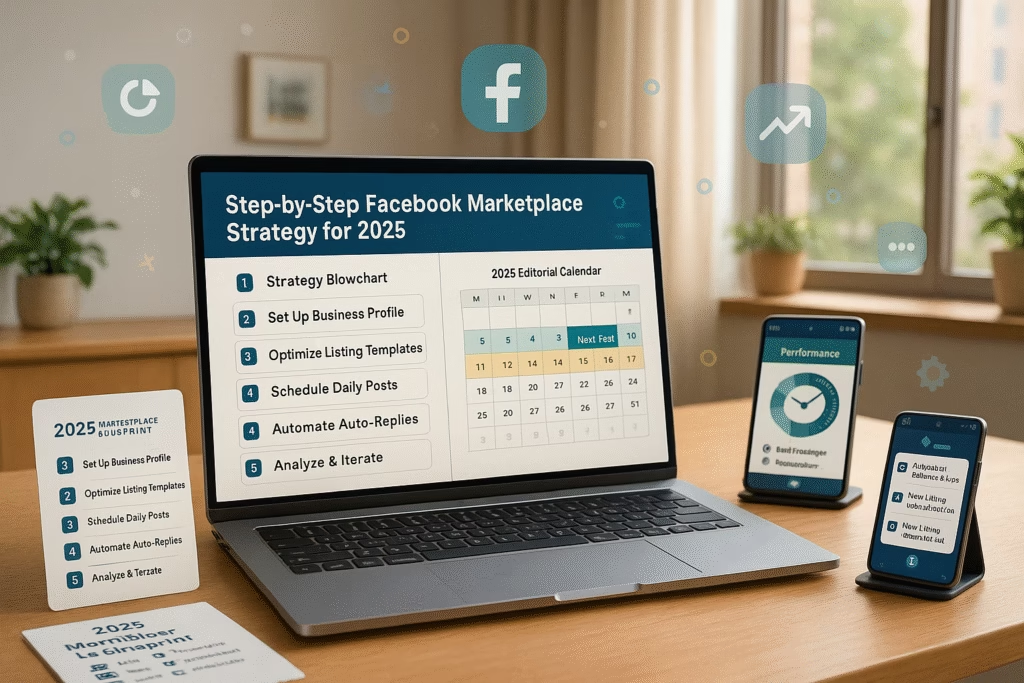
Step-by-Step Facebook Marketplace Strategy for 2025

ChatGPT Image Jun 11 2025 03 01 19 PM
Step-by-Step Facebook Marketplace Strategy for 2025 | Market Wiz AI

Step-by-Step Facebook Marketplace Strategy for 2025

Comprehensive Roadmap by Market Wiz AI

Table of Contents

Introduction: Step-by-Step Facebook Marketplace Strategy for 2025

Step-by-Step Facebook Marketplace Strategy for 2025 provides a detailed, actionable plan to harness the full power of Marketplace. From setting up a verified business presence to leveraging AI-driven chatbots and analytics, this guide arms small businesses and sellers with the tactics needed to dominate their local markets and drive consistent sales growth in 2025.

1. Why Step-by-Step Facebook Marketplace Strategy for 2025 Matters

1.1 Evolving Consumer Behavior

Shoppers expect seamless mobile experiences and instant access to product info. Marketplace’s integration within Facebook’s app ecosystem makes it a go-to channel for 2025 buyers.

1.2 Algorithmic Shifts in Marketplace

Facebook’s algorithm now prioritizes fresh, relevant listings and buyer–seller engagement. Understanding these shifts lets you craft posts that rank higher and reach more prospects.

1.3 Mobile-First Shopping Trends

With over 80% of Marketplace users on mobile, optimizing listings for quick loading, easy reading, and one-tap action is critical for maximizing conversions.

2. Getting Started with Marketplace in 2025

2.1 Setting Up a Business Profile

Create a Marketplace-compatible business profile. Add clear branding—logo, cover photo—and complete business info like address, hours, and service offerings.

2.2 Verifying Your Credentials

Complete Facebook’s Business Verification to access advanced features like auto-posting and in-depth analytics, boosting buyer trust.

2.3 Understanding Facebook’s Policies

Review Marketplace commerce policies to avoid banned content, duplicate listings, and account restrictions, ensuring your strategy remains compliant.

3. Listing Optimization Best Practices

3.1 Crafting Compelling Titles

Include primary keywords at the start—product name, condition, location. For example: “2025 Mountain Bike – Like New – Downtown Pickup”.

3.2 High-Quality Photos & Videos

Upload 5–7 sharp photos showing multiple angles and use short video clips to showcase features and functionality, increasing buyer confidence.

3.3 SEO-Friendly Descriptions & Keywords

Write 200–300 words highlighting benefits, specs, and local relevance. Naturally integrate secondary keywords—brand, model, size—to improve searchability.

3.4 Smart Pricing Strategies

Use competitive research to set prices. Offer slight price flexibility—“or best offer”—to encourage negotiation, then auto-adjust listings weekly based on engagement.

4. Automation & Scheduling for Efficiency

4.1 Auto-Posting Tools

Leverage tools like Buffer, CL Auto Poster, or Marketplace Pro to schedule new listings and repost at optimal intervals—ensuring fresh visibility without manual work.

4.2 Inventory Sync & Updates

Integrate with your e-commerce or POS system to auto-update stock levels, prices, and availability, preventing oversells and outdated info.

4.3 Optimal Posting Cadence

Schedule posts during peak browsing times—typically mornings (8–10 AM) and evenings (6–8 PM). Repost top-performing items every 48–72 hours for sustained exposure.

5. Engagement & Customer Interaction

5.1 Instant Response with AI Chatbots

Deploy ManyChat or Chatfuel to handle initial messages—answer FAQs, share additional photos, and capture contact details within seconds of inquiry.

5.2 Personalizing Buyer Conversations

Use dynamic greeting tokens—“Hi {{user_name}}!”—and reference the exact item they viewed to create a one-to-one experience at scale.

5.3 Building Trust Through Transparency

Provide clear shipping, returns, and warranty policies in your auto-responses. Share customer reviews and seller ratings to reinforce credibility.

6. Paid Ads & Promotional Tactics

6.1 Boosted Marketplace Listings

Promote high-margin or clearance items directly within Marketplace. Set budget caps and monitor CPC to ensure profitable returns.

6.2 Retargeting & Lookalikes

Retarget users who viewed but didn’t message, and create lookalike audiences from past buyers to expand reach efficiently.

6.3 Seasonal & Flash Sales

Automate promotional banners—“Summer Blowout” or “Back-to-School Special”—tied to inventory and calendar events to drive urgency.

7. Analytics & Continuous Optimization

7.1 Tracking Key Metrics

  • Listing Views & Impressions
  • Message & Inquiry Rates
  • Click-to-Chat Conversions
  • Sales Attributed to Marketplace

7.2 A/B Testing Listings

Test variations in images, headlines, and descriptions. Rotate two versions and compare performance over a 72-hour window to identify winners.

7.3 Iterative Improvements

Review analytics weekly. Pause underperforming listings, refresh content, and reallocate budget to top performers for sustained growth.

8. Conclusion & Next Steps

Step-by-Step Facebook Marketplace Strategy for 2025 equips you with the tactics to set up, optimize, automate, and scale your listings for maximum sales. To implement:

  1. Set up and verify your business profile in Marketplace.
  2. Optimize titles, visuals, and descriptions with SEO best practices.
  3. Deploy automation tools for posting and inventory sync.
  4. Engage instantly with AI chatbots and personalized messages.
  5. Use boosted listings and retargeting to amplify reach.
  6. Track performance and iterate continuously.

9. 25 FAQs

1. What is “Step-by-Step Facebook Marketplace Strategy for 2025”?

It’s a detailed roadmap for optimizing, automating, and scaling your Marketplace listings in 2025 to drive consistent sales.

2. Do I need a business verification?

Yes—verifying your business unlocks advanced features like auto-posting and analytics for Marketplace.

3. How many photos should I upload?

Aim for 5–7 high-resolution images and consider adding a short 15-second video demo.

4. What times are best to post?

Mornings (8–10 AM) and evenings (6–8 PM) see peak browsing; schedule accordingly.

5. Which automation tools are recommended?

Top choices include Buffer, CL Auto Poster, and Marketplace Pro for posting, plus ManyChat for AI chat.

6. Can I sync my Shopify store?

Yes—use inventory sync plugins to auto-update stock and pricing directly in your listings.

7. How do I handle inquiries?

Use a unified inbox and AI chatbot auto-responses, then route hot leads to your CRM for personal follow-up.

8. Are boosted listings worth it?

For high-margin items, boosted listings can increase visibility and sales if CPC remains within your ROI targets.

9. How to track sales from Marketplace?

Use UTM parameters, custom landing pages, and CRM attribution to map sales back to your Marketplace listings.

10. What metrics matter most?

Views, messages, response time, message-to-sale conversion rate, and revenue per listing.

11. How often to repost?

Every 48–72 hours; avoid more frequent reposts to prevent spamflagging.

12. Can I run seasonal campaigns?

Yes—configure promotional banners and pricing updates tied to holidays and seasonal peaks.

13. How do I optimize pricing?

Test psychological pricing (e.g., $199 vs. $200) and adjust based on engagement and inquiries.

14. What pitfalls should I avoid?

Avoid duplicate content, infrequent postings, and neglecting message responses—these harm visibility and trust.

15. Should I A/B test descriptions?

Absolutely—test wording, bullet points, and calls to action to find the most effective combinations.

16. How do I handle negative feedback?

Respond promptly and professionally, offering solutions and demonstrating transparency to rebuild trust.

17. Can I use chatbots beyond initial inquiry?

Yes—use chatbots for scheduling appointments, upselling, and gathering post-sale feedback.

18. How do I scale to multiple locations?

Duplicate your verified profile for each location and adjust listing templates with local keywords and imagery.

19. Is mobile optimization necessary?

Yes—ensure listings and auto-responses display correctly on smartphones, as most users browse via mobile.

20. What’s the ideal description length?

200–300 words, broken into short paragraphs or bullet points for easy reading.

21. How do I encourage buyer reviews?

Follow up after sale with a thank-you message and direct link to your Facebook seller ratings page.

22. What call-to-action works best?

Simple CTAs like “Message to Schedule Pickup” or “Click to View More Photos” drive action effectively.

23. How do I integrate QR codes?

Add QR codes to physical signage linking to your Marketplace listing for omnichannel engagement.

24. Can Marketplace ads integrate with paid ads?

Yes—boost top-performing organic listings and retarget viewers with Facebook feed or Stories ads for increased reach.

25. Where can I get more help?

Visit Market Wiz AI’s blog for deep-dive tutorials, free templates, and a community of sellers sharing Marketplace strategies.

10. 25 Extra Keywords

  1. 2025 Marketplace listing tips
  2. Facebook Marketplace optimization
  3. social commerce strategy 2025
  4. Marketplace auto-post scheduling
  5. inventory sync Facebook
  6. AI chatbot Marketplace
  7. BST posting cadence
  8. Marketplace SEO keywords
  9. mobile-first Marketplace ads
  10. hyper-local Marketplace targeting
  11. boosted Marketplace listings
  12. Marketplace conversion tracking
  13. craigslist vs Marketplace strategy
  14. Marketplace compliance guide
  15. dynamic listing templates
  16. Messenger for inquiries
  17. rapid response AI
  18. Marketplace analytics dashboard
  19. Marketplace retargeting ads
  20. seasonal sales on Marketplace
  21. game-changing Marketplace hacks
  22. user-generated content Marketplace
  23. Marketplace best practices 2025
  24. voice search Marketplace
  25. Market Wiz AI Marketplace guide

© 2025 Market Wiz AI. All Rights Reserved.

Step-by-Step Facebook Marketplace Strategy for 2025 Read More »

How to Use AI to Follow Up With Facebook Leads

ChatGPT Image Jun 11 2025 02 58 14 PM
How to Use AI to Follow Up With Facebook Leads | Market Wiz AI

How to Use AI to Follow Up With Facebook Leads

Automate Your Follow-Up, Qualify Faster, Close More Deals

Table of Contents

Introduction: How to Use AI to Follow Up With Facebook Leads

How to Use AI to Follow Up With Facebook Leads unlocks the secret to lightning-fast, personalized engagement that turns cold form submissions into eager buyers. In this guide, Market Wiz AI reveals how automating Facebook lead ad follow-up with AI-driven chatbots and email sequences can boost conversions, save hours of manual work, and ensure no opportunity slips through the cracks.

1. Understanding AI-Powered Follow-Up

1.1 Why Speed and Personalization Matter

Leads expect instant responses. AI-powered follow-up delivers immediate, 24/7 engagement—answering FAQs, scheduling calls, or qualifying interests within seconds of form submission.

1.2 How AI Improves Qualification

Machine learning models score leads based on their answers and behavior, routing hot prospects to sales reps and nurturing others through drip campaigns until they’re ready to convert.

2. Setting Up Facebook Lead Ads Properly

2.1 Crafting Your Lead Form

Include essential fields—name, email, phone, service interest—while minimizing friction. Use conditional logic to surface only relevant questions.

2.2 Mapping Form Fields to Your AI System

Ensure each form field syncs to your AI platform or CRM via webhooks, so no data is lost in transit.

3. Choosing the Right AI Tools

3.1 Chatbots vs. Email Automation

Chatbots (ManyChat, Chatfuel) provide instant messaging follow-up, while email platforms (ActiveCampaign, HubSpot) excel at longer nurture sequences. Combine both for maximum reach.

3.2 Key Capabilities to Look For

  • Natural Language Understanding to parse varied queries
  • Drag-and-drop flow builders for quick setup
  • CRM integration to centralize lead data
  • Analytics dashboards to measure open, click, and conversion rates

4. Designing Your AI Follow-Up Workflow

4.1 First Touch: Instant Acknowledgment

Send an immediate thank-you message via chat or email, confirming receipt and next steps—“Thank you, Jane! We’ll reach out shortly to discuss your request.”

4.2 Qualification Questions

Ask targeted questions—budget range, timeline, specific needs—to filter high-intent leads automatically.

4.3 Handoff to Human Agent

When a lead meets qualification criteria, trigger an alert to your sales team with lead details and conversation log.

4.4 Nurture Sequence for Warm Leads

Enroll others in a multi-step email or SMS series—case studies, testimonials, limited-time offers—to guide them back until they convert.

5. Crafting High-Converting AI Scripts

5.1 Personalization Tokens

Use dynamic fields—first name, service type—to make messages feel one-to-one: “Hi {{first_name}}, I saw you’re interested in our roofing estimates.”

5.2 Clear Calls-to-Action

Every message should end with a next step: “Reply ‘YES’ to schedule a free quote” or “Click here to pick a time on my calendar.”

5.3 Handling Objections

Prep responses for common hesitations—pricing, timing, credentials—and surface them in your bot flows as suggested replies.

6. Integrating with CRM & Analytics

6.1 Webhook Setup

Configure Facebook Lead Ads webhooks to push data into your CRM in real-time, ensuring leads enter your automated workflows without delay.

6.2 Tracking Conversions

Use UTM parameters and CRM deal fields to attribute sales back to specific AI follow-up sequences—so you know which messages closed deals.

6.3 Dashboarding Key Metrics

Build dashboards showing response time, qualification rate, meeting bookings, and closed deals per campaign—so optimization is data-driven.

7. Optimizing and Scaling Your System

7.1 A/B Testing Flows

Split-test different greeting messages, qualification questions, and CTAs to identify the highest-performing variations.

7.2 Segmenting Audiences

Use lead attributes—interest type, location, company size—to create custom follow-up paths that resonate more deeply.

7.3 Expanding Channels

Extend your AI follow-up to SMS, WhatsApp, or LinkedIn messaging to meet leads where they prefer to communicate.

8. Best Practices & Common Pitfalls

  • ✅ Keep flows concise—avoid overwhelming leads with too many messages.
  • ✅ Update and retrain your AI model monthly with new chat data.
  • ✅ Monitor fallback answers to refine NLU accuracy.
  • ❌ Don’t neglect personalization—generic messages underperform.
  • ❌ Avoid sending during odd hours—schedule for peak engagement times.

9. Conclusion & Next Steps

How to Use AI to Follow Up With Facebook Leads transforms your pipeline into a self-driving engine—qualifying, nurturing, and closing without constant manual oversight. To get started:

  1. Pick an AI platform with robust NLU and CRM integration.
  2. Connect your Facebook Lead Ads and configure webhooks.
  3. Design concise follow-up flows with clear CTAs.
  4. Train your bot on historical data and launch a pilot.
  5. Measure, optimize, and expand to additional channels.

Implement these steps today to boost your response speed, qualify better, and close more deals on autopilot.

10. 25 Frequently Asked Questions

1. What is the benefit of using AI for follow-up?

AI ensures instant, personalized responses at scale—reducing lead drop-off and improving qualification accuracy.

2. Which AI platforms work with Facebook Lead Ads?

Popular options include ManyChat, Chatfuel, MobileMonkey, and custom solutions built on Dialogflow or Azure Bot Service.

3. How do I connect my lead ads to the AI responder?

Use Facebook webhooks to push new leads into your chatbot platform in real-time, triggering follow-up flows automatically.

4. Can I send SMS follow-ups?

Yes—integrate Twilio or other SMS providers with your AI platform to send follow-up texts when leads don’t respond to Messenger.

5. How do I handle leads outside business hours?

AI responders work 24/7—set expectations with an automated “We’ll be in touch within X hours” message and schedule human follow-up during business hours.

6. What questions should I ask in qualification flows?

Focus on budget, timeline, and specific needs: “What’s your budget range?” “When do you need this delivered?” “Which product/service are you interested in?”

7. How do I personalize messages?

Use dynamic fields—{{first_name}}, {{service_type}}, and {{company_name}}—to tailor responses automatically.

8. What metrics indicate success?

Key metrics include response time, conversation completion rate, meeting bookings, and conversion-to-sale ratio.

9. How often should I review my flows?

Monthly reviews ensure your AI stays aligned with new FAQs and evolving lead behavior.

10. Can AI handle complex sales questions?

For nuanced queries, route leads to live agents or schedule a call—use AI for initial triage and simple FAQs.

11. Is no-code setup really possible?

Yes—most platforms offer visual flow editors and guided integrations without coding.

12. How do I avoid sounding robotic?

Write conversational scripts, use emojis where appropriate, and include human handoff options.

13. What about GDPR compliance?

Ensure you collect explicit opt-ins, provide data usage notices, and allow easy opt-outs in every flow.

14. Can I A/B test different messages?

Yes—split your audience and compare metrics to identify the highest-performing variations.

15. What’s the cost?

Entry-level plans start around $10–$20/month; advanced tiers with multi-channel support cost up to $200/month.

16. How do I scale to SMS or WhatsApp?

Connect your AI platform to Twilio or WhatsApp Business API, then replicate your Messenger flows for those channels.

17. How do I track ROI?

Use UTM parameters, CRM deal stages, and custom event tracking to attribute closed sales back to specific AI follow-up sequences.

18. Can I integrate with email campaigns?

Yes—push qualified leads into ActiveCampaign, Mailchimp, or HubSpot for ongoing email nurturing after initial chat engagement.

19. How do I maintain brand voice?

Define tone guidelines and use consistent templates; review chat logs regularly to ensure messaging stays on-brand.

20. What’s the ideal flow length?

Keep initial flows under five messages—enough to qualify and schedule without overwhelming leads.

21. How do I handle no-shows?

Set up automated reminders via SMS or Messenger 1 hour before scheduled calls or appointments.

22. What if leads skip the bot?

Always include a manual contact option—“Reply HELP to chat with our team”—so prospects can bypass automation.

23. How do I update FAQs?

Regularly review new lead questions and add them to your AI’s knowledge base or trigger rules.

24. Can I use this for B2B and B2C?

Absolutely—customize flows for enterprise-level qualification or quick B2C impulse buys.

25. Where can I learn more?

Visit Market Wiz AI’s blog for detailed tutorials, downloadable flow templates, and case studies. Download our “AI Follow-Up Blueprint” to implement in your business today.

9. 25 Extra Keywords

  1. AI Facebook lead automations
  2. chatbot follow-up Facebook ads
  3. Facebook Lead Ads AI integration
  4. automated Messenger sequences
  5. instant Facebook lead response
  6. AI qualification chatbot
  7. no-code Facebook automation
  8. CRM Facebook lead sync
  9. Facebook lead attribution AI
  10. SMS follow-up for Facebook
  11. WhatsApp AI responder
  12. activecampaign Facebook leads
  13. HubSpot Facebook integration
  14. ManyChat Facebook lead follow-up
  15. MobileMonkey Messenger bot
  16. rapid lead response AI
  17. AI drip for Facebook leads
  18. Facebook lead scoring AI
  19. AI response rate improvement
  20. automated lead nurture Facebook
  21. AI chat templates Facebook
  22. flow builder Facebook bot
  23. message routing Facebook leads
  24. GDPR compliant chatbot
  25. Market Wiz AI lead guide

© 2025 Market Wiz AI. All Rights Reserved.

How to Use AI to Follow Up With Facebook Leads Read More »

Scroll to Top