
Market Wiz AI

Uncategorized

How Marketing Agencies Rank Painting Businesses #1 on Google Maps
ChatGPT Image Jun 23 2025 09 30 41 AM
How Marketing Agencies Rank Painting Businesses #1 on Google Maps | Market Wiz AI

How Marketing Agencies Rank Painting Businesses #1 on Google Maps

Outrank Competitors & Capture More Local Painting Leads

Table of Contents

Introduction

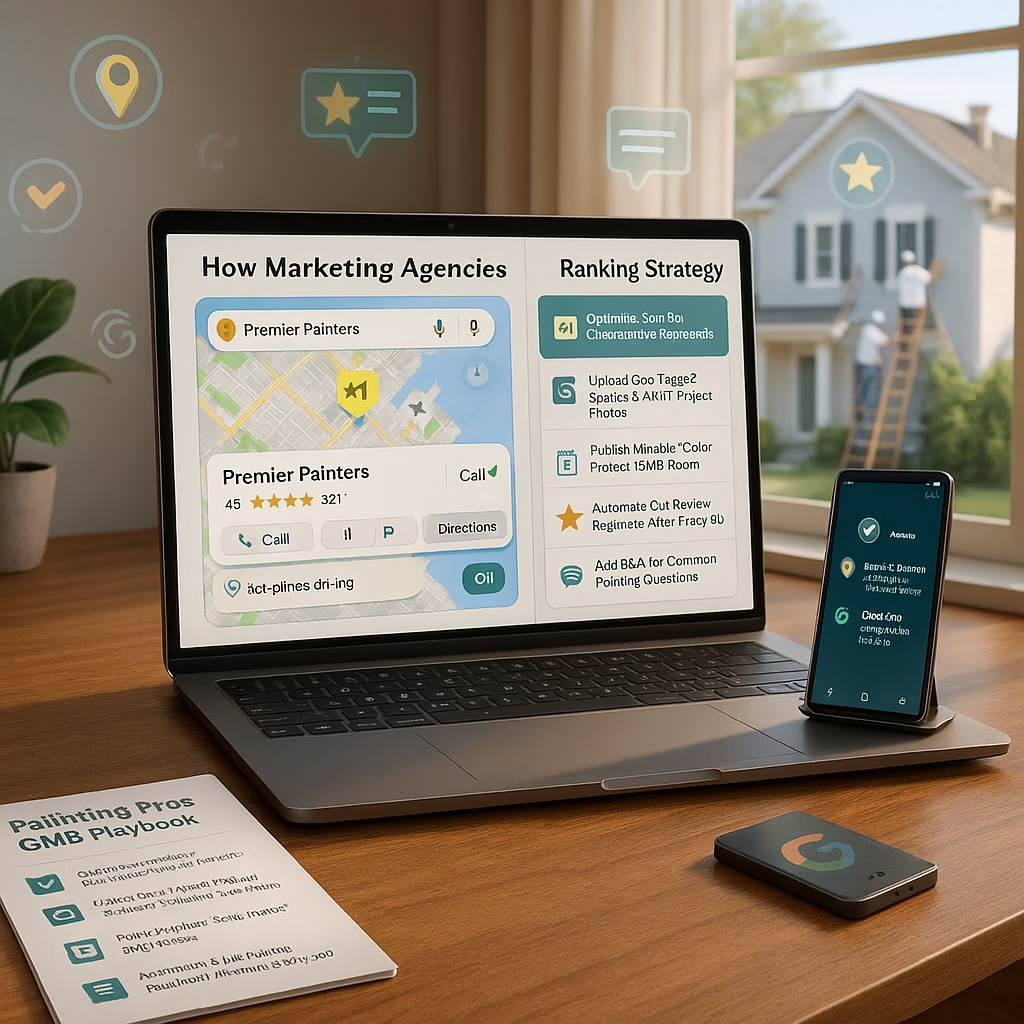
How Marketing Agencies Rank Painting Businesses #1 on Google Maps unveils the exact playbook agencies employ to secure the top spot in local map results. By meticulously optimizing your Google Business Profile, managing citations, soliciting and showcasing reviews, and employing advanced geo-targeting tactics, your painting business can dominate local search and generate a steady stream of qualified leads.

1. Why Google Maps Matters for Painting Businesses

1.1 Local Pack Visibility

Over 65% of map searches result in clicks to one of the top three listings. Securing a top position—#1 especially—translates directly into more calls and booking requests for paint jobs.

1.2 Mobile “Near Me” Searches

Homeowners on mobile devices frequently search “house painters near me” when they’re ready to hire. Being prominently listed ensures your business is the first option they see.

1.3 Trust & Social Proof in Maps

Maps listings display star ratings, review counts, and recent customer photos—all powerful trust signals that influence click-through and choice.

2. Google Business Profile Optimization

2.1 Categories & Services

Select “Painter” as your primary category, then add specific services like “Exterior Painting,” “Interior Walls,” and “Deck Staining” to match search intent precisely.

2.2 Keyword-Rich Descriptions

Craft a concise business description under 750 characters that naturally includes “house painting,” your service area, and unique selling points—e.g., “Eco-friendly paints” or “Licensed & Insured.”

2.3 Photo & Virtual Tour Best Practices

Upload high-resolution before/after galleries, 360° virtual tours of painted spaces, and team photos. These visuals boost engagement metrics that Google uses to rank profiles.

3. Local Citations Strategy

3.1 Top Painting Directories

Claim and optimize profiles on Yelp, HomeAdvisor, Houzz, and local business directories. Each consistent citation reinforces your authority and NAP accuracy.

3.2 NAP Consistency

Ensure your Name, Address, and Phone details are identical across every listing. Even minor discrepancies can confuse Google’s matching algorithms.

3.3 Citation Management Tools

Use tools like BrightLocal or Yext to distribute and maintain accurate citations at scale—saving time and preventing manual errors.

4. Reviews & Reputation Management

4.1 Automated Review Requests

Trigger review invitations via SMS or email right after project completion, with one-click links to your Google review page to maximize conversion.

4.2 Strategic Review Responses

Respond promptly to every review—thanking satisfied customers and addressing concerns in negative feedback to demonstrate professionalism and care.

4.3 Highlighting Testimonials

Feature standout 5-star testimonials in your GBP posts and photos section to amplify social proof directly within your map listing.

5. Local Content & Engagement

5.1 Geo-Targeted Before/After Galleries

Publish posts showcasing projects in specific neighborhoods (e.g., “Downtown Bungalow Exterior Refresh”) to capture hyper-local search queries.

5.2 FAQ & Q&A Seeding

Seed common questions—“Do you paint trim?”—and provide clear answers to capture featured snippet opportunities in your GBP Q&A section.

5.3 Community Partnership Posts

Share posts about local sponsorships, charity paint days, or events—signaling active community involvement that Google values for ranking.

6. Advanced Ranking Tactics

6.1 Google Maps Ads for Painters

Invest in Local Search Ads to appear above organic results for competitive queries—target by service type, radius, and homeowner demographics.

6.2 Geo-Fencing & Push Notifications

Use geo-fencing to deliver mobile ads or push notifications when potential customers enter your service area—driving immediate calls or visits.

6.3 Analytics & Insight Integration

Link your GBP to Google Analytics and Data Studio to track map clicks, direction requests, and calls as events, enabling data-driven optimization.

7. Case Studies: Painters at #1

7.1 ColorWorks Coatings

ColorWorks climbed from position 5 to #1 in eight weeks by overhauling their GBP, launching a targeted review campaign, and boosting neighborhood posts.

7.2 Precision Painters

Precision Painters combined citation cleanup with weekly virtual job tours—doubling map views and booking out two months in advance.

8. Conclusion & Next Steps

By following How Marketing Agencies Rank Painting Businesses #1 on Google Maps, you can elevate your local presence, showcase your craftsmanship, and attract qualified painting leads consistently. Start with GBP optimization, build your citation network, foster a steady flow of reviews, and layer on advanced ad tactics. Get started with Market Wiz AI to dominate your local market today.

9. 25 Frequently Asked Questions

1. How long until I see map ranking improvements?

Typically 4–8 weeks with consistent optimization and review acquisition.

2. How many citations do I need?

Aim for 30–50 quality citations across painting and local business directories.

3. Can I include service pricing in GBP?

Use the Products/Services section to list starting prices or package offers without cluttering descriptions.

4. How many photos should I upload?

At least 20 images: before/after shots, team photos, equipment, and project galleries.

5. Should I respond to every review?

Yes—thanking happy customers and addressing critical feedback builds trust and signals responsiveness.

6. What categories should I select?

Primary “Painter,” secondary “Home Painter,” “Deck Staining,” and attributes like “Free Estimates.”

7. How often post updates?

Weekly for posts and monthly for new photo/video uploads to maintain freshness.

8. Do 360° tours help?

Yes—they boost engagement and let prospects explore completed projects virtually.

9. Should I use UTM tags?

Yes—append UTMs to website links in posts to track source performance in Google Analytics.

10. How to track calls?

Use call-tracking numbers unique to your GBP listing and integrate with your CRM for attribution.

11. What is GBP Q&A?

A section where businesses and customers can ask and answer common questions about services.

12. How many reviews are ideal?

Aim for 50+ reviews with an average rating of 4.5 stars or higher for strong social proof.

13. Can I promote offers?

Yes—use the Offers section for discounts like “10% off exterior painting this month.”

14. How to handle negative reviews?

Respond politely, apologize, and offer a resolution offline to show professionalism.

15. Are citations automated?

Tools like BrightLocal and Yext automate citation distribution and monitoring at scale.

16. How to avoid GBP suspension?

Follow naming guidelines, avoid keyword stuffing, and maintain accurate, consistent information.

17. What metrics should I monitor?

Map views, search queries, clicks, calls, direction requests, and booking conversions.

18. Is mobile optimization critical?

Yes—ensuring your website and forms work flawlessly on mobile boosts conversion from map clicks.

19. Can I integrate booking?

Yes—enable appointment links to your scheduling platform for seamless booking from GBP.

20. How to manage multi-location?

Create separate GBP listings per branch, optimize each individually, and maintain consistent branding.

21. Should I sponsor my listing?

Consider Local Search Ads in competitive markets to secure top placement for high-value queries.

22. How often audit performance?

Perform monthly audits to align with algorithm updates and local market changes.

23. What about schema markup?

Implement LocalBusiness schema on your site to enhance Google’s understanding of your services.

24. How to scale these tactics?

Document your process, use automation tools, and replicate best practices across new service areas.

25. Where to learn more?

Visit Market Wiz AI’s blog for in-depth local SEO tutorials, templates, and AI-powered optimization tools.

10. 25 Extra Keywords

  1. painting business Google Maps SEO
  2. local painter optimization
  3. Google Business Profile painting
  4. painting citations strategy
  5. automated review requests painters
  6. before after painting gallery
  7. painter Q&A tips
  8. 360° painting project tours
  9. Local Pack for painters
  10. Google Maps Ads painting
  11. geo-fencing painting services
  12. push notifications local painters
  13. BrightLocal painting citations
  14. Yext painter directory listings
  15. UTM tracking for GBP
  16. appointment booking GBP
  17. mobile first painter SEO
  18. schema markup painting
  19. community posts for painters
  20. seasonal painting promotions
  21. Google Analytics GBP events
  22. call tracking painters
  23. painting service area optimization
  24. Local Viking painting GBP
  25. Market Wiz AI painting guide

© 2025 Market Wiz AI. All Rights Reserved.

How Marketing Agencies Rank Painting Businesses #1 on Google Maps Read More »
Google Business Profile Hacks Top Furniture Stores Marketing Teams Use

877948322671804202
Google Business Profile Hacks Top Furniture Stores Marketing Teams Use | Market Wiz AI

Google Business Profile Hacks Top Furniture Stores Marketing Teams Use

Transform Your Showroom Visibility & Drive Local Foot Traffic

Table of Contents

Introduction

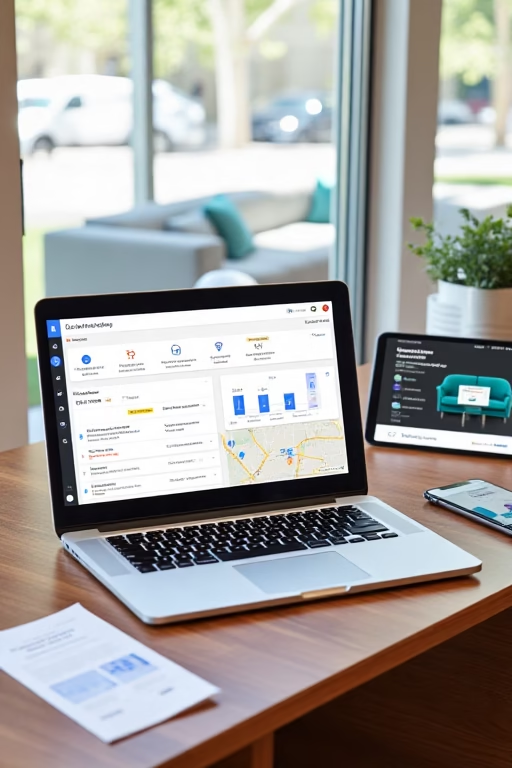
Google Business Profile Hacks Top Furniture Stores Marketing Teams Use reveals the proven tactics furniture retailers leverage to elevate their showrooms in local search, attract design-savvy shoppers, and increase in-store appointments. From optimizing your profile fields to crafting engaging posts and leveraging rich media, this guide covers each step in detail.

1. Why Google Business Profile Is Crucial for Furniture Stores

1.1 Local Pack Dominance

Being in the top three of the Local Pack drives the majority of map clicks; for furniture stores, that translates directly to showroom visits and design consultations.

1.2 Mobile “Near Me” Shopper Behavior

Around 55% of local searches now include “near me.” Shoppers on mobile devices rely on Google Maps to discover nearby showrooms when planning home makeovers.

1.3 Visual Showcase in Maps

Maps listings prominently display photos and videos—ideal for highlighting elegant interiors, feature pieces, and ambience that set your store apart.

2. Profile Optimization Hacks

2.1 Precise Categories & Attributes

Set “Furniture Store” as primary category, then add secondary categories like “Home Decor,” “Office Furniture,” and attributes such as “In-Store Shopping” and “Free Design Consultations.”

2.2 Keyword-Enriched Business Title

Incorporate a descriptor: e.g., “CityLine Furniture & Modern Decor” to include your main keyword naturally without violating Google’s naming rules.

2.3 Comprehensive Store Details

Complete service areas (neighborhoods), business hours (including design consultation slots), contact methods, and highlight amenities like café or children’s play area to entice visits.

3. Content & Post Strategies

3.1 Weekly New Collection Announcements

Post crisp images of new arrivals—tag style trends (“Scandi Minimalism”) and include CTAs like “Visit Our Showroom to Experience It In Person.”

3.2 Seasonal Sale & Clearance Alerts

Leverage posts for Black Friday deals, end-of-season clearances, and exclusive designer sample sales to drive urgency.

3.3 Design Tips & Showroom Tours

Share short “Design Tip of the Week” posts or 30-second video tours through styled vignettes to demonstrate your expertise and spark inspiration.

4. Reviews & Q&A Mastery

4.1 Automated Post-Purchase Review Requests

Trigger email or SMS prompts after delivery or consultation, with one-click review links for Google—boosting both review count and recency.

4.2 Crafting Thoughtful Responses

Publicly thank customers for 5-star feedback, and for critical reviews, acknowledge issues and offer to make it right—demonstrating customer-first values.

4.3 Proactive Q&A Seeding

Seed FAQs like “Do you offer custom upholstery?” and answer them directly in your profile to capture search snippets and reduce repetitive inquiries.

5. Photo & Video Gallery Hacks

5.1 360° Showroom Walkthroughs

Upload interactive 360° tours—allowing online visitors to virtually navigate your space and get a feel for your design aesthetic.

5.2 High-Res Product Spotlights

Feature stunning detail shots of signature pieces—material textures, craftsmanship details—to entice furniture enthusiasts.

5.3 Before & After Room Makeovers

Showcase client transformations with side-by-side photos, highlighting your store’s ability to elevate any space.

6. Advanced GBP Tactics

6.1 Instant Bookings & Messaging

Enable “Book an Appointment” links to your scheduling tool and activate messaging so shoppers can request design consultations instantly.

6.2 Offer Codes & Trackable URLs

Use the Offers section to display promo codes (e.g., “SUMMER10”) and link to UTM-tagged landing pages for precise attribution.

6.3 Analytics & Insights Integration

Connect your GBP to Google Analytics and Data Studio—tracking calls, clicks, and direction requests as events in your dashboards.

7. Conclusion & Next Steps

Implementing Google Business Profile Hacks Top Furniture Stores Marketing Teams Use will transform your local presence, showcase your showroom’s best assets, and drive a steady stream of design-savvy shoppers. Start by optimizing your GBP, scheduling rich posts, automating reviews, and layering in advanced features. Get started with Market Wiz AI and elevate your furniture store’s local search performance today.

8. 25 Frequently Asked Questions

1. How often should I update my GBP?

At least weekly for posts and monthly for new photos/videos to maintain freshness.

2. Can I include price lists?

Use the Products section to add starting prices or sample packages without cluttering your description.

3. How many photos do I need?

Upload a minimum of 20 images covering showroom, product details, staff, and customer testimonials.

4. What’s the best way to request reviews?

Automate SMS or email requests immediately after delivery, with direct links to your Google review page.

5. Should I answer my own Q&A?

Yes—seeding FAQs proactively captures search snippets and reduces repetitive inbound questions.

6. How to schedule posts in advance?

Use the Google Business Profile API or third-party tools like Publer or Local Viking for calendar scheduling.

7. Are 360° tours worth it?

Absolutely—they increase engagement and let prospects explore your space before they visit in person.

8. How do I track calls?

Use call-tracking numbers in your GBP settings or integrate with call-tracking software for attribution.

9. What categories should I choose?

Primary “Furniture Store,” secondary categories “Home Decor,” “Interior Designer,” and attributes like “In-Store Shopping.”

10. How to handle negative reviews?

Respond promptly, offer solutions offline, and showcase your commitment to customer satisfaction.

11. Should I use UTM tags?

Yes—append UTMs to website links in GBP posts to track source performance in Google Analytics.

12. How often audit performance?

Monthly audits ensure your listing aligns with best practices and algorithm updates.

13. What is the Local Pack?

A highlighted set of three business listings at the top of local search results on Google Maps.

14. Can I integrate booking?

Yes—enable appointment links to your scheduling platform for seamless appointment requests.

15. How to improve local ranking?

Maintain NAP consistency, gather reviews, post frequently, and optimize categories and attributes.

16. What’s the ideal response time?

Under 24 hours for reviews and under 1 hour for messages to demonstrate responsiveness.

17. How to use offers effectively?

Highlight seasonal discounts, new-collection previews, and exclusive design consultations with clear CTAs.

18. Is video allowed?

Yes—upload short showroom tours, client testimonials, and product demos to boost engagement.

19. How do attributes help?

Attributes like “Wheelchair Accessible,” “Free Parking,” and “Design Consultation” help customers filter and choose your store.

20. Should I sponsor my listing?

Consider Local Search Ads in competitive markets to secure top placement and immediate visibility.

21. Can team members manage GBP?

Yes—grant manager access so your marketing or showroom team can post updates and respond to reviews.

22. How to prevent spam flags?

Avoid over-posting identical content, vary your posts, and follow Google’s content policies strictly.

23. What tools help with GBP?

BrightLocal, Whitespark, Yext, and Local Viking offer auditing and optimization insights.

24. How to handle multiple locations?

Create separate listings for each showroom, optimize individually, and maintain consistent branding.

25. Where to learn more?

Visit Market Wiz AI’s blog for advanced local SEO tutorials, templates, and AI-powered optimization tools.

9. 25 Extra Keywords

  1. furniture store Google Business Profile
  2. local furniture SEO tips
  3. showroom Google Maps hacks
  4. furniture GBP optimization
  5. interior design local SEO
  6. automated review requests furniture
  7. 360° showroom tour GBP
  8. furniture sale posts GMB
  9. clearance event GBP post
  10. product photo optimization GBP
  11. interactive showroom video GBP
  12. design consultation booking GBP
  13. store attribute optimization
  14. NAP consistency furniture
  15. BrightLocal furniture citations
  16. Whitespark local audit
  17. Yext citation management
  18. Google Maps Ads furniture
  19. geo-fencing local furniture
  20. push notifications showroom
  21. Google Analytics GBP integration
  22. UTM tracking GBP links
  23. community event posts GBP
  24. seasonal decor promotions
  25. Market Wiz AI furniture guide

© 2025 Market Wiz AI. All Rights Reserved.

Google Business Profile Hacks Top Furniture Stores Marketing Teams Use Read More »

The Exact Facebook Ad Strategy Successful HVAC Businesses Use

ChatGPT Image Jun 23 2025 09 08 38 AM
The Exact Facebook Ad Strategy Successful HVAC Businesses Use | Market Wiz AI

The Exact Facebook Ad Strategy Successful HVAC Businesses Use

Unlock High-Quality HVAC Leads with Proven Facebook Campaigns

Table of Contents

Introduction

The Exact Facebook Ad Strategy Successful HVAC Businesses Use outlines how top contractors leverage Facebook’s advanced targeting, creative best practices, and conversion funnels to generate a steady stream of qualified leads year-round. Whether combating seasonal slumps or scaling during peak demand, this blueprint delivers the playbook you need.

1. Why Facebook Ads Matter for HVAC

1.1 Demand Signals & Seasonal Peaks

Facebook’s ad platform lets you target users based on recent behaviors and interests—like searching for “air conditioner repair”—capturing high-intent prospects during summer heatwaves and winter heating rollouts.

1.2 Cost-Effective Targeting

Compared to Google Search, Facebook often delivers lower cost-per-lead. By layering geographic radius, homeowner status, and interest in home improvement, HVAC businesses can maximize budget efficiency.

1.3 Measurable ROI

Every click, form submission, and call can be tracked via the Facebook pixel and CRM integration, enabling exact calculation of cost per booked service and lifetime customer value.

2. The Exact Facebook Ad Strategy Successful HVAC Businesses Use

2.1 Audience Segmentation & Custom Audiences

Start with a Custom Audience of past customers and website visitors, then expand via Lookalike Audiences at 1–2% similarity. Layer in demographic filters like homeownership and income brackets for precision.

2.2 Ad Creative & Messaging Framework

Use a three-part Message Arc: Problem (hot/cold discomfort), Solution (your HVAC service), and Urgency (same-day discounts). Each ad variation tests different headlines and CTAs within this framework.

2.3 Campaign Structure & Budget Allocation

Divide budgets: 40% to Prospecting, 30% to Retargeting, 30% to Upsell/Service Reminders. Maintain separate campaigns for Emergency Repairs, Maintenance Plans, and System Replacements.

2.4 Lead Capture & Instant Forms

Enable Facebook Instant Forms with pre-filled fields (name, phone). Ask just 2–3 qualifying questions—service type and preferred schedule—to reduce friction and boost completion rates.

2.5 Retargeting & Follow-Up Funnels

Retarget form abandoners and website visitors with dynamic ads offering a free video inspection. Sync retargeting audiences to SMS/email drip campaigns for multi-channel follow-up.

3. Designing High-Converting HVAC Ad Creatives

3.1 Video vs Image vs Carousel Ads

Short testimonial videos—30 seconds or less—outperform static images. Use carousel ads to showcase before/after service shots and feature your technicians in action.

3.2 Ad Copy Best Practices

Keep headlines under 40 characters, use first-person (“I just fixed my AC in 1 hour!”), and highlight guarantees (“100% Satisfaction or Your Money Back”).

3.3 Dynamic Creative Testing

Leverage Facebook’s Dynamic Creative tool to mix headlines, images, and CTAs automatically—identifying top performers without manual guesswork.

4. Landing Pages & Conversion Tracking

4.1 Optimized Landing Page Elements

Mirror your ad’s headline and offer. Include a hero image of a technician, bullet-point benefits, social proof badges (Angie’s List, BBB), and a prominent lead form above the fold.

4.2 Facebook Pixel & Event Setup

Implement the pixel for PageView, Lead, and Purchase events. Confirm pixel fires correctly with Facebook’s Event Manager to attribute conversions accurately.

4.3 Tracking Calls & Form Submissions

Use call-tracking numbers unique to Facebook ads and integrate form submissions with your CRM via Zapier or native API connectors.

5. Scaling & Optimization Tactics

5.1 A/B Testing and Iteration

Test one variable at a time—headline, image, CTA—over at least 500 impressions to gather statistically significant data before rolling out winners.

5.2 Lookalike Audience Expansion

Gradually increase Lookalike percentage from 1% to 3%, monitoring CPA metrics. Pause expansions when CPA rises above target threshold.

5.3 Budget Scaling without Bleeding ROI

Increase daily budgets by no more than 20% every 3–4 days. Allow delivery algorithms to stabilize and avoid performance dips.

6. Case Studies: HVAC Campaign Successes

6.1 CoolComfort Solutions

CoolComfort doubled their booked maintenance plans in 90 days by combining lead ads and retargeting campaigns—achieving a 3:1 ROAS.

6.2 HeatWave Experts

HeatWave reduced their cost-per-lead by 45% through Dynamic Creative and Lookalike expansions—filling service slots two weeks out.

7. Conclusion & Next Steps

Implement The Exact Facebook Ad Strategy Successful HVAC Businesses Use to drive qualified leads, maximize ROI, and build a predictable pipeline. Start by setting up your audiences, crafting your first ads, and establishing tracking. Iterate with data, scale budget gradually, and watch your HVAC business thrive. Get started with Market Wiz AI today.

8. 25 Frequently Asked Questions

1. What budget should I start with?

Begin with $20–$50 per day per campaign, then adjust based on cost-per-lead and volume goals.

2. How long before I see results?

Expect initial data in 7–10 days; meaningful performance improvements in 4–6 weeks of testing.

3. What’s a good CPA for HVAC?

A target of $20–$40 per qualified lead is common; adjust for your average job value.

4. Do I need a landing page?

Yes—dedicated landing pages improve conversion by matching ad messaging and reducing distractions.

5. How many creatives should I test?

At least 3–5 variations of images/videos and copy combinations to find top performers.

6. Can I use only Instant Forms?

Instant Forms are effective, but driving to a landing page allows more detailed tracking and upsells.

7. What is lookalike audience?

An audience of new users resembling your best customers based on data signals like demographics and behavior.

8. How often should I refresh creatives?

Every 4–6 weeks to combat ad fatigue and maintain engagement.

9. Do video ads perform better?

Short testimonial or explainer videos often see 20–30% higher engagement than static images.

10. What metrics matter most?

Click-through rate (CTR), cost per lead (CPL), lead-to-booking conversion rate, and return on ad spend (ROAS).

11. How to track offline calls?

Use unique call-tracking numbers tied to each campaign and sync call data back to your CRM.

12. Should I use automated rules?

Yes—set rules to pause underperforming ads and increase budget on top performers automatically.

13. What about seasonal campaigns?

Create seasonal offers—like pre-summer tune-up specials—and target audiences before peak weather shifts.

14. How to qualify leads?

Ask 2–3 questions in your Instant Form or on your landing page to filter high-intent prospects.

15. Can I retarget form abandoners?

Absolutely—set up Custom Audiences of those who opened forms but didn’t submit and serve special offers.

16. What is dynamic creative?

A Facebook feature that mixes and matches assets (images, headlines, CTAs) to identify the best combinations.

17. How do I handle negative feedback?

Monitor comments, respond promptly, and direct complaints offline to maintain ad performance and reputation.

18. Are there compliance issues?

Ensure your ads comply with Facebook’s advertising policies, especially around service guarantees and pricing claims.

19. How to integrate CRM?

Use Zapier or native integrations to push leads directly into your CRM and trigger automated follow-up sequences.

20. Can I use manual bidding?

Manual bid cap strategies can control costs—but let Meta’s algorithm optimize with automatic bidding for most campaigns.

21. What is a custom audience?

A group built from your own data—like website visitors or email lists—used to target ads to known prospects.

22. How to scale budgets?

Increase budgets by 15–20% every 3–4 days, monitoring for CPA stability before further increases.

23. What if my CPA rises?

Review targeting, creative, and bid strategy. Pause underperforming elements and test new variations.

24. How do I split test audiences?

Create identical ad sets with different audience parameters—e.g., lookalike vs interest-based—to compare performance.

25. Where to learn more?

Visit Market Wiz AI’s blog for deeper dives, templates, and advanced Facebook Ads tutorials.

9. 25 Extra Keywords

  1. HVAC Facebook ads strategy
  2. Facebook lead ads HVAC
  3. HVAC lead generation tips
  4. Facebook targeting HVAC
  5. HVAC Lookalike Audiences
  6. Instant Forms Facebook
  7. Dynamic Creative Facebook
  8. Cost per lead HVAC
  9. HVAC ad creative examples
  10. Facebook pixel HVAC
  11. Landing page HVAC ads
  12. Retargeting HVAC leads
  13. A/B testing Facebook ads
  14. Budget scaling Facebook
  15. Seasonal HVAC campaigns
  16. Video ads HVAC
  17. Messenger automation HVAC
  18. CRM integration Facebook
  19. Call tracking HVAC
  20. Complaint management Facebook
  21. Manual vs automatic bidding
  22. Mobile optimization HVAC ads
  23. Facebook lead quality HVAC
  24. Ad fatigue HVAC
  25. Market Wiz AI HVAC guide

© 2025 Market Wiz AI. All Rights Reserved.

The Exact Facebook Ad Strategy Successful HVAC Businesses Use Read More »

How Marketing Agencies Rank Pet Groomers Businesses #1 on Google Maps

877939656501514440
How Marketing Agencies Rank Pet Groomers Businesses #1 on Google Maps | Market Wiz AI

How Marketing Agencies Rank Pet Groomers Businesses #1 on Google Maps

Dominate Local Search & Fill Your Appointment Book

Table of Contents

Introduction

How Marketing Agencies Rank Pet Groomers Businesses #1 on Google Maps shares the exact playbook agencies use to push grooming salons to the top of local results. From optimizing your Google Business Profile to orchestrating citations and review campaigns, you’ll learn each step to outshine competitors and capture every nearby pet parent searching for grooming services.

1. Why Google Maps Matters for Pet Groomers

1.1 The Local Pack Advantage

Over 60% of map searches click one of the top three results. Ranking in the Local Pack drives calls and directions without users ever leaving Google.

1.2 Mobile “Near Me” Behavior

Pet owners on-the-go search for “pet groomer near me” on their phones—Google Maps is their primary discovery tool. Being #1 captures immediate demand.

1.3 Trust Signals & Social Proof

Maps listings display star ratings, review counts, and recent posts—elements proven to increase click-through rates and inbound inquiries.

2. Google Business Profile Optimization

2.1 Category & Service Selection

Select “Pet Groomer” as primary category and add services like “Dog Bathing,” “Cat Haircut,” and “Nail Trim” to match search queries precisely.

2.2 Keyword-Rich Business Description

Write a concise, natural description including “pet grooming,” your location, and unique selling points—keeping it under 750 characters for maximum impact.

2.3 Photos, Videos & Posts

Upload professional images of your salon, groomed pets, and staff. Publish weekly posts—promoting seasonal offers and pet care tips—to signal activity.

3. Building Consistent Local Citations

3.1 Top Pet Grooming Directories

Claim profiles on Yelp, PetMD, Thumbtack, and local chamber directories. Each backlink and NAP mention strengthens your map ranking.

3.2 NAP Consistency Best Practices

Ensure your Name, Address, Phone are identical across every citation. Even minor discrepancies can confuse Google’s algorithms.

3.3 Automated Citation Tools

Use platforms like BrightLocal or Yext to distribute and sync citations at scale—saving time and avoiding manual errors.

4. Leveraging Reviews & Ratings

4.1 Automated Review Requests

Trigger SMS or email requests immediately post-appointment. Short links and one-click ratings boost review volume and freshness.

4.2 Responding Strategically

Reply to each review—thanking positive customers and addressing concerns professionally—to demonstrate responsiveness and build trust.

4.3 Showcasing Testimonials

Highlight 5-star quotes in posts and photos—amplifying social proof directly within your GBP listing.

5. Local Content & Engagement

5.1 Geo-Targeted Blog Posts

Publish local guides—“Top 5 Dog Parks in [Your City]” or “Seasonal Grooming Tips for [Zip Code]”—to attract hyper-local search traffic.

5.2 Q&A & FAQ Sections

Seed common questions (“Do you do mobile grooming?”) in your Q&A to capture featured snippets and improve relevance.

5.3 Community Posts & Offers

Create GBP posts about local events, adoption drives, or promo codes—keeping your listing fresh and engaging for nearby audiences.

6. Advanced Ranking Tactics

6.1 Google Maps Ads

Invest in Local Search Ads to appear above organic listings; target by service and radius to capture high-intent clicks.

6.2 Heatmap & Behavior Analysis

Use tools like Hotjar on your site to understand user paths and refine click-to-call buttons and booking forms linked from Maps.

6.3 Geo-Fencing & Push Notifications

Deploy mobile ads to users within a defined radius—nudging them to book when they’re near your salon.

7. Case Studies: Groomers at #1

7.1 Paws & Relax Salon

Paws & Relax climbed from position 7 to #1 in six weeks by revamping GBP, launching a review blitz, and boosting targeted posts.

7.2 Furry Styles Studio

Furry Styles combined citation cleanup with local blog content—doubling their calls from maps and booking out two months in advance.

8. Conclusion & Next Steps

By following How Marketing Agencies Rank Pet Groomers Businesses #1 on Google Maps, you’ll build a robust local SEO presence that drives consistent, high-quality grooming leads. Start with GBP optimization, layer in citations and reviews, create local content, and experiment with advanced ads. Get started with Market Wiz AI to supercharge your Google Maps ranking today.

9. 25 Frequently Asked Questions

1. How long until I see ranking improvements?

Typically 4–8 weeks with consistent GBP activity, citation building, and review acquisition.

2. How many reviews do I need?

Aim for 20+ fresh 5-star reviews per quarter to signal strong customer satisfaction and recency.

3. What’s NAP consistency?

Name, Address, Phone uniformity across all online listings and directories to avoid confusing Google.

4. Can I use stock photos?

Original salon and pet photos perform better—stock images may harm engagement and authenticity.

5. How often post on GBP?

Publish a new post at least once a week to keep your listing active and signal freshness.

6. Are citations still important?

Yes—consistent, high-quality citations remain a key ranking factor for local search and Maps.

7. How to get more citations?

Use citation tools or manually submit to niche pet directories, local business sites, and chamber of commerce listings.

8. Should I respond to every review?

Yes—both positive and negative—to demonstrate exemplary customer service.

9. What’s the best ad budget?

Start with $100–$200/month on Maps Ads, then scale based on cost per lead and conversion data.

10. Can I geo-fence on Facebook?

Yes—run Facebook Ads targeting users within a mile of your salon to complement Maps efforts.

11. How to track calls from Maps?

Use call-tracking numbers unique to your GBP listing and integrate with your CRM for attribution.

12. Do I need a website?

Yes—a well-optimized site reinforces GBP and provides a place for more detailed service info and booking forms.

13. What local content works best?

Neighborhood pet care guides, seasonal grooming tips, and community event partnerships.

14. How to avoid GBP suspensions?

Follow Google’s naming policies, avoid keyword stuffing in your title, and maintain accurate business info.

15. Are video posts effective?

Yes—short clips of grooming sessions and customer testimonials drive higher engagement.

16. Can I update service hours seasonally?

Yes—adjust hours for peak grooming seasons or holiday closures to keep customers informed.

17. How often audit citations?

Quarterly audits help catch and fix any inconsistencies or duplicates.

18. Should I use schema markup?

Implement LocalBusiness and Service schema on your site to enhance Google’s understanding of your offerings.

19. What metrics to monitor?

Map views, search queries, click-to-call rate, direction requests, and booked appointments.

20. How to improve click-through rate?

Strong title, high star rating, compelling primary image, and clear call-to-action in your GBP profile.

21. Do I need an app?

Optional—a mobile booking app can enhance experience but is not required for map ranking.

22. How to handle negative reviews?

Respond politely, acknowledge the issue, and offer a resolution offline to demonstrate professionalism.

23. What if I move locations?

Update your GBP immediately, add a new location with correct NAP, and redirect citations accordingly.

24. How to scale multi-location salons?

Create separate GBP listings per branch, optimize each for its service area, and replicate the framework regionally.

25. Where to learn more?

Visit Market Wiz AI’s blog for advanced local SEO tactics, templates, and AI-powered optimization tools.

10. 25 Extra Keywords

  1. pet groomer Google Maps SEO
  2. local pet grooming ranking tips
  3. Google Business Profile grooming
  4. pet grooming citation services
  5. automated review requests grooming
  6. geo-targeted grooming content
  7. Maps ad campaigns pet groomers
  8. NAP consistency for groomers
  9. GMB post ideas pet grooming
  10. drip email pet grooming leads
  11. booking integration grooming
  12. Facebook geo-fence grooming ads
  13. pet salon photo optimization
  14. schema markup grooming business
  15. community outreach grooming
  16. seasonal grooming promotions
  17. map pack dominance groomers
  18. click-to-call grooming stats
  19. direction requests grooming
  20. mobile grooming lead gen
  21. voice search grooming SEO
  22. video testimonials groomers
  23. local link building grooming
  24. automated citation management
  25. Market Wiz AI grooming guide

© 2025 Market Wiz AI. All Rights Reserved.

How Marketing Agencies Rank Pet Groomers Businesses #1 on Google Maps Read More »
The Sales Automation Framework HVAC Companies Are Implementing Now

ChatGPT Image Jun 21 2025 11 05 22 AM
The Sales Automation Framework HVAC Companies Are Implementing Now | Market Wiz AI

The Sales Automation Framework HVAC Companies Are Implementing Now

Streamline Your Lead-to-Service Process with Market Wiz AI

Table of Contents

Introduction

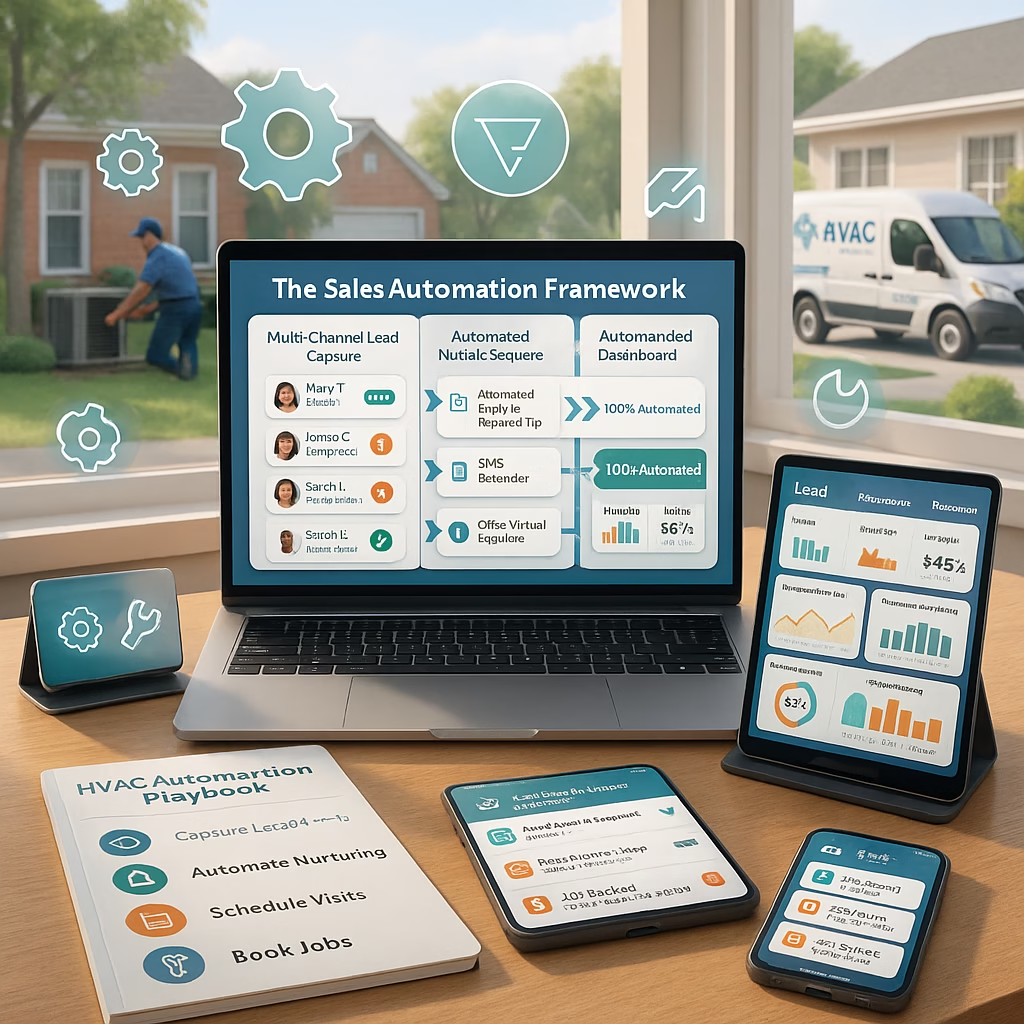
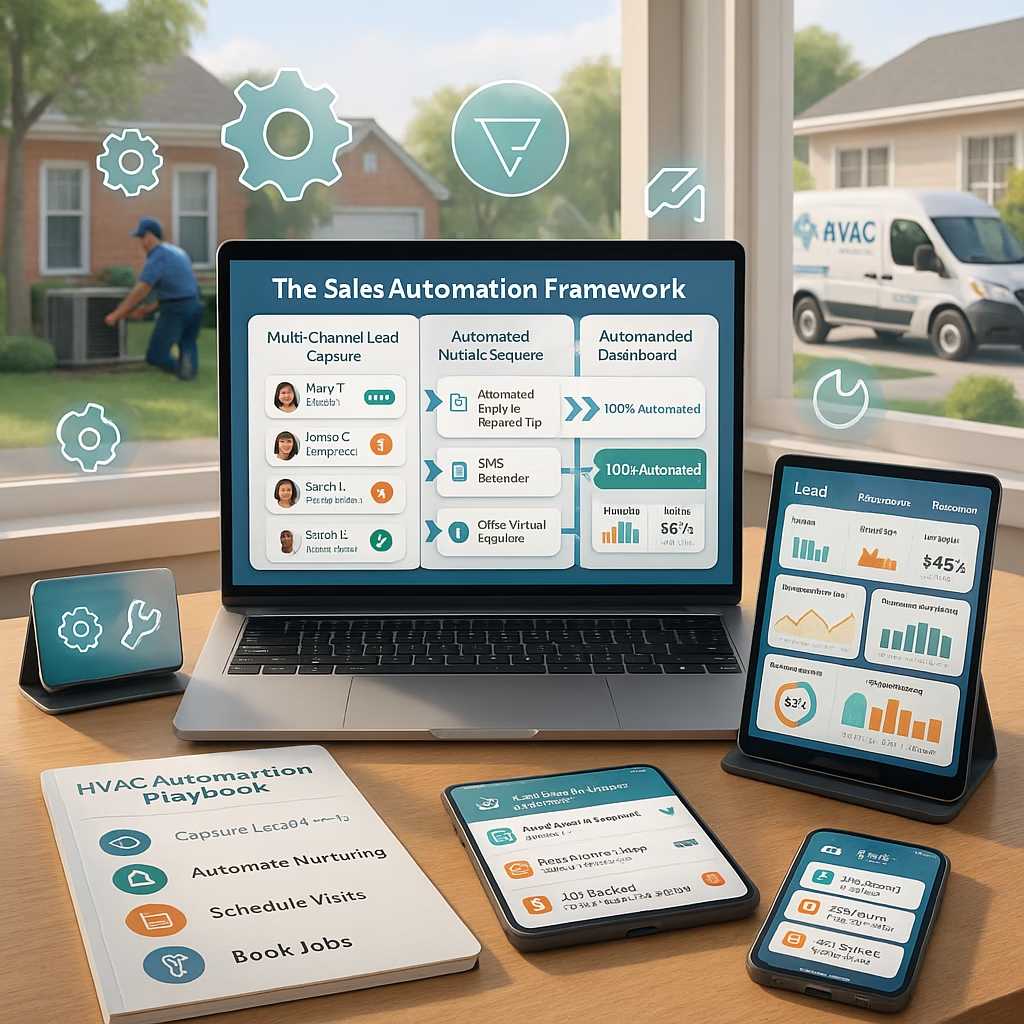
The Sales Automation Framework HVAC Companies Are Implementing Now outlines a proven system that captures, nurtures, and converts every lead—automating service bookings, follow-ups, and maintenance upsells. In an era where customers expect instant, consistent engagement, HVAC businesses leverage this framework to accelerate growth without adding headcount.

1. Why Sales Automation Matters for HVAC

1.1 Speed of Response & Customer Expectations

Prospects who receive a response within minutes are far more likely to convert. Automation ensures no inquiry goes unanswered—even outside business hours.

1.2 Consistency in Outreach & Messaging

Automated sequences deliver uniform brand messaging—quoting, availability, promotions—eliminating human error and compliance risks.

1.3 Scalability During Peak Seasons

During summer heat waves or winter freezes, inquiry volumes surge. Automation scales instantly to handle additional leads without delay.

2. Core Framework Components

2.1 Multi-Channel Lead Capture

Aggregate leads from website forms, Google Local Services, Facebook Lead Ads, and call tracking into a unified automation hub.

2.2 Automated Follow-Up Sequences

Configure multi-step email, SMS, and voice drip campaigns to nurture leads with timely reminders, safety tips, and seasonal offers.

2.3 Service Scheduling & Dispatch

Integrate with your dispatch software for instant appointment booking, route optimization, and automated confirmation/reminder messages.

2.4 Upsell & Maintenance Reminders

Trigger follow-up sequences for tune-ups, filter changes, and maintenance plans based on service history and service intervals.

2.5 Data Enrichment & Lead Scoring

Enrich lead profiles with geolocation, equipment age, and past service data. Score leads by urgency and value to prioritize high-impact follow-ups.

3. Implementation Roadmap

3.1 Assess Current Processes & KPIs

Audit existing lead flow, response times, and conversion rates. Define targets such as inquiry-to-booking ratio and average ticket size.

3.2 Select Tools & Integrations

Choose an automation platform (e.g., MarketBot, ServiceTitan), middleware (Zapier), and ensure native connectors to your CRM and dispatch system.

3.3 Design & Test Workflows

Map out dialogue trees, trigger points, and escalation paths. Run pilot tests with small segments to validate performance and tweak messaging.

3.4 Train Technicians & Staff

Conduct hands-on training sessions to teach staff how to monitor dashboards, manage escalations, and incorporate automated insights into their process.

4. CRM & Software Integration

4.1 Bi-Directional Data Sync

Ensure lead details, appointment statuses, and customer interactions flow seamlessly between your automation platform, CRM, and dispatch software.

4.2 Calendar & Route Optimization

Sync booked appointments to technicians’ calendars with GPS-optimized routes to reduce drive times and maximize daily service capacity.

4.3 Ensuring Data Accuracy

Implement validation rules, de-duplication routines, and regular data audits to maintain a clean, reliable lead database.

5. Tracking & Continuous Optimization

5.1 Key Metrics to Monitor

Track response time, booking conversion rate, technician utilization, average job revenue, and customer satisfaction scores.

5.2 A/B Testing Messaging

Experiment with different subject lines, SMS wording, and call-to-action phrases to identify top-performing sequences.

5.3 Leveraging Predictive Analytics

Use AI models to forecast peak demand, predict service needs, and proactively reach out to high-value customers.

6. Case Studies: HVAC Success Stories

6.1 CoolAir Specialists

CoolAir reduced lead response time from 45 minutes to under 5 minutes, boosting booking rates by 60% and technician utilization by 30%.

6.2 WarmHome Solutions

WarmHome automated maintenance reminders and upsells, increasing average ticket size by 25% and repeat customer rate by 40%.

7. Conclusion & Next Steps

Implementing The Sales Automation Framework HVAC Companies Are Implementing Now enables your business to capture every lead, speed up response, and convert more service calls—without adding staff. Begin with an audit, pilot the key workflows, and scale based on real-time performance. Get started with Market Wiz AI and revolutionize your HVAC sales today.

8. 25 Frequently Asked Questions

1. What is HVAC sales automation?

It’s the use of software to automatically capture leads, follow up, schedule service calls, and handle maintenance reminders without manual effort.

2. How fast should I respond to leads?

Within 5 minutes for highest conversion—automation ensures immediate acknowledgments and initial qualification.

3. Which channels should I automate?

Email, SMS, voice calls, web chat, and phone call tracking are key for a multi-channel approach.

4. How do I integrate with my dispatch system?

Use native connectors or middleware like Zapier to sync booked appointments and route details directly into your dispatch software.

5. Can automation handle emergency calls?

Yes—configure triggers for keywords like “no heat” or “AC broken” to escalate urgent leads to on-call technicians immediately.

6. What upsells work best?

Filter changes, maintenance plans, air quality tests, and system upgrades are proven upsell opportunities.

7. How do I maintain data quality?

Implement validation rules, de-duplication checks, and routine database audits to ensure accuracy.

8. What metrics matter most?

Response time, booking conversion rate, average ticket size, technician utilization, and customer satisfaction.

9. How often should workflows be reviewed?

Monthly for strategic adjustments and weekly for tactical tweaks based on lead volume and performance.

10. Do I need in-house IT support?

Minimal—most platforms are user-friendly with drag-and-drop workflow builders, but have support available for integrations.

11. Can I pause automation?

Yes—manual override and pause controls let you halt sequences during training, holidays, or system updates.

12. How do I avoid spamming?

Set frequency caps, respect opt-out requests, and tailor messaging based on lead status and preferences.

13. Are voice call automations effective?

Absolutely—automated voice reminders for appointments reduce no-show rates by up to 50%.

14. How to train staff on new workflows?

Provide interactive workshops, create quick-start guides, and appoint power users as internal champions.

15. What if a lead wants human contact?

Bots include “speak to a person” options that immediately route to your sales or dispatch team.

16. Can I integrate upsell offers?

Yes—trigger promotional messages based on service history and equipment age to offer timely upgrades.

17. What compliance issues arise?

Ensure TCPA compliance for SMS/voice, GDPR for data storage, and secure handling of personal information.

18. How secure is the data?

Top platforms use encryption, access controls, and audit logs to safeguard customer data.

19. Can I use AI for scheduling?

Yes—some systems use AI to recommend optimal appointment windows based on technician availability and travel times.

20. How to measure ROI?

Compare incremental revenue, cost per lead, and labor savings before and after automation deployment.

21. What if my CRM doesn’t integrate natively?

Use middleware like Zapier or custom API connections to bridge data between systems.

22. How to handle system downtime?

Have fallback manual processes and alert mechanisms to notify admins if automation services go offline.

23. Which platforms are recommended?

MarketBot, ServiceTitan, Housecall Pro, and Jobber offer robust automation features for HVAC.

24. How fast can I launch?

A basic pilot can go live within 2–3 weeks, including setup, integration, and staff onboarding.

25. Where to learn more?

Visit Market Wiz AI’s blog for in-depth automation tutorials, case studies, and best-practice guides.

9. 25 Extra Keywords

  1. HVAC sales automation framework
  2. automated HVAC lead follow-up
  3. HVAC appointment scheduling bot
  4. service dispatch automation HVAC
  5. HVAC maintenance reminders
  6. lead scoring HVAC
  7. response time optimization HVAC
  8. multi-channel HVAC marketing
  9. CRM integration HVAC
  10. SMS drip HVAC leads
  11. voice call reminders HVAC
  12. AI predictive HVAC demand
  13. route optimization HVAC
  14. upsell filter change reminders
  15. seasonal HVAC campaigns
  16. housecall pro automation
  17. servicetitan sales workflows
  18. jobber lead capture
  19. compliance HVAC messaging
  20. data enrichment HVAC leads
  21. technician utilization metrics
  22. customer satisfaction HVAC
  23. A/B testing HVAC emails
  24. automation pilot HVAC
  25. Market Wiz AI HVAC guide

© 2025 Market Wiz AI. All Rights Reserved.

The Sales Automation Framework HVAC Companies Are Implementing Now Read More »

How Roofing Companies Use Facebook Marketplace to Generate Consistent Leads

ChatGPT Image Jun 21 2025 10 59 40 AM
How Roofing Companies Use Facebook Marketplace to Generate Consistent Leads | Market Wiz AI

How Roofing Companies Use Facebook Marketplace to Generate Consistent Leads

Unlock a Steady Stream of Roofing Inquiries with Proven Marketplace Tactics

Table of Contents

Introduction

How Roofing Companies Use Facebook Marketplace to Generate Consistent Leads unveils the exact tactics top roofers employ to turn Marketplace into a reliable lead source. From setting up your profile to crafting magnetic listings, automating responses, and integrating with your CRM, this guide covers every step you need for a steady pipeline of roofing inquiries.

1. Understanding Facebook Marketplace for Roofing Leads

1.1 Why Facebook Marketplace?

With over a billion active users browsing for local services, Facebook Marketplace offers unmatched reach. Roofers can tap into homeowners seeking roof repairs, replacements, and inspections—often with less competition than pay-per-click channels.

1.2 Marketplace vs. Traditional Channels

Unlike directories or Google Ads, Marketplace listings appear natively within the Facebook app’s “Browse” experience. This lowers cost per lead and leverages social proof—friends’ recommendations and reviews—to build trust instantly.

2. Setting Up Your Roofing Profile

2.1 Business Page vs. Personal Profile

Create and verify a dedicated Business Page for your roofing company. This unlocks advanced analytics and ad capabilities, and projects a professional image to potential leads.

2.2 Optimizing Your Page for Local Search

Complete every field: service area, hours, contact info, and service categories like “Roof Repair” and “Shingle Replacement.” Encourage reviews to boost local relevance and ranking.

2.3 Creating a Marketplace Listing

From your Business Page, navigate to Marketplace and select “Create New Listing.” Choose “Service,” fill in your roof offering, and upload eye-catching visuals to stand out.

3. Crafting Compelling Listings

3.1 Attention-Grabbing Titles & Descriptions

Use clear, benefit-focused titles like “Leaky Roof? Same-Day Repair Guarantee.” In the description, list your credentials, warranties, and what sets you apart (e.g., “BBB-Accredited, Licensed & Insured”).

3.2 High-Quality Roof Photos & Videos

Show before/after shots, drone overviews, and time-lapse repair clips. Visual proof of your work builds immediate credibility and click-through rates.

3.3 Special Offers & Pricing Transparency

Highlight limited-time discounts or free inspections. Be upfront about starting prices or service packages to pre-qualify serious inquiries.

4. Engagement & Messaging Best Practices

4.1 Instant Response Strategies

Activate Facebook’s Away Messages and Instant Replies on Messenger to acknowledge inquiries within seconds—keeping leads engaged until you can follow up personally.

4.2 Automated Quick Replies

Set up automated FAQs for common questions on pricing, availability, and service areas. This frees your team to focus on high-value conversations.

4.3 Qualifying Prospects via Messenger

Use chatbot flows to ask key qualifiers—roof age, damage type, preferred timeline—and route hot leads directly into your sales queue.

5. Promoting & Boosting Listings

5.1 Marketplace Sponsored Options

Boost listings directly in Marketplace to appear at the top of local search results. Target by ZIP code and homeowner demographics to reach the right audience.

5.2 Budgeting for Boosted Posts

Allocate a modest daily budget (e.g., $5–$10) per high-value listing. Monitor cost per lead and adjust bids to maximize ROI.

5.3 Measuring ROI

Track inquiries from Marketplace in your CRM. Calculate conversion rates and cost per booked estimate to refine your promotion strategy.

6. Integration & Follow-Up

6.1 Capturing Leads in Your CRM

Use tools like Zapier or native integrations to sync Messenger conversations and lead data into your CRM—ensuring no inquiry slips through the cracks.

6.2 Automated Drip Sequences

Trigger an email/SMS sequence for new leads: free inspection reminder, case study highlights, seasonal maintenance tips, and a final call-to-action.

6.3 Nurturing to Conversion

Combine phone follow-ups, text reminders, and personalized video messages to guide leads from initial inquiry to scheduled service.

7. Case Studies: Roofing Success Stories

7.1 Riverside Roofing

By listing on Marketplace with boosted offers, Riverside Roofing doubled monthly leads within 60 days—achieving a 35% increase in booked inspections.

7.2 Summit Shingles

Summit Shingles combined Marketplace listings with automated Messenger flows, reducing lead response time to under 2 minutes and tripling their show-up rate.

8. Conclusion & Next Steps

Implementing How Roofing Companies Use Facebook Marketplace to Generate Consistent Leads equips your business with a turnkey system—from optimized listings and instant responses to automated nurture sequences and CRM integration. Start by setting up your Business Page, crafting standout listings, and automating follow-ups. Get started with Market Wiz AI to transform Facebook Marketplace into your top lead generator.

9. 25 Frequently Asked Questions

1. What types of roofing services work best on Marketplace?

Leak repairs, inspections, full replacements, and seasonal maintenance packages attract the most inquiries.

2. Do I need a Business Page to list?

Yes—a verified Business Page unlocks Marketplace listing and ad features, plus analytics insights.

3. How quickly should I respond?

Within minutes—fast replies improve conversion rates by up to 400% over same-day responses.

4. What’s the ideal listing frequency?

Create or refresh listings weekly to maintain visibility and leverage Facebook’s freshness algorithm.

5. How many photos should I include?

Upload at least 8–10 high-resolution images showcasing different angles, before/after shots, and work crews.

6. Should I boost every listing?

Boost your highest-value offers (e.g., free inspection) and test budgets to find profitable spend levels.

7. Can I target by ZIP code?

Yes—Facebook’s boost options let you narrow audience by location, age, homeowners status, and interests.

8. How do I avoid spam filters?

Craft unique descriptions for each listing and vary imagery; avoid copying and pasting identical posts.

9. Is Messenger automation allowed?

Yes—use Facebook’s built-in instant replies and chatbots compliant with their messaging policies.

10. How track Marketplace leads?

Sync Messenger with your CRM or use UTM codes on linked landing pages to attribute conversions accurately.

11. What’s a good response script?

Thank them for inquiry, confirm service details, offer a free estimate, and propose a convenient appointment slot.

12. Can I list roofing materials?

Yes—promoting premium shingle brands or metal roofs can attract DIY leads and upsell opportunities.

13. How manage lead volume?

Automate qualification questions to filter serious prospects, and limit boosted listings if volume exceeds capacity.

14. Do I need Facebook Ads Manager skills?

Basic boosting requires minimal training; for advanced targeting, a short course or agency support is helpful.

15. Can Marketplace integrate with my website?

Link to your site’s booking page or a dedicated landing page for roofing estimates to capture more data.

16. How to handle negative comments?

Respond promptly, acknowledge concerns, and offer to resolve offline to maintain a positive public image.

17. Are video listings effective?

Yes—short walkthroughs of completed jobs and client testimonials boost engagement and trust.

18. What’s the cost per lead?

Expect $5–$20 per qualified roofing lead depending on market and offer; track and optimize regularly.

19. How avoid duplicate leads?

Use unique inquiry forms or landing pages per listing and sync leads in real time to prevent overlap.

20. Should I post FAQs in description?

Including 2–3 common FAQs can preempt questions and streamline messaging, improving qualification speed.

21. How measure conversion rate?

Divide booked estimates by total inquiries from Marketplace to gauge listing effectiveness.

22. Can I promote maintenance plans?

Yes—bundle seasonal tune-ups or gutter cleaning with roof inspections to increase average ticket size.

23. How often update offerings?

Align with seasons: spring for replacements, summer for inspections, fall for gutter prep, and winter repairs.

24. What if I run out of slots?

Pause boosted listings or adjust availability messaging to manage expectations and prevent cancellations.

25. Where to learn more?

Visit Market Wiz AI’s blog for advanced roofing marketing strategies, templates, and automation guides.

10. 25 Extra Keywords

  1. roofing Facebook Marketplace
  2. Facebook Marketplace lead gen
  3. roof repair leads online
  4. homeowner roofing inquiries
  5. boosted roofing listings
  6. Messenger automation roofers
  7. roof inspection promotions
  8. before after roof photos
  9. local roofing offers FB
  10. seasonal roofing campaigns
  11. roof replacement discounts
  12. roof maintenance ads FB
  13. home improvement Marketplace
  14. roofing service SEO tips
  15. roofing CRM integration FB
  16. roofing lead scoring
  17. roofing drip email sequences
  18. roofing SMS reminders
  19. roofing review management
  20. roofing case studies FB
  21. roofing automated follow-up
  22. roofing testimoni­als video
  23. roofing business Facebook
  24. roofing offer codes FB
  25. Market Wiz AI roofing guide

© 2025 Market Wiz AI. All Rights Reserved.

How Roofing Companies Use Facebook Marketplace to Generate Consistent Leads Read More »

The Sales Automation Framework Auto Dealerships Companies Are Implementing Now

ChatGPT Image Jun 21 2025 10 57 09 AM
The Sales Automation Framework Auto Dealerships Companies Are Implementing Now | Market Wiz AI

The Sales Automation Framework Auto Dealerships Companies Are Implementing Now

Streamline Your Lead-to-Delivery Process with Market Wiz AI

Table of Contents

Introduction

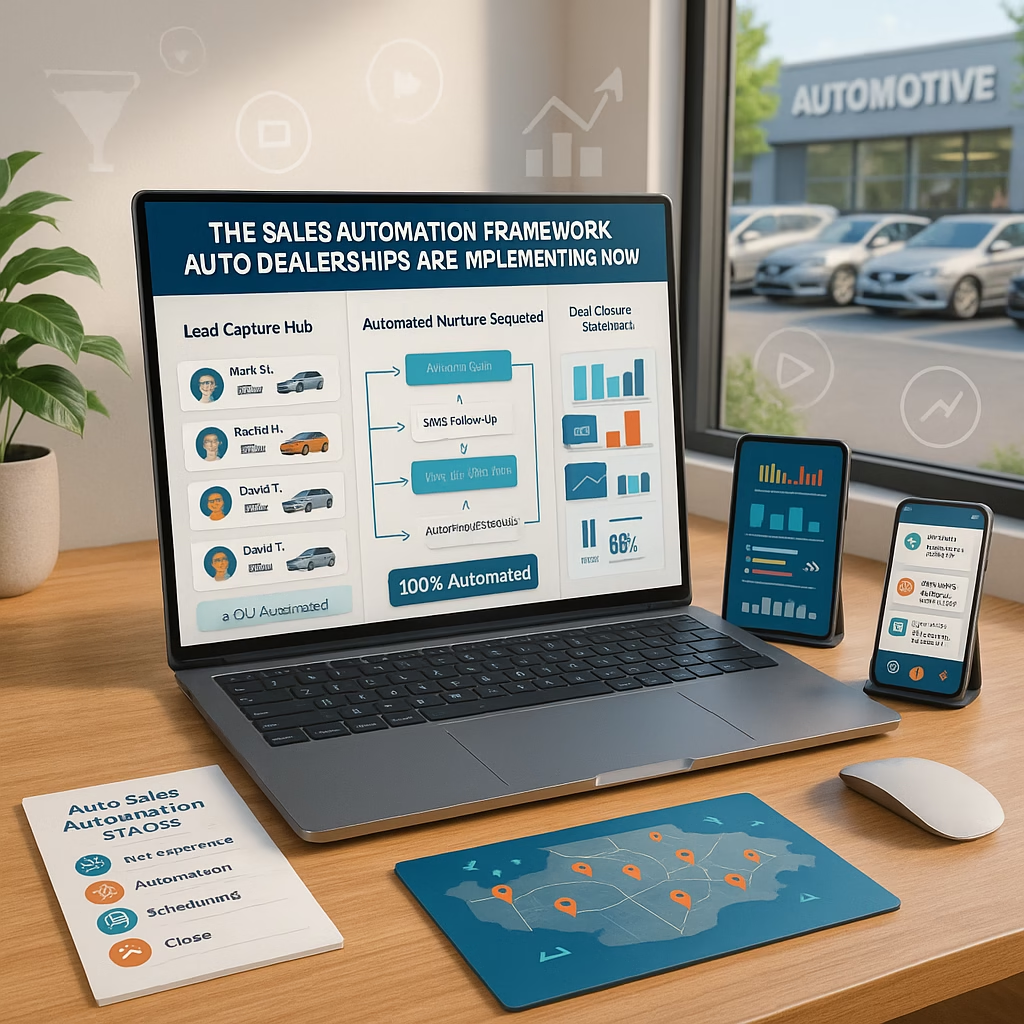
The Sales Automation Framework Auto Dealerships Companies Are Implementing Now unveils the strategies and tools top dealers use to capture, nurture, and convert every lead—automatically scheduling test drives, processing finance applications, and following up without human delay. This blueprint turns your CRM and DMS into a 24/7 sales engine.

1. Why Sales Automation Matters

1.1 Lead Response Time & Consumer Expectations

Modern car buyers expect instant answers. Responding within minutes can increase conversions by up to 400%. Automation ensures no inquiry goes unanswered.

1.2 Consistency & Compliance

Automated sequences deliver uniform messaging, compliance disclosures, and promotional details—every time—reducing errors and legal risk.

1.3 Scalability Across Locations

Whether you run one showroom or fifty, the framework scales—handling unlimited leads with identical efficiency, without adding headcount.

2. Framework Components

2.1 Multi-Channel Lead Capture

Aggregate leads from your website, Facebook Lead Ads, Google Local Services, and SMS—funneling all inquiries into a single automation hub.

2.2 Automated Follow-Up Sequences

Configure drip campaigns via email, SMS, and chat to nurture prospects with personalized offers, model information, and dealership incentives.

2.3 Test Drive Scheduling & Reminders

Allow prospects to book digital or in-person test drives directly through automated links, with reminder texts and calendar invites.

2.4 Finance Application Automation

Integrate finance portals to pre-fill applications, verify eligibility, and send status updates—streamlining the buying journey.

2.5 Data Enrichment & Lead Scoring

Enrich lead profiles with vehicle preferences, credit readiness, and engagement history, then score and prioritize high-intent buyers.

3. Implementation Roadmap

3.1 Needs Assessment & KPI Definition

Identify target metrics—lead-to-test-drive rate, finance submission rate, show-up rate—and map current gaps.

3.2 Tool Selection & Integration

Choose platforms like MarketBot or Drift for bots, Zapier for middleware, and ensure native connectors to your CRM/DMS.

3.3 Workflow Design & Testing

Draft dialogue flows, set trigger conditions, and run pilot tests on small segments to validate performance.

3.4 Staff Training & Change Management

Train sales managers and service staff on monitoring dashboards, handling escalations, and refining bot scripts.

4. Integrating with CRM & DMS

4.1 Bi-Directional Data Sync

Ensure leads, appointments, and finance statuses sync seamlessly between automation tools and your dealership management system.

4.2 API & Middleware Strategies

Use APIs for real-time updates or middleware for batch transfers, depending on volume and latency requirements.

4.3 Ensuring Data Integrity

Implement validation rules and error handling to prevent duplicate records and ensure accurate reporting.

4.4 Unified Customer View

Consolidate interaction history—emails, texts, chats, finance forms—into a single timeline for each prospect.

5. Tracking & Optimization

5.1 Key Performance Metrics

Monitor lead response time, test-drive conversion rate, finance submission rate, and average deal size.

5.2 A/B Testing Sequences

Experiment with subject lines, message timing, and CTAs to identify top-performing variants.

5.3 AI-Driven Predictive Insights

Leverage AI to predict which leads are most likely to convert, allowing you to focus high-touch efforts where they matter.

6. Case Studies: Dealership Dynamos

6.1 PrimeCars Uptown

Reduced lead follow-up time from 2 hours to 2 minutes, boosting test-drive bookings by 50% within three months.

6.2 DriveSmart Auto

Automated finance pre-approvals led to a 35% increase in completed deals and a 20% reduction in time-to-sale.

6.3 EliteMotors

Achieved a 4:1 ROI on automation spend in six months by integrating SMS reminders and personalized demo invites.

7. Conclusion & Next Steps

Implementing The Sales Automation Framework Auto Dealerships Companies Are Implementing Now transforms your sales operations—accelerating responses, capturing more test drives, and closing deals faster. Begin with a pilot, integrate your systems, and refine your workflows based on real-time data. Get started with Market Wiz AI and drive your dealership’s growth today.

8. 25 Frequently Asked Questions

1. What qualifies as a sales automation framework?

A set of tools and predefined workflows that capture, qualify, follow up, and convert leads automatically.

2. How fast should leads be contacted?

Within 2 minutes to maximize engagement and conversion rates.

3. Which channels are best for follow-up?

Email, SMS, and web chat ensure you reach prospects on their preferred platforms.

4. Can test drives be scheduled automatically?

Yes—integrate your scheduler to allow prospects to pick slots and receive calendar invites instantly.

5. How do bots handle finance applications?

Bots collect required data, pre-fill application forms, and send status updates to both dealer and applicant.

6. Is human oversight still needed?

Yes—escalate complex negotiations and high-value leads to your sales team for personalized handling.

7. What CRM integrations are common?

Solutions like DealerSocket, VinSolutions, and Salesforce integrate via native connectors or middleware.

8. How to measure ROI?

Compare revenue per lead and cost per lead before and after automation implementation.

9. Can automation improve customer experience?

Absolutely—instant responses and personalized messaging enhance satisfaction and brand perception.

10. What if a lead unsubscribes?

Automatically respect opt-outs and cease messaging while maintaining compliance logs.

11. How often update workflows?

Review and refine monthly based on performance analytics and feedback.

12. Do GDPR and TCPA apply?

Yes—ensure consent capture and message opt-out mechanisms comply with relevant regulations.

13. How to avoid spamming?

Limit frequency, personalize content, and include clear opt-out options in every message.

14. What training is required?

Provide short workshops for staff on monitoring dashboards and handling escalations.

15. Can multi-location dealers share a framework?

Yes—standardize core workflows and customize regional messaging as needed.

16. What performance dashboard works best?

Google Data Studio or your CRM’s built-in analytics, configured with real-time lead metrics.

17. How to A/B test messages?

Divide leads into segments and test variations of subject lines, CTAs, and timing.

18. Are there hidden costs?

Watch for per-message fees (SMS/email) and integration costs; budget accordingly.

19. How secure is the data?

Top platforms use encryption, access controls, and audit logs to protect sensitive information.

20. Can automation handle sales promotions?

Yes—automate distribution of special offers, discount codes, and event invites to targeted segments.

21. What if a lead wants human contact?

Provide an easy escalation path to connect with a live sales rep on demand.

22. How to integrate with DMS?

Use APIs or middleware to sync lead, appointment, and deal data between systems.

23. Can dealers roll back if needed?

Maintain manual override options and the ability to pause automation flows at any time.

24. How to handle seasonal spikes?

Scale messaging frequency and test drive slots during high-demand periods, then taper off during slow times.

25. Where learn more?

Visit Market Wiz AI’s blog for deeper tutorials, case studies, and implementation guides.

9. 25 Extra Keywords

  1. dealership sales automation
  2. auto lead follow-up bot
  3. test drive scheduling automation
  4. finance application bot
  5. CRM DMS integration dealership
  6. multi-channel dealership leads
  7. SMS follow-up for dealerships
  8. email drip campaigns auto
  9. A/B testing dealership messages
  10. AI-driven lead scoring auto
  11. response time optimization
  12. compliance in sales automation
  13. Scalable sales framework auto
  14. dealer management system sync
  15. Google Local Services dealers
  16. Facebook Lead Ads dealership
  17. data enrichment automobile leads
  18. predictive insights dealership
  19. follow-up reminder automation
  20. opt-in/opt-out SMS dealership
  21. real-time sales dashboard
  22. lead-to-sale conversion auto
  23. maintenance upsell automation
  24. dealership pilot implementation
  25. Market Wiz AI dealership guide

© 2025 Market Wiz AI. All Rights Reserved.

The Sales Automation Framework Auto Dealerships Companies Are Implementing Now Read More »

AI That Replaces Sales Staff for Electricians Businesses in 2025

ChatGPT Image Jun 21 2025 10 55 15 AM
AI That Replaces Sales Staff for Electricians Businesses in 2025 | Market Wiz AI

AI That Replaces Sales Staff for Electricians Businesses in 2025

Automate Your Sales Pipeline & Scale Without Extra Hires

Table of Contents

Introduction: AI That Replaces Sales Staff for Electricians Businesses in 2025

AI That Replaces Sales Staff for Electricians Businesses in 2025 is redefining how electrical contractors manage inquiries, qualify prospects, and secure bookings— all without adding human sales reps. This guide dives into the technologies, strategies, and best practices to leverage AI sales bots for instant engagement, accurate estimates, and tireless follow-up.

1. Why Electricians Need AI Sales Automation

1.1 The Cost of Traditional Sales Teams

Hiring and training sales staff incurs salaries, commissions, and overhead. AI bots eliminate these recurring expenses while delivering consistent performance.

1.2 Speed & Availability Advantages

Prospects expect near-instant responses. AI sales bots answer queries 24/7, capturing leads that would otherwise slip away after hours or during peak call times.

1.3 Scalability for Growing Demand

As service requests surge, AI scales seamlessly—handling unlimited simultaneous conversations without delays or additional hires.

2. Core Features of AI Sales Bots

2.1 Instant Lead Qualification

Bots ask key questions—service type, location, urgency—instantly filtering high-value opportunities and routing them to your dispatch or CRM automatically.

2.2 Automated Quoting & Estimates

Using preconfigured pricing rules, AI generates detailed quotes on the spot, including labor, parts, and call-out fees—reducing friction and speeding decision-making.

2.3 Appointment Scheduling Integration

Connect bots to your calendar or field-service software (e.g., ServiceTitan, Jobber) so prospects book appointments directly during the chat.

2.4 Follow-Up Reminders & Upsells

Bots send automated SMS/email reminders, request reviews, and suggest maintenance plans or upsells based on completed jobs and service history.

3. Implementing AI in Your Electrical Business

3.1 Platform Selection Criteria

Assess scalability, integration options, AI customization, and industry-specific templates when choosing a bot provider (e.g., MarketBot, Conversica).

3.2 CRM & Calendar Sync

Ensure bi-directional data flow between your bot, CRM, and scheduling systems to keep records accurate and automate follow-up triggers.

3.3 Customizing Conversation Flows

Design dialogue trees that reflect your brand voice, handle objections gracefully, and escalate complex queries to human agents when needed.

4. Best Practices & Pitfalls to Avoid

4.1 Maintaining Brand Voice

Train your AI on existing sales scripts and customer data to ensure messages sound genuine and aligned with your company’s tone.

4.2 Handling Complex Queries

Set clear escalation rules for technical or contract discussions, routing to your sales team to maintain service quality and accuracy.

4.3 Ensuring Compliance & Privacy

Adhere to TCPA for SMS, GDPR for data storage, and clearly obtain consent before messaging to protect your business and customers.

5. Measuring ROI & Performance

5.1 Key Metrics to Track

Monitor response time, lead-to-booking conversion rate, average job value, bot-handled ratio, and overall revenue uplift.

5.2 A/B Testing Bot Scripts

Experiment with different greetings, qualification questions, and CTAs to identify the highest-performing variations.

5.3 Scaling Successful Flows

Replicate top-performing dialogues across channels (SMS, chat, email) and adapt scripts for seasonal promotions or new services.

6. Case Studies: Electricians Winning with AI

6.1 SparkVolt’s 40% Booking Lift

SparkVolt implemented an AI bot for after-hours inquiries and saw a 40% increase in weekend bookings without adding staff.

6.2 BrightWire’s Cost Reduction

BrightWire replaced two sales reps with AI automation, reducing labor costs by $60K annually while maintaining lead volume.

7. Conclusion & Next Steps

Adopting AI That Replaces Sales Staff for Electricians Businesses in 2025 empowers you to respond instantly, qualify more leads, and book appointments at scale—without the overhead of a full sales team. Begin with a pilot, integrate with your systems, and iterate based on performance data. Try Market Wiz AI to launch your first AI-driven sales bot today.

8. 25 Frequently Asked Questions

1. How does an AI sales bot work?

It uses conversational AI to ask qualification questions, generate quotes, schedule appointments, and follow up automatically.

2. Will bots replace all sales staff?

Bots handle routine tasks—lead capture, quoting, scheduling—while human reps focus on complex negotiations and high-value clients.

3. What if a prospect asks a technical question?

Complex queries trigger escalation rules, handing off the conversation to a trained sales or technical team member.

4. Are AI bots always online?

Yes—bots provide 24/7 availability, answering inquiries outside business hours to capture after-hours leads.

5. How do bots generate accurate quotes?

Bots apply preconfigured pricing rules and margins, incorporating labor rates, parts costs, and service fees.

6. Can bots handle upsells?

Yes—bots can suggest maintenance plans, surge protection packages, or extended warranties based on the service booked.

7. What integrations are required?

CRM, calendar/scheduling software, and optionally SMS/email platforms for follow-up messaging.

8. How to measure success?

Track metrics like lead response time, conversion rate, average job value, and cost savings versus traditional sales.

9. Do bots comply with regulations?

Properly configured bots follow TCPA, GDPR, and other messaging/privacy laws with built-in consent management.

10. How quickly can I deploy?

Most electricians go live in 1–2 weeks, including setup, training, and script customization.

11. What platforms are available?

MarketBot, Conversica, Drift, and Intercom offer specialized sales automation for service businesses.

12. Can bots handle multiple channels?

Yes—simultaneously across website chat, SMS, email, Facebook Messenger, and WhatsApp.

13. How to maintain brand voice?

Train the AI on your existing sales scripts and style guides to ensure consistent tone and messaging.

14. Are there hidden costs?

Watch for message volume fees (SMS/email) and integration costs; plan your budget accordingly.

15. How often update scripts?

Review performance monthly and refine scripts based on new objections, promotions, or service offerings.

16. Can bots book urgent jobs?

They can detect “emergency” keywords and prioritize routing to on-call technicians immediately.

17. What training is needed?

Minimal—platforms include drag-and-drop editors and template libraries; initial training sessions suffice.

18. How secure is customer data?

Leading platforms encrypt data in transit and at rest, with role-based access controls and audit logs.

19. Will bots improve ROI?

Yes—by increasing conversion rates, reducing missed leads, and lowering sales labor costs.

20. Can bots handle existing customers?

They can send maintenance reminders, follow up post-service, and upsell new offerings to existing clients.

21. How to avoid spamming customers?

Set frequency caps, include opt-out options, and tailor messages based on lead status and preferences.

22. Do bots require internet access?

Yes—bots run in the cloud and need an active connection to integrate with your systems and deliver messages.

23. How to handle negative feedback?

Configure bots to apologize and escalate to a human agent when sentiment analysis detects dissatisfaction.

24. What if a lead unsubscribes?

The bot automatically removes them from SMS/email sequences and records the preference in your CRM.

25. Where to learn more?

Visit Market Wiz AI’s blog for deep dives on AI sales automation, case studies, and implementation guides.

9. 25 Extra Keywords

  1. electrician AI sales bots
  2. sales automation for electricians
  3. AI lead qualification electrical
  4. automated electrician quotes
  5. 24/7 electrical sales bot
  6. electrician appointment AI
  7. AI upsell maintenance plans
  8. CRM integration AI bots
  9. electrician cost reduction AI
  10. service business AI tools
  11. AI conversational flows
  12. technical query escalation
  13. compliance for AI messaging
  14. electrician revenue uplift AI
  15. multi-channel sales bots
  16. SMS follow-up electrician
  17. email drip AI electrician
  18. WhatsApp sales bot electrician
  19. Messenger bot electrical leads
  20. AI scalability for services
  21. bot script A/B testing
  22. lead response time AI
  23. serviceTitan AI integration
  24. Market Wiz AI electrician bots
  25. 2025 electrician AI solutions

© 2025 Market Wiz AI. All Rights Reserved.

AI That Replaces Sales Staff for Electricians Businesses in 2025 Read More »

The Complete 2025 Lead Generation Blueprint for Electricians Owners

876846697920081045
The Complete 2025 Lead Generation Blueprint for Electricians Owners | Market Wiz AI

The Complete 2025 Lead Generation Blueprint for Electricians Owners

Power Up Your Pipeline with Proven Digital Strategies

Table of Contents

Introduction: The Complete 2025 Lead Generation Blueprint for Electricians Owners

The Complete 2025 Lead Generation Blueprint for Electricians Owners lays out a comprehensive, step-by-step plan to attract, engage, and convert high-quality electrical service leads. From laying a solid digital foundation to scaling with automation and retention tactics, this guide ensures you harness the full power of modern marketing.

1. Blueprint Overview & Why It Matters

1.1 Industry Trends & Demand Drivers

With growing construction, green energy retrofits, and aging infrastructure, the demand for licensed electricians is surging. Agencies that tap into targeted digital channels capture this demand efficiently.

1.2 Setting SMART Lead Goals

Define Specific, Measurable, Achievable, Relevant, and Time-bound objectives—e.g., “Generate 80 qualified service inquiries per month with a CPL under $25.”

2. Foundation: Website & Local Presence

2.1 SEO Essentials for Electricians

Optimize for keywords like “emergency electrician near me” and “commercial electrical contractor.” Ensure fast load times, mobile responsiveness, and schema markup for LocalBusiness and Service.

2.2 Google Business Profile Optimization

Claim and verify your profile, select “Electrician” category, add service attributes (24/7, free estimates), and upload project photos to boost Local Pack rankings.

2.3 Local Citations & NAP Consistency

List your business consistently on Yelp, HomeAdvisor, Angie’s List, and local directories—ensuring Name, Address, Phone match exactly across all platforms.

3. Driving Traffic: Paid & Organic Channels

3.1 Google Ads & Local Services Ads

Run Call-Only and Lead Form extensions in Google Ads. Invest in Local Services Ads for pay-per-lead electrician listings with top-of-page placement.

3.2 Facebook & Instagram Lead Campaigns

Target homeowners by ZIP code and behaviors (recently moved, home improvement interest) with Instant Form ads offering free safety inspections.

3.3 Content Marketing & Blogging

Publish how-to guides (e.g., “How to troubleshoot a tripped breaker”), safety checklists, and case studies to drive organic traffic and establish authority.

3.4 Referral Partnerships

Collaborate with HVAC, plumbing, and smart-home installers—offer mutual referrals and co-branded promotions to expand your network.

4. Lead Nurturing: Email, SMS & Chatbots

4.1 Automated Email Drip Sequences

Trigger a 5-step email series for new inquiries: safety tips, service overview, case studies, special offers, and a final booking push.

4.2 SMS Reminders & Updates

Send appointment confirmations, reminder texts, and follow-up thank-yous via SMS to reduce no-shows and foster engagement.

4.3 Website Chatbot Qualification

Deploy a chatbot to ask key questions—service needed, project urgency, location—and route hot leads directly to your dispatch team.

5. Conversion Optimization

5.1 High-Converting Landing Pages

Use clear headlines, bullet-point benefits, trust badges (licensed, insured), and a concise inquiry form above the fold.

5.2 Trust Signals & Testimonials

Showcase customer reviews, BBB accreditation, and before/after gallery to reassure prospects and overcome objections.

5.3 Simplified Booking & Contact Forms

Reduce form fields to essentials (name, phone, service type)—integrate click-to-call and Google Click-to-Message for mobile users.

6. Scaling & Retention

6.1 Upsells & Maintenance Plans

Offer annual safety inspections, surge protection, and generator maintenance plans to increase average customer value.

6.2 Customer Loyalty Programs

Implement referral rewards and VIP service tiers—priority scheduling and discounted rates—to drive repeat business.

6.3 Performance Dashboards

Use Data Studio or your CRM’s dashboard to monitor CPL, conversion rates, LTV, and campaign ROI in real time.

7. Case Studies: Electricians Hitting Their Targets

7.1 SparkVolt Electric

SparkVolt cut CPL by 35% by shifting 25% of budget into Local Services Ads and optimizing their landing page, resulting in a 4:1 ROAS.

7.2 BrightWire Solutions

BrightWire deployed chatbots and SMS follow-up, boosting booking rates by 50% and reducing manual callback load by 80%.

8. Conclusion & Next Steps

Implementing The Complete 2025 Lead Generation Blueprint for Electricians Owners ensures you build a steady pipeline, nurture every prospect, and convert at scale. Start with a digital audit, set up paid and organic channels, automate nurturing workflows, and refine based on real-time data. Get started with Market Wiz AI and electrify your growth today.

9. 25 Frequently Asked Questions

1. What CPL should electricians target?

Aim for $20–$40 per qualified service lead, adjusting by market demand and service type.

2. How quickly must we follow up?

Respond within 5 minutes—leads acted on quickly convert at much higher rates.

3. Are Local Services Ads worth it?

Yes—pay-per-lead ads often outperform traditional PPC for home services due to targeted intent.

4. What makes a landing page high-converting?

Clear headline, benefit bullets, trust signals, and a simple form above the fold.

5. How many emails in a drip?

Between 4–6 over 2–3 weeks, balancing value and booking prompts without spamming.

6. Should we use SMS?

Absolutely—SMS open rates exceed 90%, making reminders and follow-ups highly effective.

7. What chatbot platform do you recommend?

MarketBot or Drift—both offer service-industry templates and CRM integrations.

8. How to choose SEO keywords?

Combine service + location phrases (“emergency electrician Chicago”) with broader informational terms.

9. How often update GBP?

Post weekly updates and review photos monthly to keep your profile fresh and engaging.

10. What trust badges matter?

Licensed & insured, Better Business Bureau accreditation, manufacturer certifications, and local awards.

11. How track ROI?

Use UTM tags on ads, integrate call tracking, and monitor revenue per lead in your CRM.

12. Do referral programs work?

Yes—offering referral credits or discounts drives word-of-mouth and repeat bookings.

13. How to prevent no-shows?

Send automated SMS reminders 24 and 2 hours before appointments, requiring simple confirmations.

14. What retention tactics help?

Loyalty clubs, maintenance plans, and annual safety checks keep customers engaged year-round.

15. Can we automate invoicing?

Yes—integrate your CRM with billing tools to auto-send estimates and invoices after job completion.

16. How to handle negative reviews?

Respond promptly, acknowledge the issue, and offer resolutions publicly to demonstrate professionalism.

17. What metrics matter most?

CPL, conversion rate, average job value, LTV, and overall campaign ROI.

18. How often audit campaigns?

Weekly performance checks with monthly strategic reviews to adapt to market changes.

19. Is video content effective?

Yes—quick how-to clips and project walkthroughs boost engagement and trust.

20. Which CRM integrates best?

ServiceTitan, Jobber, and HubSpot all offer robust integrations for home-service workflows.

21. How scale multi-location?

Standardize your blueprint, then customize for each service area’s unique demographics and demand.

22. Do we need an app?

Optional—a branded client portal can enhance retention but isn’t mandatory for lead generation.

23. What budget allocate?

Start with 10–15% of projected revenue on marketing, adjusting based on channel performance.

24. How handle seasonality?

Adjust ad budgets and content around peak seasons (winter safety checks, summer AC wiring) to match demand.

25. Where learn more?

Visit Market Wiz AI’s blog for deeper tutorials, templates, and electrician-specific marketing tools.

10. 25 Extra Keywords

  1. electrician lead generation 2025
  2. electrical service SEO
  3. Local Services Ads electricians
  4. emergency electrician PPC
  5. electrician Google Business Profile
  6. home services email drip
  7. SMS for electricians
  8. chatbot for electricians
  9. electrician landing page tips
  10. review management electricians
  11. electrician referral program
  12. no-show prevention electrician
  13. seasonal electrician offers
  14. electrician booking integration
  15. maintenance plan marketing
  16. electrician CRM integration
  17. call tracking electricians
  18. electrician customer retention
  19. case studies electrician marketing
  20. electrician performance dashboard
  21. content marketing for electricians
  22. local citation electrician
  23. electrician social proof
  24. automated invoicing electrician
  25. Market Wiz AI electrician guide

© 2025 Market Wiz AI. All Rights Reserved.

The Complete 2025 Lead Generation Blueprint for Electricians Owners Read More »

2025 AI Solutions Every Marketing Agencies Marketing Manager Should Know

876846011799102357
2025 AI Solutions Every Marketing Agencies Marketing Manager Should Know | Market Wiz AI

2025 AI Solutions Every Marketing Agencies Marketing Manager Should Know

Future-Proof Your Agency with Cutting-Edge AI Tools

Table of Contents

Introduction

2025 AI Solutions Every Marketing Agencies Marketing Manager Should Know dives into the transformative AI platforms reshaping agency workflows—from generating high-impact content and hyper-personalized campaigns to automating analytics and ad spend. Equip your team with these essential tools to stay ahead in a competitive landscape.

1. AI-Powered Content Creation

1.1 Generative Copy & Visuals

Platforms like ChatGPT and Midjourney enable rapid drafting of blog posts, ad copy, and branded imagery—cutting production time by up to 70% while maintaining style consistency.

1.2 Automated Video & Audio

Tools such as Synthesia and Descript turn scripts into polished videos or podcasts with AI-generated voices and avatars—ideal for scalable multimedia campaigns.

1.3 Brand Voice Consistency

Train custom AI models on existing brand assets to ensure every piece of content—from tweets to whitepapers—aligns with your agency’s unique tone and messaging guidelines.

2. AI for Advanced Analytics

2.1 Predictive Customer Insights

Leverage tools like Pecan and DataRobot to forecast churn, lifetime value, and campaign performance—enabling proactive strategy adjustments.

2.2 Real-Time Dashboards

Use AI-powered BI platforms such as ThoughtSpot to ask natural language questions and receive instant visualizations—empowering data-driven decisions for marketing managers.

2.3 Attribution & Forecasting

Implement algorithmic attribution models that accurately assign credit across touchpoints, and forecast outcomes based on scenario planning.

3. AI-Driven Personalization & Segmentation

3.1 Dynamic Website Experiences

Solutions like Optimizely and Personyze deliver real-time content variations based on user behavior and AI-driven segment predictions.

3.2 Smart Email & SMS Flows

Use platforms such as Klaviyo with AI recommendations to tailor message sequences, product suggestions, and optimal send times for each subscriber.

3.3 Recommendation Engines

Integrate AI recommendation APIs to suggest relevant products, articles, or services—boosting cross-sell and upsell revenue by up to 30%.

4. Conversational AI & Chatbots

4.1 Lead Qualification Bots

Deploy chatbots on websites and social channels to qualify inbound leads instantly, gathering budget, timeline, and project details before routing to sales.

4.2 Customer Support Automation

Use AI agents like Ada to handle common support queries, freeing up human agents for complex issues and improving response times by 80%.

4.3 Multi-Channel Integration

Ensure consistent bot experiences across web chat, Facebook Messenger, WhatsApp, and SMS, centralizing conversations in your CRM.

5. AI in Ad Optimization

5.1 Automated Bid & Budget Management

Platforms like Albert and Acquisio adjust bids, budgets, and targeting in real time to maximize ROI across PPC and social ad campaigns.

5.2 Creative A/B Testing

AI-driven creative rotation tests headlines, images, and calls-to-action simultaneously, delivering insights on winning ad variations faster than manual methods.

5.3 Audience Expansion Tools

Leverage lookalike and intent-based audience generators powered by AI to discover new high-value prospects on platforms like Facebook and LinkedIn.

6. Email & Campaign Automation

6.1 Smart Send-Time Optimization

Tools like Seventh Sense use engagement data to schedule emails at the precise moment each recipient is most likely to open.

6.2 Content Generation & Testing

AI assistants within platforms such as Mailchimp can draft subject lines, preview content variations, and predict performance before send.

6.3 Drip Sequence Intelligence

Implement adaptive drip campaigns that alter messaging based on recipient behavior, maximizing relevance and conversion rates.

7. AI Ethics & Compliance

7.1 Data Privacy Considerations

Ensure AI tools adhere to GDPR, CCPA, and other regulations—encrypt data at rest and in transit, and document consent flows clearly.

7.2 Bias Mitigation Practices

Audit training data regularly for demographic biases, apply fairness checks, and involve diverse teams in model validation.

7.3 Transparency & Governance

Maintain model documentation, decision logs, and a governance framework to track AI usage, performance, and impacts over time.

8. Implementation Roadmap

8.1 Pilot & Proof of Concept

Start small with a single use case—like AI-generated email subject lines—measure lift, then build a business case for broader rollout.

8.2 Training & Change Management

Provide hands-on workshops, create best-practice playbooks, and appoint AI champions within each team to drive adoption.

8.3 Scaling Across Teams

Create an AI center of excellence to standardize tool selection, integration patterns, and ROI tracking as you expand capabilities agency-wide.

9. Conclusion & Next Steps

Adopting 2025 AI Solutions Every Marketing Agencies Marketing Manager Should Know empowers your agency to create faster, optimize smarter, and engage more personally than ever before. Begin with pilots, measure impact, and scale the most effective solutions. Try Market Wiz AI to accelerate your AI journey today.

10. 25 Frequently Asked Questions

1. What is generative AI?

AI that creates new content—text, images, video—based on learned patterns from large datasets.

2. How do AI dashboards work?

They use natural language queries and automated insights to visualize data in real time.

3. Are AI chatbots secure?

Yes, when built on platforms that encrypt data and provide role-based access controls.

4. How much does AI cost?

Costs vary by usage and platform—expect subscription fees plus usage-based charges for processing volume.

5. Do we need in-house AI experts?

Initially no—many tools offer turnkey implementations, though building in-house expertise accelerates custom use cases.

6. Can AI replace human creativity?

AI augments creativity by generating drafts and ideas, but human oversight ensures brand alignment and nuance.

7. How do we ensure AI fairness?

Regularly audit models, diversify training data, and apply bias detection tools to maintain equitable outcomes.

8. What data do we need?

High-quality historical campaign data, customer interactions, and content assets form the foundation for most AI solutions.

9. How to measure AI ROI?

Track improvements in speed, cost savings, conversion lifts, and new revenue attributed to AI-driven initiatives.

10. Is AI in email worth it?

Yes—smart send times and personalized content can boost open and click rates by double digits.

11. What about data privacy?

Use platforms with built-in compliance features and manage consent records diligently for all AI data usage.

12. How to start a pilot?

Define clear objectives, select a small team, choose one AI use case, and run a time-boxed test.

13. Can AI optimize ad spend?

Yes—automated bid management and budget allocation tools continuously tune campaigns for best performance.

14. What skills do marketers need?

Data literacy, prompt engineering, and an understanding of AI ethics complement traditional marketing expertise.

15. How to handle AI errors?

Implement human-in-the-loop processes to review and correct outputs before publication.

16. Are AI tools easy to integrate?

Most offer APIs and native connectors for popular CRMs, CMSs, and analytics platforms.

17. How to keep AI models up to date?

Schedule periodic retraining with fresh data and monitor performance drift over time.

18. Will AI affect agency roles?

AI shifts focus from manual tasks to strategy and creative oversight, elevating the role of marketing managers.

19. What governance is needed?

Establish policies for data usage, model access, and ethical review to guide AI adoption responsibly.

20. How to manage multiple AI tools?

Create an AI center of excellence to standardize tool selection, best practices, and training across the agency.

21. Can AI help SEO?

Yes—AI can generate topic clusters, optimize on-page content, and predict ranking factors for better search performance.

22. How to ensure content quality?

Use AI for drafts, then apply human editing to refine tone, accuracy, and brand voice.

23. Are there open-source AI options?

Tools like Hugging Face Transformers provide customizable models, though they require more technical setup.

24. How to scale AI across clients?

Develop reusable templates, playbooks, and governance frameworks to deploy AI solutions efficiently for each account.

25. Where to learn more?

Visit Market Wiz AI’s blog for in-depth AI tutorials, case studies, and tool reviews.

11. 25 Extra Keywords

  1. AI marketing tools 2025
  2. agency AI adoption
  3. generative AI content
  4. predictive analytics AI
  5. AI personalization platforms
  6. chatbot lead qualification
  7. AI ad optimization
  8. email automation AI
  9. ethical AI marketing
  10. AI governance for agencies
  11. data-driven AI insights
  12. AI video creation
  13. AI voice assistants
  14. natural language dashboards
  15. AI customer segmentation
  16. real-time campaign AI
  17. AI creative testing
  18. smart send-time AI
  19. AI bias mitigation
  20. AI change management
  21. AI center of excellence
  22. open-source AI marketing
  23. Hugging Face for agencies
  24. AI performance monitoring
  25. Market Wiz AI solutions guide

© 2025 Market Wiz AI. All Rights Reserved.

2025 AI Solutions Every Marketing Agencies Marketing Manager Should Know Read More »

Scroll to Top