
Market Wiz AI

Uncategorized

Craigslist Posting Automation That Top Contractors Companies Use in 2025

879046392264315711
Craigslist Posting Automation That Top Contractors Companies Use in 2025 | Market Wiz AI

Craigslist Posting Automation That Top Contractors Companies Use in 2025

Scale Your Lead Generation with Smart Scheduling, Content Spinning & Compliance

Table of Contents

Introduction

Craigslist Posting Automation That Top Contractors Companies Use in 2025 delivers an insider’s look at how leading home improvement and service contractors leverage scheduling platforms, content spinners, and proxy management to flood Craigslist with fresh, compliant ads—driving a nonstop pipeline of inquiries without manual repetition.

1. Why Automate Craigslist Posting?

1.1 Volume & Reach at Scale

Manually posting dozens of ads across multiple regions is labor-intensive. Automation lets you push hundreds of listings hourly, reaching every high-value neighborhood effortlessly.

1.2 Consistency & Freshness

Craigslist ranks recent posts higher. Automated reposts ensure your ad stays at the top, maintaining maximum visibility without manual logins.

1.3 Compliance with Craigslist Rules

Proper timing, content variation, and account rotation avoid spam filters and posting bans—ensuring longevity of your campaigns.

2. Essential Tools & Workflows

2.1 Scheduler Platforms

Tools like MassPoster, AdLabs, and AutoPoster let you queue posts across multiple Craigslist accounts and regions, with customizable schedules.

2.2 Content Spinning & Templates

Integrate spinners (e.g. SpinnerChief, The Best Spinner) and dynamic templates to generate dozens of unique variants from a single master copy.

2.3 Proxy & Account Management

Rotate residential proxies and maintain multiple verified Craigslist accounts to distribute load and reduce flagging risk.

2.4 Monitoring & Alerts

Set up real-time notifications for post expiration, suppression events, or account restrictions—so issues get fixed immediately.

3. Step-by-Step Automation Setup

3.1 Creating & Saving Post Templates

Draft detailed templates covering services, offers, and contact methods. Save them in your scheduler to speed up assignment to multiple regions.

3.2 Configuring Schedules & Locations

Map out prime posting slots—early morning, midday, and evening—and assign each to specific metro areas for broad coverage.

3.3 Integrating Spinners & Custom Fields

Connect your template to a spinner API, and insert custom tokens (e.g., {City}, {Service}) to personalize each ad variant.

3.4 Testing & Dry Runs

Run test posts in sandbox accounts to validate formatting, link functionality, and compliance before launching live campaigns.

4. Best Practices & Pitfalls to Avoid

4.1 Rotating Account/IP Pools

Use a pool of 5–10 accounts per region and rotate proxies to mimic natural user behavior and avoid mass-posting flags.

4.2 Avoiding Duplicate Content Flags

Ensure each spun variant differs by at least 30%—adjust headlines, bullet points, and calls-to-action to satisfy Craigslist’s filters.

4.3 Balancing Automation with Manual Checks

Weekly manual reviews catch template drift, broken links, or new policy changes that automation might miss.

4.4 Staying Under Posting Limits

Adhere to Craigslist’s unofficial limits (≈5 posts per account per day per category) to prevent soft bans or shadowbans.

5. Advanced Tactics for Maximum ROI

5.1 A/B Testing Post Variations

Run parallel campaigns with different offers or formatting to identify the highest-conversion headlines and images.

5.2 Geo-Targeted Hourly Reposts

Automate reposts in high-value ZIP codes hourly, ensuring your service looks ever-fresh to prospects browsing local feeds.

5.3 AI-Powered Headline Optimization

Leverage GPT-powered headline generators that test emotional triggers, urgency, and benefit-focused copy for top engagement.

6. Case Studies: Contractors Winning with Automation

6.1 Elite Roofers Co.

Elite Roofers scheduled 200 daily posts across three metro areas, doubling inquiry volume in 30 days while reducing manual hours by 80%.

6.2 Spark Renovations

Spark used A/B testing on headlines and images—boosting click-throughs 45% and generating a 3:1 ROI on their ad spend within two weeks.

7. Conclusion & Next Steps

Implementing Craigslist Posting Automation That Top Contractors Companies Use in 2025 empowers your business to dominate local classified feeds with minimal manual effort. Start by selecting a robust scheduler, configuring your spinners and proxies, and mapping out a strategic posting cadence. Test aggressively, monitor performance, and iterate to keep your ads atop Craigslist and your inbox full of qualified leads. Get started with Market Wiz AI and transform your lead generation today.

8. 25 Frequently Asked Questions

1. What is Craigslist posting automation?

Using software to schedule, spin, and repost ads across Craigslist accounts automatically, without manual logins.

2. Is automation allowed on Craigslist?

Not officially; however, careful rotation of accounts, IPs, and content variation keeps you under the radar.

3. How many posts per day?

Keep to about 3–5 posts per account per category to avoid flagging by Craigslist’s spam filters.

4. What software works best?

Popular choices include MassPoster, AdLabs, AutoPoster, paired with SpinnerChief or The Best Spinner.

5. Do I need proxies?

Yes—rotating residential proxies per account reduces the risk of IP-based bans.

6. How to spin content effectively?

Use a spinner API with nested synonyms and human-reviewed templates to ensure readability and uniqueness.

7. Can I integrate AI headline tools?

Absolutely—GPT-powered tools can generate dozens of high-impact headlines for A/B testing.

8. How to monitor listings?

Set up alerts in your scheduler or use uptime monitoring tools to notify you if posts disappear prematurely.

9. What regions to target?

Choose high-income ZIP codes where your services command premium rates and competition is manageable.

10. How to handle replies?

Use CRM integrations or chatbots to capture inquiries and auto-respond with scheduling links.

11. Should I manual-audit weekly?

Yes—manual checks ensure templates are current, links work, and no new policy changes broke posts.

12. Can I repost expired ads?

Yes—automate reposting just after the 48-hour expiration to maintain top listings.

13. How to avoid duplicate flags?

Change at least 30% of text between spins, vary images, and adjust posting times to mimic real users.

14. What metrics matter?

Response rate, click-through inquiries, lead-to-job conversion, and cost per lead (CPL).

15. How to scale across services?

Maintain separate templates and posting schedules for each service line—roofing, HVAC, plumbing—to track ROI.

16. Is this cost-effective?

Yes—automation tools typically cost $50–$200/month versus hundreds of manual labor hours.

17. How to stay compliant?

Adhere to unofficial posting limits, rotate accounts/IPs, and vary content sufficiently.

18. Can I boost Craigslist posts?

No native boosting—use paid local ads on Facebook or Google to amplify top Craigslist listings externally.

19. What about images?

Rotate 3–5 high-quality images per post; avoid stock photos that trigger duplicate-image filters.

20. How to handle account bans?

Have backup accounts ready and spread posting load; investigate bans quickly and adjust settings.

21. What’s the learning curve?

Expect 1–2 weeks to master tool configuration, spinning rules, and scheduling workflows.

22. Do mobile apps help?

Most automation is desktop/server-based; mobile apps are less common for bulk posting.

23. How to integrate payment pages?

Link to your booking or payment portal directly in the ad, using UTM tags for attribution.

24. Can I segment campaigns by budget?

Yes—assign higher-value service templates to premium ZIP codes and monitor CPL across segments.

25. Where to learn more?

Visit Market Wiz AI’s blog for detailed tutorials, templates, and advanced Craigslist automation guides.

9. 25 Extra Keywords

  1. Craigslist contractor automation
  2. automated ad posting 2025
  3. mass posting Craigslist tools
  4. Craigslist content spinner integration
  5. proxy rotation Craigslist
  6. account management Craigslist ads
  7. posting schedule contractors
  8. CPL Craigslist leads
  9. Craigslist A/B testing ads
  10. GPT headline generator Craigslist
  11. hourly Craigslist reposting
  12. IP pool Craigslist posting
  13. Craigslist compliance tips
  14. shadowban prevention Craigslist
  15. regional Craigslist campaigns
  16. CRM integration Craigslist leads
  17. inbox automation Craigslist
  18. tracking Craigslist inquiries
  19. service area posting Craigslist
  20. backup Craigslist accounts
  21. link tracking Craigslist
  22. rotating images Craigslist
  23. manual audit Craigslist ads
  24. lead qualification Craigslist
  25. Market Wiz AI Craigslist guide

© 2025 Market Wiz AI. All Rights Reserved.

Craigslist Posting Automation That Top Contractors Companies Use in 2025 Read More »
How Marketing Agencies Companies Use Facebook Marketplace to Generate Consistent Leads

879046169999768750
How Marketing Agencies Use Facebook Marketplace to Generate Consistent Leads | Market Wiz AI

How Marketing Agencies Use Facebook Marketplace to Generate Consistent Leads

Unlock a Reliable Stream of Qualified Prospects with Marketplace Tactics

Table of Contents

Introduction

How Marketing Agencies Use Facebook Marketplace to Generate Consistent Leads uncovers the precise blueprint top agencies deploy to tap into Marketplace’s vast audience. By strategically positioning offerings, automating responses, and refining listings, agencies transform Marketplace into a lead-generation powerhouse, delivering predictable pipelines for their clients.

1. Why Facebook Marketplace Matters

1.1 Massive Built-In Audience

Over 1 billion users browse Marketplace monthly, spanning diverse demographics and geographies—all actively seeking products and services.

1.2 Low Cost & High Intent

Unlike broad social ads, Marketplace listings reach users primed to inquire, often at no additional cost for organic posts and minimal spend for boosts.

1.3 Organic & Paid Synergy

Agencies blend free listings with targeted ad boosts and retargeting across Facebook and Instagram for end-to-end customer journeys.

2. The Exact Marketplace Strategy Agencies Use

2.1 Product & Service Positioning

Agencies craft specialized offers—“Free In-Home Estimate” or “Emergency Plumbing Response”—to stand out in category feeds and search results.

2.2 Audience Targeting & Geo-Filters

By filtering listings to specific zip codes or radius rings, agencies ensure reach in high-value neighborhoods and service areas.

2.3 Listing Optimization & Keywords

Integrate high-search terms into titles and descriptions—e.g., “Certified HVAC Tune-Up Near Me”—to appear in user searches.

2.4 Rapid Inquiry Response Systems

Implement inbox automation tools and chatbots to reply within seconds—building trust and capturing contact details before competitors respond.

2.5 Automated Follow-Up Workflows

Sync inquiries to a CRM and trigger email/SMS nurture sequences that share customer testimonials, service highlights, and booking links.

3. Crafting High-Converting Listings

3.1 Compelling Titles & Descriptions

Use benefit-driven headlines (“Save 20% on Water Heater Replacement”) and bullet-point service features to quickly convey value.

3.2 Eye-Catching Photos & Videos

Show before/after shots, short demo videos, and company branding to build credibility and engagement in the scroll feed.

3.3 Pricing & Promotions

Offer time-limited deals and transparent pricing tables within descriptions to reduce friction and encourage immediate inquiries.

4. Tools & Integrations

4.1 Inbox Automation Tools

Platforms like ManyChat or MobileMonkey route leads to inbox, send instant replies, and qualify prospects before human handoff.

4.2 CRM & Calendar Sync

Connecting Marketplace leads to CRMs (HubSpot, Zoho) and calendars (Google Calendar, Calendly) ensures seamless booking and follow-up.

4.3 Chatbots & Auto-Reply Systems

Set up keyword triggers—“quote,” “schedule”—for pre-written responses and qualification questions directly within Marketplace messenger.

5. Scaling & Optimization

5.1 Performance Tracking

Monitor message volume, response times, and lead-to-booked-appointment ratios via dashboards to identify top-performing listings.

5.2 A/B Testing Listings

Test variations in titles, images, and call-to-actions to refine listing elements that drive the highest inquiry rates.

5.3 Budgeting for Paid Boosts

Allocate modest budgets ($5–$15 per day) to boost high-performing listings, targeting custom audiences and lookalikes for incremental reach.

6. Case Studies: Agencies Driving Results

6.1 FlowPro HVAC

FlowPro’s agency partner listed seasonal maintenance packages on Marketplace and boosted select listings, generating 120 qualified leads in 30 days at $8 CPA.

6.2 Sparkle Home Services

Sparkle used geo-targeted listings for emergency plumbing and integrated chatbots—doubling inquiries and filling slots 2 weeks in advance.

7. Conclusion & Next Steps

Implementing How Marketing Agencies Use Facebook Marketplace to Generate Consistent Leads empowers your clients with a scalable, cost-effective lead source. Start by refining listings, automating inbox responses, and integrating follow-up workflows. Test, optimize, and scale to turn Marketplace into a predictable lead engine. Get started with Market Wiz AI and master Marketplace lead generation today.

8. 25 Frequently Asked Questions

1. What types of businesses work best on Marketplace?

Local services—HVAC, plumbing, home repair—and retail goods with clear regional demand.

2. Do listings expire?

Marketplace auto-archives after 7 days; re-post or boost top listings to maintain visibility.

3. Can I boost free listings?

Yes—use the “Boost Listing” option to turn organic posts into ads targeting specific audiences.

4. How quickly should I respond to inquiries?

Within 5 minutes—fast replies significantly increase booking likelihood.

5. Are chatbots allowed?

Yes—automated inbox replies comply with Marketplace, provided they don’t violate spam policies.

6. How much does boosting cost?

Typically $5–$15/day, depending on audience size and bid strategy.

7. What metrics matter most?

Inquiry volume, response time, qualification rate, and lead-to-booking conversion.

8. Can I schedule posts in advance?

Native scheduling isn’t available; use approved third-party tools or manual posting workflows.

9. How to handle spam inquiries?

Configure chatbots to filter common junk and prioritize qualified leads for human review.

10. Should I include pricing?

Yes—transparent starting prices reduce low-intent inquiries and set clear expectations.

11. How do I track ROI?

Use UTM parameters on booking links and CRM source fields to attribute revenue to Marketplace.

12. Can I target lookalike audiences?

Boosted ads support Lookalike targeting based on CRM lists or past inquirers for expanded reach.

13. How often refresh listings?

Every 5–7 days to maintain top placement and avoid listing fatigue.

14. What images perform best?

High-resolution, contextually relevant photos showing service outcomes or product usage.

15. Are videos allowed?

Yes—short videos (15–30s) can boost engagement and clarify service value.

16. How to avoid policy violations?

Review Facebook’s Commerce Policies, avoid prohibited items, and ensure truthful descriptions.

17. What time of day is best?

Early morning (7–9am) and evening (6–8pm) local time when users browse before/after work.

18. Can I integrate with Messenger?

Yes—enable “Message” buttons to route inquiries directly into Messenger or chatbots.

19. How to scale multiple markets?

Create separate geo-targeted listings per region and customize offers for each locale.

20. Do boosted listings show on Instagram?

Yes—if you choose Instagram placements when boosting via Ads Manager.

21. What budget for testing?

Start with $100–$200 total over 1–2 weeks to gather performance data before scaling.

22. How to handle negative feedback?

Respond promptly, apologize, and offer solutions offline—public professionalism builds trust.

23. Are marketplace leads different quality?

Often higher intent due to active browsing—still qualify via chatflows for best results.

24. What third-party tools help?

ManyChat, MobileMonkey, Publer (for scheduling), and Zapier for integrations.

25. Where to learn more?

Visit Market Wiz AI’s blog for deep-dive guides, templates, and advanced lead-gen strategies.

9. 25 Extra Keywords

  1. Facebook Marketplace lead gen
  2. Marketplace marketing agencies
  3. boost Facebook Marketplace listings
  4. Marketplace inbox automation
  5. local service leads Marketplace
  6. Marketplace CRM integration
  7. Marketplace listing optimization
  8. geo-targeted Marketplace ads
  9. Marketplace chatbots
  10. Facebook Messenger integration
  11. UTM tracking Marketplace
  12. Marketplace A/B testing
  13. cost per lead Marketplace
  14. high-intent Marketplace queries
  15. Marketplace video listings
  16. prohibited items Facebook Marketplace
  17. Marketplace policy compliance
  18. timing Marketplace posts
  19. reposting Marketplace ads
  20. Marketplace performance dashboard
  21. lookalike audiences Marketplace
  22. seasonal Marketplace offers
  23. Marketplace community groups
  24. rapid reply Marketplace leads
  25. Market Wiz AI Marketplace guide

© 2025 Market Wiz AI. All Rights Reserved.

How Marketing Agencies Companies Use Facebook Marketplace to Generate Consistent Leads Read More »

AI That Replaces Sales Staff for Plumbing Businesses in 2025

878682695507411086
AI That Replaces Sales Staff for Plumbing Businesses in 2025 | Market Wiz AI

AI That Replaces Sales Staff for Plumbing Businesses in 2025

Automate Your Plumbing Sales Cycle & Scale Without Extra Hires

Table of Contents

Introduction

AI That Replaces Sales Staff for Plumbing Businesses in 2025 is transforming how plumbing companies handle inquiries, quotes, and appointments—replacing traditional sales roles with intelligent automation that delivers instant, personalized interactions around the clock. In this guide, we’ll dive into the technology, implementation steps, and best practices to revolutionize your sales process and drive growth.

1. Why Plumbing Businesses Need AI That Replaces Sales Staff

1.1 The Cost of Human Sales Teams

Salaries, commissions, benefits, and training costs add up. AI bots provide 24/7 sales support at a fraction of the expense, freeing budget for marketing and equipment.

1.2 24/7 Availability & Instant Response

Modern customers expect immediate replies. AI responds in seconds—capturing and qualifying leads outside business hours and reducing missed opportunities.

1.3 Scalability & Peak Season Handling

During busy periods—frozen pipe season or holiday prep—AI scales effortlessly, managing unlimited simultaneous conversations without extra staffing.

2. Core AI Sales Features

2.1 AI-Powered Lead Qualification

Bots ask tailored questions—house type, issue severity, preferred appointment window—to instantly filter high-value leads and route them to dispatch.

2.2 Automated Estimating & Quotes

Using up-to-date pricing rules, AI delivers accurate cost estimates on the spot, including parts, labor, and emergency fees—building trust and speeding decision-making.

2.3 Scheduling & Dispatch Integration

Integrate AI with your calendar and dispatch system (e.g., ServiceTitan, Housecall Pro) so qualified leads can self-schedule appointments or be auto-assigned to technicians.

2.4 Follow-Up & Upsell Automation

Bots send automated SMS/email reminders, request feedback, and propose add-on services—water heater maintenance, drain cleaning, or annual checkups—based on customer history.

3. Implementation Steps

3.1 Choosing the Right AI Platform

Evaluate NLP accuracy, plumbing-specific templates, integration capabilities, and support—options include MarketBot, Conversica, and custom solutions.

3.2 Integrating with CRM & Field Tools

Ensure seamless data flow between AI, CRM, dispatch software, and communication channels to keep customer profiles and appointment schedules in sync.

3.3 Customizing Conversational Flows

Design dialogues that reflect your brand’s tone, handle common objections (e.g., pricing concerns), and trigger human hand-off for complex scenarios.

3.4 Training & Human Oversight

Conduct staff workshops to monitor bot performance, tweak scripts, and step in when necessary—ensuring a smooth transition for both team and customers.

4. Best Practices & Pitfalls to Avoid

4.1 Maintaining Brand Voice

Train AI on your existing call scripts and service language to preserve authenticity and build rapport with customers.

4.2 Data Privacy & Compliance

Adhere to TCPA and local data protection laws—capture clear consent for SMS, encrypt customer data, and maintain audit logs.

4.3 Monitoring & Human Escalation

Set clear triggers—complex issues, financing discussions—for immediate human takeover to maintain high service quality.

4.4 Continuous Improvement

Regularly review conversation transcripts and performance metrics to refine bot scripts and improve lead conversion outcomes.

5. Measuring Success & ROI

5.1 Key Metrics: Response Time, Conversion Rate, Job Value

Track average response time, percentage of leads converted to booked jobs, and average ticket size to assess AI impact.

5.2 A/B Testing Bot Scripts

Experiment with different greetings, qualification questions, and CTAs to identify the most effective flows for engagement.

5.3 Scaling Based on Performance

Expand successful bot workflows across channels—website chat, SMS, Facebook Messenger—and increase capacity during promotions.

6. Case Studies: Plumbing Companies Winning with AI

6.1 SwiftFlow Plumbing

SwiftFlow deployed an AI bot for emergency calls and saw a 60% boost in after-hours leads without hiring extra staff, cutting response times in half.

6.2 AquaGuard Services

AquaGuard replaced two inside sales reps with AI workflows, saving $80K annually while maintaining lead volume and improving customer satisfaction scores.

7. Conclusion & Next Steps

Adopting AI That Replaces Sales Staff for Plumbing Businesses in 2025 empowers your company to capture more leads, respond instantly, and schedule jobs at scale—without the overhead of a large sales team. Start with a pilot, integrate with your existing systems, and iterate based on performance data to transform your sales operations. Try Market Wiz AI to launch your first AI sales bot today.

8. 25 Frequently Asked Questions

1. How fast can AI bots be deployed?

Most plumbing businesses go live in 1–2 weeks, including setup, integration, and initial training.

2. Will AI fully replace human staff?

Bots handle routine inquiries and scheduling; humans remain crucial for complex diagnostics and high-value sales.

3. How do bots qualify leads?

By asking targeted questions—issue type, urgency, location—and scoring responses to prioritize hot leads.

4. Can AI generate accurate quotes?

Yes—using predefined pricing matrices, including parts, labor, and emergency surcharges.

5. Are bots available 24/7?

Absolutely—capturing leads around the clock and reducing missed opportunities.

6. What integrations are needed?

CRM, dispatch software, calendar system, and optional SMS/email platforms for follow-up messaging.

7. How is customer data secured?

Platforms encrypt data, enforce role-based access, and maintain logs for compliance and auditing.

8. How to measure ROI?

Compare response time, conversion rates, and labor cost savings before and after AI implementation.

9. Can bots upsell services?

Yes—bots suggest maintenance plans, warranty extensions, and upgrade options based on customer profiles.

10. What if a lead requests a human?

Users can request a live agent at any point, triggering immediate handoff to your sales team.

11. Do bots comply with TCPA?

Properly configured bots follow TCPA guidelines, capturing explicit consent before SMS outreach.

12. What training is required?

Minimal—platforms offer intuitive editors, templates, and support for customizing flows.

13. How often should scripts be updated?

Review and refine bot dialogues monthly to align with promotions, new services, and customer feedback.

14. Can bots schedule emergency calls?

Yes—integrate with your dispatch system to allow immediate booking of emergency service slots.

15. Are there hidden fees?

Watch for message volume charges (SMS/email) and integration costs; clarify pricing upfront.

16. What metrics matter most?

Lead response time, conversion rate to booked jobs, average ticket value, and staffing cost savings.

17. Can bots handle financing questions?

They can collect financing preferences and pass data to your finance team for follow-up.

18. How to prevent spamming?

Set frequency caps, include opt-out options, and tailor messages based on lead engagement.

19. Do bots integrate with Facebook Messenger?

Yes—supporting multi-channel lead capture via web chat, SMS, and social platforms.

20. How to ensure data accuracy?

Implement validation rules and conduct periodic audits to catch and correct errors.

21. What if AI fails a query?

Bots escalate to humans when encountering unconfigured requests or sensitive issues.

22. Can bots follow up automatically?

Yes—scheduled SMS/email sequences nurture leads until they book a service or request contact.

23. How to scale multi-location?

Deploy separate bot instances per branch with localized flows, pricing, and availability.

24. Are analytics included?

Dashboards show conversation logs, qualification rates, and performance trends in real time.

25. Where to learn more?

Visit Market Wiz AI’s blog for case studies, templates, and advanced plumbing AI automation guides.

9. 25 Extra Keywords

  1. plumbing AI sales automation
  2. automated plumber lead qualification
  3. AI scheduling plumbing appointments
  4. 24/7 plumbing chatbot
  5. AI quoting for plumbers
  6. plumbing sales bot 2025
  7. ServiceTitan AI integration
  8. Housecall Pro AI assistant
  9. plumber CRM chat automation
  10. AI follow-up SMS plumbing
  11. email drip bots plumbers
  12. response time AI metrics
  13. bot script A/B testing
  14. data security plumbing AI
  15. human escalation AI
  16. peak season bot scaling
  17. AI lead scoring plumbing
  18. cost savings AI sales
  19. voice-enabled plumber bot
  20. Facebook Messenger plumbing bot
  21. multi-channel AI plumbing
  22. bot platform comparison
  23. TCPA compliant plumbing bot
  24. GDPR plumber AI compliance
  25. Market Wiz AI plumbing guide

© 2025 Market Wiz AI. All Rights Reserved.

AI That Replaces Sales Staff for Plumbing Businesses in 2025 Read More »

The Facebook Groups Strategy Appliance Stores Owners Use to Avoid Getting Banned

878682388417222889
The Facebook Groups Strategy Appliance Stores Owners Use to Avoid Getting Banned | Market Wiz AI

The Facebook Groups Strategy Appliance Stores Owners Use to Avoid Getting Banned

Master Group Engagement, Posting & Moderation for Safe, Effective Lead Generation

Table of Contents

Introduction

The Facebook Groups Strategy Appliance Stores Owners Use to Avoid Getting Banned reveals the exact blueprint leading retailers employ to tap into local communities, share valuable insights, and generate quality leads—while staying firmly within Facebook’s rules. By mastering group selection, posting cadence, and engagement best practices, you’ll build authority and avoid the dreaded ban hammer.

1. Why Facebook Groups Matter for Appliance Stores

1.1 Community Trust & Authority

Facebook Groups are hubs of genuine discussion. Appliance store owners who consistently add value—answering repair questions or offering maintenance tips—become trusted experts in the eyes of potential buyers.

1.2 Highly Targeted Local Reach

Local buy/sell and neighborhood groups let you engage hyper-local audiences—people actively seeking appliance advice or deals in your service area.

1.3 Cost-Effective Engagement

Unlike paid ads, organic group posts cost nothing. A well-crafted, informative post can spur dozens of inquiries without spending a dime.

2. Key Components of the Strategy

2.1 Group Selection & Research

Identify 10–15 active local groups (5–50K members) related to home improvement, local sales, and appliance-specific discussions. Vet rules to ensure business posts are allowed.

2.2 Posting Cadence & Content Types

Adopt a 80/20 rule: 80% educational or entertaining (maintenance tips, troubleshooting guides), 20% promotional (seasonal discounts, new model arrivals). Post 2–3 times per week to avoid spamming.

2.3 Engagement & Relationship Building

Reply promptly to comments, tag community members by name, and follow up on solved problems. Personal connections lead to referrals and bookings.

2.4 Compliance & Community Standards

Always read group rules before posting. Use discreet calls-to-action (“Message me for a free quote”) instead of blatant sales pitches to stay within guidelines.

3. Step-by-Step Implementation

3.1 Auditing Existing Groups

List each group’s size, activity level, and posting rules. Prioritize groups with high engagement and permissive business-posting policies.

3.2 Creating a Content Calendar

Map out weekly themes: “Maintenance Monday,” “Troubleshooting Thursday,” and “Flash Sale Friday.” Schedule posts in advance to maintain consistency.

3.3 Automating Post Scheduling

Use tools like Buffer or Hootsuite (where permitted) to queue posts. Always double-check group rules—some require manual posting to track acknowledgments.

3.4 Tracking Responses & Metrics

Use UTM-tagged links and simple spreadsheets to record group engagement, inquiries generated, and conversion rates back to showroom visits or quotes.

4. Best Practices & Pitfalls to Avoid

4.1 Keeping Posts Value-Driven

Every post should teach or entertain: explain how to clean stainless-steel fronts or choose the right refrigerator size—then subtly mention your services.

4.2 Avoiding Spam Triggers

Limit posts to a maximum of three per week per group. Avoid identical messages; tailor each post to the specific group’s interest and tone.

4.3 Respecting Moderators & Rules

Always tag the group’s admin when in doubt or when seeking permission. A positive relationship with moderators prevents post removals.

4.4 Handling Negative Feedback

Respond politely to complaints: acknowledge the issue, offer solutions offline, and ask the dissatisfied party to update their feedback once resolved.

5. Case Studies: Appliance Stores Winning with Groups

5.1 CoolTech Appliances

By posting weekly “DIY Maintenance” videos in three local groups, CoolTech saw a 45% increase in service bookings directly traced to group inquiries.

5.2 HomeCare Depot

HomeCare Depot hosted a “Group-Exclusive Flash Sale,” driving 150 appliance sales in 48 hours—without any ad spend.

6. Conclusion & Next Steps

Implementing The Facebook Groups Strategy Appliance Stores Owners Use to Avoid Getting Banned empowers your store to tap into vibrant communities, build trust, and generate leads organically. Start by auditing groups, planning value-driven content, automating where possible, and tracking your results. Respect the rules, engage authentically, and watch your inquiries—and sales—grow. Get started with Market Wiz AI today.

7. 25 Frequently Asked Questions

1. How many groups should I join?

Start with 10–15 relevant local and niche groups to maximize reach without overextending.

2. What types of content perform best?

Educational tips, troubleshooting guides, and lighthearted posts (memes, polls) followed by occasional offers.

3. How often can I post?

2–3 high-value posts per week per group to avoid being flagged as spam.

4. Can I automate all posting?

Use scheduling tools when allowed, but some groups require manual posting—always verify group rules first.

5. How do I measure success?

Track inquiries via UTM links, note group source in your CRM, and calculate conversion from inquiry to sale.

6. What if a post is removed?

Reach out to the moderator for clarification, adjust your approach, and avoid repeating rule violations.

7. Is promotional content allowed?

Only if the group permits business posts. Always blend promotions with valuable content to stay in good standing.

8. How do I handle negative comments?

Respond promptly, offer to resolve offline, and maintain a professional tone to demonstrate excellent customer service.

9. Should I tag moderators?

Yes—preemptively tagging moderators when posting promotional content shows respect and reduces removals.

10. How to craft a good CTA?

Use soft CTAs like “Message me for a free quote” or “Click our link to learn more,” rather than hard sells.

11. Can I share customer photos?

Only with explicit permission; always obtain photo release consent before posting client images.

12. How to avoid sounding robotic?

Write in a conversational tone, use emojis where appropriate, and personalize messages with names.

13. Are group-exclusive offers effective?

Yes—offering special discounts only for group members drives urgency and engagement.

14. What time of day to post?

Peak engagement times are early morning (7–9am) and evening (7–9pm) local time for most groups.

15. How to get moderator approval?

Message them with your business intent, share past content examples, and ask for posting guidelines.

16. Do I need a separate page?

Use your official business page to post; avoid personal profiles for business promotions to maintain credibility.

17. How to repurpose content?

Turn blog posts into quick tips, transform customer FAQs into polls, and use video snippets across groups.

18. How to avoid shadowbans?

Respect rate limits, avoid identical posts, and vary content formats to prevent Facebook’s automated filters from penalizing you.

19. What tools help manage groups?

Tools like Hootsuite Streams and Meta Business Suite can aggregate notifications—but manual oversight remains key.

20. Can I target competitor groups?

Yes—observe rules carefully and offer genuine value rather than direct poaching to avoid moderator backlash.

21. How to handle low engagement?

Experiment with interactive formats—polls, quizzes, live Q&A sessions—to reignite interest.

22. Are giveaways allowed?

Only if permitted; clear prize rules and moderation approval are essential to avoid disputes and bans.

23. How to scale across regions?

Create localized variants of posts and join corresponding regional groups for each market you serve.

24. What common mistakes to avoid?

Over-posting, ignoring rules, using clickbait, and failing to engage in comments are surefire ways to get banned.

25. Where to learn more?

Visit Market Wiz AI’s blog for advanced community marketing tactics, templates, and case studies.

8. 25 Extra Keywords

  1. appliance store Facebook group strategy
  2. avoid getting banned in Facebook groups
  3. Facebook group posting tips
  4. local appliance sales Facebook
  5. group engagement tactics
  6. community building appliance stores
  7. Facebook group moderation
  8. value-driven group content
  9. automated post scheduling groups
  10. tracking group inquiries
  11. group-specific CTAs
  12. tagging moderators Facebook
  13. group rules compliance
  14. negative feedback handling
  15. group-exclusive promotions
  16. peak posting times Facebook
  17. local community groups appliance
  18. Facebook shadowban prevention
  19. appliance repair tips groups
  20. DIY appliance maintenance posts
  21. customer photo consent
  22. interactive polls Facebook
  23. regional group variants
  24. giveaway rules Facebook groups
  25. Market Wiz AI group guide

© 2025 Market Wiz AI. All Rights Reserved.

The Facebook Groups Strategy Appliance Stores Owners Use to Avoid Getting Banned Read More »

The Exact Facebook Ad Strategy Successful Auto Dealerships Businesses Use

878681426344542976
The Exact Facebook Ad Strategy Successful Auto Dealerships Businesses Use | Market Wiz AI

The Exact Facebook Ad Strategy Successful Auto Dealerships Businesses Use

Accelerate Your Test Drives & Sales with Proven Facebook Campaigns

Table of Contents

Introduction

The Exact Facebook Ad Strategy Successful Auto Dealerships Businesses Use unveils the precise tactics top dealers employ on Facebook to drive showroom visits, test drives, and sales. From highly targeted audiences to creative best practices and data-driven optimization, this blueprint provides every step to build a predictable, scalable lead machine.

1. Why Facebook Ads Matter for Dealers

1.1 Audience Reach & Micro-Targeting

Facebook’s 2+ billion users span demographics and behaviors—allowing dealers to target by vehicle interest, income bracket, location radius, and even life events like recent moves or newly married couples.

1.2 Seasonal Sales & Event Promotions

Whether launching a summer clearance, holiday specials, or new model unveilings, Facebook Ads amplify your events to local audiences primed to buy.

1.3 Measurable ROI & Attribution

With the Facebook Pixel and Conversion API, every click, form fill, and offline sale can be tracked—letting you calculate true cost-per-sale and optimize budget allocation.

2. The Exact Facebook Ad Strategy Successful Auto Dealerships Businesses Use

2.1 Audience Segmentation & Custom Audiences

Build Custom Audiences from past buyers and website visitors. Layer in Lookalike Audiences at 1–2% similarity and refine with interests like “SUV enthusiast” or “electric vehicle” to reach your ideal buyer.

2.2 Creative Framework & Messaging

Follow a three-part arc: Hook (attention-grabbing headline about savings or new arrivals), Value (key benefits—fuel efficiency, warranty, low APR), and Action (test drive CTA with limited-time incentive).

2.3 Campaign Structure & Budget Split

Allocate 50% to Prospecting, 30% to Engagement (showroom video tours), and 20% to Retargeting (abandoned lead forms and website browsers).

2.4 Lead Gen Forms & Conversion Paths

Use Facebook’s Instant Forms with pre-filled fields to reduce friction. Ask only essential qualifiers—desired model, trade-in status, and preferred showroom location.

2.5 Retargeting & Follow-Up Funnels

Retarget form abandoners and page viewers with dynamic ads showcasing the exact models they viewed. Sync retargeting audiences to email/SMS drip campaigns for multi-channel follow-up.

3. Crafting High-Converting Ad Creatives

3.1 Video vs Image vs Carousel Ads

Short walkthrough videos—showing interior features and test drives—outperform stills. Carousel ads let users swipe through trims and color options.

3.2 Ad Copy Best Practices

Keep headlines under 40 characters, use direct benefit statements (“Lease a new SUV for $299/mo”), and include social proof (“#1 rated dealer in [City]”).

3.3 Dynamic Creative & Testing

Implement Facebook’s Dynamic Creative to mix headlines, images, and CTAs—letting the algorithm discover top-performing combinations automatically.

4. Tracking & Optimization

4.1 Facebook Pixel & Conversion API

Install the Pixel for website events (ViewContent, Lead) and enable Conversion API to capture server-side events—ensuring data accuracy despite ad blockers.

4.2 Offline Event Matching

Upload sales data from your DMS to Facebook to match leads to actual purchases—closing the loop on ad attribution and refining cost-per-sale metrics.

4.3 A/B Testing & Iteration

Test one variable at a time—creative, audience, placement—over at least 500 impressions. Pause underperformers and scale winners to maximize ROI.

5. Case Studies: Dealerships Driving Growth

5.1 City Motors

City Motors doubled test drive bookings in 60 days by shifting 30% of budget into video prospecting ads and a tailored Lookalike Audience—achieving a 4:1 ROAS.

5.2 Premier Auto Plaza

Premier used Dynamic Creative with carousel ads to showcase trade-in values and finance offers—reducing cost-per-lead by 45% and increasing showroom foot traffic 35%.

6. Conclusion & Next Steps

Implementing The Exact Facebook Ad Strategy Successful Auto Dealerships Businesses Use transforms Facebook into your highest-performing lead channel. Start by defining audiences, crafting your first ads, and setting up conversion tracking. Iterate based on data, scale budgets strategically, and watch your service bays fill. Get started with Market Wiz AI today and drive unstoppable growth.

7. 25 Frequently Asked Questions

1. What budget should I allocate?

Start with $50–$100 per day, then scale based on CPL and test-drive conversion metrics.

2. How long before I see results?

Expect initial learnings in 7–10 days; meaningful performance improvements in 4–6 weeks.

3. What’s a good CPL?

A target of $10–$25 per qualified lead is typical, depending on vehicle type and market.

4. Do I need a landing page?

Yes—dedicated landing pages improve conversion over Instant Forms by reinforcing brand and offers.

5. How many creatives should I test?

4–6 variations of images/videos and copy combos to find top performers.

6. Can I use only Instant Forms?

Instant Forms are effective, but driving to a branded landing page allows richer experiences and retargeting options.

7. What lookalike size works best?

1–2% lookalikes strike a balance between relevance and scale; test 1% first.

8. How often refresh creatives?

Every 4–6 weeks to prevent ad fatigue and maintain engagement.

9. Do video ads outperform images?

Short, 15–30s testimonial or model walkthrough videos often see 20–30% higher engagement.

10. What metrics matter most?

Click-through rate (CTR), cost per lead (CPL), lead-to-test-drive rate, and return on ad spend (ROAS).

11. How track offline sales?

Upload sales events from your DMS to Facebook’s Offline Events Manager for accurate attribution.

12. Should I use automated rules?

Yes—set rules to pause underperformers and increase budget on top campaigns automatically.

13. What seasonal promotions work?

Seasonal maintenance packages, holiday sales events, and end-of-model-year clearances drive high intent.

14. How to qualify leads?

Use form questions on desired vehicle type, trade-in details, and preferred contact time to filter high-intent prospects.

15. Can I retarget video viewers?

Yes—create Custom Audiences of anyone who watched 25–50% of your video ads for subsequent retargeting.

16. What is dynamic creative?

Facebook’s tool that mixes headlines, images, and CTAs to algorithmically find the best-performing combinations.

17. How handle negative comments?

Monitor and respond politely; hide spam or irrelevant comments to maintain ad performance.

18. Any compliance issues?

Ensure pricing claims and offers comply with Facebook’s ad policies to avoid disapproval.

19. How to integrate CRM?

Use Zapier or native API connectors to push leads directly into your CRM and trigger follow-up sequences.

20. Manual vs automatic bidding?

Automatic bidding works well for most dealers; manual bid caps can control costs but require close monitoring.

21. What is a custom audience?

An audience built from your own data—like past customers or website visitors—used for targeted ads.

22. How to scale budgets safely?

Increase budgets by 15–20% every 3–4 days, monitoring CPA stability before further increases.

23. What if CPA rises?

Review targeting, creative, and bid strategy; pause underperformers and test new variations.

24. How to split test audiences?

Create identical ad sets with different targeting (lookalike vs interest) to compare performance directly.

25. Where to learn more?

Visit Market Wiz AI’s blog for deeper dives, templates, and advanced Facebook Ads tutorials.

8. 25 Extra Keywords

  1. auto dealership Facebook ad strategy
  2. car dealer lead gen Facebook
  3. Facebook lead ads for dealers
  4. dealership Lookalike Audiences
  5. Instant Forms car sales
  6. Dynamic Creative auto ads
  7. cost per lead auto dealer
  8. Facebook Pixel car dealership
  9. offline event matching dealers
  10. test drive booking ads
  11. video ads auto dealership
  12. car clearance Facebook campaign
  13. audience segmentation dealers
  14. retargeting vehicle viewers
  15. carousel ad car models
  16. ad fatigue prevention dealers
  17. seasonal auto promotions
  18. CRM integration Facebook leads
  19. call-only automotive ads
  20. mobile optimization dealership ads
  21. remarketing auto shoppers
  22. Facebook Ads ROAS auto
  23. automated rules Facebook
  24. lead qualification form dealers
  25. Market Wiz AI auto guide

© 2025 Market Wiz AI. All Rights Reserved.

The Exact Facebook Ad Strategy Successful Auto Dealerships Businesses Use Read More »

The Complete 2025 Lead Generation Blueprint for Furniture Stores Owners

878681236292302218
The Complete 2025 Lead Generation Blueprint for Furniture Stores Owners | Market Wiz AI

The Complete 2025 Lead Generation Blueprint for Furniture Stores Owners

Unlock a Steady Stream of High-Value Furniture Inquiries All Year Long

Table of Contents

Introduction

The Complete 2025 Lead Generation Blueprint for Furniture Stores Owners provides a comprehensive, step-by-step playbook to attract qualified shoppers, nurture prospects intelligently, and convert them into in-store and online buyers. Implement these proven digital and local strategies to fill your showroom and website with a consistent flow of high-value leads.

1. Blueprint Overview & Market Trends

1.1 The 2025 Furniture Retail Landscape

Consumers increasingly research and shop online before visiting showrooms. Virtual tours, detailed product pages, and seamless omnichannel experiences are now table stakes.

1.2 Why a Structured Blueprint Matters

Ad hoc tactics lead to wasted budget and inconsistent results. A structured blueprint ensures each channel works in concert—maximizing visibility, engagement, and conversions.

2. Digital Foundation & Local Presence

2.1 SEO Essentials for Furniture Stores

Target long-tail keywords like “sectional sofa near me” and “modern dining sets [City]”. Optimize meta tags, headings, and alt text to capture organic search traffic.

2.2 Google Business Profile Mastery

Claim and verify your profile, select precise categories (“Furniture Store,” “Home Decor”), and upload high-quality showroom photos to dominate the Local Pack.

2.3 Local Citations & NAP Consistency

List your store on Yelp, Houzz, local chambers, and directories—ensuring identical Name, Address, Phone (NAP) data across all platforms to boost local search authority.

3. Traffic Generation Channels

3.1 Google Ads & Local Services Ads

Run Search and Display campaigns with callout extensions promoting free design consultations. Invest in Local Services Ads to pay only for qualified homeowner leads.

3.2 Facebook & Instagram Ads

Use carousel ads showcasing best-selling collections, and target homeowners by zip code and interests. Lead Ads with Instant Forms reduce friction and boost sign-ups.

3.3 Content Marketing & Blogging

Publish style guides, “room makeover” tutorials, and trend reports. Rich blog content attracts organic traffic and positions your store as a design authority.

3.4 Showroom Events & Partnerships

Host design workshops and partner with local architects or home builders—promoting events via event listings and co-marketing to drive foot traffic.

4. Lead Nurturing Strategies

4.1 Automated Email Sequences

Deploy a welcome series: introduction to your brand, virtual tour link, customer testimonials, limited-time offers, and final call-to-action for showroom visits.

4.2 SMS Reminders & Follow-Ups

Send appointment confirmations and personalized style tips via SMS. Quick texts keep prospects engaged and reduce no-shows for consultations.

4.3 Chatbots & Live Chat Integration

Implement chatbots on product and landing pages to answer FAQs, gather preferences, and schedule appointments automatically.

5. Conversion Rate Optimization

5.1 Optimized Landing Pages

Mirror ad messaging, include clear benefit statements, trust badges, and a single “Schedule Design Consultation” form above the fold.

5.2 Trust Signals & Virtual Showroom Tours

Embed 360° showroom walkthroughs and highlight 5-star Google reviews prominently to build credibility and reduce buyer hesitation.

5.3 Simplified Contact & Booking Forms

Limit fields to name, email, and preferred time. Integrate click-to-call and one-click booking buttons for mobile users.

6. Scaling & Retention

6.1 Design Consultations & Upsell Packages

Offer tiered design services and bundled accessory packages to increase average order value and deliver premium experiences.

6.2 Loyalty & Referral Programs

Implement a points-based loyalty scheme and incentivize referrals with discounts or freebies—turning satisfied customers into advocates.

6.3 Performance Dashboards

Use Google Data Studio or CRM dashboards to monitor CPL, lead-to-sale rate, average order value, and LTV in real time.

7. Case Studies: Furniture Store Growth Stories

7.1 Luxe Living Interiors

Luxe Living doubled showroom visits in 90 days by combining Local Services Ads with Facebook Lead Ads and a targeted email nurture funnel—achieving a 4:1 ROAS.

7.2 HomeStyle Gallery

HomeStyle launched virtual showroom tours and automated chat qualification, boosting online inquiries by 75% and closing 30% more sales remotely.

8. Conclusion & Next Steps

Implementing The Complete 2025 Lead Generation Blueprint for Furniture Stores Owners positions your business for sustainable growth—attracting, nurturing, and converting high-value leads across digital and local channels. Start with your digital foundation, layer in paid and organic traffic tactics, automate nurturing, and optimize your conversion pathways. Get started with Market Wiz AI to transform your lead generation in 2025.

9. 25 Frequently Asked Questions

1. What is the ideal CPL for furniture stores?

Depends on ticket size, but aim for 10–20% of average sale value per lead.

2. How quickly should I respond to leads?

Within 5 minutes—fast replies dramatically increase conversion rates.

3. Are Local Services Ads worth it?

Yes—pay-per-lead placement captures high-intent local shoppers.

4. How often should I post blog content?

At least twice monthly to maintain SEO momentum and audience engagement.

5. Should I invest in virtual tours?

Absolutely—360° tours boost online engagement and remote sales.

6. What social channels matter most?

Instagram and Pinterest for visual appeal; Facebook for local targeting.

7. How many citations do I need?

50–100 quality local and niche directory listings to solidify local SEO.

8. Can I automate appointment reminders?

Yes—SMS and email reminders cut no-shows by up to 50%.

9. How to measure ROAS?

Total revenue from leads ÷ ad spend, tracked via UTM and CRM attribution.

10. Do chatbots convert?

Yes—properly scripted bots can handle up to 60% of common inquiries automatically.

11. What CRM integrates best?

HubSpot, Zoho, and Salesforce offer strong integration with ad platforms and chat tools.

12. How to avoid ad fatigue?

Rotate creatives every 4–6 weeks and test new copy and formats.

13. Are influencer partnerships effective?

Micro-influencers in home décor can drive highly qualified showroom visits.

14. How to handle negative reviews?

Respond promptly, apologize, and offer solutions to demonstrate commitment to service.

15. Should I use schema markup?

Yes—LocalBusiness and Product schema improve rich result eligibility.

16. What is a good email open rate?

25–30% is typical; aim higher with segmented, personalized campaigns.

17. How to capture showroom walk-ins?

Use Wi-Fi login or QR code forms to gather contact info on-site.

18. Do I need a mobile app?

Optional—mobile apps can boost loyalty but are not essential for lead gen.

19. How often audit SEO?

Quarterly audits ensure you stay ahead of algorithm changes and competition.

20. What metrics matter most?

CPL, conversion rate, average order value, LTV, and ROAS by channel.

21. Can I repurpose content?

Yes—turn blog posts into social snippets, email tips, and GBP posts.

22. How to optimize for voice search?

Include natural language Q&A and “near me” phrases in FAQs and content.

23. What budget allocate?

Start with 10–15% of projected revenue on combined marketing efforts.

24. How to scale across regions?

Create localized pages and GBP listings for each showroom with tailored content.

25. Where to learn more?

Visit Market Wiz AI’s blog for in-depth guides, templates, and AI-powered optimization tools.

10. 25 Extra Keywords

  1. furniture store lead blueprint
  2. 2025 furniture marketing
  3. showroom traffic generation
  4. furniture local SEO tips
  5. Google Business Profile furniture
  6. automated showroom bookings
  7. furniture email drip campaigns
  8. SMS reminders furniture
  9. virtual showroom tours
  10. Facebook Lead Ads furniture
  11. Instagram shoppable ads
  12. content marketing for furniture
  13. showroom event marketing
  14. furniture loyalty programs
  15. referral incentives showroom
  16. performance dashboards furniture
  17. landing page optimization furniture
  18. trust badges furniture store
  19. booking form UX furniture
  20. Ad fatigue prevention
  21. micro-influencer home décor
  22. schema markup furniture
  23. voice search furniture SEO
  24. local directory citations
  25. Market Wiz AI furniture guide

© 2025 Market Wiz AI. All Rights Reserved.

The Complete 2025 Lead Generation Blueprint for Furniture Stores Owners Read More »

How Successful Pet Groomers Companies Handle Inbound Leads Automatically

878269679641035220
How Successful Pet Groomers Companies Handle Inbound Leads Automatically | Market Wiz AI

How Successful Pet Groomers Companies Handle Inbound Leads Automatically

Streamline Grooming Bookings & Never Miss a Customer Again

Table of Contents

Introduction

How Successful Pet Groomers Companies Handle Inbound Leads Automatically unveils the proven tactics top salons adopt to capture every inquiry—whether via website, Facebook, or phone—and seamlessly convert them into appointments using smart automation. Learn how to deliver instant replies, qualify every request, and free your team to focus on furry clients.

1. Why Automating Inbound Leads Is Critical

1.1 Rising Customer Expectations

Pet owners demand quick responses—studies show that replying within 5 minutes boosts booking likelihood by over 50%.

1.2 Limited Staff & Peak Demand

During holiday seasons and promotions, manual handling overwhelms small teams, leading to missed opportunities.

1.3 Gaining a Competitive Edge

Automated systems ensure you capture leads faster than competitors—turning window shoppers into loyal clients.

2. Essential Automation Tools

2.1 Website Lead Capture Widgets

Embedded pop-ups and slide-ins invite visitors to request quotes or schedule services directly—capturing contact details instantly.

2.2 Chatbots & Messenger Flows

Automate Facebook Messenger and live chat with flows that ask service type, pet size, and preferred time—qualifying leads 24/7.

2.3 Online Booking Systems

Link to platforms like Acuity or Calendly so clients can self-schedule grooming slots based on your real-time availability.

2.4 CRM & Integration Platforms

Use tools like Zoho, HubSpot, or Zapier to sync capture points with your client database, ensuring no lead slips through.

2.5 Analytics & Reporting Dashboards

Monitor capture rates, response times, and conversion metrics in dashboards—identifying bottlenecks and optimization opportunities.

3. Step-by-Step Implementation

3.1 Audit Current Inquiry Channels

Map every touchpoint—website forms, social DMs, phone calls—and note response times and conversion gaps.

3.2 Configure Capture Points

Install chat widgets, lead forms, and booking links on high-traffic pages; enable instant replies on social profiles.

3.3 Build Conversation Flows

Design logical question sequences to qualify pet type, service requested, and urgency, routing qualified leads to booking links or staff.

3.4 Integrate with Your Calendar & CRM

Ensure appointments booked via any channel sync to your calendar and client data is centralized in your CRM for follow-up.

3.5 Test & Iterate

Run internal tests and soft-launch periods, gather feedback, tweak messages and scheduling rules to iron out issues.

4. Best Practices & Pitfalls to Avoid

4.1 Aligning with Brand Tone

Customize messages with your salon’s personality—playful, professional, or pampering—to match client expectations.

4.2 Avoiding Over-Automation

Balance automated replies with human interactions; always offer an easy “Speak to a groomer” option for complex queries.

4.3 Ensuring Data Privacy

Comply with GDPR and local regulations by capturing explicit consent and securing customer data in encrypted systems.

4.4 Human Escalation Protocols

Define clear triggers—unrecognized requests, multi-pet bookings—for automatic handoff to a live team member.

5. Measuring Success & ROI

5.1 Response Time & Lead Capture Rate

Track average first-response time and percentage of visitors engaging with capture points to gauge system effectiveness.

5.2 Booking Conversion Rate

Measure ratio of captured leads that convert to appointments—using CRM data to close the loop on performance.

5.3 Customer Satisfaction Scores

Collect post-service feedback via automated surveys to assess client experience and identify areas for improvement.

5.4 Cost Savings Analysis

Compare staff hours saved versus automation costs to calculate ROI and justify expanded automation investments.

6. Case Studies: Groomers Winning with Automation

6.1 Paws & Co. Salon

Paws & Co. saw a 60% increase in booked appointments after deploying a Facebook Messenger bot that qualified leads and auto-scheduled slots.

6.2 Furry Friends Spa

Furry Friends integrated its website widget with Calendly and cut inquiry-to-booking time from 4 hours to under 5 minutes, increasing conversion by 45%.

7. Conclusion & Next Steps

Implementing How Successful Pet Groomers Companies Handle Inbound Leads Automatically transforms your salon into a 24/7 booking machine—ensuring every inquiry is captured, qualified, and scheduled without manual effort. Start by auditing your channels, deploying capture tools, and integrating with your CRM. Test, measure, and refine to achieve peak efficiency and growth. Get started with Market Wiz AI and automate your grooming bookings today.

8. 25 Frequently Asked Questions

1. What is inbound lead automation?

Automating the capture, qualification, and scheduling of customer inquiries without manual intervention.

2. Which channels can be automated?

Website forms, live chat, Facebook/Instagram DMs, SMS, and email inquiries.

3. Do I need coding skills?

No—most platforms use drag-and-drop builders and simple integrations like Zapier.

4. How fast do bots respond?

Typically within seconds—ensuring no lead goes cold.

5. Can automation handle multi-pet bookings?

Yes—flows can ask for pet count and adjust booking rules accordingly.

6. How to maintain personalization?

Use merge tags for customer name, pet name, and preferred groomer in messages.

7. What about no-shows?

Automated SMS reminders reduce no-shows by up to 50%.

8. Is data secure?

Leading platforms encrypt data and comply with GDPR and local privacy laws.

9. How much does it cost?

Plans vary—expect $50–$200/month depending on message volume and features.

10. Can I integrate with my POS?

Yes—many systems connect to booking and payment platforms for seamless operations.

11. How to handle complex requests?

Set escalation rules to route to a staff member when bot confidence is low.

12. What metrics matter?

Capture rate, response time, booking rate, and customer satisfaction scores.

13. How often update flows?

Monthly reviews to adjust messaging for new services or promotions.

14. Can bots upsell services?

Yes—flows can suggest add-ons like nail trims or dental brushing based on the booked service.

15. Do bots work offline?

Yes—chatbots and widgets operate 24/7 regardless of business hours.

16. How to test effectiveness?

Run A/B tests on messaging and capture forms, measuring conversion differences.

17. Can clients reschedule?

Automated links allow clients to modify appointments directly in the chat or email.

18. How to prevent spam?

Implement CAPTCHA and limit frequency of capture prompts.

19. Are there legal considerations?

Ensure compliance with CAN-SPAM, TCPA, and GDPR when sending automated messages.

20. What if the bot fails?

Fallback prompts apologize and offer to connect to a human staff member immediately.

21. How to train staff?

Provide onboarding sessions on monitoring dashboards and handling escalations.

22. Do I need a CRM?

A CRM centralizes lead data; while optional, it greatly enhances follow-up and reporting.

23. Can I scale across locations?

Deploy separate instances per salon location, each with its own scheduling and messaging nuances.

24. How to measure ROI?

Compare lead volume, booking rates, and labor cost savings pre- and post-automation.

25. Where to learn more?

Visit Market Wiz AI’s blog for templates, deep dives, and advanced automation strategies.

9. 25 Extra Keywords

  1. pet groomer lead automation
  2. grooming appointment chatbot
  3. automated grooming booking
  4. chatbot for pet salons
  5. SMS reminders pet groomers
  6. Facebook Messenger grooming bot
  7. CRM integration grooming salon
  8. grooming scheduling widget
  9. 24/7 lead capture grooming
  10. automated follow-up grooming
  11. no-show reduction grooming
  12. multi-pet booking bot
  13. booking conversion grooming
  14. customer satisfaction automation
  15. grooming service upsells
  16. GDPR compliant pet bot
  17. real-time booking analytics
  18. automated review requests
  19. voice-enabled grooming assistant
  20. AI scheduling integration
  21. business hours chatbot
  22. multi-location automation
  23. INTEGRATION Zapier grooming
  24. Market Wiz AI grooming guide
  25. 2025 grooming tech trends

© 2025 Market Wiz AI. All Rights Reserved.

How Successful Pet Groomers Companies Handle Inbound Leads Automatically Read More »

AI That Replaces Sales Staff for Mobile Home Dealers Businesses in 2025

878269253365556618
AI That Replaces Sales Staff for Mobile Home Dealers Businesses in 2025 | Market Wiz AI

AI That Replaces Sales Staff for Mobile Home Dealers Businesses in 2025

Automate Your Sales Pipeline & Scale Your Dealership without Extra Hires

Table of Contents

Introduction

AI That Replaces Sales Staff for Mobile Home Dealers Businesses in 2025 is revolutionizing how dealerships handle inquiries, quotes, and appointments—eliminating the need for a large sales team while delivering instant, personalized interactions. In this blueprint, we'll explore the technology, implementation, and best practices to automate your entire sales pipeline and drive growth.

1. Why Mobile Home Dealers Need AI Sales Staff Replacement

1.1 The Cost of Human Sales Teams

Salaries, commissions, training, and turnover add significant overhead. AI bots provide 24/7 service at a fraction of the cost, freeing budget for marketing and inventory.

1.2 Availability & Response Time

Leads expect immediate replies. AI responds in seconds—capturing and qualifying prospects around the clock, even outside office hours.

1.3 Scalability & Peak Season Management

During weekend open houses or holiday sales events, AI scales seamlessly—handling unlimited simultaneous conversations without additional staffing.

2. Core AI Sales Features

2.1 AI-Powered Lead Qualification

Bots ask pre-configured questions—home type, budget range, preferred model—instantly filtering high-value leads and routing them to your CRM.

2.2 Automated Quoting & Pricing

Using up-to-date pricing matrices, AI delivers accurate estimates on-the-spot, including delivery fees, financing options, and trade-in values.

2.3 Appointment Scheduling Integration

Connect AI to your calendar system (e.g., DealerSocket, Zapier-synced) so prospects can book showings or virtual tours directly within the chat.

2.4 Follow-Up & Upsell Automation

Bots send timely SMS/email reminders, request feedback, and suggest add-ons—furniture packages, warranties, and delivery upgrades—based on customer data.

3. Implementation Steps

3.1 Selecting the Right AI Platform

Evaluate platforms on NLP accuracy, integration capabilities, industry templates, and support—options include MarketBot, Conversica, and custom-built solutions.

3.2 CRM & Calendar Integration

Ensure bi-directional data flow between your AI, CRM, and scheduling tools to keep lead profiles and appointment slots in sync.

3.3 Customizing Conversational Flows

Design dialogues that reflect your brand voice, handle objections gracefully, and trigger human handoff for complex queries.

3.4 Training & Onboarding Staff

Provide workshops and documentation so your team can monitor bot performance, tweak scripts, and step in when needed.

4. Best Practices & Common Pitfalls

4.1 Maintaining Brand Voice

Train AI on existing scripts and customer interactions to ensure consistency and authenticity in every conversation.

4.2 Data Privacy & Compliance

Adhere to TCPA for SMS, GDPR for data storage, and secure consent capture to protect your customers and your dealership.

4.3 Monitoring & Human Escalation

Set clear thresholds for bot handoff—complex negotiations, credit discussions, or custom build inquiries—to your human sales team.

5. Measuring Success & ROI

5.1 Key Metrics: Response Time, Conversion Rate, Ticket Size

Track average lead response time, percentage of leads converted to appointments, and average sale value to gauge impact.

5.2 A/B Testing Bot Scripts

Experiment with different greetings, qualification questions, and CTAs to identify which flows yield the highest engagement.

5.3 Scaling Based on Performance

Expand successful bot workflows across channels—website chat, Facebook Messenger, SMS—and increase chat capacity during peak promotions.

6. Case Studies: Mobile Home Dealers Winning with AI

6.1 Sunrise Mobile Homes

Sunrise implemented an AI bot for after-hours inquiries and saw a 50% increase in weekend appointments without hiring extra staff.

6.2 Horizon Estates

Horizon replaced two inside sales reps with AI workflows, cutting labor costs by $75K annually while maintaining lead volume.

7. Conclusion & Next Steps

Adopting AI That Replaces Sales Staff for Mobile Home Dealers Businesses in 2025 empowers your dealership to respond instantly, qualify more leads, and schedule viewings at scale—without the overhead of a large sales team. Start with a pilot, integrate with your existing systems, and iterate based on performance data to transform your sales operations. Try Market Wiz AI to deploy your first AI sales bot today.

8. 25 Frequently Asked Questions

1. How quickly can AI bots be deployed?

Most dealerships go live in 1–2 weeks, including setup, integration, and training.

2. Will AI replace all human sales staff?

Bots handle routine qualification and scheduling; humans remain essential for complex negotiations and high-value sales.

3. How do bots qualify leads?

By asking key questions—unit type, budget, move-in date—and scoring responses to route hot prospects.

4. Can AI generate accurate quotes?

Yes—AI uses preconfigured pricing rules, including promotions, delivery fees, and financing options.

5. Are bots available 24/7?

Absolutely—capturing leads around the clock and reducing missed opportunities.

6. What integrations are required?

CRM, calendar/scheduling software, and optional SMS/email platforms for follow-up messaging.

7. How is customer data protected?

Platforms encrypt data, enforce role-based access, and log all interactions for auditability.

8. How to measure ROI?

Compare lead response time, conversion rates, and labor cost savings before and after AI implementation.

9. Can bots handle upsells?

Yes—bots suggest add-on packages, warranties, and accessories based on the lead’s build preferences.

10. What if a lead wants a live rep?

Users can request a human agent at any time, triggering immediate handoff to your sales team.

11. Do bots comply with TCPA?

Properly configured bots follow TCPA guidelines, capturing express consent before SMS outreach.

12. What training is needed?

Minimal—platforms offer drag-and-drop editors and templates, plus support for custom flows.

13. How often update scripts?

Review performance monthly and tweak dialogues to reflect promotions and seasonal offers.

14. Can bots schedule virtual tours?

Yes—integrate with video conferencing tools to allow prospects to view units remotely.

15. Are there hidden fees?

Watch for message volume charges (SMS/email) and integration costs; clarify pricing upfront.

16. What metrics matter most?

Lead response time, conversion rate, average sale value, and cost savings on staffing.

17. Can bots handle financing questions?

They can gather credit info and transmit it to your finance team for human follow-up.

18. How to avoid spamming?

Set frequency caps, include clear opt-out options, and tailor messages based on lead status.

19. Do bots integrate with Facebook Messenger?

Yes—supporting multi-channel lead capture across web chat, SMS, and social platforms.

20. How to ensure data accuracy?

Implement validation rules and periodic audits to catch and correct erroneous entries.

21. What if AI fails a query?

Bots escalate to human agents when encountering keywords or conditions outside their scope.

22. Can bots follow up automatically?

Yes—scheduled SMS/email sequences nurture leads until they book a viewing or request contact.

23. How to scale multi-location dealerships?

Deploy separate bot instances with location-specific flows and pricing for each branch.

24. Are analytics included?

Dashboards show conversation logs, qualification rates, and performance trends in real time.

25. Where to learn more?

Visit Market Wiz AI’s blog for case studies, templates, and advanced AI sales automation guides.

9. 25 Extra Keywords

  1. mobile home dealer AI sales
  2. AI sales bot manufactured homes
  3. lead qualification AI dealers
  4. automated mobile home quotes
  5. 24/7 sales chatbot dealers
  6. appointment scheduling AI
  7. SMS follow-up mobile homes
  8. email drip AI sales
  9. CRM integration AI bots
  10. dealer chatbot case studies
  11. labor cost savings AI
  12. peak season sales AI
  13. voice-enabled sales assistant
  14. AI-driven upsells dealers
  15. bot script A/B testing
  16. response time automation
  17. human escalation AI
  18. TCPA compliant chatbot
  19. GDPR AI data privacy
  20. virtual tour booking AI
  21. Facebook Messenger dealer bot
  22. multi-location bot deployment
  23. real-time sales analytics AI
  24. Market Wiz AI dealer guide
  25. 2025 AI sales trends dealers

© 2025 Market Wiz AI. All Rights Reserved.

AI That Replaces Sales Staff for Mobile Home Dealers Businesses in 2025 Read More »

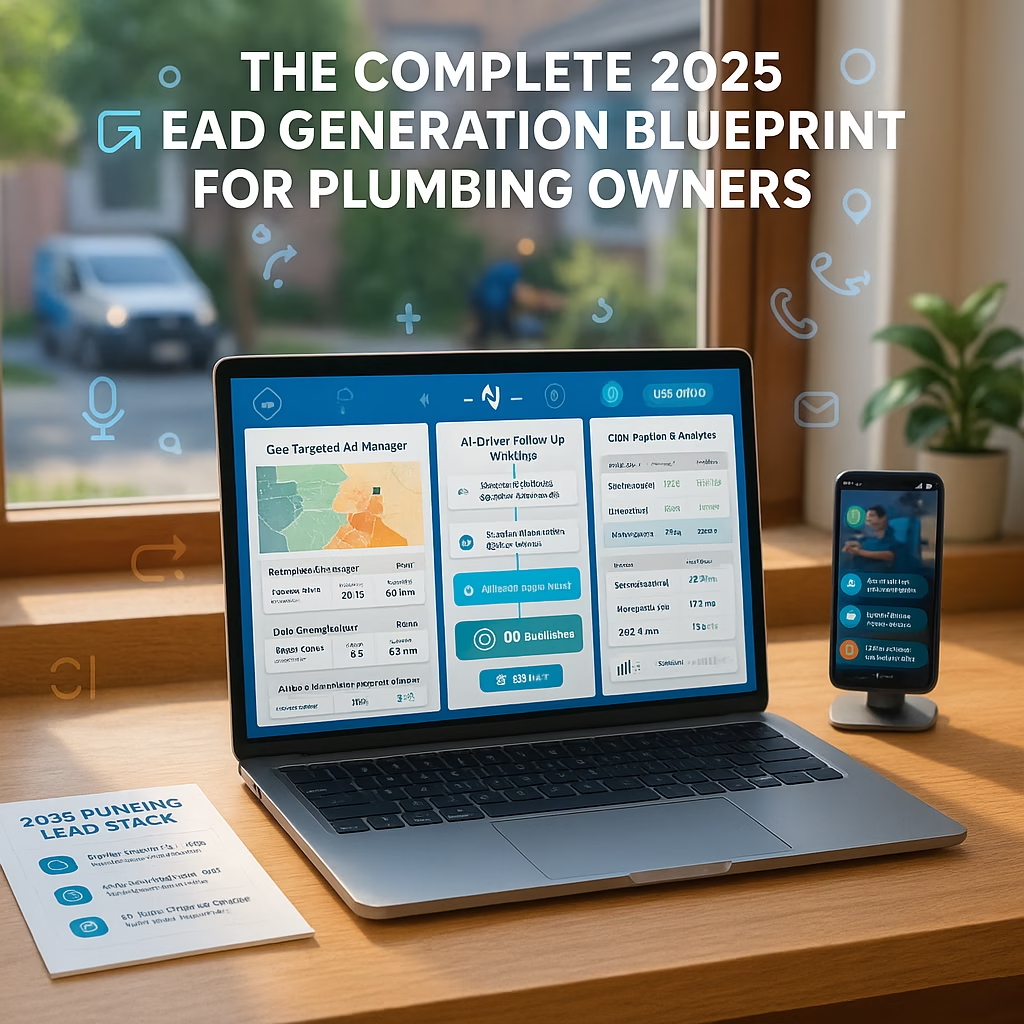
The Complete 2025 Lead Generation Blueprint for Plumbing Owners

ChatGPT Image Jun 24 2025 06 11 32 AM
The Complete 2025 Lead Generation Blueprint for Plumbing Owners | Market Wiz AI

The Complete 2025 Lead Generation Blueprint for Plumbing Owners

Flood Your Schedule with Qualified Plumbing Inquiries

Table of Contents

Introduction

The Complete 2025 Lead Generation Blueprint for Plumbing Owners delivers a comprehensive, step-by-step strategy to fill your calendar with high-quality plumbing service leads. From establishing a rock-solid online presence to automating follow-up and scaling profitably, this blueprint ensures you outpace the competition and grow year-round.

1. Blueprint Overview & Industry Trends

1.1 Plumbing Market in 2025

With aging infrastructure and rising home renovation projects, demand for plumbing services is surging. Mobile searches for “plumber near me” now exceed 80% of total inquiries.

1.2 Why a Blueprint Matters

Random marketing tactics won’t cut it: a cohesive plan ensures every channel—from ads to organic—to maximize ROI and sustainable growth.

2. Digital Foundation & Local Presence

2.1 SEO Essentials for Plumbers

Optimize for keywords like “emergency plumber [City]” and “repiping services.” Ensure fast, mobile-responsive pages, schema markup for LocalBusiness, and optimized meta tags.

2.2 Google Business Profile Optimization

Claim and verify your profile, select “Plumber” category, add service attributes (24/7, free estimates), and upload job photos to dominate the Local Pack.

2.3 Local Citations & NAP Consistency

List your business accurately on Yelp, Angie’s List, HomeAdvisor, and local directories—ensuring identical Name, Address, Phone data everywhere.

3. Traffic Generation Channels

3.1 Google Ads & Local Services Ads

Run Call-Only and Lead Form extensions. Invest in Local Services Ads for pay-per-lead plumbing listings with top-of-page placement.

3.2 Facebook & Instagram Lead Ads

Target homeowners by ZIP code, age, and homeownership status. Use Instant Forms offering free leak inspections to capture contact details.

3.3 Content Marketing & Blogging

Publish how-to articles (“Fix a Running Toilet”), maintenance guides, and video demos to attract organic traffic and establish expertise.

3.4 Referral Partnerships

Partner with HVAC, roofing, and remodeling firms for mutual referrals and co-marketing campaigns, expanding your lead network.

4. Lead Nurturing Strategies

4.1 Automated Email Drip Campaigns

Deploy a 5-step email sequence: welcome, safety tips, case studies, special offer, and final booking call-to-action.

4.2 SMS Alerts & Reminders

Send appointment confirmations, reminders, and follow-up thank-yous to reduce no-shows and boost engagement.

4.3 Chatbot Qualification

Use a website chatbot to ask service type, urgency, and location—routing hot leads directly to dispatch for immediate follow-up.

5. Conversion Rate Optimization

5.1 High-Converting Landing Pages

Employ clear headlines, bullet-point benefits, trust badges (licensed, insured), and a simple form above the fold.

5.2 Trust Signals & Testimonials

Display customer reviews, industry certifications, and before/after galleries to overcome objections and build credibility.

5.3 Simplified Contact & Booking Forms

Limit fields to essentials (name, phone, issue) and integrate click-to-call functionality for mobile users.

6. Scaling & Retention

6.1 Upsells & Maintenance Plans

Offer annual maintenance contracts, water heater flushes, and drain cleaning plans to increase customer lifetime value.

6.2 Loyalty & Referral Programs

Implement referral rewards and VIP service tiers—priority scheduling and discounts—to drive repeat business and word-of-mouth.

6.3 Performance Dashboards

Use Data Studio or CRM dashboards to monitor cost per lead, conversion rates, and revenue per lead in real time.

7. Case Studies: Plumbing Leaders in Action

7.1 RapidFlow Plumbing

RapidFlow cut CPL by 30% by shifting to Local Services Ads and optimizing their landing page—achieving a 5:1 ROAS in six months.

7.2 ClearWater Experts

ClearWater deployed chatbots and SMS sequences, boosting booked calls by 45% and reducing manual callback load by 70%.

8. Conclusion & Next Steps

Implementing The Complete 2025 Lead Generation Blueprint for Plumbing Owners ensures a steady stream of qualified leads, seamless nurturing, and scalable growth. Begin with a digital audit, set up paid and organic channels, automate follow-up, and refine conversion flows. Get started with Market Wiz AI to elevate your plumbing business in 2025.

9. 25 Frequently Asked Questions

1. What is CPL?

Cost Per Lead: total spend divided by number of leads, indicating acquisition efficiency.

2. How quickly should I follow up?

Within 5 minutes—speedy responses significantly boost conversion rates.

3. Are Local Services Ads worth it?

Yes—pay-per-lead plumbing ads often outperform traditional PPC due to targeted homeowner intent.

4. How many emails in a drip?

4–6 over 2–3 weeks to balance engagement without overwhelm.

5. Should I use SMS?

Yes—SMS open rates >90% make appointment reminders highly effective.

6. What chatbot platform is best?

Drift, Intercom, or many plumbing-focused bots integrate well with CRMs.

7. How often update GBP?

Post weekly and refresh photos monthly for optimal local ranking.

8. How do I handle negative reviews?

Respond with empathy, offer solutions offline, and demonstrate professionalism.

9. What trust badges matter?

Licensed, insured, Better Business Bureau accredited, and manufacturer certifications.

10. How to track ROI?

Use UTM tags, call tracking, and CRM data to attribute revenue to channels.

11. Do referral programs work?

Yes—referral incentives drive high-quality leads and boost retention.

12. How to prevent no-shows?

Automated SMS reminders 24 and 2 hours before appointments reduce no-shows significantly.

13. Can I track offline leads?

Use unique phone numbers and promo codes to attribute offline calls and jobs.

14. What budget allocate?

Start with 10–15% of projected revenue on marketing, then adjust by channel performance.

15. How to optimize landing pages?

Clear CTA, trust signals, concise form, and mobile-first design maximize conversions.

16. Are video demos effective?

Yes—short how-to and testimonial videos boost engagement and trust.

17. What frequency for blog posts?

Bi-weekly posts on common plumbing issues and tips attract organic traffic.

18. How to handle seasonality?

Adjust messaging around winter freezes and summer AC line issues to match demand.

19. Can I automate invoicing?

Integrate with billing tools to auto-send estimates and invoices post-service.

20. What CRM integrates best?

ServiceTitan, Housecall Pro, and Jobber offer robust plumbing industry integration.

21. How to scale multi-location?

Standardize your blueprint and customize messaging per service area for each branch.

22. Do I need an app?

Optional—an app can enhance scheduling but isn’t mandatory for lead gen.

23. How often audit campaigns?

Weekly tactical checks and monthly strategic reviews keep performance optimal.

24. What metrics matter most?

CPL, conversion rate, average ticket value, LTV, and ROI per channel.

25. Where to learn more?

Visit Market Wiz AI’s blog for in-depth plumbing marketing guides and templates.

10. 25 Extra Keywords

  1. plumbing lead generation 2025
  2. CPL plumbing services
  3. emergency plumber SEO
  4. Local Services Ads plumber
  5. plumbing marketing blueprint
  6. automated plumber drip emails
  7. SMS reminders plumbing
  8. chatbot for plumbers
  9. plumber landing page tips
  10. review management plumbing
  11. referral program plumber
  12. plumbing seasonal campaigns
  13. plumbing content marketing
  14. video demos plumber
  15. mobile plumber SEO
  16. call tracking plumber
  17. billing automation plumber
  18. CRM integration plumbing
  19. serviceTitan plumbing
  20. Housecall Pro lead gen
  21. Jobber marketing plumber
  22. no-show prevention plumber
  23. plumbing case studies
  24. performance dashboards plumber
  25. Market Wiz AI plumbing guide

© 2025 Market Wiz AI. All Rights Reserved.

The Complete 2025 Lead Generation Blueprint for Plumbing Owners Read More »

The 2025 Local SEO Playbook for Mobile Home Dealers Business Owners

ChatGPT Image Jun 24 2025 06 06 21 AM
The 2025 Local SEO Playbook for Mobile Home Dealers Business Owners | Market Wiz AI

The 2025 Local SEO Playbook for Mobile Home Dealers Business Owners

Dominate Your Market & Drive Steady Inquiries All Year Round

Table of Contents

Introduction

The 2025 Local SEO Playbook for Mobile Home Dealers Business Owners equips you with a proven roadmap to dominate local search results for mobile and manufactured home sales. From optimizing your Google Business Profile to crafting geo-targeted content and building high-quality local links, this guide ensures you capture more in-market shoppers and convert them into showroom visits and qualified leads.

1. Playbook Overview & Why It Matters

1.1 Industry Snapshot & Trends

Mobile home sales are projected to grow as affordability and flexible living solutions rise in demand. Consumers now rely on local search to find reputable dealers nearby.

1.2 Local Search as Your #1 Lead Source

Over 75% of mobile home inquiries begin with a local Google search. Ranking prominently on Maps and organic results drives showroom traffic and direct phone calls.

2. Google Business Profile Mastery

2.1 Profile Setup & Verification

Claim your listing, verify via postcard, and select “Mobile Home Dealer” as primary category. Add secondary categories like “RV Dealer” if applicable.

2.2 Keyword-Optimized Description

Craft a concise description including “mobile homes for sale,” your service areas, and unique offers—keeping under 750 characters for maximum impact.

2.3 Photos, Posts & Offers

Upload high-res shots of units, community amenities, and customer walkthroughs. Post weekly updates on inventory, promotions, and community events.

3. Citation & Directory Strategy

3.1 Top Manufactured Home Directories

List your dealership on MHVillage, ManufacturedHomes.com, and local business directories. Each citation strengthens your local search relevance.

3.2 Ensuring NAP Consistency

Maintain identical Name, Address, Phone across every listing. Use your exact business format to avoid mismatches that harm rankings.

3.3 Using Citation Tools

Tools like BrightLocal and Synup automate citation management, track inconsistencies, and simplify updates across platforms.

4. Reviews & Reputation Engine

4.1 Automated Review Campaigns

Trigger SMS and email requests after unit delivery or service interactions, linking directly to Google and industry-specific review sites.

4.2 Responding to Feedback

Publicly thank positive reviewers and address concerns in negative feedback, demonstrating responsiveness and building trust.

4.3 Showcasing Testimonials

Feature top reviews in GBP posts and on your website’s homepage to amplify social proof and influence decision-making.

5. On-Page SEO for Dealer Websites

5.1 Geo-Targeted Landing Pages

Create pages for each market area—“Mobile Homes for Sale in [City]”—with unique content, local testimonials, and inventory highlights.

5.2 Schema Markup for Inventory

Implement Product and LocalBusiness schema to mark up units, prices, and availability, helping Google display rich results.

5.3 Mobile Speed & UX

Ensure your site loads under 3 seconds on mobile, with clear CTAs and easy-click “Call Now” buttons to capture on-the-go shoppers.

6. Local Content & Link Building

6.1 Community-Focused Blog Topics

Write posts on “Top Mobile Home Communities Near [City],” “Financing Options for First-Time Buyers,” and “DIY Maintenance Tips,” attracting local interest and links.

6.2 Local Sponsorships & Backlinks

Partner with community events, charities, and home shows—earning press mentions and high-authority backlinks.

6.3 Social Signals & Engagement

Share local testimonials and behind-the-scenes dealership tours on social media—driving traffic back to your site and GBP listing.

7. Tracking & Optimization

7.1 Key Metrics to Monitor

Track map views, direction requests, website clicks, phone calls, and lead form submissions via Google Analytics and GBP Insights.

7.2 A/B Testing & Iteration

Test different GBP posts, landing page headlines, and call-to-action placements—optimizing based on engagement and conversion data.

7.3 Seasonal Campaign Adjustments

Adjust SEO tactics around spring move-in season and year-end clearance events—keeping content and promotions timely.

8. Conclusion & Next Steps

Implementing The 2025 Local SEO Playbook for Mobile Home Dealers Business Owners positions your dealership at the top of local search, drives consistent showroom visits, and fuels sustained growth. Start by optimizing your GBP, building citations, automating reviews, refining on-page SEO, and launching local content campaigns. Get started with Market Wiz AI and lead your market in 2025 and beyond.

9. 25 Frequently Asked Questions

1. What’s the quickest way to boost GBP ranking?

Consistent posts, fresh photos, and rapid review acquisition all drive immediate GBP engagement signals.

2. How many citations are ideal?

Aiming for 50–75 quality citations across industry and local directories ensures broad coverage.

3. Do geo landing pages work?

Yes—hyper-local pages capture long-tail searches and increase relevance for specific markets.

4. How often request reviews?

After every unit sale or service call, trigger one review request to maintain steady inflow.

5. What schema markup matters?

LocalBusiness, Product, and Offer schema help Google surface your inventory and deals in rich snippets.

6. How to handle negative feedback?

Respond promptly, offer solutions offline, and show a commitment to customer satisfaction publicly.

7. Should I sponsor map ads?

In competitive areas, Local Search Ads can secure top placement and immediate visibility.

8. How to track calls?

Use unique phone numbers per campaign and integrate with call-tracking software for attribution.

9. What content drives local links?

Community event recaps, local guides, and buyer success stories attract local website mentions.

10. How to maintain NAP over time?

Use citation management tools to audit and update listings automatically across the web.

11. Is site speed a factor?

Yes—fast mobile load times improve user experience and ranking signals for local search.

12. How often audit SEO?

Quarterly technical and content audits keep your strategy aligned with algorithm updates.

13. Do social signals impact local SEO?

Indirectly—social engagement drives traffic and awareness, which can translate into backlinks and citations.

14. How to optimize for voice search?

Include conversational, question-based content (“Where to buy mobile homes in [City]?”) to capture voice queries.

15. What tools help track GBP?

BrightLocal, Whitespark, and Google My Business Insights provide robust analytics and reporting.

16. Should I integrate chatbots?

Yes—chatbots on your site can capture leads 24/7 and feed inquiries directly into your CRM.

17. How to handle multi-location?

Create separate GBP listings for each location, optimize individually, and maintain consistent branding.

18. What’s a good review volume?

50+ reviews per location with an average rating above 4.5 stars indicates strong reputation.

19. Can I repurpose content?

Yes—turn blog posts into GBP posts, social snippets, and FAQ answers to maximize reach.

20. How to optimize images?

Compress for fast load, include descriptive alt text, and geo-tag where possible for local relevance.

21. Do I need a mobile app?

Optional—an app can enhance customer experience, but a mobile-optimized site suffices for local SEO.

22. How to incorporate video?

Upload short property tours and client testimonials to GBP and your YouTube channel for cross-channel SEO.

23. What seasonal tactics work?

Spring move-in guides, summer financing tips, and year-end clearance promotions keep content timely.

24. How to scale management?

Document workflows, use automation tools, and empower local managers with dashboard access.

25. Where learn more?

Visit Market Wiz AI’s blog for advanced local SEO guides, templates, and AI-powered optimization tools.

10. 25 Extra Keywords

  1. mobile home dealer local SEO
  2. 2025 local SEO strategies
  3. manufactured home Google Maps
  4. Google Business Profile mobile homes
  5. MHVillage SEO tips
  6. community backlinks mobile homes
  7. NAP consistency for dealers
  8. automated review requests
  9. geo landing pages mobile homes
  10. schema markup manufactured homes
  11. mobile home showroom tours
  12. local citations for dealers
  13. call tracking mobile home sales
  14. voice search manufactured homes
  15. seasonal dealer promotions
  16. BrightLocal dealer audit
  17. Whitespark local ranker
  18. social signals local SEO
  19. chatbot lead capture dealers
  20. mobile site optimization dealers
  21. video testimonials mobile home
  22. community event SEO
  23. lead form integration CRM
  24. Market Wiz AI dealer guide
  25. 2025 local search mobile homes

© 2025 Market Wiz AI. All Rights Reserved.

The 2025 Local SEO Playbook for Mobile Home Dealers Business Owners Read More »

Scroll to Top