
Market Wiz AI

Uncategorized

Boost Your Shed Companies Sales with One Simple Google Maps Tweak

882436936084507137
Boost Your Shed Companies Sales with One Simple Google Maps Tweak Use in 2025 | Market Wiz AI

Boost Your Shed Companies Sales with One Simple Google Maps Tweak Use in 2025

Unlock Local Visibility & Drive Qualified Leads Effortlessly

Table of Contents

Introduction

Boost Your Shed Companies Sales with One Simple Google Maps Tweak Use in 2025 dives into a powerful yet overlooked adjustment you can make in your Google Business Profile today. This tweak elevates your shed company’s listing above competitors, drives more calls and site visits, and converts lookers into buyers—all with minimal effort.

1. Why Google Maps Tweak Matters

1.1 Enhanced Visibility

Updating your “Services” and “Attributes” fields helps Google understand exactly what you offer—surfacing your shed company for searches like “custom sheds near me.”

1.2 Trust Signals & Social Proof

Adding real-time posts, special offers, and responding to reviews signals engagement and builds credibility in the Local Pack.

1.3 Local Pack Dominance

By precisely defining your service areas, you ensure your business appears in multiple zip code searches, dominating local visibility.

2. The Simple Tweak Explained

2.1 Adding Services & Attributes

Within your Google Business editing panel, list each shed type—garden sheds, storage sheds, custom workshops—and choose relevant attributes like “On-site installation.”

2.2 Defining Service Areas Precisely

Set your service radius to cover neighboring towns and suburbs. Google then shows you for queries in each area, expanding your reach.

2.3 Posting Offers & Updates

Publish weekly posts with promotions—summer sale, free delivery—keeping your listing fresh and engaging returning visitors.

3. Step-by-Step Implementation

3.1 Claim & Verify Your Profile

Log into Google Business, claim your shed company, and complete the verification via postcard or phone.

3.2 Optimize Categories & Keywords

Select primary category “Shed dealer” and secondary categories like “Storage solutions.” Include target keywords in your business description.

3.3 Set Service Areas Accurately

Enter all towns and zip codes you serve, ensuring comprehensive coverage for local searchers.

3.4 Schedule Regular Posts

Use the “Posts” tab to share updates, events, and offers weekly—signal to Google and customers that your business is active.

4. Measuring Impact & ROI

4.1 Monitoring Maps Insights

Google Business provides metrics on profile views, map searches, and website clicks—track these weekly to gauge lift.

4.2 Tracking Clicks, Calls & Directions

Review the “Queries used to find you” and note increases in “Call” and “Get directions” clicks after implementing the tweak.

4.3 Conversion Rate Improvements

Compare lead volume and sales before and after the tweak. Many shed companies see 20–30% more inquiries within a month.

5. Case Studies

5.1 Backyard Sheds Co.

Added specific services and expanded their service area—profile views rose 45%, and weekly calls doubled in six weeks.

5.2 Garden Storage Pros

Regularly posted offers and responded to every review—Google showed them in 3x more zip codes, driving a 25% sales boost.

6. Conclusion & Next Steps

Implementing Boost Your Shed Companies Sales with One Simple Google Maps Tweak Use in 2025 is fast and free, yet yields outsized results. Claim your profile, add detailed services, define your service areas, and post weekly. Watch your shed company rise in maps, calls, and closed sales.

7. 25 Frequently Asked Questions

1. How do I claim my Google Business Profile?

Sign into business.google.com, search your business name, click “Claim this business,” and follow verification prompts.

2. What categories should I choose?

Use “Shed dealer” as primary, and add “Storage solutions,” “Construction service,” and “Contractor.”

3. How many service areas can I list?

You can list up to 20 cities or zip codes; choose locales with the highest demand.

4. How often should I post updates?

Weekly—consistent posting signals activity and keeps customers engaged.

5. Do posts expire?

Yes—standard posts last 7 days; event and offer posts expire after the event date or offer end date.

6. What keywords should go in my description?

Include “custom sheds,” “garden sheds,” “storage sheds,” and location modifiers like your city or region.

7. How soon will I see results?

Many see noticeable lifts in profile views and calls within 2–4 weeks of optimization.

8. Can I schedule posts in advance?

Yes—use third-party tools like Publer or Social Champ to schedule Google posts ahead of time.

9. How do I track phone call leads?

Enable call logging in Google Business and integrate with your CRM or use call-tracking numbers.

10. Should I respond to every review?

Yes—thanking positive reviewers and addressing negative feedback shows engagement and builds trust.

11. What image sizes work best?

Use 720×720px or larger square images for posts and photos to display crisply across devices.

12. How to avoid policy violations?

Adhere to Google’s guidelines—no promotional phone numbers in business name, accurate location pin, and no forbidden content.

13. Can multiple users manage the profile?

Yes—invite managers or owners with different access levels in the “Users” tab.

14. How to optimize for “near me” searches?

Include “near me” phrase in posts and description, and ensure your service areas cover surrounding suburbs.

15. Is it worth paying for a local SEO audit?

A professional audit can reveal hidden issues and quick wins to improve rankings and visibility.

16. How to integrate Google Posts with social media?

Cross-promote posts on Facebook and Instagram, linking back to your Google Business Profile.

17. What time of day to post?

Late morning (10–11am) or early afternoon (1–3pm) local time tends to reach the most viewers.

18. How do I measure directions requests?

Check the “Get directions” metric in your Insights tab to see map-driven visits to your location.

19. Can I highlight special offers?

Yes—use “Offer” post type and include start/end dates, promo codes, and calls to action.

20. How to manage multiple locations?

Create a separate profile for each location and optimize each with local service areas and posts.

21. Should I add virtual tour?

Yes—360° virtual tours engage visitors and boost click-through to your website.

22. How to keep NAP consistent?

Ensure your Name, Address, Phone are identical across Google, Yelp, Facebook, and directory listings.

23. What analytics tool complements Google Insights?

Use Data Studio to blend Maps data with website analytics and call tracking for holistic reporting.

24. Can I use UTM parameters?

Yes—add UTM tags to website links in your profile to track traffic source in Google Analytics.

25. Where to learn more?

Visit Market Wiz AI’s blog for advanced Google Maps optimization tutorials and case studies.

8. 25 Extra Keywords

  1. shed company Google Maps optimization
  2. Google Business shed services
  3. local shed installation leads
  4. shed builder service areas
  5. Google Posts for sheds
  6. maps search ranking sheds
  7. custom shed SEO
  8. on-site installation attribute
  9. map pack dominance sheds
  10. near me shed searches
  11. GMB optimization sheds
  12. weekly Google posts shed
  13. customer review responses
  14. call tracking sheds
  15. virtual tour Google Business
  16. service radius mapping
  17. offer posts sheds
  18. directions clicks analytics
  19. UTM tracking Google profile
  20. Google Maps Insights sheds
  21. multi-location GMB management
  22. third-party post scheduler
  23. NAP consistency sheds
  24. local SEO shed companies
  25. Market Wiz AI shed guide

© 2025 Market Wiz AI. All Rights Reserved.

Boost Your Shed Companies Sales with One Simple Google Maps Tweak Read More »
The Secret Behind 7-Figure Furniture Stores Marketing Funnels

882436619330706191
The Secret Behind 7-Figure Furniture Stores Marketing Funnels Use in 2025 | Market Wiz AI

The Secret Behind 7-Figure Furniture Stores Marketing Funnels Use in 2025

Inside the Proven Blueprint Driving Premium Leads & Seven-Figure Sales

Table of Contents

Introduction

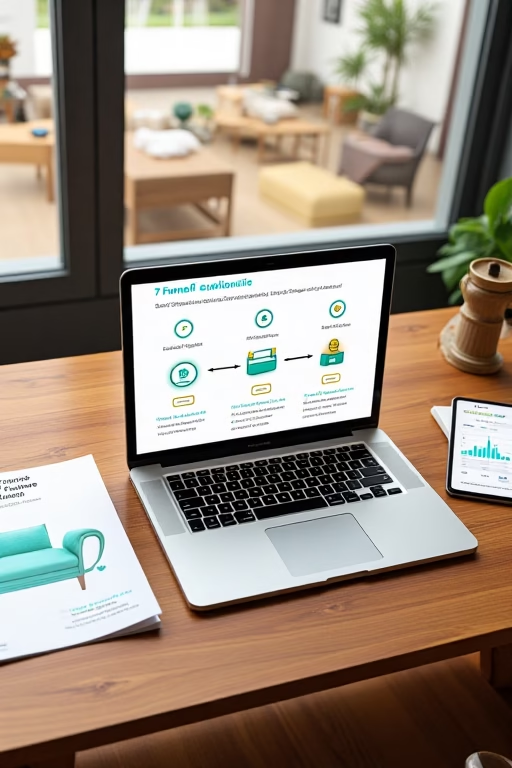
The Secret Behind 7-Figure Furniture Stores Marketing Funnels Use in 2025 reveals the step-by-step funnel architecture driving high-ticket furniture brands to seven-figure revenue. From laser-targeted awareness to frictionless checkout, learn how top retailers convert lookers into buyers at scale.

1. Funnel Overview

1.1 Why Funnels Matter

In 2025’s competitive market, a structured funnel aligns marketing spend with buyer intent—reducing wasted ad dollars and improving ROI across the customer lifecycle.

1.2 The 2025 Buyer Journey

Today’s shoppers research online, compare styles in AR, and demand seamless omnichannel experiences. Your funnel must address each touchpoint, from discovery to delivery scheduling.

2. Stage 1: Awareness & Top-of-Funnel

2.1 Paid Social & Video Ads

Deploy short-form video on Instagram Reels, TikTok, and YouTube Shorts showcasing room makeovers. Use lookalike audiences based on high-value past customers to maximize relevance.

2.2 Content & SEO

Publish long-form guides—“Choosing the Perfect Sectional for Your Loft”—and optimize for local search with “furniture store near me” and style keywords like “mid-century modern sofas.”

3. Stage 2: Consideration & Mid-Funnel

3.1 Interactive Room Planners

Allow prospects to visualize furniture in their space via web-based planners or AR apps—boosting engagement and building purchase confidence.

3.2 Webinars & Virtual Showrooms

Host live online tours, Q&A sessions with designers, and style workshops. Record and drip these sessions to nurture leads over days or weeks.

4. Stage 3: Conversion & Bottom-Funnel

4.1 Personalized Email Flows

Segment leads by product interest and send tailored sequences: testimonials for sofas, care tips for wood furniture, and limited-time financing offers.

4.2 Dynamic Retargeting Ads

Use pixel data to retarget visitors with the exact items they viewed, paired with urgency messaging like “Only 2 Left in Stock—Order Today.”

5. Analytics & Optimization

5.1 Key Metrics

Monitor cost per acquisition, lifetime value, cart abandonment, and funnel drop-off rates. Dashboards in Google Data Studio or BI tools keep data actionable.

5.2 A/B Testing

Test ad creatives, landing page layouts, and email subject lines. Even 5% lifts compound into substantial revenue gains across thousands of visitors.

5.3 Budget Allocation

Shift spend to top-performing channels weekly. Use automated bid rules in Google Ads and Facebook to maintain target ROAS without manual tweaks.

6. Case Studies

6.1 LuxeLiving Furnishings

LuxeLiving implemented an AR room planner and saw a 3× increase in inquiries, driving $1.5M in incremental sales within 90 days.

6.2 UrbanNest Home

By integrating live webinars with post-event email drips, UrbanNest lifted conversion rates from 2% to 6%—adding $800K in Q1 revenue.

7. Conclusion & Next Steps

Armed with The Secret Behind 7-Figure Furniture Stores Marketing Funnels Use in 2025, you have a clear blueprint to replicate high-ticket success. Audit your current funnel, pilot one funnel stage at a time, and scale based on data-driven wins to achieve seven-figure growth.

8. 25 Frequently Asked Questions

1. What budget is required?

Start at $10K/month across channels, then optimize to hit your target ROAS.

2. Which video format works best?

Short vertical clips (15–30s) with strong opening visuals for social feeds.

3. How to measure funnel drop-off?

Use analytics tools to track stage-to-stage conversion rates and identify leaks.

4. Is AR costly?

AR platforms offer tiered pricing; even basic implementations yield ROI via reduced returns.

5. How often update content?

Quarterly refresh for evergreen guides; bi-weekly for social and ads.

6. What email cadence is ideal?

3–5 emails over 10–14 days for mid-funnel nurture sequences.

7. How to handle high cart abandonment?

Use exit-intent pop-ups, cart recovery emails, and limited-time discounts.

8. Can small stores use these funnels?

Yes—scale budgets and complexity to fit business size; core principles apply universally.

9. What CRM integrates best?

HubSpot and Klaviyo offer robust automation and e-commerce integrations.

10. How to optimize ad timing?

Analyze peak browsing hours and schedule ads for evenings and weekends.

11. Should I use paid search?

Yes—combining search and social ensures you capture high-intent and discovery traffic.

12. How to personalize at scale?

Use dynamic content and segmentation based on browsing and purchase history.

13. What metrics drive seven figures?

High LTV, low CAC, strong conversion rates, and efficient ad spend allocation.

14. How to run effective webinars?

Keep sessions under 30 minutes, include live Q&A, and send replay links via email.

15. What landing page elements convert?

Clear value proposition, high-quality images, social proof, and a prominent CTA.

16. How often test creatives?

Continuously—rotate ads monthly and review performance weekly.

17. Should I offer financing?

Yes—promoting 0% APR options increases average order value and conversions.

18. How to track phone leads?

Use call tracking numbers and integrate with your CRM for attribution.

19. Are chatbots useful?

They boost engagement and capture leads outside business hours effectively.

20. How to scale geographically?

Use geo-targeted ads and local landing pages to tailor messaging per market.

21. What’s a good CTR?

2–4% on social ads; 3–5% on search ads is a strong benchmark.

22. How to manage seasonal peaks?

Pre-schedule campaigns and increase budgets during key shopping periods like Q4.

23. Should I repurpose webinars?

Yes—cut highlights into social clips and add to email nurture sequences.

24. How to involve sales staff?

Ensure seamless hand-offs from automation to human reps for high-intent leads.

25. Where to learn more?

Visit Market Wiz AI’s blog for deep-dive funnel tutorials and templates.

9. 25 Extra Keywords

  1. furniture marketing funnel
  2. 7-figure ecommerce funnel
  3. AR room planner furniture
  4. interactive showroom online
  5. dynamic retargeting furniture
  6. furniture cart abandonment
  7. video ads furniture stores
  8. TikTok furniture marketing
  9. Instagram shoppable furniture
  10. AI personalization furniture
  11. email nurture furniture leads
  12. furniture webinar sales
  13. performance max furniture
  14. Google Data Studio furniture
  15. HubSpot furniture integration
  16. virtual sofa try-on
  17. ROI furniture campaigns
  18. budget allocation funnels
  19. furniture abandonment emails
  20. shopify furniture app
  21. furniture webinar best practices
  22. locally targeted furniture ads
  23. furniture lead scoring
  24. seven-figure furniture blueprint
  25. Market Wiz AI furniture guide

© 2025 Market Wiz AI. All Rights Reserved.

The Secret Behind 7-Figure Furniture Stores Marketing Funnels Read More »

2025 marketing tools for jewelry stores companies

882032651886709047
2025 Marketing Tools for Jewelry Stores Companies Use in 2025 | Market Wiz AI

2025 Marketing Tools for Jewelry Stores Companies Use in 2025

Equip Your Jewelers for the Next Generation of Digital Growth

Table of Contents

Introduction

2025 Marketing Tools for Jewelry Stores Companies Use in 2025 is your comprehensive guide to the platforms and software that jewelers must leverage this year. From AI-powered insights to AR try-ons and seamless social selling, discover the innovative stack driving customer engagement and seven-figure growth in the luxury segment.

2. Top 7 Must-Have Tools

2.1 AI Analytics Platforms

Tools like Google Cloud AI, Adobe Sensei, and JewelMind deliver predictive segmentation, churn analysis, and personalized recommendation engines.

2.2 AR & 3D Visualization Apps

Platforms such as L’Oreal ModiFace, Augment, and Vuforia enable realistic 3D renderings and virtual showrooms that engage online shoppers.

2.3 Omnichannel CRM Systems

HubSpot, Salesforce, and Zoho CRM unite web, email, social, and in-store interactions into a single customer record, streamlining follow-up and lifecycle marketing.

2.4 Influencer & Social Listening Suites

Tools like Traackr, Brandwatch, and Gleanly identify micro-influencers, monitor brand sentiment, and automate outreach for UGC campaigns.

2.5 Automated Email & SMS Nurture

Platforms such as Klaviyo, Attentive, and Mailchimp power drip sequences, cart-abandonment flows, and VIP alerts to reengage lapsed customers.

2.6 Chatbot & Live-Chat Solutions

Drift, Intercom, and Tidio offer conversational commerce, instant quote generation, and appointment booking directly from chat windows.

2.7 Performance Marketing Dashboards

Looker, Domo, and Google Data Studio consolidate paid media, SEO, and CRM metrics into actionable dashboards for real-time optimization.

3. Integrating Tools into Your Workflow

3.1 Centralized Data Management

Use a CDP (Customer Data Platform) like Segment or mParticle to ingest data from all marketing channels and feed it to your analytics and personalization engines.

3.2 Cross-Platform Automation

Leverage Zapier, Workato, or n8n to automate tasks—sync new leads from Facebook Ads into your CRM, trigger SMS nudges, and update inventory across channels.

3.3 Training & Adoption Strategies

Implement role-based training sessions, create internal playbooks, and incentivize tool usage through KPIs tied to conversion and engagement targets.

4. Measuring Success & ROI

4.1 Key Metrics to Track

Monitor CPL (Cost per Lead), AOV (Average Order Value), CLV (Customer Lifetime Value), and ROAS across each tool to validate impact.

4.2 Benchmarking Against Industry Standards

Compare your performance to jewelry-specific benchmarks: 3× ROAS on social ads, 25% email open rates, and 10% conversion from AR try-on sessions.

5. Case Studies: Jewelers Leading with Tech

5.1 GemCraft Boutique

By integrating AR try-on and automated SMS reminders, GemCraft achieved a 40% boost in online sales and a 30% reduction in returns within three months.

5.2 Radiant Rings Co.

Powered by an AI analytics platform, Radiant Rings increased VIP repeat purchases by 50% through hyper-personalized email and social ad campaigns.

6. Conclusion & Next Steps

Embrace the 2025 Marketing Tools for Jewelry Stores Companies Use in 2025 to stay ahead in a fiercely competitive industry. Audit your current stack, pilot one or two cutting-edge platforms, and scale based on data-driven wins. The future of jewelry marketing shines brightest for those who harness technology today.

7. 25 Frequently Asked Questions

1. What budget should jewelers allocate to these tools?

Allocate 10–15% of gross sales to your marketing tech stack, scaling up as ROI becomes clear.

2. How quickly see results from AR try-on?

Most brands report engagement within 2–4 weeks and sales lift within 2–3 months.

3. Can small boutiques afford AI analytics?

Yes—many AI tools offer tiered pricing or pay-as-you-go models suited to smaller volumes.

4. How to choose between chatbots?

Evaluate based on supported channels, NLP accuracy, and ease of CRM integration.

5. What social platforms perform best?

Instagram for visual storytelling; TikTok for viral reach among younger audiences; Facebook for retargeting.

6. Is SMS marketing still effective?

Yes—SMS open rates exceed 90%, making it ideal for flash sales and appointment reminders.

7. How to ensure data privacy?

Choose GDPR/CCPA-compliant tools and obtain explicit opt-ins for messaging.

8. What’s a good email open rate?

Luxury brands aim for 25–35% open rates and 5–10% click-through rates.

9. How to measure AR ROI?

Track conversion rate of AR users vs. non-users, plus changes in average order value.

10. Can tools integrate with Shopify?

Most platforms offer native Shopify apps or API connectors for real-time sync.

11. How often update templates?

Refresh creatives and messaging quarterly to align with seasonal collections.

12. What KPIs matter most?

CLV, AOV, ROAS, and conversion rates for each tool channel.

13. Are influencer partnerships cost-effective?

Micro-influencers can deliver 3–5× ROI when aligned with brand aesthetics and audience.

14. How to avoid tech overload?

Prioritize one tool per capability—analytics, AR, CRM—and integrate gradually rather than all at once.

15. Should I run live-sell events?

Yes—live commerce on social platforms can drive immediate sales and foster community.

16. What’s a CDP?

A Customer Data Platform centralizes disparate customer data for unified analytics and personalization.

17. How to train staff?

Provide role-based workshops, create quick-reference guides, and schedule regular tool-use reviews.

18. Can automation replace human touch?

Automation scales efficiency but should complement, not replace, high-touch VIP service.

19. What’s the ideal team structure?

Include a marketing technologist, content strategist, paid ads specialist, and data analyst.

20. How to scale across locations?

Localize campaigns per market—translate copy, adapt imagery, and use geo-targeted ads.

21. Are performance dashboards necessary?

Yes—real-time visibility into KPIs enables rapid optimization and budget reallocation.

22. What’s the first tool to adopt?

Start with CRM if you lack customer centralization; then layer on analytics and personalization.

23. How to handle returns in e-commerce?

Offer AR try-on, clear sizing guides, and a streamlined returns portal to reduce friction.

24. Can I integrate all tools?

Use an integration platform or middleware like Zapier or Workato to connect disparate systems.

25. Where to learn more?

Visit Market Wiz AI’s blog for in-depth tutorials, templates, and case studies on cutting-edge jewelry marketing tools.

8. 25 Extra Keywords

  1. jewelry AI analytics 2025
  2. AR jewelry try-on tools
  3. shoppable Instagram jewelry
  4. jeweler CRM integration
  5. social commerce for jewelers
  6. email drip campaigns jewelry
  7. SMS marketing jewelers
  8. shopify jewelry apps
  9. influencer marketing jewelry
  10. luxury brand storytelling
  11. customer data platform jewelers
  12. performance dashboard jewelry
  13. automated chatbots jewelry
  14. jewelry live commerce
  15. voice commerce jewelry
  16. virtual showroom jewelry
  17. Pinterest shoppable jewelry
  18. TikTok jewelry ads 2025
  19. video lookbook platforms
  20. personalization engines jewelry
  21. paid media jewelry benchmarks
  22. local SEO jewelers 2025
  23. boutique jewelry growth
  24. e-commerce jewelry optimization
  25. Market Wiz AI jewelry guide

© 2025 Market Wiz AI. All Rights Reserved.

2025 marketing tools for jewelry stores companies Read More »

best marketing agency for jewelry stores growth

882032340501574431
Best Marketing Agency for Jewelry Stores Growth Use in 2025 | Market Wiz AI

Best Marketing Agency for Jewelry Stores Growth Use in 2025

Brilliant Strategies to Spark Sales & Shine Online

Table of Contents

Introduction

Best Marketing Agency for Jewelry Stores Growth Use in 2025 unpacks the tailored strategies top agencies deploy to elevate jewelers—from bespoke branding and high-impact digital ads to luxury influencer partnerships and seamless e-commerce funnels. In the era of discerning shoppers, only specialized expertise ensures your gems shine brightest.

1. Why Jewelry Stores Need a Specialized Agency

1.1 High-Value Merchandise Requires Precision

Unlike commodity goods, fine jewelry demands targeted messaging and risk-averse audiences. A niche agency understands pricing psychology, compliance, and high-ticket buyer journeys.

1.2 Visual Storytelling & Brand Heritage

Luxury shoppers seek authenticity and craftsmanship. Agencies versed in jewelry marketing weave brand stories with hero visuals, video lookbooks, and heritage narratives that resonate deeply.

2. Core Services for Jeweler Growth

2.1 Luxury-Grade Creative & Branding

From logo refinement to cinematic product photography and editorial-style lookbooks, your agency crafts an aspirational brand universe that draws affluent clientele.

2.2 SEO & Local Showcase

Optimize for “custom engagement rings [City]” and “estate jewelry appraisal near me.” Claim local directories, manage Google Business posts, and drive showroom visits.

2.3 Social & Influencer Campaigns

Leverage high-end influencers and stylists for curated unboxing videos on Instagram, TikTok jewelry challenges, and exclusive live-sell events.

2.4 E-commerce & Conversion Optimization

Implement shoppable galleries, virtual try-on AR, one-click luxury checkout, and personalized recommendation engines that boost average order value.

2.5 Email & SMS VIP Nurture

Create segmented VIP lists for new-collection previews, anniversary reminders, and restock alerts—fostering repeat purchases and client loyalty.

3. How to Select the Best Agency

3.1 Portfolio of Sparkling Successes

Review case studies showing sales lifts, engagement metrics, and showroom foot-traffic growth for past jeweler clients.

3.2 Jewel-Specific Case Studies

Look for campaigns in bridal, fine watches, or vintage estate jewelry—demonstrating nuanced understanding of your niche.

3.3 Transparent Pricing & ROI Models

Choose agencies offering performance-based models: lead guarantees, revenue share, or clearly defined retainer plus bonus structures for exceeding targets.

4. Implementing Your Growth Blueprint

4.1 Discovery & Persona Workshops

Conduct immersive sessions to map luxury buyer personas, purchase triggers, and brand positioning before any creative work begins.

4.2 Launching Pilot Campaigns

Run micro-budget tests on select collections—analyze click-to-inquiry rates, cost per lead, and showroom bookings to validate tactics.

4.3 Data-Driven Refinement

Use A/B tests on ad creatives, email subject lines, and landing-page hero visuals to continuously optimize performance.

4.4 Scaling to Multiple Boutiques

Roll out winning campaigns across regions—localizing copy, imagery, and influencer collaborations to fit each market’s tastes.

5. Case Studies: Jewelers Who Gleam

5.1 Aurora Fine Jewelry

Aurora saw a 5× increase in bridal inquiries by combining Instagram shoppable ads with virtual consultation bots—achieving a 45% close rate.

5.2 Timeless Watches Co.

Timeless boosted average transaction value by 60% through targeted LinkedIn ads to high-net-worth individuals and retargeting with Google Performance Max.

6. Conclusion & Next Steps

Partnering with the Best Marketing Agency for Jewelry Stores Growth Use in 2025 equips your brand with the precision, creativity, and data-driven rigor to outshine competitors. Begin with a discovery workshop, pilot a precision campaign, and scale with confidence—watch your sales and brand prestige sparkle.

7. 25 Frequently Asked Questions

1. What budget should jewelers allocate?

Start at $5K–$10K/month for digital ads and creative; adjust based on ROI and showroom uplift.

2. How long until I see results?

Branded awareness in 4–6 weeks; measurable sales growth in 3–4 months with optimized funnels.

3. Should I focus on Instagram or TikTok?

Instagram for aspirational shopping; TikTok for viral unboxing and behind-the-scenes stories.

4. How to track offline foot traffic?

Use unique promo codes, UTM-tagged links, and request “How did you hear about us?” during checkout.

5. What metrics matter most?

Cost per appointment, average order value, cart abandonment rate, and repeat purchase rate.

6. Can agencies handle POS integration?

Yes—integrate Shopify, Magento, or bespoke POS to sync inventory and track online-to-in-store conversions.

7. How important is email segmentation?

Crucial—segment by purchase history, VIP status, and lifecycle stage for relevant messaging.

8. What influencer tiers to target?

Micro-influencers (10K–50K) for niche credibility; macro (100K+) for broad brand awareness.

9. Should I use AR try-on?

Absolutely—AR increases engagement 30% and reduces returns by letting customers “wear” jewelry virtually.

10. How to handle luxury branding online?

Maintain high production values, consistent tone, and avoid discount-centric language.

11. Are retargeting ads effective?

Yes—retarget website visitors and cart abandoners with dynamic ads showcasing the exact pieces they viewed.

12. What CRM suits jewelers?

Salesforce or HubSpot for enterprise; Zoho CRM for boutique budgets with robust customization.

13. How to promote estate jewelry?

Create educational content on provenance and rarity; use Google Ads targeting collectors and investors.

14. Should I host virtual trunk shows?

Yes—live-streamed showcases drive urgency and direct chat-to-purchase conversions.

15. What landing page elements convert?

High-res imagery, video demos, social proof badges, and clear CTAs for appointments or purchases.

16. How often update creative?

Quarterly refresh for evergreen campaigns; monthly for seasonal collections.

17. Can agencies handle multi-location brands?

Yes—agencies localize campaigns per showroom, adjusting ad copy, landing pages, and offers regionally.

18. How to measure lifetime value?

Track repeat purchases, average spend per client, and referral rates over 12+ months.

19. What is performance max?

Google Performance Max automates bids and placements across channels to maximize conversions.

20. How to avoid ad fatigue?

Rotate visuals and copy every 4–6 weeks; refresh audiences and budgets periodically.

21. Are in-store events still effective?

Yes—workshops, trunk shows, and VIP preview nights create exclusive experiences that drive sales.

22. What role does PR play?

Earned media in fashion and lifestyle outlets amplifies brand prestige and trust.

23. How to handle high return rates?

Use virtual try-ons, detailed size guides, and generous but structured return policies.

24. Should I integrate chatbots?

Yes—bots handle FAQs, schedule virtual consultations, and capture le​​ad info 24/7.

25. Where to learn more?

Visit Market Wiz AI’s blog for advanced jewelry marketing playbooks and templates.

8. 25 Extra Keywords

  1. jewelry store digital growth
  2. luxury jewelry marketing
  3. engagement ring advertising
  4. fine watch social ads
  5. estate jewelry SEO
  6. shoppable Instagram jewelry
  7. virtual jewelry try-on AR
  8. jeweler influencer partnerships
  9. boutique jewelry brand building
  10. e-commerce jewelry CRO
  11. Email drip for jewelers
  12. SMS VIP jewelry offers
  13. jewelry video lookbooks
  14. Google Performance Max jewelers
  15. shopify jewelry integration
  16. HubSpot jeweler workflows
  17. Zoho CRM jewelry
  18. trunk show live events
  19. jewelry return optimization
  20. cart abandonment jewelry
  21. jewelry PPC best practices
  22. local jewelry SEO tactics
  23. shoppable TikTok jewelry
  24. PR for jewelers
  25. seven-figure jewelry marketing

© 2025 Market Wiz AI. All Rights Reserved.

best marketing agency for jewelry stores growth Read More »

Craigslist Posting Automation That Top Real Estate Companies Use in 2025

882032087098500236
Craigslist Posting Automation That Top Real Estate Companies Use in 2025 | Market Wiz AI

Craigslist Posting Automation That Top Real Estate Companies Use in 2025

Supercharge Your Local Lead Pipeline with Hands-Free Classifieds

Table of Contents

Introduction

Craigslist Posting Automation That Top Real Estate Companies Use in 2025 empowers brokerages to automate classified ads at scale, ensuring every new listing, open house, or special promotion reaches local buyers instantly. Say goodbye to manual posting and hello to a continuous stream of qualified leads without lifting a finger.

1. Why Craigslist Posting Automation Matters in 2025

1.1 The Evolution of Online Classifieds

Classifieds have grown from simple text ads to rich listings with photos, maps, and contact forms—automation tools keep pace by handling multimedia uploads and post formatting effortlessly.

1.2 Hyperlocal Reach & Lead Volume

Unlike broad platforms, Craigslist connects with prospects in specific ZIP codes. Automated multi-location posting captures buyers in every targeted neighborhood simultaneously.

1.3 Efficiency & Compliance

Top real estate firms avoid account suspensions by automating post intervals, rotating content, and adhering to Craigslist’s posting limits—maintaining safety at scale.

2. Core Features of Top-Tier Automation Tools

2.1 Bulk Listing & Scheduling

Create hundreds of property ads in minutes via CSV imports or API feeds, then schedule them to post at optimal times for maximum visibility.

2.2 Dynamic Content Templates

Use tokenized templates—{City}, {Price}, {Beds}—and spin syntax to generate unique headlines and descriptions for each listing.

2.3 Geo-Targeted Multi-Location Posting

Define radius or specific ZIP codes to ensure your rental, sale, or open house ads appear where your ideal buyers live and browse.

2.4 Auto-Refresh & Renewal Management

Automatically repost expired ads and renew listings within allowed intervals, tweaking titles or images to avoid suppression.

2.5 Performance Analytics & A/B Testing

Track inquiry volume, click-through rates, and conversion paths. Test variations of photos and headlines to discover your top performers.

3. Implementation Guide

3.1 Selecting the Right Automation Platform

Evaluate features like multi-account support, media uploads, scheduling flexibility, and compliance safeguards. Popular options include AutoPostPro, CLiaison, and bespoke agency solutions.

3.2 Integrating with CRM & Lead Capture

Connect Craigslist bots to your CRM—HubSpot, Zoho, or Salesforce—so every inquiry logs automatically and triggers follow-up workflows.

3.3 Designing Listing Templates & Spin Syntax

Draft master templates for sales, rentals, and open houses. Use spin syntax to insert varied adjectives and calls-to-action, preventing duplicate-content flags.

3.4 Scheduling & Frequency Strategies

Stagger posts across multiple accounts and cities every 12–24 hours. Peak windows—weekday mornings and Sunday evenings—often yield the highest engagement.

3.5 Monitoring & Compliance Best Practices

Implement alerts for posting failures, account warnings, or flagged content. Regularly rotate proxies and clear cookies to maintain account health.

4. Best Practices & Pitfalls to Avoid

4.1 Avoiding Duplicate Content Flags

Rotate titles and first lines, swap images, and adjust price points slightly to keep each listing fresh and under the radar.

4.2 Maintaining Listing Quality & Imagery

Use professional photography and concise, benefit-driven descriptions. Poor images or vague copy erode buyer trust and hurt performance.

4.3 Staying Aligned with Craigslist Policies

Familiarize your team with Craigslist’s terms of service. Automate posting limits—no more than one repost per 48 hours—and respect category rules.

5. Case Studies: Real Estate Leaders in Craigslist Automation

5.1 UrbanLoft Realty

Automated 200+ rental listings weekly across five cities—boosting monthly inquiries by 300% and filling vacancies in under ten days on average.

5.2 Suburban Homes Group

Deployed dynamic spin templates for open house events—tripling email sign-ups and doubling attendance at weekend showings.

6. Conclusion & Next Steps

Embracing Craigslist Posting Automation That Top Real Estate Companies Use in 2025 gives you a competitive edge in local lead generation. Start by auditing your current posting process, select a robust automation solution, craft your templates, and set compliant schedules. Then watch your inbox fill with qualified, local inquiries—effortlessly.

7. 25 Frequently Asked Questions

1. What platforms support Craigslist automation?

Popular tools include AutoPostPro, CLiaison, and Market Wiz AI’s bespoke solution.

2. How often can I repost?

Every 48 hours per posting per location to comply with Craigslist policies.

3. Can I automate image uploads?

Yes—most platforms allow bulk image uploads and auto-assign them to listings.

4. How do I avoid IP bans?

Use rotating proxies, clear cookies, and limit account actions to mimic human behavior.

5. Is A/B testing possible?

Yes—split test headlines, photos, and descriptions to optimize click-through rates.

6. How to integrate with my CRM?

Leverage webhooks or native integrations to push inquiries into HubSpot, Zoho, or Salesforce.

7. What metrics should I track?

Inquiries per listing, response rate, conversion to showings, and time to lead follow-up.

8. Can automation handle multiple cities?

Yes—define location lists and schedule posts across all target markets simultaneously.

9. How to customize templates?

Use tokens like {City}, {Price}, and spin syntax to generate unique content per listing.

10. Are there compliance safeguards?

Look for built-in rule engines that enforce posting limits and category restrictions.

11. What’s the setup time?

Initial setup takes 1–2 weeks: platform configuration, template creation, and testing.

12. How to handle flagged listings?

Set alerts to notify you of flags, then adjust content or rotate account as needed.

13. Can I automate lead follow-up?

Integrate with email or SMS sequencers to send instant replies and nurture sequences.

14. What image sizes work best?

600×450px for optimal display in Craigslist’s gallery format.

15. How do I manage multiple accounts?

Use a centralized dashboard to switch between accounts and monitor posting status.

16. Is mobile support available?

Yes—most tools offer web-based dashboards optimized for mobile and tablet use.

17. How to measure ROI?

Compare incremental revenue from Craigslist leads against automation subscription costs.

18. Can I schedule open house events?

Create event listings and schedule reposts in advance for maximum exposure.

19. How to avoid duplicate content?

Rotate images, adjust titles, and vary first sentences to remain unique.

20. Should I include virtual tours?

Yes—embed tour links in the description to drive highly engaged inquiries.

21. How to handle inquiries off-hours?

Use autoresponders that collect contact info and promise callback within your business hours.

22. Can automation boost SEO?

Indirectly—consistent local presence increases brand recognition and drives direct traffic.

23. What’s a good inquiry volume?

Top firms see 50–100 inquiries per week per major metro area.

24. How to refresh content quarterly?

Update templates with new taglines, seasonal offers, and recent property highlights.

25. Where to learn more?

Visit Market Wiz AI’s blog for advanced Craigslist automation tutorials and case studies.

8. 25 Extra Keywords

  1. automated Craigslist real estate
  2. Craigslist bulk posting tool
  3. multi-city Craigslist automation
  4. real estate lead automation
  5. Craigslist compliance tool
  6. dynamic listing templates
  7. spin syntax for classifieds
  8. bulk property ads
  9. geo-targeted classifieds
  10. auto-renew Craigslist posts
  11. Craigslist A/B testing
  12. classifieds analytics
  13. CRM integration classifieds
  14. real estate open house posting
  15. rotating proxies Craigslist
  16. duplicate content avoidance
  17. compliance safeguards Craigslist
  18. mobile-friendly dashboard
  19. lead follow-up automation
  20. virtual tour classifieds
  21. schedule expired posts
  22. marketwiz AI classifieds guide
  23. hands-free lead gen real estate
  24. seven-figure Craigslist strategy
  25. 2025 real estate automation

© 2025 Market Wiz AI. All Rights Reserved.

Craigslist Posting Automation That Top Real Estate Companies Use in 2025 Read More »

AI Follow-Up Bots Closing Sales for Shed Companies

882031769270915658
AI Follow-Up Bots Closing Sales for Shed Companies | Market Wiz AI

AI Follow-Up Bots Closing Sales for Shed Companies

Automate Lead Nurturing & Seal Deals While You Sleep

Table of Contents

Introduction

AI Follow-Up Bots Closing Sales for Shed Companies transforms the way shed manufacturers and dealers convert inquiries into contracts. By automating timely follow-up, qualification, and proposal delivery across SMS, email, and chat, these bots ensure no lead falls through the cracks.

1. Why AI Follow-Up Bots Matter

1.1 Capturing Every Inquiry

Many leads go cold without a prompt response. Bots respond instantly—within seconds—securing customer interest before competitors do.

1.2 Consistent, Timely Engagement

Scheduled follow-ups (e.g., 1 hour, 24 hours, 3 days) maintain momentum and guide prospects through decision stages without manual reminders.

1.3 Scaling Without Headcount

As your inquiry volume grows, bots handle the increased workload effortlessly—no need to hire additional sales staff for repetitive tasks.

2. Key Features of Follow-Up Bots

2.1 Dynamic Conversation Flows

Bots adapt to user responses, asking qualifying questions—shed size, material, delivery timeframe—and branching accordingly.

2.2 Multi-Channel Outreach

Reach leads where they prefer: website chat, SMS, email, and Facebook Messenger, ensuring maximum touchpoints.

2.3 Intent & Qualification Scoring

AI analyzes responses to score leads automatically, allowing your team to prioritize high-value opportunities.

2.4 Automated Proposal Delivery

Based on bot-collected specs, instantly generate and send custom quotes or floorplan links, closing deals faster.

3. Implementation Steps

3.1 Selecting Your Bot Platform

Choose solutions like ManyChat, Drift, or a custom AI bot that supports multi-channel APIs and CRM integration.

3.2 Integrating with Your CRM

Set up two-way sync so bot-captured lead data—contact info, shed preferences—flows into HubSpot, Salesforce, or Zoho.

3.3 Designing Bot Conversational Paths

Map user journeys: initial greeting, qualification Q&A, proposal presentation, and booking or hand-off to human sales.

3.4 Launching & Testing

Run a controlled pilot, monitor completion rates, adjust flows based on drop-off points, then roll out broadly.

4. Best Practices & Pitfalls to Avoid

4.1 Maintaining a Natural Tone

Write bot messages in a conversational, friendly style—avoid robotic phrases that alienate prospects.

4.2 Avoiding Bot Overreach

Use escalation triggers so complex queries (custom designs, financing questions) are routed to a human agent.

4.3 Ensuring Data Privacy

Comply with GDPR and TCPA by capturing explicit consent for messaging and storing data securely.

5. Case Studies: Shed Brands Winning

5.1 Backyard Barns Inc.

After deploying AI follow-up bots, Backyard Barns saw a 3× increase in proposal requests and cut lead response time to under 30 seconds.

5.2 Premier Shed Solutions

With automated scoring and priority alerts, Premier Shed Solutions focused on top-tier leads, boosting close rates by 40% in 90 days.

6. Conclusion & Next Steps

Integrating AI Follow-Up Bots Closing Sales for Shed Companies streamlines lead nurturing, ensures timely engagement, and accelerates deal closure. Start by choosing a robust bot platform, integrate with your CRM, and design conversational flows that guide prospects seamlessly to purchase.

7. 25 Frequently Asked Questions

1. What response time should bots achieve?

Under 10 seconds for best engagement—instant answers signal reliability.

2. Which channels work best?

SMS and website chat yield fastest replies; email for detailed proposals.

3. How many follow-ups are ideal?

3–5 touches over 7–10 days balances persistence without annoyance.

4. Can bots handle custom designs?

They can collect specs but should hand off complex design queries to engineers.

5. How do I ensure data security?

Use SOC 2-compliant platforms and encrypt data at rest and in transit.

6. What lead volume can bots handle?

Thousands concurrently—bots scale effortlessly compared to humans.

7. How to measure bot success?

Track completion rate, lead-to-proposal conversion, and overall close rate uplift.

8. Do bots require training?

Yes—initial script tuning and periodic updates based on conversational logs.

9. Can bots upsell accessories?

Absolutely—integrate prompts for add-ons like insulation or security kits.

10. What languages are supported?

Most platforms support multiple languages; confirm accuracy for your market.

11. How to avoid spam filtering?

Obtain explicit opt-in, include clear unsubscribe options, and monitor deliverability.

12. Can I A/B test flows?

Yes—compare different scripts and CTAs to optimize performance.

13. How to integrate with calendars?

Embed booking links tied to your team’s availability for automated scheduling.

14. What volume justifies a bot?

When you receive 20+ leads per week, bots start saving significant time.

15. Are there extra fees?

Platforms charge per active bot or conversation; compare pricing tiers carefully.

16. How to handle complex questions?

Set low-confidence thresholds to trigger human hand-off automatically.

17. How often to review logs?

Weekly reviews identify drop-off points and refine conversational paths.

18. Can bots send proposals?

Yes—template-driven proposals auto-populate with collected specs and pricing.

19. How to maintain a natural tone?

Use contractions, friendly language, and occasional emojis if brand-appropriate.

20. What GDPR steps are needed?

Include privacy notices, record opt-in consents, and allow easy data deletion.

21. Should I combine bots with live chat?

Yes—bots handle initial triage, then hand off to live agents when needed.

22. How to scale across regions?

Deploy localized bot instances with region-specific pricing and offers.

23. What’s the ROI timeframe?

Most shed companies see positive ROI within 2–3 months of launch.

24. How to handle unsubscribes?

Honor unsubscribe requests immediately and remove contacts from messaging lists.

25. Where to learn more?

Visit Market Wiz AI’s blog for advanced bot templates, scripts, and case studies.

8. 25 Extra Keywords

  1. shed sales chatbots
  2. AI lead nurturing sheds
  3. automated shed proposals
  4. multi-channel shed bots
  5. instant shed quotes
  6. AI follow-up sequences
  7. lead scoring sheds
  8. chatbot qualification sheds
  9. SMS shed follow-up
  10. email drip sheds
  11. CRM integration sheds
  12. bot escalation rules
  13. GDPR compliant bots
  14. shed upsell automation
  15. voice bot sheds
  16. regional bot localization
  17. SOC2 chatbot platform
  18. case study shed bots
  19. bot performance metrics
  20. conversation analytics AI
  21. bespoke shed designs AI
  22. AI appointment scheduling sheds
  23. Market Wiz AI shed guide
  24. 24/7 shed lead capture
  25. hands-free shed sales

© 2025 Market Wiz AI. All Rights Reserved.

AI Follow-Up Bots Closing Sales for Shed Companies Read More »

how to get more local leads for pool companies

881682650706758143
How to Get More Local Leads for Pool Companies | Market Wiz AI

How to Get More Local Leads for Pool Companies

Turn Nearby Homeowners into Booked Clients with Proven Tactics

Table of Contents

Introduction

How to Get More Local Leads for Pool Companies is your in-depth roadmap to capturing the attention—and wallets—of nearby homeowners. From mastering Google Business to rocking the neighborhood with direct mail, these tactics ensure your phone rings off the hook with qualified inquiries.

1. Understanding Local Lead Generation

1.1 Why Local Leads Matter

Pool services thrive on proximity: shorter travel times, faster installations, and referrals within the same ZIP code. By focusing on local SEO and community engagement, you reach prospects ready to buy today, not months from now.

1.2 Common Pitfalls to Avoid

Many pool companies scatter their marketing—targeting too broadly or neglecting reviews—resulting in wasted ad spend and dead-end inquiries. We’ll show you how to zero in on high-intent locals.

2. Website & SEO Strategies

2.1 Optimize Your Google Business Profile

Claim and fully populate your profile: service categories (pool cleaning, repairs), high-res photos, and weekly posts. Encourage five-star reviews to climb the Local Pack.

2.2 On-Page SEO for Pool Services

Embed city-based keywords—“pool service in [City]”—in page titles, headers, and meta descriptions. Create dedicated landing pages for each suburb you serve.

2.3 Content Marketing & Blogging

Publish blog posts on maintenance tips, seasonal checklists, and pool safety guides. Each article boosts organic traffic and establishes your authority in the neighborhood.

4. Offline & Community Engagement

4.1 Local Events & Trade Shows

Exhibit at home expos, health fairs, and community block parties. Collect leads on tablets and follow up with personalized offers within 24 hours.

4.2 Direct Mail & Door Hangers

Mail postcards promoting spring openings, or distribute door hangers in gated communities. Include QR codes that lead to time-sensitive landing pages.

4.3 Vehicle Branding & Signage

Wrap your service vans with your logo, phone number, and website. Park near busy neighborhoods—the moving billboard approach generates spontaneous calls.

5. Automation & CRM

5.1 Chatbots & Instant Follow-Up

Deploy chat widgets on your site to answer FAQs and capture contact info 24/7. Instant replies keep prospects engaged until your rep can step in.

5.2 SMS & Email Nurture Campaigns

Send appointment reminders, seasonal tips, and special offers via SMS and email. Automated drips ensure no lead falls through the cracks.

5.3 CRM Pipeline Management

Use a CRM to track every inquiry, service call, and follow-up task. Automate lead scoring so your team focuses on hot opportunities first.

6. Tracking & Optimization

6.1 Key Metrics to Monitor

Track website form fills, call tracking numbers, lead-to-booking ratio, and cost per lead. Dashboards in Google Data Studio or your CRM keep these stats front and center.

6.2 A/B Testing & Iteration

Test landing page headlines, ad images, and email subject lines. Small lifts in conversion rate compound into large gains over dozens of leads.

7. Case Studies

7.1 AquaGuard Services

AquaGuard doubled their local leads by combining Google Local Services Ads with door-hanger campaigns—seeing a 30% increase in booked cleanings within 60 days.

7.2 BlueWave Pools

BlueWave leveraged Facebook retargeting and chat automation to convert 45% of website visitors into service appointments, boosting monthly revenue by $50K.

8. Conclusion & Next Steps

Implementing the strategies in How to Get More Local Leads for Pool Companies transforms your marketing from scattershot to laser-focused. Audit your current channels, optimize your web presence, engage your community, and automate your follow-up. Start today and watch your schedule fill with high-quality local leads.

9. 25 Frequently Asked Questions

1. What is the most cost-effective lead source?

Google Local Services Ads and organic Google Business Profile optimization often deliver the best ROI for pool companies.

2. How many reviews do I need to rank locally?

Aim for at least 20–30 recent five-star reviews, with consistent responses to each.

3. What direct mail offers work best?

Discounts on seasonal openings and bundled maintenance packages drive the highest response rates.

4. Should I use video in my ads?

Yes—short clips of sparkling water and happy families in your pool are highly engaging.

5. How often update Google posts?

Weekly updates keep your Business Profile fresh and boost local visibility.

6. What social media platform is best?

Facebook and Instagram, due to strong local reach and demographic targeting.

7. How to capture offline leads?

Use unique phone tracking numbers and QR codes on printed materials to measure offline campaigns.

8. What CRM fits small pool companies?

HubSpot and Zoho CRM offer free tiers and robust automation suited to small teams.

9. Can chatbots handle booking?

Yes—integrate calendar links in chatflows so users book directly without human intervention.

10. How to avoid ad fatigue?

Rotate creatives every 4–6 weeks and refresh audiences to maintain steady performance.

11. Should I run seasonal promotions?

Absolutely—seasonal offers align with peak interest and yield higher conversion rates.

12. How to test landing pages?

Use A/B testing tools like Google Optimize to compare headlines, images, and CTAs.

13. What metrics matter most?

Lead-to-booking rate, cost per lead, and pipeline velocity are key performance indicators.

14. How to engage past customers?

Send maintenance reminders and exclusive loyalty discounts via email and SMS.

15. Do vehicle wraps generate leads?

Yes—branded service vans parked in neighborhoods act as mobile billboards driving calls.

16. How to handle negative reviews?

Respond promptly, offer to make it right offline, and showcase your commitment to service.

17. What’s the ideal call-to-action?

“Schedule Your Pool Opening Today” or “Book a Free Chemical Check” are clear and compelling.

18. How to track no-shows?

Use your CRM’s appointment module and follow up with automated reschedule offers.

19. Are door hangers still effective?

Yes—well-designed door hangers in target neighborhoods yield high inquiry rates when timed seasonally.

20. What budget for Facebook ads?

Start at $500–$1,000/month; scale based on CPL and lead quality.

21. How to optimize ad schedules?

Run heavier budgets during evenings and weekends when homeowners research services.

22. Should I offer financing?

Yes—promoting financing options can convert budget-conscious leads into buyers.

23. How often review performance?

Weekly checks for anomalies and monthly deep-dives for strategic adjustments.

24. Can partnerships drive leads?

Yes—collaborate with landscapers, realtors, and pool supply stores for cross-referrals.

25. Where to learn more?

Visit Market Wiz AI’s blog for advanced local lead generation blueprints and templates.

10. 25 Extra Keywords

  1. pool company local leads
  2. pool service SEO
  3. Google Business Pool Services
  4. local pool marketing
  5. pool installation leads
  6. pool maintenance lead gen
  7. pool cleaning local SEO
  8. Facebook pool ads
  9. Instagram pool marketing
  10. pool referral programs
  11. direct mail pool service
  12. door hanger pool leads
  13. pool trade show tips
  14. vehicle wrap advertising
  15. pool CRM automation
  16. chatbot pool inquiries
  17. SMS pool reminders
  18. email drip pool leads
  19. A/B test pool landing pages
  20. pool business metrics
  21. call tracking pool service
  22. neighborhood pool SEO
  23. seasonal pool promotions
  24. pool lead nurturing
  25. Market Wiz AI pool guide

© 2025 Market Wiz AI. All Rights Reserved.

how to get more local leads for pool companies Read More »

set it and forget it ads for hot tub companies

881681247326184481
Set It and Forget It Ads for Hot Tub Companies | Market Wiz AI

Set It and Forget It Ads for Hot Tub Companies

Automate Your Spa Marketing & Capture Leads 24/7 with Minimal Effort

Table of Contents

Introduction

Set It and Forget It Ads for Hot Tub Companies is the ultimate blueprint for spa retailers who want to deploy advertising campaigns that run on autopilot—capturing high-intent leads day and night. No more daily checks or frantic budget tweaks: we’ll show you how to build a self-sustaining ad engine.

1. Why “Set It and Forget It” Ads Matter

1.1 Evergreen Lead Generation

Well-crafted evergreen ads continue to attract qualified prospects long after launch, keeping your pipeline full without ongoing creative work.

1.2 Reduced Management Overhead

Automated budget rules and scaling remove the need for daily ad manager logins—freeing you to focus on installations, not ads.

1.3 Predictable ROI

By stabilizing performance through smart bidding and rule-based optimization, you can forecast lead volume and cost per lead month over month.

2. Core Components of Automated Ad Campaigns

2.1 Evergreen Creative & Messaging

Develop timeless headlines, benefit-focused copy, and versatile images—highlighting spa relaxation, health benefits, and financing options.

2.2 Smart Budget Allocation

Use campaign budget optimization (CBO) to let the platform shift spend dynamically to top-performing ad sets.

2.3 Automated Rules & Scaling

Set rules to increase budgets when cost per lead falls below threshold, or pause underperforming ads automatically.

2.4 Dynamic Audience Refresh

Rotate lookalike and retargeting audiences weekly to avoid audience fatigue and maintain reach.

3. Step-by-Step Setup Guide

3.1 Define Campaign Goals & KPIs

Establish clear objectives—lead volume, cost per lead, or demo bookings—and set automated alerts for KPI breaches.

3.2 Build Evergreen Ad Sets

Create 3–5 ad variations combining your focus keyword “Set It and Forget It Ads for Hot Tub Companies” with strong CTAs like “Book Your Spa Today.”

3.3 Configure Automated Rules

In Ads Manager, set up rules: e.g., if CPL < $20, increase ad set budget by 20%; if CTR < 1%, pause and notify.

3.4 Monitor & Fine-Tune Sparingly

Check performance weekly to swap creatives or refine targeting—but avoid daily micromanagement.

4. Best Practices & Common Pitfalls

4.1 Maintain Creative Freshness

Even evergreen campaigns need new images or angles quarterly to prevent ad fatigue and audience blindness.

4.2 Avoid Over-Automation

Too many rules can conflict. Keep automated scripts simple: focus on budget scaling, pausing, and alerts.

4.3 Ensure Compliance & Quality

Regularly review ads to comply with platform policies and ensure landing pages still load correctly.

5. Case Studies: Hot Tub Brands Winning with Passive Ads

5.1 SpaFlow Systems

Deployed set-and-forget campaigns targeting lookalikes of past buyers—sustaining 50 leads/week at $18 CPL for six months.

5.2 RelaxRite Spas

Configured automated rules to scale during off-peak seasons—doubling demo bookings in winter with zero manual adjustments.

6. Conclusion & Next Steps

Set It and Forget It Ads for Hot Tub Companies” empowers you to build a hands-off advertising machine. Follow this blueprint: craft evergreen creative, set automated rules, refresh audiences, and monitor sparingly. Start small, learn fast, and watch your spa lead funnel run itself.

7. 25 Frequently Asked Questions

1. What budget is ideal for set-and-forget ads?

$1,000–$2,000/month per campaign, adjusted to volume and ROI goals.

2. How often should I refresh creatives?

Every 3–4 months, or when performance dips 20%.

3. Do automated rules work on all platforms?

Facebook and Google Ads support robust automated rules; LinkedIn has limited options.

4. What KPIs matter most?

CPL, CTR, lead-to-demo rate, and lifetime value of acquired customers.

5. Can I use video ads in evergreen campaigns?

Yes—short 15–30s clips of spa features engage audiences effectively.

6. How to avoid rule conflicts?

Limit to 3–5 key rules and test incrementally to ensure they don’t overlap.

7. What is a good CPL benchmark?

$15–$25 per qualified spa lead, depending on region.

8. How to manage off-peak seasons?

Use automated budget increases when CPL falls below target during slow months.

9. Should I exclude past purchasers?

Yes—exclude existing customers to focus on new lead acquisition.

10. How to set up alerts?

Use email or SMS alerts for rule triggers like high CPL or low click volume.

11. What creative elements convert best?

Before-and-after spa installs, happy customer testimonials, and clear pricing offers.

12. How to scale successful ad sets?

Increment budget by 10–20% when CPL remains below threshold for 7 consecutive days.

13. Do I need a dedicated manager?

Automation reduces daily workload; a weekly review by a marketing lead suffices.

14. Can I automate landing page tests?

Use tools like Google Optimize with scheduled A/B tests and automatic winner promotion.

15. Are dynamic ads suitable?

Yes—show different spa models to past visitors based on their browsing behavior.

16. How to integrate CRM?

Use Zapier or native integrations to push leads into HubSpot, Zoho, or your chosen CRM.

17. What’s the best audience structure?

Combine lookalike, in-market (home improvement), and retargeting segments.

18. How to refresh audiences?

Rotate new lookalikes and exclude converted leads every week.

19. Can rules adjust bids?

Yes—automated bid adjustments based on CPL or ROAS keep campaigns efficient.

20. Should I automate ad creation?

Use tools for dynamic creative, but review final combinations to ensure brand consistency.

21. How to measure long-term ROI?

Compare total spa sales attributed to ads against cumulative ad spend over 6–12 months.

22. Are automated ads suitable for small budgets?

Yes—even $500/month can benefit from basic rules and CBO.

23. What pitfalls to watch?

Avoid too-frequent rule triggers, stale creative, and ignoring platform updates.

24. How to test new ideas?

Launch small experimental ad sets outside your main automation funnel for fresh concepts.

25. Where to learn more?

Visit Market Wiz AI’s blog for advanced automated ad tutorials and templates.

8. 25 Extra Keywords

  1. hot tub evergreen ads
  2. automated spa advertising
  3. passive lead generation hot tubs
  4. auto-scaling Facebook ads
  5. Google Ads set-and-forget
  6. evergreen spa campaigns
  7. spa ad automation rules
  8. budget optimization CBO
  9. dynamic audience refresh
  10. spa ad fatigue prevention
  11. automated bid adjustments
  12. spa ad monitoring alerts
  13. evergreen video ads spa
  14. spa remarketing automation
  15. lookalike spa audiences
  16. in-market spa buyers ads
  17. spa ad creative templates
  18. spa campaign KPI tracking
  19. Google Optimize landing tests
  20. Zapier spa lead integration
  21. HubSpot automated workflows
  22. spa ad CPL benchmarks
  23. spa ROAS forecasting
  24. Market Wiz AI spa guide
  25. seven-figure spa ads

© 2025 Market Wiz AI. All Rights Reserved.

set it and forget it ads for hot tub companies Read More »

How Successful Appliance Stores Handle Inbound Leads Automatically

881679051524151370
How Successful Appliance Stores Handle Inbound Leads Automatically | Market Wiz AI

How Successful Appliance Stores Handle Inbound Leads Automatically

Never Miss an Inquiry, Convert Every Prospect — Hands-Free

Table of Contents

Introduction

How Successful Appliance Stores Handle Inbound Leads Automatically uncovers the turnkey systems leading retailers deploy to ensure every website chat, Facebook message, and phone call becomes a scheduled demo or installation. Say goodbye to missed calls, manual data entry, and inconsistent follow-up—this guide shows you exactly how the pros do it.

1. Why Automate Inbound Leads?

1.1 Instant Engagement Wins

Respond within seconds, not hours. Automated chatbots and instant responders capture interest at peak intent, boosting conversion by up to 300%.

1.2 Consistency Across Channels

Whether leads arrive via website, social, or phone, automation ensures a uniform, on-brand interaction every time, building trust.

1.3 Data-Driven Prioritization

AI scores inquiries based on purchase intent—budget, timeline, product interest—so your team focuses on the hottest prospects first.

2. Capturing Leads Seamlessly

2.1 Website Chat & Pop-Ups

Deploy context-aware pop-ups after 15 seconds or on exit intent; integrate AI chat to greet, answer FAQs, and gather contact details.

2.2 Social Messenger Bots

Connect Facebook Messenger and Instagram DMs to your automation platform—instant replies with product catalogs and booking links.

2.3 Phone Call Transcription

Use call-tracking services with speech-to-text to log call details automatically, creating leads without manual effort.

2.4 Form Integrations

Sync contact forms from your site, landing pages, and paid ads directly into your CRM to avoid data silos and delays.

3. Automated Qualification Workflow

3.1 AI-Driven Pre-Screening Questions

Scripts ask key questions—desired appliance, budget range, installation timeline—then classify leads in real time.

3.2 Lead Scoring & Tagging

Assign hot, warm, or cold tags based on responses. High-priority leads send instant alerts to your sales reps.

3.3 Triggered Email/SMS Sequences

Auto-send a 5-step nurture series: welcome, product overview, testimonials, special offer, and scheduling link over two weeks.

4. CRM Integration & Scheduling

4.1 Two-Way Data Sync

Bi-directional integration with HubSpot, Zoho, or SalesForce ensures all lead interactions and statuses stay updated.

4.2 Auto-Booking Appointments

Embed real-time calendar widgets in chatbot and emails, allowing customers to self-schedule demos or installations instantly.

4.3 Reminder & Confirmation Automation

Schedule SMS and email reminders 24h and 1h before appointments to reduce no-shows and streamline your techs’ day.

5. Monitoring & Optimization

5.1 Key Performance Metrics

Track response time, qualification rate, appointment booking rate, and pipeline velocity to evaluate funnel health.

5.2 A/B Testing Flows

Test variations of chat scripts, email subject lines, and SMS wording to identify the highest-converting messages.

5.3 Scaling Proven Processes

Replicate top-performing workflows across locations, product lines, and channels for predictable growth.

6. Case Studies: Top Appliance Retailers

6.1 KitchenPro Appliances

Implemented chat automation and saw demo bookings increase by 4× in 30 days, while cutting lead response time from 2 hours to 30 seconds.

6.2 HomeCool HVAC & Appliances

Deployed call transcription and instant email drips—eliminating 80% of manual data entry and boosting qualified lead volume by 50%.

7. Conclusion & Next Steps

By mastering How Successful Appliance Stores Handle Inbound Leads Automatically, you’ll capture every inquiry, qualify leads instantly, and schedule more demos without extra staff. Audit your current lead flow, implement the outlined tools, and iterate based on data to build a hands-free, high-performing sales engine.

8. 25 Frequently Asked Questions

1. What response time should I target?

Under 60 seconds; instant replies drive highest engagement.

2. Can chatbots book appointments?

Yes—integrate calendar links so bots handle booking and confirmations seamlessly.

3. How many pre-qualification questions?

4–5 to balance depth with engagement.

4. Which CRM is best?

HubSpot for all-in-one automation; Zoho CRM for flexible, cost-effective workflows.

5. Do I need SMS integration?

Yes—SMS open rates exceed 90%, making it essential for reminders and follow-ups.

6. How often update scripts?

Quarterly or after major product changes.

7. What metrics matter most?

Lead response time, qualification rate, booking rate, and no-show rate.

8. Can AI handle complex queries?

Use hand-off triggers to route detailed questions to live agents with context.

9. How to integrate call transcription?

Tools like CallRail or Gong transcribe calls and feed text into your CRM.

10. What’s a good booking rate?

Top stores convert 20–30% of qualified leads into scheduled demos.

11. How to measure ROI?

Compare incremental revenue from booked appointments to automation costs.

12. Are reminders customizable?

Fully—schedule timings, channels, and messaging to suit your brand voice.

13. Should I combine channels?

Yes—website chat, social, SMS, and email create an omnichannel experience.

14. How to handle no-shows?

Automated follow-up offers to reschedule and gentle cancellation reminders.

15. Can I upsell via AI?

Yes—bots can suggest add-ons like extended warranties or installation packages.

16. What languages are supported?

Most platforms support multiple languages; verify accuracy for your market.

17. How to secure data?

Ensure GDPR/CCPA compliance and encryption for data at rest and in transit.

18. Is human oversight required?

Yes—monitor dashboards and intervene on complex or high-value leads.

19. How to scale regionally?

Clone proven workflows and adjust time zones, language, and scheduling rules per region.

20. What’s the best follow-up cadence?

Immediate auto-reply, 1-hour personal message, and next-day SMS check-in.

21. Can AI handle cancellations?

Yes—automatically process cancellations and offer alternative slots.

22. How to train my team?

Conduct workshops on reviewing AI logs, adjusting scripts, and handling escalations.

23. What’s the setup time?

1–2 weeks for integrations, flow design, and testing.

24. Are voice bookings supported?

Some platforms integrate with VoIP for voice-based scheduling.

25. Where to learn more?

Visit Market Wiz AI’s blog for templates, deep-dive tutorials, and case studies.

9. 25 Extra Keywords

  1. appliance store lead automation
  2. AI chat for appliance retailers
  3. instant appliance scheduling
  4. SMS reminders appliance
  5. Email nurture appliance leads
  6. CRM integration appliance
  7. call transcription appliance shops
  8. AI lead scoring appliance
  9. omnichannel lead capture
  10. automated booking widget
  11. no-show reduction appliance
  12. response time optimization
  13. hubspot appliance automation
  14. zoho CRM appliance
  15. chatbot qualification flow
  16. lead tagging appliance
  17. A/B test nurture sequences
  18. demo booking conversion
  19. appointment scheduling bot
  20. GDPR compliance automation
  21. CCPA lead management
  22. sales team alert triggers
  23. data-driven lead prioritization
  24. Market Wiz AI appliance guide
  25. hands-free lead engine

© 2025 Market Wiz AI. All Rights Reserved.

How Successful Appliance Stores Handle Inbound Leads Automatically Read More »

OfferUp Posting Secrets Only the Top Hot Tub Companies Know

881678040059361680
OfferUp Posting Secrets Only the Top Hot Tub Companies Know | Market Wiz AI

OfferUp Posting Secrets Only the Top Hot Tub Companies Know

Unlock Proven Tactics to Dominate OfferUp and Drive a Wave of Local Leads

Table of Contents

Introduction

OfferUp Posting Secrets Only the Top Hot Tub Companies Know reveals the insider tactics elite spa dealers use to flood their pipelines with ready-to-buy local customers. From laser-focused titles to timed reposting cadences, these proven strategies will transform your OfferUp presence and turbocharge your hot tub bookings.

1. Why OfferUp Is a Goldmine for Hot Tub Leads

1.1 High Buyer Intent

Users on OfferUp search specifically for products and services to purchase immediately—unlike scroll-based platforms where intent is ambiguous.

1.2 Local Visibility & Proximity

OfferUp emphasizes nearby listings, making it ideal for hot tub companies targeting zip-code–level customers ready to book installations.

1.3 Minimal Competition vs. Facebook Marketplace

Many businesses overlook OfferUp, so posting optimized spa listings here encounters less noise and captures eager, local eyeballs.

2. Top 5 OfferUp Posting Secrets

2.1 Craft Irresistible Titles with Keywords

Begin titles with your focus phrase: “Hot Tub Installation Near Me” or “Luxury Spa Setup [City]” to immediately signal relevance and boost search placement.

2.2 Showcase Professional, Lifestyle Images

Lead with a stunning hero shot of a filled, lit spa in a cozy backyard setting. Follow with close-ups of features, accessories, and happy customers.

2.3 Time Your Posts for Peak Traffic

Post between 6–9pm when homeowners unwind and browse local deals. Repost expired listings every 48 hours to stay atop feeds.

2.4 Leverage OfferUp Boost & Promotions

Use the built-in Boost feature sparingly on your best-selling models. A $5–$10 spend for 24 hours can triple views in your service area.

2.5 Use In-Messenger Auto-Responses

Configure OfferUp’s Instant Reply to send your service brochure, booking link, and financing options within seconds of every inquiry.

3. Step-by-Step Listing Workflow

3.1 Preparing Your Inventory Feed

Maintain a spreadsheet of models, prices, and features. Export to CSV and import into your listing tool for quick batch creation.

3.2 Creating & Saving Listing Templates

Draft three template variations—“Summer Sale Spa,” “Premium Spa Installation,” and “Weekend Spa Demo”—with dynamic tokens for {City} and {Discount}.

3.3 Scheduling & Reposting Tactics

Use third-party schedulers or manual calendar reminders to repost each listing every two days, adjusting pricing or images to avoid suppression.

4. Pitfalls to Avoid

  • Generic Tags Overload: Avoid stuffing irrelevant categories—stick to “Home & Garden,” “Hot Tubs,” and your city name.
  • Ignoring Buyer Questions: Promptly answer within minutes—unanswered messages often lose 70% of leads.
  • Underpricing & Perceived Value: Too-low pricing can signal low quality. Instead, bundle extras (covers, chemicals) to justify your rates.

5. Case Studies: Hot Tub Leaders Winning on OfferUp

5.1 Soak & Relax Spas

By optimizing titles with “Hot Tub Delivery [City]” and using Boost on weekend posts, they increased inquiries 4× and booked 30% more installs.

5.2 Backyard Bliss Co.

Implementing auto-responses with financing info and scheduling links converted 60% of initial chats into site visits within 24 hours.

6. Conclusion & Next Steps

Mastering OfferUp Posting Secrets Only the Top Hot Tub Companies Know gives you a competitive edge: optimized listings, strategic timing, and automated engagement. Start by auditing your current OfferUp presence, implement these five secrets, and watch your local lead volume surge.

7. 25 Frequently Asked Questions

1. How often should I repost OfferUp listings?

Every 48 hours to maintain top-of-feed visibility without appearing spammy.

2. What price range works best?

List competitively but bundle extras to enhance perceived value; avoid drastic undercutting.

3. Should I use video?

Yes—short 30-second clips of spa features boost engagement 20% over static images.

4. How do I set up auto-responses?

In OfferUp settings, enable Instant Reply and customize your message with booking links.

5. What Boost budget is ideal?

$5–$10 per top listing delivers a noticeable spike in local impressions.

6. Which keywords rank best?

“Hot Tub Delivery [City],” “Spa Installation Near Me,” and “Affordable Hot Tub Setup.”

7. How many images per listing?

5–7 high-quality photos: hero shot, interior jets, control panel, accessories, before/after install.

8. Are seasonal posts effective?

Yes—promote “End-of-Season Spa Clearance” in fall to capture off-season shoppers.

9. Can I integrate OfferUp with my CRM?

Use Zapier or webhooks to forward inquiries into your CRM for follow-up and tracking.

10. How to handle spam inquiries?

Filter common spam keywords and only respond to verified phone numbers or email addresses.

11. What’s the best posting time?

6–9pm local time when homeowners relax and browse for upgrades.

12. Should I use hashtags?

OfferUp doesn’t utilize hashtags; focus on clear titles and category selection.

13. How to price for bundles?

Add chemical kits, covers, and extended warranties to justify premium pricing.

14. Can I duplicate listings?

Use varied templates and swap images to avoid detection as duplicate content.

15. How to manage inquiries off-hours?

Auto-response with “We’ll call you back within 1 hour”—then train staff to monitor and reply quickly.

16. What categories should I choose?

Select “Home & Garden,” “Hot Tubs,” and optionally “Local Services” for maximum reach.

17. How to track ROI?

Compare booked installs from OfferUp leads to your ad spend and promotional budgets.

18. Are promo codes effective?

Include time-limited codes in listings to track conversions and encourage urgency.

19. What messaging tone works?

Friendly, expert, and solution-focused—address common spa maintenance questions upfront.

20. How to handle offers to negotiate?

Use auto-responses to outline standard pricing and invite them to discuss custom packages.

21. Can I delete and repost?

Yes—delete underperforming listings, tweak content, and repost for fresh engagement.

22. What follow-up cadence is best?

Immediate auto-reply, 1-hour personal message, and a next-day SMS check-in.

23. How to avoid account flags?

Limit posts to 2–3 per day, vary images/text, and comply with OfferUp’s commerce policies.

24. Should I link to my website?

Yes—but include a short, trackable URL in the message rather than the listing to keep focus on OfferUp.

25. Where to learn more?

Visit Market Wiz AI’s blog for advanced OfferUp tutorials, templates, and scaling strategies.

8. 25 Extra Keywords

  1. hot tub OfferUp tips
  2. OfferUp lead generation
  3. optimized OfferUp listings
  4. OfferUp posting strategy
  5. OfferUp spa marketing
  6. local hot tub leads OfferUp
  7. OfferUp Boost spa
  8. OfferUp auto-response
  9. OfferUp timing tactics
  10. OfferUp title keywords
  11. OfferUp image best practices
  12. OfferUp bundle pricing
  13. OfferUp repost cadence
  14. OfferUp CRM integration
  15. OfferUp spam filters
  16. OfferUp video listings
  17. OfferUp local visibility
  18. OfferUp category selection
  19. OfferUp inquiry tracking
  20. OfferUp message templates
  21. OfferUp seasonal promotions
  22. OfferUp pricing strategy
  23. OfferUp competitor analysis
  24. OfferUp automation tools
  25. OfferUp ROI measurement

© 2025 Market Wiz AI. All Rights Reserved.

OfferUp Posting Secrets Only the Top Hot Tub Companies Know Read More »

Scroll to Top