
Market Wiz AI

Uncategorized

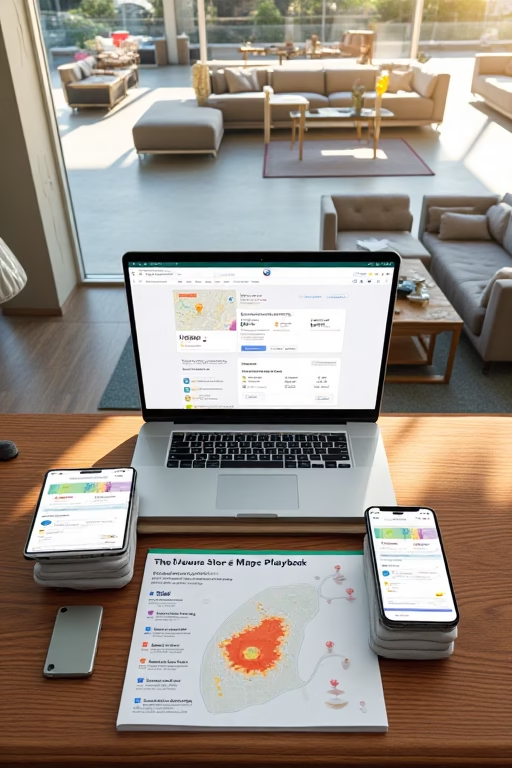
How Furniture Stores Dominate Google Maps & Drive Local Leads
885821989862832287
How Furniture Stores Dominate Google Maps & Drive Local Leads | Market Wiz AI

How Furniture Stores Dominate Google Maps & Drive Local Leads

Unlocking the Map Pack to Bring Shoppers Through Your Doors

Table of Contents

Introduction

How Furniture Stores Dominate Google Maps & Drive Local Leads starts with mastering your Google Business Profile and extends to advanced local SEO. In this guide, we reveal how showroom owners can climb to the top of map results, generate inbound calls, and convert walk‑ins without hefty ad budgets.

1. Understanding Google Maps Visibility

1.1 Why Google Maps Matters for Furniture Stores

Shoppers searching “furniture near me” click on the map pack first. Dominating that space means more showroom visits, higher foot traffic, and increased sales.

1.2 The Map Pack vs. Organic Results

The map pack features three local listings above organic links. Earning a slot here elevates your store’s visibility fivefold compared to page‑one text results.

2. Key Ranking Factors

2.1 Google Business Profile Excellence

Complete every field: store hours, services, categories, attributes, and a compelling business description with “furniture,” “showroom,” and your city name.

2.2 Reviews, Ratings & Engagement

Encourage customers to leave detailed reviews. Google rewards profiles with high volume and recent 4+ star ratings.

2.3 Consistent NAP & Local Citations

Ensure your Name, Address, Phone match exactly across Yelp, Angie’s List, local directories, and social profiles to build authority.

2.4 On-Site Local SEO & Schema

Embed LocalBusiness schema on your homepage and service pages. Use title tags like “Chicago Furniture Showroom” and local content.

2.5 Visual Assets & Geo‑Tagging

Upload 15+ high‑resolution photos of your showroom and products, each geo‑tagged to your location coordinates to reinforce locality.

3. Optimization Blueprint

3.1 Claim, Verify & Verify Again

Claim your GBP, complete phone or postcard verification, and re‑verify any duplicate listings to consolidate authority.

3.2 Profile Completion & Keyword Integration

Write a business description that naturally includes “How Furniture Stores Dominate Google Maps & Drive Local Leads,” your top product types, and service areas.

3.3 Strategic Review Generation

Automate post‑purchase review requests via email and SMS. Offer a small design consultation discount for reviews mentioning “showroom experience.”

3.4 Building High‑Authority Local Citations

List on industry hubs (Design Within Reach), local chambers, and neighborhood blogs. Each citation cements your store’s prominence.

3.5 Enhancing Your Website for Maps

Create a “Visit Us” page with embedded Google Map, address in plain text, and click‑to‑call buttons. Add customer success stories by neighborhood.

4. Advanced Tactics

4.1 Google Posts & Offers

Publish weekly posts promoting new collections, limited‑time sales, and events to keep your profile fresh and engaging.

4.2 Q&A Engagement

Proactively add common customer questions (e.g., “Do you offer custom upholstery?”) and answer them to boost relevance.

4.3 Geo‑Tagged Photo Strategy

Use EXIF tools to embed latitude/longitude in photos of your showroom and deliveries—reinforcing your local footprint.

4.4 Monitoring & Responding in Real Time

Set alerts for new reviews, questions, and profile changes. Respond within 24 hours to signal responsiveness.

5. Tracking & Tools

  • BrightLocal: Monitor map pack rankings and audit GBP health.
  • Whitespark: Discover and manage citation opportunities.
  • Google My Business Insights: Analyze how customers find and interact with your listing.
  • SEMrush Local: Track local keyword visibility and competitor performance.

6. Case Studies

6.1 Urban Oak Furnishings

Urban Oak optimized their GBP and solicited 100 new reviews, jumping from page 2 to page 1 and boosting showroom visits by 80%.

6.2 Lakeside Interiors

By geo‑tagging 20 project photos and posting weekly offers, Lakeside saw a 60% lift in “Get Directions” clicks and a 35% lift in calls.

7. Conclusion & Next Steps

Mastering How Furniture Stores Dominate Google Maps & Drive Local Leads requires meticulous profile optimization, strategic review generation, and advanced local SEO tactics. Follow this guide, measure your results, and iterate monthly to stay ahead and fill your showroom with qualified buyers.

8. 25 Frequently Asked Questions

1. How long until I see map pack improvements?

With consistent optimization, initial ranking gains appear in 2–4 weeks; top positioning may take 3–6 months.

2. How many reviews are ideal?

Aim for at least 50 high‑quality reviews, with a rating above 4.5 stars to compete effectively.

3. Can I use a home address?

Better to use a storefront or virtual office; hiding a home address preserves privacy and professional appearance.

4. What categories should I choose?

Primary: “Furniture store.” Secondary: “Home goods store,” “Interior design.”

5. Do GBP posts expire?

Yes—Google Posts last seven days, so publish fresh content weekly.

6. How to automate reviews?

Use tools like Podium or Birdeye to send scheduled review requests via SMS/email after purchases.

7. Are citations still relevant?

Absolutely—consistent citations across local directories remain a cornerstone of local SEO.

8. How to handle negative feedback?

Respond promptly, offer to make it right offline, and request updated feedback once resolved.

9. Should I track calls?

Yes—use dynamic call tracking numbers linked to GBP to measure call volume and campaign ROI.

10. How to geo‑tag photos?

Use EXIF editor apps to embed GPS data before uploading to your GBP.

11. Can I edit my address later?

You can, but frequent changes may trigger verification delays—plan updates carefully.

12. Do keywords matter in descriptions?

Yes—naturally include target phrases like “furniture showroom Chicago” to improve relevance.

13. How many photos should I upload?

At least 15: exterior, interior, signature pieces, team photos, and customer installs.

14. Are video tours beneficial?

360° or walkthrough videos increase dwell time and signal quality to Google.

15. How to avoid GBP suspension?

Follow Google’s guidelines strictly: accurate info, no prohibited content, and genuine reviews only.

16. Should I post offers?

Yes—promotions and events posted regularly keep your profile active and engaging.

17. What’s the best posting frequency?

Weekly posts and monthly review campaigns maintain momentum without overwhelm.

18. How to track directions clicks?

Google My Business Insights shows “Requests for directions” metrics, helpful for measuring foot‑traffic intent.

19. Can I tag staff in posts?

Yes—tagging team members in project posts humanizes your brand and boosts engagement.

20. Do local backlinks help?

Links from neighborhood blogs, news sites, and event sponsors strengthen your local authority.

21. How to handle multiple locations?

Create separate GBP listings per location, each optimized for its specific service area.

22. Is schema markup necessary?

Yes—LocalBusiness schema helps search engines parse your site’s local data accurately.

23. Should I include prices?

Including pricing ranges in your description can pre‑qualify leads and improve CTR.

24. How to maintain accuracy?

Audit your GBP monthly, checking for changed hours, new services, and updated contact info.

25. Where to learn more?

Visit Market Wiz AI’s blog for advanced local SEO tutorials, case studies, and optimization checklists.

9. 25 Extra Keywords

  1. furniture showroom local SEO
  2. Google Maps optimization furniture
  3. local leads furniture store
  4. GBP for furniture retailers
  5. geo-tagged showroom photos
  6. furniture store citations
  7. LocalBusiness schema furniture
  8. reviews for furniture showroom
  9. map pack ranking tips
  10. Google Posts furniture sales
  11. storefront SEO strategy
  12. call tracking showroom visits
  13. video tours Google Maps
  14. furniture store Q&A GBP
  15. directions click analytics
  16. neighborhood backlink building
  17. shop local SEO furniture
  18. Angie’s List furniture listing
  19. Yelp optimization furniture
  20. HomeAdvisor citations
  21. Google My Business tips
  22. furniture store metadata
  23. walk-in appointment SEO
  24. franchise multi-location GBP
  25. Market Wiz AI local guide

© 2025 Market Wiz AI. All Rights Reserved.

How Furniture Stores Dominate Google Maps & Drive Local Leads Read More »

ai appointment booking for furniture stores

885446058891584470
AI Appointment Booking for Furniture Stores | Market Wiz AI

AI Appointment Booking for Furniture Stores

Transforming Showroom Visits into Seamless Sales Opportunities

Table of Contents

Introduction

AI Appointment Booking for Furniture Stores equips retailers with intelligent scheduling systems that seamlessly handle showroom visits, design consultations, and delivery appointments—maximizing customer convenience and driving sales without manual back-and-forth.

1. Why AI Appointment Booking Matters

1.1 Changing Customer Expectations

Modern furniture buyers expect instant booking, clear availability, and timely reminders. Delays or confusion can lead to lost interest and cart abandonment.

1.2 Overcoming Scheduling Bottlenecks

Manual appointment handling causes errors, double bookings, and staff frustration. AI automates the process, freeing your team for in-store customer engagement.

2. How It Works for Furniture Stores

2.1 Real-Time Calendar Synchronization

The AI platform syncs with Google Calendar, Outlook, or your retail scheduling system—displaying up-to-the-minute availability for designers, delivery crews, and showrooms.

2.2 Intelligent Slot Suggestions

Based on customer preferences, service duration, and resource allocation, the system recommends optimal appointment times to minimize wait and maximize capacity.

2.3 Automated Reminders & Confirmations

Email, SMS, or push notifications confirm bookings immediately and send reminders 24 and 1 hour before the appointment—reducing no-shows by up to 70%.

2.4 Cancellation & Rescheduling Management

Customers can cancel or reschedule via a self-service link; the AI updates calendars and offers the freed slot to waiting customers automatically.

3. Implementation Steps

3.1 Selecting the Right AI Platform

Evaluate features like multi-channel booking (online, SMS, social), CRM integrations, and analytics dashboards when choosing solutions like Calendly AI, AcuityAI, or specialized retail bots.

3.2 Integrating with POS & CRM

Use APIs or middleware (Zapier, Integromat) to sync customer data, appointment history, and follow-up tasks between your booking system and CRM.

3.3 Crafting Booking Templates

Design templates for different services—showroom visits, design consultations, delivery slots—each with appropriate duration, staff assignment, and buffer times.

3.4 Staff Training & Adoption

Train sales associates and delivery teams on the AI interface, alert settings, and manual override procedures to ensure smooth transition and adoption.

4. Best Practices & Pitfalls

4.1 Balancing Automation and Human Touch

Preserve personalization by allowing customers to leave notes and preferences, and ensure human follow-up for high-value appointments.

4.2 Ensuring Data Security & Privacy

Choose platforms with SOC 2 compliance, encrypt data in transit, and obtain explicit consent for SMS reminders to comply with regulations.

4.3 Maintaining Personalization

Customize reminder messages with customer name, booked service, and staff contact details to reinforce brand warmth and professionalism.

5. Case Studies

5.1 Modern Living Furnishings

After deploying AI appointment booking, Modern Living saw a 50% drop in no-shows and a 30% increase in design consultation bookings within two months.

5.2 ComfortCraft Interiors

Integrating AI scheduling with their CRM boosted delivery slot utilization from 60% to 90%, reducing driver idle time and improving customer satisfaction.

6. Conclusion & Next Steps

Implementing AI Appointment Booking for Furniture Stores elevates the customer experience, optimizes staff workflows, and drives revenue growth. Start with a pilot on one service type, measure impact, then expand across all appointment offerings to fully leverage intelligent scheduling.

7. 25 Frequently Asked Questions

1. How quickly can I set up AI booking?

Most platforms onboard within 1–2 weeks, including integration and staff training.

2. Does AI handle multiple locations?

Yes—configure separate calendars per showroom or delivery hub within the same system.

3. Can customers book via social media?

Many solutions embed booking widgets on Facebook, Instagram, and your website.

4. How to reduce no-shows?

Automated reminders and easy rescheduling links typically cut no-shows by 50–70%.

5. What about walk-in appointments?

Enable buffer slots for same-day walk-ins, and use mobile apps to manage on-the-fly bookings.

6. How to integrate with Shopify?

Use native Shopify apps or zapier flows to sync appointments with customer orders.

7. Are SMS reminders effective?

SMS open rates exceed 90%, making them highly effective for last-minute reminders.

8. Can AI book multiple services?

Yes—set up conditional workflows to bundle showroom visits with delivery or assembly slots.

9. How to measure booking ROI?

Track incremental sales from booked appointments versus setup costs and time saved.

10. Do I need developer resources?

Most platforms offer no-code integrations; advanced customizations may require minimal developer support.

11. How to handle cancellations?

Automate waitlist notifications to fill freed slots and maintain utilization.

12. Can AI personalize follow-ups?

Yes—use dynamic fields to reference booked products, design preferences, and staff names.

13. How to train staff?

Offer live demos, quick-start guides, and role-based access training sessions.

14. What analytics are available?

Dashboards show booking volume, no-show rates, service utilization, and revenue per appointment.

15. How to ensure data privacy?

Choose GDPR/CCPA-compliant platforms and obtain explicit customer consent for communications.

16. Should I offer preferred times?

Yes—allow customers to select morning, afternoon, or evening windows for convenience.

17. Can AI upsell services?

Integrate upsell prompts in booking confirmations—for example, offering fabric protection or assembly add-ons.

18. How often to review templates?

Quarterly reviews ensure messaging stays fresh and aligned with promotions or seasonal campaigns.

19. What if staff availability changes?

Update calendar blocks in real time; AI will automatically hide unavailable timeslots.

20. Are virtual consultations supported?

Yes—link Zoom or Teams meeting rooms directly within the booking flow.

21. How to handle group bookings?

Configure session capacities and allow customers to invite guests via unique booking links.

22. Do I need separate booking for delivery?

It’s best practice—track delivery resources and avoid conflicts with showroom appointments.

23. Can I embed on my website?

All major platforms provide embed codes or plugins for seamless website integration.

24. How to scale across regions?

Use regional calendars and language settings; segment analytics by location for performance insights.

25. Where to learn more?

Visit Market Wiz AI’s blog for deeper scheduling strategies, platform comparisons, and case studies.

8. 25 Extra Keywords

  1. furniture store booking automation
  2. AI scheduling furniture showroom
  3. automated furniture appointments
  4. intelligent booking retail
  5. showroom visit scheduler
  6. delivery appointment AI
  7. CRM integrated booking
  8. SMS appointment reminders
  9. email booking confirmations
  10. calendar sync retail AI
  11. self-service booking widget
  12. no-show reduction furniture
  13. buffer time configuration
  14. group booking furniture
  15. virtual design consultations AI
  16. upsell during booking
  17. GDPR compliant booking
  18. CCPA scheduling privacy
  19. multi-location booking AI
  20. embedding booking on site
  21. real-time availability AI
  22. appointment ROI furniture
  23. staff training booking AI
  24. dashboard analytics scheduling
  25. Market Wiz AI booking guide

© 2025 Market Wiz AI. All Rights Reserved.

ai appointment booking for furniture stores Read More »

how to rank my building companies business on google maps

885445370623033759 1
How to Rank My Building Companies Business on Google Maps | Market Wiz AI

How to Rank My Building Companies Business on Google Maps

Elevate Your Local Visibility & Attract More Construction Leads

Table of Contents

Introduction

How to Rank My Building Companies Business on Google Maps is a hands-on guide designed for contractors, builders, and construction firm owners who want to dominate local map searches. Follow these proven steps to climb to the top of the map pack, drive more calls, and increase project inquiries without heavy ad spend.

1. Understanding Google Maps Ranking for Building Companies

1.1 What Is Google Maps Ranking?

Google Maps ranking determines which local businesses appear in the coveted map pack—those three listings shown above organic results. It’s driven by relevance, distance, and prominence.

1.2 Why It’s Critical for Construction Firms

Prospective clients searching “building contractor near me” often click on map listings first. Ranking on page one can triple inbound calls and form submissions for your construction services.

2. Key Ranking Factors

2.1 Google Business Profile Optimization

Accurate business name, primary and secondary categories, service areas, hours, and high-resolution images signal to Google that your profile is authoritative.

2.2 Reviews & Star Ratings

Volume, recency, and average rating all influence rankings. Respond to every review—positive and negative—to demonstrate engagement and trustworthiness.

2.3 NAP Consistency & Citations

Name, Address, Phone must match exactly across all directories (Yelp, BBB, industry listings). Inconsistencies confuse Google’s algorithm.

2.4 Local Backlinks & Mentions

Links from local news sites, trade associations, and supply partners boost your prominence. Earn mentions through sponsorships and guest articles.

2.5 On-Page & Schema Markup

Embed LocalBusiness schema on your website, include service area pages, and optimize title tags/meta descriptions with city and “building contractor”.

3. Optimization Blueprint

3.1 Claim & Verify Your GBP

Visit business.google.com, claim your listing, and complete verification by mail or phone to unlock full profile editing features.

3.2 Complete & Optimize Your Profile

Fill in every field: business description with target keywords, services offered, photos of finished projects, and team headshots.

3.3 Solicit & Manage High-Quality Reviews

Automate review requests via email/SMS after job completion. Offer incentives like maintenance guides for customers who leave feedback.

3.4 Build & Audit Local Citations

Ensure your firm is listed in top industry directories (Angi, HomeAdvisor), local chamber of commerce, and mapping services like Apple Maps.

3.5 Enhance Your Website with Local Schema

Add JSON-LD schema for LocalBusiness and Service to your homepage and service area pages, making it easier for search engines to understand your offerings.

4. Advanced Tactics

4.1 Geo-Tagging Your Photos

Embed GPS coordinates in your project images before uploading to GBP to reinforce your service area signal.

4.2 Using Google Posts Strategically

Publish weekly updates—project highlights, promotions, and blog links—to keep your profile active and engaging.

4.3 Engaging in Q&A on Your Profile

Proactively add questions and answers about permits, timelines, and warranties to improve relevance and user trust.

4.4 Tracking with UTM & Analytics

Add UTM parameters to links in your GBP (website, appointment booking) and monitor conversions in Google Analytics to measure impact.

5. Monitoring & Tools

  • BrightLocal: Track map rankings and audit citations.
  • Whitespark: Discover new citation opportunities.
  • SEMrush Local Ranking: Monitor keyword visibility in the map pack.
  • Google My Business Insights: Analyze clicks, calls, and direction requests.

6. Case Studies

6.1 Apex Builders LLC

After optimizing GBP and soliciting 50 new 5-star reviews, Apex moved from page 3 to page 1 in two weeks, increasing calls by 120%.

6.2 Skyline Construction

By adding LocalBusiness schema and geo-tagged photos, Skyline saw a 75% uplift in direction requests and booked 30% more site visits.

7. Conclusion & Next Steps

Implementing How to Rank My Building Companies Business on Google Maps starts with a fully optimized GBP, strategic review management, and advanced local SEO tactics. Follow this blueprint, track performance, and iterate monthly to maintain top positioning and attract a steady stream of construction leads.

8. 25 Frequently Asked Questions

1. How long until I rank on page one?

Improvement can be seen in 2–4 weeks, but sustaining top placement may take 3–6 months of consistent optimization.

2. How many reviews do I need?

Aiming for 50+ recent 4.5-star reviews is ideal to compete in most local markets.

3. Can I change my business name?

Only if you officially rebrand; keyword stuffing your name can lead to suspension.

4. Do I need a physical office?

Google requires a service-area business model; you can hide your address and specify service areas instead.

5. What categories should I choose?

Primary: “Building contractor.” Secondary: “Home builder,” “Construction company.”

6. How often update posts?

Weekly posts keep your GBP active and signal freshness to the algorithm.

7. Are citations still relevant?

Yes—consistent NAP across high-authority directories remains a key ranking factor.

8. How to get citations fast?

Use citation management services or manually submit to top directories like Yelp, YellowPages, and HomeAdvisor.

9. Should I use PPC?

Local Services Ads (LSAs) can complement your organic efforts but aren’t a substitute for GBP optimization.

10. How to handle negative reviews?

Respond calmly, offer to resolve offline, and request clients to update their feedback after resolution.

11. Can I geo-tag images manually?

Yes—use EXIF editors to embed GPS data before uploading to GBP.

12. Are Google Posts visible long-term?

Posts expire after seven days, so maintain a regular publishing cadence.

13. What’s the ideal photo count?

At least 15 high-quality photos: exterior, interior, team, and projects-in-progress.

14. Do I need multiple locations?

You can create service-area listings without physical locations if you serve multiple towns.

15. How to track phone calls?

Use call-tracking numbers and integrate with your GBP website link parameters.

16. Should I encourage check-ins?

Yes—offer small incentives for clients to check in on their project location to boost engagement.

17. Can I hide address?

Yes—select the “Hide address” option and set service areas instead of a storefront address.

18. How to use Q&A?

Pre-populate FAQs and monitor new questions daily to answer promptly and showcase expertise.

19. Are virtual tours helpful?

360° tours on GBP increase dwell time and trust—boosting your relevance signals.

20. What schema type to use?

Use LocalBusiness or HomeAndConstructionBusiness schema with detailed service and contact data.

21. How to avoid GBP suspension?

Follow Google’s guidelines: no keyword stuffing, accurate info, and no prohibited content or services.

22. Can I post videos?

Yes—short project showcase videos up to 30 seconds engage users and improve rankings.

23. How to measure ROI?

Track calls, direction clicks, and form submissions from GBP in Google Analytics and CRM.

24. Should I hire an agency?

If time is limited, specialized local SEO agencies can accelerate your GBP optimization process.

25. Where to learn more?

Visit Market Wiz AI’s blog for advanced local SEO tutorials, templates, and construction case studies.

9. 25 Extra Keywords

  1. construction local SEO
  2. Google Maps contractor ranking
  3. builder GBP optimization
  4. map pack construction
  5. local contractor citations
  6. construction reviews management
  7. service area SEO
  8. LocalBusiness schema builder
  9. geo-tagged project photos
  10. Google Posts for contractors
  11. construction Q&A engagement
  12. UTM tracking GBP
  13. call tracking local SEO
  14. virtual tour Google Maps
  15. construction directory listings
  16. HomeAdvisor citations
  17. Yelp SEO for builders
  18. industry backlink building
  19. Google My Business tips
  20. contractor ranking factors
  21. review response best practices
  22. GBP analytics tools
  23. map pack conversion rates
  24. local search construction
  25. Market Wiz AI GBP guide

© 2025 Market Wiz AI. All Rights Reserved.

how to rank my building companies business on google maps Read More »

Marketplace Algorithm Hack for Tiny Home Companies: Rank #1 Fast

885075682386806743
Marketplace Algorithm Hack for Tiny Home Companies: Rank #1 Fast | Market Wiz AI

Marketplace Algorithm Hack for Tiny Home Companies: Rank #1 Fast

Outsmart the Algorithm & Dominate Your Local Marketplace

Table of Contents

Introduction

Marketplace Algorithm Hack for Tiny Home Companies: Rank #1 Fast unveils proven tactics to outpace competitors in crowded marketplaces. By understanding how ranking signals work and applying a targeted blueprint, tiny home companies can surge to the top of search results and capture more local buyers without extra ad spend.

1. Understanding Marketplace Algorithms

1.1 How Listings Are Ranked

Marketplaces like Facebook, OfferUp, and Craigslist use proprietary algorithms that weigh keywords, engagement, and seller history. Listings are sorted by relevance to user queries and perceived buyer intent.

1.2 Why Tiny Home Companies Need to Hack It

Without optimization, generic listings get buried under dozens of competitors. A tailored algorithm hack ensures your tiny home listings appear first—capturing attention and inquiries immediately.

2. Key Ranking Factors

2.1 Relevance & Keywords

Exact-match titles and strategic keywords in descriptions help algorithms identify your listing as a top match for tiny home searches.

2.2 Engagement Signals

Likes, shares, saves, and messages boost ranking. Prompt responses and social proof raise your listing’s perceived value.

2.3 Recency & Frequency

Fresh listings are favored. Regularly refreshing posts signals activity and keeps your content at the top of feeds.

2.4 Listing Quality

High-resolution images, complete details, and transparent pricing contribute to a quality score that algorithms reward.

3. Algorithm Hack Blueprint

3.1 Title & Keyword Optimization

Craft titles like “Eco-Friendly 20ft Tiny Home – Off-Grid Ready” to include primary keywords and unique selling points in under 60 characters.

3.2 Image & Media Best Practices

Upload 6–8 crisp images: exterior, interior, floor plans, and lifestyle shots. Tag images with alt text matching key search terms.

3.3 Engagement Boost Tactics

Push initial engagement by sharing to relevant groups, offering limited-time promotions, and inviting comments to your listing.

3.4 Posting Schedule & Refresh

Post new listings during peak browsing hours (6–9 PM) and automate reposts every 48 hours with slight title tweaks to avoid duplication flags.

4. Implementation Steps

4.1 Audit Existing Listings

Review your top 10 current listings: note titles, keywords, image count, and engagement metrics to identify gaps.

4.2 Create Optimized Templates

Build a template with fields for keyword-rich title, bullet-point features, 8 images, and a call to action—ensuring consistency across listings.

4.3 Automate Posting & Monitoring

Use scheduling tools or scripts to publish and refresh listings automatically, tracking position changes and engagement in a dashboard.

4.4 Measure & Iterate

Monitor views, saves, and messages. Adjust keywords, posting times, and media based on performance data to continuously refine your hack.

5. Best Practices & Pitfalls

  • Maintain accurate inventory and pricing to build trust.
  • Avoid keyword stuffing—keep titles readable.
  • Rotate images to prevent “staleness” penalties.
  • Respond within 5 minutes to inquiries to boost engagement signals.
  • Respect platform rules to avoid suspensions.

6. Case Studies

6.1 TinyNest Homes

By implementing this hack, TinyNest saw their listings jump from page 5 to page 1 on Facebook Marketplace, doubling inquiries within one week and tripling monthly sales within a month.

6.2 MicroDwell Co.

MicroDwell automated title rotation and engagement prompts on OfferUp, resulting in a 150% increase in saves and a 40% lift in conversion rate.

7. Conclusion & Next Steps

Applying the Marketplace Algorithm Hack for Tiny Home Companies: Rank #1 Fast empowers you to outshine competitors without extra ad spend. Start by auditing your listings, deploy the 5-step blueprint, and refine based on real-time metrics to maintain your top rank.

8. 25 Frequently Asked Questions

1. How quickly will I see ranking improvements?

Most companies notice higher placement within 24–48 hours of implementing keyword and engagement tweaks.

2. Can I use this hack on multiple marketplaces?

Yes—adapt titles and images to each platform’s format, but the core blueprint applies everywhere.

3. How many keywords should I target?

Focus on 3–5 primary keywords per listing: model, size, style, and location.

4. What constitutes a quality image?

High resolution (minimum 1024×768), good lighting, and clear views of key features.

5. Is automation allowed?

Simple scheduling and repost tools are generally acceptable; avoid bots that spam listings.

6. How often refresh content?

Every 48 hours is ideal—enough to stay fresh without triggering spam filters.

7. Do I need a business account?

A verified business profile boosts trust and often ranks higher than personal accounts.

8. Should I include pricing?

Yes—transparent pricing reduces friction and improves click-through rates.

9. How to measure success?

Track listing position, views, saves, messages, and sales conversions in a simple spreadsheet or dashboard.

10. Can I rotate titles?

Slight title variations every repost help avoid duplication penalties while keeping freshness.

11. What time of day is best to post?

Evenings (6–9 PM) and weekends see peak browsing on most marketplaces.

12. How to boost engagement?

Run limited-time offers, ask viewers to comment, and share listings to relevant local groups.

13. Are video listings beneficial?

Yes—short walkthroughs increase dwell time and signal quality to algorithms.

14. How to avoid account flags?

Respect platform limits, avoid duplicate content, and adhere to community guidelines.

15. Do reviews impact ranking?

Positive seller reviews and ratings can improve visibility on some marketplace platforms.

16. How detailed should descriptions be?

Include key specs, features, and benefits in concise bullet points under 200 words.

17. Can I target by region?

Yes—use geographic filters to ensure your listing appears for local searches only.

18. How to handle out-of-stock listings?

Mark as unavailable promptly or update pricing/status to maintain trust and avoid penalties.

19. Should I cross-post?

Yes—use cross-posting tools to maintain consistency across marketplaces and maximize reach.

20. What’s a good conversion rate?

5–10% of views converting to messages or inquiries is excellent in the tiny home niche.

21. How to optimize for mobile?

Ensure images and text display clearly on smartphone screens—avoid long paragraphs.

22. Can I use hashtags?

On Facebook, 1–2 relevant hashtags can help categorize; on other sites, they’re less impactful.

23. What analytics should I track?

Views, saves, messages, click-through rate, and sales attribution by listing.

24. How to scale this hack?

Document your workflow, use templates, and automate repost schedules to handle large inventories.

25. Where to learn more?

Visit Market Wiz AI’s blog for deeper strategies, tool recommendations, and case studies on marketplace optimization.

9. 25 Extra Keywords

  1. tiny home marketplace optimization
  2. listing algorithm hack
  3. rank tiny home listings #1
  4. marketplace SEO for tiny homes
  5. tiny house search ranking
  6. keyword strategy tiny homes
  7. engagement boost marketplace
  8. automated repost tiny homes
  9. listing quality score hack
  10. fresh content algorithm
  11. marketplace posting schedule
  12. local tiny home buyers
  13. image optimization tiny homes
  14. title rotation marketplace
  15. sale conversion tiny homes
  16. algorithm signals tiny home
  17. platform-specific ranking tips
  18. tiny home engagement signals
  19. reply time ranking factor
  20. marketplace analytics tiny homes
  21. case study tiny home ranking
  22. marketplace hack 2025
  23. tiny home listing checklist
  24. optimize description tiny home
  25. Market Wiz AI algorithm guide

© 2025 Market Wiz AI. All Rights Reserved.

Marketplace Algorithm Hack for Tiny Home Companies: Rank #1 Fast Read More »

The Facebook Ad Script That Tripled Sales for Shipping Container Companies

885075133704702408
The Facebook Ad Script That Tripled Sales for Shipping Container Companies | Market Wiz AI

The Facebook Ad Script That Tripled Sales for Shipping Container Companies

Unlock a Proven Copy & Creative Formula That 3× Your Container Revenue

Table of Contents

Introduction

The Facebook Ad Script That Tripled Sales for Shipping Container Companies reveals the exact ad copy and creative blueprint used by top container suppliers to 3× their monthly revenue. In this post, we’ll walk through why Facebook is ideal for container sales, decode the 5-part script, and share advanced targeting and scaling tactics.

1. Why Facebook Ads Work for Container Sales

1.1 High-Intent Local Audiences

Facebook’s geo-targeting lets you reach businesses and contractors within a specific radius searching for storage and shipping containers.

1.2 Visual Appeal of Container Listings

Containers photograph well—clean lines and industrial textures stand out in the feed, driving stronger engagement than text-only ads.

1.3 Cost-Effective Targeting

Compared to billboards or trade magazines, Facebook ads deliver impressions and clicks at a fraction of the cost, with precise budgeting and pacing.

2. Script Breakdown: 5-Part Ad Framework

2.1 Hook: Attention-Grabbing Headline

Use urgent, benefit-driven headlines—e.g., “Need Extra On-Site Storage? 20’ Containers Delivered in 24H!”

2.2 Problem: Highlight Customer Pain Point

Address common issues—limited workspace, secure storage needs, project delays—and empathize: “Tired of cluttered construction sites?”

2.3 Solution: Present Your Container Offer

Detail your unique selling points—delivery speed, custom modifications, rental vs. purchase options.

2.4 Proof: Social Proof & Results

Include a brief customer testimonial or statistic: “Over 200 projects outfitted—99% on-time delivery.”

2.5 Call to Action: Clear Next Step

Use direct CTAs—“Click to Get a Free Quote” or “Message Now for Same-Day Delivery.”

3. Creative & Copy Tips

3.1 Image & Video Best Practices

  • Show the container in real environments (sites, yards).
  • Use quick 15-second demos highlighting features.
  • Include overlay text for accessibility and mute-on viewing.

3.2 Ad Copy Dos & Don’ts

  • Do: Keep paragraphs under 3 lines.
  • Don’t: Use industry jargon your audience won’t know.

3.3 Ad Formats & Placements

Test single-image, carousel, and video ads across Feed, Stories, and Marketplace for best reach.

4. Advanced Targeting Strategies

4.1 Lookalike & Custom Audiences

Create lookalikes from past buyers and upload your email list to remarket to existing contacts.

4.2 Geographic Radius Targeting

Focus on industrial zones, construction hubs, and nearby business districts within 10–50 miles.

4.3 Interest & Behavior Layers

Target users interested in construction equipment, logistics, or facility management for highly relevant reach.

5. Implementation & Testing

5.1 A/B Testing Your Scripts

Rotate headlines, CTAs, and ad formats. Measure click-through and conversion lift over 2-week windows.

5.2 Budget & Bid Settings

Start with $20/day per ad set, using Lowest Cost bidding. Scale budgets on winners by 20% weekly.

5.3 Scaling Winners

Expand winning ads into new geographies or broader lookalikes, while maintaining ad frequency under 2.

6. Case Studies: Real 3× Growth

6.1 SteelBox Inc.

SteelBox tested this 5-part script and saw sales jump from $30K to $90K/month within eight weeks, with cost per lead dropping 40%.

6.2 Harbor Containers

After refining their carousel creative, Harbor Containers tripled rental requests and reduced lead-to-booking time by 60%.

7. Conclusion & Next Steps

Implementing The Facebook Ad Script That Tripled Sales for Shipping Container Companies gives you a clear, repeatable formula. Start by crafting your first 5-part ad, test with a small budget, then optimize and scale winning variations to 3× your container sales.

8. 25 Frequently Asked Questions

1. How soon can I expect results?

Many see performance lift in 2–3 weeks of consistent testing and optimization.

2. What budget is required?

Begin with $600/month per campaign for meaningful A/B tests and scale from there.

3. Should I run rentals and sales together?

Separate campaigns by objective to tailor messaging and landing pages effectively.

4. How to write a strong hook?

Use a clear benefit or urgency: “Secure On-Site Storage Today” or “Limited-Stock 40’ Units.”

5. Do testimonials improve performance?

Yes—social proof can boost conversion rates by up to 25% when placed before the CTA.

6. Which ad format converts best?

Carousels for showcasing multiple container options, single-image for quick lead gen.

7. How many headlines to test?

Start with 3–5 distinct headlines and iterate based on click-through performance.

8. Do longer descriptions work?

Keep descriptions under 125 characters for feed placement; use link previews for details.

9. How to set bid caps?

Use manual bid caps slightly above your average CPL to control costs while winning auctions.

10. Should I exclude audiences?

Exclude past purchasers to avoid wasted spend and segment remarketing audiences separately.

11. How to avoid ad fatigue?

Rotate creatives every 7–10 days and refresh headlines or images to maintain engagement.

12. What landing page works best?

A focused page with container details, pricing, a lead form, and trust signals drives highest conversions.

13. Can I retarget video viewers?

Yes—create custom audiences of viewers who watched 50%+ of your container demo videos.

14. How to measure ROI?

Track revenue attributed to ad clicks vs. ad spend for accurate ROAS calculation.

15. Are dynamic ads useful?

Dynamic ads can auto-populate your container catalog, but static tested creative often outperforms initially.

16. Should I test placements?

Yes—compare feed, stories, and marketplace placements; allocate budget to top performers.

17. How to capture phone leads?

Use “Call Now” buttons and track calls with dynamic forwarding numbers for full attribution.

18. What time of day performs best?

Evenings (5–9pm) and early mornings (7–10am) often see higher engagement for B2B equipment buyers.

19. How to handle inquiries quickly?

Integrate Messenger automation or a live chat widget to reply within seconds and qualify leads.

20. Can I use offers?

Yes—promote limited-time discounts or free delivery offers to drive urgency and clicks.

21. What metrics matter most?

CTR, CPL, lead-to-sale conversion rate, average order value, and ROAS are key KPIs.

22. How to localize ads?

Include city names, speak to local use cases (e.g., “NYC rooftop storage”), and target by zip code.

23. Is pixel tracking essential?

Yes—install the Facebook Pixel to track conversions, build custom audiences, and optimize campaigns.

24. Do I need a dedicated landing page?

While you can use Messenger forms, dedicated pages improve lead quality and reduce friction.

25. Where to find more examples?

Visit Market Wiz AI’s blog for additional ad scripts, templates, and container marketing case studies.

9. 25 Extra Keywords

  1. container Facebook ad script
  2. shipping container ad copy
  3. Facebook ads for containers
  4. container sales framework
  5. ad headline for containers
  6. Hook for container ads
  7. container ad creative tips
  8. local container targeting FB
  9. container lead gen Facebook
  10. container ad A/B testing
  11. container ad budget settings
  12. carousel container ads
  13. container video ad tips
  14. CTA for container ads
  15. lookalike container audience
  16. geo radius container ads
  17. industry interest targeting
  18. scaling Facebook ads
  19. optimizing CPL containers
  20. container ad ROAS
  21. retarget container viewers
  22. Lead-to-sale container rate
  23. Call Now container ads
  24. pixel tracking container sales
  25. Market Wiz AI container script

© 2025 Market Wiz AI. All Rights Reserved.

The Facebook Ad Script That Tripled Sales for Shipping Container Companies Read More »

best ai lead generation tools for shipping container companies

884684801708176921
Best AI Lead Generation Tools for Shipping Container Companies | Market Wiz AI

Best AI Lead Generation Tools for Shipping Container Companies

Automate Prospecting & Supercharge Your Container Sales Funnel

Table of Contents

Introduction

Best AI Lead Generation Tools for Shipping Container Companies offers an in-depth look at the artificial intelligence platforms reshaping how container firms attract, qualify, and convert leads. Whether you sell new units, rentals, or retrofitted spaces, these AI solutions streamline prospecting, personalize outreach, and fill your pipeline with buyers ready to transact.

1. Understanding AI-Driven Lead Gen

1.1 Why AI Matters in Container Sales

Shipping container buyers often research online before contacting suppliers. AI tools scan behavior signals—page visits, time on site—to surface hot prospects and engage them immediately.

1.2 From Cold Inquiries to Warm Leads

Automated chat, email, and SMS powered by AI can qualify cold inquiries in minutes, enriching profiles with budget, use-case, and timeline information for your sales team.

2. Top AI Lead Generation Tools

2.1 Conversational Chatbots

Platforms like Drift and Intercom deploy AI chatbots on your website and marketplaces to answer container specs questions, schedule viewings, and capture contact details 24/7.

2.2 Predictive Prospecting Platforms

Tools such as Clearbit and Lusha use AI to identify and enrich potential buyer contacts based on firmographic data—helping you target commercial, industrial, or residential customers effectively.

2.3 Automated Email & SMS Sequences

AI-driven platforms like Mailchimp’s Smart Send and Textedly automatically send personalized nurture sequences based on buyer behavior—reminding prospects of offers, new arrivals, and promotions.

2.4 AI-Powered CRM Integrations

CRMs such as HubSpot and Salesforce Einstein leverage AI to prioritize the hottest container leads, recommend next steps, and forecast deal closure probabilities.

3. Implementing Your AI Stack

3.1 Tool Selection Criteria

Evaluate AI solutions based on integration ease with your website, marketplace channels, CRM, and budget. Prioritize platforms offering ROI dashboards and low-code setup.

3.2 Seamless Integration Workflow

Use APIs and webhooks to connect chatbots, email/SMS engines, and CRMs. Centralize lead data to ensure every inquiry—whether from your site or a marketplace—flows into one unified view.

3.3 Staff Training & Adoption

Conduct workshops to familiarize your team with AI dashboards, configure alert rules for high-priority leads, and establish SLA for follow-up within minutes of AI flagging.

4. Best Practices & Pitfalls

4.1 Maintaining Human Touch

While AI handles initial outreach, always include seamless handoff to a live rep for complex inquiries and high-value deals to preserve personal relationships.

4.2 Data Quality & Privacy

Regularly audit your lead data for accuracy, comply with GDPR/CCPA when capturing personal information, and secure AI platforms via SOC 2–compliant vendors.

4.3 Measuring ROI Accurately

Track metrics like lead response time, qualification rate, and deal velocity. Attribute revenue back to AI-driven channels versus manual outreach.

5. Case Studies: Real Results

5.1 ContainerXpress

By deploying a Drift chatbot and HubSpot integration, ContainerXpress saw a 45% increase in qualified inquiries and reduced follow-up time from hours to under 5 minutes.

5.2 UrbanBox Rentals

Implementing predictive prospecting with Clearbit enriched CRM contacts and improved email open rates by 60%, accelerating rental bookings by 30% year-over-year.

6. Conclusion & Next Steps

Investing in the Best AI Lead Generation Tools for Shipping Container Companies transforms your sales funnel—automating outreach, prioritizing high-intent prospects, and driving faster deal closures. Begin with one chatbot pilot, measure lift, then expand across email, SMS, and predictive prospecting for full-funnel impact.

7. 25 Frequently Asked Questions

1. What makes AI chatbots effective?

They engage visitors instantly, qualify leads with targeted questions, and capture contact data 24/7 without human intervention.

2. How do predictive prospecting tools work?

They analyze firmographic and behavioral data to enrich lead lists and score prospects most likely to buy containers.

3. Can AI handle bulk inquiries?

Yes—AI platforms scale to thousands of chats or messages simultaneously, routing hot leads to sales reps as needed.

4. Is personalization possible at scale?

AI dynamically inserts buyer names, company details, and referenced container models into messages for personalized outreach.

5. How quickly should AI respond?

Sub–60-second response times dramatically improve engagement and reduce abandonment.

6. What data feeds chatbots?

Inventory catalogs, FAQs, pricing tables, and policy documents feed the AI knowledge base for accurate responses.

7. Are these tools expensive?

Entry plans start at $50–$200/month; enterprise tiers vary based on message volume and advanced features.

8. How to integrate with my CRM?

Use native connectors or Zapier to sync lead data, conversation logs, and bot actions into your CRM automatically.

9. How to measure lead quality?

Track bot-qualified leads through to site visits or demos and calculate the percentage converting to orders.

10. How to train AI on container specifics?

Upload product details, spec sheets, and common Q&A into the AI platform’s knowledge base and refine over time.

11. Can AI handle multilingual leads?

Many platforms support multiple languages; configure language settings and localized scripts per market.

12. How to avoid generic replies?

Customize conversation flows, include dynamic variables, and review transcripts weekly for improvement.

13. Should I mix channels?

Yes—combine chatbots, email drips, and SMS reminders to cover prospects on their preferred medium.

14. How often update scripts?

Review and refine scripts monthly based on new products, promotions, and emerging FAQs.

15. What KPIs to track?

Lead capture rate, response time, qualification rate, and pipeline velocity are critical metrics.

16. Can AI suggest next best actions?

Yes—CRM-integrated AI can recommend when to call, email, or follow up based on buyer behavior signals.

17. How to ensure data privacy?

Choose AI vendors with SOC 2 and GDPR/CCPA compliance; use consent capture flows in chatbots.

18. Do chatbots integrate with marketplaces?

Some AI chatbots embed in Facebook Marketplace or OfferUp postings to capture inquiries directly from listings.

19. How to prevent bot fatigue?

Limit message frequency, provide clear opt-out options, and balance AI with human check-ins.

20. Can AI schedule demos?

Integrate calendar widgets to let prospects book tours or calls directly through the chatbot interface.

21. How to pilot effectively?

Start with your top-performing container model on one channel, measure lift, then expand scope.

22. What training do teams need?

Basic dashboard navigation, alert configuration, and handling hand-off events are core skills to teach.

23. How to handle complex queries?

Define escalation rules so the bot passes off to a human when confidence is low or for high-value deals.

24. Are analytics built-in?

Most AI platforms include dashboards for conversation metrics, lead scoring outcomes, and performance trends.

25. Where to learn more?

Visit Market Wiz AI’s blog for advanced AI playbooks, templates, and success stories in container sales.

8. 25 Extra Keywords

  1. AI lead gen shipping containers
  2. conversational AI container sales
  3. predictive prospecting shipping
  4. automated container outreach
  5. chatbot for container inquiries
  6. email SMS container leads
  7. HubSpot AI container integration
  8. Clearbit for container leads
  9. Drift chatbot container
  10. Intercom container marketing
  11. AI lead scoring containers
  12. CRM integration for container AI
  13. GDPR container lead capture
  14. AI response time container
  15. SOC 2 AI vendors containers
  16. AI scheduling container demos
  17. multilingual container chatbot
  18. pipeline velocity AI
  19. bot handoff container sales
  20. AI personalization shipping
  21. bot fatigue prevention
  22. calendar widget chatbot
  23. AI knowledge base container
  24. conversation analytics AI
  25. Market Wiz AI container guide

© 2025 Market Wiz AI. All Rights Reserved.

best ai lead generation tools for shipping container companies Read More »

offerup marketing system for shipping container companies

884685384749990637
OfferUp Marketing System for Shipping Container Companies | Market Wiz AI

OfferUp Marketing System for Shipping Container Companies

Dominate Local Container Sales with a Proven OfferUp Strategy

Table of Contents

Introduction

OfferUp Marketing System for Shipping Container Companies outlines a step-by-step method to list containers, engage buyers instantly, and drive consistent sales on OfferUp. By automating and optimizing each phase, container firms can capture local demand and scale without manual effort.

1. Why OfferUp for Shipping Containers?

1.1 Local Buyer Intent

OfferUp attracts users looking to buy locally. Container buyers often search “shipping container near me,” so your listings appear to high-intent prospects.

1.2 Cost-Effective Listings

Listings are free to post, making OfferUp a low-cost complement to paid ads and classifieds.

1.3 High Visibility & Engagement

The app’s swiping interface and push notifications drive message rates far above typical classified sites.

2. The OfferUp Marketing System

2.1 Account & Profile Setup

Create a business account with verified badge, complete profile with logo, contact info, and brand story to build trust.

2.2 Listing Optimization

Use 6–8 high-res photos, keyword-rich title (“20’ Corten Steel Container – Excellent Condition”), bullet features, and transparent pricing.

2.3 Scheduling & Reposting

Automate reposts every 48 hours at peak browsing times (evenings, weekends) to maintain top placement.

2.4 Automated Inquiry Responses

Integrate a chatbot to answer FAQs—dimensions, delivery options, financing—and collect lead contact details instantly.

2.5 Performance Tracking

Monitor views, message rates, and close percentages in a unified dashboard to refine listings and focus on top-performing containers.

3. Implementation Steps

3.1 Choose Your Toolset

Select automation tools like Market Wiz Connect or third-party scrapers for bulk posting and data syncing.

3.2 Bulk Upload Workflow

Prepare CSV with container specs, images, pricing, then use API or GUI tools to push multiple listings in one go.

3.3 Integrate CRM & Chatbot

Connect inquiries to your CRM and deploy a lightweight chatbot to qualify leads and schedule calls or site visits automatically.

3.4 Team Training & SOPs

Document processes for listing creation, inquiry follow-up, and issue escalation. Train staff on monitoring dashboards and message handling.

4. Best Practices & Pitfalls

4.1 Consistent Branding

Use the same logo, color palette, and tone across all listings to reinforce professionalism and brand recall.

4.2 Photo & Title Standards

First image should be the cleanest, full-frontal shot. Titles must include size, material, and condition at a glance.

4.3 Avoiding Flags & Bans

Vary repost intervals, avoid prohibited keywords, and don’t exceed listing limits to keep your account in good standing.

5. Case Studies

5.1 ContainerKings

By automating reposts and using chatbots, ContainerKings saw message volume triple and conversion rate rise from 8% to 18% within two months.

5.2 SeaBox Solutions

Optimizing titles and integrating CRM follow-up shortened lead-to-sale cycle from 10 days to 4 days, boosting monthly revenue by 45%.

6. Conclusion & Next Steps

Implement the OfferUp Marketing System for Shipping Container Companies to streamline listings, automate engagement, and drive consistent local sales. Start small, refine your process, then scale across your full inventory to dominate your market.

7. 25 Frequently Asked Questions

1. How often should I repost?

Every 48–72 hours at peak browsing times to maintain visibility.

2. Can I bulk-upload images?

Yes—prepare image URLs in your CSV or use API-based tools for bulk media upload.

3. What’s the ideal title format?

“Length’ Material Container – Condition” (e.g., “20’ Corten Steel Container – Like New”).

4. Should I include delivery options?

Yes—clarify delivery radius or costs to pre-qualify inquiries.

5. How fast must I respond?

Under 5 minutes for best engagement; chatbots can handle initial contact.

6. Are paid boosts available?

OfferUp Ads can amplify top listings in target ZIP codes for paid promotion.

7. Can I automate messaging?

Use ManyChat or MobileMonkey integrated with OfferUp to automate first responses.

8. How to track leads?

Route messages into your CRM and tag by listing ID for attribution.

9. What’s a good message-to-sale rate?

Aim for 15–25% of inquiries converting to sales.

10. How to avoid spam filters?

Use recognizable sender names and avoid excessive links in initial messages.

11. Do UTM tags work?

Yes—append UTM parameters to any external links for Google Analytics tracking.

12. How to manage out-of-stock?

Mark listings as unavailable or update pricing/status promptly to avoid negative experiences.

13. Should I use video?

Short walkaround videos increase trust and engagement on mobile devices.

14. What keywords matter?

Include “shipping container,” “storage container,” “for sale,” and your city/region.

15. How to price competitively?

Monitor similar listings and position 5–10% below average to stand out.

16. Can I list multiple locations?

Yes—use separate profiles or specify in titles/descriptions for each yard.

17. How to handle inquiries off-hours?

Deploy chatbots to capture lead info and schedule follow-up during business hours.

18. What analytics are available?

OfferUp provides view counts and message rates; integrate with dashboards for deeper insights.

19. How to prevent bans?

Rotate listing content, avoid prohibited items, and respect posting frequency guidelines.

20. Are there listing fees?

Base listings are free; paid boosts and promoted ads incur a fee per campaign.

21. How to scale inventory?

Automate CSV imports nightly and schedule postings based on stock availability.

22. Can I embed forms?

Include links to lead-capture forms on your website for detailed inquiries.

23. How to handle returns?

State clear return/refund policies in the description to manage expectations.

24. Should I cross-post?

Yes—syndicate to Craigslist, Facebook, and OfferUp for maximum reach.

25. Where to learn more?

Visit Market Wiz AI’s blog for advanced marketplace strategies and automation templates.

8. 25 Extra Keywords

  1. OfferUp container listings
  2. shipping container OfferUp automation
  3. bulk upload OfferUp
  4. OfferUp chatbot integration
  5. shipping container local sales
  6. OfferUp repost scheduler
  7. container listing optimization
  8. OfferUp Ads for containers
  9. CRM integration OfferUp
  10. OfferUp performance dashboard
  11. region-specific container listings
  12. OfferUp best posting times
  13. OfferUp view to sale ratio
  14. OfferUp UTM tracking
  15. mobile video listings OfferUp
  16. OfferUp prohibited items
  17. shipping container pricing OfferUp
  18. OfferUp message automation
  19. OfferUp for business
  20. OfferUp inventory sync
  21. lead capture OfferUp
  22. OfferUp ban prevention
  23. OfferUp multi-location listings
  24. OfferUp ekue dashboards
  25. Market Wiz AI container guide

© 2025 Market Wiz AI. All Rights Reserved.

offerup marketing system for shipping container companies Read More »

2025 AI Solutions Every Pawn Shops Marketing Manager Should Know

884356192686584738
2025 AI Solutions Every Pawn Shops Marketing Manager Should Know | Market Wiz AI

2025 AI Solutions Every Pawn Shops Marketing Manager Should Know

Elevate Your Pawn Business with Next-Gen AI Tools

Table of Contents

Introduction

2025 AI Solutions Every Pawn Shops Marketing Manager Should Know unveils the state-of-the-art artificial intelligence tools reshaping how pawn businesses price items, engage with customers, manage inventory, and maintain their online reputation. Embrace these solutions to stay ahead in a competitive market.

1. Understanding AI in Pawn Shop Marketing

1.1 AI-Powered Pricing & Valuation Tools

Leverage machine learning models trained on historical sales data and market trends to auto-appraise items—ensuring fair offers that maximize margins.

1.2 Chatbots for Instant Inquiry Handling

Deploy conversational AI on your website and messaging platforms to answer FAQs, schedule appointments, and capture lead details 24/7.

1.3 Predictive Inventory Management

Use predictive analytics to forecast demand for categories (electronics, jewelry), optimize stock levels, and reduce idle inventory holding costs.

1.4 Automated Review & Reputation Systems

Implement AI-driven review request and response automation to generate fresh, positive customer feedback and promptly address negative comments.

2. Key AI Solutions to Deploy

2.1 AI Valuation Engines

Platforms like ValuAI and AutoPawn analyze real-time marketplace listings to suggest buy and sell prices, reducing appraisal time by 70%.

2.2 Conversational AI Chatbots

Tools such as ManyChat and Drift integrate with your CRM to qualify leads, schedule store visits, and send follow-up reminders automatically.

2.3 AI-Driven Email & SMS Campaigns

Personalize outreach with predictive content dosing—send targeted offers and inventory alerts based on customer purchase history and browsing behavior.

2.4 Visual Search & Product Recognition

Allow customers to upload photos of items—they receive instant identification, valuation estimates, and related offers via AI vision services.

2.5 Demand Forecasting & Pricing Optimization

Advanced analytics tools forecast which product categories will surge, enabling dynamic pricing strategies that capture peak-market value.

2.6 Personalized Recommendation Engines

Similar to e-commerce, AI suggests cross-sell and upsell items—e.g., offering jewelry care kits when a watch is pawned.

3. Implementation Guide

3.1 Assessing Business Needs

Conduct an audit of current processes—identify appraisal bottlenecks, customer response gaps, and inventory inefficiencies.

3.2 Integrating AI into Existing Systems

Use APIs and middleware to connect AI tools with your POS, CRM, and website—ensuring smooth data flow and centralized reporting.

3.3 Training & Adoption Strategy

Host workshops for staff on interpreting AI outputs, managing chatbot hand-offs, and fine-tuning pricing models based on real-world feedback.

3.4 Monitoring & Iteration

Set KPIs—appraisal accuracy, lead response time, inventory turnover—and adjust AI parameters monthly to optimize performance.

4. Best Practices & Pitfalls

4.1 Data Privacy & Compliance

Ensure AI platforms comply with data protection regulations (GDPR, CCPA) when handling customer information and transaction records.

4.2 Maintaining Brand Voice

Customize AI-generated messages to reflect your shop’s personality—avoid generic or overly robotic language that can alienate customers.

4.3 Avoiding Over-Reliance on Automation

Use AI to augment—never fully replace—human expertise. High-value appraisals and complex customer issues still require personal attention.

5. Case Studies

5.1 MetroPawn

After integrating an AI valuation engine, MetroPawn reduced average appraisal time from 15 minutes to under 5, boosting daily transactions by 30%.

5.2 JewelWise

Deploying a conversational chatbot increased lead capture by 50% and cut response times to under one minute, resulting in a 20% uplift in booked evaluations.

6. Conclusion & Next Steps

Embrace these 2025 AI Solutions Every Pawn Shops Marketing Manager Should Know to streamline operations, delight customers, and drive revenue growth. Begin with a pilot of one AI tool, measure impact, then expand your AI ecosystem to transform your pawn business.

7. 25 Frequently Asked Questions

1. What is an AI valuation engine?

An AI valuation engine uses machine learning on historical sales and market data to estimate fair item prices instantly.

2. How accurate are AI appraisals?

Typically within 5–10% of human expert valuations, improving as more local data is fed to the model.

3. Do chatbots really convert leads?

Yes—conversational AI can qualify 60% of inbound inquiries automatically and drive appointment bookings.

4. What data do I need for AI tools?

Sales history, inventory records, customer profiles, and web analytics for best results.

5. Are these solutions expensive?

Entry-level plans start around $200/month per tool; enterprise tiers vary by volume and features.

6. How long to implement?

Basic integration takes 2–4 weeks; full training and optimization may span 2–3 months.

7. Can I integrate with my POS?

Most AI platforms offer APIs or connectors for common POS and CRM systems.

8. How do I train staff?

Provide role-based training sessions, documentation, and sandbox environments for hands-on practice.

9. What KPIs matter?

Appraisal turnaround, lead response time, inventory turnover, and customer satisfaction scores.

10. Is data privacy an issue?

Choose vendors with GDPR/CCPA compliance and robust encryption for data at rest and in transit.

11. How to customize AI language?

Most platforms allow custom script editing and tone settings to align with your brand voice.

12. Can AI handle niche items?

Yes—models can be trained on specialized categories (rare coins, vintage watches) for accurate valuations.

13. What’s the learning curve?

Minimal for end users—most complexity is handled during setup; staff typically adapt within days.

14. How to measure ROI?

Compare incremental revenue per tool against subscription costs, factoring in time savings.

15. Do I need multiple AI tools?

Start with one core use case (e.g., valuations), then layer chatbots, forecasting, and reputation AI as you scale.

16. How to handle exceptions?

Define escalation workflows so complex or high-value cases route to senior appraisers.

17. Are these tools secure?

Top providers offer SOC 2 compliance, regular security audits, and multi-factor authentication.

18. Can AI suggest pricing adjustments?

Yes—demand forecasting models recommend price tweaks based on inventory age and market shifts.

19. How to keep models updated?

Feed new sales data weekly and retrain models quarterly to maintain accuracy.

20. Will AI replace staff?

AI augments human roles, automating routine tasks and freeing experts for high-value interactions.

21. How to integrate reviews?

Use reputation AI to request, aggregate, and respond to reviews across Google, Facebook, and niche sites.

22. Can AI handle multi-location shops?

Yes—configure separate data sets and models per location to capture regional market differences.

23. What support is offered?

Enterprise plans include dedicated account managers and 24/7 support; SMB plans offer business-hour assistance.

24. How to pilot effectively?

Choose one store or category, deploy a single AI tool, measure impact, then iterate before full rollout.

25. Where to learn more?

Visit Market Wiz AI’s blog for detailed tutorials, vendor comparisons, and advanced case studies.

8. 25 Extra Keywords

  1. pawn shop AI tools 2025
  2. AI appraisal software pawn
  3. conversational AI pawn shop
  4. predictive inventory pawn
  5. reputation management AI
  6. visual search pawn items
  7. pricing optimization AI
  8. chatbot pawn shop leads
  9. SMS automation pawn
  10. email AI campaigns pawn
  11. machine learning valuations
  12. item recognition AI
  13. customer engagement AI
  14. data compliance pawn AI
  15. marketing automation pawn
  16. inventory forecasting AI
  17. AI-driven recommendations
  18. SOC 2 AI pawn solutions
  19. GDPR pawn shop data
  20. AI retention strategies
  21. chatbot ROI pawn
  22. price suggest AI
  23. pawn shop technology 2025
  24. Market Wiz AI pawn guide
  25. next-gen pawn marketing

© 2025 Market Wiz AI. All Rights Reserved.

2025 AI Solutions Every Pawn Shops Marketing Manager Should Know Read More »

The Ultimate Marketplace Posting Blueprint for Hot Tub Companies

884355659036924727
The Ultimate Marketplace Posting Blueprint for Hot Tub Companies | Market Wiz AI

The Ultimate Marketplace Posting Blueprint for Hot Tub Companies

Automate Listings & Capture Local Hot Tub Leads Consistently

Table of Contents

Introduction

The Ultimate Marketplace Posting Blueprint for Hot Tub Companies provides a step-by-step roadmap to publishing, automating, and scaling your hot tub listings across Facebook Marketplace, OfferUp, Craigslist, and more—so you attract consistent, qualified local leads without manual toil.

1. Why Marketplace Posting Matters

1.1 Local Audience Reach

Marketplaces aggregate high-intent local buyers searching right now for hot tubs—putting your inventory in front of people ready to purchase.

1.2 Cost-Effective Lead Capture

Organic listings on free platforms drastically reduce customer acquisition costs compared to paid ads.

1.3 Diverse Selling Channels

Leveraging multiple marketplaces diversifies your lead sources and protects against algorithm changes on any single platform.

2. The Blueprint Steps

2.1 Platform Selection & Setup

Choose top marketplaces—Facebook, OfferUp, Craigslist, eBay Classifieds—create business-level accounts, verify profiles, and link contact methods.

2.2 Listing Optimization

Use clear, high-resolution images, keyword-rich titles (“3-Person Spa Hot Tub – New”), complete feature lists, and transparent pricing.

2.3 Scheduling & Automation

Deploy tools like Market Wiz Connect or third-party bots to bulk-upload, schedule reposts, and rotate listings at optimal times.

2.4 Inquiry Management

Integrate chatbots or auto-responders to capture lead info instantly and route inquiries to your CRM or SMS platform for rapid follow-up.

2.5 Performance Tracking

Monitor impression counts, message rates, and conversion metrics per platform—using unified dashboards to compare ROI.

3. Implementation Best Practices

3.1 Consistent Branding

Maintain uniform logos, color schemes, and tone across platforms to build trust and recognition.

3.2 Image & Description Standards

Post 4–6 lifestyle and product-detail photos; write concise descriptions highlighting unique selling points and warranty details.

3.3 Rotating & Refreshing Listings

Automate reposts every 48 hours with slight variations in title or image order to avoid suppression and keep visibility high.

4. Key Metrics & ROI

  • Messages per Listing: Gauge engagement.
  • Lead Conversion Rate: % of messages turning into viewings or sales.
  • Time to First Response: Aim under 5 minutes for best results.
  • Cost per Lead: Total tool/subscription spend ÷ number of leads.

5. Case Studies

5.1 Sunny Spas Co.

Automated Facebook + OfferUp reposts led to a 80% increase in daily inquiries and a 25% boost in monthly sales.

5.2 AquaHome Retreats

Implementing chatbots on Craigslist discussions cut inquiry-to-booking time by 70% and doubled conversion rate.

6. Conclusion & Next Steps

By following The Ultimate Marketplace Posting Blueprint for Hot Tub Companies, you’ll streamline listing workflows, automate engagement, and scale your lead flow. Start with one platform, refine your process, then expand across channels to dominate local hot tub search.

7. 25 Frequently Asked Questions

1. Which marketplace should I start with?

Facebook Marketplace often yields the highest local engagement; begin there.

2. How many images per listing?

4–6 high-quality photos showing different angles and features.

3. What’s the ideal repost frequency?

Every 48–72 hours with minor tweaks to title or image order.

4. Can I automate Craigslist postings?

Yes—use scripts or dedicated automation tools that respect Craigslist’s posting rules.

5. How fast should I respond?

Under 5 minutes to maximize conversion rates.

6. Should I include pricing?

Yes—transparent pricing builds trust and qualifies leads faster.

7. Do hashtags work?

On Facebook use 1–2 relevant hashtags; they have limited impact on discovery.

8. How to track inquiries?

Route messages into your CRM or use unique tracking numbers/emails per platform.

9. Any compliance issues?

Ensure you follow each platform’s commerce policies and avoid prohibited content.

10. What tools integrate best?

Market Wiz Connect, Hootsuite for scheduling, and ManyChat for auto-responses.

11. How to handle out-of-stock?

Mark listings as unavailable or update description to avoid negative experiences.

12. Should I use video?

Short demo videos boost engagement—especially on Facebook and OfferUp.

13. How to price competitively?

Monitor similar listings and adjust within a 5% range to stay attractive.

14. How to close sales?

Follow up quickly with appointment options and limited-time offers.

15. Can I cross-post?

Yes—use tools that sync inventory and descriptions across platforms.

16. What’s a good conversion rate?

10–20% of inquiries converting to viewings or sales is strong.

17. How to prevent account bans?

Vary listing content, respect posting limits, and avoid spammy behavior.

18. Should I reply offline?

Collect lead info via chat and then switch to phone/text for personalized follow-up.

19. How to scale listings?

Automate bulk uploads and schedule reposts; start with best-sellers then expand catalog.

20. Are paid boosts worth it?

Boosting top listings on Facebook can amplify reach during peak demand times.

21. How to handle spam inquiries?

Screen with a brief qualification message before sharing sensitive details.

22. Can I integrate analytics?

Use UTM parameters and link tracking to measure conversions in Google Analytics.

23. Do seasonal offers work?

Yes—promote holiday discounts and end-of-season clearances to drive urgency.

24. How to manage leads?

Use CRM tags for source, status, and follow-up reminders.

25. Where to learn more?

Visit Market Wiz AI’s blog for in-depth marketplace strategies and templates.

8. 25 Extra Keywords

  1. hot tub marketplace automation
  2. Facebook Marketplace hot tubs
  3. OfferUp hot tub listings
  4. Craigslist spa posts
  5. automated listing tools
  6. bulk upload hot tubs
  7. listing scheduling automation
  8. marketplace lead capture
  9. hot tub local leads
  10. best times to post Marketplace
  11. auto-respond Marketplace
  12. chatbot for listings
  13. image standards Marketplace
  14. title optimization Marketplace
  15. description templates Marketplace
  16. track Marketplace inquiries
  17. UTM tracking Marketplace
  18. avoid Marketplace bans
  19. video listings Marketplace
  20. cross-post tools Marketplace
  21. conversion metrics Marketplace
  22. message to sale rate
  23. cost per lead marketplace
  24. repost rotation Marketplace
  25. Market Wiz AI blueprint

© 2025 Market Wiz AI. All Rights Reserved.

The Ultimate Marketplace Posting Blueprint for Hot Tub Companies Read More »

lead generation strategies for commercial real estate companies owners

883969957015125756
Lead Generation Strategies for Commercial Real Estate Companies Owners | Market Wiz AI

Lead Generation Strategies for Commercial Real Estate Companies Owners

Drive Qualified CRE Leads with Multi-Channel, Data-Driven Tactics

Table of Contents

Introduction

Lead Generation Strategies for Commercial Real Estate Companies Owners are the cornerstone of a thriving pipeline—transforming cold prospects into site tours and long-term tenants. In this guide, we’ll uncover multi-channel approaches proven to deliver qualified CRE leads, empowering owners to scale growth efficiently.

1. Understanding Lead Generation for CRE

1.1 The CRE Buyer & Tenant Journey

Commercial prospects research properties online, evaluate financial models, and seek expert guidance. Mapping each touchpoint—from search to site visit—ensures your marketing aligns with decision-making stages.

1.2 Key Performance Metrics

Track Cost per Lead (CPL), Lead-to-Tour Conversion, Sales Cycle Length, and Lifetime Tenant Value to measure effectiveness and allocate budgets to top-performing channels.

2. Digital Strategies

2.1 SEO & Long-Form Content

Publish in-depth guides on zoning regulations, financing options, and market trends. Optimize for local terms like “industrial land for lease” and “office space downtown” to attract high-intent searches.

2.2 Paid Search & Display

Run Google Ads targeting geographic and demographic segments. Use display remarketing to re-engage visitors who viewed key property pages but didn’t inquire.

2.3 Social & LinkedIn Outreach

Leverage LinkedIn Sales Navigator to connect with decision-makers. Share case studies and property highlights in targeted InMail campaigns to generate qualified meetings.

3. Offline & Networking Tactics

3.1 Industry Events & Conferences

Exhibit at regional CRE expos and sponsor breakout sessions. Collect attendee data for post-event follow-up campaigns.

3.2 Strategic Partnerships & Referrals

Partner with architects, lenders, and law firms to exchange referrals. Create co-branded webinars to tap into their networks.

3.3 Direct Mail & Local Sponsorships

Send high-value prospectus packets and branded maps to key investors. Sponsor local business groups to build credibility and awareness.

4. CRM & Marketing Automation

4.1 Lead Scoring & Nurturing Workflows

Use CRM rules to score leads based on engagement—website visits, content downloads, email opens—and trigger personalized nurture sequences.

4.2 Chatbots & Instant Response

Deploy AI chatbots on property pages to answer FAQs, schedule tours, and capture contact details—ensuring no inquiry goes unanswered.

5. Analytics & Continuous Optimization

5.1 Dashboard Tracking

Consolidate data from Google Analytics, CRM, and advertising platforms into a unified dashboard for real-time visibility into lead funnel performance.

5.2 A/B Testing & Iteration

Continuously test landing page headlines, form lengths, and call-to-action buttons. Small gains compound into major pipeline improvements.

6. Case Studies

6.1 Metro Office Ventures

Implemented targeted LinkedIn ads and automated email drips—resulting in a 50% increase in site tours and a 30% faster deal cycle.

6.2 Industrial Park Partners

Combined local SEO with event sponsorships—doubled qualified investor leads and closed $5M in new leases within four months.

7. Conclusion & Next Steps

Adopting these Lead Generation Strategies for Commercial Real Estate Companies Owners ensures a steady flow of high-quality leads. Start with an audit of current tactics, pilot one or two new channels, then scale based on data-driven insights to accelerate your growth.

8. 25 Frequently Asked Questions

1. What’s a good CPL for CRE?

Benchmark CPL between $50–$150 depending on property value and market competition.

2. How long is the average CRE sales cycle?

Typically 3–9 months; shorter for smaller leases, longer for large capex projects.

3. Which platforms drive the best leads?

Google Search for high intent, LinkedIn for decision-maker outreach, and SEO for long-term inbound traffic.

4. How to integrate offline leads?

Manually or via CSV import into your CRM—tag them by source for tracking.

5. Can small firms benefit?

Yes—focus on niche markets and local targeting to compete effectively.

6. How often update content?

Quarterly for evergreen guides; monthly for news and market insights.

7. What CRM is recommended?

HubSpot, Salesforce, or Pipedrive with custom CRE pipelines work well.

8. Should we use chatbots?

Yes—instant engagement boosts conversion on high-traffic listing pages.

9. How to measure tour ROI?

Track leads through to signed lease or sale and calculate revenue per tour.

10. Do webinars work?

Educational webinars on market trends position you as an expert and generate qualified investor leads.

11. How to handle cold email outreach?

Use personalized sequences, reference mutual connections, and follow spam compliance rules.

12. What metrics for SEO?

Organic traffic growth, keyword rankings, and lead form submissions from SEO pages.

13. How to segment audiences?

By property type, deal size, geography, and investor profile for tailored messaging.

14. Are direct mail still effective?

Yes—targeted postcards to local investors complement digital efforts.

15. How to optimize landing pages?

Clear value proposition, concise forms, strong CTAs, and relevant visuals of properties.

16. Can we automate reporting?

Use BI tools like Data Studio or Power BI to schedule automated dashboards.

17. What’s a good tour-to-close rate?

Aim for 20–30% of tours resulting in signed leases or sales.

18. How to budget for events?

Allocate 5–10% of marketing spend to conferences and expos for brand visibility.

19. Should we partner locally?

Yes—collaborate with brokers, lenders, and developers for mutual referrals.

20. How to handle GDPR?

Capture explicit consent for email and store data securely with encryption.

21. Are video tours beneficial?

Absolutely—virtual tours increase engagement and pre-qualify prospects remotely.

22. How to test ad creatives?

A/B test headlines, images, and CTAs; rotate every 2–3 weeks for fresh data.

23. What’s the first step?

Conduct a marketing audit to identify gaps and prioritize high-impact strategies.

24. How to avoid ad fatigue?

Refresh creatives regularly and rotate audience segments to maintain engagement.

25. Where to learn more?

Visit Market Wiz AI’s blog for in-depth CRE marketing tutorials, templates, and case studies.

9. 25 Extra Keywords

  1. commercial real estate lead generation
  2. CRE digital marketing
  3. industrial property SEO
  4. office space PPC campaigns
  5. CRE content marketing
  6. LinkedIn outreach real estate
  7. tenant acquisition strategies
  8. investor lead funnels
  9. CRE chatbots
  10. property tour scheduling
  11. real estate drip email
  12. landlord marketing automation
  13. market analysis CRE
  14. direct mail for brokers
  15. event sponsorship real estate
  16. CRM for property managers
  17. tour conversion rate
  18. virtual tour marketing
  19. Data Studio CRE dashboard
  20. Power BI real estate reports
  21. geofenced advertising CRE
  22. zoning guide content
  23. deal velocity optimization
  24. referral marketing real estate
  25. Market Wiz AI CRE guide

© 2025 Market Wiz AI. All Rights Reserved.

lead generation strategies for commercial real estate companies owners Read More »

Scroll to Top