
The Marketplace Traffic Model Explained
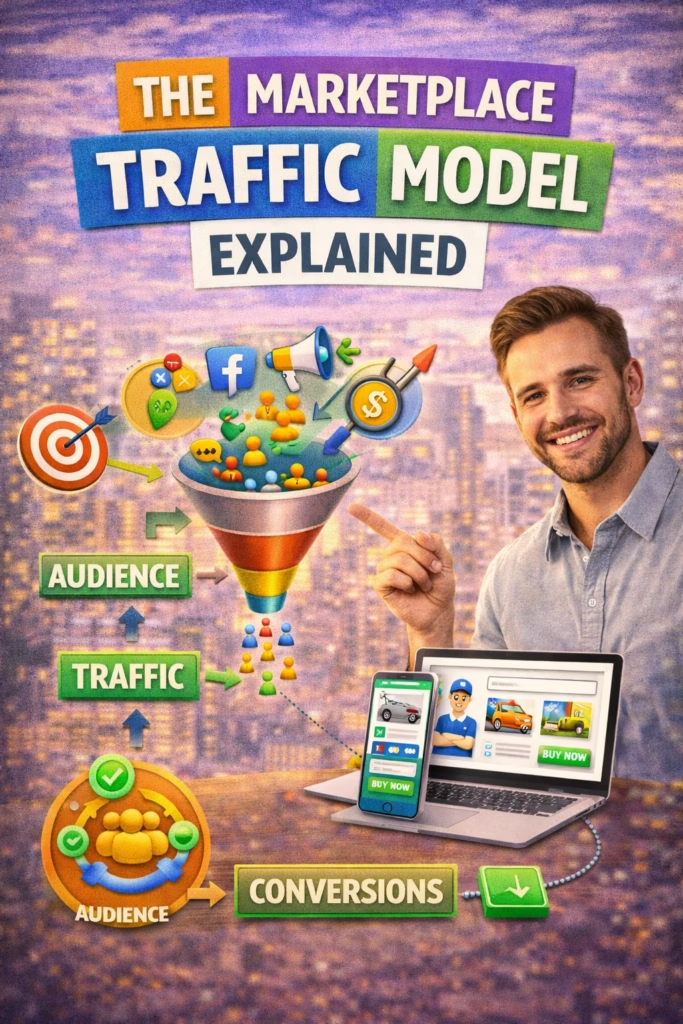
The Marketplace Traffic Model Explained is the blueprint for understanding how listings actually earn attention, convert that attention into clicks, and turn those clicks into conversations, appointments, and sales.
Note: This is general guidance. Follow platform rules, use accurate details and pricing, and avoid spammy duplication or misleading listing practices.
Introduction
The Marketplace Traffic Model Explained matters because many sellers and businesses try to improve results without actually understanding how traffic is created in the first place.
Marketplace traffic is not random. It usually follows a sequence: visibility, click, trust, message, and next step.
That sequence is what creates the difference between a listing that quietly fades out and a listing that keeps producing daily buyer activity. When businesses understand the traffic model, they stop treating low performance like a mystery and start seeing it like a system problem they can actually fix.
A weak listing can fail at several points:
- It does not earn enough visibility
- It gets seen but does not get clicked
- It gets clicked but does not create trust
- It gets messages but does not get qualified responses
- It gets responses but loses momentum due to slow follow-up
Big idea: The Marketplace traffic model is really a buyer movement model. Traffic only matters when it moves people forward.
Expanded Table of Contents
- 1) What the Marketplace traffic model actually is
- 2) The full traffic sequence from impression to conversion
- 3) Visibility: how listings first enter the buyer’s field of view
- 4) Click-through: why the first image and title matter so much
- 5) Trust evaluation: what happens after the click
- 6) Buyer intent and how the traffic model filters serious buyers
- 7) Local relevance and why traffic quality improves with proximity
- 8) Offer framing and pricing inside the traffic model
- 9) Response speed and why it affects traffic efficiency
- 10) Follow-up and how it extends the traffic model after the first message
- 11) Variation and freshness: how listings keep the traffic model alive
- 12) KPI dashboard: how to measure each stage of the traffic model
- 13) 30–60–90 day rollout plan
- 14) 25 Frequently Asked Questions
- 15) 25 Extra Keywords
1) What the Marketplace traffic model actually is
The Marketplace traffic model is the chain of events that turns listing exposure into buyer action. It explains how traffic is created, filtered, and converted.
Basic model
- Listing appears
- Buyer notices it
- Buyer clicks it
- Buyer judges trust and relevance
- Buyer messages or takes action
- Seller qualifies and converts the lead
If any part of this chain is weak, traffic performance drops.
2) The full traffic sequence from impression to conversion
Marketplace traffic should be understood as a full sequence, not just a top-of-funnel event.
| Stage | What happens | Main question |
|---|---|---|
| Impression | Buyer sees the listing | Did the listing get surfaced? |
| Click | Buyer opens the listing | Was the first impression strong enough? |
| Trust | Buyer evaluates legitimacy and fit | Does this feel real and relevant? |
| Inquiry | Buyer messages or asks a question | Does it feel worth contacting? |
| Qualification | Seller filters and guides buyer | Is this a real lead? |
| Conversion | Lead becomes appointment, call, or sale | Did the system capture intent well? |
Rule: Traffic performance is never just about impressions. It is about how efficiently impressions become outcomes.
3) Visibility: how listings first enter the buyer’s field of view
Visibility is the opening stage of the model. A listing must first appear often enough and in the right context to create opportunity.
Visibility is influenced by
- Listing freshness
- Category fit
- Relevance to local buyers
- Buyer engagement patterns
- Overall listing quality signals
No visibility means no traffic. But visibility alone is not the goal.
4) Click-through: why the first image and title matter so much
The click-through stage determines whether a visible listing becomes actual traffic. This is where cover images and titles do most of their work.
Why buyers click
- The image is clear and easy to process
- The title feels relevant and useful
- The listing appears more trustworthy than nearby alternatives
- The offer feels timely or local
Simple title formula
[Offer] + [Primary benefit] + [Local / timing / option cue]Examples
- Queen Mattress – Delivery Available in Rochester
- Exterior Painting – Fast Estimates in Granbury
- Bookshelf – Modern Style + Pickup Today
- Used SUV – Clean Interior + Ready Now
Rule: Traffic starts getting real when visibility turns into clicks.
5) Trust evaluation: what happens after the click
After the click, the buyer quickly asks whether the listing feels real, current, and worth responding to. This is the trust stage of the model.
What builds trust
- Real photos
- Matching title and images
- Clear details
- Believable wording
- Straightforward pricing or offer framing
Trust-first opening hooks
Real photos + clear details ✅Available now — what city/zip are you in?Fast local options available this week.Marketplace traffic becomes valuable only when the click survives the trust check.
6) Buyer intent and how the traffic model filters serious buyers
The traffic model naturally filters buyers as they move through it. Not everyone who sees a listing is serious. Not everyone who clicks is ready. The model reveals who keeps moving.
| Buyer type | Behavior in the model | Business value |
|---|---|---|
| Casual browser | May see or click but not message | Low |
| Interested comparer | Clicks and evaluates trust | Moderate |
| Ready-to-act buyer | Messages quickly and asks direct questions | High |
Rule: Strong listings do not just attract traffic. They attract buyers who keep moving through the model.
7) Local relevance and why traffic quality improves with proximity
Traffic quality improves when listings feel nearby, current, and easy to act on. Local relevance strengthens nearly every stage of the model.
Local relevance cues
- City or service-area wording
- Today / this week / ready now timing
- Pickup, delivery, estimate, or appointment language
- Useful local details for the buyer
Marketplace traffic usually converts better when the offer feels physically and logistically close.
8) Offer framing and pricing inside the traffic model
Pricing and offer framing shape what kind of traffic becomes inquiry traffic. Weak pricing language often causes drop-off after the click.
Good offer framing does this
- Reduces suspicion
- Sets clear expectations
- Filters for more relevant buyers
- Supports perceived value
Avoid: bait-style pricing, vague numbers, or framing that feels misleading after the buyer opens the listing.
Rule: Strong offer framing helps traffic move forward instead of stalling at the trust stage.
9) Response speed and why it affects traffic efficiency
The traffic model does not stop at the inquiry. Response speed is part of traffic efficiency because it determines how much of that buyer intent gets captured.
| Reply speed | Buyer impression | Traffic efficiency effect |
|---|---|---|
| Under 1 minute | Active and reliable | Strong lead capture |
| Under 5 minutes | Still competitive | Good conversion rate |
| 30+ minutes | Momentum fades | More wasted traffic |
| Hours later | Buyer moves on | Weak capture of demand |
Fast-reply template
Yes — available / yes, we can help ✅

What city/zip are you in, and are you looking for today or this week?
Traffic quality is partly created after the message arrives, not only before.
10) Follow-up and how it extends the traffic model after the first message
Follow-up extends the model because not every buyer acts immediately. Many pause, compare, or get distracted. Good follow-up keeps traffic alive longer.
Simple follow-up cadence
- +2–4 hours: quick check-in
- Next day: offer a simple next step
- Day 3–5: final helpful nudge
Follow-up example
Quick check — are you still looking, or should I close this out?
If you want, I can send the fastest option for your area.
Avoid: aggressive chasing. Helpful follow-up keeps trust intact and recovers more of the original traffic value.
11) Variation and freshness: how listings keep the traffic model alive
Variation and freshness help listings keep entering the traffic model with better performance instead of fading out over time.
What to vary
- First image
- Title angle
- Opening line
- Feature emphasis
- Local or timing cue
Core angle library
Ready now, fast delivery, quick scheduling.
Fair pricing, practical choice, budget-friendly.
Real photos, clear details, transparent wording.
Higher-end quality, better finish, stronger experience.
Nearby, convenient, easier to act on.
Rule: The traffic model stays healthier when listings evolve meaningfully instead of repeating clones.
12) KPI dashboard: how to measure each stage of the traffic model
| KPI | What stage it measures | Target direction |
|---|---|---|
| Impressions / visibility | Exposure stage | Up |
| Click-through rate | Click stage | Up |
| Messages per listing | Trust + inquiry stage | Up |
| Median first reply time | Response stage | Down |
| Qualified lead rate | Qualification stage | Up |
| Booked next steps | Conversion stage | Up |
| Recovery rate | Follow-up stage | Up |
The traffic model is easiest to improve when each stage is measured separately instead of lumped together.
13) 30–60–90 day rollout plan
Days 1–30 (Fix the biggest leaks)
- Improve first images and titles
- Tighten the first three lines of listing copy
- Clarify pricing and offer framing
- Deploy fast-reply workflows
- Track clicks, messages, and reply speed
Days 31–60 (Strengthen each stage)
- Test angle variations
- Add stronger local and timing cues
- Improve qualification questions
- Launch follow-up workflows
- Track booked next steps weekly
Days 61–90 (Turn the model into a system)
- Document SOPs for images, titles, copy, and replies
- Scale top-performing listing structures
- Review KPI dashboard weekly
- Optimize around conversion efficiency, not just traffic volume
Rule: The Marketplace traffic model becomes powerful when each stage is intentionally improved instead of left to chance.
14) 25 Frequently Asked Questions
1) What is the Marketplace traffic model?
It is the sequence that moves a buyer from seeing a listing to clicking, trusting, messaging, and converting.
2) Why do some Marketplace listings get more traffic than others?
Because they win attention better, communicate relevance faster, and create more trust.
3) What is the fastest way to improve Marketplace traffic?
Upgrade the first image, simplify the title, tighten the opening lines, and reply faster.
4) Is visibility the same thing as traffic?
No. Visibility is being seen. Traffic begins when the buyer actually clicks.
5) What causes low click-through?
Weak first images, vague titles, or offers that do not feel relevant.
6) What causes low message volume after clicks?
Weak trust signals, poor clarity, or pricing that creates hesitation.
7) Why does trust matter in the traffic model?
Because many buyers decide whether to message based on how safe and real the listing feels.
8) Why does local relevance improve traffic quality?
Because nearby buyers usually feel the offer is easier and faster to act on.
9) How does pricing affect traffic performance?
Pricing shapes trust, perceived value, and the quality of who decides to message.
10) Why is response speed part of the traffic model?
Because traffic value is lost if the lead is not captured while intent is still warm.
11) How fast should businesses reply?
Under 5 minutes is strong; under 1 minute is ideal.
12) Does follow-up matter for traffic performance?
Yes. It helps recover traffic value that would otherwise go cold.
13) What KPI matters most?
Booked next steps, because they connect the whole model to real business outcomes.
14) What is messages per listing?
A measure of how efficiently each listing turns traffic into conversation.
15) What is qualified lead rate?
A measure of how many inquiries are real, relevant, and likely to move forward.
16) Should businesses track click-through separately?
Yes. It helps show whether the first impression stage is working.
17) What is the trust stage?
The point after the click where the buyer judges whether the listing feels legitimate and worth contacting.
18) What is the inquiry stage?
The moment when trust and relevance are strong enough that the buyer sends a message or asks a question.
19) Can service businesses use this model too?
Yes. The same visibility, trust, inquiry, and conversion stages still apply.
20) Why do listings fade over time?
Because freshness and buyer response can weaken unless the listing is improved or varied meaningfully.
21) What is the biggest traffic mistake businesses make?
Judging performance only by impressions instead of by movement through the whole model.
22) How long until improvements show up?
Often within days to weeks after stronger images, titles, and response systems are implemented.
23) Should listings be varied over time?
Yes. Variation helps keep the traffic model healthier and attract different buyer motives.
24) What should a business improve first?
The first image, title clarity, trust signals, and reply speed.
25) Why does the traffic model matter so much?
Because once you understand where buyers are dropping off, you know exactly what to improve next.
15) 25 Extra Keywords
- The Marketplace Traffic Model Explained
- marketplace traffic model
- marketplace traffic explained
- marketplace visibility model
- marketplace buyer flow
- marketplace click through strategy
- marketplace lead generation model
- marketplace trust stage
- marketplace inquiry model
- marketplace conversion stages
- marketplace local relevance
- marketplace pricing strategy
- marketplace response speed
- marketplace follow-up system
- messages per listing KPI
- qualified buyer rate
- booked next steps marketplace
- marketplace performance model
- marketplace click to message flow
- marketplace traffic quality
- 2026 marketplace traffic strategy
- marketplace listing science
- traffic to inquiry marketplace
- repeatable marketplace traffic
- buyer movement model marketplace