
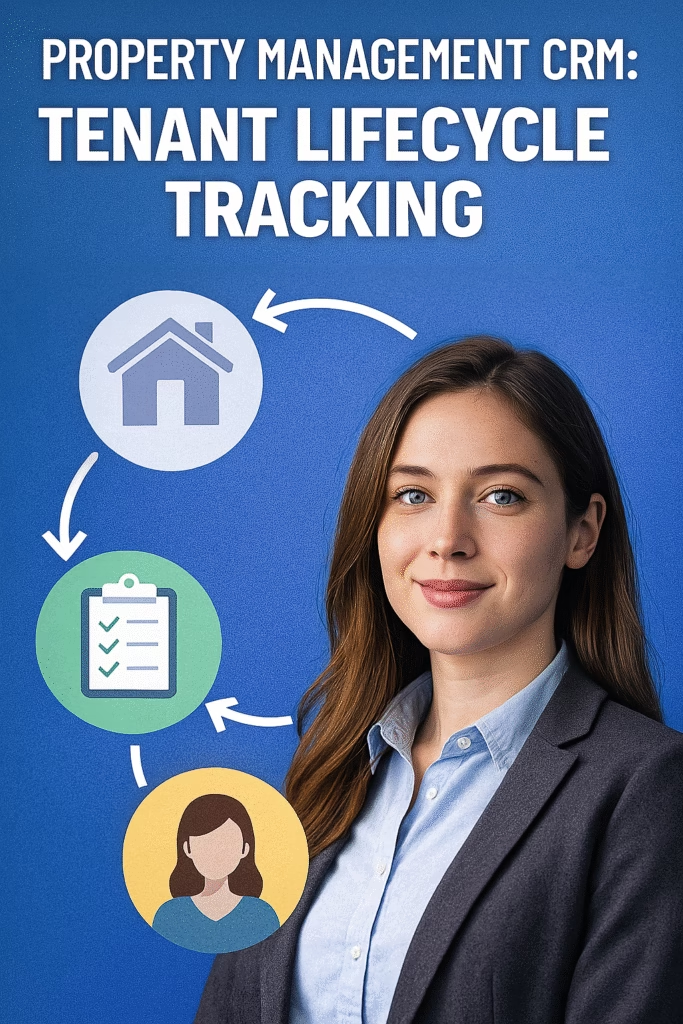
Property Management CRM: Tenant Lifecycle Tracking
Smart automation for every stage from lead → lease → renewal → long-term resident success.
Introduction
Property Management CRM: Tenant Lifecycle Tracking is the new standard for modern property managers who need visibility, automation, and control across the entire tenant journey. Whether you manage 50 doors or 5,000, tracking the lifecycle inside a CRM eliminates bottlenecks, strengthens communication, and reduces vacancy loss.
This guide breaks down what the tenant lifecycle really looks like today — and how CRMs automate each stage for consistency, efficiency, and better renter experience.
Expanded Table of Contents
- 1) Why Property Management CRM: Tenant Lifecycle Tracking Matters
- 2) The 7 Stages of the Tenant Lifecycle
- 3) CRM Benefits for Property Managers
- 4) Core CRM Features for Tenant Lifecycle Tracking
- 5) Automation Workflows That Save Hours
- 6) Tenant Pipeline Examples
- 7) Tracking Data & KPIs
- 8) Impact on Teams & Operations
- 9) Impact on Tenants & Resident Experience
- 10) CRM Integrations (PMS, Phone, Payments)
- 11) Compliance & Fair Housing Considerations
- 12) Mini Case Study: 300-Unit Portfolio
- 13) How to Implement Lifecycle Tracking in Your CRM
- 14) 25 Frequently Asked Questions
- 15) 25 Extra Keywords
1) Why Property Management CRM: Tenant Lifecycle Tracking Matters
The entire rental business depends on consistency. The problem? Traditional property management tools only track tasks — not relationships.
- Leads slip through the cracks.
- Move-in steps vary by manager.
- Residents don't get consistent communication.
- Renewal reminders happen too late.
Property Management CRM: Tenant Lifecycle Tracking fixes all of that by putting every stage into one structured system.
2) The 7 Stages of the Tenant Lifecycle
1. Lead
Inquiry, tour scheduling, pre-screening.
2. Applicant
Screening, forms, fees, approvals.
3. Move-In
Deposits, inspections, welcome packet.
4. Active Tenant
Payments, communication, expectations.
5. Maintenance
Requests, work orders, follow-up.
6. Renewal
Offers, reminders, pricing strategy.
7. Move-Out
Notice, inspection, deposit return.
3) CRM Benefits for Property Managers
Property Management CRM: Tenant Lifecycle Tracking consolidates your operations into a single predictable system.
- Reduce vacancy gaps.
- Standardize communication.
- Automate repetitive admin tasks.
- Track every lead and tenant in one place.
- Improve response times across all channels.
4) Core CRM Features for Tenant Lifecycle Tracking
Automation Tools
- Auto-responses
- Reminders
- Scheduled messages
- Document delivery
Tracking Tools
- Pipeline stages
- Task assignments
- Notes & logs
- KPI dashboards
5) Automation Workflows That Save Hours
Workflow: Lead → Applicant
Trigger: New inquiry
Actions:
• Send info packet
• Share tour booking link
• Add to CRM pipeline

Workflow: Renewal Reminder
Trigger: 90 days before lease ends
Actions:
• Email + SMS reminder
• Send renewal offer
• Notify manager
6) Tenant Pipeline Examples
| Stage | Description |
|---|---|
| Lead | Initial contact, pre-screening. |
| Tour | Scheduled, confirmed, completed. |
| Applicant | Forms + approval workflow. |
| Move-In | Inspection, deposits, onboarding. |
| Active Tenant | Payments + service requests. |
| Renewal | Notifications and acceptance. |
| Move-Out | Final inspections and turnover. |
7) Tracking Data & KPIs
Top metrics for Property Management CRM: Tenant Lifecycle Tracking include:
- Lead-to-lease conversion rate
- Tour show-up rate
- Response time across channels
- Maintenance resolution time
- Renewal acceptance rate
- Average days vacant
8) Impact on Teams & Operations
- Fewer manual tasks
- Better communication consistency
- Workload distributed more evenly
- Clear accountability & task visibility
9) Impact on Tenants & Resident Experience
Residents love structured workflows:
- Faster maintenance response
- Clear move-in instructions
- Transparent renewal process
- Consistent communication
10) CRM Integrations
- Property management software (AppFolio, Yardi, Buildium)
- Phone/SMS systems
- Email platforms
- Accounting tools
- Document storage
11) Compliance & Fair Housing
All automations must follow fair housing law:
- Equal communication scripts
- No discriminatory filtering
- Transparent documentation
12) Mini Case Study: 300-Unit Portfolio
- Response time improved from 4 hours → under 5 minutes
- Renewal acceptance rose 22%
- Maintenance resolution improved by 30%
- Vacancy loss decreased by $23,000 annually
13) How to Implement Property Management CRM: Tenant Lifecycle Tracking
- Map current workflow
- Choose your CRM
- Set up pipeline stages
- Automate your top communication tasks
- Integrate PMS + phone system
- Train staff + refine monthly
14) 25 Frequently Asked Questions
1) What is Property Management CRM: Tenant Lifecycle Tracking?
It’s the process of tracking every stage of a tenant’s journey using CRM systems and automation.
2) Do small landlords need a CRM?
Yes — even 20–50 units benefit massively.
3) What stages does the tenant lifecycle include?
Lead, applicant, move-in, tenant, maintenance, renewal, move-out.
4) What CRM features matter most?
Pipelines, automation, templates, notes, reminders.
5) How does a CRM reduce vacancy?
By ensuring no lead or renewal falls through the cracks.
6) Can CRMs automate maintenance?
Yes — request intake, assignment, and follow-up.
7) What metrics should I track?
Response time, conversion rate, vacancy days.
8) Can I integrate PMS software?
Yes, many CRMs sync with Yardi, Buildium, and AppFolio.
9) Do tenants notice automation?
Usually only the speed — which they appreciate.
10) Can CRM workflows improve renewals?
Yes — automated renewal reminders boost acceptance.
11) Is CRM communication secure?
Most platforms use encrypted messaging.
12) Should I automate after-hours messages?
Absolutely — it prevents lost leads.
13) Can a CRM send rent reminders?
Yes, many do automatically.
14) How do CRMs help teams?
They reduce manual workload and unify information.
15) What about fair housing?
Use pre-approved scripts and equal responses.
16) Can a CRM help during evictions?
It tracks notices, communication, and dates.
17) What is the setup time?
2–4 weeks for most portfolios.
18) How do I train staff?
Create SOP videos and weekly reviews.
19) Are CRMs expensive?
Prices range from free → $20/door depending on scale.
20) Can owners access the CRM?
Yes, through limited permission portals.
21) Do CRMs replace PMS platforms?
No — they complement them.
22) Can I automate tour scheduling?
Yes — CRMs integrate with calendar booking tools.
23) Does CRM tracking help with reporting?
It improves visibility into bottlenecks and KPIs.
24) How often should I update workflows?
Every quarter or when laws change.
25) What’s the first step?
Map your lifecycle and choose a CRM with pipeline stages.
15) 25 Extra Keywords
- Property Management CRM: Tenant Lifecycle Tracking
- tenant lifecycle CRM
- property management pipeline stages
- CRM for landlords
- rental management automation
- tenant onboarding workflow
- CRM for multifamily properties
- rental renewal reminder automation
- maintenance CRM workflow
- renter communication automation
- automated rent reminders
- property manager CRM dashboard
- tenant tracking software
- rental CRM pipeline
- lease renewal workflow
- CRM for real estate investors
- move-out inspection tracking
- renter lifecycle automation
- property management digital tools
- tenant CRM templates
- automated move-in checklists
- property management reporting CRM
- rental workflow optimization
- tenant experience automation
- property management CRM 2025