

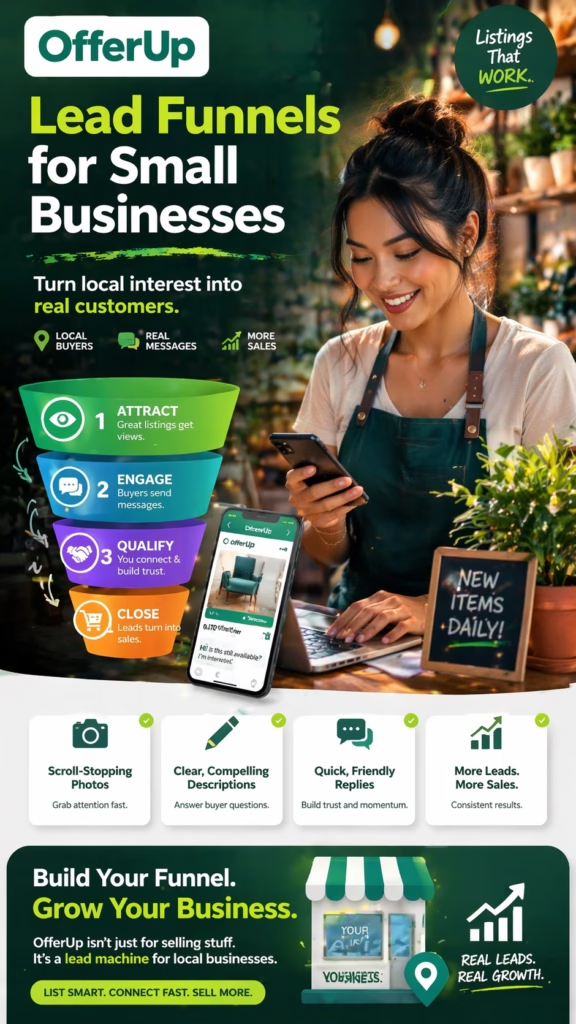
OfferUp Lead Funnels for Small Businesses
OfferUp Lead Funnels for Small Businesses explains how small businesses build repeatable buyer funnels on OfferUp through stronger titles, better photos, clearer descriptions, practical pricing, trust signals, faster response, and organized follow-up.
Introduction
OfferUp Lead Funnels for Small Businesses is one of the most practical topics for companies trying to turn marketplace traffic into something more reliable than random messages. Many small businesses post products on OfferUp and hope buyers appear. Sometimes they do. Sometimes they do not. That inconsistency often happens because the business is posting listings without building a funnel around them.
A funnel matters because small businesses need more than visibility. They need a process that helps the right local buyer notice the listing, trust the offer, understand the value, send a message, and keep moving toward a decision. On OfferUp, those steps happen fast. If any stage is weak, the buyer drops out. That is why a stronger funnel creates stronger results. It improves not just how many people see the listing, but how many people keep moving through the next step.
OfferUp works better for small businesses when listings are treated as part of a funnel, not just isolated posts.
This matters especially for small businesses because time and efficiency matter more. A company with limited staff and limited attention cannot afford to waste energy on weak traffic, unclear conversations, or sloppy follow-up. Stronger funnels help filter for better local buyers and create more organized marketplace activity.
For mattress stores, furniture sellers, appliance businesses, electronics sellers, home goods retailers, wellness brands, equipment dealers, and many other product-based small businesses, OfferUp can still be a valuable lead source. But the businesses that benefit most usually build a repeatable process around their listings. They improve the first impression, the value presentation, the trust signals, the reply speed, and the follow-up path together.
Main idea: Small businesses build better OfferUp lead funnels by improving every step of the buyer journey from first view to first message to next action.
Table of Contents
- 1) What an OfferUp lead funnel actually is
- 2) Why small businesses need a funnel instead of random posting
- 3) The main stages of an OfferUp funnel
- 4) Titles that improve top-of-funnel attention
- 5) Photos that improve middle-of-funnel trust
- 6) Listing structure that supports buyer movement
- 7) Pricing clarity and funnel progression
- 8) Trust signals that reduce funnel drop-off
- 9) Local relevance and practical buyer behavior
- 10) Calls to action that improve conversion
- 11) Fast response and keeping the funnel alive
- 12) Follow-up and recovering warm leads
- 13) Common mistakes that break OfferUp funnels
- 14) A practical OfferUp funnel workflow
- 15) Final thoughts
- 16) FAQs
- 17) Extra keywords
1) What an OfferUp Lead Funnel Actually Is
An OfferUp lead funnel is a structured path that moves a local buyer from first impression to inquiry to a stronger sales opportunity. It starts with discovery, then continues through evaluation, trust, response, and follow-up. The idea is simple: instead of treating a listing as the final step, the business treats the listing as the entrance to a buyer journey.
This is important because many small businesses think the funnel begins only when someone sends a message. In reality, the funnel begins much earlier. It begins when the buyer first notices the title and image. By the time the message arrives, much of the funnel work has already happened.
An OfferUp funnel begins before the message and continues after the message.
Once that becomes clear, businesses can start improving the whole path instead of focusing only on one isolated part.
2) Why Small Businesses Need a Funnel Instead of Random Posting
Small businesses need a funnel because random posting usually creates random results. One week may bring strong activity while the next week feels quiet, even though the products are similar. Without a funnel, the business has no clear process for improving what happens between view and sale.
A funnel helps because it gives the business a way to strengthen the buyer journey on purpose. That means improving titles to attract better clicks, improving photos to create more trust, improving descriptions to reduce confusion, improving calls to action to increase replies, and improving follow-up to recover warm leads that do not close immediately.
A funnel helps small businesses improve:
- Listing attention
- Buyer trust
- Inquiry quality
- Response efficiency
- Sales opportunity flow
That is why a funnel is not just a marketing idea. It is an operating system for better marketplace performance.
3) The Main Stages of an OfferUp Funnel
A useful OfferUp funnel usually has a few simple stages. First, the buyer notices the listing. Then they open it. Then they evaluate whether the offer feels real, relevant, and worth messaging about. If enough confidence is created, they send a message. If the business handles that message well, the conversation becomes a stronger sales opportunity.
Notice the title and image
Open the listing
Evaluate trust and value
Send a message
Continue the conversation
Move toward pickup, delivery, or purchase
Each stage matters because each stage can lose the buyer. A weak title loses the click. Weak photos lose trust. A vague description loses clarity. A slow reply loses momentum. Better funnels reduce those losses.
Small businesses get better OfferUp results when they strengthen the full sequence instead of only trying to increase views.
4) Titles That Improve Top-of-Funnel Attention
The title sits near the top of the funnel because it helps decide whether the right buyer enters at all. Strong titles create stronger first impressions and tend to attract more relevant local clicks. Weak titles often create low-quality traffic or no traffic at all.
A strong title often follows this structure:
[Product] + [Important Detail] + [Useful Buyer Hook]Examples:
- Queen Mattress Set – Local Delivery Available
- Sectional Sofa – Clean Condition and Fast Pickup
- Dining Table Set – Solid Wood and Great Shape
- Adjustable Bed Base – Ready This Week
- Wellness Device – Excellent Condition
These titles work because they help the local buyer understand the offer quickly. That clarity improves the kind of traffic entering the funnel from the start.
Weak top-of-funnel titles often create weak results because they do not attract the right buyers clearly enough.
5) Photos That Improve Middle-of-Funnel Trust
Once the buyer enters the funnel, photos play a major role in whether they keep moving. Buyers often judge condition, legitimacy, and seriousness very quickly from the visual presentation. That means photos do more than support the listing. They actively shape the trust stage of the funnel.
Good photos help show:
- The item is real
- The condition is visible
- The seller feels legitimate
- The product is current
- The offer is worth evaluating seriously
Better photos strengthen the middle of the funnel by reducing doubt before the buyer decides whether to reach out.
For many small businesses, improving photos is one of the fastest ways to reduce funnel drop-off.
6) Listing Structure That Supports Buyer Movement
A funnel only works well if the listing structure makes it easy for the buyer to continue. Most OfferUp buyers scan quickly. They want to understand the item, the condition, the value, and the next step without extra effort. A clear structure supports that movement.
A funnel-friendly listing usually includes:
- A clear opening summary
- Main product details
- Condition or useful specifications
- Pickup or delivery information
- A direct next step
This matters because confusion causes buyers to leave the funnel early. Clarity helps them keep moving toward action.
Better structure supports a stronger funnel by turning interest into practical understanding quickly.
7) Pricing Clarity and Funnel Progression
Pricing affects whether the buyer continues through the funnel or stops. A confusing, unrealistic, or misleading price often creates shallow clicks but weakens real intent. A clearer price usually attracts buyers who are more practical and more serious about the actual offer.
This does not always mean low prices are best. It means the value should make sense. Strong value positioning may come from condition, convenience, bundle value, delivery options, or local availability. The buyer should be able to understand why the number shown deserves attention.
The funnel progresses better when the price feels realistic enough to support a real next step.
That is why price and listing quality should support the same story rather than working against each other.
8) Trust Signals That Reduce Funnel Drop-Off
Trust is one of the biggest reasons buyers either keep moving through the funnel or leave. Small businesses often win on OfferUp when they look more legitimate, clearer, and easier to work with than nearby alternatives. That is why trust signals matter so much.
Important trust signals include:
- Clear and honest wording
- Real photos
- Reasonable pricing
- Useful product details
- Local availability information
- Professional communication tone
These signals help because they reduce the buyer’s need to guess. The safer and more credible the listing feels, the less likely the funnel is to break.
Trust keeps more buyers inside the funnel long enough to become real inquiries.
9) Local Relevance and Practical Buyer Behavior
OfferUp funnels work best when the offer feels clearly local and easy to act on. Buyers often want nearby options that feel practical, current, and convenient. A listing that feels grounded in the local market often creates better progression because the buyer can imagine the transaction more easily.
Local relevance can show up through pickup details, delivery options, city-based wording, and general accessibility. These details make the funnel feel more realistic because they connect the online listing to an actual local buying situation.
Buyers move farther through the funnel when the offer feels easy to act on in real life, not just interesting on the screen.
This is one reason local context is such a powerful part of OfferUp funnel design.
10) Calls to Action That Improve Conversion
Even a strong listing can stall if the next step is unclear. A funnel needs an easy transition from interest to response. A direct call to action makes that transition more natural and helps the buyer keep moving.
Examples of useful calls to action include:
Message now for availability.
Reach out for pickup or delivery details.
Send a message today if you want pricing or scheduling info.
This works because it removes ambiguity. The buyer knows exactly what kind of action is expected and acceptable.
If the call to action is weak, the funnel can lose buyers even when the listing itself is strong.
11) Fast Response and Keeping the Funnel Alive
Once the buyer enters the conversation stage, speed matters. Many local buyers compare multiple sellers within a short time. That means the business has to protect the momentum it worked to create. A delayed response can break the funnel even if everything before it was strong.
Thanks for reaching out.
Yes, this is available.
Would you like pickup details, delivery info, or more product information?
This kind of message works because it is simple, clear, and easy to continue. It keeps the buyer moving while the intent is still warm.
Fast response strengthens the funnel because it reduces drop-off at one of the most important stages.
12) Follow-Up and Recovering Warm Leads
Not every buyer finishes the funnel the first time. Some compare alternatives, pause, or get distracted. That is why follow-up is part of a real OfferUp funnel. Without follow-up, many warm leads disappear even though they were serious enough to reach out.
Follow-up helps:
- Recover warm buyer interest
- Restart paused conversations
- Clarify unanswered questions
- Increase value from existing traffic
This matters because some of the best opportunities are not brand-new. They are buyers who were already in the funnel and only needed one more touch to keep moving.
OfferUp funnels perform better when they include a simple system for recovering unfinished conversations.
13) Common Mistakes That Break OfferUp Funnels
Most weak OfferUp funnels break for predictable reasons. Small businesses often post generic listings, use poor photos, set unclear prices, or respond too slowly. Then they conclude the platform is inconsistent when the real issue is that the buyer path is breaking too early.
Common mistakes include:
- Generic titles
- Low-quality photos
- Weak descriptions
- Confusing pricing
- Poor trust signals
- Weak calls to action
- Slow follow-up
Each of these weak points creates extra drop-off. Fixing them usually improves the funnel faster than simply trying to generate more raw traffic.
Big mistake: trying to get more views before fixing the parts of the funnel that are losing the buyers already arriving.
14) A Practical OfferUp Funnel Workflow
If a business wants to apply OfferUp Lead Funnels for Small Businesses in a practical way, the simplest path is to follow a repeatable workflow.
Step 1: Choose products with strong local demand
Step 2: Write titles that attract the right buyers
Step 3: Use real photos that build trust fast
Step 4: Create a clear, easy-to-scan description
Step 5: Position price and value clearly
Step 6: Add a direct call to action
Step 7: Reply quickly to every serious message
Step 8: Follow up on warm leads that pause
This workflow works because it strengthens every step of the path from view to inquiry to next action. It turns OfferUp into a more organized local sales channel instead of a random listing board.
Small businesses build stronger OfferUp funnels when they improve the full buyer path instead of focusing on only one stage.
15) Final Thoughts
OfferUp Lead Funnels for Small Businesses comes down to one central idea: better marketplace results come from better buyer movement. OfferUp can still create strong local opportunities, but only when the business makes it easy for the buyer to move from first impression to first inquiry to a real next step.
The small businesses that perform best usually follow the same broad pattern. They use stronger titles. They show better photos. They explain the value clearly. They build trust quickly. They make the next step easy. They reply fast. And they follow up well. That is what turns scattered marketplace attention into a funnel that produces more repeatable local results.
Final takeaway: Small businesses build OfferUp lead funnels by creating a repeatable path that helps local buyers notice the offer, trust the listing, send a message, and keep moving toward a purchase.
16) FAQs
1) What are OfferUp lead funnels for small businesses?
They are repeatable systems that guide local buyers from viewing a listing to messaging and moving toward a real purchase.
2) How do small businesses build a lead funnel on OfferUp?
They build it by improving visibility, trust, clarity, response speed, and follow-up across the full buyer path.
3) Why does OfferUp need a funnel instead of just listings?
Because listings alone do not guarantee conversion. A funnel helps turn views into inquiries and inquiries into stronger sales opportunities.
4) What types of small businesses can use OfferUp lead funnels?
Mattress stores, furniture sellers, appliance businesses, electronics sellers, home goods retailers, wellness brands, equipment dealers, and many other local product-based small businesses can use them effectively.
5) What is the biggest mistake small businesses make?
One of the biggest mistakes is posting products without improving the path from first view to first message to next action.
6) Do titles matter for the funnel?
Yes. Titles affect who enters the funnel and whether the traffic is relevant enough to matter.
7) Why are photos so important?
Because photos influence trust, product perception, and whether the buyer keeps moving through the funnel.
8) Does listing structure affect funnel performance?
Yes. Clear structure helps buyers understand the offer and the next step more easily.
9) Why does pricing matter in the funnel?
Because pricing affects value perception and trust, which strongly influence whether the buyer continues.
10) What role do trust signals play?
They reduce hesitation and help more buyers stay in the funnel long enough to become real inquiries.
11) How important is local relevance?
Very important. Buyers often move faster when the listing feels practical, nearby, and easy to act on.
12) Why are calls to action useful?
Because they make the next step clear and improve the chance that interested buyers actually respond.
13) Does response speed matter that much?
Yes. Slow replies can cause the business to lose strong buyers to faster sellers.
14) Why is follow-up part of the funnel?
Because not every buyer moves immediately, and some of the best results come from recovering paused conversations.
15) Can OfferUp still work for small businesses?
Yes. Many small businesses still generate strong local buyer activity on OfferUp with better listings and better handling.
16) What usually breaks an OfferUp funnel?
Weak titles, poor photos, unclear pricing, vague descriptions, poor trust signals, and slow follow-up often break it.
17) Should every listing use the same exact wording?
No. The structure can stay strong, but the wording should fit the product and the local market.
18) Can smaller businesses compete well on OfferUp?
Yes. Smaller businesses often compete very well when they are clearer, faster, and more trustworthy than nearby alternatives.
19) What should businesses measure?
They should track views, messages, response speed, buyer quality, funnel drop-off points, and sales outcomes.
20) Is more traffic always better?
No. Better funnel conversion often matters more than more raw traffic.
21) Can better photos alone improve funnel results?
Yes. Better photos often improve both trust and buyer quality immediately.
22) Why do some listings get views but no good inquiries?
Often because they do not create enough trust, value clarity, or practical relevance for serious buyers to continue.
23) What is the main purpose of an OfferUp funnel?
The main purpose is to create a structured path that turns local buyer attention into repeatable sales opportunities.
24) Is OfferUp success more about traffic or process?
It is about both, but process usually determines whether the traffic becomes useful results.
25) What is the core principle behind OfferUp lead funnels?
The core principle is that better outcomes come from better buyer movement across every stage of the local marketplace journey.
17) Extra Keywords
- OfferUp Lead Funnels for Small Businesses
- OfferUp lead funnels
- OfferUp lead generation
- OfferUp marketing
- local business leads
- OfferUp local buyers
- OfferUp sales funnels
- OfferUp better titles
- OfferUp better photos
- OfferUp pricing strategy
- OfferUp trust signals
- OfferUp buyer funnel
- OfferUp local conversion
- OfferUp listing optimization
- OfferUp marketplace leads
- OfferUp buyer messages
- OfferUp follow-up system
- OfferUp listing workflow
- OfferUp recurring local leads
- OfferUp local business growth
- OfferUp sales opportunities
- OfferUp local demand
- OfferUp small business marketing
- OfferUp inquiry funnel
- OfferUp local sales process













