
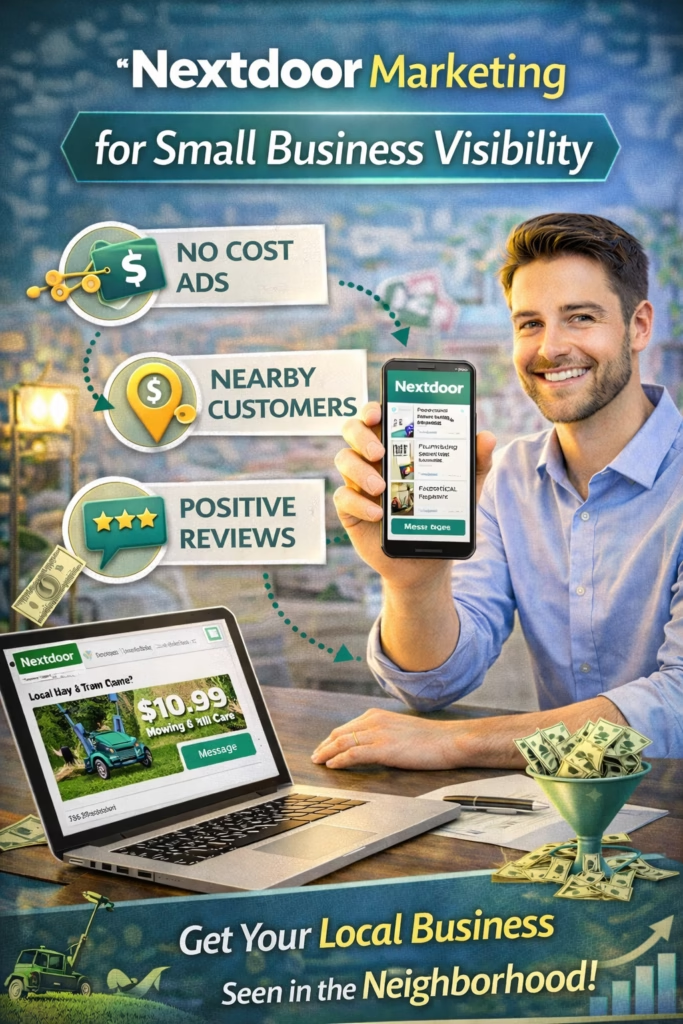
Nextdoor Marketing for Small Business Visibility
Nextdoor Marketing for Small Business Visibility explains how small businesses use neighborhood-based marketing, local trust, stronger profiles, helpful content, and community relevance to improve visibility and attract more nearby inquiries.
Introduction
Nextdoor Marketing for Small Business Visibility is one of the most practical topics for small businesses that depend on nearby customers. Many local businesses spend time thinking about Google, Facebook, or traditional ads, but overlook platforms built specifically around neighborhoods and community trust. That is where Nextdoor becomes valuable. It is not just another social platform. It is a place where people often look for local recommendations, trusted service providers, and businesses that feel close, relevant, and safe to hire.
That neighborhood-based structure changes the marketing dynamic. On many platforms, businesses are competing for broad attention. On Nextdoor, the attention is much more local. A small business does not need to reach everyone. It needs to reach the right nearby people. That is why visibility on Nextdoor can be especially useful. When done well, it puts a business in front of local residents who are already primed to care about convenience, trust, reputation, and recommendations from people nearby.
Nextdoor marketing works best when a small business feels local, helpful, trustworthy, and relevant to the neighborhood conversation.
This matters because local visibility is not just about being seen. It is about being remembered, recommended, and contacted. A small business may have excellent service, but if nearby residents do not think of it when they need help, the opportunity is lost. Nextdoor helps fill that gap by giving businesses a more neighborhood-centered place to build familiarity and trust.
For painters, cleaners, landscapers, handymen, movers, junk removal companies, pest control providers, roofers, wellness professionals, pet services, local retail stores, and many other community-based businesses, Nextdoor can become a strong visibility channel. But the businesses that benefit most usually understand one important thing: visibility on Nextdoor is earned through trust and usefulness, not just promotion.
Main idea: Nextdoor marketing helps small businesses improve visibility when they combine local trust, neighborhood relevance, helpful messaging, and strong response handling.
Table of Contents
- 1) What Nextdoor marketing means for small businesses
- 2) Why neighborhood visibility matters so much
- 3) How local trust shapes Nextdoor marketing
- 4) Building a stronger business presence on Nextdoor
- 5) Profile details that improve visibility
- 6) Content and posting strategies that feel neighborhood-friendly
- 7) Recommendations and why they matter for visibility
- 8) Local relevance and community connection
- 9) Calls to action that create more inquiries
- 10) Fast response and turning attention into leads
- 11) Follow-up and long-term community lead flow
- 12) Common Nextdoor mistakes small businesses make
- 13) A practical Nextdoor marketing workflow
- 14) Why consistency matters on Nextdoor
- 15) Final thoughts
- 16) FAQs
- 17) Extra keywords
1) What Nextdoor Marketing Means for Small Businesses
Nextdoor marketing for small businesses means using the platform intentionally to create neighborhood visibility and local trust. It is not simply about dropping promotions into a feed. It is about shaping how nearby residents see the business, how often they notice it, and whether they feel comfortable contacting or recommending it.
This is especially important for smaller companies because they often rely on proximity and word-of-mouth. A national brand can buy broad exposure. A small business usually wins by becoming familiar within a local area. Nextdoor helps make that possible by putting visibility inside a neighborhood context instead of a generic social one.
For small businesses, Nextdoor marketing is really about becoming visible in the places where local trust is formed.
That visibility becomes more valuable when it leads to inquiries, recommendations, and repeat neighborhood awareness over time.
2) Why Neighborhood Visibility Matters So Much
Neighborhood visibility matters because small business demand is often local by nature. A homeowner usually wants a nearby cleaner, not someone an hour away. A resident looking for a handyman or painter wants someone who feels accessible and familiar to the area. A local shop benefits when nearby residents remember it instead of driving past it or choosing a larger competitor.
Neighborhood visibility helps small businesses by improving:
- Brand familiarity in nearby areas
- Local trust and comfort
- Referral and recommendation potential
- Lead flow from nearby residents
- Repeat local recognition over time
That is why small business visibility on Nextdoor can have practical value even before a person becomes a lead. Familiarity makes future action more likely.
Small businesses grow faster locally when more nearby people know they exist and trust what they do.
3) How Local Trust Shapes Nextdoor Marketing
Trust is one of the biggest reasons Nextdoor can work well for small businesses. The platform is built around neighborhoods, recommendations, and local conversation. That means people are often not just asking who is available. They are asking who feels safe, dependable, and known by the community.
This creates a different kind of marketing environment. On some platforms, loud promotion can capture attention. On Nextdoor, trust usually matters more. Businesses that feel helpful, established, responsive, and community-aware often perform better than businesses that simply sound salesy.
Seen by neighbors
Recognized as local
Perceived as trustworthy
Recommended or contacted
Becomes a lead or customer
Without trust, Nextdoor visibility often stays passive and does not turn into real local lead flow.
4) Building a Stronger Business Presence on Nextdoor
A strong presence on Nextdoor begins with how the business appears overall. Residents want to understand who the business is, what it does, and why it belongs in the local conversation. That means the presence should feel complete, clear, and consistent with the kind of trust people expect from neighborhood-based decisions.
Small businesses should think of their Nextdoor presence as a neighborhood storefront. It may be digital, but it still gives people a first impression. If the presence feels thin, generic, or incomplete, visibility may not lead very far. If it feels local and established, interest becomes easier to convert.
Nextdoor visibility improves when the business presence feels like a real part of the local community, not just another advertiser.
5) Profile Details That Improve Visibility
Profile details matter because they help local residents quickly understand what the business offers and whether it is relevant to them. Strong profile details support both visibility and trust. A better profile makes the business easier to discover, easier to understand, and easier to contact.
Strong business profile details often include:
- A clear business name
- A useful business description
- Specific services or product categories
- Service area or neighborhood relevance
- Reliable contact information
- Professional imagery or branding
These details matter because they reduce uncertainty. A resident should not have to guess what the business does or whether it serves the area.
Better profile details improve Nextdoor marketing by making the business easier for nearby residents to notice and trust.
6) Content and Posting Strategies That Feel Neighborhood-Friendly
On Nextdoor, content often works best when it feels useful, local, and neighbor-aware. Overly aggressive promotion can create resistance. Helpful, relevant, and community-friendly posting tends to perform better because it fits the platform’s culture more naturally.
That does not mean businesses should avoid marketing. It means the marketing should feel grounded in local usefulness. A home service company may share helpful seasonal reminders. A neighborhood retailer may mention local availability or community-friendly offers. A service provider may post simple, clear updates that make the business feel active and approachable.
Nextdoor content works better when it feels like a useful local contribution instead of a one-way sales pitch.
That tone helps protect credibility while still building visibility.
7) Recommendations and Why They Matter for Visibility
Recommendations are especially powerful on Nextdoor because they reinforce trust within the neighborhood context. When residents see that other nearby people have positive experiences with a business, visibility becomes more meaningful. The business is no longer just visible. It becomes socially validated.
For many small businesses, recommendations help bridge the gap between awareness and inquiry. A resident may see the business multiple times, but the recommendation is what gives them confidence to act.
Recommendations improve small business visibility because they turn neighborhood recognition into neighborhood trust.
This is one of the reasons businesses that earn and manage local recommendations often get more durable value from the platform.
8) Local Relevance and Community Connection
Local relevance is one of the strongest drivers of small business visibility on Nextdoor. The more connected the business feels to the area, the more likely residents are to notice it, remember it, and feel comfortable contacting it. That connection can be built through language, service area details, neighborhood references, seasonal relevance, and the overall tone of the business presence.
Community connection matters because people often prefer businesses that feel close to their own daily reality. A company that understands local routines, local timing, and neighborhood concerns usually feels easier to trust than one that sounds generic.
Visibility improves when the business feels like it belongs to the same neighborhood world as the people seeing it.
9) Calls to Action That Create More Inquiries
Even on a trust-based platform like Nextdoor, people still need a clear next step. A call to action helps move visibility into action without feeling overly pushy. It should feel natural, direct, and helpful.
Examples:
Message us if you need help this week.
Reach out for local availability.
Contact us for a quick quote.
Send a message if you would like more details.
These work because they make it easy for the resident to start the conversation. The business is visible, the offer is clear, and the next step feels simple.
Visibility is often wasted when a business becomes familiar but never clearly invites the local resident to take action.
10) Fast Response and Turning Attention Into Leads
Once neighborhood visibility turns into a message or inquiry, response speed matters. Residents may compare options quickly, and local trust can fade if the business feels unavailable or disorganized. A fast, helpful reply keeps the opportunity alive.
Thanks for reaching out.
Yes, we serve your area.
Would you like a quick quote or availability details?

Thanks for your message.
We can help with that.
Send us a few details and we can give you the next step.
These responses work because they are simple, clear, and easy to continue. They respect the community-based tone while still moving toward business action.
Nextdoor visibility creates more value when businesses respond quickly enough to turn local interest into real conversations.
11) Follow-Up and Long-Term Community Lead Flow
Not every inquiry will turn into a customer right away. Some residents compare options. Some get distracted. Some save the business in mind for later. That is why follow-up and consistency both matter. They help transform one-time visibility into long-term community lead flow.
Follow-up can help:
- Recover warm neighborhood leads
- Restart paused conversations
- Clarify open questions
- Increase value from existing attention
In a neighborhood platform, familiarity compounds over time. A resident may not act on the first moment of visibility, but repeated helpful visibility and good follow-up make future action more likely.
Nextdoor becomes more valuable when businesses think beyond one post and build ongoing neighborhood familiarity.
12) Common Nextdoor Mistakes Small Businesses Make
Many businesses reduce their own visibility potential by approaching Nextdoor the wrong way. They post like it is a generic ad feed. They ignore profile quality. They sound overly promotional. They fail to respond quickly. Or they make the business feel disconnected from the local community.
Common mistakes include:
- Using a weak or incomplete profile
- Posting with no neighborhood relevance
- Being too promotional too often
- Ignoring the importance of recommendations
- Using unclear calls to action
- Responding too slowly to inquiries
- Failing to build consistency over time
These mistakes weaken visibility because they make the business easier to overlook or harder to trust.
Big mistake: treating Nextdoor like a simple ad platform instead of a community-trust platform where local familiarity matters.
13) A Practical Nextdoor Marketing Workflow
If a small business wants to apply Nextdoor Marketing for Small Business Visibility in a practical way, it helps to follow a clear workflow.
Step 1: Build a complete and trustworthy business presence
Step 2: Clarify services, products, and local relevance
Step 3: Use neighborhood-friendly messaging
Step 4: Share useful and locally relevant content
Step 5: Encourage and build recommendations
Step 6: Add clear calls to action
Step 7: Respond quickly to every serious inquiry
Step 8: Follow up and stay consistently visible
This workflow works because it supports both visibility and lead flow. It helps the business become known, trusted, and easier to contact within the local area.
Small businesses get more from Nextdoor when they build a steady neighborhood presence instead of relying on one-off promotion.
14) Why Consistency Matters on Nextdoor
Consistency matters because trust usually grows through repetition. A resident may not contact the business the first time they see it. But if they continue to notice it in a positive, relevant way, familiarity increases. Familiarity often becomes trust, and trust often becomes action later.
This is why Nextdoor marketing should be viewed as a visibility system rather than a one-time campaign. Small businesses that stay active, helpful, and locally relevant are usually better positioned when a neighborhood need appears.
Consistency strengthens small business visibility because it helps the business stay present in local memory, not just local feeds.
15) Final Thoughts
Nextdoor Marketing for Small Business Visibility comes down to one central idea: neighborhood trust creates neighborhood opportunity. Small businesses do not need to dominate every platform to grow locally. They need to be visible in the right places, to the right nearby people, in a way that feels familiar and credible. That is where Nextdoor can help.
The businesses that usually perform best on Nextdoor follow a simple pattern. They build stronger profiles. They stay locally relevant. They post in a helpful way. They support visibility with recommendations and trust. They invite contact clearly. Then they respond fast and follow up well. Together, those actions turn neighborhood attention into real visibility gains and real business opportunities.
Final takeaway: Nextdoor marketing improves small business visibility when the business feels locally relevant, community-trusted, and easy for nearby residents to contact.
16) FAQs
1) What is Nextdoor marketing for small business visibility?
It is the process of using Nextdoor to increase neighborhood visibility, build trust, and attract nearby inquiries for a small business.
2) Why does Nextdoor help small businesses with visibility?
Because it is built around neighborhoods and local trust, which makes it useful for businesses that depend on nearby customers.
3) Can Nextdoor generate leads for small businesses?
Yes. It can generate leads when the business profile is strong, the messaging is local and helpful, and inquiries are handled well.
4) What types of businesses can benefit from Nextdoor?
Home services, local retail, pet services, wellness providers, cleaners, painters, landscapers, movers, and many other neighborhood-focused businesses.
5) What is the biggest mistake businesses make on Nextdoor?
One of the biggest mistakes is sounding overly promotional instead of building neighborhood trust and relevance.
6) Does the business profile really matter?
Yes. A stronger profile improves trust, clarity, and local discoverability.
7) What kind of content works best on Nextdoor?
Content that feels helpful, local, relevant, and community-friendly usually works best.
8) Why are recommendations so important?
Because recommendations add neighborhood trust and make visibility more persuasive.
9) How does local relevance improve visibility?
It helps the business feel more connected to the daily needs and routines of nearby residents.
10) Should businesses still use calls to action?
Yes. Clear but natural calls to action help turn visibility into inquiries.
11) Does fast response matter on Nextdoor?
Yes. Fast response helps turn neighborhood attention into real lead opportunities.
12) Why is follow-up important?
Because not every neighborhood lead acts immediately, and follow-up helps recover warm opportunities.
13) Is Nextdoor only useful for service businesses?
No. Local retailers and many other community-based businesses can also benefit.
14) What weakens small business visibility on Nextdoor?
Weak profiles, overly promotional posts, no local relevance, few trust signals, and slow replies weaken visibility.
15) Should businesses post constantly?
No. They should focus on useful, relevant consistency instead of random volume.
16) Can small businesses compete with larger companies on Nextdoor?
Yes. Small businesses often compete well when they feel more local, more trusted, and more responsive.
17) What should businesses track on Nextdoor?
They should track profile engagement, inquiries, response speed, recommendations, and lead outcomes.
18) Is neighborhood familiarity really that important?
Yes. Familiarity often becomes trust, and trust often becomes action in local buying decisions.
19) Can one good post create long-term visibility?
It can help, but long-term visibility usually comes from consistent helpful presence over time.
20) Why do some businesses get seen but not contacted?
Usually because the visibility is not supported by enough trust, clarity, or a clear next step.
21) Is Nextdoor marketing more about trust or traffic?
It is about both, but trust often determines whether local attention becomes a lead.
22) Can recommendations improve future visibility too?
Yes. Recommendations strengthen reputation, which makes future visibility more valuable.
23) What is the main goal of Nextdoor marketing?
The main goal is to turn neighborhood visibility into real inquiries and local business opportunity.
24) What is the best mindset for using Nextdoor?
The best mindset is to be locally helpful, trustworthy, responsive, and consistently visible.
25) What is the core principle behind successful Nextdoor visibility?
The core principle is that neighborhood trust plus local relevance creates stronger small business visibility and better leads.
17) Extra Keywords
- Nextdoor Marketing for Small Business Visibility
- Nextdoor marketing
- Nextdoor small business visibility
- Nextdoor local marketing
- neighborhood marketing
- local business leads
- Nextdoor lead generation
- Nextdoor recommendations
- Nextdoor local trust
- Nextdoor neighborhood visibility
- Nextdoor profile optimization
- Nextdoor local business marketing
- community-based marketing
- Nextdoor service business visibility
- Nextdoor retail visibility
- Nextdoor local inquiries
- Nextdoor neighborhood leads
- Nextdoor response strategy
- Nextdoor community trust
- Nextdoor local brand awareness
- Nextdoor small business growth
- Nextdoor neighborhood engagement
- Nextdoor local posting strategy
- Nextdoor business recommendations
- Nextdoor visibility strategy