

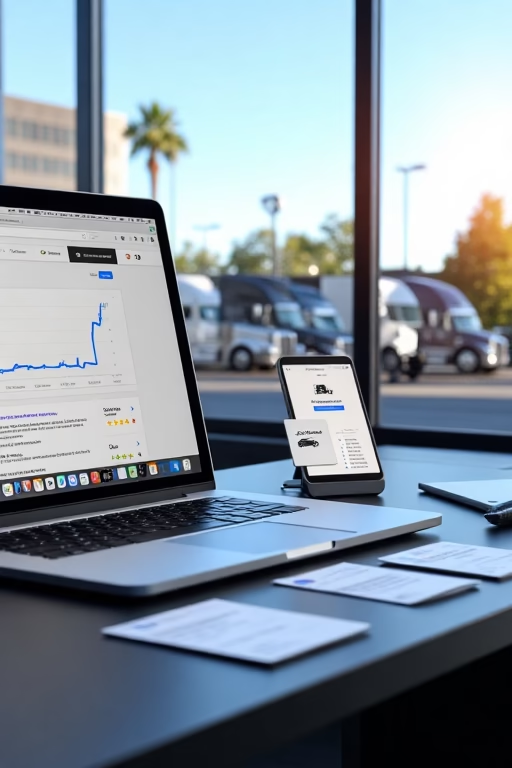
How to Sell More Truck Sales with SEO: Increasing Website Leads
Your Dealership’s SEO Blueprint by Market Wiz
Table of Contents
- Introduction: SEO for Truck Dealership Growth
- 1. Understanding Buyer Personas
- 1.1 Commercial Fleet Managers
- 1.2 Independent Owner‑Operators
- 1.3 Construction & Utility Companies
- 1.4 Agricultural & Specialty Transporters
- 2. Key Inventory to Highlight
- 2.1 New Heavy‑Duty Trucks
- 2.2 Certified Pre‑Owned Models
- 2.3 Financing & Leasing Options
- 2.4 Custom Upfitting Services
- 2.5 Maintenance & Warranty Plans
- 3. Crafting Your Unique Value Proposition
- 4. On‑Page SEO Strategies
- 4.1 Keyword Research & Intent Mapping
- 4.2 Vehicle Detail Page Optimization
- 4.3 Local SEO & Google My Business
- 4.4 Schema Markup for Vehicles
- 5. Content Marketing & Link Building
- 5.1 In‑Depth Buying Guides
- 5.2 Video Walkthroughs & Testimonials
- 5.3 Industry Partnerships & Sponsorships
- 5.4 Guest Posts & Directory Listings
- 6. Paid Advertising & Social Media
- 6.1 Google Ads for Truck Leads
- 6.2 LinkedIn & Facebook Campaigns
- 6.3 Retargeting & Lead Magnets
- 7. Customer Reviews & Reputation Management
- 8. Service Bundles & Maintenance Plans
- 9. Tracking Performance & Continuous Improvement
- 10. Conclusion & Next Steps
- 25 FAQs
- 25 Extra Keywords
Introduction: SEO for Truck Dealership Growth
In the competitive world of truck sales, ranking prominently in search results is crucial to capturing qualified leads. Buyers often begin with online research—searching for “new heavy-duty trucks near me” or “used semi-trucks for sale.” This guide from Market Wiz outlines a step-by-step SEO framework to optimize your dealership website, showcase your inventory, and drive a steady stream of high-intent visitors who are ready to buy.
1. Understanding Buyer Personas
1.1 Commercial Fleet Managers
Fleet managers seek reliability, bulk pricing, and service agreements. Target keywords like “fleet truck sales” and content around volume discounts and maintenance packages.
1.2 Independent Owner‑Operators
Solo drivers prioritize financing flexibility and fuel efficiency. Use phrases like “owner-operator truck financing” and provide calculators for monthly payments.
1.3 Construction & Utility Companies
These buyers need heavy-duty, off-road capable trucks. Optimize for “construction dump trucks” and detail custom upfit solutions for tool storage and rugged performance.
1.4 Agricultural & Specialty Transporters
Farmers and niche transporters look for specific models—grain haulers, refrigerated truck bodies. Create dedicated pages for each application with SEO-friendly URLs.
2. Key Inventory to Highlight
2.1 New Heavy‑Duty Trucks
Showcase the latest models with technical specs, high‑resolution galleries, and VIN‑specific details. Use “2025 diesel semi-truck for sale” in titles and descriptions.
2.2 Certified Pre‑Owned Models
Offer warranty-backed used trucks. Optimize for “certified pre-owned Freightliner” or “used Kenworth T680.” Display inspection reports and service history prominently.
2.3 Financing & Leasing Options
Create a clear financing hub: lease vs. buy calculators, credit requirements, and special APR deals. Target “commercial truck leasing rates” and embed interactive tools.
2.4 Custom Upfitting Services
Detail your in-house upfitting capabilities: flatbeds, service bodies, lift gates. Use “truck upfit specialists near me” and include photo galleries of completed projects.
2.5 Maintenance & Warranty Plans
Promote VIP maintenance packages and extended warranties. Keywords like “truck service contract” and “diesel engine maintenance plan” help capture long‑term clients.
3. Crafting Your Unique Value Proposition
Your UVP should balance competitive pricing with exceptional service. Emphasize perks like complimentary inspections, loaner vehicles during repairs, and a dedicated account manager for fleets. Back your claims with data: “98% first-contact resolution” or “average fuel savings of 10%.”
4. On‑Page SEO Strategies
4.1 Keyword Research & Intent Mapping
Leverage tools like SEMrush to discover high-value queries: “best semi-truck dealerships,” “diesel truck deals,” and long‑tails like “2025 Ford F-750 specs.” Cluster related terms into topic groups.
4.2 Vehicle Detail Page Optimization
- Include primary keywords in title tags and H1 headings.
- Write detailed 800‑1,200‑word descriptions covering performance stats, cab features, and upfit options.
- Use image alt tags:
“2025 Volvo VNL grill view”for SEO value.
4.3 Local SEO & Google My Business
Ensure your GMB listing is fully completed: service categories “Truck Dealer,” compelling photos, posts announcing new arrivals, and regular review responses. Maintain consistent NAP citations across directories.
4.4 Schema Markup for Vehicles
Implement Product, Offer, and Review schema for each listing. Tag price, condition, mileage, and user ratings to improve rich snippets.
5. Content Marketing & Link Building
5.1 In‑Depth Buying Guides
Publish articles like “Choosing the Right Semi-Truck for Long Haul” or “Top 5 Features in Modern Dump Trucks.” Optimize for featured snippets and distribute via social channels.
5.2 Video Walkthroughs & Testimonials
Host virtual showroom tours on YouTube, embed on your site, and transcribe for additional keyword coverage. Showcase customer success stories to build trust.
5.3 Industry Partnerships & Sponsorships
Partner with logistics associations or trucking events. Earn backlinks from industry sites, press releases, and event recaps to boost domain authority.
5.4 Guest Posts & Directory Listings
Contribute to transport blogs and list your dealership in “Top Truck Dealers” directories. Focus on high‑DA sites for quality link equity.
6. Paid Advertising & Social Media
6.1 Google Ads for Truck Leads
Bid on high-intent keywords like “buy new semi-truck” and use callout extensions for financing specials. Implement conversion tracking to optimize campaigns.
6.2 LinkedIn & Facebook Campaigns
Target industry professionals and fleet decision-makers with carousel ads showcasing featured inventory and testimonials. Use Lead Gen Forms to capture info directly on the platform.
6.3 Retargeting & Lead Magnets
Serve dynamic ads to website visitors with the exact truck models they viewed. Offer downloadable spec sheets or maintenance checklists in exchange for emails.
7. Customer Reviews & Reputation Management
Encourage buyers to leave Google and Yelp reviews immediately after purchase. Showcase a rotating testimonial widget on your homepage and respond to feedback—positive or constructive—to demonstrate accountability.
8. Service Bundles & Maintenance Plans
- Bronze: Complimentary oil change + 12‑point inspection.
- Silver: Bronze plan + brake check + tire rotation.
- Gold: Silver plan + engine diagnostics + priority service scheduling.
9. Tracking Performance & Continuous Improvement
- Monitor keyword rankings and traffic trends in Google Search Console.
- Use CRM analytics to trace lead sources and sales conversion rates.
- Review content engagement metrics and refresh top pages quarterly.
10. Conclusion & Next Steps
Implementing a structured SEO strategy will position your truck dealership ahead of competitors, drive qualified traffic, and convert more website visitors into buyers. Begin with a site audit, optimize your top inventory pages, claim your GMB profile, and publish a monthly content piece. Track your KPIs and iterate to capture a growing share of the online truck market.
25 Frequently Asked Questions
1. What keywords should I target for truck sales?
Focus on make/model queries (“2025 Freightliner Cascadia”), service terms (“fleet truck financing”), and local modifiers (“truck dealer near me”).
2. How long before SEO drives leads?
Typically 3–6 months to rank for competitive terms, but low‑competition long‑tails can deliver traffic in 4–8 weeks.
3. Do I need separate pages for each truck model?
Yes—dedicated pages allow you to optimize titles, meta descriptions, and content specifically for each model’s keyword set.
4. How do I optimize images?
Use descriptive file names (e.g., “2025-Kenworth-T680-interior.jpg”) and add alt text with target keywords.
5. What is vehicle schema?
Schema markup that tags product details—price, condition, mileage—so search engines can display rich snippets.
6. How can I improve local SEO?
Complete your Google My Business profile, gather reviews, maintain consistent NAP citations, and create location-specific landing pages.
7. Should I blog about maintenance tips?
Yes—content on “semi-truck maintenance schedule” attracts buyers considering long-term ownership costs.
8. How many backlinks do I need?
Quality over quantity—aim for authoritative transport industry sites, local business directories, and partner blogs.
9. Can video help SEO?
Absolutely—embedding YouTube walkthroughs keeps visitors on page longer and improves engagement metrics.
10. What meta description length is ideal?
Keep it between 150–160 characters, including your primary keyword and a compelling CTA.
11. How do I track conversions?
Set up Google Analytics goals for form submissions and integrate call-tracking numbers for phone leads.
12. Is mobile optimization essential?
Yes—over 60% of searches happen on mobile. Use responsive design and optimize page speed.
13. How often should I update content?
Review and refresh your top-performing pages every 3–6 months to maintain rankings.
14. Can I automate review requests?
Yes—use email or SMS automation after sale to solicit Google and Yelp reviews.
15. What is a good bounce rate?
A bounce rate of 40–60% is average; aim to lower it by improving page relevance and load speed.
16. How do I handle multiple locations?
Create separate location pages with unique content and Google My Business listings for each address.
17. Should I use PPC alongside SEO?
Yes—while SEO grows organically, PPC captures immediate leads for high-value terms.
18. What is keyword clustering?
Grouping related search terms to optimize a single page for multiple variations, improving topical authority.
19. How do I measure ROI?
Compare the cost of SEO efforts against the value of leads and closed deals attributed to organic traffic.
20. What is schema testing?
Use Google’s Rich Results Test to verify your schema markup is valid and eligible for rich features.
21. Can I target used and new truck buyers differently?
Yes—create distinct content hubs and optimize pages separately for “new trucks” vs. “used trucks.”
22. How do I optimize URLs?
Keep them short, descriptive, and include the primary keyword, e.g., /inventory/2025-cascadia.
23. What content length works best?
Comprehensive pages of 800–1,500 words perform well for service and product topics.
24. Should I include customer testimonials?
Yes—testimonials build trust and can be marked up with Review schema for rich snippets.
25. What’s the first step?
Conduct a full site audit to identify SEO issues, prioritize your top 10 pages, and begin optimizing title tags and content.
25 Extra Keywords
- truck sales SEO
- commercial truck SEO
- truck dealership marketing
- semi-truck leads
- diesel truck SEO
- new heavy-duty trucks
- used semi-trucks for sale
- fleet truck financing
- truck upfitting services
- truck inventory optimization
- truck dealership website
- local truck sales SEO
- truck service contracts
- truck maintenance plans
- Google My Business trucks
- vehicle schema markup
- truck buying guide
- trucking industry blog
- truck sales video marketing
- truck dealership PPC
- truck sales retargeting
- truck dealer case studies
- truck sales membership
- truck sales email campaigns
- Market Wiz truck SEO













