
How Platforms Replace Traditional Advertising
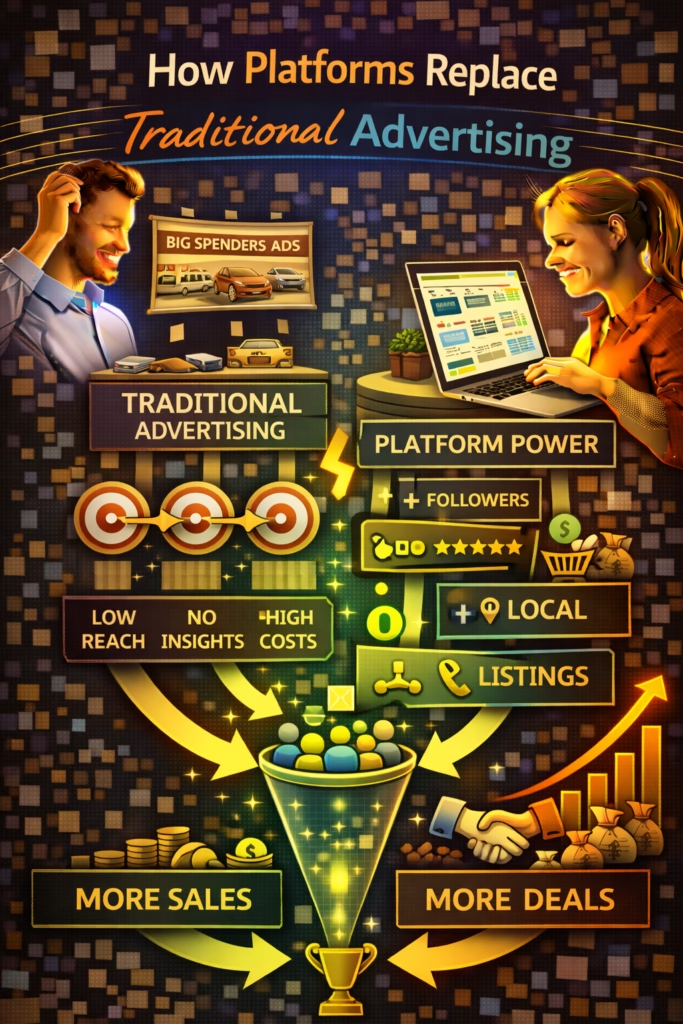
How Platforms Replace Traditional Advertising explains why marketplaces, social feeds, and local search now act like always-on showrooms—delivering compounding exposure, intent-driven discovery, and faster conversion than many traditional ad channels.
Note: This is general guidance. Follow platform policies and applicable privacy/marketing laws. Avoid spam and misleading claims.
Introduction
How Platforms Replace Traditional Advertising starts with a reality shift that’s already happened:
Customers don’t “wait” for ads anymore. They browse platforms, compare options instantly, and message the fastest seller.
Traditional advertising still has value in some markets, but it’s often expensive, hard to track, and slow to convert. Platforms are different. They combine discovery, proof, and conversion into one environment—and they reward businesses that stay active and responsive.
Big idea: Platforms don’t just “show ads.” They act like distribution engines that can compound your visibility every day you operate correctly.
Expanded Table of Contents
- 1) The shift: from interruption to intent
- 2) What traditional advertising is optimized for
- 3) What platforms are optimized for
- 4) The economics: pay-to-run vs pay-to-build
- 5) Visibility compounding: why activity beats campaigns
- 6) Proof and trust: why platforms convert faster
- 7) Speed-to-lead: the conversion lever traditional ads can’t match
- 8) The platform-first lead system (end-to-end)
- 9) Content rotation: how to scale without looking spammy
- 10) Attribution: measuring what platforms produce
- 11) Common mistakes that waste platform opportunity
- 12) KPIs and dashboards for platform replacement
- 13) 30–60–90 day rollout plan
- 14) 25 Frequently Asked Questions
- 15) 25 Extra Keywords
1) The shift: from interruption to intent
Traditional advertising is interruption-based. It tries to grab attention while someone is doing something else.
Platforms are intent-based. The customer is already browsing, already comparing, already ready to ask questions.
| Model | How it works | Typical outcome |
|---|---|---|
| Traditional ads | Interrupt people to create awareness | Slower conversion + harder tracking |
| Platforms | Meet people where they already browse/buy | Faster conversion + clearer intent |
Rule: Intent beats interruption for most local, high-frequency purchases.
2) What traditional advertising is optimized for
Traditional channels (radio, print, billboards, direct mail, generic display ads) are optimized for reach and recall.
Traditional advertising strengths
- Broad awareness
- Brand familiarity over time
- Local credibility in some markets
Traditional advertising weaknesses (for lead generation)
- Harder attribution
- Slower feedback loop
- Less “instant conversion” behavior
- Often requires constant spend to stay visible
Pro move: If you use traditional ads, connect them to a platform or landing flow so they can convert, not just “be seen.”
3) What platforms are optimized for
Platforms are optimized to keep users engaged and help them find what they want quickly. That means platforms reward:
- Fresh, active listings
- High engagement (clicks, saves, messages)
- Reliable sellers (fast responses)
- Trust signals (real photos, clear details, proof)
Discovery
Search + feed exposure puts you in front of buyers with intent.
Proof
Profiles, reviews, photos, and conversation history reduce friction.
Conversion
Messaging turns browsing into inquiry instantly.
Optimization
Activity and iteration compound visibility over time.
Rule: Platforms don’t just create leads. They create a feedback loop you can improve weekly.
4) The economics: pay-to-run vs pay-to-build
Traditional advertising often behaves like a rental: stop paying, and the exposure stops.
Platforms can behave like an asset: activity builds compounding distribution and a library of proof.
| Category | Traditional advertising | Platform-first system |
|---|---|---|
| Visibility | Usually pay-to-run | Often pay-to-build (compounding) |
| Conversion path | Indirect | Direct messaging |
| Feedback loop | Slow | Fast |
| Optimization | Harder | Easier (testing by week) |
Pro move: Use platforms as the core engine. Use traditional ads as support (not the backbone) when needed.
5) Visibility compounding: why activity beats campaigns
Platforms reward consistent activity because it signals that your offer is current and that buyers are getting good experiences.
Compounding happens when you keep these stable
- Cadence (steady posting/refresh actions)
- Variety (no spam duplication patterns)
- Engagement (titles + thumbnails that earn clicks)
- Response speed (fast replies keep conversations alive)
Rule: If your activity is inconsistent, the platform can’t “trust” you with steady distribution.
6) Proof and trust: why platforms convert faster
Traditional ads often ask people to trust you based on a slogan.
Platforms let you earn trust through proof: real photos, clear descriptions, fast responses, and consistency.
Proof elements that raise conversion
- Real photos and clear details
- Transparent pricing or range
- Clear availability and next steps
- Reviews and reputation signals (where available)
- Message history and responsiveness
Pro move: Write your first 2 lines like a trust contract: “Real photos. Clear details. Quick answers.”
7) Speed-to-lead: the conversion lever traditional ads can’t match
Platforms compress the buying timeline. People go from browsing to messaging in seconds. That means speed-to-lead matters more than ever.
Instant reply template (platform-first)
Yes — I can help ✅

Quick question so I point you the right way:
Are you looking for today or this week?

What city/zip are you in?
Rule: If you reply late, your competitor “wins” even if your offer is better.
8) The platform-first lead system (end-to-end)
Platforms replace traditional advertising best when you build an actual system—so leads don’t leak.
The simple platform-first pipeline
- Visibility: consistent postings/updates
- Capture: one-step CTA question
- Response: instant reply (speed-to-lead)
- Qualify: progressive questions
- Book: next step locked (appointment/visit/pickup/quote)
- Follow-up: sequences rescue non-responders
- Track: KPIs drive weekly improvements
Pro move: The goal is not “more messages.” The goal is “more booked next steps.”
9) Content rotation: how to scale without looking spammy
Platforms punish repetitive duplication patterns. Scaling requires variety that stays truthful.
Rotation checklist
- Change the angle (value vs speed vs premium vs trust)
- Change the first photo (thumbnail)
- Change the first 1–2 lines (hook)
- Change feature emphasis (but keep it accurate)
- Stagger posting windows
Avoid: Posting identical duplicates in short windows. Keep your activity meaningful and spaced out.
10) Attribution: measuring what platforms produce
Traditional advertising is often hard to attribute. Platforms can be clearer, but only if you track correctly.
What to track (minimum)
- Leads per platform per day
- Median response time
- Qualified rate
- Booked next steps
- Close rate
Simple attribution question
Quick question — where did you find us?
(Marketplace / Google / Craigslist / Social / Referral)
Rule: If you don’t ask and record the source, you’ll misallocate effort.
11) Common mistakes that waste platform opportunity
- Slow replies: kills momentum
- Inconsistent activity: kills compounding visibility
- Weak thumbnails: kills click-through
- No clear next step: kills conversion
- No follow-up: kills recovery
- Spam duplication: increases removal risk
- No tracking: prevents scaling winners
Pro move: Fix one stage per week. The system improves fast when you prioritize.
12) KPIs and dashboards for platform replacement
| KPI | What it measures | Target direction |
|---|---|---|
| Leads/day | Top-of-funnel output | Up |
| Median response time | Speed-to-lead | Down |
| Messages per listing | Listing quality + exposure | Up |
| Qualified rate | Fit + process clarity | Up |
| Booked next steps | Revenue predictor | Up |
| No-response rate | Leak indicator | Down |
| Flags/removals | Compliance risk | Down |
Rule: When platforms replace traditional advertising, “booked next steps” becomes your main scoreboard.
13) 30–60–90 day rollout plan
Days 1–30 (Foundation)
- Pick 2–3 primary platforms to focus on
- Set a sustainable activity cadence
- Deploy instant replies + one-question CTAs
- Start tracking response time and booked steps
- Create 5–10 varied listing angles
Days 31–60 (Compounding)
- Improve thumbnails/titles with A/B tests
- Add follow-up sequences to rescue leads
- Expand surface area with varied listings
- Reduce flags/removals by improving rotation
Days 61–90 (Scale)
- Document SOPs for posting, response, and follow-up
- Automate routing into a CRM pipeline
- Double down on top-performing angles and categories
- Review KPIs weekly and optimize one stage at a time
Rule: Platforms replace traditional advertising when your system is consistent, measurable, and fast.
14) 25 Frequently Asked Questions
1) What does it mean that platforms replace traditional advertising?
Customers discover, evaluate, and buy through platforms—reducing reliance on print, radio, mailers, and generic ads.
2) Why do platforms convert faster?
Because buyers already have intent, and messaging enables instant next steps.
3) Are traditional ads still useful?
Sometimes—especially for broad awareness—but they’re often less trackable and slower to convert.
4) What is the biggest platform advantage?
Intent-driven discovery plus direct messaging.
5) What’s the #1 lever for platform conversion?
Speed-to-lead: instant response and a clear next step.
6) What’s the #1 lever for platform visibility?
Consistent activity and variety (not duplication).
7) Do I need paid ads on platforms?
Not always—organic systems can work, but paid can amplify winners.
8) What should I optimize first?
First photo, title clarity, and response time.
9) How do I avoid spam patterns?
Rotate angles, photos, hooks, and posting times while staying truthful.
10) What’s a “platform-first” strategy?
Using platforms as your primary lead engine with consistent activity and automated response.
11) What KPIs matter most?
Leads/day, response time, qualified rate, and booked next steps.
12) Why track booked next steps?
Because it’s the best predictor of revenue from platform leads.
13) What is lead leakage?
Lost leads due to slow replies, unclear next steps, or missing follow-up.
14) How do follow-ups help?
They recover leads that weren’t ready to respond immediately.
15) How often should I follow up?
A short sequence over 7 days is common, but keep it helpful and respectful.
16) Should I use a CRM?
Yes—CRMs reduce lost leads and make optimization measurable.
17) What’s the best first message?
A confirmation plus one simple question: timing and location.
18) Do stock photos work?
Real photos often build more trust and perform better on many platforms.
19) How long until I see results?
Often within 1–2 weeks, with compounding gains over 30–90 days.
20) What causes removals or reduced reach?
Duplication patterns, misleading claims, and policy-risk behavior.
21) How do I scale without adding staff?
Automate responses, follow-ups, and routing—then standardize SOPs.
22) What’s the role of proof?
Proof reduces friction and increases conversion at every stage.
23) How do I measure platform attribution?
Track lead source per inquiry and record it consistently.
24) What’s the best weekly routine?
Review KPIs weekly and improve one stage per week.
25) What’s the biggest mistake businesses make?
Treating platforms like a one-time campaign instead of a compounding system.
15) 25 Extra Keywords
- How Platforms Replace Traditional Advertising
- platforms replace traditional advertising
- traditional advertising alternatives
- marketplace marketing strategy
- social commerce lead generation
- local business platform marketing
- organic lead generation platforms
- platform-first marketing
- intent-driven marketing strategy
- speed to lead strategy
- automated lead response
- platform visibility system
- Facebook Marketplace lead generation
- Craigslist marketing strategy
- OfferUp lead generation
- Google Business Profile lead flow
- replace print advertising
- replace radio advertising
- reduce ad spend with platforms
- listing rotation strategy
- compounding organic visibility
- platform engagement signals
- local retail marketing without ads
- 2026 platform marketing strategy
- platform conversion optimization