

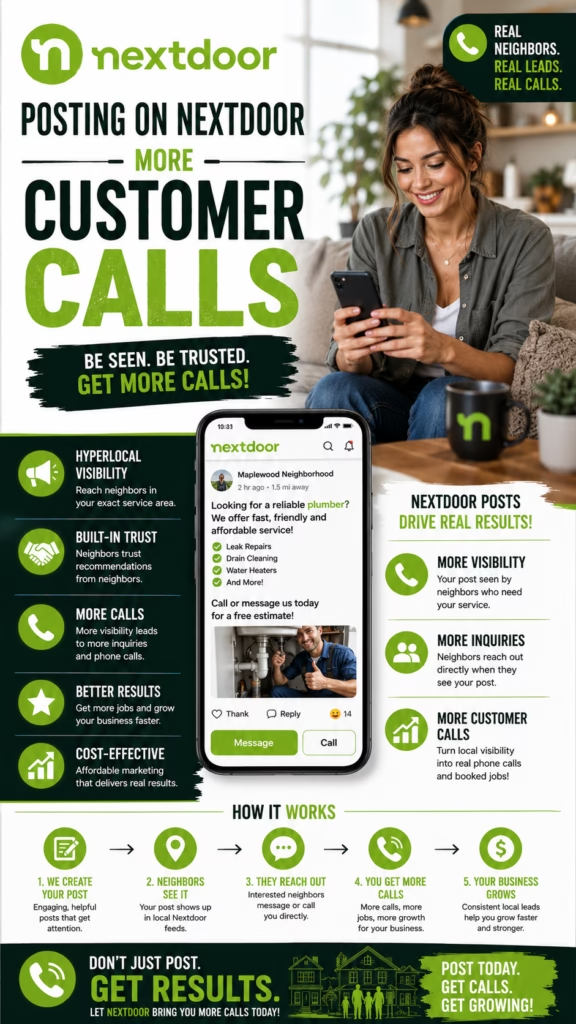
Nextdoor Posting for More Customer Calls
Nextdoor Posting for More Customer Calls helps local businesses create useful neighborhood content, build trust, attract nearby customers, improve phone inquiries, and turn community visibility into qualified conversations, appointments, and sales.
Introduction
Nextdoor Posting for More Customer Calls is about using local content to create real conversations with homeowners, renters, landlords, property managers, and small businesses that need nearby products or services.
Nextdoor is different from broad social media platforms because users are organized around neighborhoods and local communities. People often visit the platform to ask for recommendations, report local problems, compare contractors, find nearby businesses, or discover who can help with an urgent need.
That local structure gives businesses an opportunity to generate phone calls from people who are already close to making a decision. A homeowner may need a repair, a landlord may need a turnover service, or a family may be comparing local companies for a planned project.
Nextdoor posts generate more customer calls when they solve a recognizable local problem, create trust, and give the reader a clear reason to contact the business.
Contractors, appliance repair companies, movers, cleaners, landscapers, painters, garage door companies, HVAC businesses, plumbers, electricians, roofing companies, retailers, real estate professionals, and other local businesses can use Nextdoor to support lead generation.
The strongest strategy combines a complete business profile, neighborhood-friendly posts, real photos, useful information, local service-area language, customer recommendations, strong calls to action, fast responses, professional phone handling, lead tracking, and consistent follow-up.
Each post should have one primary objective. That objective may be to generate a phone call, request project photos, schedule an estimate, confirm availability, arrange an appointment, or start a qualified conversation.
Main idea: Nextdoor Posting for More Customer Calls works when useful neighborhood content makes the business easy to trust, easy to contact, and easy to choose.
Table of Contents
- 1) Why Nextdoor can generate customer calls
- 2) Understanding neighborhood customer intent
- 3) Building a trustworthy Nextdoor business profile
- 4) Defining accurate service areas
- 5) Choosing post topics that create phone leads
- 6) Writing neighborhood-friendly posts
- 7) Creating stronger post headlines
- 8) Using real photos effectively
- 9) Building trust through recommendations
- 10) Responding to neighborhood questions
- 11) Writing posts for urgent customer needs
- 12) Writing posts for planned projects
- 13) Writing educational posts
- 14) Writing seasonal posts
- 15) Using local keywords naturally
- 16) Explaining pricing and estimates
- 17) Creating calls to action that generate phone calls
- 18) Deciding when to use calls versus messages
- 19) Qualifying customers before the phone call
- 20) Answering customer calls professionally
- 21) Turning calls into appointments
- 22) Following up with missed callers
- 23) Building repeat and referral business
- 24) Creating a consistent Nextdoor posting system
- 25) Tracking call and lead performance
- 26) Common Nextdoor posting mistakes
- 27) Trust and compliance reminders
- 28) Final thoughts
- 29) FAQs
- 30) Extra keywords
1) Why Nextdoor Can Generate Customer Calls
Nextdoor can generate customer calls because its users are focused on nearby people, services, businesses, properties, and community needs. A person may visit the platform specifically to ask which local company can solve a problem.
Nextdoor can help generate calls for:
- Repair appointments
- Home improvement estimates
- Cleaning services
- Moving help
- Landscaping projects
- Emergency service requests
- Retail product availability
- Installation projects
- Property maintenance
- Local consultations
Phone calls can be especially valuable for complicated services because customers may prefer to explain the issue verbally. A conversation can help the business understand urgency, project size, service area, budget, and appointment timing.
Nextdoor should not be treated only as a place to publish advertisements. Businesses that consistently provide helpful local information may become more familiar and trusted within their market.
Nextdoor creates customer calls when local visibility is supported by relevance, trust, and a simple contact process.
2) Understanding Neighborhood Customer Intent
People use Nextdoor for different reasons. Some are researching options, while others need help immediately.
Common neighborhood customer questions:
Can anyone recommend a local contractor?
Who repairs appliances nearby?
Who can help with a move this weekend?
Does anyone know a reliable cleaning company?
Who installs garage doors in this area?
Can someone recommend a landscaper?
Who can provide an estimate this week?
What local business handles emergency repairs?
Has anyone used this company?
Who is available to help today?
These questions reveal different levels of urgency. A planned remodeling project may allow several weeks for research, while a broken appliance or damaged door may require a same-day call.
Businesses should create separate post styles for urgent needs, planned projects, seasonal services, routine maintenance, and product availability.
The strongest Nextdoor posts match the customer’s immediate intent instead of delivering the same message to every reader.
3) Building a Trustworthy Nextdoor Business Profile
A complete business profile helps potential customers verify that the company is real, local, and available.
Nextdoor profile trust checklist:
- Accurate business name
- Current phone number
- Correct website
- Professional logo
- Clear business description
- Accurate hours
- Local service areas
- Real business photos
- Current services
- Professional response tone
The business description should explain what the company does, who it serves, where it operates, and how customers can request help.
Claims about licensing, insurance, certifications, warranties, financing, experience, or guarantees should always be accurate.
A trustworthy profile increases the chance that a reader will call instead of continuing to search.
4) Defining Accurate Service Areas
Service-area information helps prevent calls from customers outside the company’s operating range.
Service-area planning questions:
Which neighborhoods can the business serve?
How far will employees travel?
Do travel fees apply?
Are certain cities served on specific days?
Is same-day service available?
Are rural areas included?
Are commercial properties included?
Which markets produce profitable jobs?
Can crews support additional calls?
Does availability change seasonally?
Some companies may travel farther for large projects than for small service calls. The service-area strategy should reflect real travel time, staffing, appointment capacity, and project value.
Avoid claiming an excessively broad area only to generate more calls. Poor geographic fit wastes time for both the customer and business.
Accurate service-area language helps Nextdoor posts generate calls the company can realistically convert.
5) Choosing Post Topics That Create Phone Leads
The best Nextdoor post topics connect a real customer problem with a clear reason to call.
High-intent post topics include:
- Appointments available this week
- Emergency repair availability
- Seasonal maintenance reminders
- Project estimate openings
- Common warning signs
- Before-and-after project results
- New product availability
- Local delivery options
- New service announcements
- Frequently asked customer questions
A landscaping business can post about seasonal cleanup. An appliance company can discuss a dryer that is not heating. A painter can share a recent interior transformation and mention estimate availability.
Every topic should connect naturally to a service the company actually provides.
Focused topics produce stronger phone leads because customers immediately understand why they should contact the business.
6) Writing Neighborhood-Friendly Posts
Nextdoor posts should sound helpful, conversational, and local. They should not feel like generic advertisements copied across multiple platforms.
Neighborhood-friendly post structure:
Recognizable local problem
Short helpful explanation
Specific service or solution
Local availability
Trust signal
Simple next step
Phone call CTA
Use short paragraphs and plain language. Explain the issue clearly without overwhelming the reader with technical terminology.
Avoid excessive capitalization, repeated punctuation, aggressive sales language, and unsupported urgency.
The best Nextdoor post sounds like helpful advice from a trusted local professional.
7) Creating Stronger Post Headlines
A clear headline helps the right customer recognize the topic immediately.
Weak headline:
Call Us Today

Better headline:
Need a Local Appliance Repair Appointment This Week?

Weak headline:
Best Contractor in Town

Better headline:
Interior Painting Estimate Openings for Local Homeowners

Weak headline:
Great Service Available

Better headline:
Garage Door Will Not Open? Local Repair Appointments

Weak headline:
We Can Help

Better headline:
Move-Out Cleaning Openings for Nearby Properties

Weak headline:
Special Offer

Better headline:
Seasonal Yard Cleanup Appointments Available
Strong headlines may include the customer problem, service, appointment type, local relevance, or project timing.
The headline should attract qualified customers rather than everyone. Specificity improves lead quality.
Clear headlines increase customer calls because readers can quickly identify whether the post matches their need.
8) Using Real Photos Effectively
Real photos help potential customers evaluate workmanship, professionalism, products, equipment, and credibility.
Useful Nextdoor photo ideas:
- Completed projects
- Before-and-after results
- Professional employees
- Branded vehicles
- Tools and equipment
- Store inventory
- Clean work areas
- Product options
- Local project examples
- Business exterior
Photos should be clear, current, and representative of the real business. Avoid relying entirely on stock images.
Protect customer privacy by removing addresses, house numbers, documents, license plates, and personal information when possible.
Real photos make the business easier to trust before the customer makes the call.
9) Building Trust Through Recommendations
Nextdoor recommendations can strongly influence customer calls because they come from nearby people who have direct experience with the business.
Good times to request a recommendation:
- After a completed project
- After a successful repair
- After positive customer feedback
- After resolving an urgent issue
- After a repeat appointment
- After a successful delivery
- After a customer refers a neighbor
- After a customer compliments the team
Recommendations should be earned through a strong customer experience. Do not pressure customers or offer misleading rewards for positive feedback.
Future customers may call because a recommendation mentions punctuality, communication, pricing clarity, cleanup, quality, or professionalism.
Neighborhood recommendations provide local social proof that can turn a post view into a phone call.
10) Responding to Neighborhood Questions
Businesses can generate calls by providing useful answers when neighbors ask for help or recommendations.
Helpful public response:
We provide this type of service in the local area. The best next step depends on the project size and current condition. Feel free to call with your neighborhood, a short description of what you need, and your preferred timing so we can explain availability.
The response should answer the question rather than immediately pushing a hard sale. If the user asks for a recommendation, explain why the company may be relevant and provide a simple next step.
Avoid attacking competitors or making unsupported comparisons.
Helpful public responses allow the business to demonstrate expertise before asking for the call.
11) Writing Posts for Urgent Customer Needs
Urgent posts should address situations where the customer may need fast help, such as a broken appliance, leaking system, damaged door, vehicle problem, or property issue.
Urgent post elements:
- Clear problem description
- Responsible safety guidance
- Accurate service availability
- Local coverage information
- Phone number
- Details needed before dispatch
- Appointment expectations
- No unsupported guarantees
Urgent post example:
Is your garage door stuck, damaged, or unable to close securely? Avoid forcing the door if it appears unstable. Local repair appointments may be available. Call with your neighborhood, a short description of the problem, and whether a vehicle is trapped inside.
Do not advertise emergency or same-day service unless the business can actually provide it.
Urgent Nextdoor posts should prioritize accurate information and customer safety over exaggerated marketing.
12) Writing Posts for Planned Projects
Planned projects usually require more education and qualification than urgent service calls.
Planned-project post topics:
- Home painting
- Flooring installation
- Garage door replacement
- Landscaping improvements
- Fence installation
- Bathroom remodeling
- Moving preparation
- Property cleanouts
- New appliance installation
- Seasonal maintenance projects
These posts should explain the estimate process, photos or measurements needed, project timing, material options, and service area.
Planned-project CTA:
Call with your neighborhood, project type, approximate size, preferred timing, and any photos or measurements you already have.
Planned-project posts create stronger calls when customers understand how to prepare for an estimate.
13) Writing Educational Posts
Educational content can build trust before the customer is ready to call.
Educational post ideas:
- Warning signs to watch for
- How estimates are calculated
- When repair may be appropriate
- When replacement may be considered
- How to prepare for an appointment
- What photos help with estimates
- How long common projects may take
- What affects pricing
- How maintenance can prevent problems
- What information to provide by phone
Educational posts should provide real value without attempting unsafe diagnosis or complex remote instruction.
A helpful closing can invite readers to call if they have a similar issue or need local appointment information.
Educational posts generate future calls by making the business familiar before the customer has an urgent need.
14) Writing Seasonal Posts
Seasonal demand creates timely opportunities for local businesses.
Seasonal Nextdoor post ideas:
Spring yard cleanup
Summer air-conditioning service
Fall gutter cleaning
Winter heating preparation
Storm damage inspections
Holiday cleaning appointments
Back-to-school moving help
Pre-winter garage door maintenance
Summer exterior painting
Rental turnover season
Publish seasonal content before demand peaks. Customers often plan ahead, and appointment calendars may fill quickly.
Seasonal language should reflect the local market. A post should not mention weather or conditions that are irrelevant to the neighborhood.
Seasonal posts generate more customer calls by connecting timely needs with current local availability.
15) Using Local Keywords Naturally
Local language helps readers understand whether the business serves their neighborhood.
Natural local wording examples:
- Serving nearby homeowners
- Local appointments available
- Call with your neighborhood for availability
- Serving surrounding communities
- Estimate openings in the local area
- Nearby repair appointments
- Local delivery options
- Serving local landlords and property managers
Businesses should avoid placing long lists of cities in every post. Local wording should improve relevance, not make content difficult to read.
Create original posts for different service areas when possible. Include useful details about local scheduling or availability.
Natural local keywords increase relevance while preserving a professional neighborhood tone.
16) Explaining Pricing and Estimates
Price uncertainty can prevent customer calls. Businesses should explain what information is needed and what affects the final amount.
Clear pricing language:
Free estimates may be available for qualifying projects.
A service-call or diagnostic fee may apply.
Pricing depends on project size and condition.
Materials and labor may be quoted separately.
Starting prices apply to basic options.
Travel fees may apply outside the normal service area.
Photos may help determine the next step.
An on-site review may be required before final pricing.
Avoid using extremely low prices only to generate phone calls. If the amount represents a deposit, inspection fee, starting price, or labor-only rate, explain it clearly.
Transparent pricing language creates better calls because customers understand why additional information is required.
Clear estimate expectations reduce price confusion and improve phone-lead quality.
17) Creating Calls to Action That Generate Phone Calls
A strong phone CTA tells the customer why to call and what information to have ready.
Phone call CTA examples:
- Call with your neighborhood and the service you need.
- Call to check appointment availability this week.
- Call with the product brand, model, and symptoms.
- Call with your project size and preferred timeline.
- Call to discuss pickup or delivery options.
- Call with your move date and property details.
- Call before visiting to confirm availability.
- Call with photos or measurements ready for a faster estimate.
“Call now” is often too vague. A stronger CTA gives the customer a specific reason to begin the conversation.
The CTA should match the post. Urgent repairs require symptoms and location. Installations require size and style. Retail calls may require model, color, and delivery details.
The best phone CTA removes uncertainty and tells the customer exactly how the call will help.
18) Deciding When to Use Calls Versus Messages
Phone calls and direct messages serve different purposes. The strongest strategy uses both appropriately.
Phone calls may work best for:
- Urgent problems
- Complex projects
- Same-day scheduling
- Detailed estimates
- Older customers who prefer calling
- High-value services
- Multiple customer questions
- Appointment confirmation
Messages may work best for:
- Sending photos
- Sharing measurements
- Providing model numbers
- Simple availability questions
- After-hours inquiries
- Initial qualification
- Written appointment details
- Customers unable to call immediately
A post can offer both options while making the phone number prominent for customers who want immediate help.
Calls and messages should work together to make the customer journey easier, not compete with each other.
19) Qualifying Customers Before the Phone Call
Qualification language in the post helps customers prepare useful details before calling.
Useful pre-call details:
- Neighborhood or city
- Service or product needed
- Project size
- Brand or model
- Symptoms or visible damage
- Photos
- Preferred appointment date
- Budget range when appropriate
- Access conditions
- Best callback number
The post should not require the customer to complete a complicated process before calling. Ask only for details that improve the conversation.
A well-prepared caller can be qualified more quickly and scheduled with fewer back-and-forth messages.
Pre-call qualification shortens conversations and helps staff identify the right next step.
20) Answering Customer Calls Professionally
More calls only create value when the business answers professionally and consistently.
Simple phone opening:
Thank you for calling. How can we help today?

Useful follow-up questions:
What neighborhood are you in?
What service do you need?
When did the problem begin?
Do you have photos or measurements?
What timing works best?
What is the best number for follow-up?
Professional call-handling practices:
- Answer with the business name
- Use a calm and helpful tone
- Listen before interrupting
- Confirm the service area
- Ask clear questions
- Avoid unsupported promises
- Explain the next step
- Offer appointment options
- Record the lead
- Confirm contact information
Staff should understand the Nextdoor posts currently active so they know what the caller may have seen.
Professional phone handling turns Nextdoor visibility into customer confidence.
21) Turning Calls Into Appointments
The goal of a qualified customer call is usually a specific next action.
Possible call conversion actions:
Schedule an estimate
Book a service appointment
Arrange a property visit
Confirm a repair time
Reserve a product
Schedule delivery
Book a consultation
Request project photos
Confirm a showroom visit
Schedule a follow-up call
The business should explain what will happen next, who will arrive, what information is required, and whether fees apply.
Offer specific appointment windows instead of ending with an open-ended promise to call back.
Before ending the call, confirm the customer’s name, phone number, address or general location, appointment time, and service request.
A structured phone process turns interest into a scheduled customer action.
22) Following Up With Missed Callers
Missed calls can represent valuable customers who may contact a competitor if the business does not respond quickly.
Missed-call follow-up process:
- Return the call quickly
- Identify the business
- Mention the missed call
- Ask how the business can help
- Leave a short voicemail if needed
- Record the attempt
- Try again when appropriate
- Respect communication preferences
Missed-call voicemail:
Hello, this is [Name] from [Business]. We are returning your call regarding local service availability. Please call us back when convenient, and we will be happy to help.
Do not repeatedly call customers who have not requested continued contact.
Fast missed-call follow-up recovers leads that would otherwise be lost.
23) Building Repeat and Referral Business
A Nextdoor-generated call can become more valuable than a single transaction. Strong service may lead to repeat work, maintenance, additional projects, and neighborhood referrals.
Ways to create long-term value:
- Communicate arrival times clearly
- Deliver what was promised
- Explain the completed work
- Provide accurate invoices
- Confirm customer satisfaction
- Keep customer records
- Offer relevant maintenance reminders
- Request recommendations professionally
- Track repeat customers
- Follow up when appropriate
A satisfied customer may recommend the business in a future neighborhood conversation. That recommendation can generate additional calls without another promotional post.
Long-term Nextdoor growth begins when one customer call becomes a trusted neighborhood relationship.
24) Creating a Consistent Nextdoor Posting System
Consistent posting helps the business stay visible without depending on one viral post or occasional recommendation.
Repeatable Nextdoor posting system:
Choose customer problems
Plan service-specific topics
Organize real photos
Write useful headlines
Add local service information
Explain pricing or estimates
Include a phone CTA
Prepare call scripts
Track leads
Review results and improve
Rotate content across urgent needs, planned projects, educational topics, seasonal services, recommendations, before-and-after results, and appointment availability.
Consistency should not mean repetition. Each post should provide a distinct reason for the customer to pay attention.
A consistent system turns Nextdoor from occasional posting into a measurable customer-call channel.
25) Tracking Call and Lead Performance
Tracking helps businesses identify which posts, neighborhoods, topics, and calls to action generate profitable customers.
Useful Nextdoor call metrics:
- Post views
- Comments
- Recommendations
- Direct messages
- Phone calls
- Missed calls
- Qualified leads
- Appointments scheduled
- Estimates completed
- Jobs booked
- Repeat customers
- Revenue by post topic
Use call tracking when appropriate to understand which campaigns generate inquiries. The phone should still display a professional and reliable number to customers.
A post with fewer calls may be more valuable if those callers book larger or more profitable jobs.
Many calls with few appointments may indicate poor qualification, unclear pricing, unavailable schedules, weak phone handling, or service-area mismatch.
The best Nextdoor strategy is measured by qualified calls, booked appointments, completed work, and customer value.
26) Common Nextdoor Posting Mistakes
Businesses can weaken results when posts are overly promotional, repetitive, vague, or disconnected from the phone process.
Common mistakes include:
- Posting only advertisements
- Using generic headlines
- Using stock photos only
- No service-area information
- No useful customer advice
- Misleading prices
- No phone number
- No clear reason to call
- Slow phone response
- Ignoring missed calls
- No lead tracking
- Unsupported guarantees
Another mistake is publishing posts that generate attention without matching the business’s current availability. Customers become frustrated when they call about a promoted service and cannot schedule it.
Businesses should also avoid arguing publicly, criticizing competitors, or presenting every customer problem as an emergency.
Nextdoor posting fails when visibility increases but trust, phone handling, and appointment conversion remain weak.
27) Trust and Compliance Reminders
Nextdoor marketing should follow current platform policies and applicable requirements involving business identity, pricing, estimates, licensing, insurance, warranties, financing, customer privacy, safety, and consumer protection.
Trust and compliance reminders:
- Use accurate business information
- Describe services honestly
- Explain prices clearly
- Avoid guaranteed outcomes
- Represent licensing accurately
- Use accurate warranty language
- Use accurate financing disclosures
- Protect customer information
- Use authorized photos
- Avoid unsafe instructions
- Keep availability current
- Review current platform policies
Phone calls may involve addresses, property information, vehicle details, health concerns, or other private information. Businesses should collect only what is necessary and handle it appropriately.
Do not claim same-day, emergency, licensed, insured, certified, guaranteed, or manufacturer-authorized service unless those claims are accurate.
Professional Nextdoor marketing begins when every post, phone call, estimate, and customer experience reflects the same accurate promise.
28) Final Thoughts
Nextdoor Posting for More Customer Calls can help local businesses build neighborhood awareness, earn trust, generate qualified phone inquiries, and create more appointments, estimates, and sales.
The strongest strategy begins with a complete business profile, accurate service areas, problem-specific posts, real photos, customer recommendations, useful educational content, transparent pricing, and clear phone calls to action.
Businesses should create separate posts for urgent needs, planned projects, seasonal services, product availability, maintenance reminders, before-and-after results, and customer questions.
More phone calls are only valuable when the company answers quickly, qualifies the customer, offers a clear appointment option, follows up with missed callers, and tracks results.
Nextdoor should support a broader local marketing system that may include Google Maps SEO, website content, social media, direct mail, local partnerships, referrals, email follow-up, and customer retention.
Most importantly, businesses should behave like useful neighborhood resources. Helpful content, real local proof, accurate information, respectful communication, and reliable service create stronger results than constant promotion.
Final takeaway: Nextdoor generates more customer calls when useful local posts build trust and guide nearby customers toward one clear, professional phone conversation.
29) FAQs
1) What is Nextdoor Posting for More Customer Calls?
It is a strategy for using neighborhood posts, business profiles, recommendations, comments, and calls to action to generate qualified local phone inquiries.
2) Can Nextdoor generate customer calls?
Yes. Helpful local posts can attract homeowners and businesses that need nearby products, repairs, estimates, appointments, or services.
3) What businesses can use Nextdoor posting?
Contractors, repair companies, movers, cleaners, landscapers, retailers, real estate professionals, installers, and other local businesses can use Nextdoor.
4) What should a Nextdoor business profile include?
It should include the business name, phone number, website, hours, service areas, business description, real photos, and accurate services.
5) What topics generate phone calls?
Problem-specific posts, appointment availability, seasonal reminders, estimates, emergency needs, educational tips, and product availability can generate calls.
6) What makes a strong Nextdoor headline?
A strong headline identifies the customer problem, service, appointment type, project, or local availability.
7) Are real photos important?
Yes. Real project, product, employee, vehicle, and business photos build trust before the customer calls.
8) Do recommendations help generate calls?
Yes. Recommendations from nearby customers provide strong local social proof.
9) Should businesses answer neighborhood questions?
Yes. Helpful answers demonstrate expertise and may lead customers to contact the business.
10) What should urgent posts include?
They should include the problem, responsible safety guidance, accurate availability, service area, phone number, and details needed before dispatch.
11) What should planned-project posts include?
They should explain the estimate process, project details, measurements, photos, material options, service area, and timing.
12) Do educational posts generate calls?
Yes. Educational posts build familiarity and trust before the customer is ready to hire a business.
13) When should seasonal posts be published?
Publish seasonal posts before demand peaks so customers have time to schedule appointments.
14) Should businesses use local keywords?
Yes. Natural neighborhood, city, service-area, and nearby language helps customers understand where service is available.
15) Should pricing be included?
Businesses should provide accurate pricing or explain how estimates, starting prices, service fees, labor, and materials are calculated.
16) What is a good phone call to action?
A strong CTA tells customers why to call and what details to have ready, such as location, service need, photos, measurements, model information, or timing.
17) Should businesses offer both calls and messages?
Yes. Calls work well for urgent or complex needs, while messages are useful for sending photos, model numbers, and written details.
18) How should callers be qualified?
Ask for location, service need, project size, symptoms, photos, timeline, access details, and contact information.
19) How should businesses answer the phone?
Answer with the business name, use a helpful tone, listen carefully, confirm the service area, and explain the next step.
20) How do calls become appointments?
Qualify the need, offer specific appointment windows, explain fees or preparation, and confirm contact and service details.
21) What should businesses do with missed calls?
Return them quickly, identify the business, ask how the company can help, and leave a short professional voicemail when needed.
22) Can Nextdoor create repeat business?
Yes. A strong customer experience can lead to future work, maintenance, recommendations, and neighborhood referrals.
23) What should businesses track?
Track views, comments, recommendations, messages, phone calls, missed calls, qualified leads, appointments, jobs, revenue, and repeat customers.
24) Why do posts get views but no calls?
The post may be vague, overly promotional, missing real photos, lacking trust, using unclear pricing, or missing a direct phone CTA.
25) What is the best Nextdoor posting tip for more customer calls?
Create one useful post around one real local problem and give the reader a specific reason to call the business.
25) Extra Keywords
- Nextdoor Posting for More Customer Calls
- Nextdoor lead generation
- local business phone leads
- Nextdoor marketing strategy
- neighborhood business advertising
- customer call generation
- local service business marketing
- Nextdoor customer calls
- Nextdoor phone leads
- local contractor phone leads
- neighborhood customer acquisition
- Nextdoor posting strategy
- local business call growth
- Nextdoor service leads
- Nextdoor recommendation marketing
- local appointment leads
- Nextdoor call to action
- customer call conversion
- Nextdoor local advertising
- neighborhood service marketing
- local business call tracking
- Nextdoor appointment generation
- local customer lead generation
- Nextdoor business growth
- more customer calls from Nextdoor













